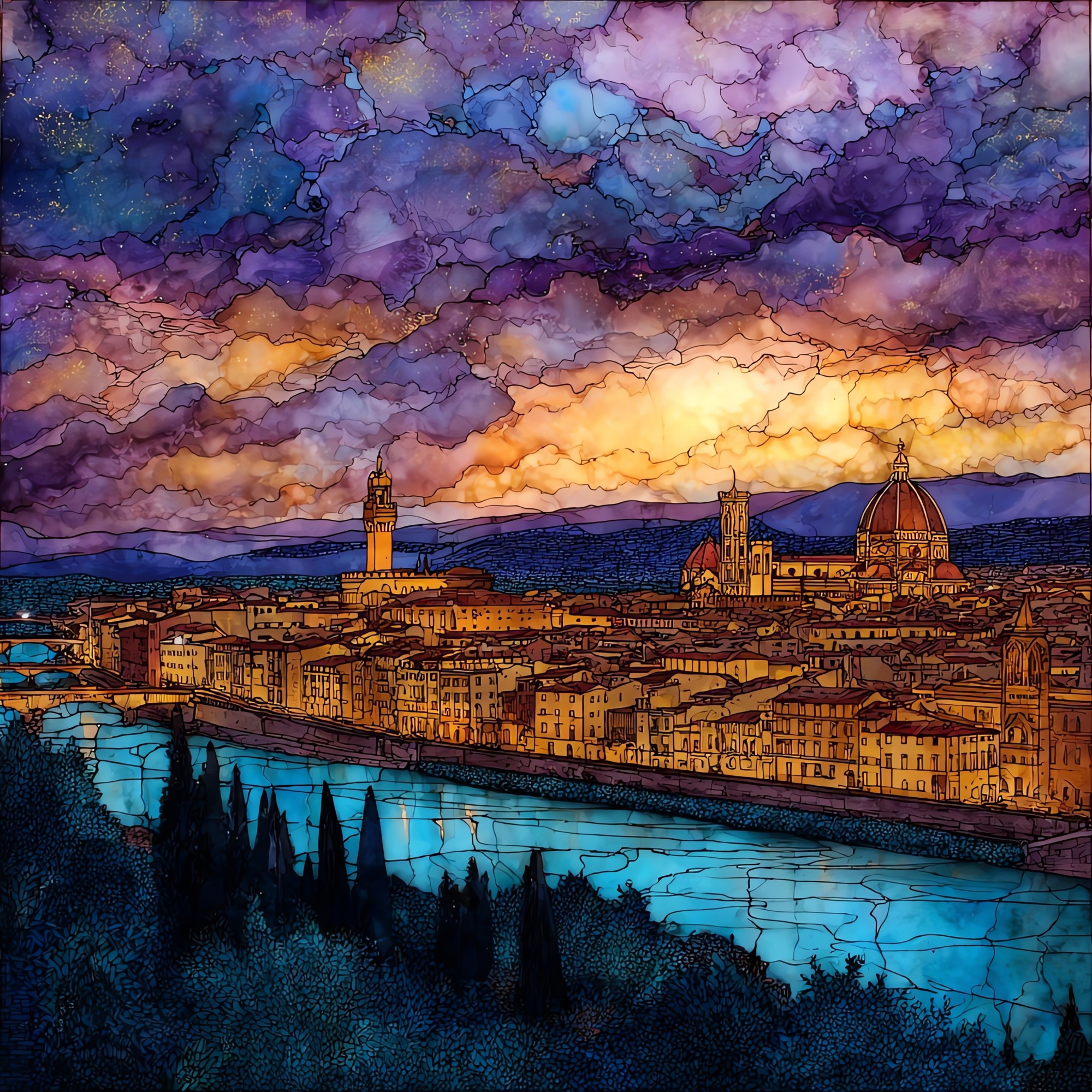
Piazzale Michelangelo
— the hour Florence turns the colour of its rooftops.
Not only on a wall.
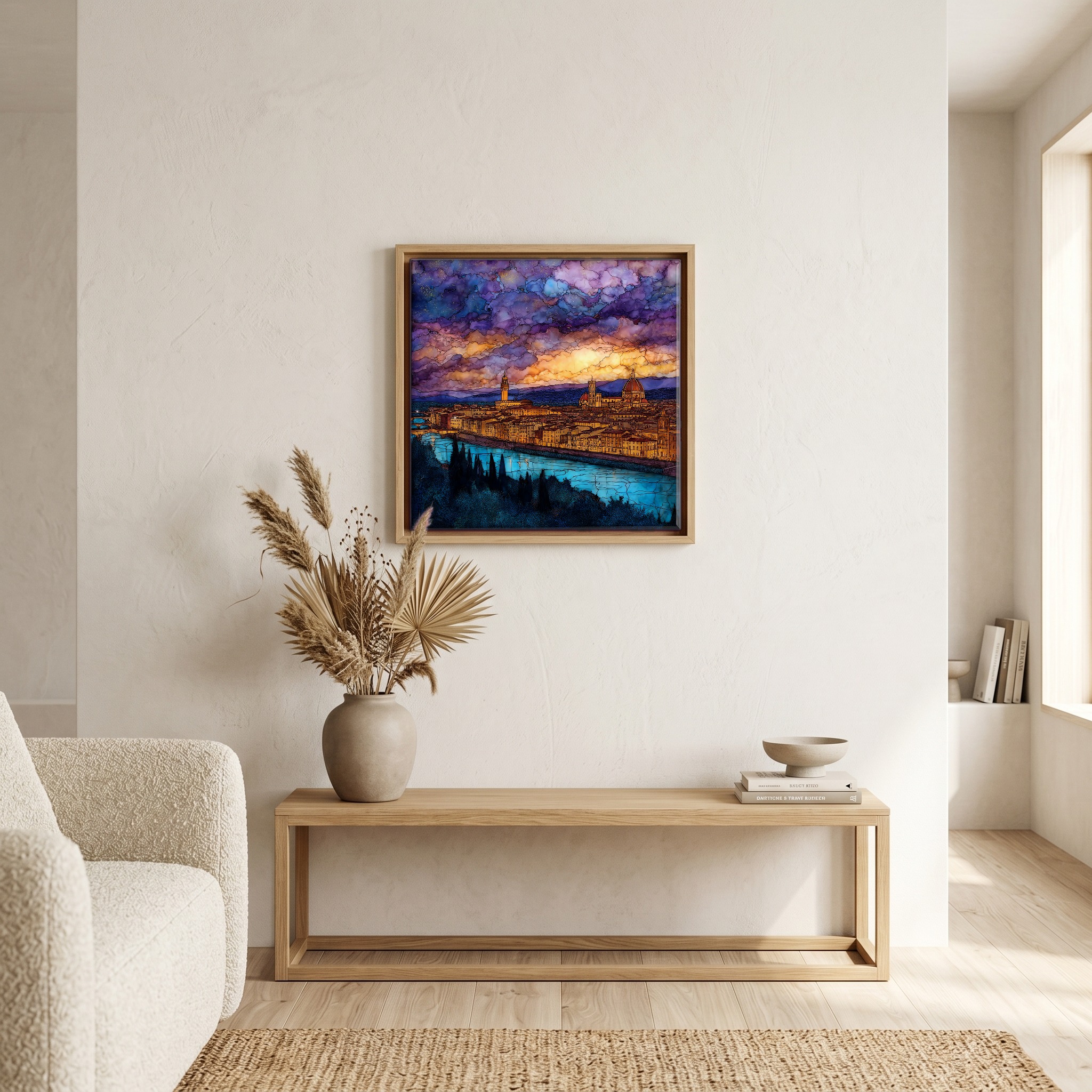

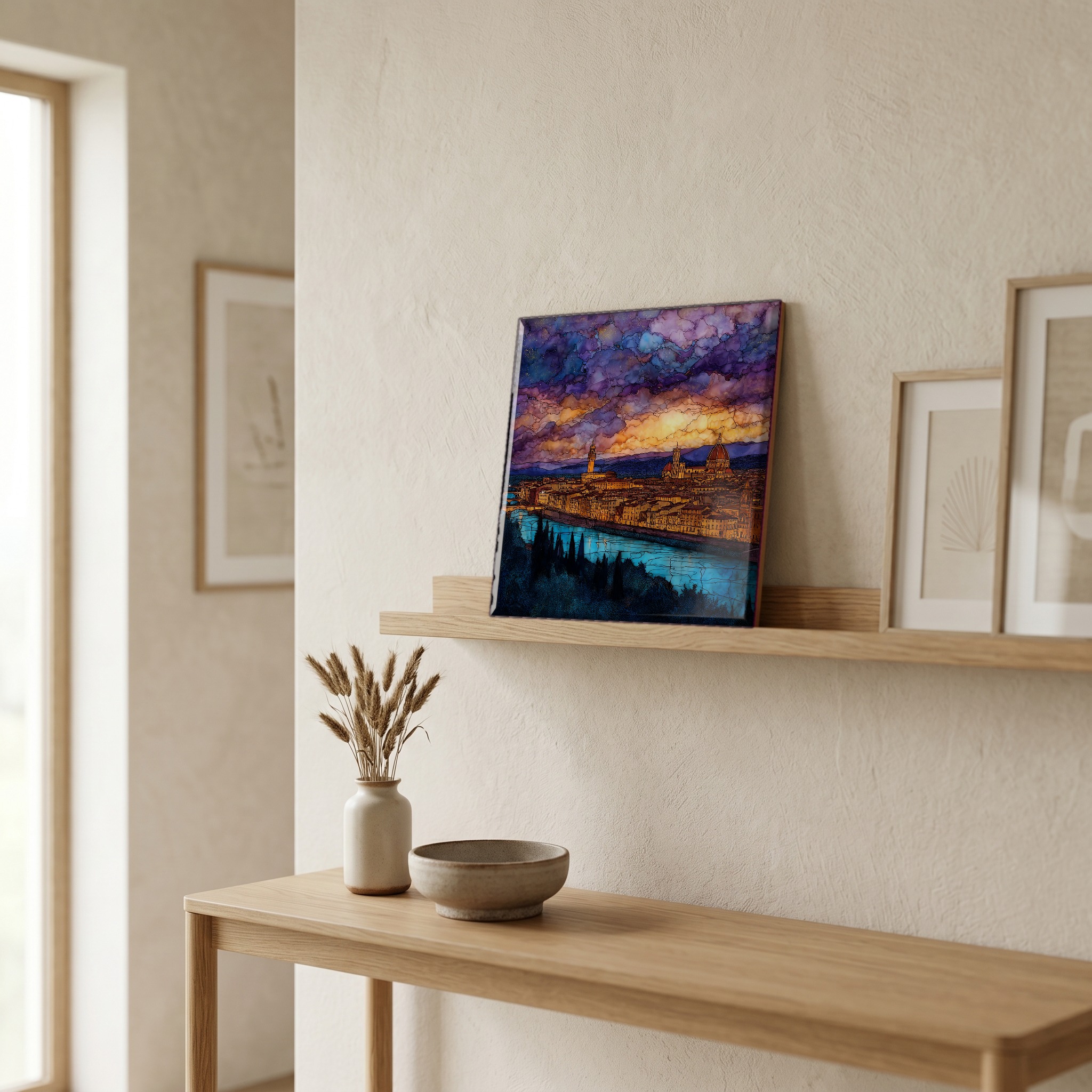
“A terraced square cut into the hill above the Oltrarno, looking back at Florence across the Arno. Giuseppe Poggi laid it out in 1869, when the city was briefly the capital of Italy. There is a bronze David at the centre, copies of the Medici Chapels' allegories at his feet, and a long stone parapet where people lean and wait for the light. Most come for the hour before sunset, when the duomo's terracotta dome and the rooftops of the historic centre soften into the same warm gold. Nobody is in a hurry to leave.
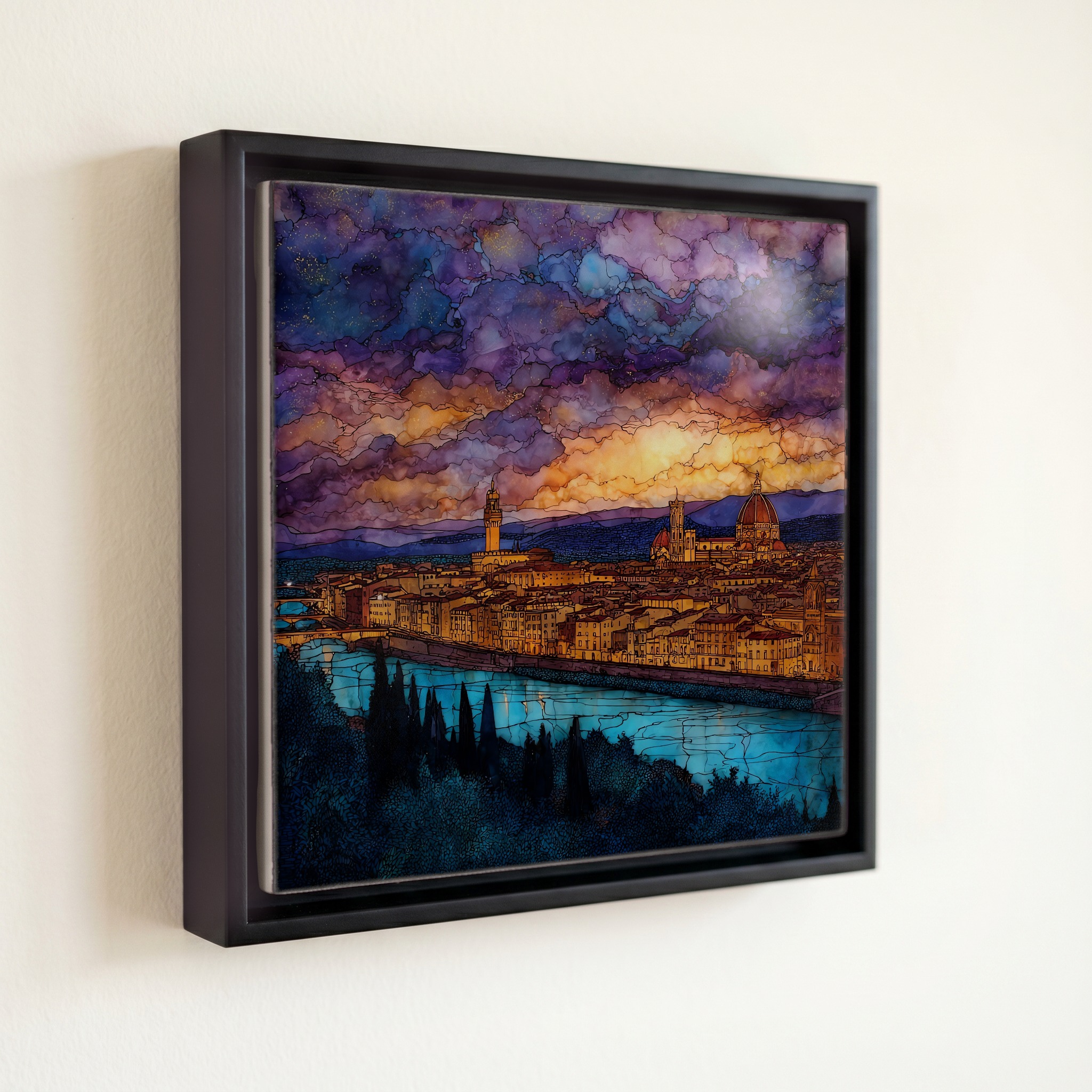
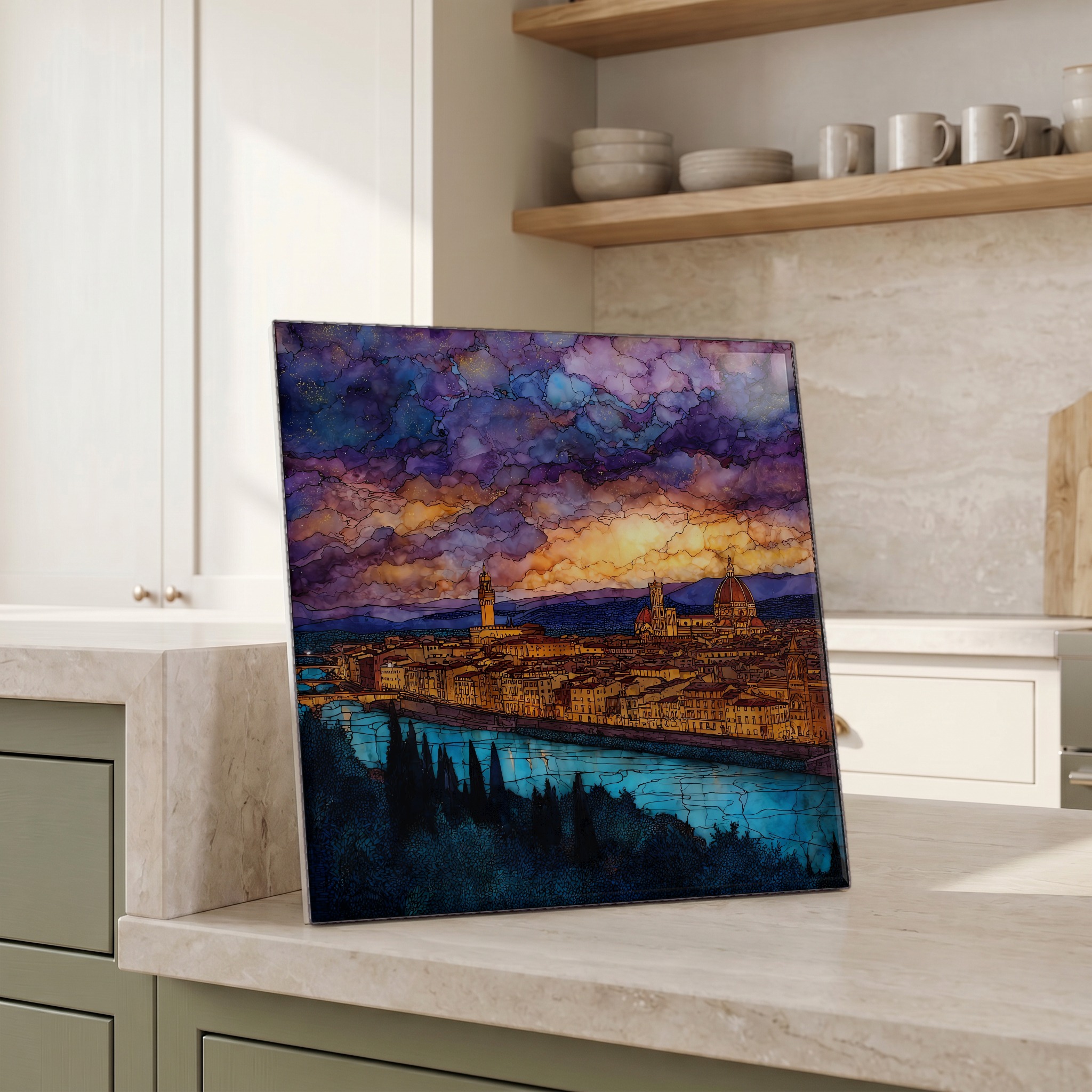
Piazzale Michelangelo, on ceramic.
Each tile is finished by hand in our Knoxville studio. Artwork is slowly infused into the ceramic surface under high heat and pressure, and rests beneath a thin glossy finish. The colour lives in the surface, not on top of it.
Pick any four 4-inch tiles — National Parks you've been to, a Smokies set, the four seasons of one place. $ for a set of , cork-backed, ready to live on the table.
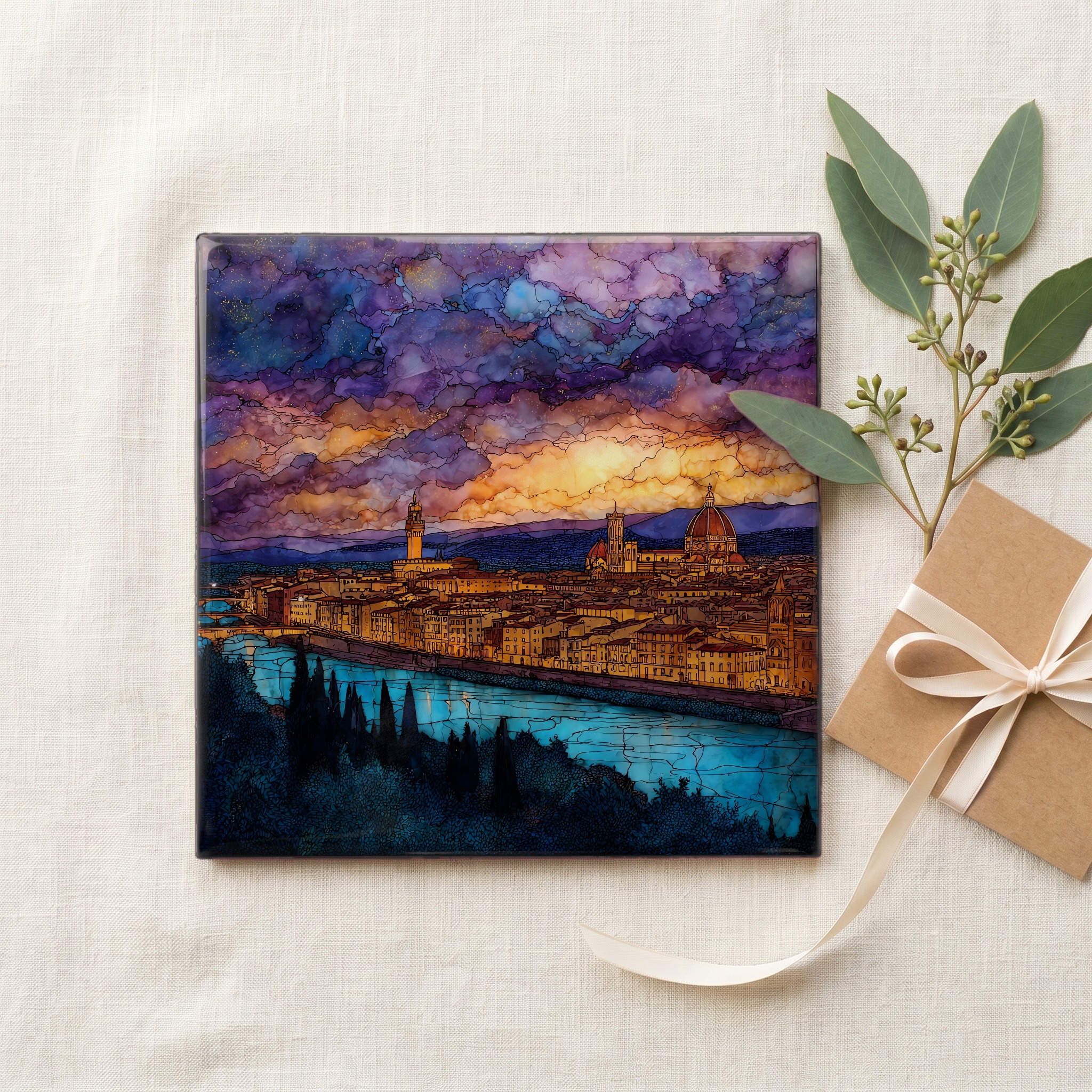
Each tile ships in a kraft box, tied with cream ribbon, with a handwritten note from the studio if you'd like to add one.
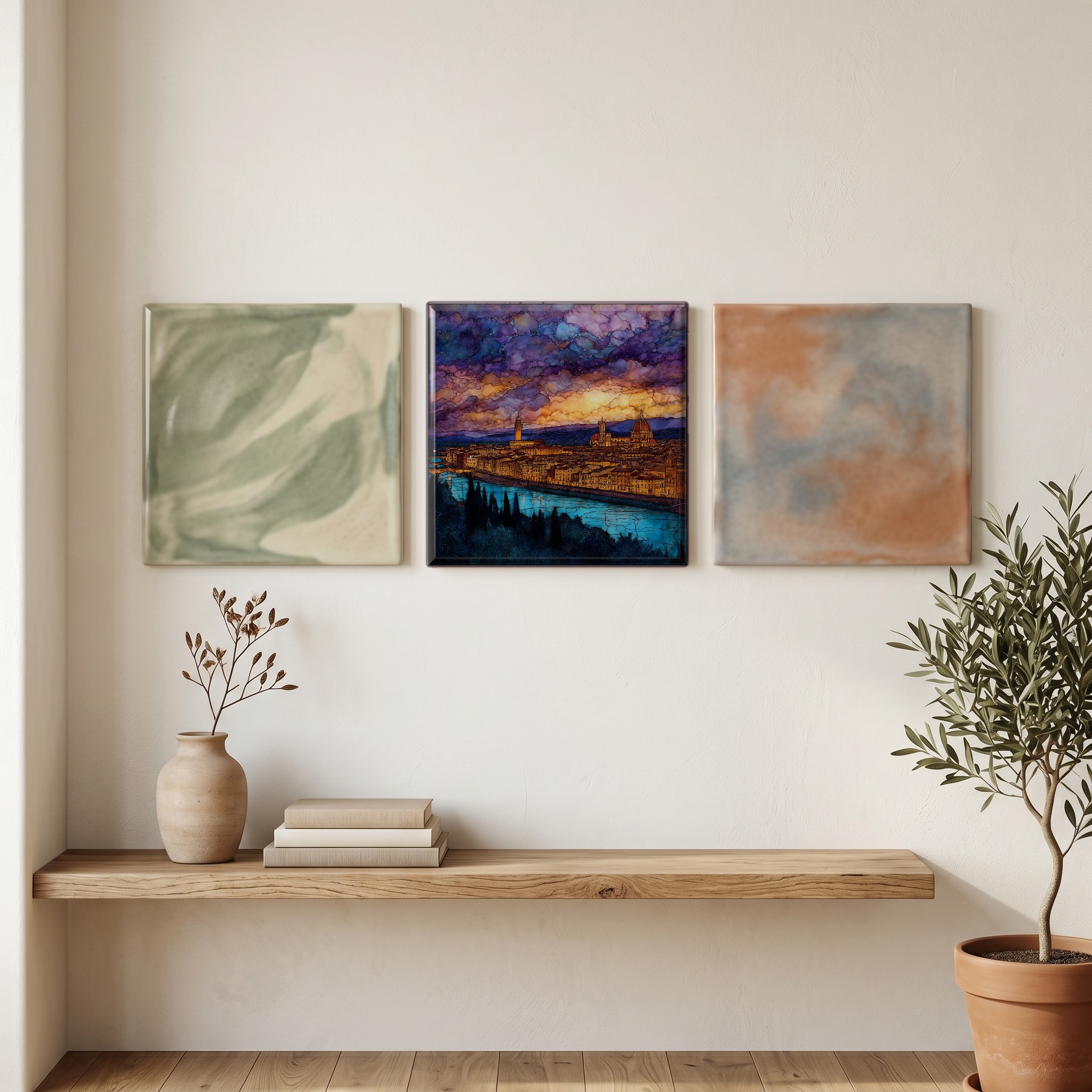
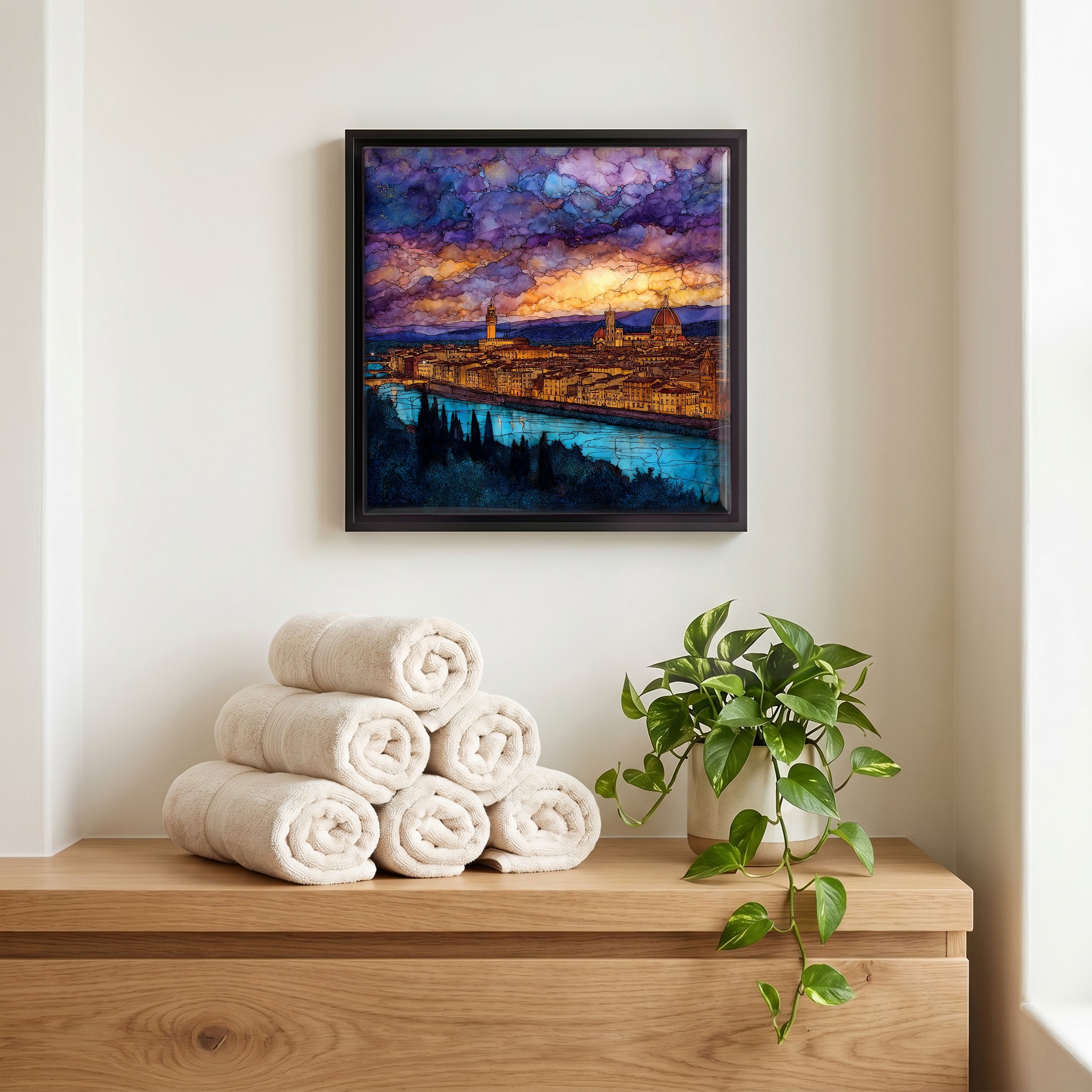
Three or five different vistas, hung together — a chapter of places you've been, or want to go.
The place, in three passes.
Piazzale Michelangelo sits on a terrace cut into the hill of the Oltrarno, the left bank of the Arno opposite Florence's historic centre. The square was designed by the Florentine architect Giuseppe Poggi and opened in 1869, during the brief period (1865 to 1871) when Florence served as the capital of the newly unified Kingdom of Italy. Poggi's scheme included the long looping road that climbs from Porta San Niccolò and the terraced gardens called the Rampe del Poggi. The square looks north across the river to the duomo, Palazzo Vecchio, and the bell-tower of Santa Croce. Behind it, a staircase climbs further to the Romanesque church of San Miniato al Monte.
The square's defining experience is the hour before sunset, when the western light strikes the terracotta roofs of the historic centre and the dome of Santa Maria del Fiore reads the same colour as the tiles around it. Brunelleschi's dome, completed in 1436, anchors the panorama at roughly 114 metres tall and 45 metres across. It still rises above every other rooftop in central Florence. The Arno runs east to west through the view, crossed by the four oldest bridges in order; the Ponte Vecchio holds its line of jewellers' shutters above the water. The light holds for about twenty minutes after the sun drops behind the western hills.
The square is open to the public around the clock and is free to enter. Most visitors arrive on foot up the Rampe del Poggi, a series of terraced staircases through gardens and fountains that climb from Porta San Niccolò in about fifteen minutes. City buses 12 and 13 run from the historic centre. The piazza itself holds a bronze cast of Michelangelo's David and bronze copies of the four allegories from the Medici Chapels at San Lorenzo; the originals are white marble. Behind the square, a bar and restaurant occupy the loggia that Poggi designed as a museum that never opened. Crowds peak in the hour around sunset; mornings are quiet and the light is softer on the duomo.