Wender·Vista
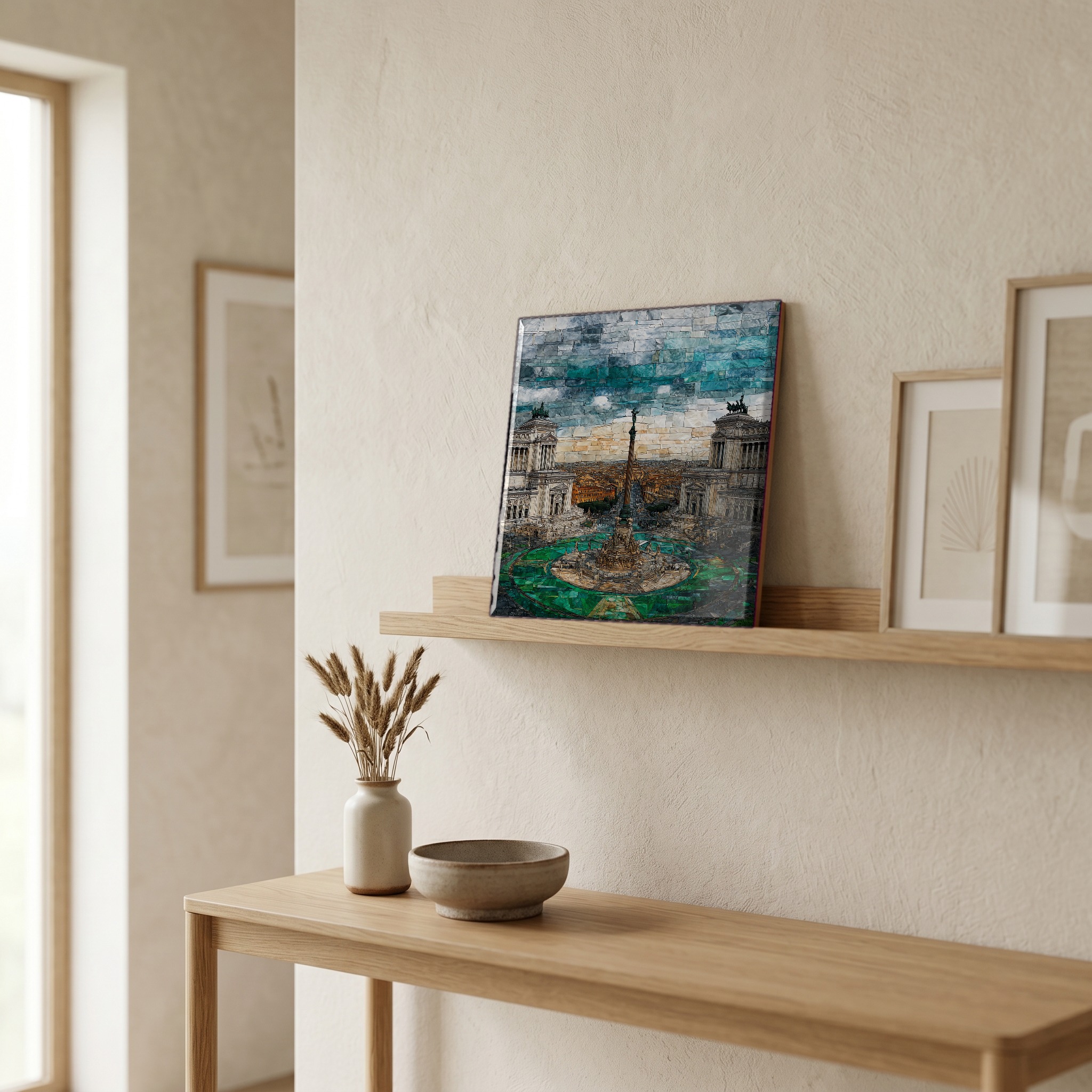
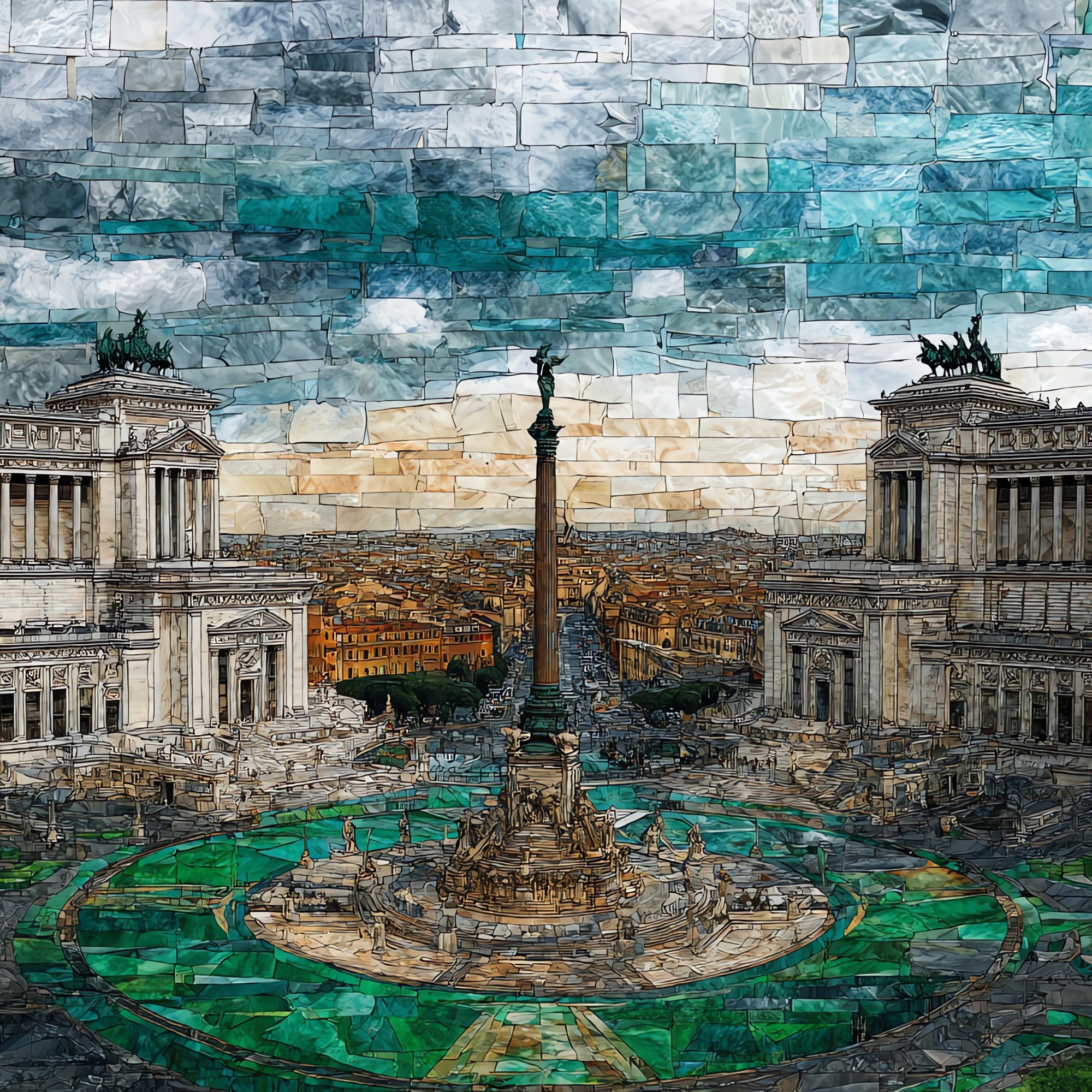
Piazza Venezia
shown on ceramic, 12-inch tileItaly
at the centre of Rome, below the Capitoline Hill

Piazza Venezia

the white marble the evening turns to gold.

Where it lives

Not only on a wall.

A small tile on the nightstand catching the morning. A larger one above the fire. Yours, wherever you spend the slow hours.
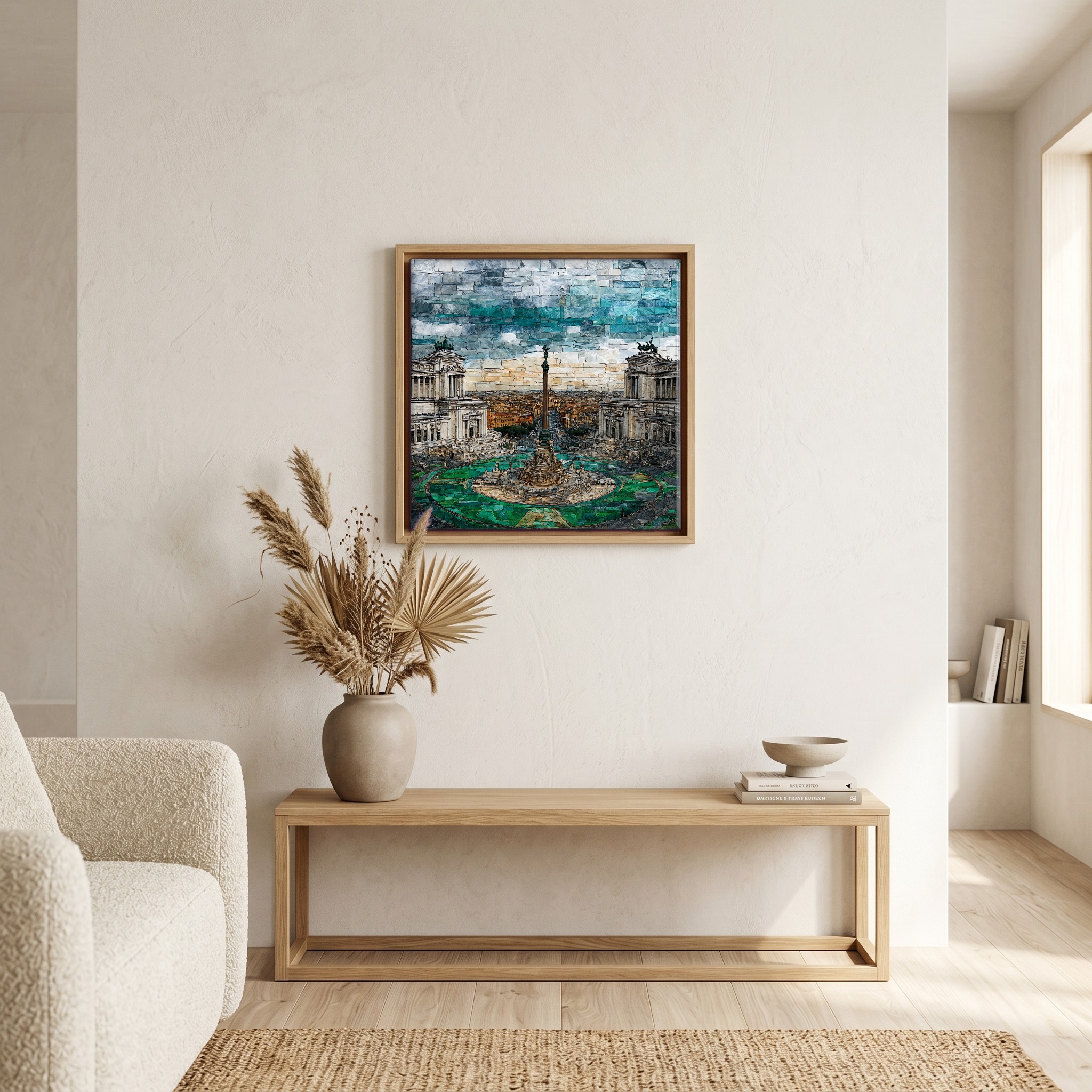
Above the bench, in a warm oak surround.
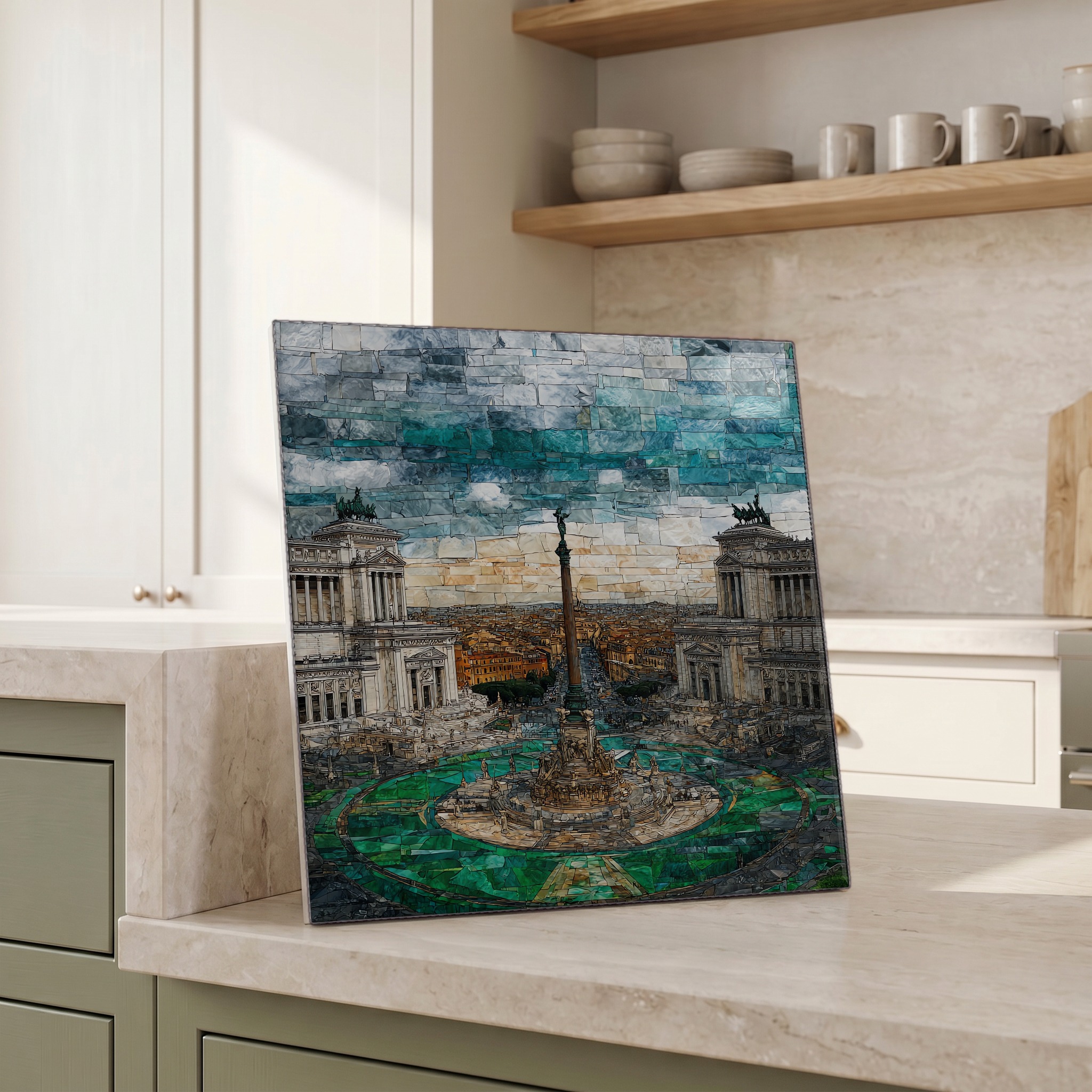
Beside the kettle, propped on the counter.
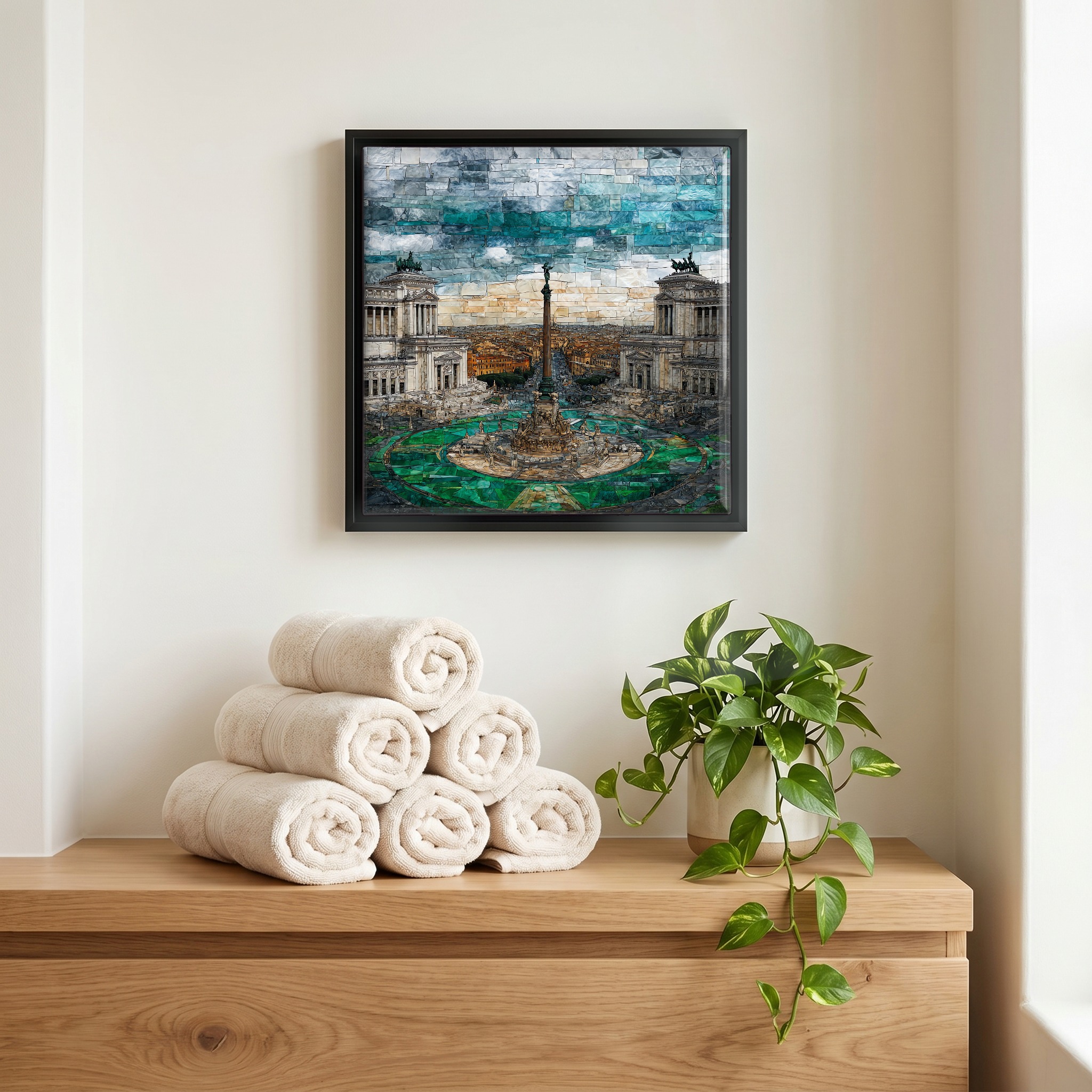
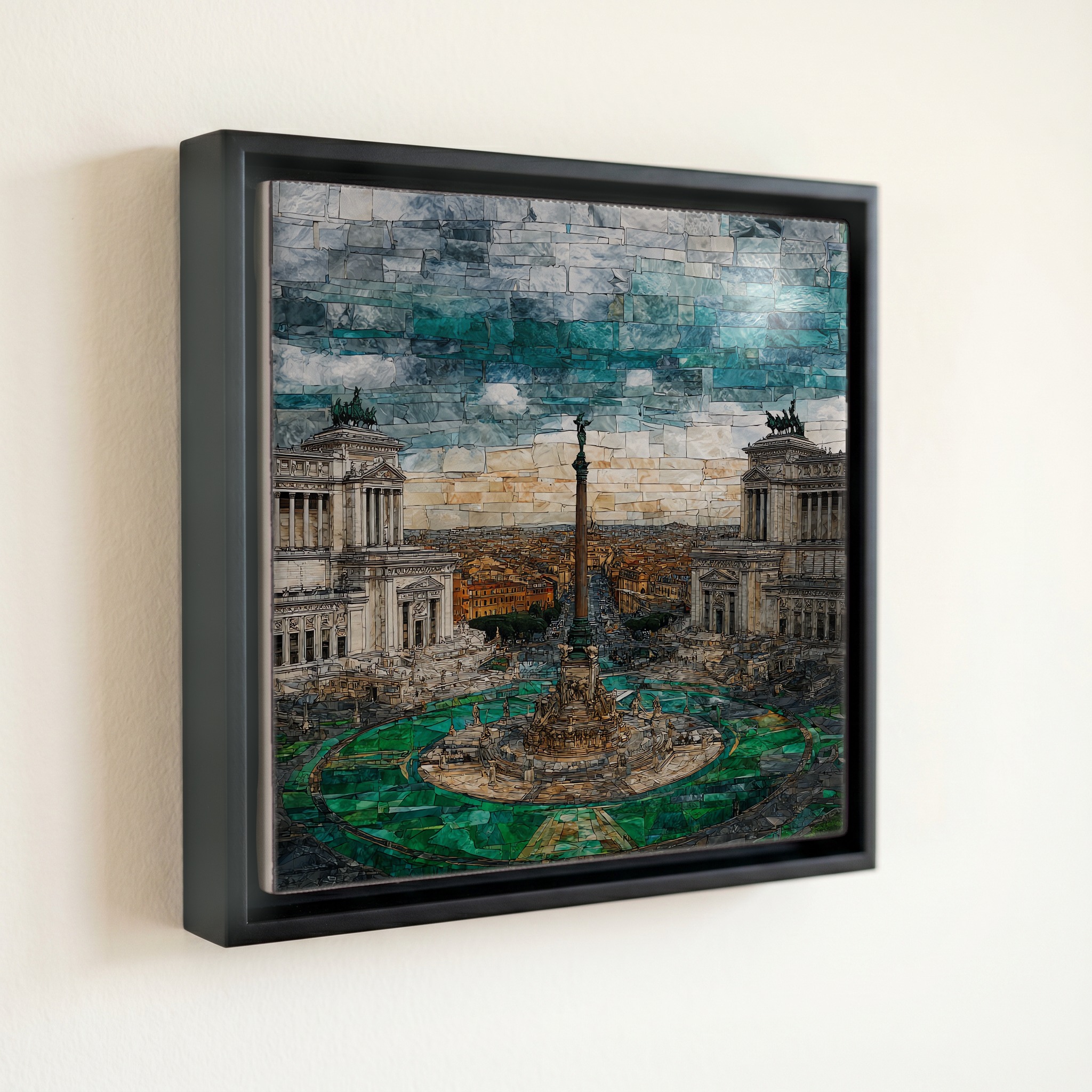
Above the linens, in a slim black surround.
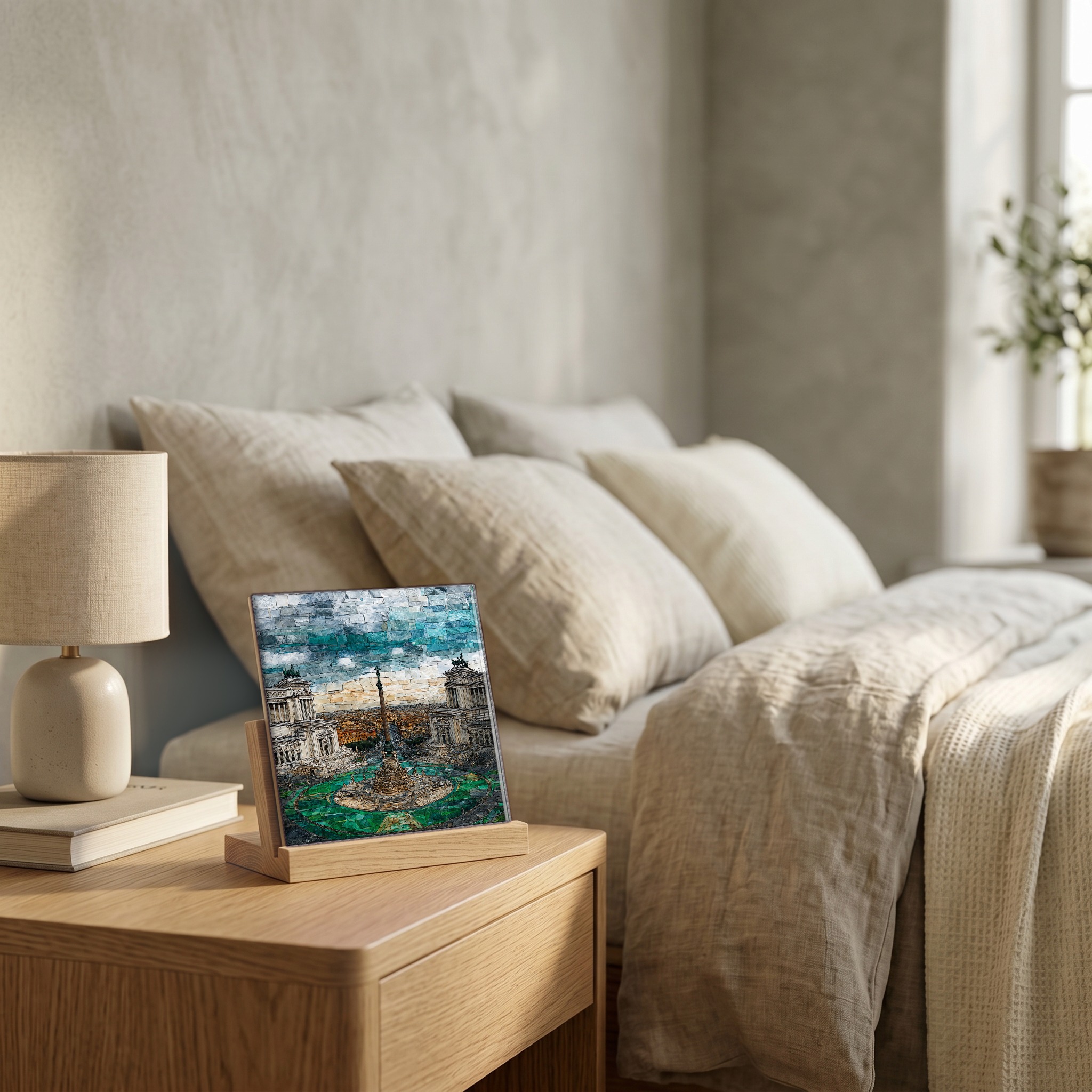
On the nightstand, on a light oak stand.
On a picture ledge, where the light comes in.
a note from the studio

The square at the centre of Rome, where half a dozen streets pour in and the great white monument to the country's first king closes the view. Romans call it the wedding cake, and mean it kindly enough. Traffic circles it all day, and the marble holds the light long after the streets below fall into shade. Inside the monument an eternal flame burns over the tomb of an unknown soldier, with two guards always standing. Most people cross the square on their way somewhere else. It is worth stopping in the middle of it once, to see how much of Rome runs through here.
from the studio
shown in a slim black floating frame · 6 × 6 in
— bring it home

Piazza Venezia, on ceramic.

Each tile is finished by hand in our Knoxville studio. Artwork is slowly infused into the ceramic surface under high heat and pressure, and rests beneath a thin glossy finish. The colour lives in the surface, not on top of it.

What kind of piece?
One tile — square or rectangle.
How big?
the popular one — counter, shelf, nightstand
6 × 6 in · 15 cm · 1.6 lb
Surface finish
A clear glossy finish — the artwork reads as if under resin. Ideal for show-pieces and framed wall art.
How it sits
A hidden cleat — sits ¼″ proud of the wall.
$58
Hand-finished and shipped from our studio at the foot of the Smokies. On your wall in about ten days.
size
6 × 6 in
15 cm
weighs
1.6 lb
solid in the hand
surface
ceramic, hand-finished
art rests beneath a thin glossy finish
from
Knoxville, TN
our family studio, at the foot of the Smokies
— start a Coaster Set

Pick any four 4-inch tiles — National Parks you've been to, a Smokies set, the four seasons of one place. $ for a set of , cork-backed, ready to live on the table.
comes gift-ready
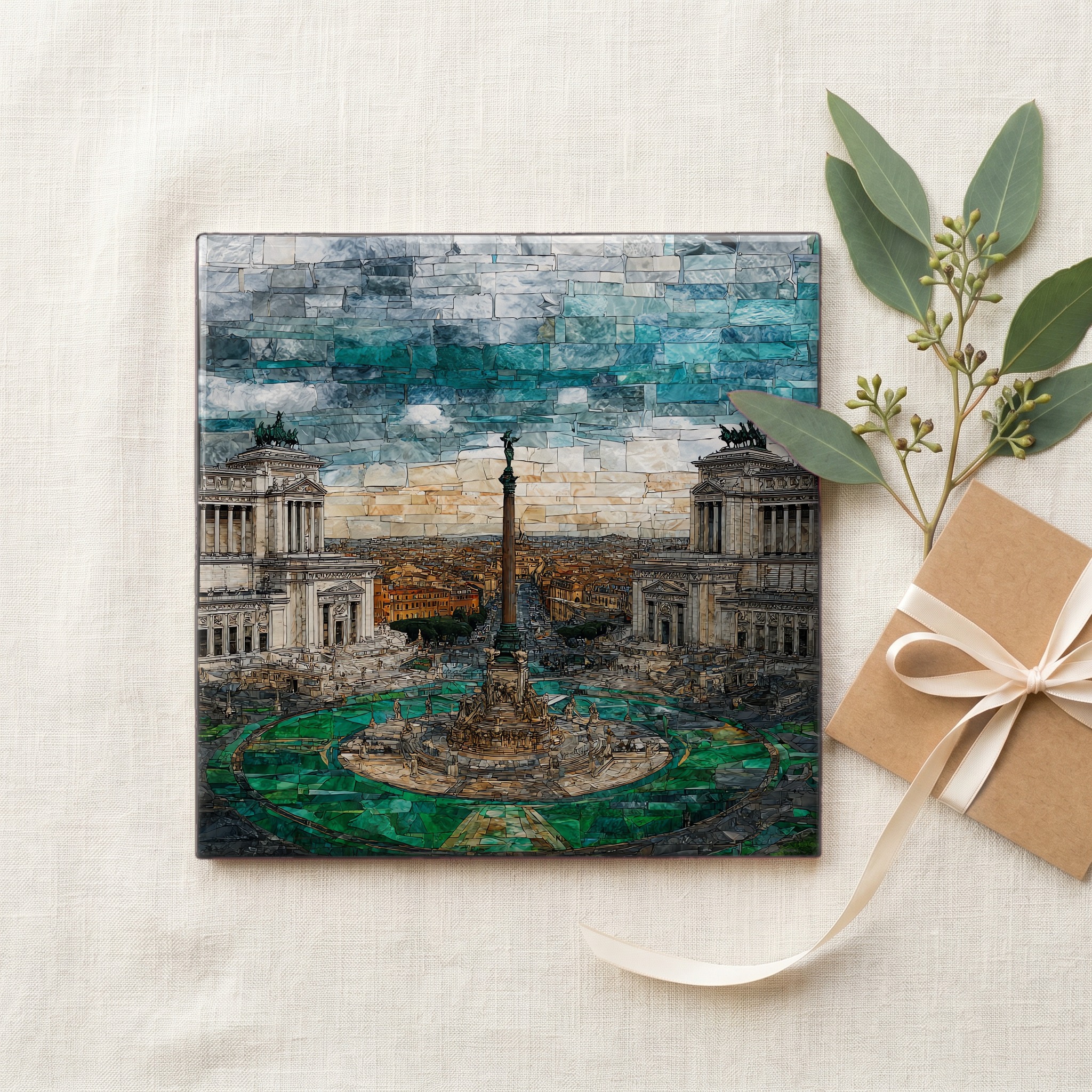
comes gift-ready

Each tile ships in a kraft box, tied with cream ribbon, with a handwritten note from the studio if you'd like to add one.
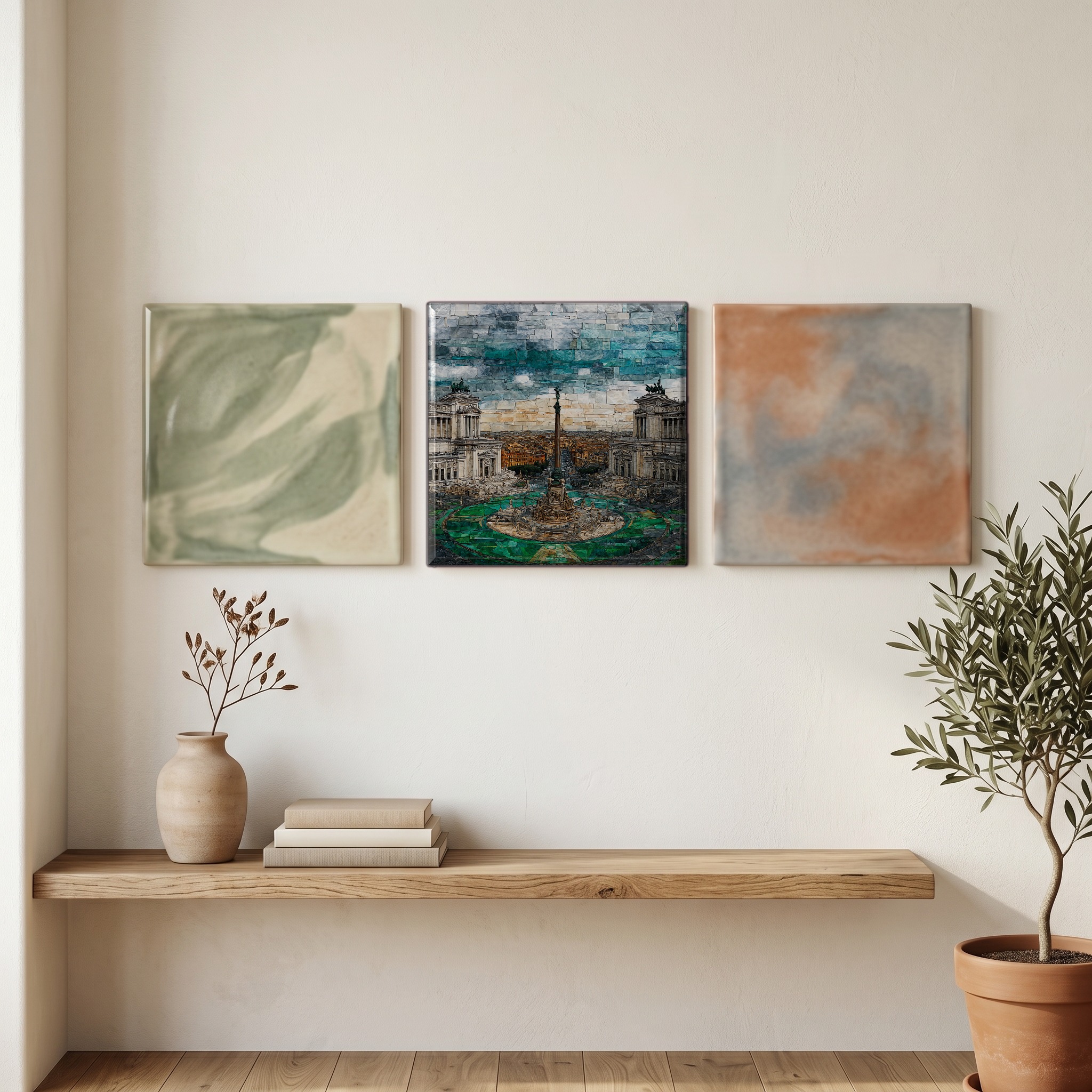
or build a grouping
or build a grouping

Three or five different vistas, hung together — a chapter of places you've been, or want to go.

about Piazza Venezia

The place, in three passes.

A little of what's known, in case you fall down the rabbit hole — or want to go see it yourself.
the place

Piazza Venezia sits at the centre of Rome, in the Lazio region of Italy, where Via del Corso, Via dei Fori Imperiali and several other streets converge below the Capitoline Hill. It takes its name from Palazzo Venezia, the fifteenth-century palace on its western side that once housed the Republic of Venice's embassy. The square is dominated by the Victor Emmanuel II Monument, the colossal white memorial to the country's first king. It is one of the city's busiest junctions, ringed by traffic and walkable from the Roman Forum, the Pantheon and the Trevi Fountain. The nearest Metro stop is Colosseo, about a kilometre to the south-east.

— informed by Wikipedia
the stone

The Victor Emmanuel II Monument is built from white Botticino marble, quarried near Brescia in northern Italy, which keeps it pale against the warm ochre of the surrounding city. It is 135 metres wide and about 70 metres high, rising to roughly 81 metres at the tips of the two bronze chariots on its roof. Designed by Giuseppe Sacconi, it was begun in 1885, inaugurated in 1911 and finished in 1935. Across the square, Palazzo Venezia is far older: built for Cardinal Pietro Barbo, later Pope Paul II, between 1455 and 1464, with much of its stone taken from the Colosseum. From its balcony Mussolini once addressed the crowds below.

the visit

At the centre of the monument, beneath the bronze equestrian statue of the king, burns the eternal flame of the Tomb of the Unknown Soldier, where an unidentified Italian killed in the First World War was laid to rest in 1921. Two soldiers stand guard at all hours. Visitors can climb the marble stairs to the Altar of the Fatherland for free, and a glass lift added in 2007 carries them to a rooftop terrace with a wide view over the Roman Forum and the domes of the centre. The Vittoriano also holds a museum of the Risorgimento, the movement that unified Italy. The square itself never closes, and crossing the traffic around it on foot takes patience.

where
Italy · Rome, Lazio
position
41.8959° N · 12.4823° E
the neighborhood

What's nearby.

A handful of named places within an hour's walk or short drive. Some we've already painted; some we will.
0.2 km E
Trajan's Column
Roman triumphal column
0.2 km S
Piazza del Campidoglio
Renaissance square
0.6 km NE
Trevi Fountain
Baroque fountain
0.6 km NW
Pantheon
Roman temple
0.9 km SE
Colosseum
Roman amphitheatre
N
Piazza Venezia
Trajan's Column
Piazza del Campidoglio
Trevi Fountain
Pantheon
Colosseum
common questions

What people ask.

A few questions we get about Piazza Venezia — and about bringing the piece home.
about the place

Piazza Venezia is a large square at the centre of Rome, in the Lazio region of Italy. It sits below the Capitoline Hill where several major streets meet, including Via del Corso and Via dei Fori Imperiali, which runs toward the Colosseum.

It is the Victor Emmanuel II Monument, also called the Vittoriano or Altar of the Fatherland, built to honour the country's first king. Made of white Botticino marble, it stands about 70 metres high and 135 metres wide, begun in 1885 and finished in 1935.

The square is named after Palazzo Venezia, the fifteenth-century palace on its western side. The palace served as the embassy of the Republic of Venice in Rome from 1564. In the twentieth century it became Mussolini's headquarters, and he spoke from its balcony.

The monument holds the Tomb of the Unknown Soldier, where a fallen Italian from the First World War was buried in 1921 beneath an eternal flame guarded around the clock. It also contains a museum of the Risorgimento, the movement that unified Italy.

Yes. Climbing the marble stairs to the Altar of the Fatherland is free, and a glass lift added in 2007 carries visitors to a rooftop terrace. From there the view reaches over the Roman Forum, the Pantheon and the rooftops of central Rome.

The nickname comes from its tiered white marble, which resembles a layered cake; others call it the typewriter for its shape. The pale Botticino marble stands out against Rome's older ochre and travertine buildings, which is part of why it draws the eye.

about the piece in your home

It has been a meaningful gift for people with ties to the city. Piazza Venezia is the crossroads almost everyone in Rome passes through, and the white monument is one of the first things you see arriving in the centre. A Small or Medium with a handwritten note from the studio carries well.

The piece pairs well with warm, classic interiors such as Italian-modern, jewel-tone maximalist, and traditional European rooms. The stained-glass colour reads as art rather than a souvenir, so it holds its own over a console table or in a gallery wall of travelled places.

Travel-led art is steadily replacing generic prints, and a single named place reads as more personal than a poster. The deep stained-glass palette suits the current move toward jewel tones and warmer, collected interiors rather than all-white minimalism.

Above a console table, a single Large holds the wall on its own. Above a sofa, a 4-tile Mural gives the scale the longer wall wants, and a 9-tile Mural suits a large feature wall. Smaller rooms do well with a Medium.

Yes. For a kitchen backsplash, a bathroom or a shower wall, order the Dura Satin or Matte finish, which is soft-sheen and scratch-resistant for vertical, damp installations. The glossy finish is better kept to framed wall pieces in drier rooms.

A soft microfibre cloth and water is all it needs. The colour is slowly infused into the ceramic surface under high heat and pressure and lives beneath a thin glossy finish, so it will not fade or lift with normal cleaning. Avoid abrasive scrubbers.

Yes. Every WenderVista piece is created in-house by Reid Wender, the studio's curator, in our own stained-glass visual language. Nothing is licensed or reproduced from another artist, so the Piazza Venezia tile exists only here.

if this one stayed with you

A few you might also love.

Hand-picked by the eye that found Sorapis. Same air, same kind of quiet.
— a collection

The Italian Dolomites,
painted slow.

The valleys between Cortina and Val Gardena, the tarns you walk an hour to see, the towers that turn the colour of a banked fire just before dark. Wander the collection by valley, by season, or follow the path Reid walked.

Tre Cime
Braies
Misurina
Sorapis
Cinque Torri
Sassolungo
Marmolada