Wender·Vista
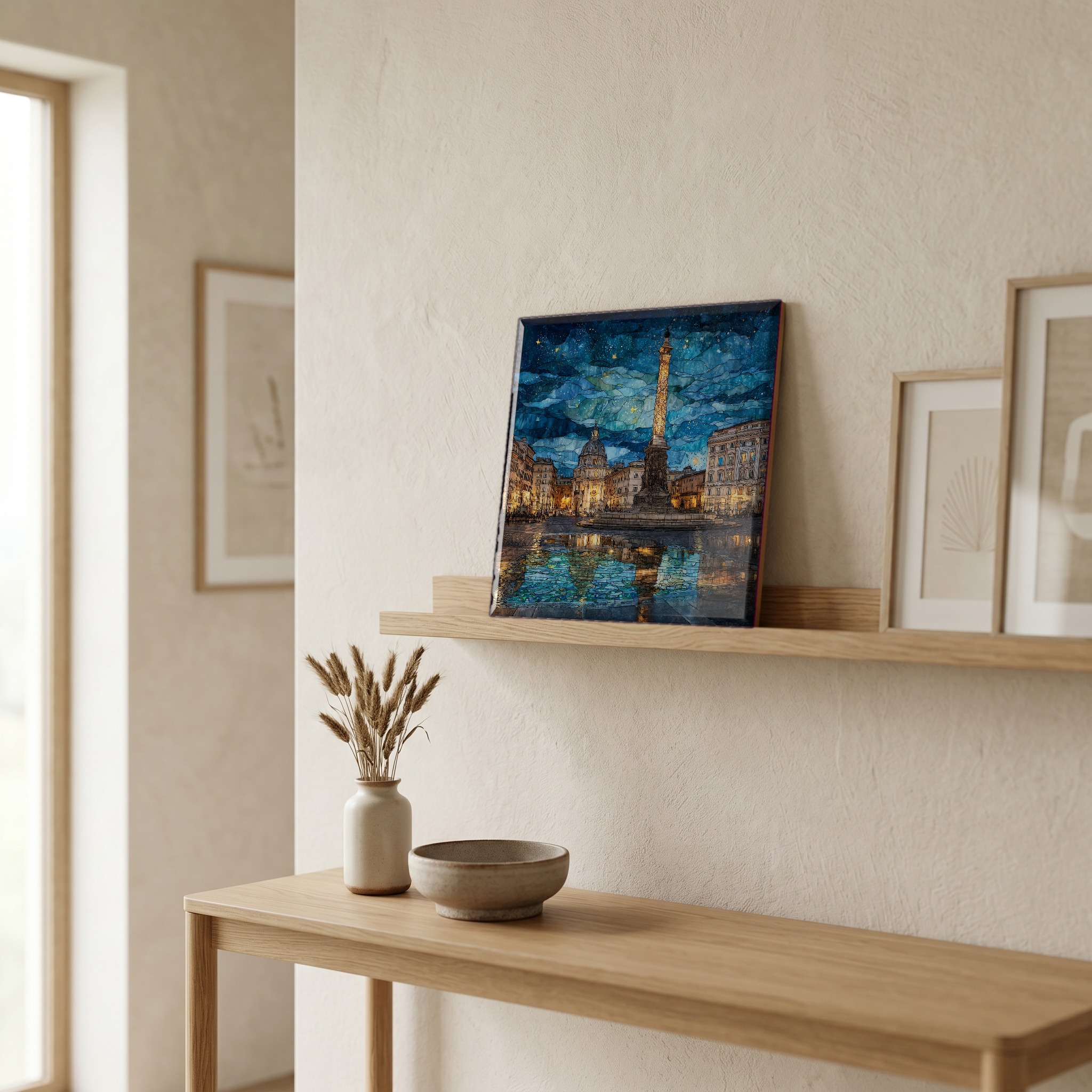
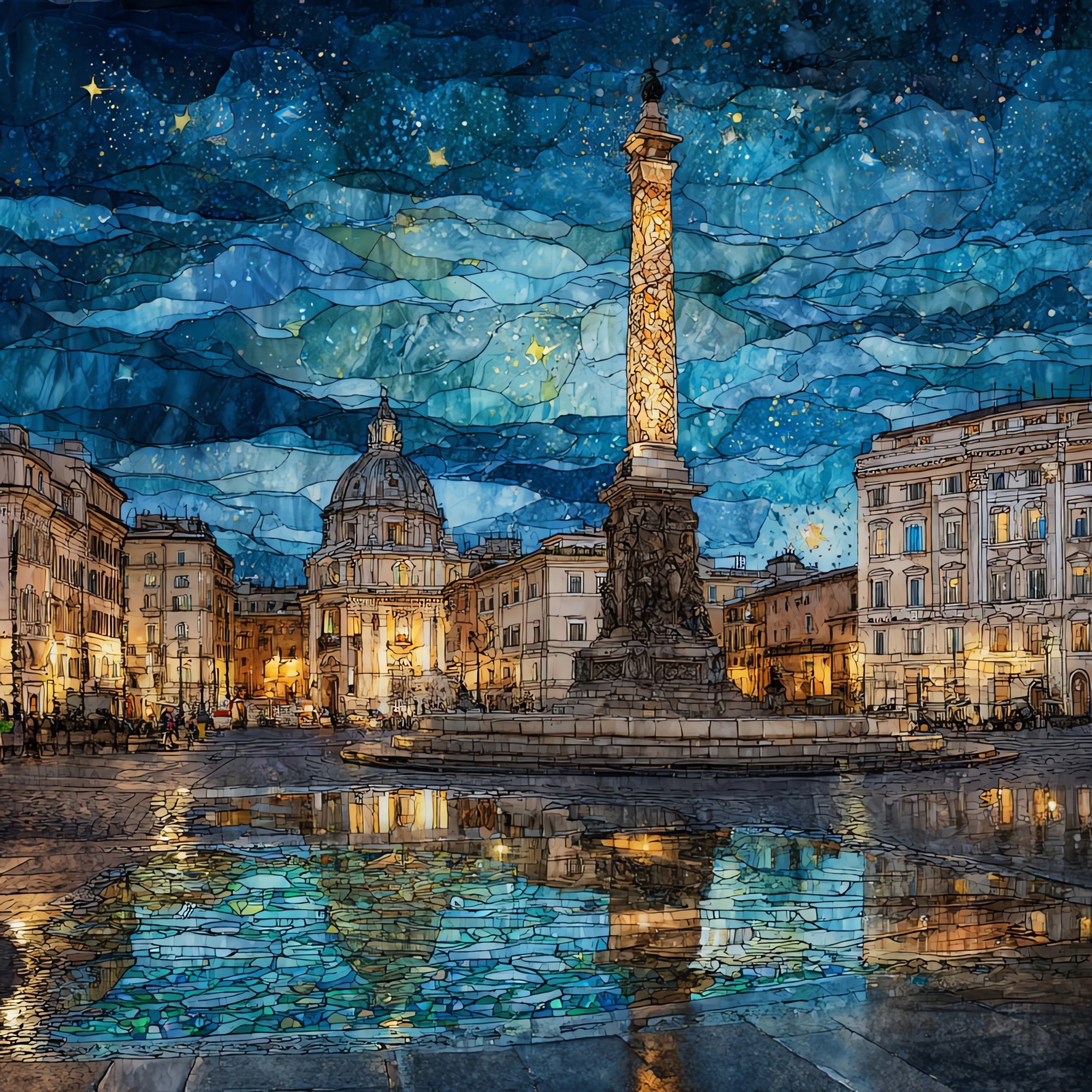
Piazza Navona
shown on ceramic, 12-inch tileItaly
in Rome's centro storico, just west of the Pantheon

Piazza Navona

— the fountains running where the runners ran.

Where it lives

Not only on a wall.

A small tile on the nightstand catching the morning. A larger one above the fire. Yours, wherever you spend the slow hours.
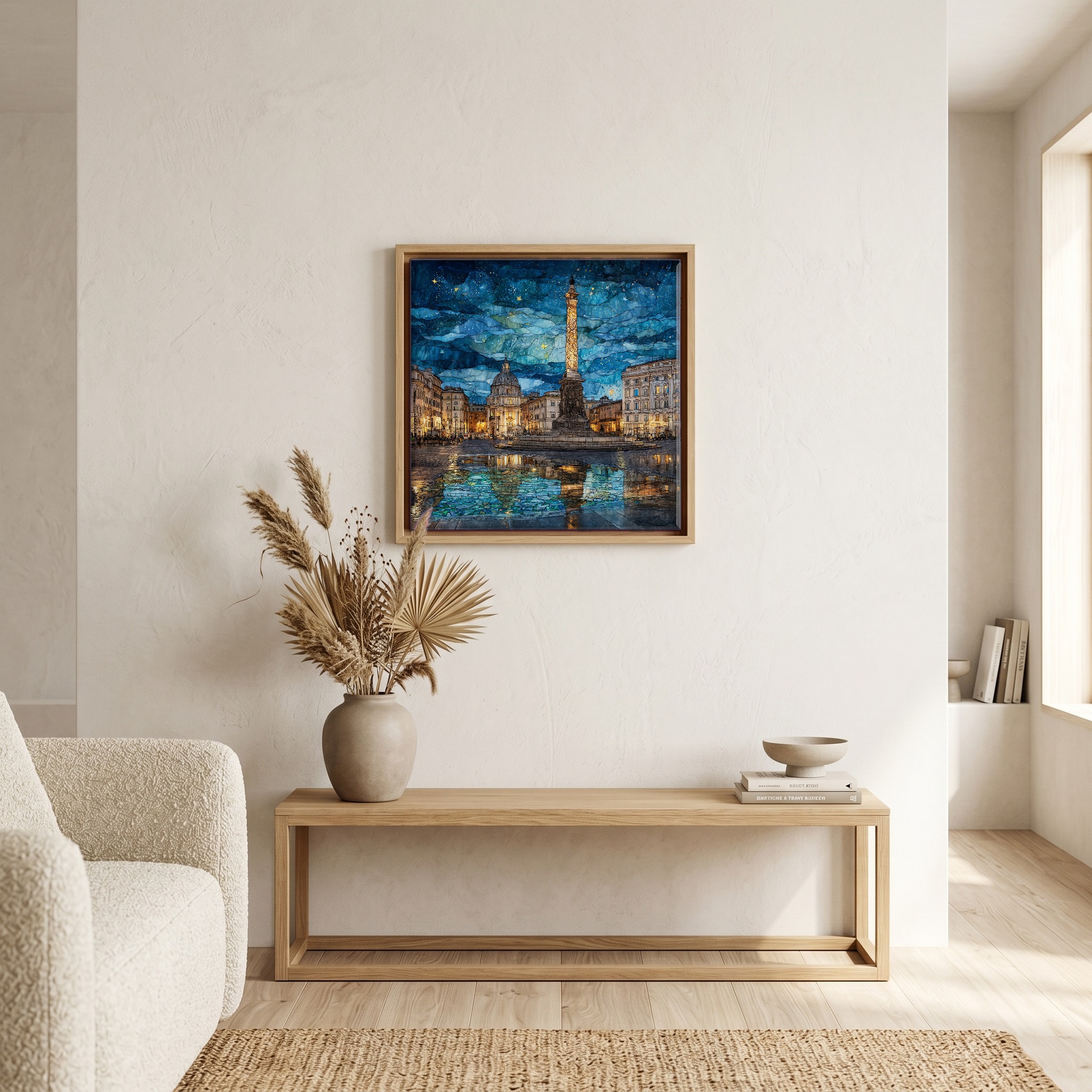
Above the bench, in a warm oak surround.
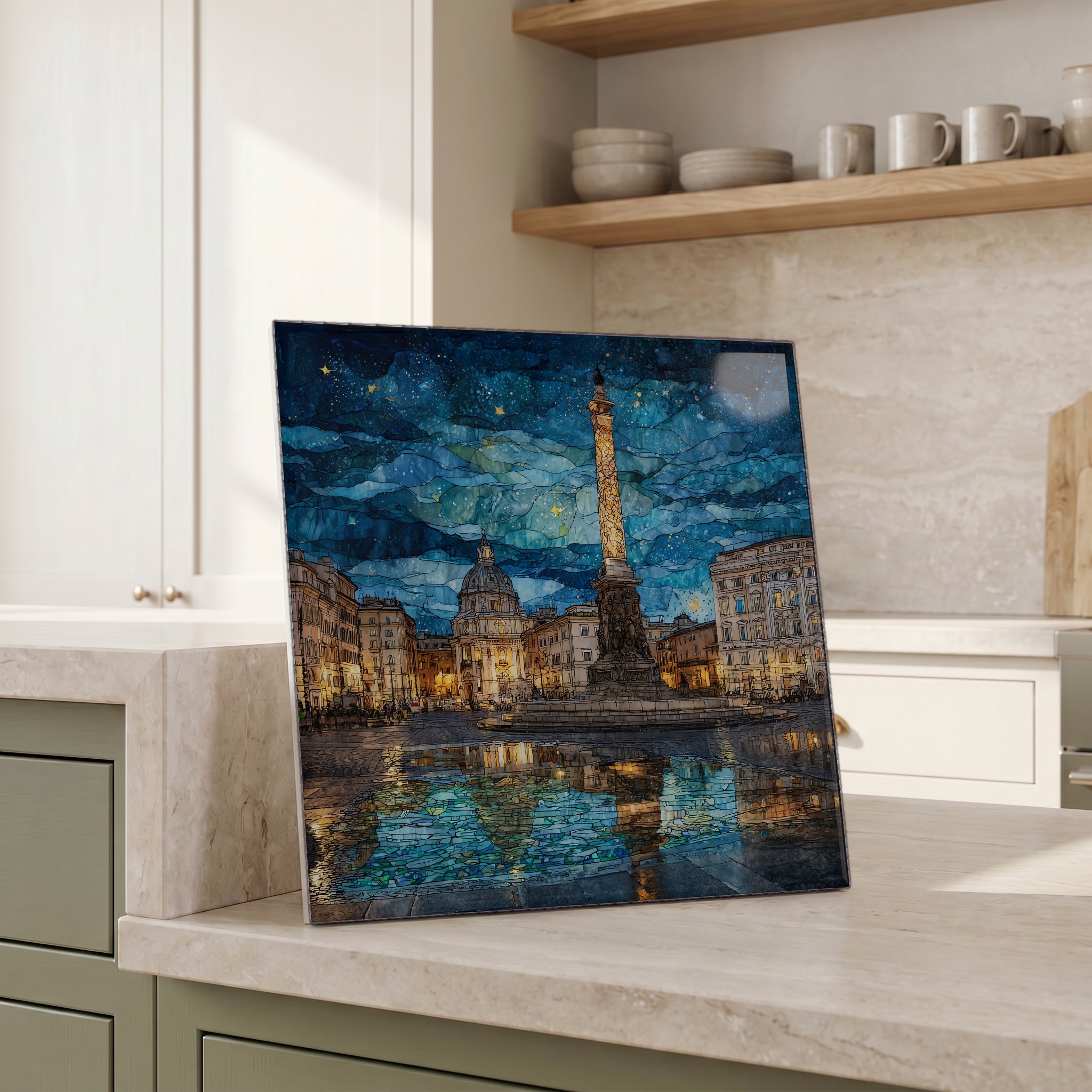
Beside the kettle, propped on the counter.
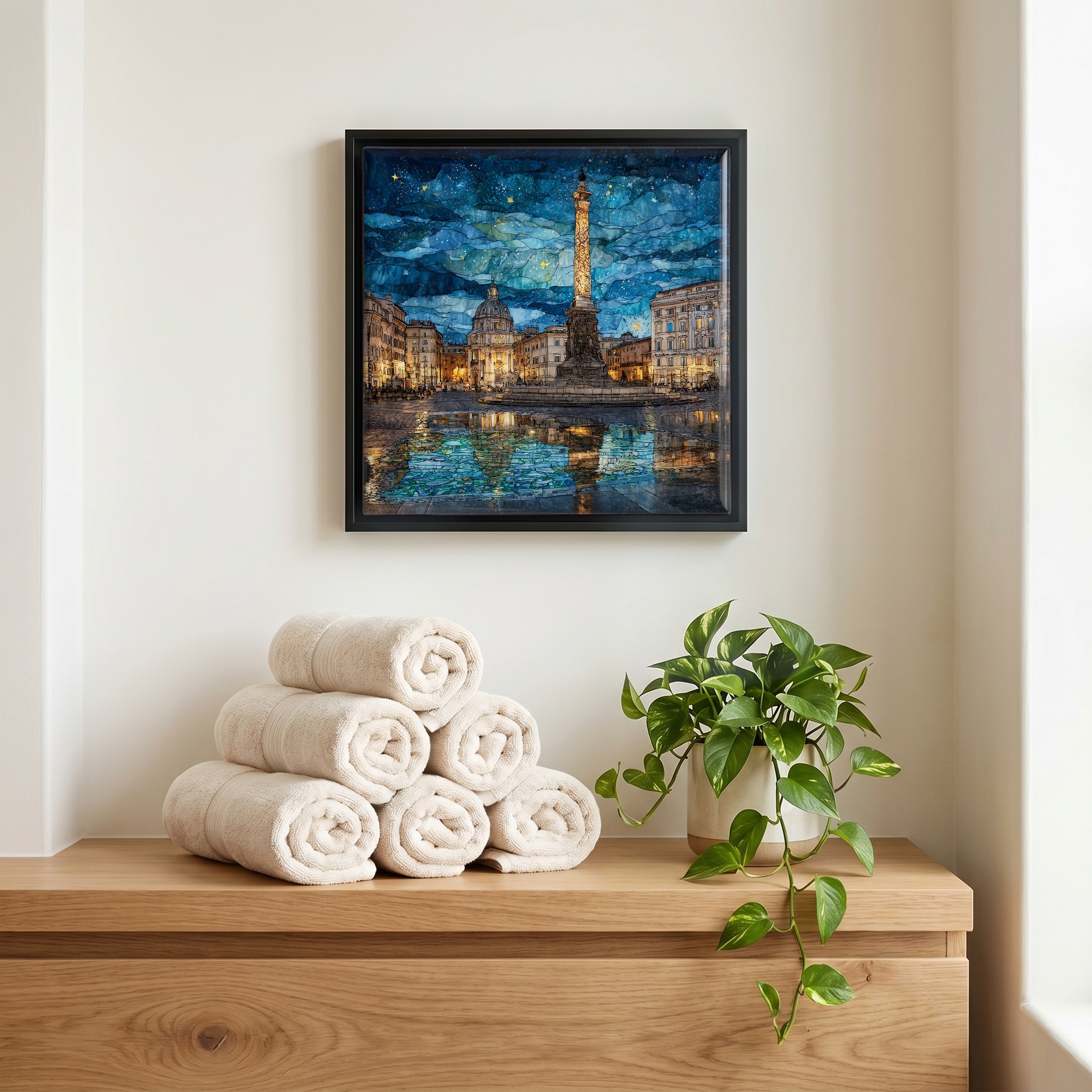
Above the linens, in a slim black surround.
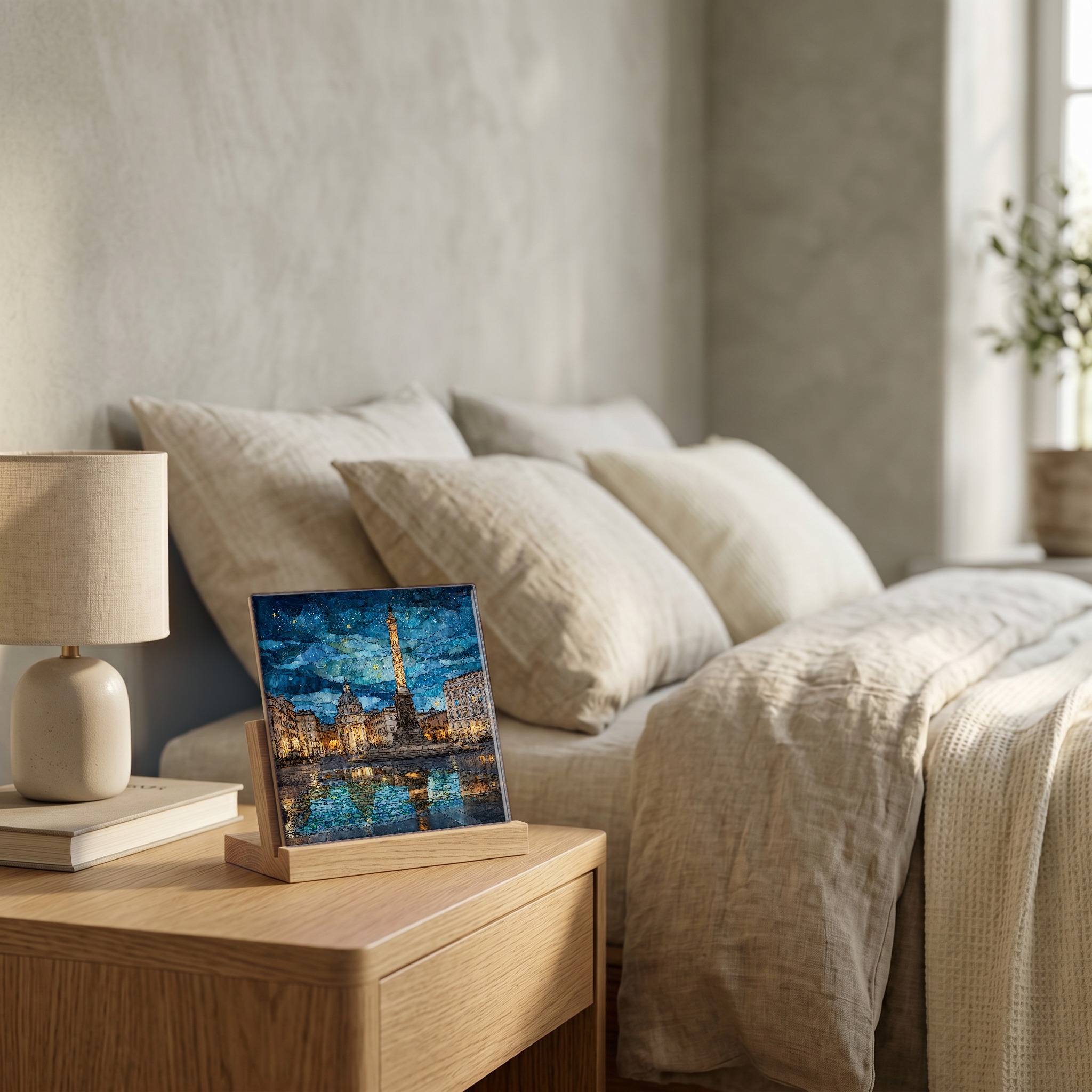
On the nightstand, on a light oak stand.
On a picture ledge, where the light comes in.
a note from the studio

The piazza keeps the shape of the Stadium of Domitian beneath it: a long oval where Romans once watched runners and now watch the light cross Bernini's Four Rivers fountain. The obelisk at the centre, the Borromini church on the west side, the cafés along the long curve. At Christmas the Befana stalls fill the space; in late afternoon, families and street painters move through. Three fountains. One church. One pope's family square, opened to the city. Nobody hurries.
from the studio
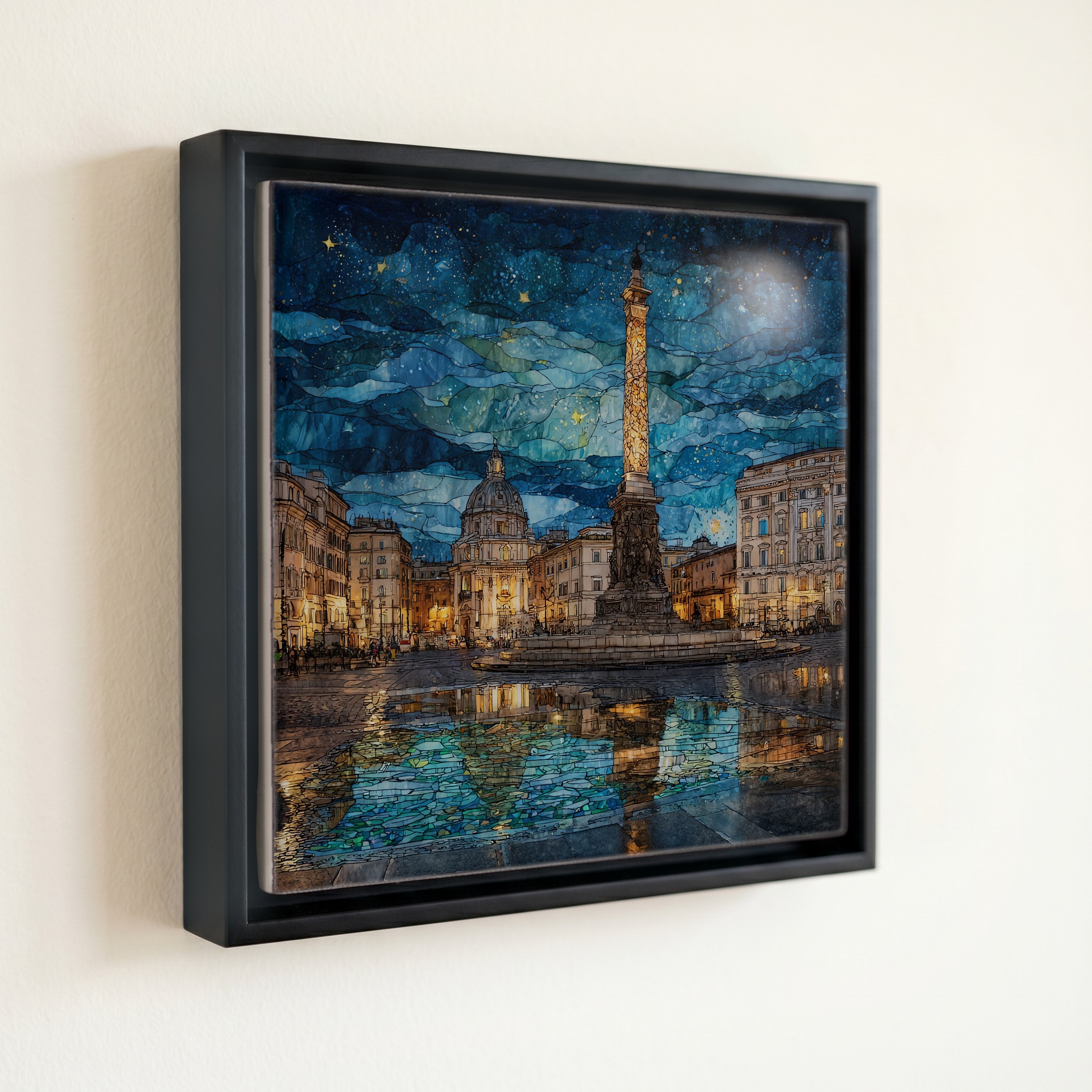
shown in a slim black floating frame · 6 × 6 in
— bring it home

Piazza Navona, on ceramic.

Each tile is finished by hand in our Knoxville studio. Artwork is slowly infused into the ceramic surface under high heat and pressure, and rests beneath a thin glossy finish. The colour lives in the surface, not on top of it.

What kind of piece?
One tile — square or rectangle.
How big?
the popular one — counter, shelf, nightstand
6 × 6 in · 15 cm · 1.6 lb
Surface finish
A clear glossy finish — the artwork reads as if under resin. Ideal for show-pieces and framed wall art.
How it sits
A hidden cleat — sits ¼″ proud of the wall.
$58
Hand-finished and shipped from our studio at the foot of the Smokies. On your wall in about ten days.
size
6 × 6 in
15 cm
weighs
1.6 lb
solid in the hand
surface
ceramic, hand-finished
art rests beneath a thin glossy finish
from
Knoxville, TN
our family studio, at the foot of the Smokies
— start a Coaster Set

Pick any four 4-inch tiles — National Parks you've been to, a Smokies set, the four seasons of one place. $ for a set of , cork-backed, ready to live on the table.
comes gift-ready
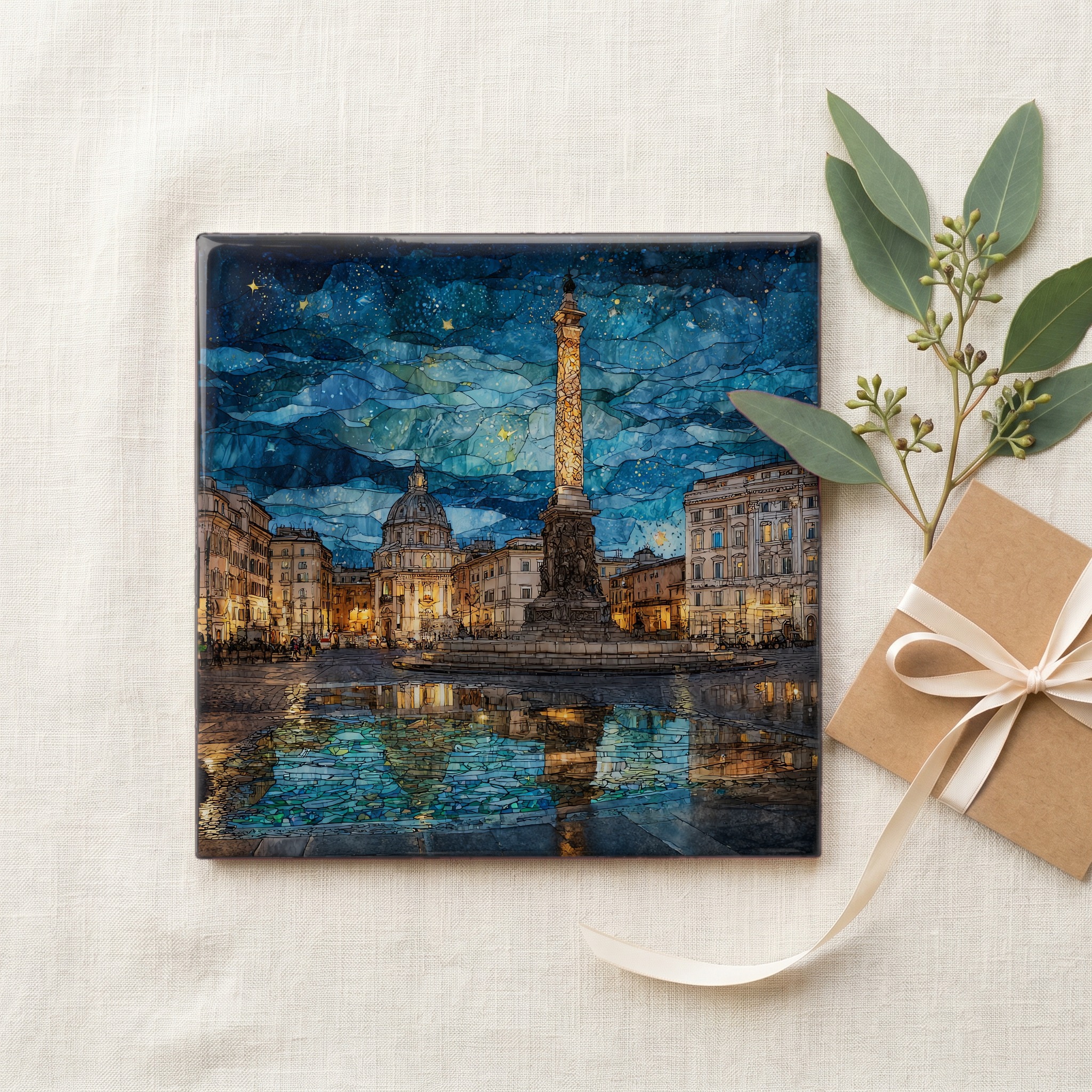
comes gift-ready

Each tile ships in a kraft box, tied with cream ribbon, with a handwritten note from the studio if you'd like to add one.
or build a grouping
or build a grouping

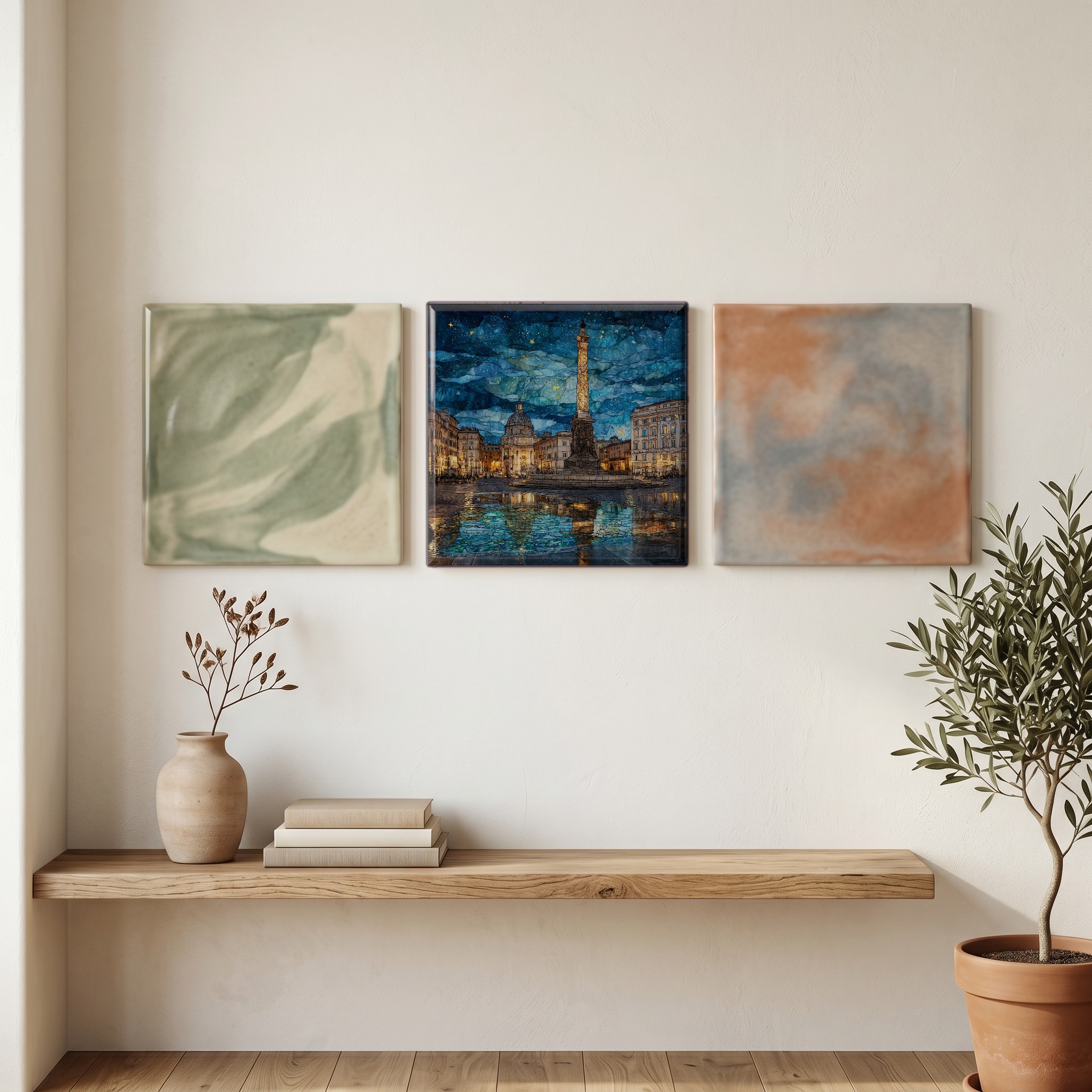
Three or five different vistas, hung together — a chapter of places you've been, or want to go.

about Piazza Navona

The place, in three passes.

A little of what's known, in case you fall down the rabbit hole — or want to go see it yourself.
the place

Piazza Navona sits in the centro storico of Rome, in Rione VI Parione, with the Pantheon about 250 metres to the east and Campo de' Fiori a short walk south. The piazza preserves the elongated outline of the Stadium of Domitian, built around 86 AD to host athletic contests called agones. The Greek word drifted through 'in agone' and 'n'agone' into the name Navona. The space measures roughly 240 metres long and 65 wide, and was paved as a public square in the 15th century after the stadium ruins had served centuries as housing and workshops. Pope Innocent X (Giovanni Battista Pamphilj), elected in 1644, transformed it into a Baroque set piece centred on his family's palace, now the Brazilian embassy.

the stone

Three fountains and one church set the piazza's stone. Bernini's Fontana dei Quattro Fiumi, completed in 1651 for Innocent X, stands at the centre: four river gods (the Danube, the Nile, the Ganges, and the Río de la Plata) hold up a 16-metre obelisk carved for Domitian in Aswan granite, brought here from the Circus of Maxentius on the Via Appia. At the south end the Fontana del Moro has a basin by Giacomo della Porta from 1575 and a central Moor figure by Bernini from 1653. At the north end the Fontana del Nettuno waited basinless from 1574 until its sculptures arrived in 1878. Borromini's Sant'Agnese in Agone, finished in 1672, closes the west side.

the year

From early December through the Epiphany on January 6, the piazza becomes the Mercato della Befana, a long-running Christmas market built around the Italian folk figure of la Befana, the old woman who flies on a broom and leaves sweets or coal for children on the eve of Epiphany. Stalls fill the long oval with carbone dolce (sugar coal), torrone, nativity figures, calze toys, and panettone. By mid-January the stalls are gone and the piazza returns to its everyday rhythm of street painters, café tables, and the slow tourist clock that turns through Rome's centro storico. Late September into early October is the quieter season, before the holiday build.

where
Italy · Rome, Lazio
position
41.8989° N · 12.4731° E
the neighborhood

What's nearby.

A handful of named places within an hour's walk or short drive. Some we've already painted; some we will.
0.3 km E
Pantheon
Roman temple
0.4 km S
Campo de' Fiori
market square
0.7 km W
Castel Sant'Angelo
mausoleum-fortress
1 km E
Trevi Fountain
Baroque fountain
1.5 km W
St. Peter's Basilica
basilica
1 km SW
Trastevere
neighbourhood
N
Piazza Navona
Pantheon
Campo de' Fiori
Castel Sant'Angelo
Trevi Fountain
St. Peter's Basilica
Trastevere
common questions

What people ask.

A few questions we get about Piazza Navona — and about bringing the piece home.
about the place

Piazza Navona is a Baroque public square in central Rome, built on the footprint of the Stadium of Domitian (around 86 AD). It is known for three fountains, including Bernini's Fountain of the Four Rivers, and for Borromini's church of Sant'Agnese in Agone.

The long oval preserves the outline of the Stadium of Domitian, a Roman athletics arena from about 86 AD. After the stadium fell into ruin its track became a market and then, in the 15th century, a paved public square. The surrounding buildings sit on the stadium's old outer walls.

Gian Lorenzo Bernini designed and completed the Fontana dei Quattro Fiumi in 1651 for Pope Innocent X. The four figures personify the Danube, the Nile, the Ganges, and the Río de la Plata, then thought of as the great rivers of the four known continents.

A 16-metre granite obelisk carved for the Emperor Domitian, with hieroglyphs honouring him in Egyptian style. It stood for centuries at the Circus of Maxentius on the Via Appia before Bernini raised it on the Four Rivers fountain in 1651.

The Mercato della Befana traditionally runs from early December through January 6, the feast of the Epiphany. Stalls sell carbone dolce (sugar 'coal'), torrone, nativity figures, and stocking toys tied to the Italian folk figure of la Befana.

A Baroque church on the west side of the piazza, designed largely by Francesco Borromini and finished in 1672. It marks the traditional site of the martyrdom of St. Agnes in the Stadium of Domitian, and gives the square the second half of its old name, 'in agone'.

Late afternoon and early evening, when the light crosses the fountains and the cafés along the curve start filling up. The Christmas market draws the largest crowds from mid-December to January 6. Early mornings are the quietest hours.

about the piece in your home

Yes. Piazza Navona is one of the most recognised public spaces in the city, and the tile holds its long Baroque oval and the silhouettes of Bernini's fountain and Borromini's church. A Medium or Large with a handwritten note from the studio carries the place well.

Baroque-leaning interiors with jewel tones and gilded frames, warm traditional rooms in oak or walnut, and modern eclectic spaces that lean into colour over minimalism. The deep stained-glass palette pairs cleanly with terracotta walls and aged-brass fittings.

Yes. It reads cleanly inside the dark-academia look: book-lined walls, dark woods, a single statement piece above a desk or console. It also holds its own against the high-saturation jewel-tone direction trending in 2026 interiors.

A single Large sits well above a console table or a reading chair. Above a full sofa, step up to a 4-tile Mural or a 9-tile Mural, which carries the oval shape of the piazza across the full visual field of the wall.

Yes, in the Dura Satin or Matte finish. Both are scratch-resistant and made for vertical installation in humid rooms. The Glossy finish is reserved for framed wall pieces in dry living spaces.

A soft microfibre cloth with water. For a kitchen or bathroom install, a gentle non-abrasive household cleaner is fine on the Dura Satin and Matte finishes. Never use bleach, ammonia, or anything labelled abrasive. The colour lives in the surface.

Yes. Every WenderVista piece is original to the studio. Reid Wender is the artist of record; we do not license third-party imagery, and the painting of Piazza Navona was made for this atlas.

if this one stayed with you

A few you might also love.

Hand-picked by the eye that found Sorapis. Same air, same kind of quiet.
— a collection

The Italian Dolomites,
painted slow.

The valleys between Cortina and Val Gardena, the tarns you walk an hour to see, the towers that turn the colour of a banked fire just before dark. Wander the collection by valley, by season, or follow the path Reid walked.

Tre Cime
Braies
Misurina
Sorapis
Cinque Torri
Sassolungo
Marmolada