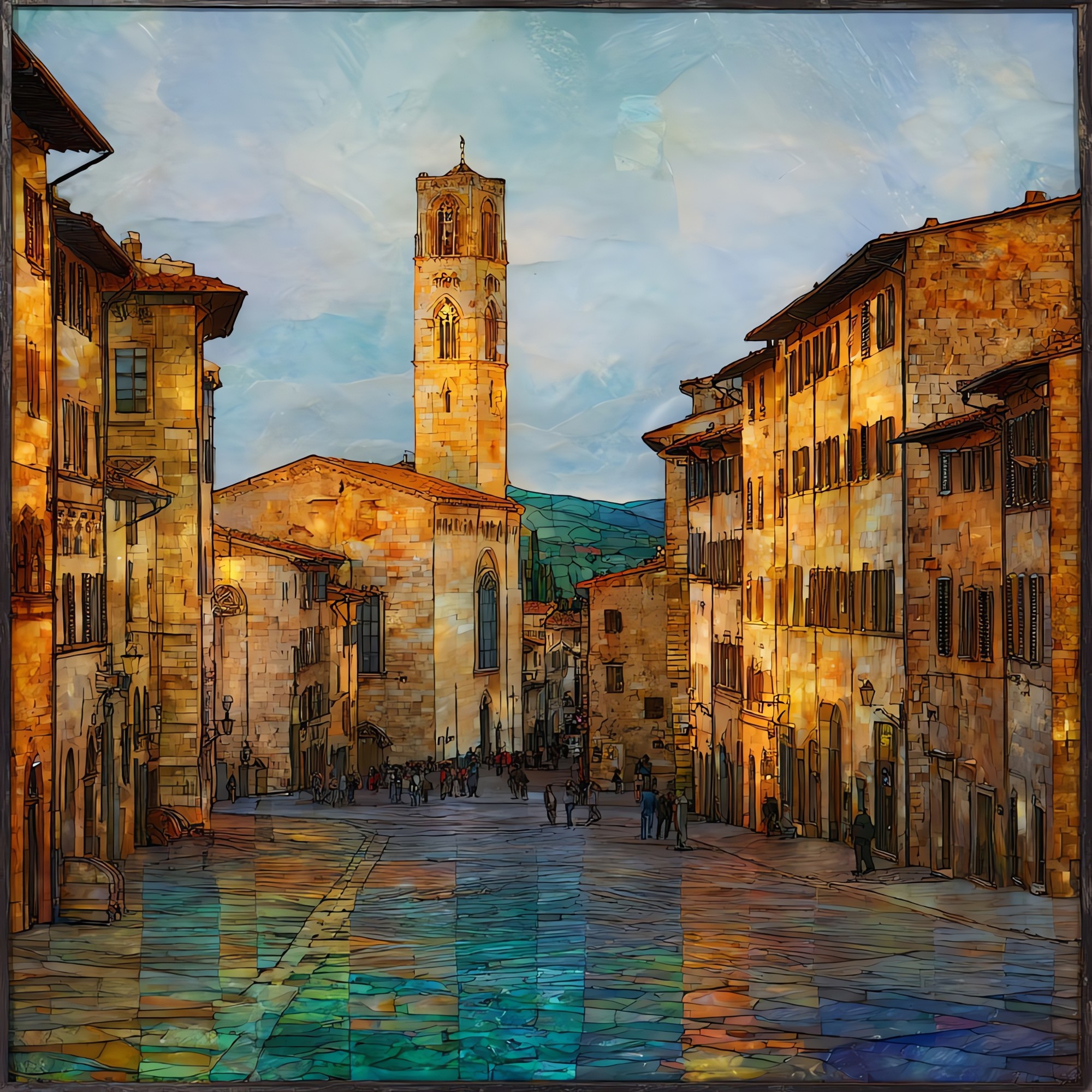
Piazza Grande Arezzo
— — the square that leans into the late light.
Not only on a wall.
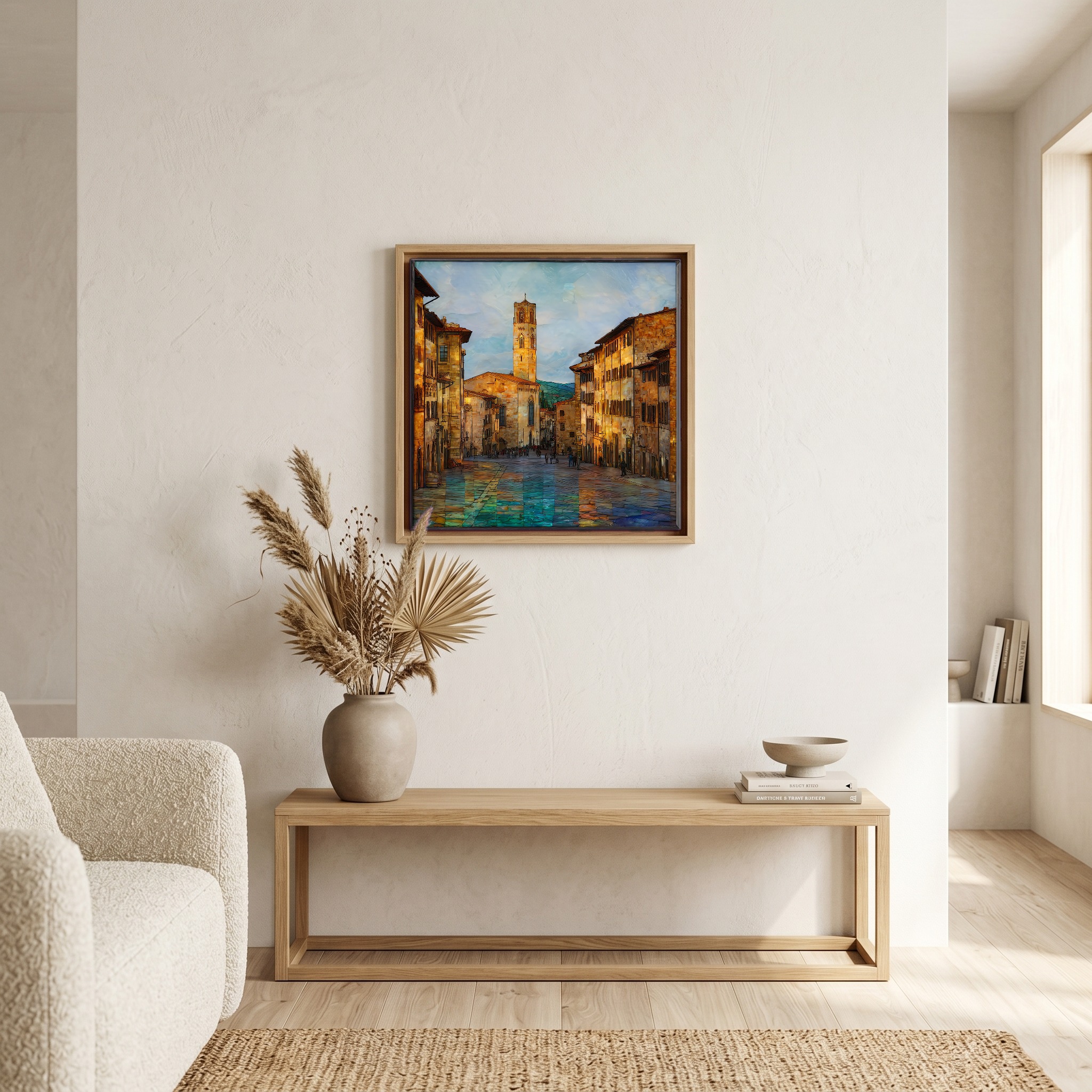
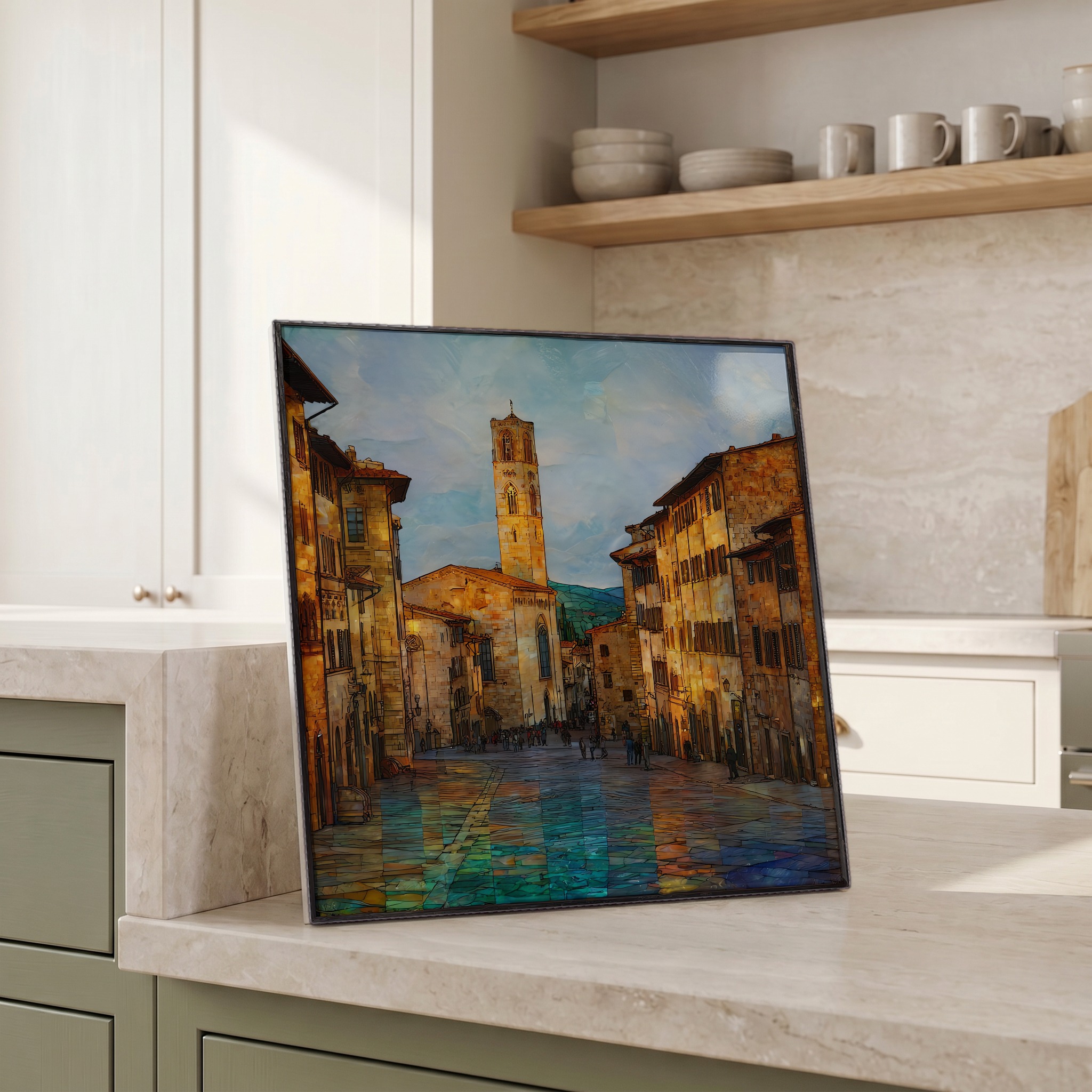
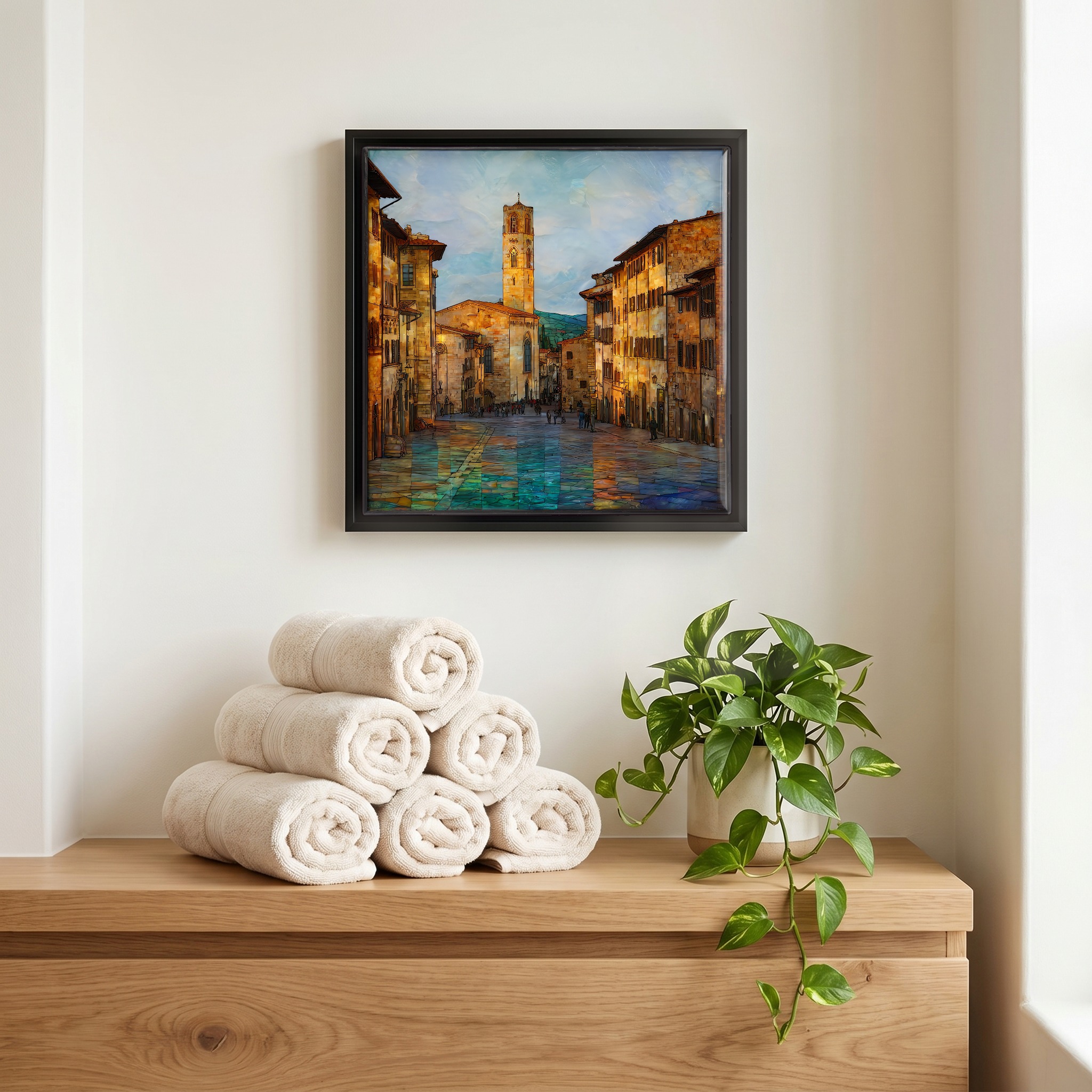
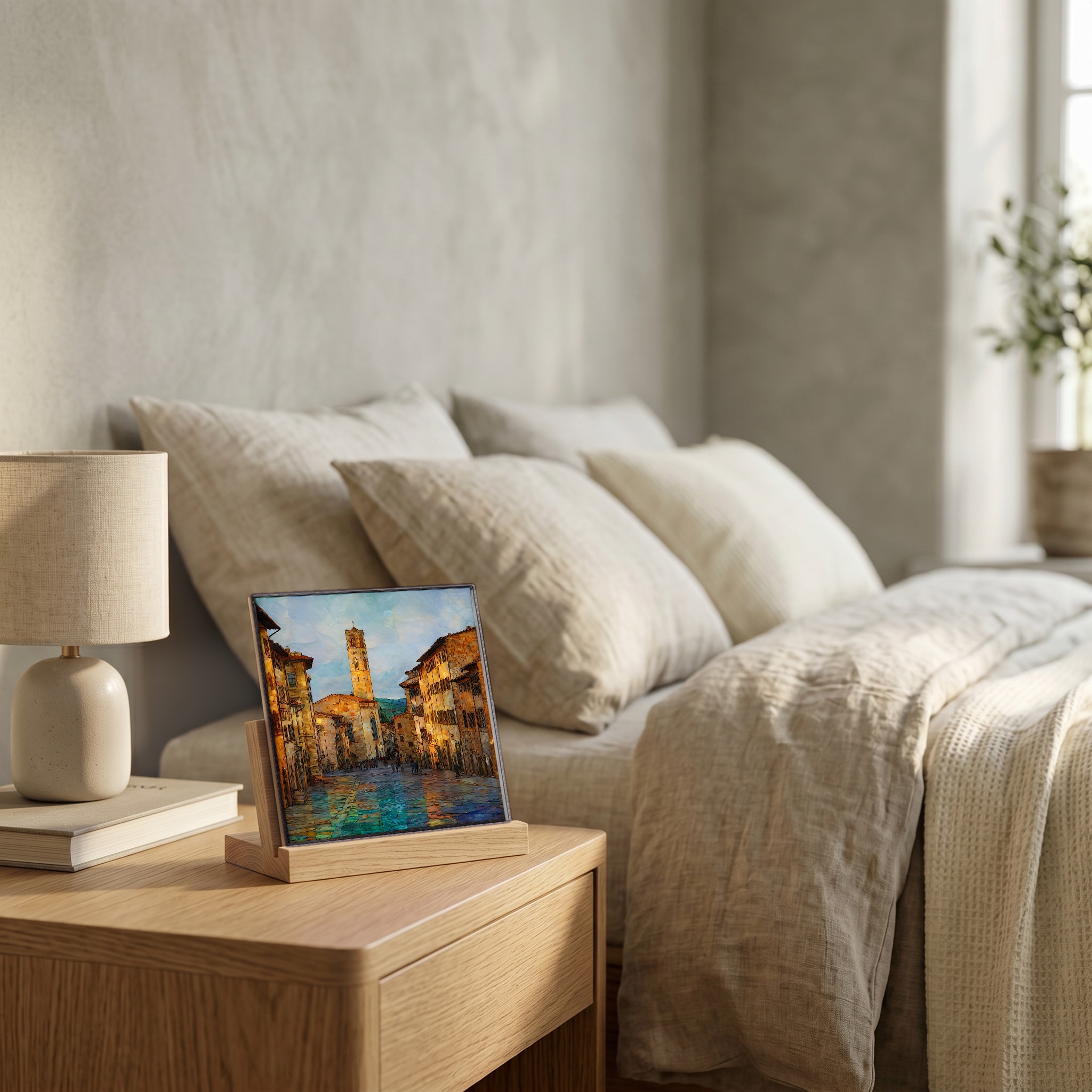
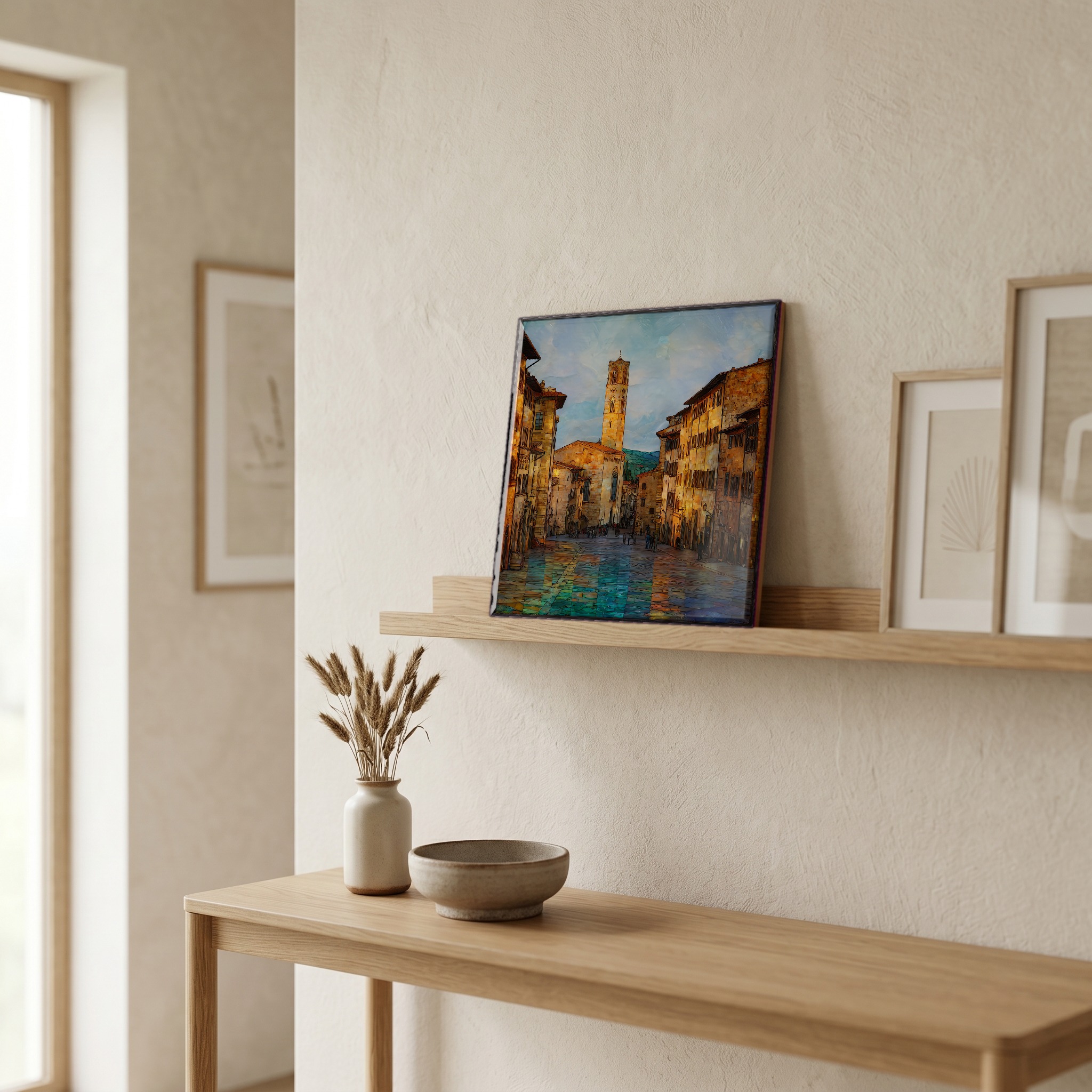
“The main square of Arezzo, and it does not sit flat. The whole piazza tilts downhill, so the cafe tables on the low side look up at Vasari's loggia on the high one. Romanesque stone on one edge, a Gothic palazzo on another, four centuries of building leaning into the same slope. Twice a year the quarters of the city ride a joust across it for a golden lance. Benigni filmed the bicycle scene here. Most mornings it is just the slope, the stone warming, and someone setting out chairs.
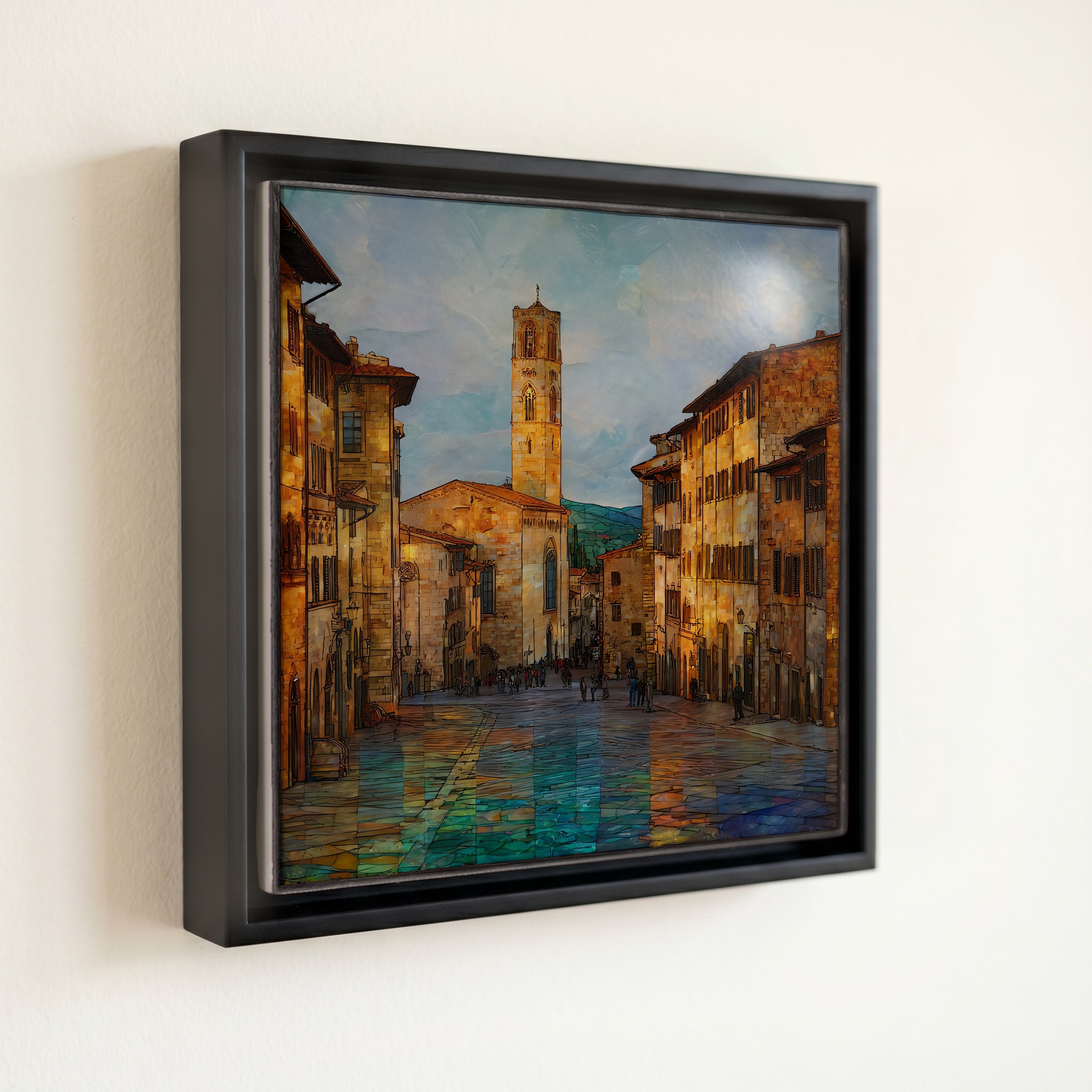
Piazza Grande Arezzo, on ceramic.
Each tile is finished by hand in our Knoxville studio. Artwork is slowly infused into the ceramic surface under high heat and pressure, and rests beneath a thin glossy finish. The colour lives in the surface, not on top of it.
Pick any four 4-inch tiles — National Parks you've been to, a Smokies set, the four seasons of one place. $ for a set of , cork-backed, ready to live on the table.
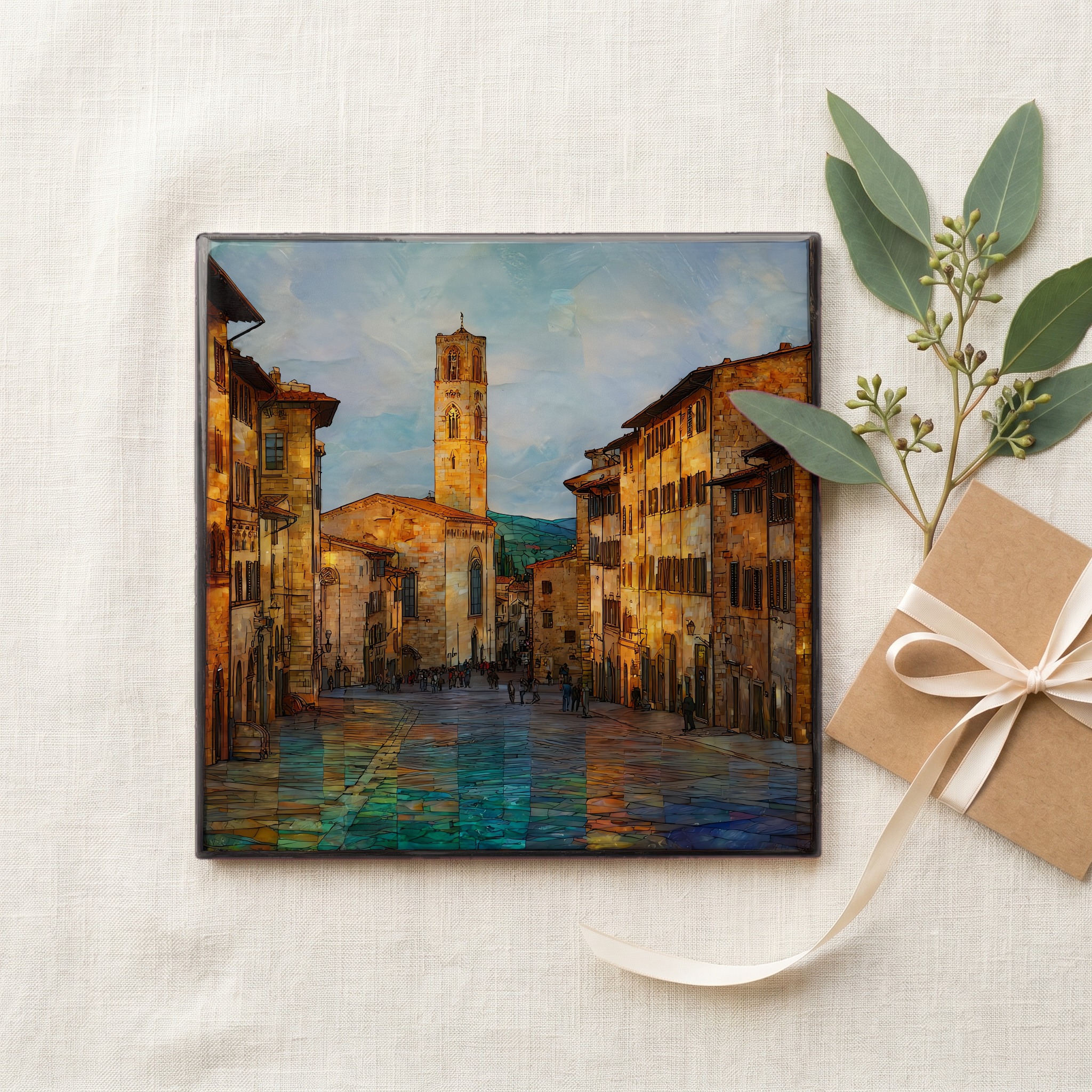
Each tile ships in a kraft box, tied with cream ribbon, with a handwritten note from the studio if you'd like to add one.
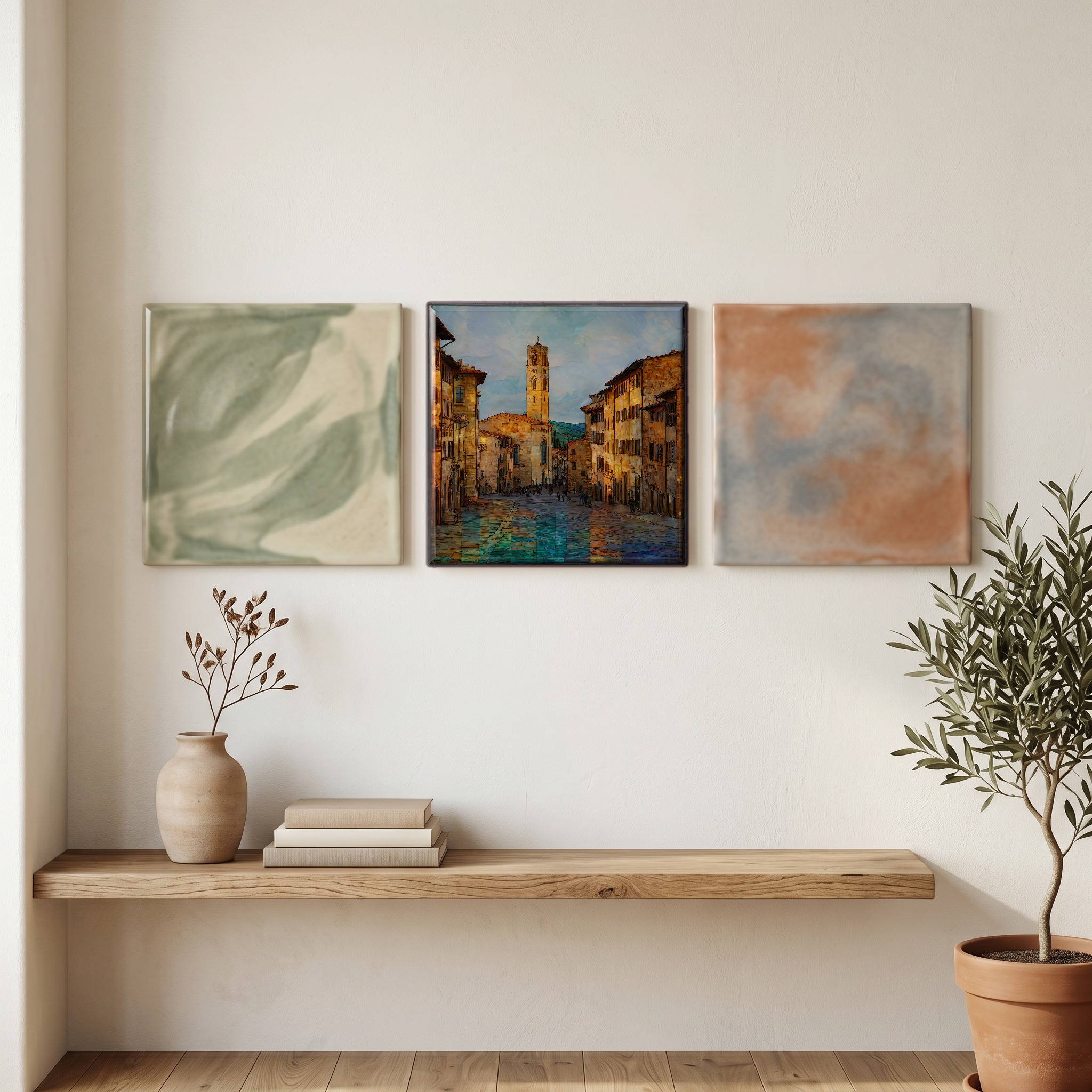
Three or five different vistas, hung together — a chapter of places you've been, or want to go.
The place, in three passes.
Piazza Grande is the principal square of Arezzo, a hill city in eastern Tuscany about 296 metres above sea level. Its origins reach back past 1200, when it served as the city's market, recorded as the platea porcorum, the pig market, before it became the centre of civic life. The square is trapezoidal and visibly sloped, the ground tipping downhill so that rainwater drains off the open space. In the 1570s Giorgio Vasari, the Arezzo-born architect and biographer, was commissioned to build the Palazzo delle Logge along the upper edge, finished in 1595, a change that reduced the square to the size it holds today.
Three eras of building face one another across the slope. The Romanesque apse of the Pieve di Santa Maria, its rounded arches renovated in the late 19th century, holds the eastern side. Opposite stands the Palazzo della Fraternita dei Laici, begun in 1375 with a Gothic lower facade and completed with a Renaissance upper floor designed by Bernardo Rossellino in 1433; its bell tower, added by Vasari, carries a clock by Felice da Fossato. Vasari's loggia runs along the top. The result is one square where Romanesque, Gothic and Renaissance stone sit side by side without arguing.
Twice a year the square becomes an arena. The Giostra del Saracino, the Saracen Joust, fills Piazza Grande on a Saturday evening in June and again on the first Sunday of September, when the four quarters of Arezzo send horsemen charging at a wooden effigy for the Golden Lance. The tradition is medieval and the city turns out in period costume for it. On the first Sunday of every month the slope fills differently, for the Fiera Antiquaria, Italy's oldest antiques market, started here in 1968 by the dealer Ivan Bruschi and now drawing more than 500 stalls across the piazza and the surrounding lanes.