Wender·Vista
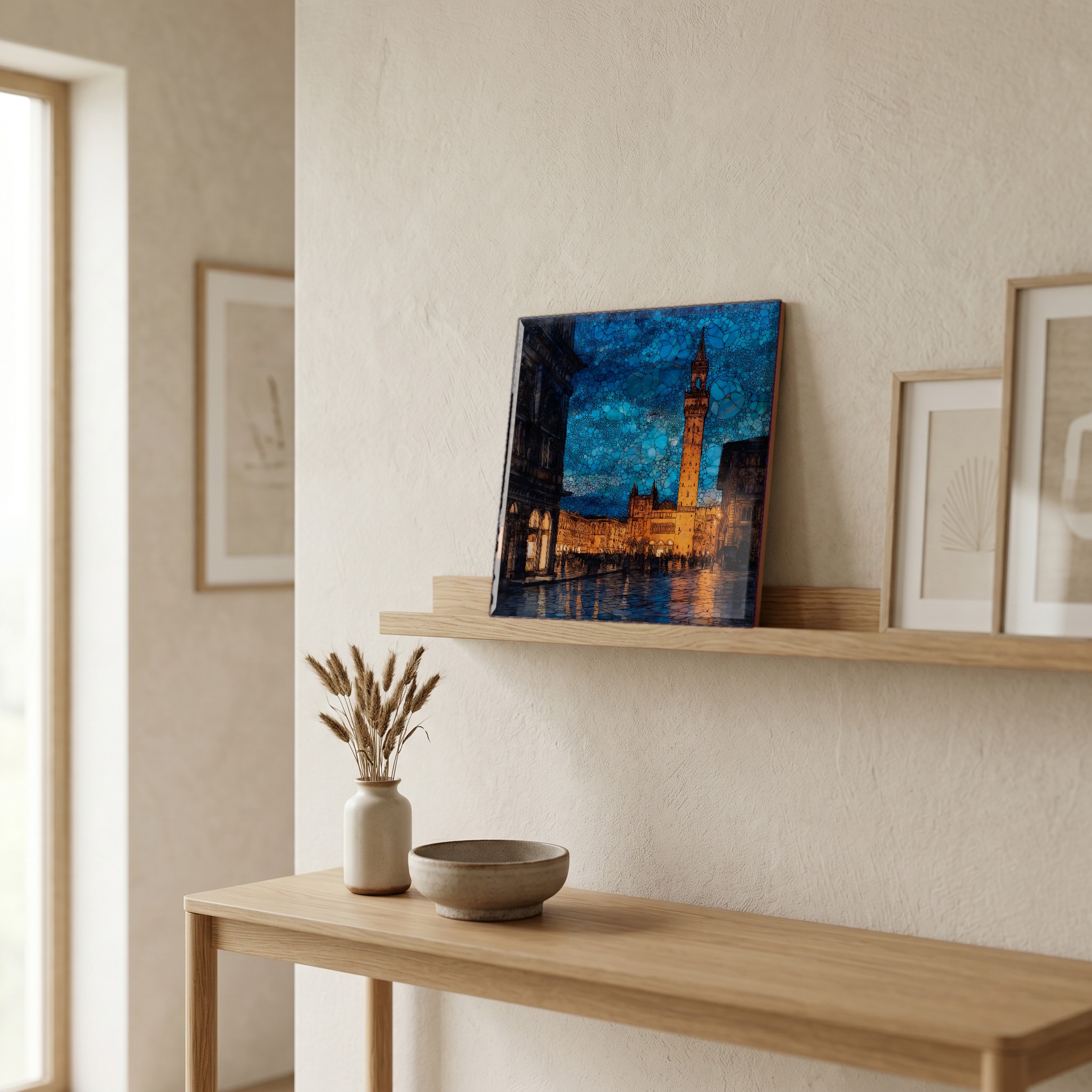
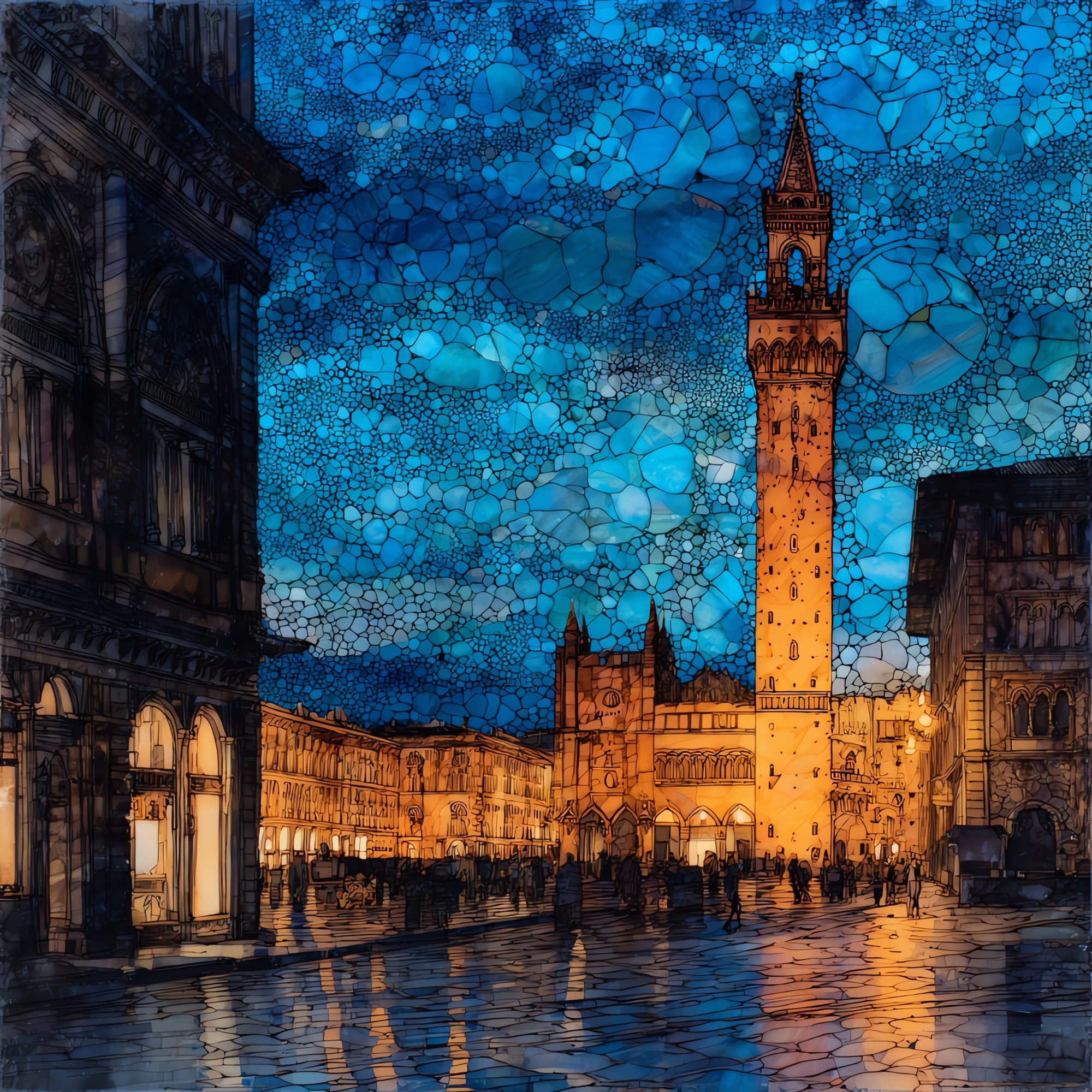
Piazza della Signoria
shown on ceramic, 12-inch tileItaly
in the old centre of Florence, in front of the Palazzo Vecchio

Piazza della Signoria

the colour bronze gets when it stays outside.

Where it lives

Not only on a wall.

A small tile on the nightstand catching the morning. A larger one above the fire. Yours, wherever you spend the slow hours.
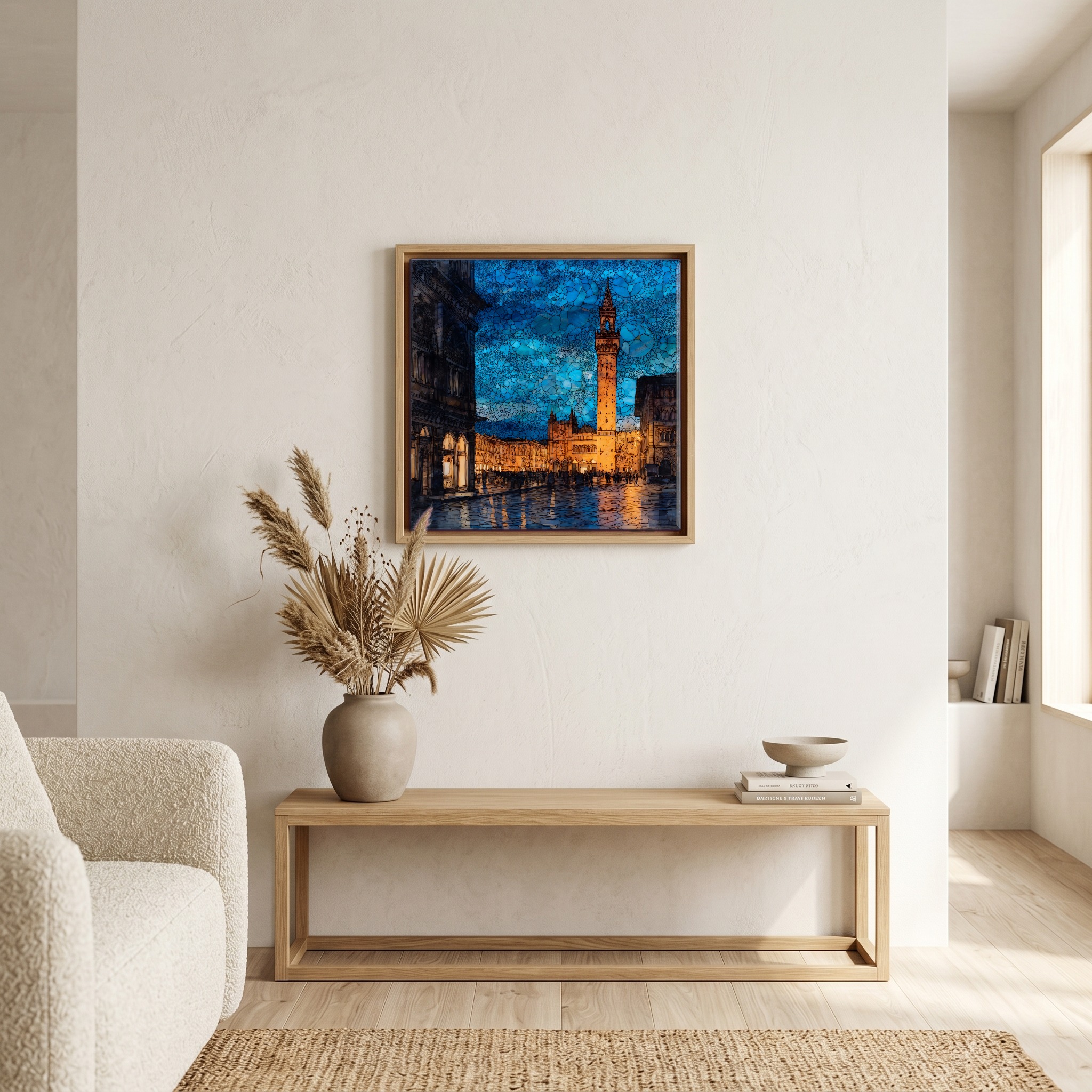
Above the bench, in a warm oak surround.
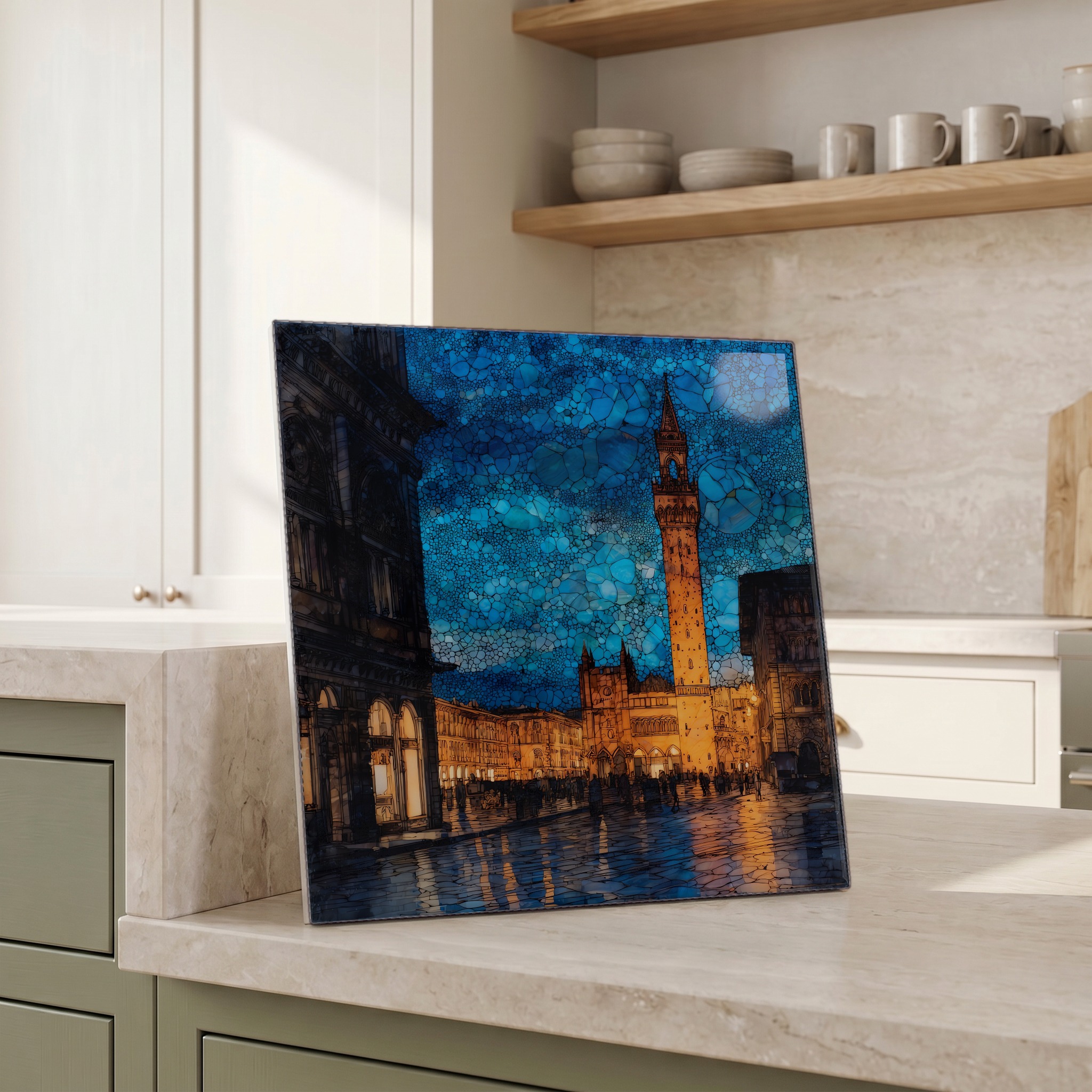
Beside the kettle, propped on the counter.
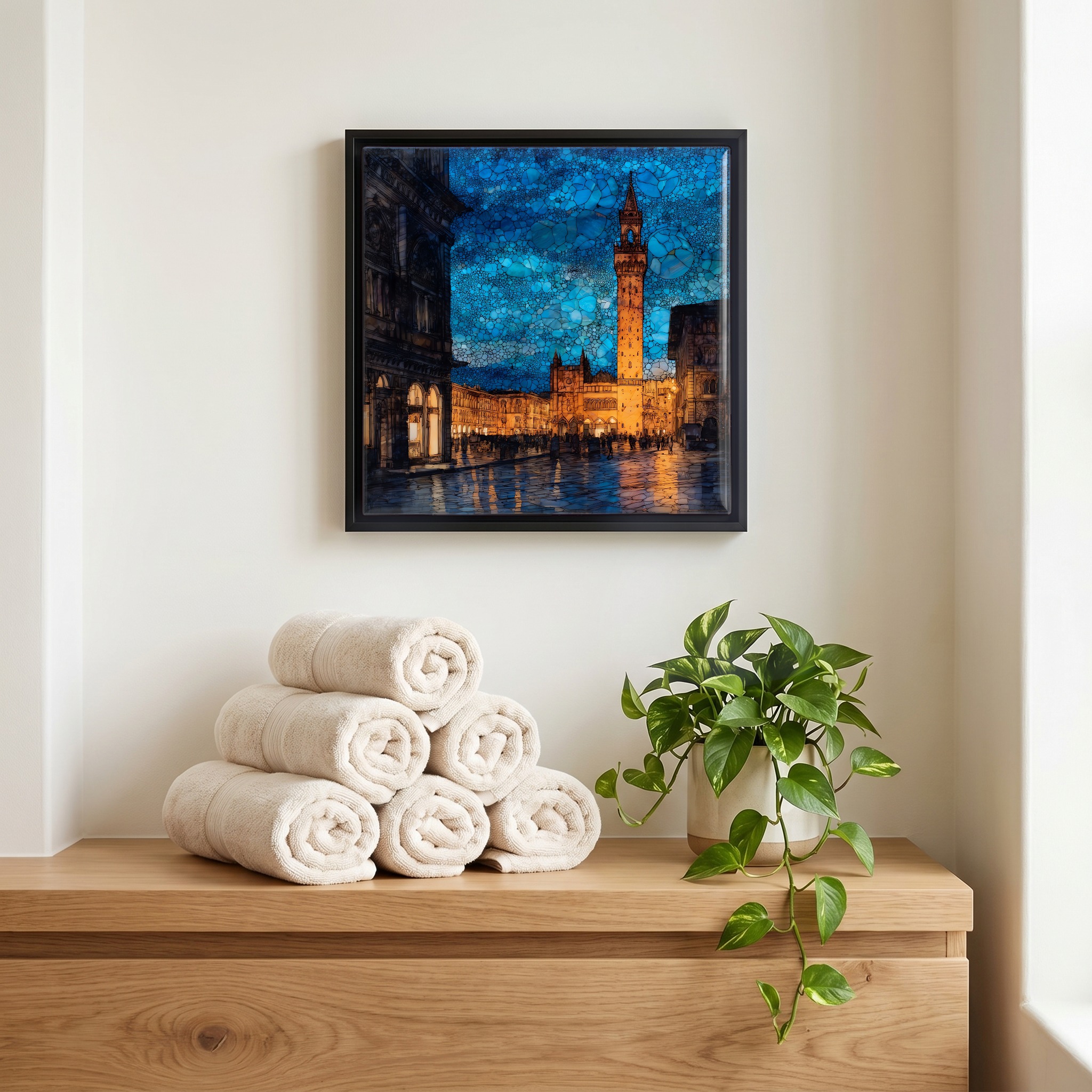
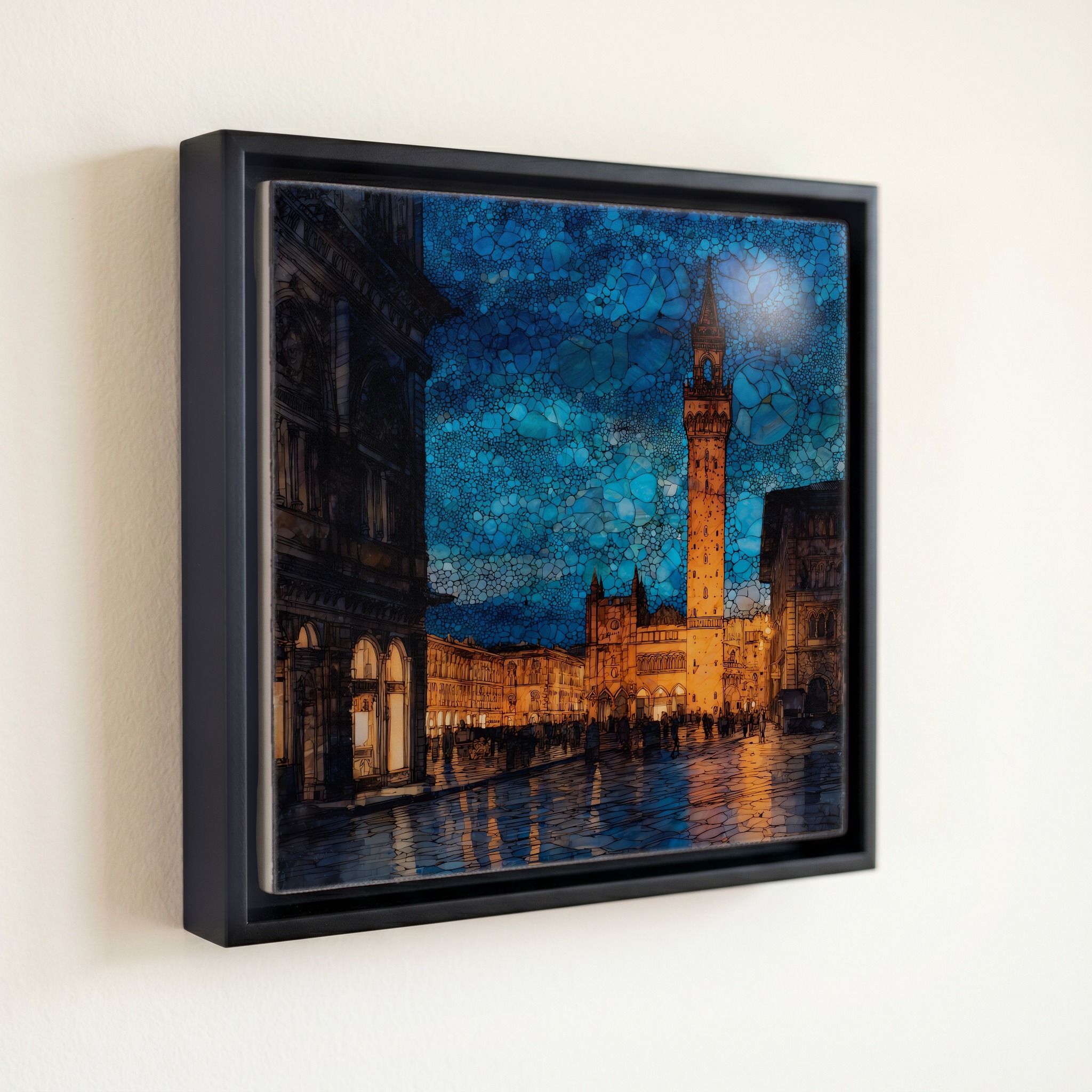
Above the linens, in a slim black surround.
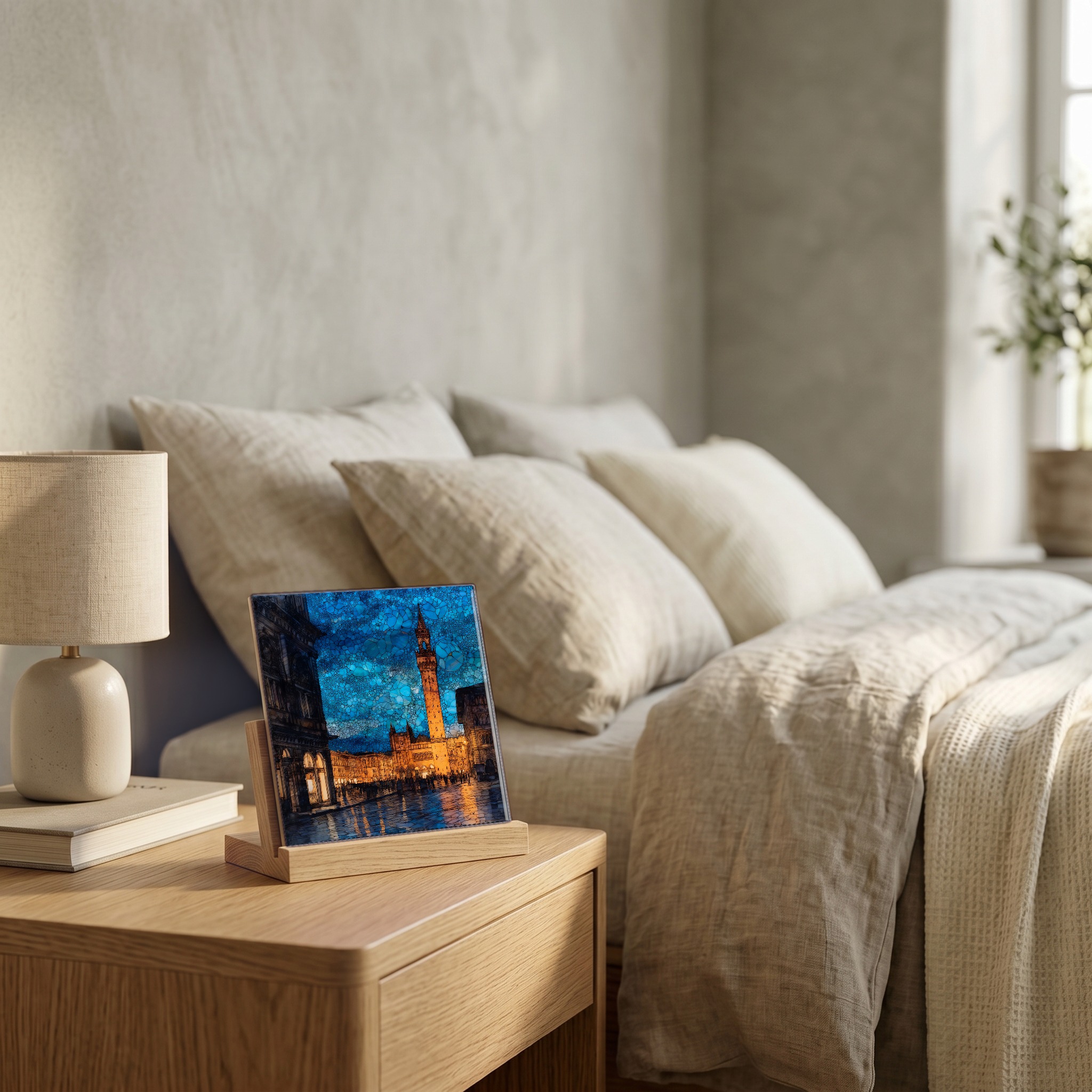
On the nightstand, on a light oak stand.
On a picture ledge, where the light comes in.
a note from the studio

The L-shaped civic square in the old centre of Florence, in front of the Palazzo Vecchio. The Loggia dei Lanzi holds a row of statues that have stood in open air for almost five hundred years; Cellini's Perseus is among them. There are pigeons, the cobbles, the long line for the Uffizi off the south corner, and a small marble disc set into the ground where the friar Savonarola was burned in 1498. Florence has kept the room intact.
from the studio
shown in a slim black floating frame · 6 × 6 in
— bring it home

Piazza della Signoria, on ceramic.

Each tile is finished by hand in our Knoxville studio. Artwork is slowly infused into the ceramic surface under high heat and pressure, and rests beneath a thin glossy finish. The colour lives in the surface, not on top of it.

What kind of piece?
One tile — square or rectangle.
How big?
the popular one — counter, shelf, nightstand
6 × 6 in · 15 cm · 1.6 lb
Surface finish
A clear glossy finish — the artwork reads as if under resin. Ideal for show-pieces and framed wall art.
How it sits
A hidden cleat — sits ¼″ proud of the wall.
$58
Hand-finished and shipped from our studio at the foot of the Smokies. On your wall in about ten days.
size
6 × 6 in
15 cm
weighs
1.6 lb
solid in the hand
surface
ceramic, hand-finished
art rests beneath a thin glossy finish
from
Knoxville, TN
our family studio, at the foot of the Smokies
— start a Coaster Set

Pick any four 4-inch tiles — National Parks you've been to, a Smokies set, the four seasons of one place. $ for a set of , cork-backed, ready to live on the table.
comes gift-ready
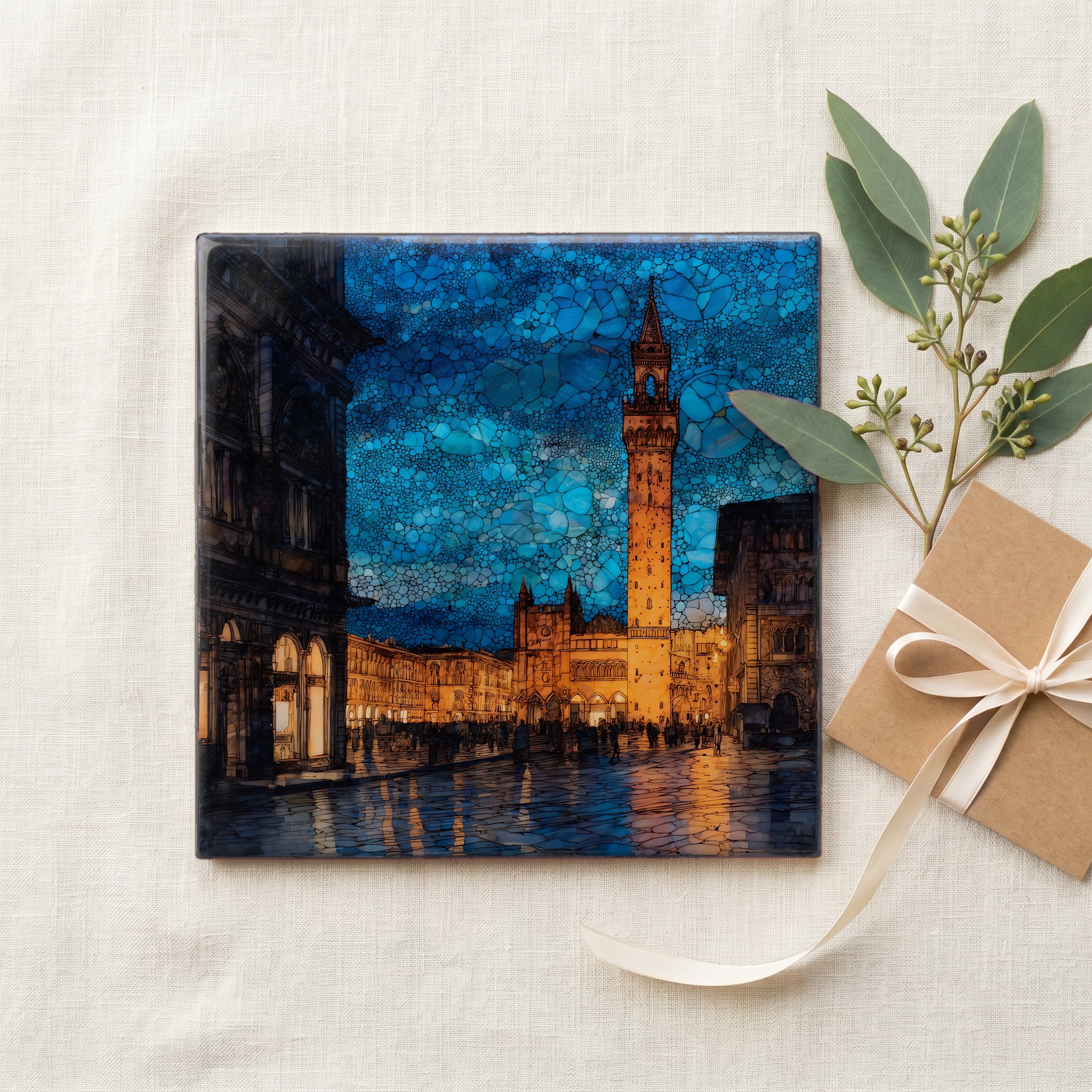
comes gift-ready

Each tile ships in a kraft box, tied with cream ribbon, with a handwritten note from the studio if you'd like to add one.
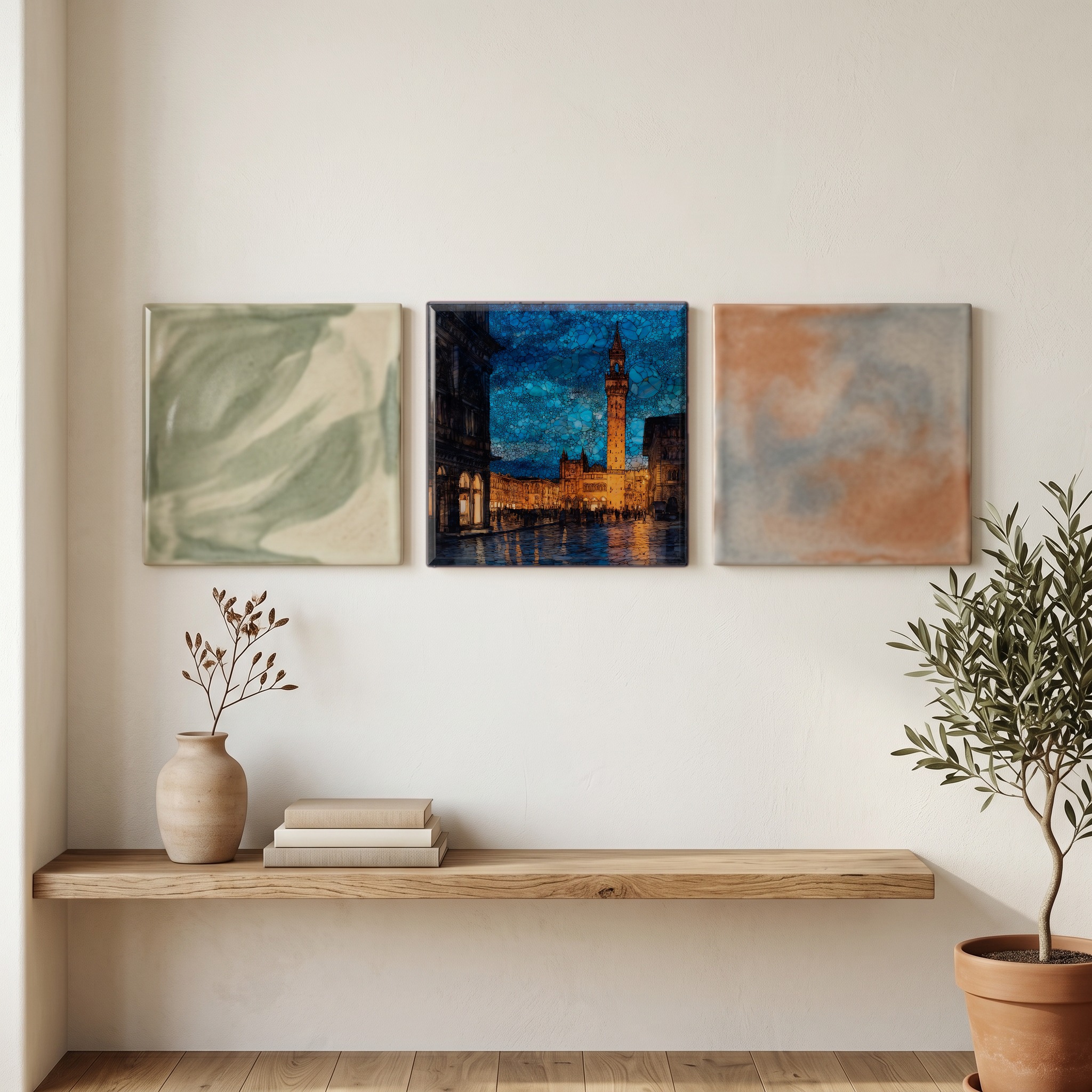
or build a grouping
or build a grouping

Three or five different vistas, hung together — a chapter of places you've been, or want to go.

about Piazza della Signoria

The place, in three passes.

A little of what's known, in case you fall down the rabbit hole — or want to go see it yourself.
the place

Piazza della Signoria is the civic square at the political centre of Florence, in the Tuscan region of central Italy. The piazza takes its L-shaped footprint from the Palazzo Vecchio, whose 94-metre Torre di Arnolfo rises along the east side; the Uffizi Gallery and the Arno River lie just to the south, the Duomo about 500 metres to the north. The square has held its civic role since the late 13th century, when Florence cleared the tower-houses of the Uberti family to lay out a public meeting ground for the Republic. Excavations beneath the cobbles in the 1980s exposed Roman baths and the remains of the medieval church of San Romolo, layered under the present surface.

the stone

The piazza functions as an open-air sculpture gallery. The Loggia dei Lanzi, built 1376–1382 by Benci di Cione and Simone Talenti, shelters Benvenuto Cellini's bronze Perseus with the Head of Medusa, unveiled in 1554, and Giambologna's marble Rape of the Sabine Women (1583), among others. Bartolomeo Ammannati's Fontana del Nettuno was completed in 1565; Giambologna's equestrian Cosimo I in 1594. A copy of Michelangelo's David has stood at the Palazzo Vecchio entrance since 1910, after the original was moved to the Galleria dell'Accademia in 1873. Donatello's Marzocco lion is here in copy, the original in the Bargello.

the visit

The piazza itself is open ground and free to enter at any hour. The Palazzo Vecchio runs as a city museum with a paid entry; its courtyards and the climb of the Torre di Arnolfo are normally ticketed. A small marble disc near the centre of the square marks the place where Girolamo Savonarola was hanged and burned on 23 May 1498; Florentines still scatter petals on the spot on the anniversary. The Uffizi entrance is across the loggia on the south side; advance reservations are required during the high season. Early morning, before the gallery queues form, is when the bronze in the Loggia dei Lanzi reads cleanest in raking light.

where
Italy · Florence, Tuscany
position
43.7696° N · 11.2558° E
the neighborhood

What's nearby.

A handful of named places within an hour's walk or short drive. Some we've already painted; some we will.
0.1 km S
Uffizi Gallery
art museum
0.3 km S
Ponte Vecchio
medieval bridge
0.5 km N
Florence Cathedral (Duomo)
cathedral
0.4 km E
Bargello National Museum
sculpture museum
0.6 km E
Basilica of Santa Croce
basilica
0.4 km NW
Piazza della Repubblica
civic square
N
Piazza della Signoria
Uffizi Gallery
Ponte Vecchio
Florence Cathedral (Duomo)
Bargello National Museum
Basilica of Santa Croce
Piazza della Repubblica
common questions

What people ask.

A few questions we get about Piazza della Signoria — and about bringing the piece home.
about the place

Piazza della Signoria is the central civic square of Florence, in Tuscany, central Italy. It sits in front of the Palazzo Vecchio and adjoins the Uffizi Gallery on its south side, roughly 500 metres south of the Duomo. The historic centre that contains it has been a UNESCO World Heritage Site since 1982.

Florence began building the Palazzo della Signoria, now the Palazzo Vecchio, in 1299 to seat the Signoria, the city's governing council. The square in front was cleared at the same time as a meeting ground for citizens. The palace has housed the city government for more than seven hundred years and still seats Florence's mayor.

The Loggia dei Lanzi shelters Cellini's bronze Perseus with the Head of Medusa (unveiled 1554) and Giambologna's marble Rape of the Sabine Women (1583), among others. The piazza also holds Ammannati's Fontana del Nettuno (1565), Giambologna's equestrian Cosimo I (1594), Bandinelli's Hercules and Cacus, and a copy of Michelangelo's David at the entrance to the Palazzo Vecchio.

No. Michelangelo's David stood at the entrance of the Palazzo Vecchio from 1504 until 1873, when it was moved indoors to the Galleria dell'Accademia to protect it from weather and pollution. The marble figure in the piazza today is a faithful copy installed in 1910.

A round marble plaque set into the cobbles near the centre of the square marks the spot where the Dominican friar Girolamo Savonarola was hanged and burned on 23 May 1498. Florentines lay flowers there on the anniversary each year.

Early morning, before the Uffizi queues form, gives the cleanest light on the bronze in the Loggia dei Lanzi and the quietest cobbles. Late spring and early autumn are the most temperate; July and August can be crowded and hot. The square itself never closes.

Yes. Excavations beneath the square in the 1980s exposed Roman baths and the remains of the medieval church of San Romolo. Florence laid out the present square in the late 13th century by demolishing the tower-houses of the Uberti, a defeated Ghibelline family.

about the piece in your home

It's been a meaningful gift for many of our customers with ties to Florence or to Italian heritage broadly. The piazza is often what travellers remember first about the city: bronze in the open air, weathered stone, the David at the door. A Small or Medium pairs well on a Tuscany shelf; a Coaster Set ships easily.

The palette of warm sandstone, deep oxblood, and oxidised bronze sits well in three rooms in particular: classic Italianate interiors, jewel-tone Maximalist studies, and Modern Heritage living rooms that mix stone and walnut. The art reads quietly against terracotta tile and natural-wood furniture.

Yes. The palette and subject suit grand-tour and Italian Renaissance collections, pairing well with other Tuscan and Roman pieces. The Triptych and 4-tile Mural formats are popular for collectors who want a single-Florence wall above a console or dining sideboard.

For a standard sofa, the single Large sits well centred; for a wider wall above a long console, a 4-tile Mural or a 9-tile Mural fills the space without crowding. The Triptych is the choice when the wall is tall and narrow rather than wide.

Yes. For damp or splash-prone walls, choose Dura Satin or Matte finish; both are scratch-resistant and hold their colour against humidity and household cleaners. The Glossy finish is for dry walls and framed display pieces.

A soft microfibre cloth and warm water are enough. For heavier marks on Dura Satin or Matte tiles, add a drop of mild dish soap. The colour lives in the ceramic surface beneath the finish, so it cannot scratch off with normal cleaning.

Yes. Every WenderVista piece is painted in our studio in Knoxville, Tennessee, by the same hand. We do not license or resell third-party imagery. Each tile is hand-finished and slowly infused into the ceramic surface under high heat and pressure.

if this one stayed with you

A few you might also love.

Hand-picked by the eye that found Sorapis. Same air, same kind of quiet.
— a collection

The Italian Dolomites,
painted slow.

The valleys between Cortina and Val Gardena, the tarns you walk an hour to see, the towers that turn the colour of a banked fire just before dark. Wander the collection by valley, by season, or follow the path Reid walked.

Tre Cime
Braies
Misurina
Sorapis
Cinque Torri
Sassolungo
Marmolada