Wender·Vista
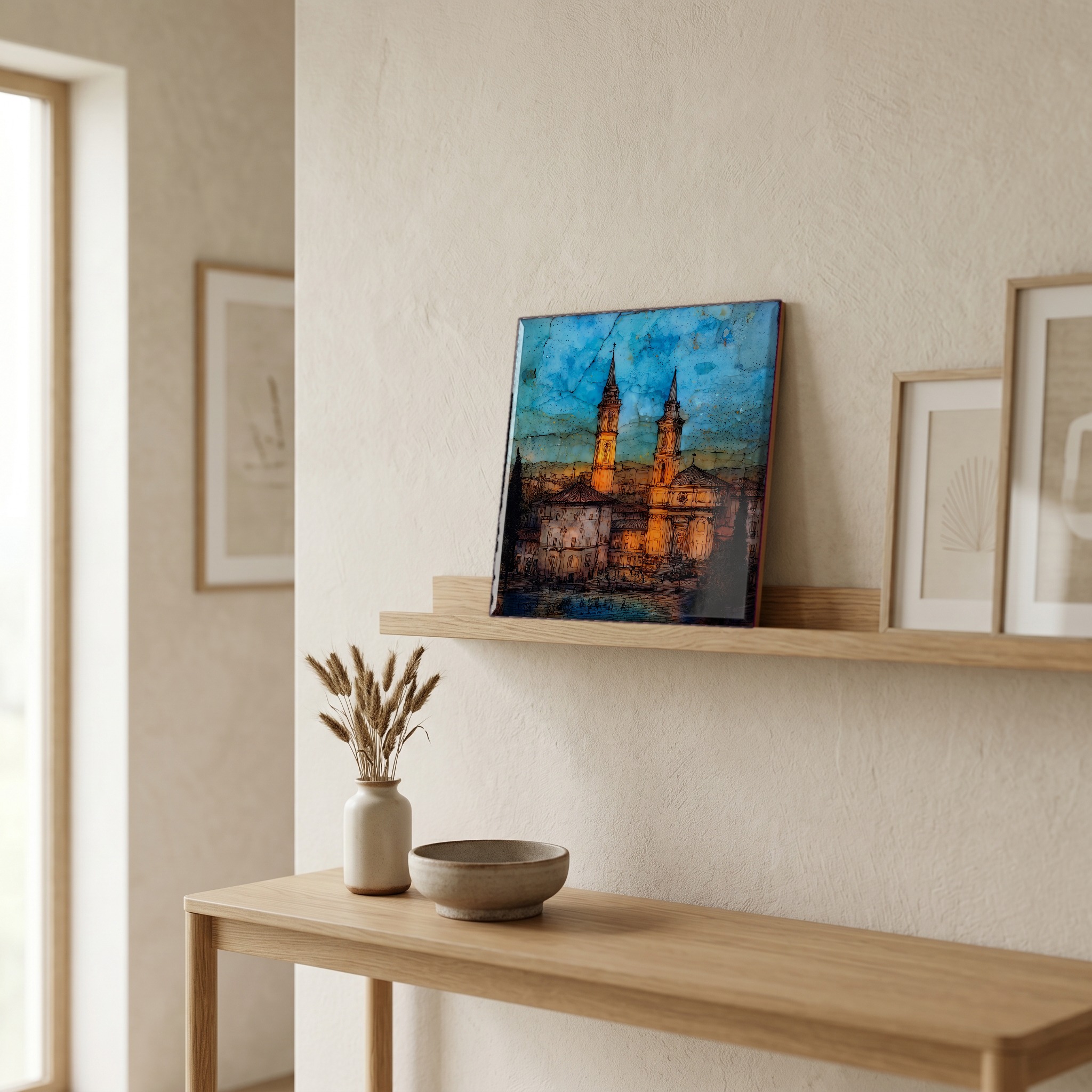
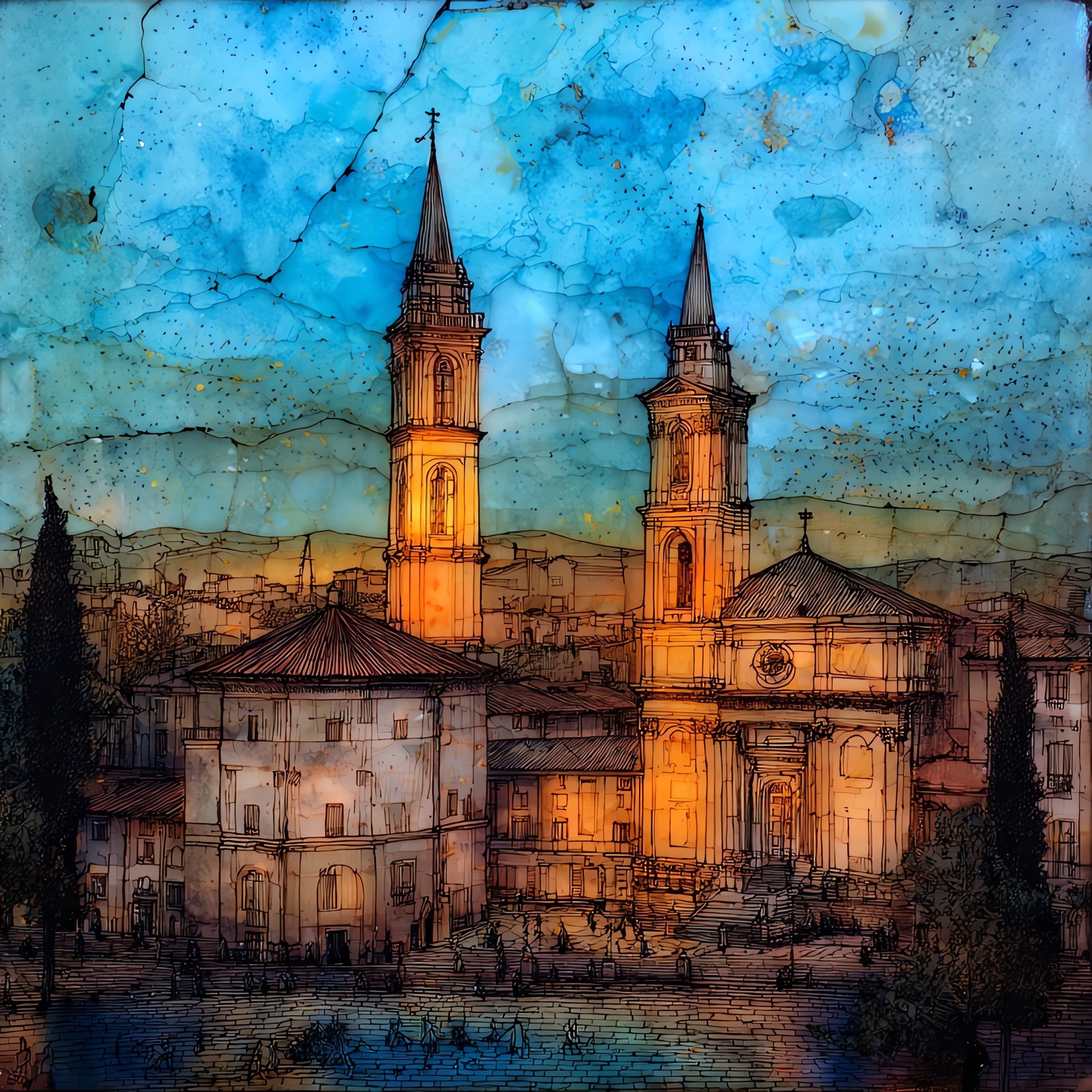
Piazza del Popolo
shown on ceramic, 12-inch tileItaly
just inside Rome's old north gate, below the Pincio

Piazza del Popolo

where the road from the north first becomes Rome.

Where it lives

Not only on a wall.

A small tile on the nightstand catching the morning. A larger one above the fire. Yours, wherever you spend the slow hours.
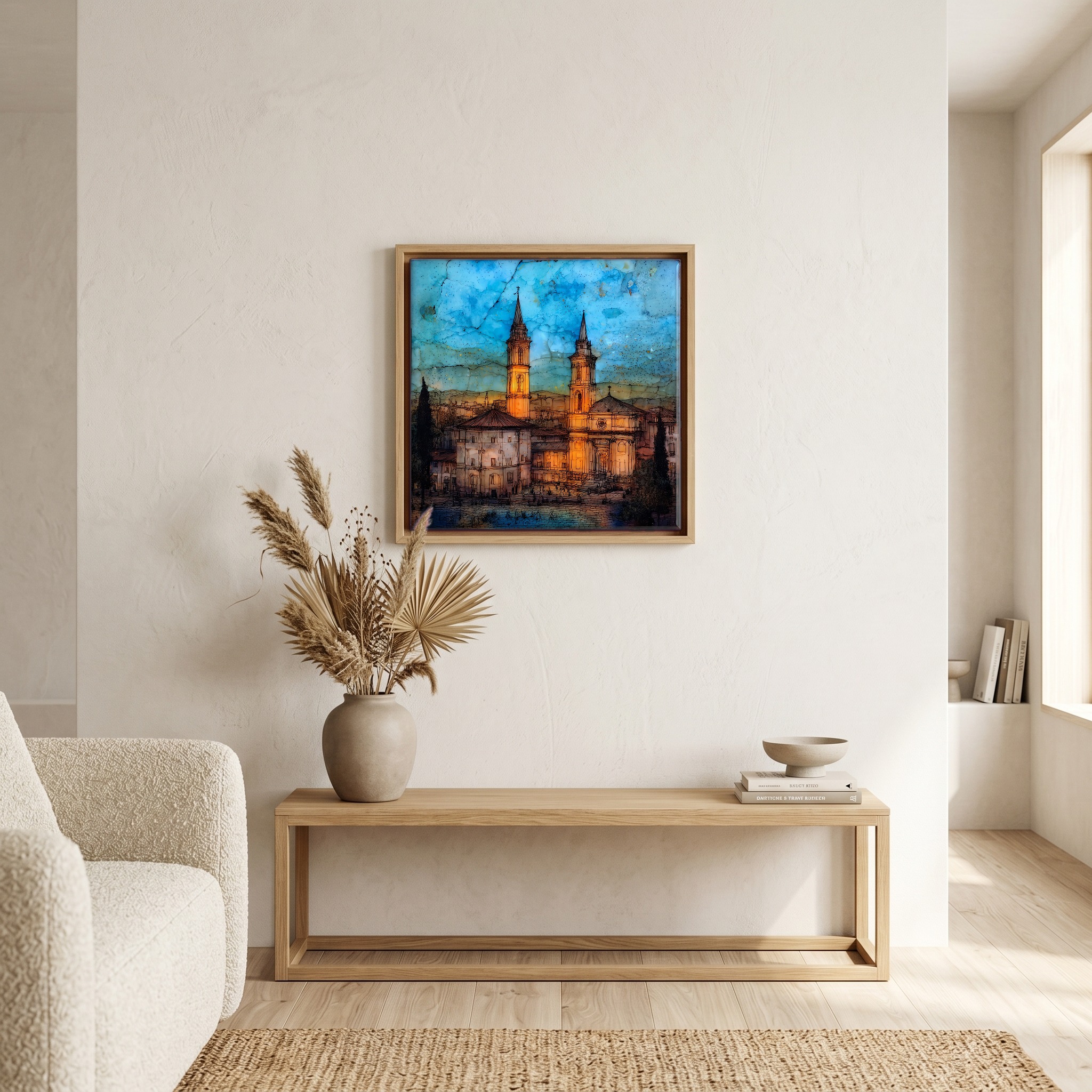
Above the bench, in a warm oak surround.
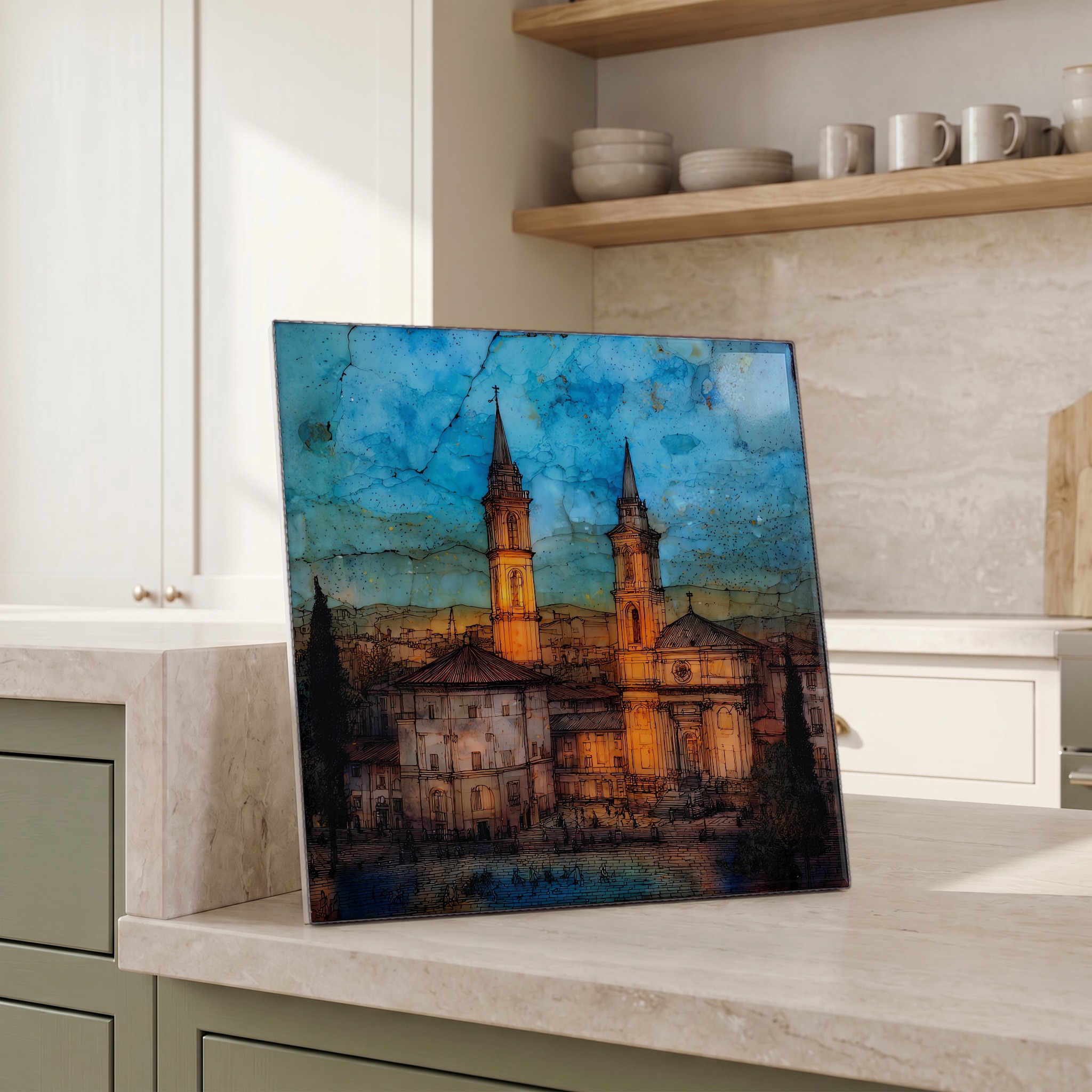
Beside the kettle, propped on the counter.
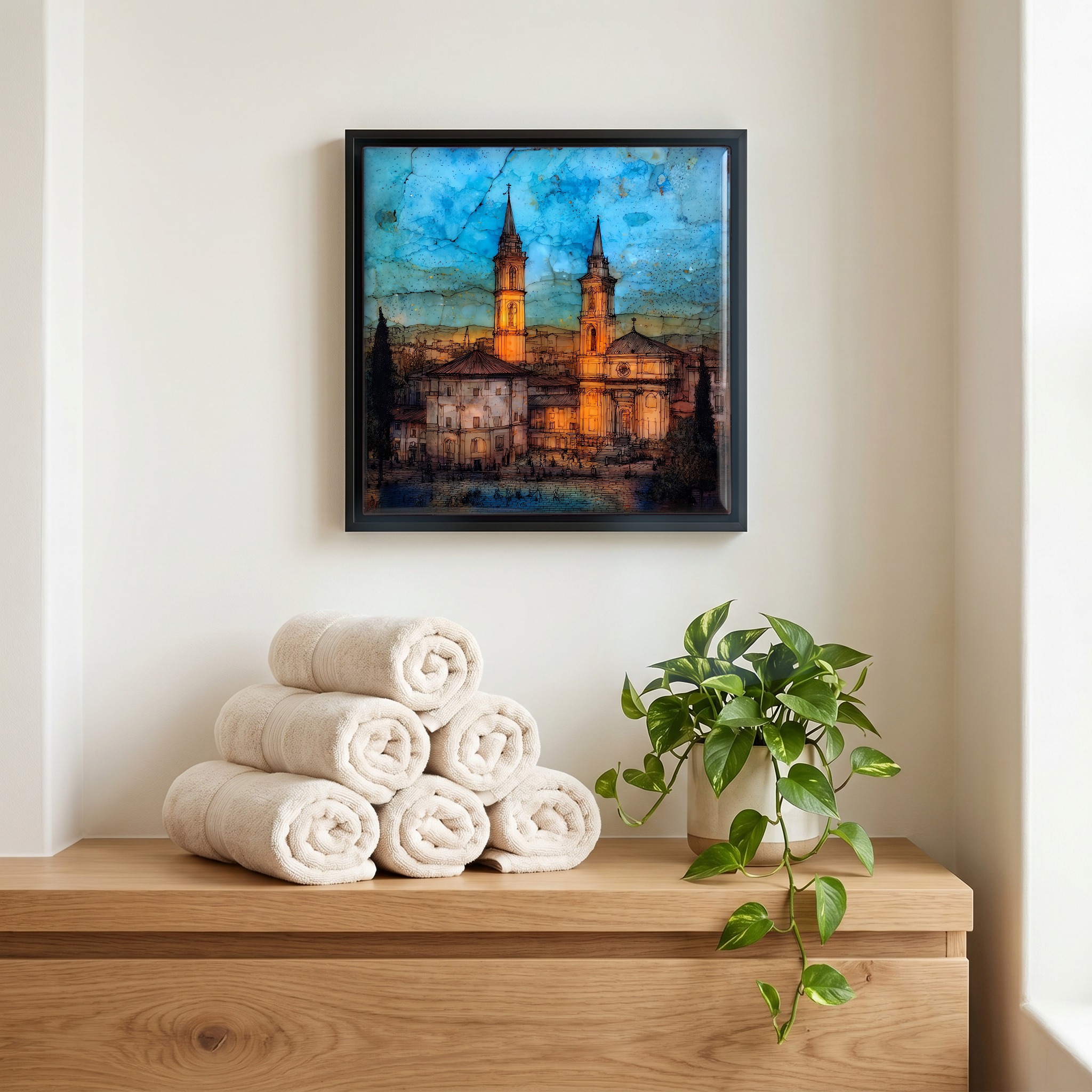
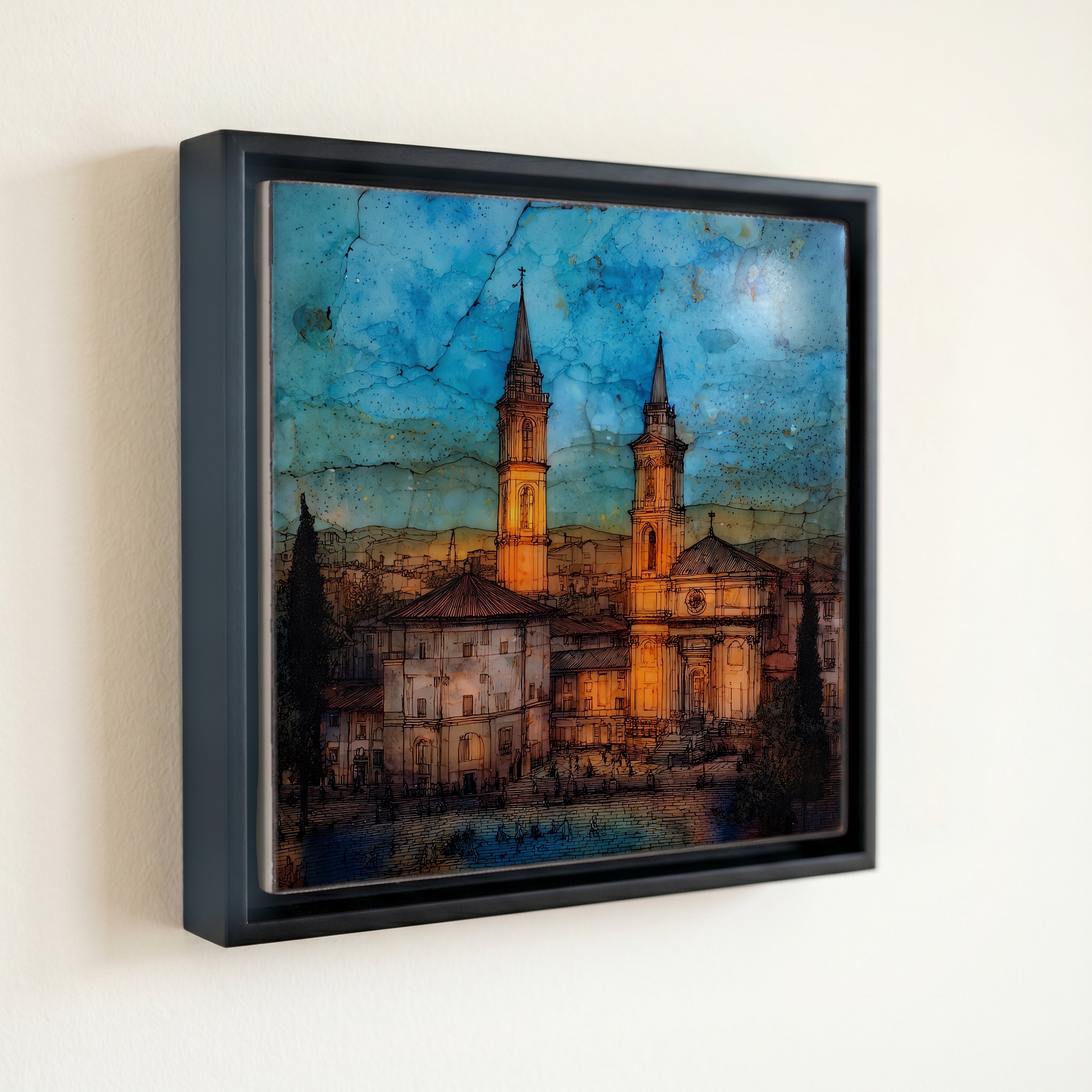
Above the linens, in a slim black surround.
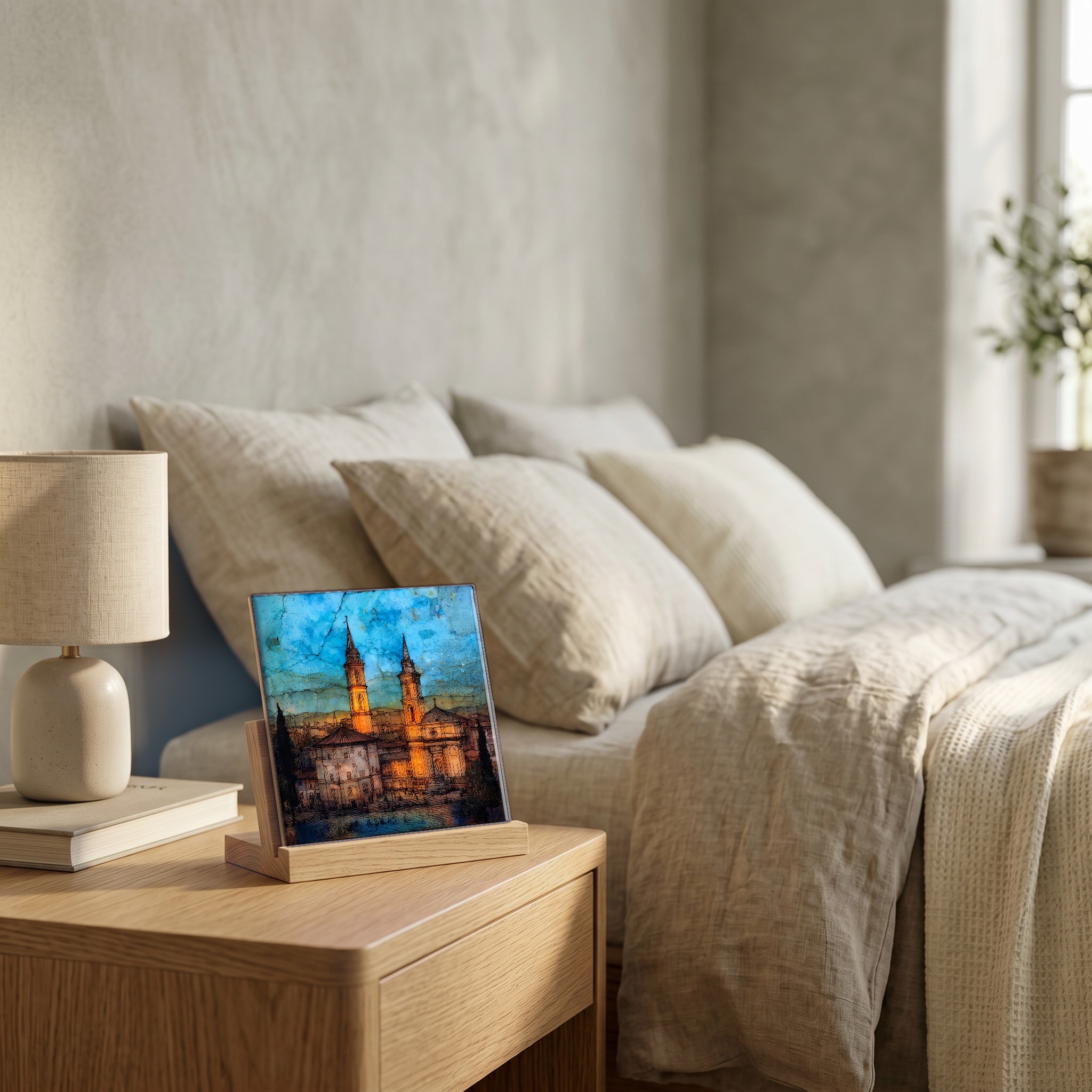
On the nightstand, on a light oak stand.
On a picture ledge, where the light comes in.
a note from the studio

An oval the city built to be arrived at. For centuries anyone reaching Rome from the north came in through the gate at its top, and this was the first room the city opened for them: three streets fanning south from a single Egyptian obelisk, two churches set to look like twins on either side of the middle road. Giuseppe Valadier gave the square its elliptical shape in the early 1800s and ran a carriage drive up to the Pincio terrace on the east side, where the whole space lies below you and the sun sets behind the western domes. People climb the steps to look down on it the way they always have.
from the studio
shown in a slim black floating frame · 6 × 6 in
— bring it home

Piazza del Popolo, on ceramic.

Each tile is finished by hand in our Knoxville studio. Artwork is slowly infused into the ceramic surface under high heat and pressure, and rests beneath a thin glossy finish. The colour lives in the surface, not on top of it.

What kind of piece?
One tile — square or rectangle.
How big?
the popular one — counter, shelf, nightstand
6 × 6 in · 15 cm · 1.6 lb
Surface finish
A clear glossy finish — the artwork reads as if under resin. Ideal for show-pieces and framed wall art.
How it sits
A hidden cleat — sits ¼″ proud of the wall.
$58
Hand-finished and shipped from our studio at the foot of the Smokies. On your wall in about ten days.
size
6 × 6 in
15 cm
weighs
1.6 lb
solid in the hand
surface
ceramic, hand-finished
art rests beneath a thin glossy finish
from
Knoxville, TN
our family studio, at the foot of the Smokies
— start a Coaster Set

Pick any four 4-inch tiles — National Parks you've been to, a Smokies set, the four seasons of one place. $ for a set of , cork-backed, ready to live on the table.
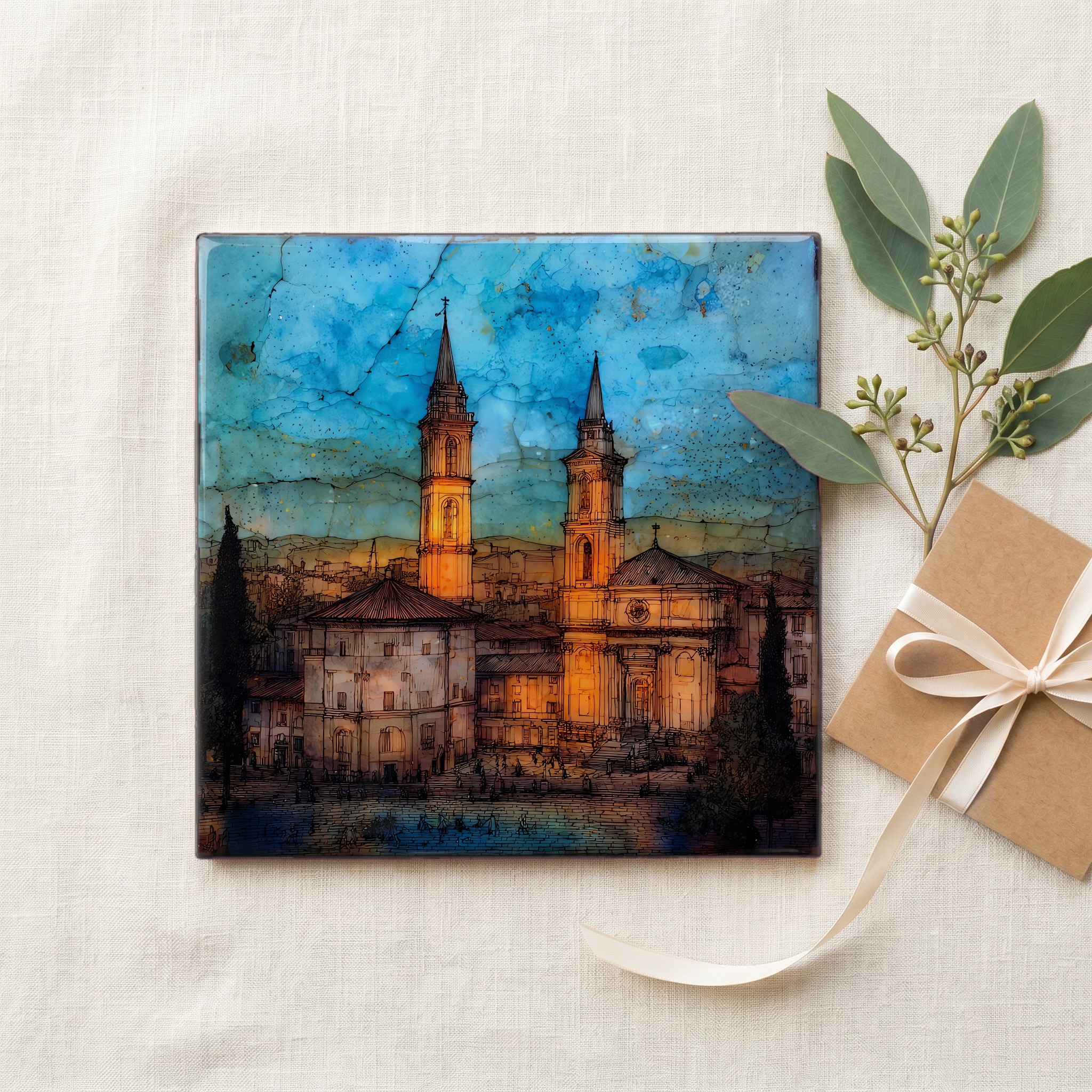
comes gift-ready
comes gift-ready

Each tile ships in a kraft box, tied with cream ribbon, with a handwritten note from the studio if you'd like to add one.
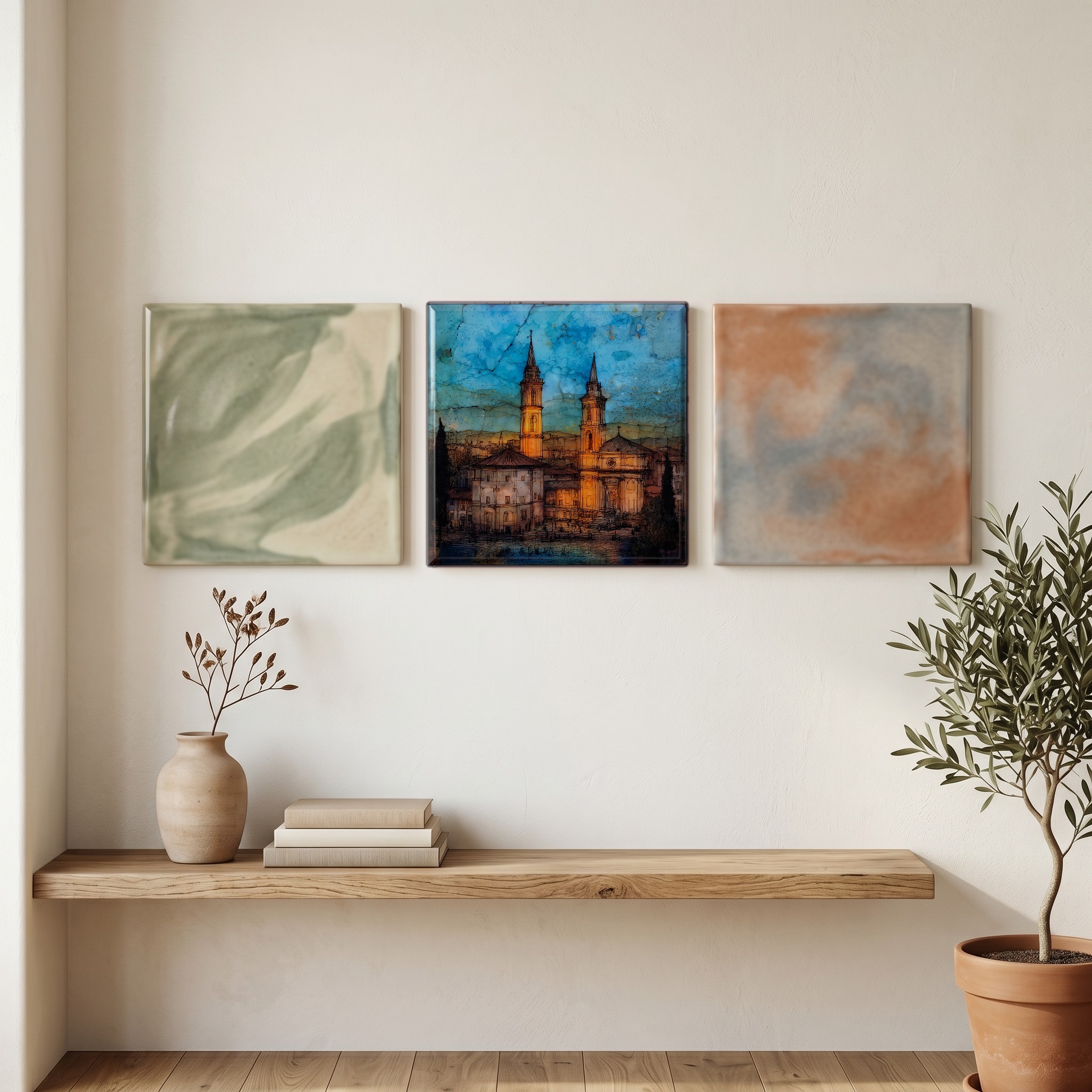
or build a grouping
or build a grouping

Three or five different vistas, hung together — a chapter of places you've been, or want to go.

about Piazza del Popolo

The place, in three passes.

A little of what's known, in case you fall down the rabbit hole — or want to go see it yourself.
the place

Piazza del Popolo is a large oval square at the northern edge of Rome's historic center, in the Campo Marzio rione of the Lazio region. It sits just inside the Porta del Popolo, the gate in the Aurelian Walls that was the ancient Porta Flaminia, where the Via Flaminia from the north entered the city. Three streets radiate south from the square in a pattern Romans call the trident: Via del Corso down the middle, with Via del Babuino and Via di Ripetta to either side. The square took its present elliptical form between 1811 and 1822, when the architect Giuseppe Valadier reshaped it and linked it by a carriage road to the Pincian Hill terrace rising to the east.

— informed by Wikipedia
the stone

At the center stands the Flaminio Obelisk, an Egyptian monolith carved for the pharaohs Seti I and Ramesses II more than three thousand years ago and brought from Heliopolis to stand in the Circus Maximus under Augustus. Pope Sixtus V had it moved here in 1589, raised by his architect Domenico Fontana; it climbs about 24 metres, close to 36 with its base. Flanking the entrance to Via del Corso are the twin churches, Santa Maria in Montesanto and Santa Maria dei Miracoli, begun by Carlo Rainaldi in the 1660s and finished with help from Bernini and Carlo Fontana. They read as a matched pair, though one carries an oval dome and the other a round one to fit unequal plots of ground.

the visit

The square is open ground, free and walkable at any hour, which is why it fills and empties through the day rather than charging admission. On the northeast side stands Santa Maria del Popolo, a church first raised in 1099 and rebuilt under the Renaissance popes; inside, the Cerasi Chapel holds two Caravaggio canvases from 1601, the Conversion of Saint Paul and the Crucifixion of Saint Peter, and the Chigi Chapel was designed by Raphael. The best view is not from the square but above it: Valadier's ramps climb the east side to the Pincio terrace, where the whole ellipse lies below and, beyond the rooftops to the west, the dome of St Peter's catches the late sun. Until 1826 the piazza was also Rome's place of public executions.

where
Italy · Rome, Lazio
position
41.9108° N · 12.4764° E
the neighborhood

What's nearby.

A handful of named places within an hour's walk or short drive. Some we've already painted; some we will.
0.2 km E
Pincio Terrace
panoramic terrace
0.6 km SE
Spanish Steps
monumental stairway
0.5 km S
Ara Pacis
Roman altar museum
0.5 km S
Mausoleum of Augustus
Roman tomb
1.1 km SE
Trevi Fountain
Baroque fountain
1.1 km S
Pantheon
Roman temple
1.2 km SW
Castel Sant'Angelo
papal fortress
N
Piazza del Popolo
Pincio Terrace
Spanish Steps
Ara Pacis
Mausoleum of Augustus
Trevi Fountain
Pantheon
Castel Sant'Angelo
common questions

What people ask.

A few questions we get about Piazza del Popolo — and about bringing the piece home.
about the place

Piazza del Popolo is a large oval square at the northern edge of Rome's historic center, in the Campo Marzio rione of the Lazio region. It sits just inside the Porta del Popolo, the old gate where the Via Flaminia entered the city from the north.

The name comes from the poplar trees, populus in Latin, that once grew here and gave their name to the nearby church of Santa Maria del Popolo. It is often read as the people's square, but the older sense points to the poplars rather than the people.

The Flaminio Obelisk, an Egyptian monolith carved for the pharaohs Seti I and Ramesses II more than three thousand years ago. Augustus brought it from Heliopolis to the Circus Maximus, and Pope Sixtus V had it moved to the square in 1589. It rises about 24 metres.

Santa Maria in Montesanto and Santa Maria dei Miracoli, the chiese gemelle, flank the entrance to Via del Corso. Carlo Rainaldi began them in the 1660s, and Bernini and Carlo Fontana helped finish them. One has an oval dome and the other round, so they only appear identical.

Three straight streets fan south from the square: Via del Corso in the center, with Via del Babuino and Via di Ripetta on either side. Romans call the fork the tridente. It was laid out to organize arrivals coming through the north gate into the city.

The Pincio terrace, reached by Giuseppe Valadier's ramps on the east side, looks down over the whole elliptical square and the obelisk at its center. Beyond the rooftops to the west, the view reaches the dome of St Peter's, and it is a favored spot at sunset.

The church on the square's northeast corner holds two Caravaggio paintings from 1601 in the Cerasi Chapel, the Conversion of Saint Paul and the Crucifixion of Saint Peter, along with the Chigi Chapel designed by Raphael and frescoes by Pinturicchio.

about the piece in your home

It has been a meaningful gift for many of our customers with ties to the city. Piazza del Popolo is one of Rome's great gathering squares, the first sight of the city for travelers who once arrived from the north. A Small or Medium with a handwritten note from the studio carries well.

The deep stained-glass blues and warm stone tones suit Old-World European, Classic-traditional, and Jewel-tone Maximalist rooms. It holds up against dark walls and gilt frames, and it also grounds a quieter gallery wall without taking it over.

Yes. The turn toward Old-World and grandmillennial interiors favors places with real history and saturated colour, and a Roman square reads as exactly that. The Medium and Large settle naturally among antique furniture and layered textiles.

A single Large anchors most consoles and reading nooks. Above a sofa, a four-tile Mural fills the wall in proportion; over a long sectional or a mantel, a nine-tile Mural holds the space without crowding it.

Yes. Order it in the Dura Satin or Matte finish for any spot that meets steam or splashes, like a backsplash, a shower wall, or a powder room. The colour lives in the ceramic surface, so damp air does not reach it.

A soft microfibre cloth and plain water are all it needs. The image is slowly infused into the ceramic surface under high heat and pressure and rests beneath a thin glossy finish, so there is no print layer on top to wear away.

Yes. Every WenderVista piece is painted in our own studio in Knoxville, Tennessee, in our stained-glass and alcohol-ink visual language. We license nothing and copy no one; the Piazza del Popolo image is ours alone.

if this one stayed with you

A few you might also love.

Hand-picked by the eye that found Sorapis. Same air, same kind of quiet.
— a collection

The Italian Dolomites,
painted slow.

The valleys between Cortina and Val Gardena, the tarns you walk an hour to see, the towers that turn the colour of a banked fire just before dark. Wander the collection by valley, by season, or follow the path Reid walked.

Tre Cime
Braies
Misurina
Sorapis
Cinque Torri
Sassolungo
Marmolada