Wender·Vista
Piazza del Campo
shown on ceramic, 12-inch tileItaly
in old Siena, where three hills meet

Piazza del Campo

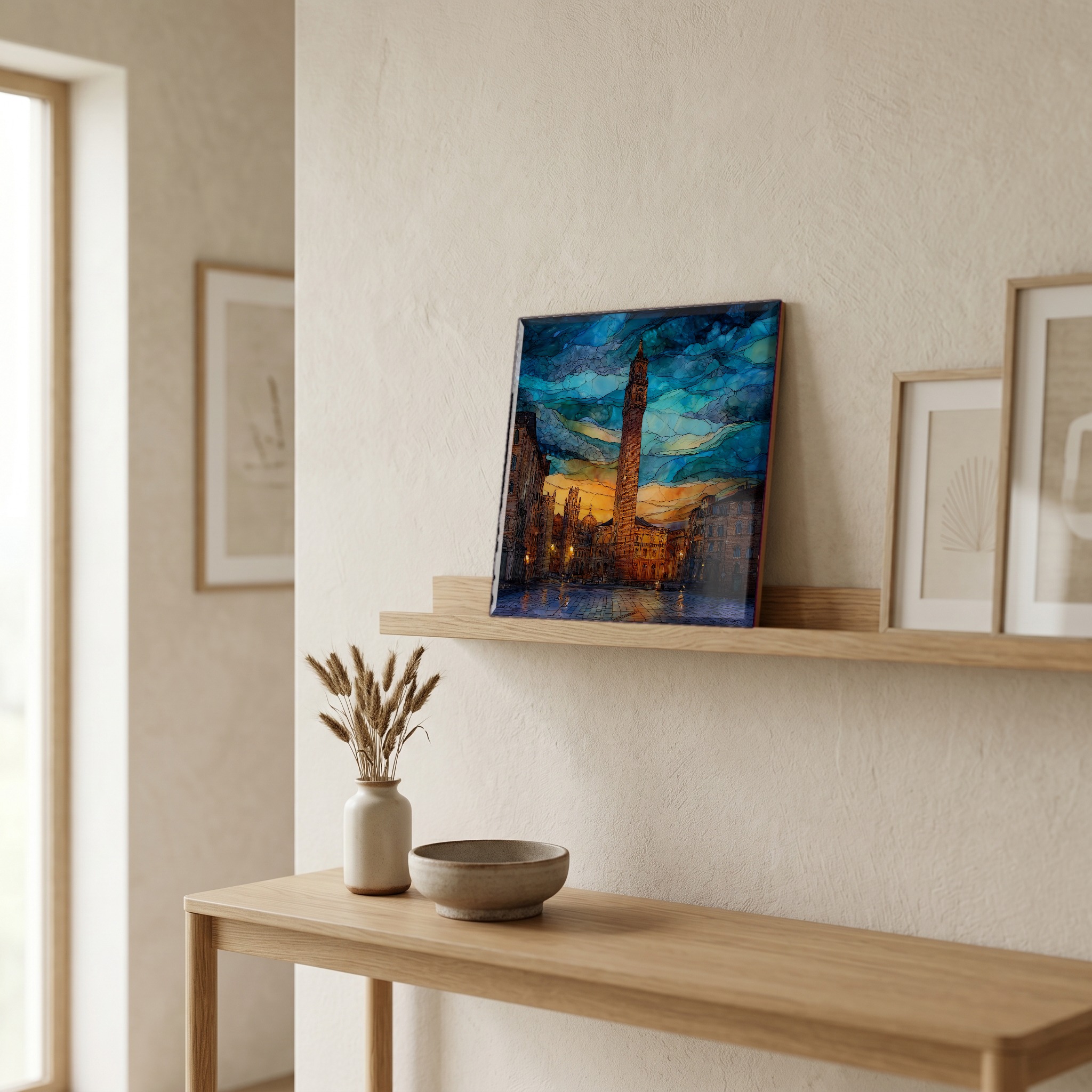
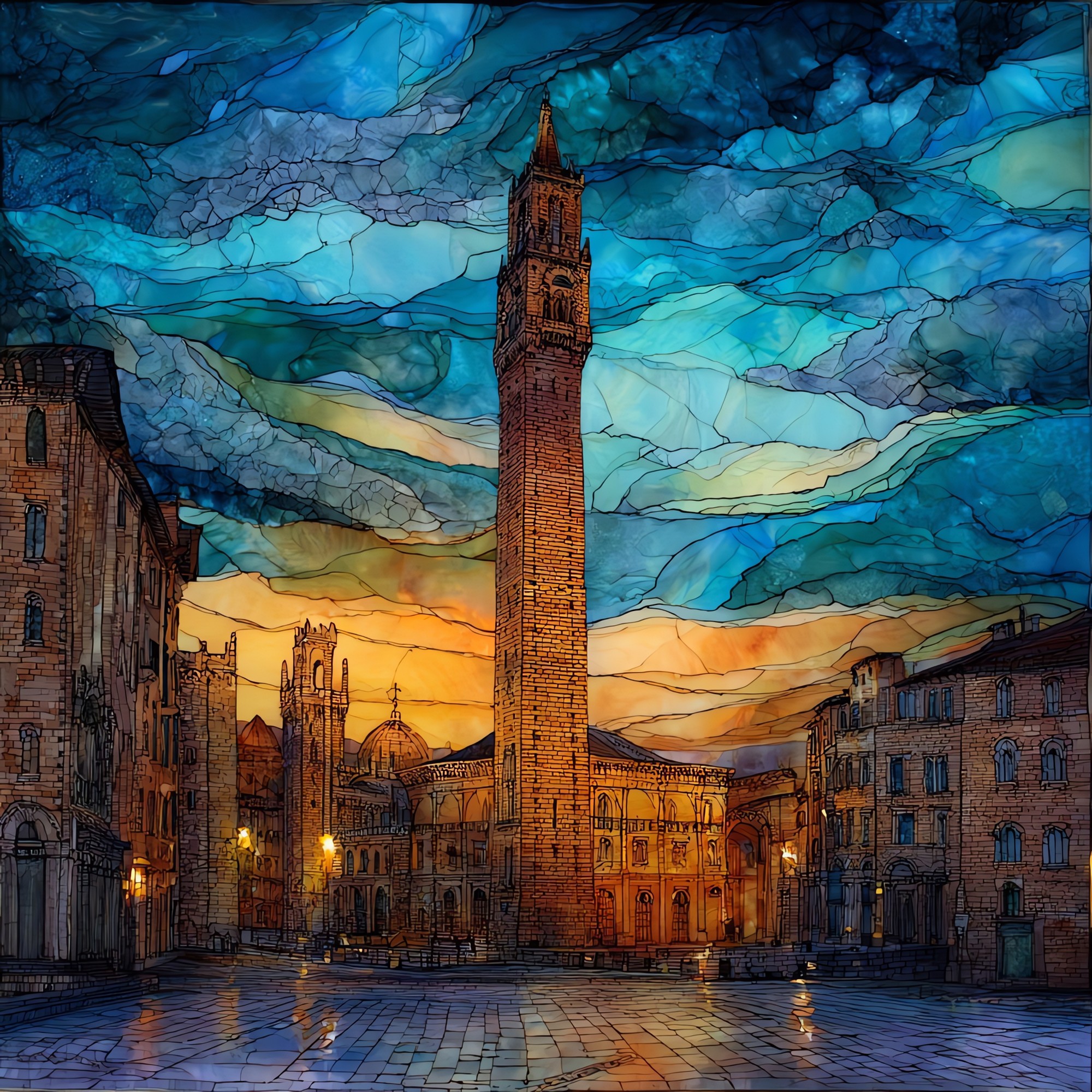
a shell of warm brick, tilted toward the tower.

Where it lives

Not only on a wall.

A small tile on the nightstand catching the morning. A larger one above the fire. Yours, wherever you spend the slow hours.
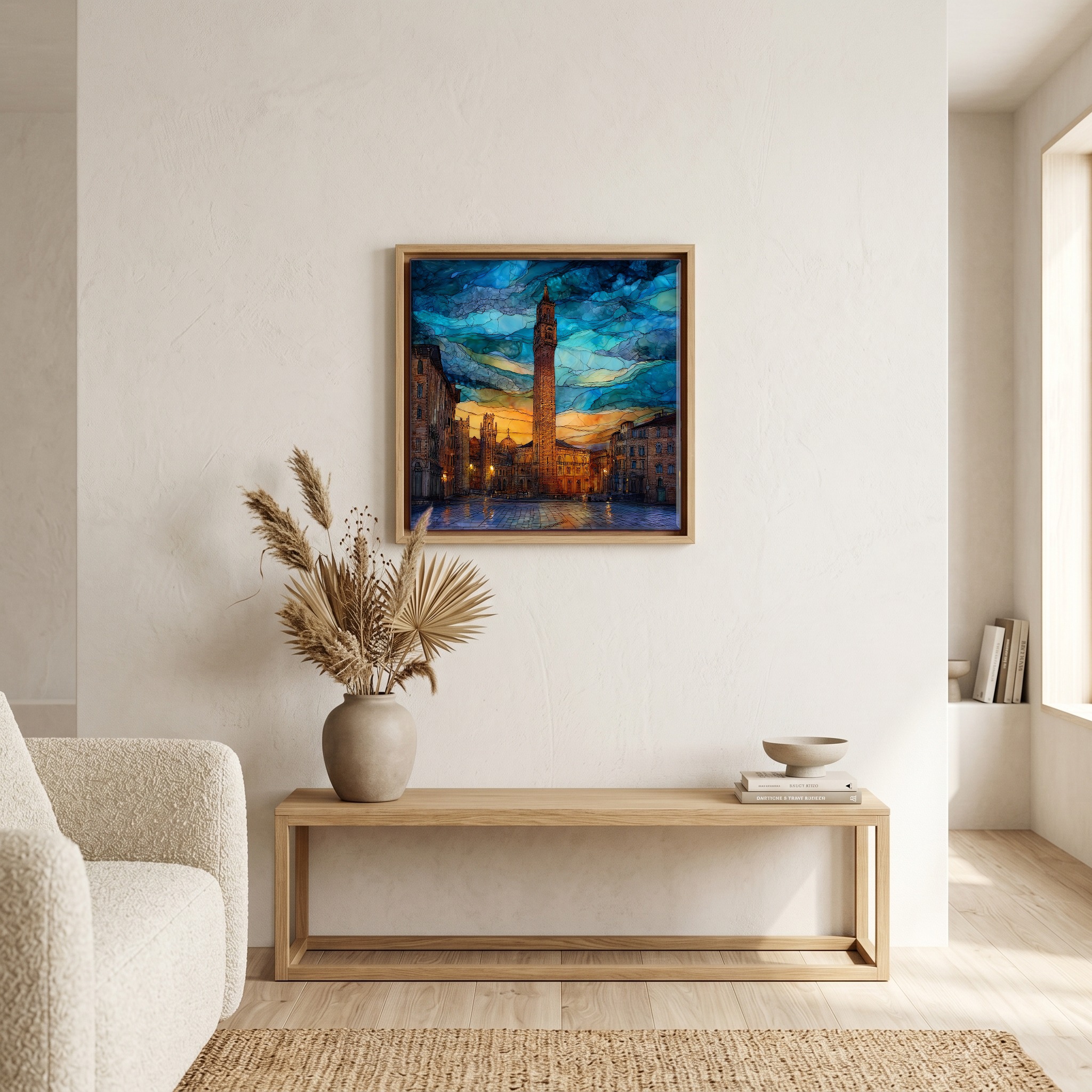
Above the bench, in a warm oak surround.
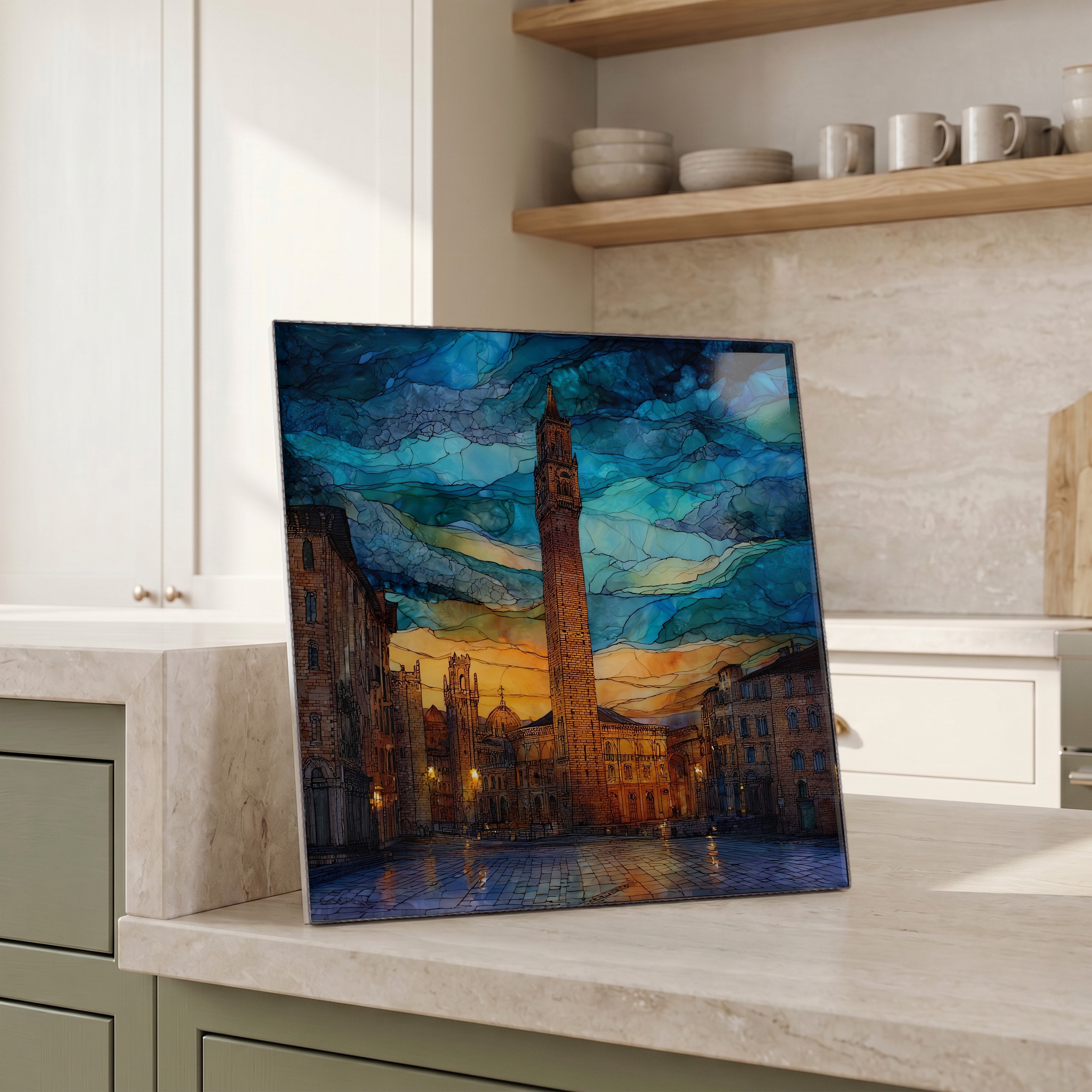
Beside the kettle, propped on the counter.
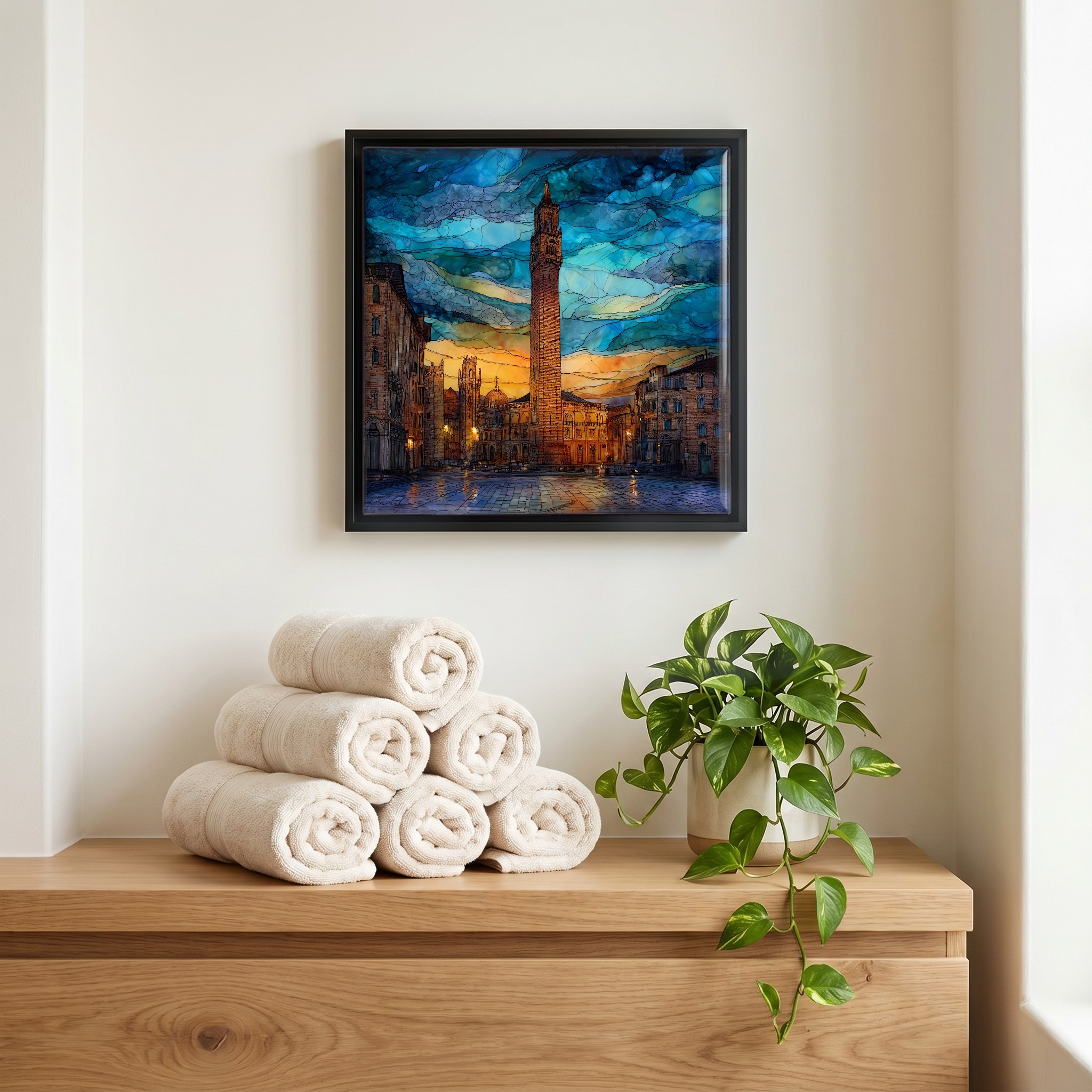
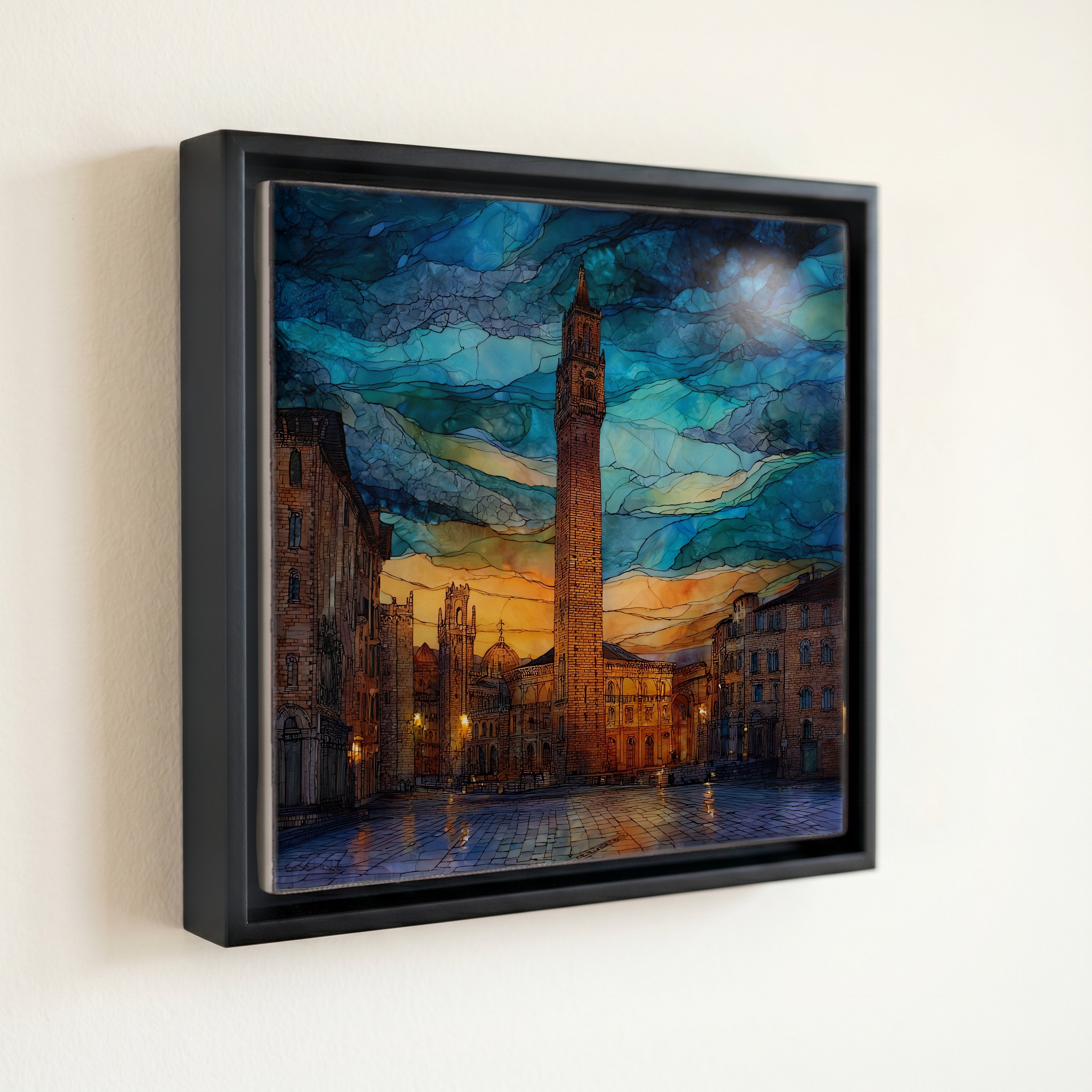
Above the linens, in a slim black surround.
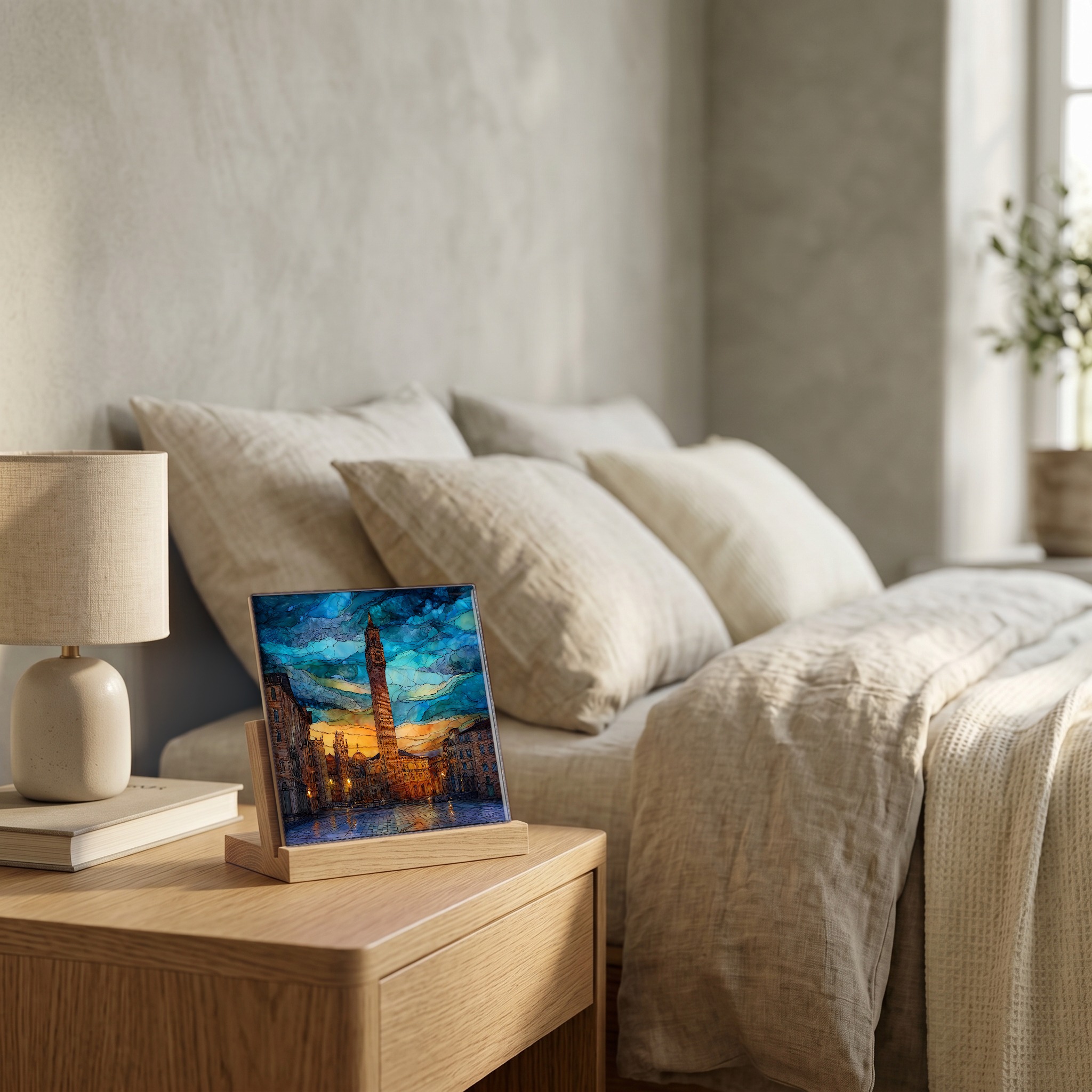
On the nightstand, on a light oak stand.
On a picture ledge, where the light comes in.
a note from the studio

A shell-shaped square in old Siena, paved in warm brick and divided by white travertine into nine wedges, one for each of the nine men who governed the city when the piazza was laid out. The whole space tilts down toward the Palazzo Pubblico and the Torre del Mangia. Mornings, the bricks are cool and the cafés are setting out chairs. Twice a year the wedges are covered with tufa earth, the perimeter is fenced, and ten horses run the Palio around the rim. The rest of the year, people sit on the slope and lean back against the warm clay.
from the studio
shown in a slim black floating frame · 6 × 6 in
— bring it home

Piazza del Campo, on ceramic.

Each tile is finished by hand in our Knoxville studio. Artwork is slowly infused into the ceramic surface under high heat and pressure, and rests beneath a thin glossy finish. The colour lives in the surface, not on top of it.

What kind of piece?
One tile — square or rectangle.
How big?
the popular one — counter, shelf, nightstand
6 × 6 in · 15 cm · 1.6 lb
Surface finish
A clear glossy finish — the artwork reads as if under resin. Ideal for show-pieces and framed wall art.
How it sits
A hidden cleat — sits ¼″ proud of the wall.
$58
Hand-finished and shipped from our studio at the foot of the Smokies. On your wall in about ten days.
size
6 × 6 in
15 cm
weighs
1.6 lb
solid in the hand
surface
ceramic, hand-finished
art rests beneath a thin glossy finish
from
Knoxville, TN
our family studio, at the foot of the Smokies
— start a Coaster Set

Pick any four 4-inch tiles — National Parks you've been to, a Smokies set, the four seasons of one place. $ for a set of , cork-backed, ready to live on the table.
comes gift-ready
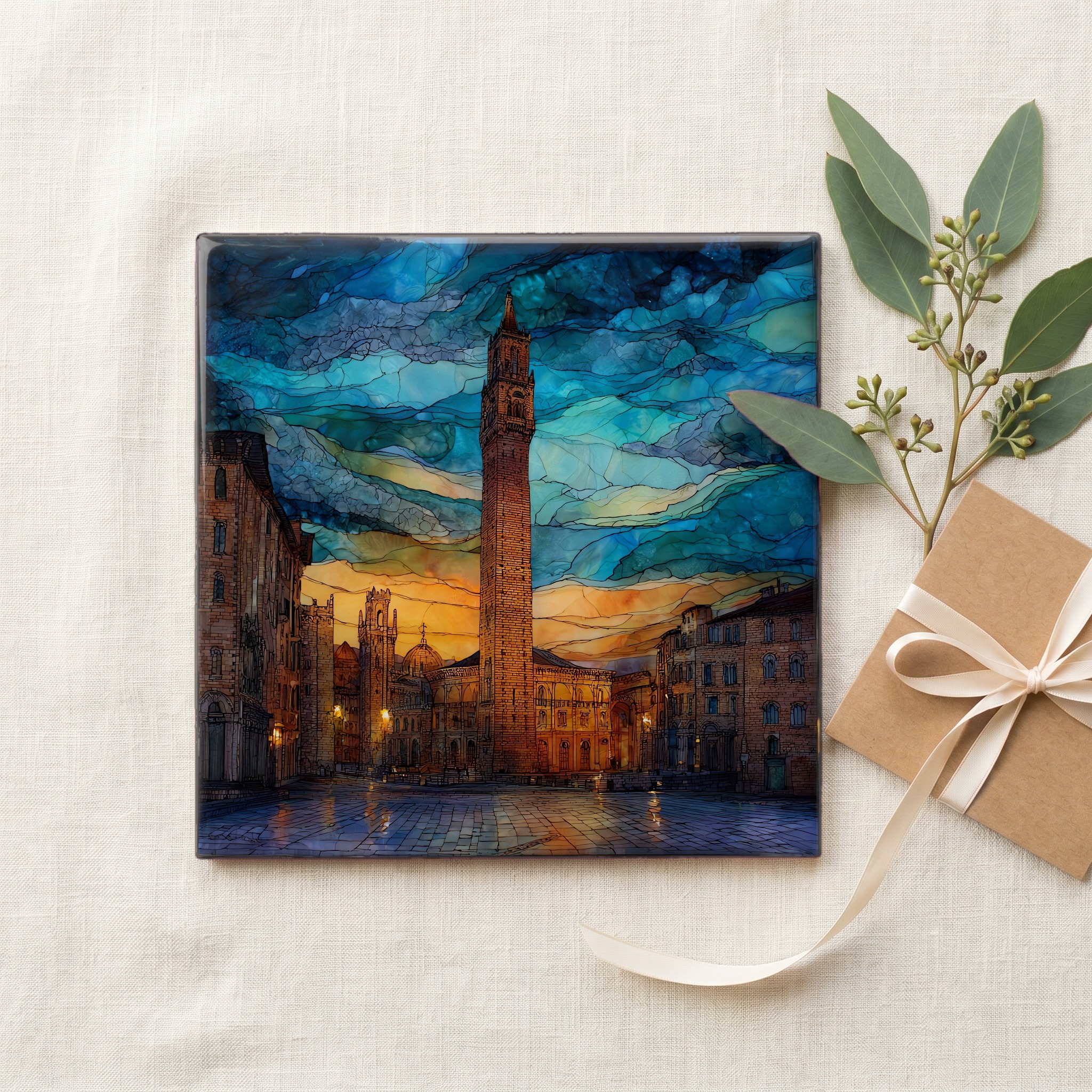
comes gift-ready

Each tile ships in a kraft box, tied with cream ribbon, with a handwritten note from the studio if you'd like to add one.
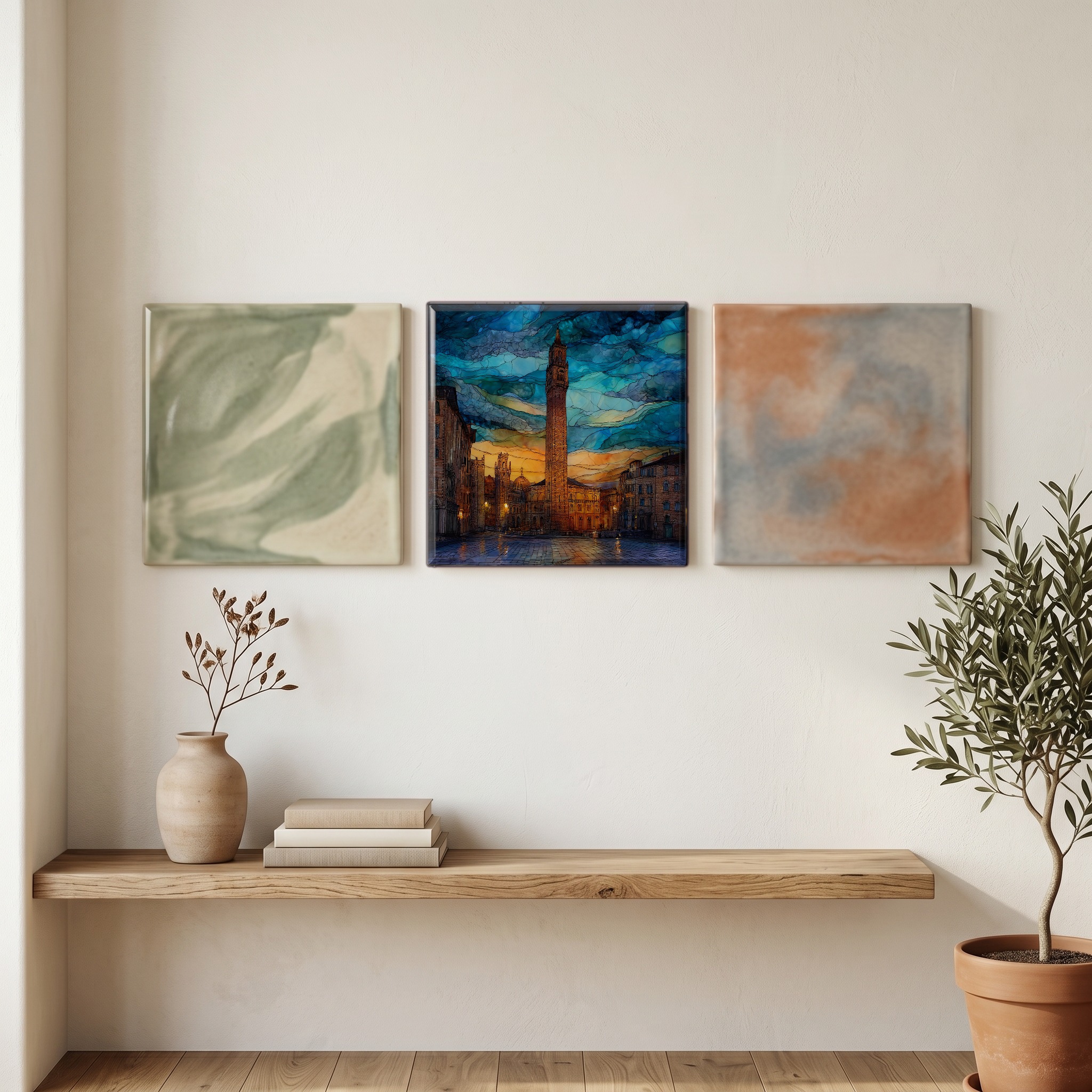
or build a grouping
or build a grouping

Three or five different vistas, hung together — a chapter of places you've been, or want to go.

about Piazza del Campo

The place, in three passes.

A little of what's known, in case you fall down the rabbit hole — or want to go see it yourself.
the place

The Piazza del Campo is the main civic square of Siena, in central Tuscany, about 70 kilometres south of Florence. It sits in the saddle where Siena's three hills meet, on ground that was the Roman-era marketplace and, before that, a drained marsh. The square was laid out in the late thirteenth century by the Council of Nine, the merchant oligarchy that governed Siena from 1287 to 1355, and slopes down toward the Palazzo Pubblico at its lowest point. The brick paving is divided by lines of white travertine into nine wedges, one for each of the Nine. The historic centre of Siena, including the Campo, was inscribed on the UNESCO World Heritage List in 1995.

the stone

The bricks were laid in a herringbone pattern and the paving was finished by 1349; the white dividing lines are travertine, the same stone that paves the rest of Siena's civic centre. At the lowest point stands the Palazzo Pubblico, begun in 1297 by the Council of Nine as the seat of the city government. Beside it rises the Torre del Mangia, completed in 1348 to a height of 88 metres and, when finished, one of the tallest secular towers in Italy. Opposite the palace, the Fonte Gaia by Jacopo della Quercia (1419) has marked the high end of the square for six centuries, though the panels in place now are nineteenth-century copies; the originals are preserved in the museum at Santa Maria della Scala.

the year

The Palio di Siena runs around the perimeter of the Campo twice a year: July 2 (the Palio di Provenzano, for the Madonna of Provenzano) and August 16 (the Palio dell'Assunta, the day after the Assumption). Ten of Siena's seventeen contrade, the neighbourhood districts each named for an animal or symbol, race three laps bareback on borrowed horses. The course is the curved brick of the square itself, packed with tufa earth for the day and lined with mattresses at the sharp corners of San Martino and the Casato. The race lasts about ninety seconds. The modern twice-yearly schedule has been run since the mid-seventeenth century. Outside those two afternoons the Campo belongs to slow walkers and the cafés around its rim.

where
Italy · Siena, Tuscany
elevation
322 m · 1,056 ft
position
43.3186° N · 11.3316° E
the neighborhood

What's nearby.

A handful of named places within an hour's walk or short drive. Some we've already painted; some we will.
1 km NW
Siena Cathedral
Romanesque-Gothic duomo
1 km NW
Santa Maria della Scala
medieval pilgrim hospital and museum
1 km NW
Basilica di San Domenico
Dominican brick basilica
14 km NW
Monteriggioni
walled medieval hill town
15 km SE
Crete Senesi
clay-hill landscape south of Siena
N
Piazza del Campo
Siena Cathedral
Santa Maria della Scala
Basilica di San Domenico
Monteriggioni
Crete Senesi
common questions

What people ask.

A few questions we get about Piazza del Campo — and about bringing the piece home.
about the place

The Piazza del Campo is the main square of Siena, in central Tuscany, about 70 kilometres south of Florence. It sits in the medieval centre of the city, in the saddle where Siena's three hills meet, and is entirely pedestrian.

The shell shape follows the natural bowl where Siena's three hills meet. The Council of Nine, the merchant oligarchy that governed Siena from 1287 to 1355, formalised the geometry in the late thirteenth and early fourteenth centuries and divided the brick paving into nine wedges, one for each member of the council.

The Torre del Mangia is the bell tower of the Palazzo Pubblico at the lowest point of the Campo. Completed in 1348, it stands 88 metres tall and was, when finished, one of the tallest secular towers in Italy. The name comes from a fourteenth-century bell-ringer nicknamed Mangiaguadagni.

The Palio runs twice a year on the Campo itself: July 2, the Palio di Provenzano, and August 16, the Palio dell'Assunta. Ten of Siena's seventeen contrade race three laps bareback on borrowed horses, on a track of tufa earth laid over the brick. The race lasts about ninety seconds.

Yes. The historic centre of Siena, including the Campo, the Palazzo Pubblico, the Torre del Mangia, and the Cathedral, was inscribed on the UNESCO World Heritage List in 1995 for its exceptional preservation of medieval urban form and civic space.

The Fonte Gaia is the marble fountain at the high end of the Campo, completed by Jacopo della Quercia in 1419. The panels in place today are nineteenth-century copies; Quercia's original reliefs are preserved in the museum at Santa Maria della Scala, the medieval hospital opposite the Cathedral.

The Campo lies inside Siena's pedestrian zone; no cars enter. From the train station at the foot of the hill, the city escalators climb to the historic centre, and the Campo is about a ten-minute walk through Via Banchi di Sopra. From the ring-road car parks the walk is fifteen to twenty minutes.

about the piece in your home

It has been a meaningful gift for our customers with roots in Siena or in central Tuscany. The Campo is the centre of Sienese civic life and the stage for the Palio, and the tile reads as a piece of home for anyone who has stood on the slope. A Small or Medium with a handwritten note from the studio carries well.

The warm sienna-brick palette and the medieval-Italian subject sit well with three décor families in particular: warm-modern Mediterranean, Tuscan-modern (plaster walls, oak, terracotta), and library-and-study (leather, brass, dark wood). The piece reads as restrained art on a plaster or limewash wall.

Yes. Sienna brick, travertine, terracotta, and oxidised brass have anchored the European warm-minimalist and quiet-luxury moves of 2024-2026, and a Medium of the Campo sits firmly in that palette. It reads as a quiet centrepiece rather than tourist decoration.

A single Large holds the wall above a standard sofa or a long console. A 4-tile Mural reads as a serious piece above a longer sofa or a dining sideboard. A 9-tile Mural takes over a whole wall and is the right scale for a stairwell, an entry, or a double-height room.

Yes. Order the Dura Satin or Matte finish for any vertical wet-area installation, including a bathroom wall, a shower surround, or a kitchen backsplash. The colour is slowly infused into the ceramic surface under high heat and pressure, so it does not stain or fade from water, steam, or cleaning products.

A microfibre cloth and warm water for daily cleaning. For anything stubborn, a drop of mild dish soap. No abrasive pads, no bleach, no scouring powders. The thin glossy finish wipes clean and does not need waxing or sealing.

Yes. Every piece in the WenderVista atlas is original work by Reid Wender, curator of Wender Studios. The artwork is not licensed from any third party. We are a single studio in Knoxville, Tennessee, and we hand-finish every tile before it ships.

if this one stayed with you

A few you might also love.

Hand-picked by the eye that found Sorapis. Same air, same kind of quiet.
— a collection

The Italian Dolomites,
painted slow.

The valleys between Cortina and Val Gardena, the tarns you walk an hour to see, the towers that turn the colour of a banked fire just before dark. Wander the collection by valley, by season, or follow the path Reid walked.

Tre Cime
Braies
Misurina
Sorapis
Cinque Torri
Sassolungo
Marmolada