Wender·Vista
Perugia
shown on ceramic, 12-inch tileItaly
on a hilltop in Umbria, central Italy

Perugia

the hour the whole town walks the same street.

Where it lives

Not only on a wall.

A small tile on the nightstand catching the morning. A larger one above the fire. Yours, wherever you spend the slow hours.
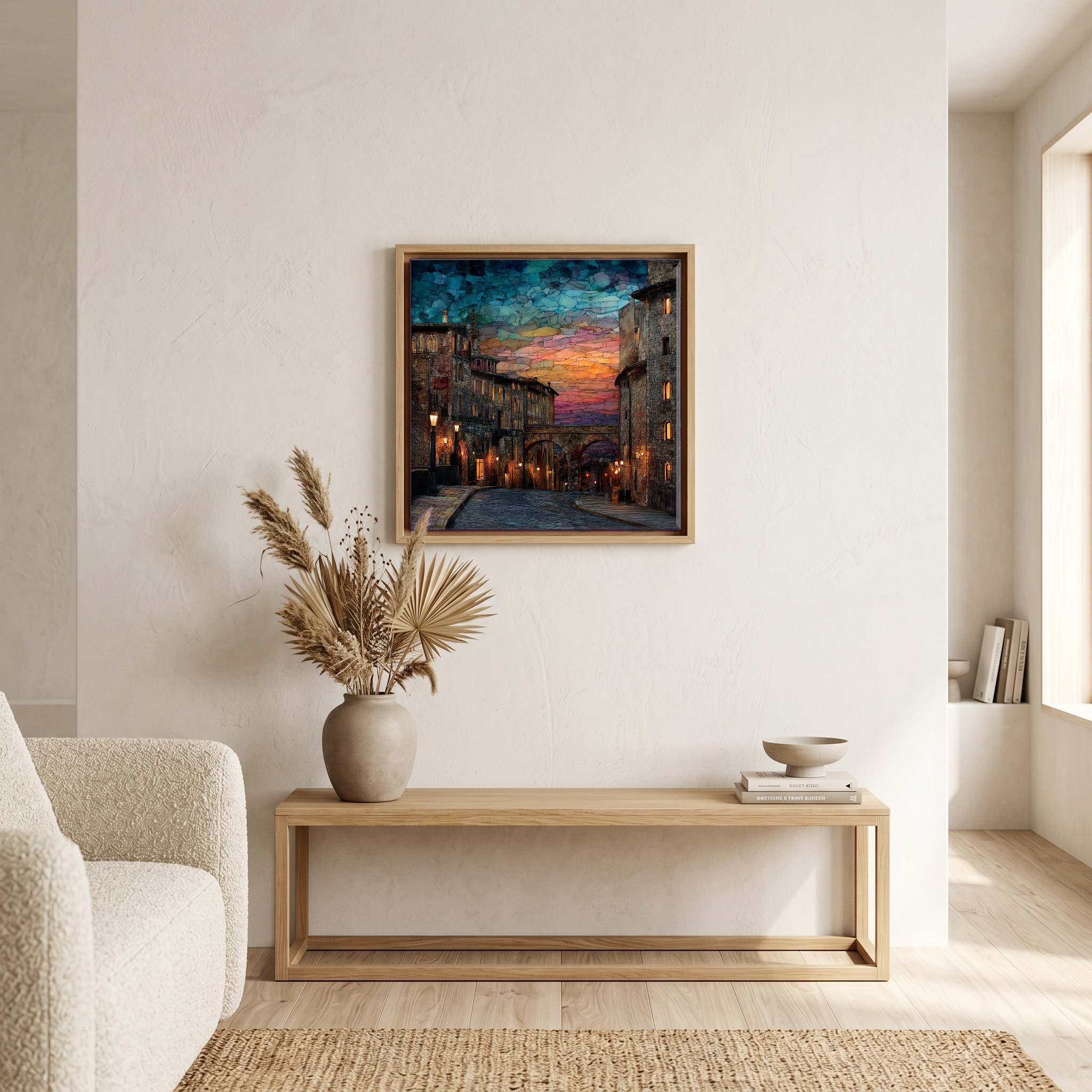
Above the bench, in a warm oak surround.
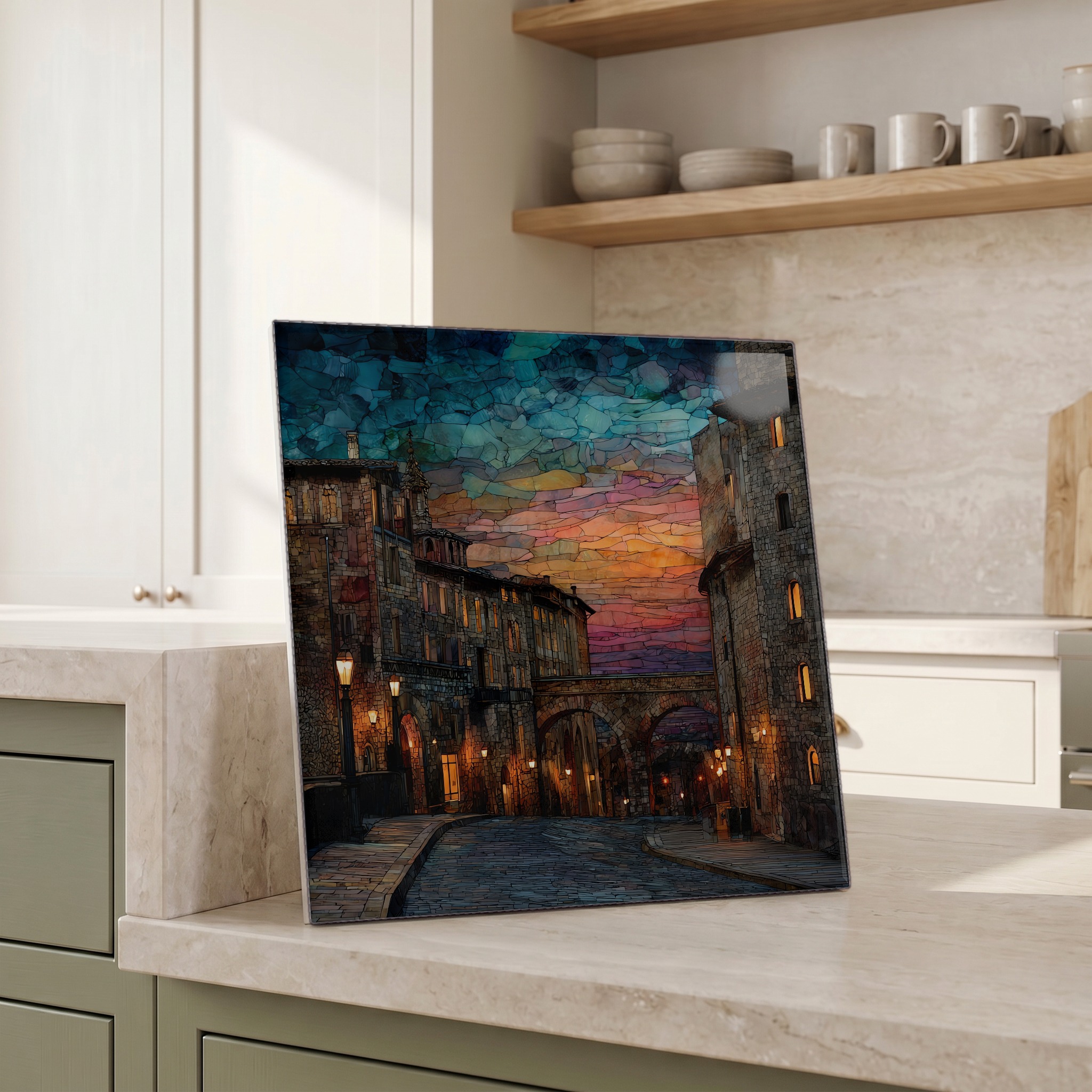
Beside the kettle, propped on the counter.
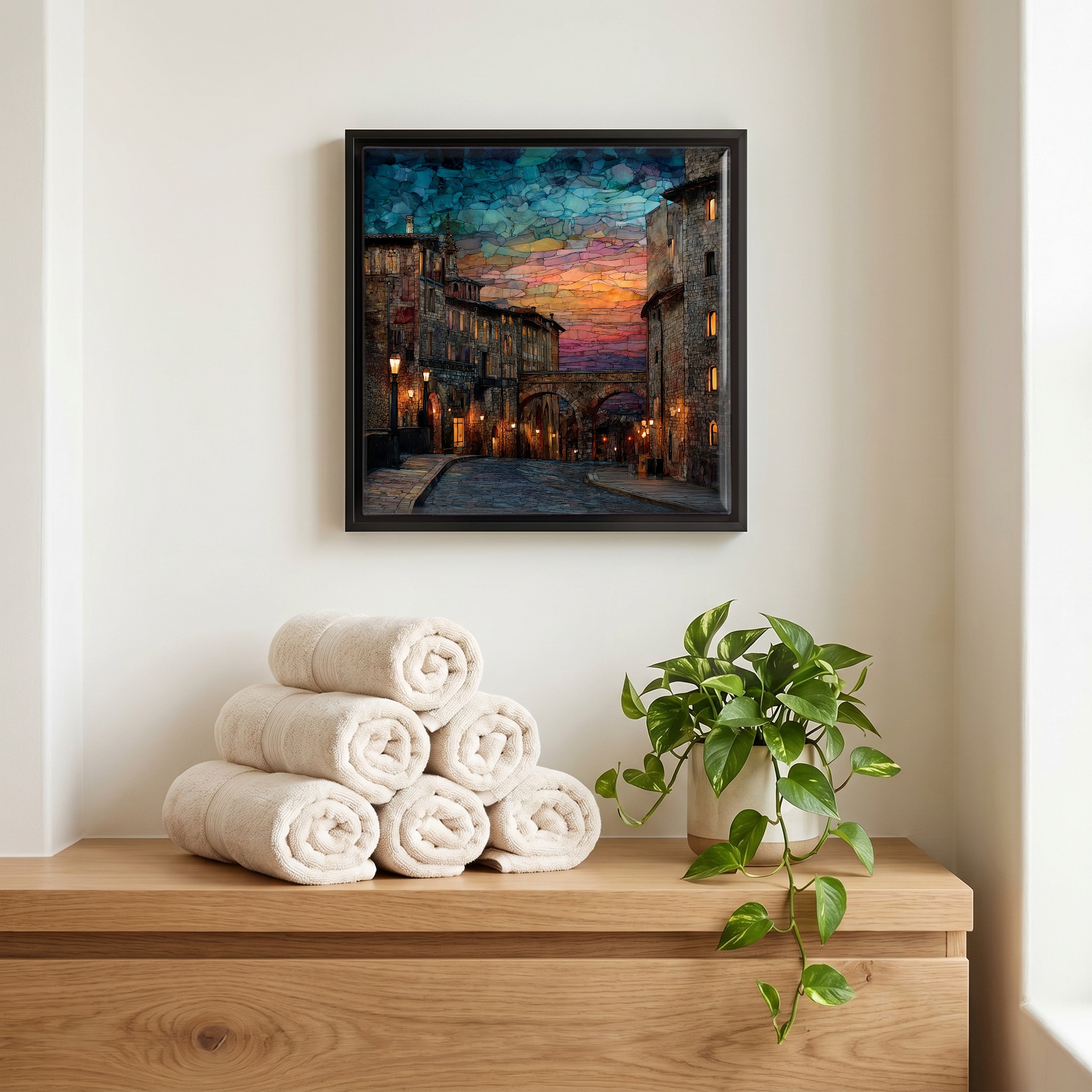
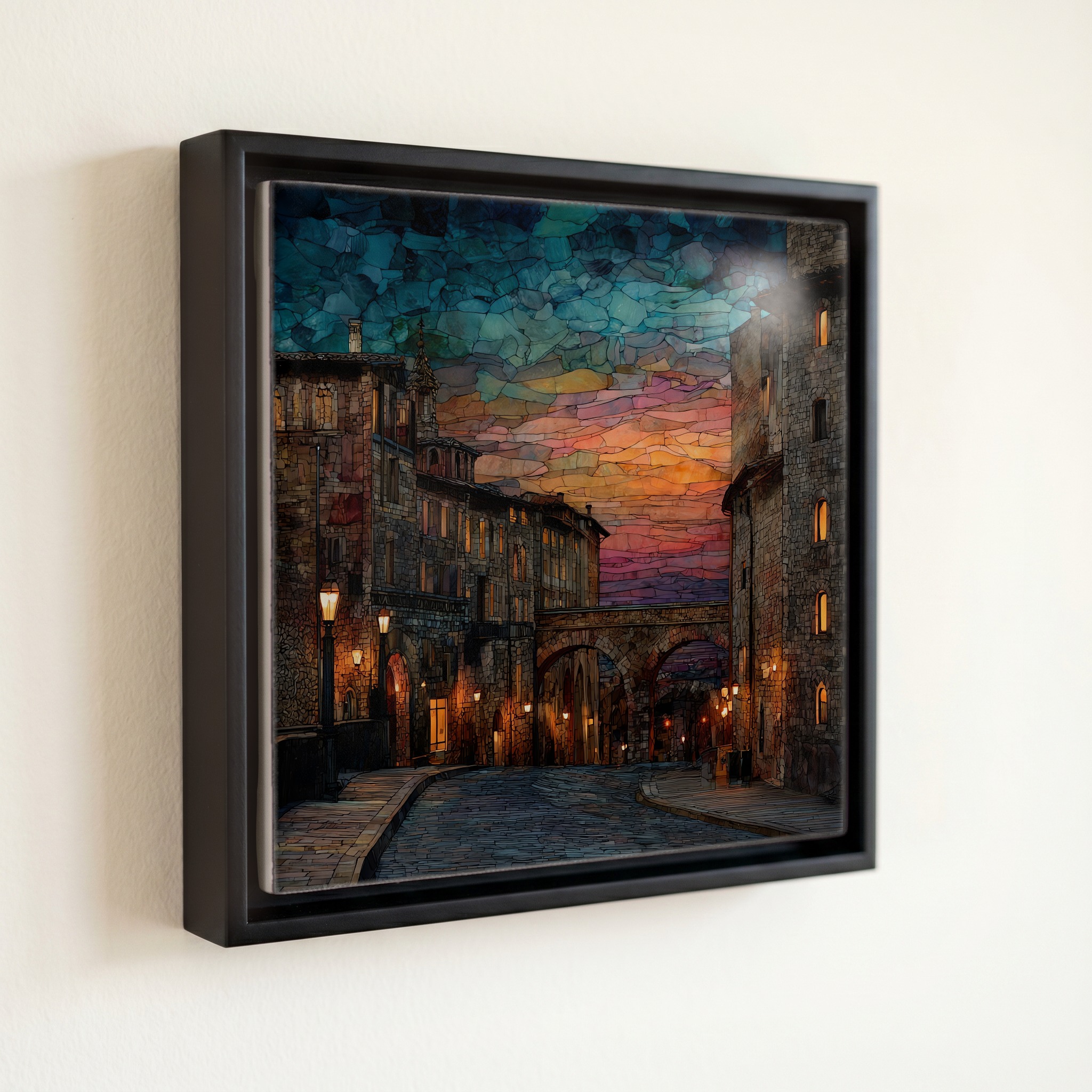
Above the linens, in a slim black surround.
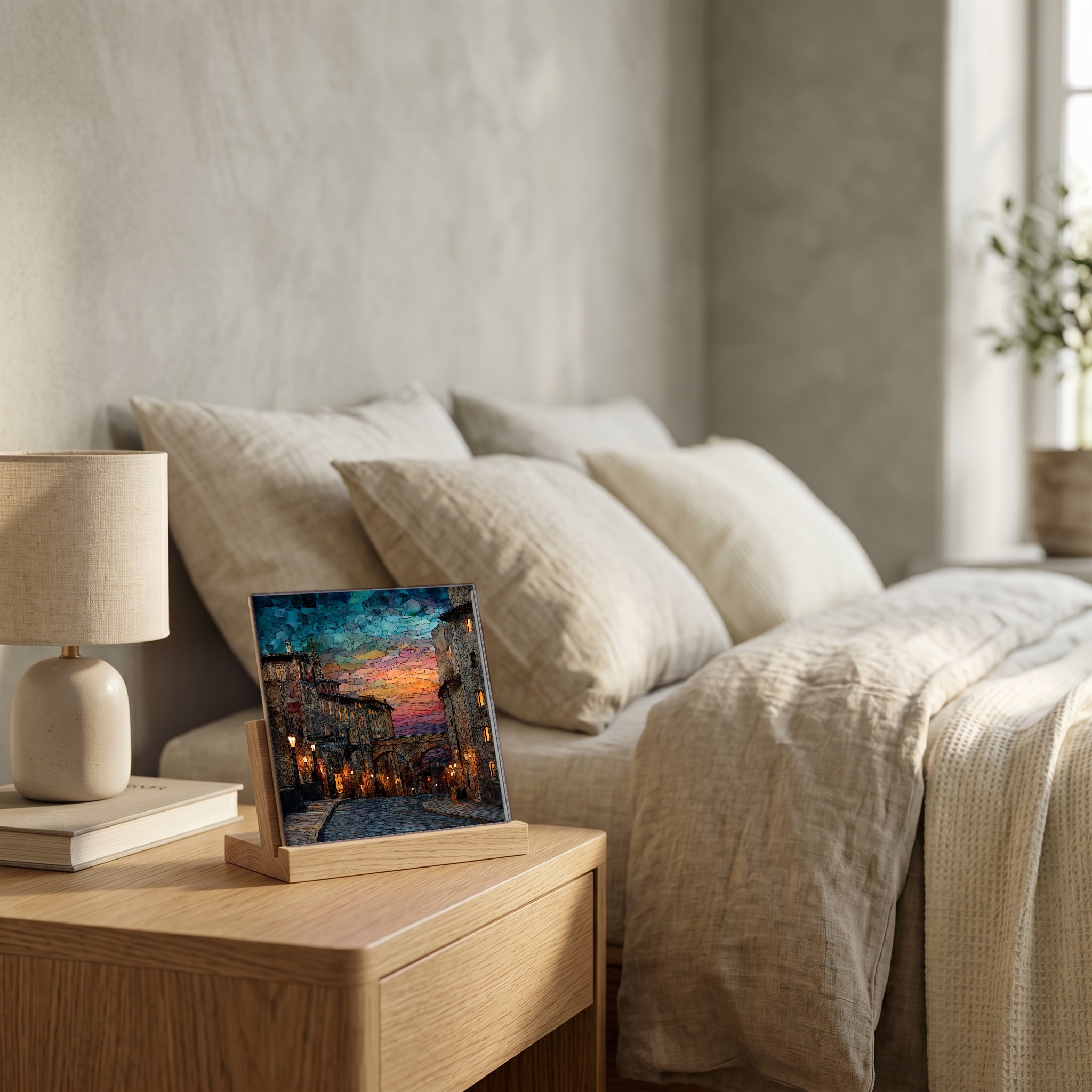
On the nightstand, on a light oak stand.
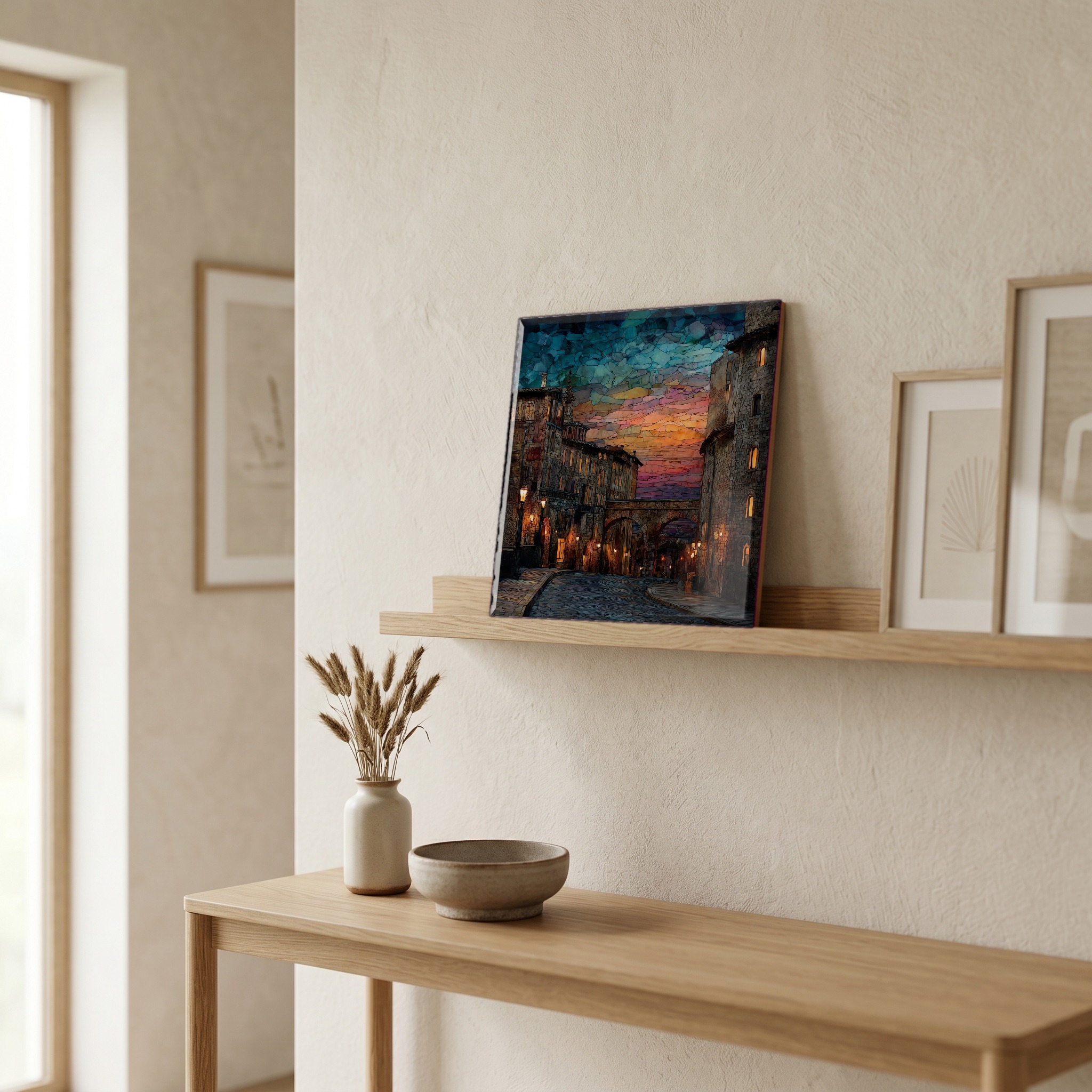
On a picture ledge, where the light comes in.
a note from the studio

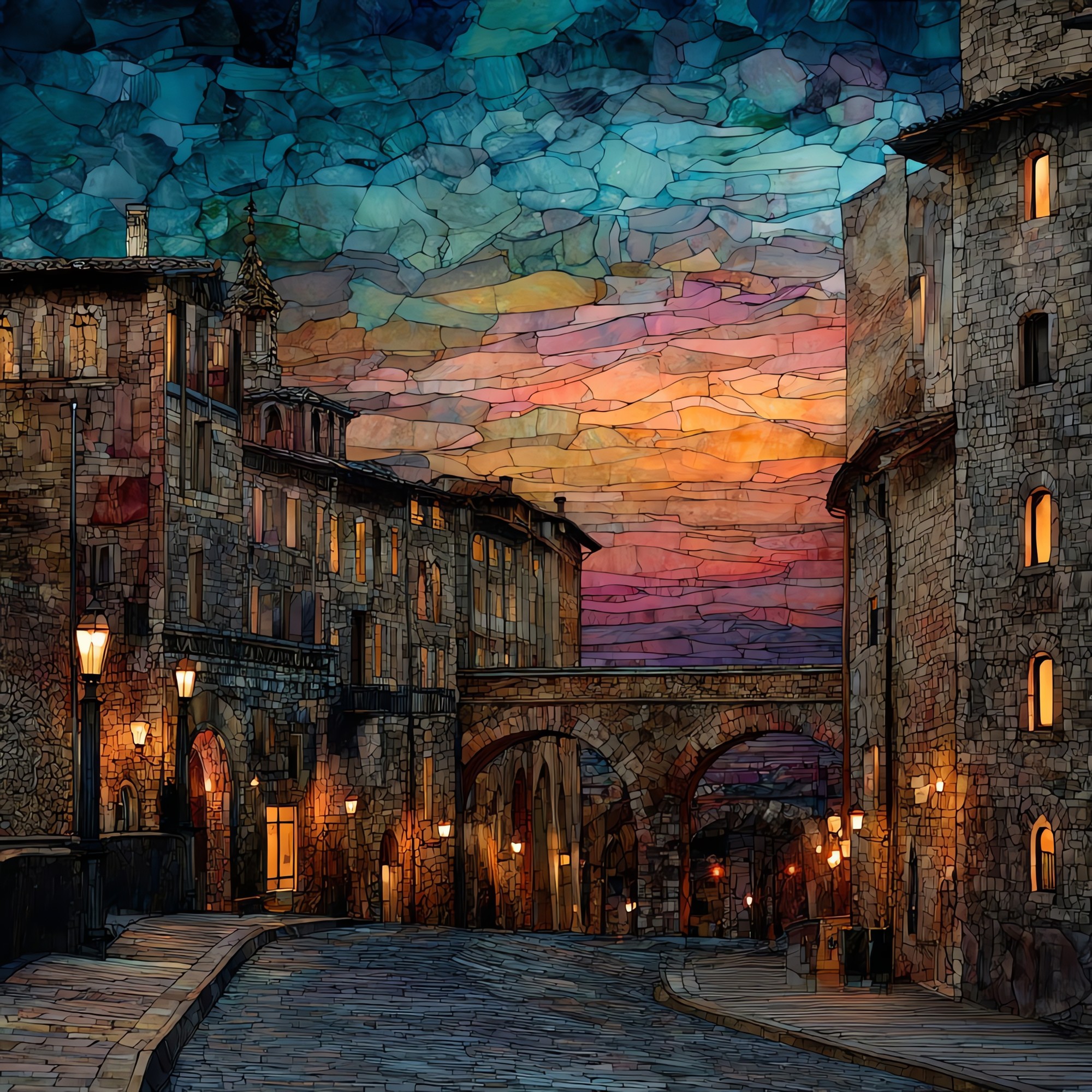
The capital of Umbria, set on a hill that has been a city since the Etruscans. The main street, Corso Vannucci, runs a single straight kilometre from the Fontana Maggiore to the open view over the valley, and every evening the whole town walks it end to end. The pale stone holds the afternoon light a long time after the sun is gone. In July the jazz runs late in the piazzas; in October the air smells of chocolate. Nobody hurries here. They have had two thousand years to learn the pace.
from the studio
shown in a slim black floating frame · 6 × 6 in
— bring it home

Perugia, on ceramic.

Each tile is finished by hand in our Knoxville studio. Artwork is slowly infused into the ceramic surface under high heat and pressure, and rests beneath a thin glossy finish. The colour lives in the surface, not on top of it.

What kind of piece?
One tile — square or rectangle.
How big?
the popular one — counter, shelf, nightstand
6 × 6 in · 15 cm · 1.6 lb
Surface finish
A clear glossy finish — the artwork reads as if under resin. Ideal for show-pieces and framed wall art.
How it sits
A hidden cleat — sits ¼″ proud of the wall.
$58
Hand-finished and shipped from our studio at the foot of the Smokies. On your wall in about ten days.
size
6 × 6 in
15 cm
weighs
1.6 lb
solid in the hand
surface
ceramic, hand-finished
art rests beneath a thin glossy finish
from
Knoxville, TN
our family studio, at the foot of the Smokies
— start a Coaster Set

Pick any four 4-inch tiles — National Parks you've been to, a Smokies set, the four seasons of one place. $ for a set of , cork-backed, ready to live on the table.
comes gift-ready
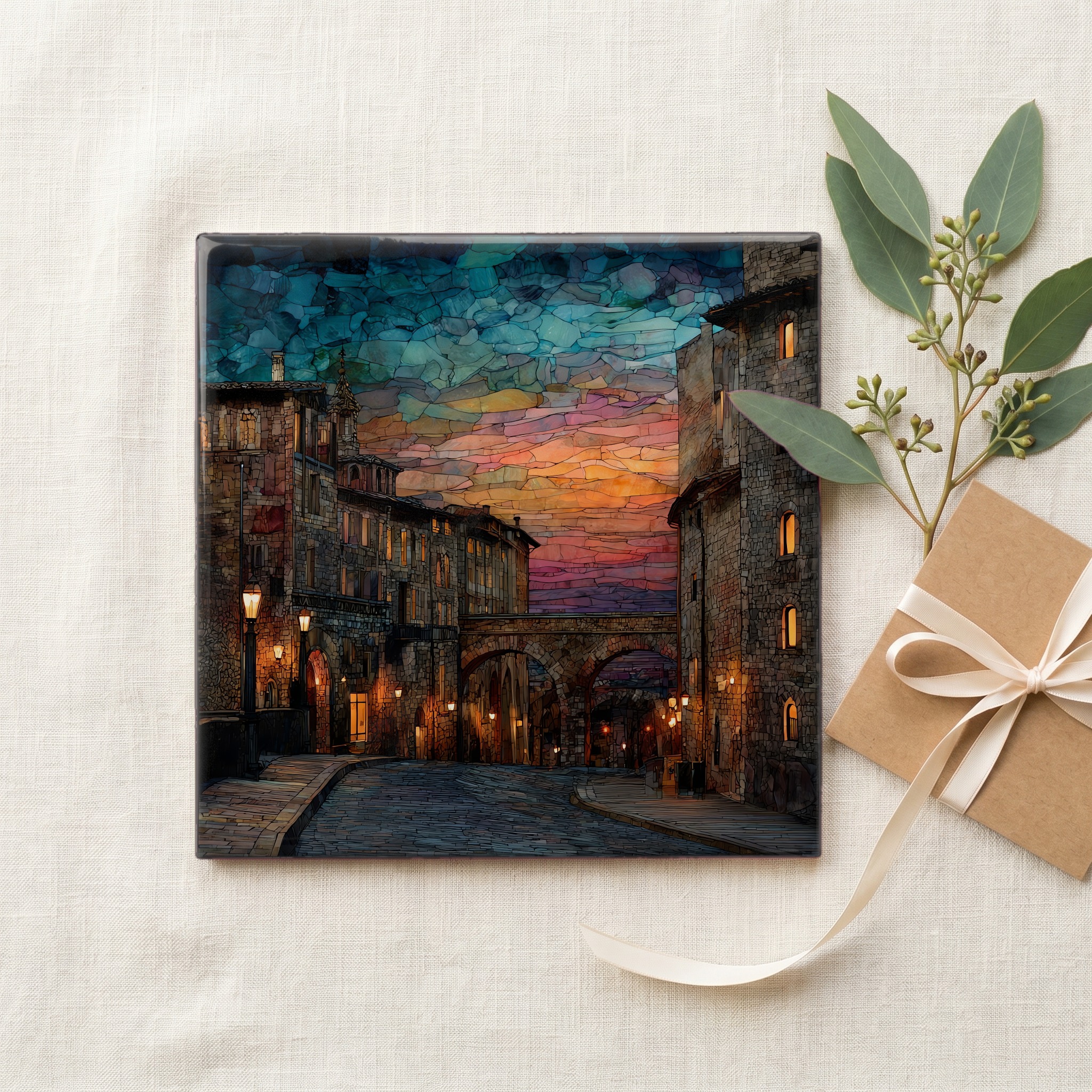
comes gift-ready

Each tile ships in a kraft box, tied with cream ribbon, with a handwritten note from the studio if you'd like to add one.
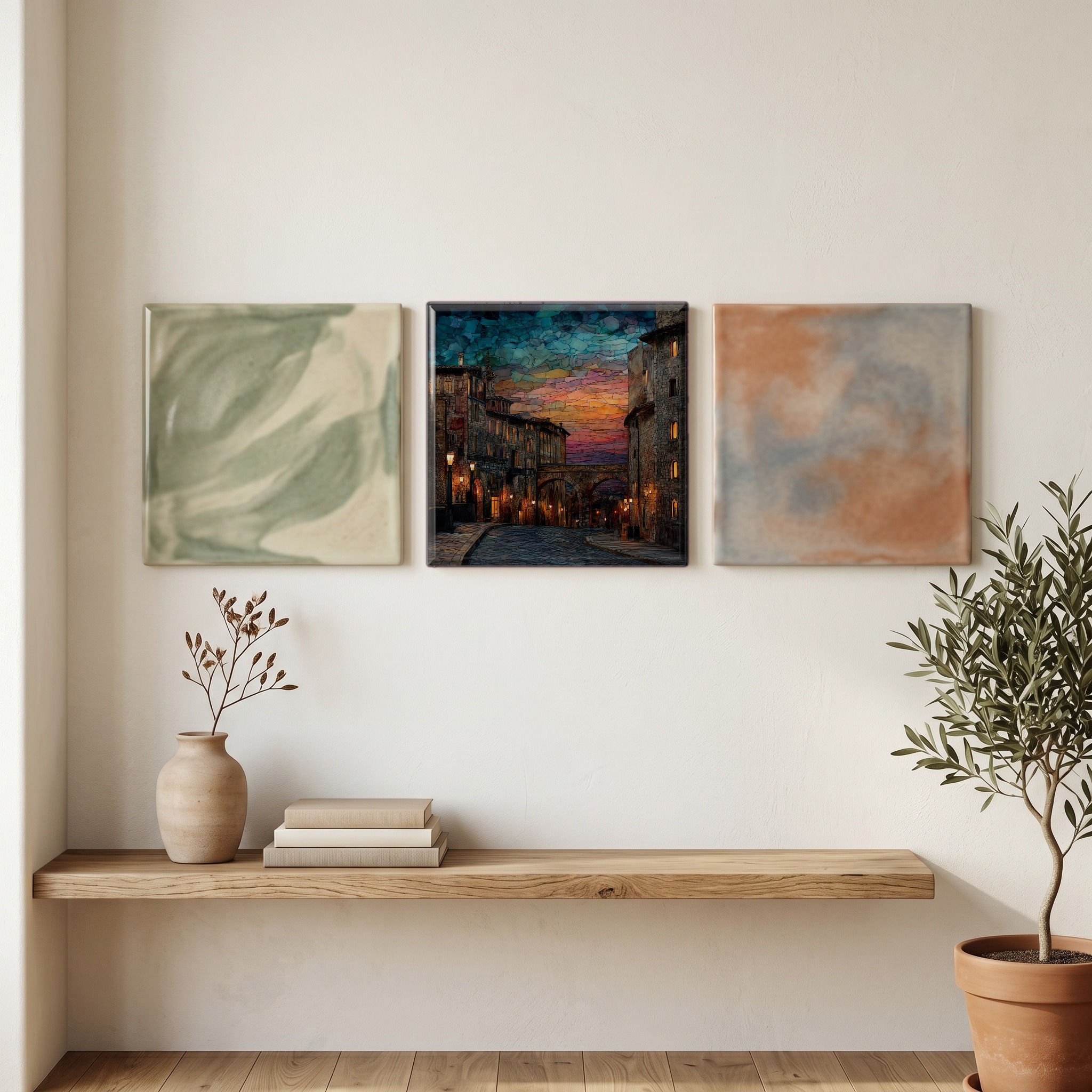
or build a grouping
or build a grouping

Three or five different vistas, hung together — a chapter of places you've been, or want to go.

about Perugia

The place, in three passes.

A little of what's known, in case you fall down the rabbit hole — or want to go see it yourself.
the place

Perugia is the capital of Umbria, the only Italian region with neither a sea coast nor a foreign border, set on a hilltop at 493 metres above the Tiber valley in the centre of the country. The historic core sits where the Etruscans built one of their twelve confederate cities; it was first recorded as Perusia around 310 BC. Roughly 162,000 people now live across the old hill and the modern town below it, linked by escalators that climb through the Rocca Paolina and by a small automated minimetrò. Assisi stands across the valley to the east, and Florence and Rome are each about two hours away by road or rail.

— informed by Wikipedia
the stone

The stone is the oldest thing here and the most worked. The Arch of Augustus, the city's northern gate, is Etruscan at its base and Roman in its upper courses, built in the third century BC and standing yet. At the head of the main piazza, the Fontana Maggiore was completed around 1280 by Nicola and Giovanni Pisano, its two basins carved with fifty panels of the months, the zodiac, and scenes from Aesop's fables. Above it rises the Palazzo dei Priori, one of the great medieval town halls of Italy, which holds the Galleria Nazionale dell'Umbria and the Collegio del Cambio. Perugino frescoed those walls around 1500; he is the painter most often named as the young Raphael's master.

— informed by Wikipedia, Lonely Planet
the year

Perugia keeps two seasons the rest of Italy travels for. Umbria Jazz, running since 1973, fills the piazzas and the Giardini Carducci for ten days each July, with free stages along Corso Vannucci and ticketed nights at the Arena Santa Giuliana. In mid-October the city turns to chocolate for Eurochocolate, begun in 1994, in the town that has made Perugina since 1907 and gave the world the Baci, the foil-wrapped hazelnut kiss with a love note folded inside. Between the festivals, much of the crowd on the street is students; the University of Perugia was founded in 1308, and the University for Foreigners has taught Italian to the world for a century.

— informed by Wikipedia, Frommer's
where
Italy · Perugia, Umbria
elevation
493 m · 1,617 ft
position
43.1122° N · 12.3889° E
the neighborhood

What's nearby.

A handful of named places within an hour's walk or short drive. Some we've already painted; some we will.
20 km E
Assisi
hill town
22 km W
Lake Trasimeno
lake
15 km S
Deruta
ceramics town
12 km S
Torgiano
wine town
N
Perugia
Assisi
Lake Trasimeno
Deruta
Torgiano
common questions

What people ask.

A few questions we get about Perugia — and about bringing the piece home.
about the place

Perugia is the capital of Umbria, in the centre of Italy, set on a hilltop at 493 metres above the Tiber valley. It lies about two hours by road or train from both Rome and Florence, with Assisi across the valley to the east.

Perugia is known for its layered history, from Etruscan walls and the Arch of Augustus to the medieval Fontana Maggiore and Palazzo dei Priori. It also hosts Umbria Jazz each July and the Eurochocolate festival each October.

The Fontana Maggiore is the fountain at the head of Perugia's main piazza, completed around 1280 by Nicola and Giovanni Pisano. Its two stone basins carry fifty carved panels showing the months, the zodiac, prophets, and scenes from Aesop's fables.

Perugia has been home to the Perugina chocolate company since 1907 and is the birthplace of the Baci, a foil-wrapped chocolate kiss with a hazelnut and a love note inside. The Eurochocolate festival, begun in 1994, fills the city each October.

Corso Vannucci is Perugia's main pedestrian street, running roughly a kilometre from the Fontana Maggiore to the Giardini Carducci and their view over the valley. It is named for the Renaissance painter Pietro Vannucci, known as Perugino.

Late spring and early autumn bring mild weather and the long evening passeggiata along Corso Vannucci. July draws crowds for Umbria Jazz and mid-October for Eurochocolate, so book ahead if either festival is the reason for the trip.

The Rocca Paolina is a fortress built between 1540 and 1543 by order of Pope Paul III and designed by Antonio da Sangallo the Younger. Much of it was later demolished; its surviving underground halls now carry escalators between the lower town and the historic centre.

about the piece in your home

It has been a meaningful gift for people who studied at the universities, spent a season in Umbria, or simply love the hill towns of central Italy. A Small or Medium with a handwritten note from the studio carries the place well.

The piece reads as a jewel-toned panel of warm stone and deep glass colour, so it sits well in Tuscan-modern, Old World, and jewel-tone maximalist rooms. It also holds its own as a single bright note against a plain plaster or limewash wall.

The warm, hand-worked palette fits the move toward Mediterranean and Italian-countryside interiors, alongside textured plaster and aged-wood finishes. The stained-glass colour keeps it from reading flat or print-like on the wall.

Above a sofa, a single Large or a four-tile Mural holds the wall; over a longer span, a nine-tile Mural. For a narrower console or sideboard, a Medium sits in better proportion. On a shelf or desk, the Keepsake or a Coaster Set.

Yes. For a kitchen backsplash, a shower, or any vertical install, choose the Dura Satin or Matte finish, which is soft-sheen and scratch-resistant. The glossy finish is best kept for framed wall pieces away from direct splashes.

Wipe it with a soft microfibre cloth and a little water. The colour is slowly infused into the ceramic surface under high heat and pressure and lives beneath a thin glossy finish, so it will not fade or lift with normal cleaning.

Yes. Every WenderVista piece is created in-house by the studio in Knoxville, Tennessee, with no licensed or stock imagery. The Perugia tile is part of our atlas of places, hand-finished one at a time.

if this one stayed with you

A few you might also love.

Hand-picked by the eye that found Sorapis. Same air, same kind of quiet.
— a collection

The Italian Dolomites,
painted slow.

The valleys between Cortina and Val Gardena, the tarns you walk an hour to see, the towers that turn the colour of a banked fire just before dark. Wander the collection by valley, by season, or follow the path Reid walked.

Tre Cime
Braies
Misurina
Sorapis
Cinque Torri
Sassolungo
Marmolada