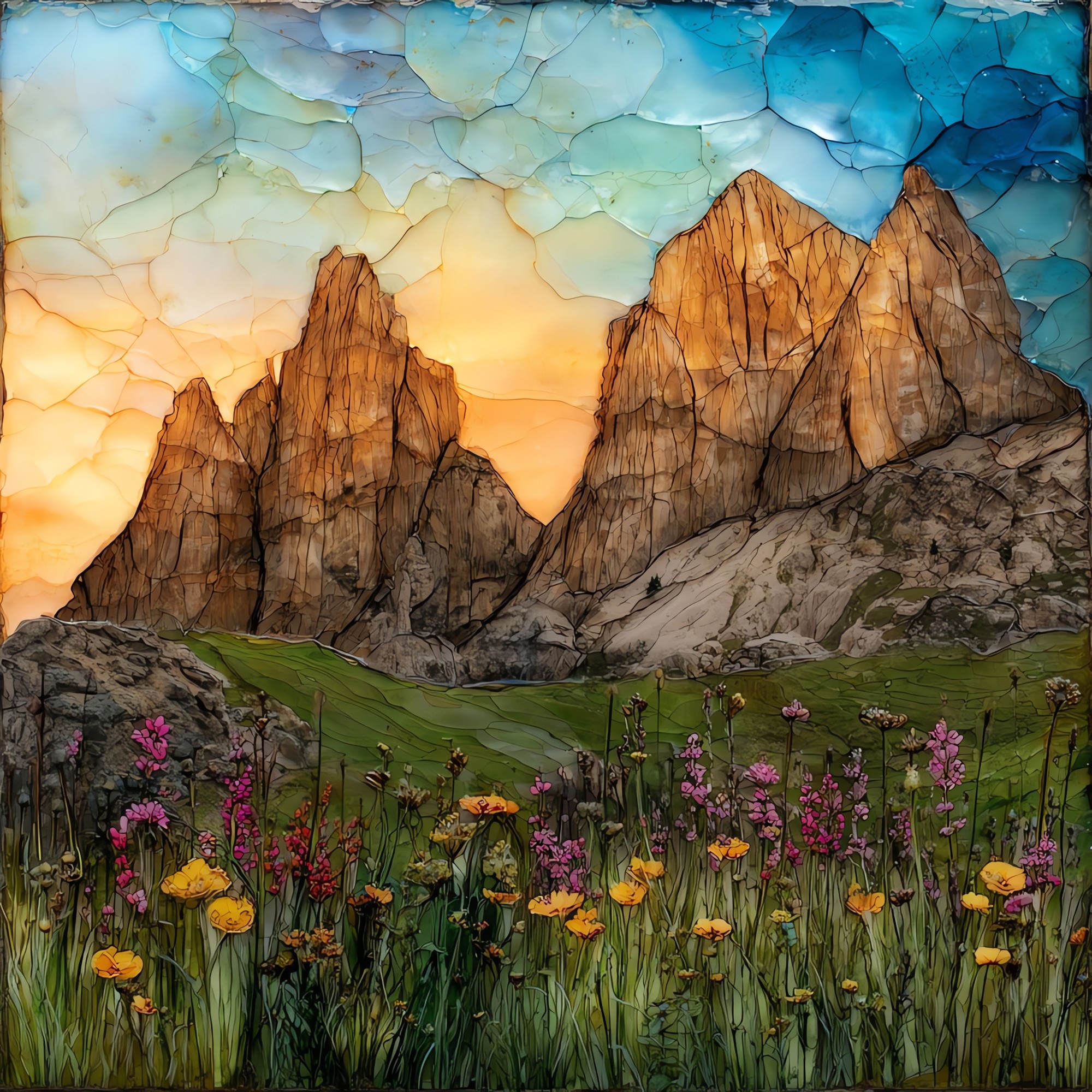
Passo Sella Summer
— the green the snow gives back, between two walls of stone.
Not only on a wall.
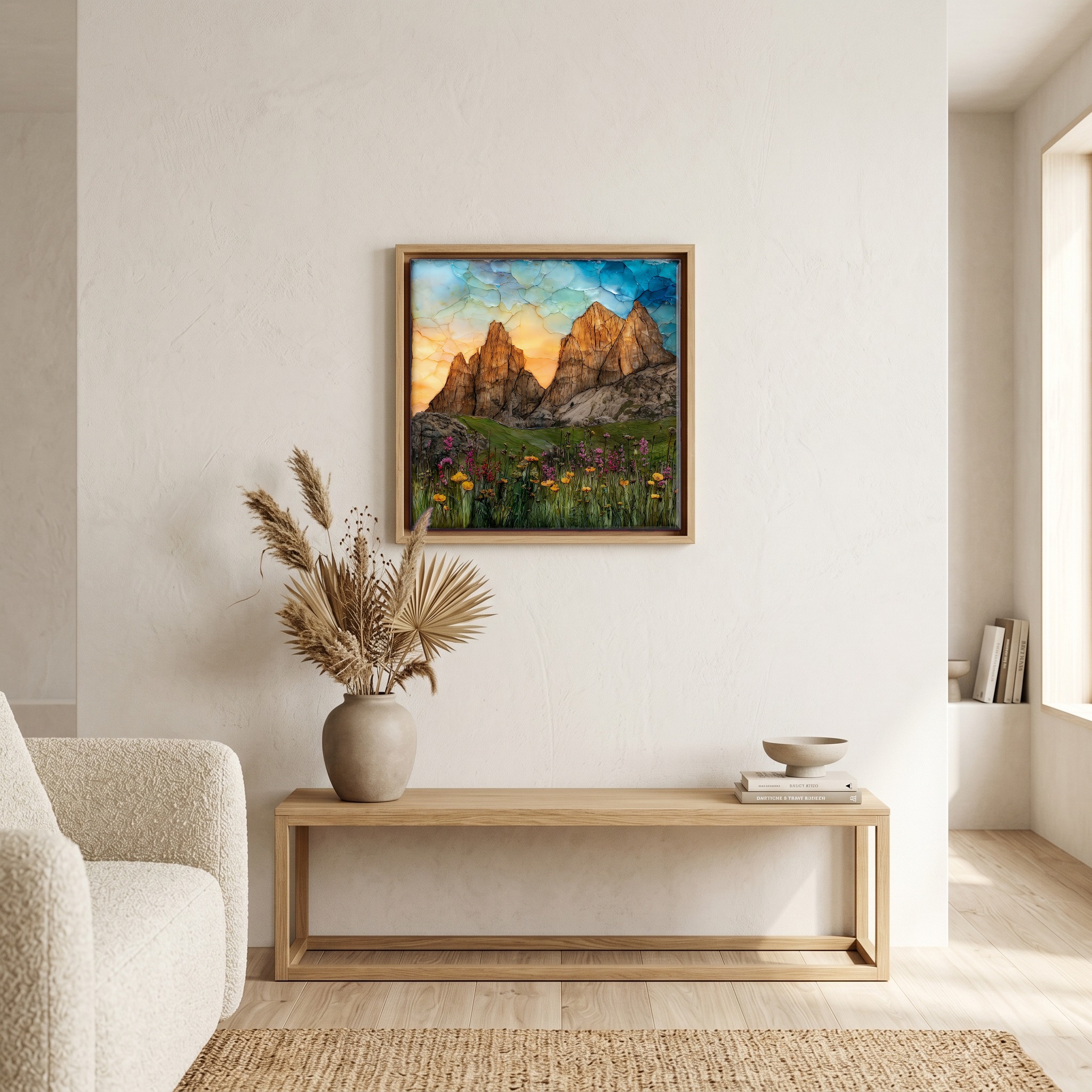
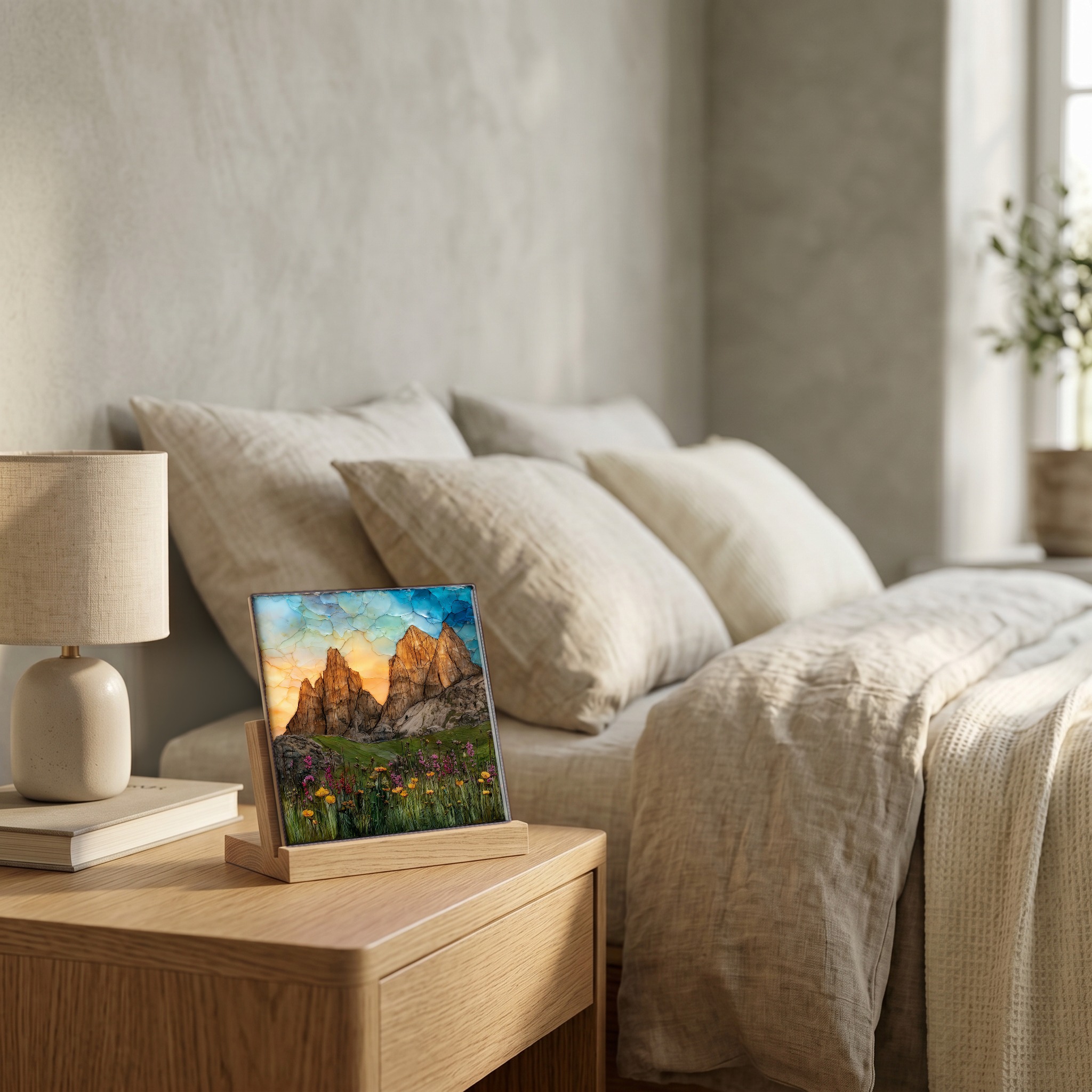
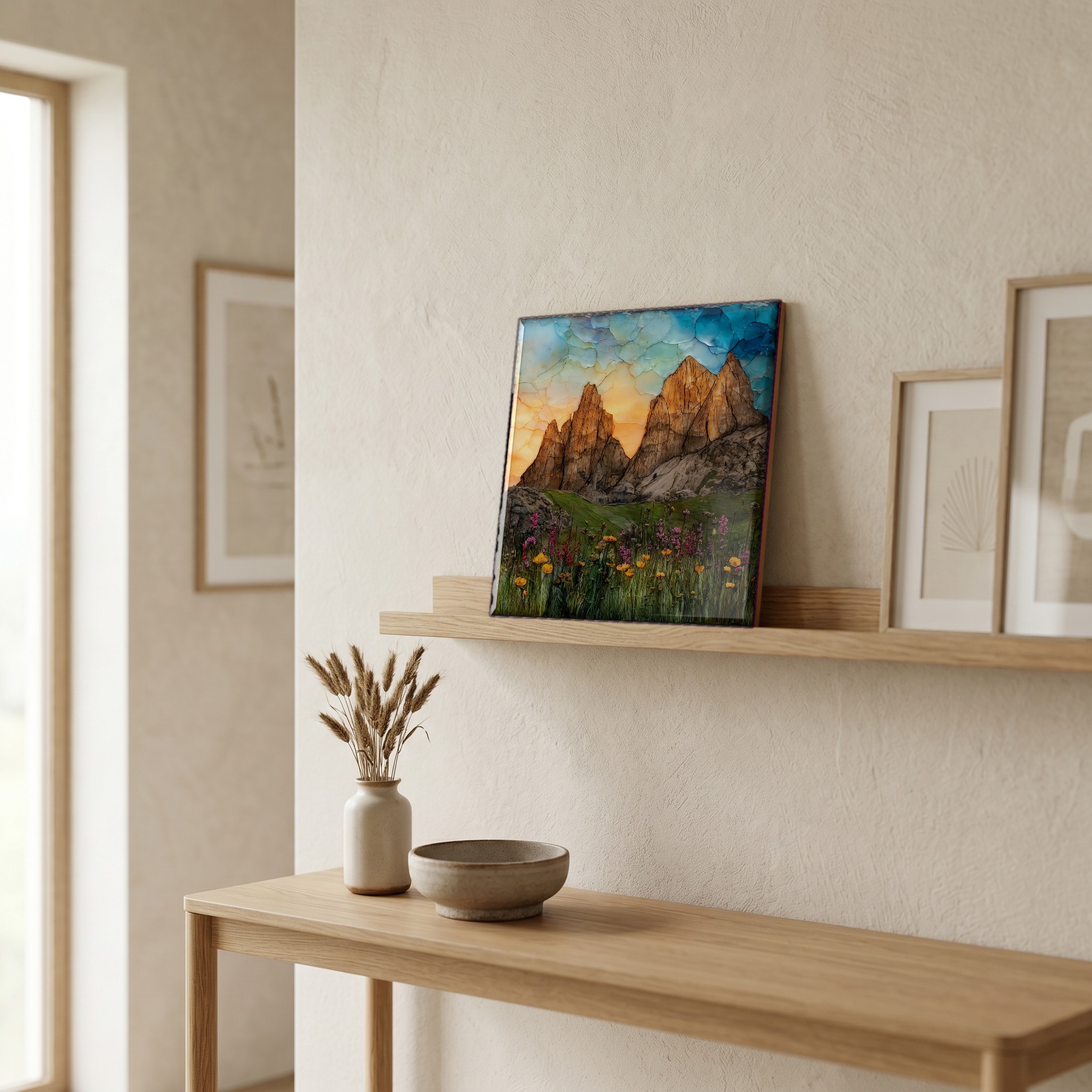
“A grassy saddle high in the Dolomites, with the Sella massif on one side and the Sassolungo on the other. For most of the year it lies under snow and closed to cars. Then the road opens, the meadow comes back green, and the two-seat gondola starts running up to the Forcella. Cyclists climb it in the cool of the morning before the coaches arrive. By August the grass is full of walkers heading for the rock, and the light off the limestone holds late into the evening.
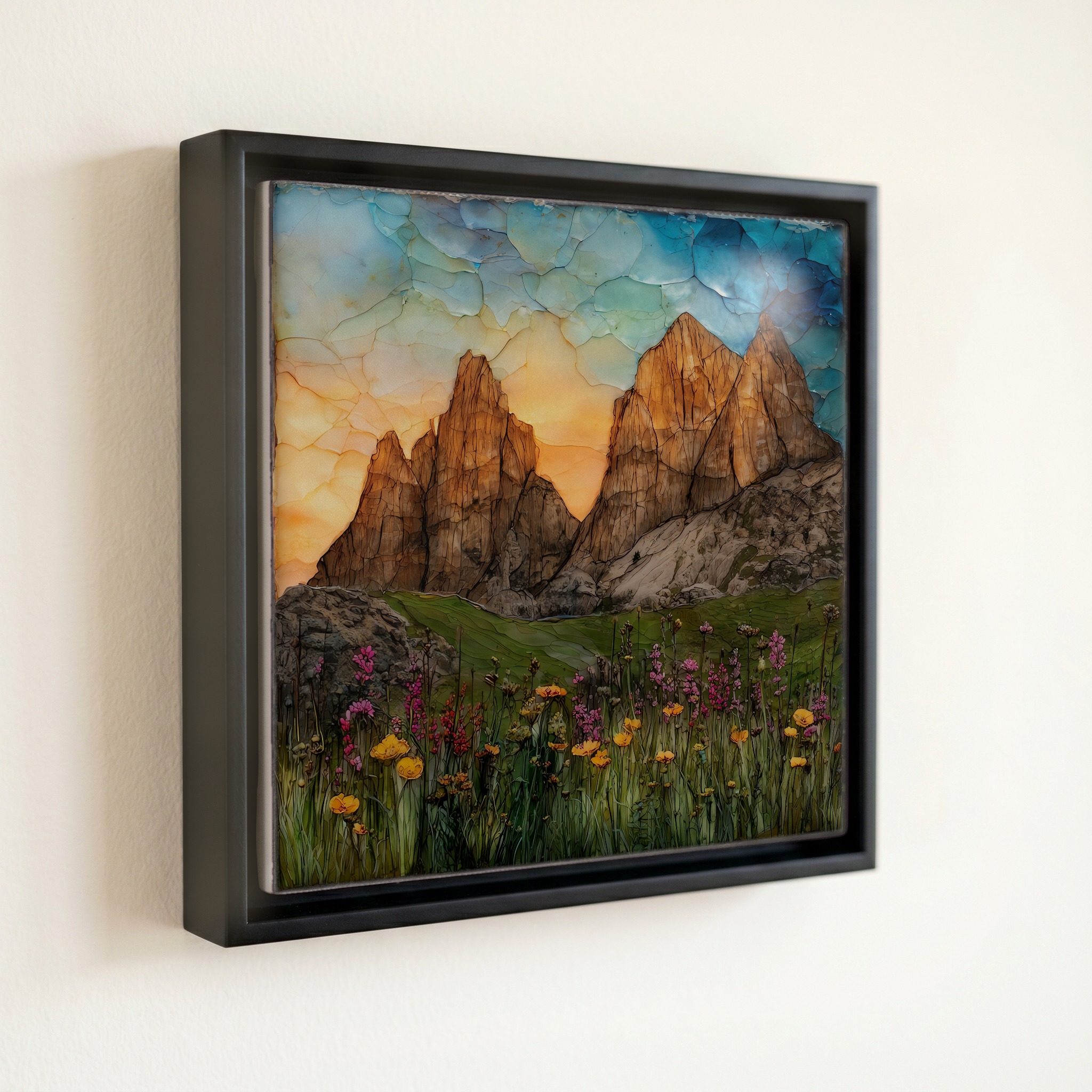
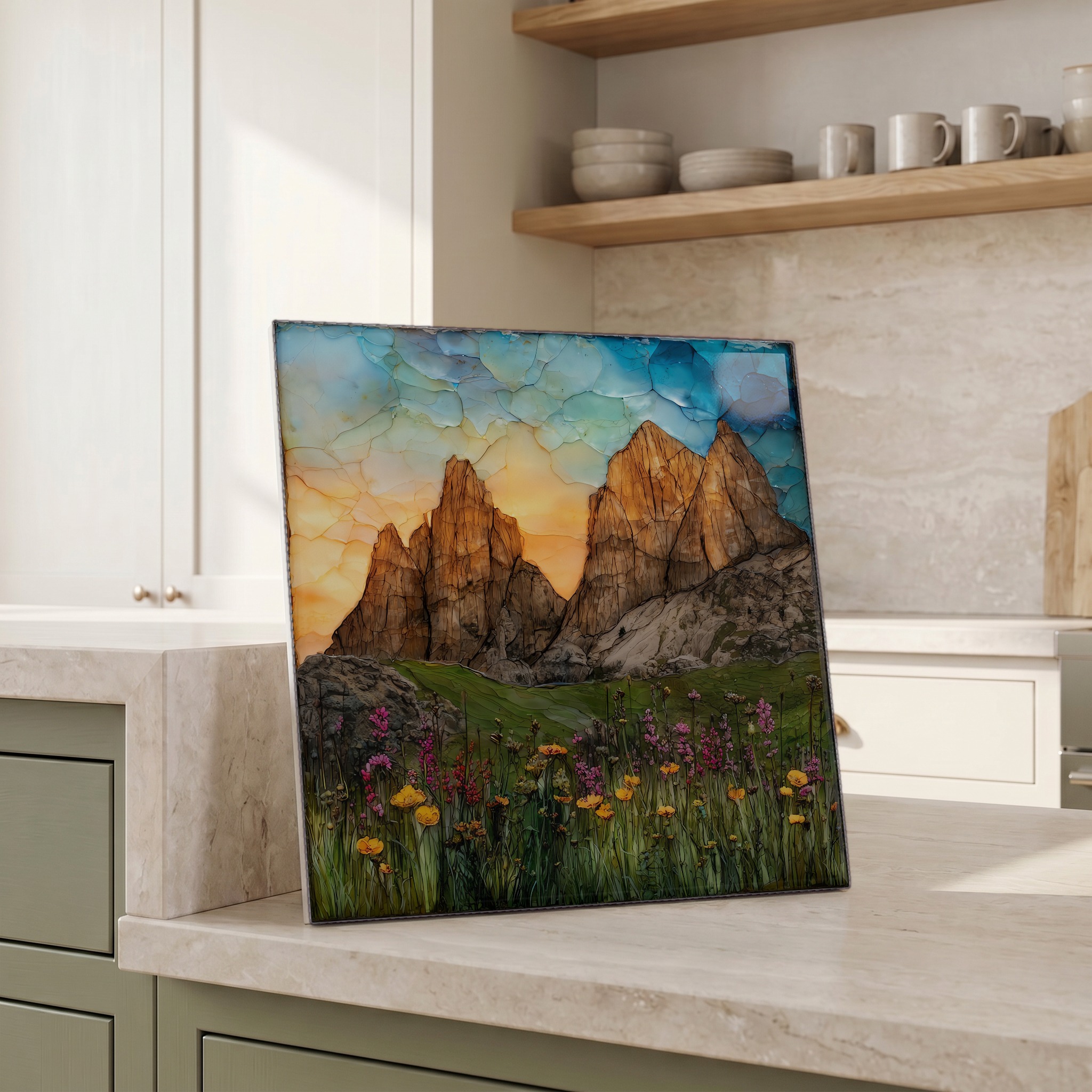
Passo Sella Summer, on ceramic.
Each tile is finished by hand in our Knoxville studio. Artwork is slowly infused into the ceramic surface under high heat and pressure, and rests beneath a thin glossy finish. The colour lives in the surface, not on top of it.
Pick any four 4-inch tiles — National Parks you've been to, a Smokies set, the four seasons of one place. $ for a set of , cork-backed, ready to live on the table.
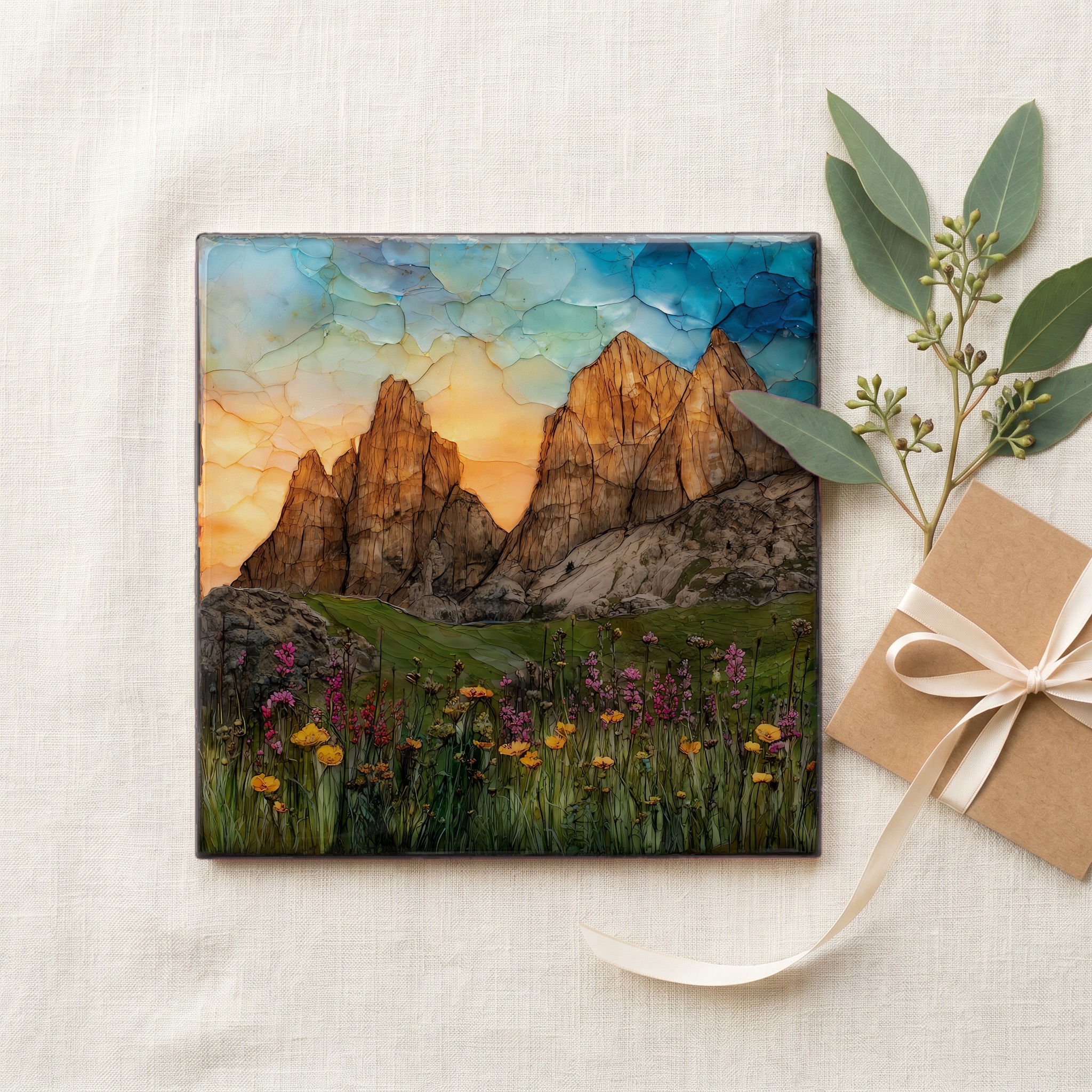
Each tile ships in a kraft box, tied with cream ribbon, with a handwritten note from the studio if you'd like to add one.
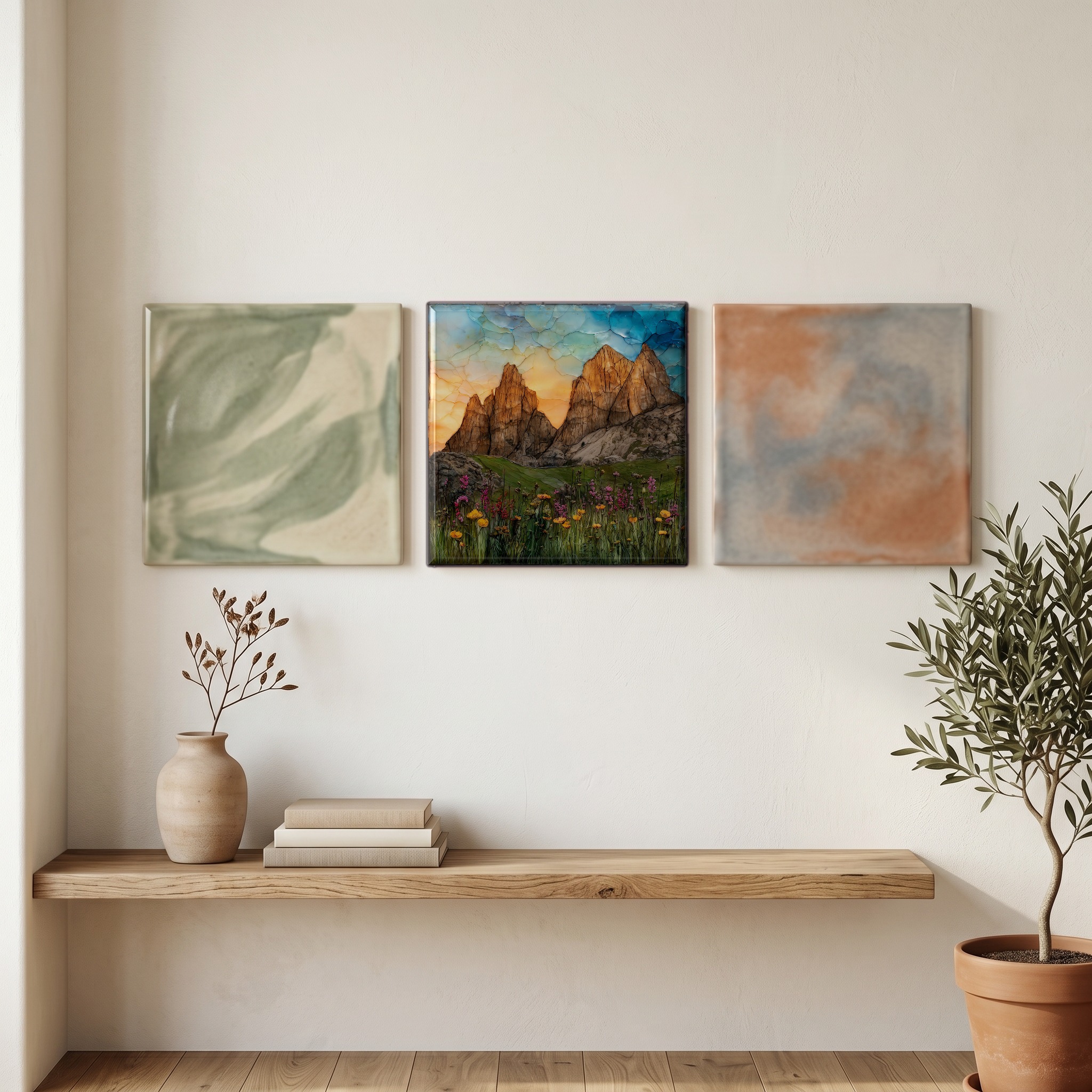
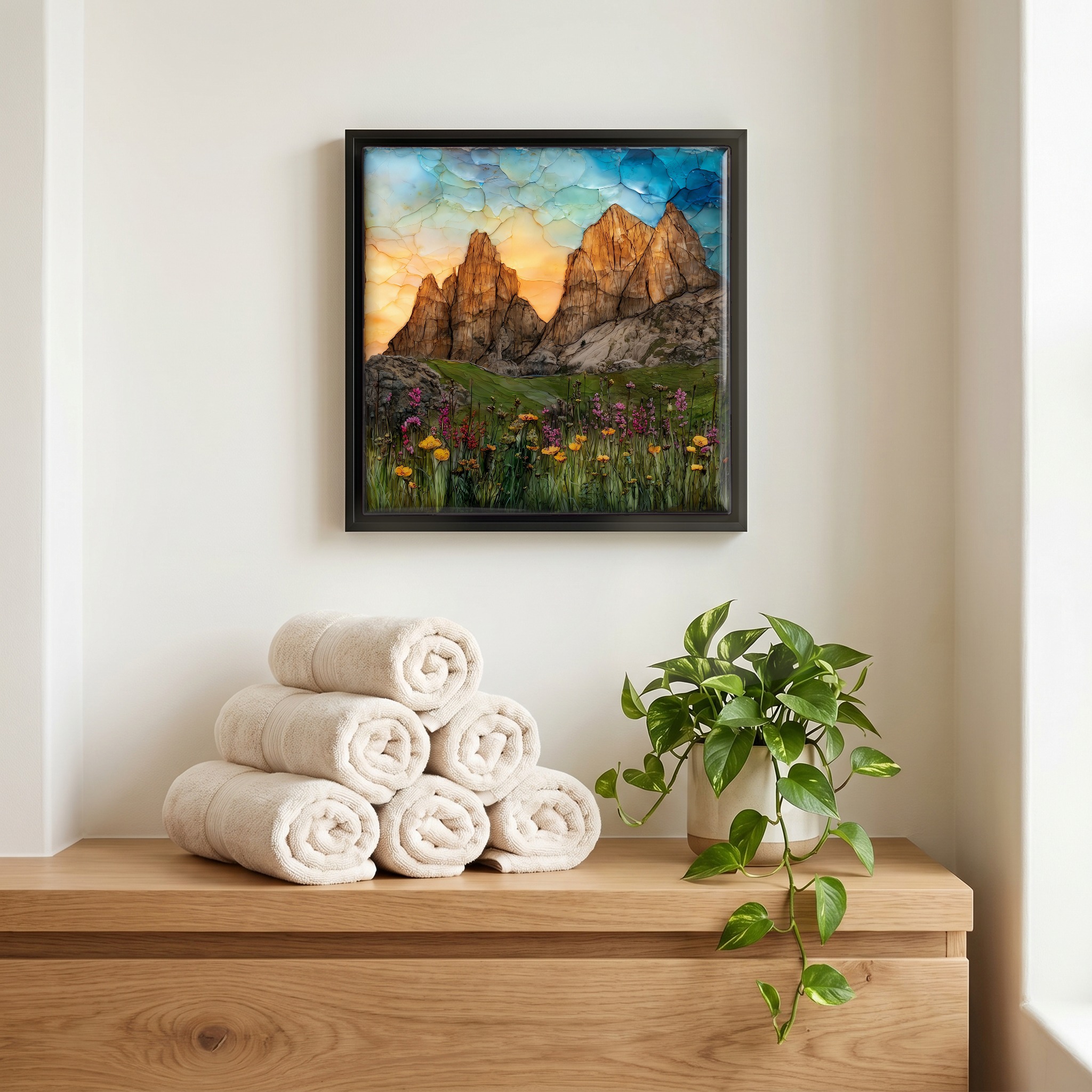
Three or five different vistas, hung together — a chapter of places you've been, or want to go.
The place, in three passes.
Passo Sella, the Sella Pass, crosses a high saddle at 2,218 metres between the Sella massif to the north and the Sassolungo (Langkofel) group to the south. The road links Selva di Val Gardena in South Tyrol with Canazei in the Val di Fassa, in Trentino, and forms one corner of the Sellaronda, the four-pass loop it shares with Pordoi, Gardena and Campolongo. The whole saddle sits inside the Dolomites UNESCO World Heritage Site, inscribed in 2009. From the pass the Sassolungo rises to 3,181 metres, close enough that the rock seems to lean over the meadow.
The pass is a grass saddle, not a summit, and that is what gives it air on every side. To the north the Sella rises as a single fortress of dolomite; to the south the towers of the Sassolungo stand apart from it across open meadow. Weather moves fast over a gap this high. Mornings come clear and cold even in July, and by mid-afternoon cloud can pour over the Sella wall and close the view in minutes. The two-seat Forcella Sassolungo gondola lifts walkers from the meadow to 2,685 metres, into thinner air at the foot of the rock.
Summer is the only season the pass works as a place to stop. The Forcella Sassolungo gondola runs daily from about mid-June to early October, roughly 8:15 to 17:00, after which it stops for winter and the road can close with the first heavy snow. June and July bring the meadow up green and the cyclists out early; the climb is the third of seven passes in the Maratona dles Dolomites, the single-day race held each July. By late September the larch on the lower slopes begins to turn, and the season narrows back toward the snow that holds the saddle the rest of the year.