Wender·Vista
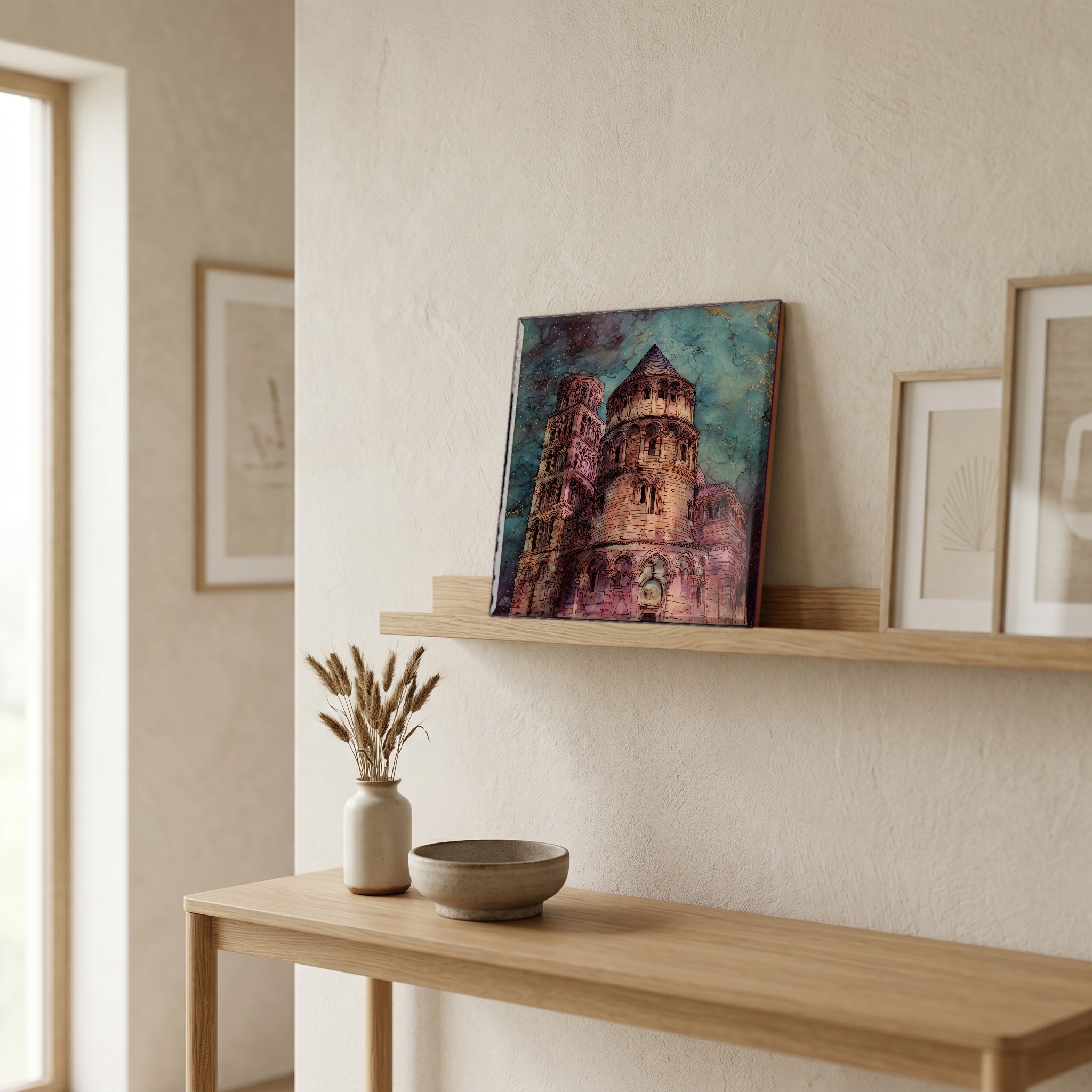
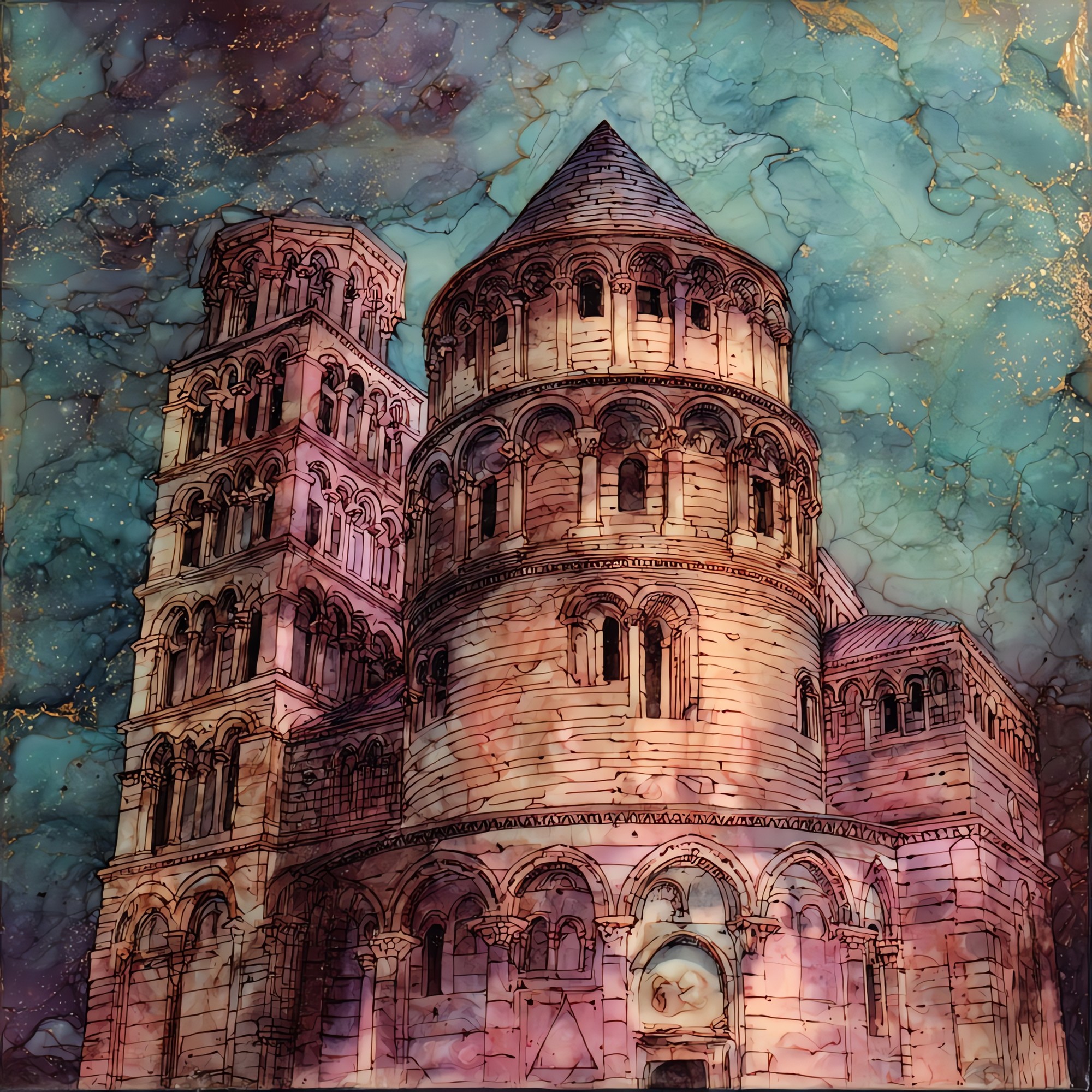
Parma Baptistery
shown on ceramic, 12-inch tileItaly
in Parma's cathedral square, west of Bologna

Parma Baptistery

— pink stone, holding the late light.

Where it lives

Not only on a wall.

A small tile on the nightstand catching the morning. A larger one above the fire. Yours, wherever you spend the slow hours.
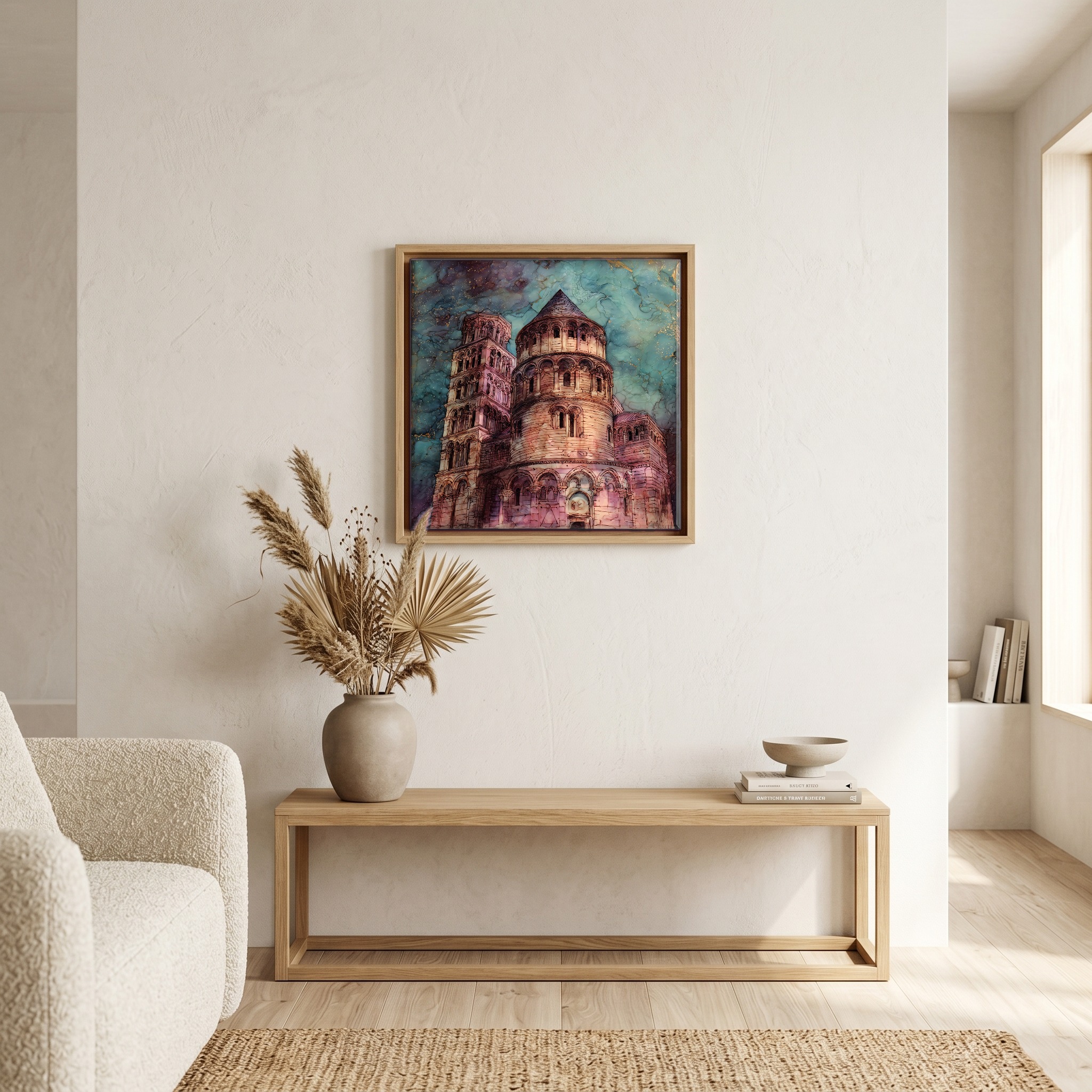
Above the bench, in a warm oak surround.
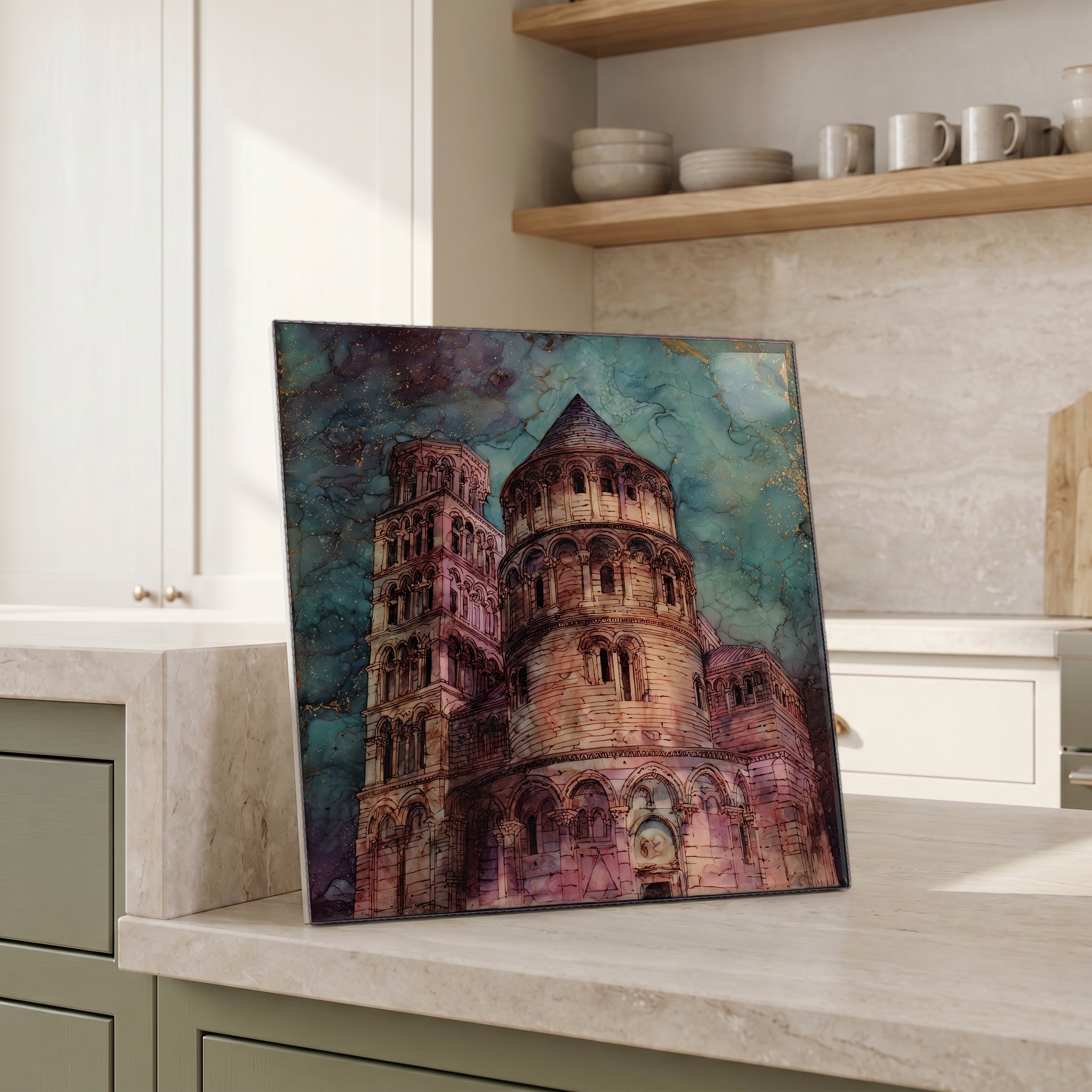
Beside the kettle, propped on the counter.
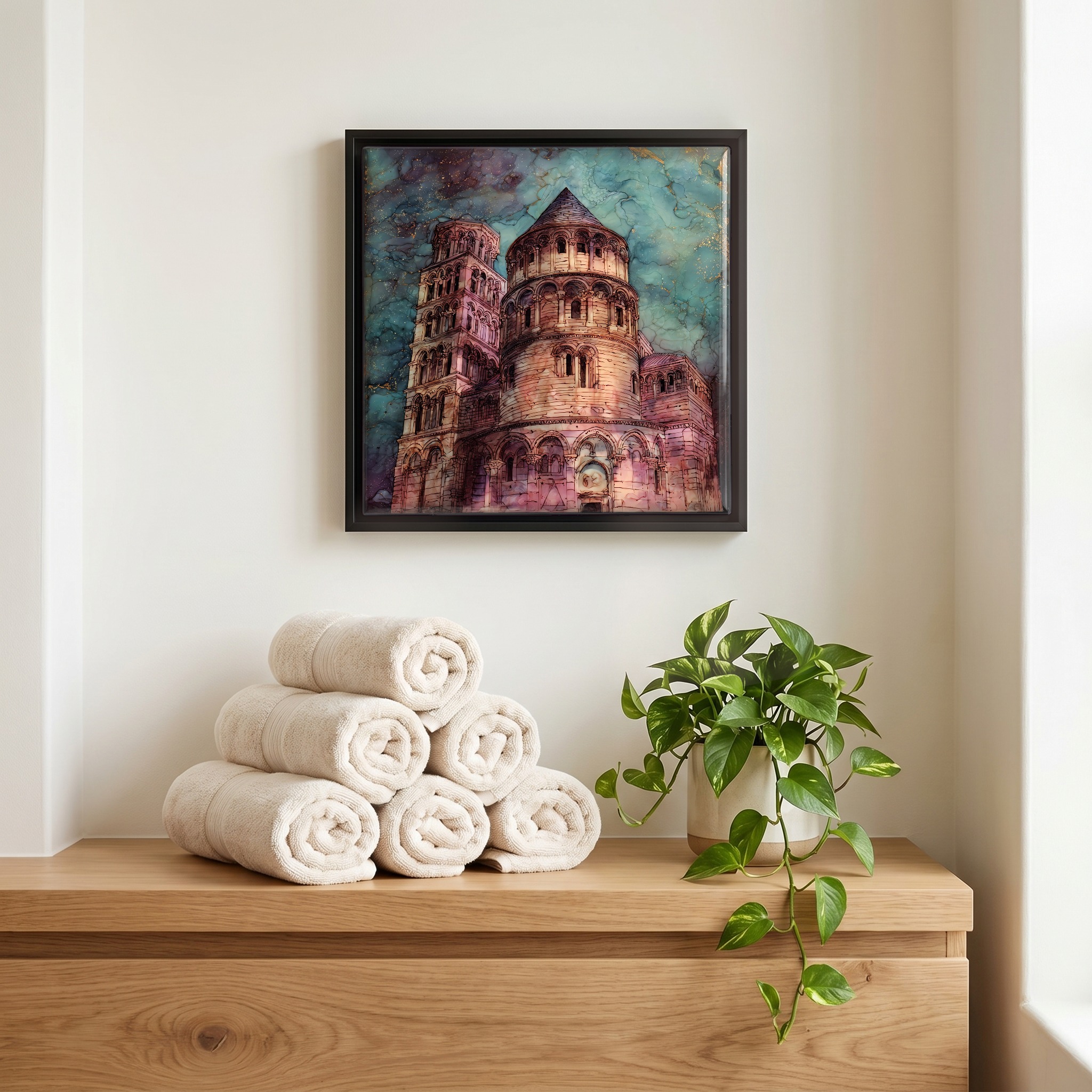
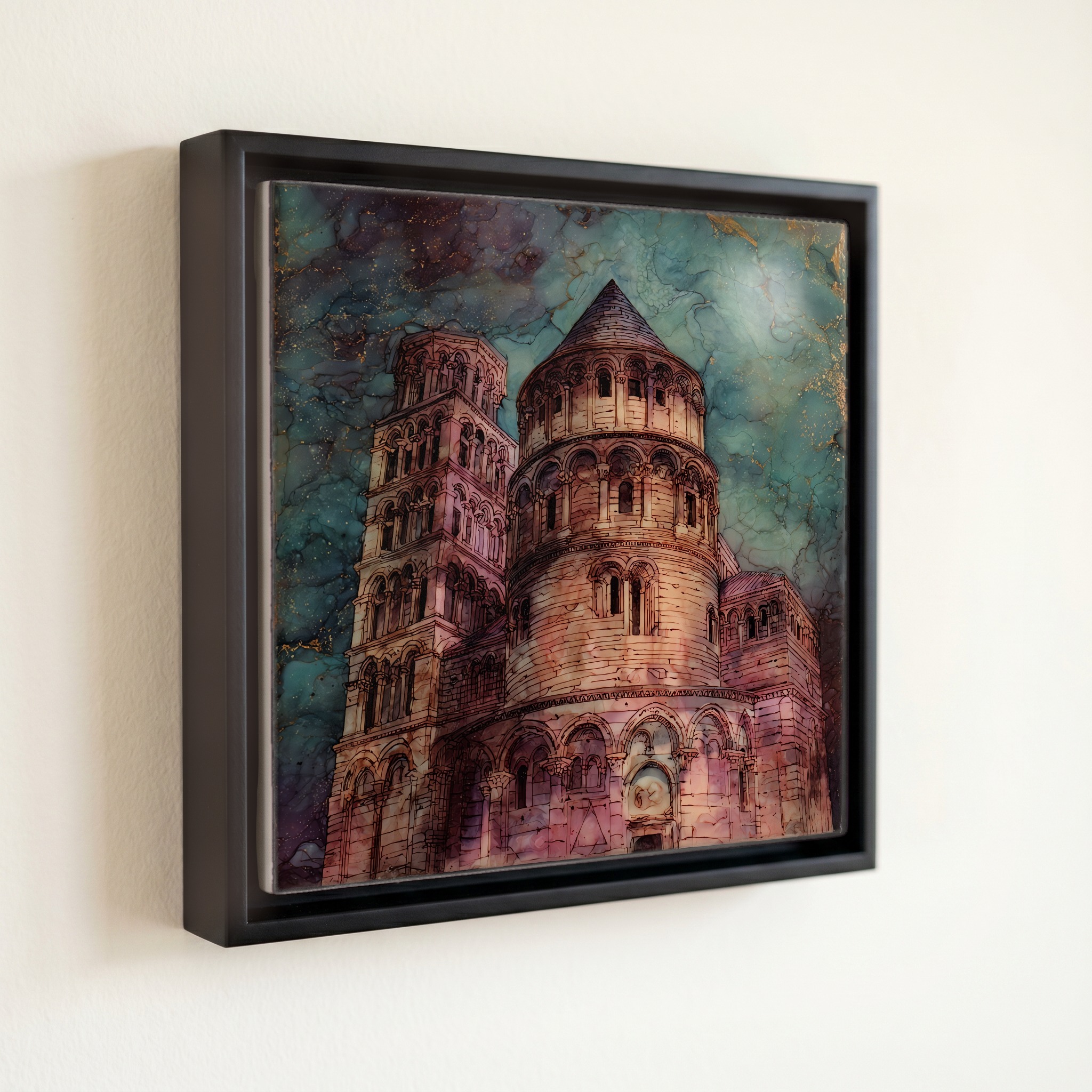
Above the linens, in a slim black surround.
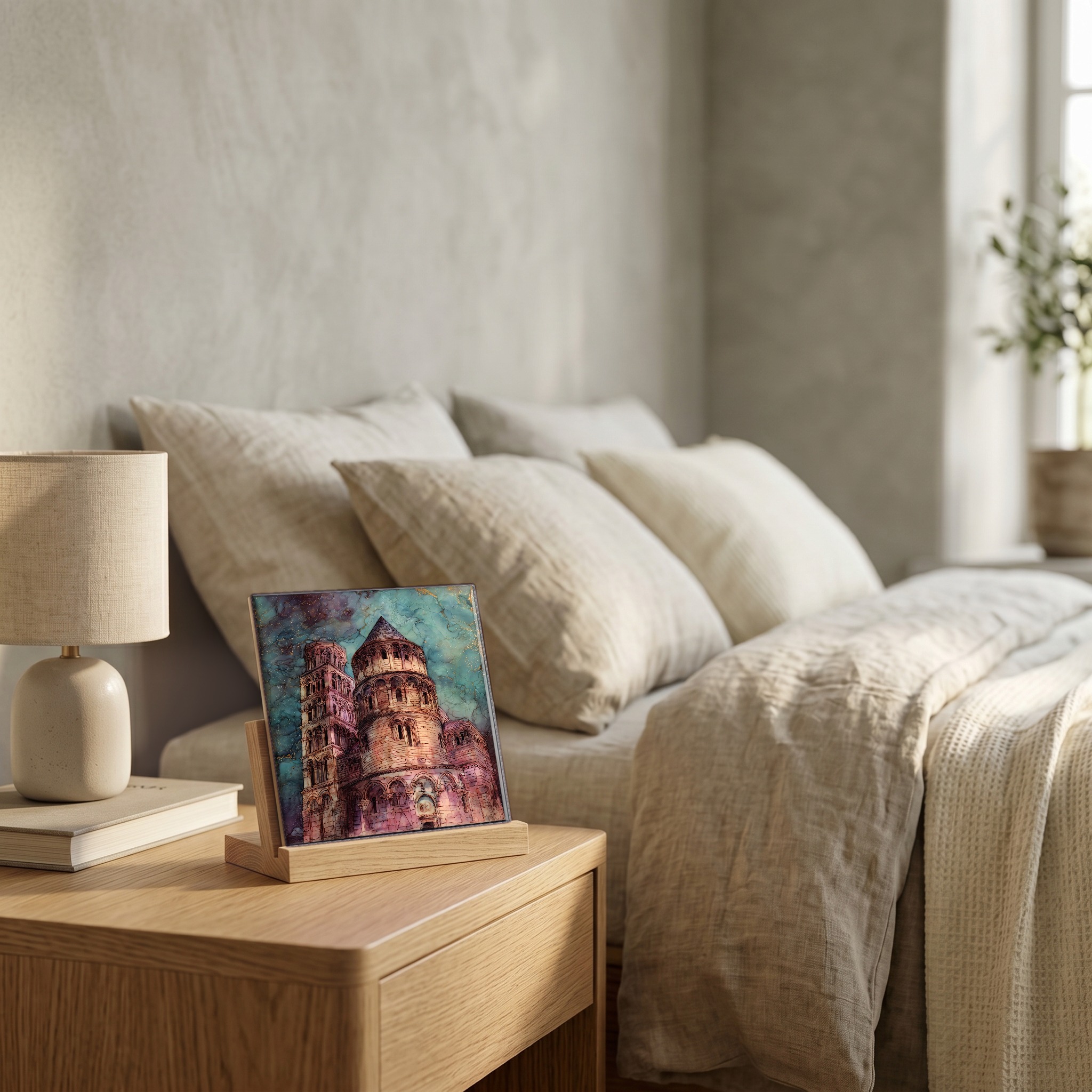
On the nightstand, on a light oak stand.
On a picture ledge, where the light comes in.
a note from the studio

An octagonal tower of pink Verona marble in Piazza Duomo, beside the cathedral. Begun in 1196 by Benedetto Antelami, the sculptor who carved the cycle of the twelve months and four seasons standing inside the lower walls. The eight sides carry an old Christian idea: the eighth day, the day after the seventh, the day of resurrection. Late afternoon light warms the stone past pink toward something closer to coral, then back. People come for the cathedral next door and find this beside it.
from the studio
shown in a slim black floating frame · 6 × 6 in
— bring it home

Parma Baptistery, on ceramic.

Each tile is finished by hand in our Knoxville studio. Artwork is slowly infused into the ceramic surface under high heat and pressure, and rests beneath a thin glossy finish. The colour lives in the surface, not on top of it.

What kind of piece?
One tile — square or rectangle.
How big?
the popular one — counter, shelf, nightstand
6 × 6 in · 15 cm · 1.6 lb
Surface finish
A clear glossy finish — the artwork reads as if under resin. Ideal for show-pieces and framed wall art.
How it sits
A hidden cleat — sits ¼″ proud of the wall.
$58
Hand-finished and shipped from our studio at the foot of the Smokies. On your wall in about ten days.
size
6 × 6 in
15 cm
weighs
1.6 lb
solid in the hand
surface
ceramic, hand-finished
art rests beneath a thin glossy finish
from
Knoxville, TN
our family studio, at the foot of the Smokies
— start a Coaster Set

Pick any four 4-inch tiles — National Parks you've been to, a Smokies set, the four seasons of one place. $ for a set of , cork-backed, ready to live on the table.
comes gift-ready
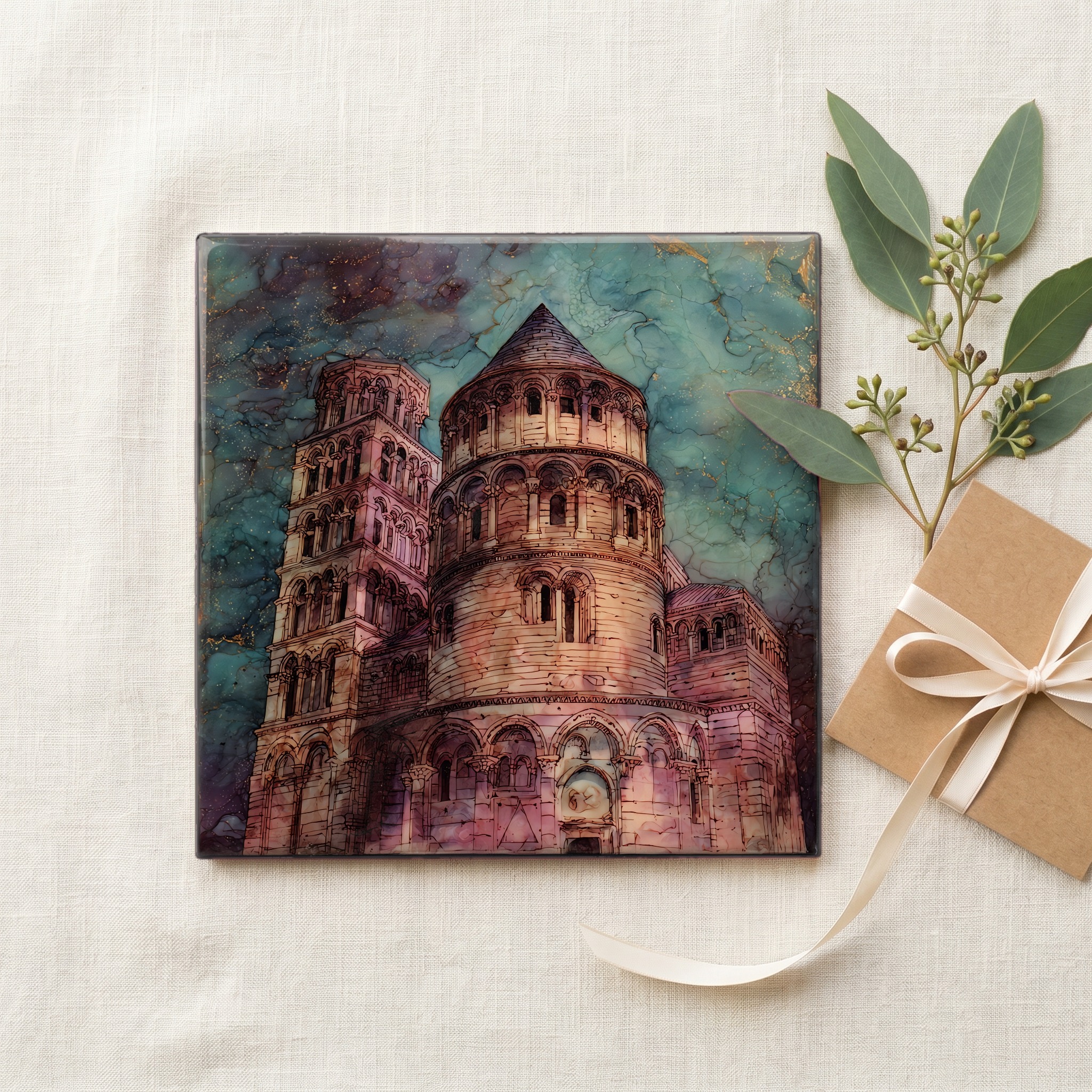
comes gift-ready

Each tile ships in a kraft box, tied with cream ribbon, with a handwritten note from the studio if you'd like to add one.
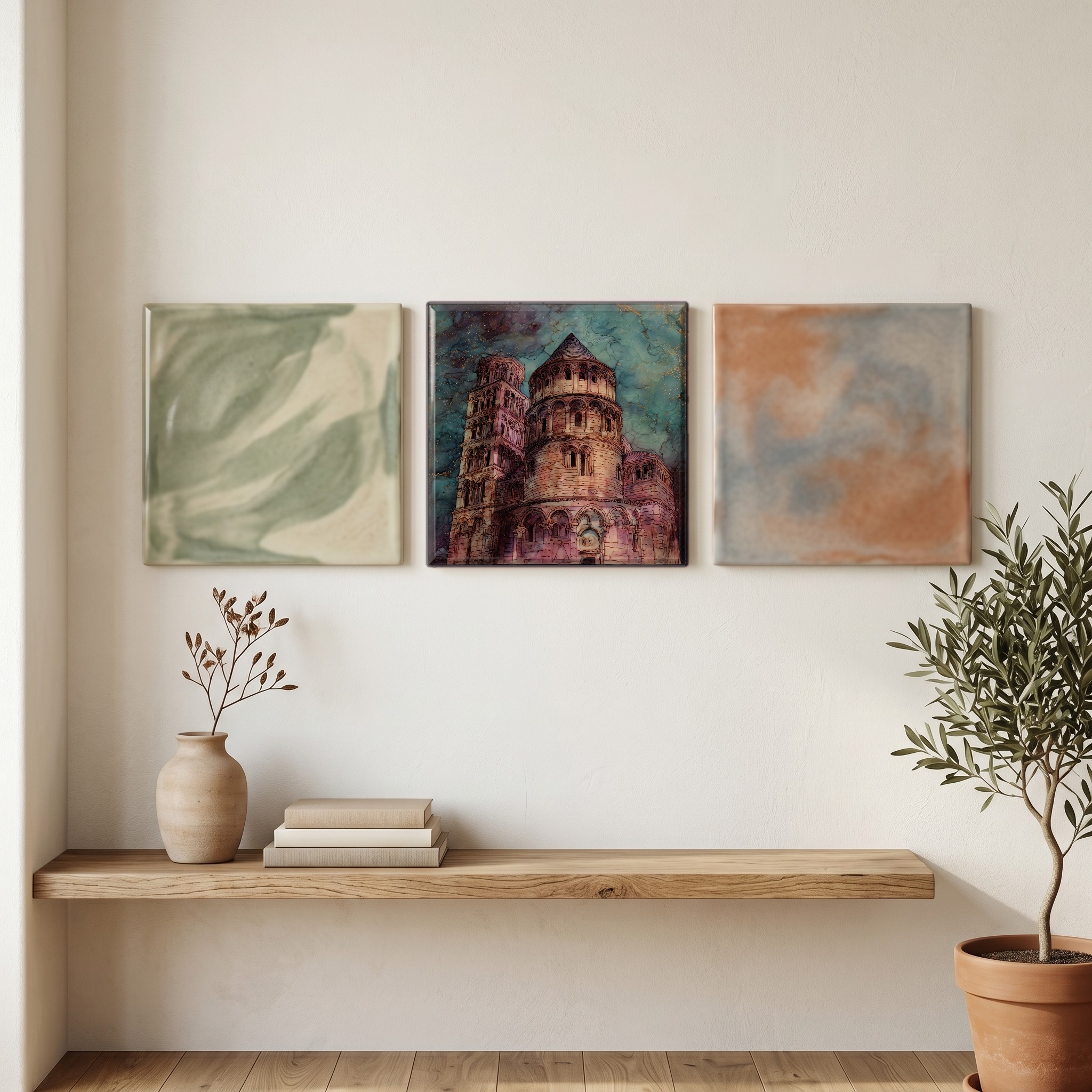
or build a grouping
or build a grouping

Three or five different vistas, hung together — a chapter of places you've been, or want to go.

about Parma Baptistery

The place, in three passes.

A little of what's known, in case you fall down the rabbit hole — or want to go see it yourself.
the place

The Parma Baptistery stands in Piazza Duomo at the centre of Parma, in Emilia-Romagna, between Milan and Bologna in northern Italy. The octagonal building rises about 34 metres in pink Verona marble, with four levels of loggias circling above the ground floor. An inscription on the north portal records that work began in 1196 under the architect-sculptor Benedetto Antelami, who would also carve the figural reliefs around the three doorways. The baptistery sits next to Parma's twelfth-century cathedral and the bishop's palace, the three buildings forming the medieval religious core of the old city. Parma is about an hour west of Bologna by train, on the via Emilia.

the stone

The exterior is rosso ammonitico, the pinkish-red Verona marble that gave Antelami his colour, quarried from the Lessini hills about 110 kilometres east in the Veneto. Four levels of open loggias circle the upper walls above the three carved portals, an arrangement that looks back to Pisa's earlier baptistery, started in 1152. The north tympanum carries Antelami's Last Judgment in low relief, with Christ enthroned among the apostles and the dead rising from their tombs along the lintel. The pink-rose stone shifts colour through the day, palest at noon, warmest in the half-hour before sunset, when the whole octagon turns the colour of a ripe peach against the brick of the bishop's palace next door.

the year

Inside, set into the lower walls of the octagon, runs Antelami's sculptural Cycle of the Months, one of the most complete medieval depictions of the agricultural year in Europe. Twelve standing figures, each absorbed in the labour of its month: pruning the vines in February, scything wheat in July, treading grapes in October, the pig butchered in December. Four allegorical seasons stand beside them, each holding her attribute. Antelami carved the cycle between roughly 1196 and 1216, taking the iconography from the labours of the months long carved into French cathedral portals; the Parma cycle is the first in Italy to bring the labours inside the building and place them at eye level. The frescoes above, added through the thirteenth century, paint the dome as the heavenly Jerusalem of Revelation.

where
Italy · Parma, Emilia-Romagna
elevation
57 m · 187 ft
position
44.8025° N · 10.3314° E
the neighborhood

What's nearby.

A handful of named places within an hour's walk or short drive. Some we've already painted; some we will.
at the lake
Parma Cathedral
Romanesque cathedral
1 km NW
Palazzo della Pilotta
palace complex
1 km NW
Teatro Farnese
wooden Baroque theatre
1 km NW
Galleria Nazionale di Parma
art museum
1 km NW
Casa della Musica
music museum
55 km SE
Modena Cathedral
Romanesque cathedral
N
Parma Baptistery
Parma Cathedral
Palazzo della Pilotta
Teatro Farnese
Galleria Nazionale di Parma
Casa della Musica
Modena Cathedral
common questions

What people ask.

A few questions we get about Parma Baptistery — and about bringing the piece home.
about the place

The baptistery stands in Piazza Duomo in Parma, in Emilia-Romagna, northern Italy. It sits beside the twelfth-century cathedral and the bishop's palace, forming the medieval religious core of the old city. Parma is about an hour west of Bologna by train, on the via Emilia.

Work began in 1196 under Benedetto Antelami, the architect-sculptor whose name appears on the north portal architrave. He carved the three portals and the interior Cycle of the Months over the following two decades. The frescoes were completed through the thirteenth century, and the building was consecrated in 1270.

The octagon is an old Christian symbol of the eighth day, the day after the seventh day of rest, the day of resurrection. Baptisteries from the fourth century onward were often octagonal for this reason: Christ rose on the eighth day, and baptism enacts that rebirth. The Parma example is one of the most elaborate.

Antelami's sculptural cycle of twelve months and four seasons runs along the lower interior walls. Each month is a standing figure absorbed in its proper labour: pruning vines in February, scything wheat in July, the pig butchered in December. It is among the most complete medieval depictions of the agricultural year in Europe.

The exterior is rosso ammonitico, a pinkish-red limestone quarried from the Lessini hills near Verona, about 110 kilometres east. Iron oxides in the ammonite-rich rock give it the warm rose tone that shifts through the day, palest at noon, deepest in the half-hour before sunset.

Yes, the interior is open to visitors as part of the cathedral-complex ticket. A careful visit takes thirty to forty minutes. The space is small but dense, and the Cycle of the Months and the frescoed dome reward slow looking. A printed guide or audio guide is supplied at the entrance.

By train. Parma sits on the high-speed line between Milan and Bologna; Frecciarossa and Italo trains reach the city centre in about an hour from either direction. The historic centre, including the baptistery, is a short walk from the station, and the city is small enough to cross on foot.

about the piece in your home

It has been a meaningful gift for many of our customers with ties to Italy. Parma is a quiet anchor of Emilia-Romagna, a city known for prosciutto, parmigiano, Verdi and Toscanini, and the baptistery's rose stone is one of its most beloved sights. A Keepsake or Small with a handwritten note from the studio carries well.

The pink-rose palette of the marble and the dim gold of the interior frescoes give the tile a warm, jewel-tone weight that lives well with Italianate, Old World, and Maximalist rooms. It also reads quietly against plaster, terracotta tile, and aged-oak interiors.

Yes. The piece fits the Italianate Maximalist and Old World Romantic directions, which lean on warm stone, ecclesiastical reference, and hand-finished textiles. The baptistery reads well alongside Roman frescoed prints, marble busts, and antique gilt, and the rose-and-gold palette suits the warm-jewel-tone direction that has held since 2024.

Above a standard sofa, a single Large is the simplest fit. For a stronger statement, a 4-tile Mural carries the field well. Above a console or sideboard, a Medium or a 9-tile Mural works at a closer reading distance, where the Cycle of the Months figures resolve clearly.

Yes. Specify the Dura Satin or Matte finish at checkout. Both are scratch-resistant and steam-tolerant. The Glossy is meant for show-pieces and dry walls; in a kitchen or bath, Dura Satin gives the surface the soft sheen without the reflectivity that picks up cooking splatter or shower steam.

A soft microfibre cloth, slightly damp with plain water. The colour lives in the ceramic surface, not on top of it, so there is no varnish to scuff and no print to lift. Avoid abrasive cleaners and sponges. For a kitchen install, a mild dish soap is fine.

Yes. Every painting in the WenderVista atlas is original work by Reid Wender, the curator. Nothing is licensed, nothing is stock, and no two places share a painting. Each tile is hand-finished in the studio in Knoxville, Tennessee, before it ships.

if this one stayed with you

A few you might also love.

Hand-picked by the eye that found Sorapis. Same air, same kind of quiet.
— a collection

The Italian Dolomites,
painted slow.

The valleys between Cortina and Val Gardena, the tarns you walk an hour to see, the towers that turn the colour of a banked fire just before dark. Wander the collection by valley, by season, or follow the path Reid walked.

Tre Cime
Braies
Misurina
Sorapis
Cinque Torri
Sassolungo
Marmolada