Wender·Vista
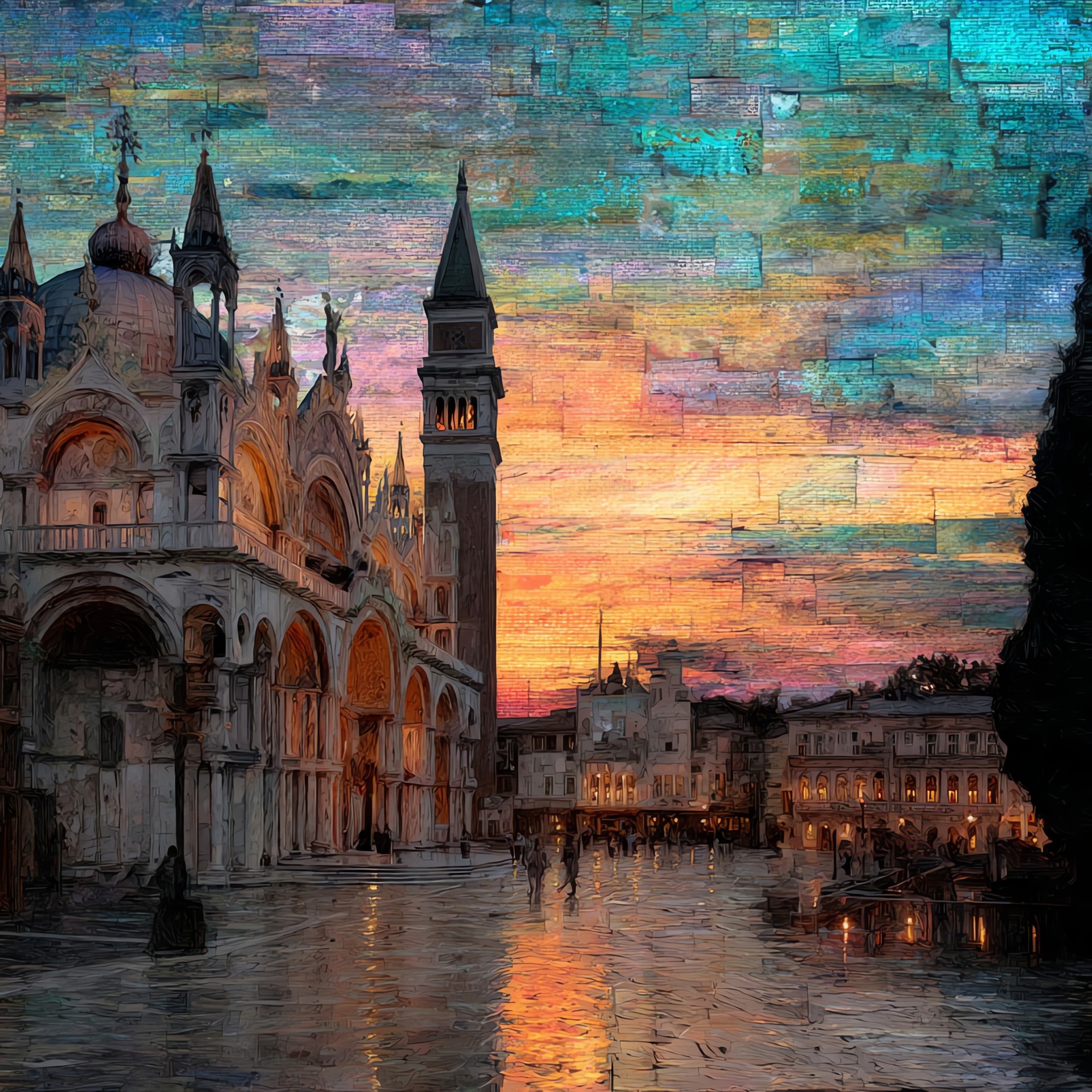
Palladian Basilica
shown on ceramic, 12-inch tileItaly
in Vicenza, between Verona and Venice

Palladian Basilica

green copper riding above the white arches.

Where it lives

Not only on a wall.

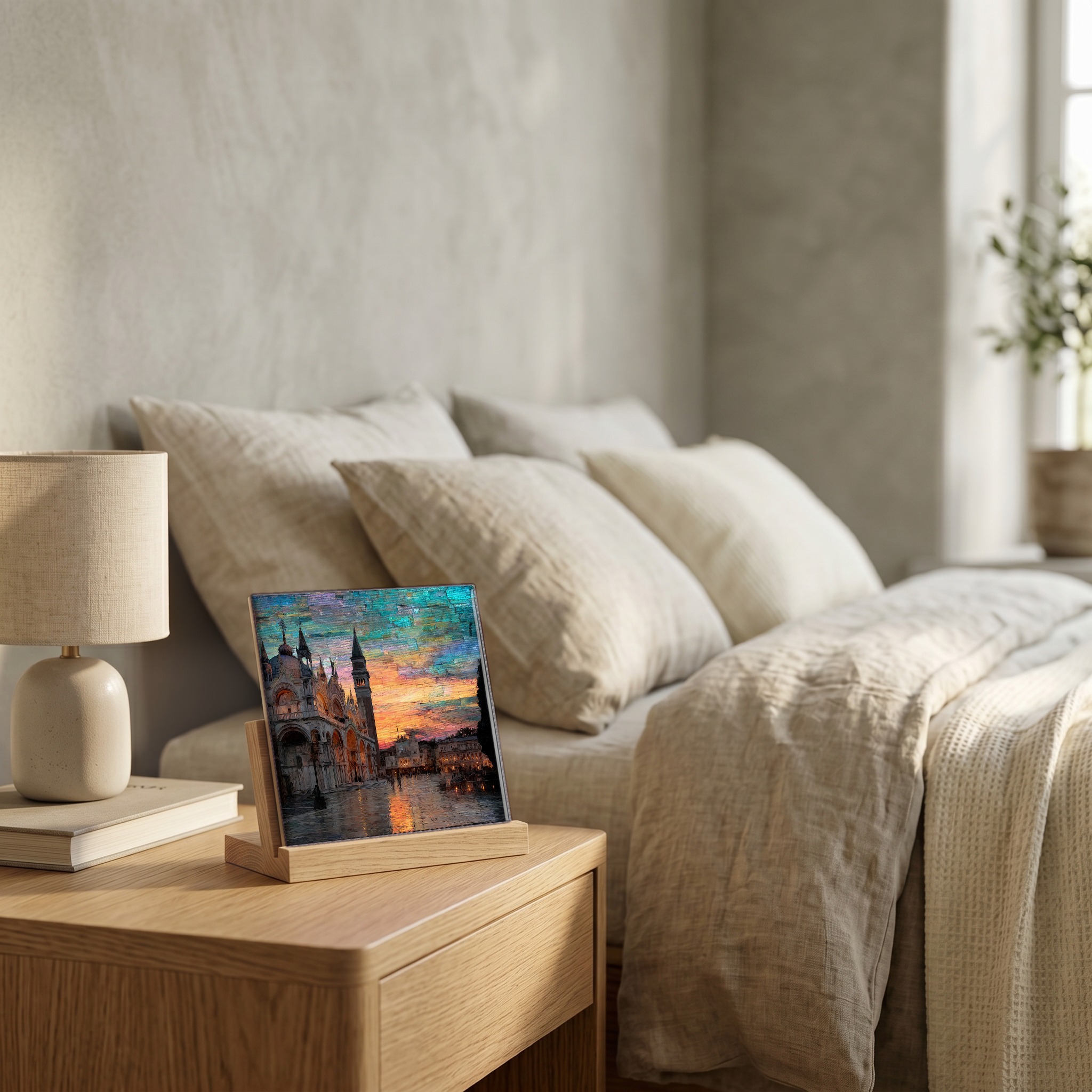
A small tile on the nightstand catching the morning. A larger one above the fire. Yours, wherever you spend the slow hours.
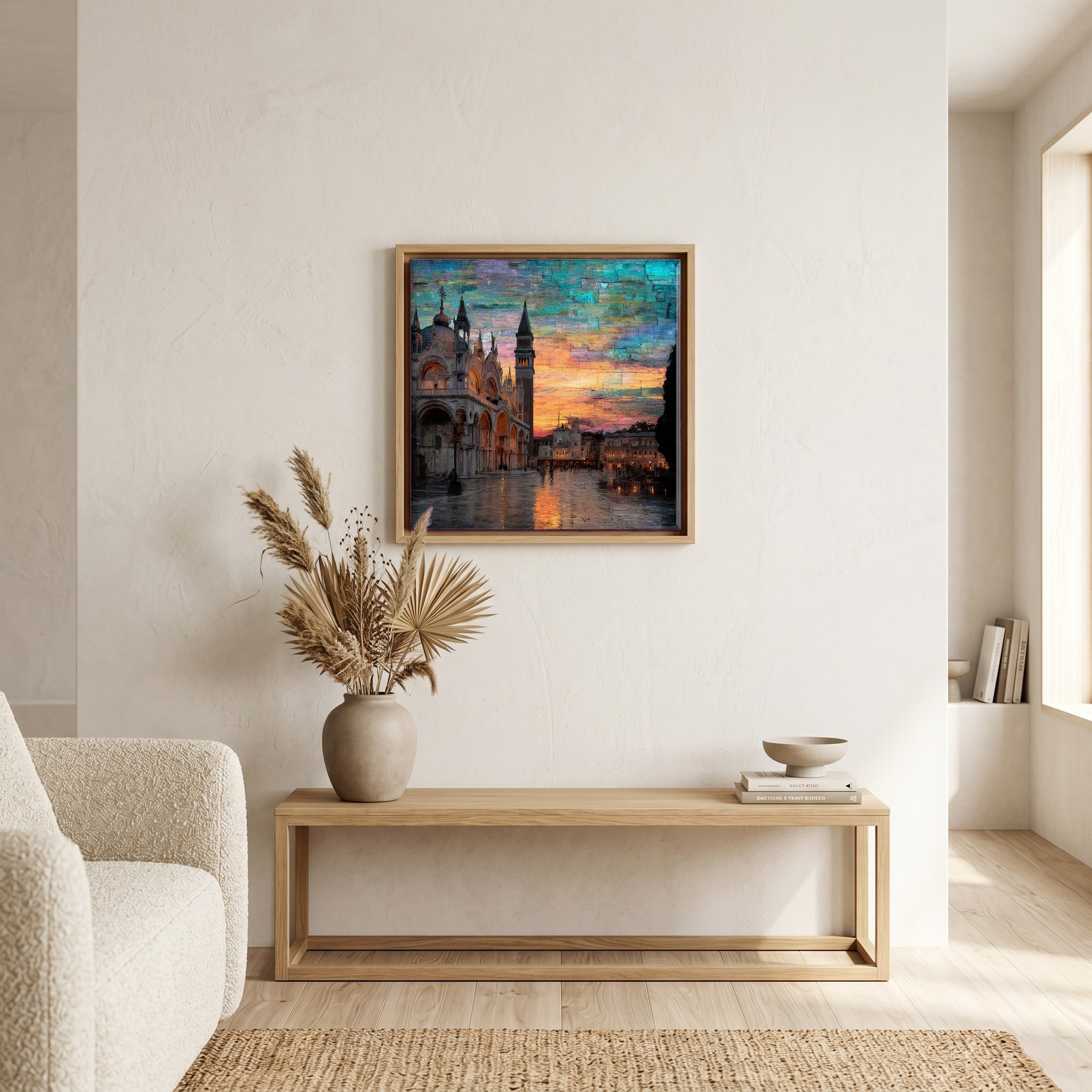
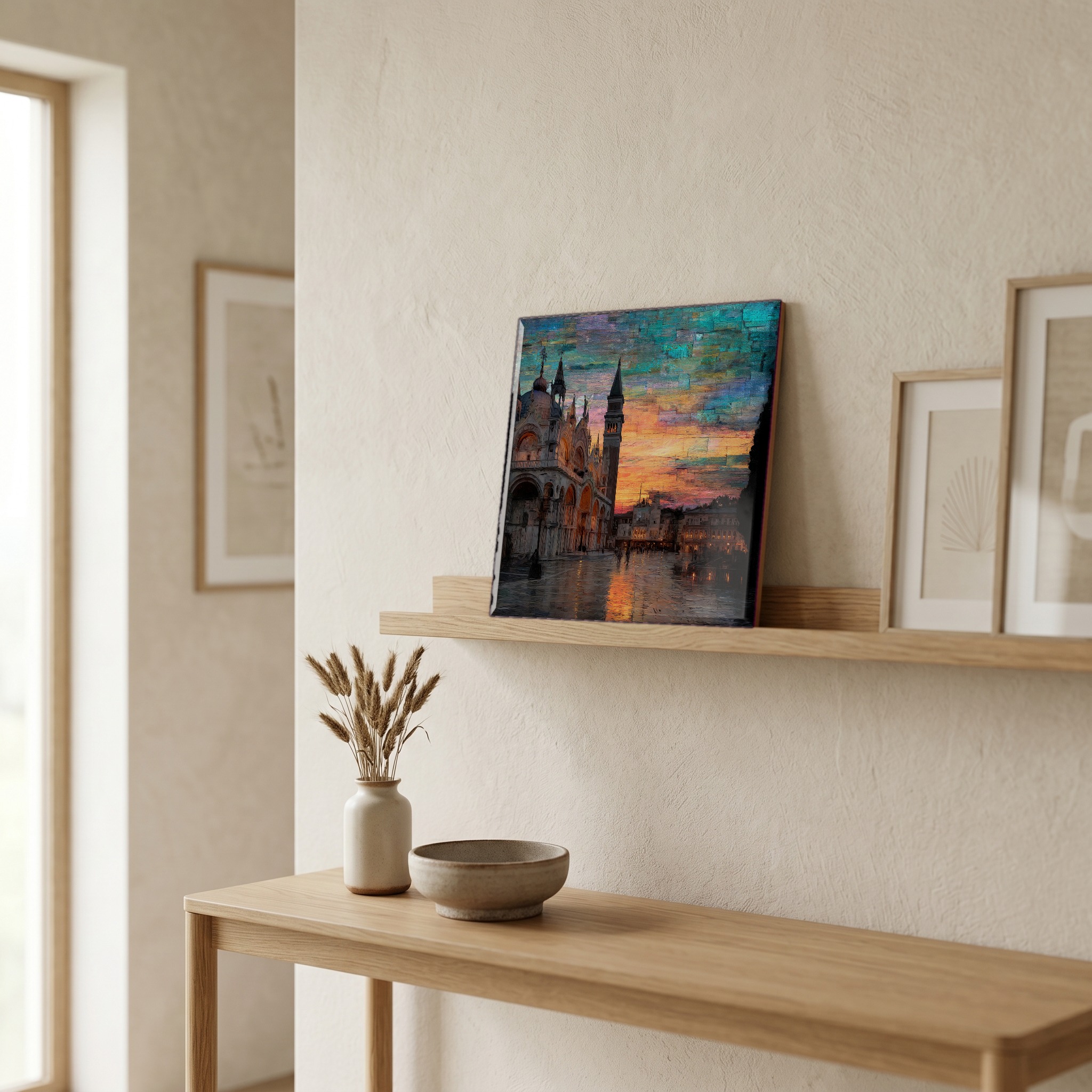
Above the bench, in a warm oak surround.
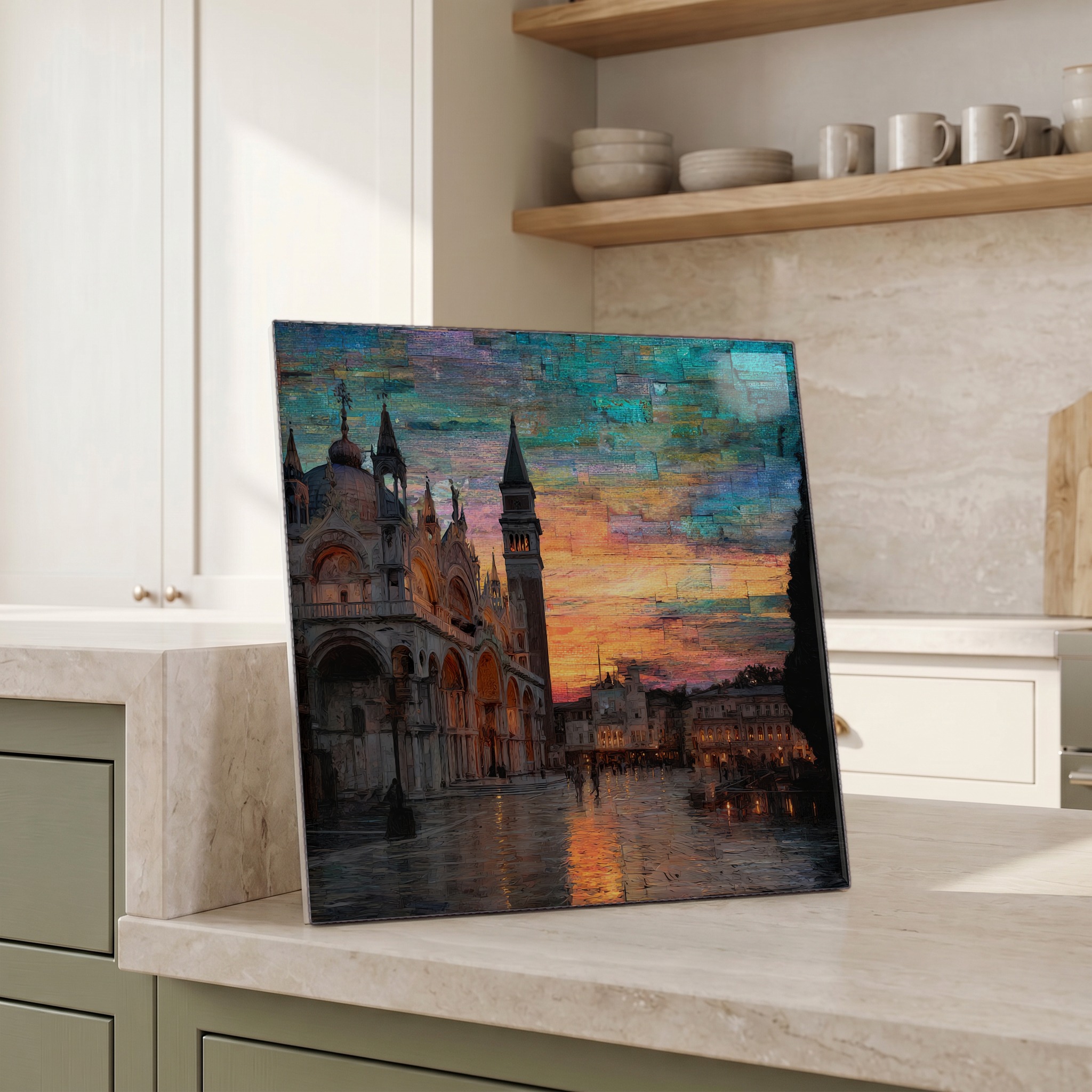
Beside the kettle, propped on the counter.
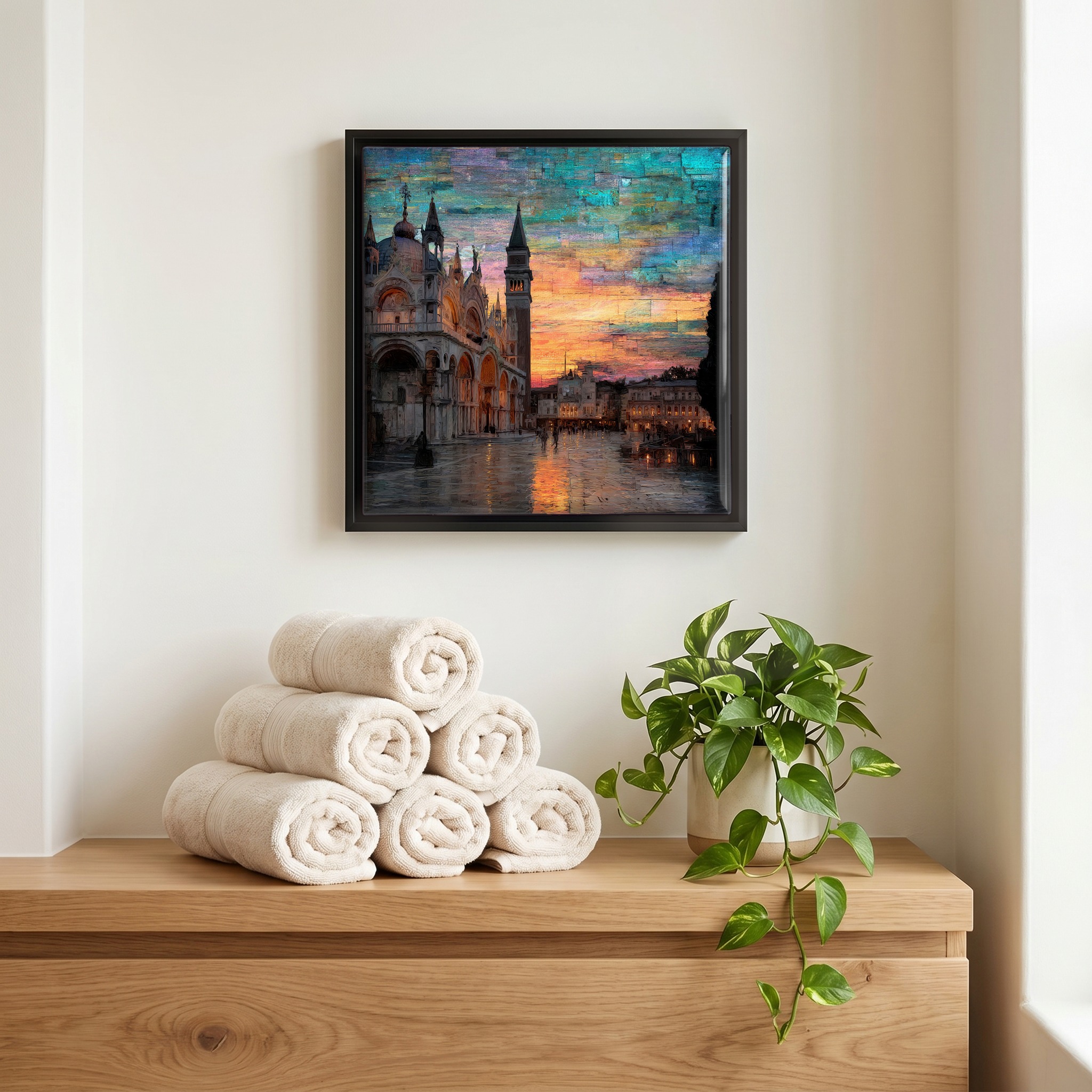
Above the linens, in a slim black surround.
On the nightstand, on a light oak stand.
On a picture ledge, where the light comes in.
a note from the studio

Andrea Palladio was forty when Vicenza handed him a problem: a Gothic council hall whose newer stone shell had collapsed at one corner. His answer was to wrap the old building in white marble arcades, each round arch flanked by a pair of narrower openings, the figure the rest of Europe would copy and call the Palladian window. Above it sits a roof of copper gone soft green, shaped like the upturned hull of a ship. People still climb to the terrace at dusk for an aperitivo, the square going quiet below them.
from the studio
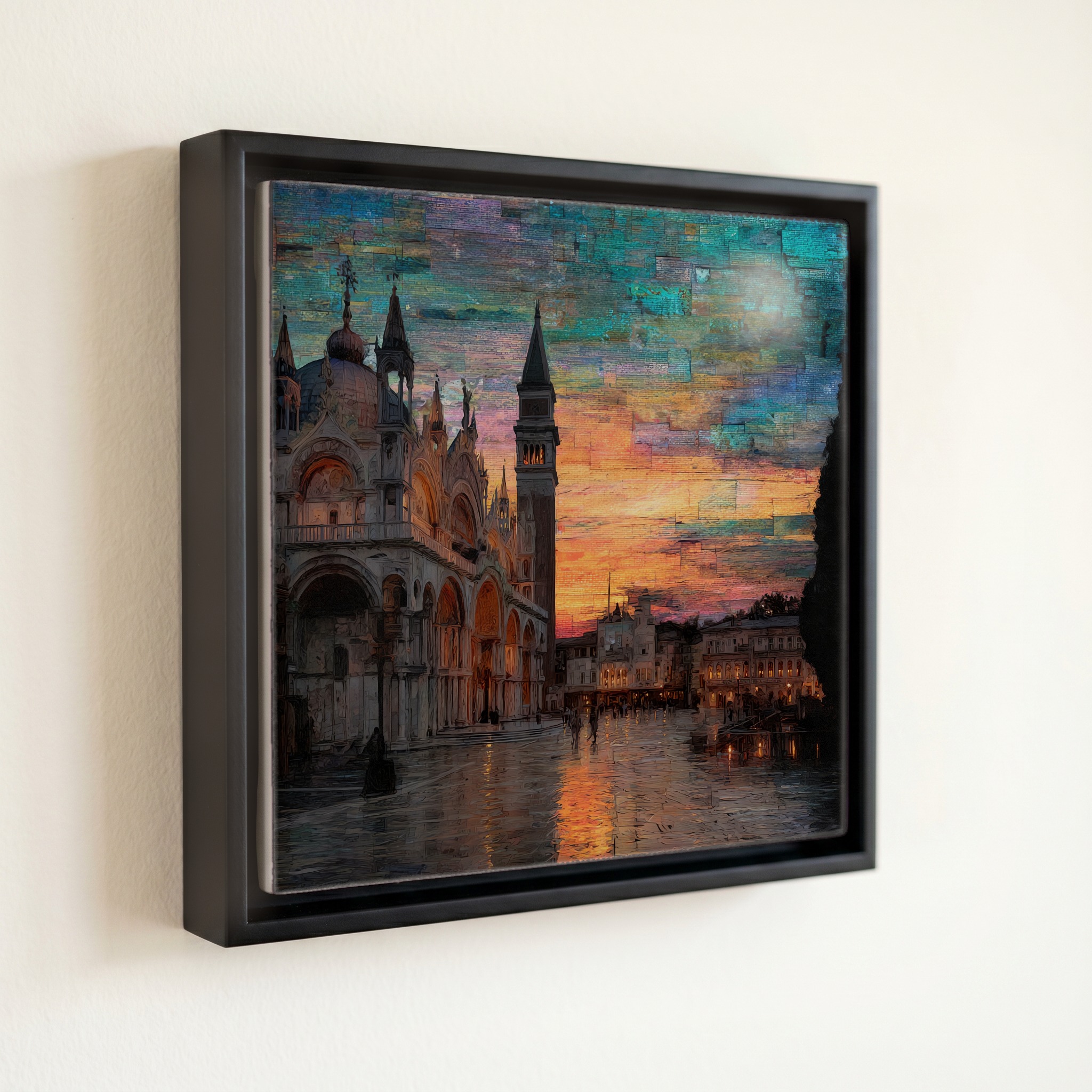
shown in a slim black floating frame · 6 × 6 in
— bring it home

Palladian Basilica, on ceramic.

Each tile is finished by hand in our Knoxville studio. Artwork is slowly infused into the ceramic surface under high heat and pressure, and rests beneath a thin glossy finish. The colour lives in the surface, not on top of it.

What kind of piece?
One tile — square or rectangle.
How big?
the popular one — counter, shelf, nightstand
6 × 6 in · 15 cm · 1.6 lb
Surface finish
A clear glossy finish — the artwork reads as if under resin. Ideal for show-pieces and framed wall art.
How it sits
A hidden cleat — sits ¼″ proud of the wall.
$58
Hand-finished and shipped from our studio at the foot of the Smokies. On your wall in about ten days.
size
6 × 6 in
15 cm
weighs
1.6 lb
solid in the hand
surface
ceramic, hand-finished
art rests beneath a thin glossy finish
from
Knoxville, TN
our family studio, at the foot of the Smokies
— start a Coaster Set

Pick any four 4-inch tiles — National Parks you've been to, a Smokies set, the four seasons of one place. $ for a set of , cork-backed, ready to live on the table.
comes gift-ready
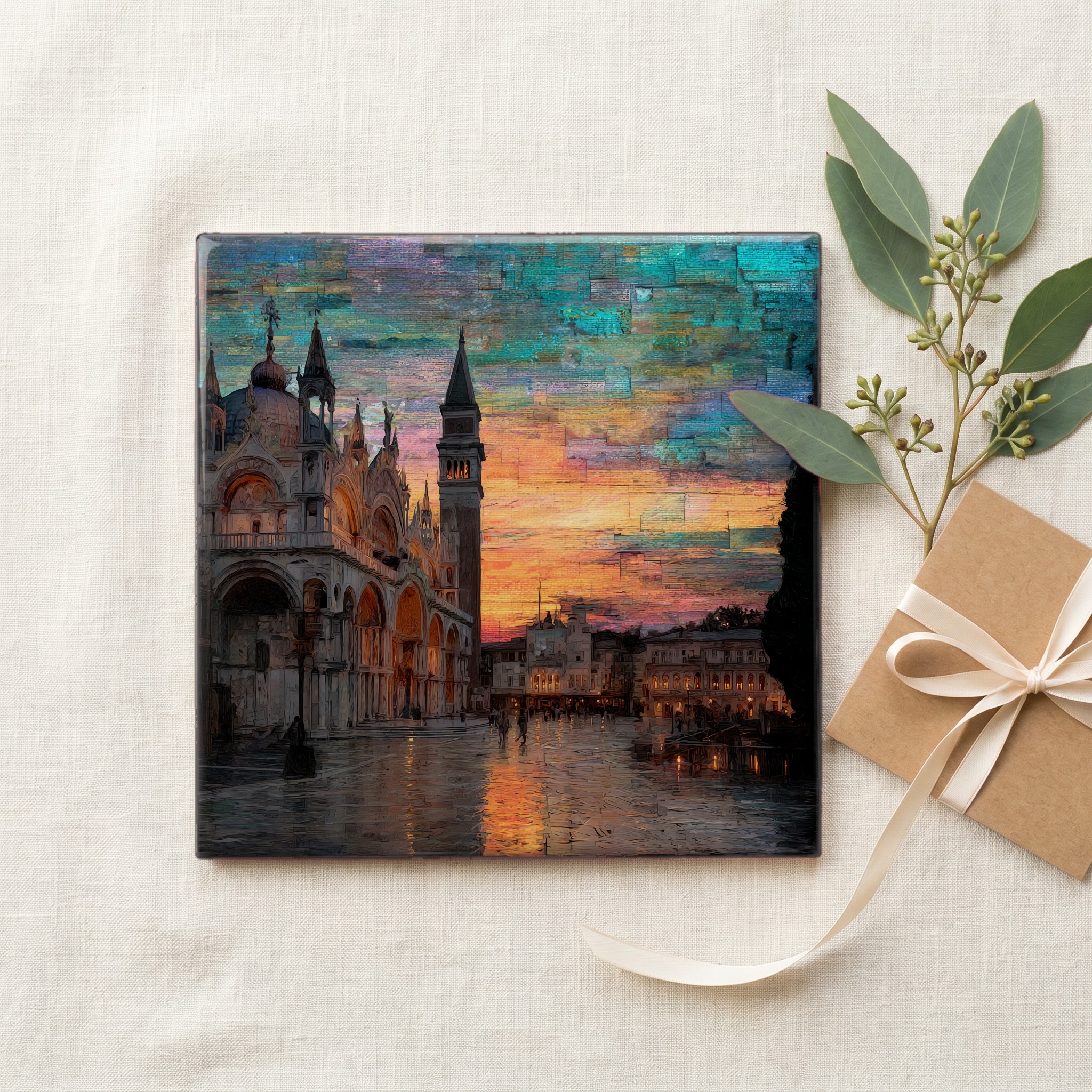
comes gift-ready

Each tile ships in a kraft box, tied with cream ribbon, with a handwritten note from the studio if you'd like to add one.
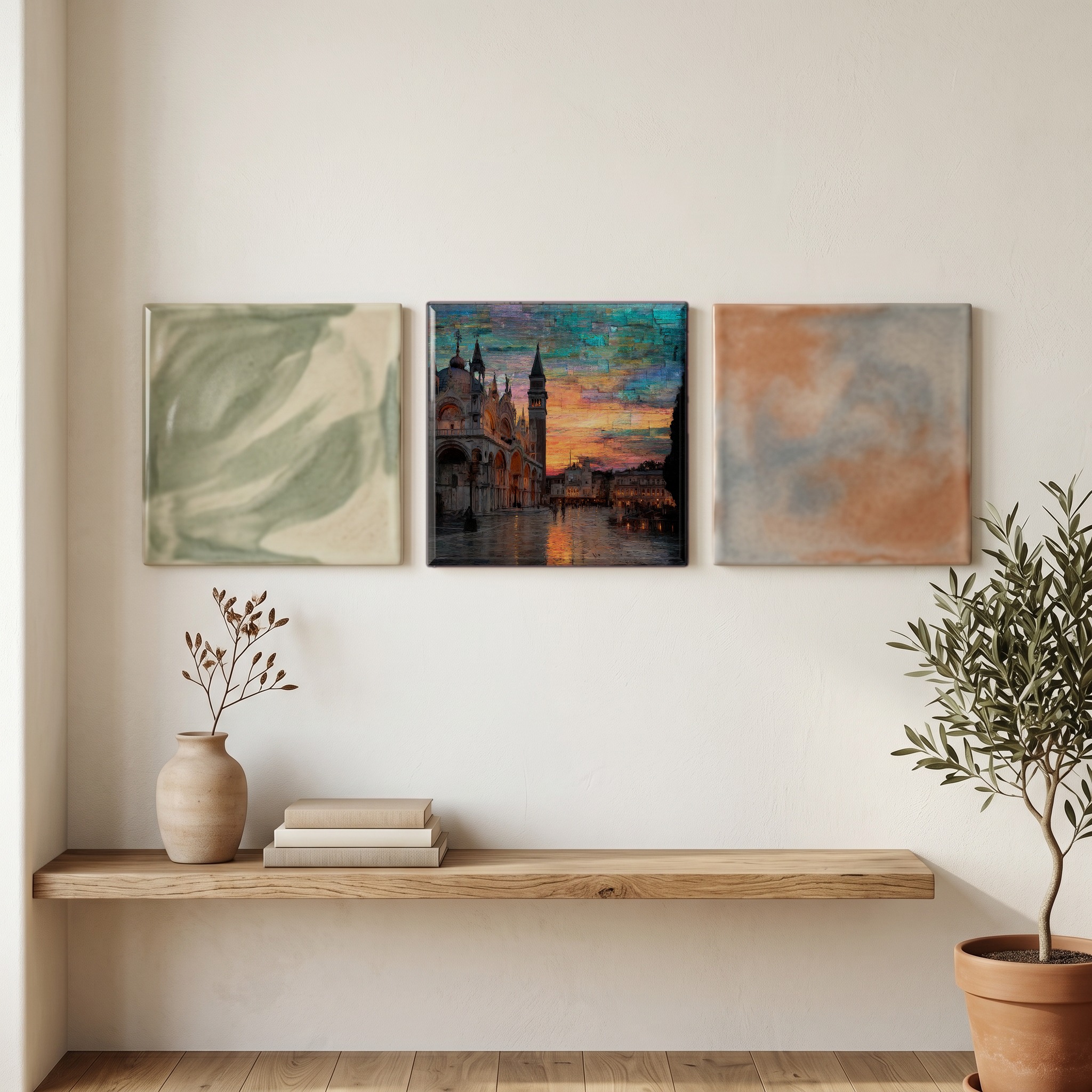
or build a grouping
or build a grouping

Three or five different vistas, hung together — a chapter of places you've been, or want to go.

about Palladian Basilica

The place, in three passes.

A little of what's known, in case you fall down the rabbit hole — or want to go see it yourself.
the place

The Basilica Palladiana stands on Piazza dei Signori, the central square of Vicenza, a city of about 110,000 on the Veneto plain in north-eastern Italy, roughly halfway between Verona and Venice. It is an older Gothic council hall, the Palazzo della Ragione, rebuilt: in 1546 the city's Council of One Hundred gave the commission to Andrea Palladio, then forty, and work on the new marble shell began in April 1549. Palladio named it a basilica after the civic halls of ancient Rome. Since 1994 it has belonged to the UNESCO World Heritage Site City of Vicenza and the Palladian Villas of the Veneto, which also covers the Teatro Olimpico and the Villa La Rotonda nearby.

the stone

Both arcade levels are built in white marble, wrapped around the surviving Gothic core like a new skin over an old frame. The signature element is the serliana, later known the world over as the Palladian window: a round arch flanked by a pair of narrower rectangular openings. Palladio varied the width of those side openings so the rhythm could absorb the irregular bays of the medieval building underneath, a quiet engineering trick that lets the façade read as perfectly even. The first arcade was standing by 1561; the upper order, begun in 1564, was finished in 1597, seventeen years after Palladio's death in 1580.

— informed by Wikipedia
the visit

The hall is open Tuesday to Sunday, generally from 10 in the morning to 6 in the evening, with last entry half an hour before closing; Mondays are kept for maintenance. Inside is the Salone, a single unsupported room roughly 52 by 22 metres, used now for exhibitions and civic events. Above it runs the building's other defining line: a roof of oxidised copper, gone soft green with age and shaped like the upturned hull of a ship. A terrace beneath that roof opens in the evening for an aperitivo, with the rooftops of Vicenza and the Torre Bissara, the 82-metre clock tower next door, close enough to touch.

— informed by Comune di Vicenza, Wikipedia
where
Italy · Vicenza, Veneto
position
45.5470° N · 11.5466° E
the neighborhood

What's nearby.

A handful of named places within an hour's walk or short drive. Some we've already painted; some we will.
0.6 km NE
Teatro Olimpico
Palladian theatre
0.5 km NE
Palazzo Chiericati
Palladian palace
0.1 km N
Loggia del Capitaniato
Palladian loggia
at the lake
Torre Bissara
medieval clock tower
2.5 km SE
Villa La Rotonda
Palladian villa
N
Palladian Basilica
Teatro Olimpico
Palazzo Chiericati
Loggia del Capitaniato
Torre Bissara
Villa La Rotonda
common questions

What people ask.

A few questions we get about Palladian Basilica — and about bringing the piece home.
about the place

The Basilica Palladiana stands on Piazza dei Signori, the central square of Vicenza, a city on the Veneto plain in north-eastern Italy roughly halfway between Verona and Venice. It is about a ten-minute walk from Vicenza's railway station.

Andrea Palladio gave it the name after the basilicas of ancient Rome, which were civic halls for law and business, not places of worship. The building was Vicenza's Palazzo della Ragione, the seat of the city's council and courts.

A Palladian window, or serliana, is a round arch flanked by two narrower rectangular openings. The motif takes its name from this building, where Palladio used it across both loggia levels and varied the side openings to fit the irregular bays beneath.

The roof is made of copper, which oxidises to a soft green over time. Its form is an inverted ship's hull, a long curved shape that covers the great hall, the Salone, without internal supports across its 52-metre length.

Andrea Palladio won the commission in 1546 at the age of forty, and work on his marble loggias began in April 1549. The first arcade was complete by 1561; the whole was finished in 1614, decades after his death in 1580.

Yes. Since 1994 it has been part of the UNESCO site City of Vicenza and the Palladian Villas of the Veneto, which also includes the Teatro Olimpico, Palazzo Chiericati, and the Villa La Rotonda just outside the city.

Yes. The Salone hosts exhibitions and civic events, generally Tuesday to Sunday from 10 to 6, with Mondays closed for maintenance. A terrace beneath the copper roof opens in the evenings for an aperitivo over the rooftops of Vicenza.

about the piece in your home

It has been a meaningful gift for people drawn to classical architecture. The Basilica Palladiana is where the serliana, the Palladian window, took the form the whole profession learned from. A Small or Medium with a note from the studio reads as considered.

The artwork pairs white marble arcades with the soft green of the copper roof, lit through the studio's stained-glass colour language. It sits well in warm-classical rooms, jewel-tone maximalist walls, and pared-back interiors that want one piece with depth. The Medium and Large carry the detail best.

Yes. Architectural subjects and a return to classical motifs sit at the centre of grand-millennial and modern-traditional rooms right now. The arcades give a strong horizontal line that anchors a console or a mantel; the Large or a Triptych suits a longer wall.

Above a sofa, a single Large holds the wall on its own, and a four-tile Mural fills a wider span with more presence. Over a console or a mantel, the Medium keeps the scale intimate. For a feature wall, a nine-tile Mural reads as one image across the room.

Yes. For a bathroom, a shower, or a kitchen backsplash, choose the Dura Satin or Matte finish, which is soft-sheen and scratch-resistant for damp, high-use walls. The colour is slowly infused into the ceramic surface under high heat and pressure, so steam and splashes do not affect it.

A soft microfibre cloth with a little water is all it needs. The colour lives in the surface beneath a thin glossy finish, so there is no print layer to wear away. Abrasive pads and harsh solvents are not necessary.

Yes. Every WenderVista piece is created in-house by Reid Wender and hand-finished in our Knoxville studio, with no stock imagery and no licensing. The Basilica Palladiana tile is part of the studio's atlas of places, rendered in its own visual language.

if this one stayed with you

A few you might also love.

Hand-picked by the eye that found Sorapis. Same air, same kind of quiet.
— a collection

The Italian Dolomites,
painted slow.

The valleys between Cortina and Val Gardena, the tarns you walk an hour to see, the towers that turn the colour of a banked fire just before dark. Wander the collection by valley, by season, or follow the path Reid walked.

Tre Cime
Braies
Misurina
Sorapis
Cinque Torri
Sassolungo
Marmolada