Wender·Vista
Palermo Cathedral
shown on ceramic, 12-inch tileItaly
in old Palermo, on Sicily's north coast

Palermo Cathedral

a cathedral the centuries kept rebuilding.

Where it lives

Not only on a wall.

A small tile on the nightstand catching the morning. A larger one above the fire. Yours, wherever you spend the slow hours.
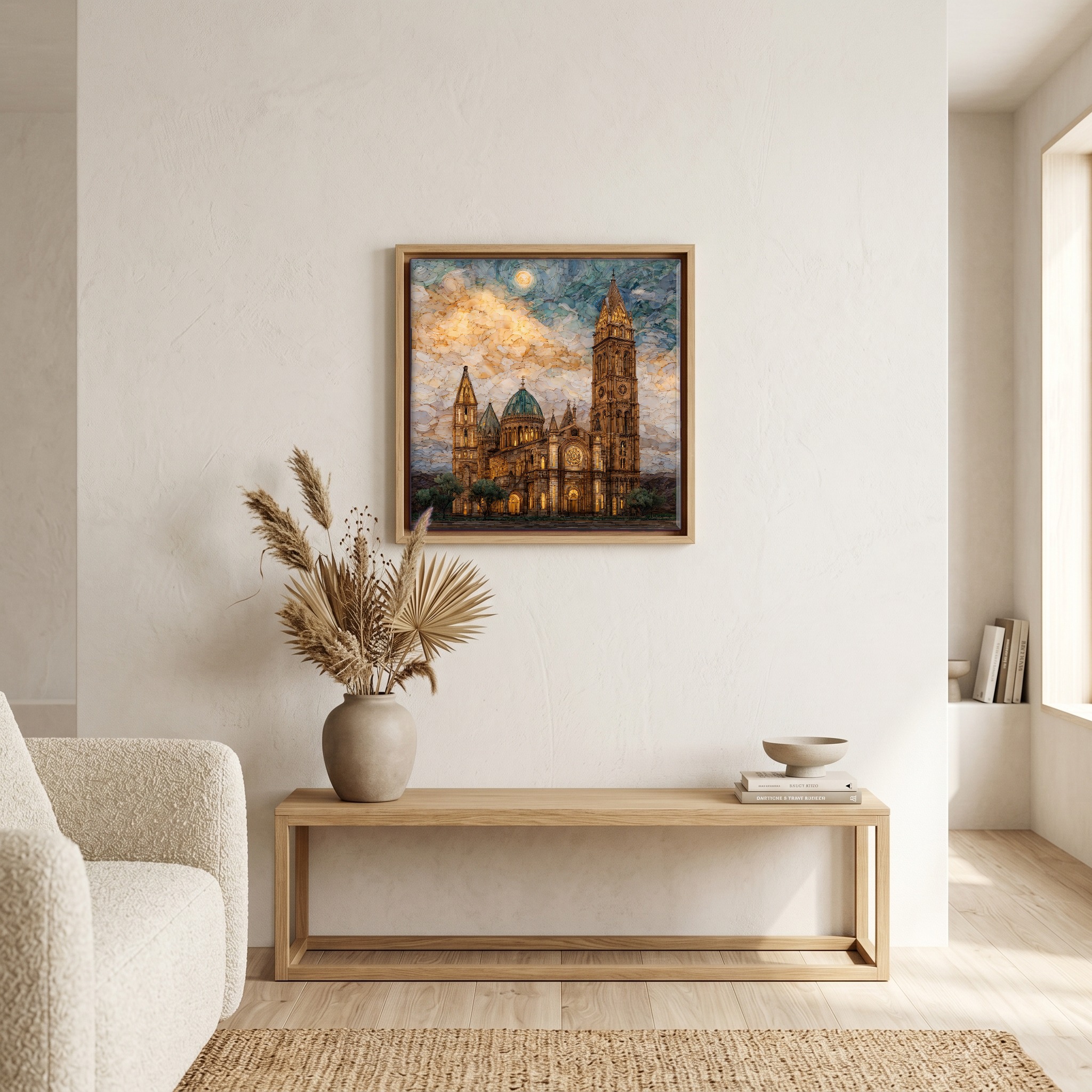
Above the bench, in a warm oak surround.
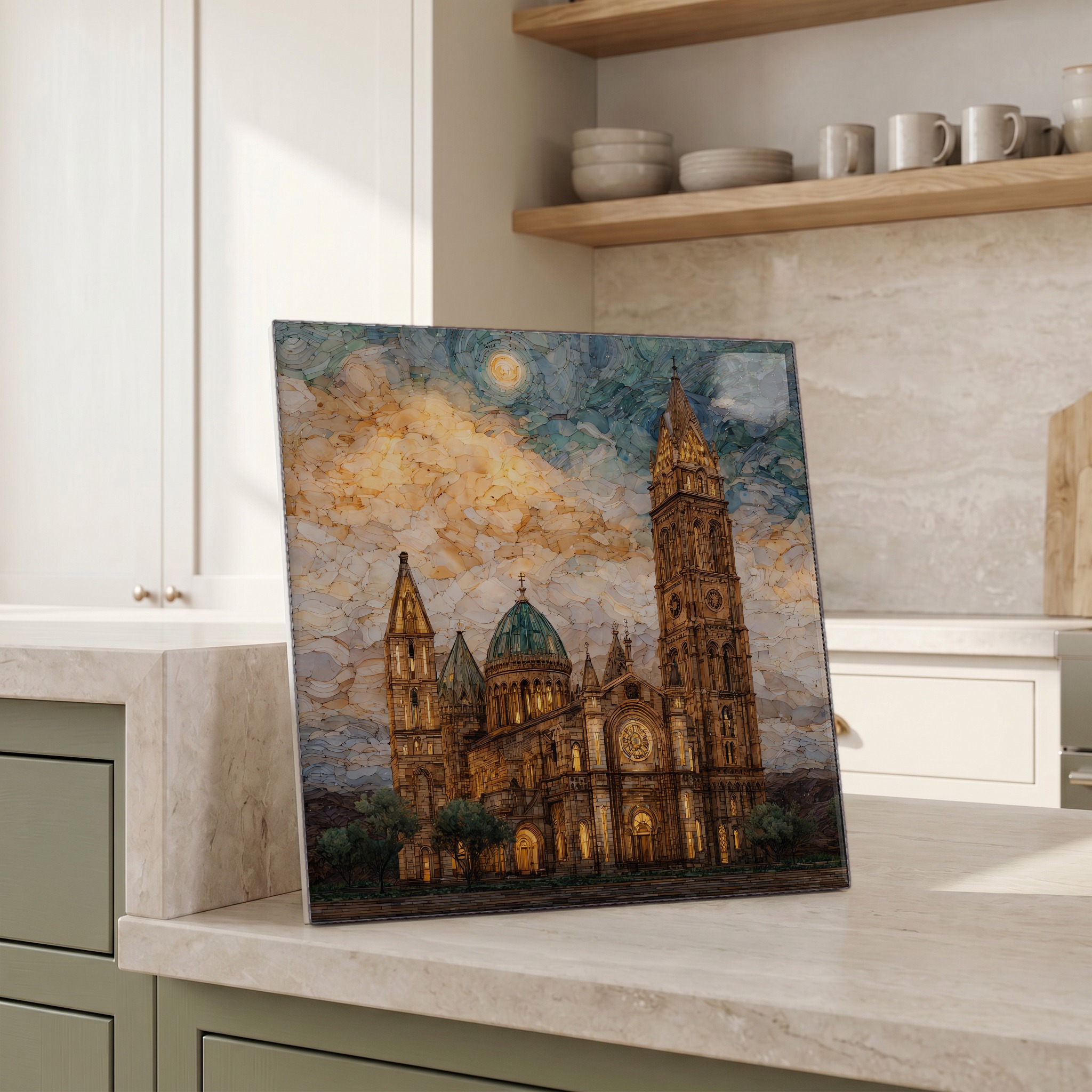
Beside the kettle, propped on the counter.
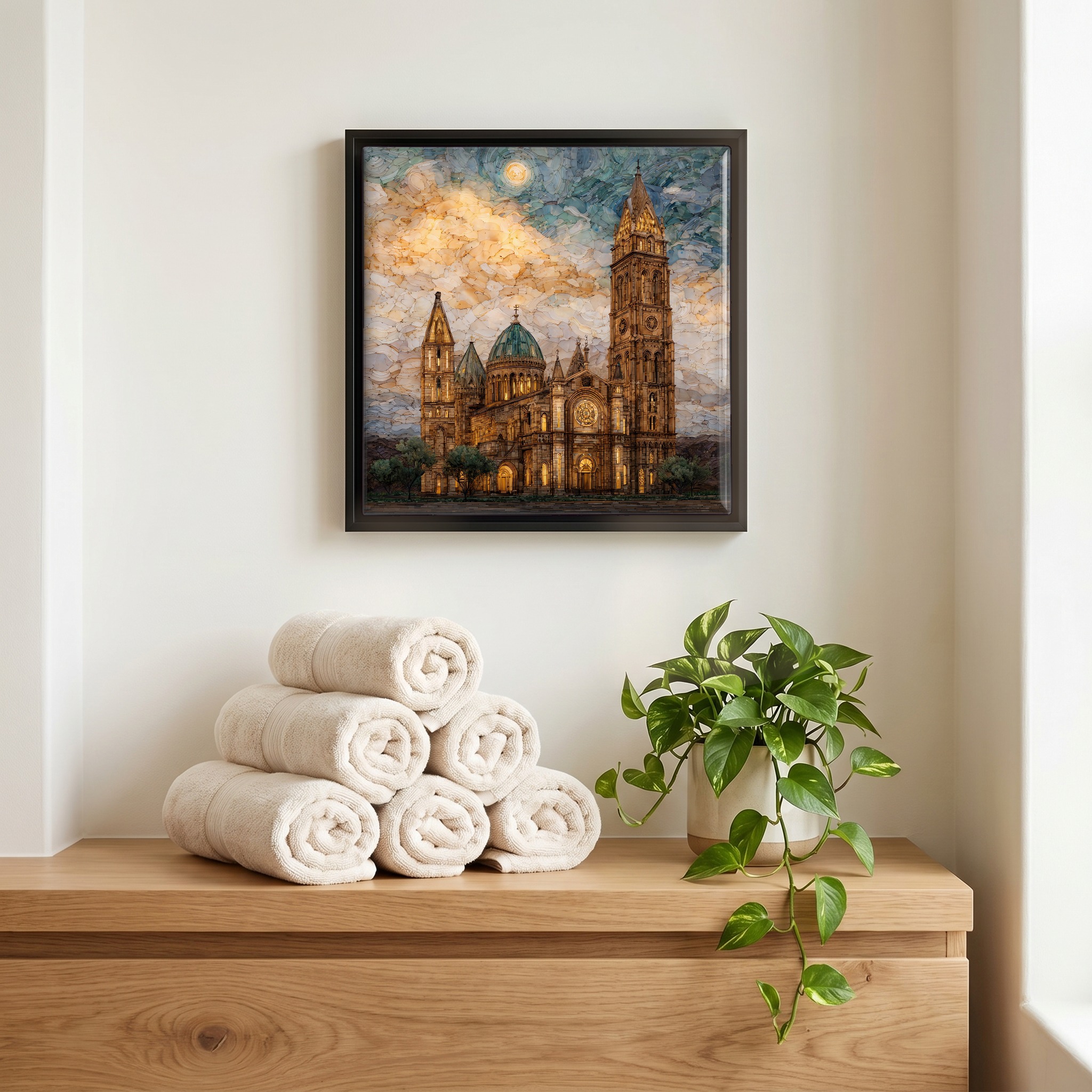
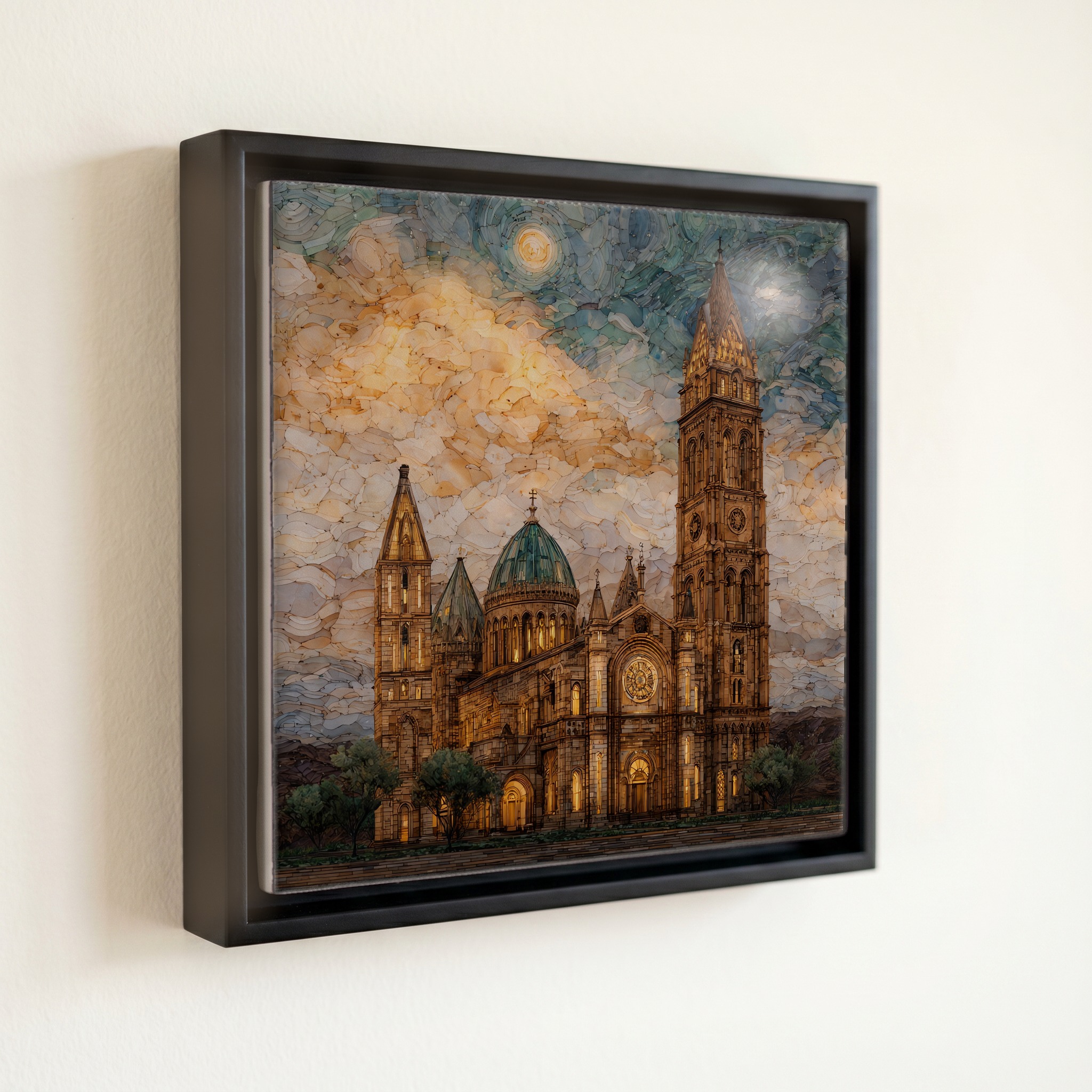
Above the linens, in a slim black surround.
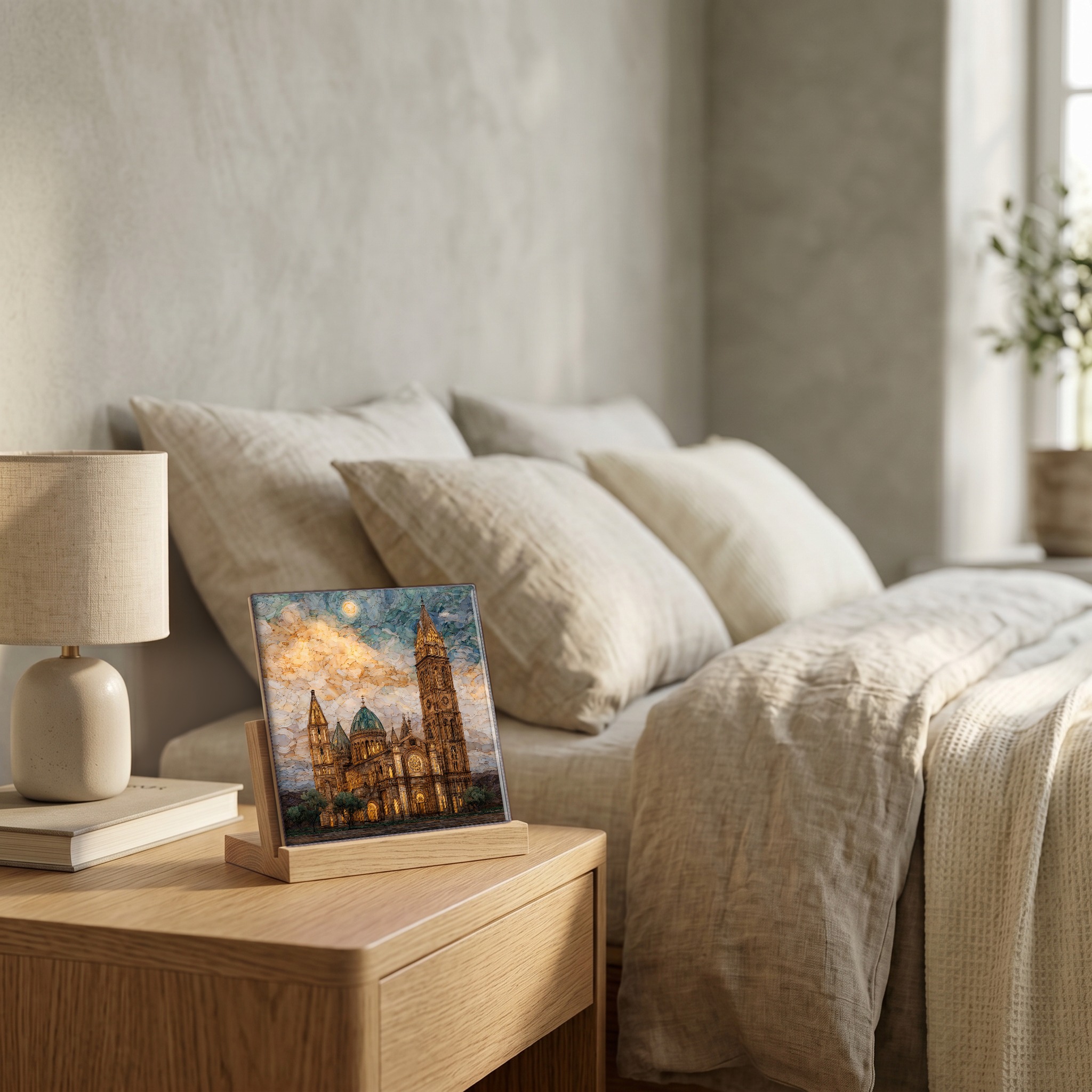
On the nightstand, on a light oak stand.
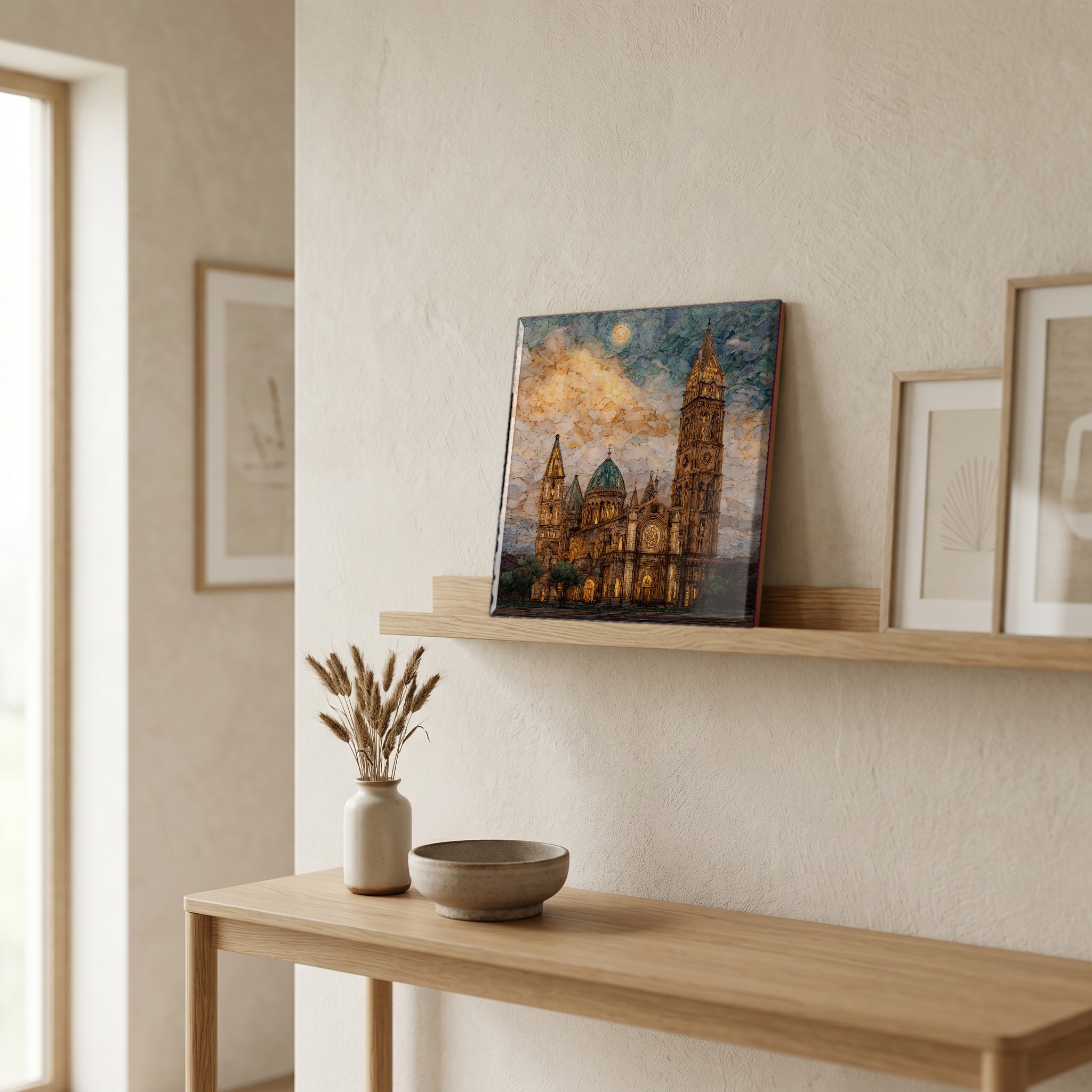
On a picture ledge, where the light comes in.
a note from the studio

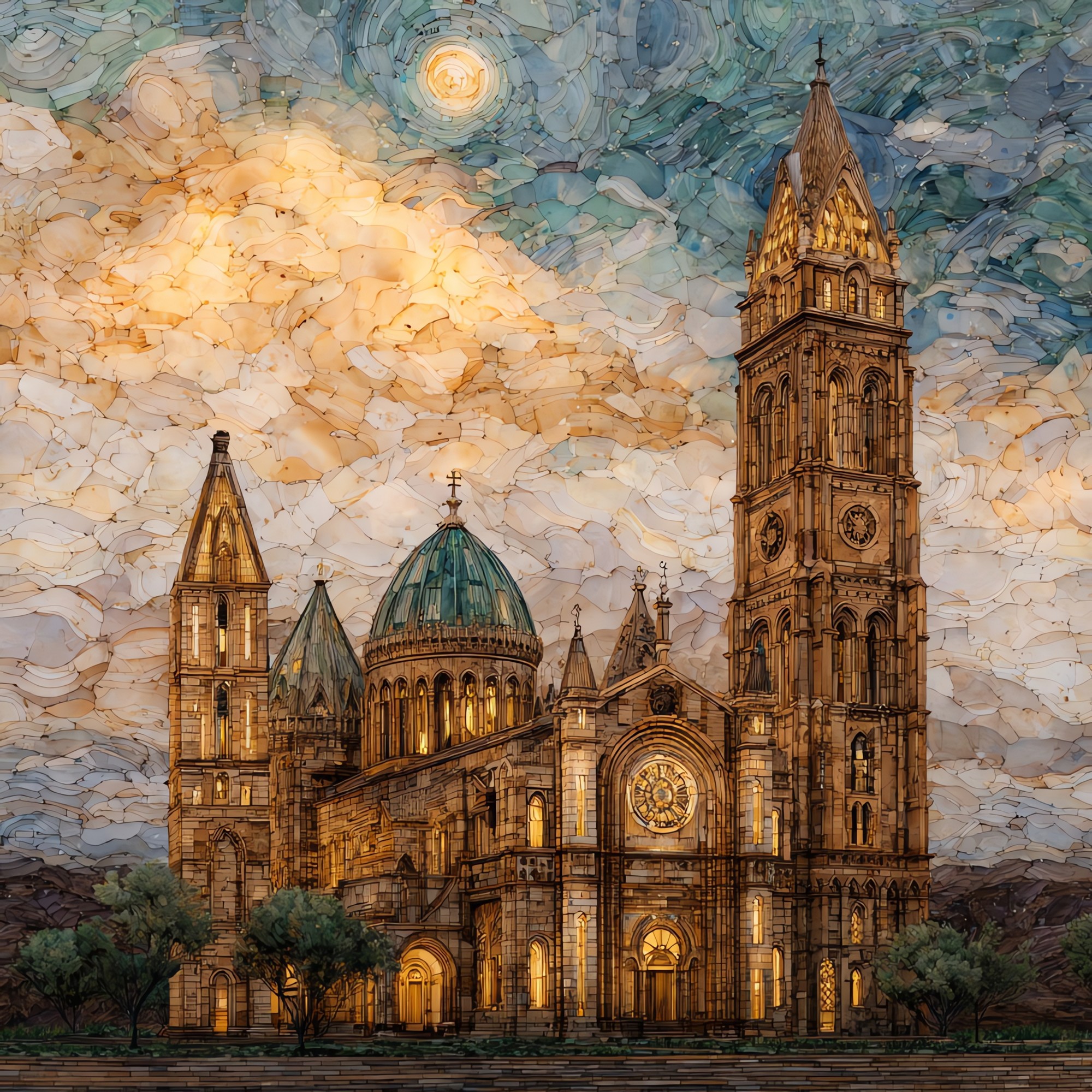
The cathedral stands on Via Vittorio Emanuele in the old centre of Palermo, a building the centuries kept rebuilding. Norman bell towers from the 1180s, a Catalan Gothic porch from the 1400s, a Neoclassical dome added at the close of the 1700s. The golden tufa limestone goes amber in late afternoon. Near the south porch one column still carries an Arabic inscription, preserved from the years the same walls held a mosque. Inside, the royal tombs of Roger II and Frederick II rest in deep red porphyry. The rooftop walk opens onto a view across old Palermo to Monte Pellegrino, the headland that closes the bay to the north.
from the studio
shown in a slim black floating frame · 6 × 6 in
— bring it home

Palermo Cathedral, on ceramic.

Each tile is finished by hand in our Knoxville studio. Artwork is slowly infused into the ceramic surface under high heat and pressure, and rests beneath a thin glossy finish. The colour lives in the surface, not on top of it.

What kind of piece?
One tile — square or rectangle.
How big?
the popular one — counter, shelf, nightstand
6 × 6 in · 15 cm · 1.6 lb
Surface finish
A clear glossy finish — the artwork reads as if under resin. Ideal for show-pieces and framed wall art.
How it sits
A hidden cleat — sits ¼″ proud of the wall.
$58
Hand-finished and shipped from our studio at the foot of the Smokies. On your wall in about ten days.
size
6 × 6 in
15 cm
weighs
1.6 lb
solid in the hand
surface
ceramic, hand-finished
art rests beneath a thin glossy finish
from
Knoxville, TN
our family studio, at the foot of the Smokies
— start a Coaster Set

Pick any four 4-inch tiles — National Parks you've been to, a Smokies set, the four seasons of one place. $ for a set of , cork-backed, ready to live on the table.
comes gift-ready
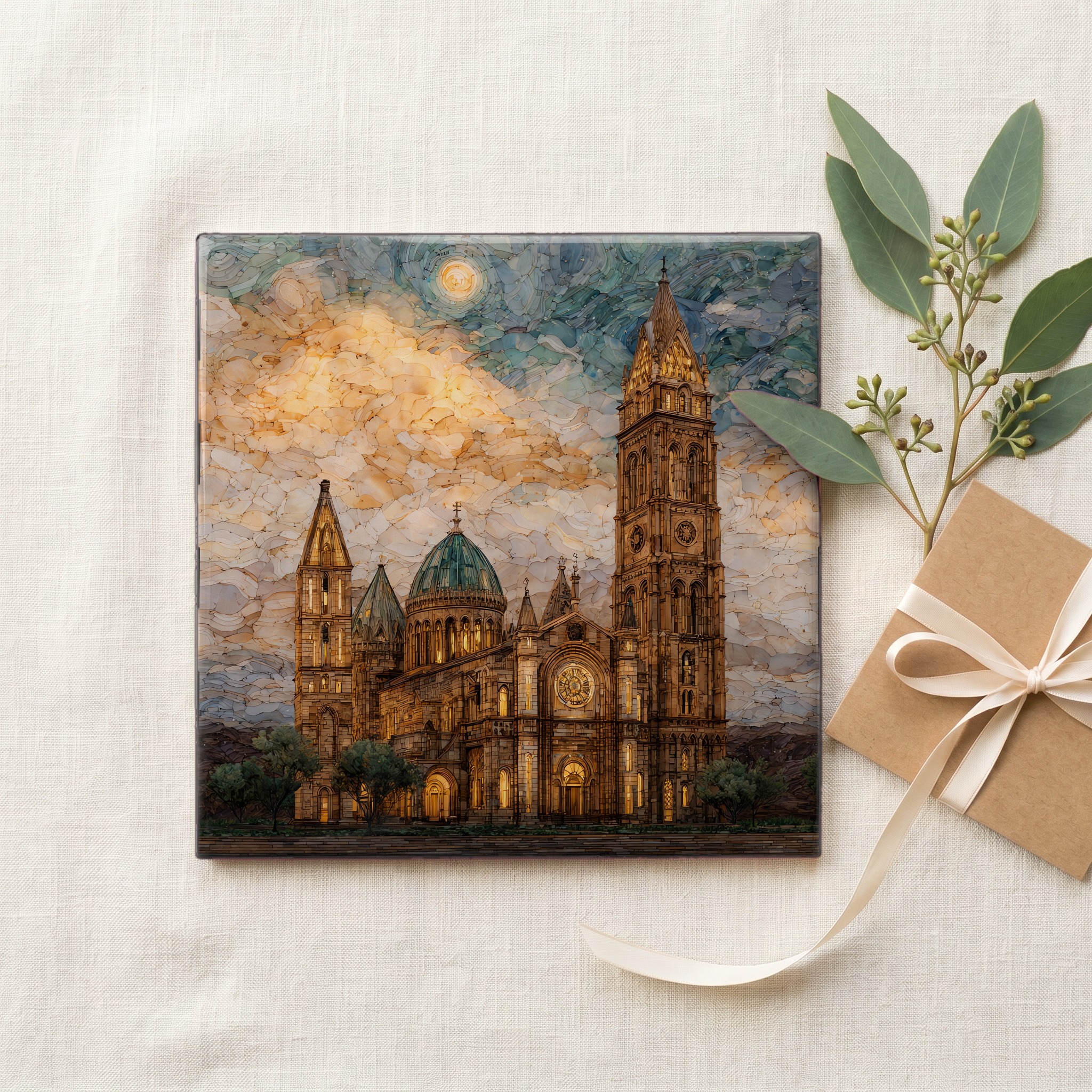
comes gift-ready

Each tile ships in a kraft box, tied with cream ribbon, with a handwritten note from the studio if you'd like to add one.
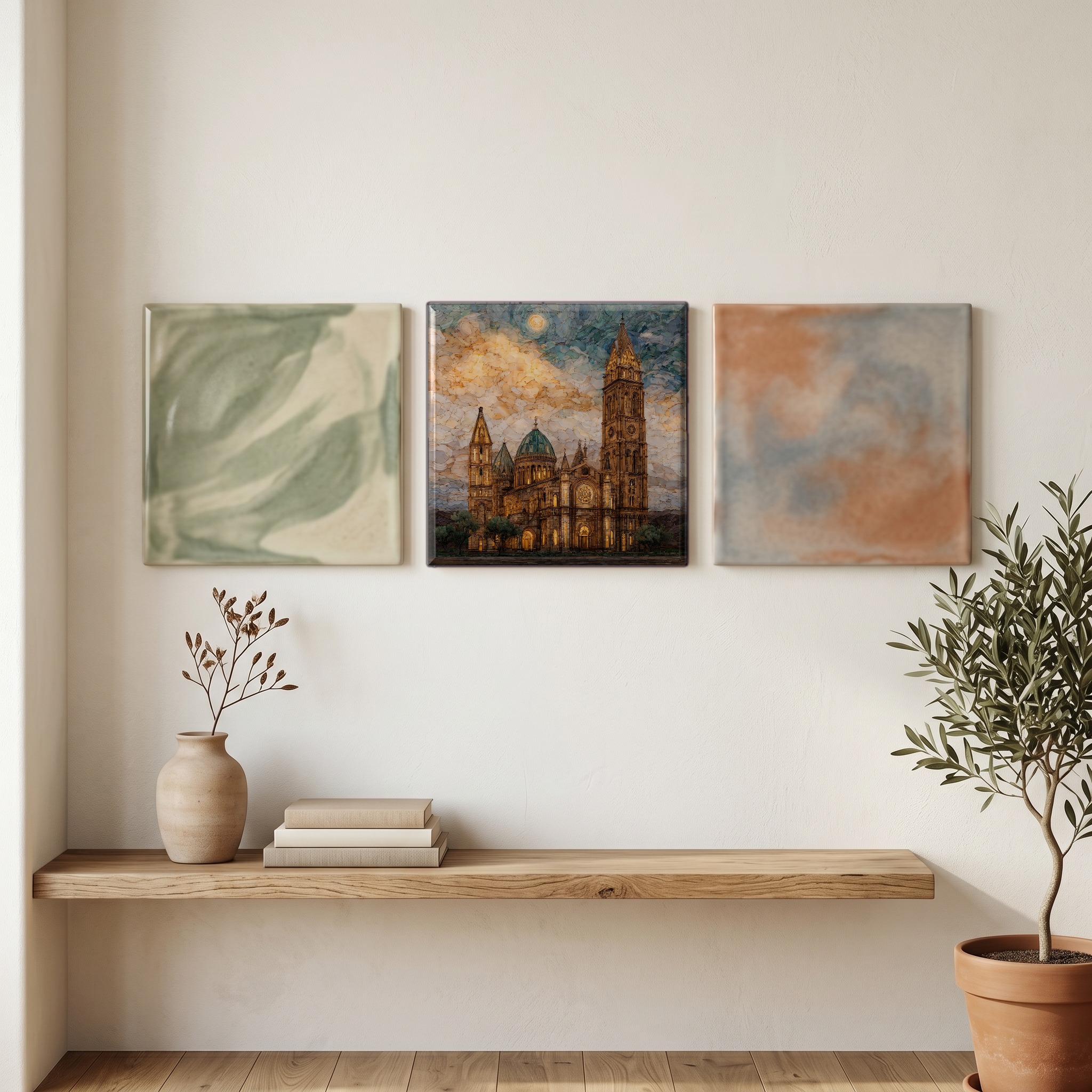
or build a grouping
or build a grouping

Three or five different vistas, hung together — a chapter of places you've been, or want to go.

about Palermo Cathedral

The place, in three passes.

A little of what's known, in case you fall down the rabbit hole — or want to go see it yourself.
the place

Palermo Cathedral stands on Via Vittorio Emanuele in the historic centre of Palermo, the capital of Sicily, on the island's northern coast. Construction began in 1185 under Archbishop Walter Ophamil during the Norman Kingdom of Sicily, on a site that had served previously as a Byzantine basilica and, during Arab rule of the city from 831 to 1072, as the congregational mosque of Balarm. The complex is part of the UNESCO World Heritage Site inscribed in 2015 as Arab-Norman Palermo and the Cathedral Churches of Cefalu and Monreale, a serial property of nine civil and religious buildings that document the cultural syncretism of twelfth-century Sicily under King Roger II and his successors.

the stone

The building reads as a stratigraphy of eight centuries of Sicilian rule. The crenellated bell towers and the apses date from the late twelfth century and are Norman in idiom; the south porch, built around 1465 in Catalan Gothic style, carries three pointed arches over a tympanum lined with porphyry and serpentine inlay; the great dome was added between 1781 and 1801 by Ferdinando Fuga during a Neoclassical refit that also reorganised the interior. Embedded in one of the porch columns is a Quranic inscription in Kufic script, a spolia preserved from the years the building was a mosque. The exterior is faced with the local golden tufa limestone, which shifts in tone through the day from pale straw at noon to amber at sunset.

the visit

The cathedral is open to visitors daily, with the main nave free to enter and a paid ticket required for the royal tombs, the treasury, the crypt, and the rooftop walk. The royal tombs hold the porphyry sarcophagi of King Roger II of Sicily, the Emperor Henry VI, Constance of Aragon, and the Emperor Frederick II Hohenstaufen, who died in 1250. The roof tour climbs above the apses and opens onto a panorama across the old city to Monte Pellegrino, the limestone headland that closes the bay to the north. The Festino di Santa Rosalia, the city's largest religious celebration, processes past the cathedral each year on the night of 14 July, marking the saint's deliverance of Palermo from the plague of 1624.

where
Italy · Palermo, Sicily
position
38.1144° N · 13.3561° E
the neighborhood

What's nearby.

A handful of named places within an hour's walk or short drive. Some we've already painted; some we will.
1 km E
Quattro Canti
Baroque crossroads
1 km SW
Norman Palace
royal palace
1 km SW
Cappella Palatina
Norman chapel
1 km SW
San Giovanni degli Eremiti
Norman church with red domes
5 km N
Monte Pellegrino
coastal headland
8 km SW
Monreale Cathedral
Norman cathedral
12 km N
Mondello
seaside district
N
Palermo Cathedral
Quattro Canti
Norman Palace
Cappella Palatina
San Giovanni degli Eremiti
Monte Pellegrino
Monreale Cathedral
Mondello
common questions

What people ask.

A few questions we get about Palermo Cathedral — and about bringing the piece home.
about the place

It stands on Via Vittorio Emanuele in the historic centre of Palermo, the capital of Sicily, on the island's northern coast. The Norman Palace lies a short walk to the southwest and the Baroque crossroads of the Quattro Canti about a kilometre to the east.

The building has been rebuilt and added to since 1185, accumulating Norman, Catalan Gothic, and Neoclassical work over six centuries. The bell towers and apses are twelfth-century Norman; the south porch is fifteenth-century Catalan Gothic; the dome was added between 1781 and 1801 by Ferdinando Fuga.

On the same site, yes. During Arab rule of Palermo from 831 to 1072 the city's congregational mosque stood here, built over an earlier Byzantine basilica. When the Normans began the current cathedral in 1185, a column from the older structure was kept at the south porch and still carries a Quranic inscription in Kufic script.

The royal tombs hold porphyry sarcophagi of King Roger II of Sicily, the Emperor Henry VI Hohenstaufen, his wife Constance of Hauteville, the Emperor Frederick II Hohenstaufen who died in 1250, and Constance of Aragon, Frederick's first wife. They sit in a chapel off the south aisle.

Yes. It was inscribed in 2015 as part of Arab-Norman Palermo and the Cathedral Churches of Cefalu and Monreale, a serial UNESCO World Heritage property of nine civil and religious buildings that document the cultural syncretism of Norman Sicily under Roger II and his successors.

Yes. A separate paid ticket opens the rooftop walk, which climbs above the apses and runs along the crenellated parapet. From the top the view reaches across the old city to Monte Pellegrino, the limestone headland that closes the Bay of Palermo to the north.

The Festino runs past the cathedral on the night of 14 July each year, commemorating the saint's deliverance of Palermo from the plague of 1624. Her relics, held in a silver reliquary inside the cathedral, are carried through the city on a triumphal float.

about the piece in your home

It has carried well for customers connected to the city. Palermo Cathedral is the most recognisable building in Sicily, and the layered architecture reads to Sicilians as a portrait of the island's whole history. A Small or Medium with a handwritten note from the studio suits a Sicilian-American household or a returning visitor.

The piece sits well in Mediterranean modern, Italianate maximalist, and warm minimalist rooms. The golden tufa colour and stained-glass treatment hold up against terracotta floors, plaster walls, and ochre kitchens. The palette also pairs cleanly with natural oak, walnut, and aged brass.

Yes. Mediterranean interiors have moved toward warm earth tones, hand-finished surfaces, and pieces that hint at a longer history. A ceramic tile of an eight-hundred-year-old cathedral fits that register without becoming a souvenir, and the studio's visual language keeps it from reading as touristic.

A single Large holds the wall above a console or a narrow bed. Above a full sofa, most rooms want more presence: a four-tile Mural for a balanced block, or a nine-tile Mural where the wall is wide and you want the building to carry the room. A Medium suits a stairwell or a reading corner.

Yes. For a shower wall, bathroom feature, or kitchen backsplash, choose the Dura Satin or Matte finish; both are scratch-resistant and made for damp, vertical installation. The standard Glossy finish is best kept to drier walls and framed display in living rooms or studies.

A soft microfibre cloth with plain water clears most marks. The colour lives in the ceramic surface beneath a thin glossy finish, so it will not lift or fade with normal cleaning. Skip abrasive pads, scouring powders, and harsh solvents on any of the three finishes.

Yes. Every WenderVista piece is original work by Reid Wender, the studio's curator, and hand-finished in our Knoxville studio at the foot of the Smoky Mountains. The art is not licensed or reprinted from another source; each place is painted in our own visual language and made to order.

if this one stayed with you

A few you might also love.

Hand-picked by the eye that found Sorapis. Same air, same kind of quiet.
— a collection

The Italian Dolomites,
painted slow.

The valleys between Cortina and Val Gardena, the tarns you walk an hour to see, the towers that turn the colour of a banked fire just before dark. Wander the collection by valley, by season, or follow the path Reid walked.

Tre Cime
Braies
Misurina
Sorapis
Cinque Torri
Sassolungo
Marmolada