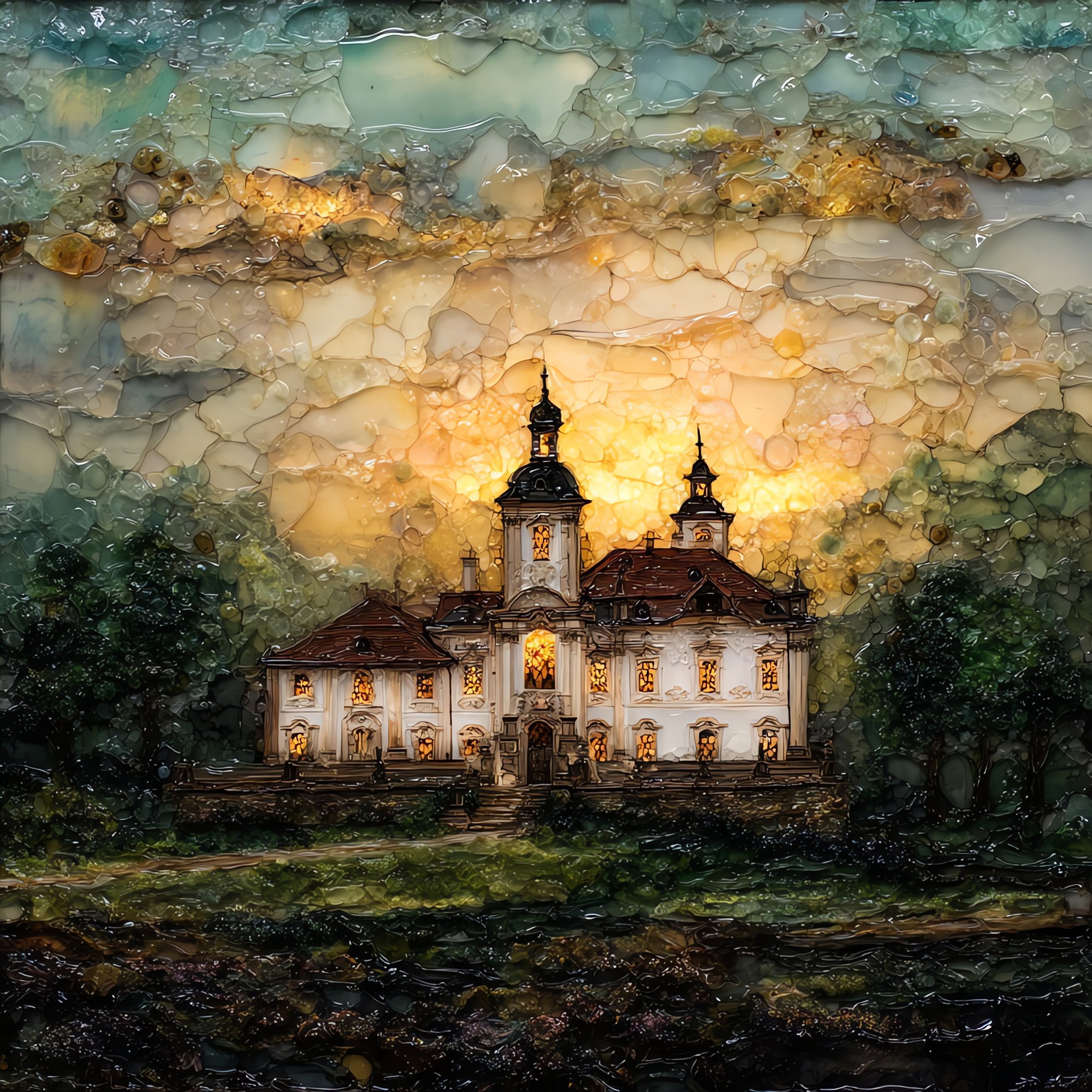
Palazzina di Stupinigi
— — the bronze stag still watching the woods.
Not only on a wall.
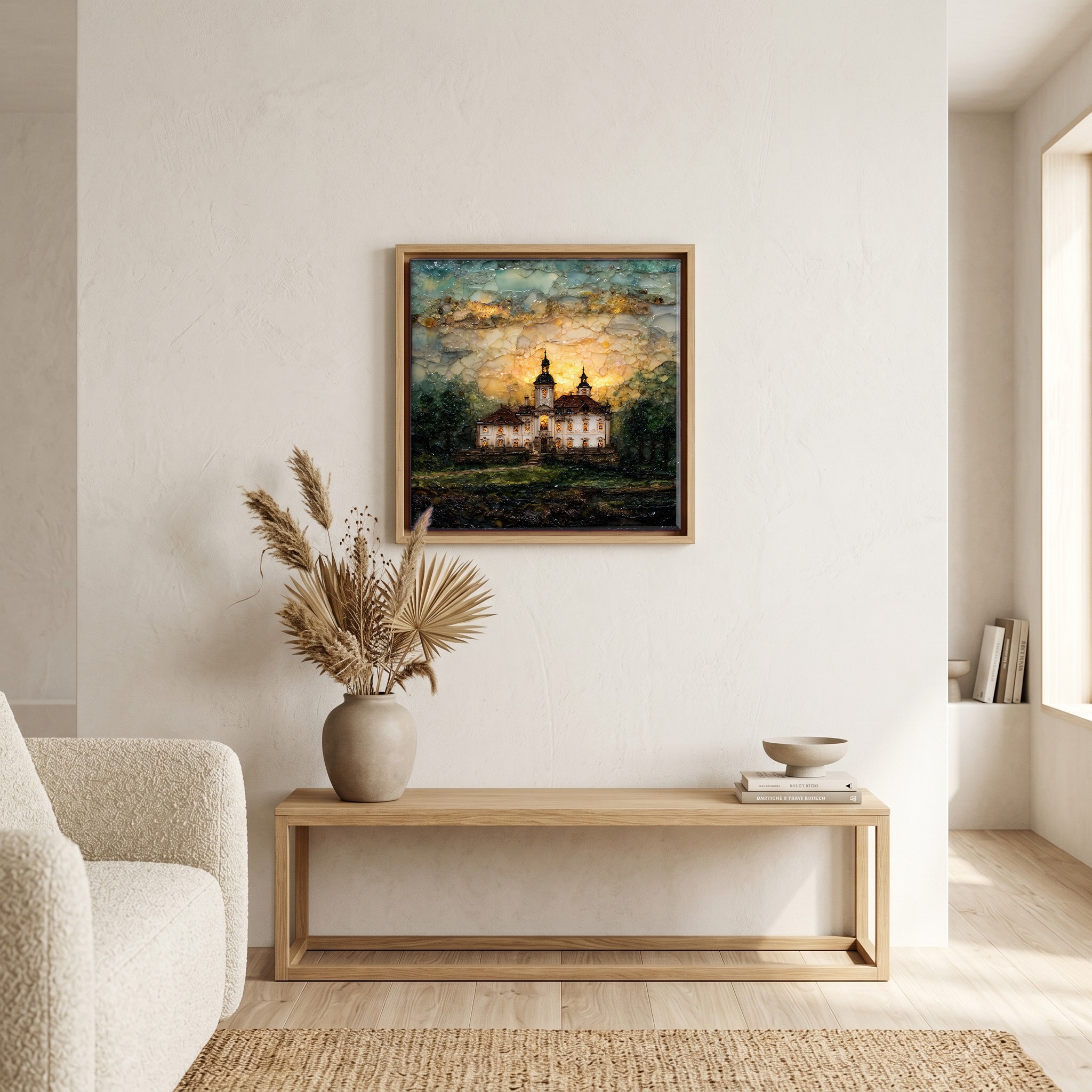
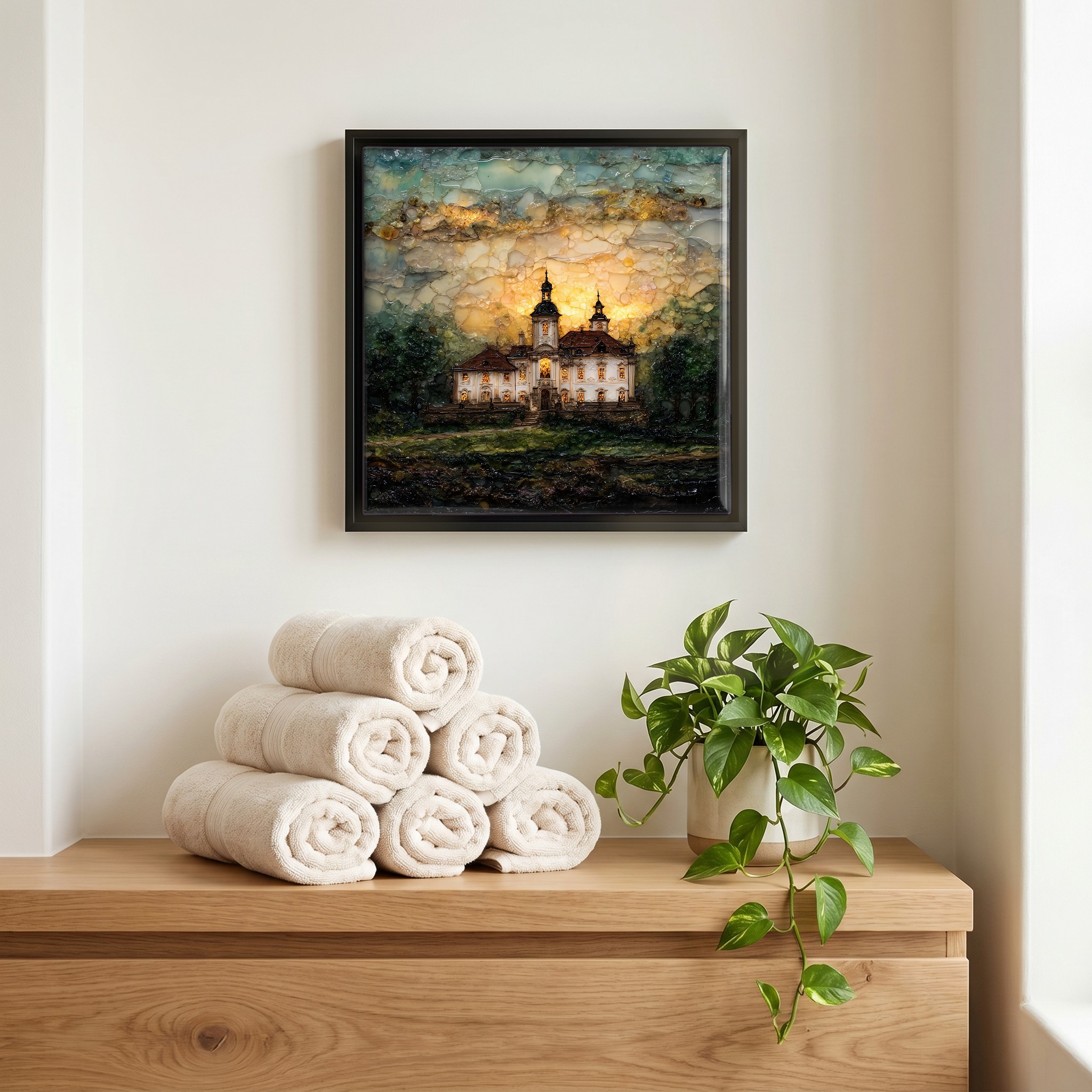
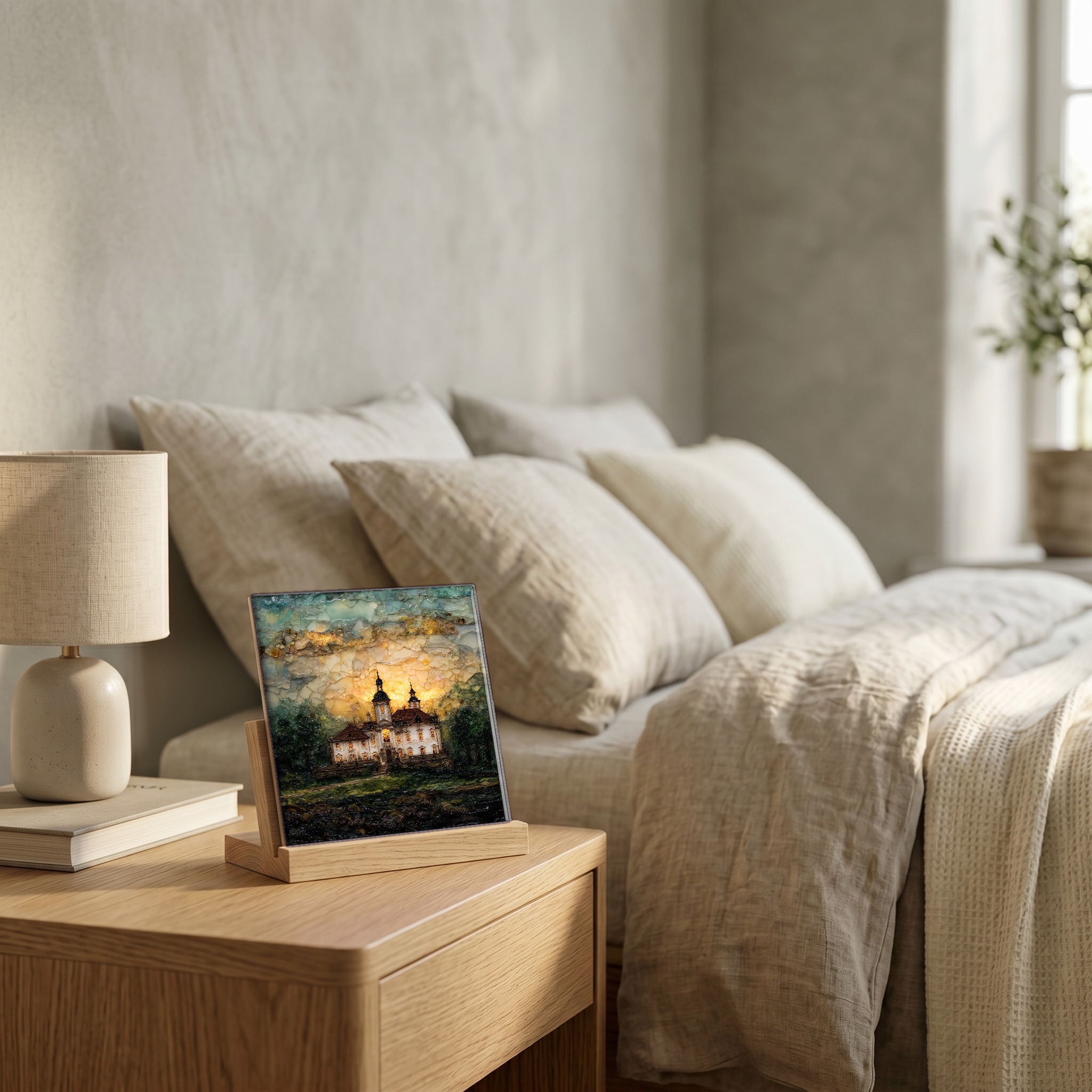
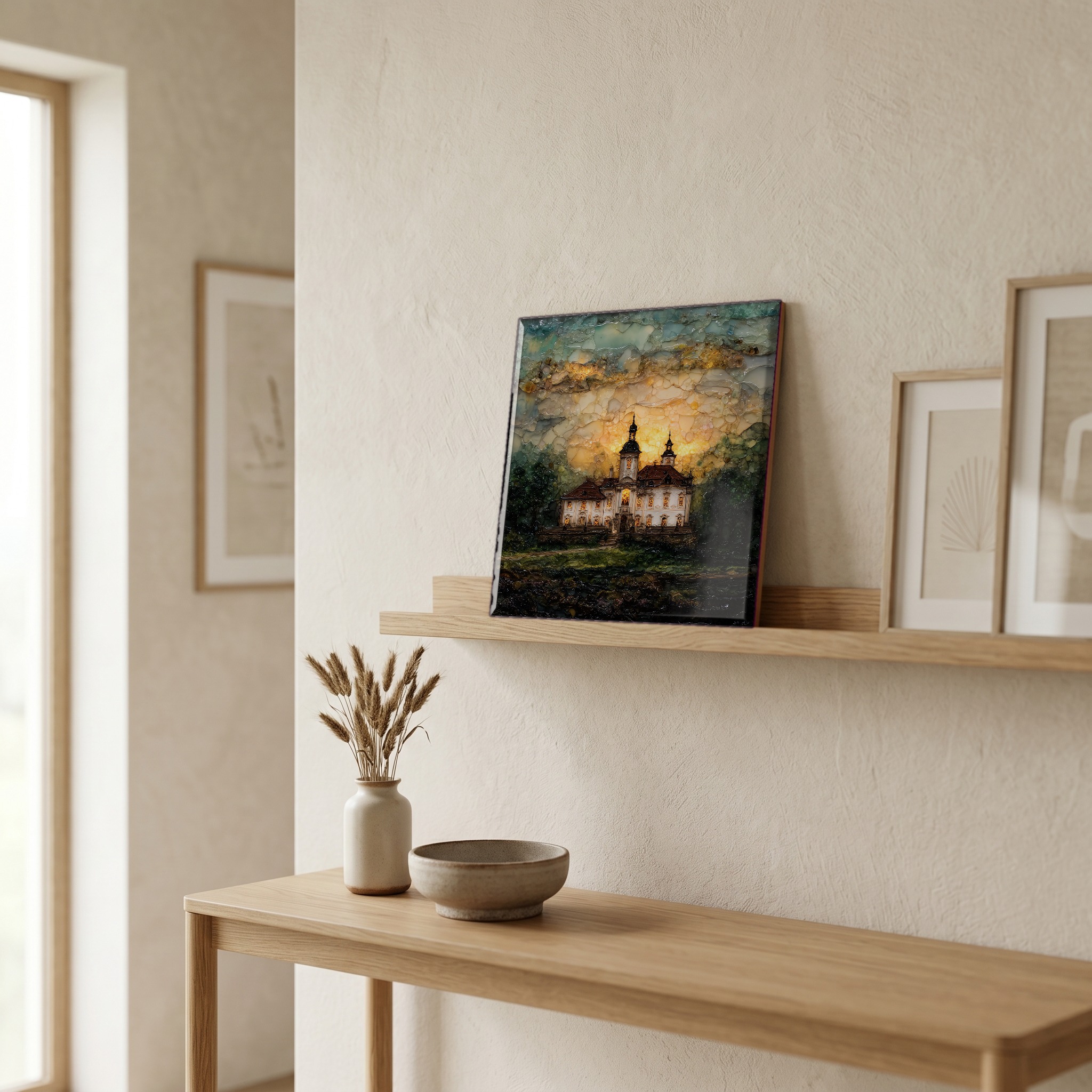
“A hunting lodge only a king would call a lodge: 137 rooms thrown out from a single oval hall, southwest of Turin. Filippo Juvarra drew it for Victor Amadeus II in 1729, the wings spread wide like the legs of a saltire cross, the great salone painted with Diana at the hunt. A bronze stag stands at the top of the dome, looking out over woods that were once the royal chase and are now a public park. Nobody hurries through the oval room. The light comes down through it the way it must have when the hunts still rode out at dawn.
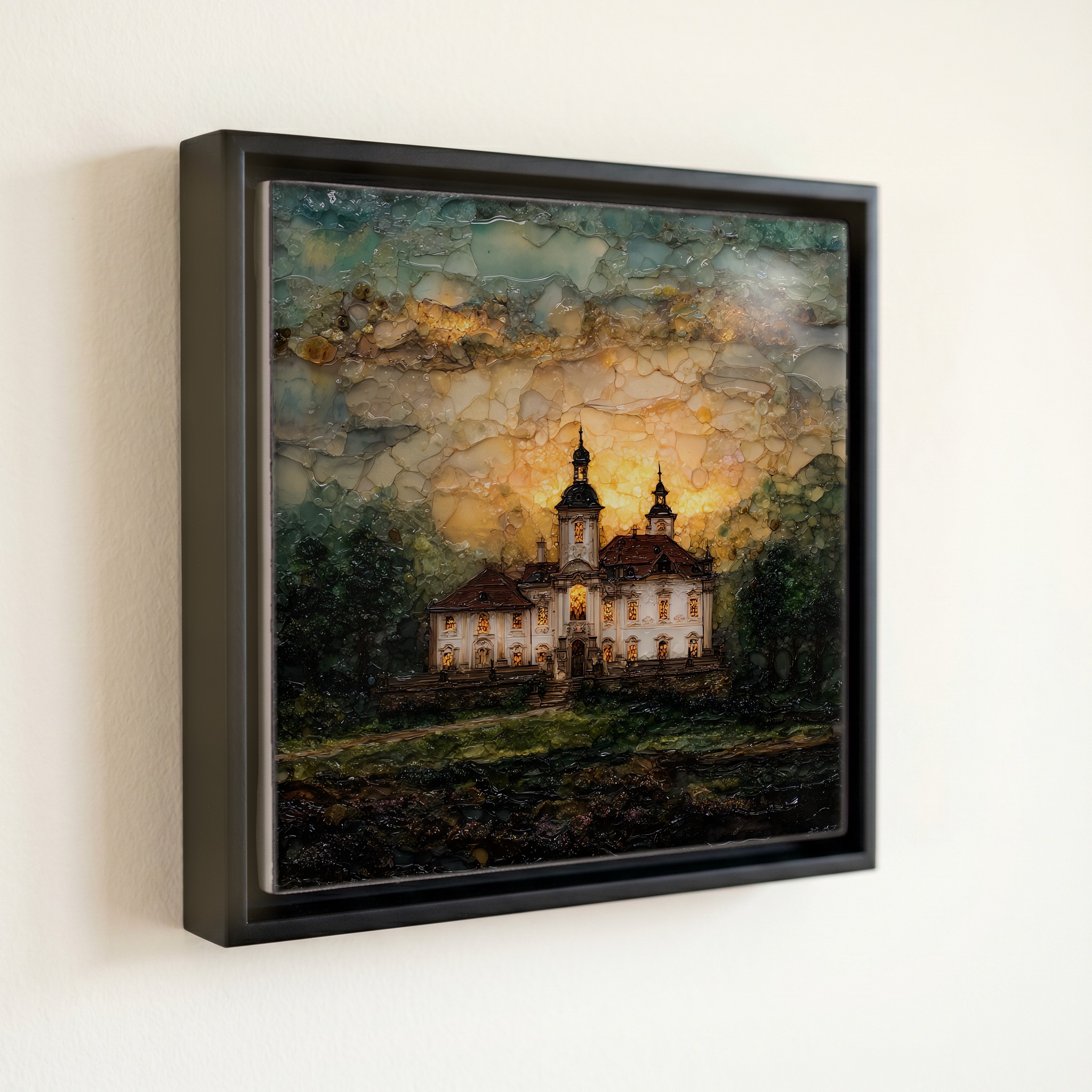
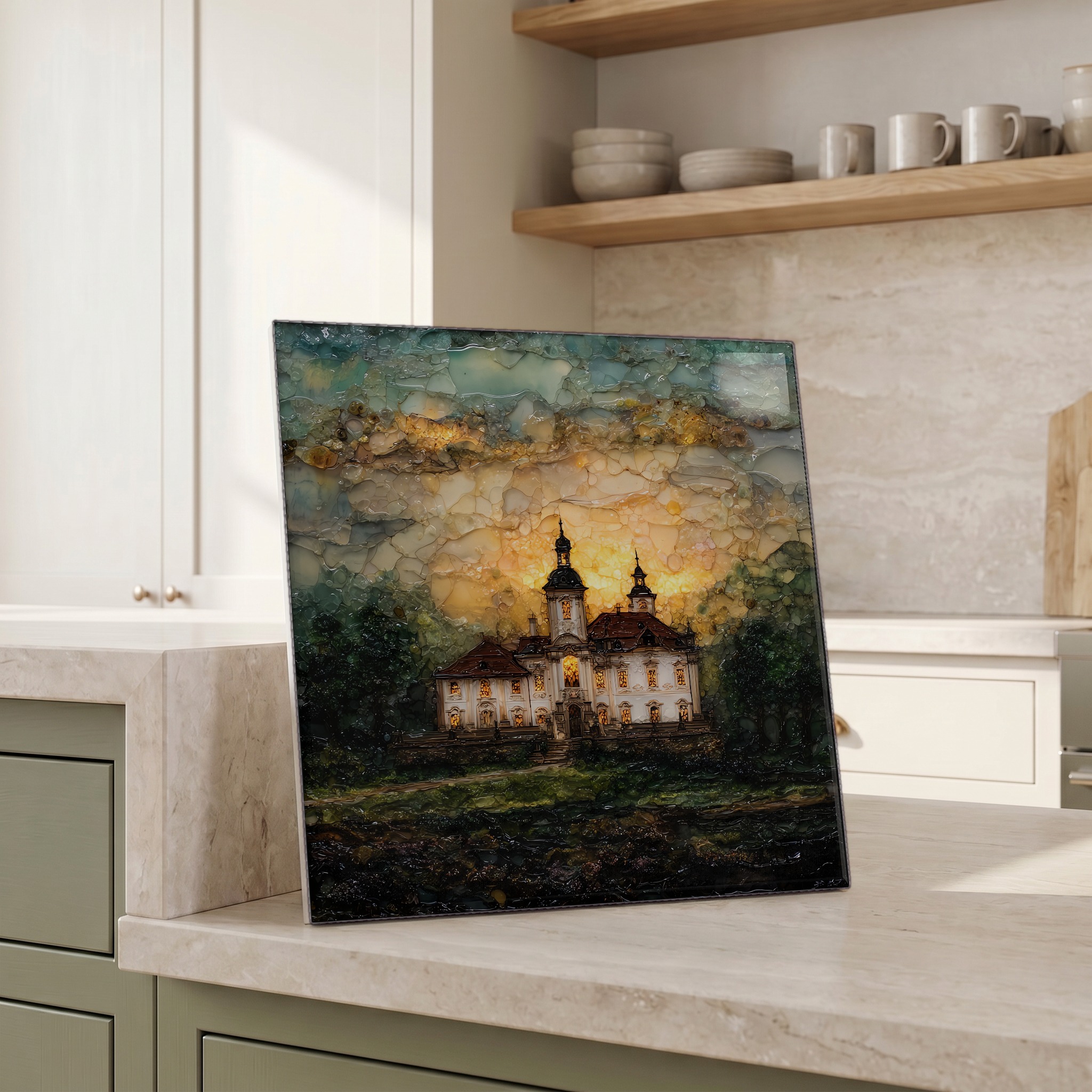
Palazzina di Stupinigi, on ceramic.
Each tile is finished by hand in our Knoxville studio. Artwork is slowly infused into the ceramic surface under high heat and pressure, and rests beneath a thin glossy finish. The colour lives in the surface, not on top of it.
Pick any four 4-inch tiles — National Parks you've been to, a Smokies set, the four seasons of one place. $ for a set of , cork-backed, ready to live on the table.
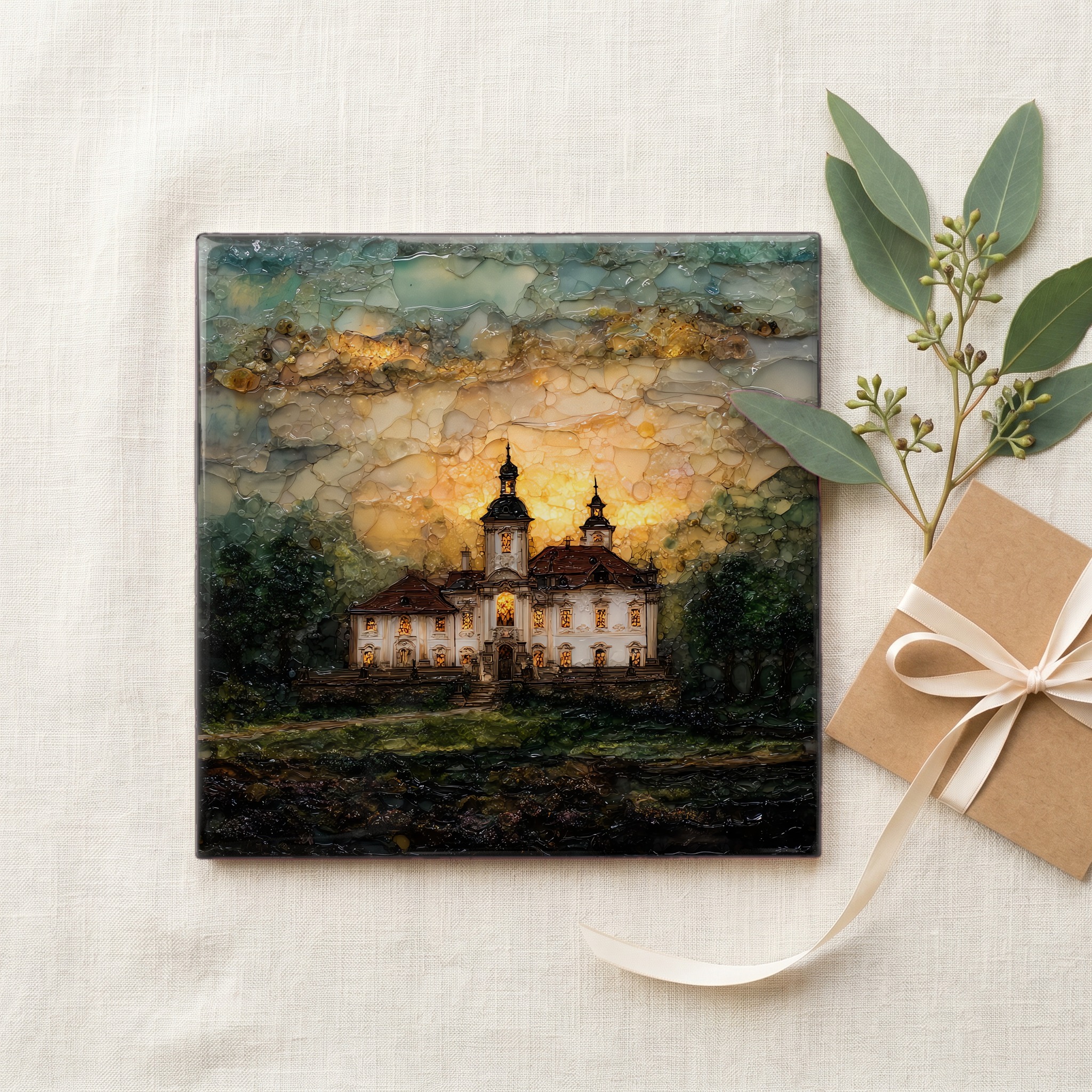
Each tile ships in a kraft box, tied with cream ribbon, with a handwritten note from the studio if you'd like to add one.
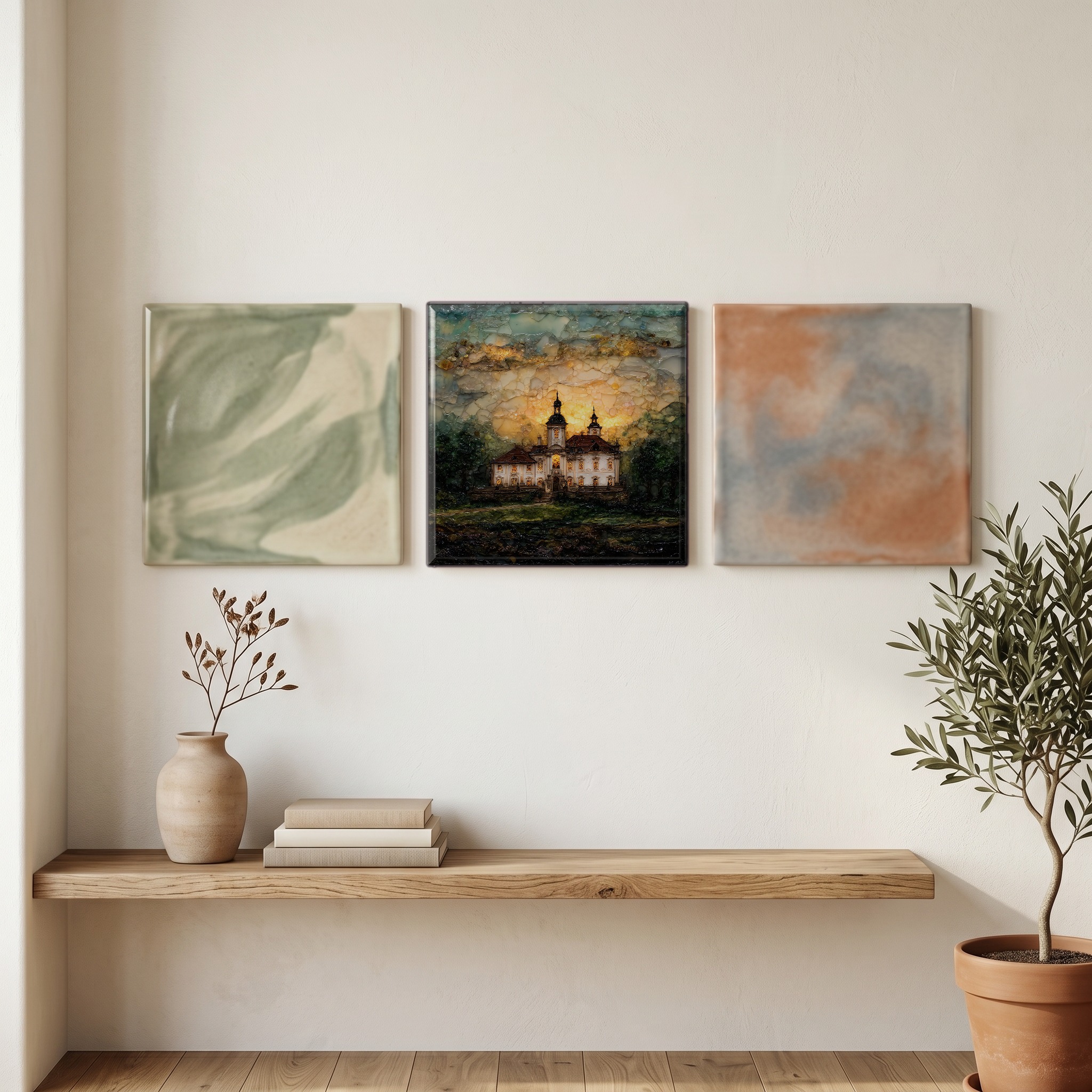
Three or five different vistas, hung together — a chapter of places you've been, or want to go.
The place, in three passes.
Stupinigi sits about 10 kilometres southwest of Turin, in the suburb of Nichelino, on the flat farmland of Piedmont in northern Italy. It was built as the hunting residence of the House of Savoy and is one of that family's royal residences, inscribed together on the UNESCO World Heritage list in 1997. The palace stands at the centre of its own park, the Parco naturale di Stupinigi, some 17 square kilometres of woods and farmland that were once the dukes' private hunting ground. A long straight avenue still runs out from the edge of Turin toward the gates, the way the court would have approached it. Today the grounds are open to anyone who walks them.
Filippo Juvarra began the design in 1729 and built it around a single great oval hall, with four wings thrown out at angles in the shape of a saltire, a St Andrew's cross. The whole complex runs to 137 rooms and 17 galleries across some 31,000 square metres. The oval salone at its heart was painted by the Bolognese brothers Giuseppe and Domenico Valeriani with the Triumph of Diana, the goddess of the hunt, so that the room itself answered the building's purpose. Crowning the stepped dome is a bronze stag, cast by Francesco Ladatte in 1766; the original now stands indoors, with a copy keeping its place against the sky.
The lodge is no longer a private residence but a museum, the Museo di Arte e Ammobiliamento, with rooms of furniture and decoration, some original to the house and some gathered from other Savoy palaces such as Moncalieri Castle and the Palace of Venaria. It is one stop on the circuit of royal residences around Turin and is cared for by the Fondazione Ordine Mauriziano. When Napoleon held Piedmont, the palace served as an imperial residence, and his sister Pauline Bonaparte left her mark on one of the cabinet rooms. The surrounding Parco naturale di Stupinigi was established in 1992, so woods that were once closed to all but the court are now walked freely.