Wender·Vista
Palatine Hill
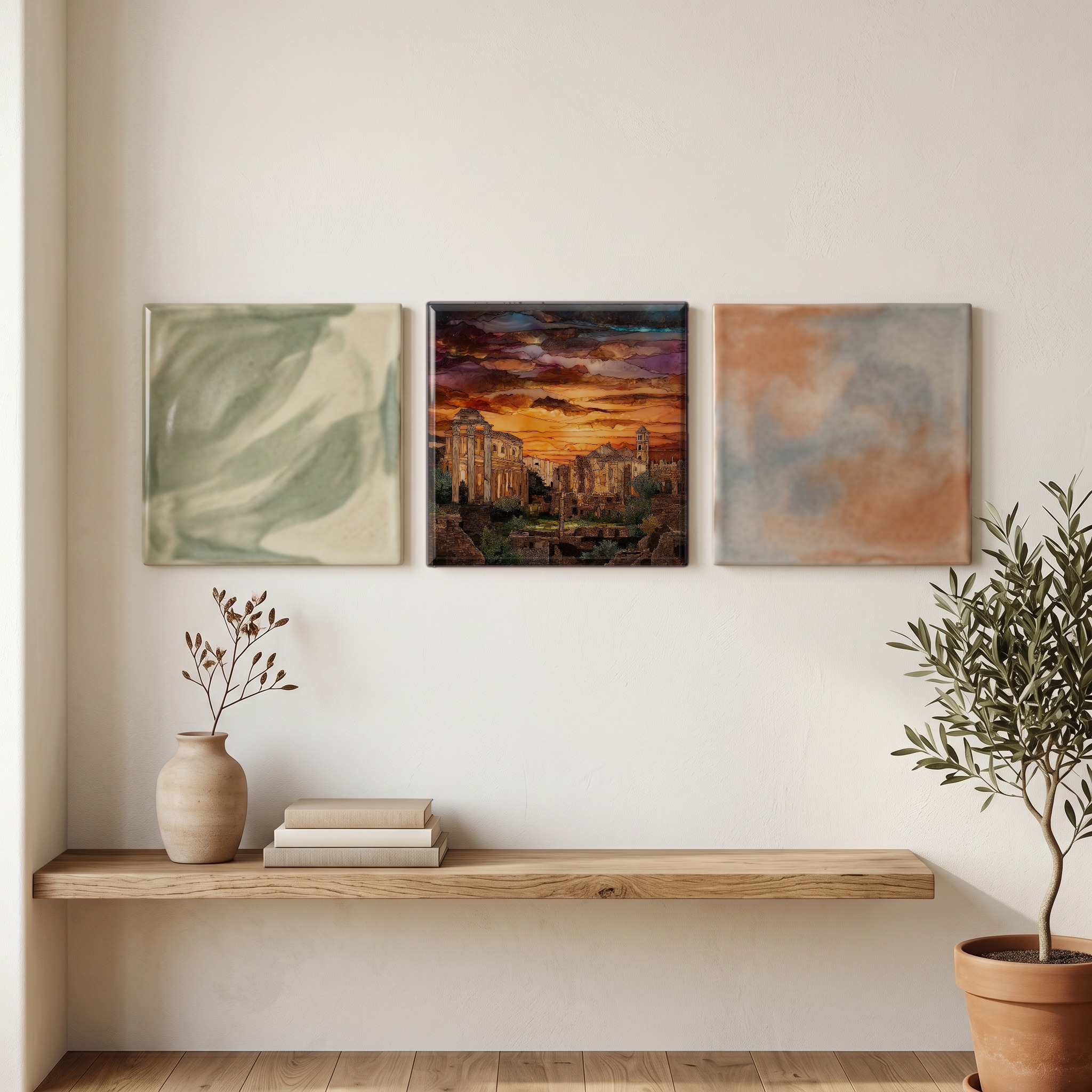
shown on ceramic, 12-inch tileItaly
above the Roman Forum, in the centre of Rome

Palatine Hill

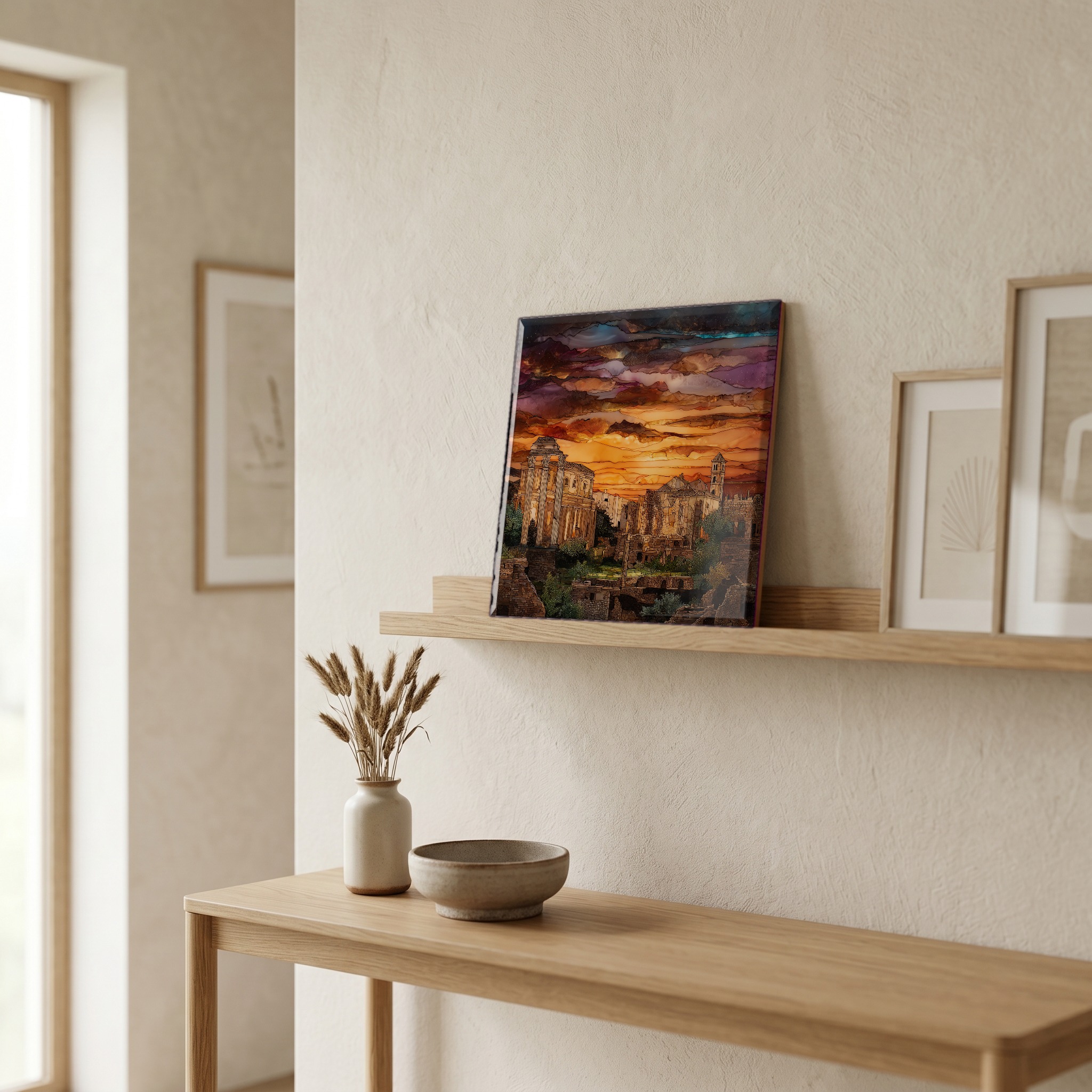
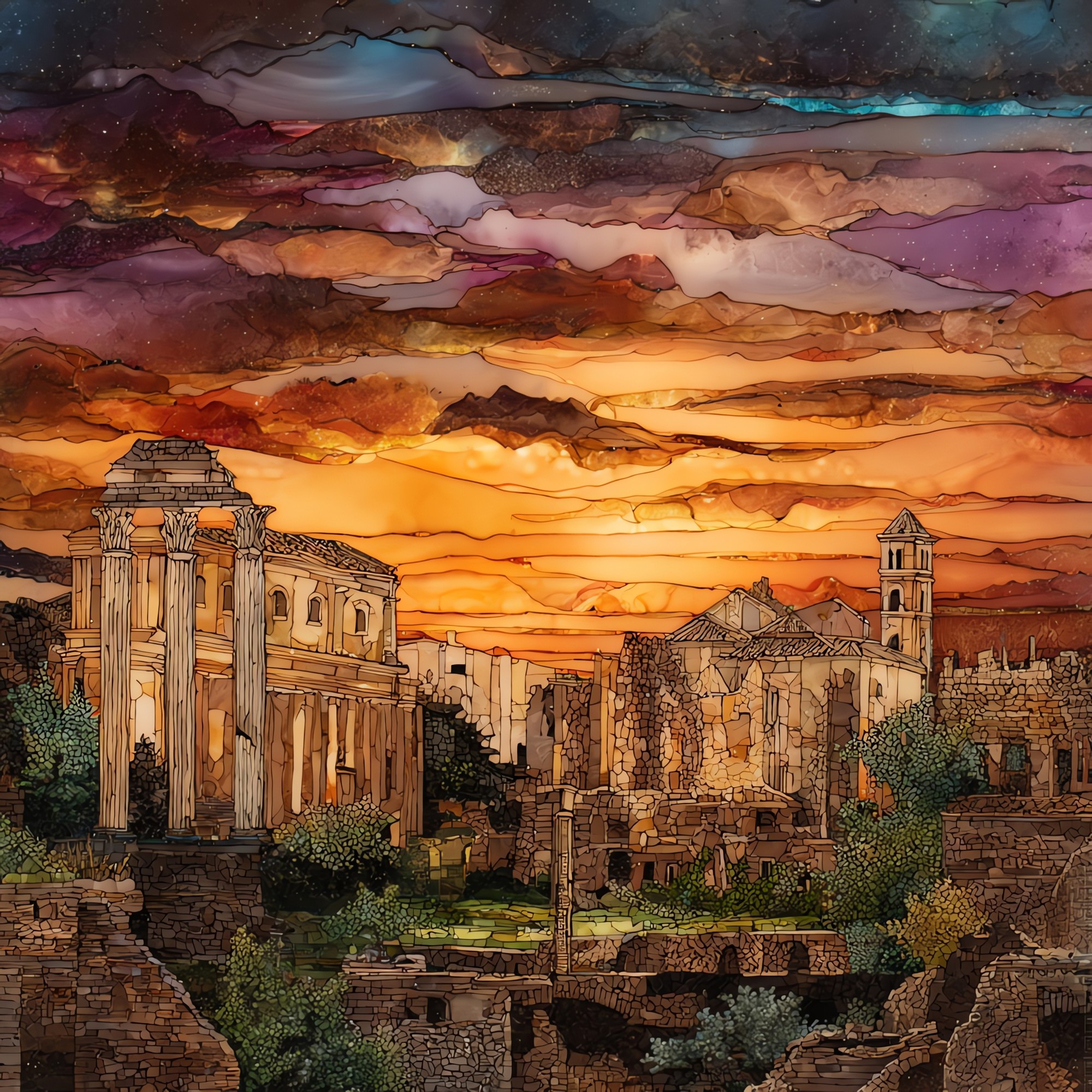
— the orange light on imperial brick.

Where it lives

Not only on a wall.

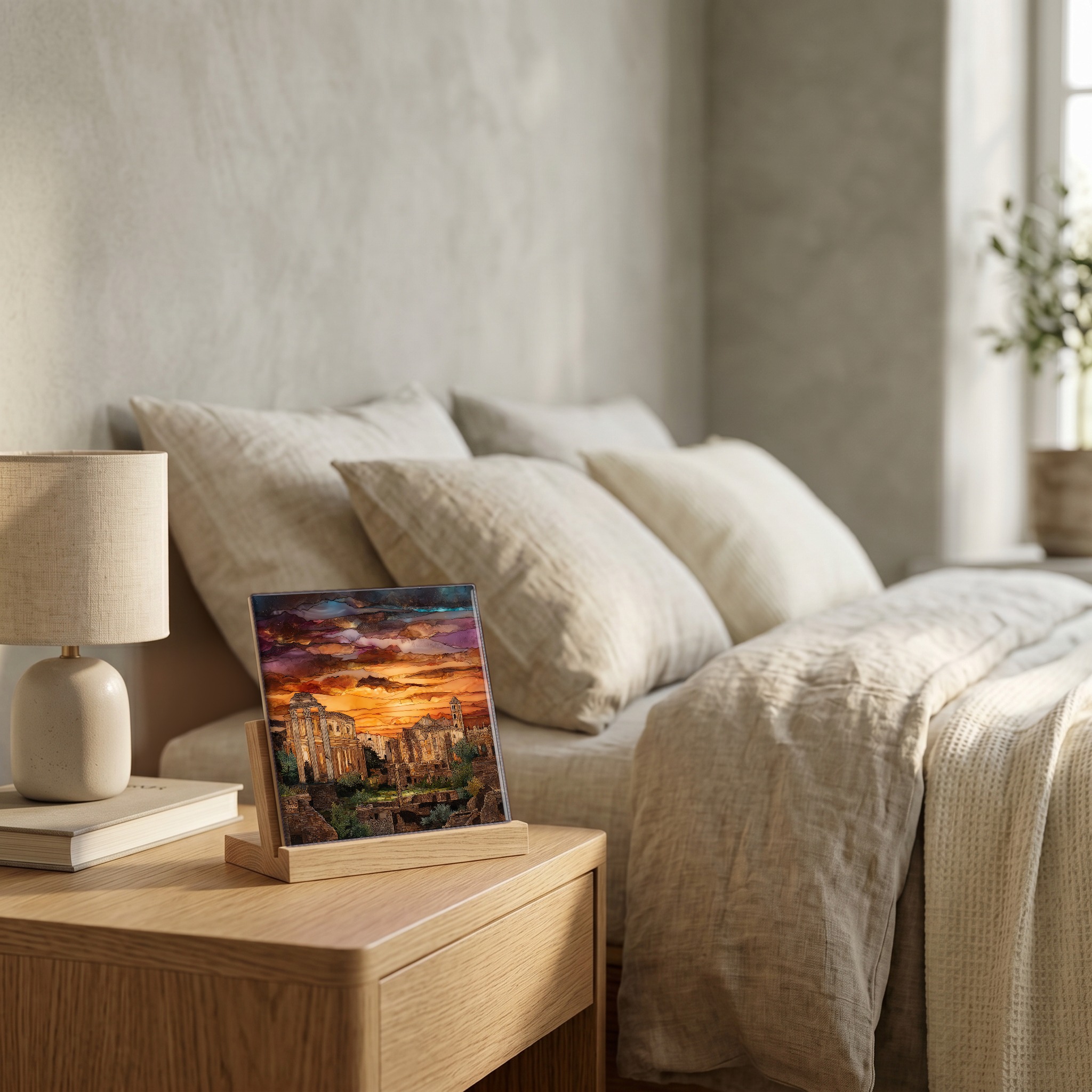
A small tile on the nightstand catching the morning. A larger one above the fire. Yours, wherever you spend the slow hours.
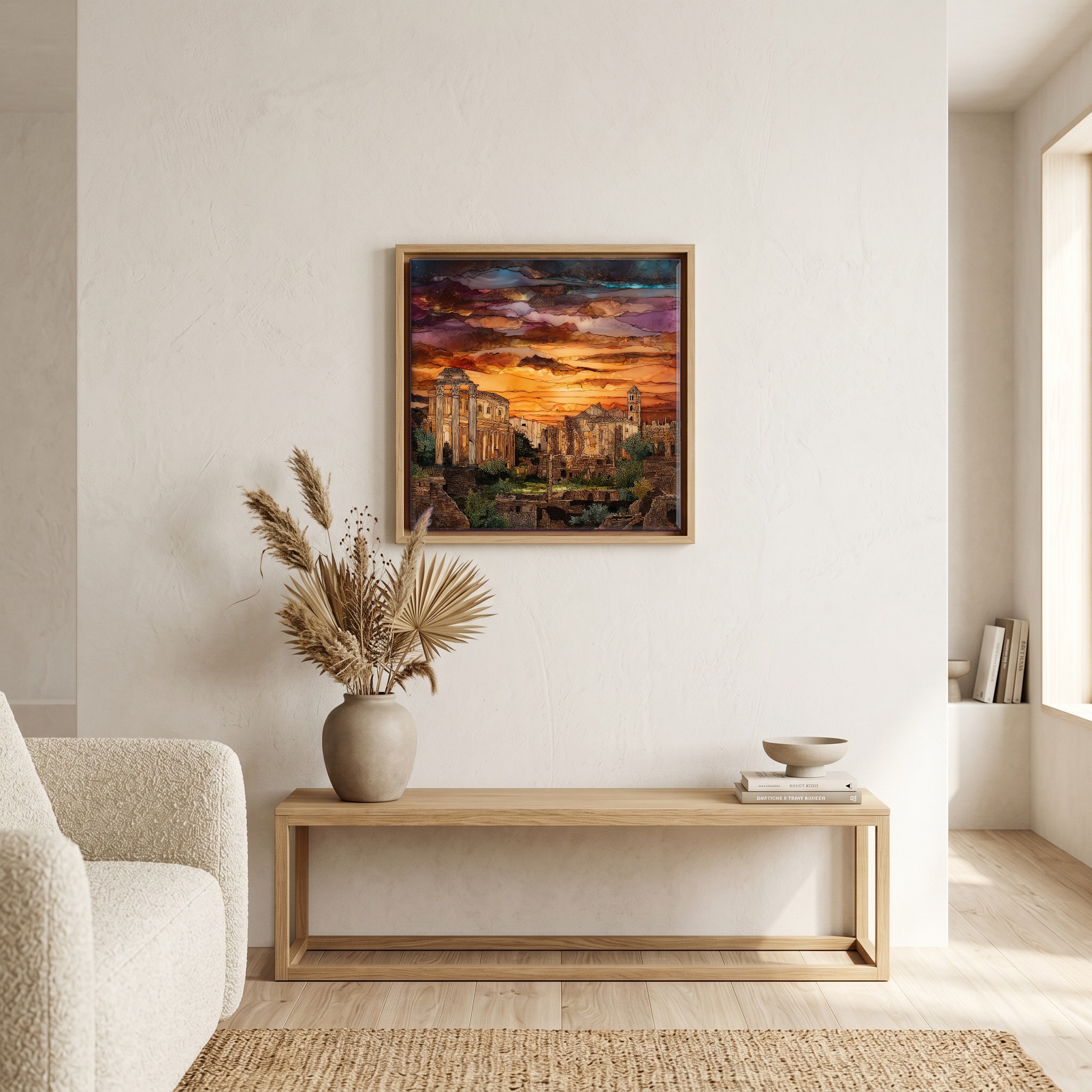
Above the bench, in a warm oak surround.
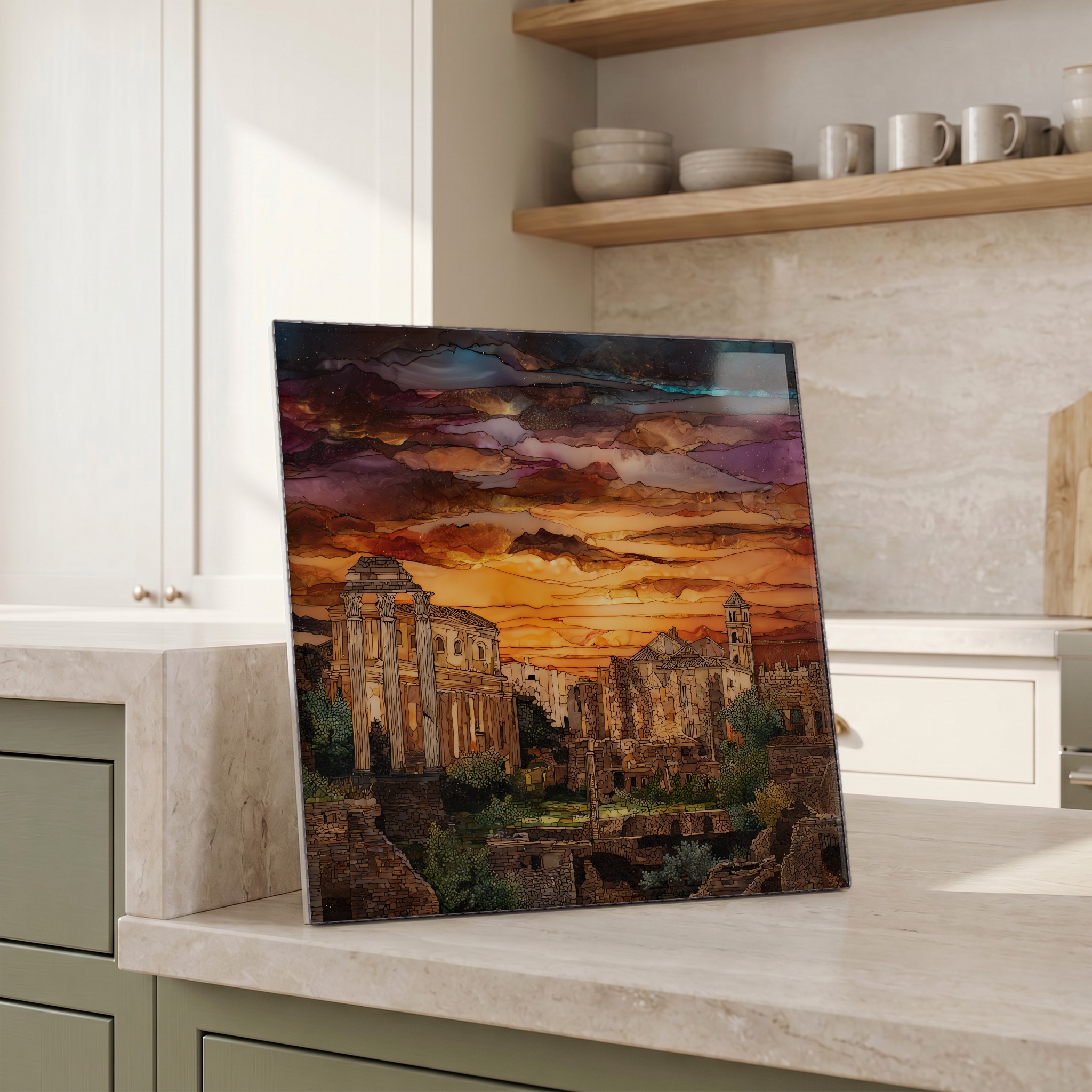
Beside the kettle, propped on the counter.
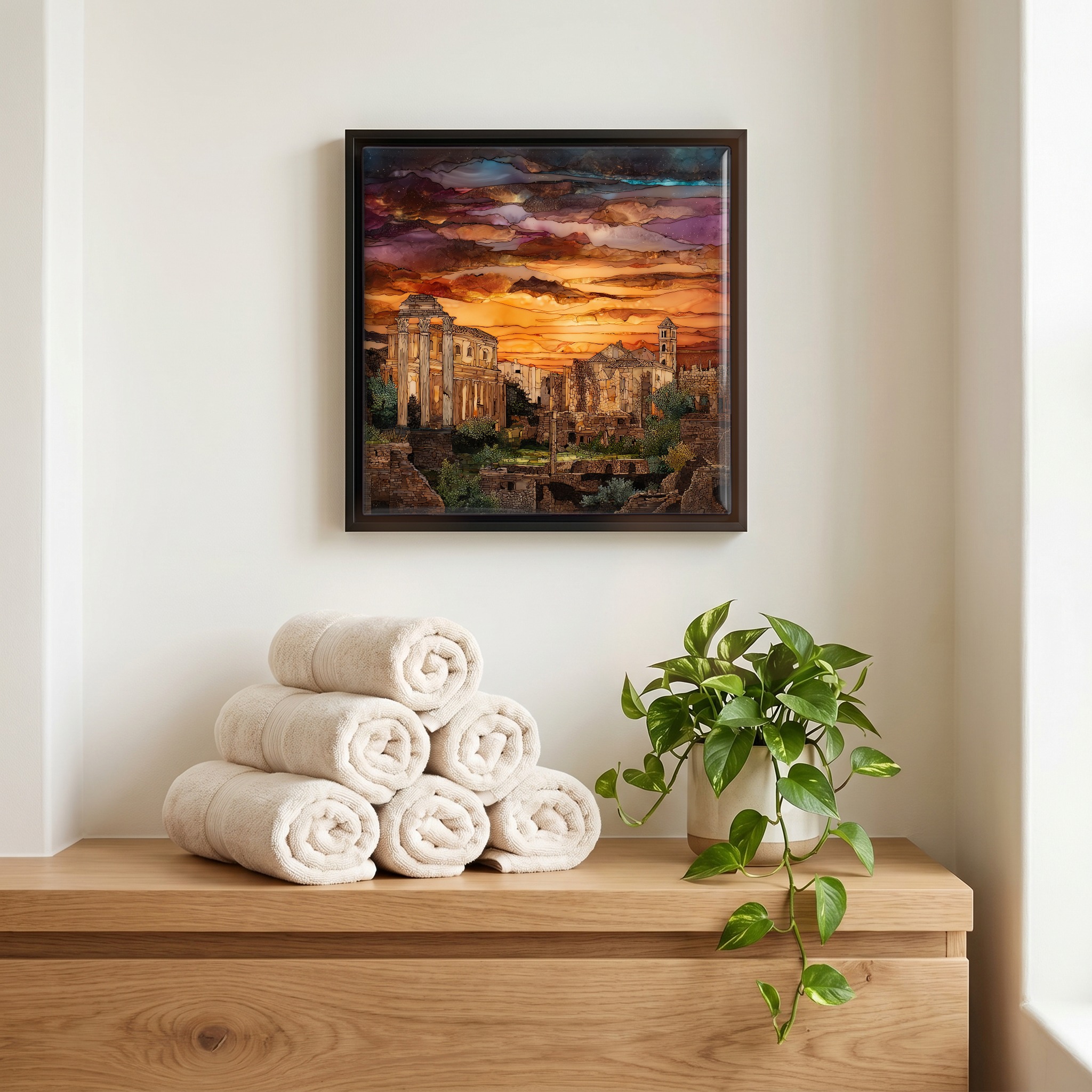
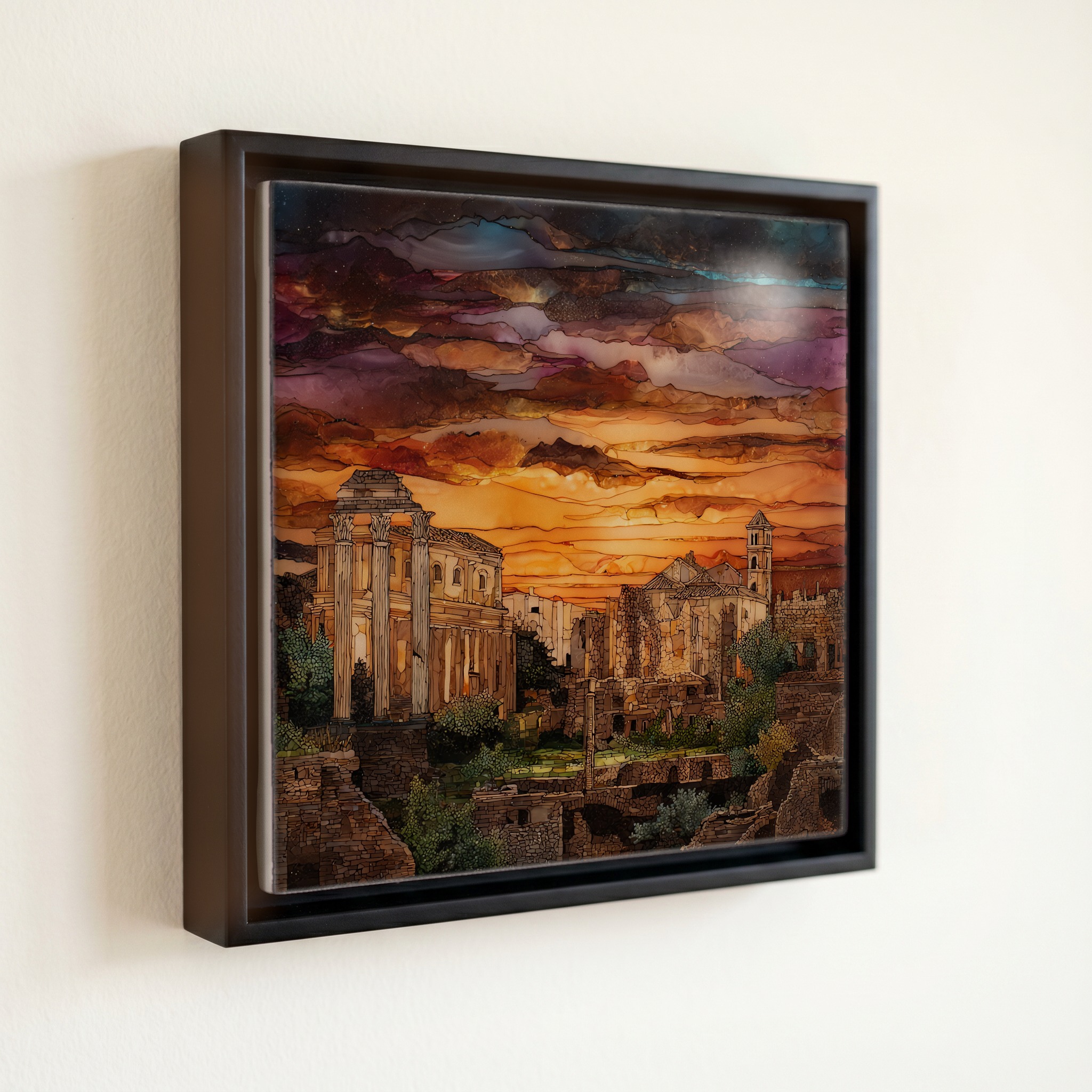
Above the linens, in a slim black surround.
On the nightstand, on a light oak stand.
On a picture ledge, where the light comes in.
a note from the studio

The hill the city was founded on, and the hill the emperors kept for themselves. Augustus lived here. Tiberius, Domitian, and Septimius Severus each added a palace to it. Today the brick cores and broken arches sit among umbrella pines and box hedges, with the Farnese Gardens overhead. The light on the ruins at sunset is the colour you see in old photographs of Rome.
from the studio
shown in a slim black floating frame · 6 × 6 in
— bring it home

Palatine Hill, on ceramic.

Each tile is finished by hand in our Knoxville studio. Artwork is slowly infused into the ceramic surface under high heat and pressure, and rests beneath a thin glossy finish. The colour lives in the surface, not on top of it.

What kind of piece?
One tile — square or rectangle.
How big?
the popular one — counter, shelf, nightstand
6 × 6 in · 15 cm · 1.6 lb
Surface finish
A clear glossy finish — the artwork reads as if under resin. Ideal for show-pieces and framed wall art.
How it sits
A hidden cleat — sits ¼″ proud of the wall.
$58
Hand-finished and shipped from our studio at the foot of the Smokies. On your wall in about ten days.
size
6 × 6 in
15 cm
weighs
1.6 lb
solid in the hand
surface
ceramic, hand-finished
art rests beneath a thin glossy finish
from
Knoxville, TN
our family studio, at the foot of the Smokies
— start a Coaster Set

Pick any four 4-inch tiles — National Parks you've been to, a Smokies set, the four seasons of one place. $ for a set of , cork-backed, ready to live on the table.
comes gift-ready
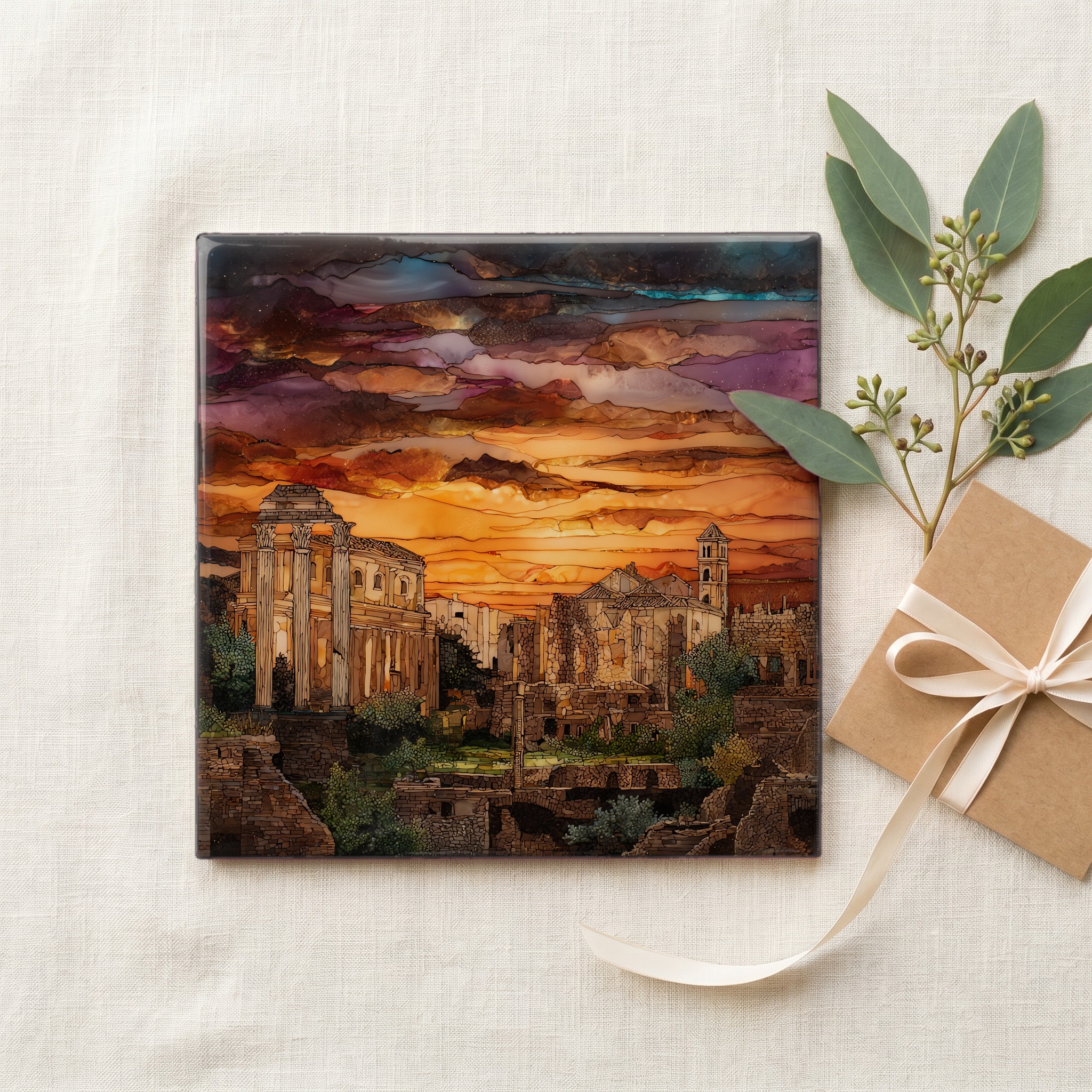
comes gift-ready

Each tile ships in a kraft box, tied with cream ribbon, with a handwritten note from the studio if you'd like to add one.
or build a grouping
or build a grouping

Three or five different vistas, hung together — a chapter of places you've been, or want to go.

about Palatine Hill

The place, in three passes.

A little of what's known, in case you fall down the rabbit hole — or want to go see it yourself.
the place

Palatine Hill rises about forty metres above the Roman Forum on its northern side and the Circus Maximus on its southern, set at the centre of the seven hills the ancient city was built across. The hill sits in the Rione Campitelli neighbourhood of Rome, in the Lazio region, and is part of the Parco archeologico del Colosseo, which manages the joint site with the Forum and the Colosseum. Iron Age postholes found in the southwest corner have been dated to the eighth century BC, the period Roman tradition assigns to the city's founding by Romulus. Visitors reach it from the Forum side along the Clivus Palatinus or from the Via di San Gregorio gate.

the stone

The hill became the imperial address of Rome from Augustus onward. The remains visible today belong mostly to four overlapping palaces: the House of Augustus and the House of Livia from the first century BC, the Domus Tiberiana along the northern edge, the Flavian palace built by Domitian around 92 AD, and the Severan additions that pushed the southern face out over the Circus Maximus. Above them sit the Farnese Gardens, laid out for Cardinal Alessandro Farnese in the 1550s on top of the buried Domus Tiberiana, considered one of the first formal botanical gardens in Europe. The Latin word for the hill, palatium, gave English the word palace.

the light

The Palatine catches the late afternoon light first, before the Forum below it does. Its southwest face looks out over the Circus Maximus and the Aventine, the direction the sun sets, and the brickwork of the imperial palaces holds a particular orange warmth that the umbrella pines above it deepen in silhouette. The archaeological park closes about one hour before sunset most of the year, which means the best light arrives near closing time. Stone pines (Pinus pinea), the species that still defines the Roman skyline, have framed the ruins for generations.

where
Italy · Rome, Lazio
within
Parco archeologico del Colosseo
position
41.8897° N · 12.4869° E
the neighborhood

What's nearby.

A handful of named places within an hour's walk or short drive. Some we've already painted; some we will.
at the lake
Roman Forum
archaeological site
0.3 km NE
Colosseum
Roman amphitheatre
0.2 km S
Circus Maximus
Roman stadium
0.4 km E
Arch of Constantine
Roman triumphal arch
0.5 km NW
Capitoline Hill
Roman hill
0.6 km SW
Aventine Hill
Roman hill
1 km NW
Pantheon
Roman temple
1.3 km N
Trevi Fountain
Baroque fountain
N
Palatine Hill
Roman Forum
Colosseum
Circus Maximus
Arch of Constantine
Capitoline Hill
Aventine Hill
Pantheon
common questions

What people ask.

A few questions we get about Palatine Hill — and about bringing the piece home.
about the place

Palatine Hill is the centermost of the seven hills of Rome, rising about forty metres above the Roman Forum on its north and the Circus Maximus on its south. It sits in the historic centre of the city, in the Lazio region, and is part of the Parco archeologico del Colosseo.

The hill's Latin name, Mons Palatinus, is the source of the English word palace. From Augustus onward the emperors built their official residences on the hill, and the Latin palatium came to mean any imperial dwelling. The word reached English through medieval French.

Roman tradition places the founding of the city by Romulus on the Palatine in 753 BC. Archaeologists have found Iron Age huts on the southwest corner of the hill dated to roughly that century, which is the basis for the claim that the Palatine is the city's oldest inhabited ground.

The visible remains are mostly imperial palaces: the House of Augustus and the House of Livia from the late first century BC, the Domus Tiberiana along the northern edge, Domitian's Flavian palace from around 92 AD, and the Severan extension over the Circus Maximus. The Stadium of Domitian sits between them.

The Orti Farnesiani are a Renaissance garden laid out in the 1550s for Cardinal Alessandro Farnese on top of the buried Domus Tiberiana. They are considered one of the first formal botanical gardens in Europe and still cover the northern crown of the hill in box hedges and stone pines.

Entry is by the standard archaeological park ticket, shared with the Roman Forum and the Colosseum. Most visitors enter through the Via di San Gregorio gate or up from the Forum along the Clivus Palatinus. The site is open daily, closing about an hour before sunset.

about the piece in your home

It's been a meaningful gift for many of our customers with ties to the city. The Palatine is the Rome behind the Rome, the imperial ground above the Forum, where the word palace comes from. A Coaster or a Small with a handwritten note from the studio travels well.

The amber and umber tones, the stained-glass line work, and the Roman pine silhouettes sit well in Old-World, Italianate, and Library-modern rooms. The palette also holds in a warm Maximalist scheme. Read it as a quiet anchor on a wall, not a feature piece.

Heritage-modern has been a steady direction in interior design since 2024: classical motifs reread through a contemporary palette, paired with linen and limewash. Pieces with a clear historical reference, like the Palatine, Versailles, or the Pantheon, anchor the look without leaning into pastiche.

The Large reads from across a room and sits well above a console table. Above a sofa, a 4-tile Mural carries the wall in a sitting room; a 9-tile Mural takes a dining room or a long entry. The Triptych is the option for a vertical column.

Yes, in the Dura Satin or Matte finish. Both are scratch-resistant and built for vertical installation in steam or splash environments such as backsplashes, shower surrounds, and bath walls. The Glossy finish is reserved for framed wall pieces and dry rooms.

A soft microfibre cloth and warm water is the whole maintenance schedule. The colour is slowly infused into the ceramic surface under high heat and pressure and lives beneath a thin glossy finish, so no sealing, polishing, or special cleaner is needed.

Yes. Every WenderVista painting is original to the studio, made in our distinctive stained-glass alcohol-ink language and hand-finished in-house in Knoxville, Tennessee. We do not license images from third parties. The Palatine tile belongs to the studio's catalogue of places.

if this one stayed with you

A few you might also love.

Hand-picked by the eye that found Sorapis. Same air, same kind of quiet.
— a collection

The Italian Dolomites,
painted slow.

The valleys between Cortina and Val Gardena, the tarns you walk an hour to see, the towers that turn the colour of a banked fire just before dark. Wander the collection by valley, by season, or follow the path Reid walked.

Tre Cime
Braies
Misurina
Sorapis
Cinque Torri
Sassolungo
Marmolada