Wender·Vista
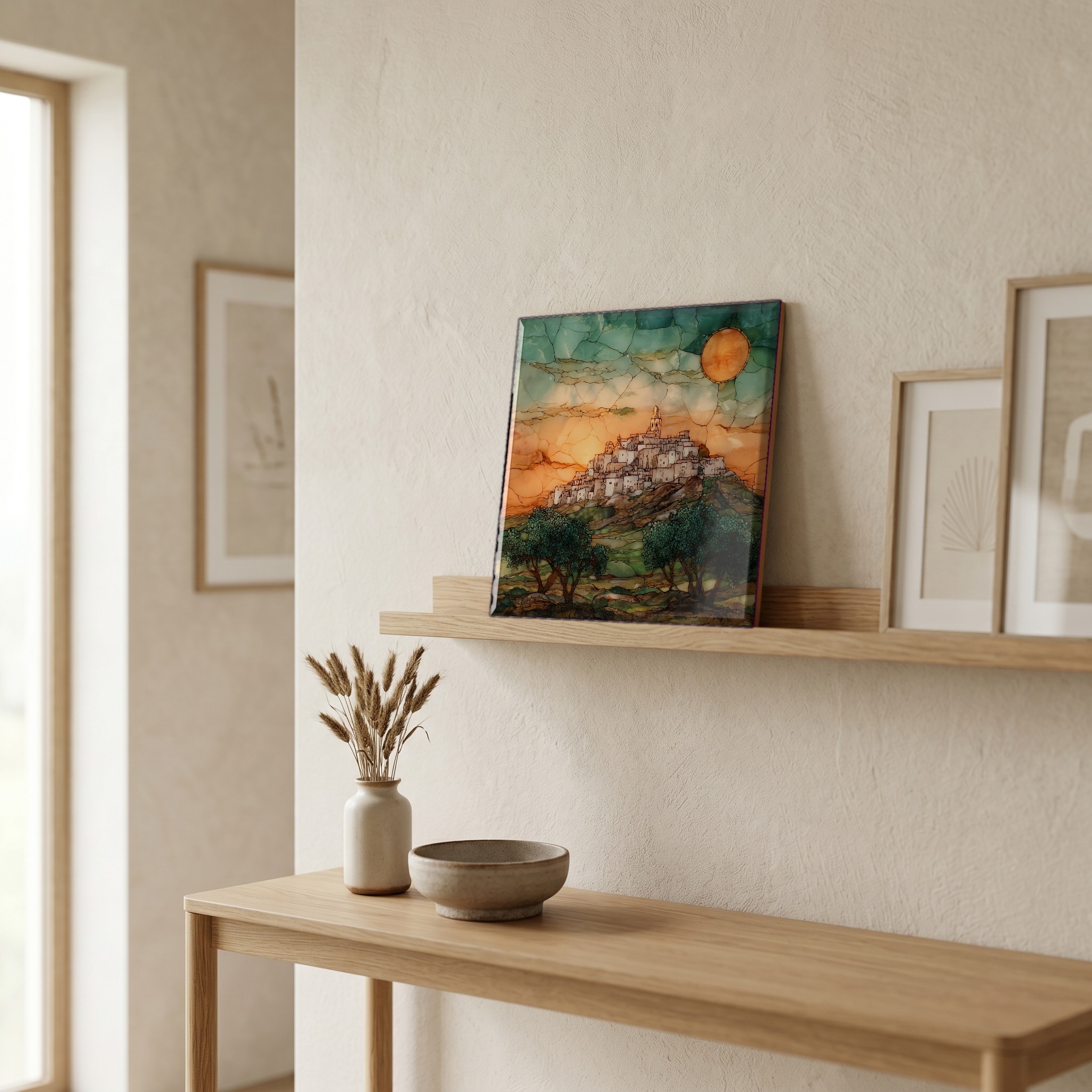
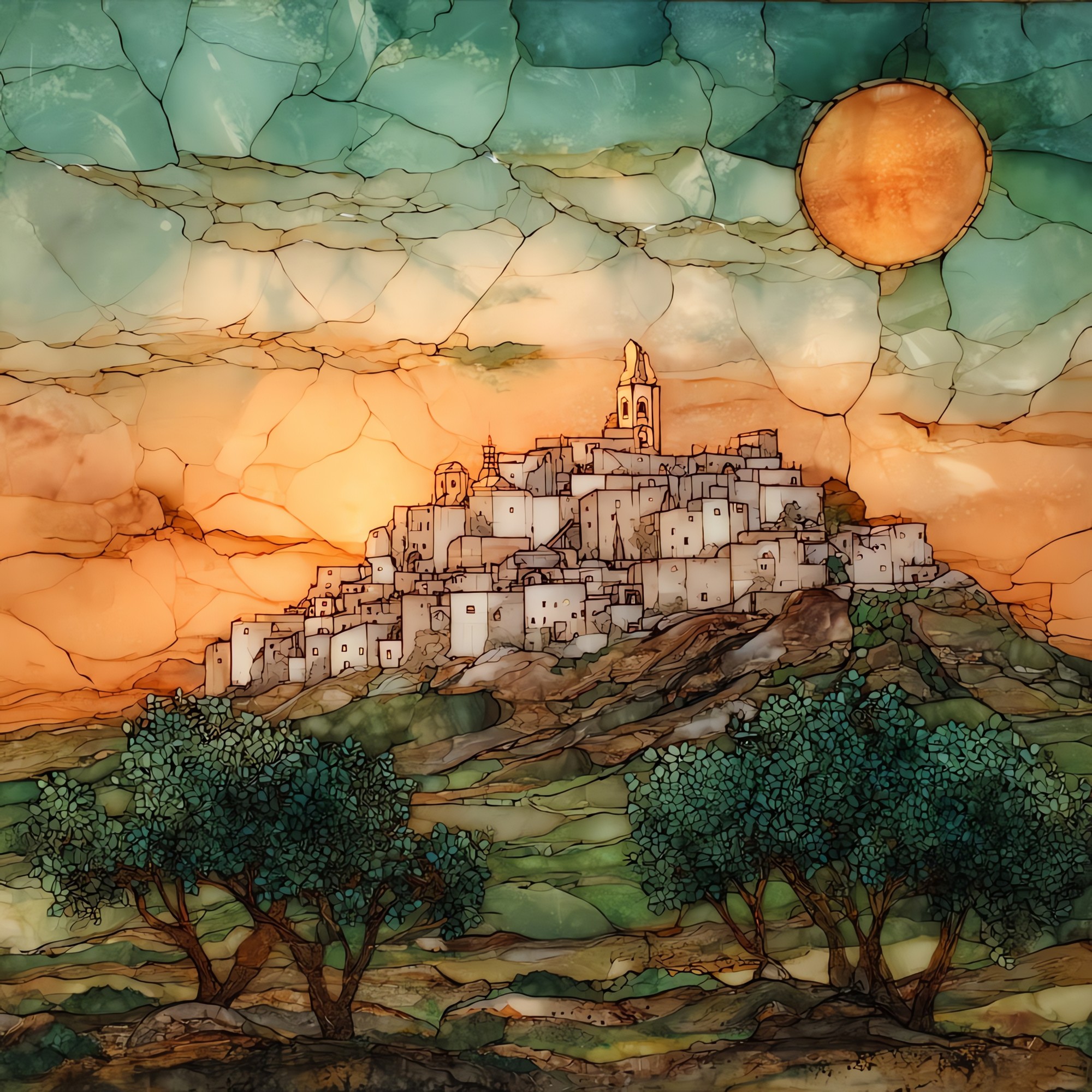
Ostuni
shown on ceramic, 12-inch tileItaly
above the olive plain in Puglia, the heel of Italy

Ostuni

— a white town above an old sea of olives.

Where it lives

Not only on a wall.

A small tile on the nightstand catching the morning. A larger one above the fire. Yours, wherever you spend the slow hours.
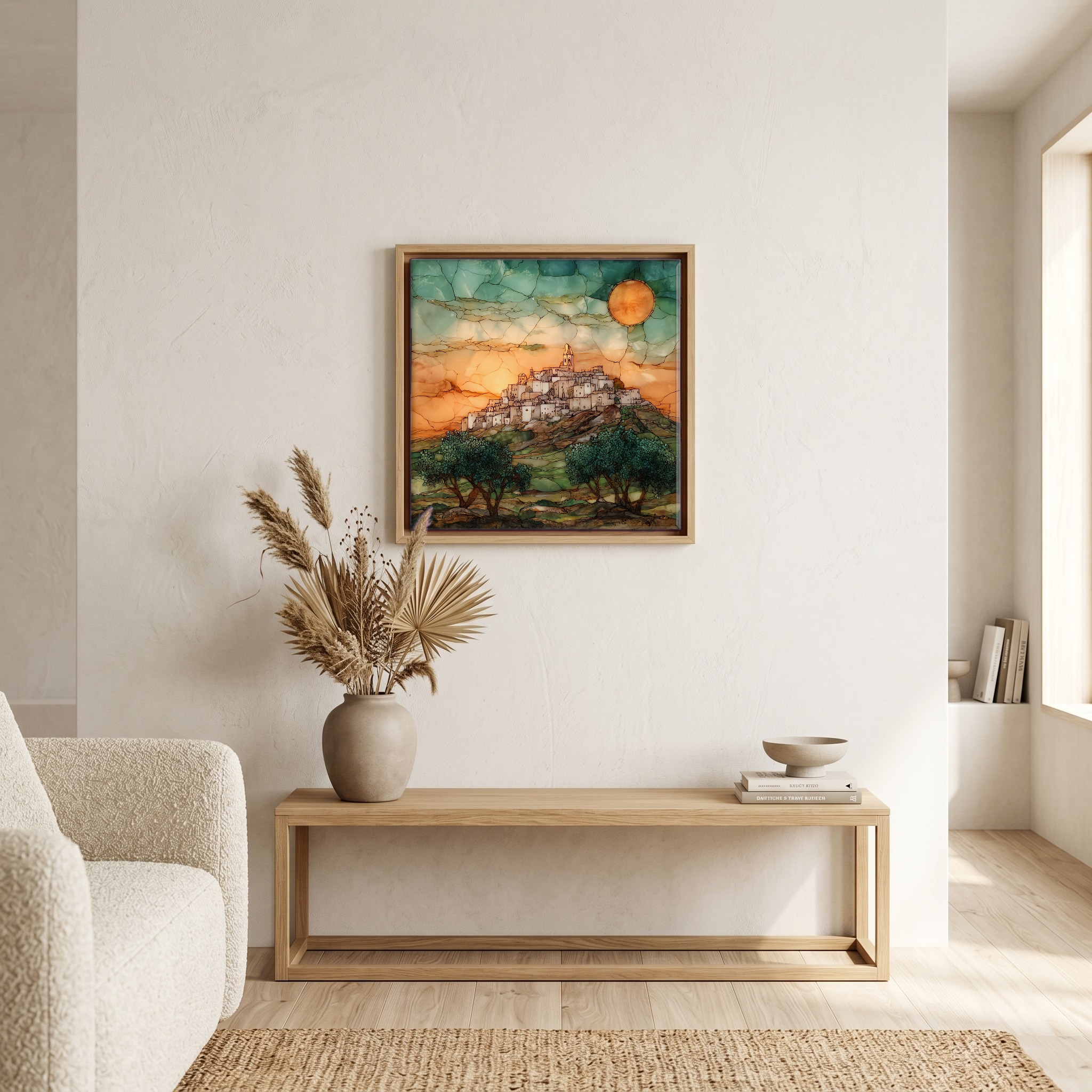
Above the bench, in a warm oak surround.
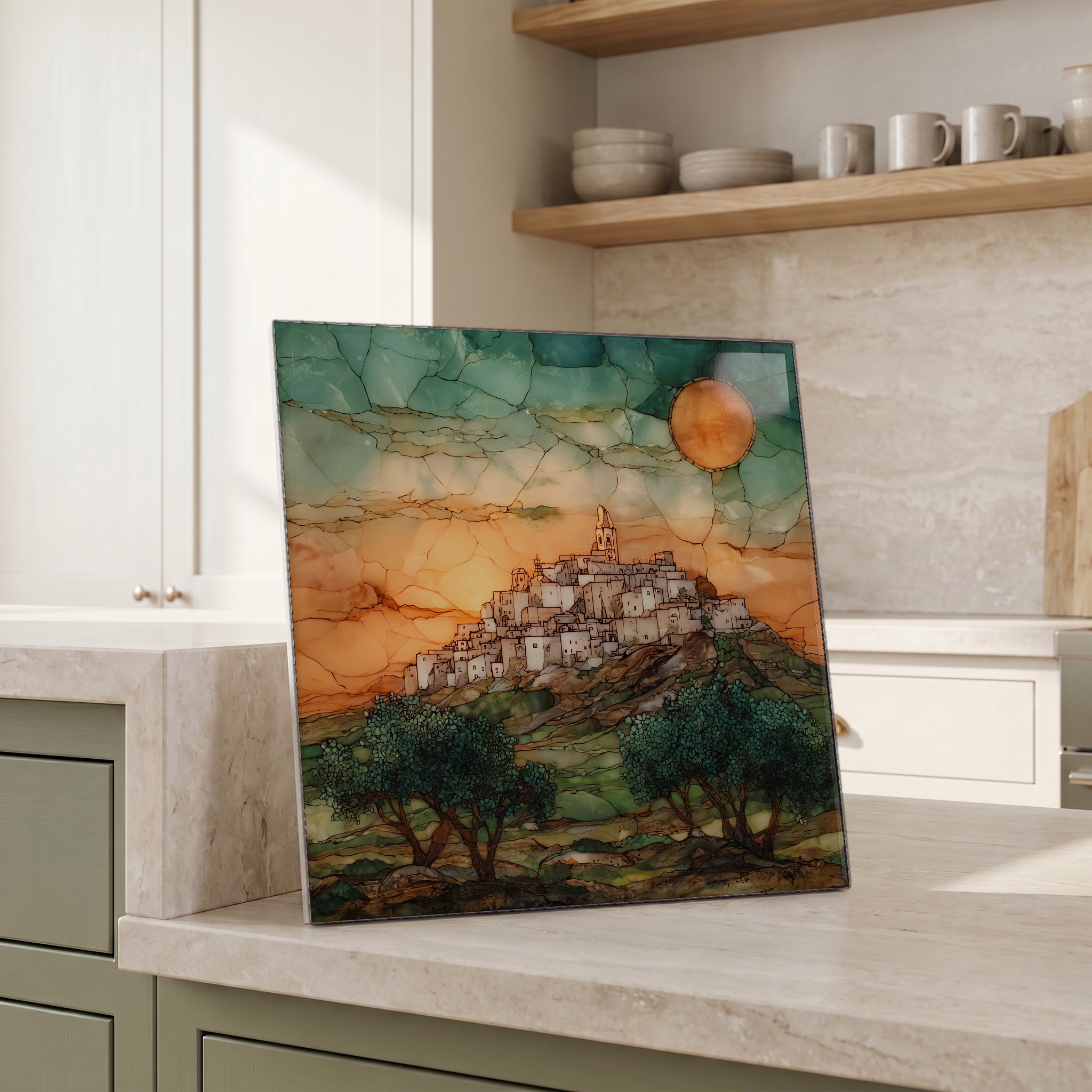
Beside the kettle, propped on the counter.
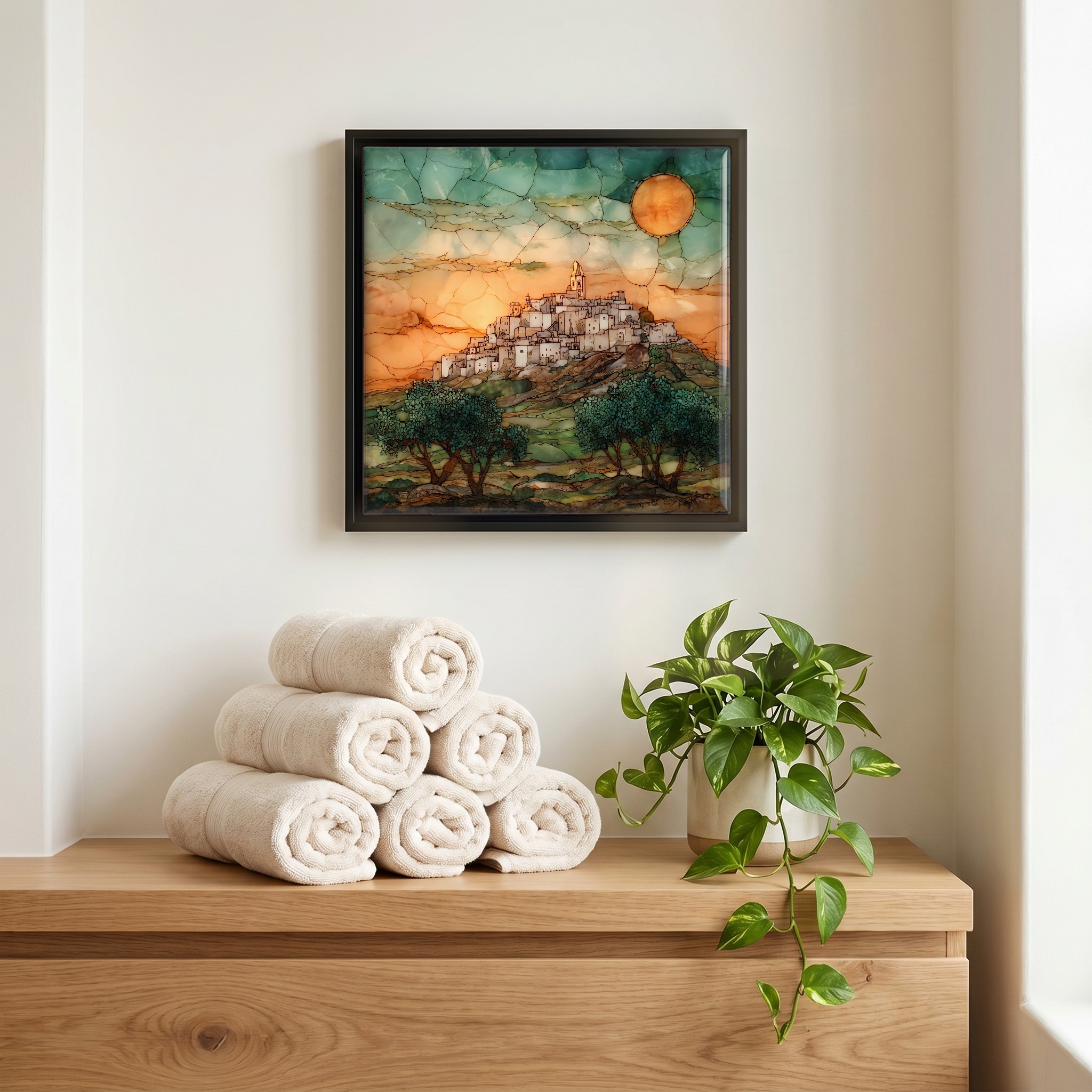
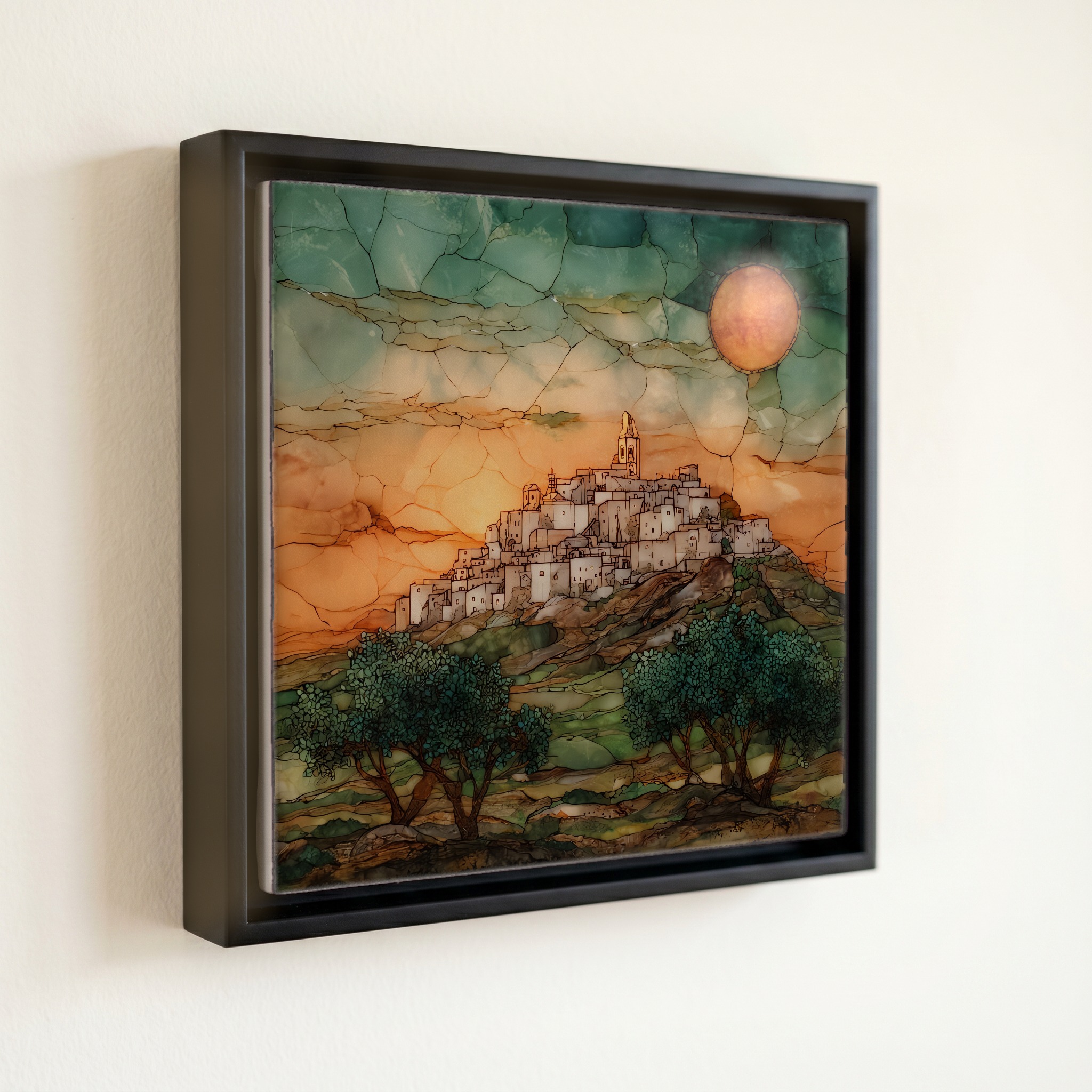
Above the linens, in a slim black surround.
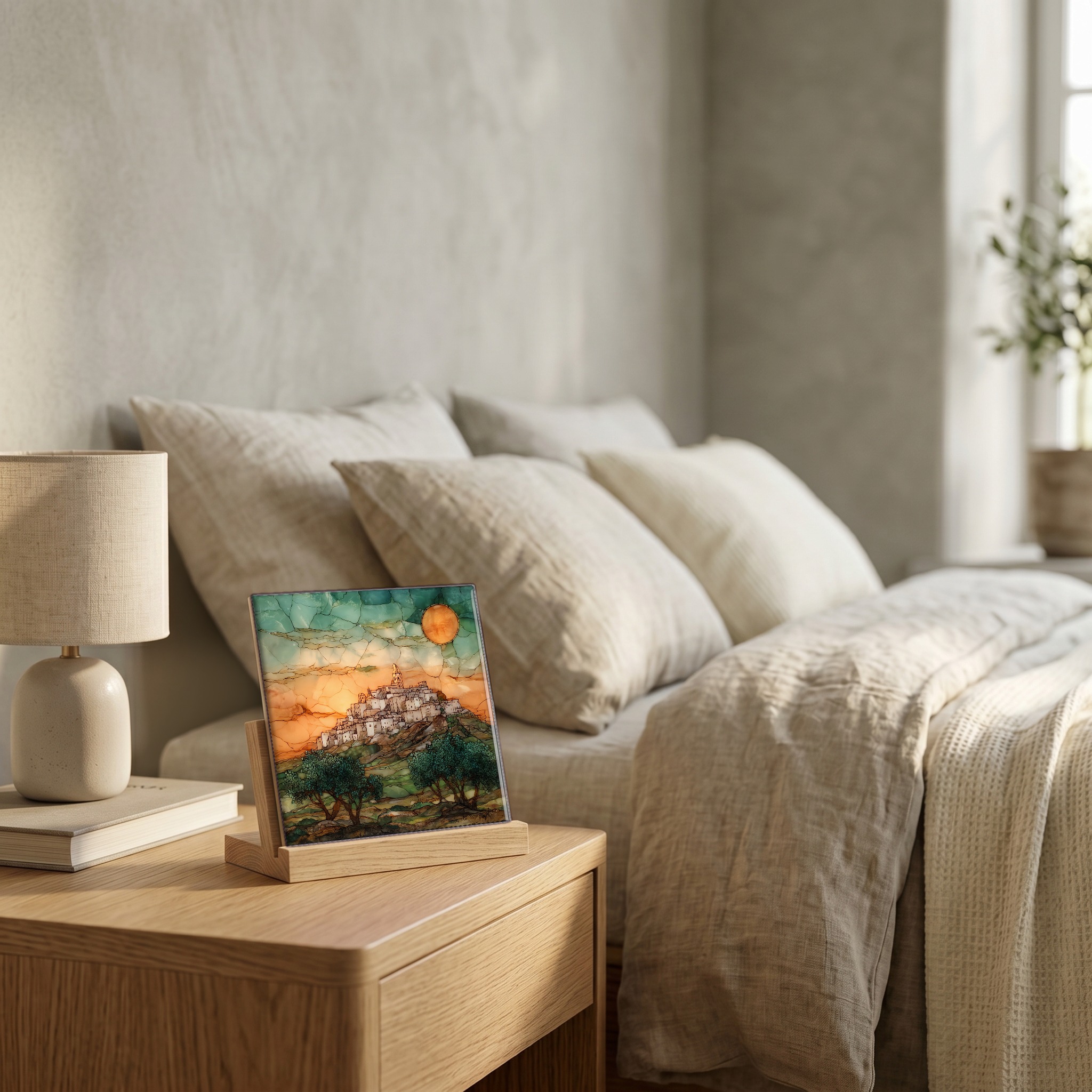
On the nightstand, on a light oak stand.
On a picture ledge, where the light comes in.
a note from the studio

The hill town the locals call La Città Bianca, the white city, above the Itria Valley, eight kilometres from the Adriatic. The lime that gives the old centre its colour was first brushed on for plague control in the seventeenth century; it stayed because of how the southern sun bounces back off it. The olive groves below run for miles, some trees more than a thousand years old. Mornings here are slow. People sit out on stone steps with espresso, and the cathedral rose window above the town catches the early light.
from the studio
shown in a slim black floating frame · 6 × 6 in
— bring it home

Ostuni, on ceramic.

Each tile is finished by hand in our Knoxville studio. Artwork is slowly infused into the ceramic surface under high heat and pressure, and rests beneath a thin glossy finish. The colour lives in the surface, not on top of it.

What kind of piece?
One tile — square or rectangle.
How big?
the popular one — counter, shelf, nightstand
6 × 6 in · 15 cm · 1.6 lb
Surface finish
A clear glossy finish — the artwork reads as if under resin. Ideal for show-pieces and framed wall art.
How it sits
A hidden cleat — sits ¼″ proud of the wall.
$58
Hand-finished and shipped from our studio at the foot of the Smokies. On your wall in about ten days.
size
6 × 6 in
15 cm
weighs
1.6 lb
solid in the hand
surface
ceramic, hand-finished
art rests beneath a thin glossy finish
from
Knoxville, TN
our family studio, at the foot of the Smokies
— start a Coaster Set

Pick any four 4-inch tiles — National Parks you've been to, a Smokies set, the four seasons of one place. $ for a set of , cork-backed, ready to live on the table.
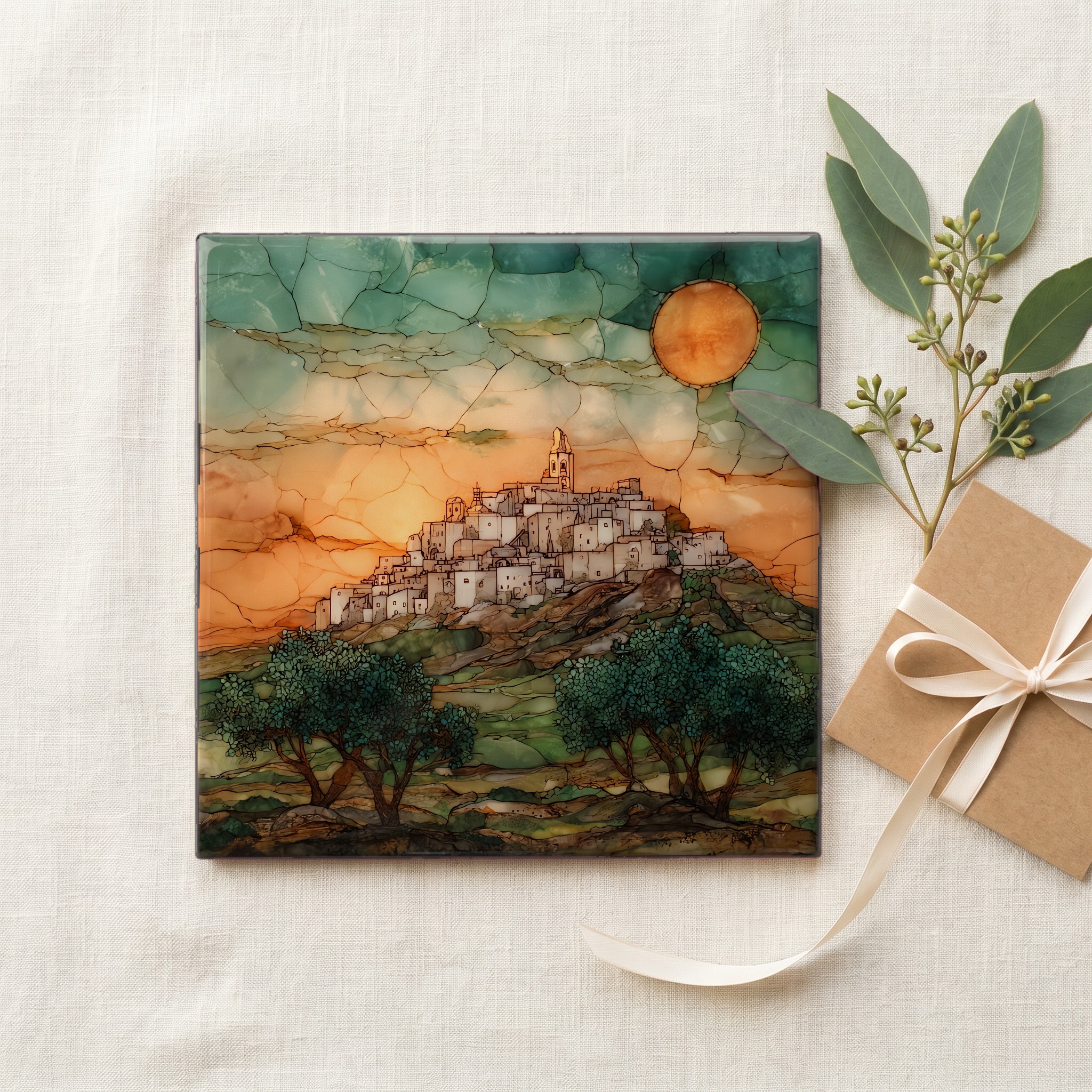
comes gift-ready
comes gift-ready

Each tile ships in a kraft box, tied with cream ribbon, with a handwritten note from the studio if you'd like to add one.
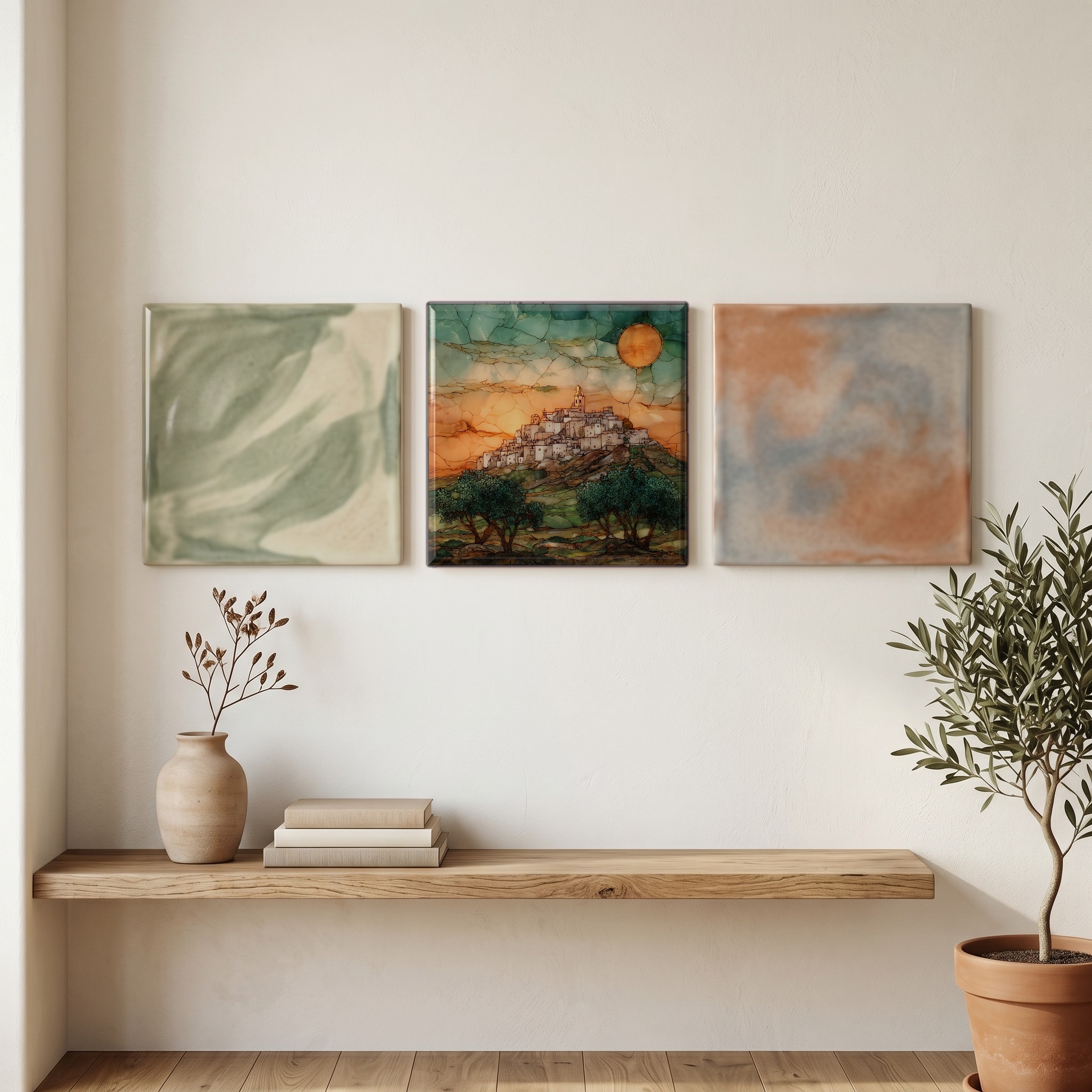
or build a grouping
or build a grouping

Three or five different vistas, hung together — a chapter of places you've been, or want to go.

about Ostuni

The place, in three passes.

A little of what's known, in case you fall down the rabbit hole — or want to go see it yourself.
the place

Ostuni rises on three low hills above the Itria Valley in the province of Brindisi, in Puglia, southern Italy. The historic core sits at about 218 metres, roughly eight kilometres inland from the Adriatic coast, ringed by stretches of fifteenth-century Aragonese wall. The town's population is around 31,000, and in summer it grows with visitors heading to the beaches between Torre Pozzelle and Rosa Marina. The medieval old town climbs to the Cathedral of Santa Maria Assunta, a late-fifteenth-century church with a Gothic-Romanesque facade and one of the largest rose windows in southern Italy. The nearest airport is Brindisi-Casale, about 35 km south.

the stone

The white lime coating that earned Ostuni the name La Città Bianca was reinforced as a sanitary measure during the great plague that swept southern Italy in 1656, killing tens of thousands across Apulia. Lime is mildly antibacterial, and its white surface reflects the August sun back off the walls, keeping the stone interiors below cool. The practice continued because both reasons held. The historic centre is still kept white by residents and the comune, with refresh coats applied through the year. The dense network of vicoli (narrow alleys) and stone staircases climbs the hill to the Aragonese walls and the cathedral square at the summit.

the air

The plain below Ostuni is the Piana degli Ulivi Monumentali, a regionally protected landscape of ancient olive groves running between Carovigno and Fasano, where some trees are estimated at over two thousand years old. The air carries olive wood, wild fennel, and bay. Puglia produces around 40 per cent of Italy's olive oil, and the surrounding mills press the early-October harvest from these trees, many of them dating to Roman cultivation. From the cathedral terrace at the top of the old town, the grove extends uninterrupted to the Adriatic. By late afternoon the light goes amber and the white walls take it back.

where
Italy · Brindisi, Puglia
elevation
218 m · 715 ft
position
40.7297° N · 17.5786° E
the neighborhood

What's nearby.

A handful of named places within an hour's walk or short drive. Some we've already painted; some we will.
10 km W
Cisternino
white hill town
10 km SE
Torre Guaceto
coastal nature reserve
13 km S
Carovigno
town and Aragonese castle
16 km W
Locorotondo
white hill town
16 km SW
Alberobello
UNESCO trulli town
N
Ostuni
Cisternino
Torre Guaceto
Carovigno
Locorotondo
Alberobello
common questions

What people ask.

A few questions we get about Ostuni — and about bringing the piece home.
about the place

Ostuni is called La Città Bianca because the houses of its old town are painted white with lime. The practice began as a sanitary measure during the seventeenth-century plague and continued for the heat: lime is antibacterial and reflects the southern sun off the walls.

Ostuni sits on three hills in the province of Brindisi, in Puglia (Apulia), southern Italy. The historic centre is about 218 metres above sea level and roughly eight kilometres inland from the Adriatic coast. The nearest major airport is Brindisi-Casale, about 35 km south.

The plain between Ostuni and the coast is part of the Piana degli Ulivi Monumentali, a regionally protected landscape where some olive trees are estimated at over two thousand years old. Many were planted in the Roman era and are still in commercial production for oil.

Spring (April-May) and early autumn (September-October) are mildest, with daytime temperatures around 18-25°C and the olive harvest in October. July and August get hot, often above 32°C, and the old town fills with visitors. Winters are mild but quiet, with many small shops closed.

The fifteenth-century Cathedral of Santa Maria Assunta, with one of the largest rose windows in southern Italy, sits at the top of the hill. Around it run narrow vicoli, stone staircases, the Aragonese walls, and small piazzas. From the cathedral terrace, the olive plain extends to the Adriatic.

Yes. Alberobello, the UNESCO-listed town of trulli, is about 16 km southwest of Ostuni in the Itria Valley. Other nearby hill towns include Cisternino (10 km west) and Locorotondo (16 km west). Carovigno and the Torre Guaceto nature reserve sit about 10-13 km south toward the coast.

about the piece in your home

It has been a meaningful gift for our customers with roots in southern Italy. The white silhouette of Ostuni above the olive plain is one of the most recognisable images of Puglia, and the tile reads as both place and home. A Coaster or Small with a handwritten note from the studio carries well.

The artwork's colour palette of deep blues, warm whites, and the jewel tones of stained glass sits naturally in Mediterranean-modern, coastal-warm, and Italian farmhouse interiors. It also reads well in jewel-tone maximalist rooms where those colours echo a richer scheme on the surrounding walls.

Yes. Mediterranean-modern has held in interior design through 2025-2026, with a focus on warm whites, blue-glazed ceramics, and natural stone. The Ostuni tile sits as a wall anchor in that palette: a small island of recognisable place inside a room reaching for warmth, light, and the southern coast.

For a sofa, the Large reads at proper scale; above a console or in a long hallway, a 4-tile Mural or 9-tile Mural carries the wall. The Medium suits a kitchen wall or a stairwell; the Small and Keepsake fit shelves, mantles, and nightstands without crowding.

Yes. Choose the Dura Satin finish for a backsplash, shower wall, or any vertical surface where you want scratch resistance with a soft sheen. The Matte finish suits the same uses with no shine. The Glossy finish is for framed wall-art use, not for splash zones.

A microfibre cloth with water keeps it clean; for kitchen splatter, a drop of mild soap is fine. The colour is slowly infused into the ceramic surface beneath a thin glossy or satin finish, so it does not lift with normal cleaning. Avoid abrasive scrubbers and bleach.

Yes. Every WenderVista tile is original work by Reid Wender, hand-finished at our Knoxville studio at the foot of the Smoky Mountains. We do not licence images; the Ostuni piece exists only as a WenderVista tile.

if this one stayed with you

A few you might also love.

Hand-picked by the eye that found Sorapis. Same air, same kind of quiet.
— a collection

The Italian Dolomites,
painted slow.

The valleys between Cortina and Val Gardena, the tarns you walk an hour to see, the towers that turn the colour of a banked fire just before dark. Wander the collection by valley, by season, or follow the path Reid walked.

Tre Cime
Braies
Misurina
Sorapis
Cinque Torri
Sassolungo
Marmolada