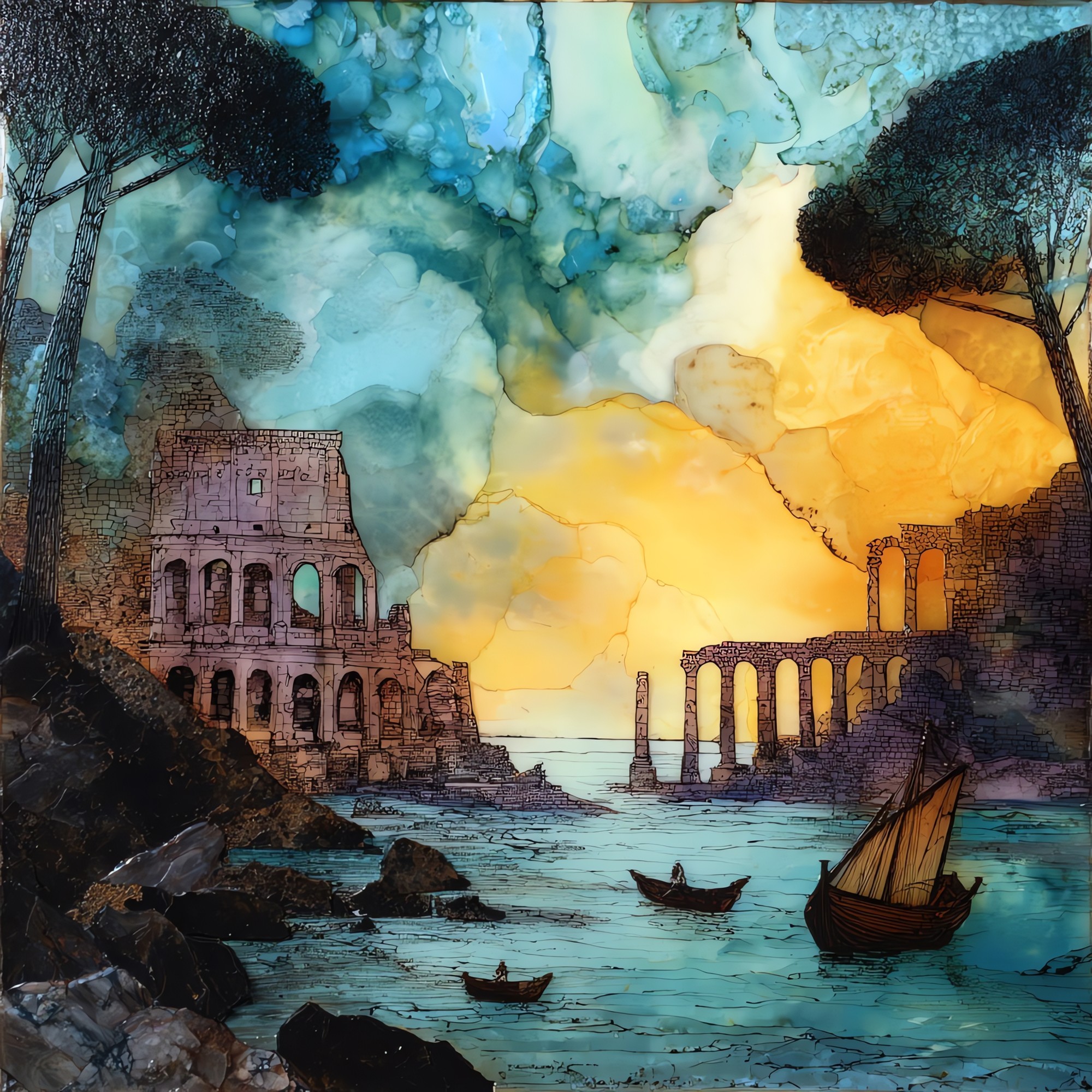
Ostia Antica
— — the harbour the river left behind.
Not only on a wall.
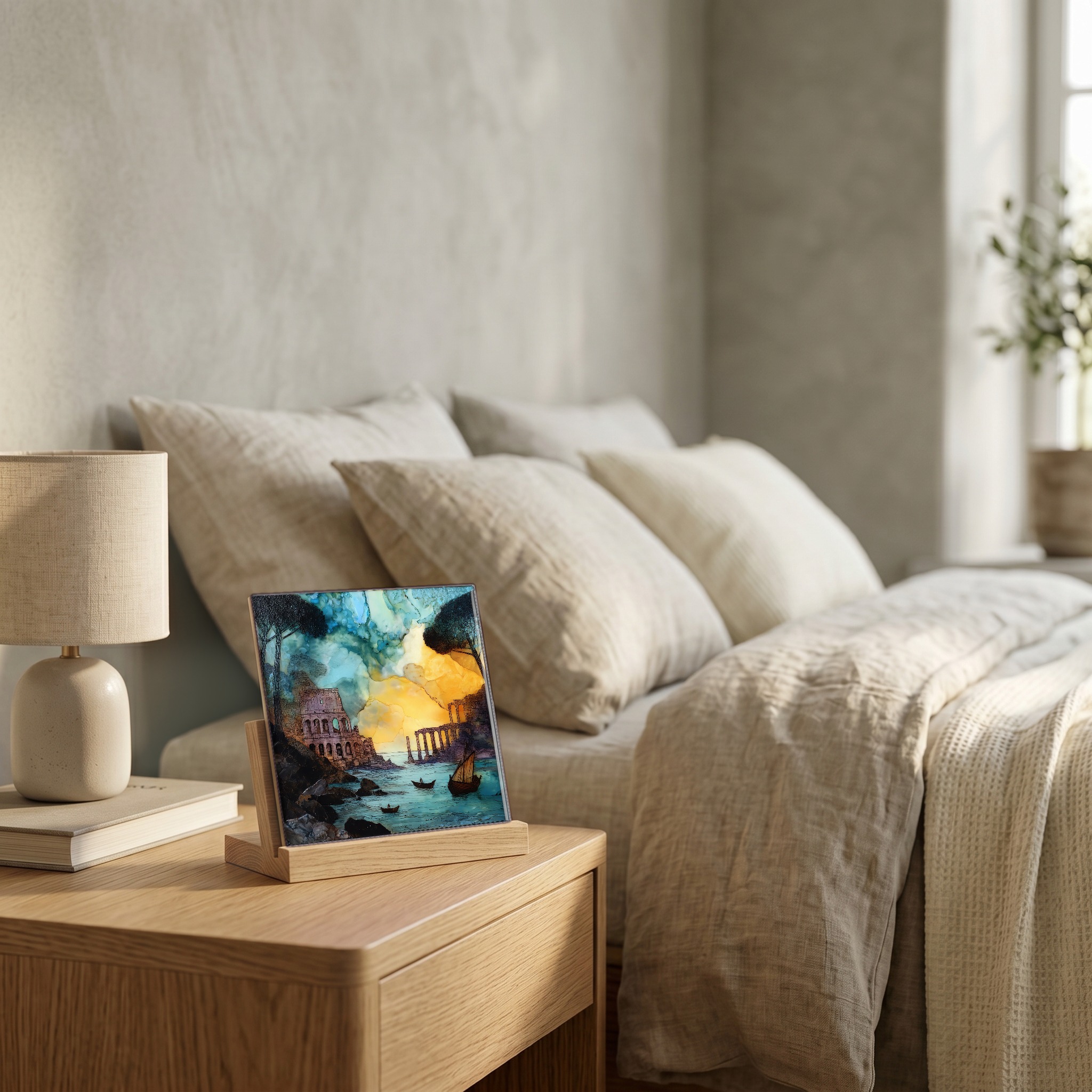
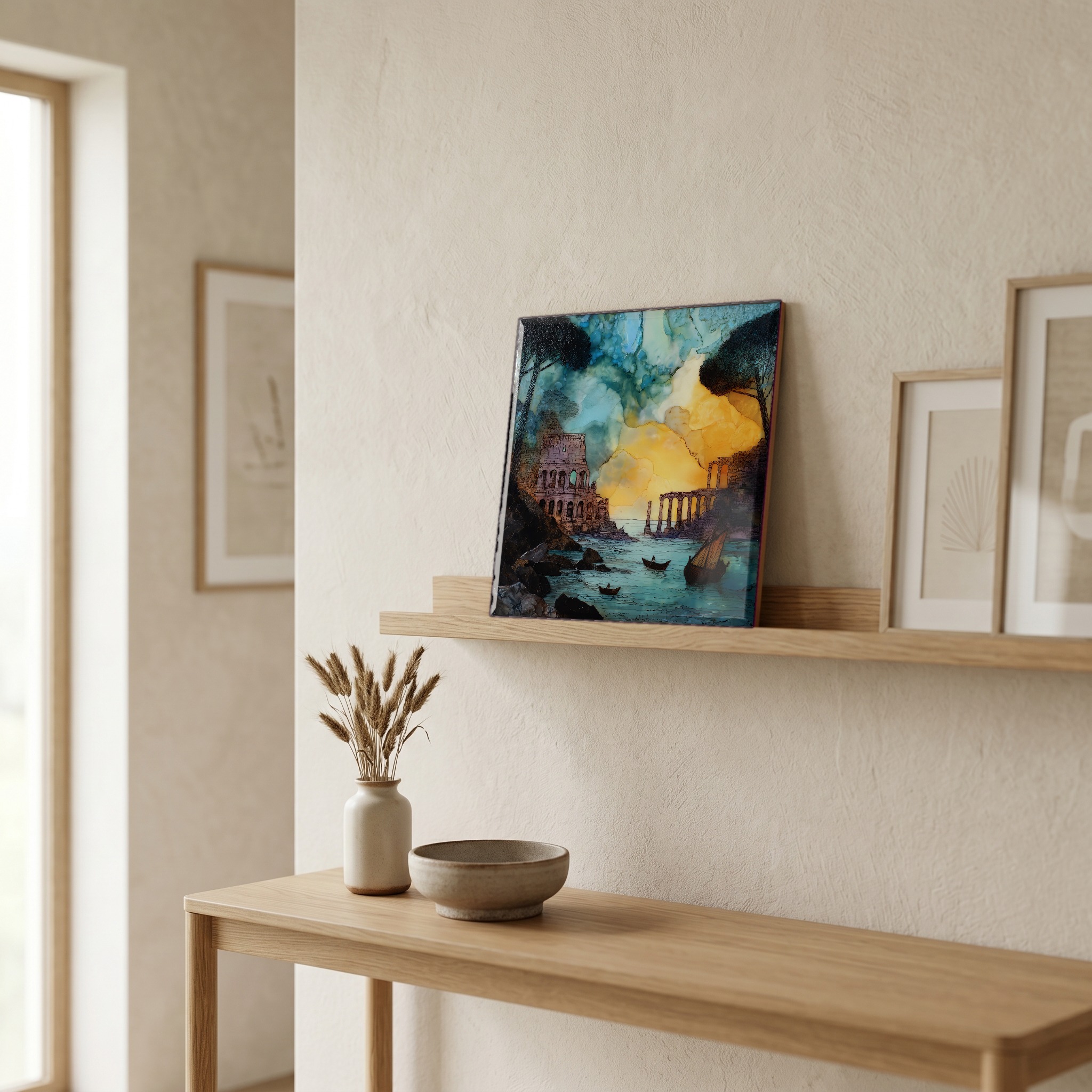
“The port of Rome, twenty-five minutes by train from the city and most of a thousand years quieter than it was. Whole streets of brick apartment blocks still stand, roofless now, their doorways and stairwells open to the sky. In the square behind the theatre, the floor mosaics of the old shipping guilds still show their boats and lighthouses. The sea has pulled back three kilometres since the warehouses were full. People come for Pompeii and miss this; the ones who make the trip tend to have it half to themselves.
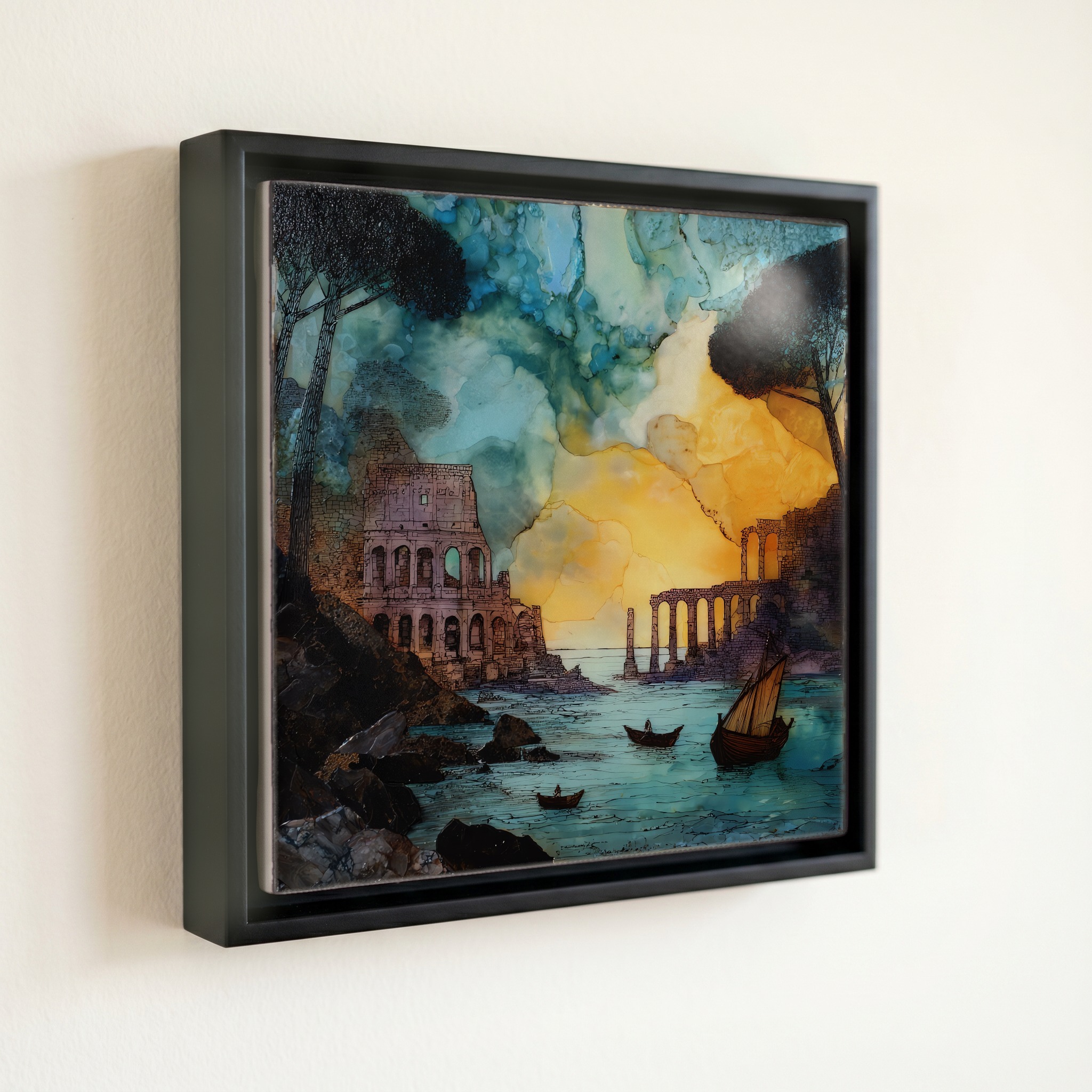
Ostia Antica, on ceramic.
Each tile is finished by hand in our Knoxville studio. Artwork is slowly infused into the ceramic surface under high heat and pressure, and rests beneath a thin glossy finish. The colour lives in the surface, not on top of it.
Pick any four 4-inch tiles — National Parks you've been to, a Smokies set, the four seasons of one place. $ for a set of , cork-backed, ready to live on the table.
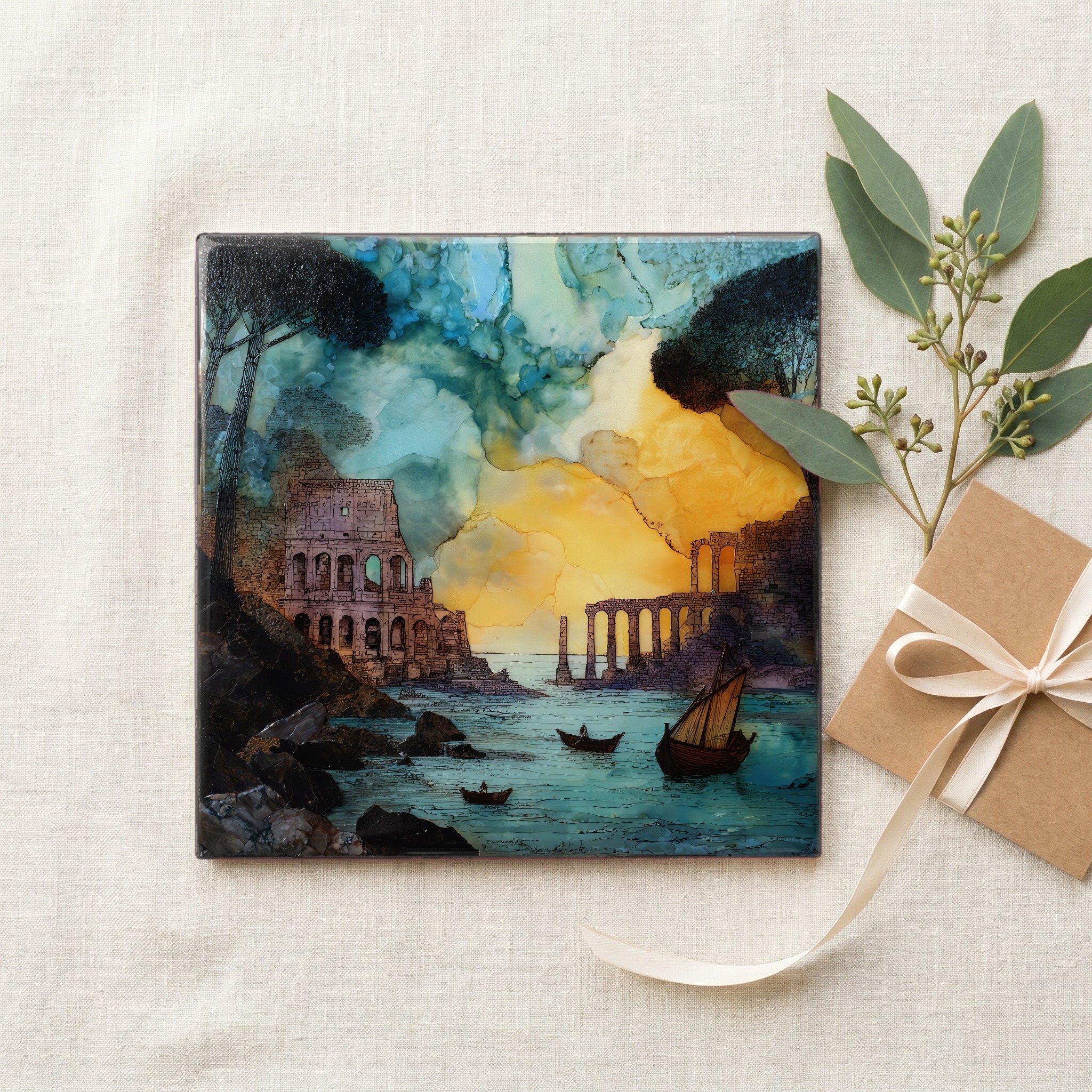
Each tile ships in a kraft box, tied with cream ribbon, with a handwritten note from the studio if you'd like to add one.
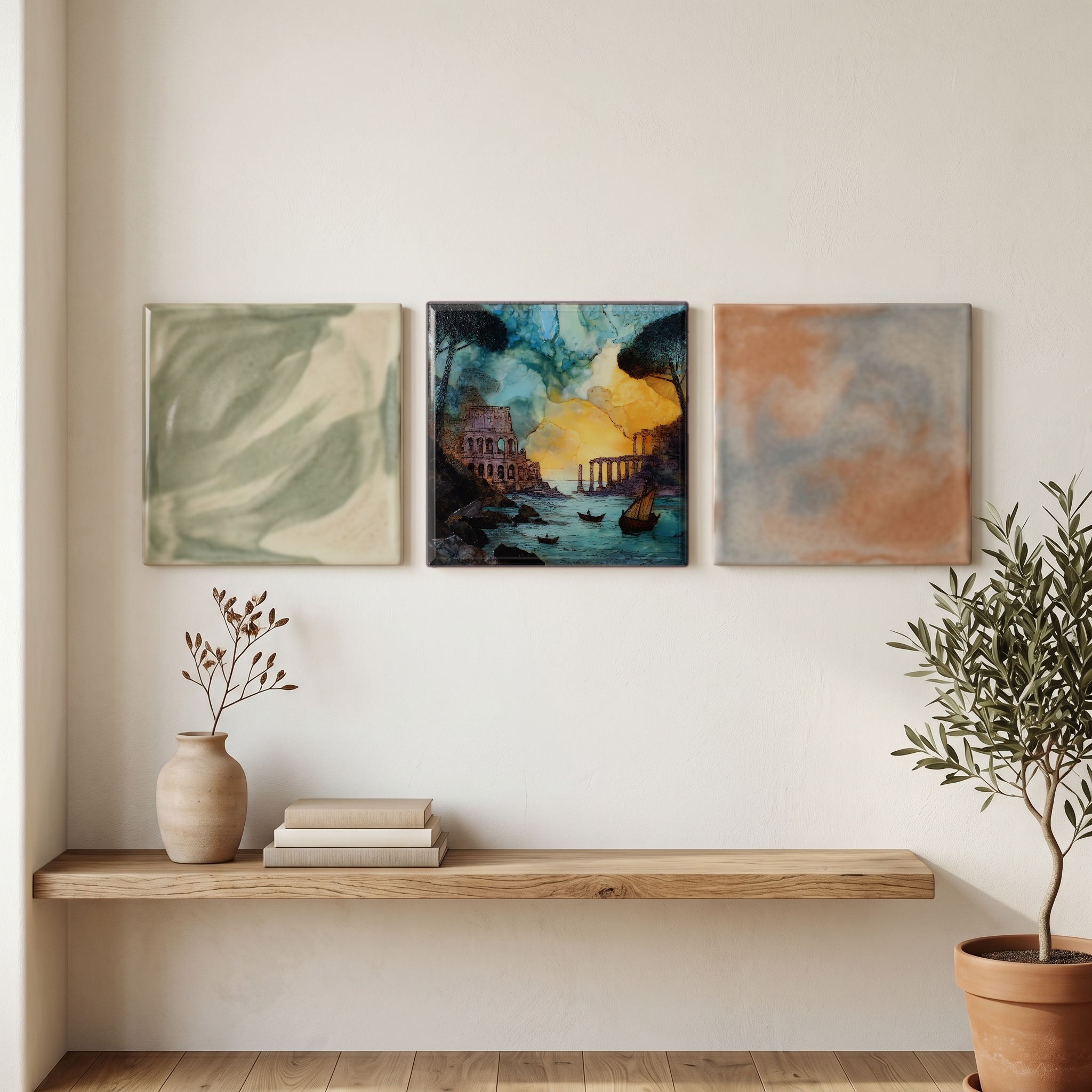
Three or five different vistas, hung together — a chapter of places you've been, or want to go.
The place, in three passes.
Ostia was the harbour town of ancient Rome, set where the Tiber ran out to the Tyrrhenian Sea about 25 kilometres southwest of the city. Roman tradition credited its founding to Ancus Marcius, the fourth king, in the late seventh century BC; the oldest excavated structures, including the fortified castrum at the centre, date to the fourth and third centuries BC. The name comes from the Latin ostium, meaning mouth. At its height in the second century AD it held perhaps 50,000 people and handled the grain that fed the capital. Silting eventually closed the harbour and pushed the coastline back, so the ruins now sit roughly three kilometres inland, in the Lazio region, on the south bank of the river.
What survives at Ostia is the working city rather than the marble of emperors. Multi-storey apartment blocks, the insulae, still stand in brick two and three floors high, the same kind of high-density housing found in imperial Rome itself, with shopfronts, stairwells and inner courtyards intact. Behind the theatre, the Piazzale delle Corporazioni ringed more than sixty small offices of the shipping and trade associations, each fronted by a black-and-white floor mosaic of the boats, grain measures and lighthouses that named its trade. Because Ostia was abandoned slowly rather than buried in a day, it reads as a whole town, with streets, warehouses, bakeries and taverns laid out much as the dock workers left them.
The site is run as the Parco archeologico di Ostia antica and ranks among the largest archaeological parks anywhere, about 150 hectares. It makes an easy day from Rome: the suburban Roma-Lido line reaches Ostia Antica station in roughly twenty-five minutes, and the entrance is a short walk across the road. Spring and autumn are the kindest seasons, since little shade covers the open streets in high summer. Because most travellers to the region choose Pompeii, Ostia stays comparatively unhurried, and you can walk the main Decumanus, climb the theatre and read the guild mosaics without the press of a crowd. The on-site Museo Ostiense holds much of the sculpture and smaller finds.