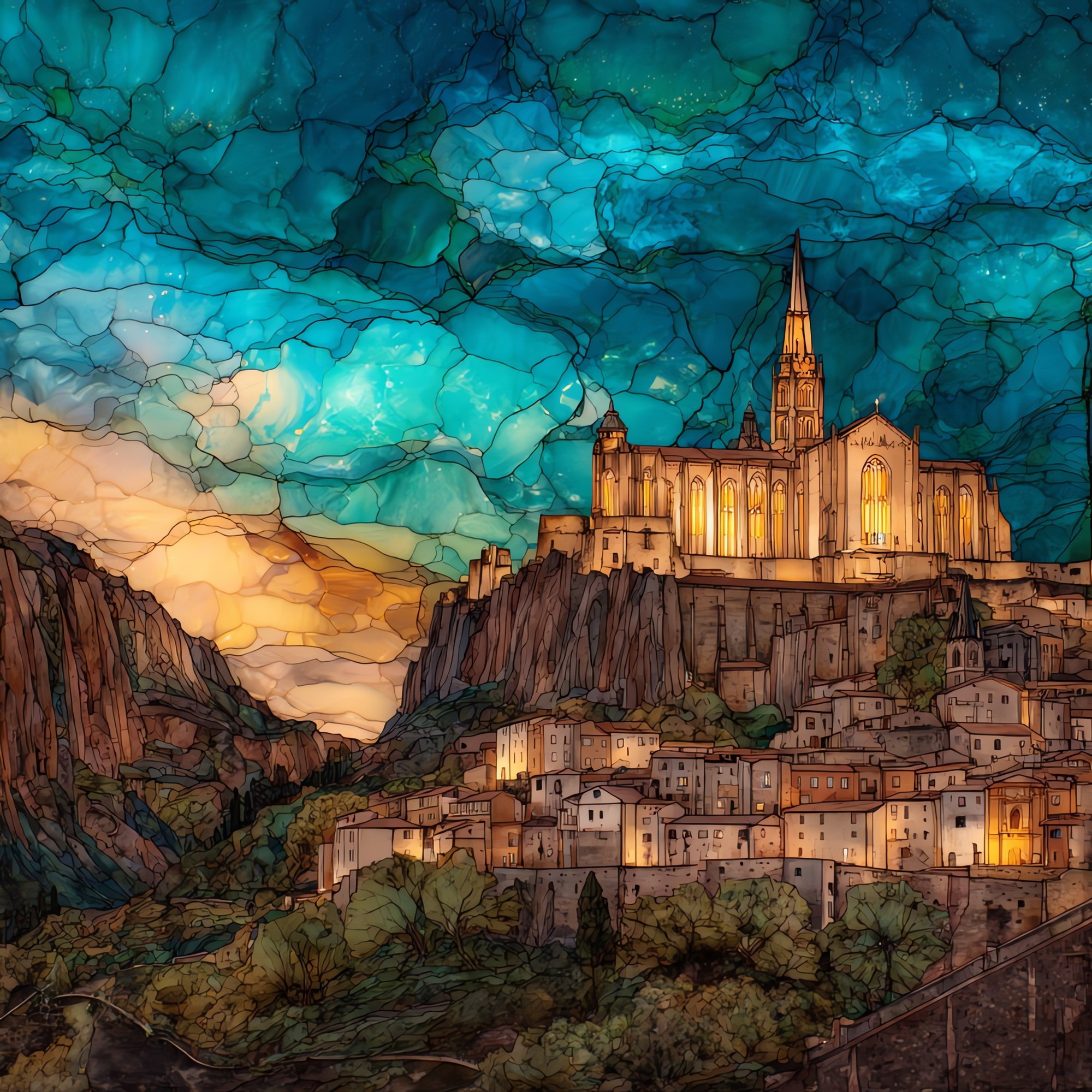
Orvieto Duomo
— the gold the evening finds in the stone.
Not only on a wall.
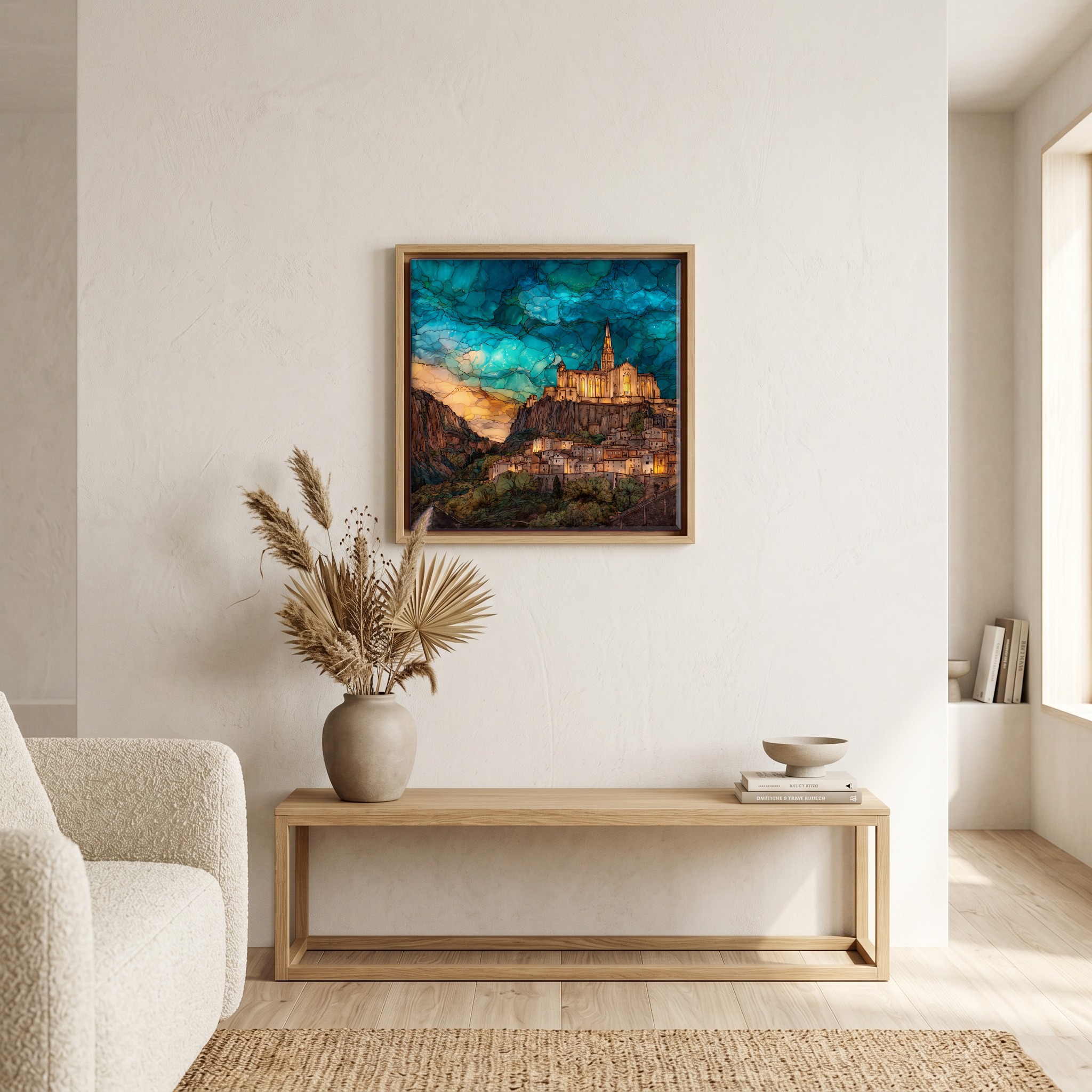
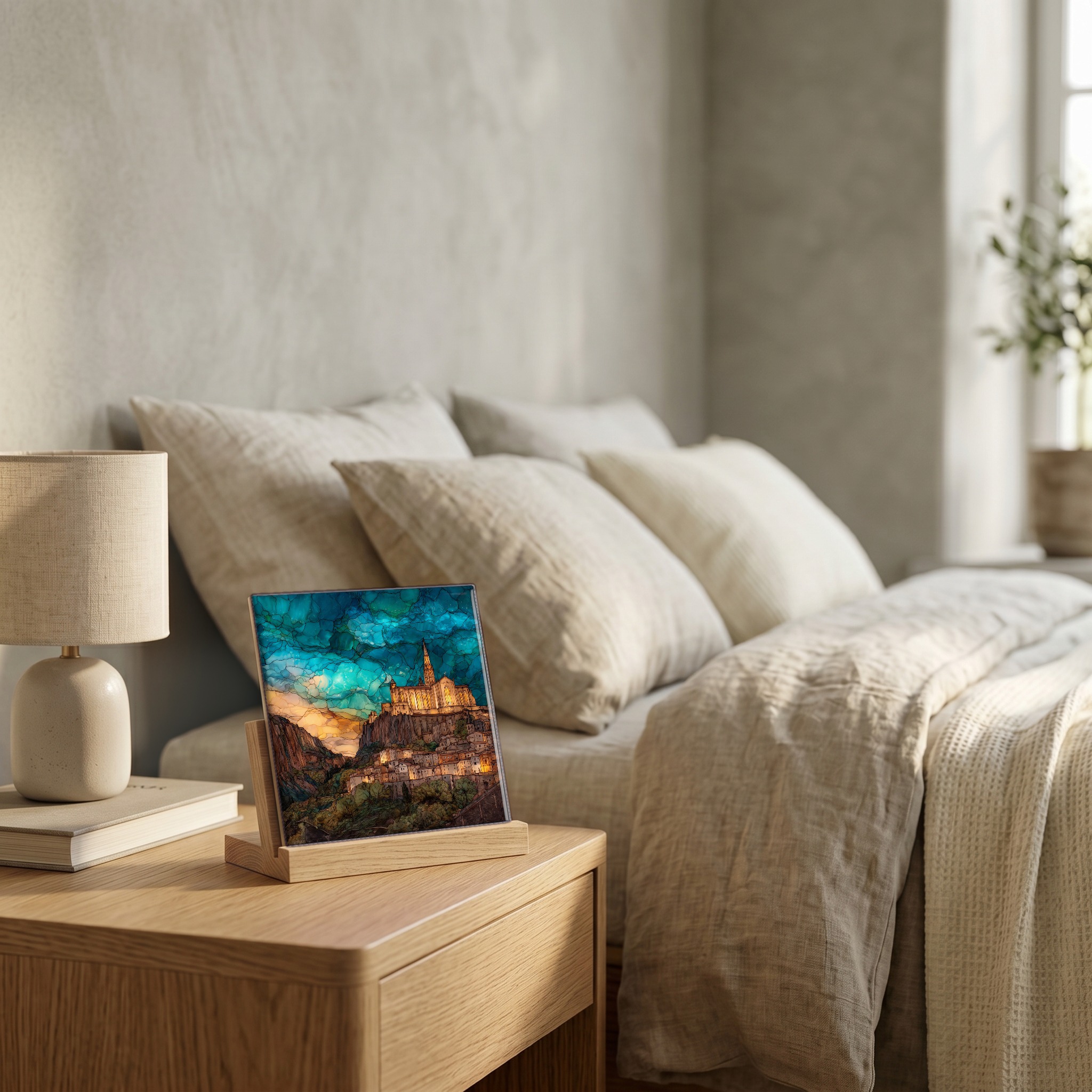
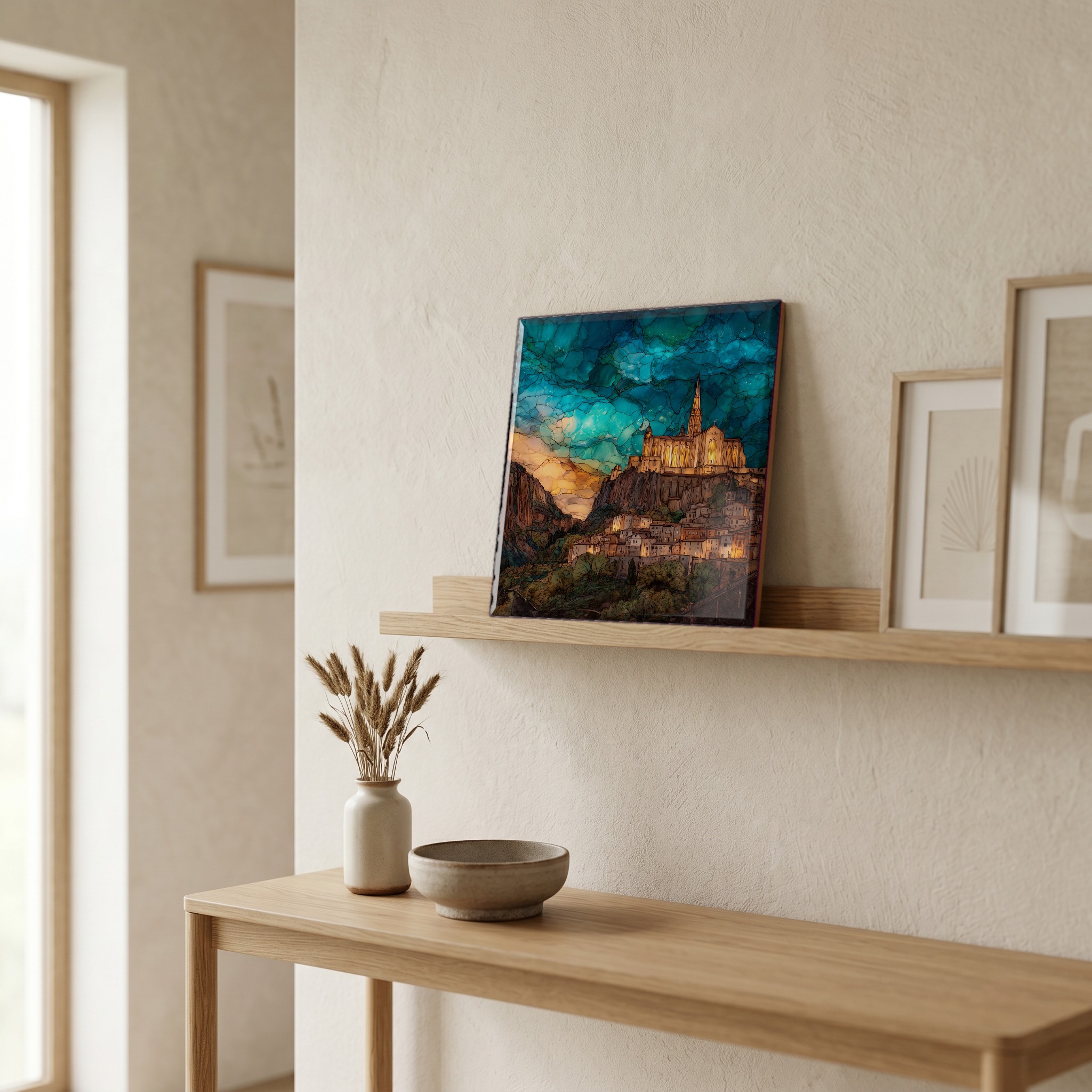
“A cathedral on a cliff of volcanic tuff, in a hilltop town between Rome and Florence. The façade reads as gold and stripes from the square below: bands of black basalt and white travertine, mosaics laid in the gaps. Lorenzo Maitani drew the front in the early 1300s; the building took three centuries to finish. Inside, a chapel Signorelli painted just before Michelangelo got to the Sistine, and a cloth that started a feast day. Most people come up from the train station by funicular, blink at the façade once, and forget what they were doing.
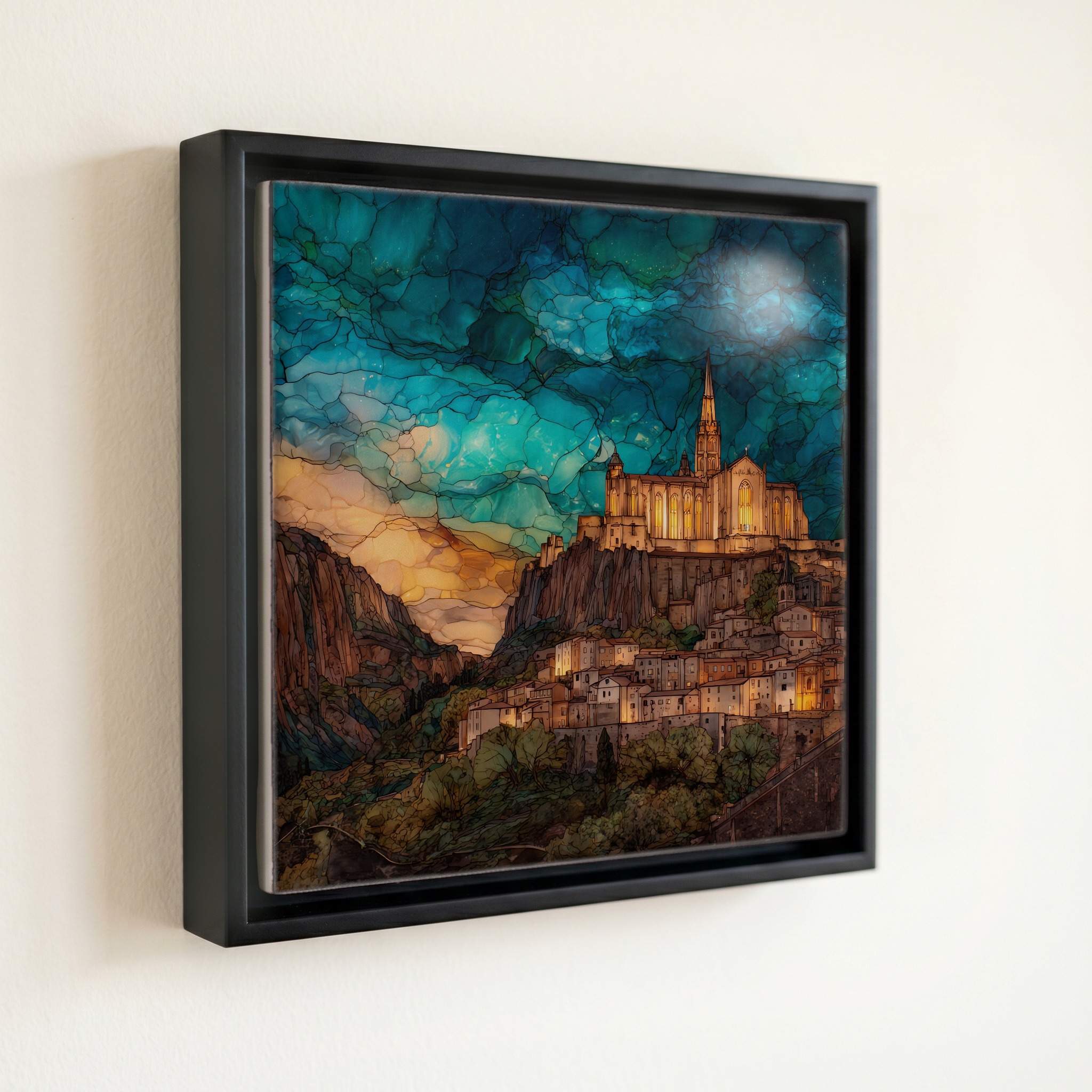
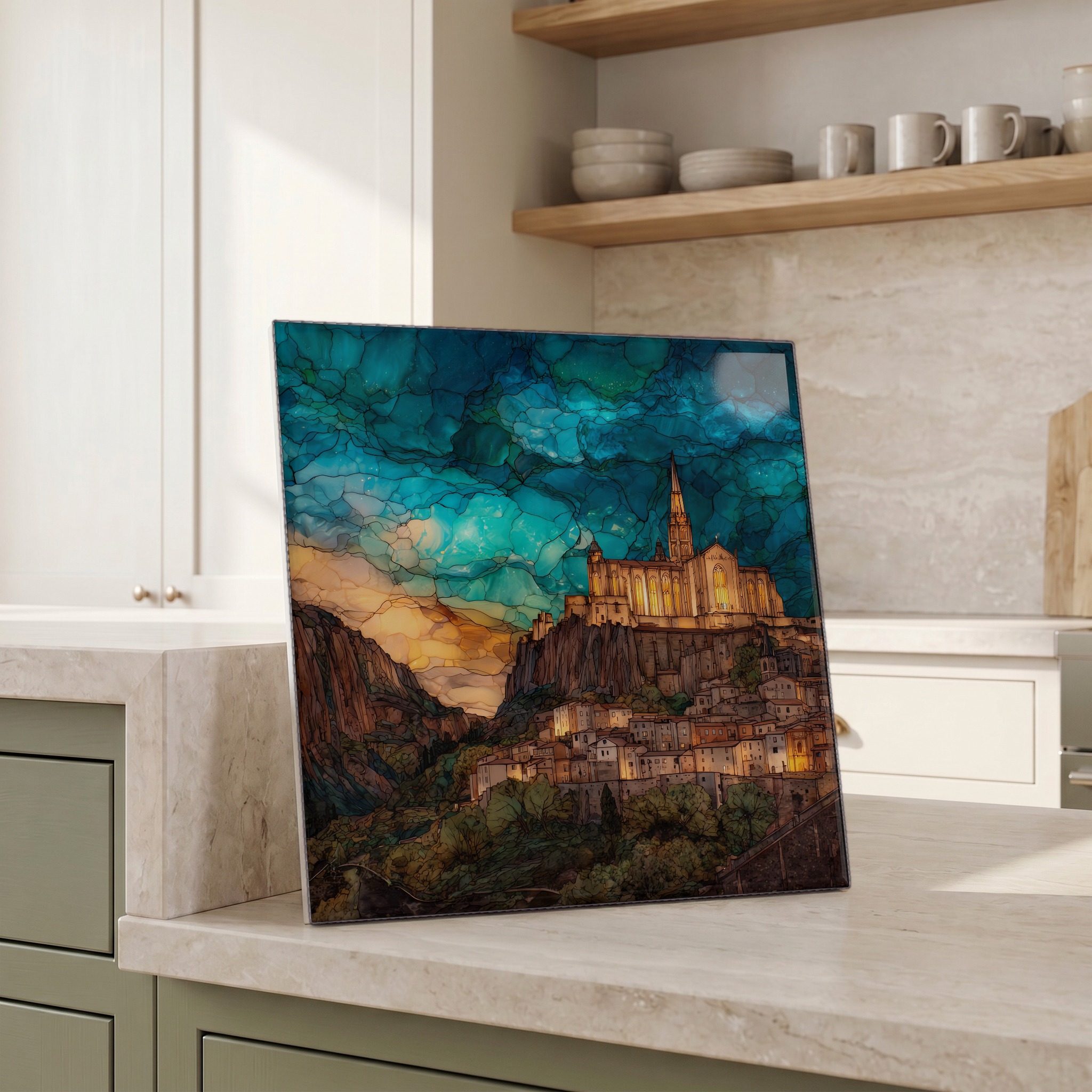
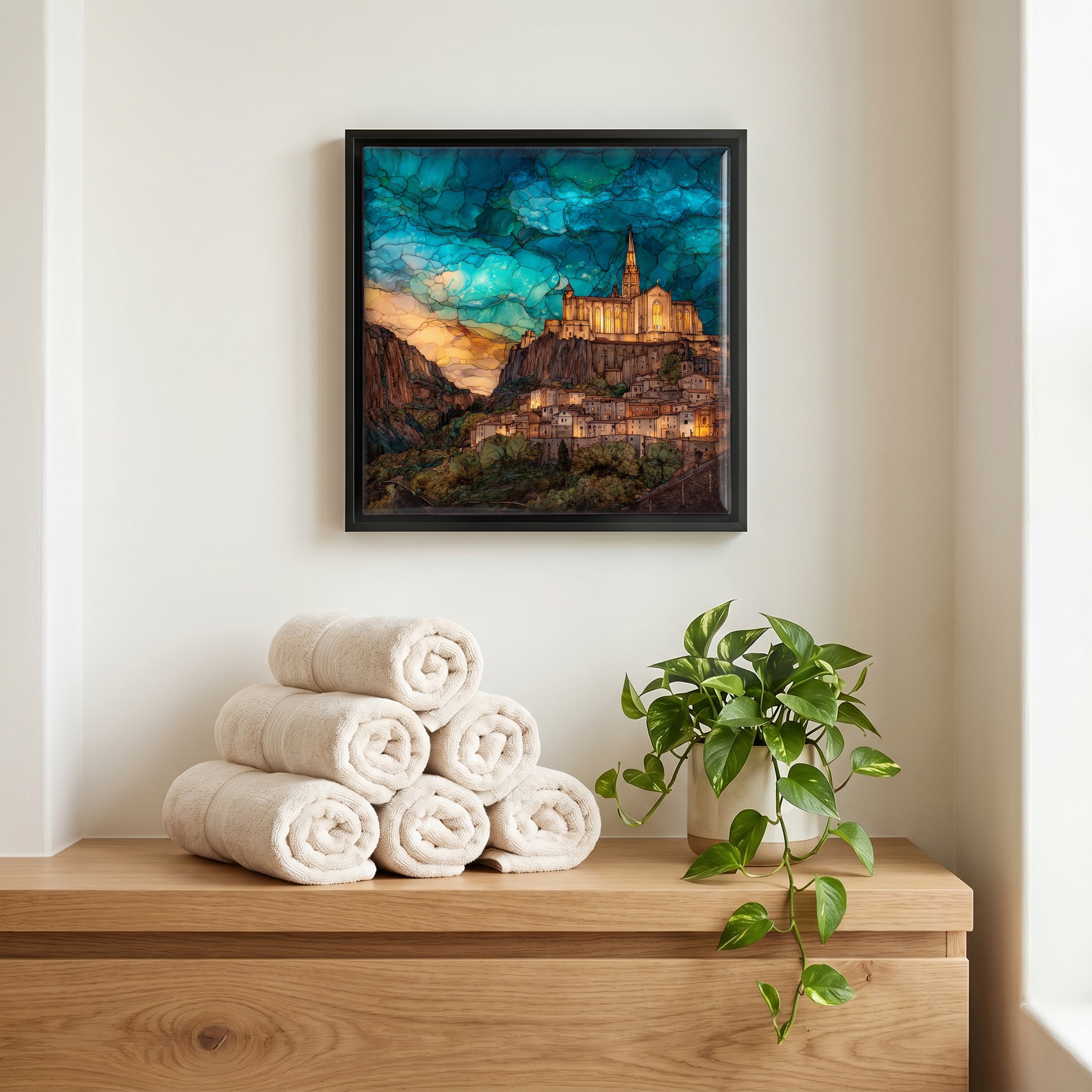
Orvieto Duomo, on ceramic.
Each tile is finished by hand in our Knoxville studio. Artwork is slowly infused into the ceramic surface under high heat and pressure, and rests beneath a thin glossy finish. The colour lives in the surface, not on top of it.
Pick any four 4-inch tiles — National Parks you've been to, a Smokies set, the four seasons of one place. $ for a set of , cork-backed, ready to live on the table.
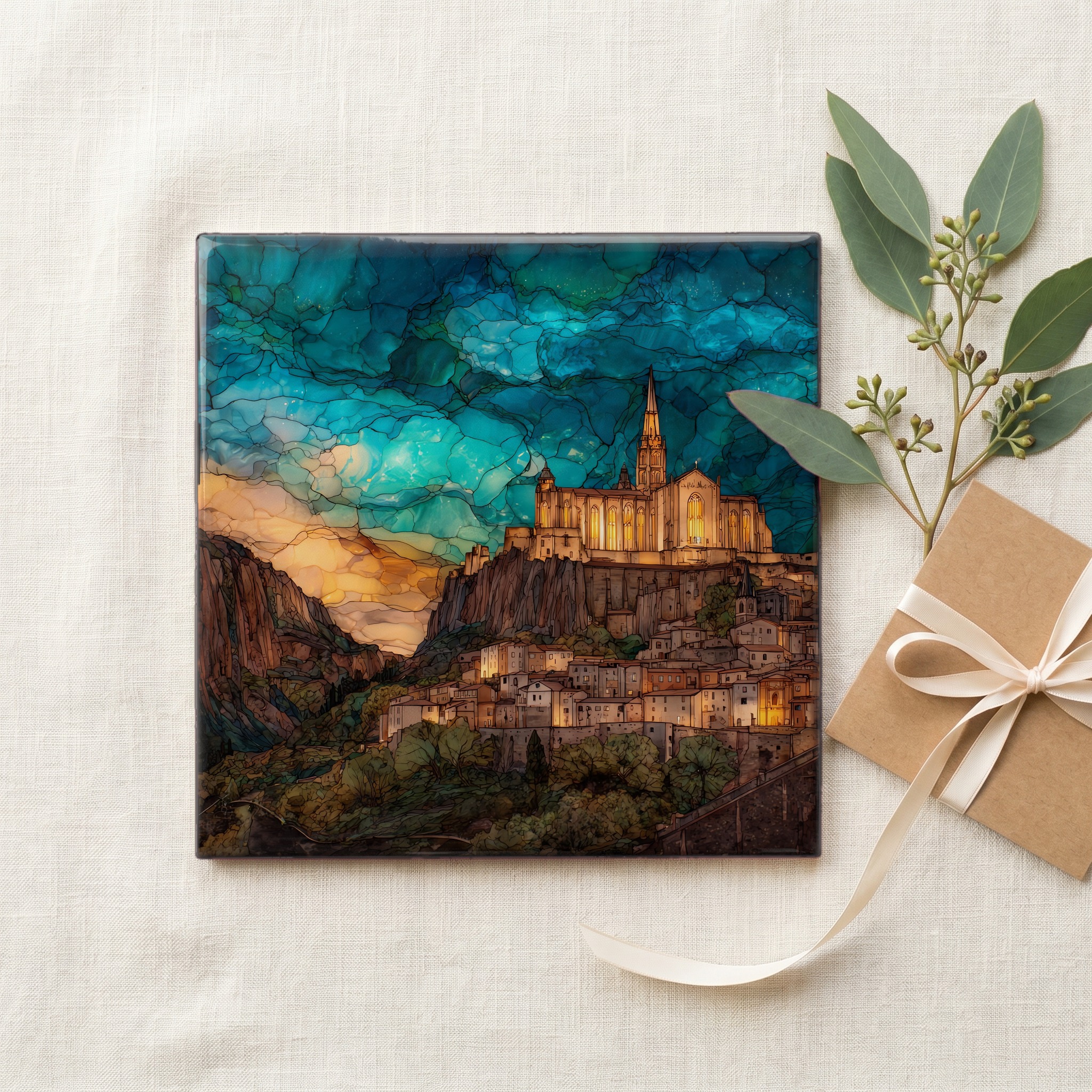
Each tile ships in a kraft box, tied with cream ribbon, with a handwritten note from the studio if you'd like to add one.
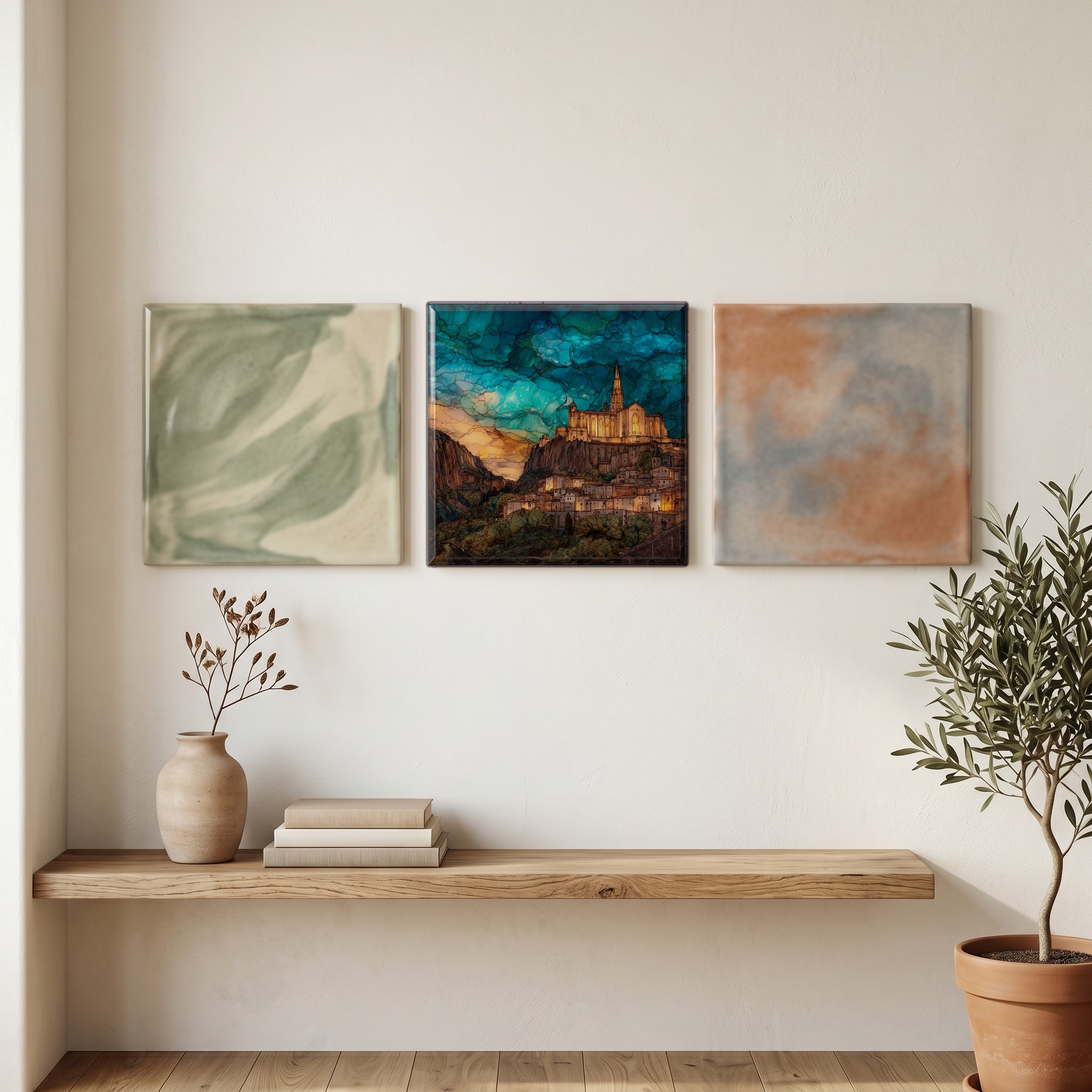
Three or five different vistas, hung together — a chapter of places you've been, or want to go.
The place, in three passes.
Orvieto sits on a plateau of volcanic tuff in southwestern Umbria, about 100 kilometres north of Rome and 120 south of Florence. The Duomo, the Cattedrale di Santa Maria Assunta, is the town's centre, begun in 1290 under Pope Nicholas IV. The town itself rises to roughly 325 metres above the Paglia valley; the cathedral is reached by a funicular from the Orvieto Scalo train station, originally opened in 1888 and rebuilt in 1990. The upper station is at Piazza Cahen, a ten-minute walk to the Duomo through the Corso Cavour. The building stands within the historic centre of the old town.
The façade is a four-part composition by Lorenzo Maitani and the workshop that followed him, begun around 1310 and worked on through the 14th and 15th centuries. The lower register carries marble bas-reliefs of Genesis, the Tree of Jesse, the New Testament, and the Last Judgment, separated by clustered piers. Above them, gold mosaics of Marian scenes, restored repeatedly through the 17th century, sit between bronze figures of the four Evangelists. Black basalt and travertine alternate in horizontal courses on the flanks, the same striped scheme Siena uses but worked in different stone. The rose window is the work of Andrea Orcagna.
The cathedral is open daily, with seasonal hours that shorten in winter. Entry to the nave is free, but the Cappella di San Brizio and the Cappella del Corporale require a combined ticket from MODO, the Museo dell'Opera del Duomo di Orvieto. The San Brizio chapel holds Luca Signorelli's Apocalypse cycle, painted between 1499 and 1502 and cited by art historians as a direct influence on Michelangelo's Sistine. The Corporal chapel holds the bloodstained cloth from the Eucharistic miracle at Bolsena in 1263, the event that prompted Pope Urban IV to institute the feast of Corpus Christi the following year.