Wender·Vista
Ortygia Syracuse
shown on ceramic, 12-inch tileItaly
the island heart of Syracuse, on Sicily's southeast coast

Ortygia Syracuse

fresh water that rises at the edge of the sea.

Where it lives

Not only on a wall.

A small tile on the nightstand catching the morning. A larger one above the fire. Yours, wherever you spend the slow hours.
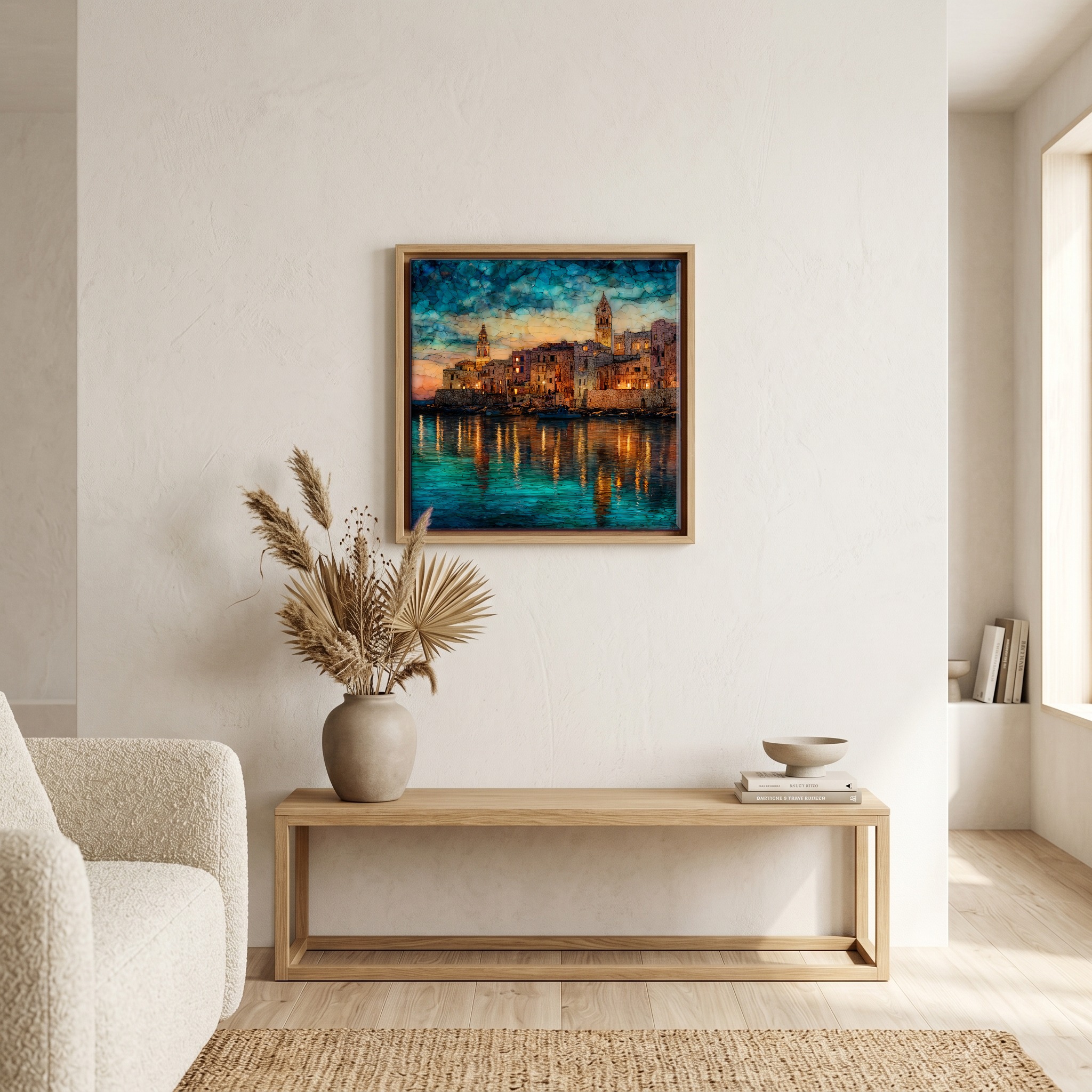
Above the bench, in a warm oak surround.
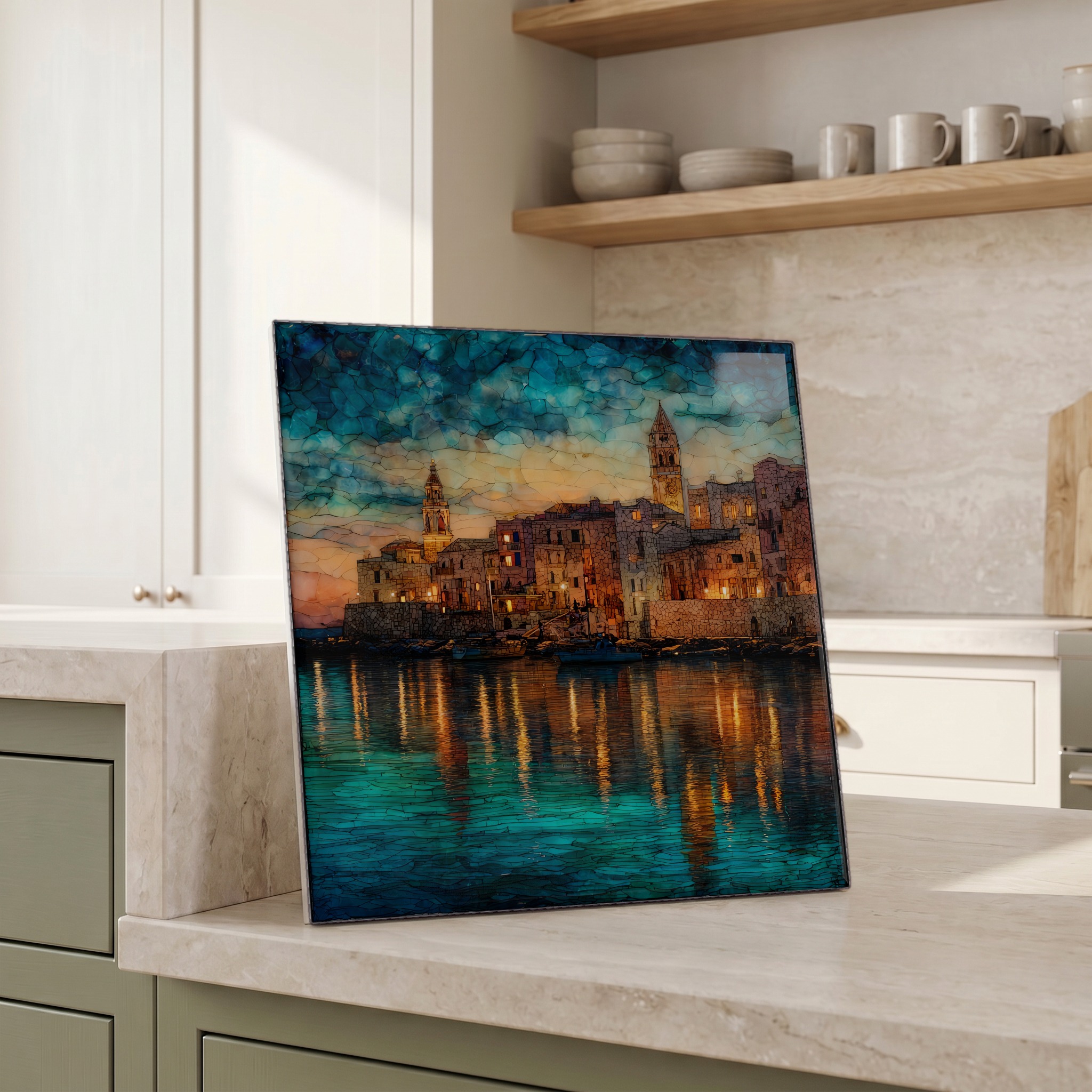
Beside the kettle, propped on the counter.
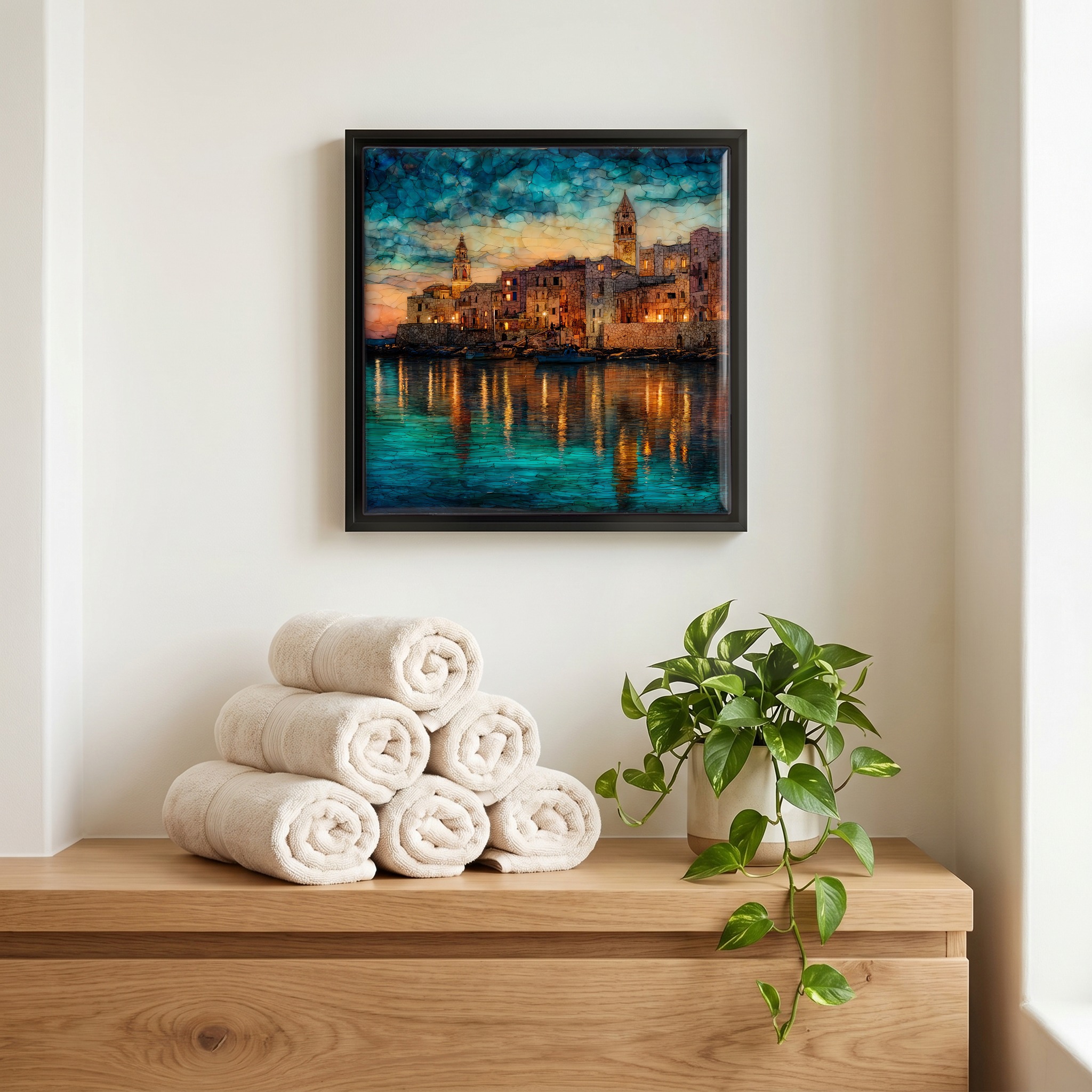
Above the linens, in a slim black surround.
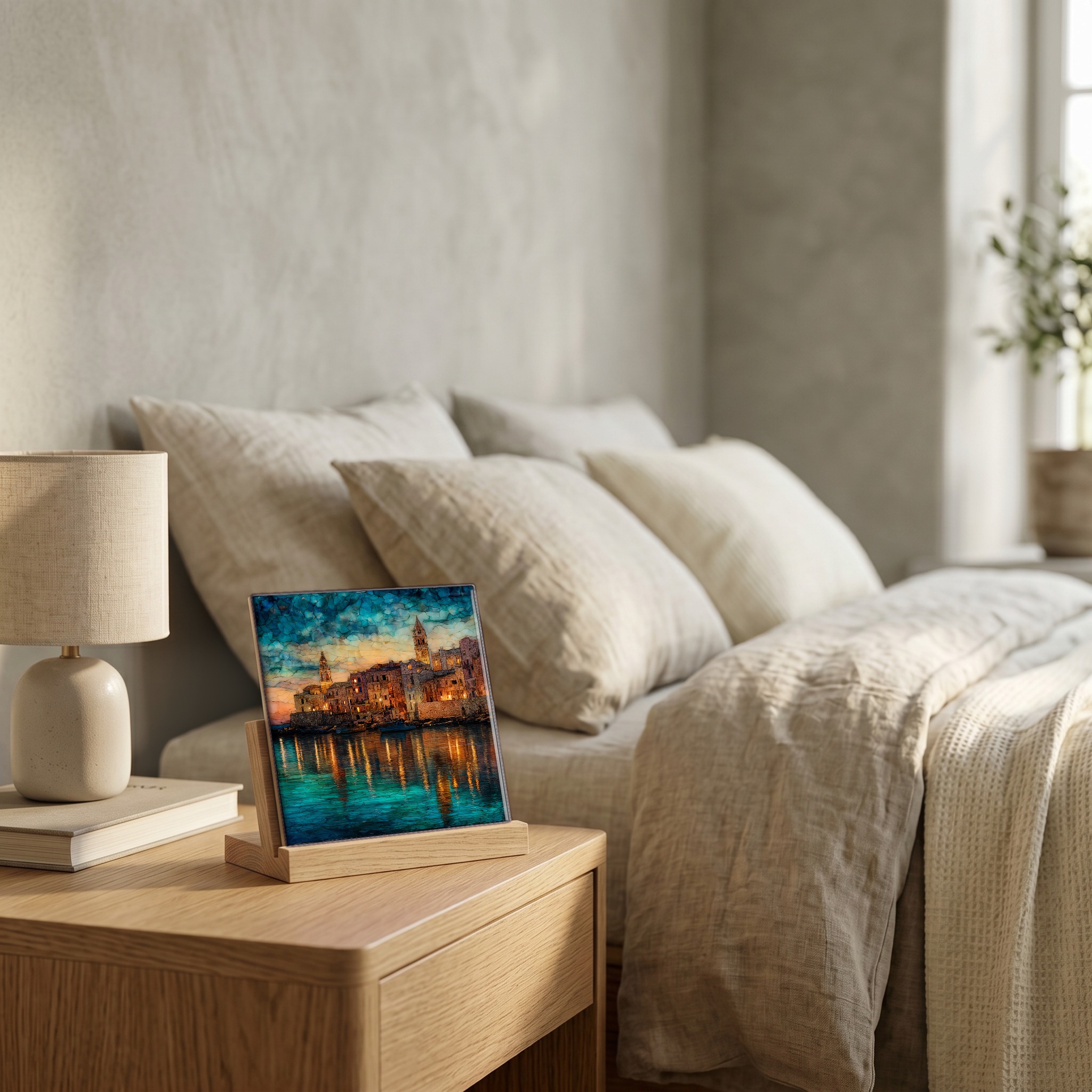
On the nightstand, on a light oak stand.
On a picture ledge, where the light comes in.
a note from the studio

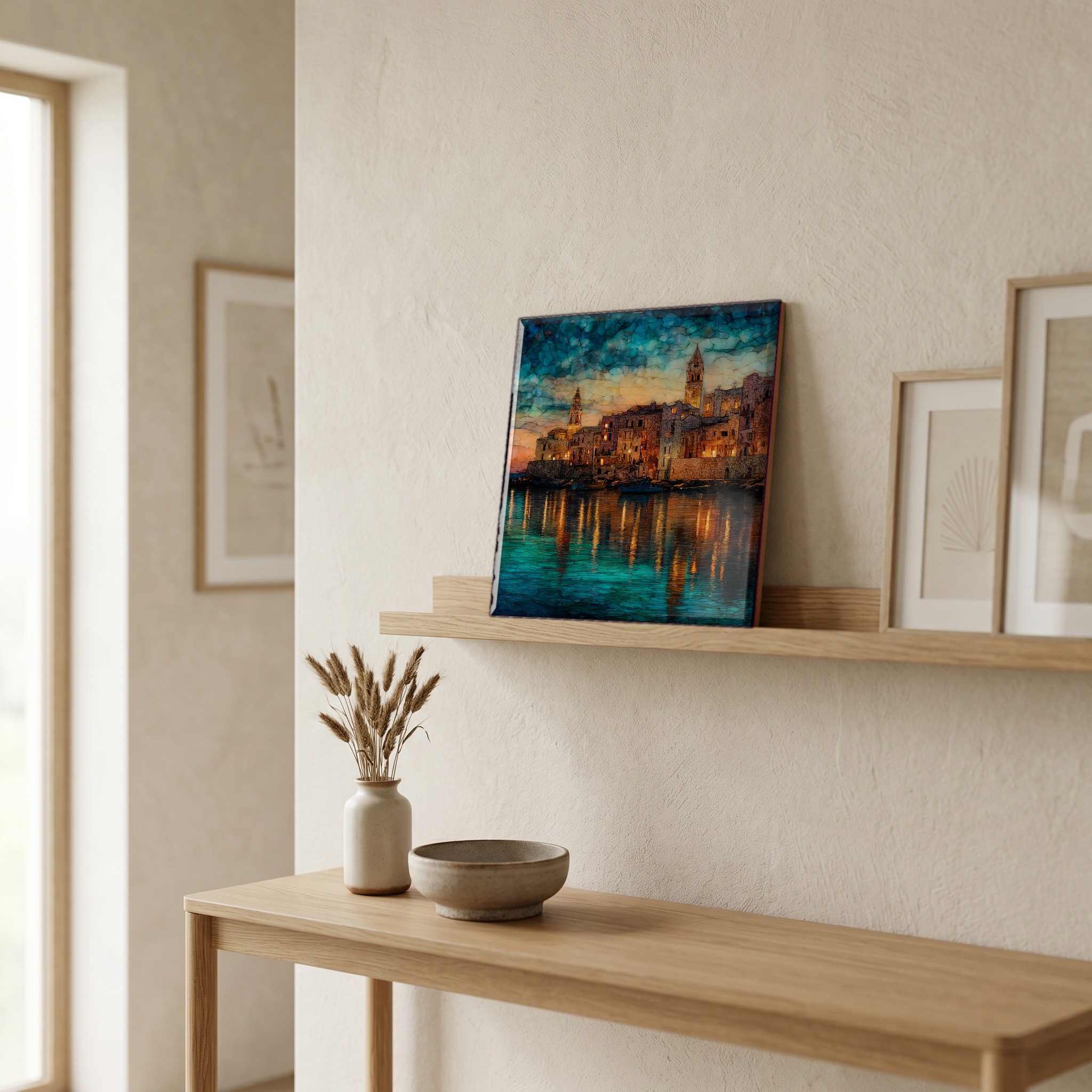
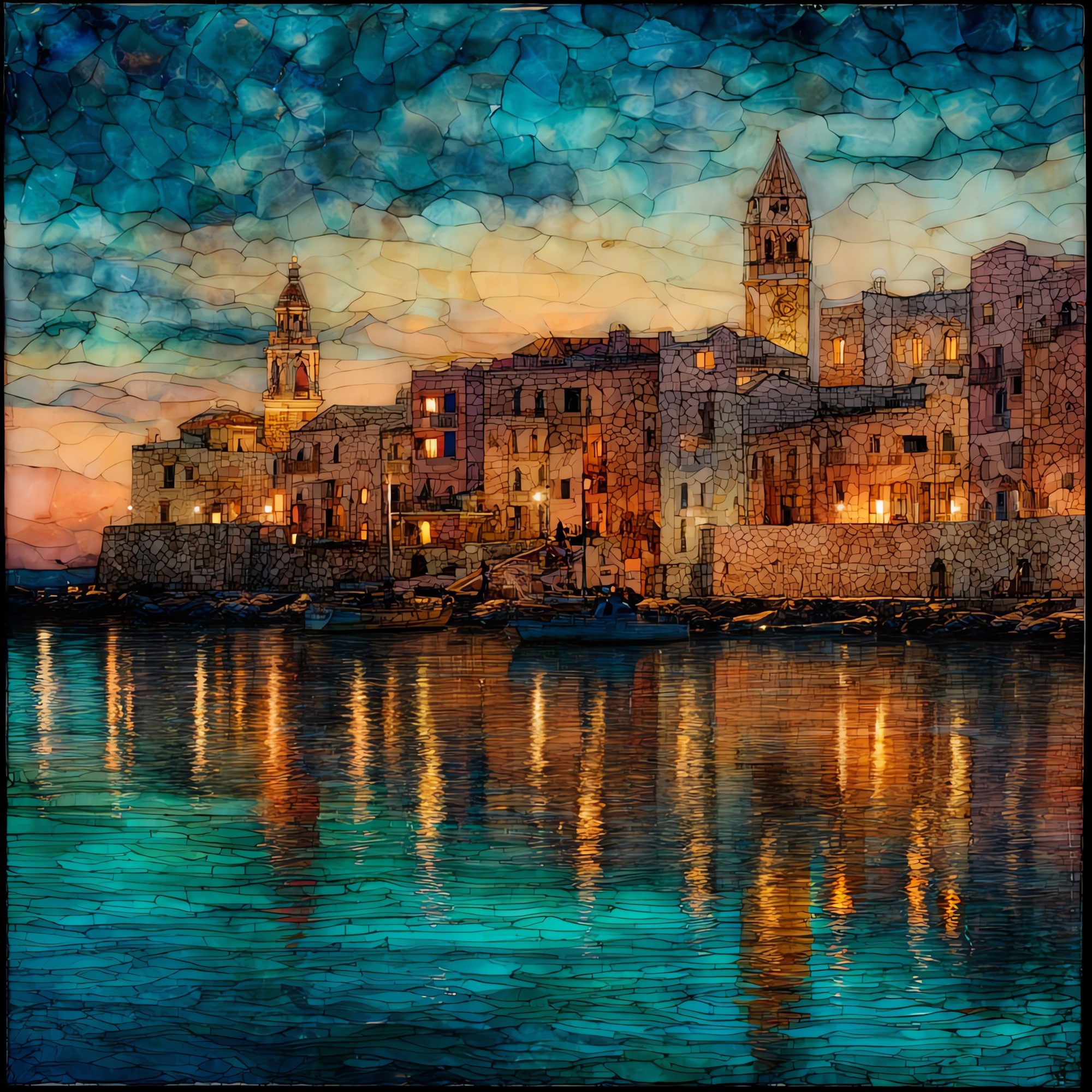
The old island at the tip of Syracuse, where Sicily faces the Ionian Sea. The whole Greek city began here in 734 BC, on a piece of limestone barely a kilometre long, and the island never threw anything away. A Doric temple to Athena still stands inside the walls of the cathedral. Down at the water, a freshwater spring called Arethusa rises a few steps from the salt, papyrus leaning over it. People come for the evening, when the stone goes the colour of a banked fire and the streets empty toward the sea.
from the studio
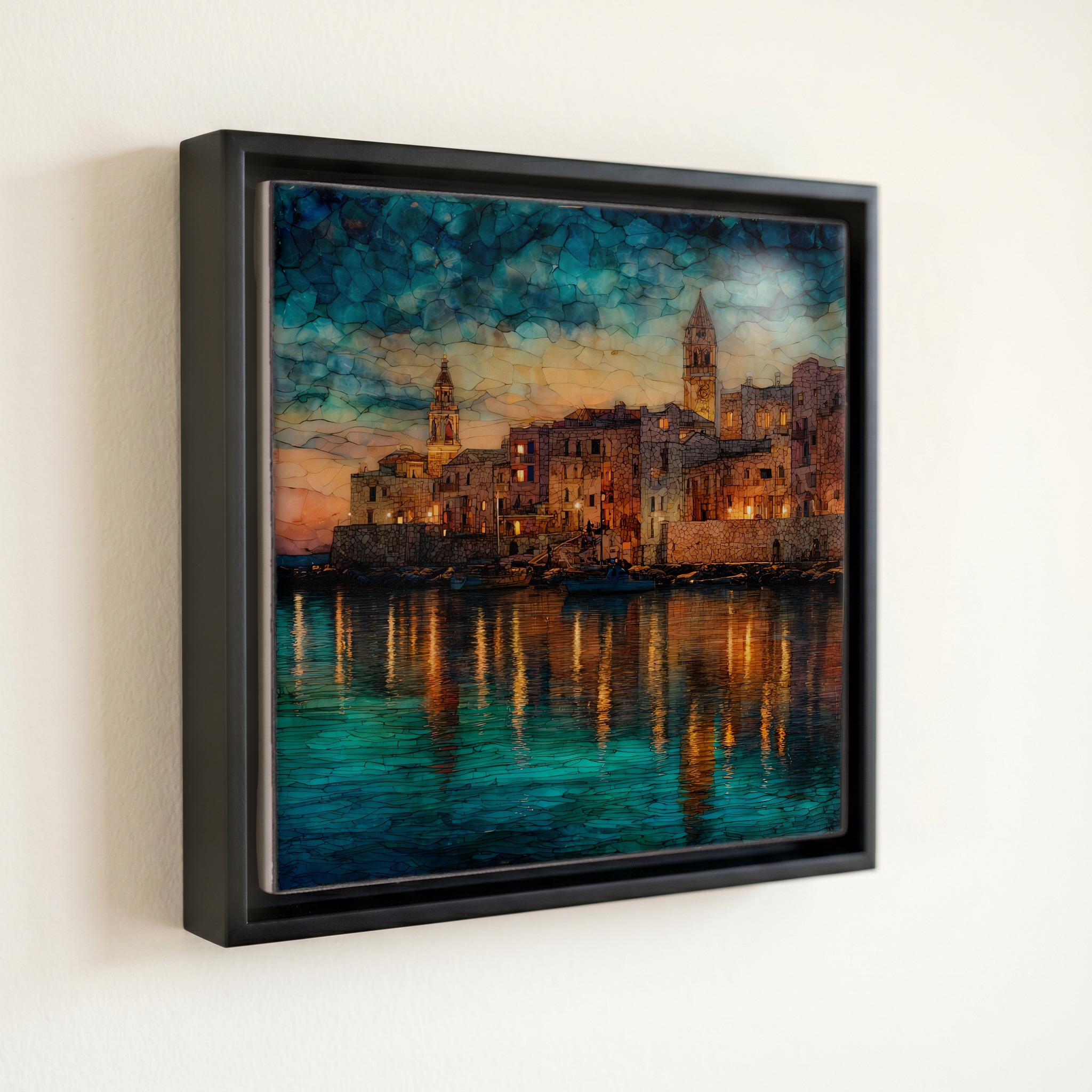
shown in a slim black floating frame · 6 × 6 in
— bring it home

Ortygia Syracuse, on ceramic.

Each tile is finished by hand in our Knoxville studio. Artwork is slowly infused into the ceramic surface under high heat and pressure, and rests beneath a thin glossy finish. The colour lives in the surface, not on top of it.

What kind of piece?
One tile — square or rectangle.
How big?
the popular one — counter, shelf, nightstand
6 × 6 in · 15 cm · 1.6 lb
Surface finish
A clear glossy finish — the artwork reads as if under resin. Ideal for show-pieces and framed wall art.
How it sits
A hidden cleat — sits ¼″ proud of the wall.
$58
Hand-finished and shipped from our studio at the foot of the Smokies. On your wall in about ten days.
size
6 × 6 in
15 cm
weighs
1.6 lb
solid in the hand
surface
ceramic, hand-finished
art rests beneath a thin glossy finish
from
Knoxville, TN
our family studio, at the foot of the Smokies
— start a Coaster Set

Pick any four 4-inch tiles — National Parks you've been to, a Smokies set, the four seasons of one place. $ for a set of , cork-backed, ready to live on the table.
comes gift-ready
comes gift-ready

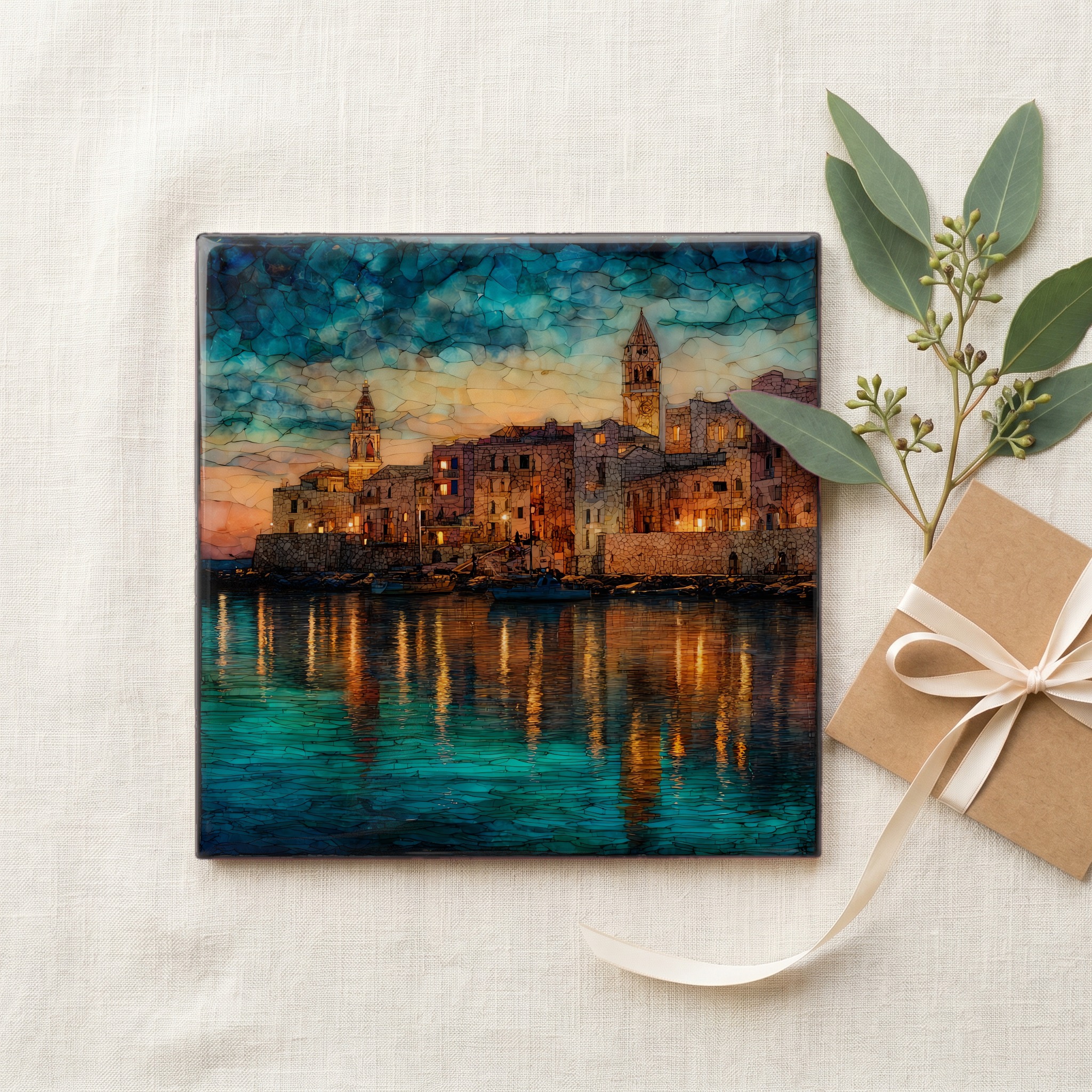
Each tile ships in a kraft box, tied with cream ribbon, with a handwritten note from the studio if you'd like to add one.
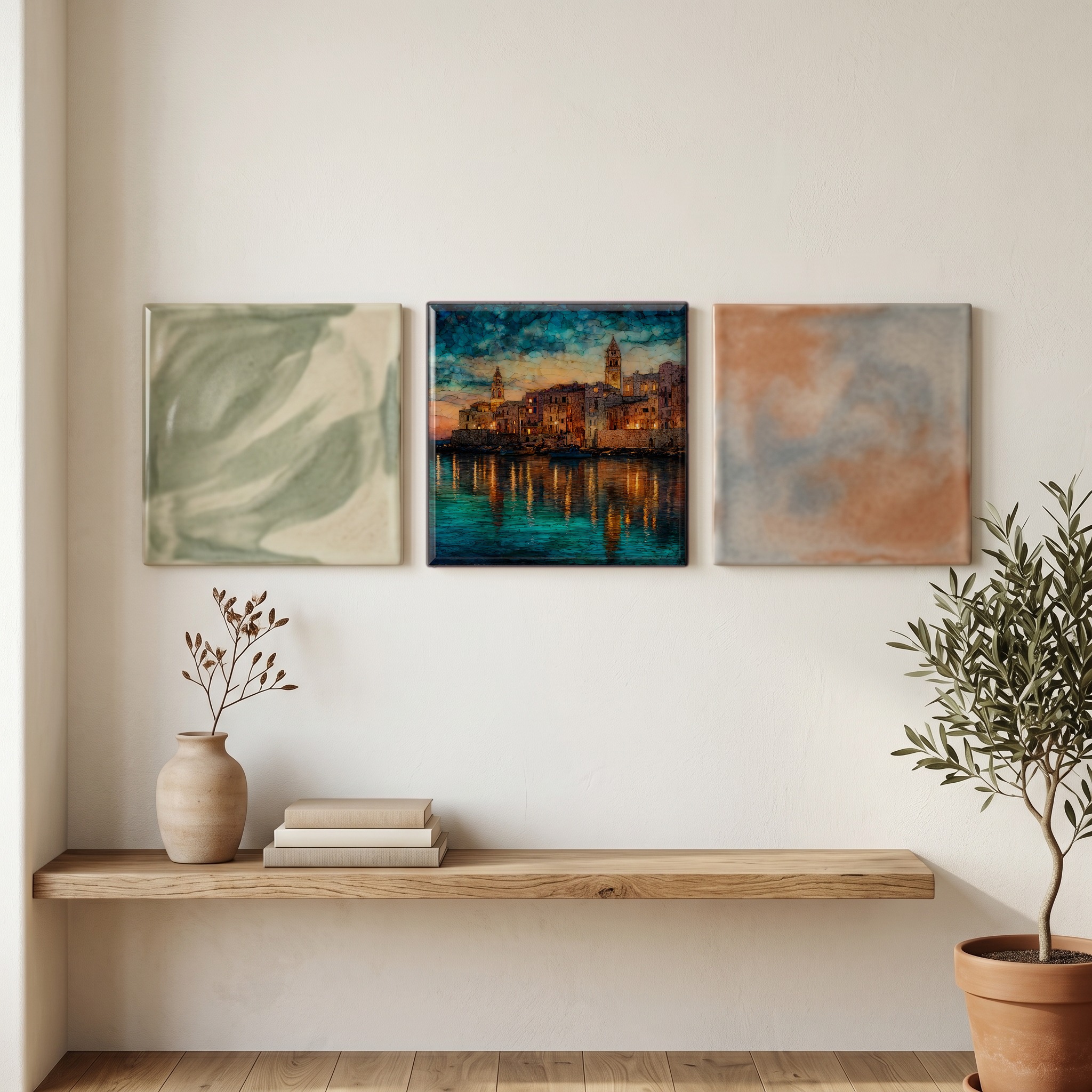
or build a grouping
or build a grouping

Three or five different vistas, hung together — a chapter of places you've been, or want to go.

about Ortygia Syracuse

The place, in three passes.

A little of what's known, in case you fall down the rabbit hole — or want to go see it yourself.
the place

Ortygia is the small island that holds the oldest part of Syracuse, on the southeastern coast of Sicily in the province of Siracusa. It covers about 146 hectares and runs barely a kilometre long, joined to the mainland by two short bridges across the harbour. Corinthian colonists led by Archias founded Syracuse here in 734 BC, and the island stayed the city's religious and political core through Roman, Byzantine, Arab, Norman, and Spanish rule. The streets follow no grid; they wind the way the centuries left them. In 2005 UNESCO inscribed it, together with the rock-cut necropolis of Pantalica, as a World Heritage Site.

the stone

The clearest record of those layers stands in Piazza Duomo. The cathedral was built around the Temple of Athena, a Doric temple raised by the tyrant Gelon after the Battle of Himera in 480 BC; its columns are still set into the church walls, the gaps between them walled up by Byzantine builders who turned the temple into a church. A short walk north, the Temple of Apollo from the 6th century BC is among the oldest Doric temples in Sicily, having served in turn as church, mosque, and barracks. At the island's southern tip, Castello Maniace was raised under Frederick II around 1240. The Baroque faces along the streets came after the 1693 earthquake levelled much of southeastern Sicily.

the water

At the island's western shore, a few steps from the harbour, the Fountain of Arethusa is a freshwater spring that surfaces almost at the level of the sea. Papyrus grows in its round basin, as it does along the Ciane River a few kilometres south, the two of them rare European stands of a plant more at home on the Nile. The Greeks read the spring as the nymph Arethusa, who fled the river god Alpheus across the sea from Greece and rose here as fresh water. Writing in the 1st century BC, Cicero counted the spring among the wonders of Syracuse. Ducks and grey mullet move through the water now, the open sea only a low wall away.

— informed by Wikipedia, Atlas Obscura
where
Italy · Syracuse, Sicily
position
37.0594° N · 15.2931° E
the neighborhood

What's nearby.

A handful of named places within an hour's walk or short drive. Some we've already painted; some we will.
at the lake
Fountain of Arethusa
freshwater spring
at the lake
Cathedral of Syracuse
cathedral
1 km S
Castello Maniace
13th-century fortress
3 km NW
Greek Theatre of Syracuse
Greek theatre
3 km NW
Ear of Dionysius
limestone cave
6 km W
Ciane River
papyrus river
N
Ortygia Syracuse
Fountain of Arethusa
Cathedral of Syracuse
Castello Maniace
Greek Theatre of Syracuse
Ear of Dionysius
Ciane River
common questions

What people ask.

A few questions we get about Ortygia Syracuse — and about bringing the piece home.
about the place

Ortygia is a small island at the southeastern edge of Sicily, forming the oldest part of the city of Syracuse. It sits between the city's two harbours and joins the mainland by two short bridges. The whole island runs barely a kilometre long.

The Fountain of Arethusa is a freshwater spring on Ortygia's western shore that rises a few steps from the sea. Papyrus grows in its basin, and in Greek myth the spring is the nymph Arethusa, who fled the river god Alpheus and surfaced here as fresh water.

The Cathedral of Syracuse was built around the Temple of Athena, a Doric temple raised about 480 BC after the Battle of Himera. Byzantine builders walled up the gaps between its columns to make it a church, and the ancient columns are still visible in its walls.

Greek colonists from Corinth, led by Archias, founded Syracuse in 734 BC, beginning on the island of Ortygia before the city spread to the mainland. The island also shows traces of earlier settlement, back to the Bronze Age, before the Greeks arrived.

Two bridges cross from mainland Syracuse onto the island; the main one, the Ponte Umbertino, leads in past the ruins of the Temple of Apollo. The island is walkable end to end, and most of its core is closed or unfriendly to cars.

Late spring and early autumn are the easiest months, with warm light and thinner crowds than midsummer. The island is at its best in the evening, when the limestone warms to gold and the lanes near the Fountain of Arethusa empty toward the water.

Yes. In 2005 UNESCO inscribed Syracuse and the Rocky Necropolis of Pantalica as a World Heritage Site, and Ortygia is the historic core of the Syracuse half. The listing spans Greek, Roman, Byzantine, Norman, and Baroque layers across the city.

about the piece in your home

It carries well for people with ties to the island. Ortygia is the oldest part of Syracuse, the place Sicilians point to first, and the piece reads as that specific island rather than a generic coast. A Small or Medium with a handwritten note from the studio travels well.

The warm limestone tones and jewel-toned stained-glass colour sit well in Mediterranean-modern, coastal-modern, and jewel-tone maximalist rooms. The piece holds the eye against white plaster or a deep clay wall. The Large works as a single anchor; a Coaster Set extends the palette to a side table.

Yes. Warm stone, sea blues, and a hand-finished surface align with the Mediterranean-revival and coastal-modern directions designers have leaned into. The colour lives in the ceramic surface rather than sitting on top of it, so it ages with the room instead of dating it.

Above a sofa, a single Large reads from across the room, and a four-tile Mural fills a wider wall. Above a console or a bed, a Medium or a nine-tile Mural sits in proportion. Most people start with one Large and add tiles later.

Yes. For a backsplash, a shower, or any wet or steamy wall, order the Dura Satin or Matte finish; both are scratch-resistant and hold up to moisture. The glossy finish is better kept to framed wall pieces in dry rooms.

A microfibre cloth and water. The colour is slowly infused into the ceramic surface under high heat and pressure and sits beneath a thin glossy finish, so it will not lift or fade with normal cleaning. Skip abrasive pads and harsh solvents.

Yes. Every WenderVista piece is made in one studio in Knoxville, Tennessee, with no outside licensing. The painting of Ortygia is original to the studio, hand-finished in-house, and not sold as a print elsewhere.

if this one stayed with you

A few you might also love.

Hand-picked by the eye that found Sorapis. Same air, same kind of quiet.
— a collection

The Italian Dolomites,
painted slow.

The valleys between Cortina and Val Gardena, the tarns you walk an hour to see, the towers that turn the colour of a banked fire just before dark. Wander the collection by valley, by season, or follow the path Reid walked.

Tre Cime
Braies
Misurina
Sorapis
Cinque Torri
Sassolungo
Marmolada