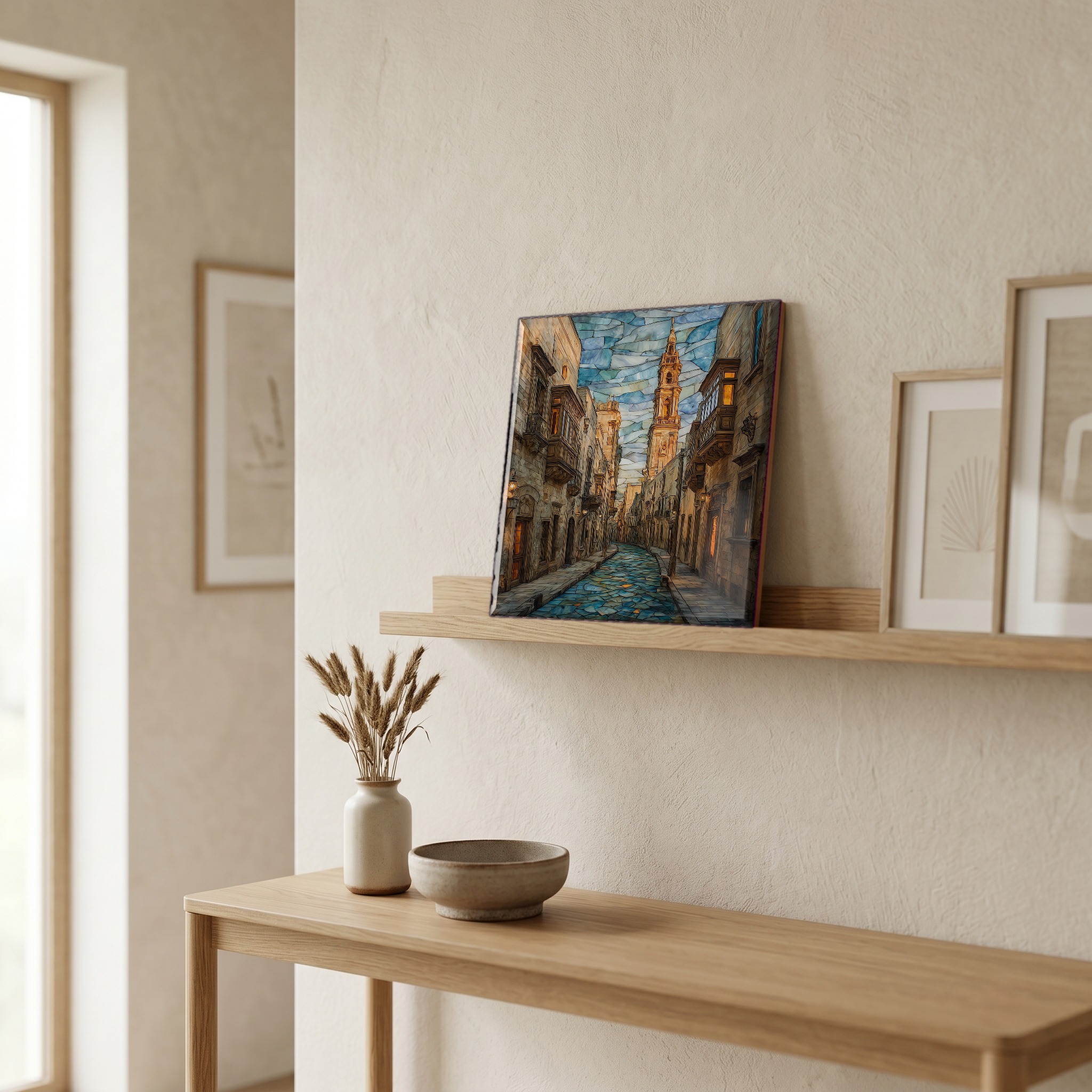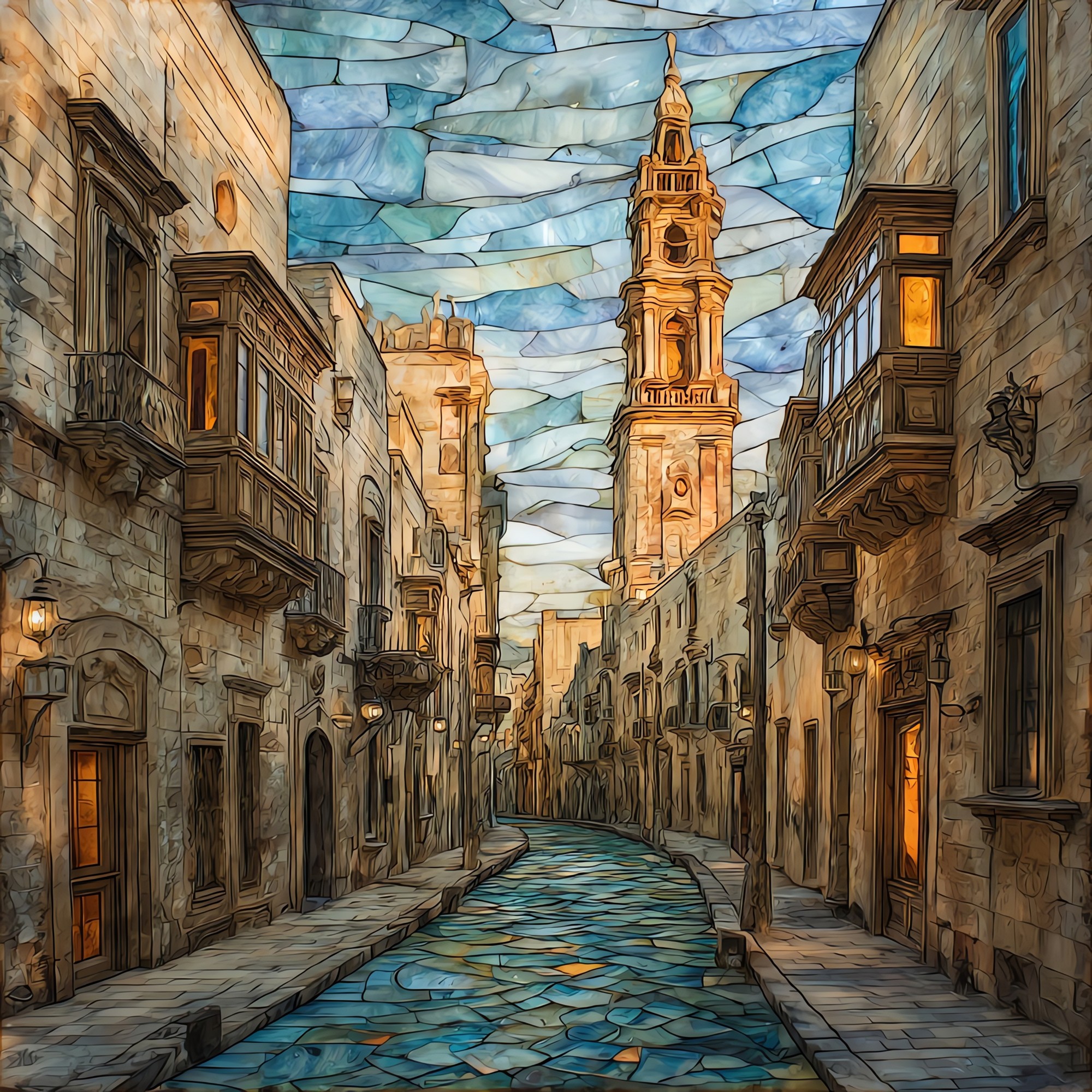
Wender·Vista
Noto
shown on ceramic, 12-inch tileItaly
in southeastern Sicily, south of Syracuse

Noto

the hour the stone turns gold.

Where it lives

Not only on a wall.

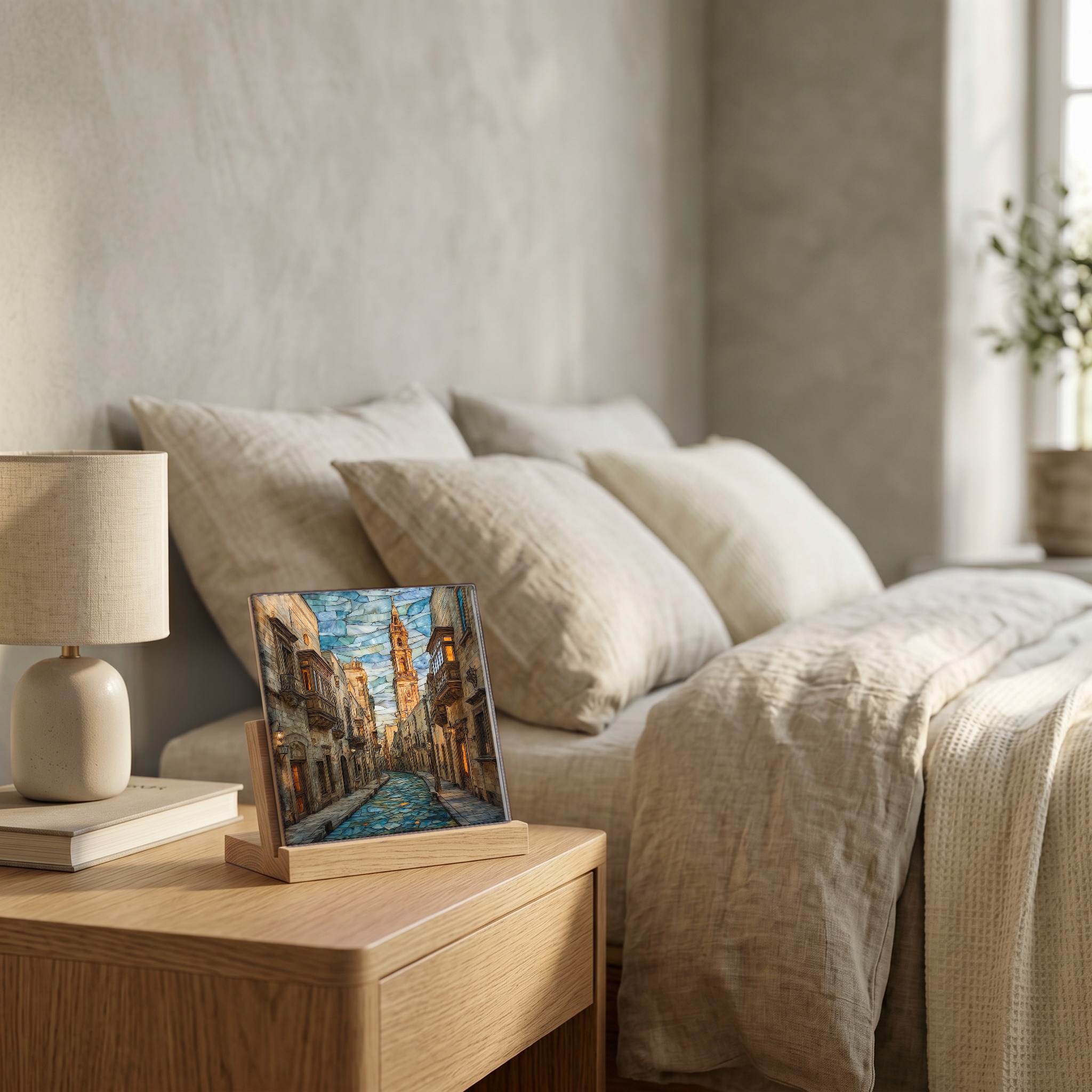
A small tile on the nightstand catching the morning. A larger one above the fire. Yours, wherever you spend the slow hours.
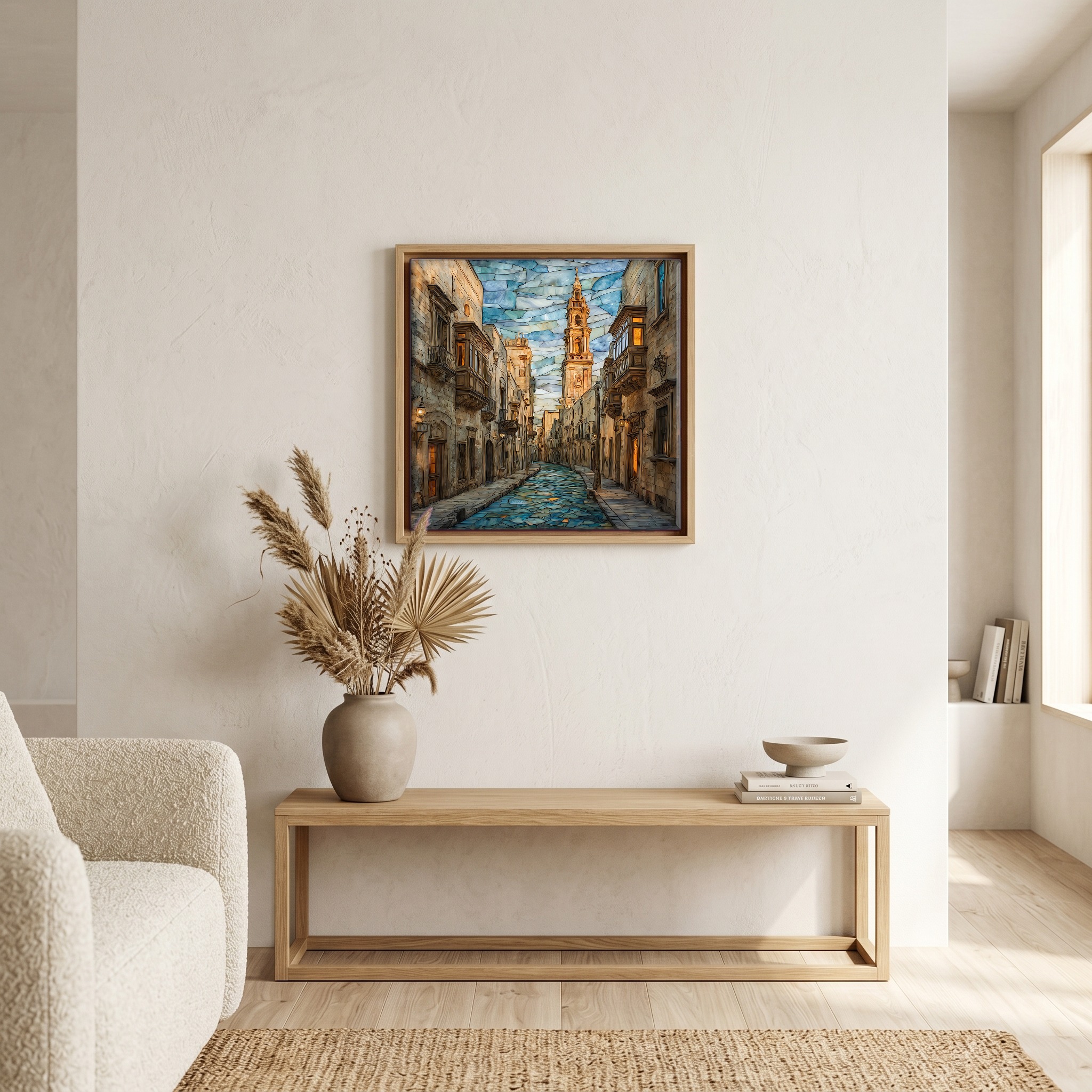
Above the bench, in a warm oak surround.
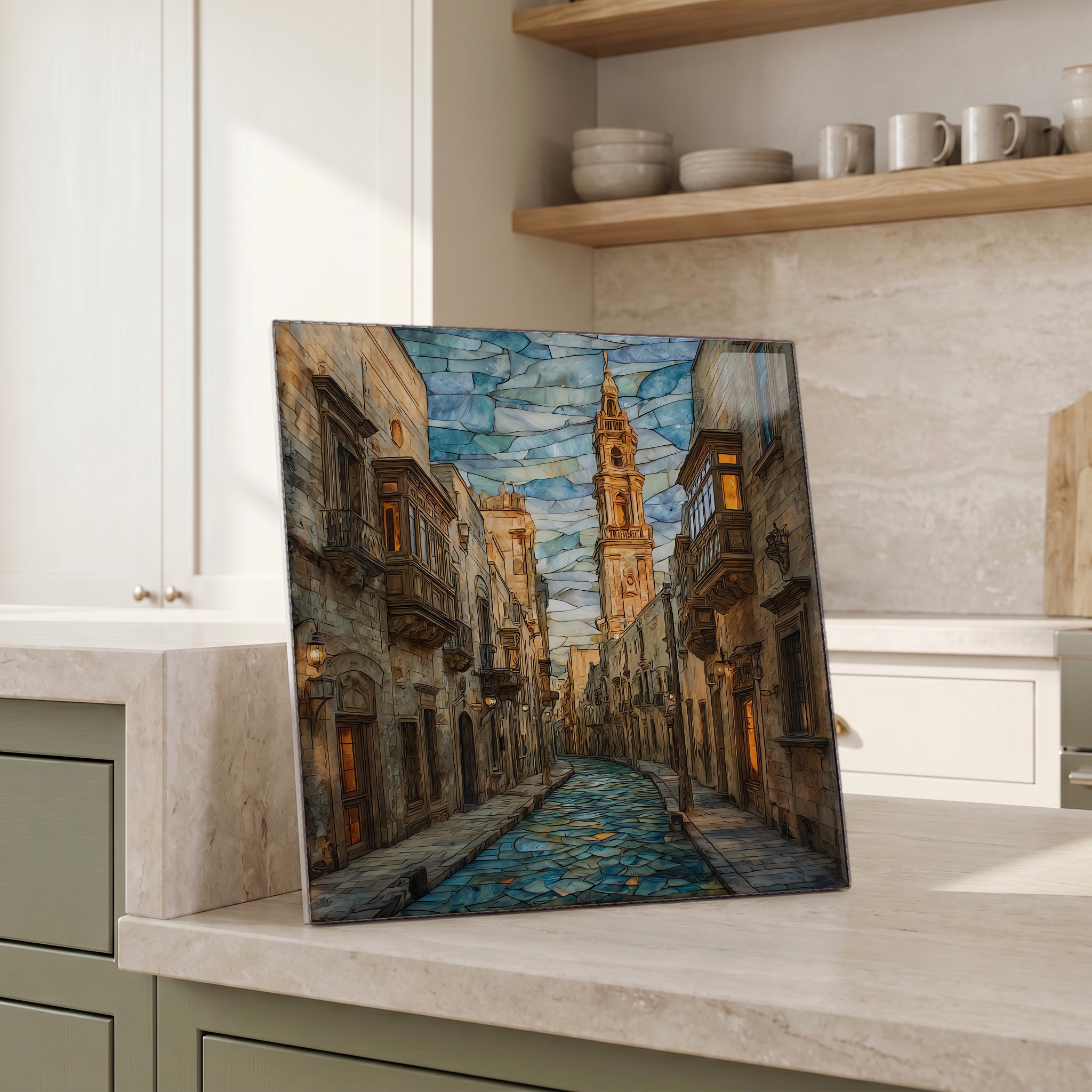
Beside the kettle, propped on the counter.
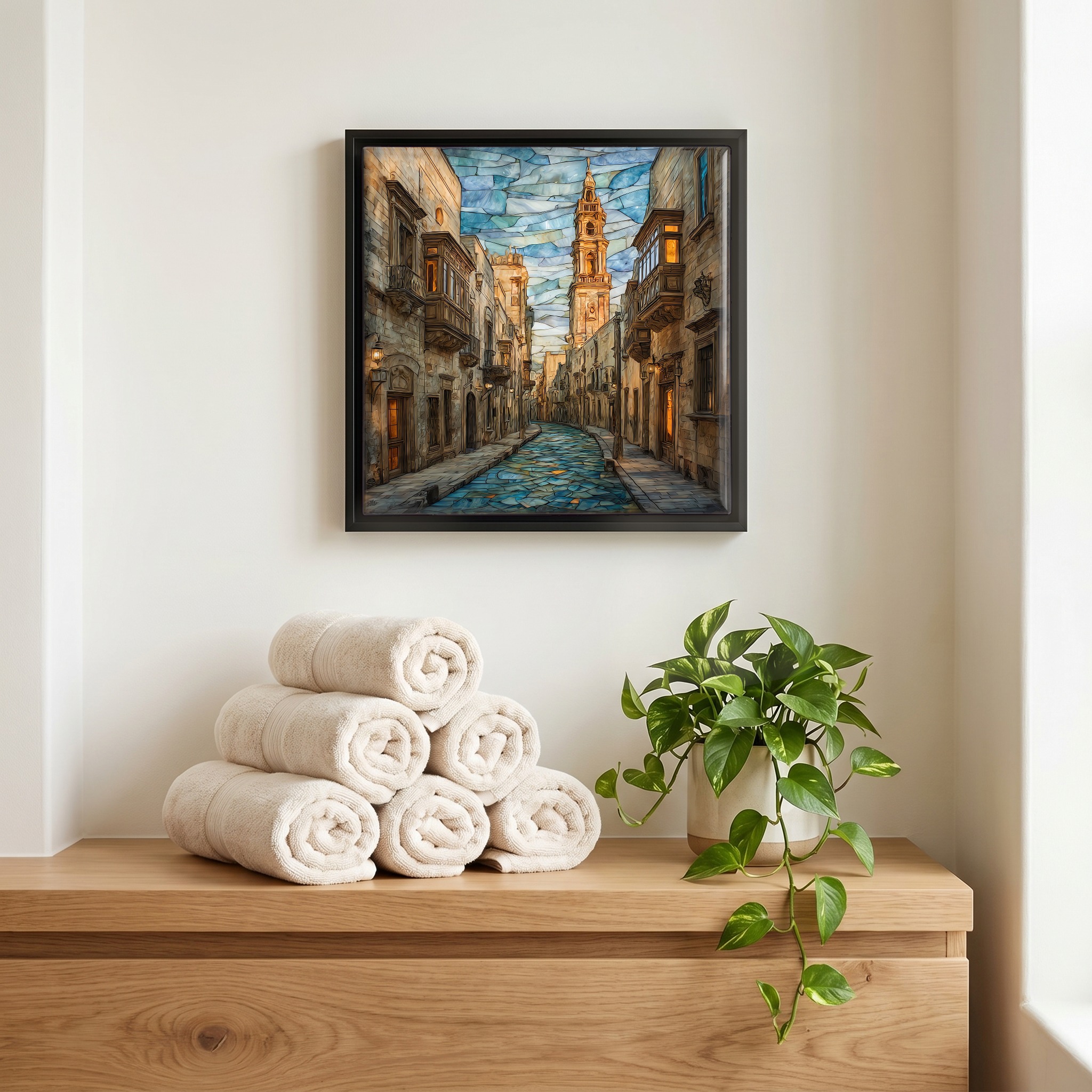
Above the linens, in a slim black surround.
On the nightstand, on a light oak stand.
On a picture ledge, where the light comes in.
a note from the studio

A whole baroque town carved from honey-coloured limestone, rebuilt from scratch after the 1693 earthquake levelled the old one eight kilometres up the road. The stone takes the light strangely: silver-pale at noon, warmer through the afternoon, until the last hour before sunset turns the cathedral steps the colour of held amber. The third Sunday of May, the Via Corrado Nicolaci disappears end to end under a carpet of flower petals. The rest of the year, the town just glows.
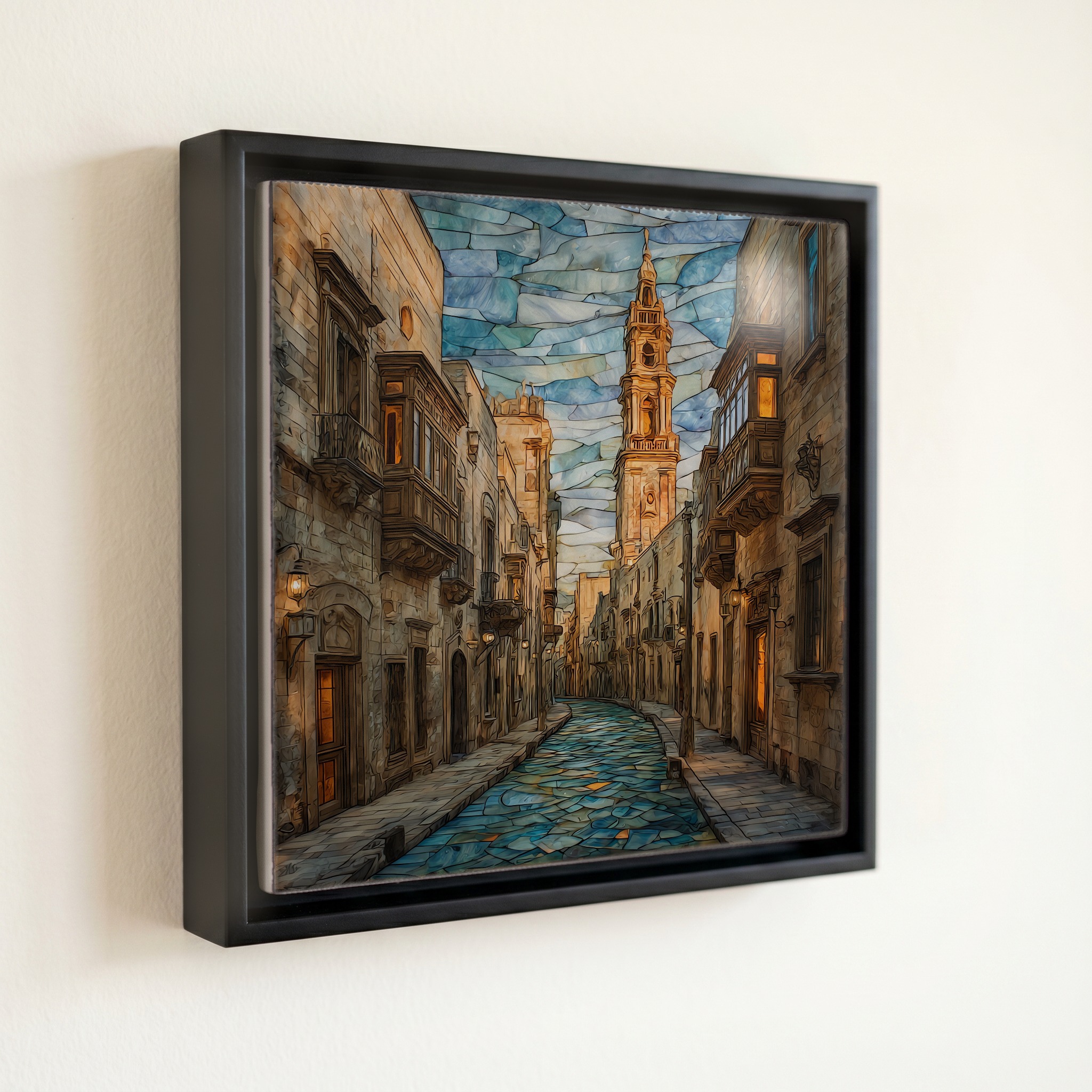
from the studio
shown in a slim black floating frame · 6 × 6 in
— bring it home

Noto, on ceramic.

Each tile is finished by hand in our Knoxville studio. Artwork is slowly infused into the ceramic surface under high heat and pressure, and rests beneath a thin glossy finish. The colour lives in the surface, not on top of it.

What kind of piece?
One tile — square or rectangle.
How big?
the popular one — counter, shelf, nightstand
6 × 6 in · 15 cm · 1.6 lb
Surface finish
A clear glossy finish — the artwork reads as if under resin. Ideal for show-pieces and framed wall art.
How it sits
A hidden cleat — sits ¼″ proud of the wall.
$58
Hand-finished and shipped from our studio at the foot of the Smokies. On your wall in about ten days.
size
6 × 6 in
15 cm
weighs
1.6 lb
solid in the hand
surface
ceramic, hand-finished
art rests beneath a thin glossy finish
from
Knoxville, TN
our family studio, at the foot of the Smokies
— start a Coaster Set

Pick any four 4-inch tiles — National Parks you've been to, a Smokies set, the four seasons of one place. $ for a set of , cork-backed, ready to live on the table.
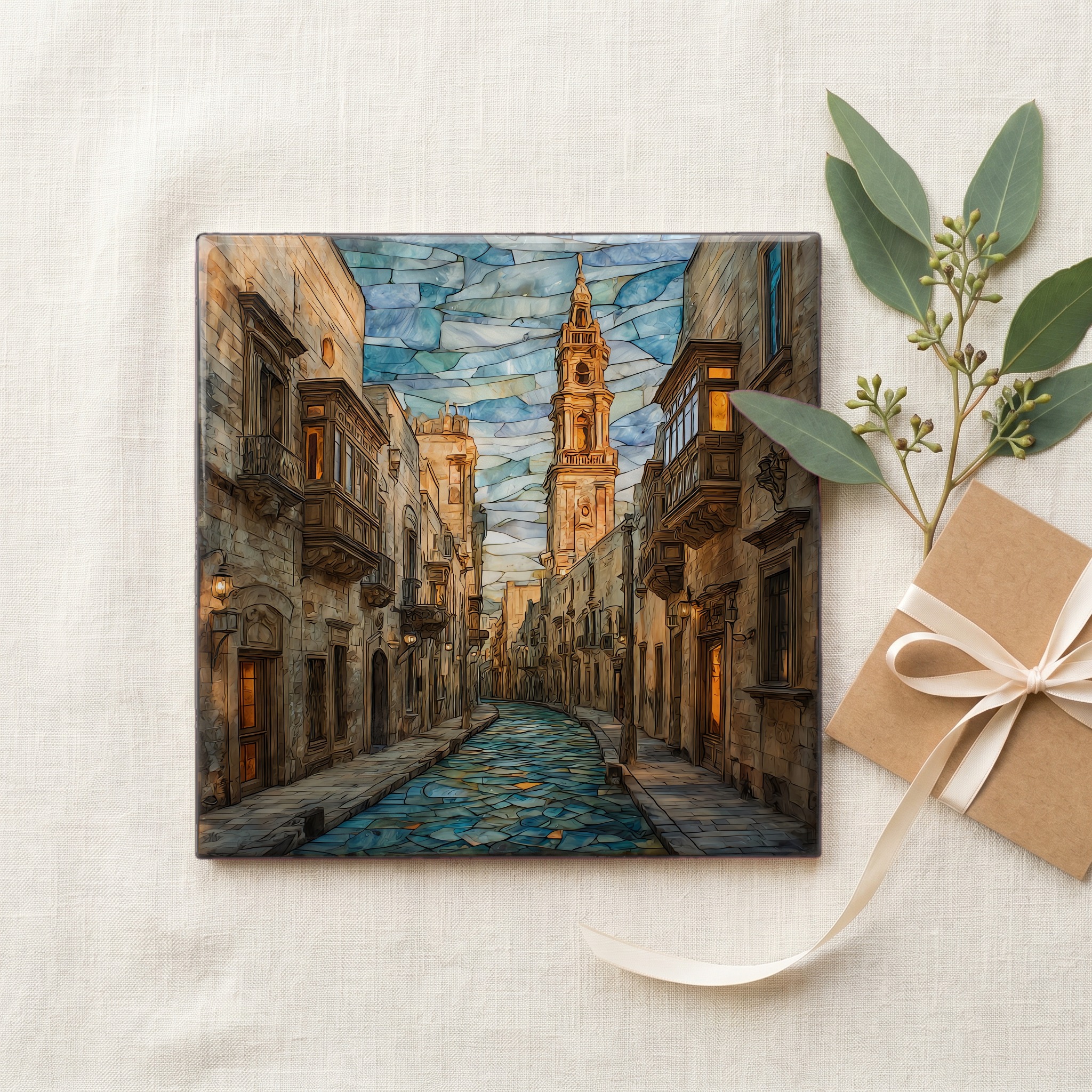
comes gift-ready
comes gift-ready

Each tile ships in a kraft box, tied with cream ribbon, with a handwritten note from the studio if you'd like to add one.
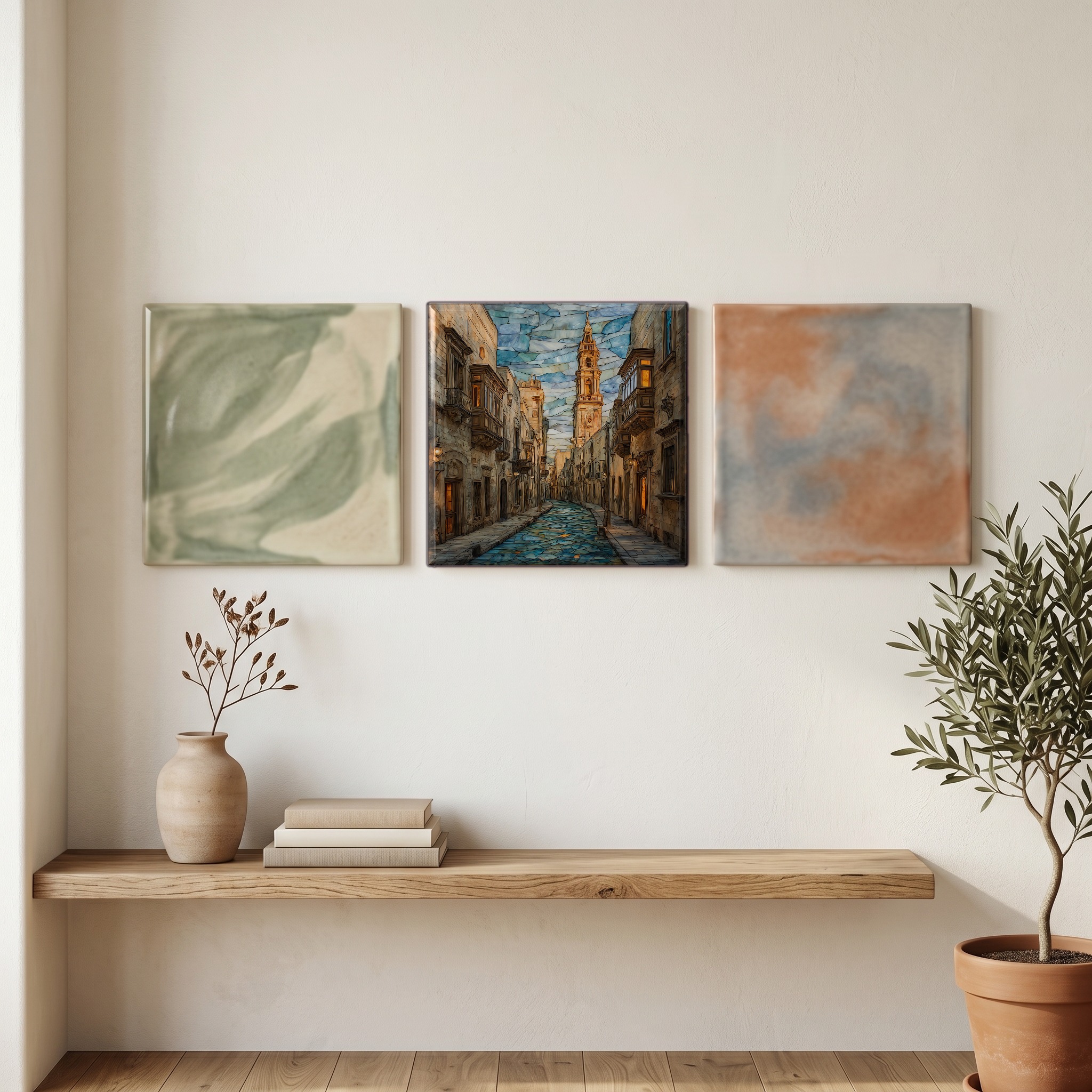
or build a grouping
or build a grouping

Three or five different vistas, hung together — a chapter of places you've been, or want to go.

about Noto

The place, in three passes.

A little of what's known, in case you fall down the rabbit hole — or want to go see it yourself.
the place

Noto sits in southeastern Sicily, about 32 kilometres southwest of Syracuse, set back from the coast on the seaward slope of the Iblean Mountains at roughly 152 metres above sea level. The town that stands today was built from scratch after a catastrophic earthquake in January 1693 destroyed the medieval Noto, now called Noto Antica, eight kilometres to the north. Architects Rosario Gagliardi, Vincenzo Sinatra, and Paolo Labisi laid the new town out on three terraces, with a single ceremonial axis, the Corso Vittorio Emanuele, running through three piazzas. UNESCO inscribed Noto on the World Heritage List in 2002 as one of the Late Baroque Towns of the Val di Noto.

the stone

The building stone of Noto is a soft, pale-gold limestone known locally as pietra di Noto, quarried from the Iblean plateau and used for almost every façade in the historic centre. Freshly cut, it reads cream; after a century of weathering it darkens to a deep amber, and at low sun the whole town glows. The same earthquake that flattened old Noto in 1693 also gave the new town its material logic; the stone was light enough to carve quickly into the cherubs, masks, and Atlas figures that hold up the balconies of the Palazzo Nicolaci di Villadorata. The Cathedral of San Nicolò, rebuilt after a partial collapse in 1996, is the most visible piece of the same quarry.

the visit

Noto is reachable by train or intercity coach from Syracuse in about half an hour to an hour, or by car off the SS115 coast road. The historic centre is small enough to walk in an afternoon, climbing the Corso Vittorio Emanuele from the Porta Reale gate up to the Chiesa di San Domenico. Mornings are quietest; the hour before sunset is when the limestone is at its most itself. The third Sunday of May brings the Infiorata, a festival in which Via Corrado Nicolaci is covered end to end with floral mosaics laid by artists from across Italy. Outside festival days, the town is open and largely free.

where
Italy · Province of Syracuse, Sicily
elevation
152 m · 499 ft
position
36.8910° N · 15.0700° E
the neighborhood

What's nearby.

A handful of named places within an hour's walk or short drive. Some we've already painted; some we will.
8 km N
Noto Antica
ruined medieval town
8 km SE
Lido di Noto
beach
12 km S
Vendicari Nature Reserve
coastal wetland reserve
10 km N
Avola
coastal town
22 km SE
Marzamemi
fishing village
32 km NE
Syracuse
ancient Greek harbour city
N
Noto
Noto Antica
Lido di Noto
Vendicari Nature Reserve
Avola
Marzamemi
Syracuse
common questions

What people ask.

A few questions we get about Noto — and about bringing the piece home.
about the place

Noto is in southeastern Sicily, about 32 kilometres southwest of Syracuse and roughly 10 kilometres inland from the Ionian Sea. It sits at about 152 metres above sea level on the seaward slope of the Iblean Mountains, in the Province of Syracuse.

UNESCO inscribed Noto in 2002 as one of eight Late Baroque Towns of the Val di Noto. The other seven are Caltagirone, Catania, Militello Val di Catania, Modica, Palazzolo Acreide, Ragusa, and Scicli, all rebuilt in a unified late-baroque style after the 1693 earthquake.

The town is built from pietra di Noto, a soft pale-gold limestone quarried locally from the Iblean plateau. Freshly cut it reads cream; after weathering it deepens to amber, and at low sun the whole town reads as if lit from within.

The Infiorata is a one-day festival held the third Sunday of May, when Via Corrado Nicolaci is paved end to end with floral mosaics designed by competing artists from across Italy. The carpet stays in place for a few days before it is swept up.

The medieval town, now called Noto Antica, was destroyed by the catastrophic earthquake of January 1693 that flattened most of southeastern Sicily. Survivors relocated about eight kilometres south and built the present town from scratch. The old site is still in ruins and open to visitors.

Late spring and early autumn carry the best light without the high heat of August. The third Sunday of May is the Infiorata, the town's busiest day. The hour before sunset is when the limestone is most itself; many visitors return then.

Trains and intercity coaches run from Syracuse to Noto in about half an hour to an hour. By car, the SS115 coast road reaches Noto in roughly forty minutes. The historic centre is closed to most car traffic, with paid parking around the edges.

about the piece in your home

It has been a meaningful gift for many of our customers with family or memory roots in southeastern Sicily. Noto is the town Sicilians point to when they want to show what the baroque rebuilding made of the island. A Small or Medium with a handwritten note from the studio carries well.

The honey and amber tones of the Noto piece sit naturally in Mediterranean-modern, warm-neutral, and earth-tone palettes. It also reads well in jewel-tone maximalist rooms, where the stained-glass colour layers under the limestone give the artwork enough depth to hold against a deep wall colour.

The honey-stone palette belongs to the broader Mediterranean-modern movement that has held since 2023, alongside warm minimalism. Noto reads as both classical and current; its baroque architecture pairs unexpectedly well with restrained, contemporary interiors.

Above a standard sofa or a wide console, a single Large tile holds the space; a 4-tile Mural gives a stronger architectural presence; a 9-tile Mural reads as a full wall piece. The Medium suits a narrower console or a stair landing.

Yes, in the Dura Satin or Matte finish. Both finishes are scratch-resistant and handle the humidity of bathrooms, showers, and kitchens. The Glossy finish is meant for dry wall-art settings such as a living room or hallway.

A microfibre cloth with plain water is enough for everyday care. Avoid abrasive pads and harsh solvents. The colour is slowly infused into the ceramic surface under high heat and pressure and sits beneath a thin protective finish, so it will not lift off with cleaning.

Yes. Every WenderVista piece is painted in our own visual language, in our family studio at the foot of the Smoky Mountains in Knoxville, Tennessee. The artwork is not licensed and does not appear anywhere outside Wender Studios.

if this one stayed with you

A few you might also love.

Hand-picked by the eye that found Sorapis. Same air, same kind of quiet.
— a collection

The Italian Dolomites,
painted slow.

The valleys between Cortina and Val Gardena, the tarns you walk an hour to see, the towers that turn the colour of a banked fire just before dark. Wander the collection by valley, by season, or follow the path Reid walked.

Tre Cime
Braies
Misurina
Sorapis
Cinque Torri
Sassolungo
Marmolada