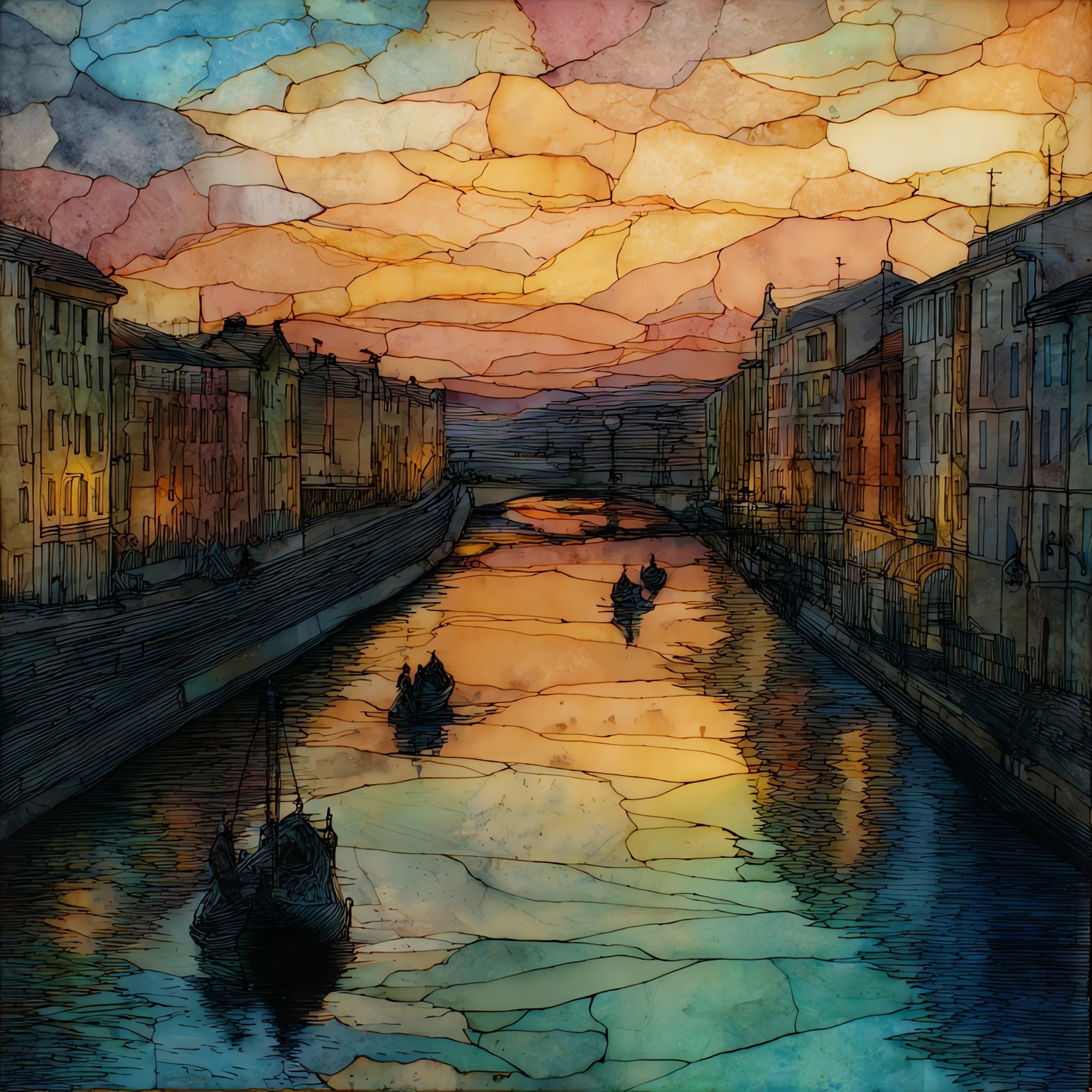
Milan Navigli Canals
— — the water Milan kept when it covered the rest.
Not only on a wall.

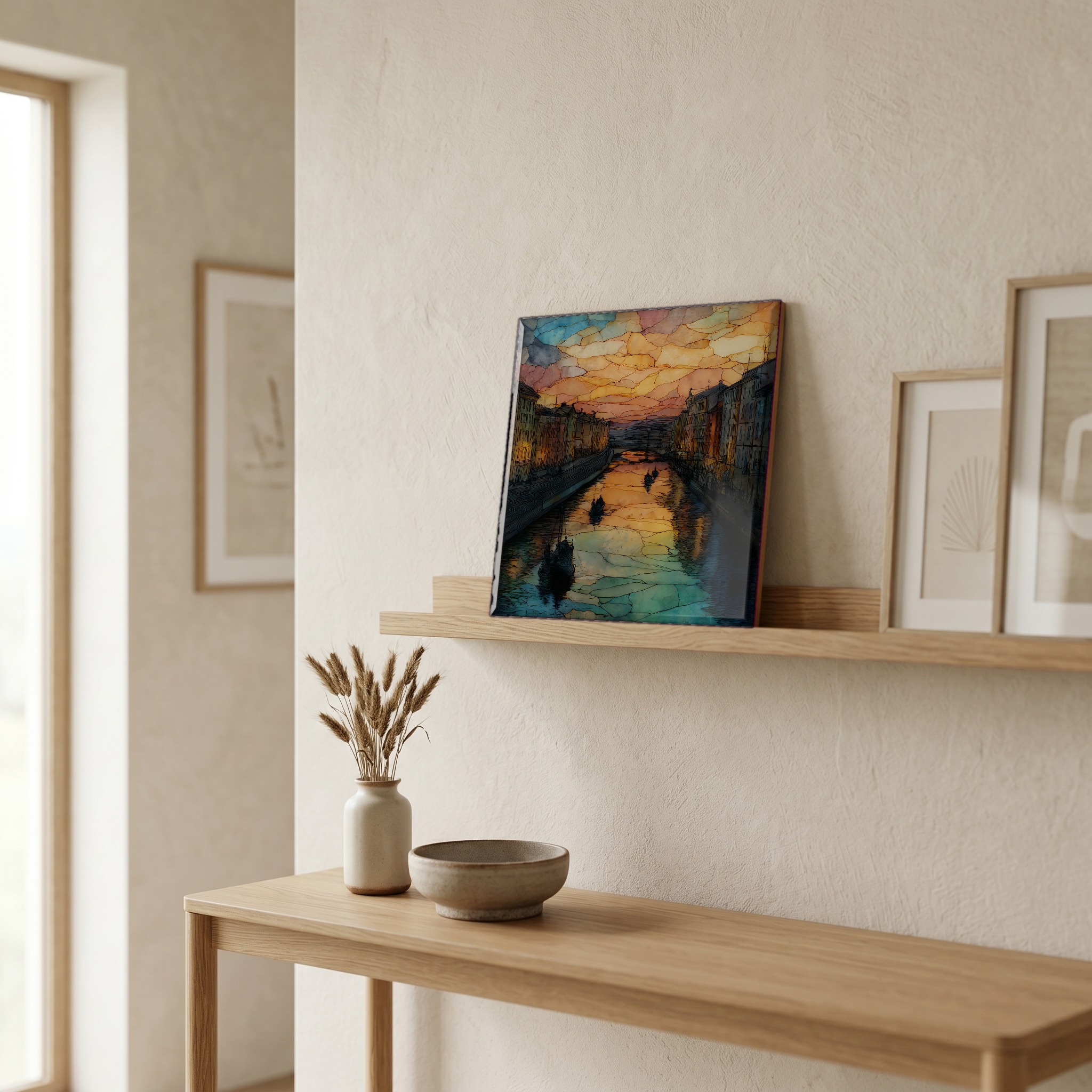
“Two canals are most of what is left of the water Milan used to run on. The Naviglio Grande comes in from the Ticino, the Naviglio Pavese heads down toward Pavia, and they meet at the Darsena, the old port below Porta Ticinese. The inner ring was paved over in 1929; these two were spared. By day the towpaths are quiet and a washhouse alley still stands off the Grande. By evening the bars fill, the water goes the colour of the lights above it, and the city that paved its rivers comes back to the one it kept.
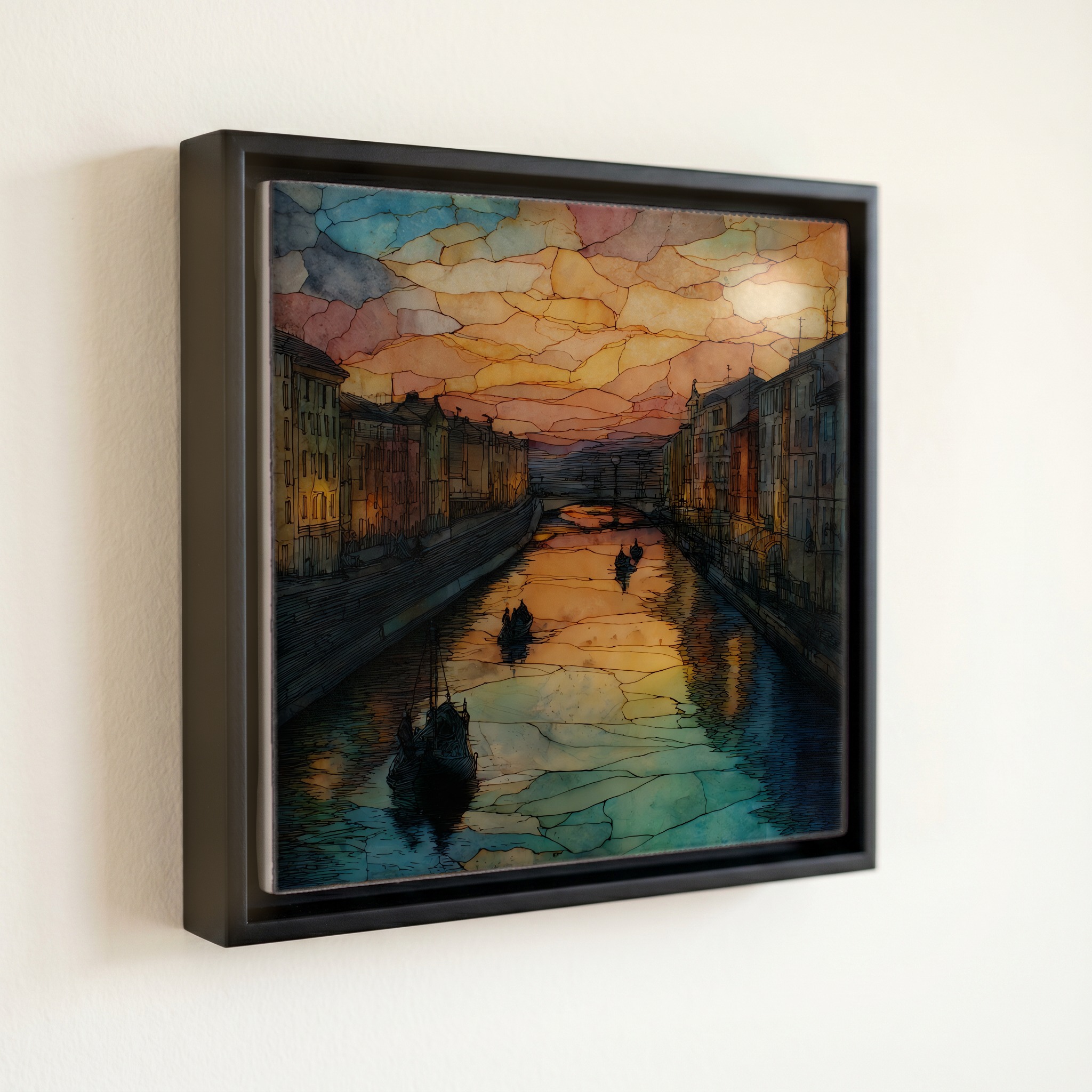
Milan Navigli Canals, on ceramic.
Each tile is finished by hand in our Knoxville studio. Artwork is slowly infused into the ceramic surface under high heat and pressure, and rests beneath a thin glossy finish. The colour lives in the surface, not on top of it.
Pick any four 4-inch tiles — National Parks you've been to, a Smokies set, the four seasons of one place. $ for a set of , cork-backed, ready to live on the table.
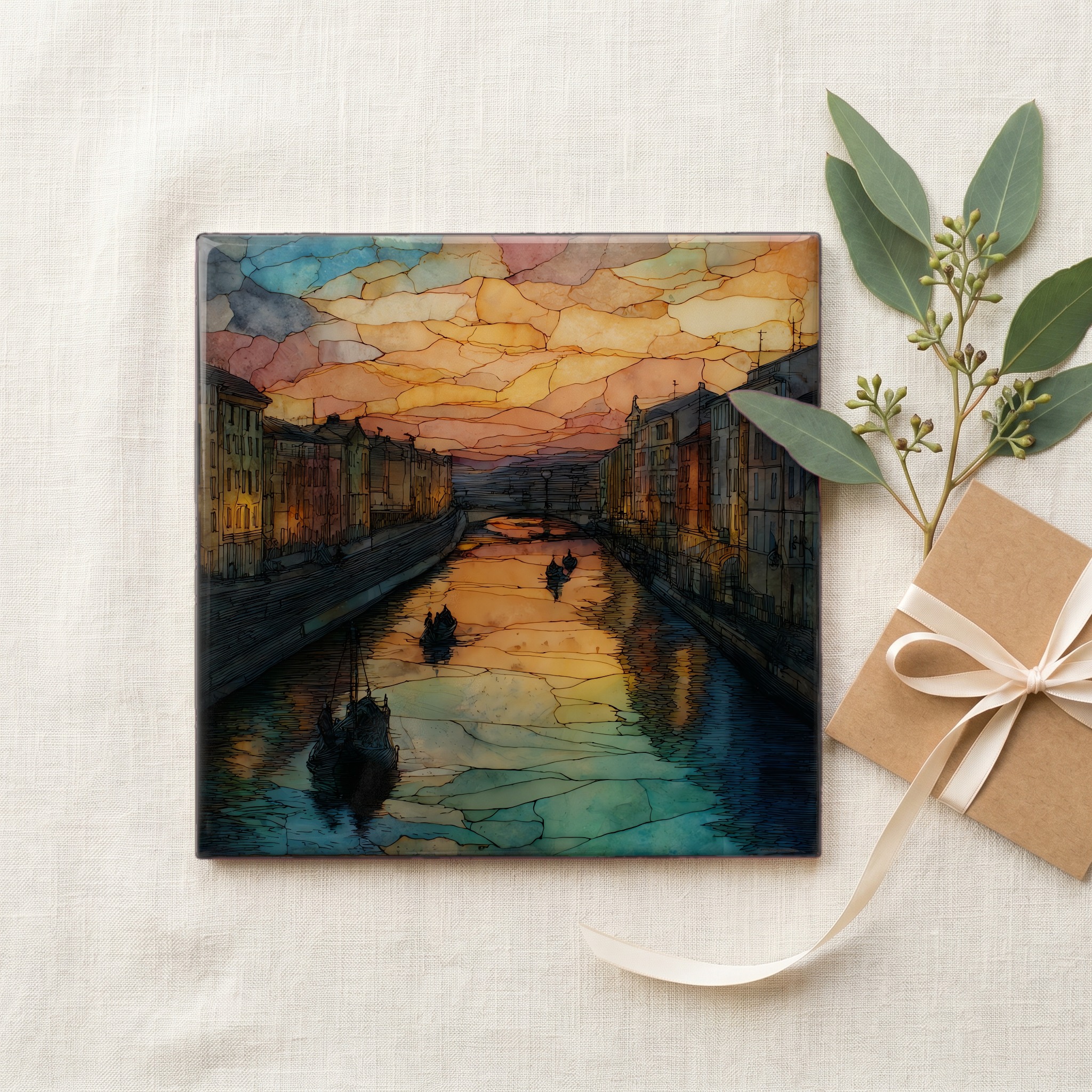
Each tile ships in a kraft box, tied with cream ribbon, with a handwritten note from the studio if you'd like to add one.

Three or five different vistas, hung together — a chapter of places you've been, or want to go.
The place, in three passes.
The Navigli are Milan's surviving canals, in the southwest of the city below the medieval Porta Ticinese. Two of them still carry water. The Naviglio Grande, begun in 1177 and completed in 1272, runs 49.9 kilometres from the Ticino river near Tornavento to the Darsena, the old dock at Piazza XXIV Maggio. The Naviglio Pavese leaves the same basin and runs 33 kilometres south to Pavia through a flight of six locks. For seven centuries this was how stone, salt, and grain reached the city, and how the Candoglia marble for the Duomo arrived. Milan's inner ring of canals, the Cerchia dei Navigli, was filled in beginning in 1929; these two outer reaches were left open.
The canals were dug for transport, and the engineering that made them work drew Milan's most famous resident into the problem. Leonardo da Vinci arrived in 1482, when the Naviglio Grande was already three centuries old, and turned his attention to the locks that let boats climb between water levels. The mitre gate associated with his notebooks closes as a shallow V pointed upstream, so the weight of the water seals it tighter; small sluice panels at the base let the levels equalise before the gates swing. The Darsena, built as the city's port in 1603, was still the thirteenth-busiest dock in Italy by goods received in 1953. The last commercial cargo unloaded there on the thirtieth of March, 1979.
On the last Sunday of most months the Mercatone dell'Antiquariato fills the towpath of the Naviglio Grande with about 380 stalls, running roughly two kilometres from Viale Gorizia to Via Valenza: furniture, gilt mirrors, old prints, glassware. Off the same bank is the Vicolo dei Lavandai, a covered washhouse where laundry was scrubbed on slanted wooden boards into the late 1950s, fed by a side stream of the canal. The rest of the time the district is quieter by day and busy at dusk, when the bars along both banks open for aperitivo. The nearest Metro stops are Porta Genova and Sant'Agostino, both on line M2; the canals are about a fifteen-minute walk southwest of the Duomo.