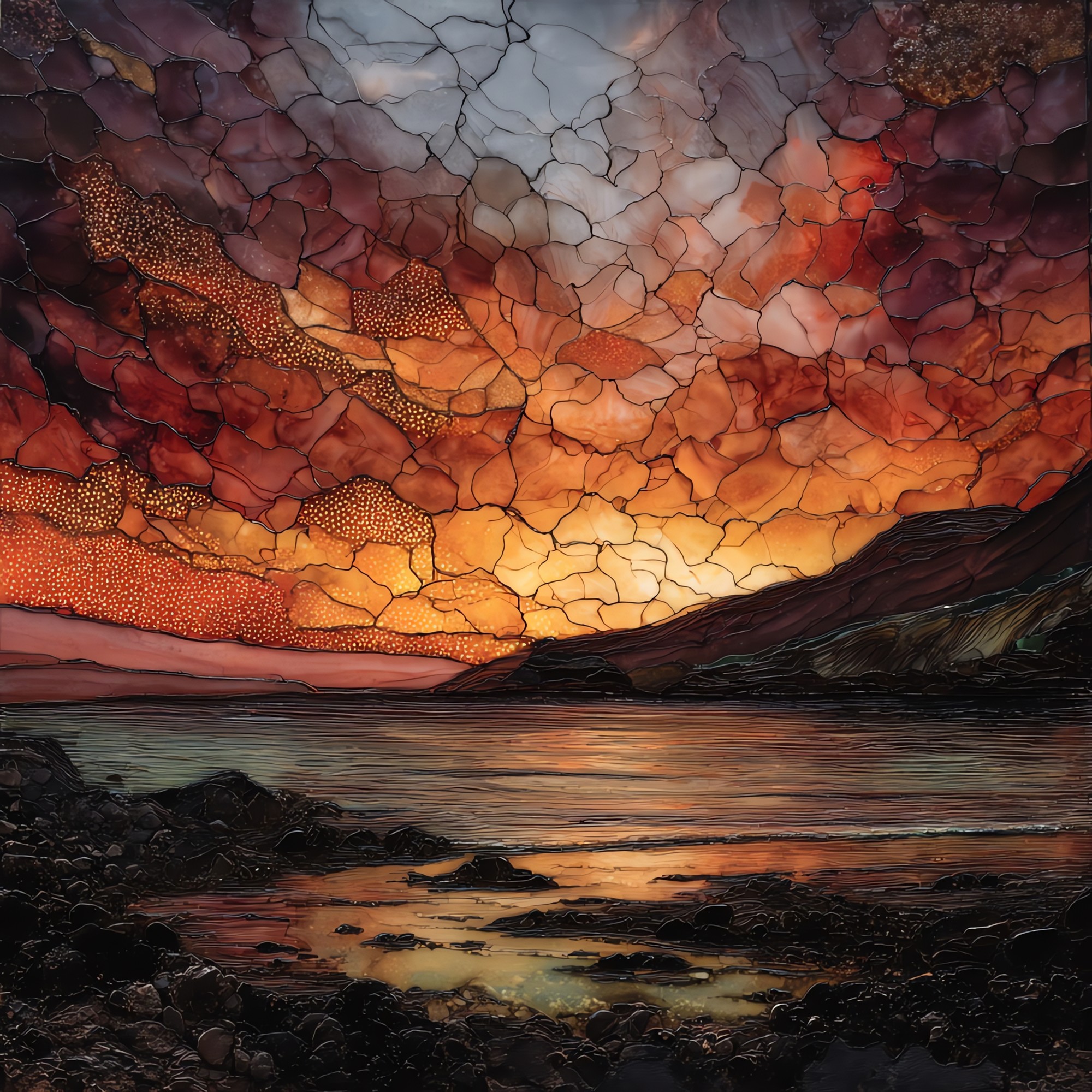
Mount Vesuvius
— a fire the bay has learned to live beside.
Not only on a wall.
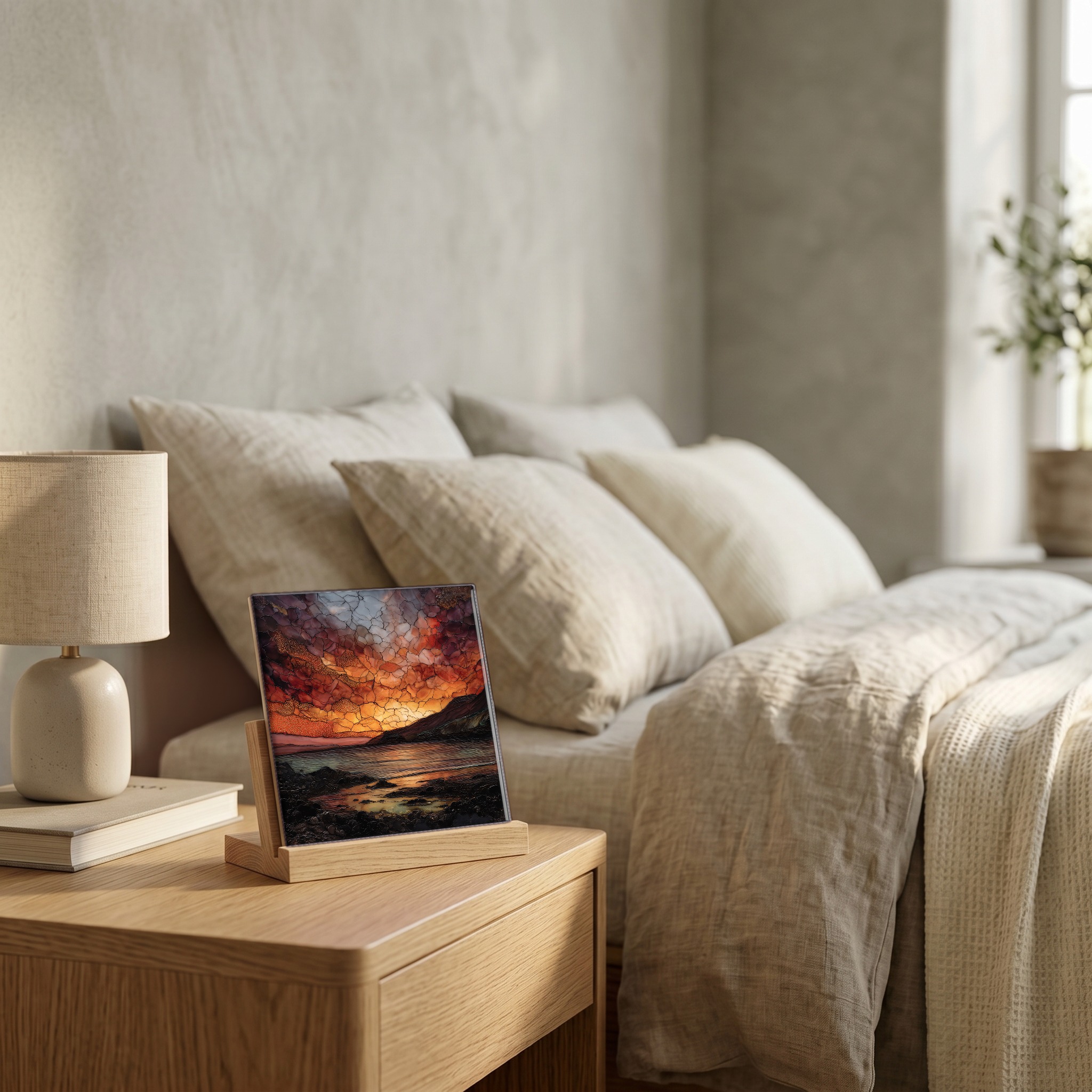
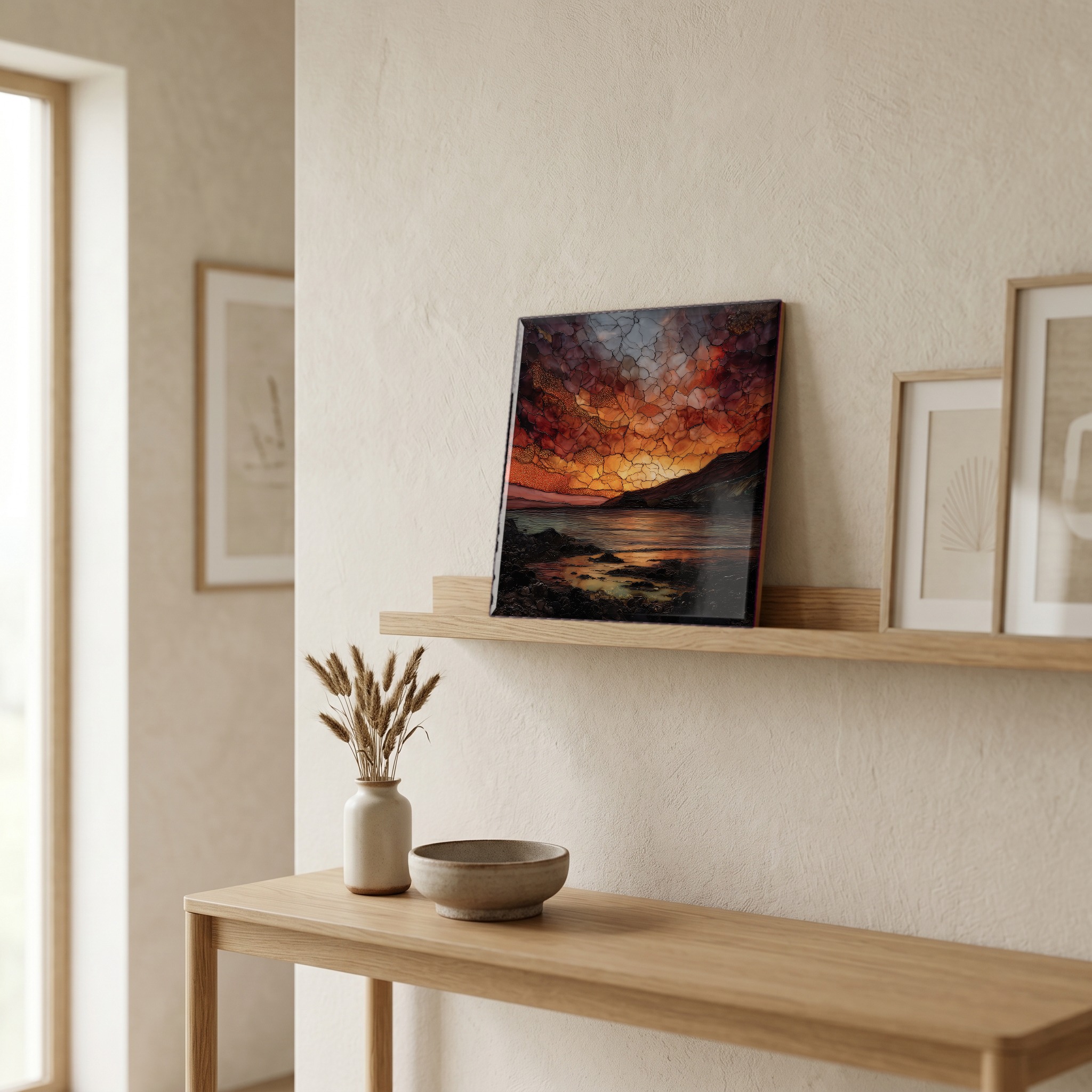
“Two shapes in one mountain: the broken ring of old Monte Somma, and the younger cone that grew inside it. The cone everyone draws is the one the AD 79 eruption built, the one that buried Pompeii and Herculaneum down the slope. It has been quiet since March 1944. Quiet is not the same as finished. Three million people live within sight of it now, in towns that climb the lower slopes as if the mountain had agreed to wait. From across the bay at dusk it reads as one dark, even weight on the skyline.
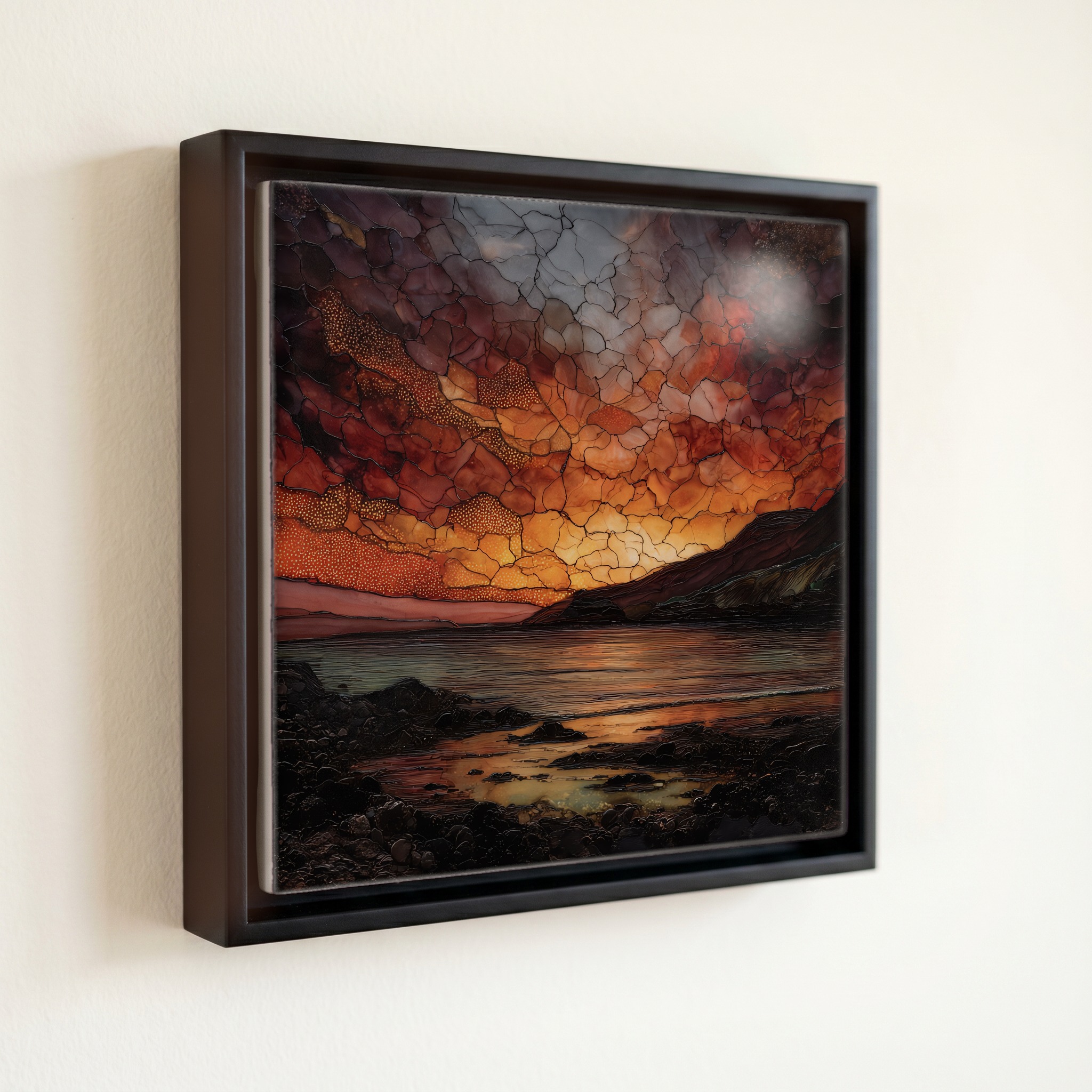
Mount Vesuvius, on ceramic.
Each tile is finished by hand in our Knoxville studio. Artwork is slowly infused into the ceramic surface under high heat and pressure, and rests beneath a thin glossy finish. The colour lives in the surface, not on top of it.
Pick any four 4-inch tiles — National Parks you've been to, a Smokies set, the four seasons of one place. $ for a set of , cork-backed, ready to live on the table.
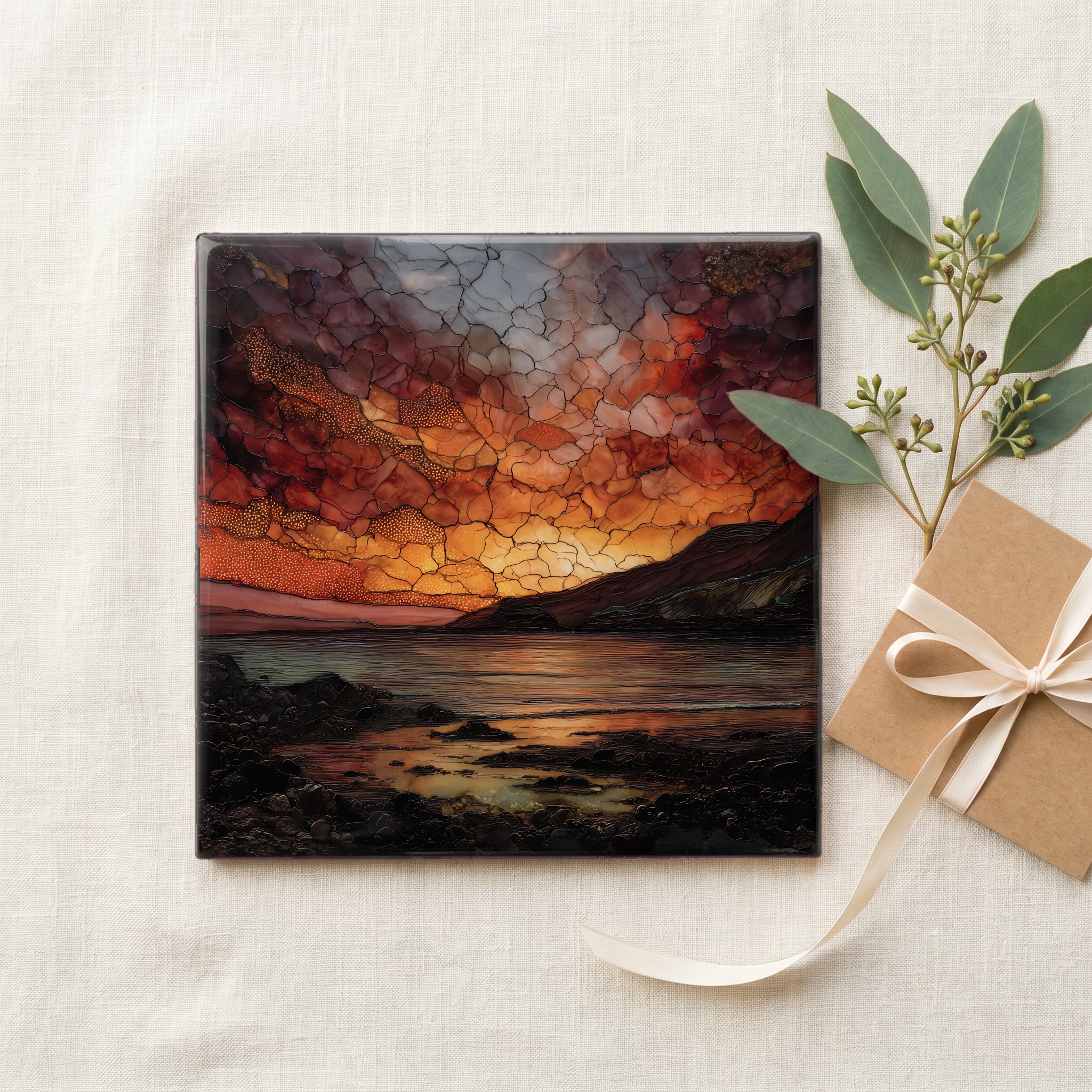
Each tile ships in a kraft box, tied with cream ribbon, with a handwritten note from the studio if you'd like to add one.
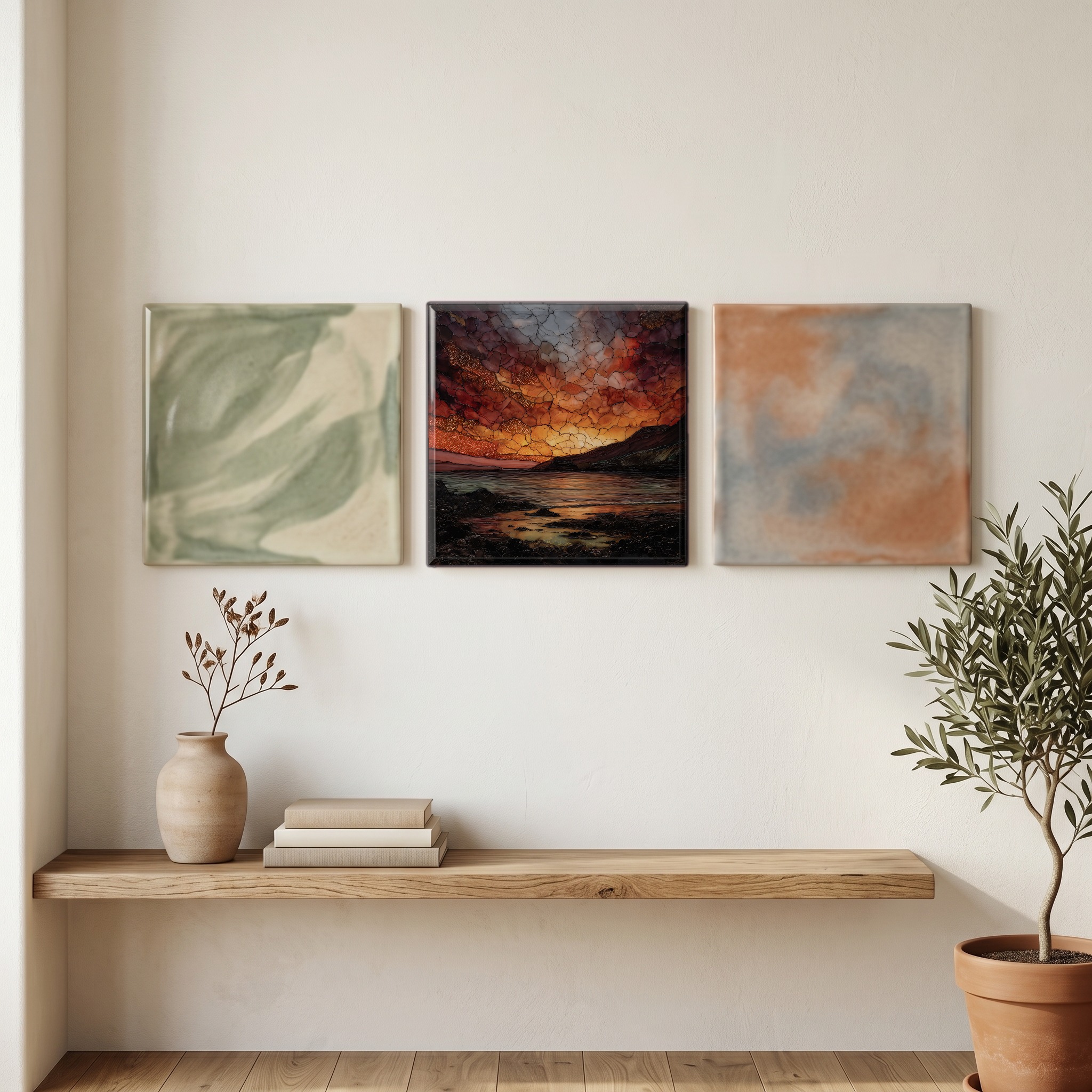
Three or five different vistas, hung together — a chapter of places you've been, or want to go.
The place, in three passes.
Mount Vesuvius stands on the eastern shore of the Bay of Naples, in the Campania region of southern Italy, the only volcano on the European mainland to have erupted in the last hundred years. Its summit reaches 1,281 metres, though the figure shifts with each eruption; the 1944 event took roughly a hundred metres off the top. The mountain is really two: the arc-shaped ridge of Monte Somma, an older collapsed caldera, half-encloses the Gran Cono, the cone raised in and after the AD 79 eruption. The whole massif sits inside Vesuvius National Park, declared in 1995, and the crater rim is reached by road to a car park near 1,000 metres and a final walk up the cinder slope.
The eruption that made Vesuvius famous is the one of AD 79, which buried the Roman towns of Pompeii and Herculaneum and is the first volcanic eruption ever described in detail. Pliny the Younger, watching from Misenum about thirty-five kilometres across the bay, wrote two letters to the historian Tacitus describing the tall column of ash and the death of his uncle in the rescue; that style of eruption is now called Plinian in his name. Older evidence once fixed the date at 24 August, but later finds point to the autumn of that year. Vesuvius has erupted many times since, most recently in March 1944, when its ash buried dozens of American bombers of the 340th Bombardment Group on a nearby airfield.
The mountain is the centrepiece of Vesuvius National Park, declared on 5 June 1995, and the summit crater can be walked: a bus or taxi climbs to a car park near 1,000 metres, then a graded path switchbacks up to the rim, where the crater opens about 450 metres wide and some 300 metres deep. On the western flank stands the Osservatorio Vesuviano, founded by Ferdinand II in 1841 and the oldest volcano observatory in the world, now part of the network that watches the mountain around the clock. That watching is not ceremonial: about 600,000 people live in the red zone on the slopes, and three million within reach of an eruption, which is why Vesuvius is counted among the most dangerous volcanoes anywhere.