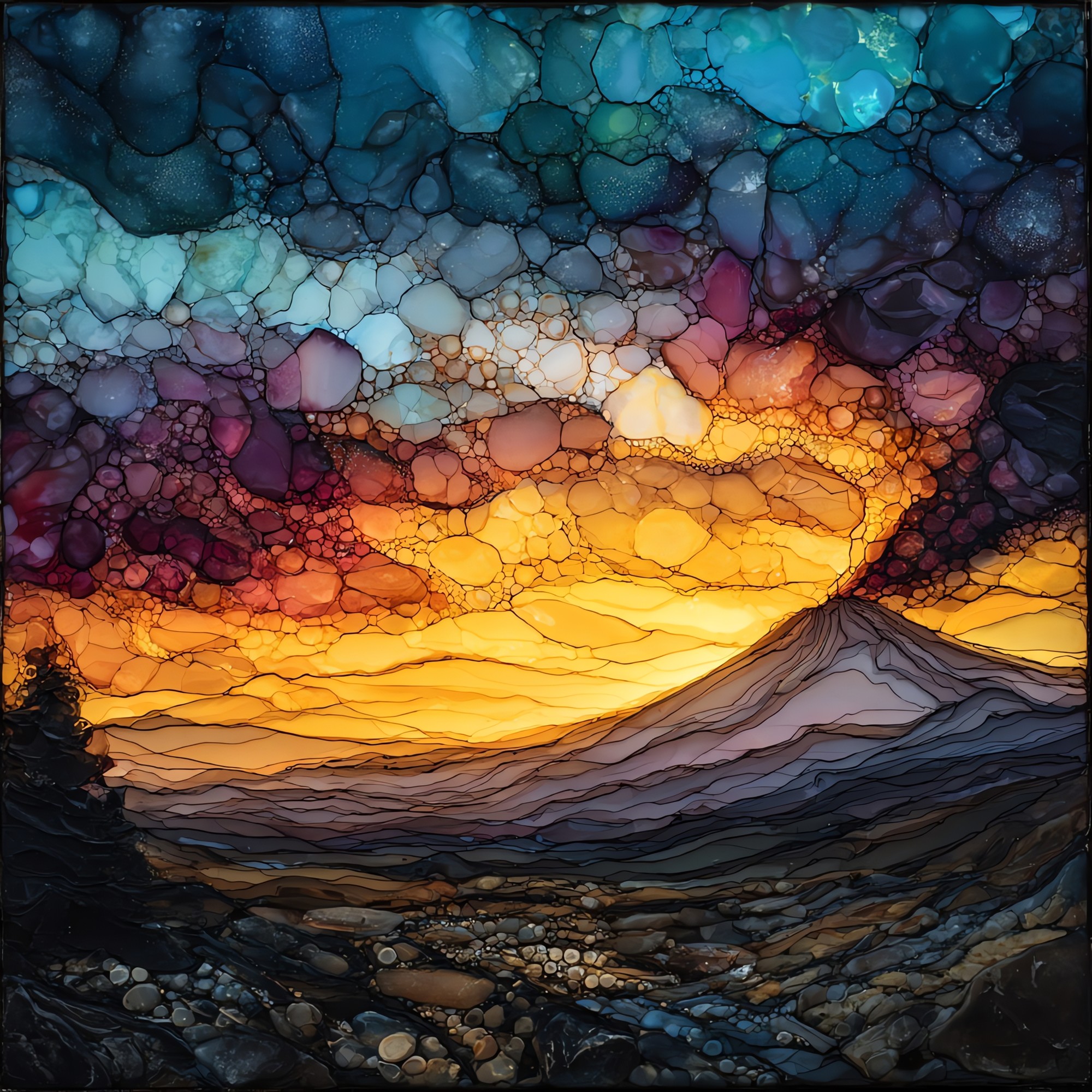
Mount Etna
— — a mountain still writing itself.
Not only on a wall.
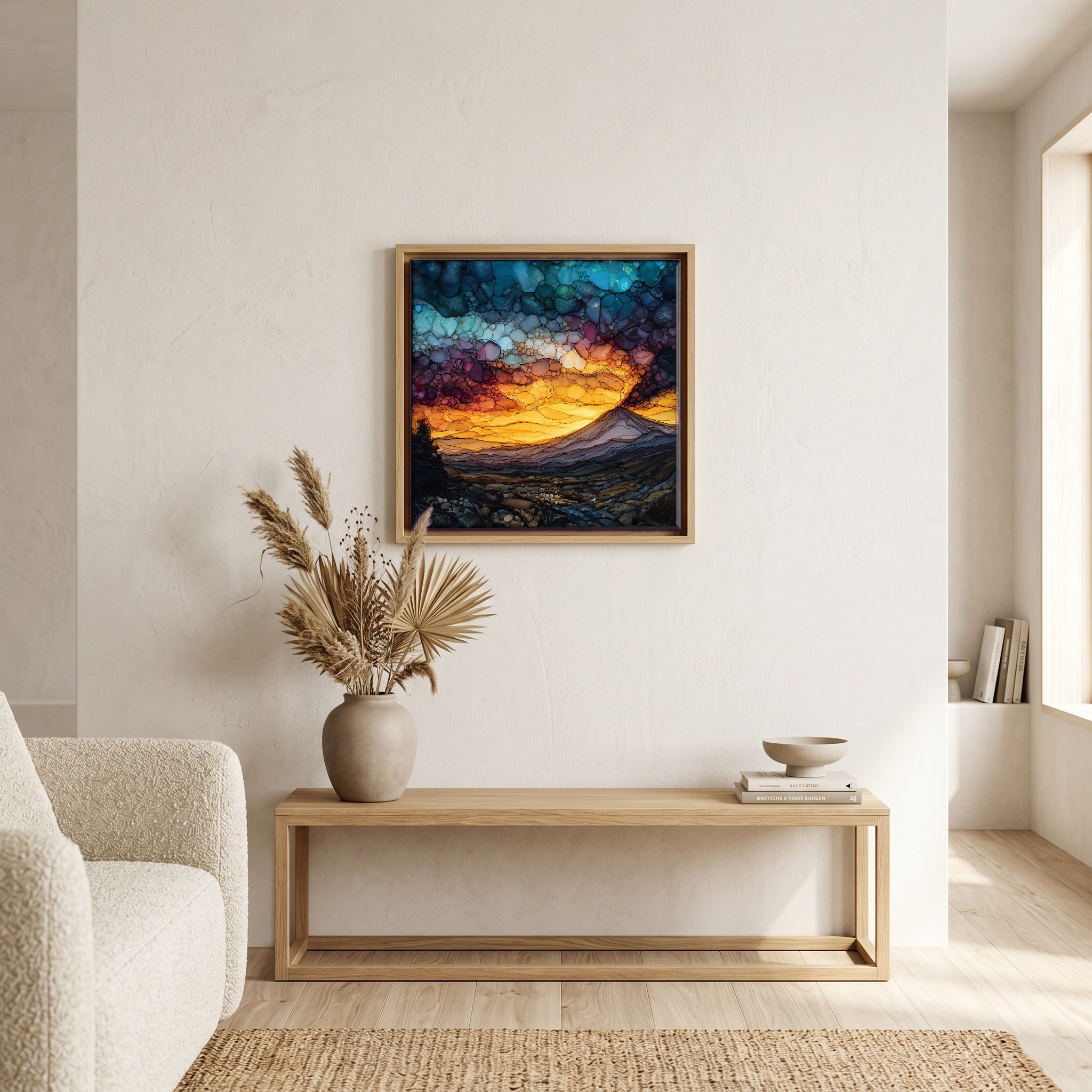
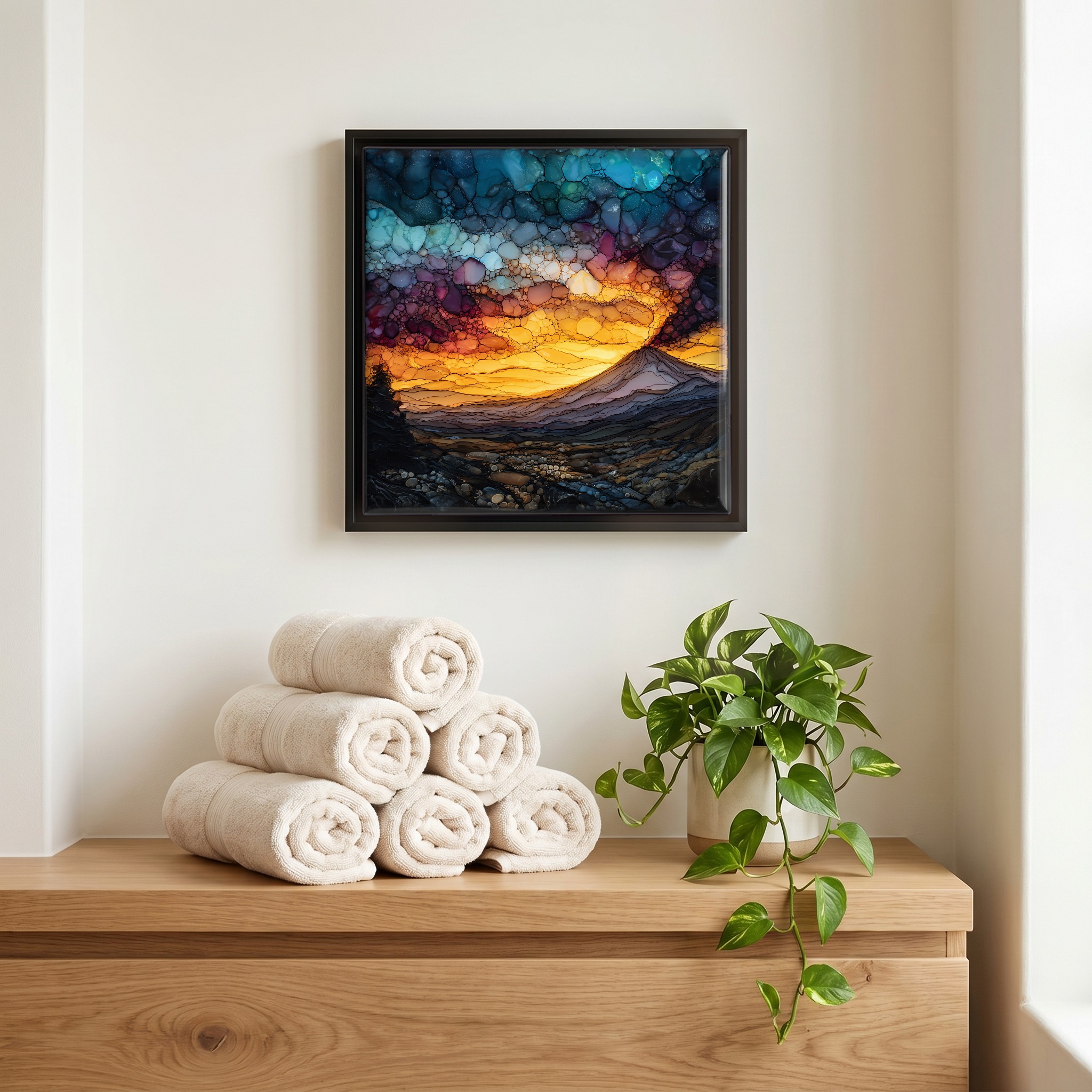
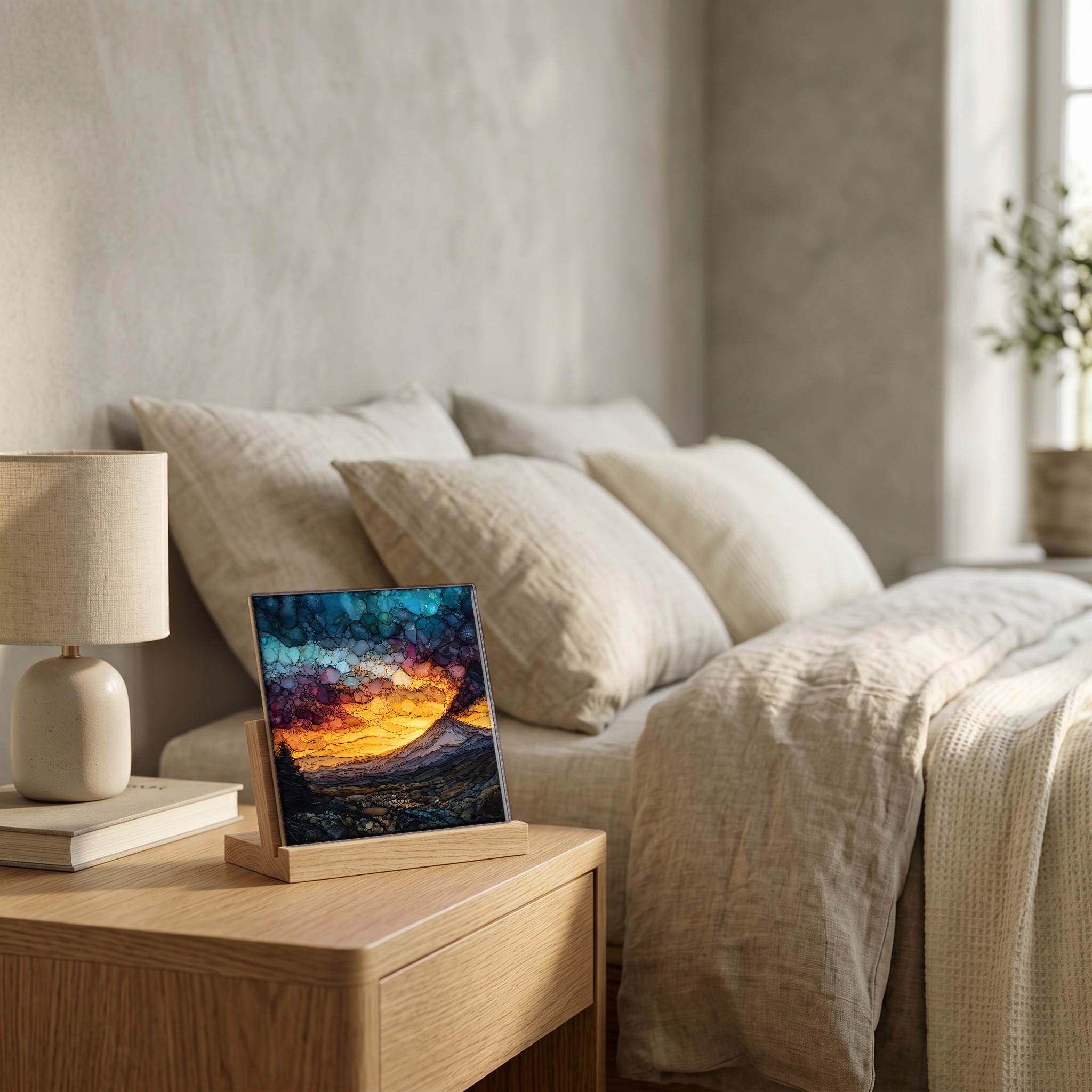
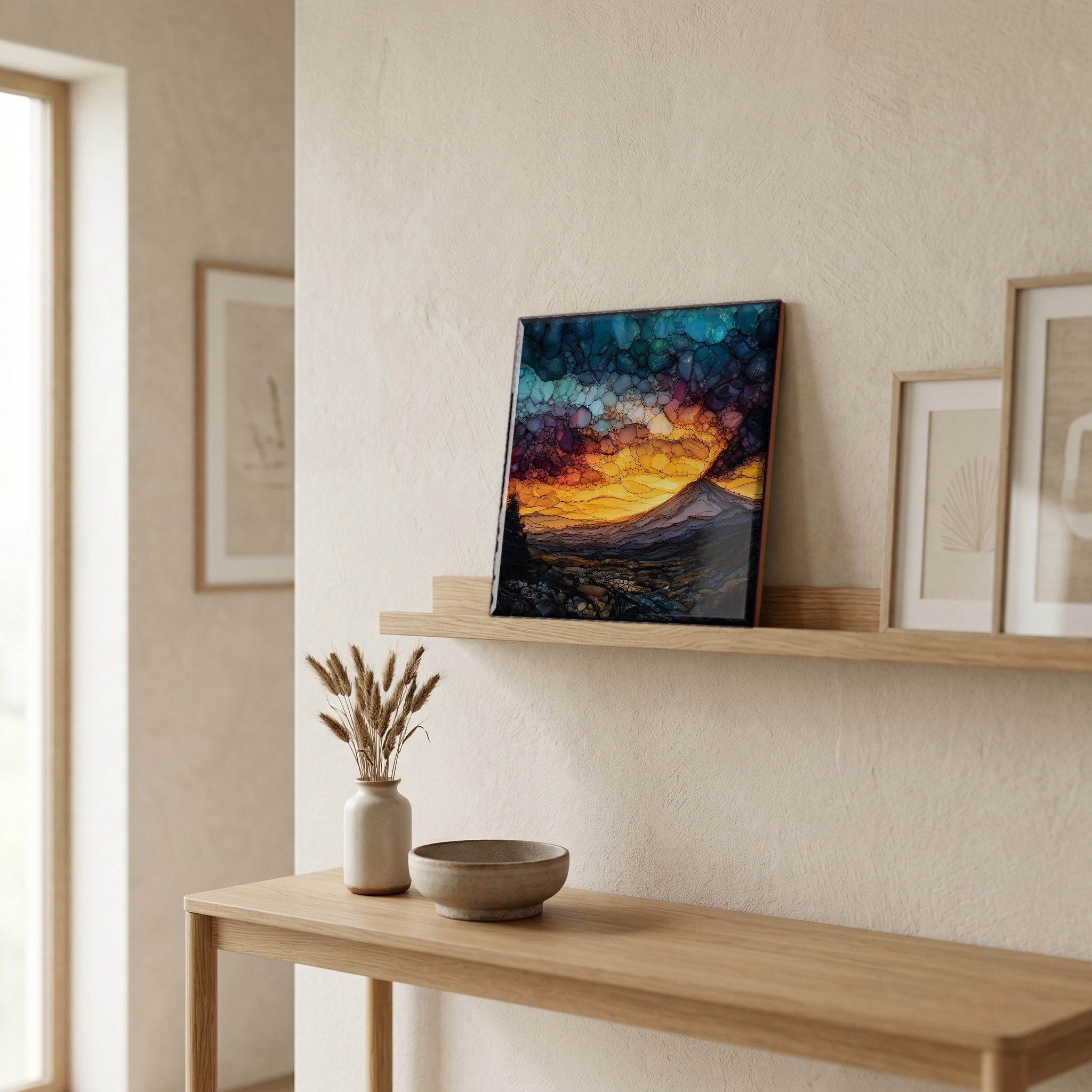
“The mountain that Catania lives under. From the rooftops of the city it looks like one thing, from the vineyards on its lower slopes it looks like another, and from the road up to Rifugio Sapienza it looks like a place still being made. The summit changes height with every eruption. Sicilians don't call it Etna. They call it a Muntagna. The Mountain. As if there were no others.
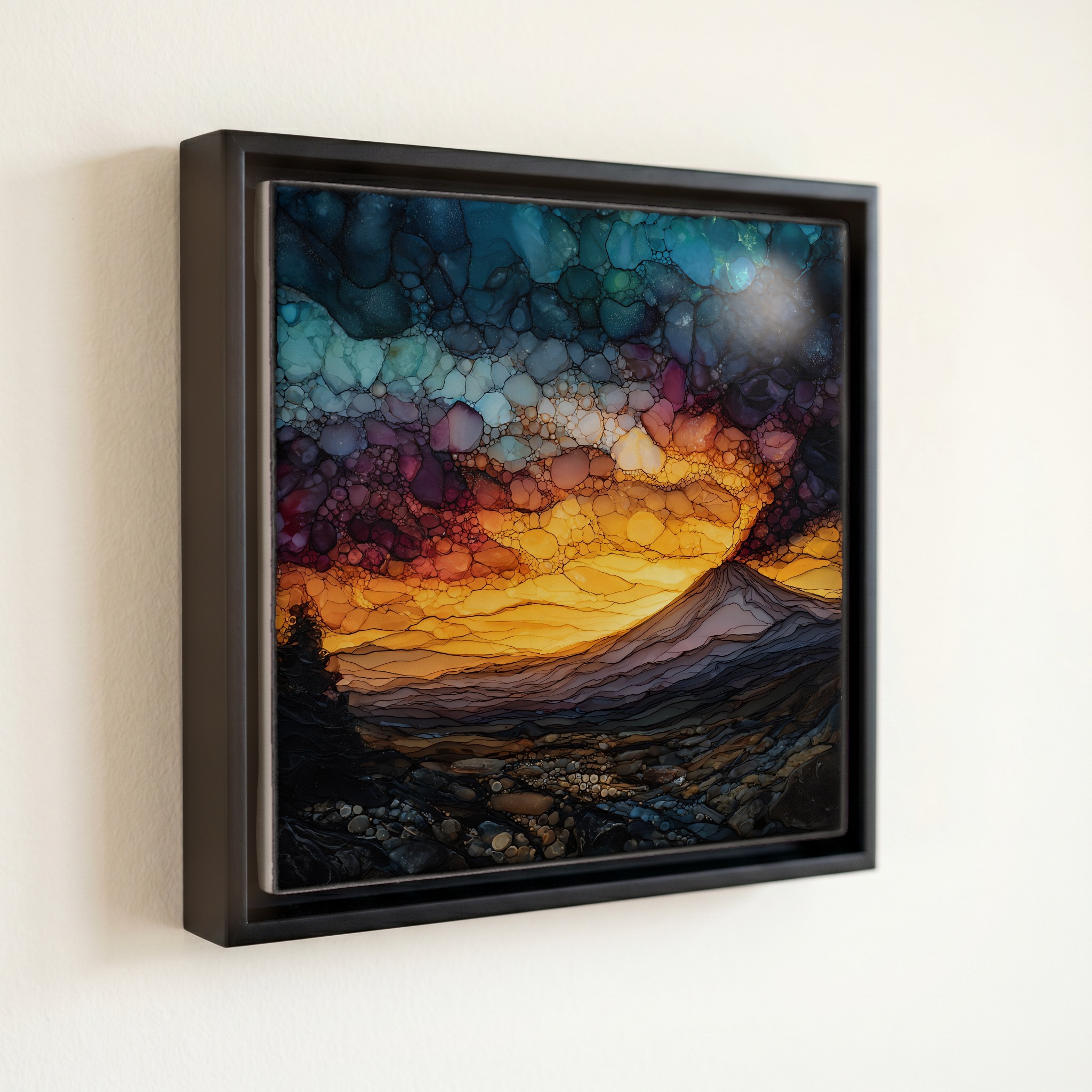
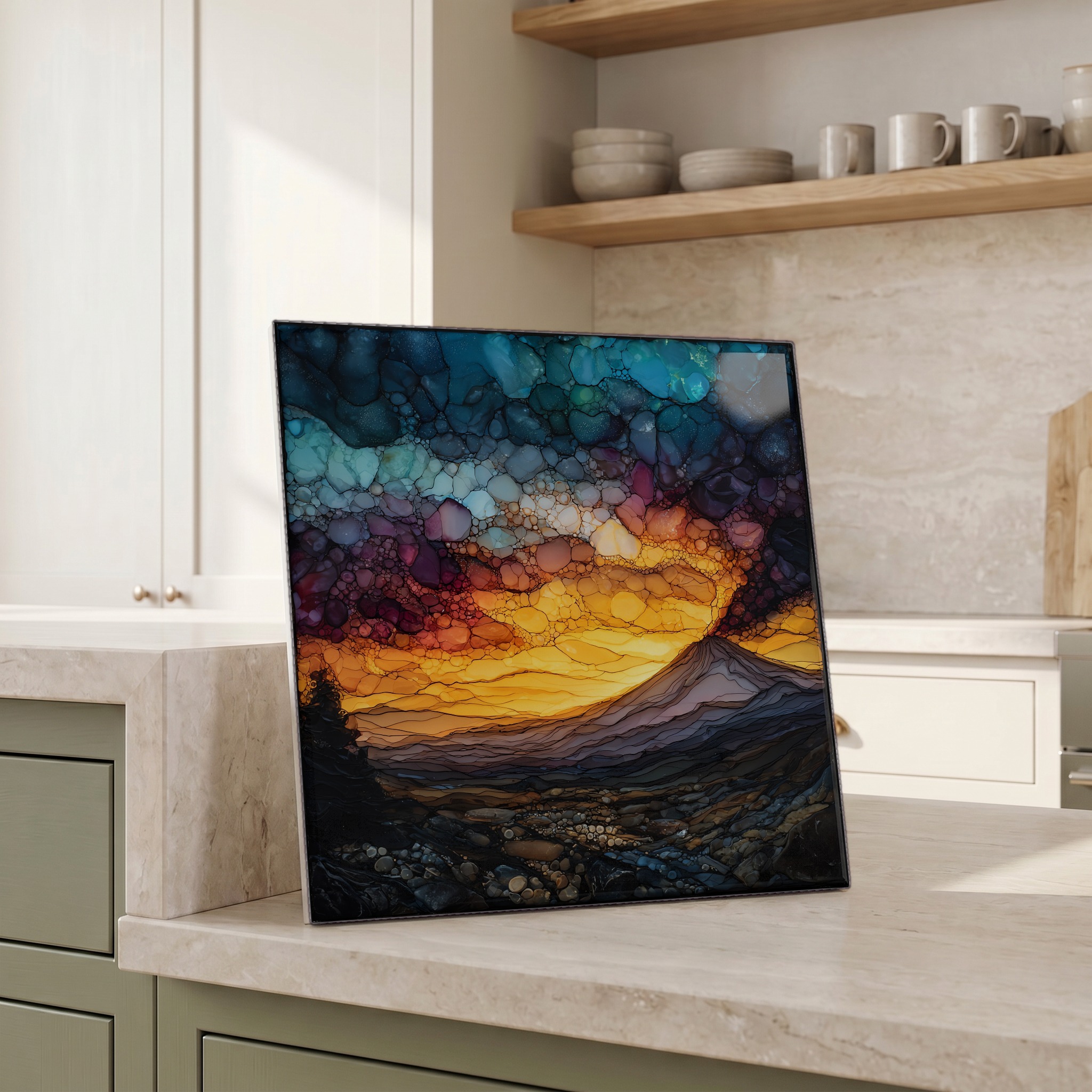
Mount Etna, on ceramic.
Each tile is finished by hand in our Knoxville studio. Artwork is slowly infused into the ceramic surface under high heat and pressure, and rests beneath a thin glossy finish. The colour lives in the surface, not on top of it.
Pick any four 4-inch tiles — National Parks you've been to, a Smokies set, the four seasons of one place. $ for a set of , cork-backed, ready to live on the table.
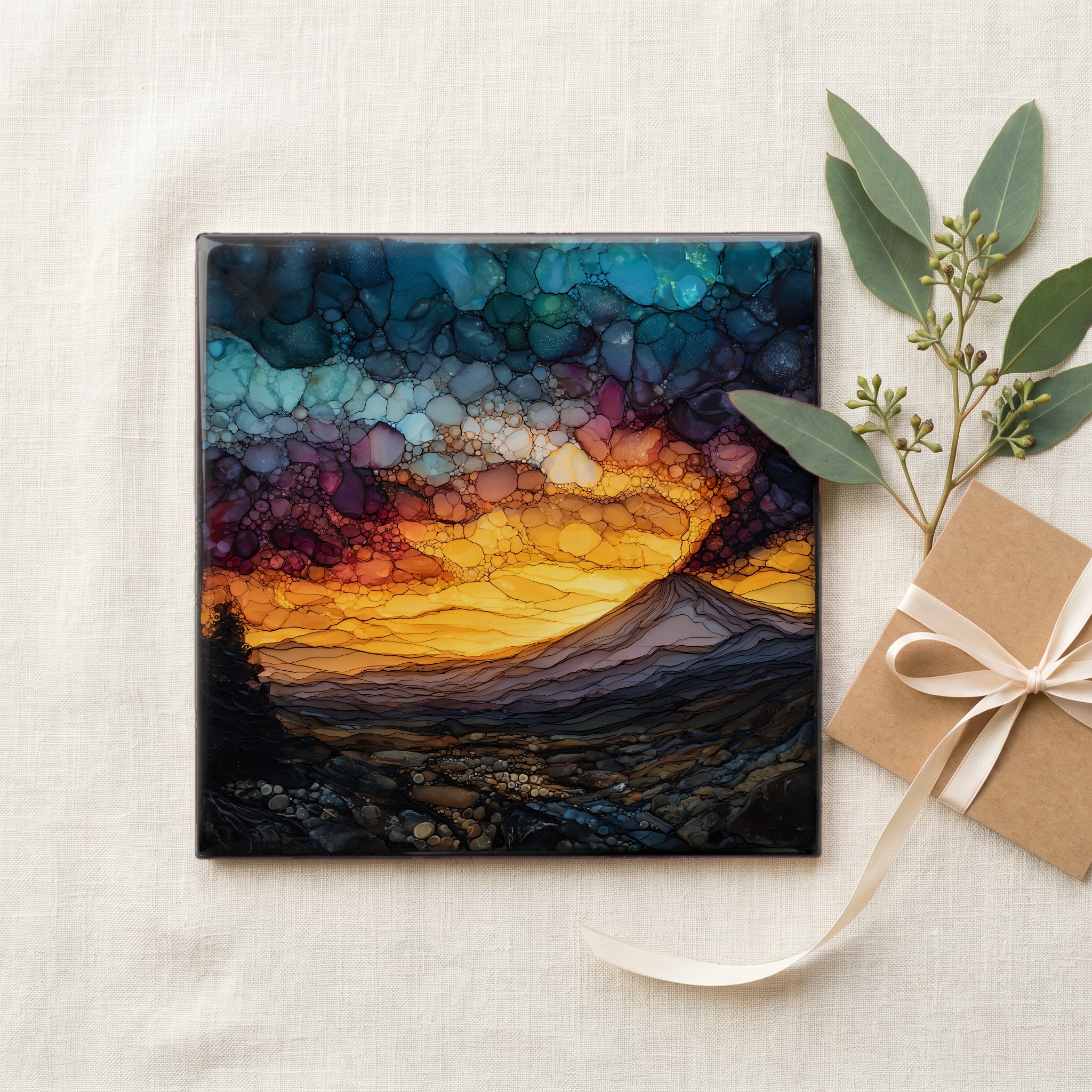
Each tile ships in a kraft box, tied with cream ribbon, with a handwritten note from the studio if you'd like to add one.
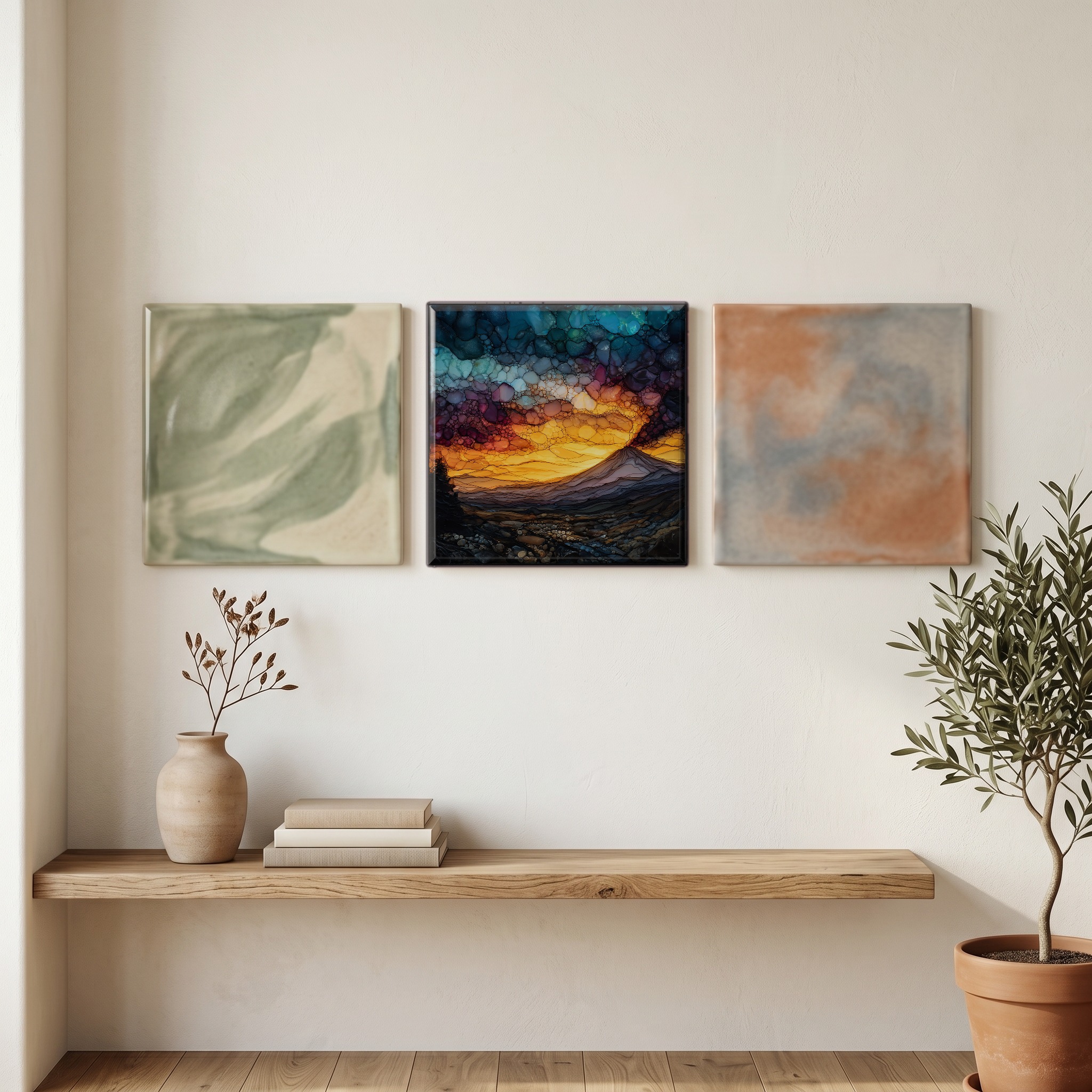
Three or five different vistas, hung together — a chapter of places you've been, or want to go.
The place, in three passes.
Mount Etna rises on the east coast of Sicily, above the city of Catania and the Ionian Sea, in the Metropolitan City of Catania. At about 3,357 metres it is the tallest peak in Italy south of the Alps and the largest active volcano in Europe outside the Caucasus. The mountain has been documented in eruption since at least 1500 BCE and has likely been active for half a million years. UNESCO inscribed it on the World Heritage list in 2013, citing its scientific value as one of the most studied volcanoes on Earth. The surrounding Parco dell'Etna, established in 1987, covers about 590 square kilometres and reaches from the summit craters down through chestnut and oak forest to vineyards on the lower flanks.
Etna's mass is built from alternating layers of lava flow and pyroclastic deposit, the long product of basaltic and trachybasaltic eruptions stacking up over 500,000 years. The summit holds five active craters: Voragine, Bocca Nuova, Northeast Crater, Southeast Crater, and the New Southeast Crater that grew rapidly through the 2010s. The Southeast Crater complex added more than thirty metres to the mountain's height in 2021 alone. Below the cones, the slopes shade from black volcanic sand at altitude to dark, mineral-rich soil that the wine farms of the Etna DOC have worked since the appellation was created in 1968. The basalt is the same material under the feet of every farmer on the mountain.
The standard approach is from the south, from Rifugio Sapienza at 1,910 metres, reached by road from Catania in about an hour. From the rifugio, the Funivia dell'Etna cable car climbs to 2,500 metres; from there, guided 4WD tours run higher when activity allows. The northern approach from Linguaglossa serves the Piano Provenzana ski lift in winter and the same volcano in summer. The summit zone above 2,900 metres is closed to unaccompanied visitors and is regulated by INGV monitoring; tours can be cancelled at short notice when seismic activity rises. Tickets are sold at the lower station of the Funivia and include the option to add the guided summit tour for an additional fee.