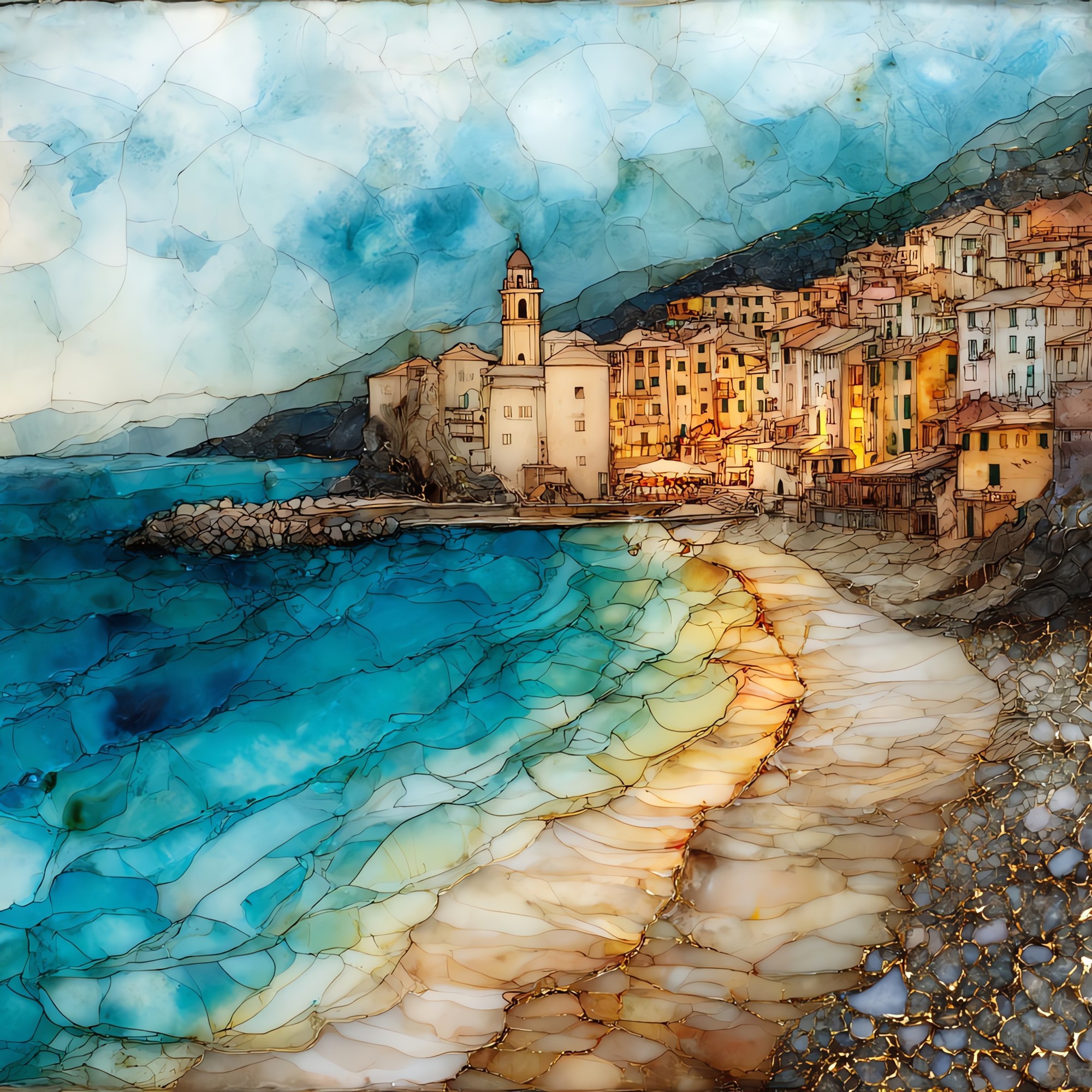
Monterosso al Mare
— where a hard coast finally softens into sand.
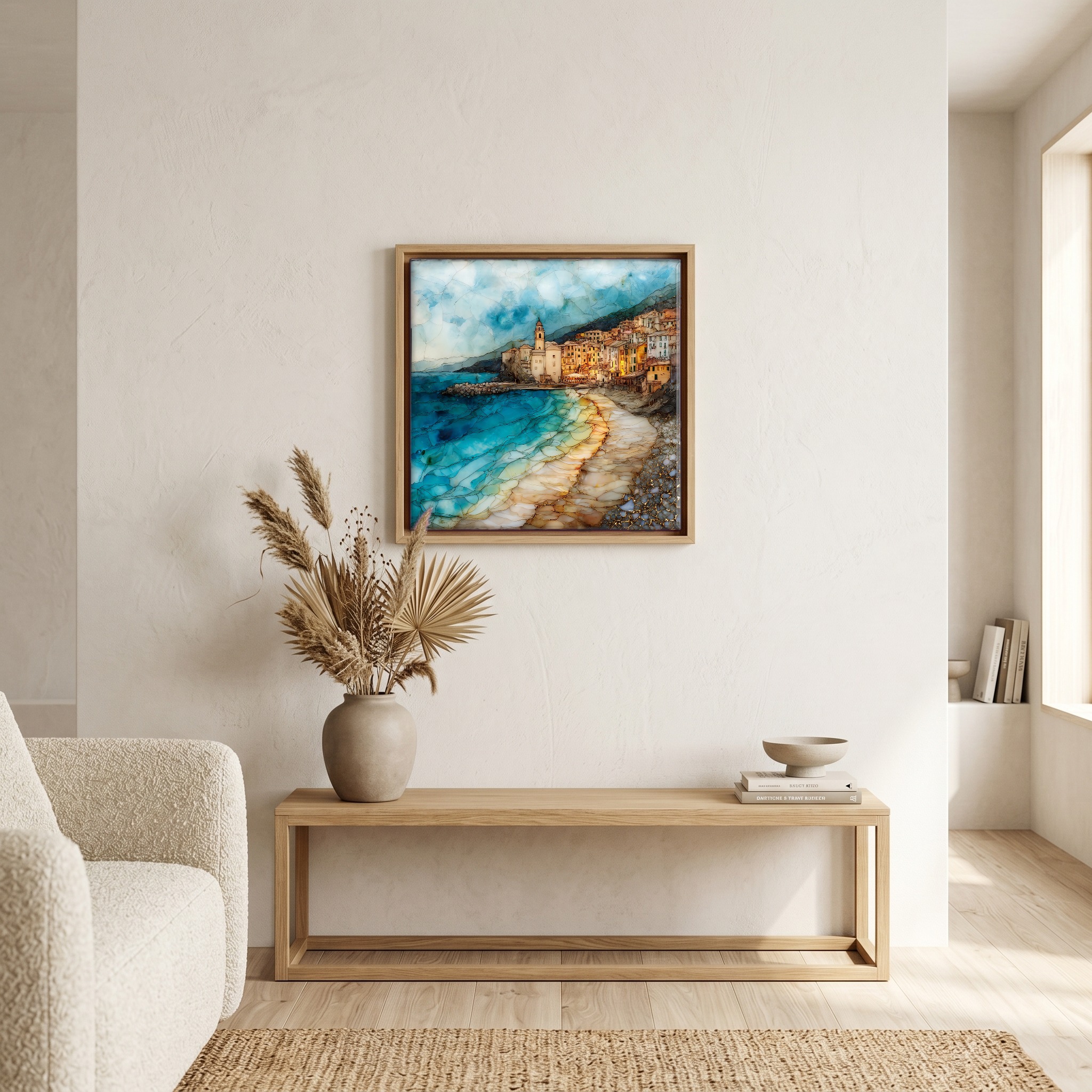
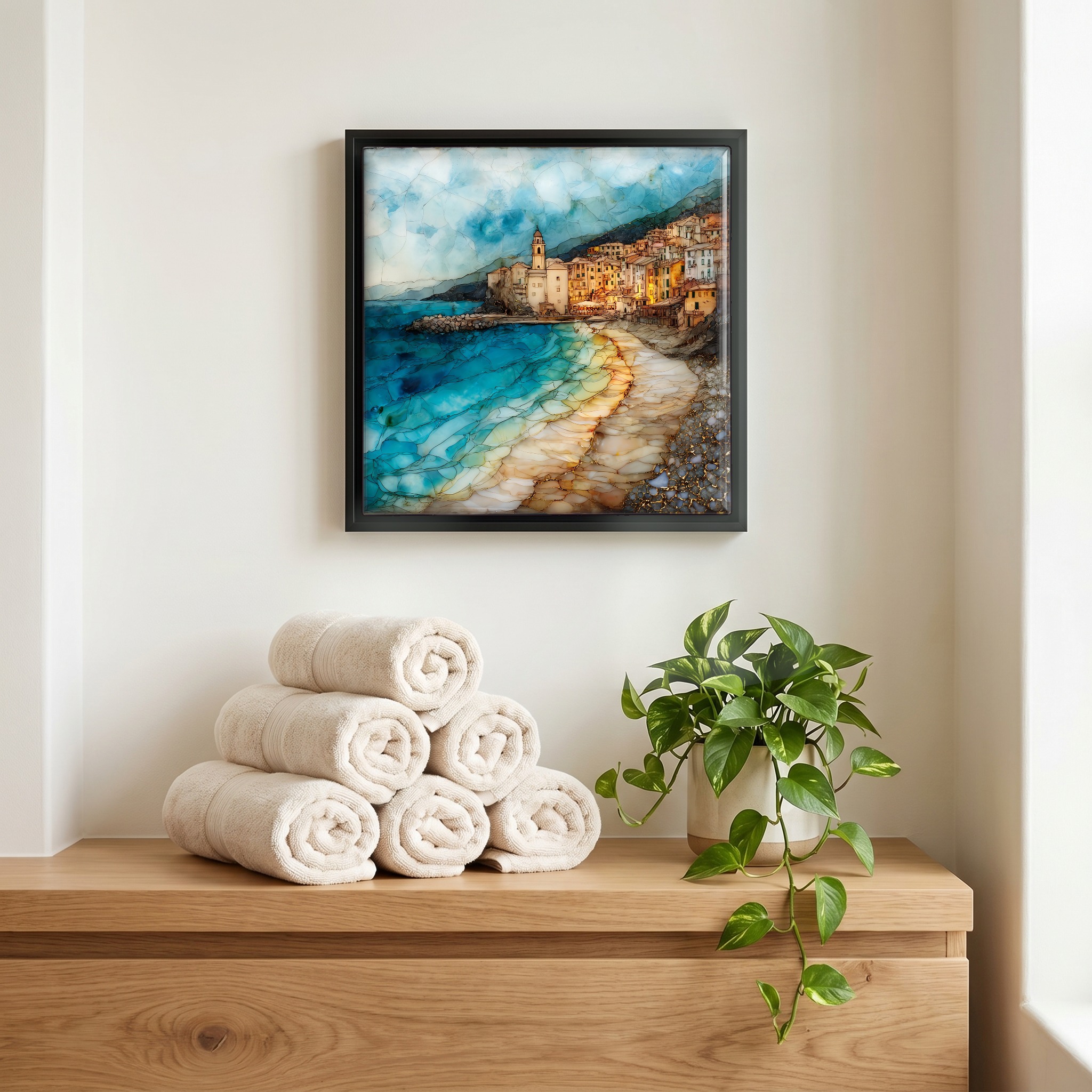
Not only on a wall.
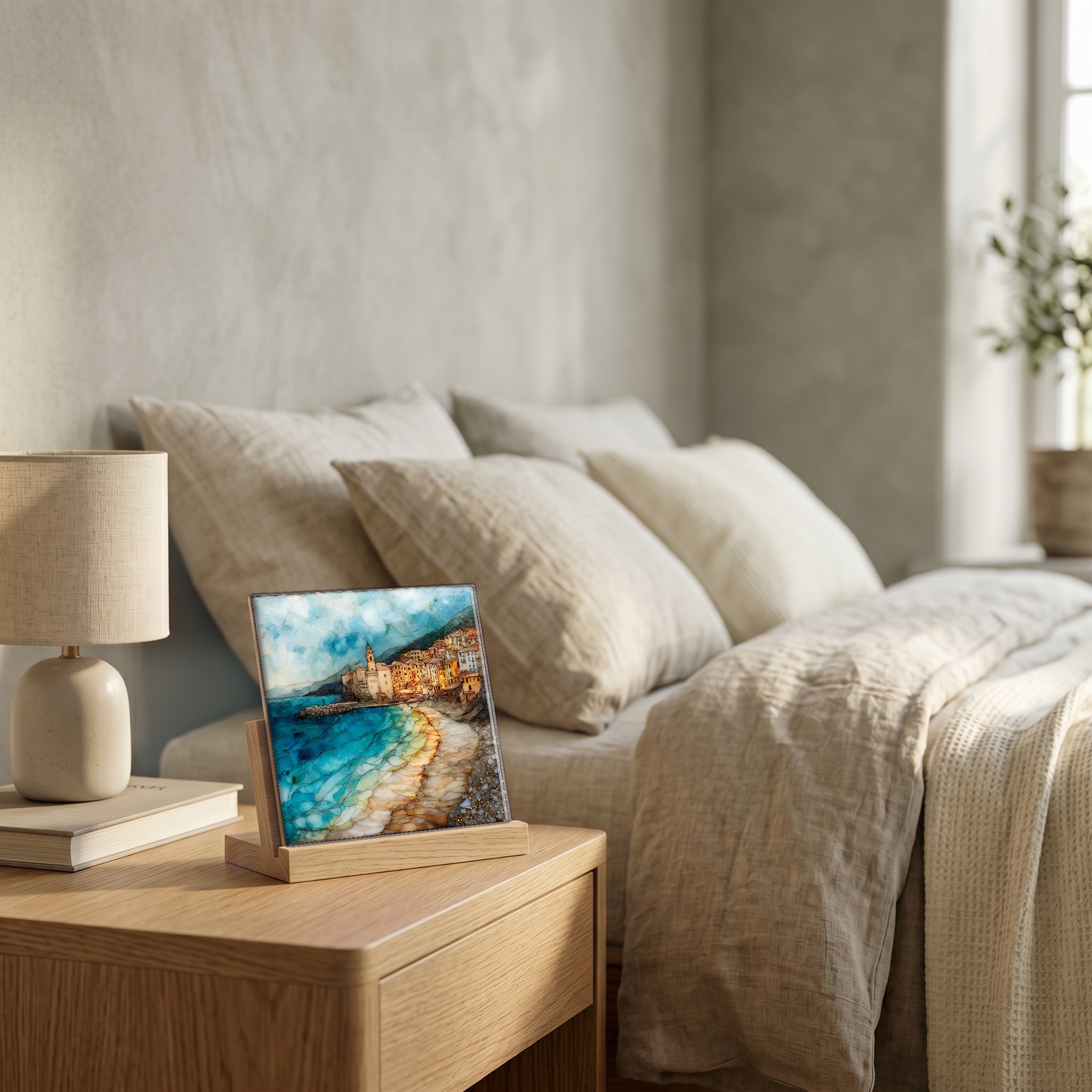
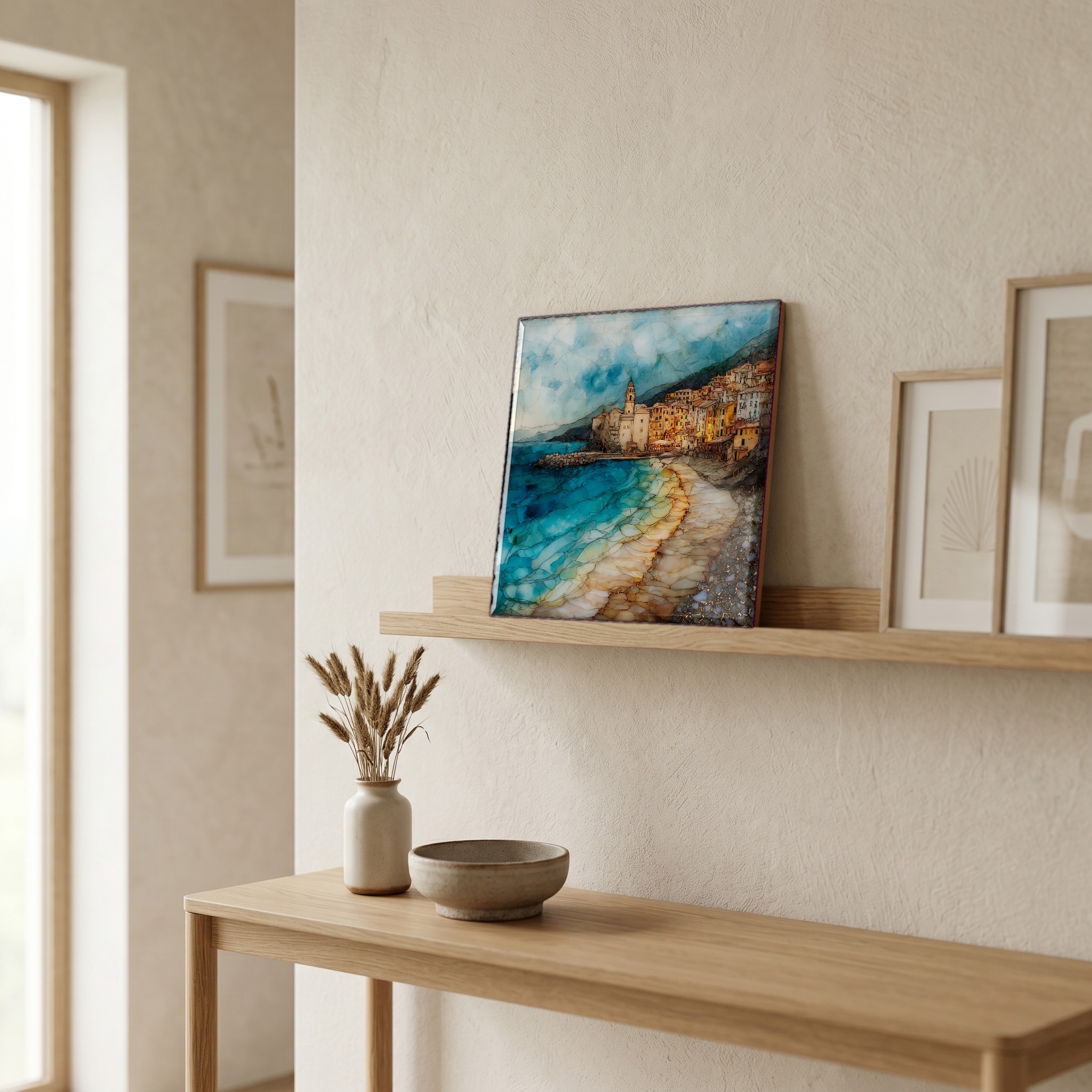
“The first of the Cinque Terre coming down the coast from Genoa, and the only one with a real beach. The old town and Fegina sit on either side of the Capuchin hill, joined by a tunnel cut through the rock. A concrete Neptune has stood at the edge of the sand since 1910, what's left of a villa terrace the sea took piece by piece. Lemon trees, salted anchovies, a sweet wine called Sciacchetra pressed from terraces that climb straight off the water. Eugenio Montale spent his boyhood summers here and never quite left it on the page.
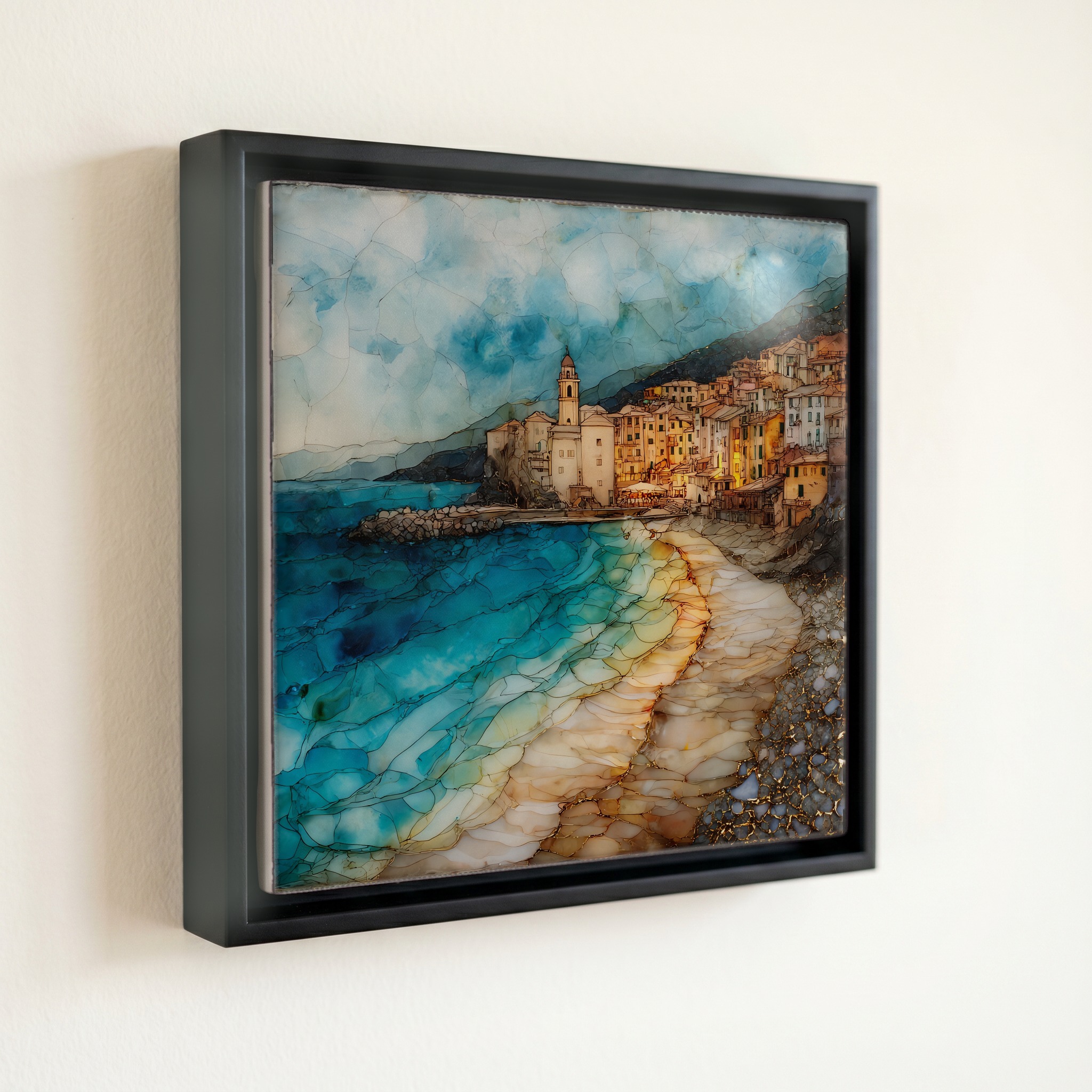
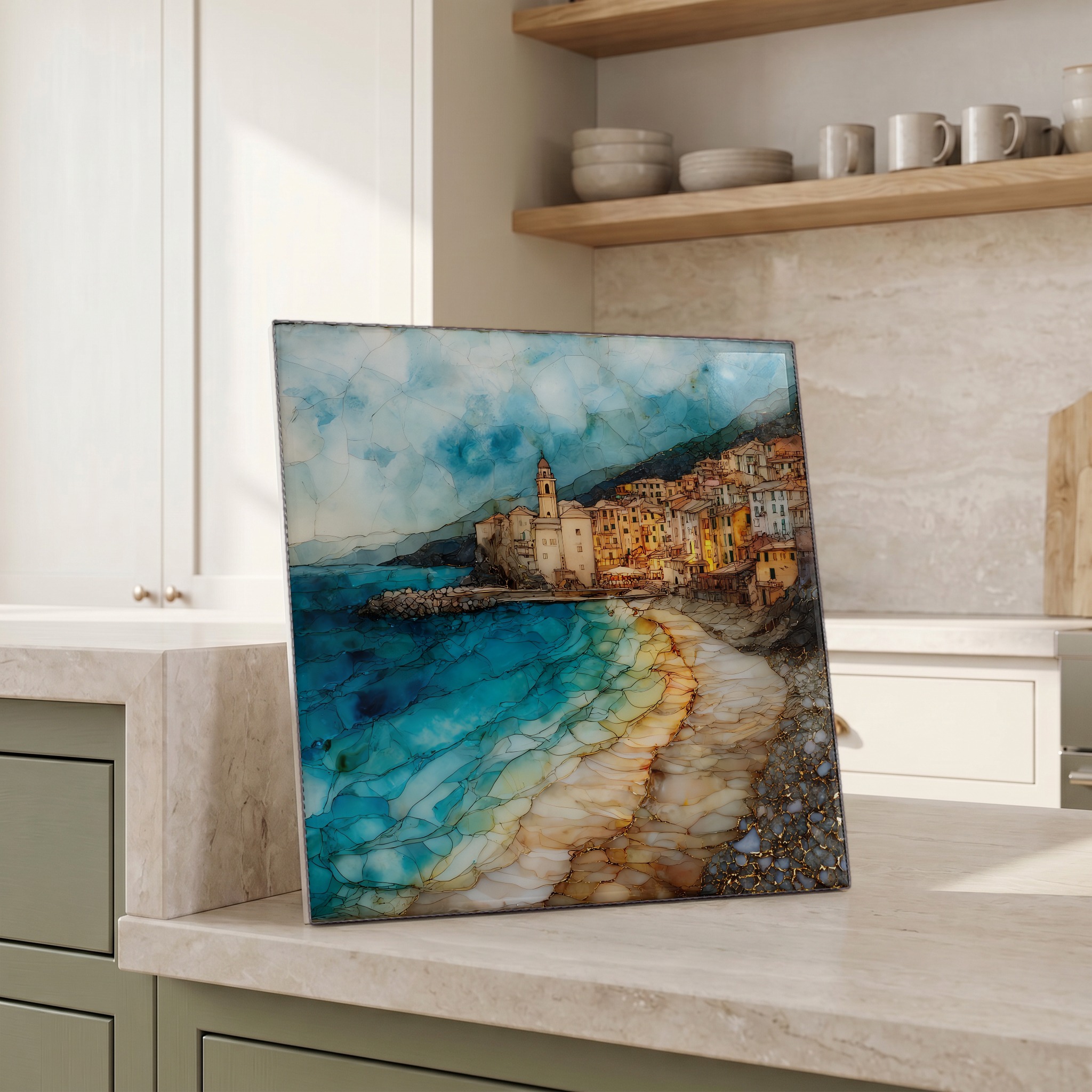
Monterosso al Mare, on ceramic.
Each tile is finished by hand in our Knoxville studio. Artwork is slowly infused into the ceramic surface under high heat and pressure, and rests beneath a thin glossy finish. The colour lives in the surface, not on top of it.
Pick any four 4-inch tiles — National Parks you've been to, a Smokies set, the four seasons of one place. $ for a set of , cork-backed, ready to live on the table.
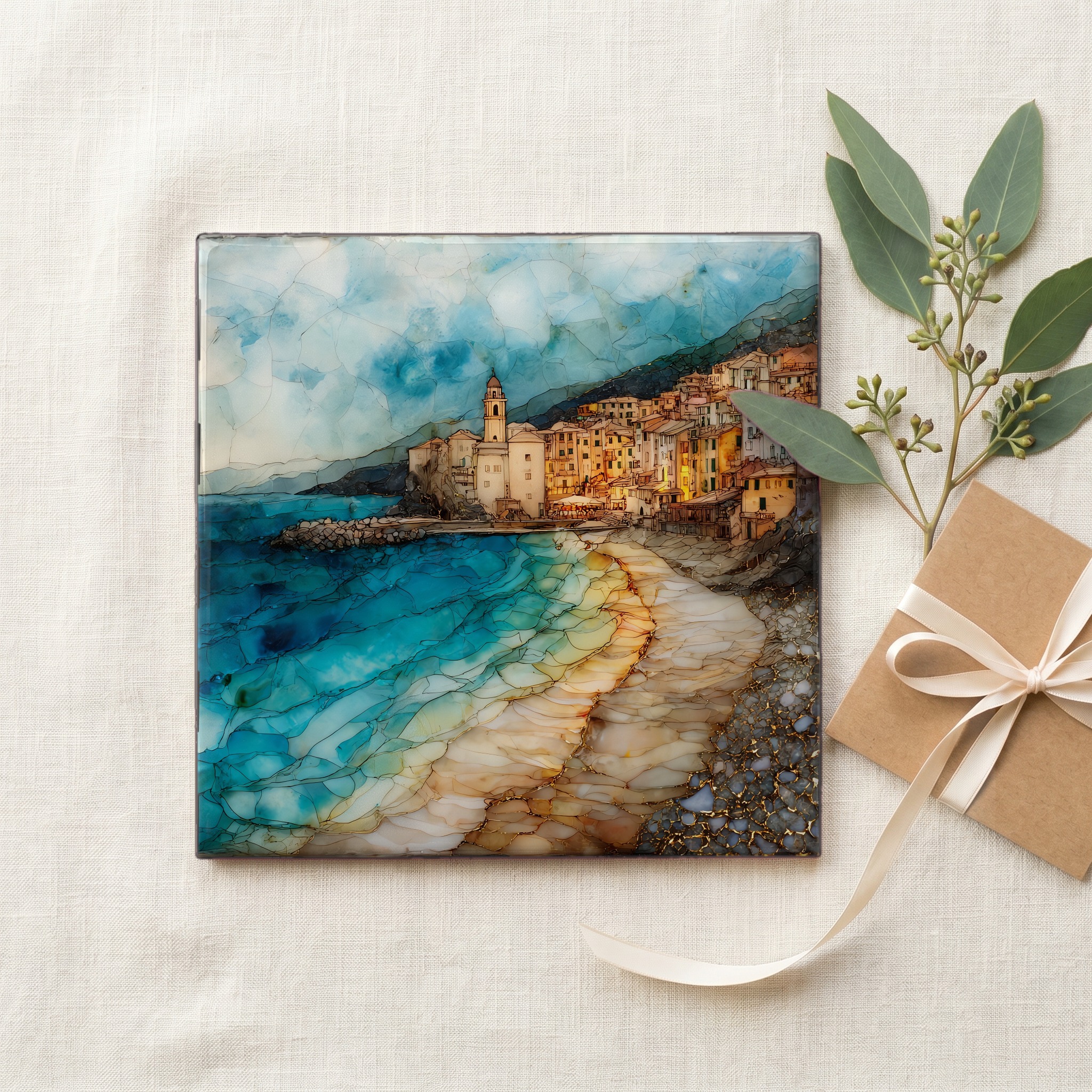
Each tile ships in a kraft box, tied with cream ribbon, with a handwritten note from the studio if you'd like to add one.
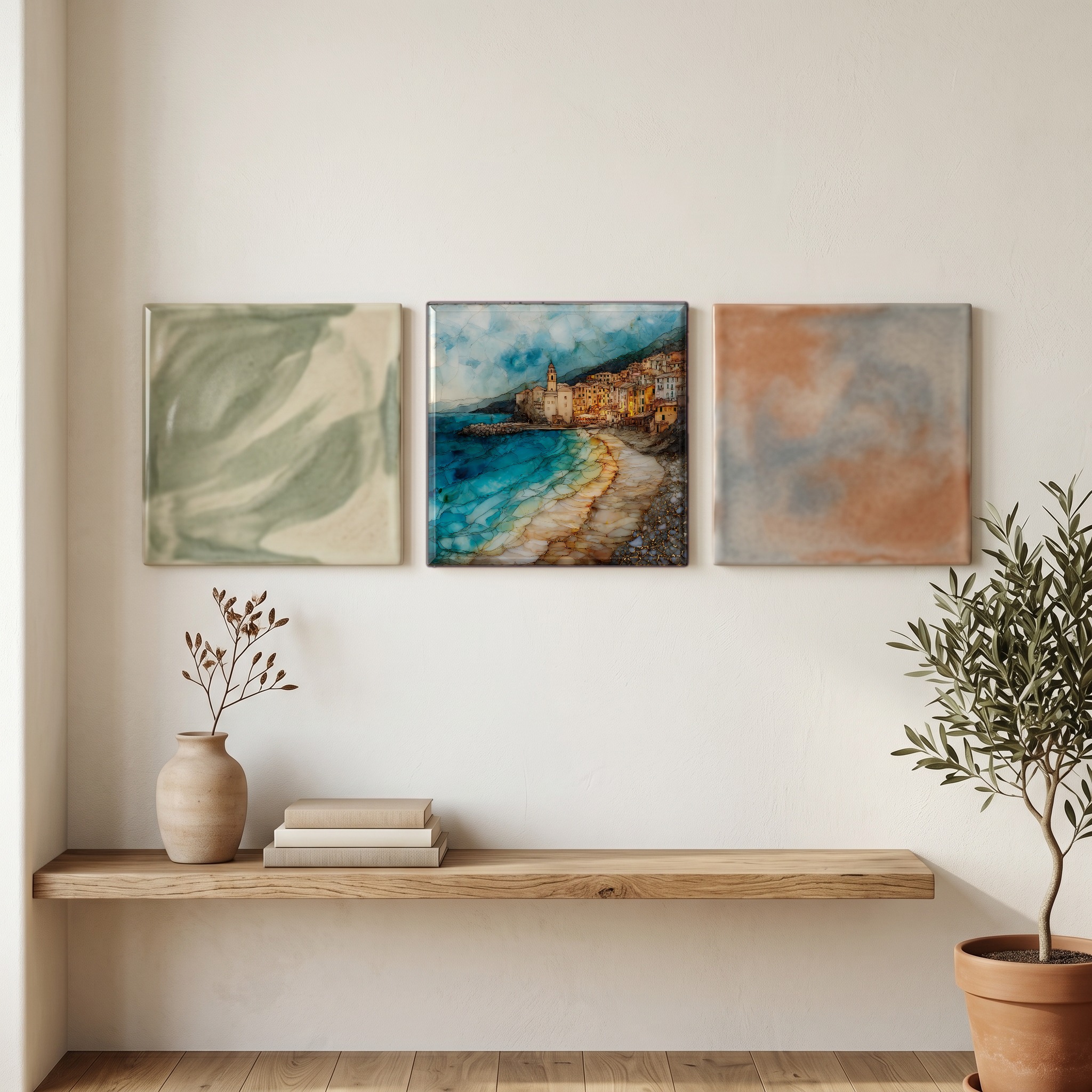
Three or five different vistas, hung together — a chapter of places you've been, or want to go.
The place, in three passes.
Monterosso al Mare is the largest and northernmost of the five villages of the Cinque Terre, on the Ligurian coast in the Province of La Spezia. Around 1,300 people live here, on a shelf of land barely twelve metres above the water. The town splits in two: the medieval centro storico and Fegina, the newer seafront quarter to the west, separated by the Colle dei Cappuccini and joined by a pedestrian tunnel. Trains have stopped here since 1870 on the Genoa–La Spezia line, which still runs in and out of the cliffs. The Sentiero Azzurro, the coastal footpath linking the five villages, begins its climb toward Vernazza from the eastern edge of the old town.
The Church of San Giovanni Battista anchors the old town, built between 1282 and 1307 in the Ligurian Gothic manner, its facade striped in white marble and dark stone. Higher up the Capuchin hill stand the Convent of the Capuchin friars and the church of San Francesco, raised between 1619 and 1622, which holds a Crucifixion attributed to Anthony van Dyck from the years the Flemish painter worked in Genoa. The Aurora Tower on the same hill is what survives of the medieval walls thrown up against Saracen raiders. Down at Fegina, a fourteen-metre Neptune in reinforced concrete by the sculptor Arrigo Minerbi has guarded the beach since 1910.
Monterosso has the only true sand beach in the Cinque Terre; the other four villages meet the sea on rock. The main strand runs along Fegina below the railway, with the old harbour tucked under the hill on the far side. The water here has fed the town for centuries: salted Monterosso anchovies, cured in the village, are prized all along the coast, and the steep terraces above give the dessert wine Sciacchetra and the lemons the town is known for. The whole shoreline falls inside Cinque Terre National Park, founded in 1999 and protected as a UNESCO World Heritage cultural landscape since 1997.