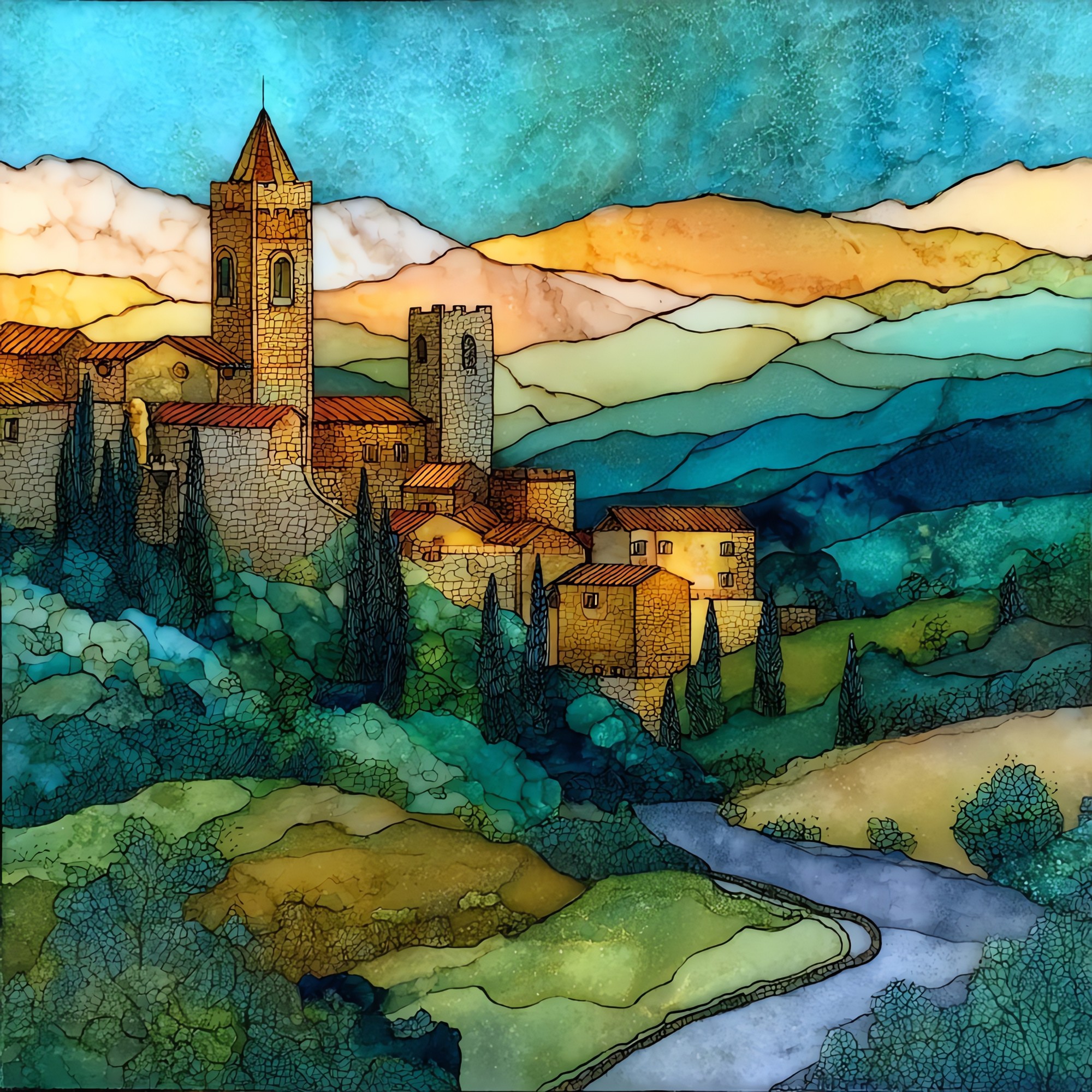
Monteriggioni
— a stone crown still holding the hill.
Not only on a wall.
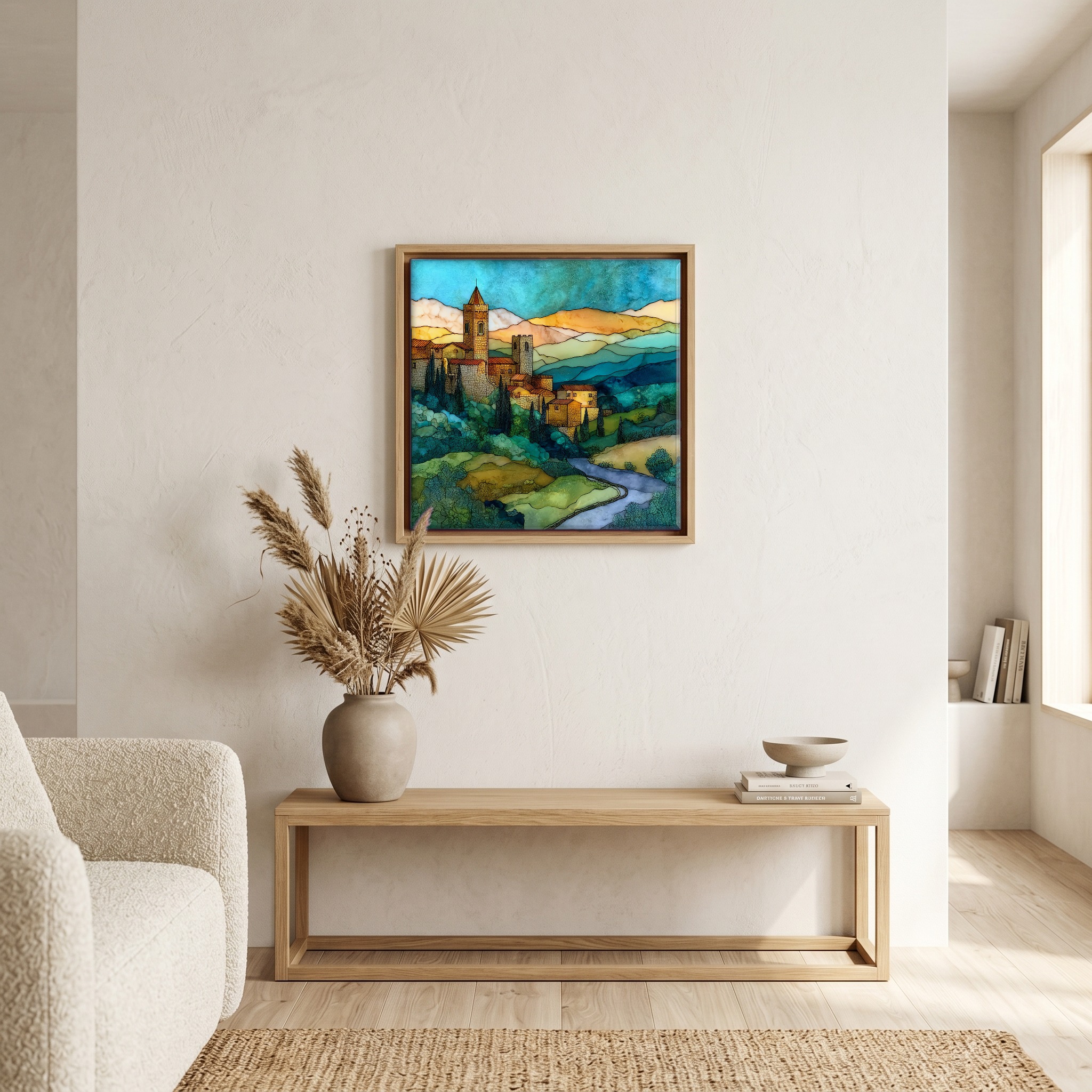
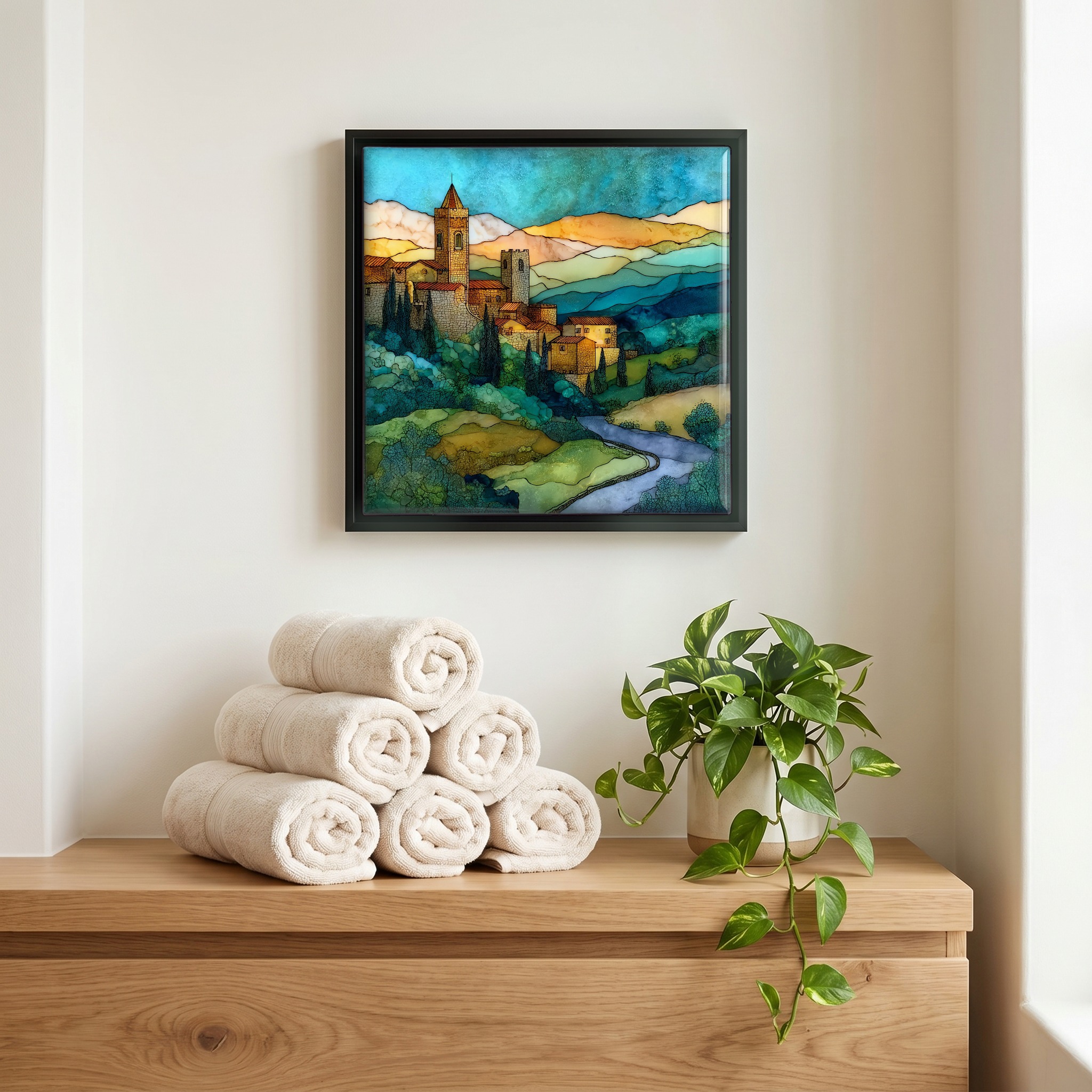
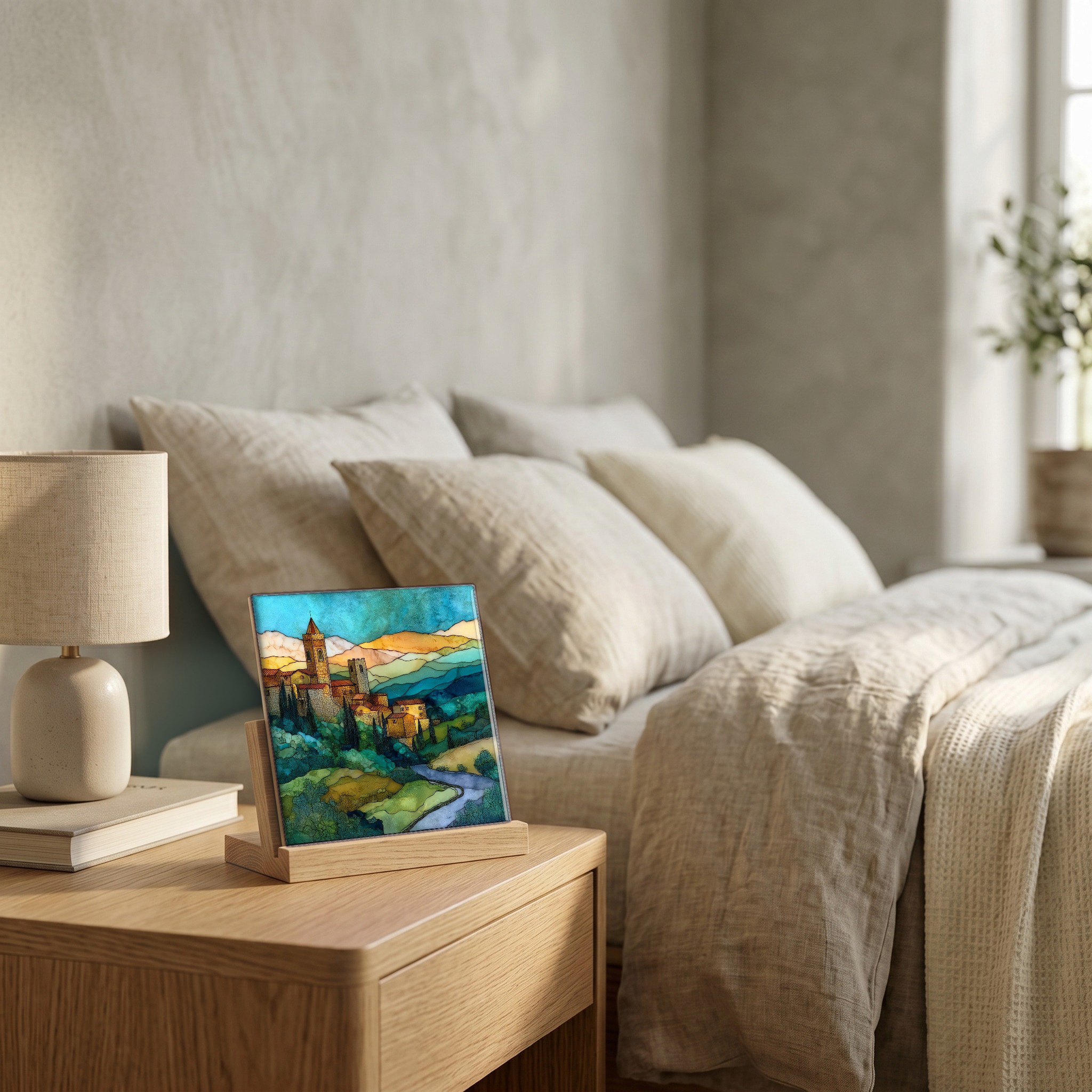
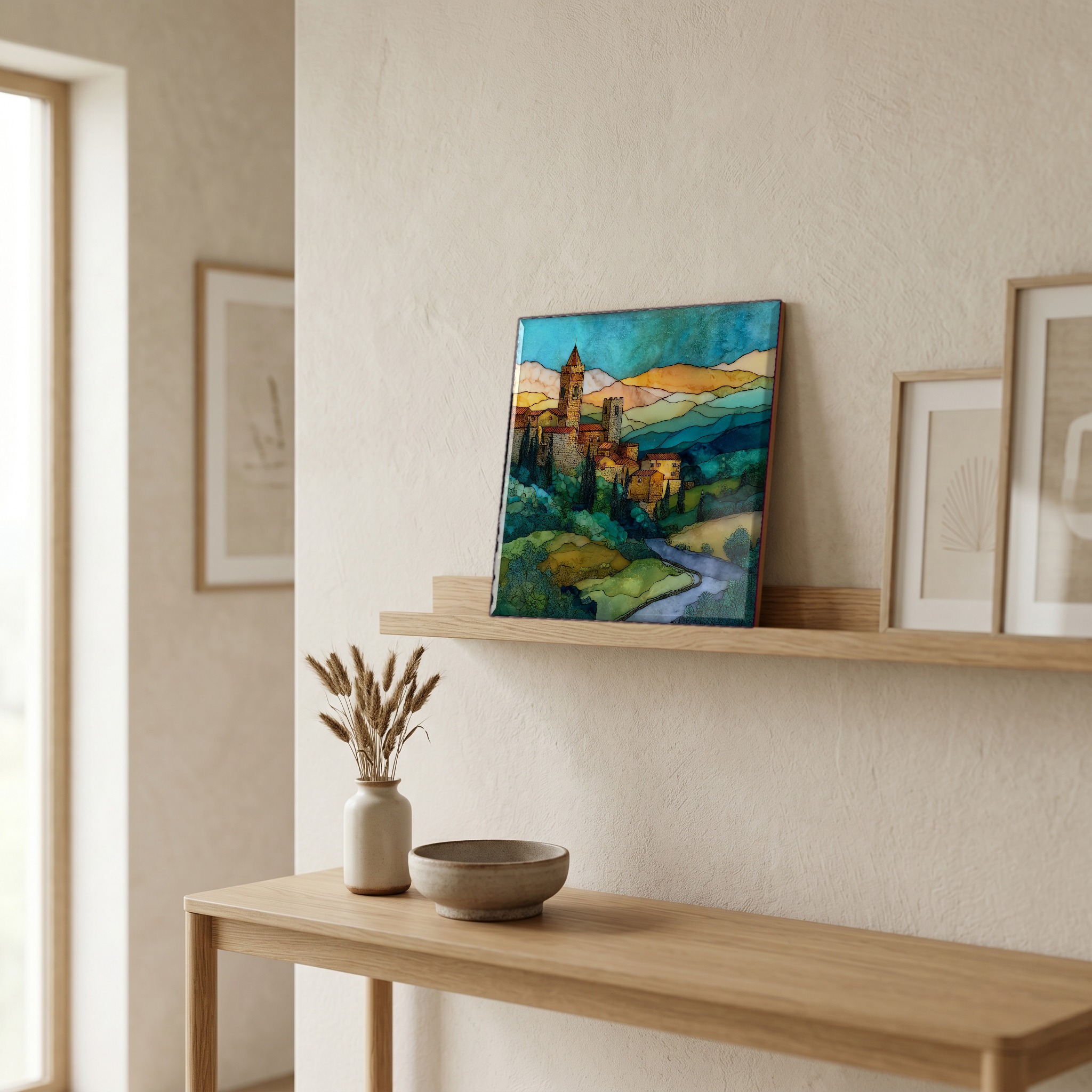
“A small walled town on a low hill between Siena and Florence, built by the Sienese in 1214 to watch the road. The walls are a near-circle, about 570 metres around, with fourteen square towers cut against the sky. Dante saw it from the road below and put it in the thirty-first canto of the Inferno, comparing the giants in Hell, ringed and waist-deep, to the way Monteriggioni rings the hilltop. Inside the walls, two small streets, a parish church, a few houses, and the sound of footsteps on stone. The cypresses come right up to the gate.
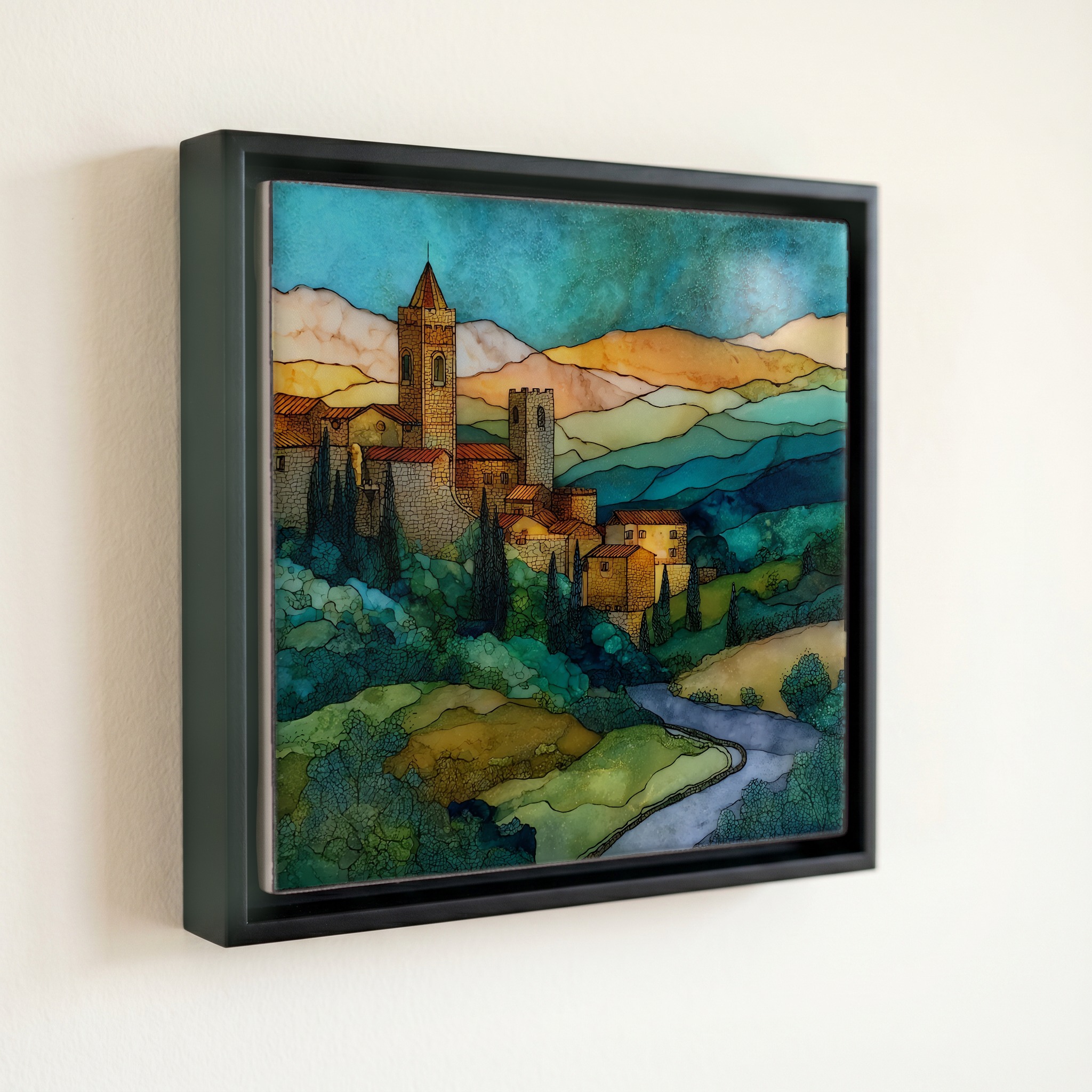
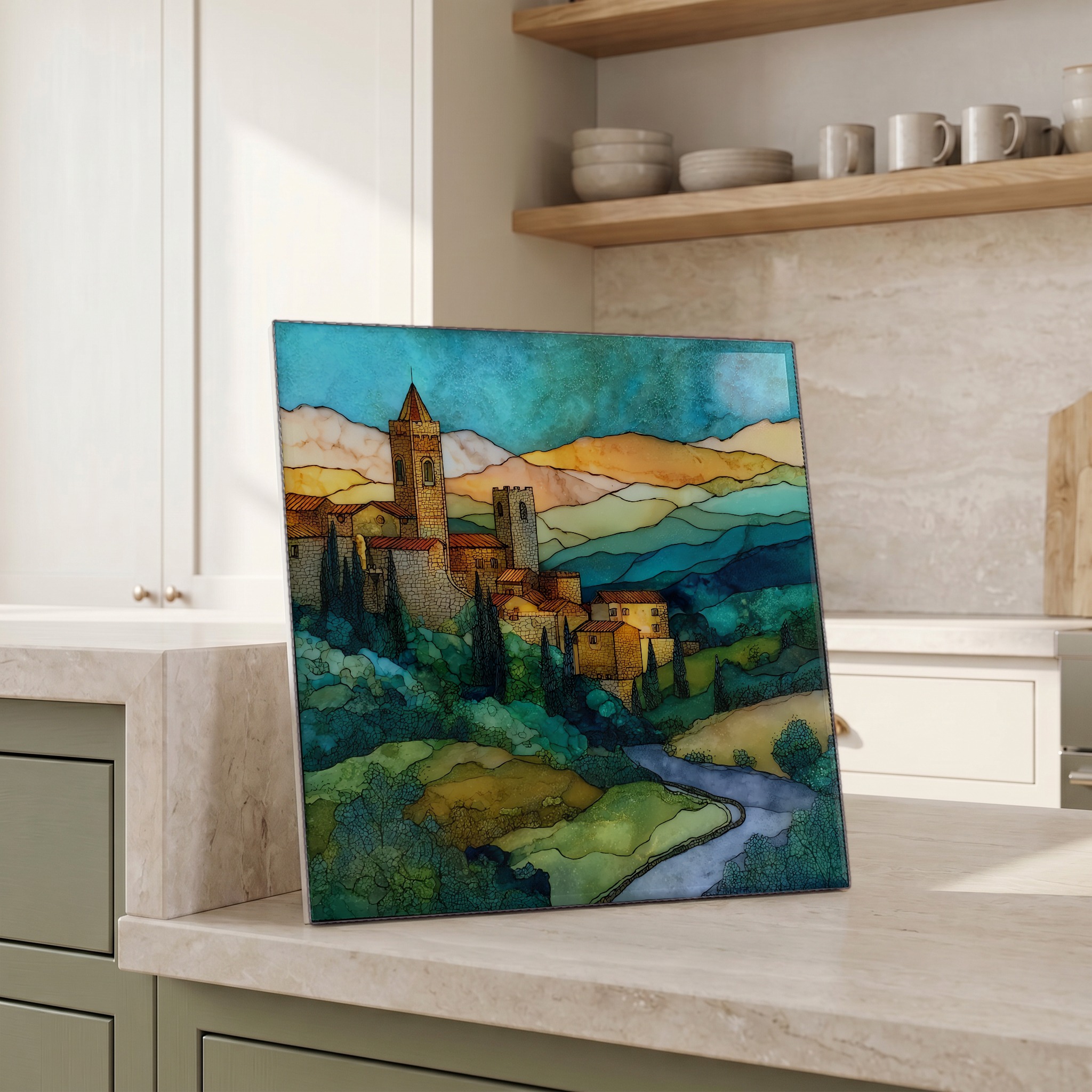
Monteriggioni, on ceramic.
Each tile is finished by hand in our Knoxville studio. Artwork is slowly infused into the ceramic surface under high heat and pressure, and rests beneath a thin glossy finish. The colour lives in the surface, not on top of it.
Pick any four 4-inch tiles — National Parks you've been to, a Smokies set, the four seasons of one place. $ for a set of , cork-backed, ready to live on the table.
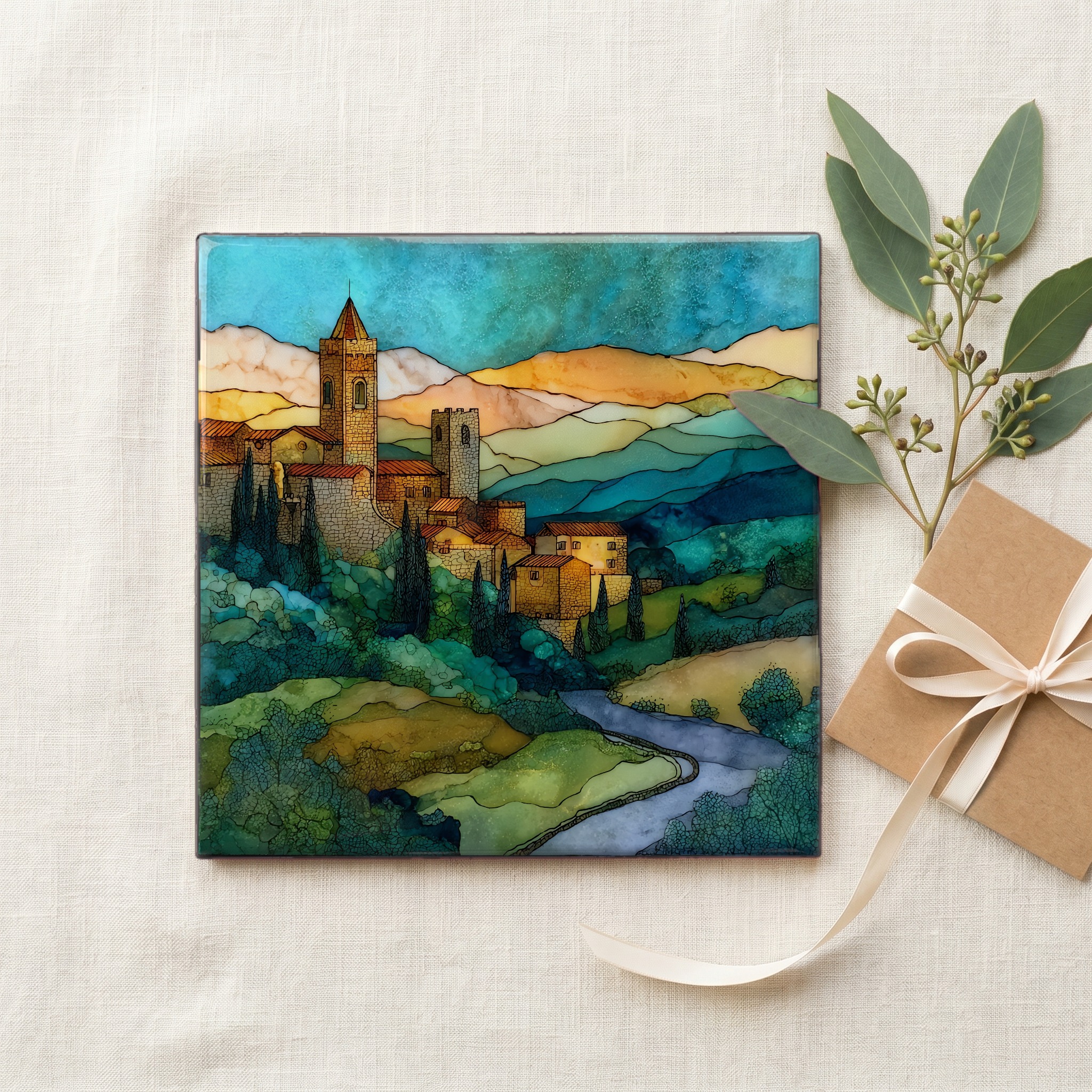
Each tile ships in a kraft box, tied with cream ribbon, with a handwritten note from the studio if you'd like to add one.
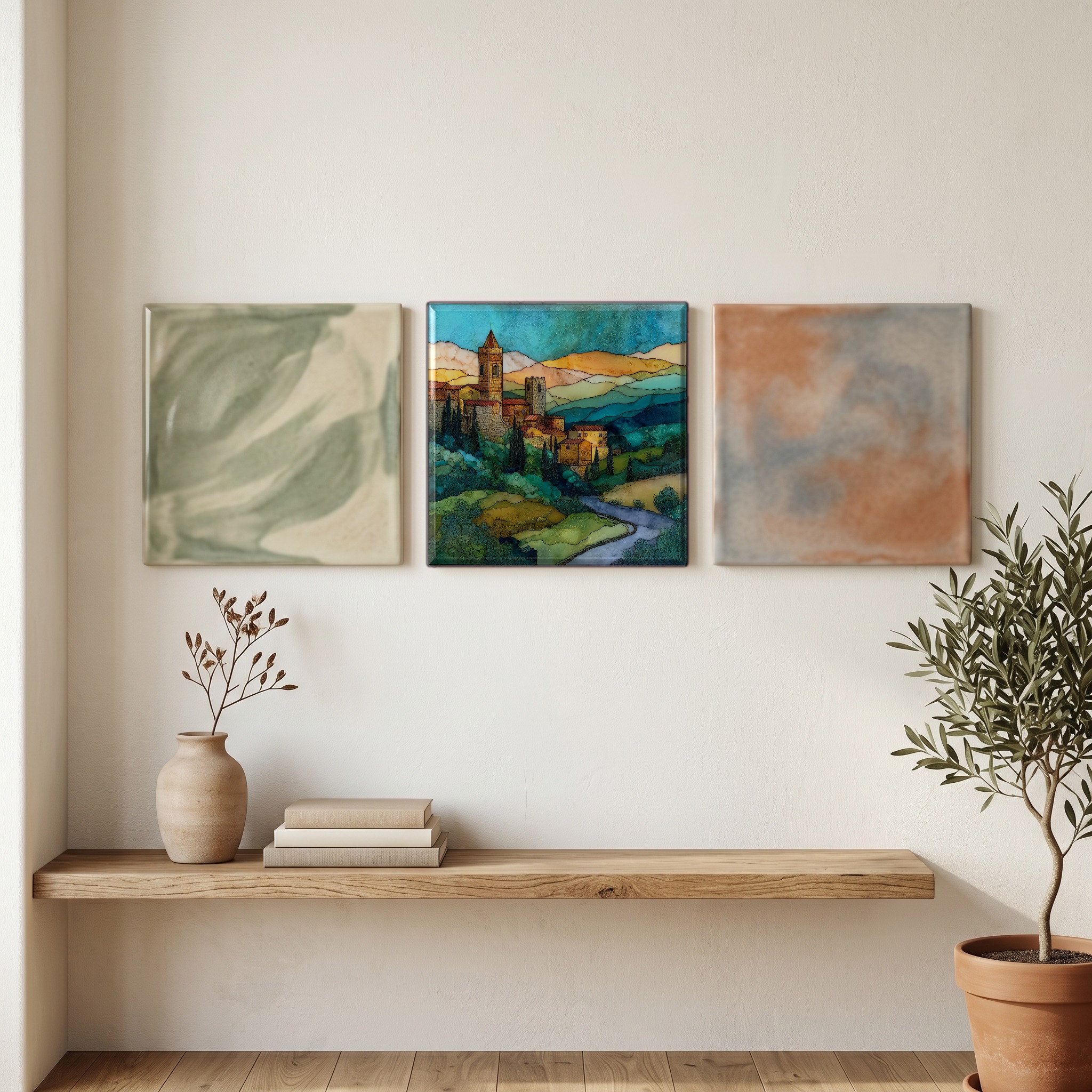
Three or five different vistas, hung together — a chapter of places you've been, or want to go.
The place, in three passes.
Monteriggioni sits in the comune of the same name in the province of Siena, Tuscany, about 15 kilometres north-west of Siena and 60 kilometres south of Florence. The walled village (the castello) stands on the low hill of Monte Ainola at roughly 274 metres above sea level, surrounded by vineyards and oak woodland of the Montagnola Senese. The Sienese Republic built the fortifications between 1214 and 1219 as a forward defence on the road toward Florence; the village was settled inside the walls in the same period. Today the comune counts roughly 9,500 residents and the village inside the walls just a few dozen. Approach by car from the SR2 (Via Cassia), or on foot via the Via Francigena pilgrim route.
The walls form a near-circle about 570 metres long, with fourteen square towers spaced along the curtain and two gates: the Porta Franca facing Florence to the north and the Porta Romana facing Siena to the south. Dante saw the silhouette from the road below in the early fourteenth century and used it as a simile in Inferno XXXI (lines 40-45), comparing the giants who ring the central pit of Hell to the towers crowning the village's round walls. The fortifications, raised by the Sienese Republic between 1214 and 1219 from local travertine and sandstone, fell to Florentine forces under Cosimo I de' Medici in 1554 and have remained largely intact ever since. A section of the wall-walk is open with a ticket.
The town leans into its medieval inheritance each summer with the Festa Medievale di Monteriggioni, held inside the walls on the second and third weekends of July. Reenactors, merchants, musicians, jugglers, and falconers fill the two narrow streets and the small piazza around the parish church of Santa Maria Assunta, a twelfth-century building; the gates are guarded by costumed sentries and entry is by paid ticket. The festival has run since the early 1990s. Outside festival days the village is quiet, with two small museums, a few restaurants, and the cypresses pressing up against the walls.