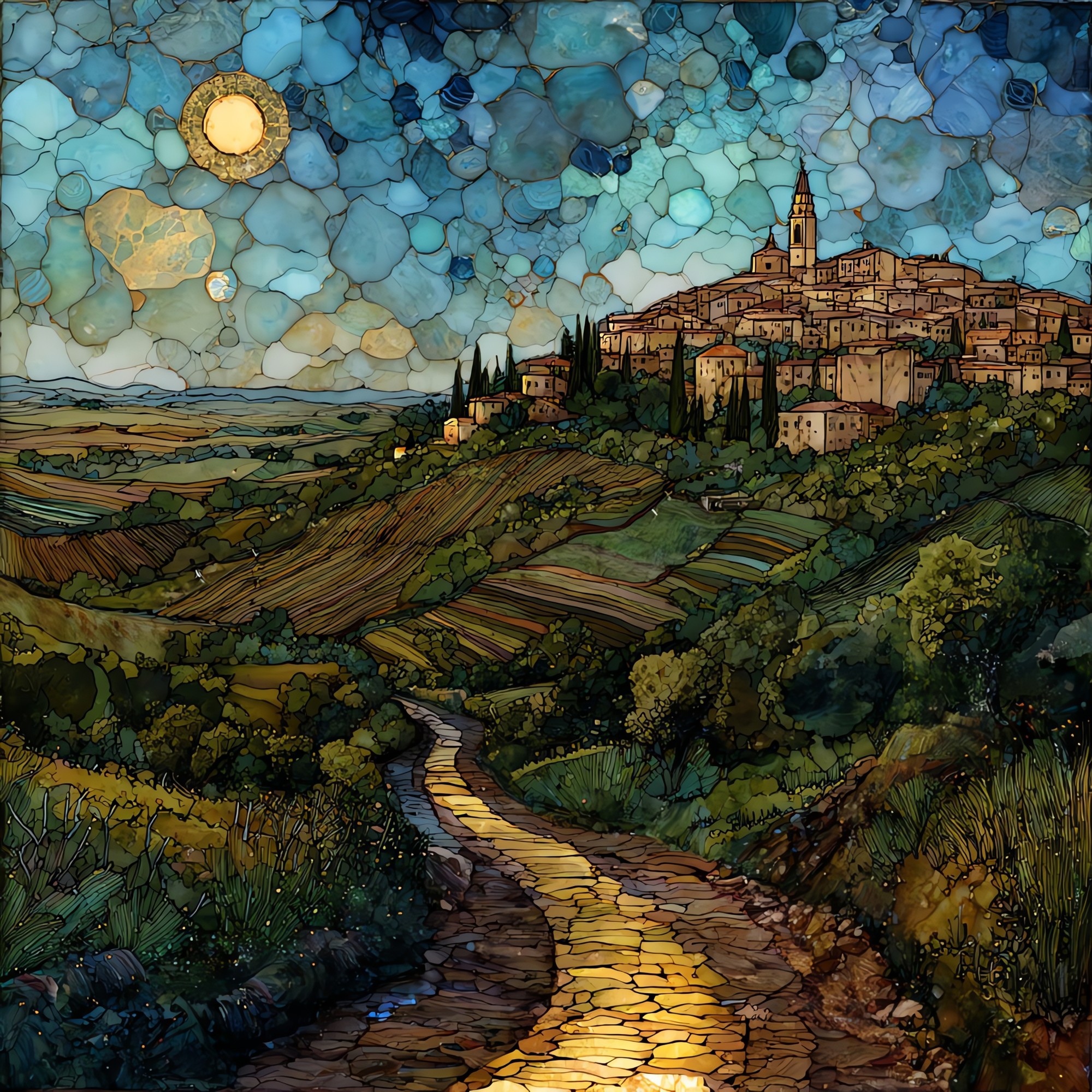
Montepulciano
— — a hill the colour of the wine it makes.
Not only on a wall.
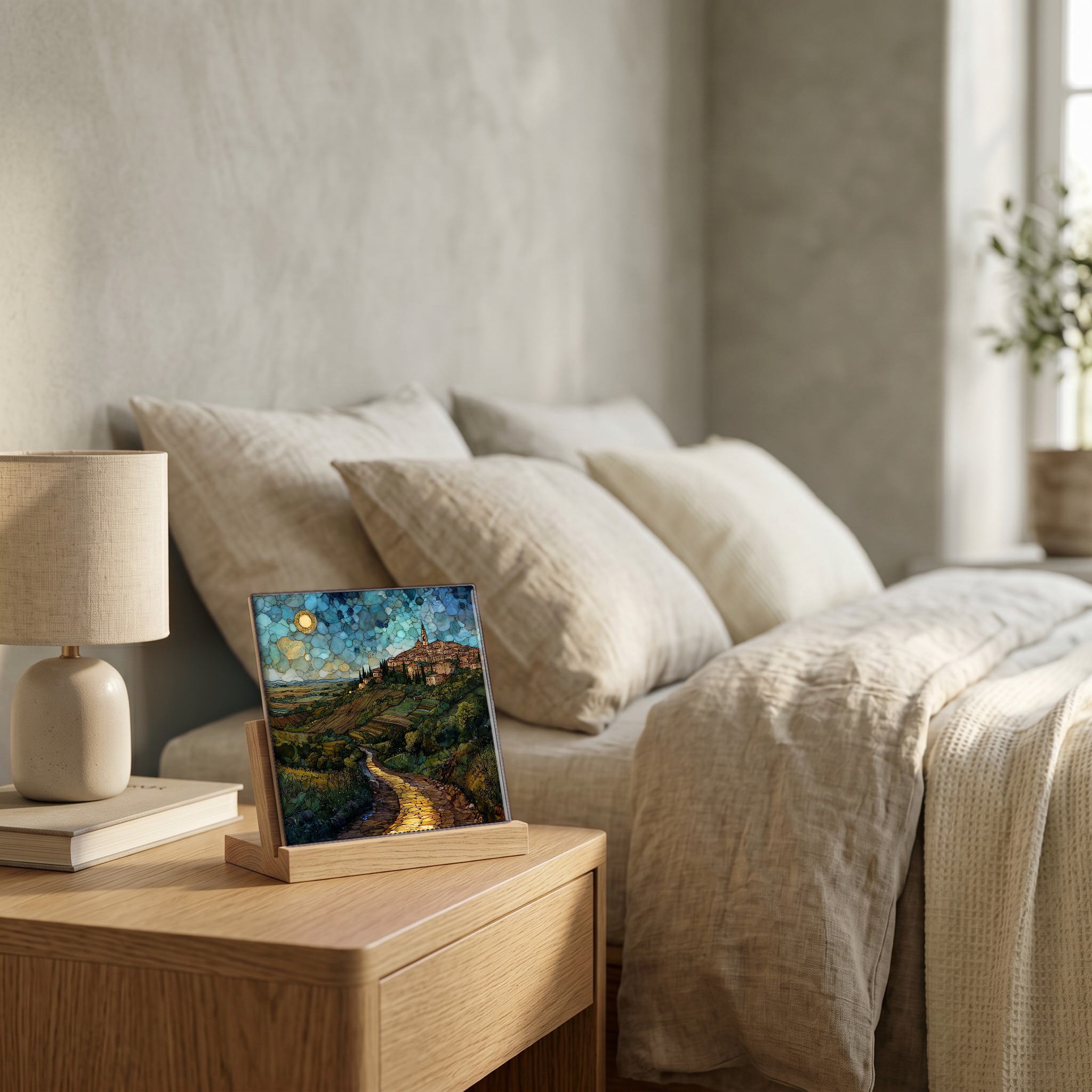
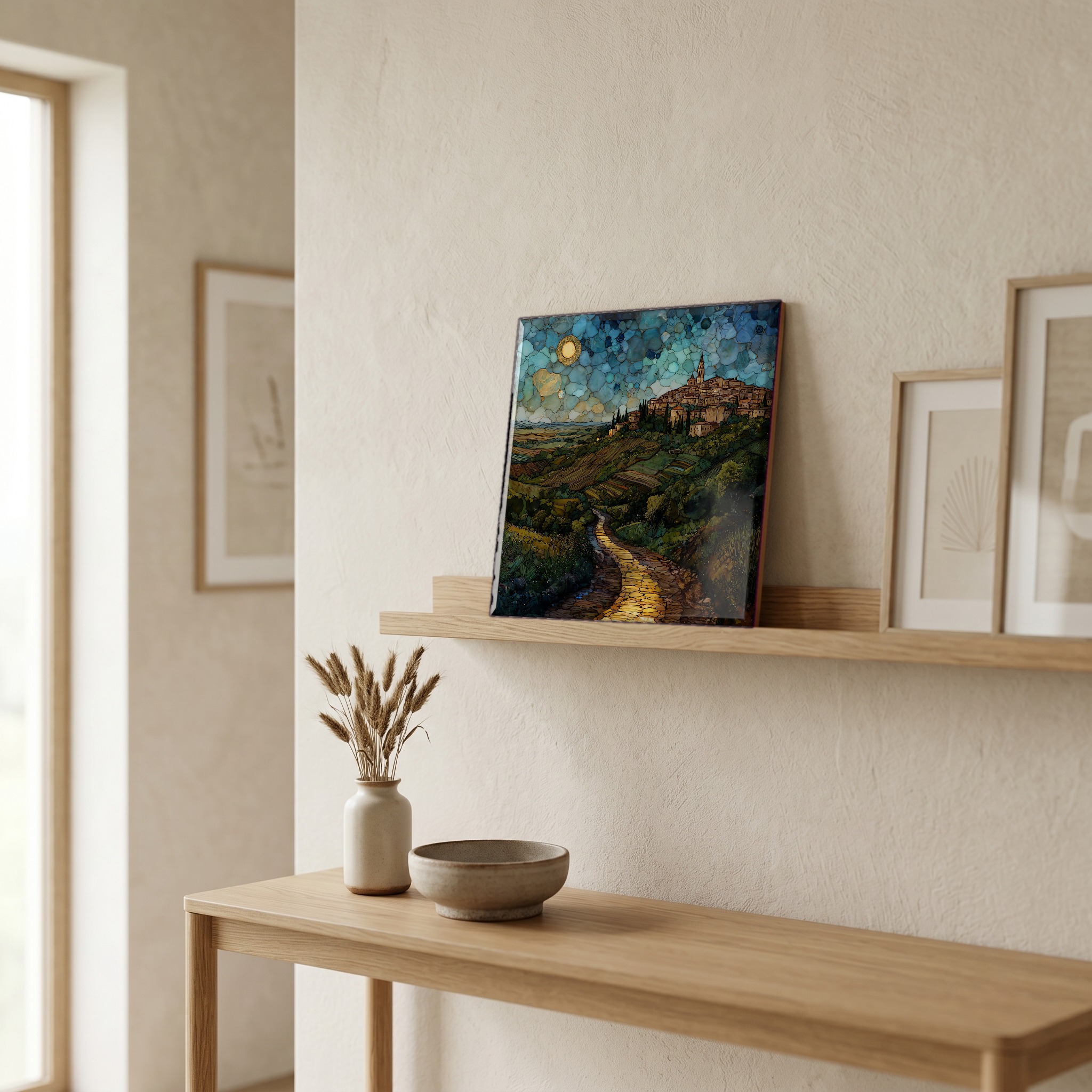
“A wine town on a ridge in southern Tuscany, the kind of place you climb slowly and on foot. The Corso winds up past stone fronts and cellar doors to the Piazza Grande at the summit, where the town hall could pass for a smaller cousin of Florence's. Just below the walls, alone in a field of cypress, stands the Tempio di San Biagio, the colour of pale honey. The wine is the Vino Nobile, a deep Sangiovese red that took its name from the tables it once reached. Late in the day the light comes in low and the travertine goes gold.
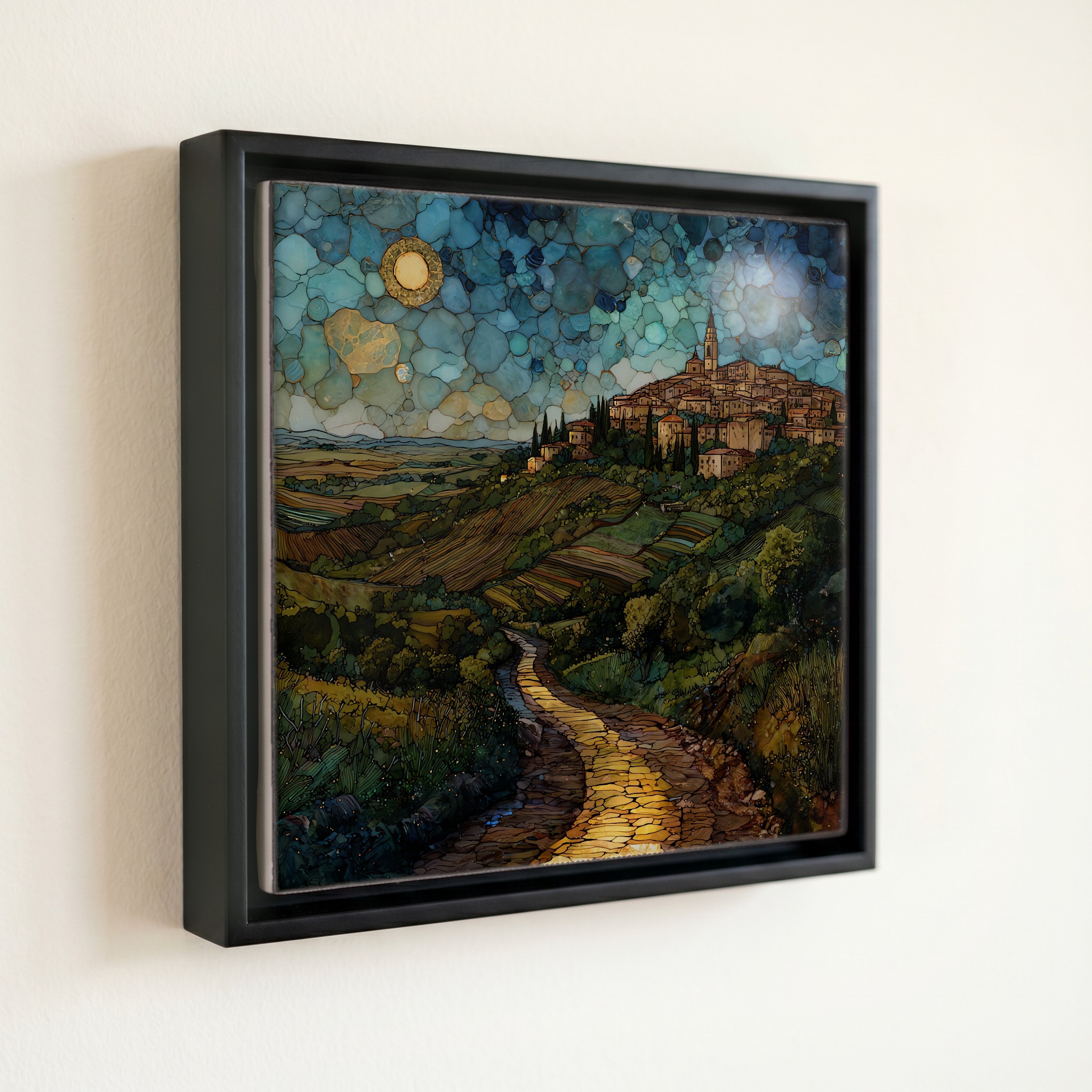
Montepulciano, on ceramic.
Each tile is finished by hand in our Knoxville studio. Artwork is slowly infused into the ceramic surface under high heat and pressure, and rests beneath a thin glossy finish. The colour lives in the surface, not on top of it.
Pick any four 4-inch tiles — National Parks you've been to, a Smokies set, the four seasons of one place. $ for a set of , cork-backed, ready to live on the table.
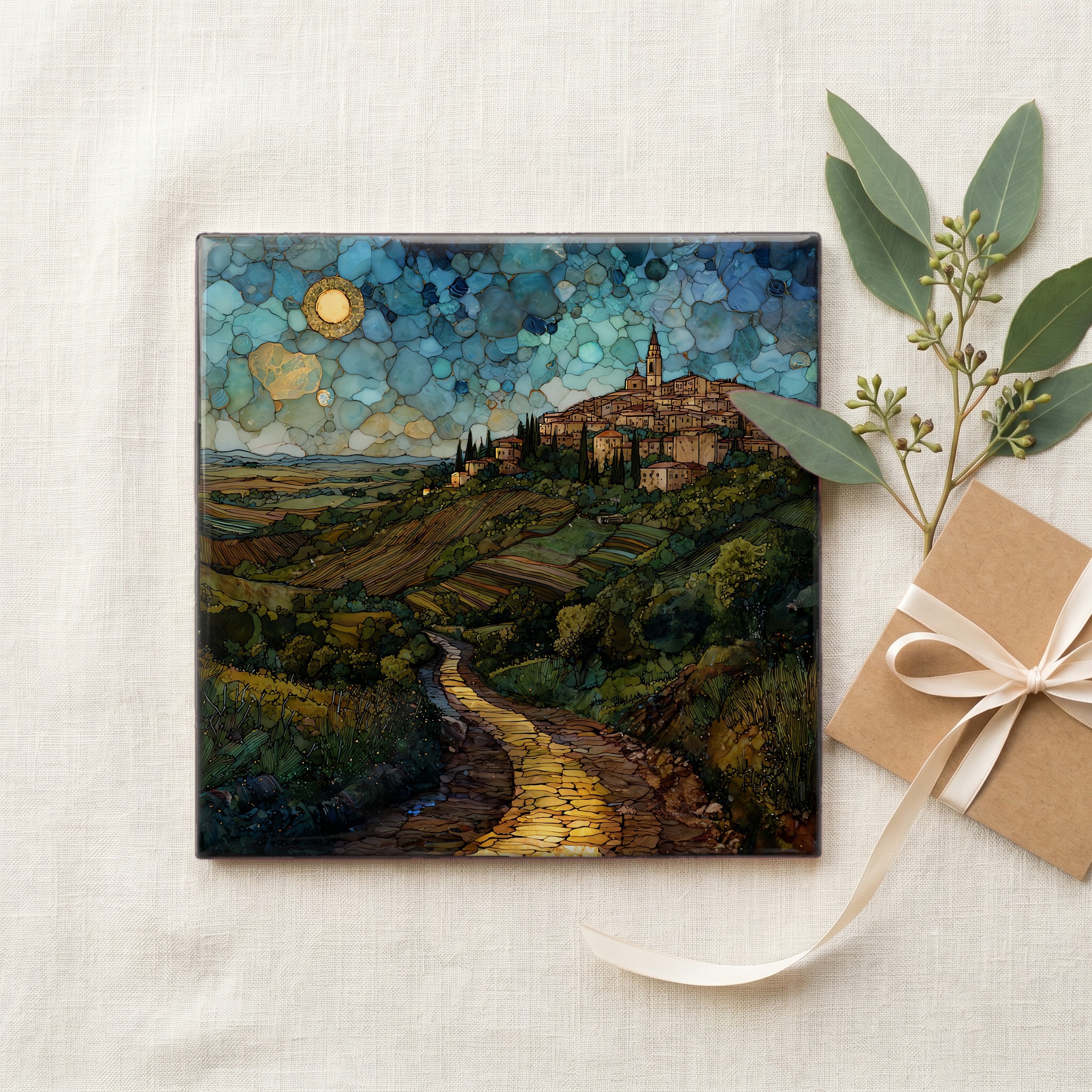
Each tile ships in a kraft box, tied with cream ribbon, with a handwritten note from the studio if you'd like to add one.
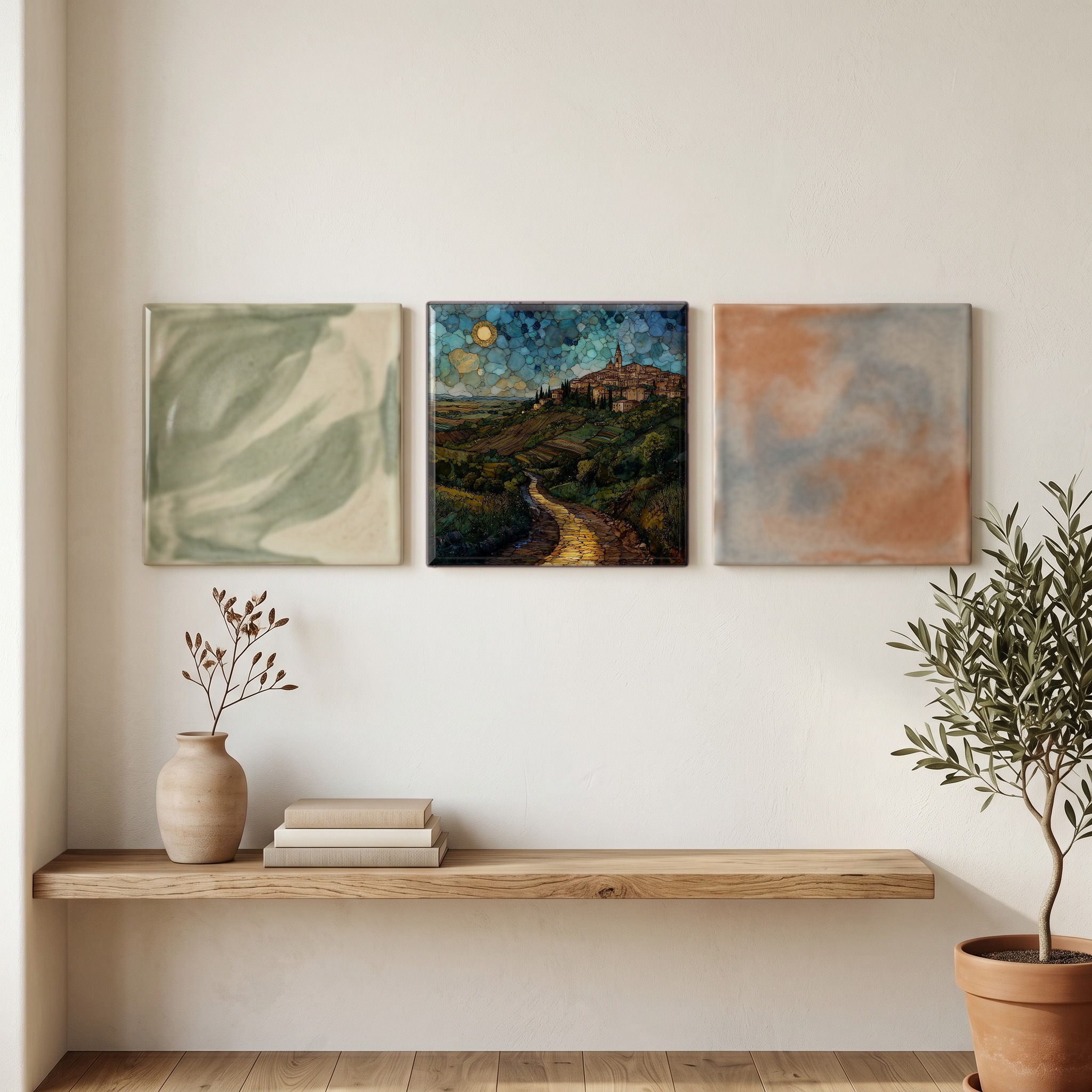
Three or five different vistas, hung together — a chapter of places you've been, or want to go.
The place, in three passes.
Montepulciano sits at about 605 metres on a long limestone ridge in the province of Siena, in southern Tuscany, between the Val d'Orcia and the Val di Chiana. Roughly 13,000 people live in the commune. The town is medieval and Renaissance in its bones: a single main street, the Corso, climbs from the Porta al Prato gate to the Piazza Grande at the top, where the Palazzo Comunale, the town hall, echoes the Palazzo Vecchio in Florence. The nearest larger cities are Siena, about an hour to the northwest, and Perugia across the Umbrian border to the east. The surrounding hills are planted almost entirely to vines and olives.
The single building people travel for is the Tempio di San Biagio, which stands alone in a meadow just below the town walls. Antonio da Sangallo the Elder designed it on a Greek-cross plan and work began in 1518; the travertine was cut from the nearby quarries of Sant'Albino, and that warm pale stone is why the church seems to hold light. Its model was Santa Maria delle Carceri in Prato, built by Sangallo's brother Giuliano. Up in the town the same honey-coloured travertine faces the Duomo and the palazzi along the Corso, much of it laid in the sixteenth century when Florentine and Sienese families were building here. The stone ages slowly and never quite goes grey.
Montepulciano keeps a calendar set by wine. The Vino Nobile di Montepulciano, granted DOCG status in 1980, must be at least seventy percent Sangiovese, the clone known locally as Prugnolo Gentile, and is held back two years before release, one of them in oak. The growing zone is small, around 820 hectares on the slopes below the town. On the last Sunday of August the eight contrade run the Bravìo delle Botti, rolling eighty-kilo wine barrels uphill through the streets to the Piazza Grande, a race revived in 1974 from an older horse-race tradition. Harvest follows in the weeks after, and by late autumn the cellars along the Corso smell of the new vintage.