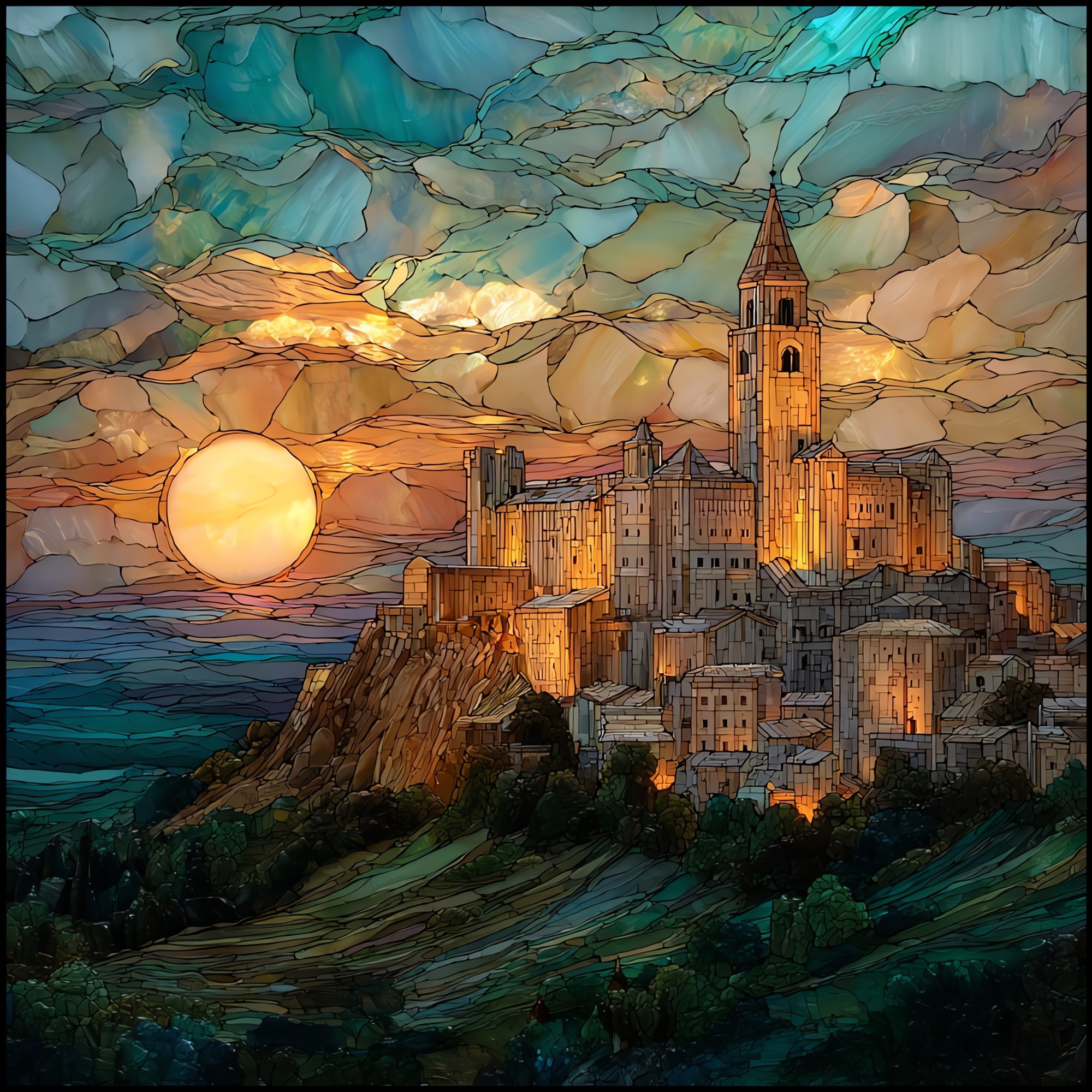
Monte Cassino Abbey
— raised again, exactly where it fell.
Not only on a wall.
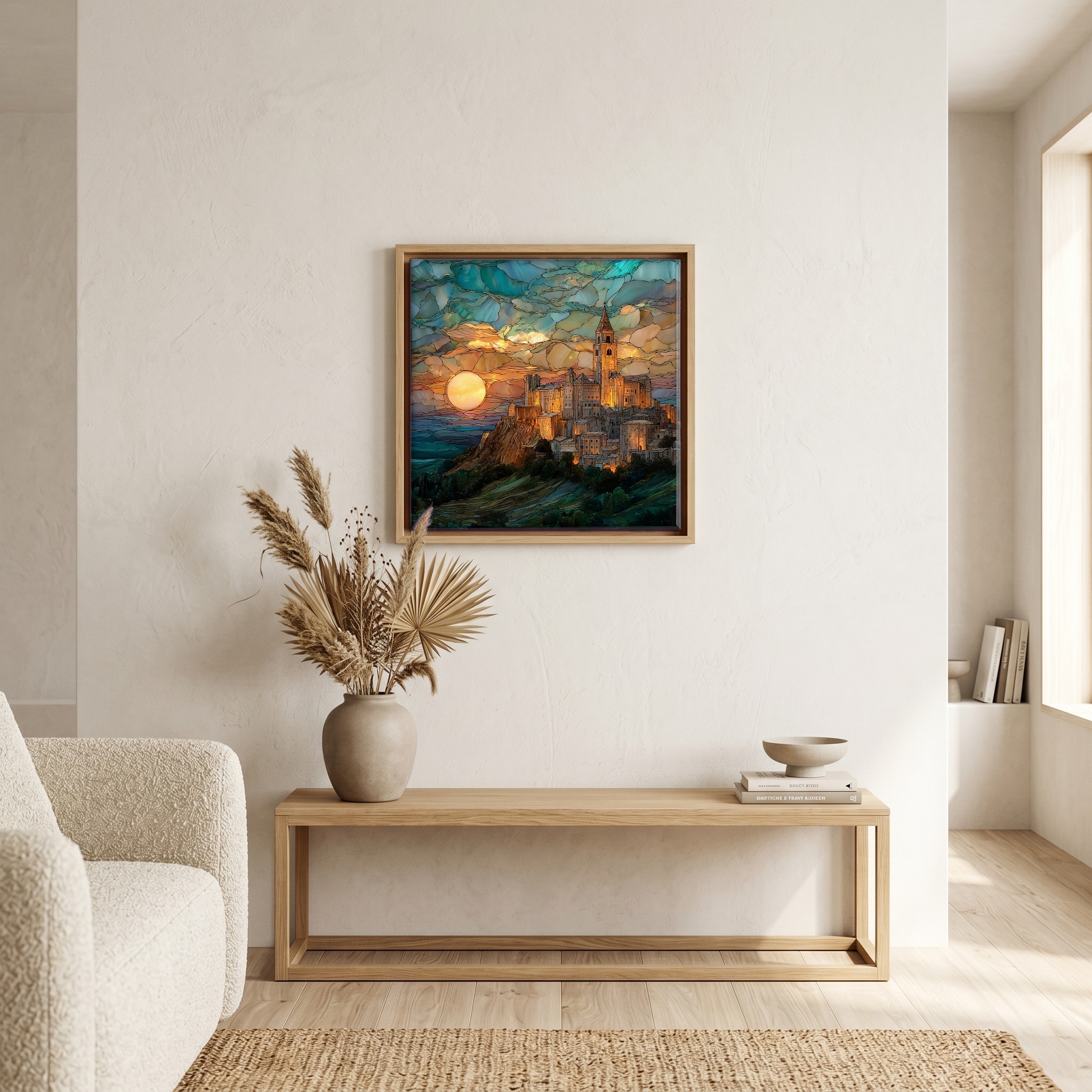
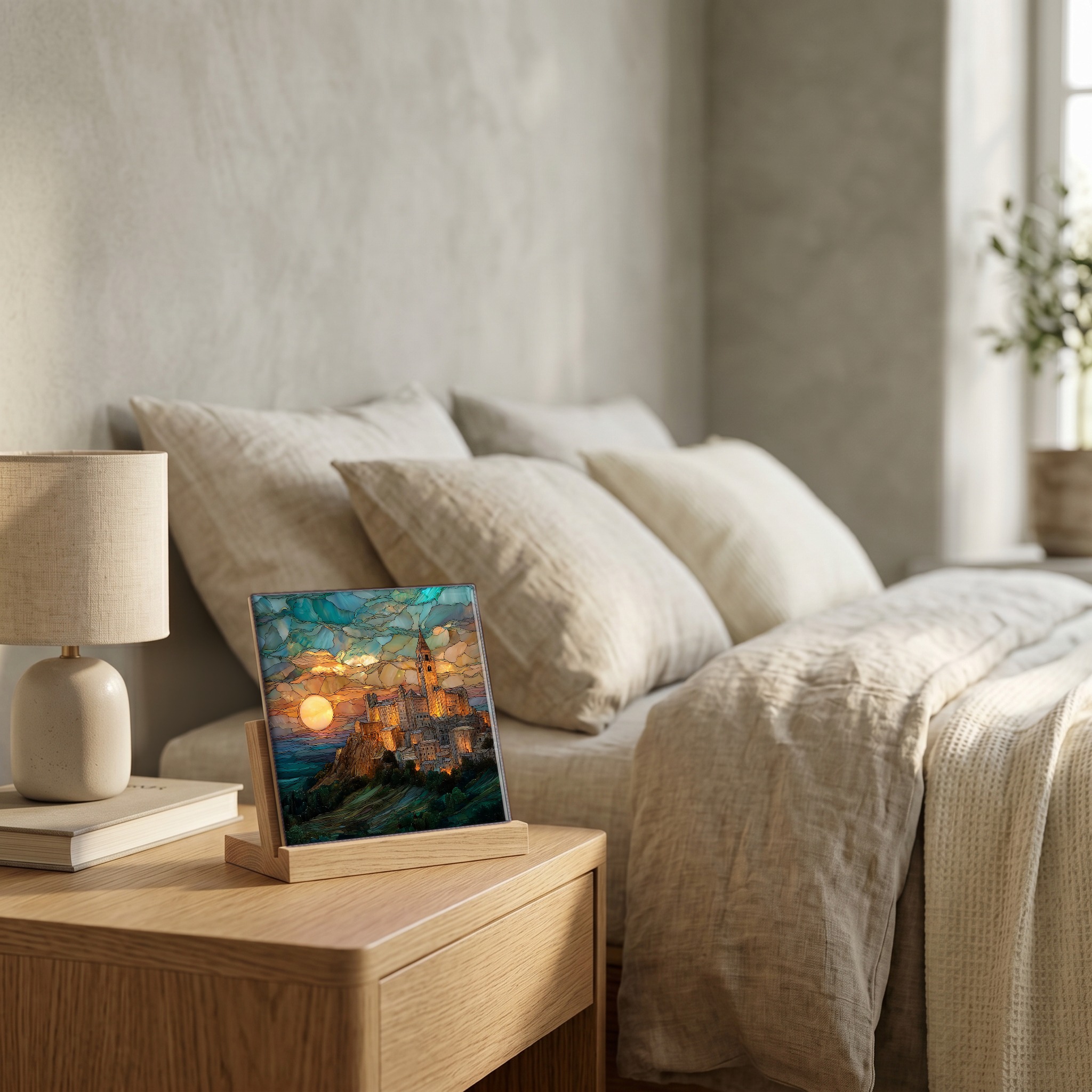
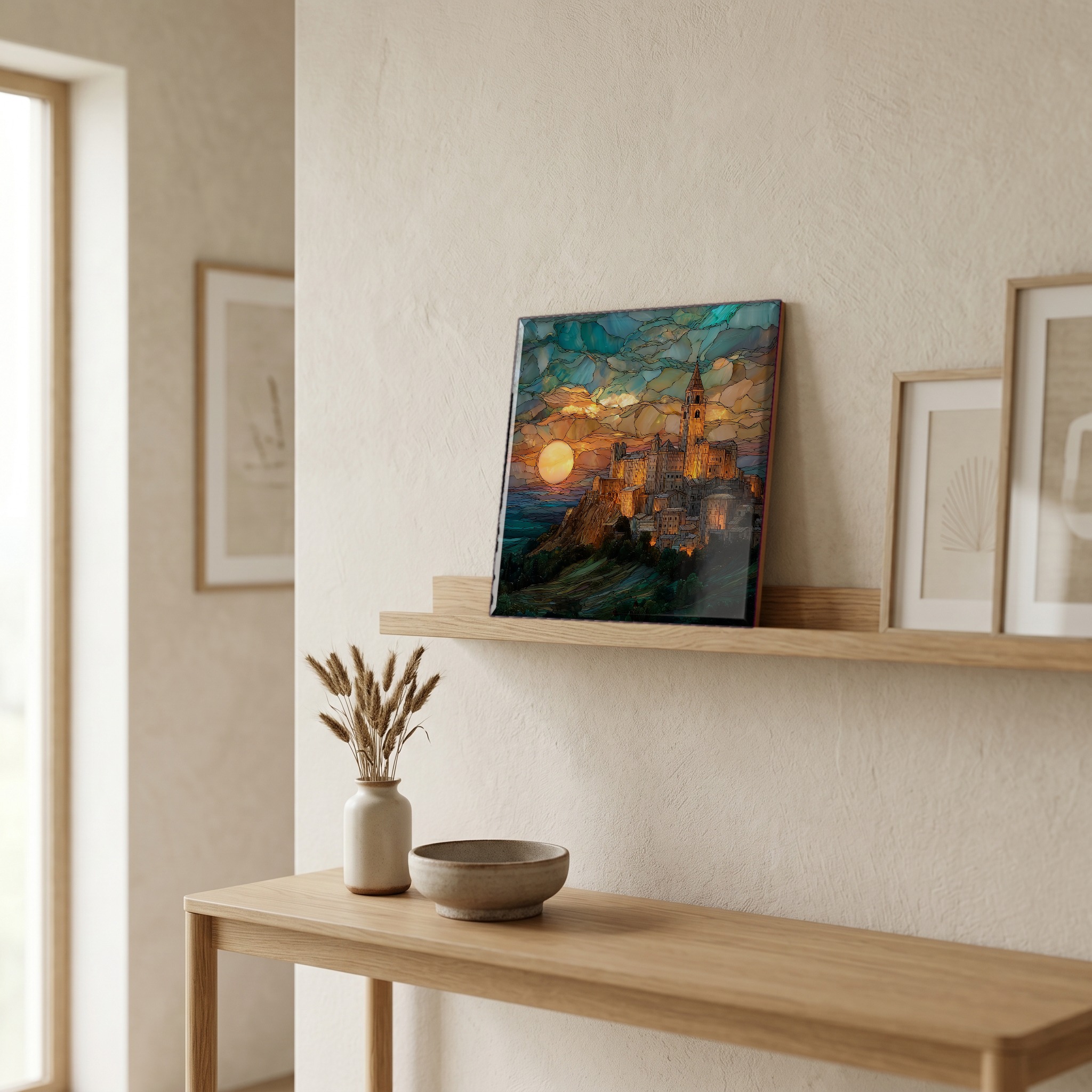
“The first Benedictine house, on a hill the road to Rome had to pass. Benedict founded it around 529 and wrote his Rule here; he and his sister Scholastica still lie beneath the high altar. The place has been levelled and raised four times: Lombards, Saracens, an earthquake, and in February 1944 a thousand tons of Allied bombs that left nothing standing. The monks rebuilt it stone for stone, exactly as it was. Across the valley a Polish cemetery holds the men who took the ruin. People climb the last switchbacks and go quiet at the top.
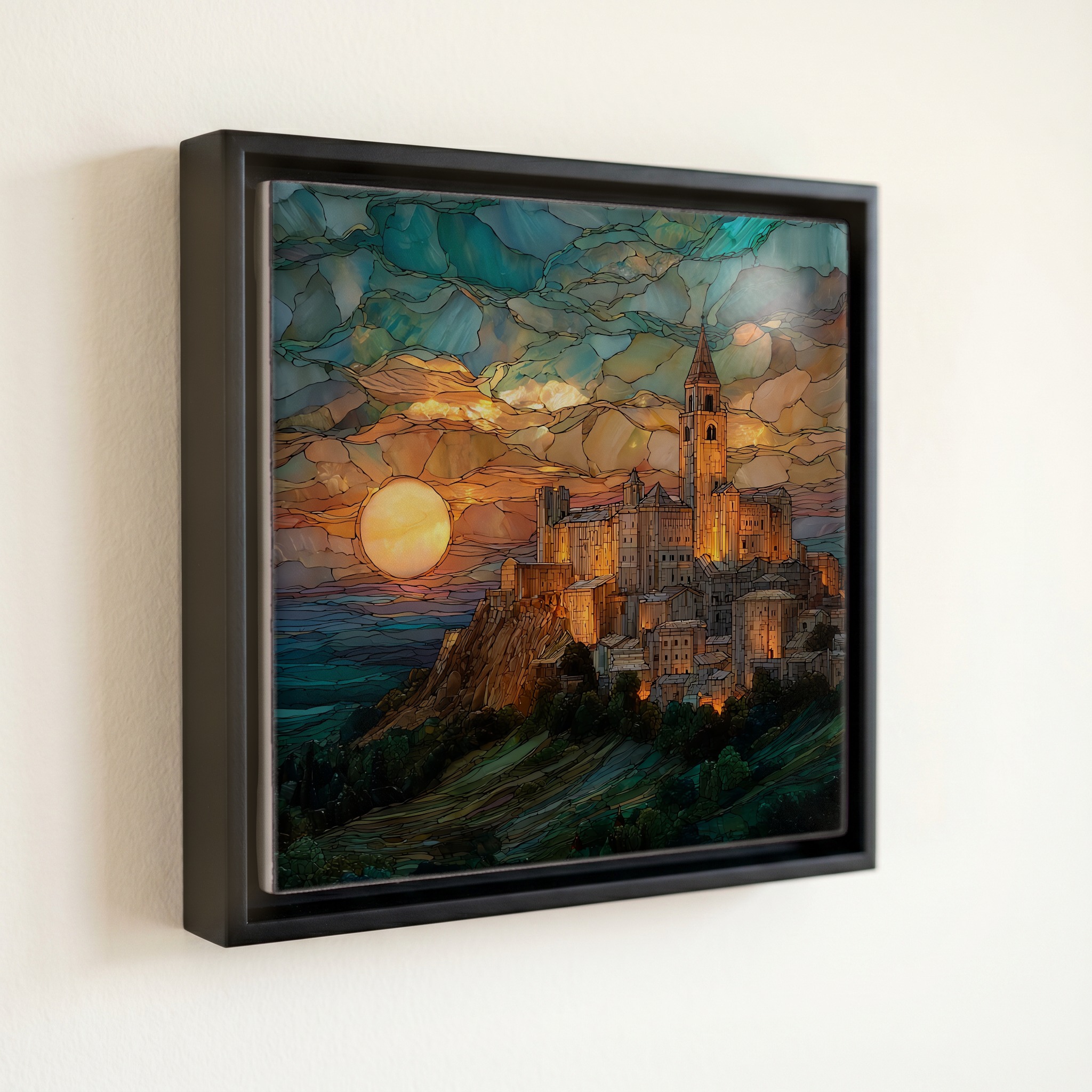
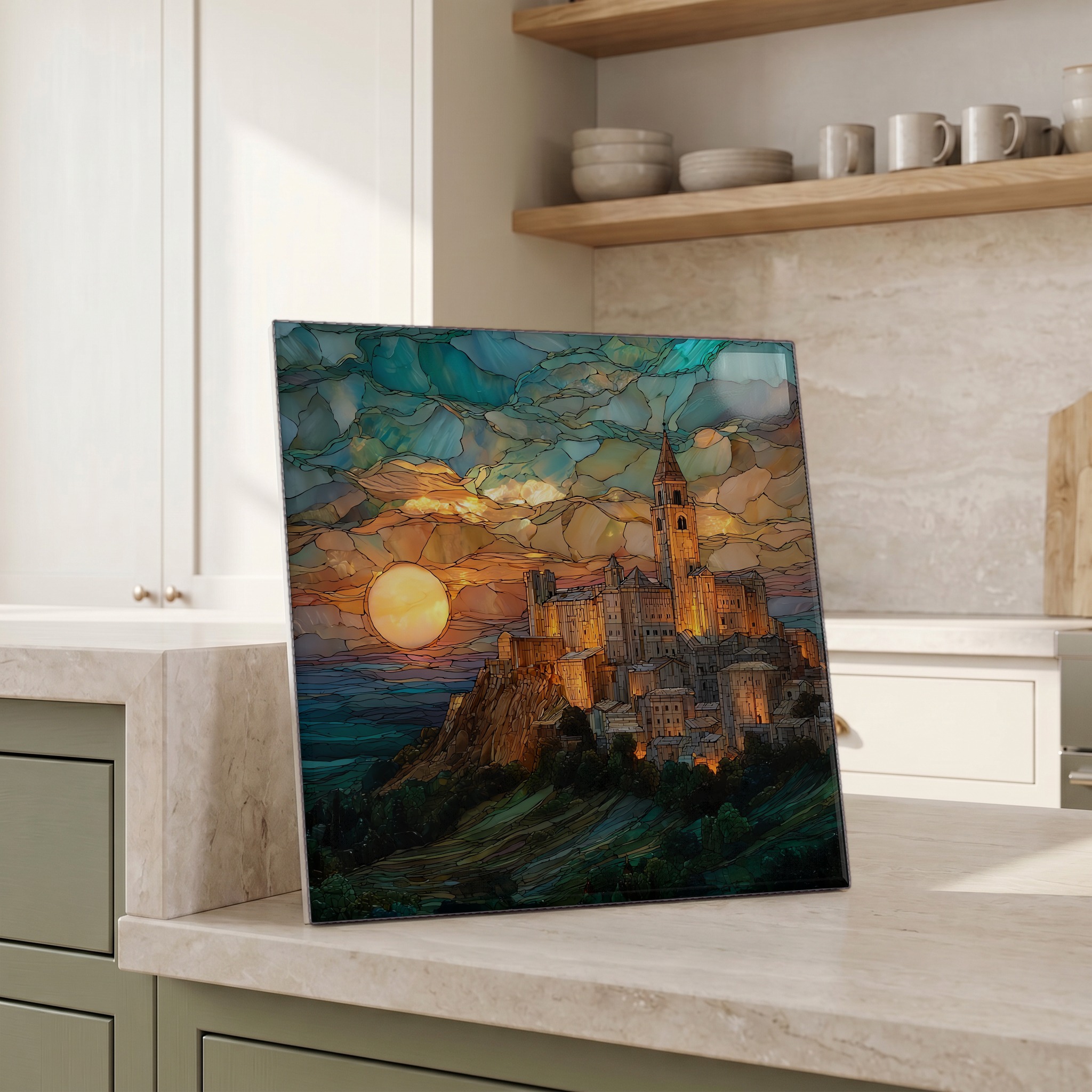
Monte Cassino Abbey, on ceramic.
Each tile is finished by hand in our Knoxville studio. Artwork is slowly infused into the ceramic surface under high heat and pressure, and rests beneath a thin glossy finish. The colour lives in the surface, not on top of it.
Pick any four 4-inch tiles — National Parks you've been to, a Smokies set, the four seasons of one place. $ for a set of , cork-backed, ready to live on the table.
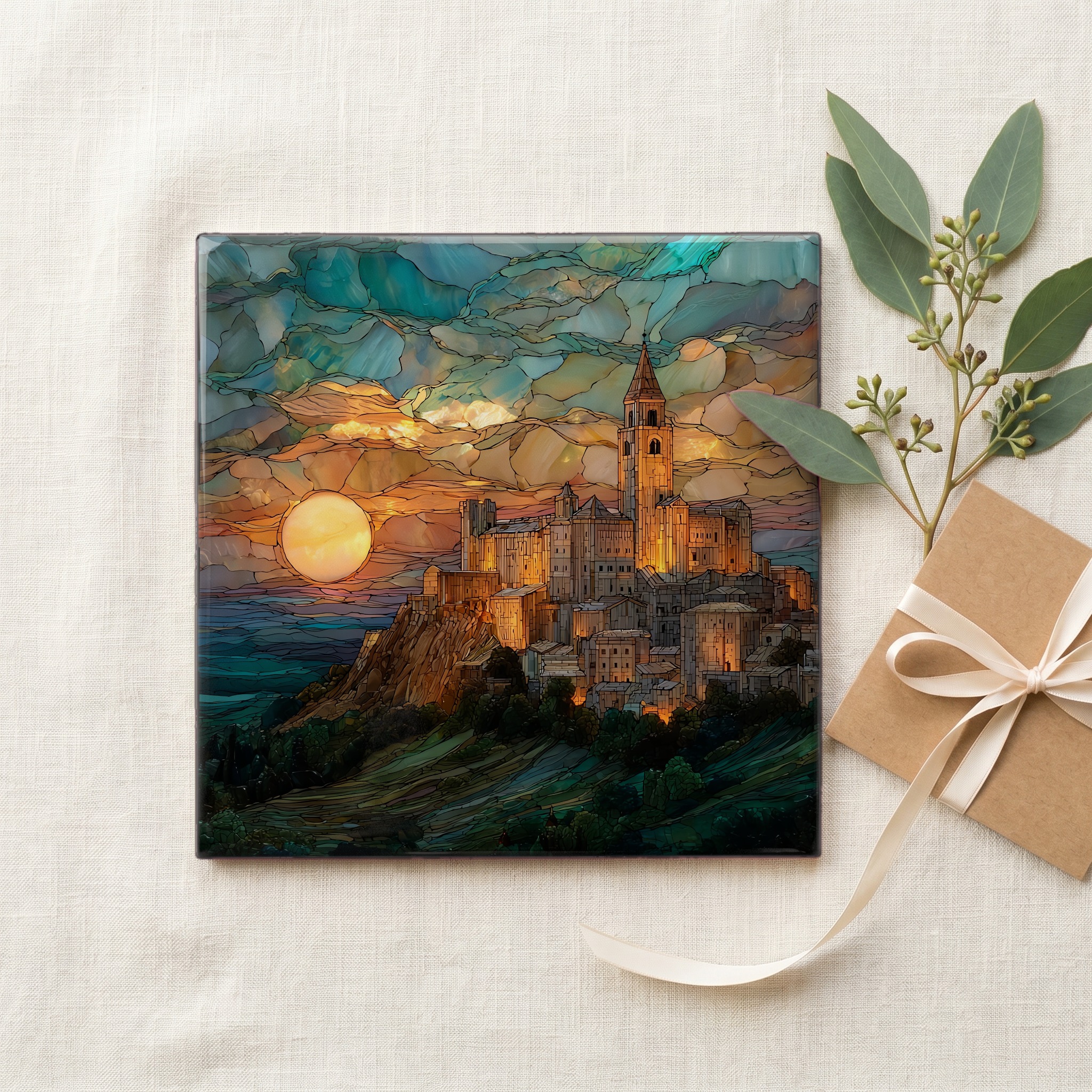
Each tile ships in a kraft box, tied with cream ribbon, with a handwritten note from the studio if you'd like to add one.
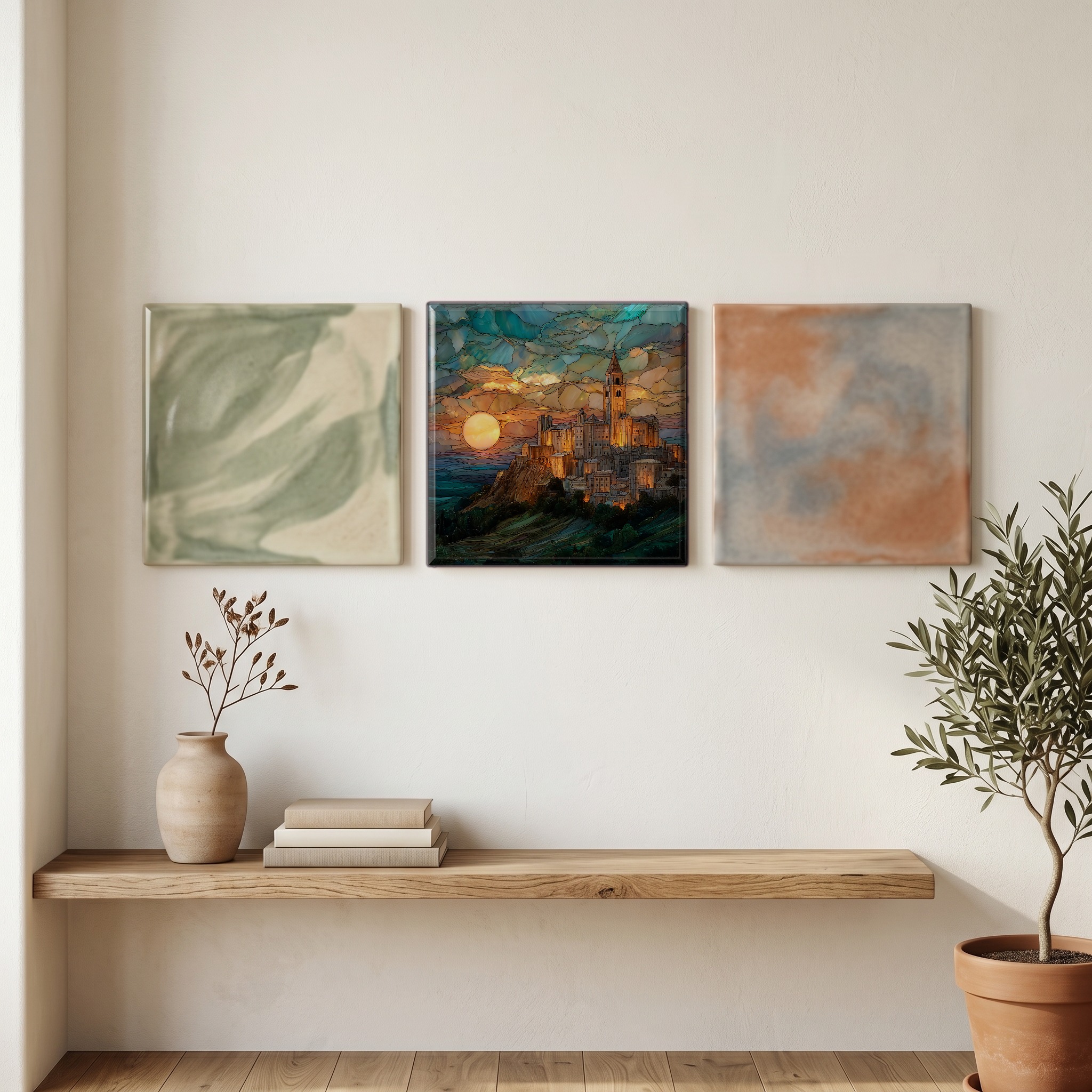
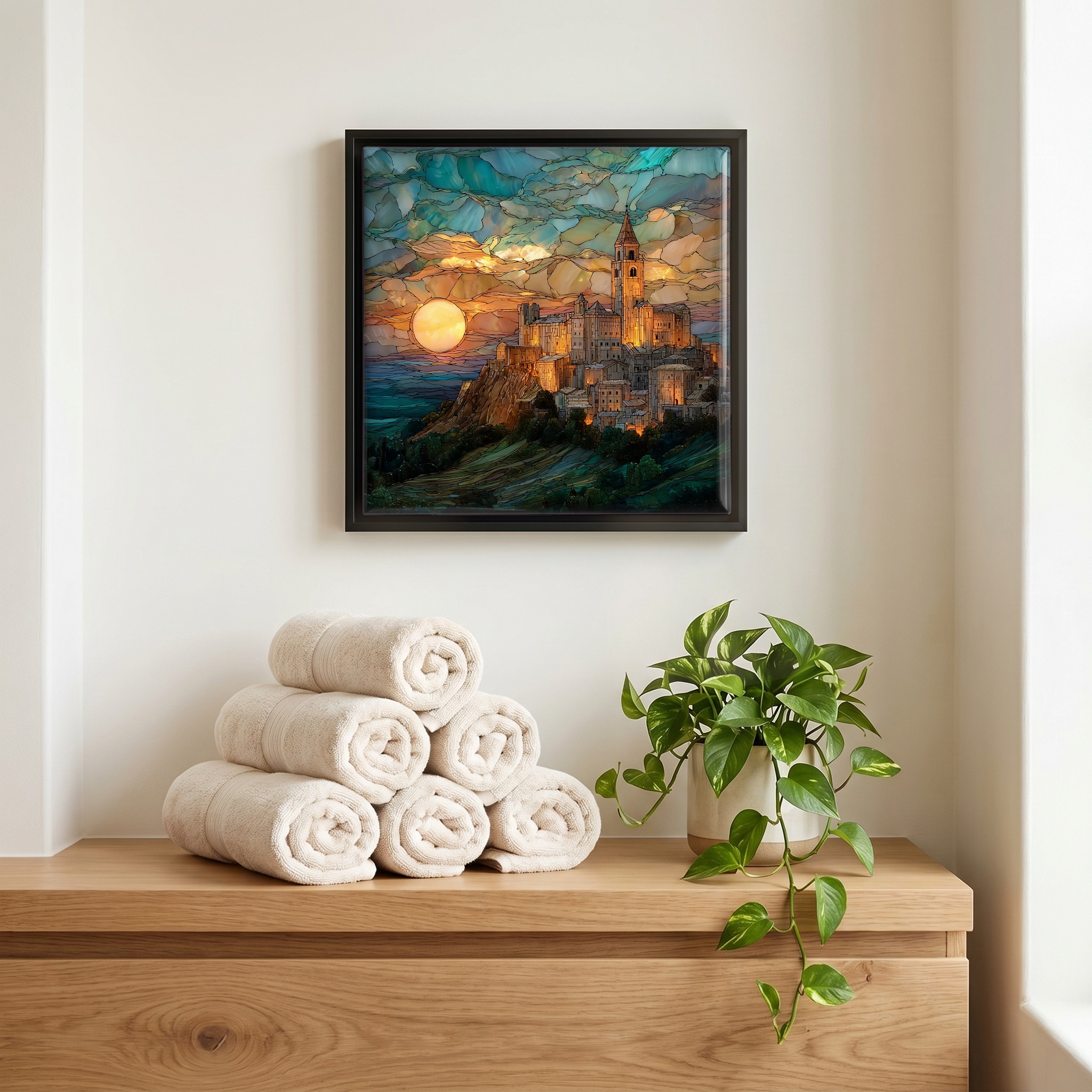
Three or five different vistas, hung together — a chapter of places you've been, or want to go.
The place, in three passes.
Monte Cassino is a Benedictine monastery on a rocky height about 130 kilometres southeast of Rome, above the town of Cassino in the Lazio region of southern Italy. It stands at roughly 516 metres, on the site of the ancient Roman town of Casinum, where a sanctuary to Apollo once stood. Benedict of Nursia founded it around 529, and it became the first house of the Benedictine Order and the place where he composed his Rule, the guide that shaped Western monasticism. Benedict and his sister Scholastica are entombed beneath the high altar. The hill commands the Liri valley and the old road to Rome, which is why armies fought for it for centuries.
The abbey has been destroyed and rebuilt four times. Lombards sacked it in the late sixth century, Saracens burned it in 883, an earthquake brought it down in 1349, and on 15 February 1944 more than a hundred Allied bombers dropped over a thousand tons of explosives, reducing it to rubble in the belief that German troops held the building. After the war the ruins were sifted and catalogued so original stone could be set back into the walls, and the monastery was rebuilt the way it had been, dov'era, com'era: where it was, as it was. Pope Paul VI reconsecrated the basilica on 24 October 1964. What stands today is the fourth abbey on the same foundations.
Monte Cassino is a working Benedictine monastery, and entry to the abbey is free. The basilica, the cloisters, the crypt with the tomb of Benedict and Scholastica, and the museum are open to visitors through most of the year; as an active religious house it asks for modest dress and quiet inside. A paved road climbs the switchbacks from the town of Cassino, about two hours southeast of Rome, to the gate. On the lower slope across the valley lies the Polish war cemetery, where 1,072 soldiers of the Polish II Corps are buried; they took the ruined hill on 18 May 1944, and their commander, General Wladyslaw Anders, lies among them. The feast of St Benedict falls on 11 July.