Wender·Vista
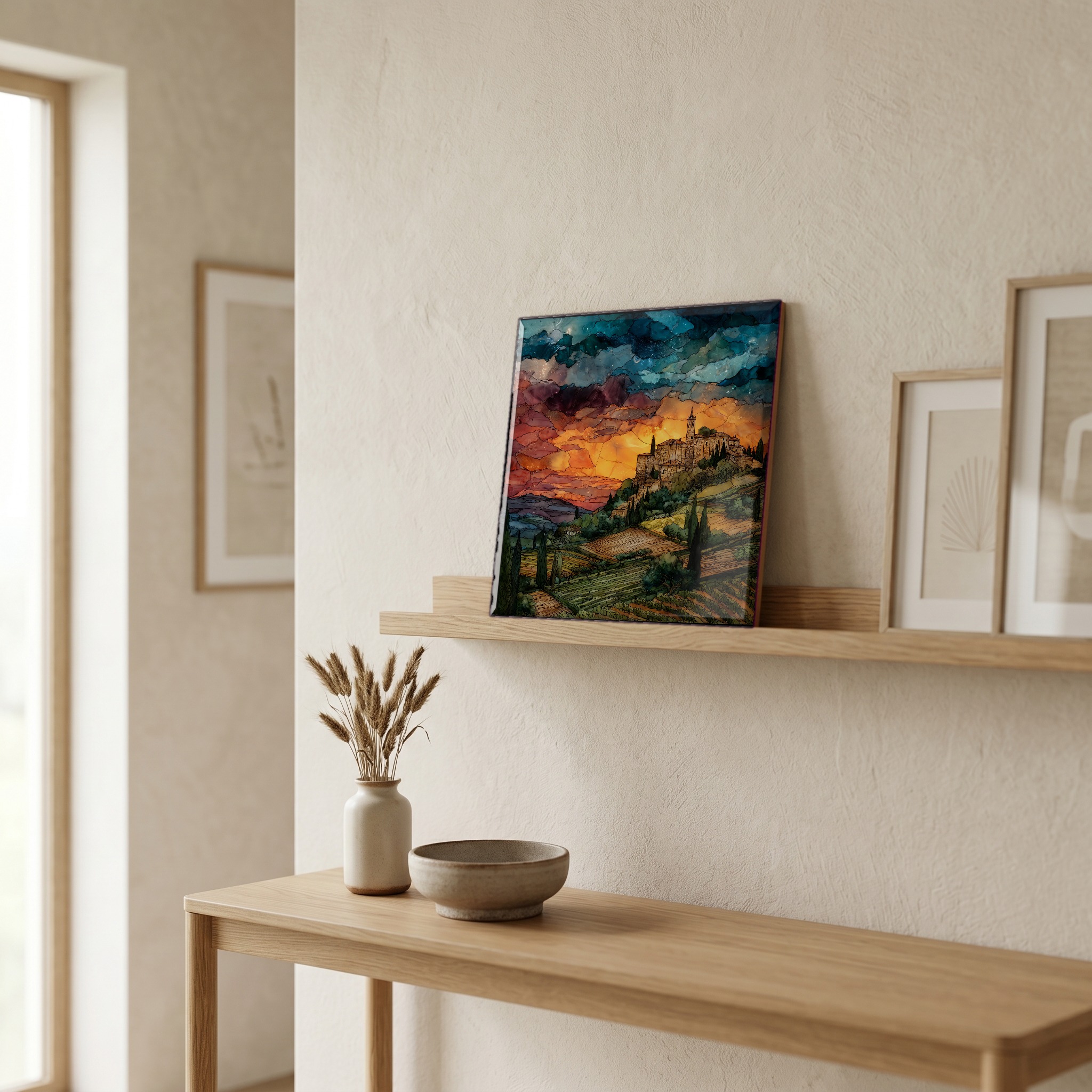
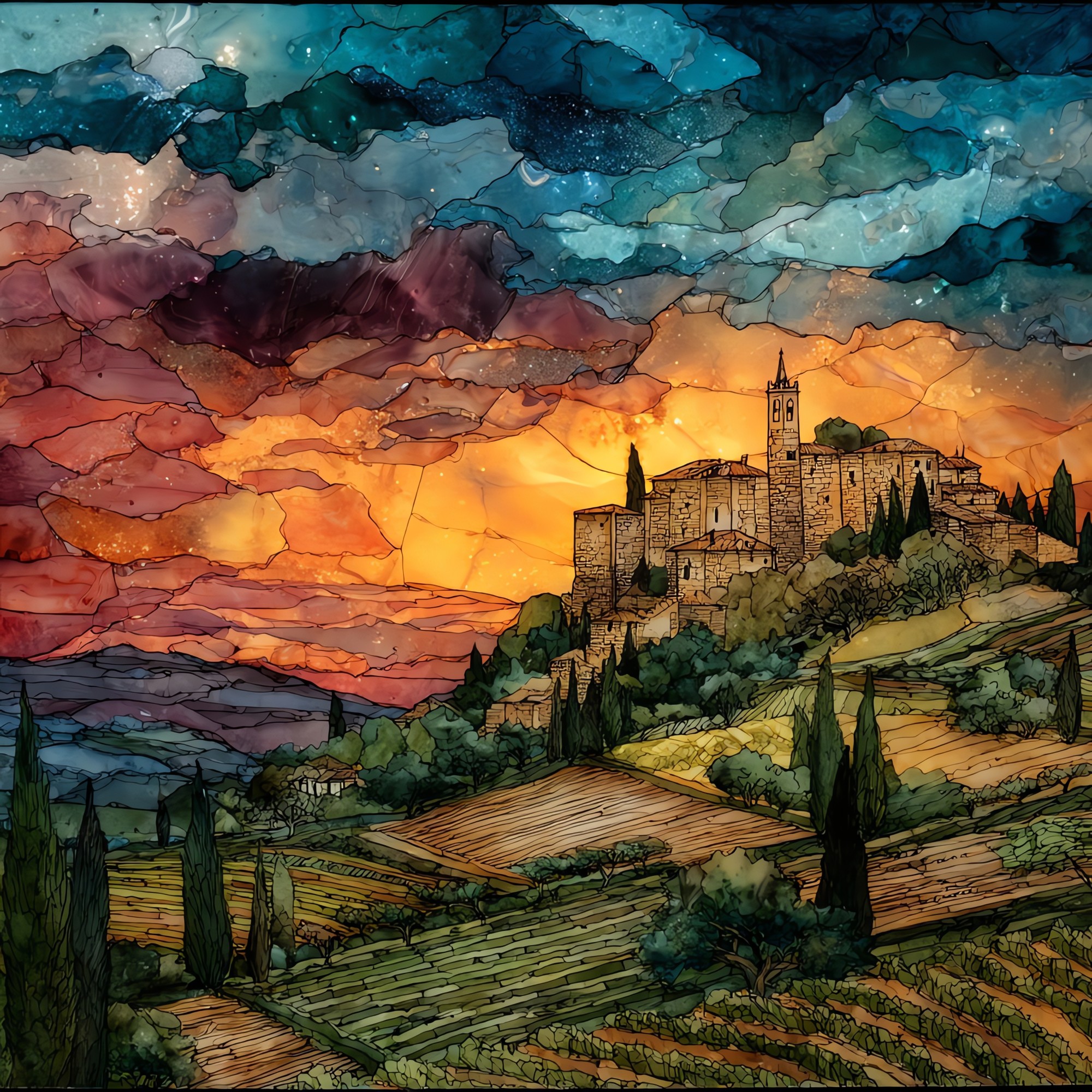
Montalcino Fortress
shown on ceramic, 12-inch tileItaly
above the Val d'Orcia, south of Siena

Montalcino Fortress

— where Siena went on, after Siena fell.

Where it lives

Not only on a wall.

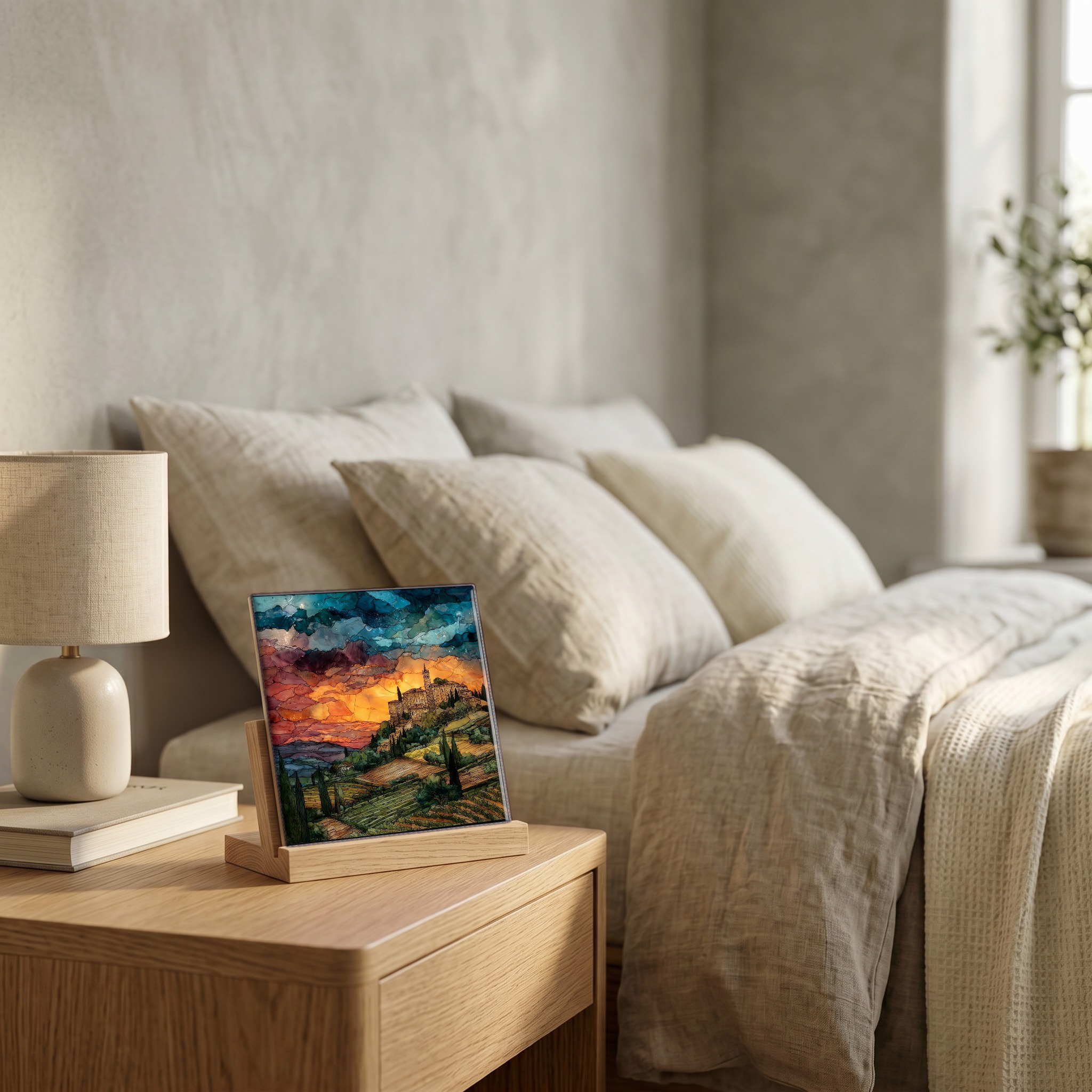
A small tile on the nightstand catching the morning. A larger one above the fire. Yours, wherever you spend the slow hours.
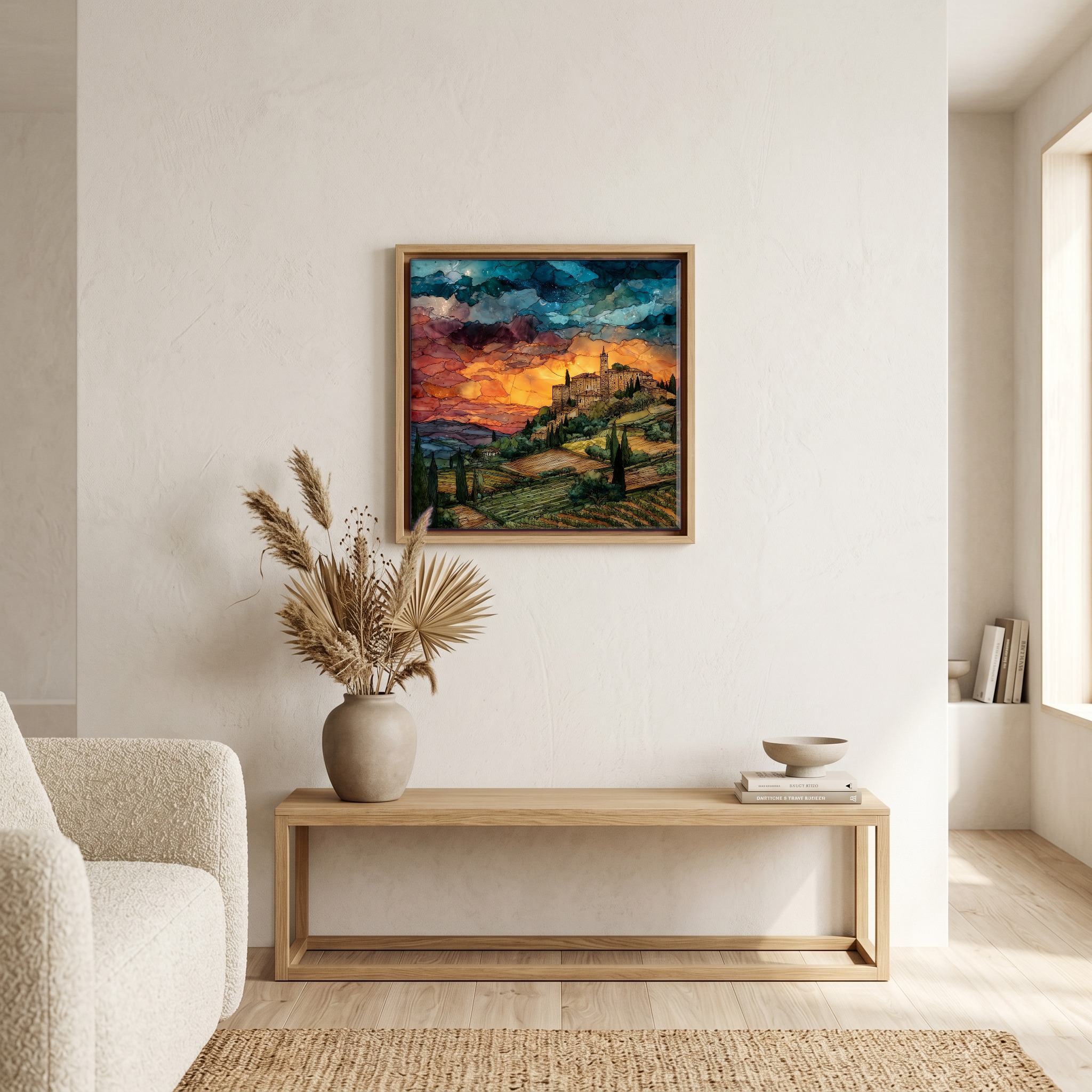
Above the bench, in a warm oak surround.
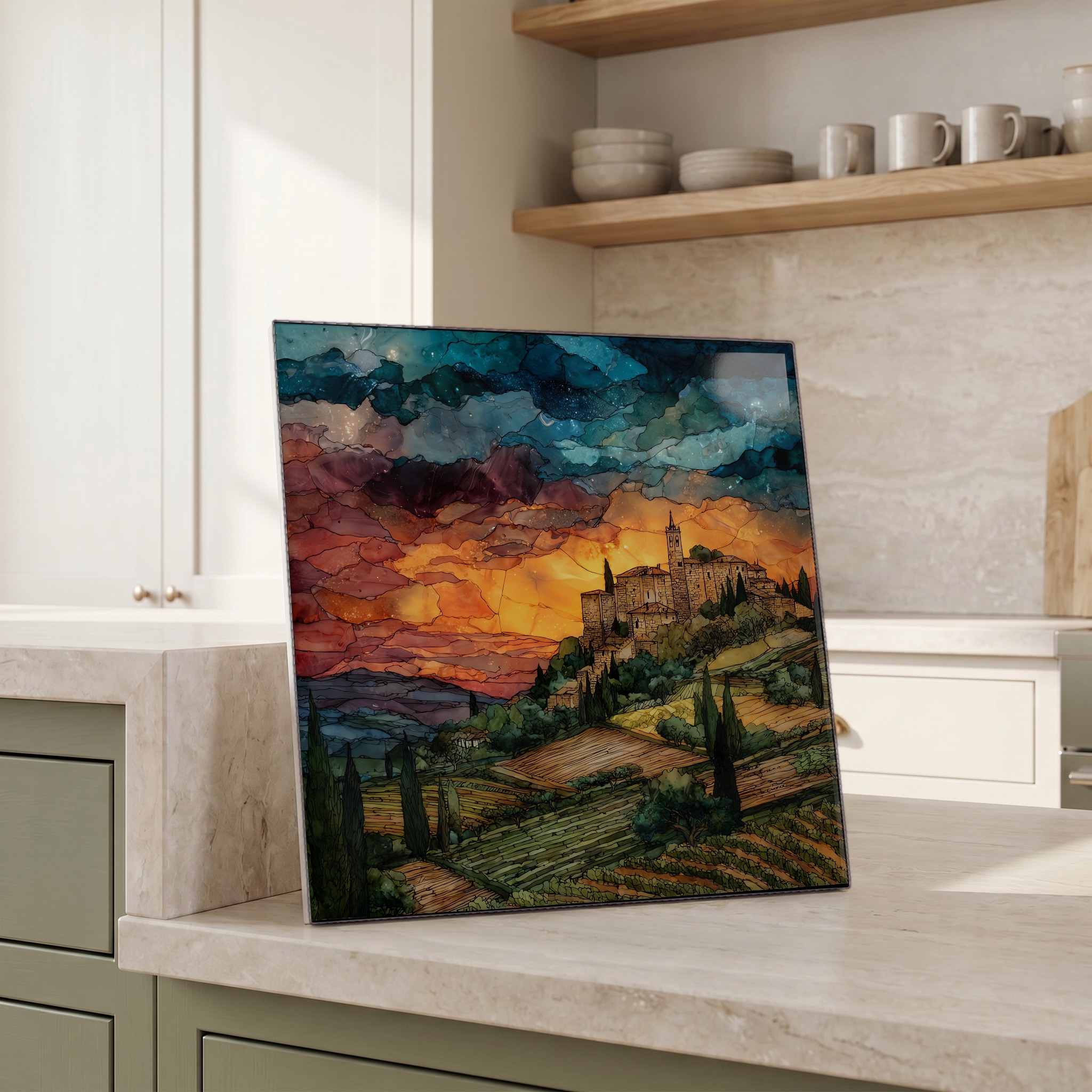
Beside the kettle, propped on the counter.
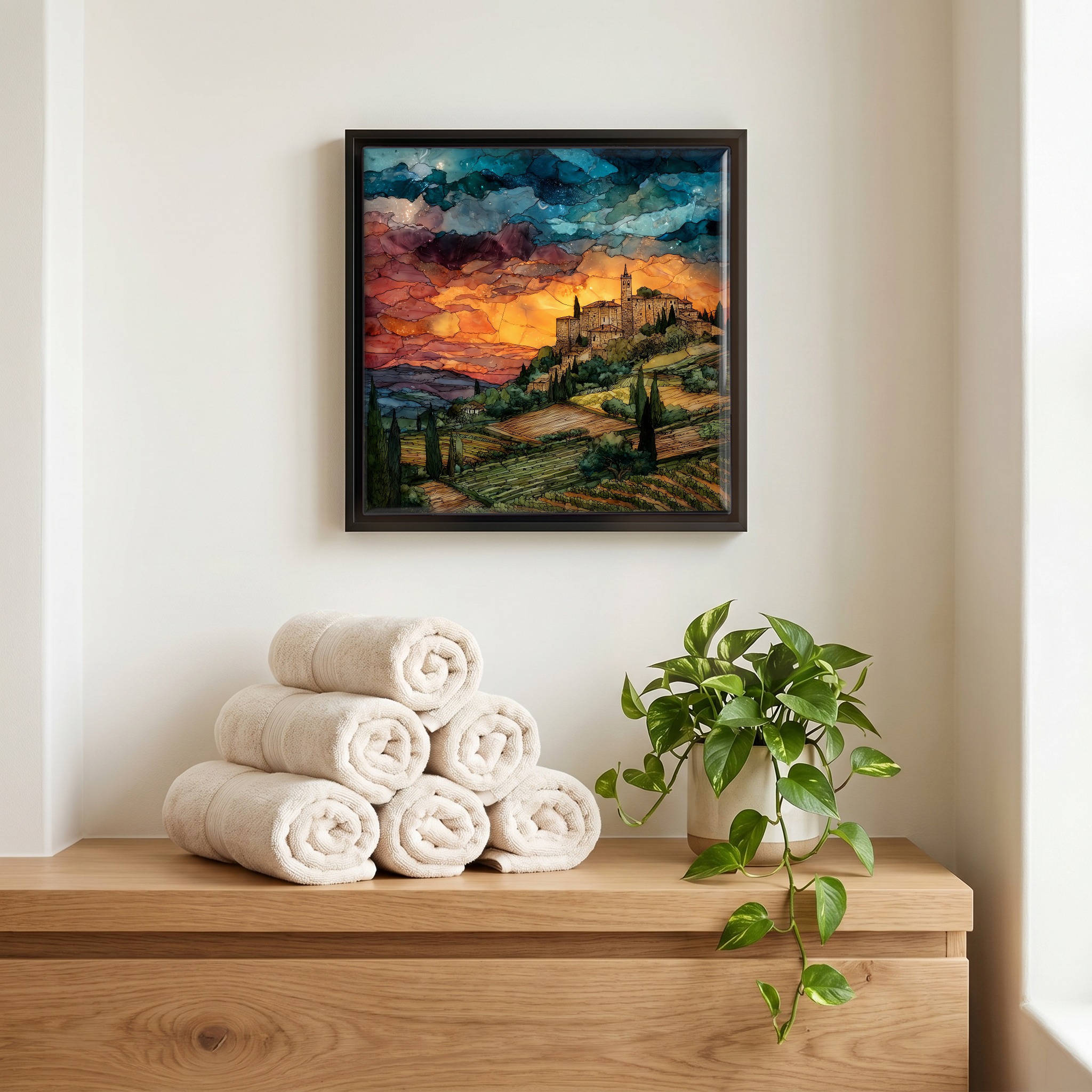
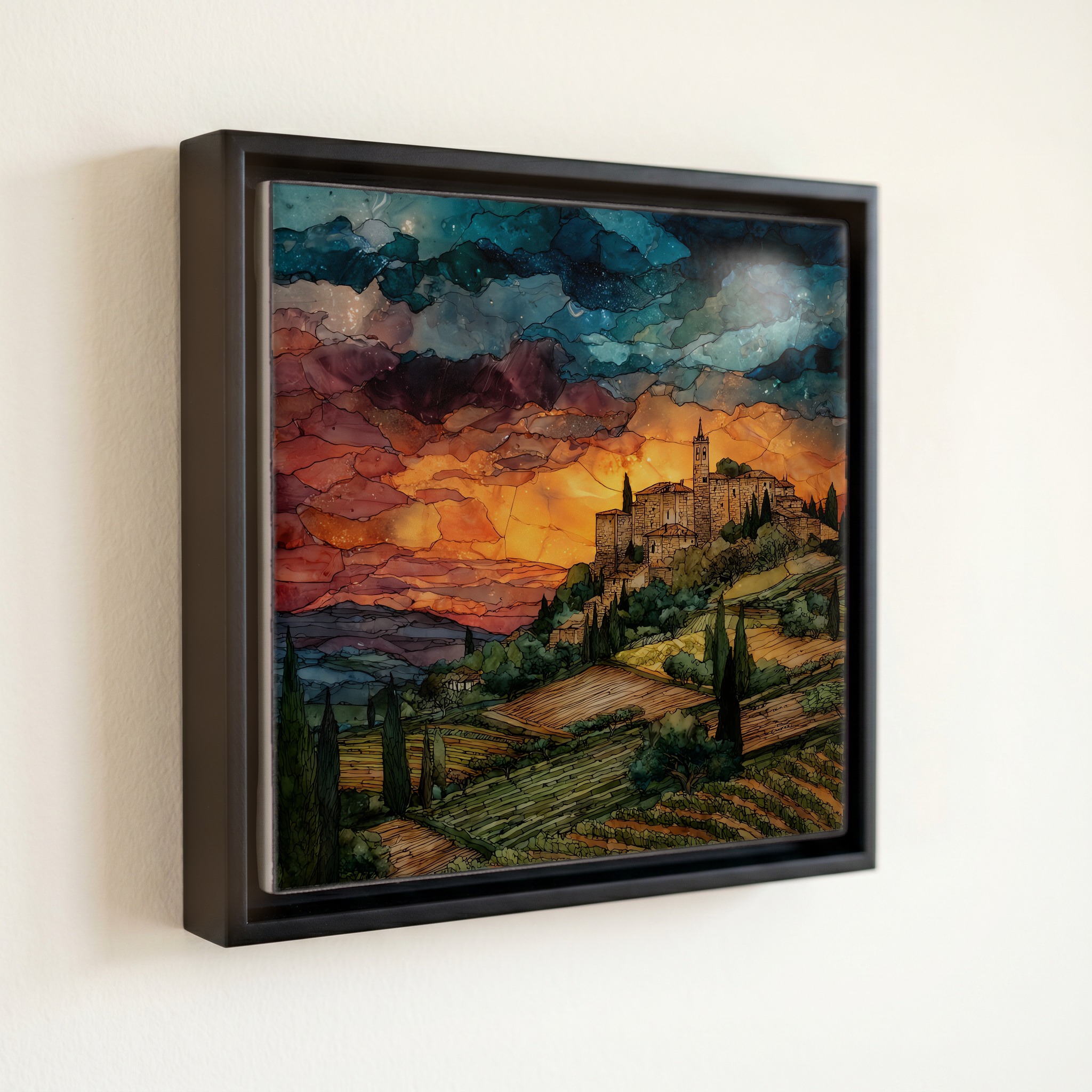
Above the linens, in a slim black surround.
On the nightstand, on a light oak stand.
On a picture ledge, where the light comes in.
a note from the studio

A pentagonal fortress on the highest hill in Montalcino, built by the Sienese in 1361. When Siena fell to the Medici in 1555, several hundred families took the road south and held out behind these walls for four more years, calling themselves the Republic of Siena sheltered in Montalcino. The ramparts are open to walk. The enoteca inside the keep pours Brunello by the glass, and the Val d'Orcia rolls south from the parapet.
from the studio
shown in a slim black floating frame · 6 × 6 in
— bring it home

Montalcino Fortress, on ceramic.

Each tile is finished by hand in our Knoxville studio. Artwork is slowly infused into the ceramic surface under high heat and pressure, and rests beneath a thin glossy finish. The colour lives in the surface, not on top of it.

What kind of piece?
One tile — square or rectangle.
How big?
the popular one — counter, shelf, nightstand
6 × 6 in · 15 cm · 1.6 lb
Surface finish
A clear glossy finish — the artwork reads as if under resin. Ideal for show-pieces and framed wall art.
How it sits
A hidden cleat — sits ¼″ proud of the wall.
$58
Hand-finished and shipped from our studio at the foot of the Smokies. On your wall in about ten days.
size
6 × 6 in
15 cm
weighs
1.6 lb
solid in the hand
surface
ceramic, hand-finished
art rests beneath a thin glossy finish
from
Knoxville, TN
our family studio, at the foot of the Smokies
— start a Coaster Set

Pick any four 4-inch tiles — National Parks you've been to, a Smokies set, the four seasons of one place. $ for a set of , cork-backed, ready to live on the table.
comes gift-ready
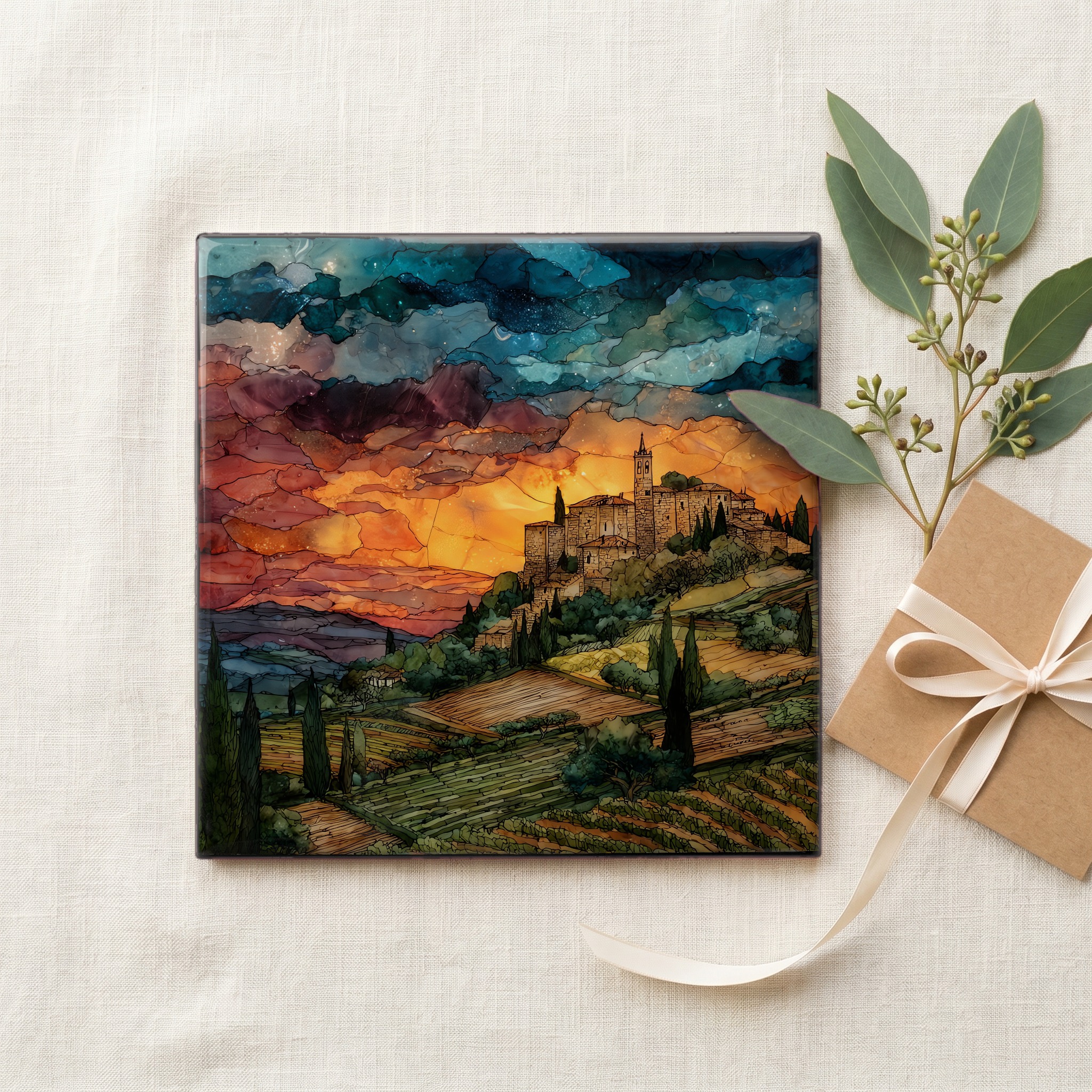
comes gift-ready

Each tile ships in a kraft box, tied with cream ribbon, with a handwritten note from the studio if you'd like to add one.
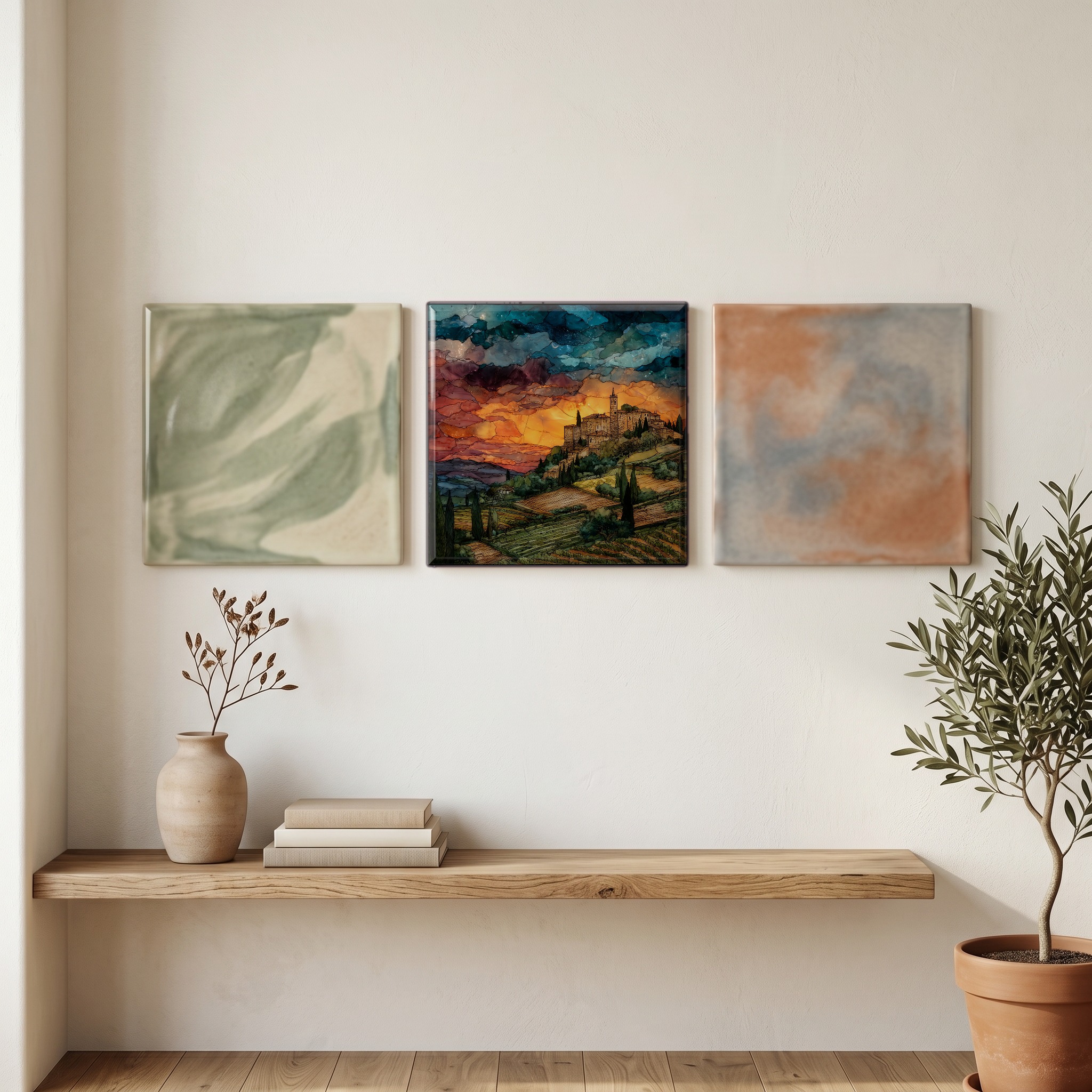
or build a grouping
or build a grouping

Three or five different vistas, hung together — a chapter of places you've been, or want to go.

about Montalcino Fortress

The place, in three passes.

A little of what's known, in case you fall down the rabbit hole — or want to go see it yourself.
the place

Montalcino is a hill town in southern Tuscany, in the province of Siena, about 110 km south of Florence and 40 km southwest of Siena itself. The town sits at 567 m on a ridge above the Val d'Orcia, the wide pastoral valley that became a UNESCO World Heritage Site in 2004. The fortress occupies the highest point at the southern edge of the town, a pentagonal compound raised by the Republic of Siena in 1361. Approach is on foot from Piazza del Popolo through narrow streets that rise toward the gate; cars stop in the lots below the walls.

the stone

The fortress is pentagonal, with massive corner towers joined by curtain walls, built between 1361 and 1366 by order of the Republic of Siena. Its walls are the same warm local limestone that built the rest of the medieval town. The plan absorbs an older fourteenth-century tower at its northern corner. After the Spanish-Medici army took Siena in 1555, a remnant of the Sienese government retreated here and held the keep for four more years as the Repubblica di Siena riparata in Montalcino, the Republic of Siena sheltered in Montalcino. When that last republic surrendered in 1559 the Sienese flag came down from these walls for good.

the visit

The fortress is open to visitors most days of the year, with shorter hours November through March; the ramparts walk takes about thirty minutes and gives a wide view of the Val d'Orcia, the Crete Senesi, and, on clear days, Monte Amiata to the south. Inside the keep is the Enoteca La Fortezza, a wine bar that pours and sells Brunello di Montalcino, the Sangiovese wine awarded DOCG status in 1980 and grown in vineyards visible from the walls. Admission to the ramparts is a few euros; the enoteca is free to enter. From Piazza del Popolo it is about ten minutes on foot through the upper streets of the town.

where
Italy · Province of Siena, Tuscany
elevation
567 m · 1,860 ft
position
43.0567° N · 11.4878° E
the neighborhood

What's nearby.

A handful of named places within an hour's walk or short drive. Some we've already painted; some we will.
10 km S
Sant'Antimo Abbey
Romanesque abbey
17 km SE
Bagno Vignoni
thermal-spring village
15 km E
San Quirico d'Orcia
medieval village
20 km E
Pienza
Renaissance hill town
N
Montalcino Fortress
Sant'Antimo Abbey
Bagno Vignoni
San Quirico d'Orcia
Pienza
common questions

What people ask.

A few questions we get about Montalcino Fortress — and about bringing the piece home.
about the place

The fortress sits at the highest point of Montalcino, a hill town in the province of Siena, southern Tuscany. It is about 40 km southwest of Siena and 110 km south of Florence, on the northern rim of the Val d'Orcia.

Construction began in 1361, ordered by the Republic of Siena after the town came under firm Sienese control. The pentagonal fortress was completed by 1366 and incorporates an older fourteenth-century tower at one corner.

After Spanish-Medici forces conquered Siena in 1555, several hundred Sienese citizens fled south and continued to govern from inside this fortress. They called themselves the Republic of Siena sheltered in Montalcino, struck their own coins, and held out until surrender in 1559.

Yes. The ramparts and inner courtyard are open to the public most days of the year, with shorter hours in winter and a small admission fee for the wall walk. The Enoteca La Fortezza inside the keep is free to enter.

Brunello di Montalcino is a red wine made from one hundred percent Sangiovese grapes grown in the hills around Montalcino. It was among the first Italian wines awarded DOCG status, in 1980, and is poured by the glass inside the fortress enoteca.

Most visitors drive. Montalcino is about an hour and twenty minutes south of Florence by car and just under an hour from Siena. The closest train station is Buonconvento, about twelve kilometres north, with a connecting bus up the hill.

The walk along the ramparts gives a full circle of the Val d'Orcia, the rolling clay-hill country of the Crete Senesi to the north, and on clear days Monte Amiata, the extinct volcano forty kilometres to the south. The medieval roofs of Montalcino sit directly below.

about the piece in your home

It has been a meaningful gift for many of our customers with ties to the region. Travellers who walked the Val d'Orcia or tasted Brunello at the fortress enoteca tend to recognise the silhouette of the fortress walls immediately. A Coaster or Small with a handwritten note from the studio carries well.

The honey-stone palette and stained-glass treatment sit well in Tuscan-modern, warm-neutral, and jewel-tone interiors. It hangs comfortably on plaster, brick, or limewashed walls; the Glossy finish lifts in a sunlit room and the Matte holds still against deeper colours.

Yes. Warm limestone palettes and stained-glass renderings of European landmarks have moved into wine-country and farmhouse-modern interiors over the last few years. A Medium or Large hangs well over a sideboard in a tasting room, a kitchen, or a dining room.

For a standard sofa or console of around two metres, a single Large at twenty-four by twenty-four inches anchors the wall. A four-tile Mural reads as the full landscape and reaches about thirty inches across. A nine-tile Mural fills a wider wall above a longer console.

Yes. For a kitchen backsplash, a bathroom wall, or any vertical install near steam, choose the Dura Satin or Matte finish; both are scratch-resistant and stable in humid rooms. The Glossy finish is intended for framed and display pieces away from heavy moisture.

A soft microfibre cloth and clean water is enough. The colour lives in the ceramic surface, slowly infused under high heat and pressure beneath a thin glossy finish, so household cleaners and scrub pads are not needed and not recommended.

Yes. The Voynich stained-glass treatment is original to Wender Studios in Knoxville, Tennessee. Reid Wender, the curator, selects each vista that enters the atlas. We do not license artwork from third parties.

if this one stayed with you

A few you might also love.

Hand-picked by the eye that found Sorapis. Same air, same kind of quiet.
— a collection

The Italian Dolomites,
painted slow.

The valleys between Cortina and Val Gardena, the tarns you walk an hour to see, the towers that turn the colour of a banked fire just before dark. Wander the collection by valley, by season, or follow the path Reid walked.

Tre Cime
Braies
Misurina
Sorapis
Cinque Torri
Sassolungo
Marmolada