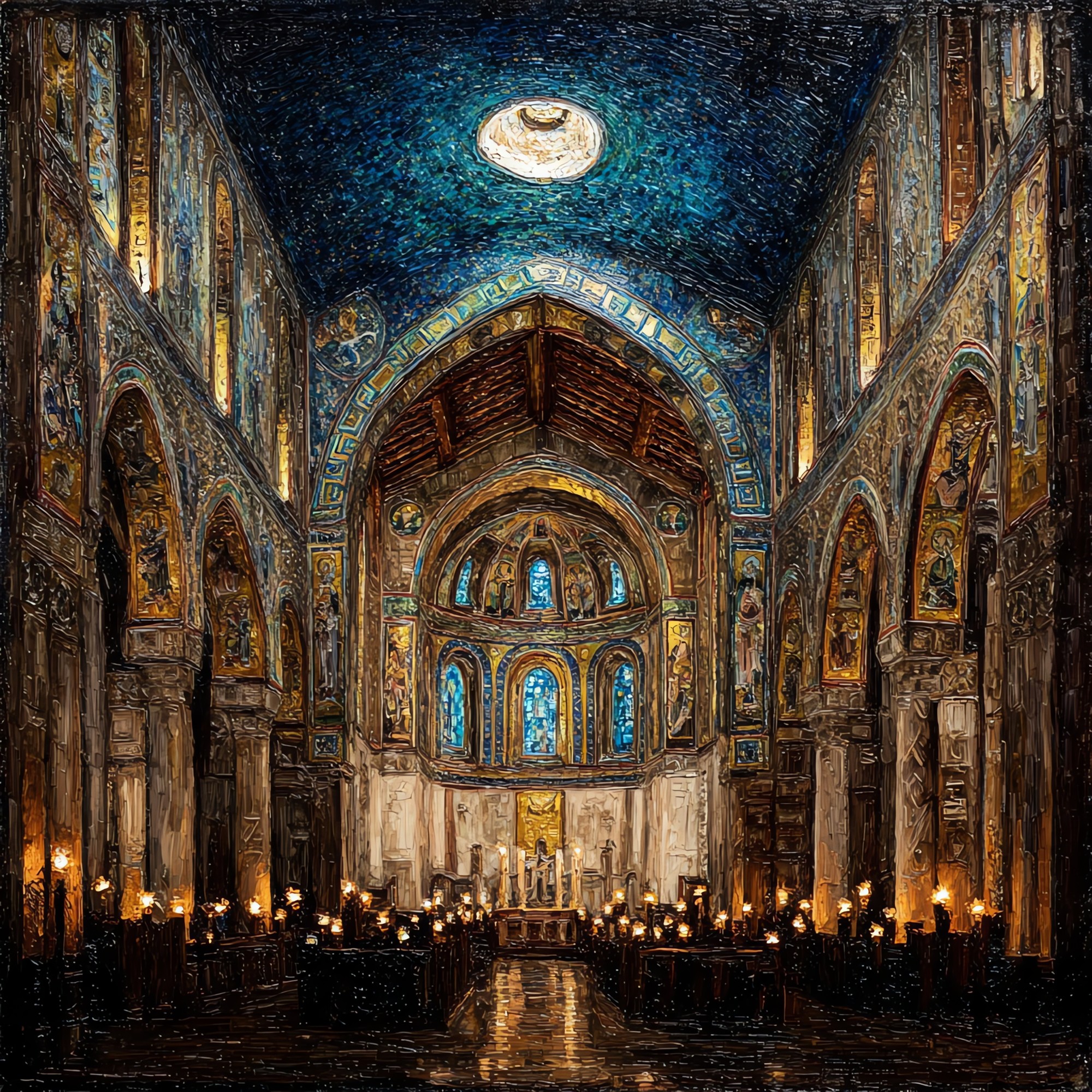
Monreale Cathedral
— where the walls keep the light.
Not only on a wall.
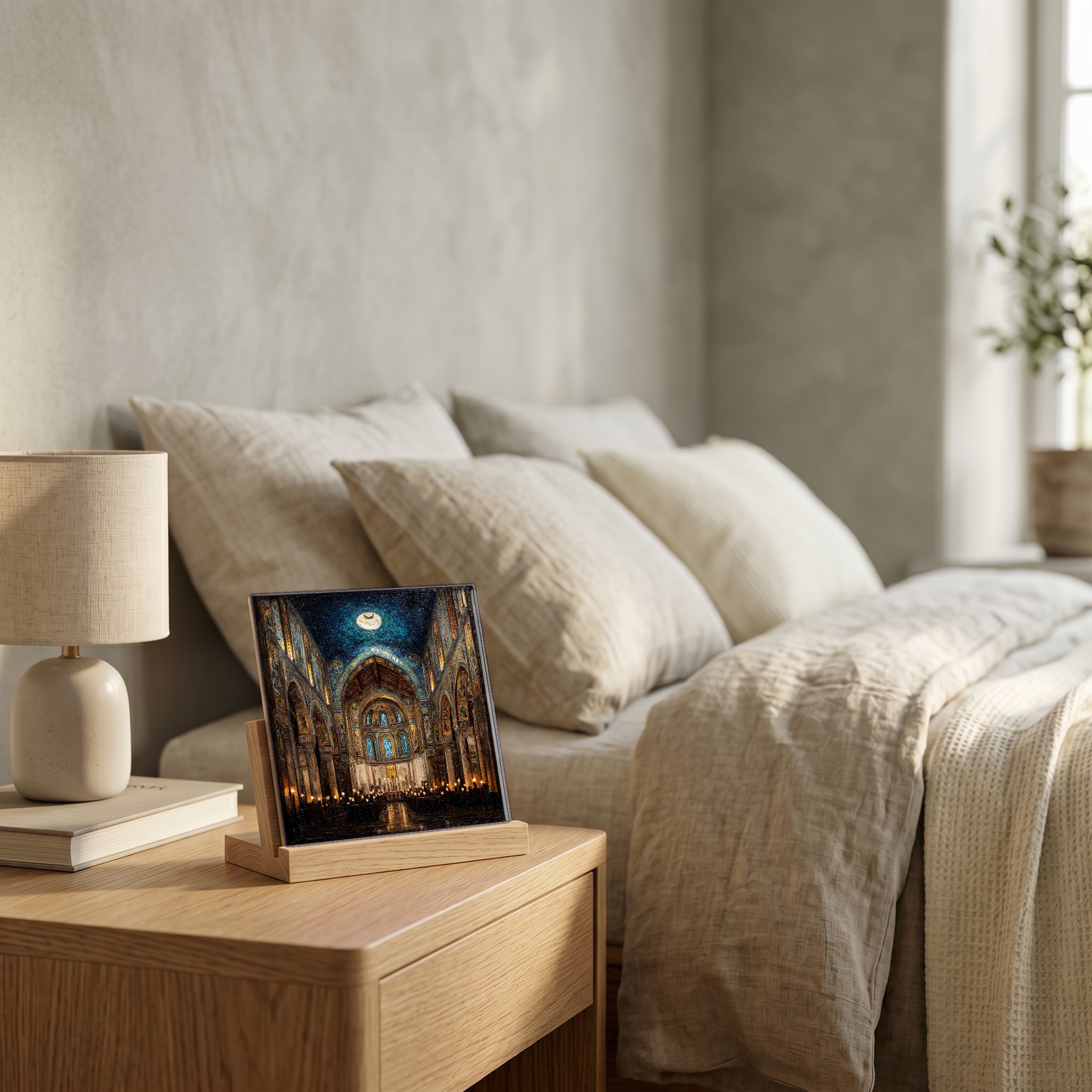
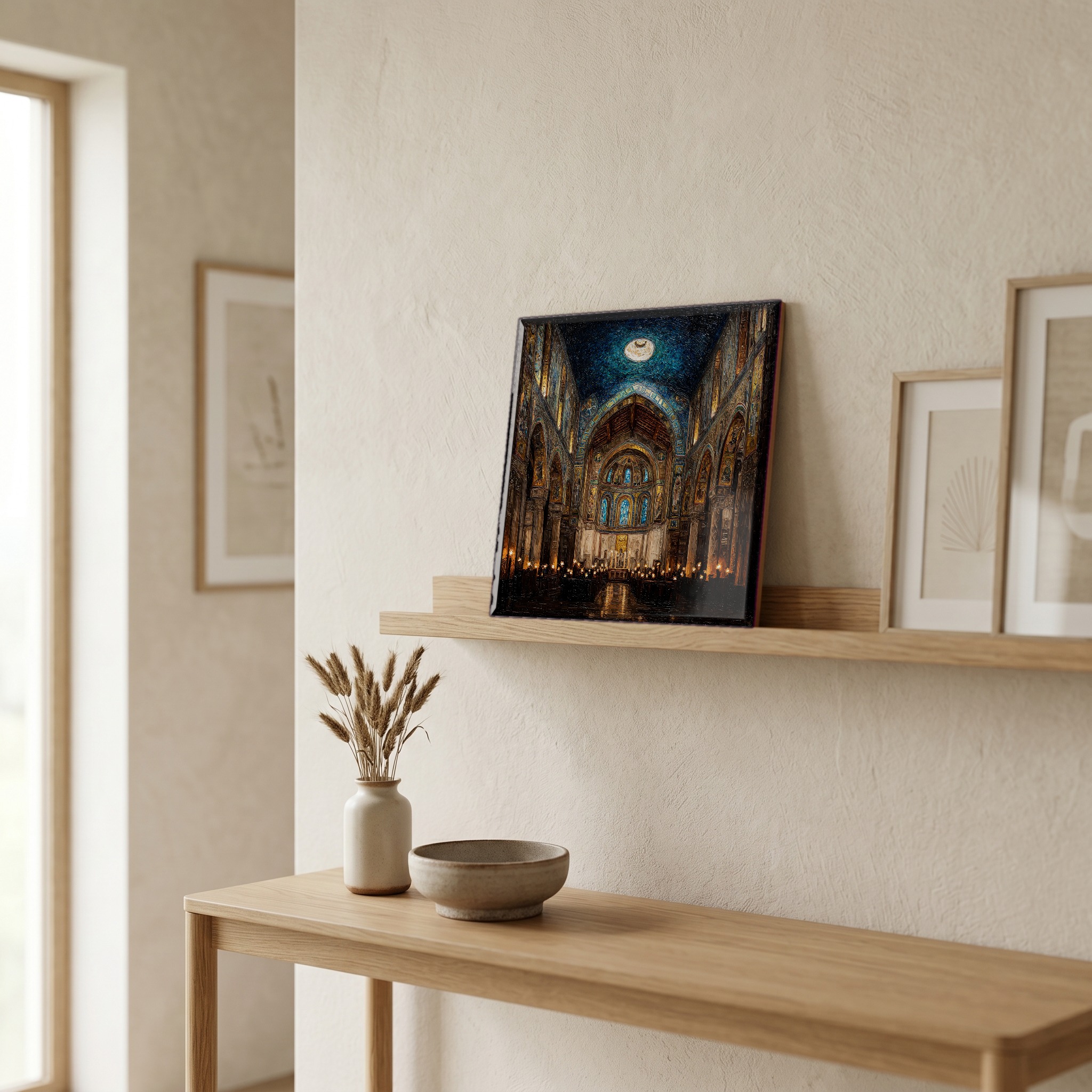
“A Norman cathedral on the hill above Palermo, lined floor to vault in gold-ground mosaic, somewhere over six thousand square metres of it. The vast half-figure of Christ fills the apse, his right hand raised, and the gold behind him holds whatever light comes through the door. Out the side is the old Benedictine cloister, a square of two hundred and twenty-eight paired columns, no two capitals carved alike. People come up from the city, stand a while under the apse, and tend to lower their voices.
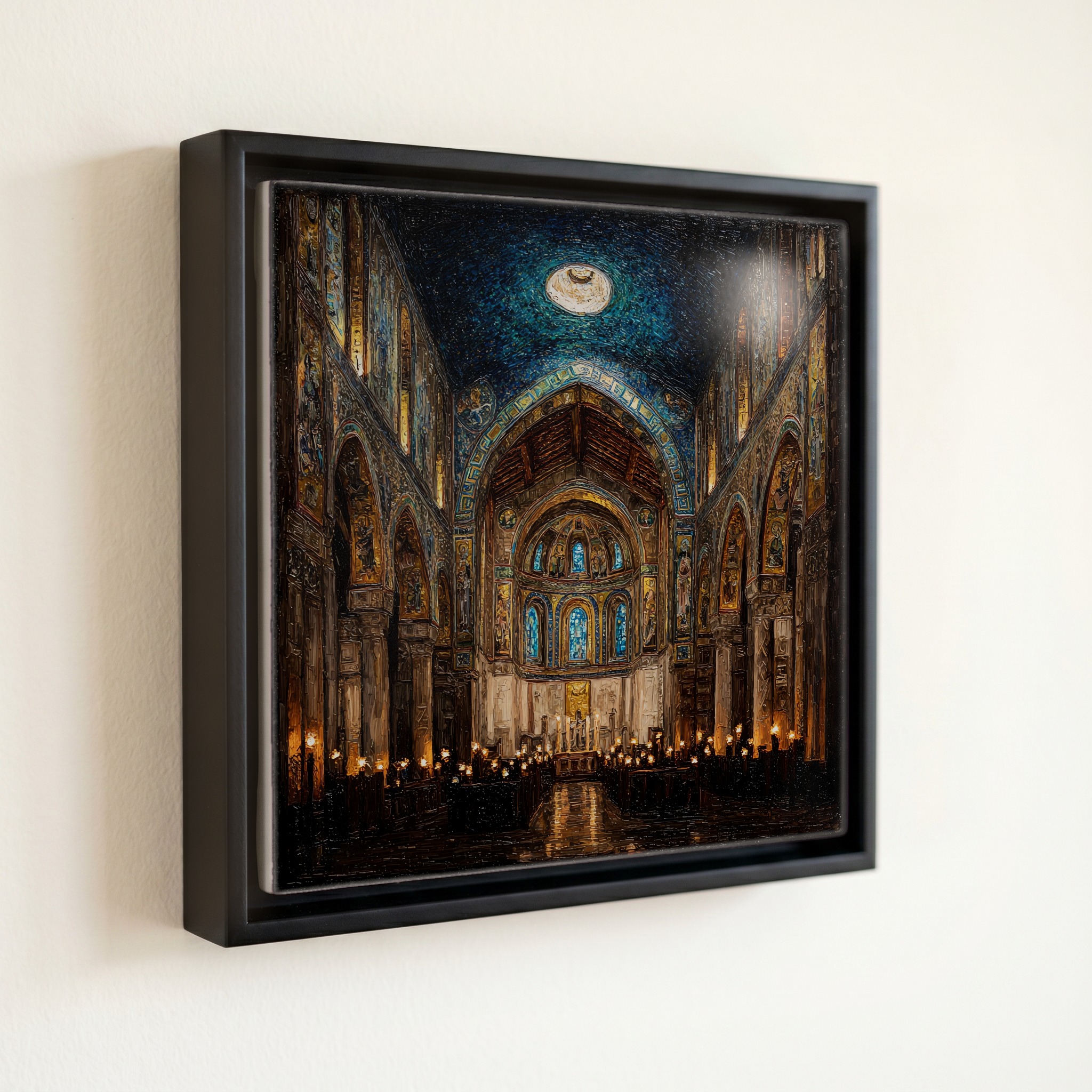
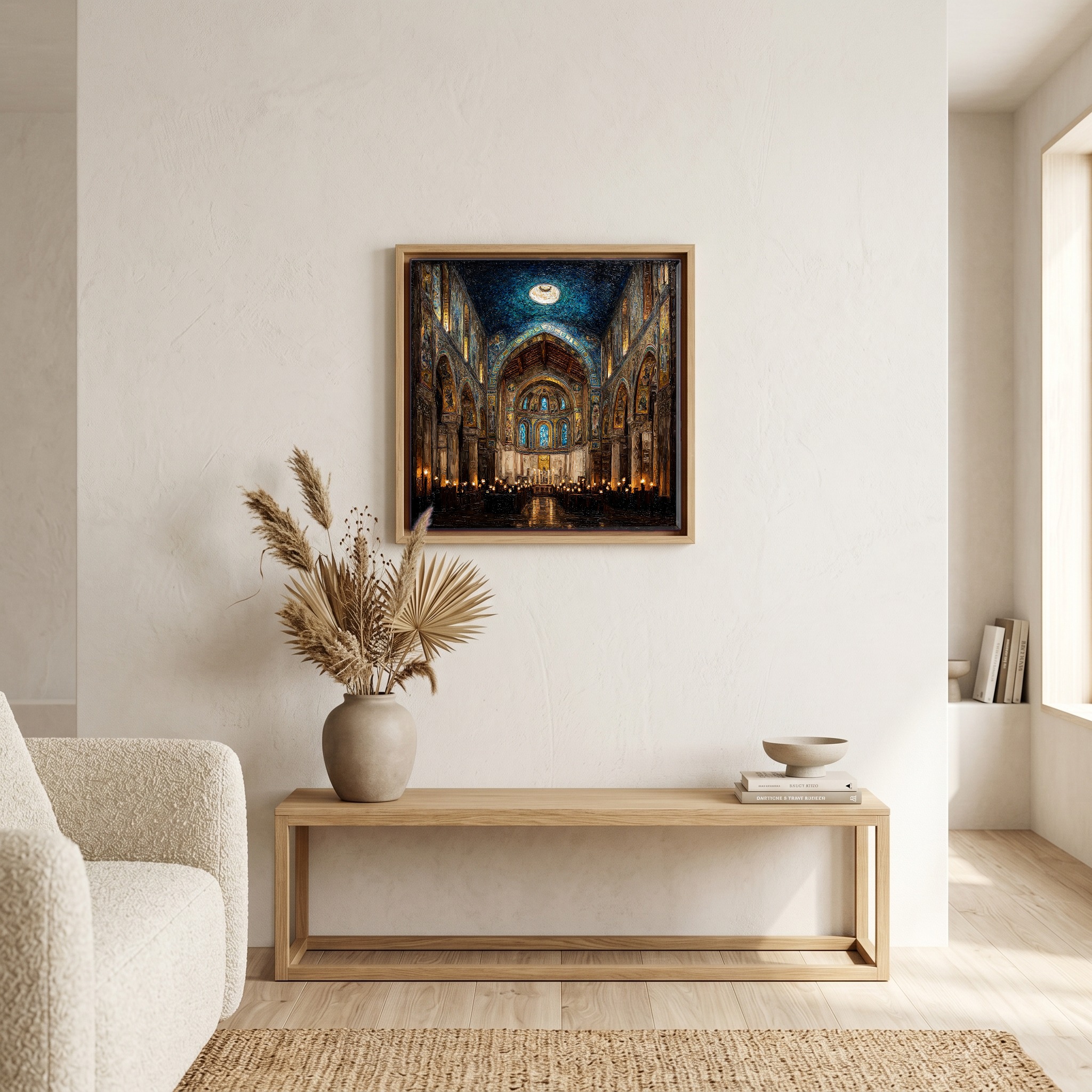
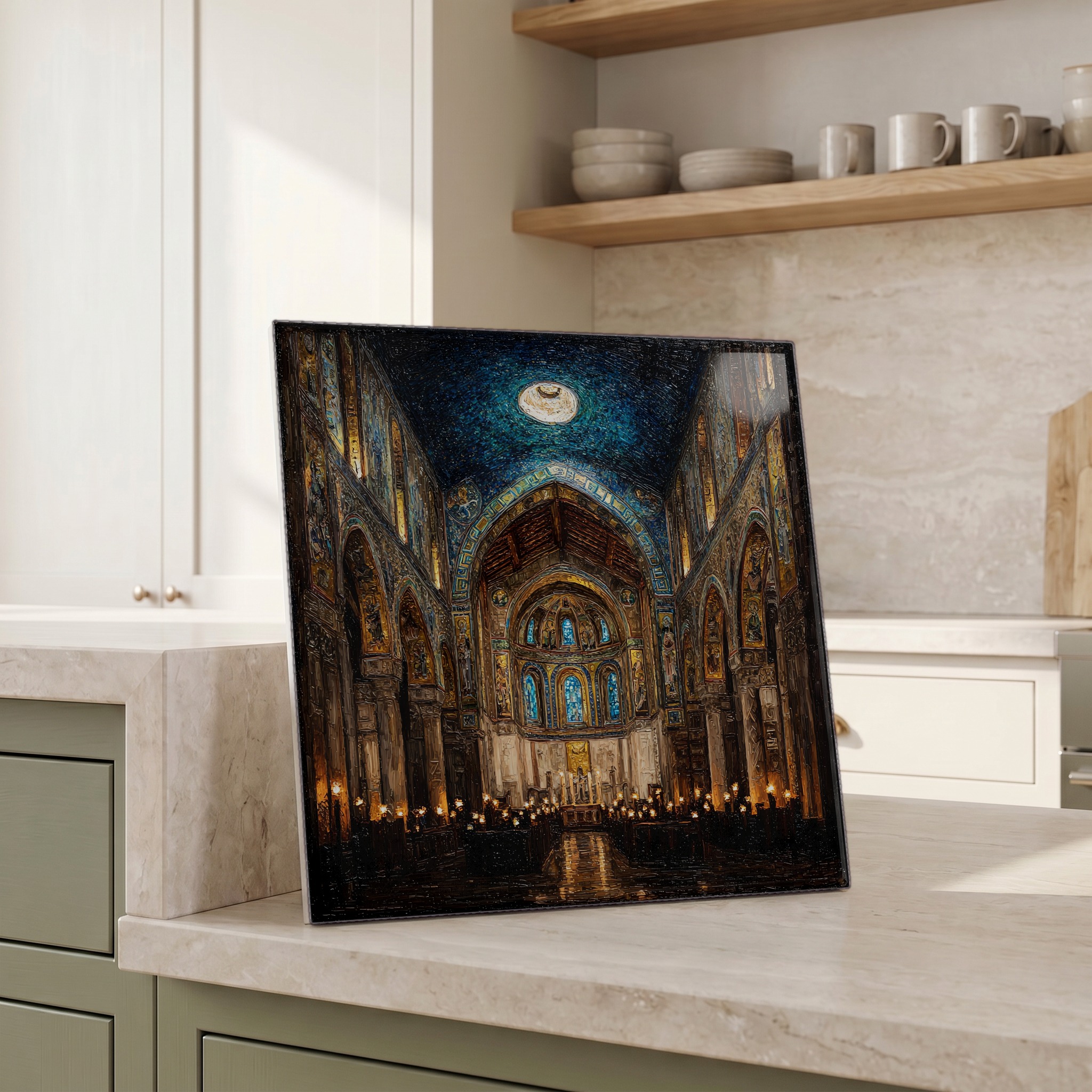
Monreale Cathedral, on ceramic.
Each tile is finished by hand in our Knoxville studio. Artwork is slowly infused into the ceramic surface under high heat and pressure, and rests beneath a thin glossy finish. The colour lives in the surface, not on top of it.
Pick any four 4-inch tiles — National Parks you've been to, a Smokies set, the four seasons of one place. $ for a set of , cork-backed, ready to live on the table.
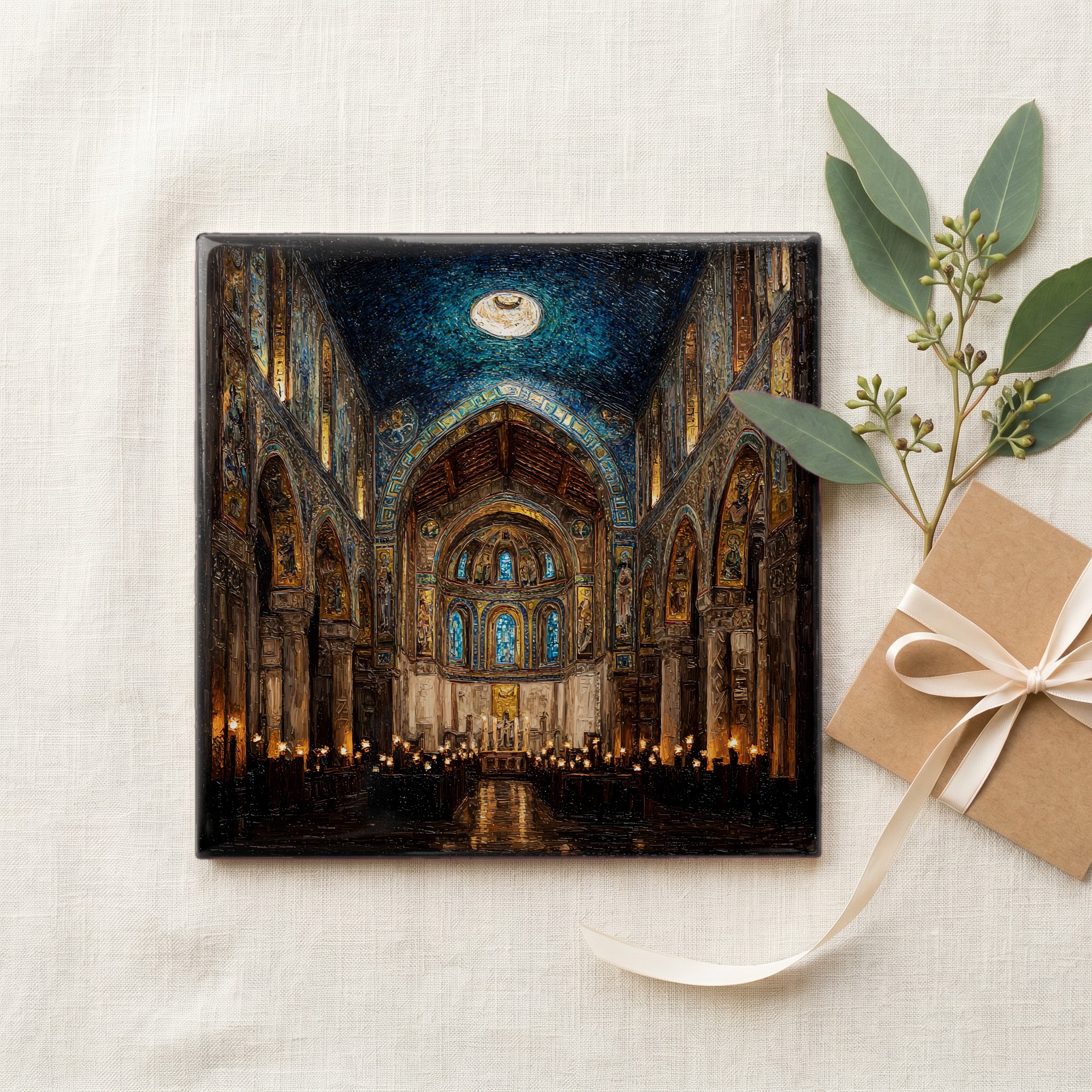
Each tile ships in a kraft box, tied with cream ribbon, with a handwritten note from the studio if you'd like to add one.
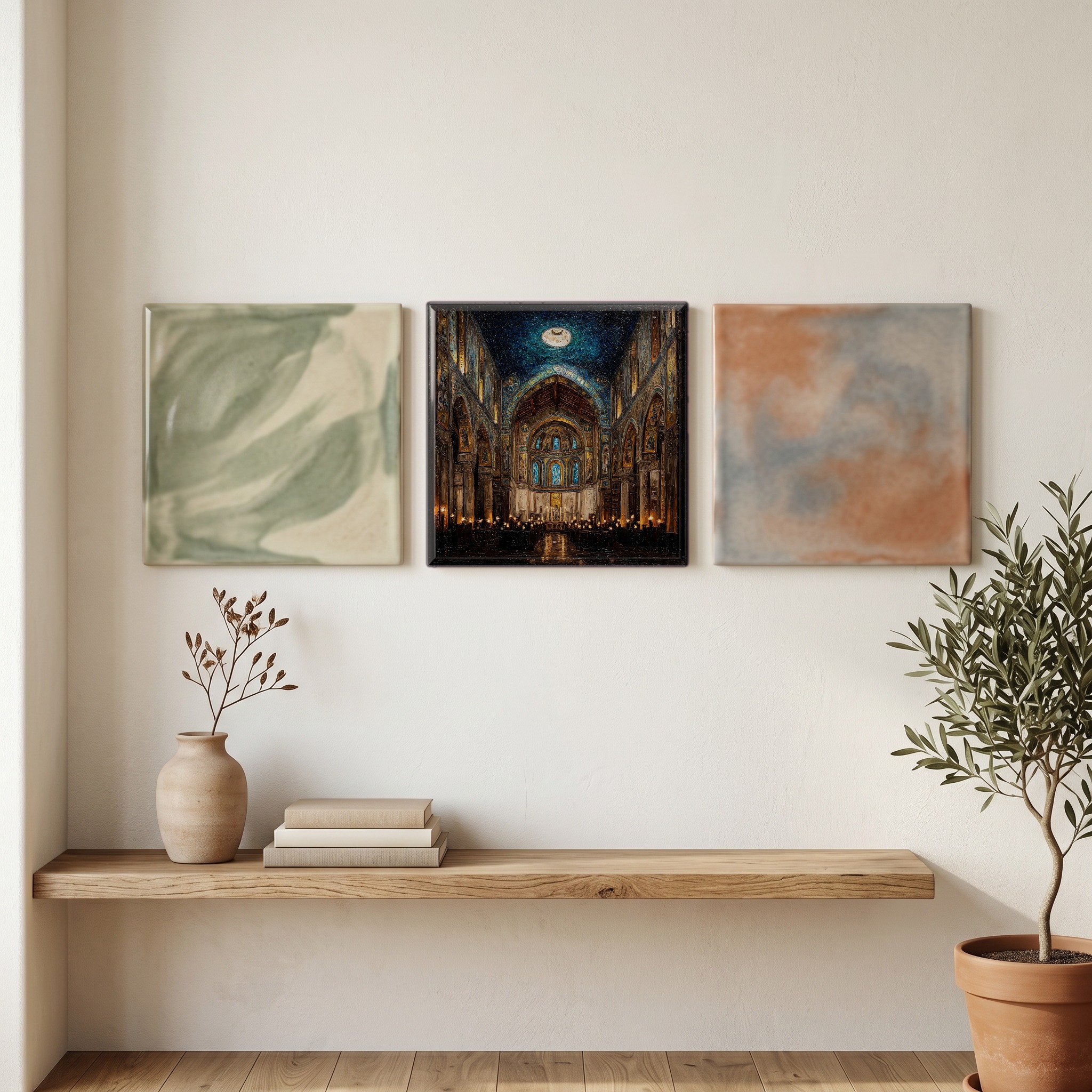
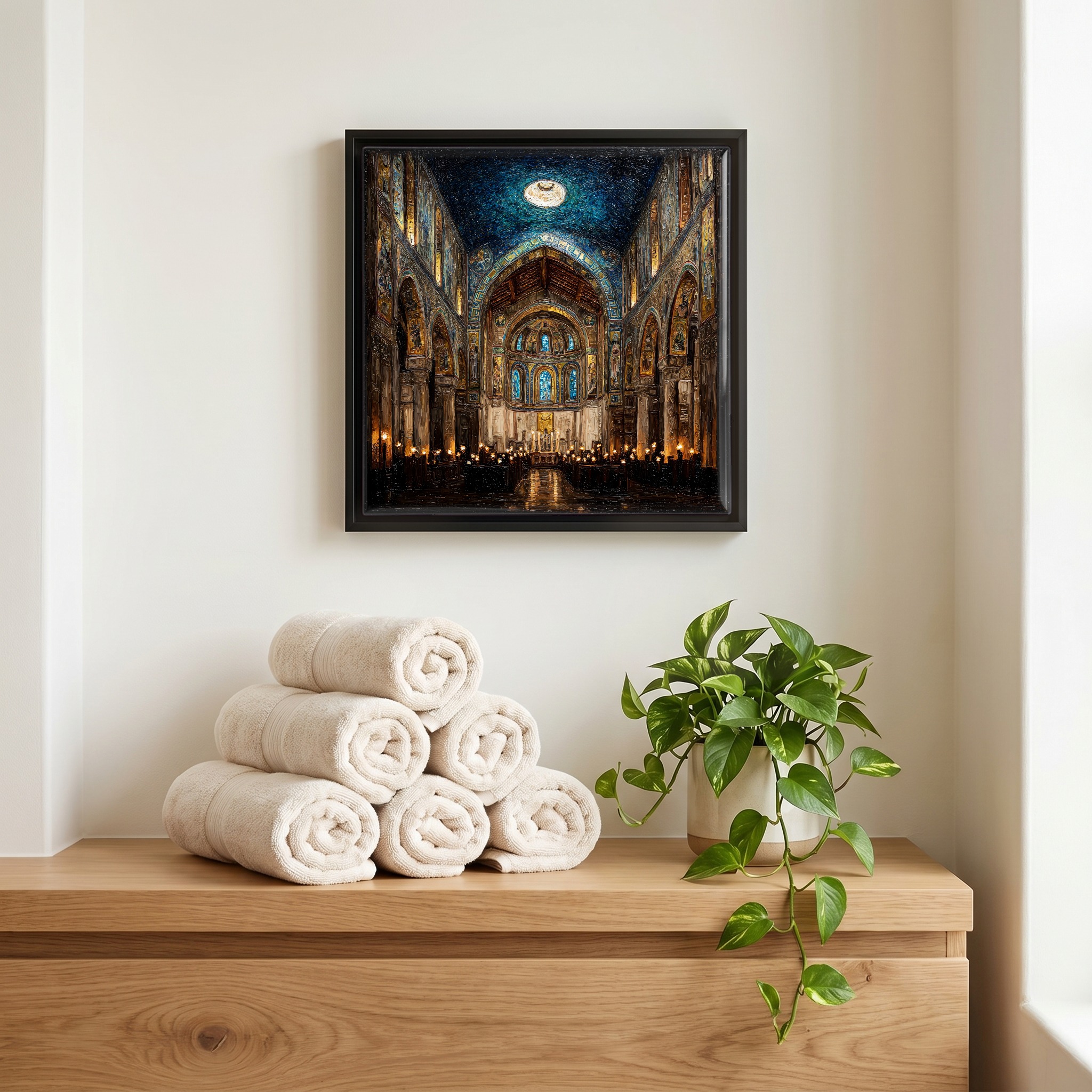
Three or five different vistas, hung together — a chapter of places you've been, or want to go.
The place, in three passes.
Monreale Cathedral, formally the Cathedral of Santa Maria Nuova, stands in the town of Monreale on the slope of Monte Caputo, about eight kilometres southwest of Palermo in Sicily. From its terrace the town looks down over the Conca d'Oro, the coastal plain that runs to the Tyrrhenian Sea. It was begun around 1174 under William II, the Norman king of Sicily, and remains one of the great works of Arab-Norman art. In 2015 it was inscribed on the UNESCO World Heritage List within Arab-Norman Palermo and the cathedral churches of Cefalu and Monreale. Buses run up from the city, and most visitors come for the day.
The interior is sheathed in Byzantine gold-ground mosaic, about 6,500 square metres of it, set against a continuous field of gold tesserae. The half-figure of Christ Pantocrator fills the curve of the central apse, his right hand raised in blessing and wide enough to span much of the wall. Below it run the cycles of the Old and New Testament, read like a book around the nave. The gold is not flat: the small cubes are tilted so the surface catches and scatters whatever light comes in, which is why the church seems to hold its own glow long after the sun has moved off the doors.
Beyond the mosaics, the building records the mixed hands of Norman Sicily: a Latin basilica plan, pointed Arab arches, and bronze doors cast by Bonanno Pisano in 1186 for the main entrance. Adjoining the church is the Benedictine cloister, a square arcade roughly 47 metres on a side, carried on two hundred and twenty-eight slender columns set in pairs. No two of the carved capitals repeat, and between them the masons cut scenes of harvest, hunting, and scripture, several columns sheathed in inlaid mosaic. William II founded the monastery alongside the cathedral, and his tomb, with that of his father William I, lies inside the church.