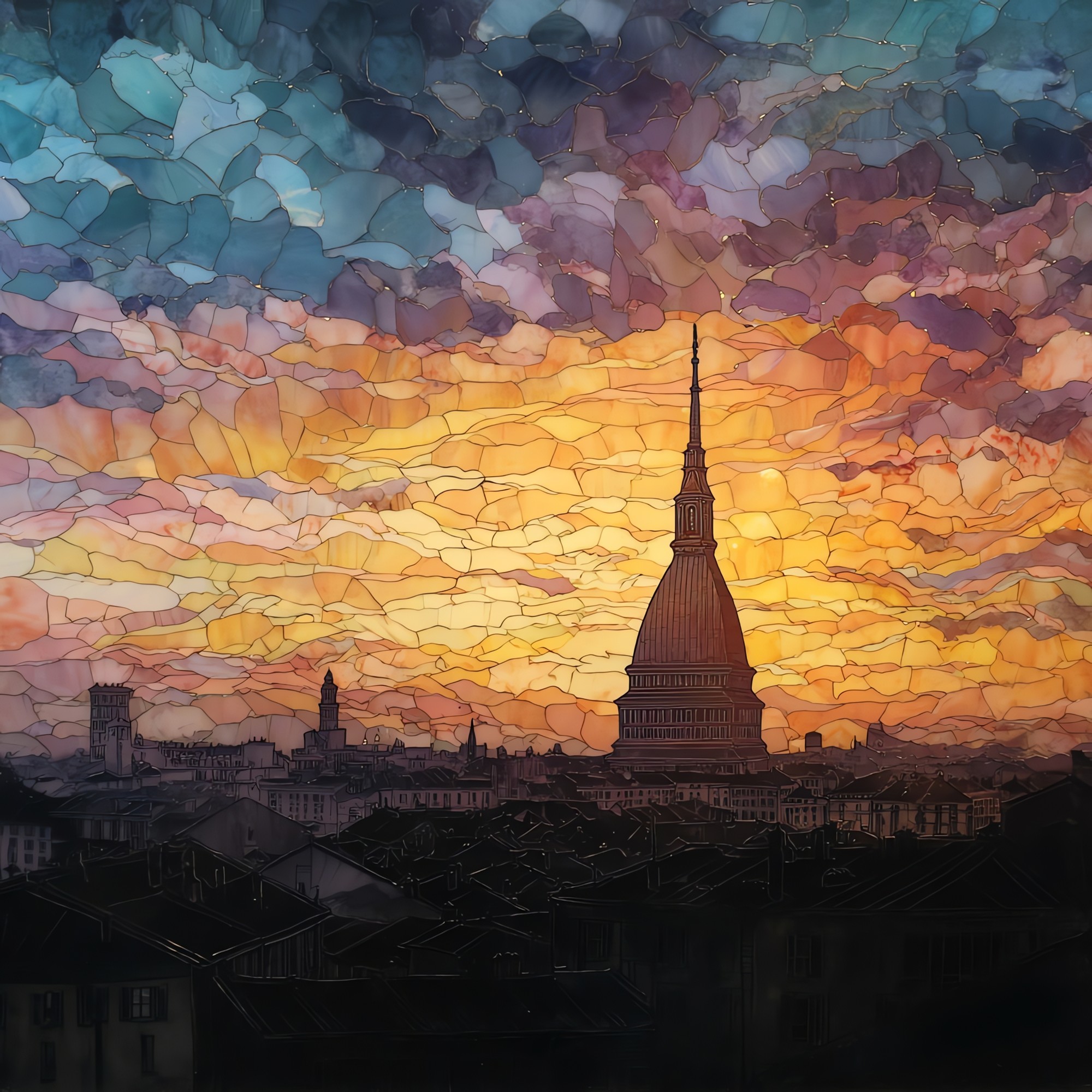
Mole Antonelliana
— — the spire that wouldn't stop rising.
Not only on a wall.
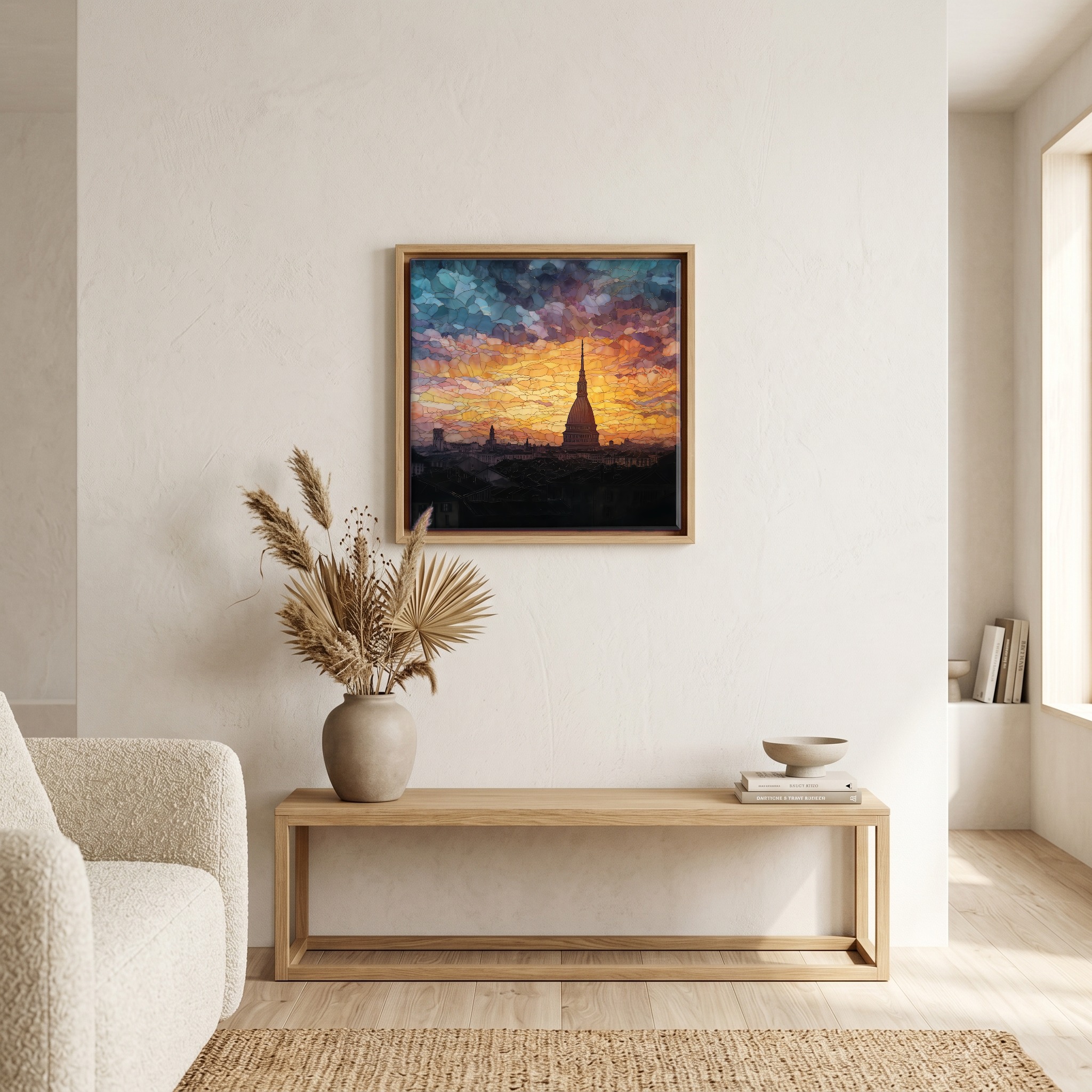
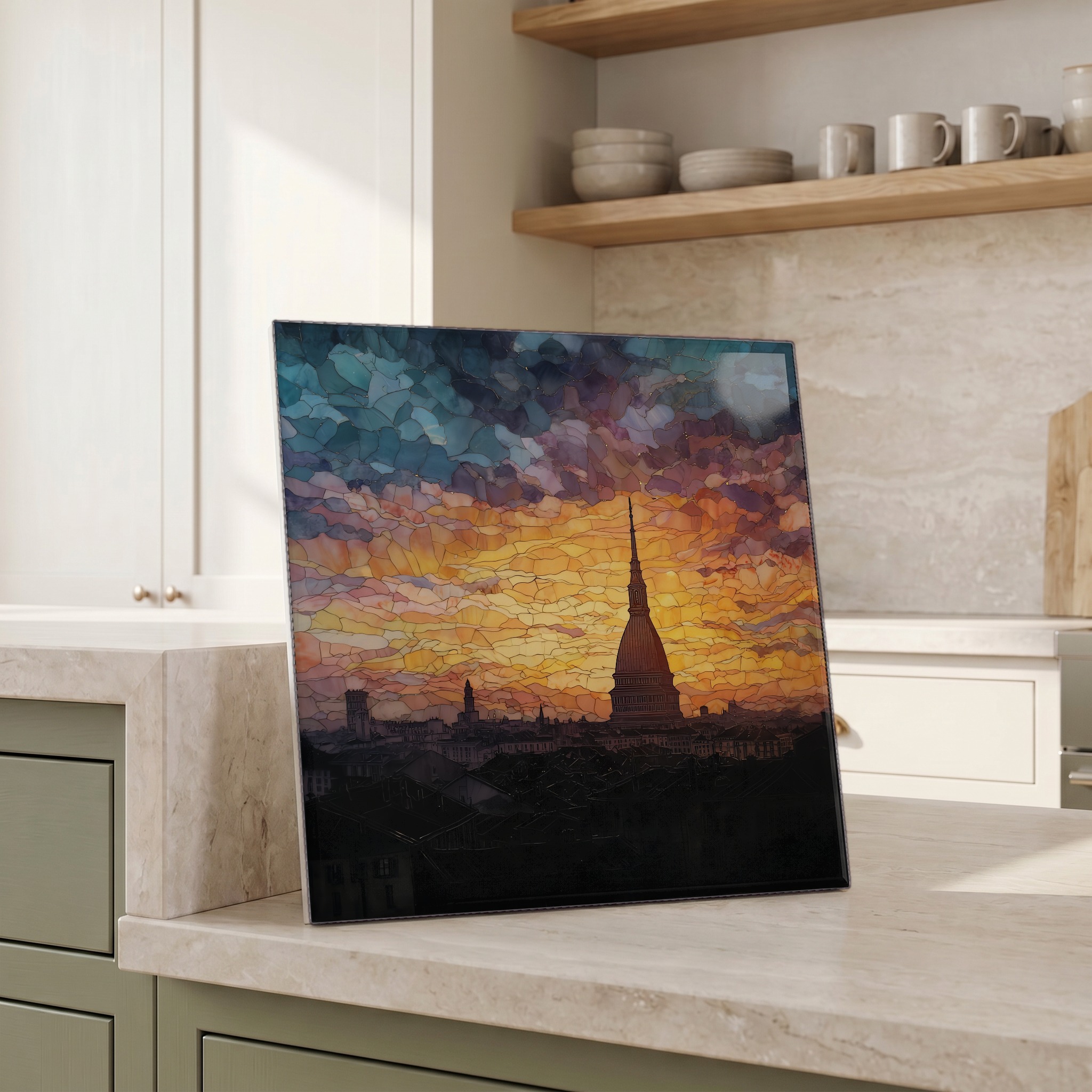

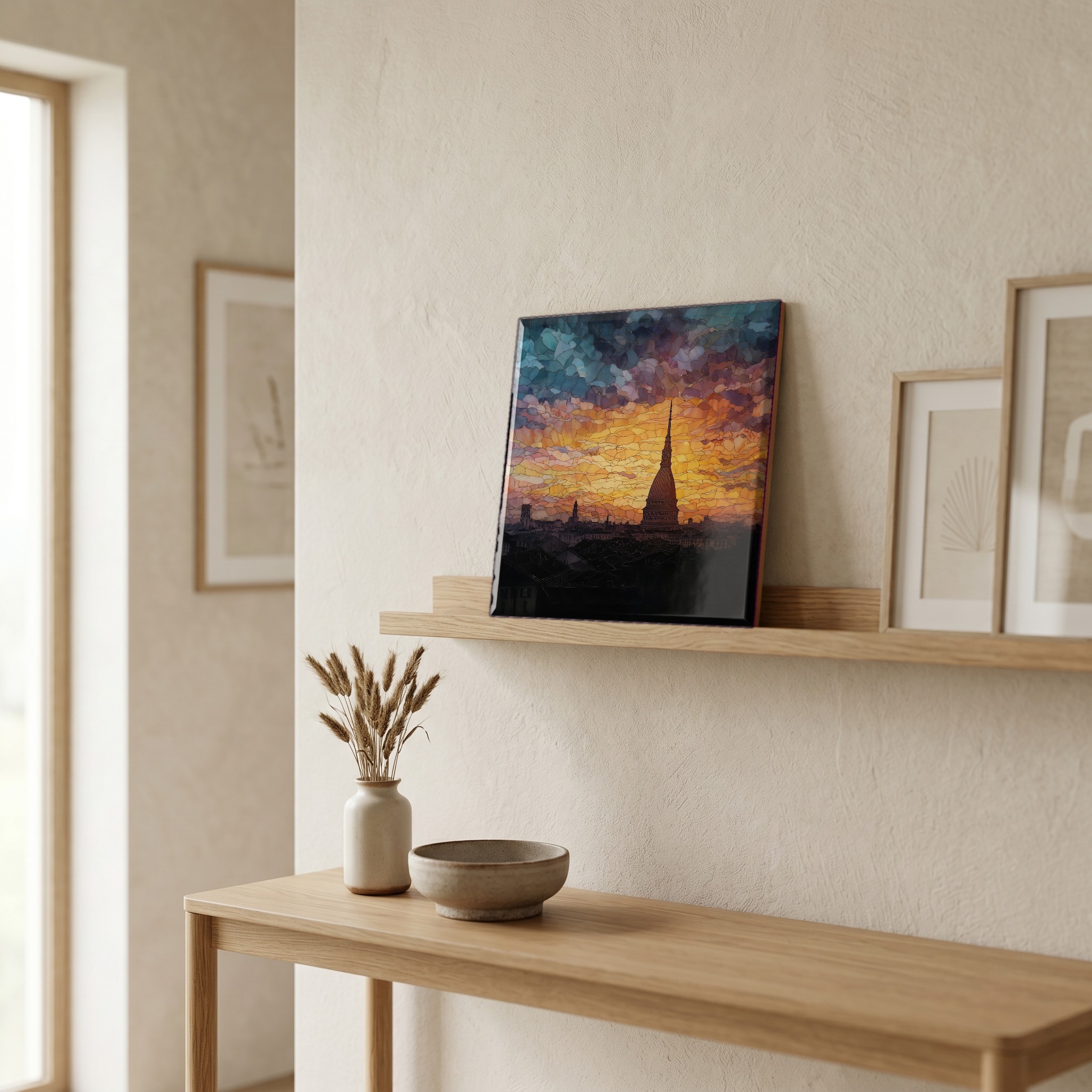
“Finished in 1889 and still the silhouette that means Turin from any rooftop in the city. Alessandro Antonelli started it as a synagogue in 1863, then kept revising upward long after the original commission ended. The dome, the four-sided spire, the brick lantern lifted above the Alps on the horizon. A glass elevator runs straight up through the centre of the hall to a viewing balcony eighty-five metres above the square. Since 2000 the Museo Nazionale del Cinema has filled the interior with reclining seats and ribbons of projected light.
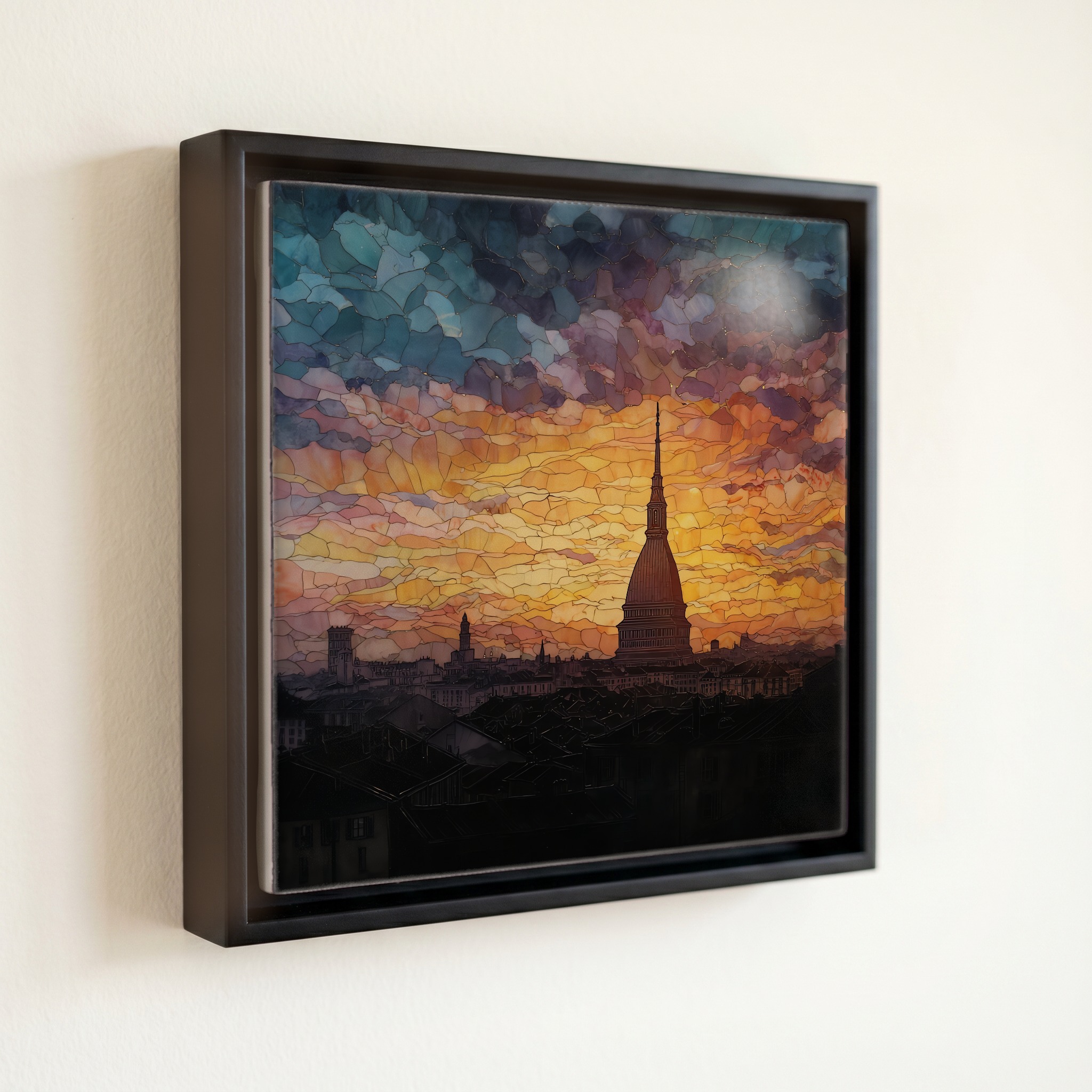
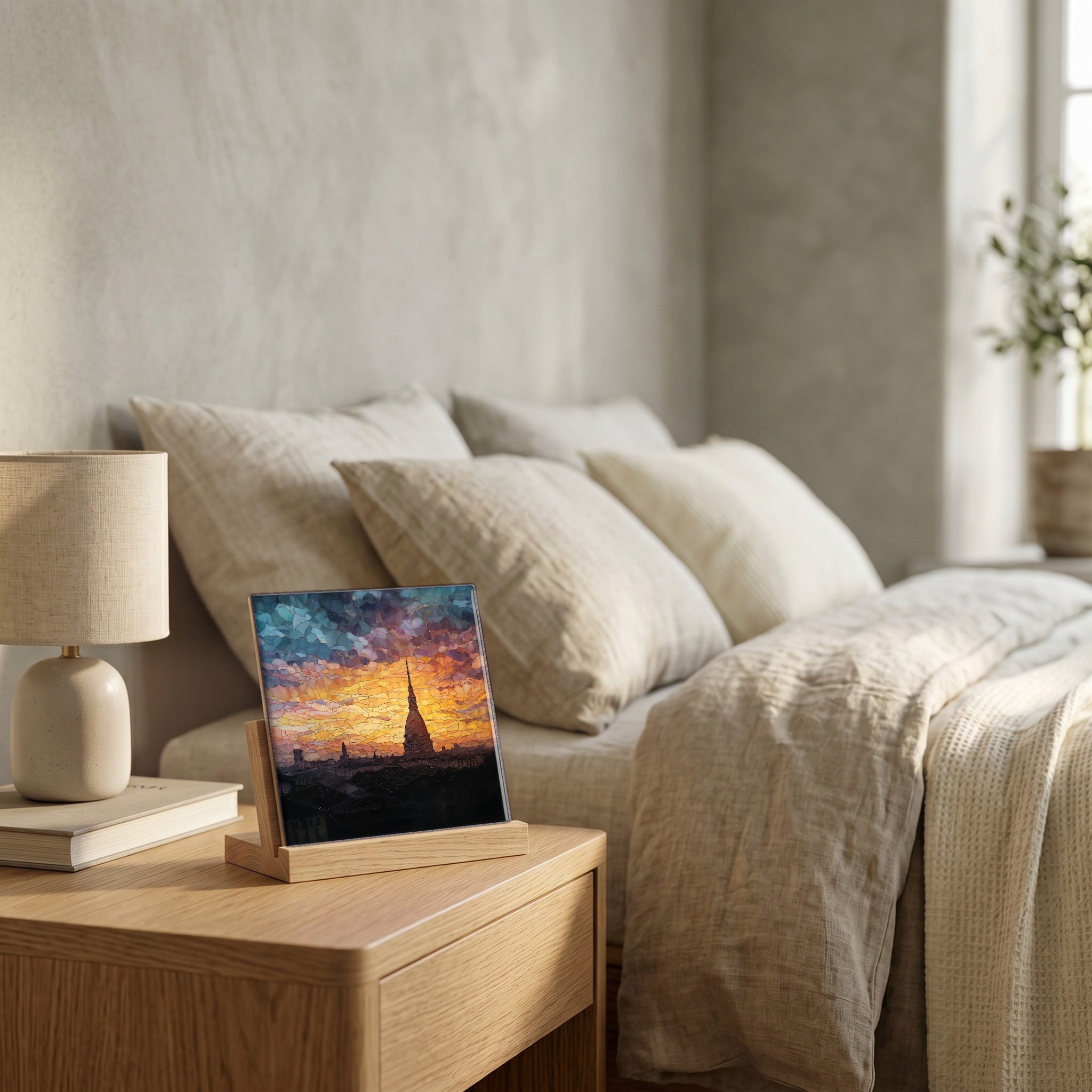
Mole Antonelliana, on ceramic.
Each tile is finished by hand in our Knoxville studio. Artwork is slowly infused into the ceramic surface under high heat and pressure, and rests beneath a thin glossy finish. The colour lives in the surface, not on top of it.
Pick any four 4-inch tiles — National Parks you've been to, a Smokies set, the four seasons of one place. $ for a set of , cork-backed, ready to live on the table.

Each tile ships in a kraft box, tied with cream ribbon, with a handwritten note from the studio if you'd like to add one.
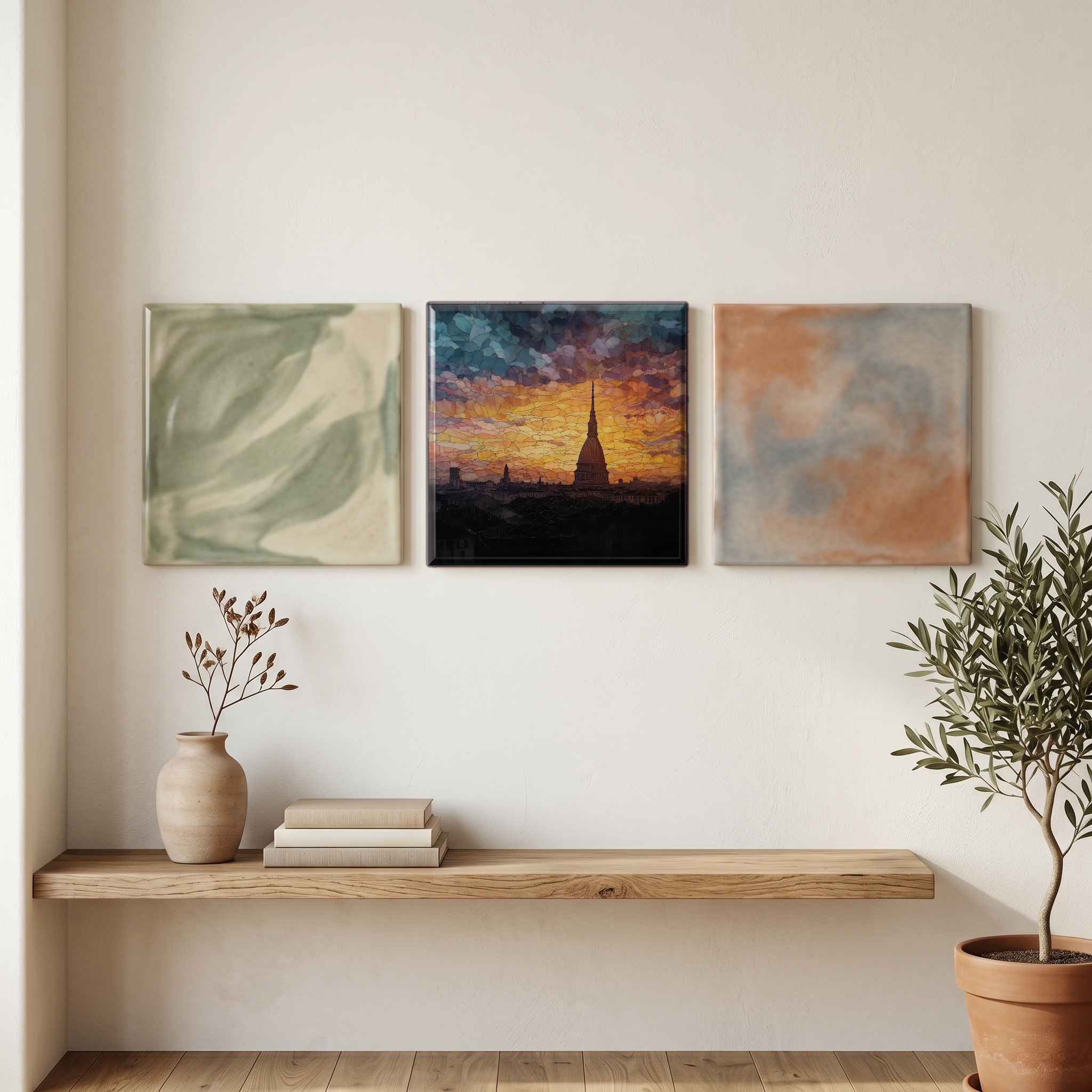
Three or five different vistas, hung together — a chapter of places you've been, or want to go.
The place, in three passes.
Mole Antonelliana stands at the corner of Via Montebello in central Turin, the capital of the Piedmont region in northwestern Italy. The structure rises 167.5 metres above the city, making it one of the tallest masonry buildings in Europe and the symbol of Turin on the reverse of the Italian two-cent euro coin. Construction began in 1863 to a design by the architect Alessandro Antonelli, commissioned by the city's Jewish community as a new synagogue. The community withdrew from the project in 1876 over Antonelli's escalating ambitions for the height, and the City of Turin acquired the unfinished building in 1878. Completion came in 1889. The Mole sits roughly half a kilometre east of the Royal Palace and Piazza Castello, and a short walk west of the Po River.
The structure is built almost entirely of brick masonry, faced with white plaster on the lower volumes and finished in dressed stone at the corners. Antonelli's design extended the building well beyond a conventional synagogue brief: a square base supporting a colonnaded drum, then an elongated four-stage dome, and finally a brick spire rising to a small temple-form lantern at the summit. The slender needle at the very top is an aluminium replacement for the original wooden spire. A windstorm in May 1953 snapped off the upper portion of the building, which the city restored by 1961 to the present height of 167.5 metres.
Since July 2000 the Mole has housed the Museo Nazionale del Cinema, regarded as one of the most important museums of film history in Europe. The interior is built around a central hall called the Aula del Tempio, where reclining loungers face wide projection screens running silent classics, early colour shorts, and contemporary cinema. Galleries spiral around the outer ring of the hall. A separate ticket grants access to the panoramic elevator, which climbs a transparent shaft straight through the centre of the building to the temple-form viewing balcony at eighty-five metres. On clear days the western Alps and the Monte Rosa massif are visible from the top.