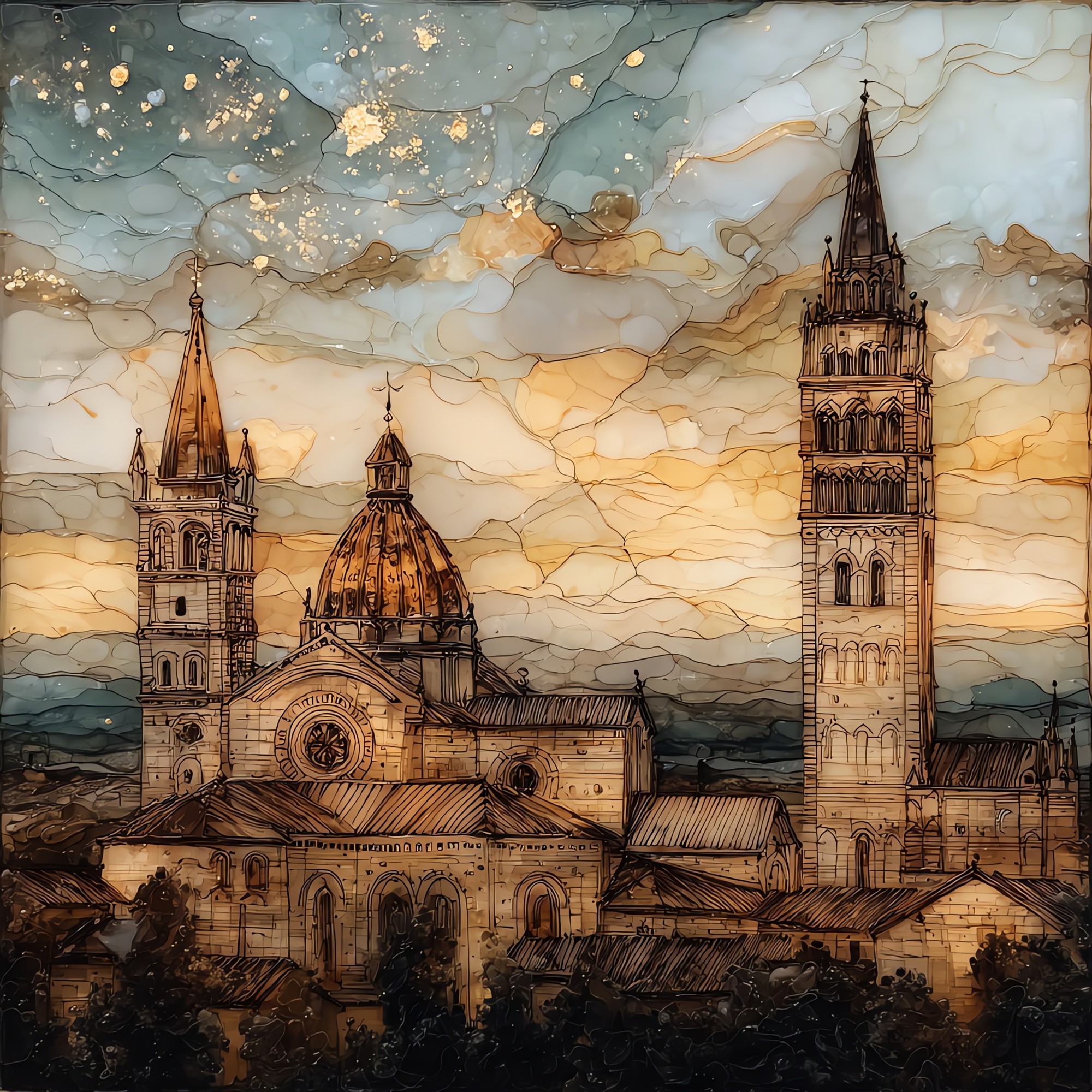
Modena Cathedral
— Genesis, cut in marble that has gone the colour of honey.
Not only on a wall.
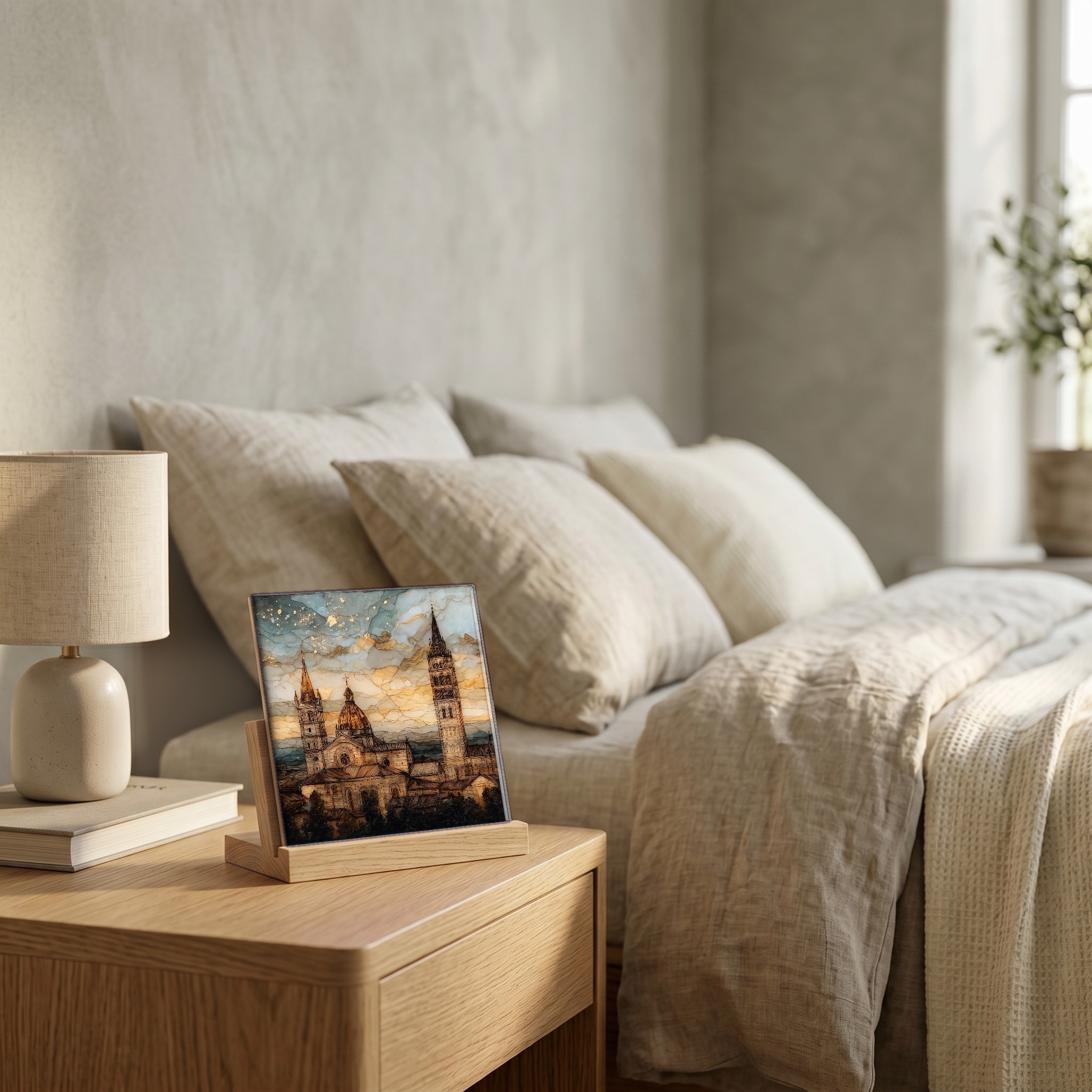
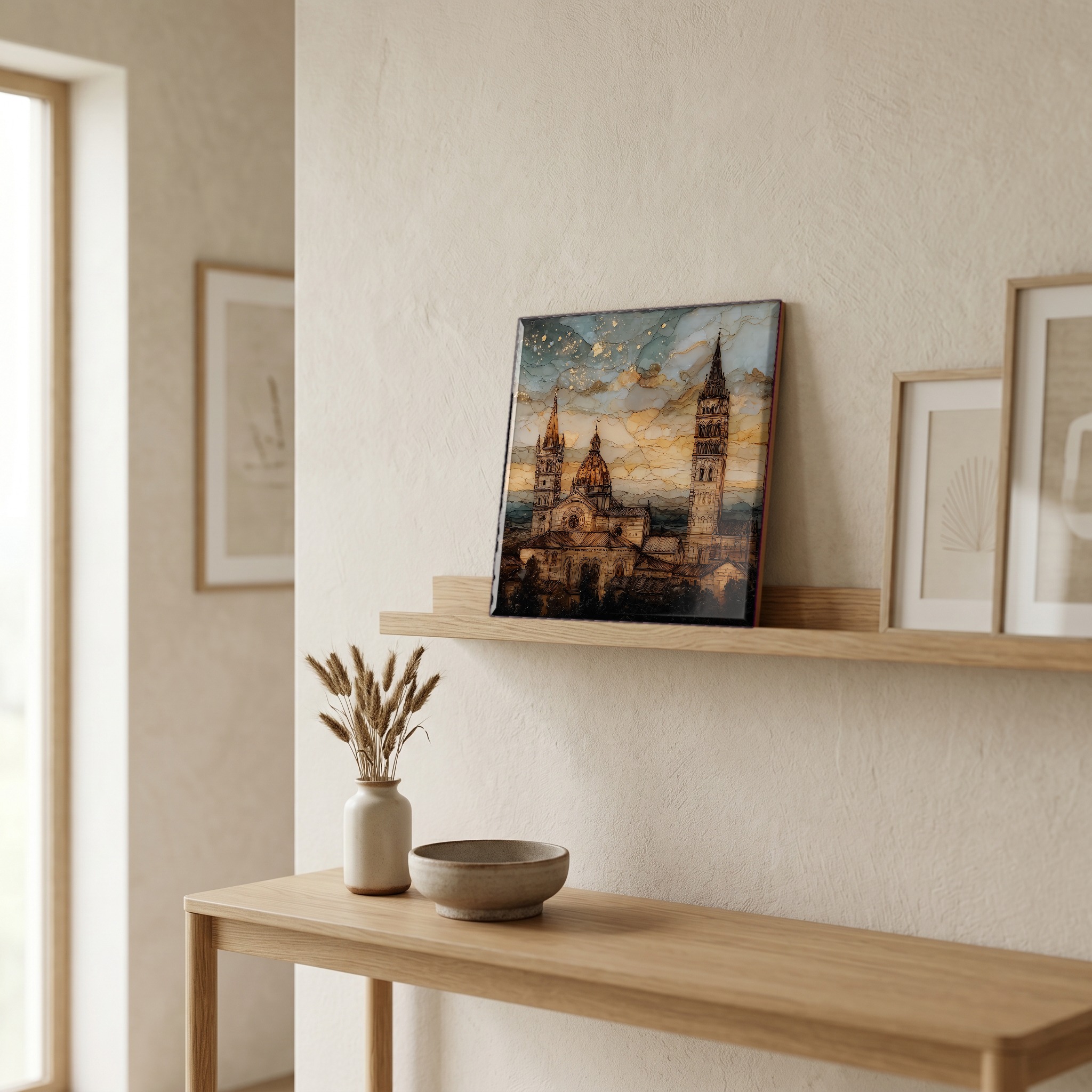
“One of the great Romanesque churches of Europe, begun in 1099 on the Po plain. The architect was Lanfranco; the carving is Wiligelmo's, and the four panels of Genesis across the facade are among the earliest signed sculpture in the Christian West. The marble has weathered nine centuries to a low honey colour. Saint Geminianus is still in the crypt, in the urn he was laid in. People cross Piazza Grande without looking up at the leaning tower, the way you stop seeing the thing you pass every day.
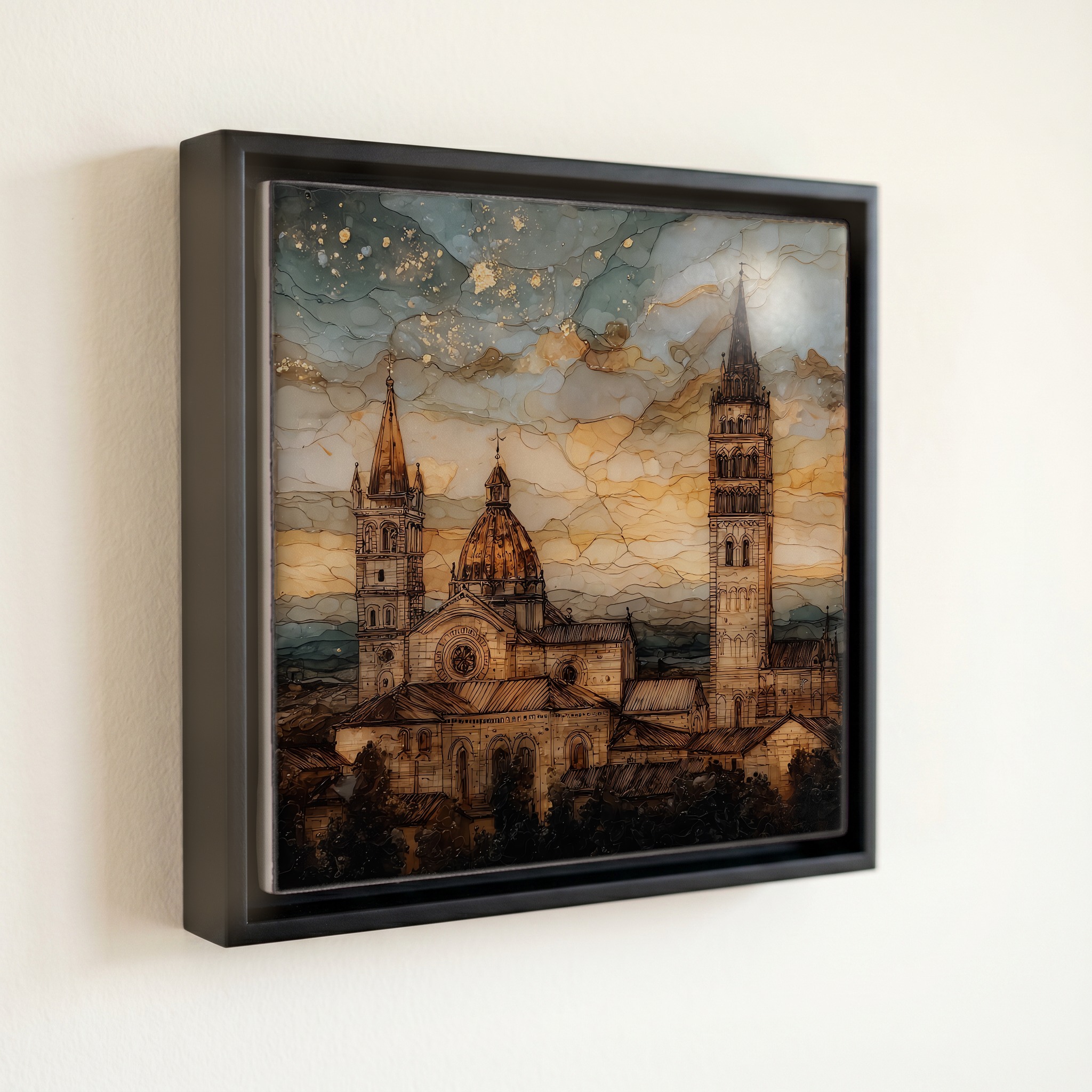
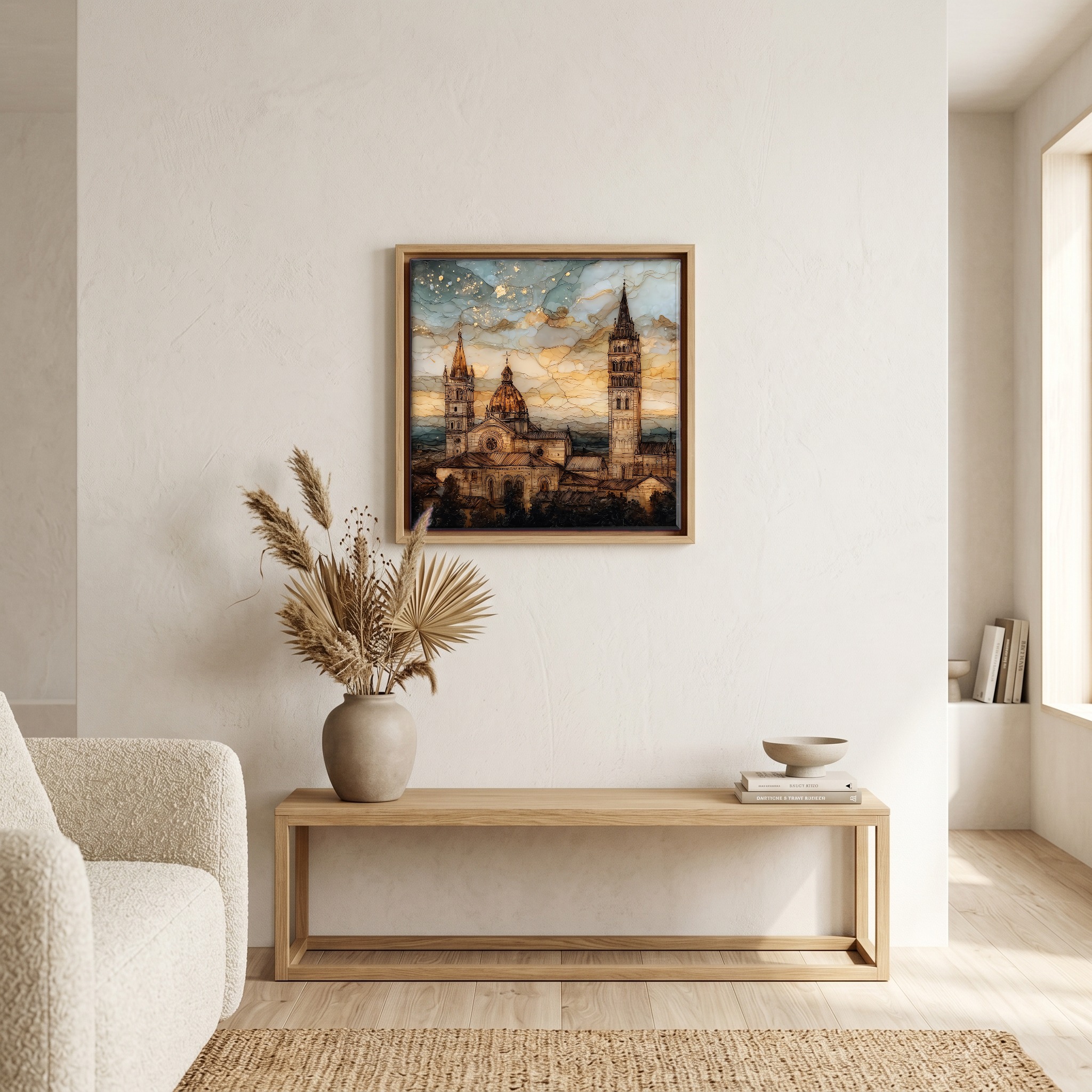
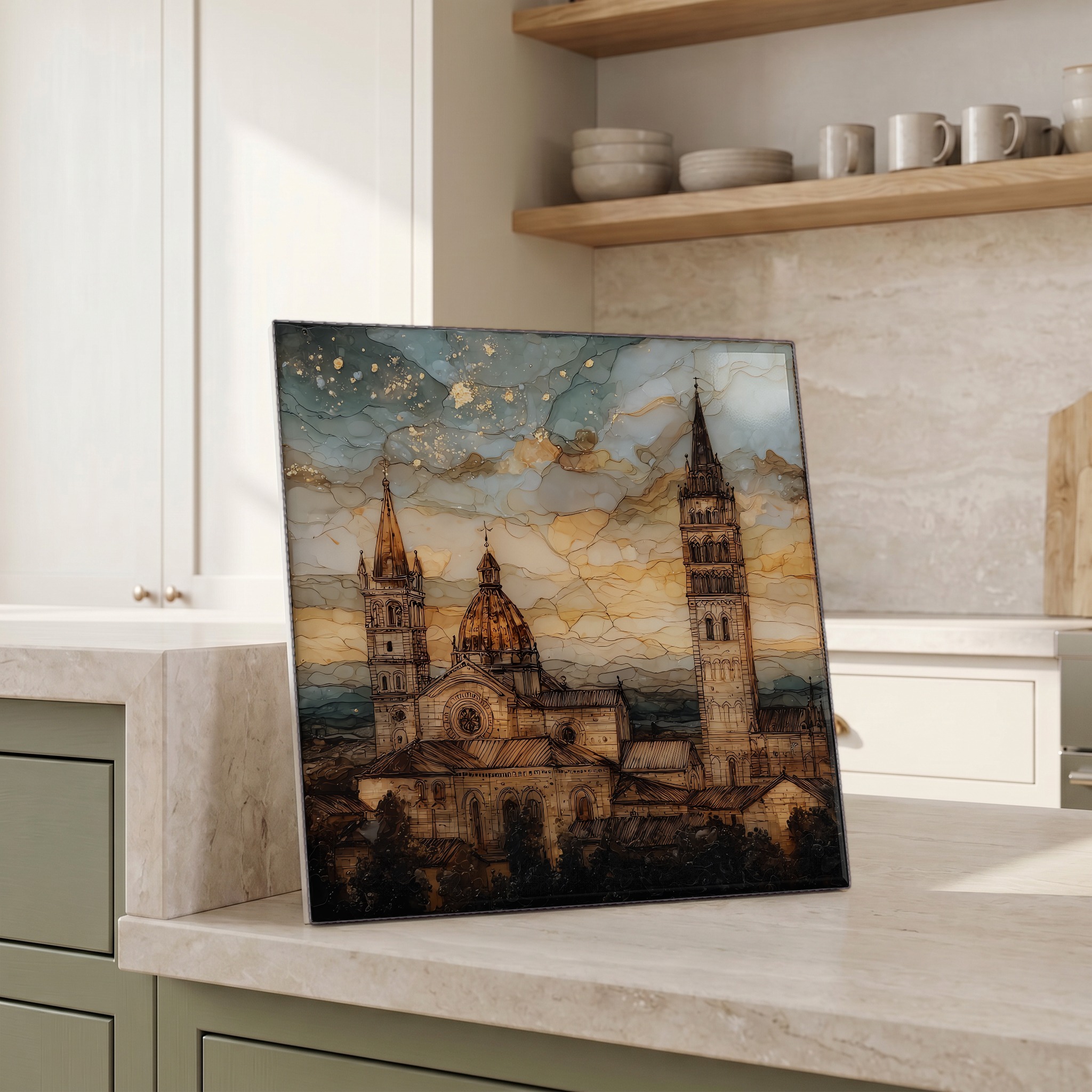
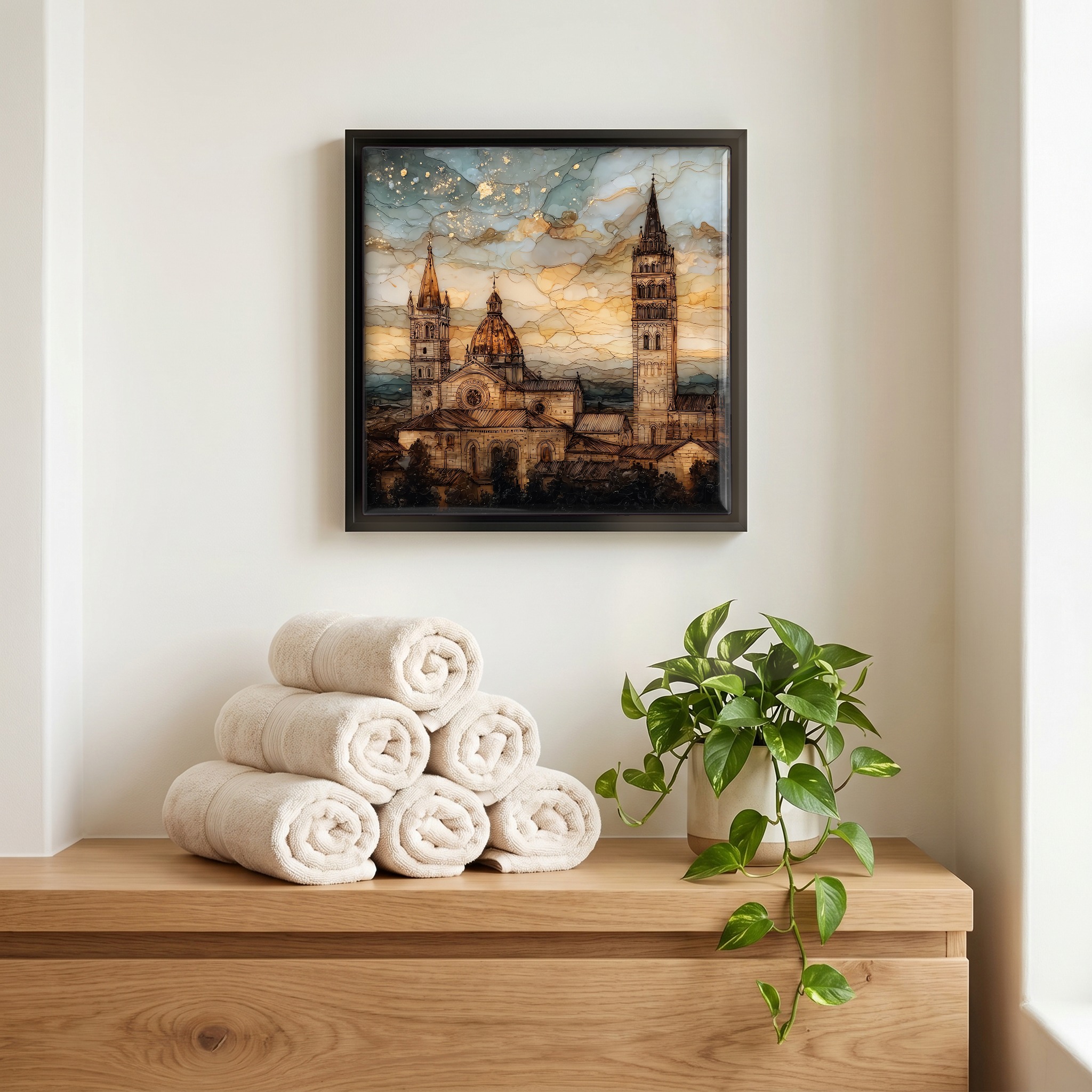
Modena Cathedral, on ceramic.
Each tile is finished by hand in our Knoxville studio. Artwork is slowly infused into the ceramic surface under high heat and pressure, and rests beneath a thin glossy finish. The colour lives in the surface, not on top of it.
Pick any four 4-inch tiles — National Parks you've been to, a Smokies set, the four seasons of one place. $ for a set of , cork-backed, ready to live on the table.
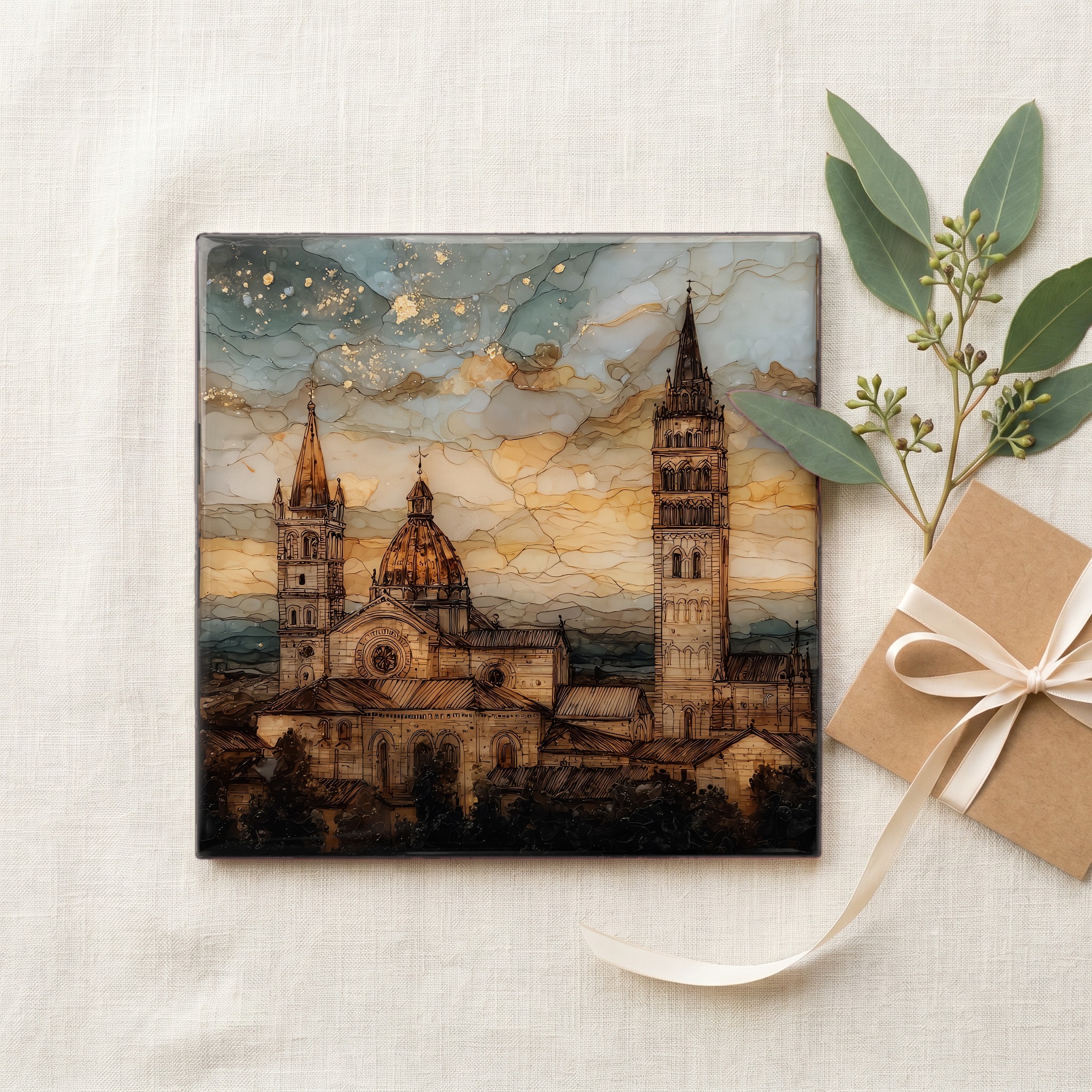
Each tile ships in a kraft box, tied with cream ribbon, with a handwritten note from the studio if you'd like to add one.
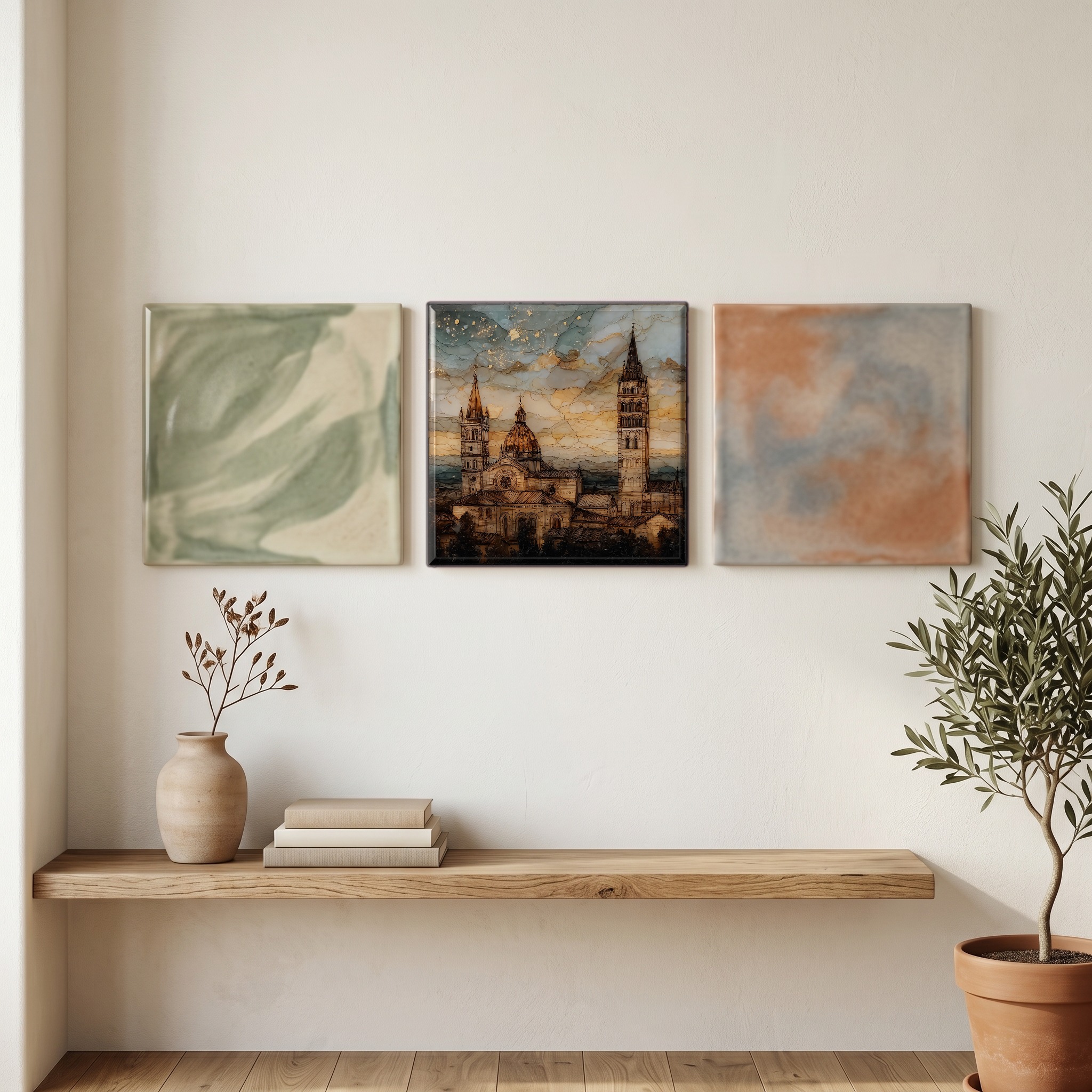
Three or five different vistas, hung together — a chapter of places you've been, or want to go.
The place, in three passes.
Modena Cathedral stands on Piazza Grande in the city of Modena, on the flat Emilian plain of the Po Valley, in the Emilia-Romagna region of northern Italy, about 40 km west of Bologna. The foundation stone was laid on 9 June 1099, on the site where the tomb of Saint Geminianus, the city's patron, had been found. The architect Lanfranco raised the building in brick faced with marble, much of it carried from the Roman ruins of the area. Consecrated in 1184 by Pope Lucius III, the cathedral, its bell tower, and the surrounding square were inscribed together on the UNESCO World Heritage list in 1997.
The facade carries four carved panels by the sculptor Wiligelmo, telling the opening of the Book of Genesis: the creation of Adam, the fall, Cain and Abel, the flood. They are among the earliest signed works of Romanesque sculpture in Europe; an inscription on the front names both Wiligelmo and the architect Lanfranco, a rare pairing recorded in stone around 1100. Two stone lions, reused from Roman work, hold the columns of the main door. Above it, the rose window was cut into the marble in the 13th century by the Campionese masters who carried on the church Lanfranco began, among them Anselmo da Campione.
Each year on 31 January, the feast of Saint Geminianus, the cathedral keeps the rhythm it has kept since the Middle Ages. The saint's relics, which rest in the crypt in a fourth-century urn, are brought up and shown to the city, dressed in a bishop's vestments. Piazza Grande, the square the cathedral has anchored for more than nine hundred years, fills for the day. The rest of the year the building works as Modena's cathedral and as the city's old centre at once, the bell of the Ghirlandina marking the hours over a place better known abroad for balsamic vinegar and fast cars.