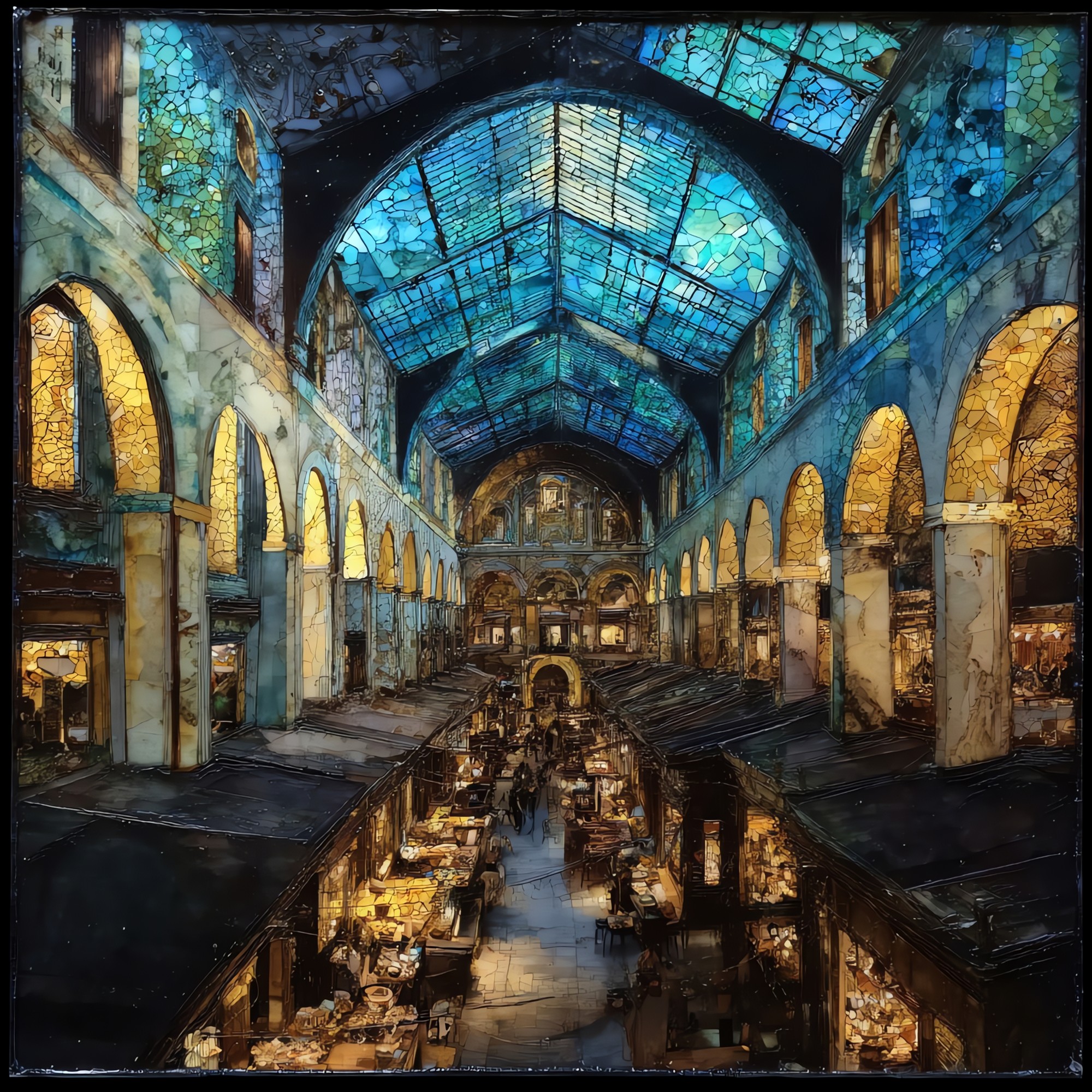
Mercato Centrale
— the morning a city wakes for bread.
Not only on a wall.
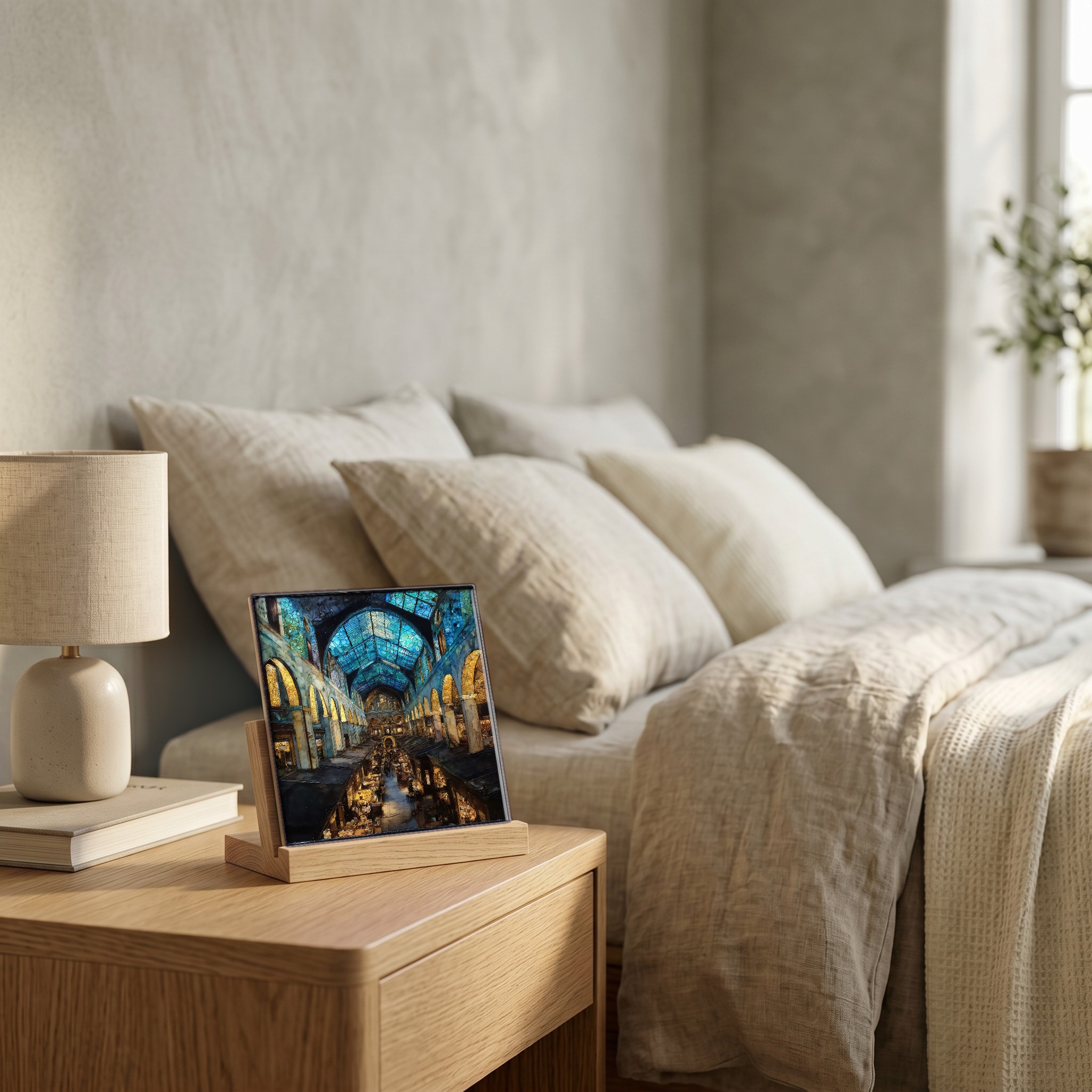
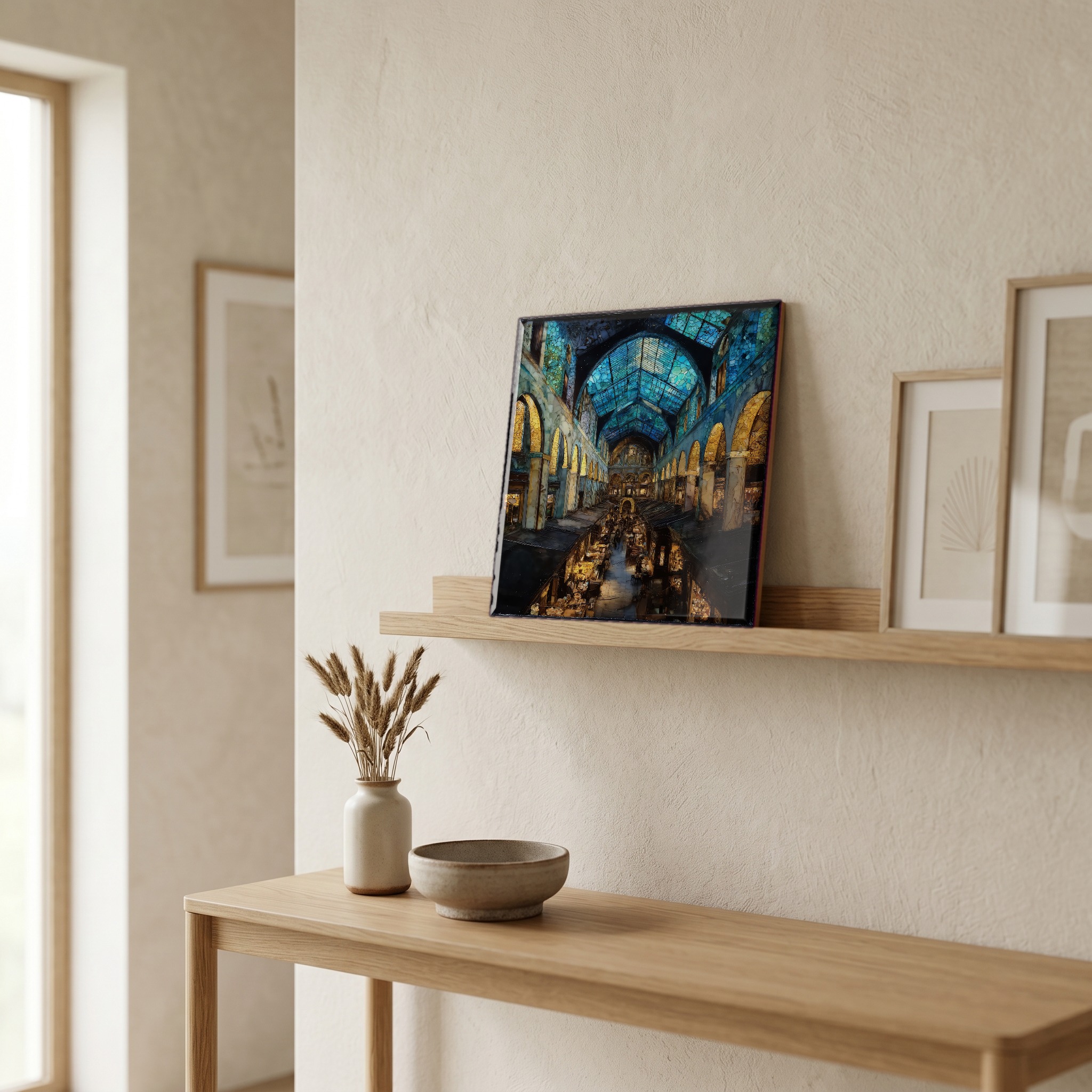
“Florence's covered food market, opened in 1874. Iron and glass over a full city block in the San Lorenzo quarter, designed by Giuseppe Mengoni, the architect who drew Milan's Galleria Vittorio Emanuele in the same decade. The ground floor is still a working market: butchers and fishmongers, baskets of porcini, wheels of pecorino, bread on the tables before the morning is fully up. Nerbone has served lampredotto sandwiches at the same counter since 1872. The upper floor reopened in April 2014 as a food hall under the same arches. Florence shops here. Tourists shop here. The light comes through the glass and falls on the copper and the bread. Nothing about the building is quiet.
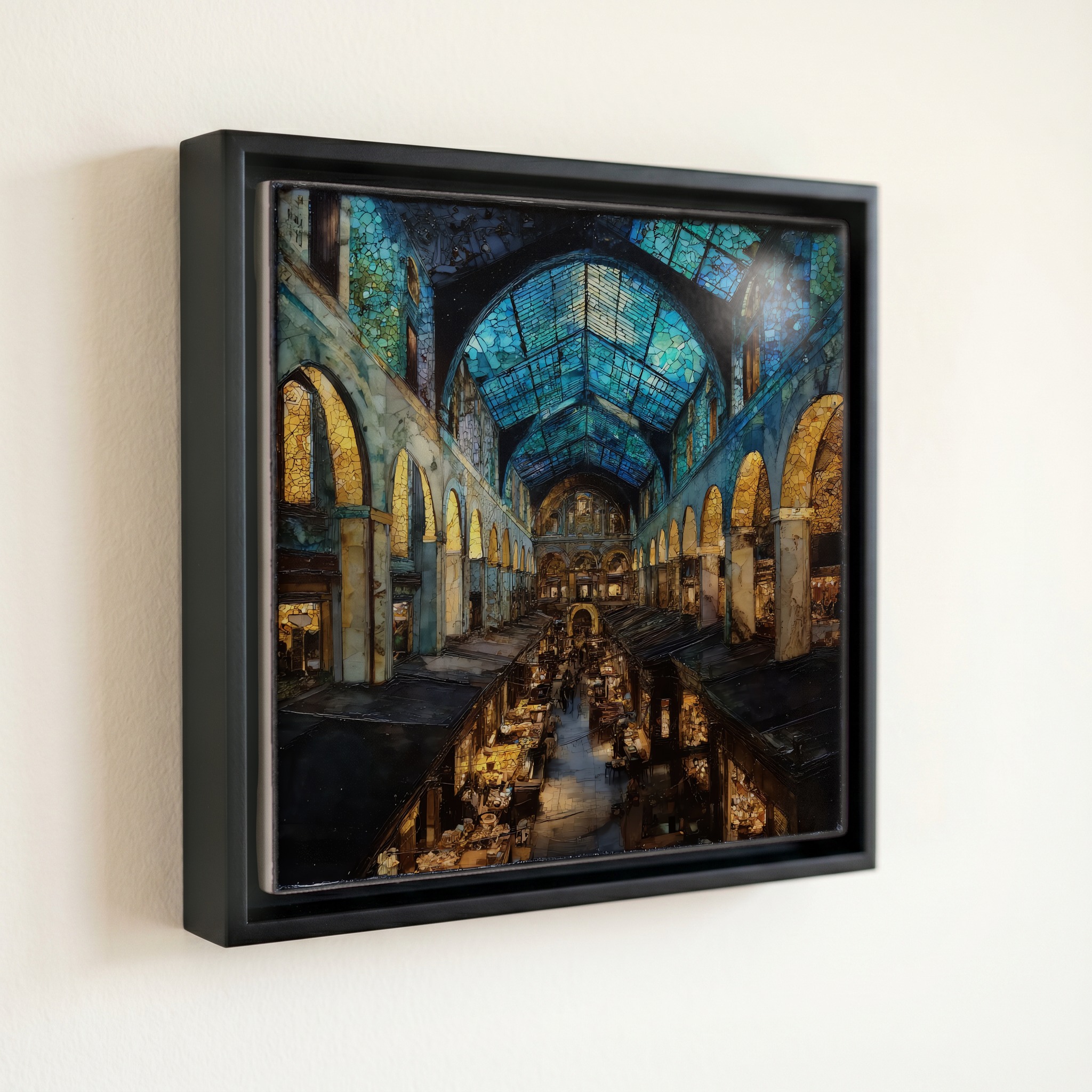
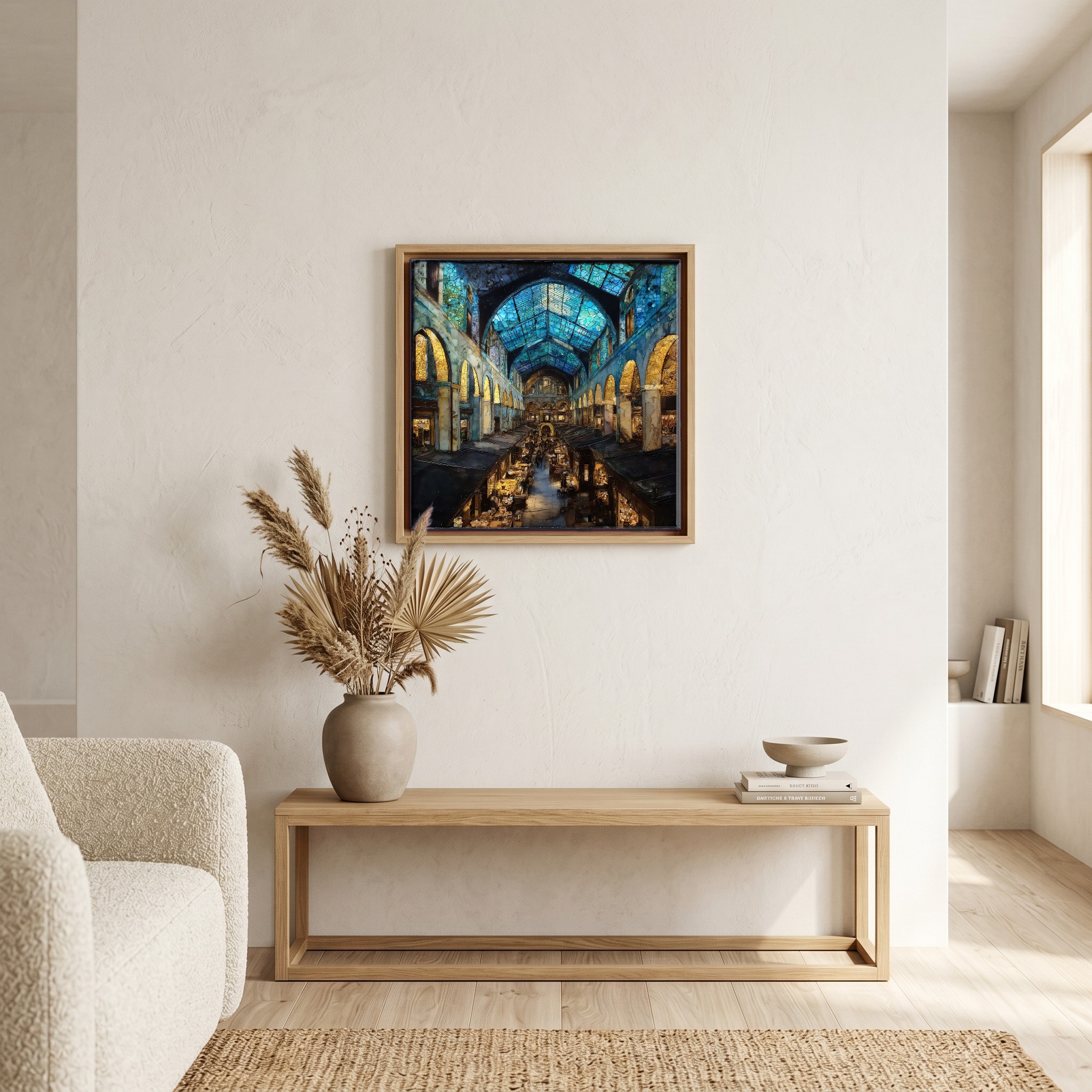
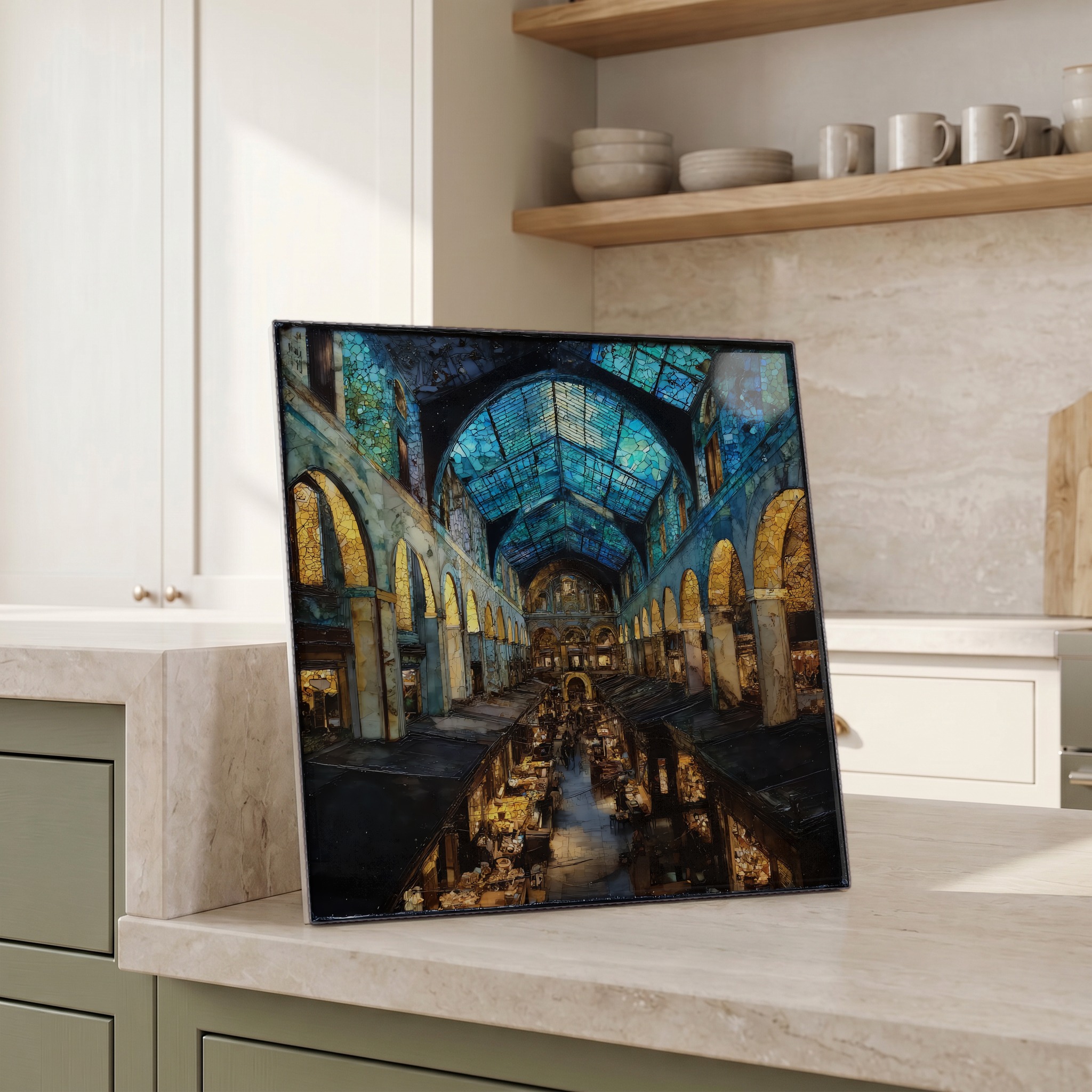
Mercato Centrale, on ceramic.
Each tile is finished by hand in our Knoxville studio. Artwork is slowly infused into the ceramic surface under high heat and pressure, and rests beneath a thin glossy finish. The colour lives in the surface, not on top of it.
Pick any four 4-inch tiles — National Parks you've been to, a Smokies set, the four seasons of one place. $ for a set of , cork-backed, ready to live on the table.
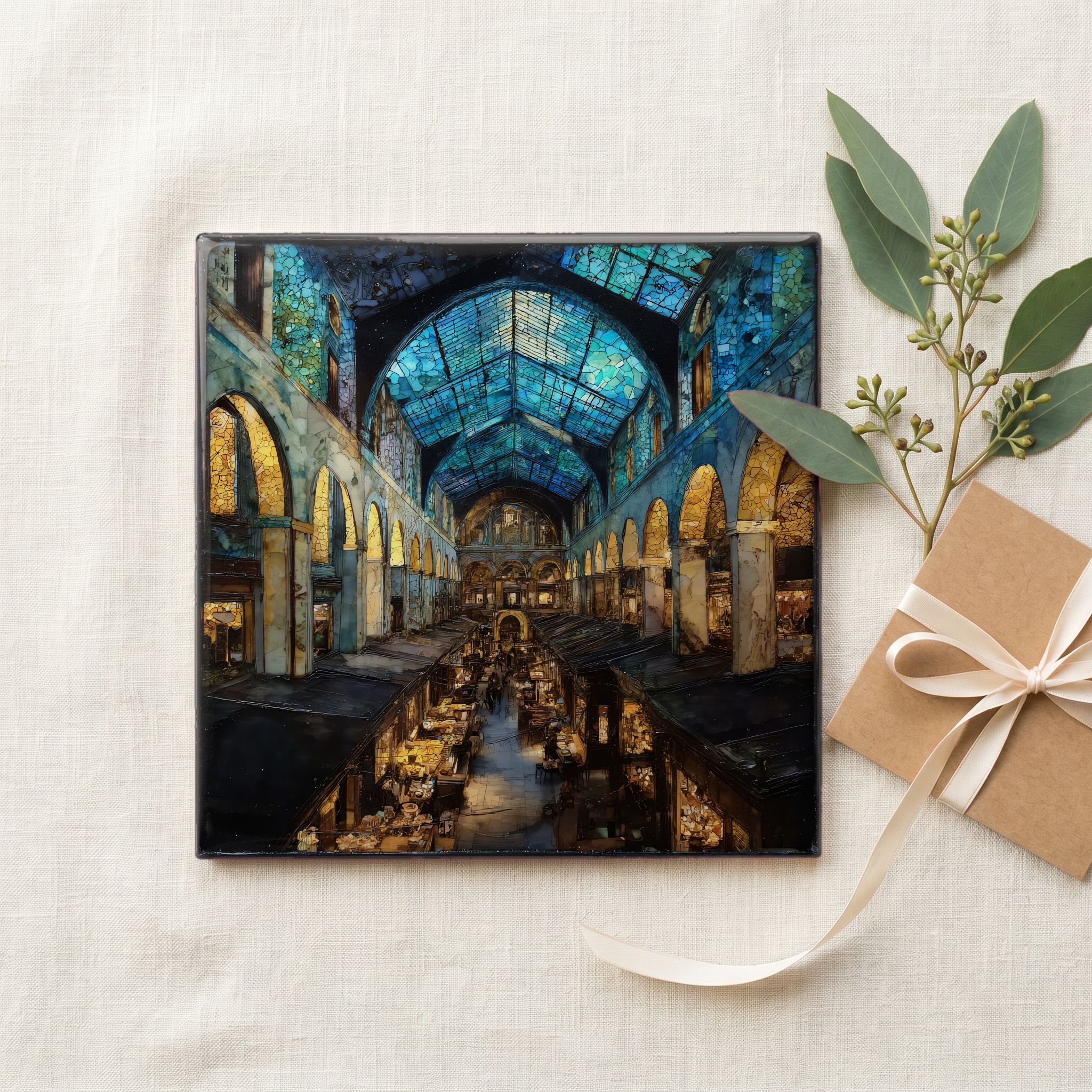
Each tile ships in a kraft box, tied with cream ribbon, with a handwritten note from the studio if you'd like to add one.
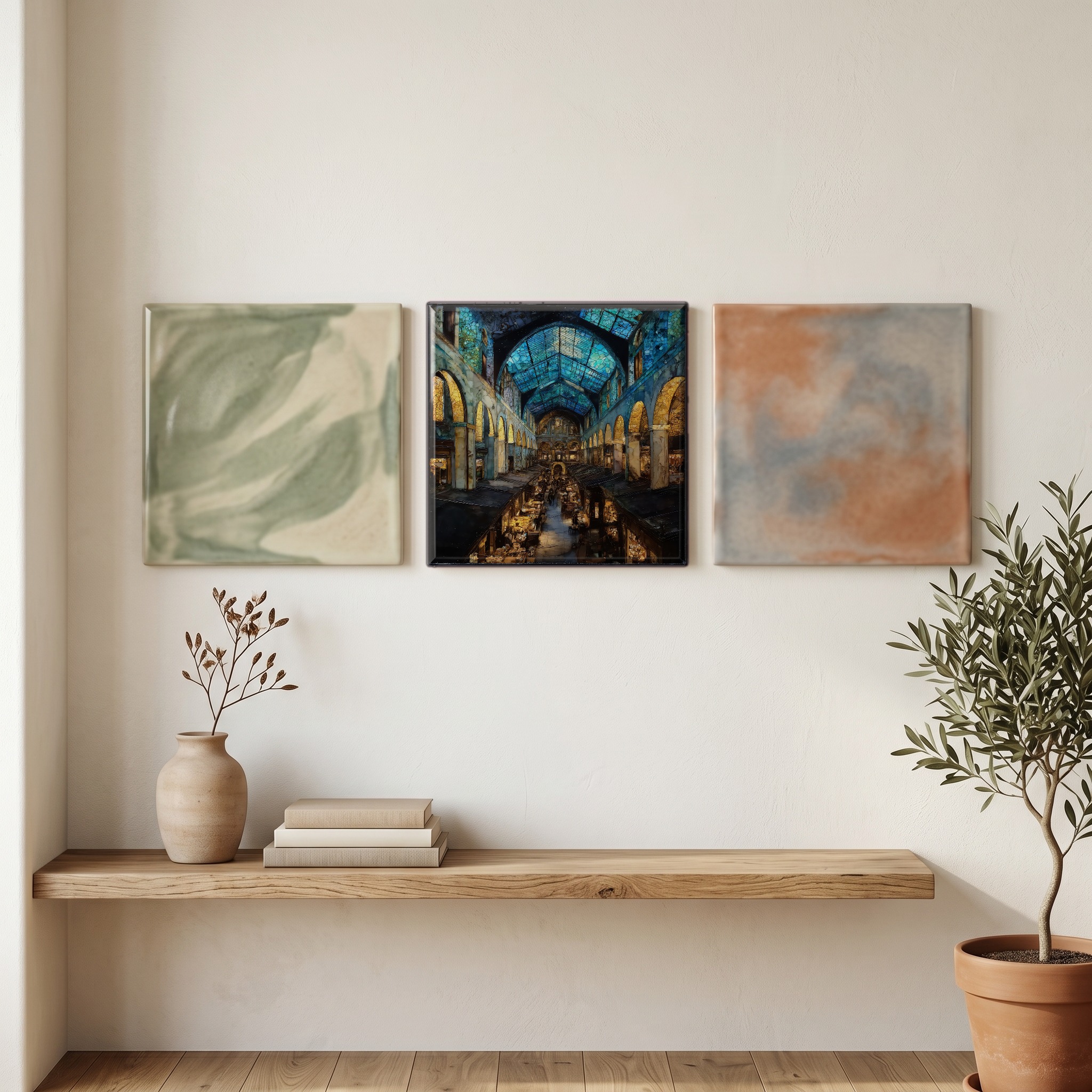
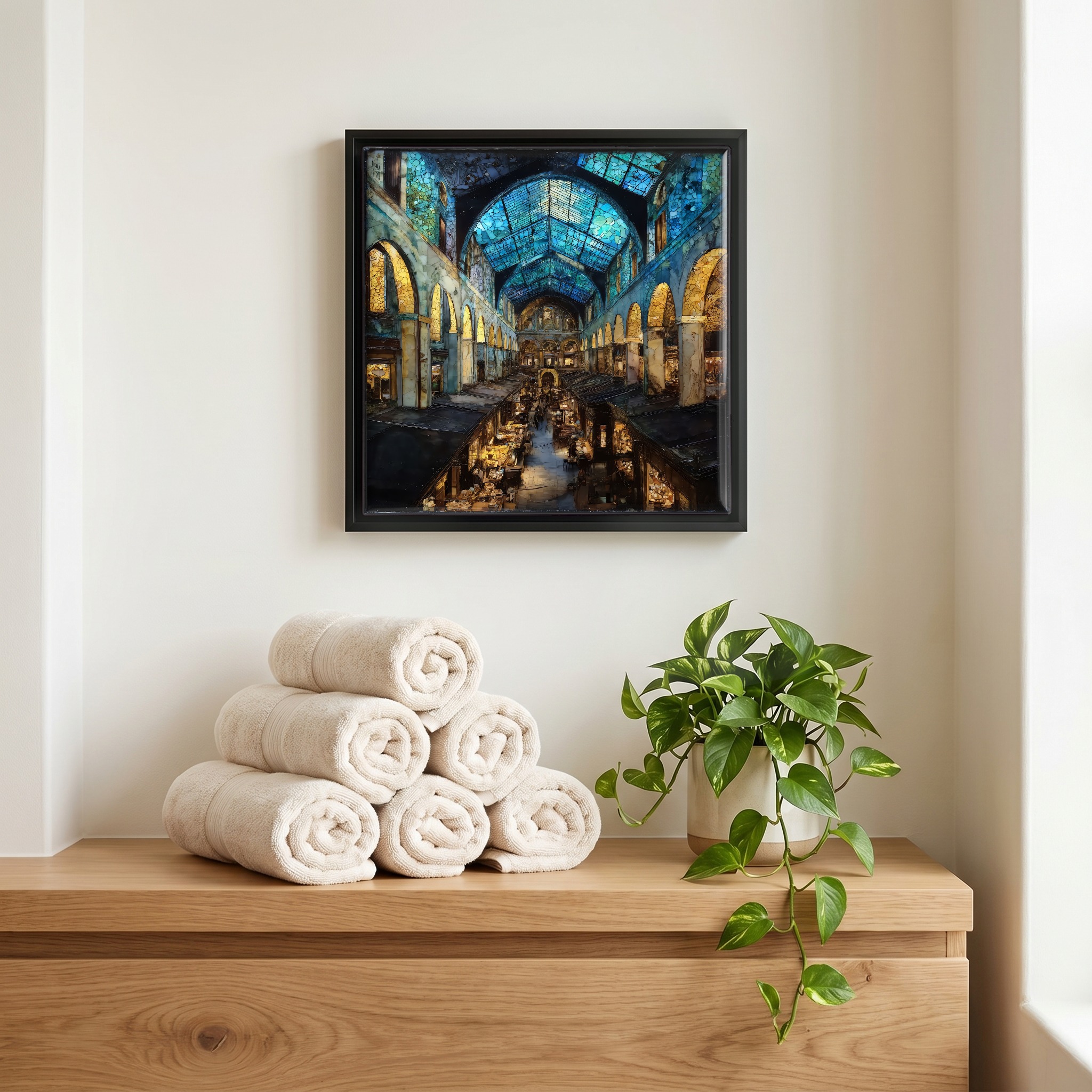
Three or five different vistas, hung together — a chapter of places you've been, or want to go.
The place, in three passes.
Mercato Centrale stands in the San Lorenzo quarter of central Florence, a block north of the Basilica di San Lorenzo and the Medici Chapels, five minutes' walk south of Santa Maria Novella station. The cast-iron-and-glass hall covers a full city block at Piazza del Mercato Centrale, between Via dell'Ariento and Via Sant'Antonino. It was designed by Giuseppe Mengoni, the architect of Milan's Galleria Vittorio Emanuele II in the same decade, and opened in 1874, only a few years after Florence's brief tenure as capital of the new Kingdom of Italy (1865-1871). The building replaced an older open-air market on the same square and was part of the city's late-nineteenth-century civic modernisation. The surrounding streets are still lined with the open-air leather stalls of the wider San Lorenzo market.
The hall is built in the cast-iron-and-glass vocabulary of nineteenth-century European market architecture, in the lineage of Victor Baltard's Les Halles in Paris (1853-1874), which Mengoni's commission was meant to echo. The iron trusses span the interior without intermediate columns and carry a clerestory band of windows that lets daylight fall straight onto the ground-floor stalls below. The roof is a flattened gable of glass set into the wrought-iron frame. The upper floor, closed for decades after the wholesale trade moved out of the centre, was renovated and reopened on 23 April 2014 as a curated food hall, with about a dozen artisanal vendors arranged beneath the same iron canopy and the original framework left visible from the new dining tables. Most of the structural ironwork is original.
The ground floor opens Monday through Saturday in the morning hours, traditionally seven to two, and is the place for fresh produce, cheese, charcuterie, fish, bread, and a working lunch at one of the historic counters. Nerbone, the trippaio that has operated inside the market since 1872, still serves the same panino al lampredotto Florentines have eaten standing for over a century. The upper floor opens daily and stays open from late morning through the evening, with about a dozen vendors serving Tuscan pasta, Neapolitan pizza, fish, gelato, wine, and craft beer, plus a cooking school. The market sits five minutes' walk south of Santa Maria Novella station and a block north of the Basilica di San Lorenzo.