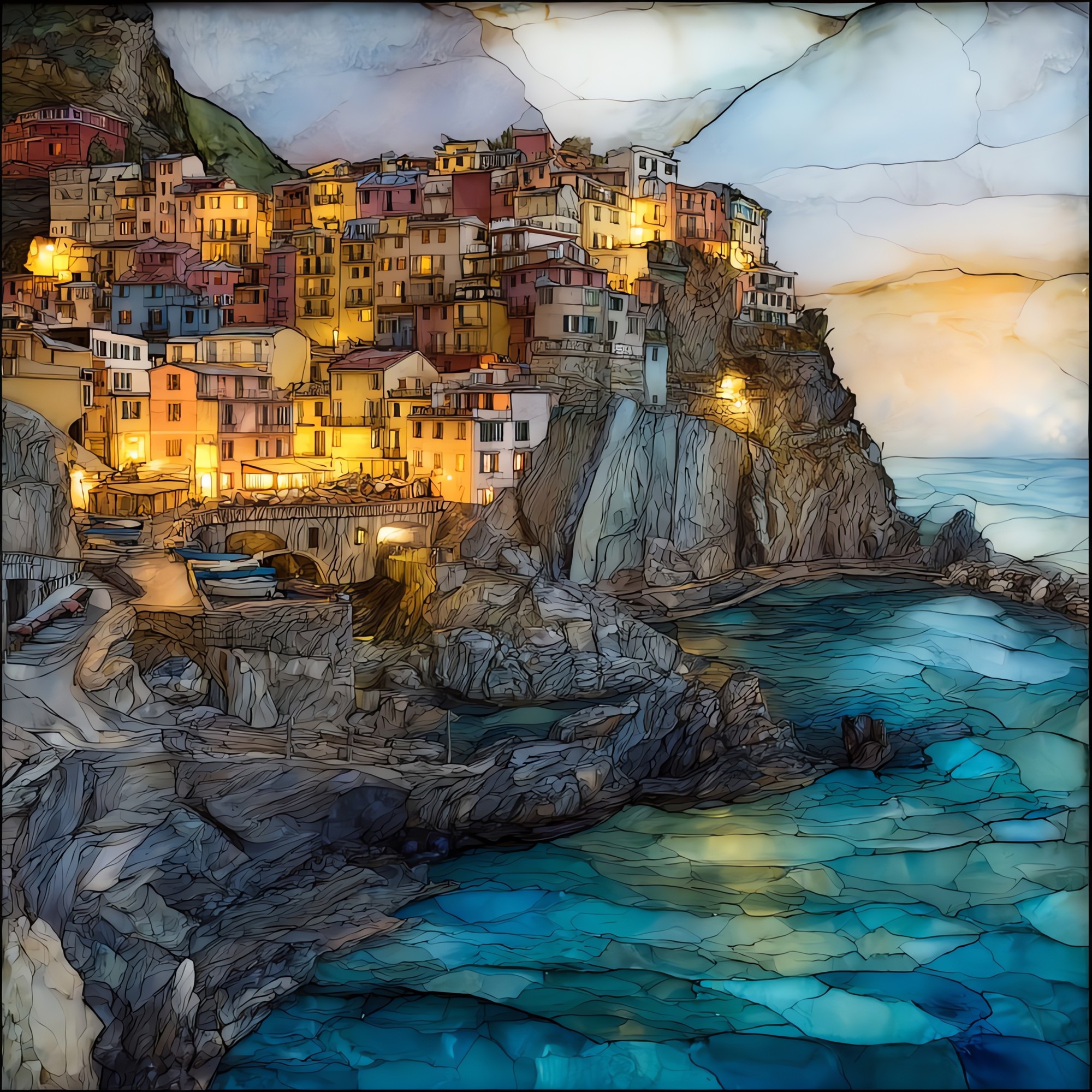
Manarola
— — the village the sun keeps last.
Not only on a wall.
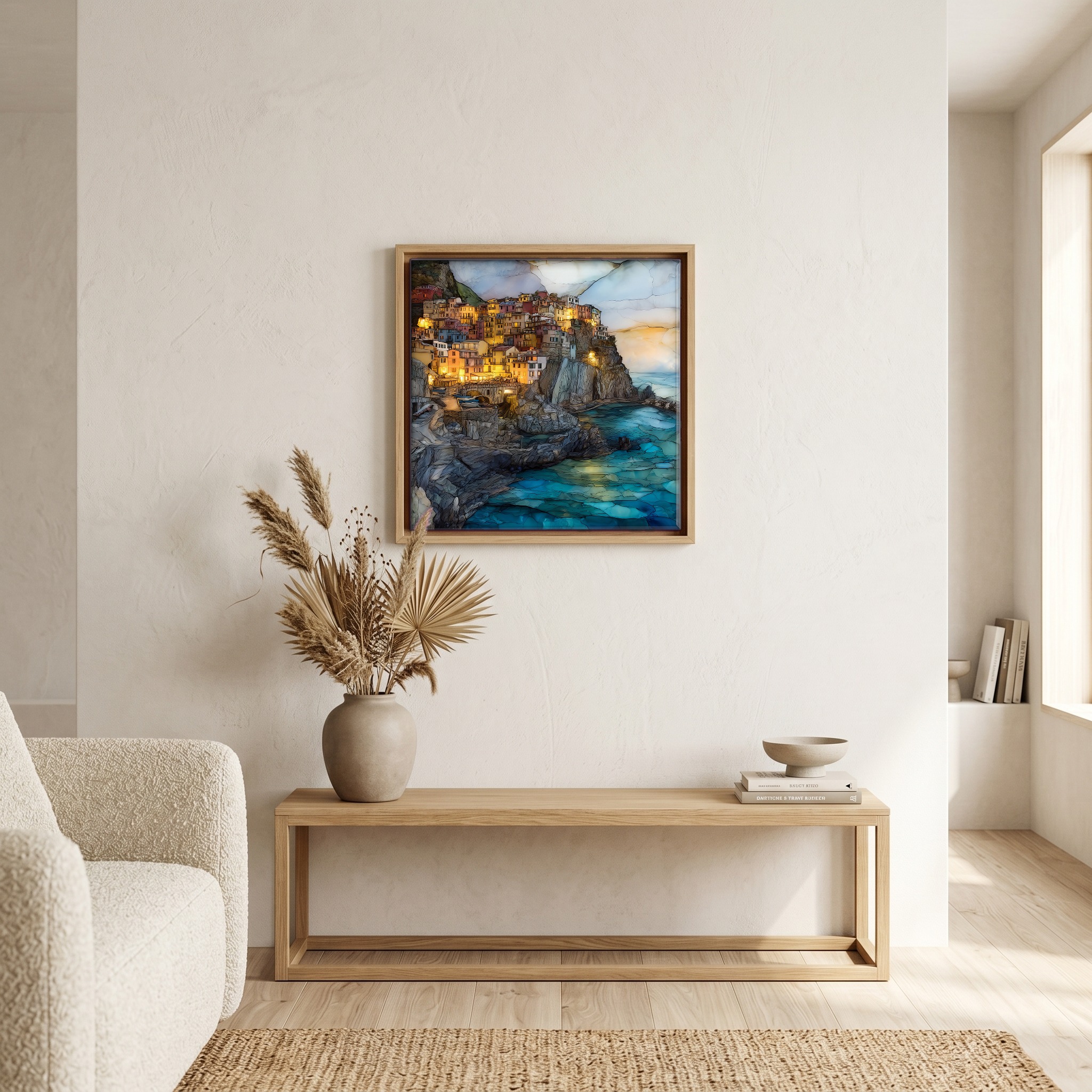
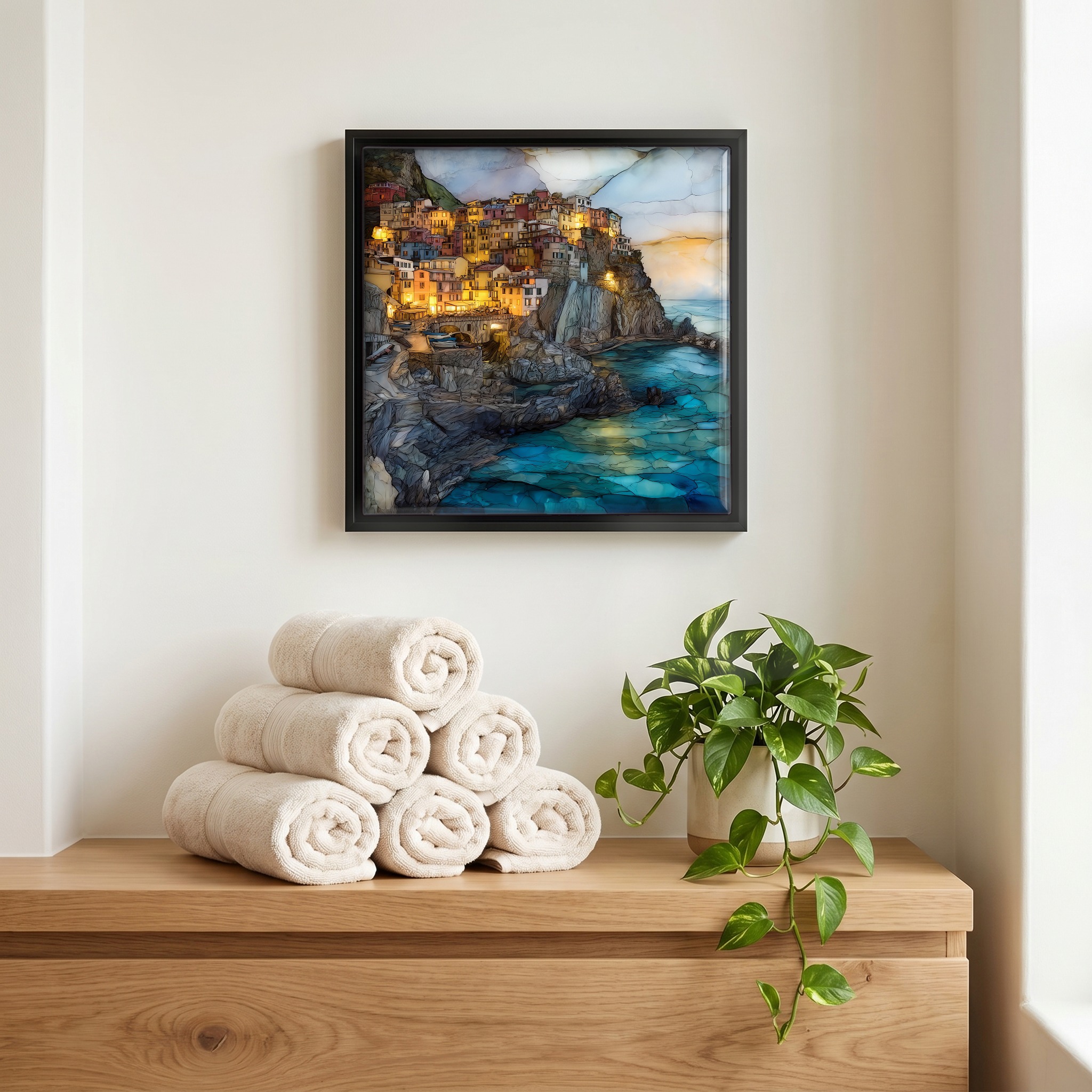
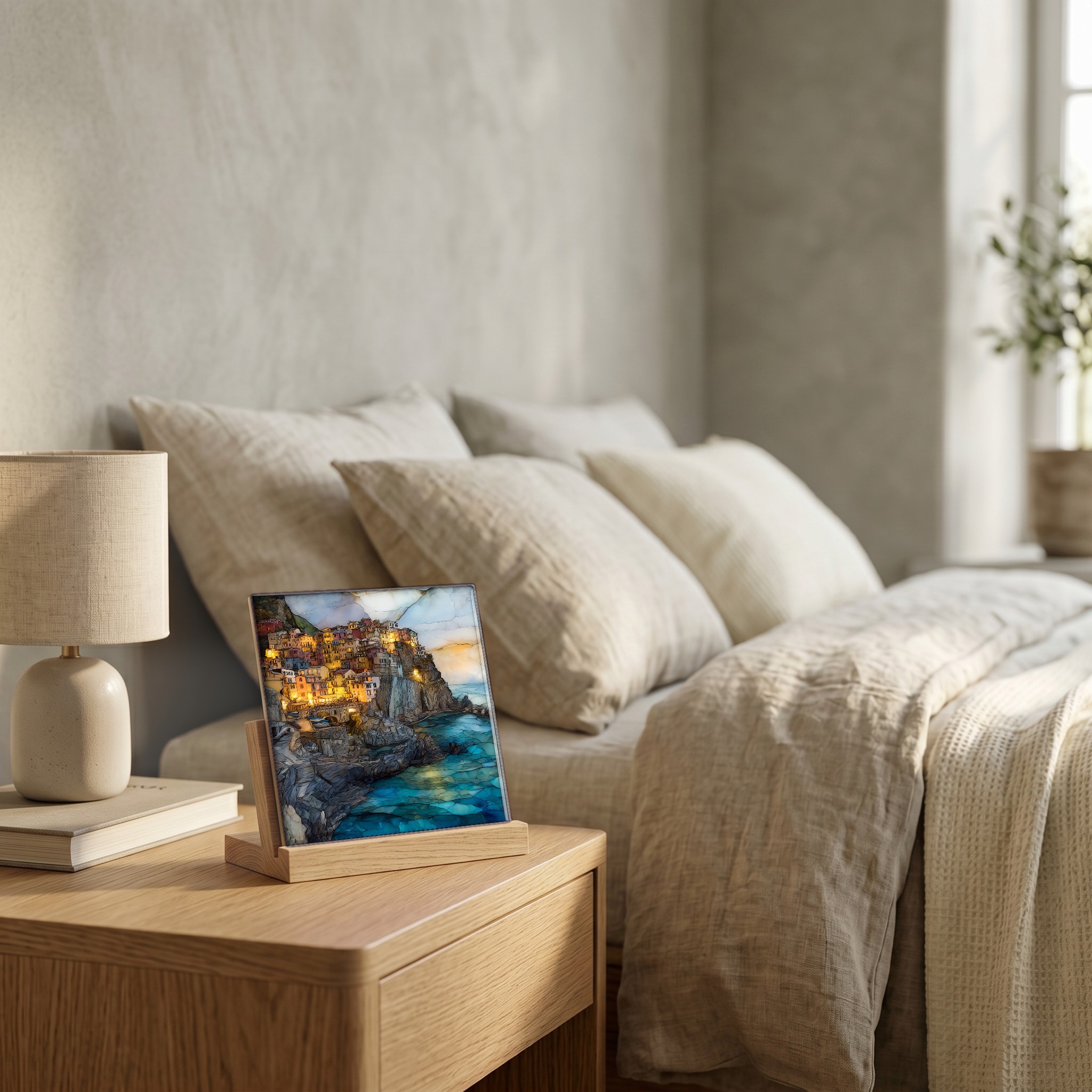
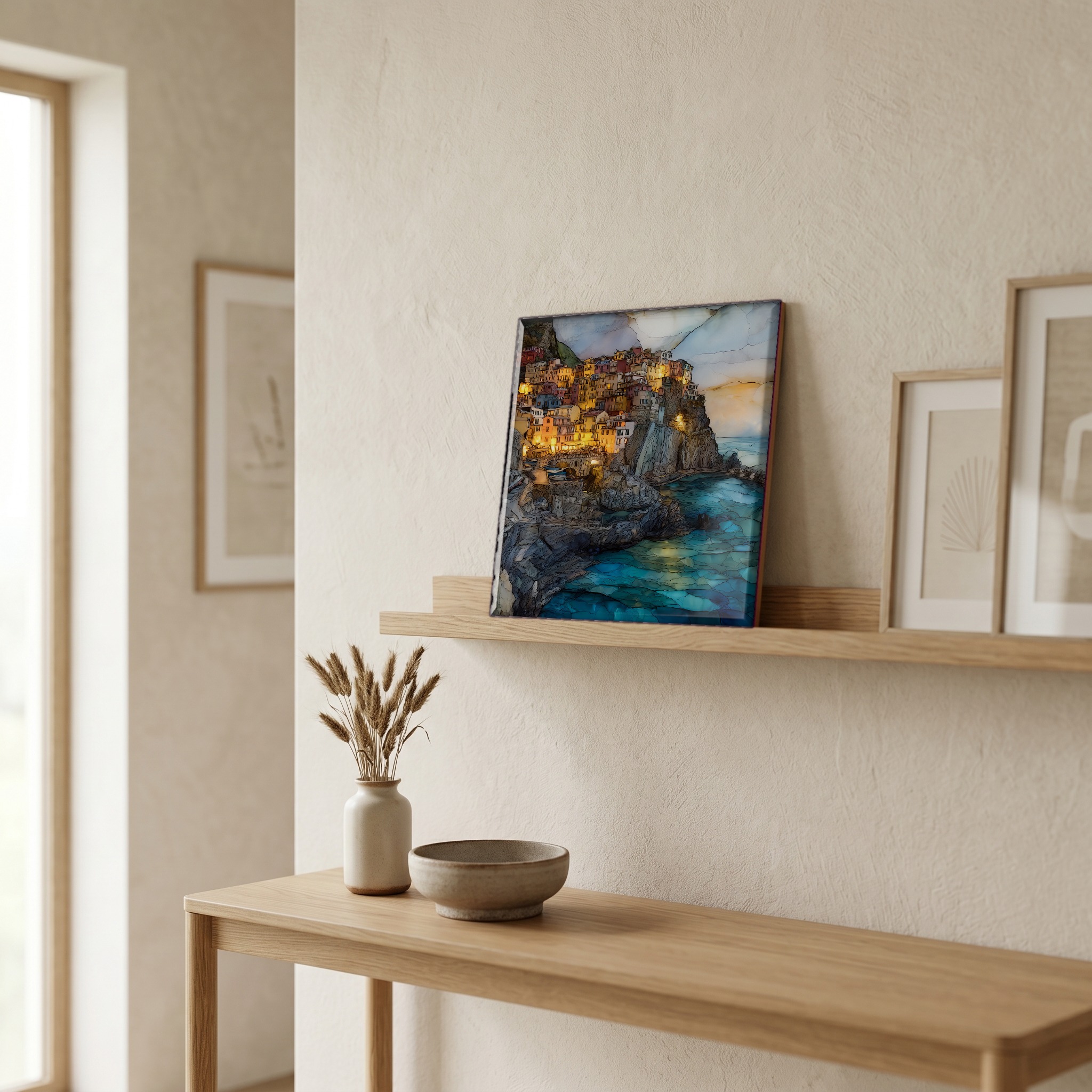
“One of the five villages of the Cinque Terre, on the Ligurian coast of northwest Italy. Houses in apricot, salmon, and rose, stacked up a cliff of dark stone above a small harbour with no real beach, just rocks to dive from and a few fishing boats drawn up. The terraces above town are still planted to vine for Sciacchetrà, a sweet wine pressed here since the Middle Ages. Best in late September, when the swimmers have gone and the light on the houses runs long and gold. The trains stop here. Nobody hurries.
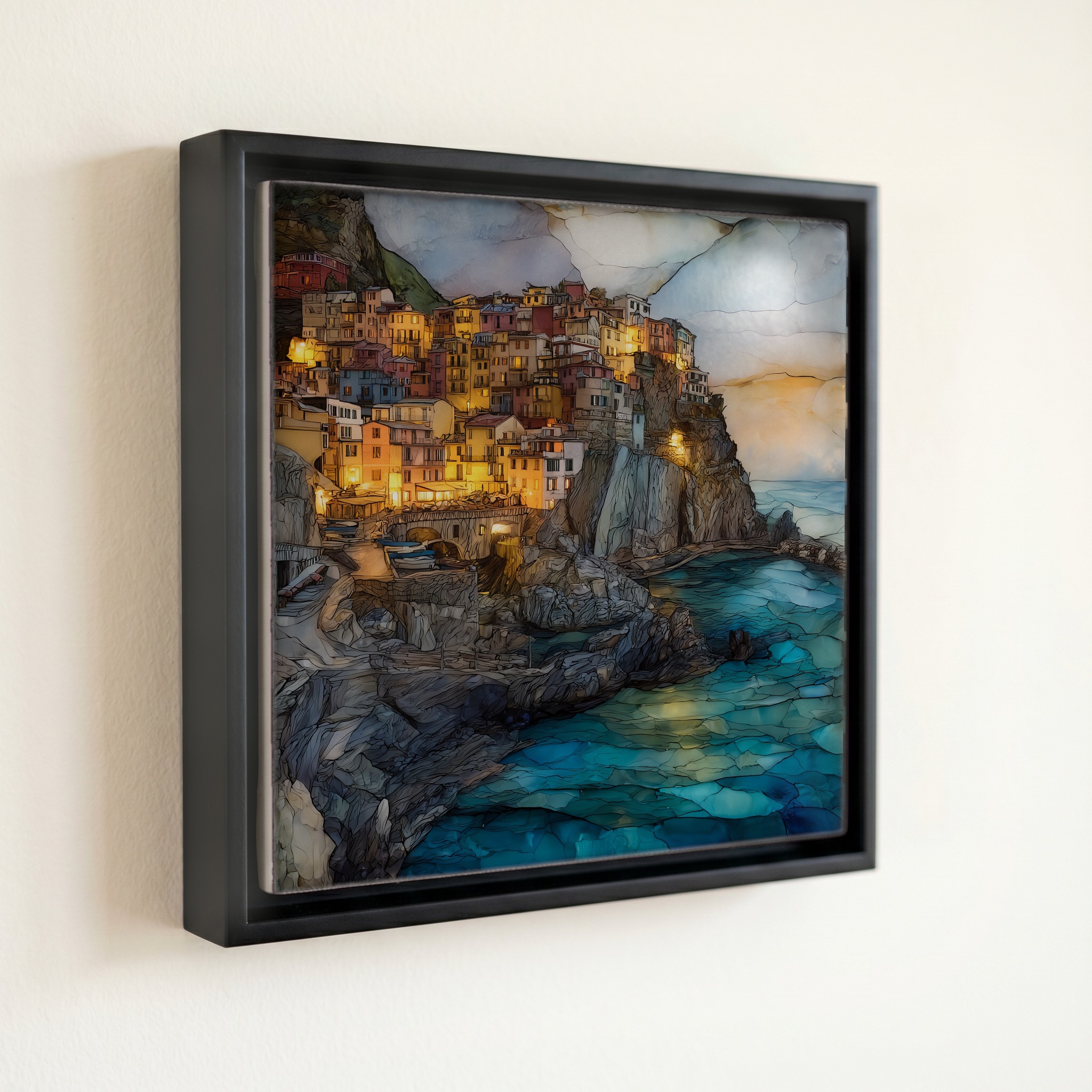
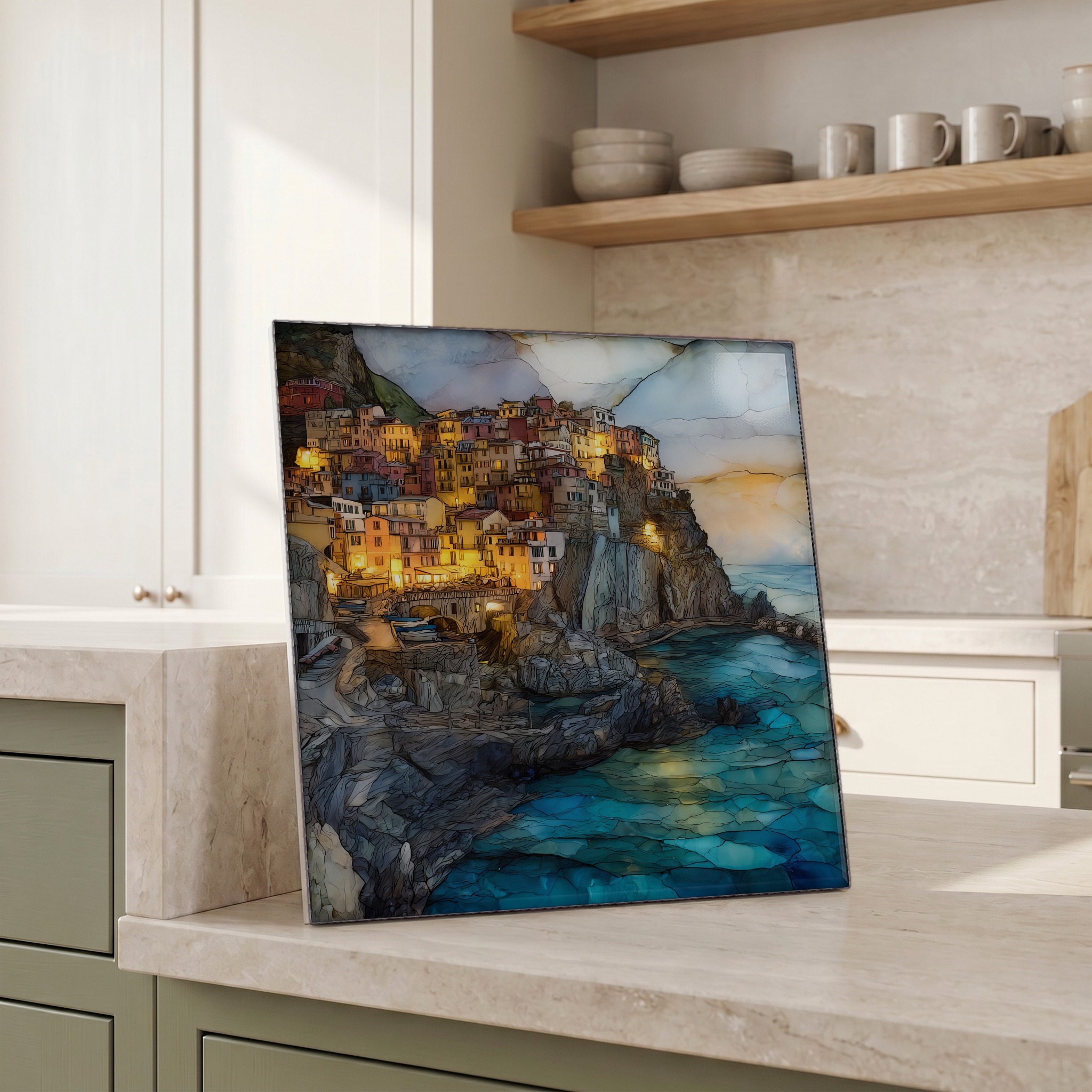
Manarola, on ceramic.
Each tile is finished by hand in our Knoxville studio. Artwork is slowly infused into the ceramic surface under high heat and pressure, and rests beneath a thin glossy finish. The colour lives in the surface, not on top of it.
Pick any four 4-inch tiles — National Parks you've been to, a Smokies set, the four seasons of one place. $ for a set of , cork-backed, ready to live on the table.
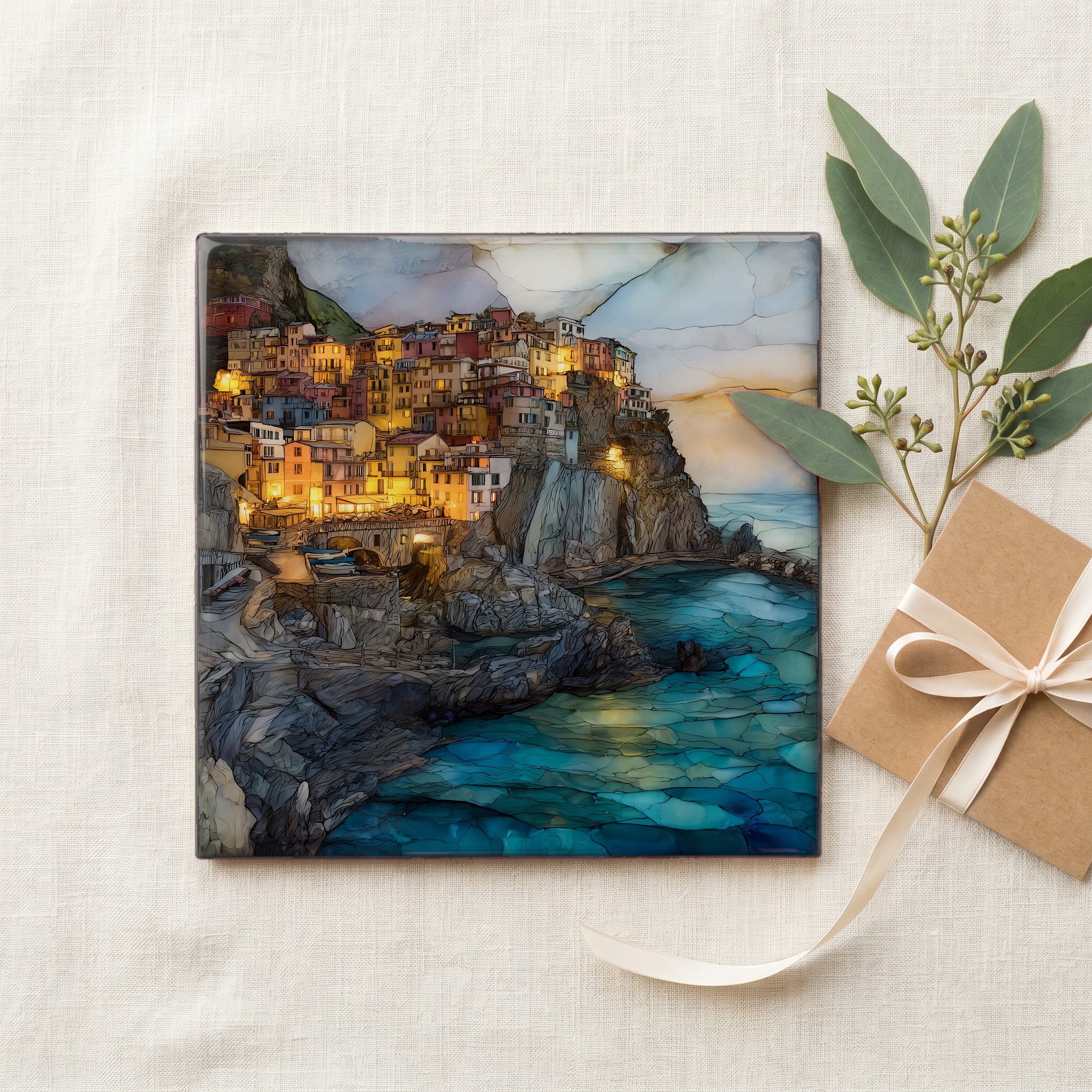
Each tile ships in a kraft box, tied with cream ribbon, with a handwritten note from the studio if you'd like to add one.
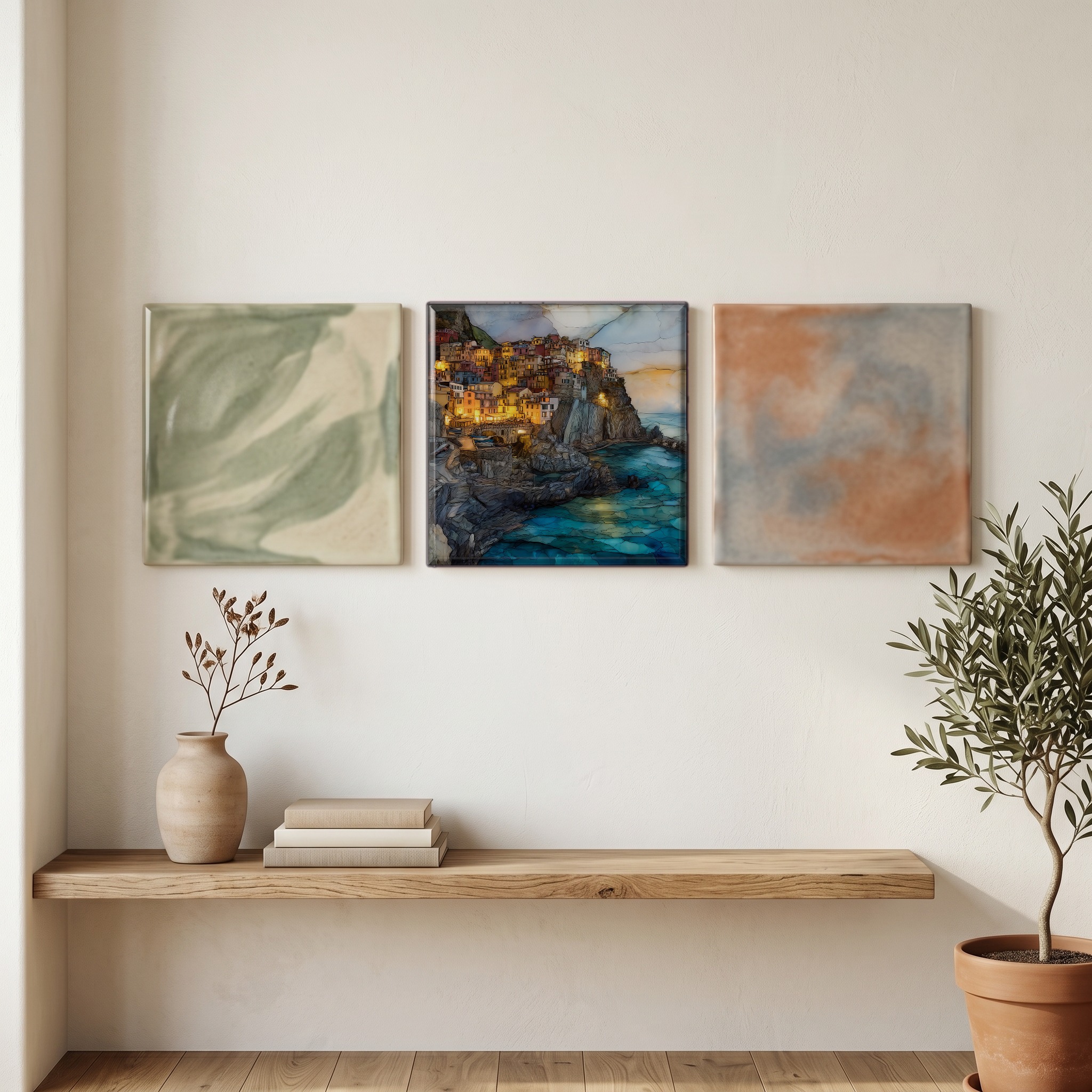
Three or five different vistas, hung together — a chapter of places you've been, or want to go.
The place, in three passes.
Manarola is one of the five Cinque Terre villages along a roughly twelve-kilometre stretch of the Ligurian coast in northwest Italy, in the Province of La Spezia. The village sits at the mouth of a small ravine on a promontory of dark basalt, about 70 metres above the sea, and forms part of the Cinque Terre National Park, listed by UNESCO as a World Heritage Site in 1997. Trains on the Genoa to La Spezia line stop at a small station cut into the cliff, and the Sentiero Azzurro footpath links Manarola to neighbouring Corniglia and Riomaggiore. No road descends into the harbour. The village has roughly 350 permanent residents.
The pastel facades of Manarola, in apricot, salmon, rose, and ochre, carry a Ligurian tradition that goes back several centuries: fishermen are said to have painted their houses brightly so they could pick out their own homes from the boats at sea. The cliffside orientation faces roughly southwest, and the warm tones intensify in the last hour before sunset, when the sun drops toward the headland at Punta Bonfiglio. From that promontory, just south of the harbour, the village and its terraces compose into one of the most-photographed views along the entire Cinque Terre coast. Cloudless evenings in spring and autumn give the cleanest light.
The cliffs and terraces above Manarola are the work of nearly a thousand years of patient stonework. The Cinque Terre is held in shape by an estimated 6,700 kilometres of dry-stone walls, the muretti a secco, built without mortar to carve narrow terraces from steep, geologically young Ligurian schist and sandstone. UNESCO cites the walls as one of the chief reasons the coast was listed in 1997. The terraces above Manarola are planted to Bosco, Albarola, and Vermentino grapes, the three varieties pressed into the village's sweet white passito, Sciacchetrà, which has been made along this coast since at least the thirteenth century.