Wender·Vista
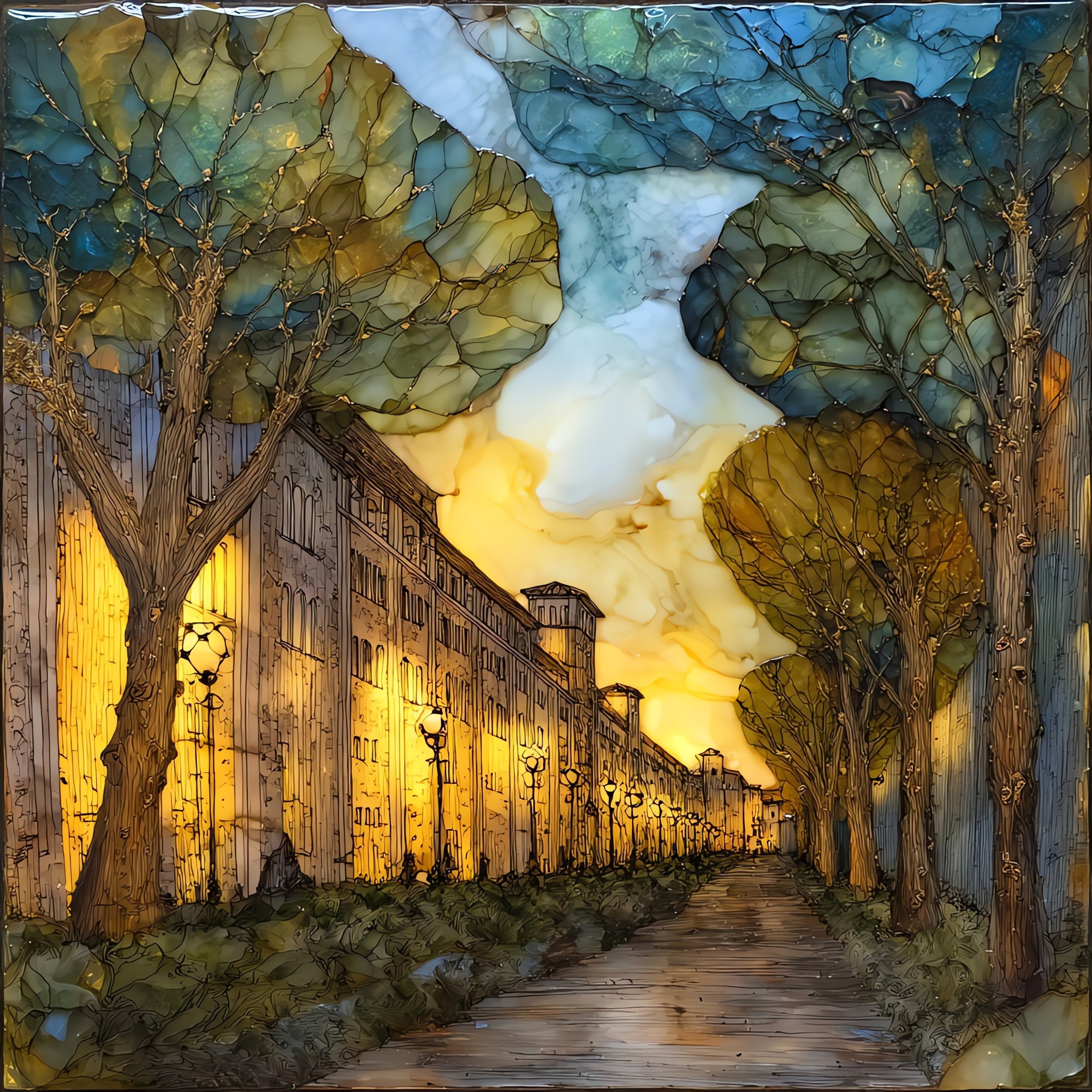
Walls of Lucca
shown on ceramic, 12-inch tileItaly
in Tuscany, just inland from Pisa

Walls of Lucca

the wall the war never came to.

Where it lives

Not only on a wall.

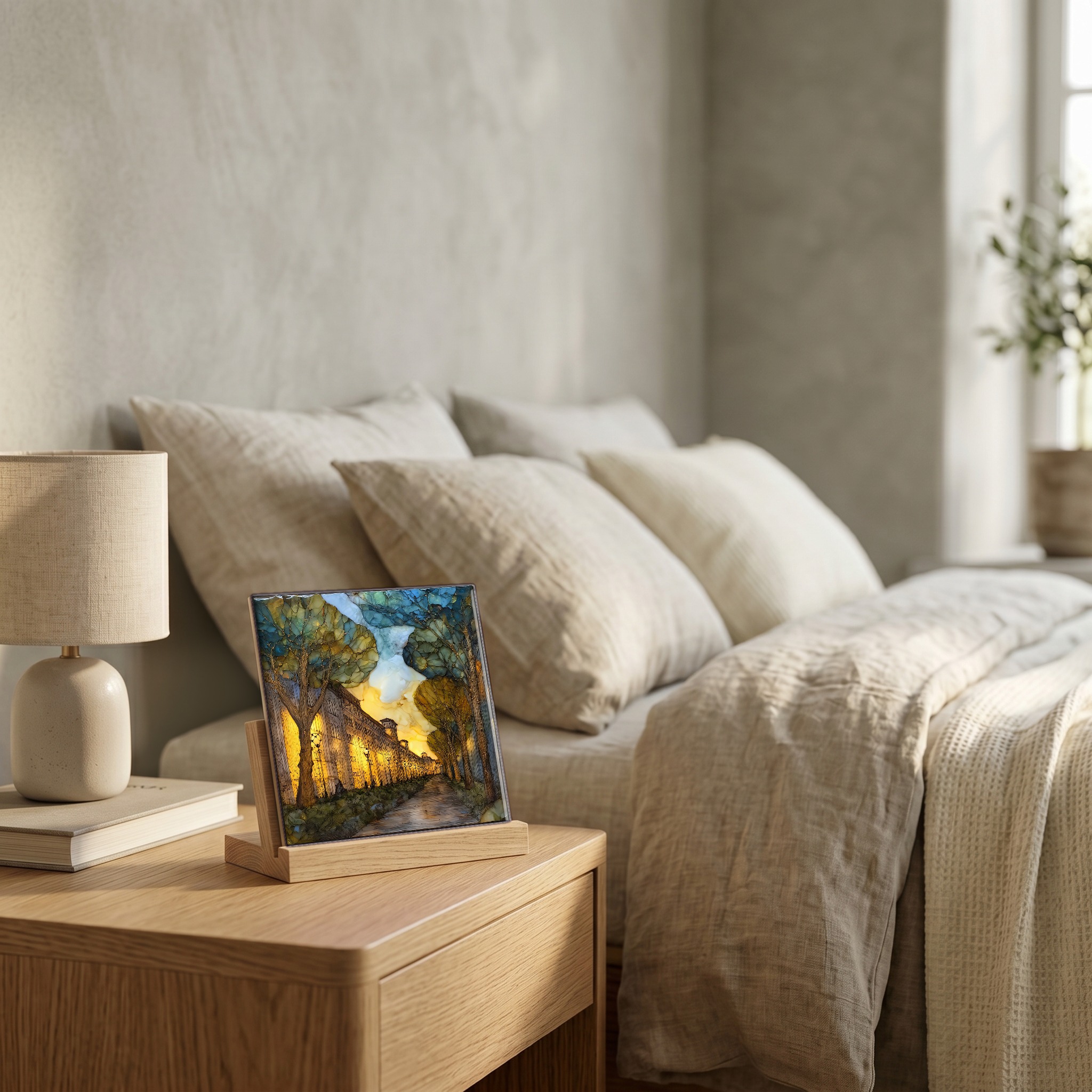
A small tile on the nightstand catching the morning. A larger one above the fire. Yours, wherever you spend the slow hours.
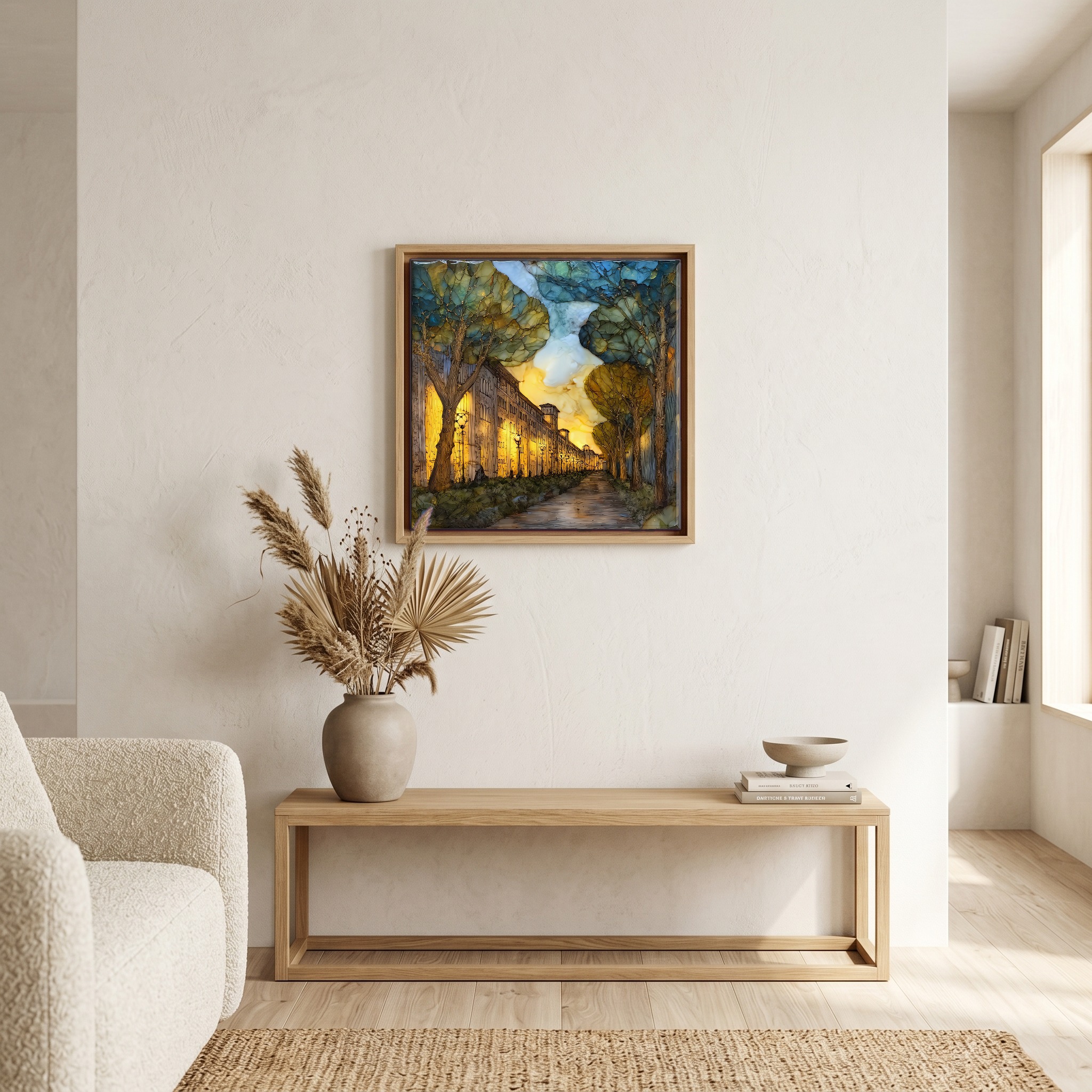
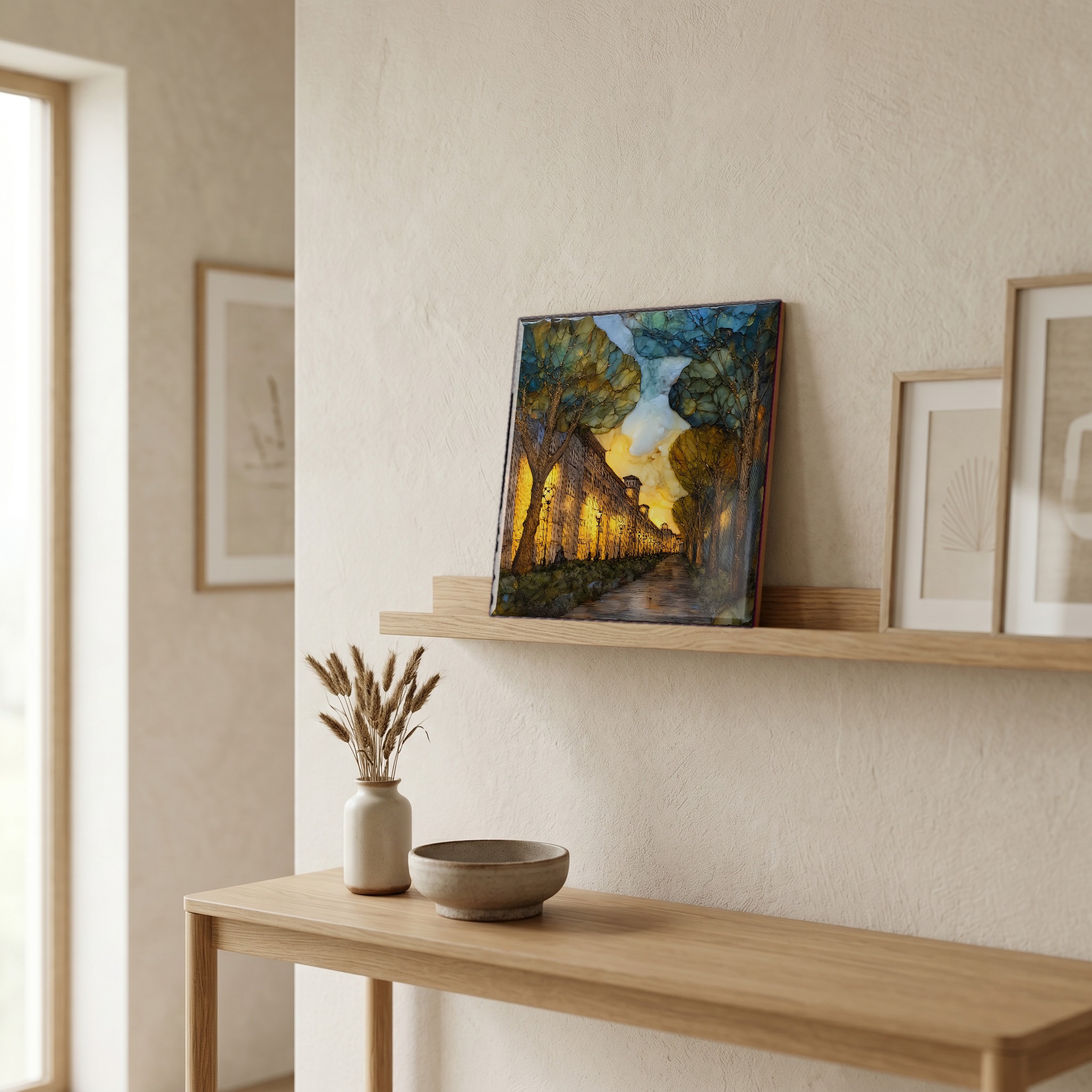
Above the bench, in a warm oak surround.
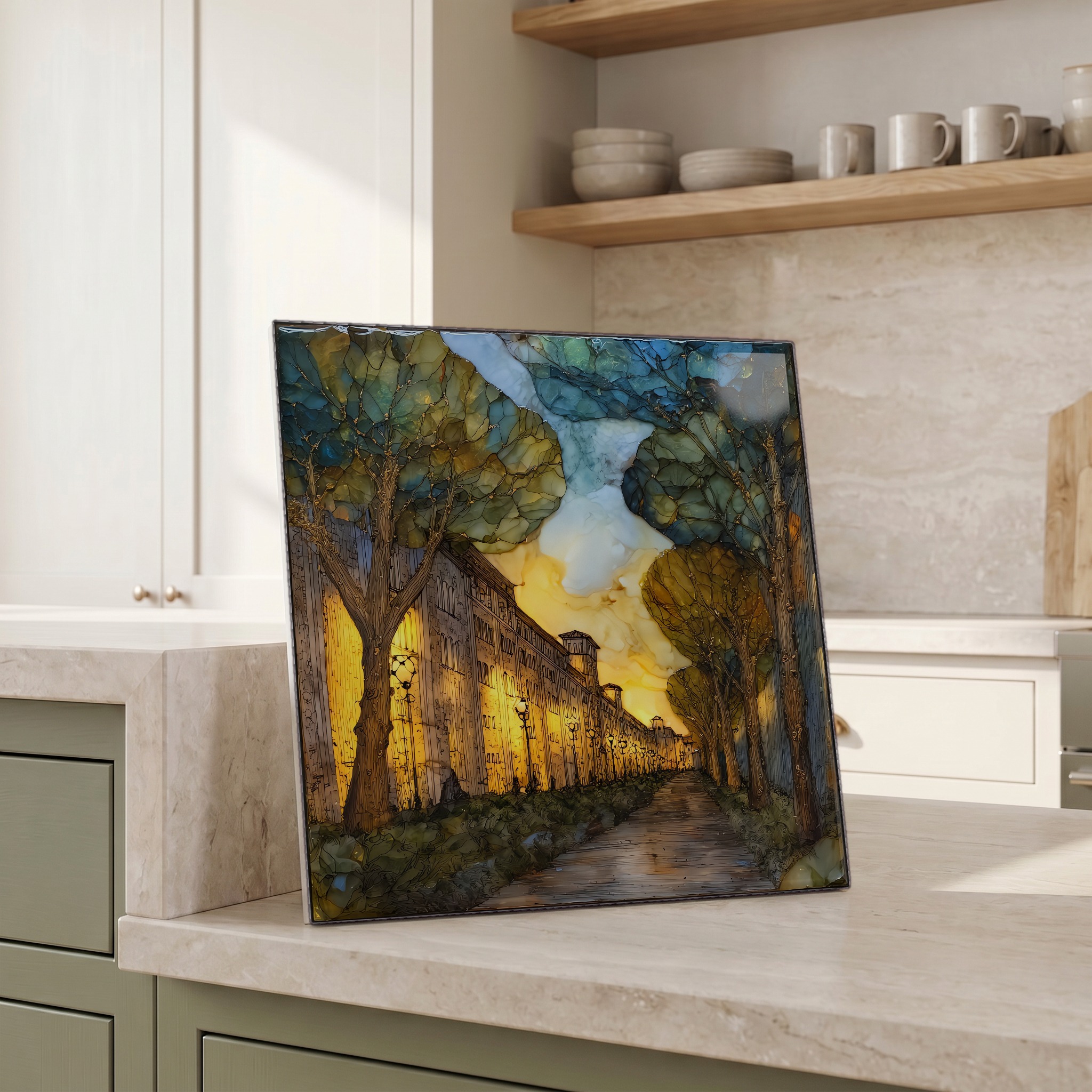
Beside the kettle, propped on the counter.
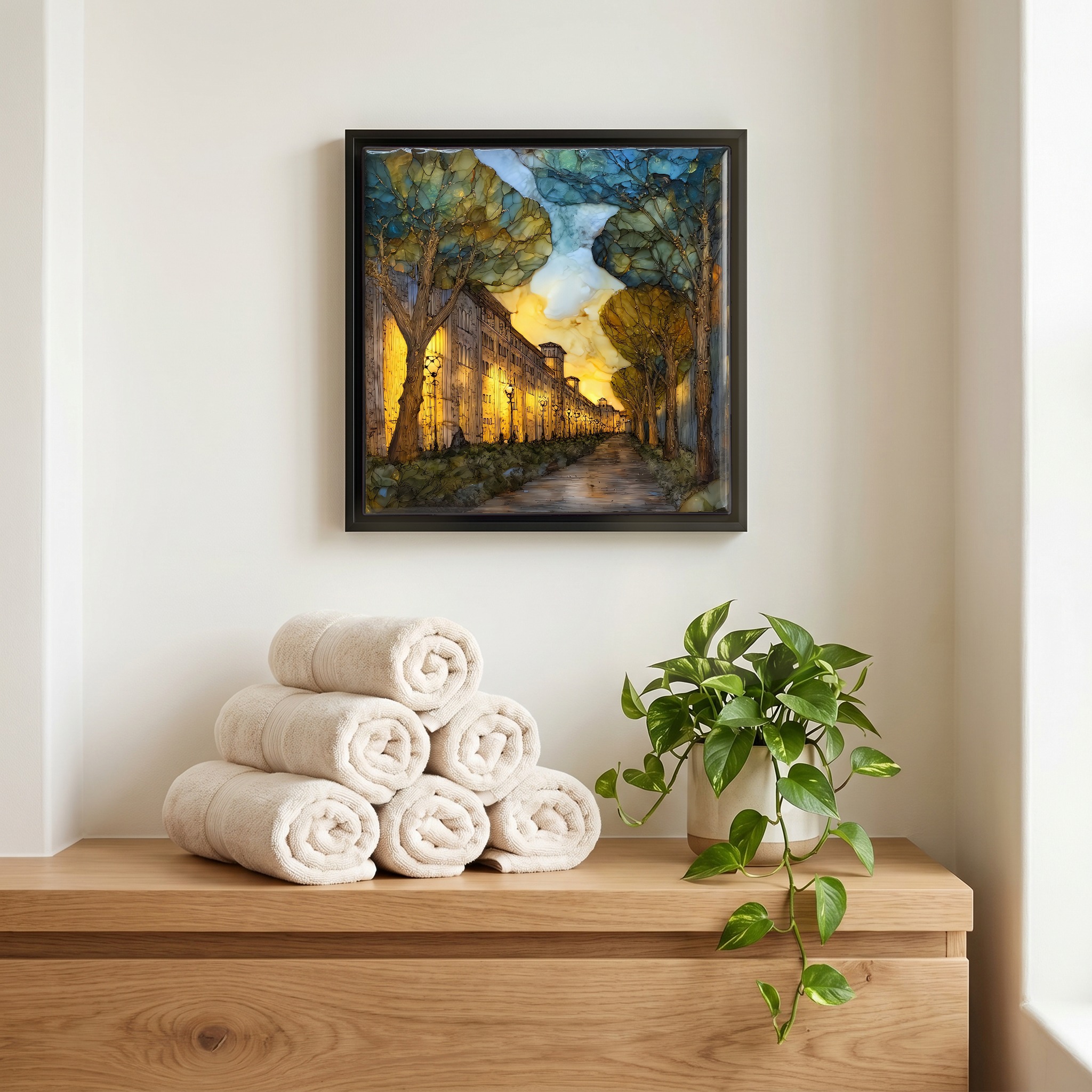
Above the linens, in a slim black surround.
On the nightstand, on a light oak stand.
On a picture ledge, where the light comes in.
a note from the studio

A wall built for a war that never arrived. The ramparts went up over a century and a half, finished in 1648, thick enough at the base to stop cannon, and then no army came. In the 1820s the Duchess Maria Luisa turned the top into a public walk and planted it. Now it is a green ring above the rooftops, an unbroken loop over the old town, nearly seven hundred plane trees deep, and on most evenings the whole town seems to be up there walking it. The defence that was never needed became the place everyone goes.
from the studio
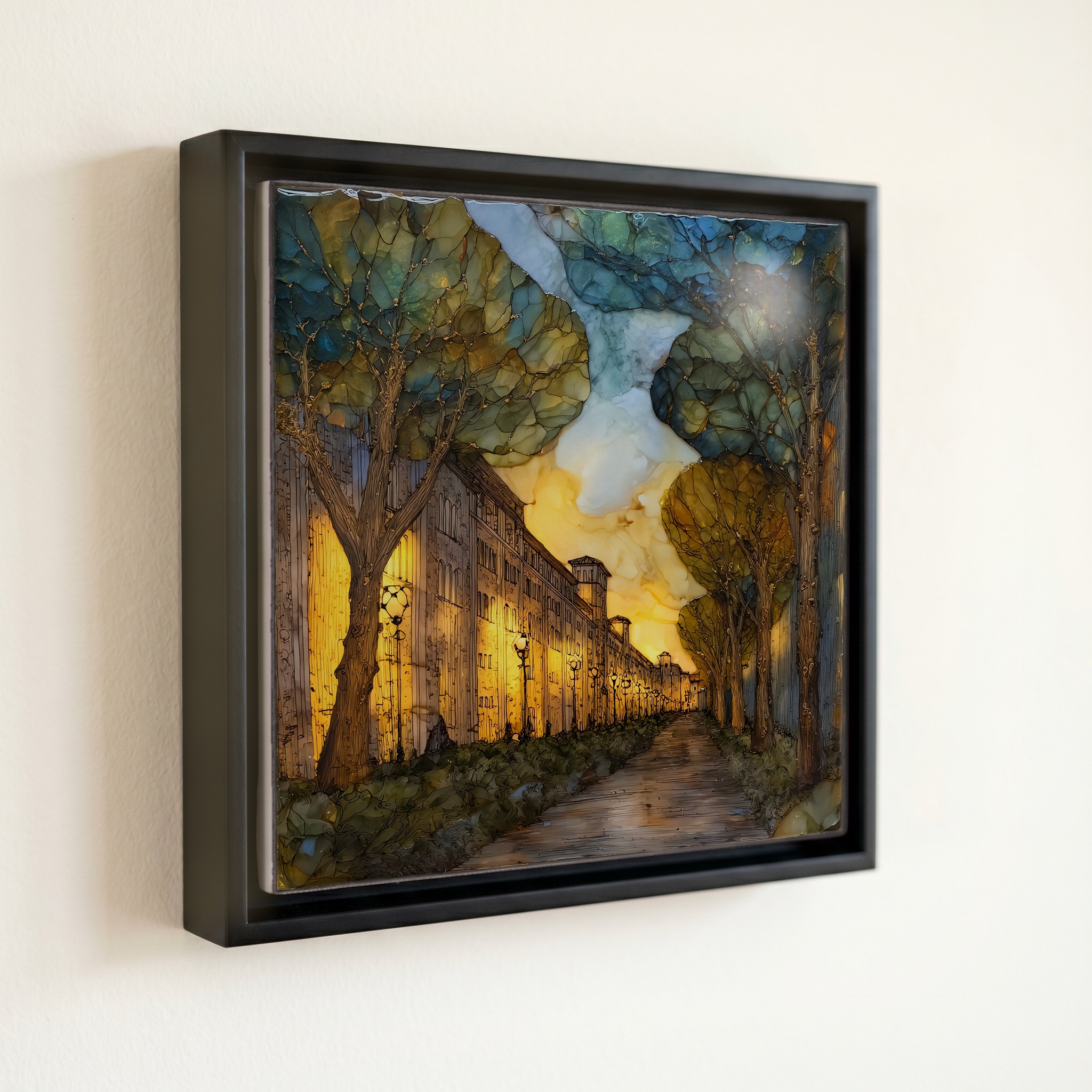
shown in a slim black floating frame · 6 × 6 in
— bring it home

Walls of Lucca, on ceramic.

Each tile is finished by hand in our Knoxville studio. Artwork is slowly infused into the ceramic surface under high heat and pressure, and rests beneath a thin glossy finish. The colour lives in the surface, not on top of it.

What kind of piece?
One tile — square or rectangle.
How big?
the popular one — counter, shelf, nightstand
6 × 6 in · 15 cm · 1.6 lb
Surface finish
A clear glossy finish — the artwork reads as if under resin. Ideal for show-pieces and framed wall art.
How it sits
A hidden cleat — sits ¼″ proud of the wall.
$58
Hand-finished and shipped from our studio at the foot of the Smokies. On your wall in about ten days.
size
6 × 6 in
15 cm
weighs
1.6 lb
solid in the hand
surface
ceramic, hand-finished
art rests beneath a thin glossy finish
from
Knoxville, TN
our family studio, at the foot of the Smokies
— start a Coaster Set

Pick any four 4-inch tiles — National Parks you've been to, a Smokies set, the four seasons of one place. $ for a set of , cork-backed, ready to live on the table.
comes gift-ready
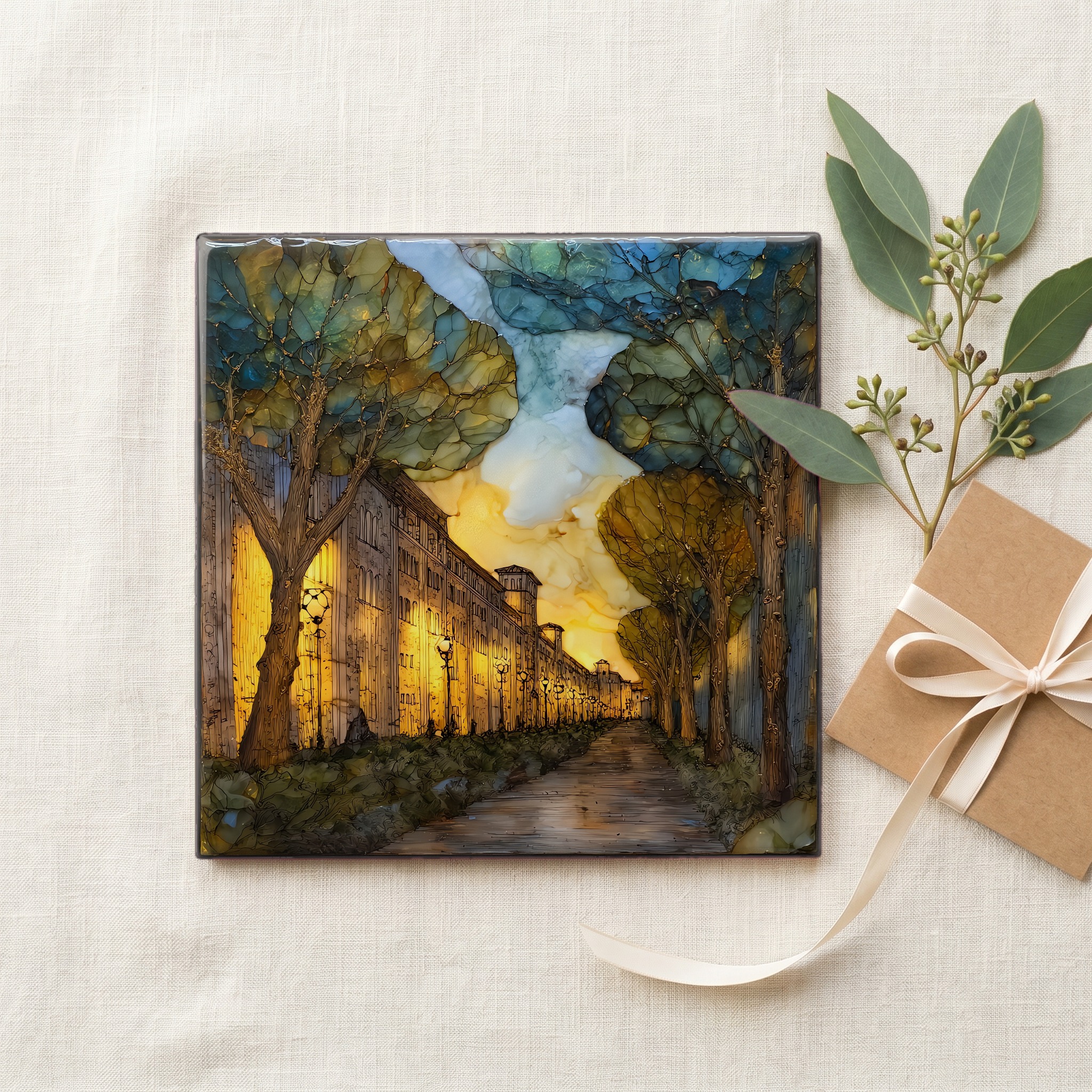
comes gift-ready

Each tile ships in a kraft box, tied with cream ribbon, with a handwritten note from the studio if you'd like to add one.
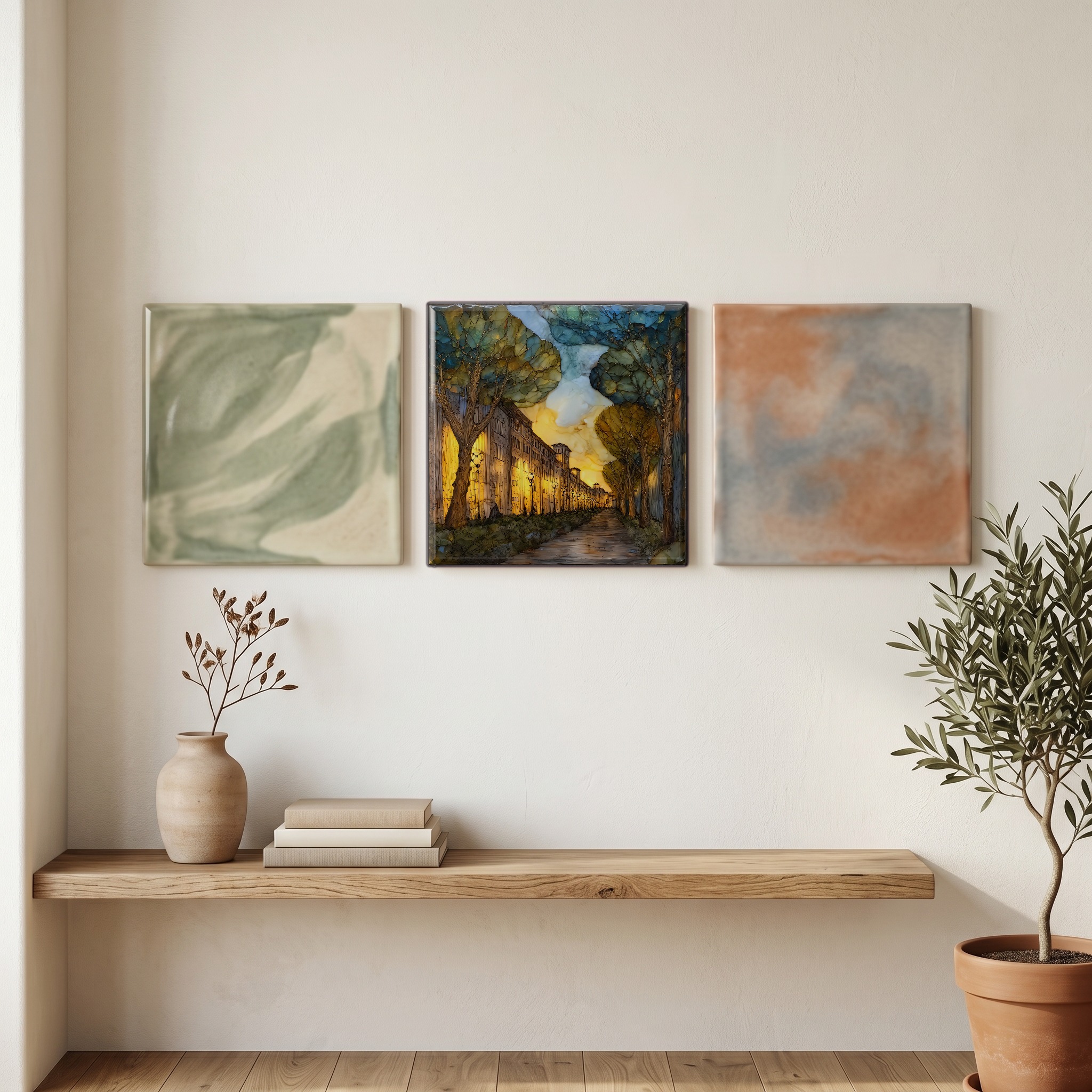
or build a grouping
or build a grouping

Three or five different vistas, hung together — a chapter of places you've been, or want to go.

about Walls of Lucca

The place, in three passes.

A little of what's known, in case you fall down the rabbit hole — or want to go see it yourself.
the place

Lucca sits on the Tuscan plain just inland from Pisa, an old silk-trade town that kept its complete ring of walls when most Italian cities lost theirs. The circuit runs 4,223 metres around the historic centre, an unbroken loop with eleven bastions and six gates. The walls enclose the medieval and Roman street grid below, and the River Serchio runs past the northern edge. Lucca is reached by train from Florence and Pisa, and the walls are free to enter at any of the gates, open at all hours. They are counted among the best-preserved Renaissance fortifications in Europe.

— informed by Wikipedia, Turismo Lucca
the stone

Construction began on 7 May 1504 and ran for nearly a century and a half, finishing in 1648. The result is a textbook of Renaissance military engineering: curtain walls up to thirty metres thick at the base and twelve metres tall, set with eleven arrow-headed bastions angled so each could cover the next with fire. Military engineers including Baldassarre Lanci shaped the design. No army ever tested it. The single time the walls held back anything was the night of 18 November 1812, when the River Serchio flooded and the city bolted its gates and packed them with mattresses to keep the water out.

— informed by Wikipedia
the visit

After the walls lost any military point, Duchess Maria Luisa di Borbone had the rampart top turned into a public promenade in the 1820s and planted it with trees. Today a broad avenue runs the whole circuit, shaded by close to seven hundred plane trees with holm oak, lime, horse chestnut and a few ginkgo among them. It is free and open around the clock. Lucchesi walk it in the evening, runners use it as a loop, and bicycles can be rented at the main gates; the full ring is a little over four kilometres, an unhurried hour on foot.

— informed by Turismo Lucca, Wikipedia
where
Italy · Lucca, Tuscany
position
43.8461° N · 10.5000° E
the neighborhood

What's nearby.

A handful of named places within an hour's walk or short drive. Some we've already painted; some we will.
1 km N
Piazza dell'Anfiteatro
Roman amphitheatre square
1 km SE
Lucca Cathedral (San Martino)
cathedral
1 km E
Torre Guinigi
medieval tower
1 km N
Basilica di San Frediano
Romanesque basilica
20 km SW
Leaning Tower of Pisa
leaning tower
N
Walls of Lucca
Piazza dell'Anfiteatro
Lucca Cathedral (San Martino)
Torre Guinigi
Basilica di San Frediano
Leaning Tower of Pisa
common questions

What people ask.

A few questions we get about Walls of Lucca — and about bringing the piece home.
about the place

The walls ring the historic centre of Lucca, a walled town on the Tuscan plain just inland from Pisa in central Italy. The circuit is unbroken, with six gates leading into the old streets and the cathedral of San Martino at the centre.

The full circuit measures 4,223 metres, a little over four kilometres. A relaxed walk around the top takes about an hour, and runners and cyclists use it as a continuous loop, with no road crossings the whole way.

No army ever laid siege to Lucca, so the walls were never used in battle. Their only test came on 18 November 1812, when the River Serchio flooded and the city bolted its gates and packed them with mattresses to hold the water back.

Yes. The top of the walls is a tree-lined public promenade, free and open at all hours. People walk and run the full ring, and bicycles can be rented near the main gates. It is one of the most loved everyday places in Lucca.

Construction began on 7 May 1504 and finished in 1648, replacing Lucca's older medieval and Roman defences. Renaissance engineers including Baldassarre Lanci built curtain walls up to thirty metres thick at the base, set with eleven angled bastions.

Duchess Maria Luisa di Borbone had the rampart top laid out as a public promenade in the 1820s and planted with trees. Close to seven hundred plane trees now shade the circuit, joined by holm oak, lime, horse chestnut and a scattering of ginkgo.

about the piece in your home

It has been a meaningful gift for customers with ties to the town. Anyone who has walked the green ring at dusk tends to recognise it at once. A Keepsake or Small with a handwritten note from the studio carries the place well.

The piece carries the deep, lit colour of stained glass and ink, so it sits well in jewel-tone, old-world Tuscan, and eclectic rooms. It holds the eye against warm plaster, dark wood, or a deep painted wall.

Yes. The warm stone and green-canopy palette suits the Mediterranean-revival and vintage-eclectic looks that have grown popular, where saturated colour and old-Europe texture are welcome. The Medium or Large anchors a gallery wall without needing a frame.

Above a console or a reading chair, a single Large holds the wall on its own. Over a sofa or a bed, a four-tile Mural fills the space with more presence, and a nine-tile Mural reads as a full installation across a wide wall.

Yes. For a bathroom, shower, or kitchen backsplash, choose the Dura Satin or Matte finish; both are soft-sheen and scratch-resistant, and the colour lives in the ceramic surface, so steam and splashes do not harm it.

A soft microfibre cloth with a little water is all it needs. The colour is slowly infused into the ceramic surface under high heat and pressure and sits beneath a thin glossy finish, so it will not fade or lift with normal cleaning.

Yes. Every WenderVista piece is created in-house by the studio in Knoxville, Tennessee, with no licensed or stock imagery. The Walls of Lucca tile is part of our atlas of places, hand-finished one at a time.

if this one stayed with you

A few you might also love.

Hand-picked by the eye that found Sorapis. Same air, same kind of quiet.
— a collection

The Italian Dolomites,
painted slow.

The valleys between Cortina and Val Gardena, the tarns you walk an hour to see, the towers that turn the colour of a banked fire just before dark. Wander the collection by valley, by season, or follow the path Reid walked.

Tre Cime
Braies
Misurina
Sorapis
Cinque Torri
Sassolungo
Marmolada