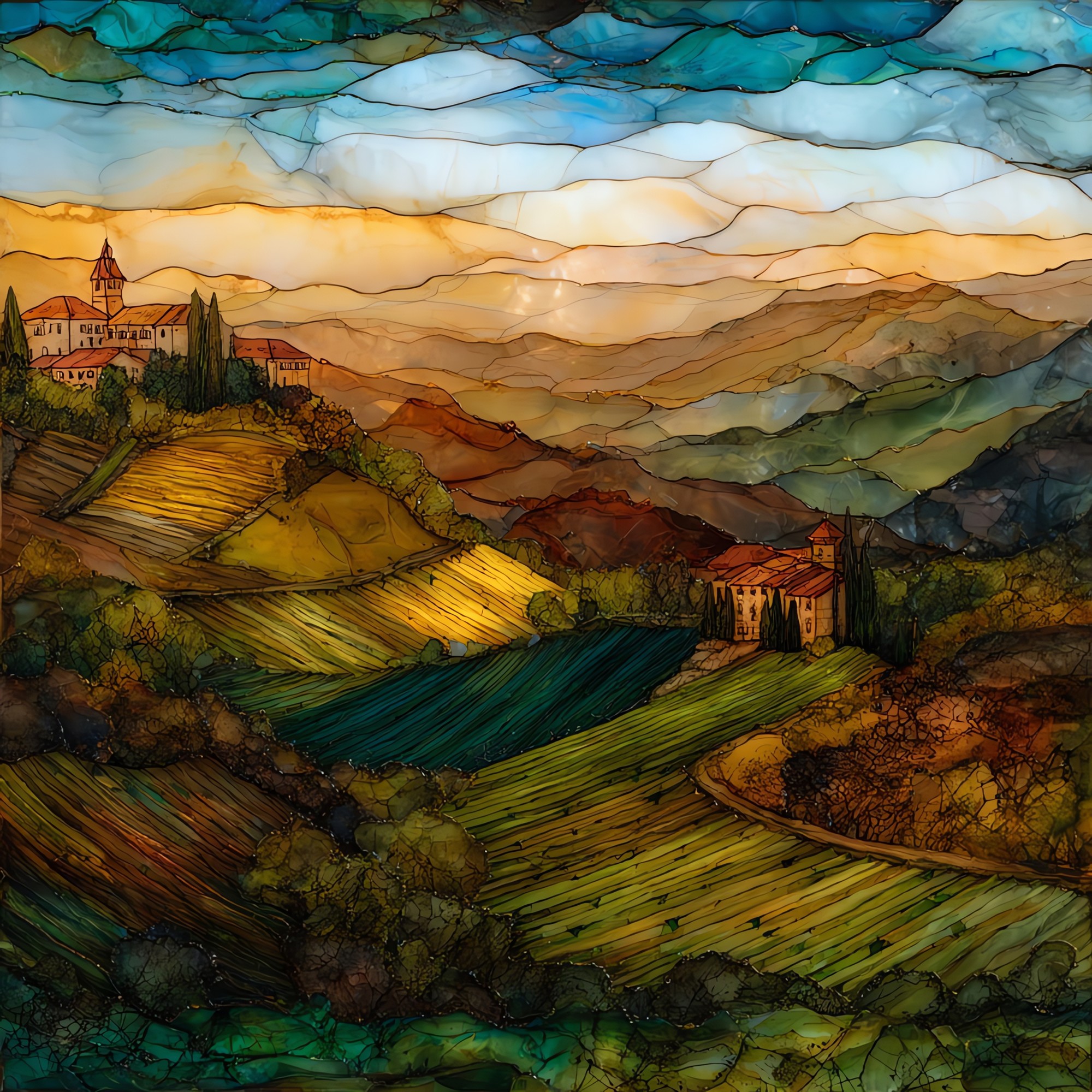
Langhe Vineyards
— the rows the fog comes through.
Not only on a wall.
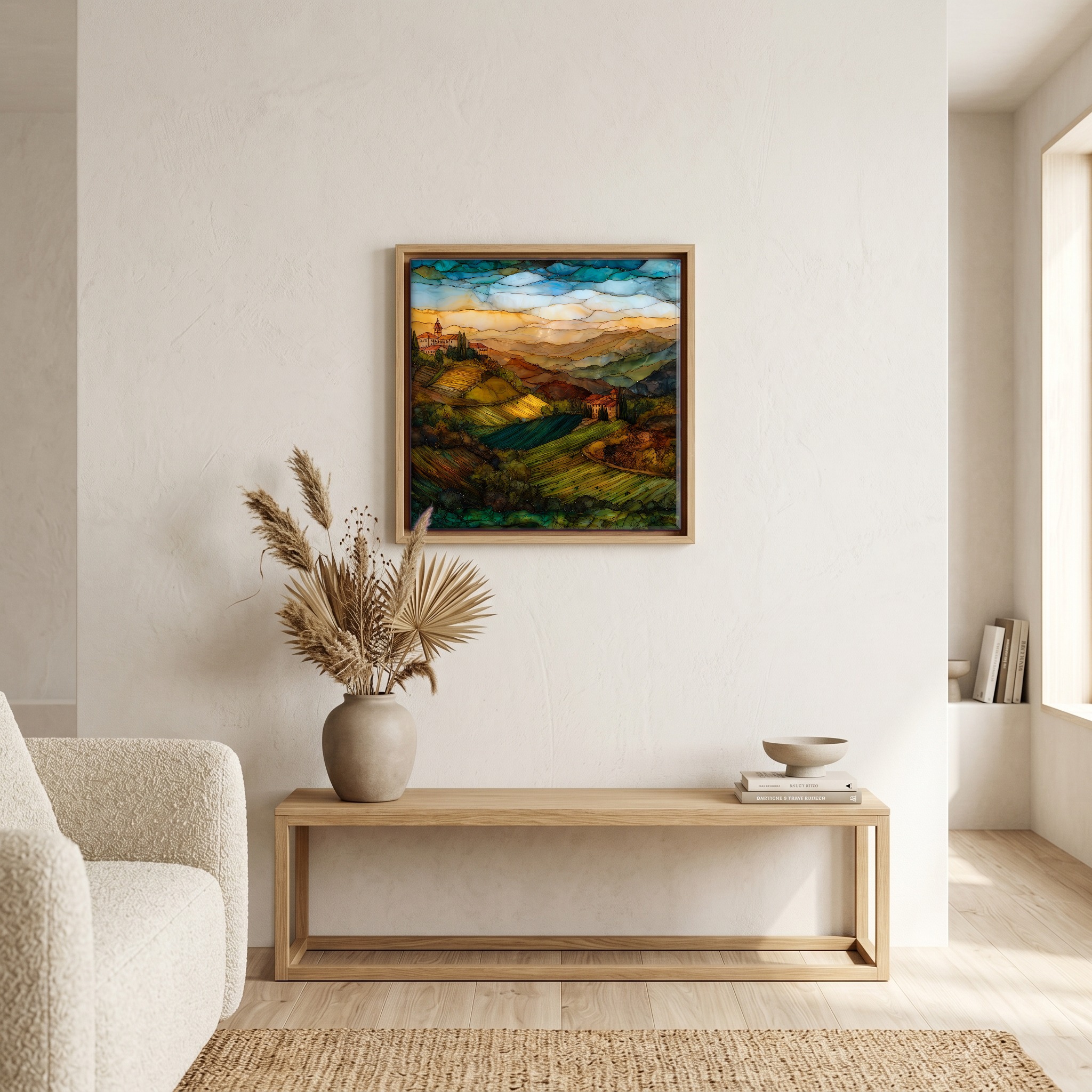
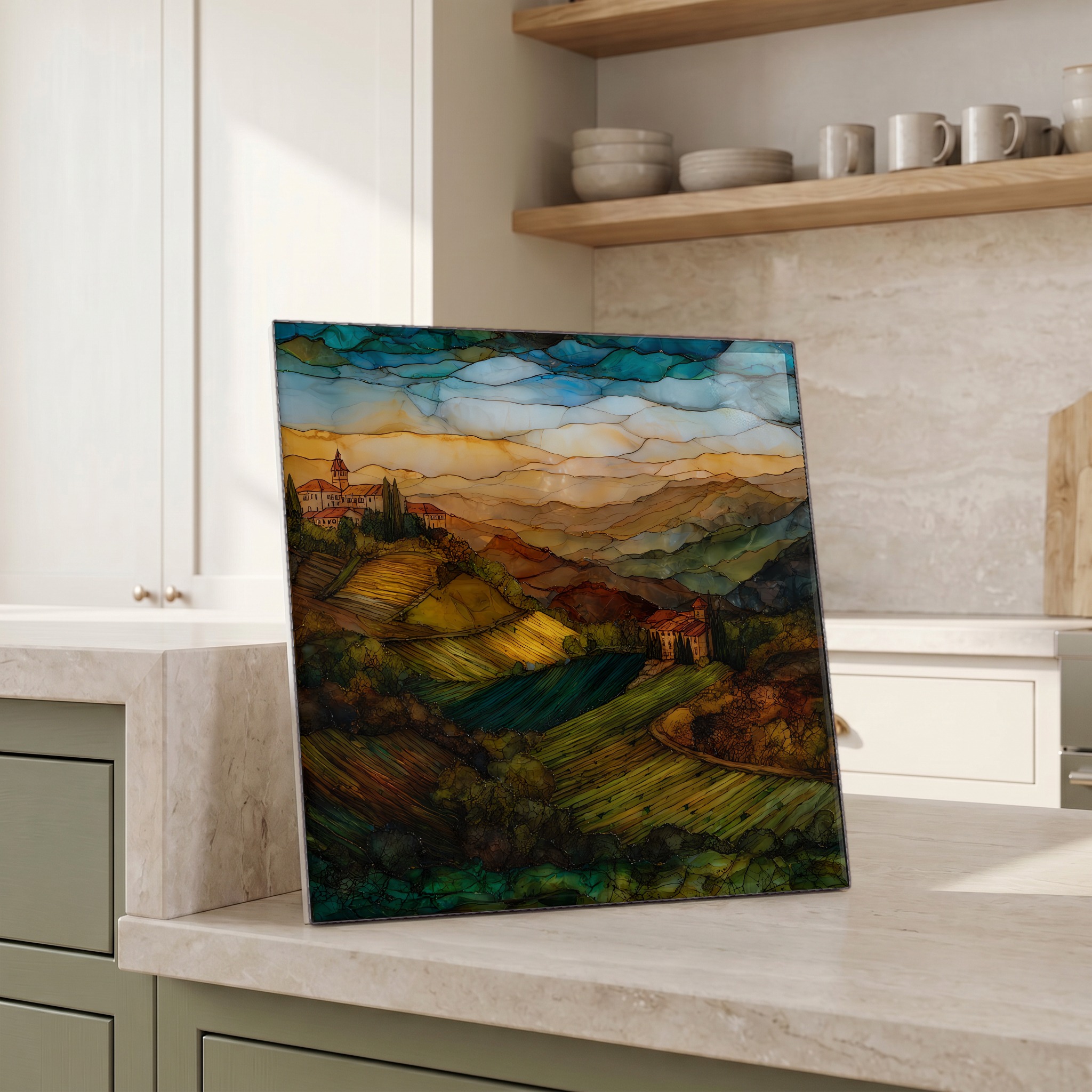
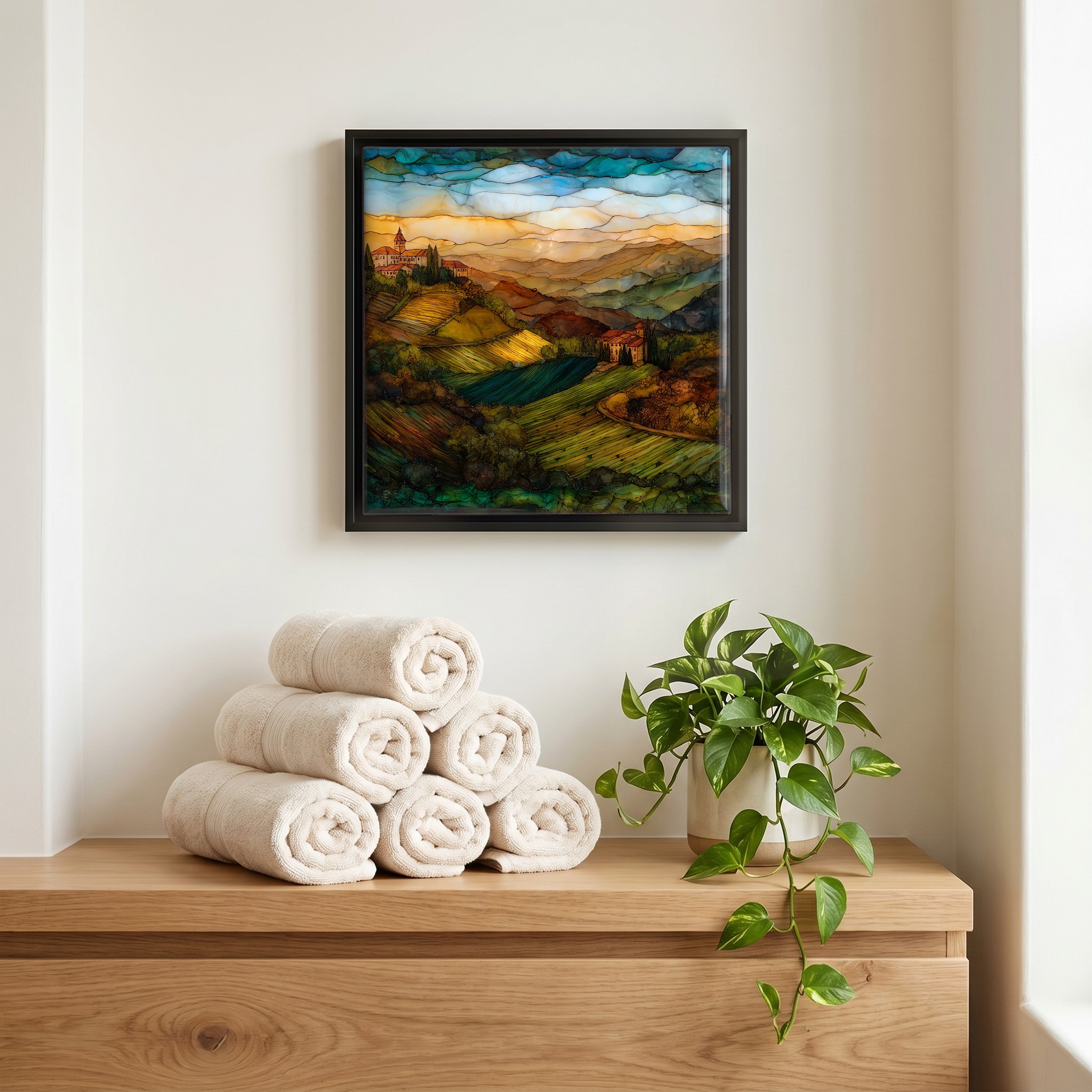
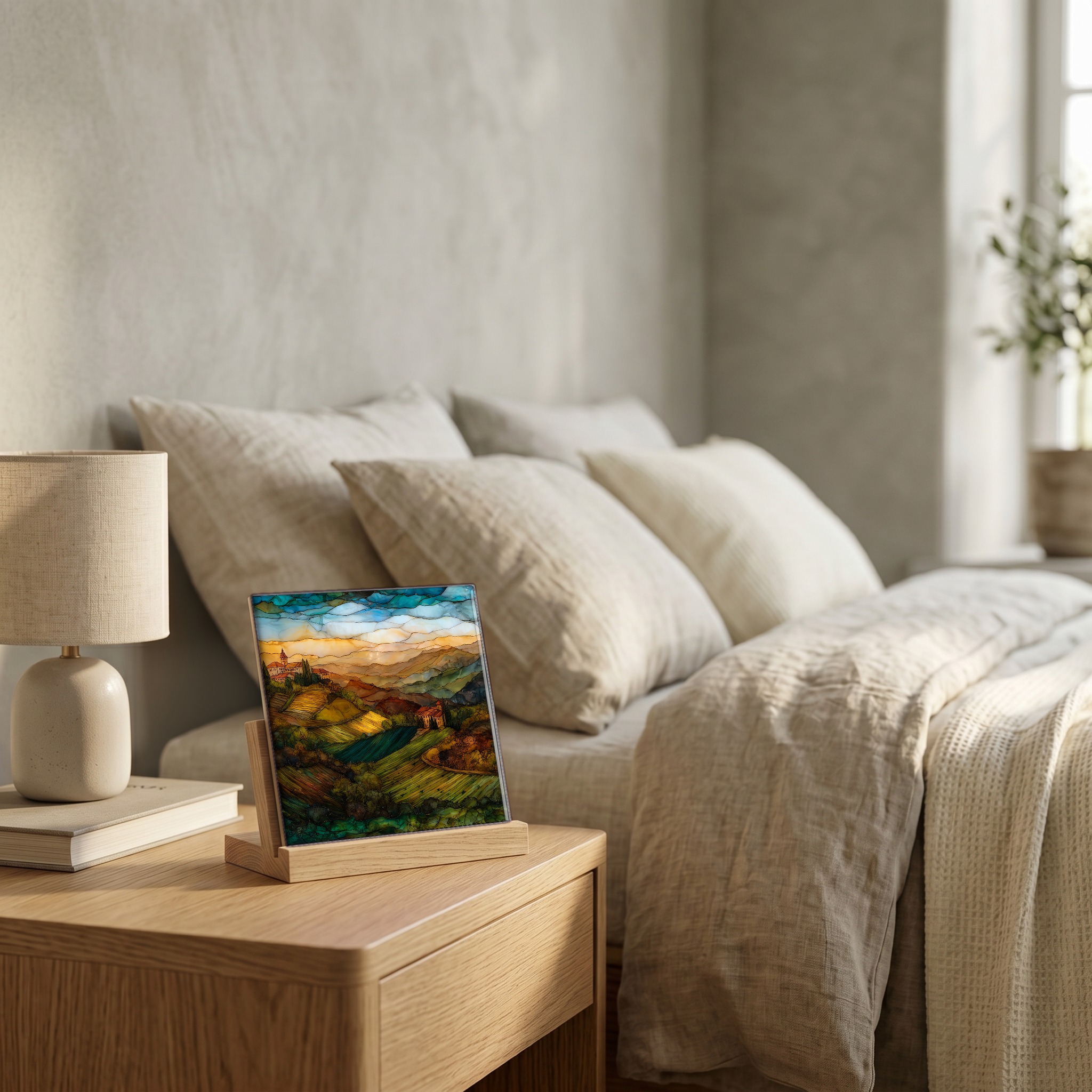
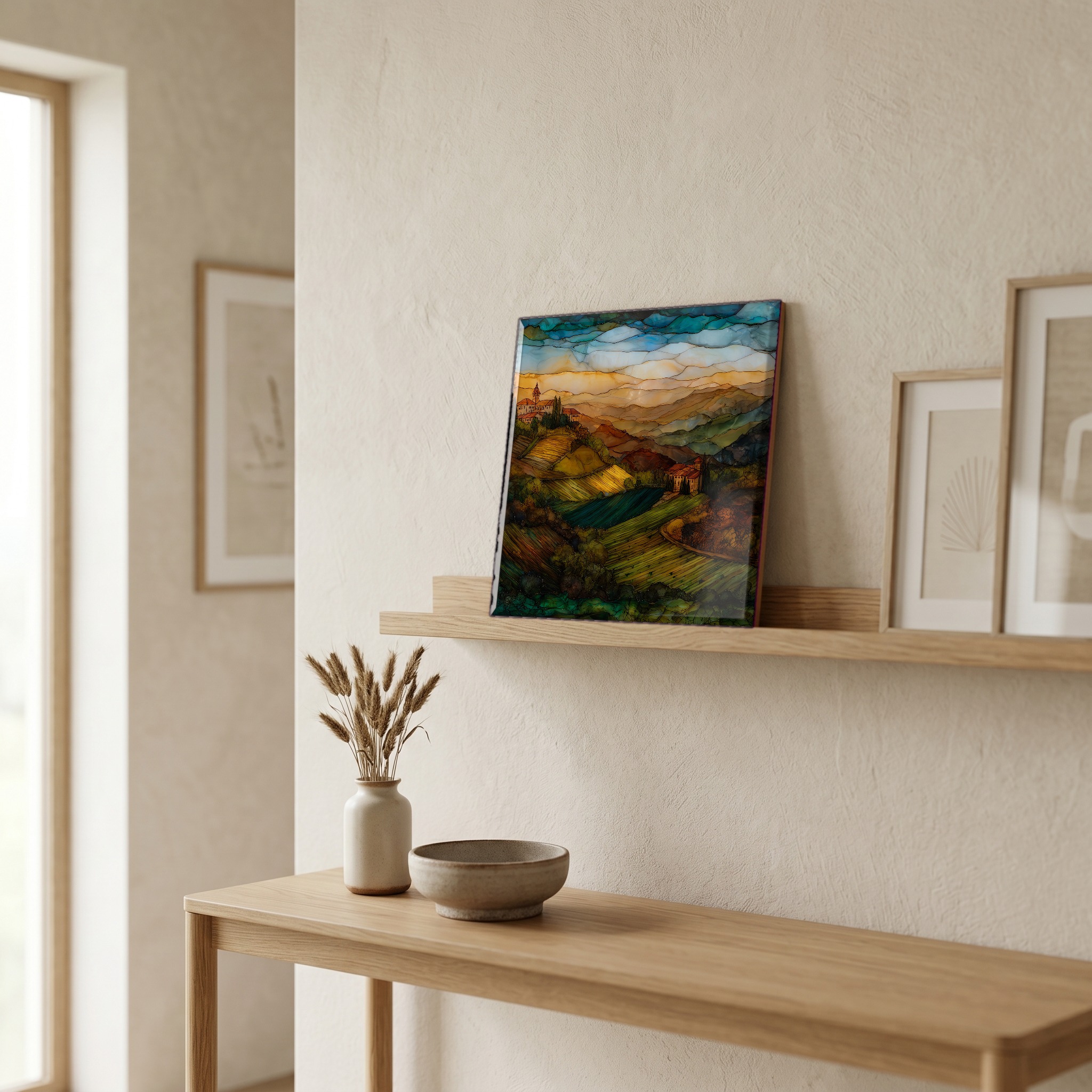
“South of Alba the country goes into long hills, combed in rows of vine and hazelnut, a castle on most of the high points. The name comes from langa, the local word for a long low hill. In the lower hills the Nebbiolo for Barolo and Barbaresco ripens last and slow, picked in the October fog the wine takes its name from. Higher up the hazelnut groves come on. Slow Food was born here, just across the Tanaro. By harvest the rows turn rust and copper, and the valleys hold the morning mist almost to noon. Cesare Pavese came from one of these villages and wrote about them his whole life.
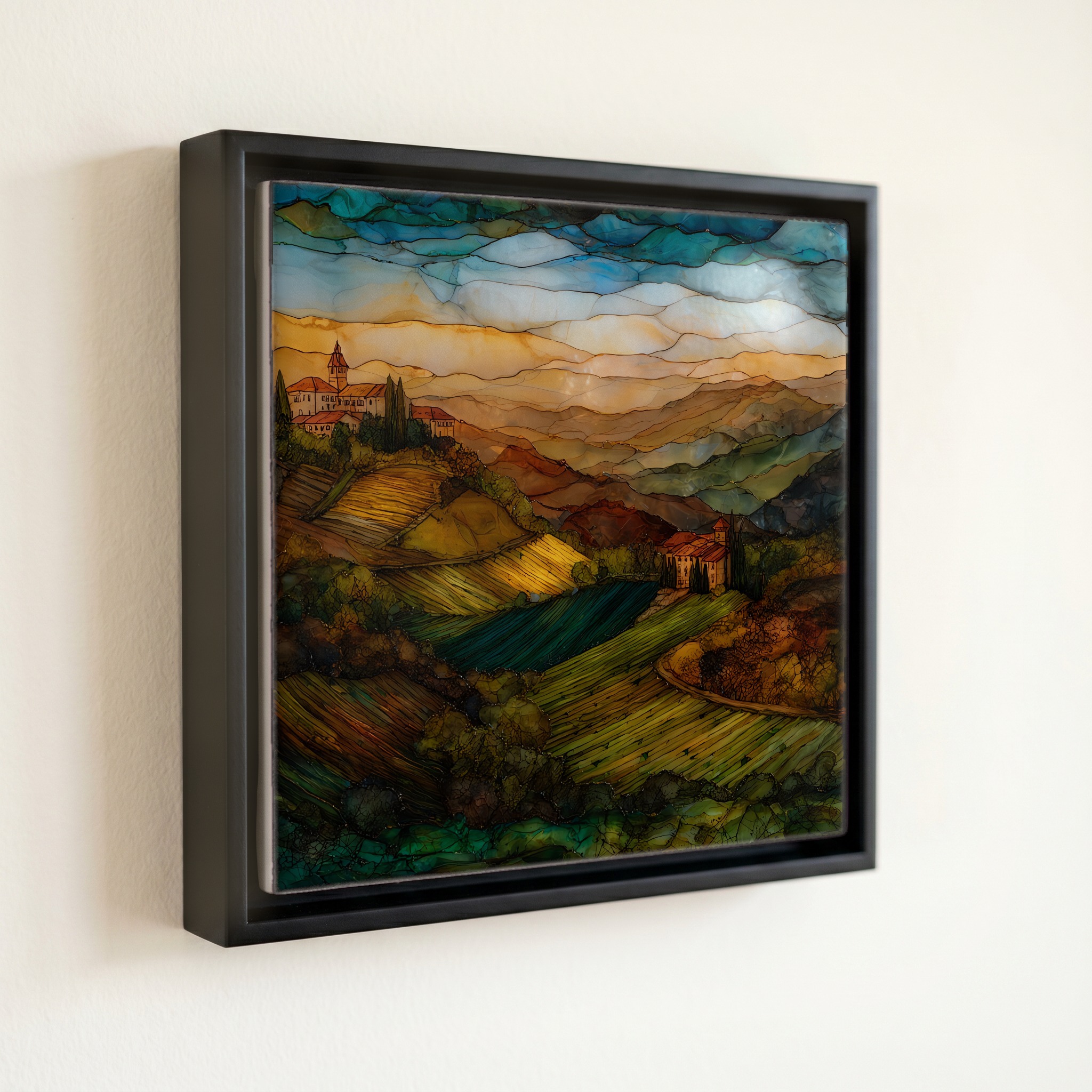
Langhe Vineyards, on ceramic.
Each tile is finished by hand in our Knoxville studio. Artwork is slowly infused into the ceramic surface under high heat and pressure, and rests beneath a thin glossy finish. The colour lives in the surface, not on top of it.
Pick any four 4-inch tiles — National Parks you've been to, a Smokies set, the four seasons of one place. $ for a set of , cork-backed, ready to live on the table.
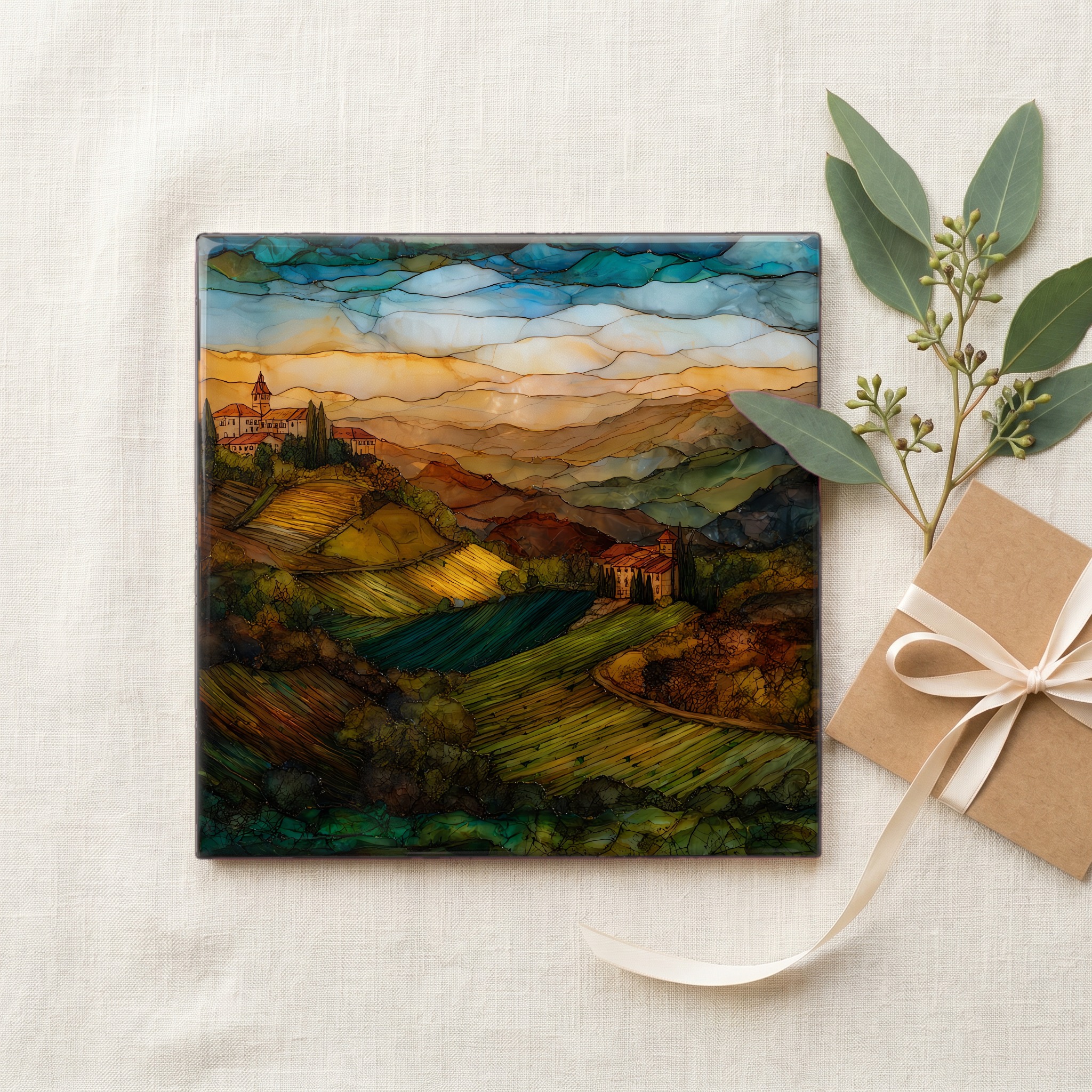
Each tile ships in a kraft box, tied with cream ribbon, with a handwritten note from the studio if you'd like to add one.
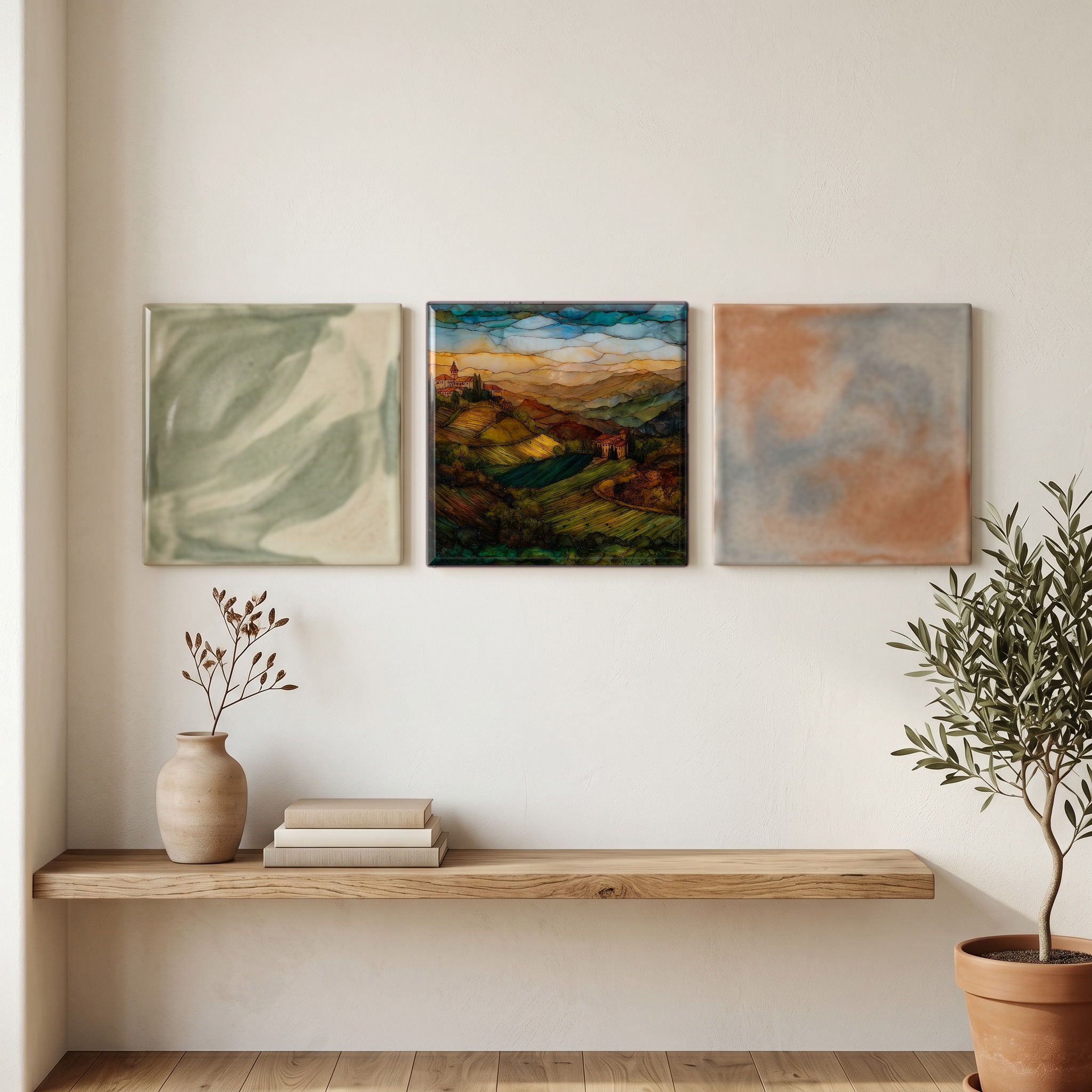
Three or five different vistas, hung together — a chapter of places you've been, or want to go.
The place, in three passes.
The Langhe is a band of hill country in southern Piedmont, in the province of Cuneo, lying south and east of the Tanaro river. The name is plural; a langa is a long low hill, and the country runs as one ridge after another. The lower hills, the Bassa Langa, hold the vineyards for Barolo and Barbaresco; the Alta Langa climbs higher and runs into hazelnut groves, with Mombarcaro at 896 metres the highest commune in Piedmont. Since 2014 the vineyard landscape has been part of a UNESCO World Heritage Site, the Vineyard Landscape of Piedmont: Langhe-Roero and Monferrato. Alba is the market town for the region, on the Tanaro, reached by road from Asti or from Cuneo.
The Langhe runs by two harvests. The hazelnuts on the high ground come in first, in late August and September, the Tonda Gentile delle Langhe, the cultivar prized by Italian confectioners for gianduiotto and for the chocolate spread Nutella. The Nebbiolo for Barolo and Barbaresco follows in October, one of the last red grapes in Italy to be picked; its name comes from nebbia, the local word for fog, the heavy mist that fills the valleys on autumn mornings while the grapes still hang. White-truffle season runs through autumn into early winter, with Tuber magnatum dug under oak and hazel in the same hills. By late October the rows turn rust and copper, and the country holds its mist past nine in the morning.
The country is small enough to drive in a long day along the ridge roads. From Alba the road climbs south through Grinzane Cavour, and Barolo, La Morra, Castiglione Falletto and Serralunga d'Alba sit on neighbouring hills, each with its own castle in view. Alba has held the Fiera Internazionale del Tartufo Bianco d'Alba every autumn since 1928, the world's main fair for the white truffle. Slow Food was founded just across the Tanaro in Bra in 1986 by Carlo Petrini, and the movement's culinary school, the Università di Scienze Gastronomiche, opened in nearby Pollenzo in 2004. Cesare Pavese, the writer of La luna e i falò, came from Santo Stefano Belbo, a village further into the Alta Langa.