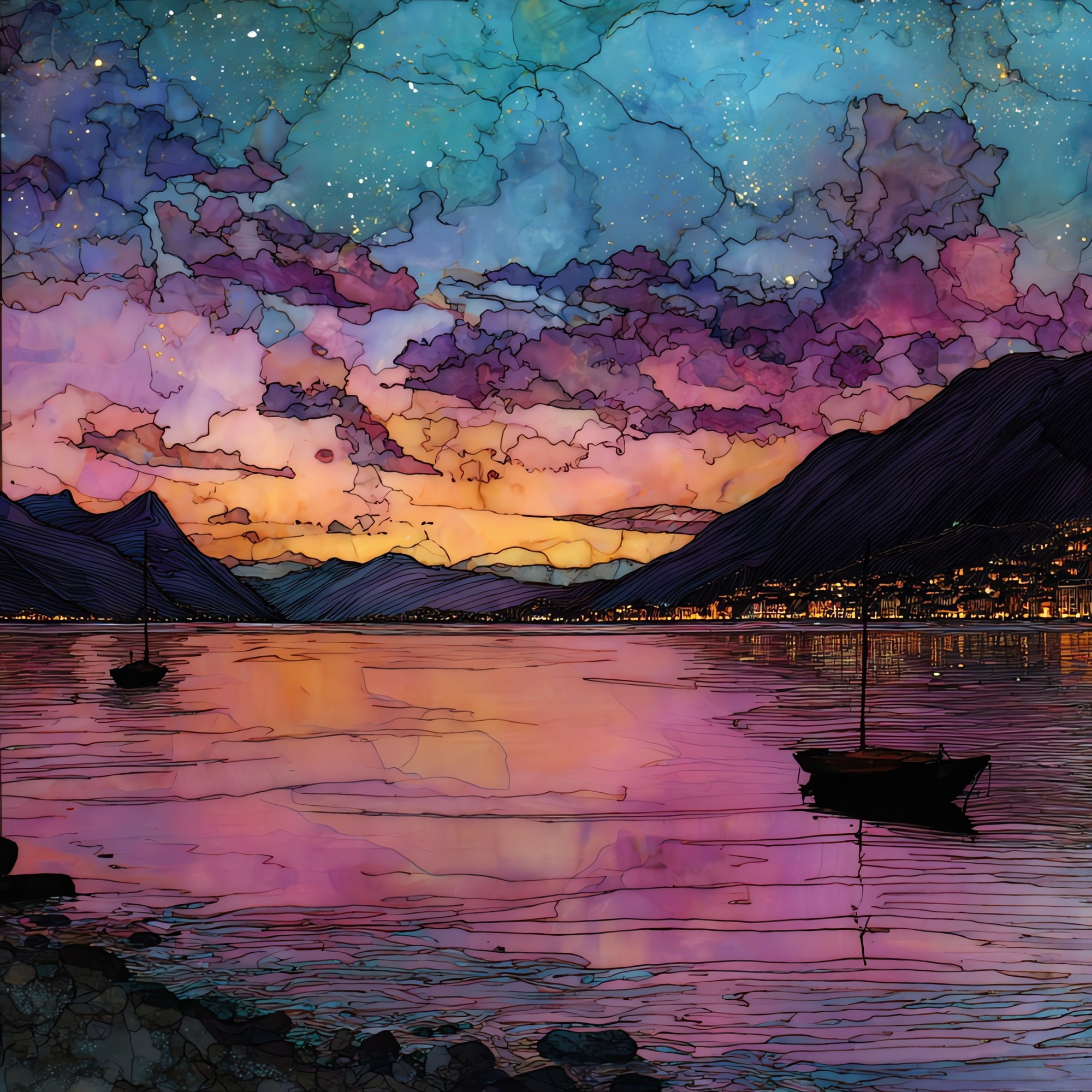
Lake Lugano
— the still, dark water the mountains lean over.
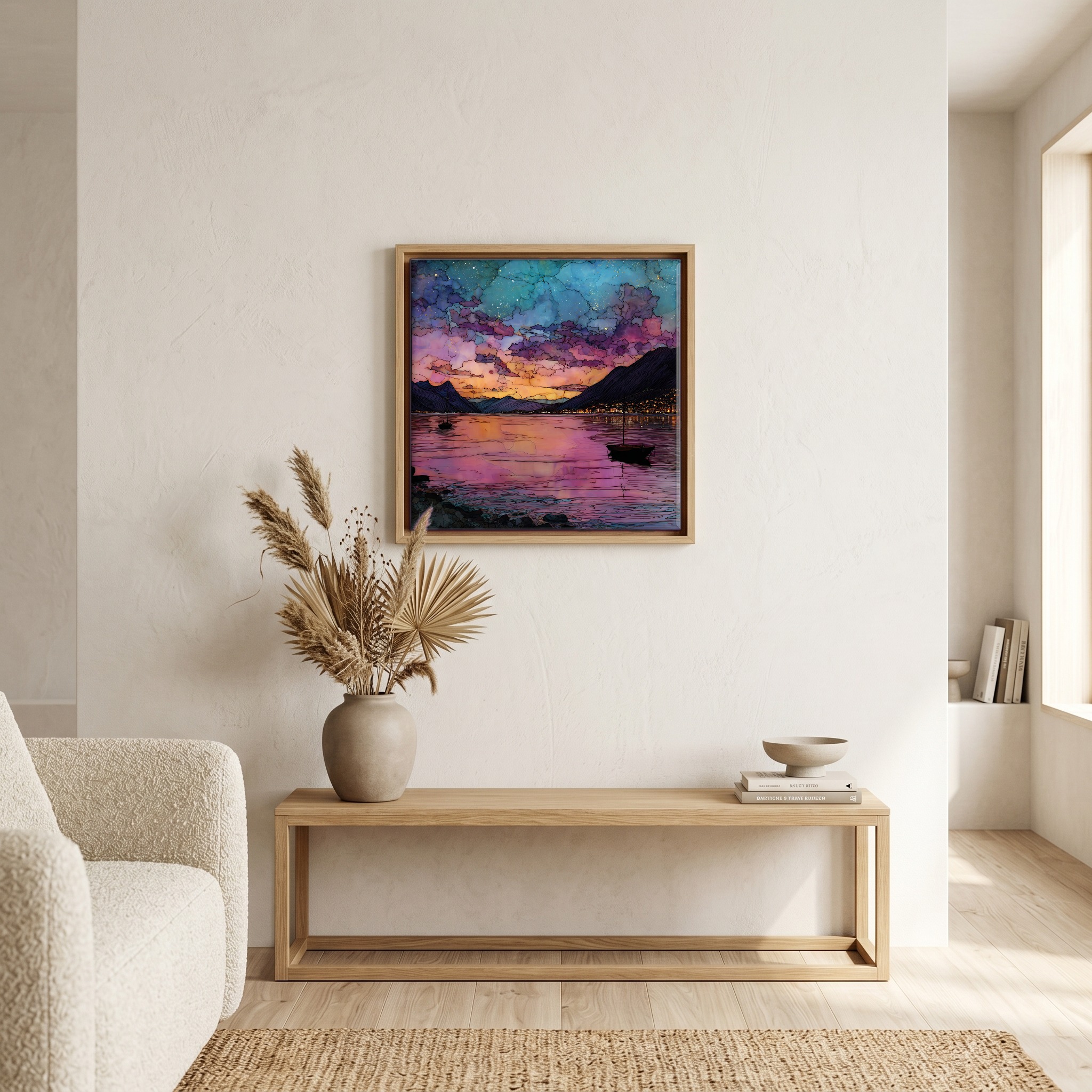
Not only on a wall.

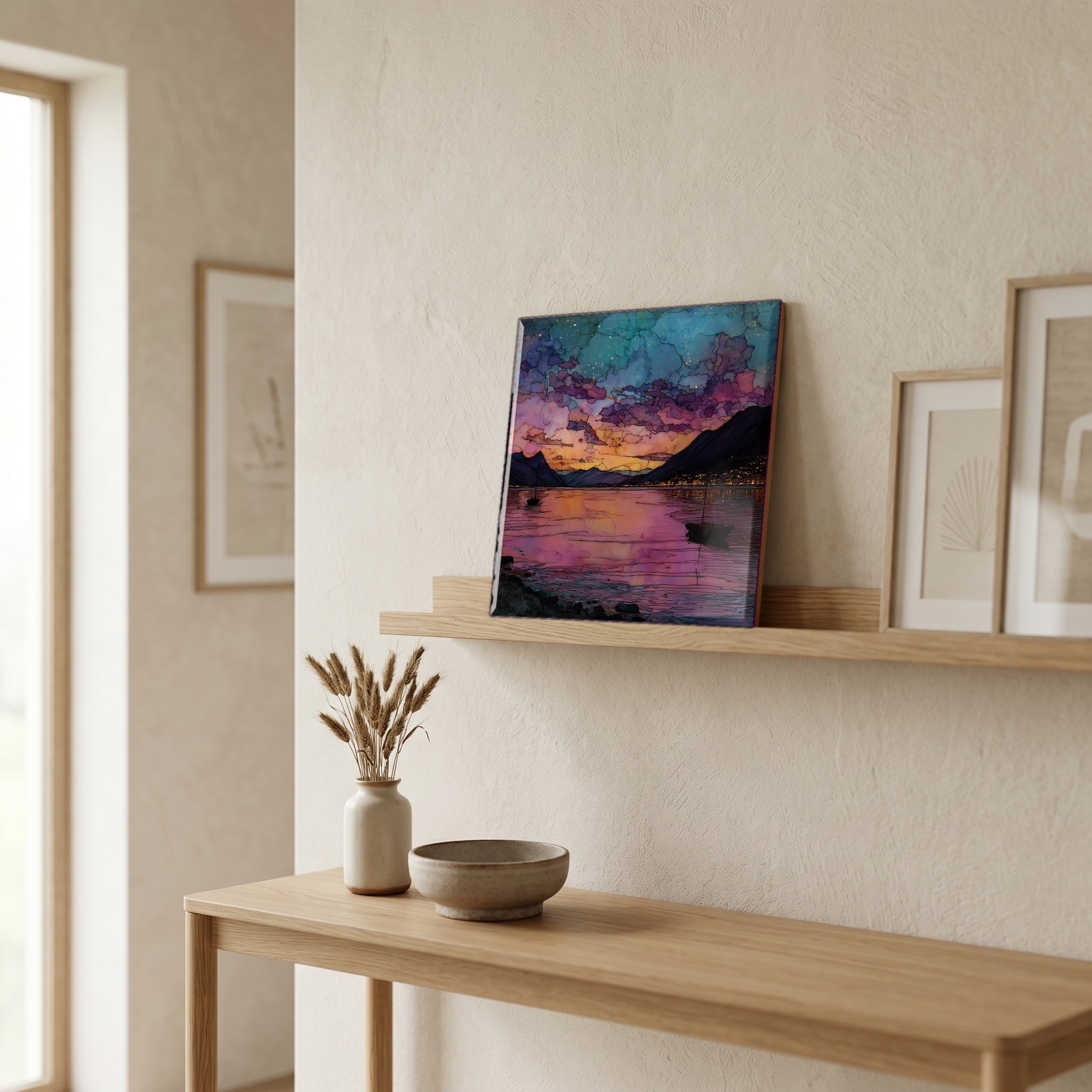
“The quiet one between Como and Maggiore. Lugano sits low among steep wooded mountains, its arms branching into Italy and Switzerland both, the border crossing open water again and again. The shores are warmer than the Alps behind them suggest. Palms and camellias hold on through the winter. Boats cross from Porlezza to the Swiss side and back. On the Italian arm the villages are small and the mornings are slow, and the light comes off the water the way it does on a lake that has been looked at for a very long time.
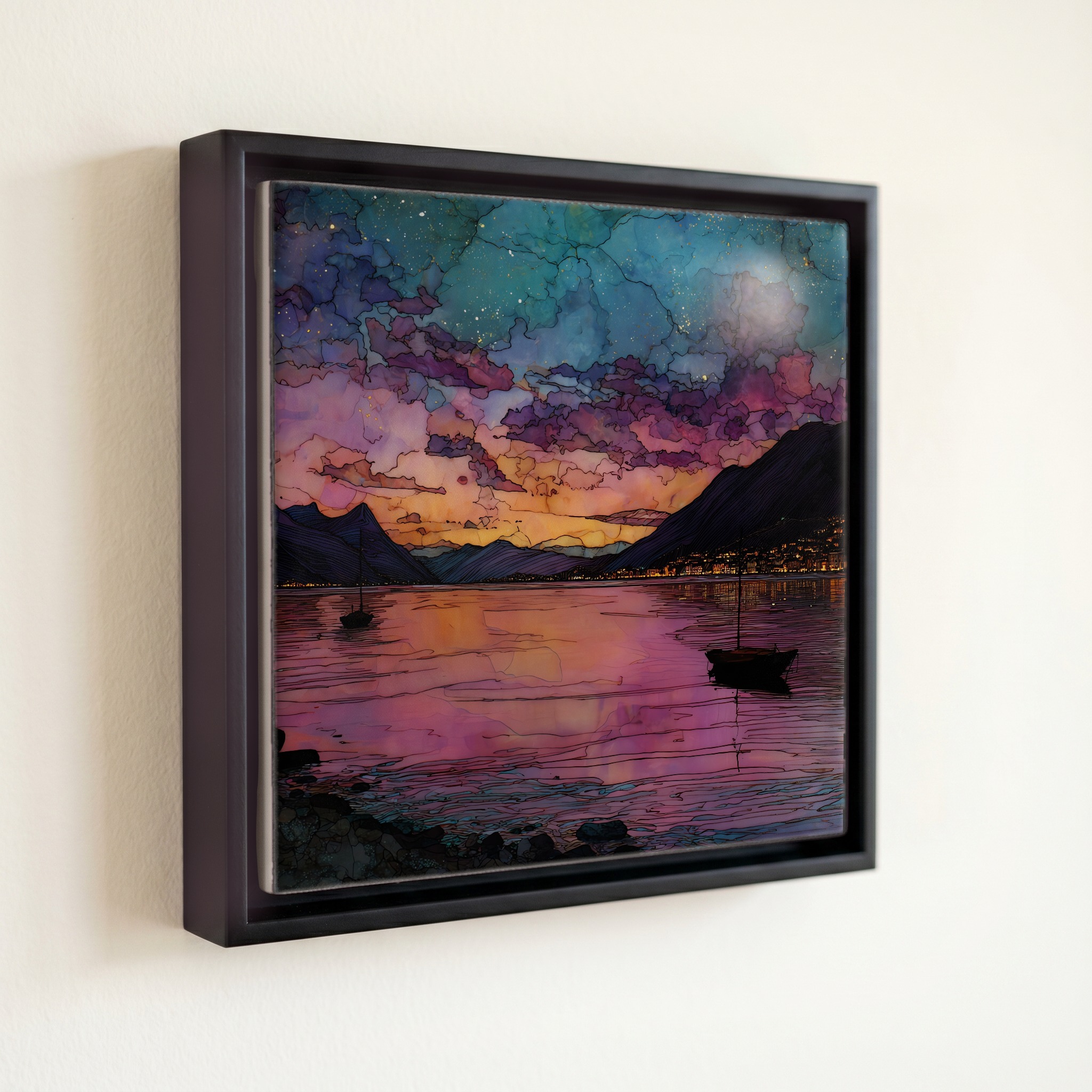
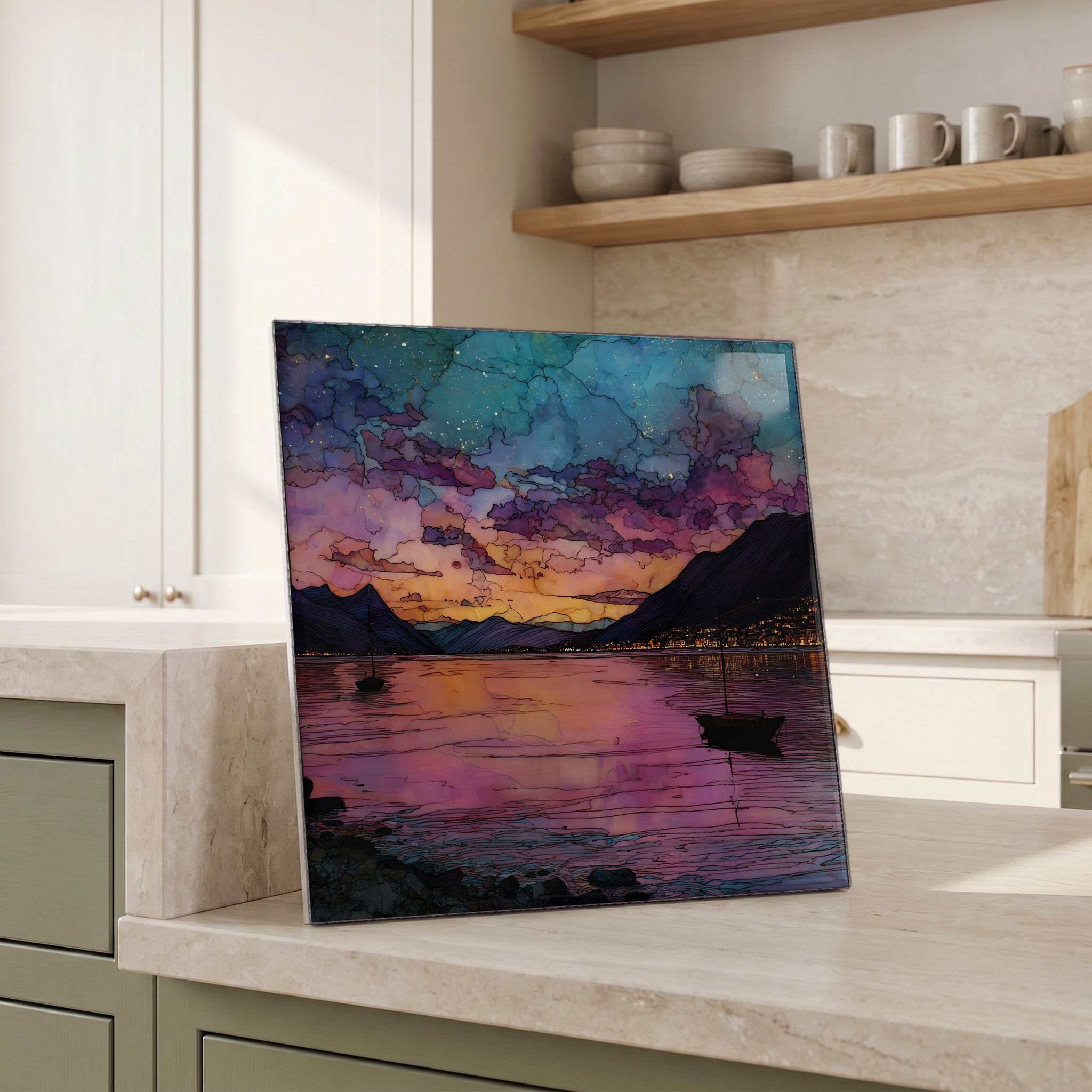
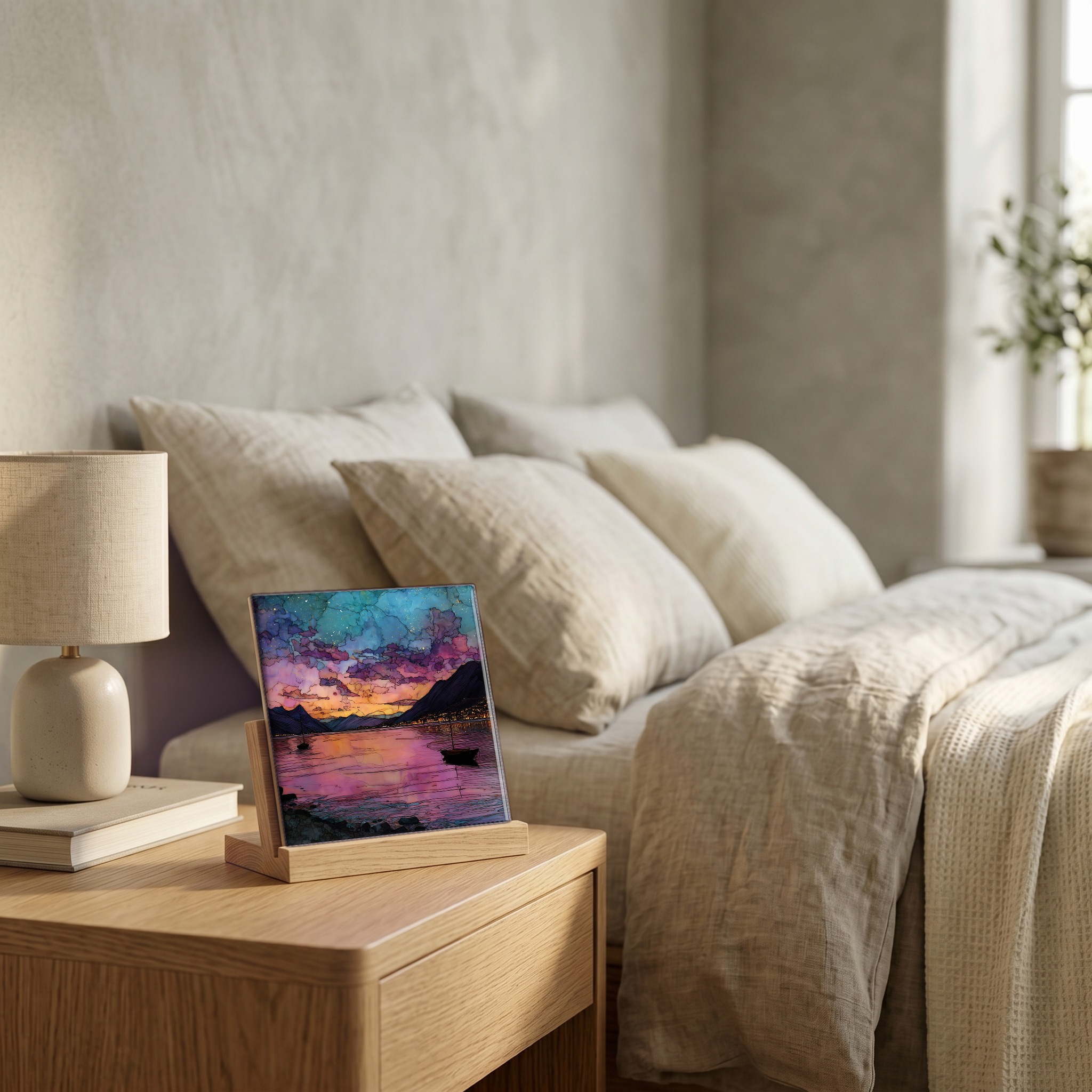
Lake Lugano, on ceramic.
Each tile is finished by hand in our Knoxville studio. Artwork is slowly infused into the ceramic surface under high heat and pressure, and rests beneath a thin glossy finish. The colour lives in the surface, not on top of it.
Pick any four 4-inch tiles — National Parks you've been to, a Smokies set, the four seasons of one place. $ for a set of , cork-backed, ready to live on the table.

Each tile ships in a kraft box, tied with cream ribbon, with a handwritten note from the studio if you'd like to add one.
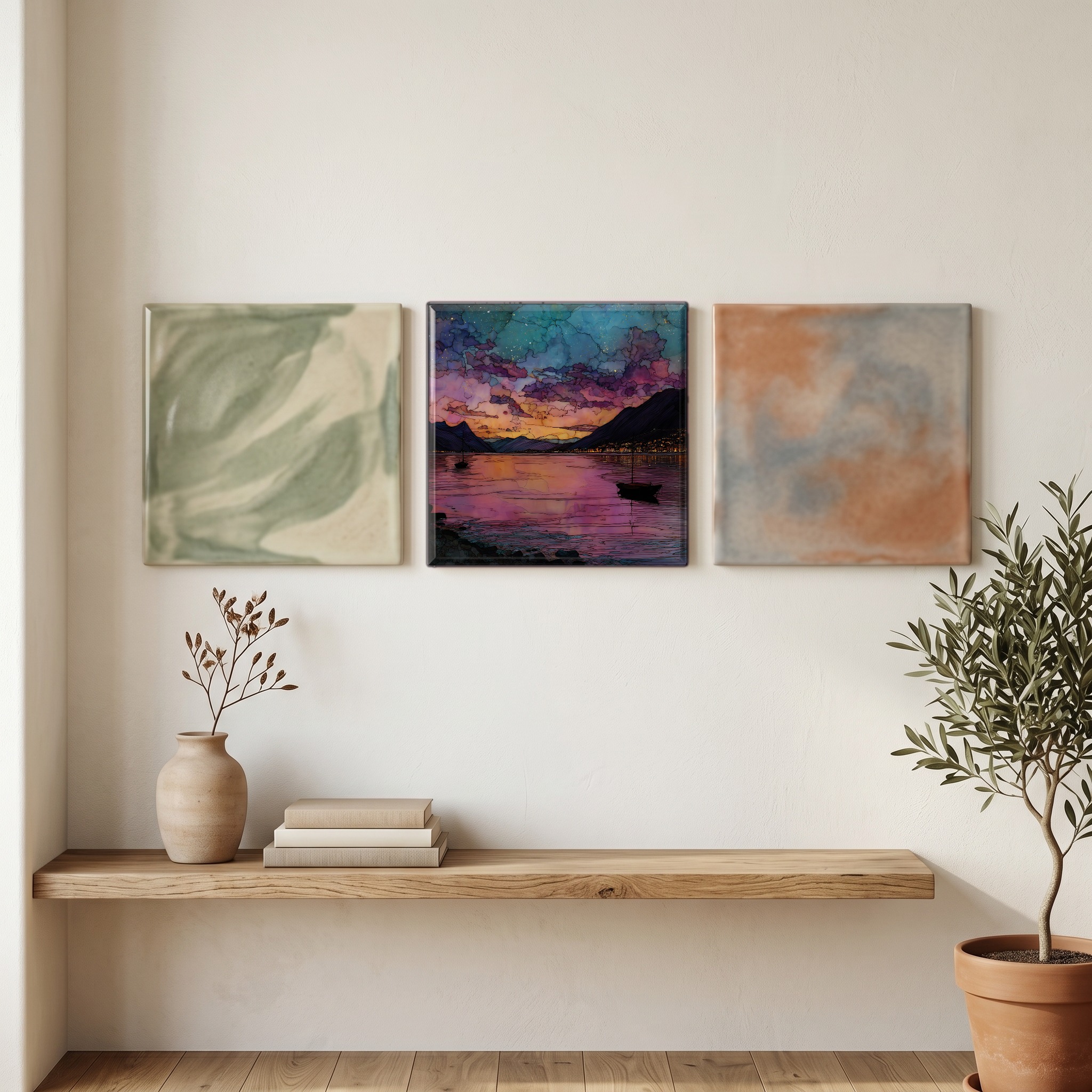
Three or five different vistas, hung together — a chapter of places you've been, or want to go.
The place, in three passes.
Lake Lugano sits at 271 metres above sea level in the Lugano Prealps, between Lake Como to the east and Lake Maggiore to the west. The Romans knew it as Ceresio; the name appears as early as 590, in the writing of Gregory of Tours, and is usually traced to the Latin cerasus, for the cherry trees that once lined the shore. Today the water is split between two countries: roughly two-thirds lies in the Swiss canton of Ticino, the rest in the Italian region of Lombardy, where the shore runs through the provinces of Como and Varese. The Italian arms meet the lake at Porlezza in the northeast and Porto Ceresio in the southwest.
The lake is deep for its size. It runs about 35 kilometres from end to end, never more than three kilometres wide, and drops to 288 metres in its northern basin, with a mean depth near 134 metres. It is what a glacier left behind as it carved south out of the Alps, which is why the slopes fall so steeply to the shore and the water branches into long, narrow arms. The lake sits lower and milder than the peaks around it suggest: the south-facing shores hold a near-Mediterranean climate, and camellias, figs and palms grow in the gardens along the Italian riviera at Porlezza and Valsolda.
South of the lake stands Monte San Giorgio, a wooded pyramid of a mountain rising to 1,097 metres. Its dark sedimentary rock holds one of the finest records of marine life from the Middle Triassic, roughly 245 to 230 million years ago, when a sheltered tropical lagoon lay where the lake is now. Generations of fossils have come out of it: reptiles, fish, ammonites, and even insects and plants washed in from the nearby shore. UNESCO listed the Swiss side of the mountain as a World Heritage Site in 2003 and added the Italian side, west of Porto Ceresio, in 2010. The finds are kept at the museum in Meride.