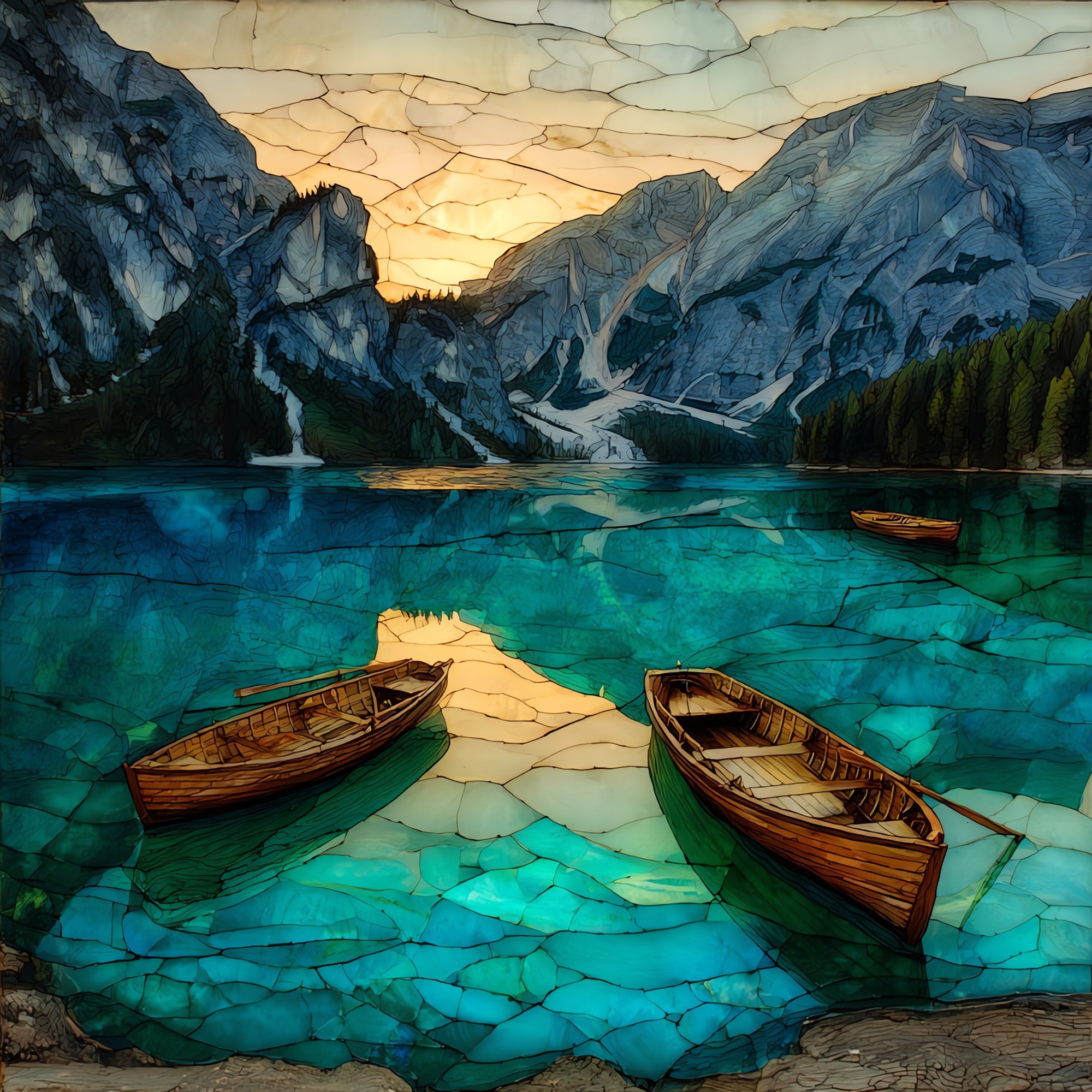
Lago di Braies
— — green water, still enough to hold the mountain.
Not only on a wall.
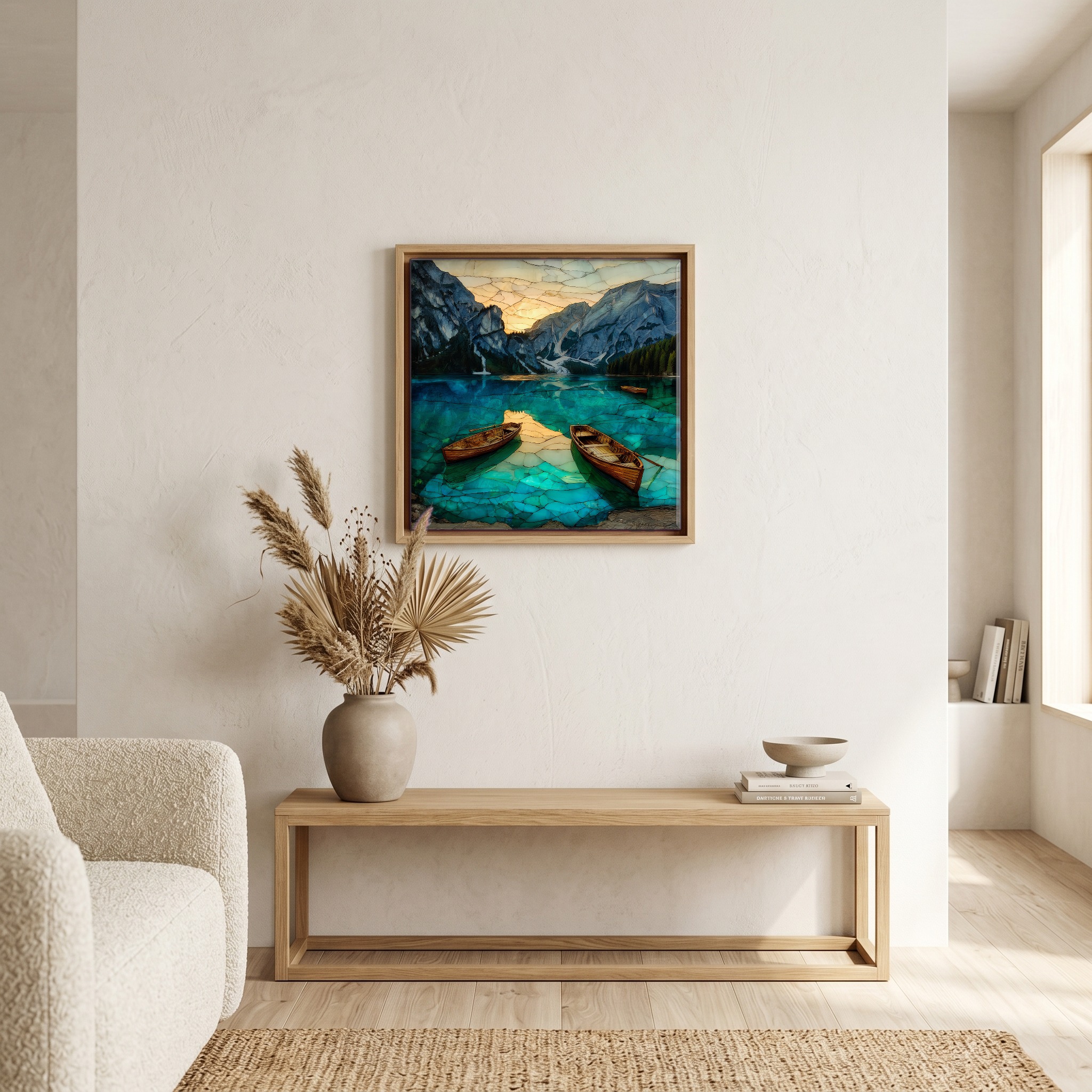
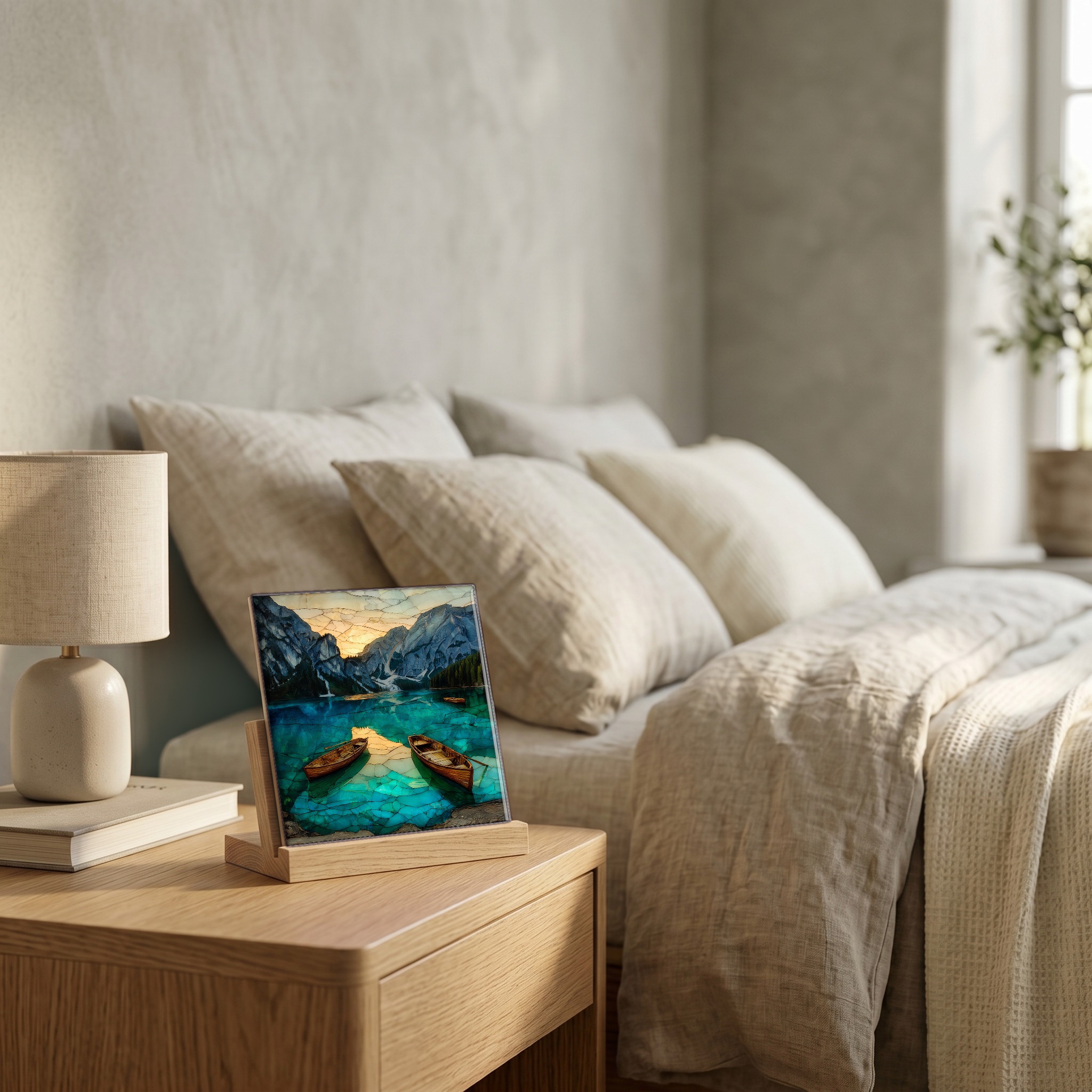
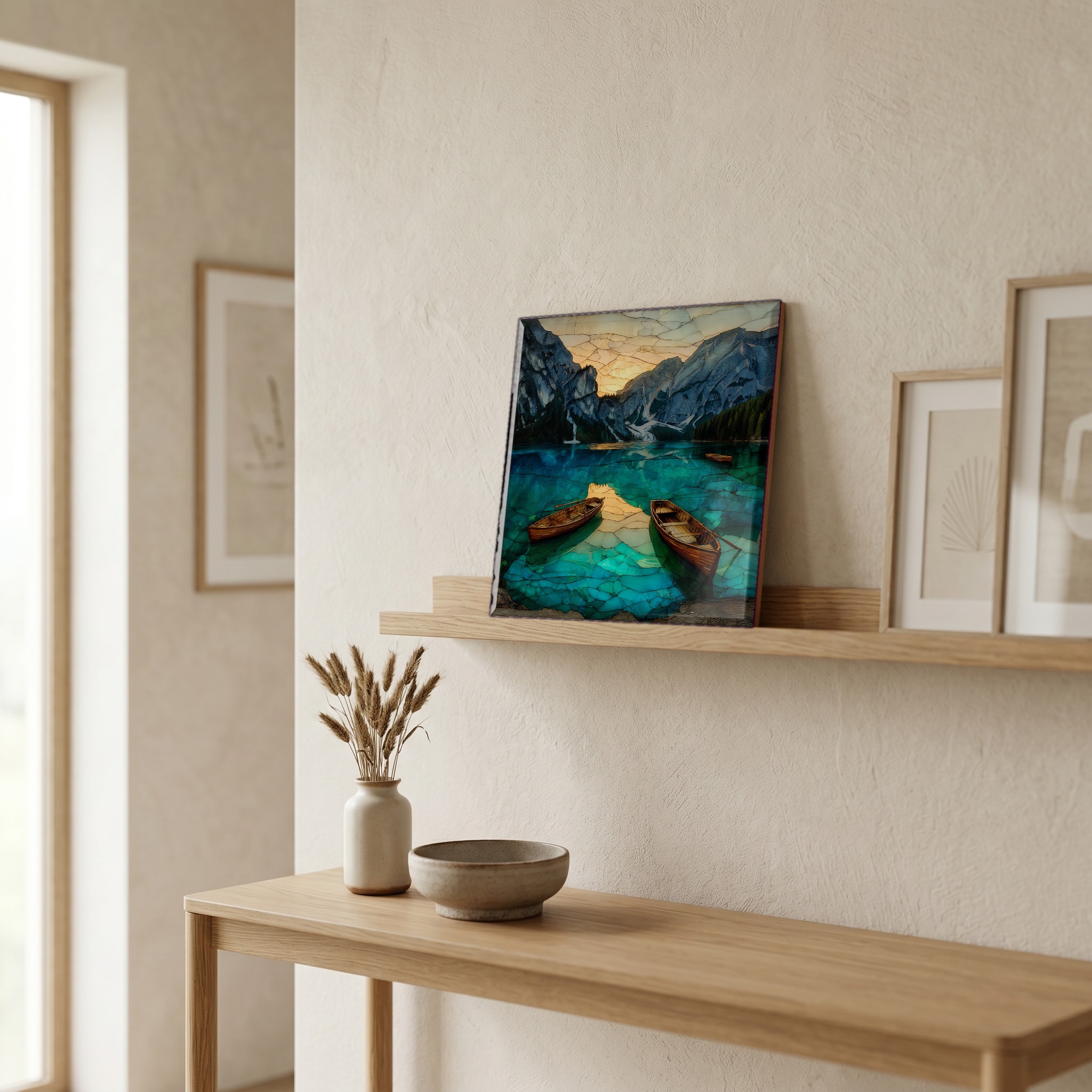
“A lake at the end of the Val di Braies, in the far north of the Dolomites. A wall of pale stone, Croda del Becco, stands straight up out of the south end, and on a still morning the whole of it lies in the green water. A wooden boathouse keeps a line of rowboats along the near shore. By mid-morning the buses come up from the valley and the path around the water fills; before nine it is quiet, and the colour is deepest then. The Alta Via 1 starts here and climbs out of sight. People take a boat out and stop rowing, and let it sit.
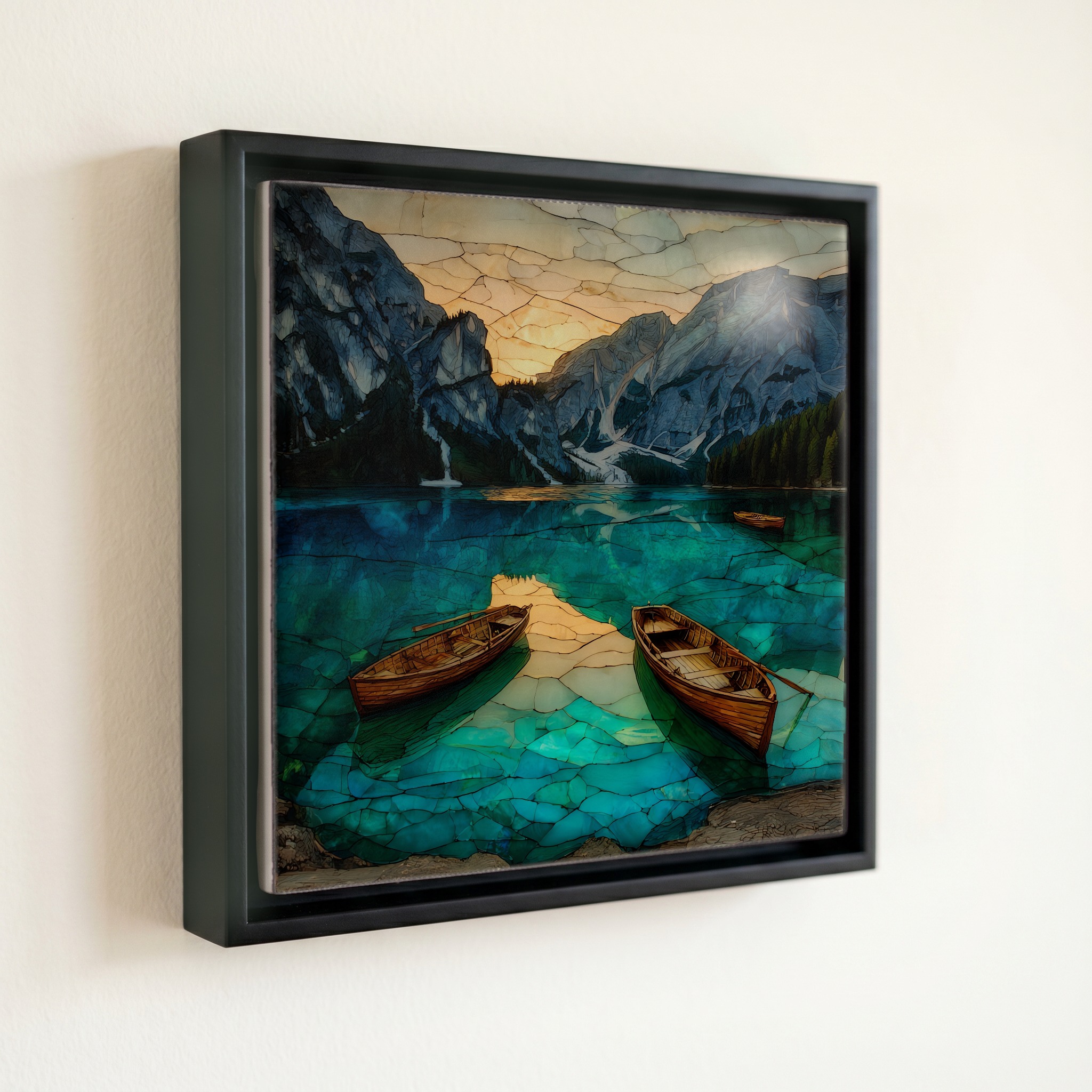
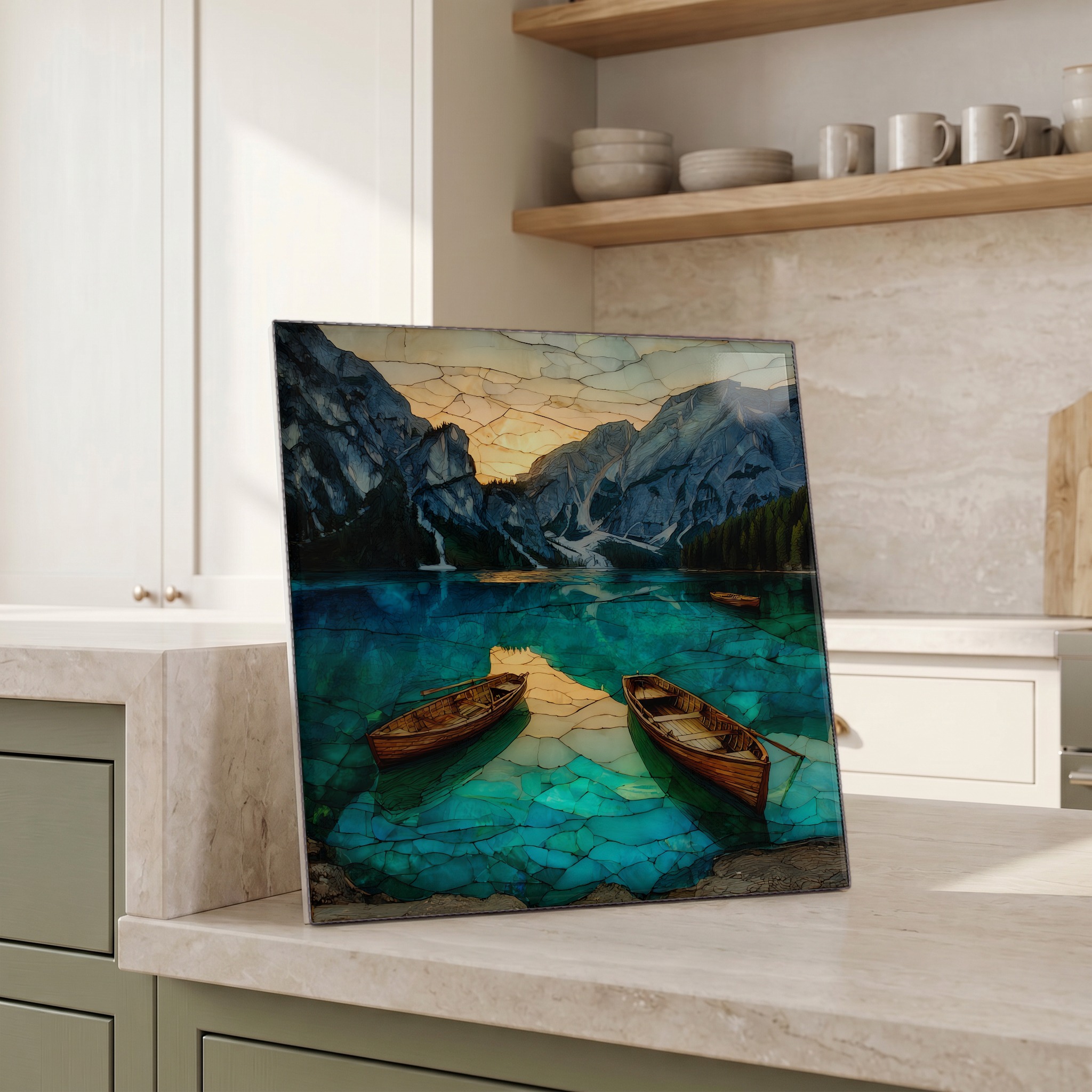
Lago di Braies, on ceramic.
Each tile is finished by hand in our Knoxville studio. Artwork is slowly infused into the ceramic surface under high heat and pressure, and rests beneath a thin glossy finish. The colour lives in the surface, not on top of it.
Pick any four 4-inch tiles — National Parks you've been to, a Smokies set, the four seasons of one place. $ for a set of , cork-backed, ready to live on the table.
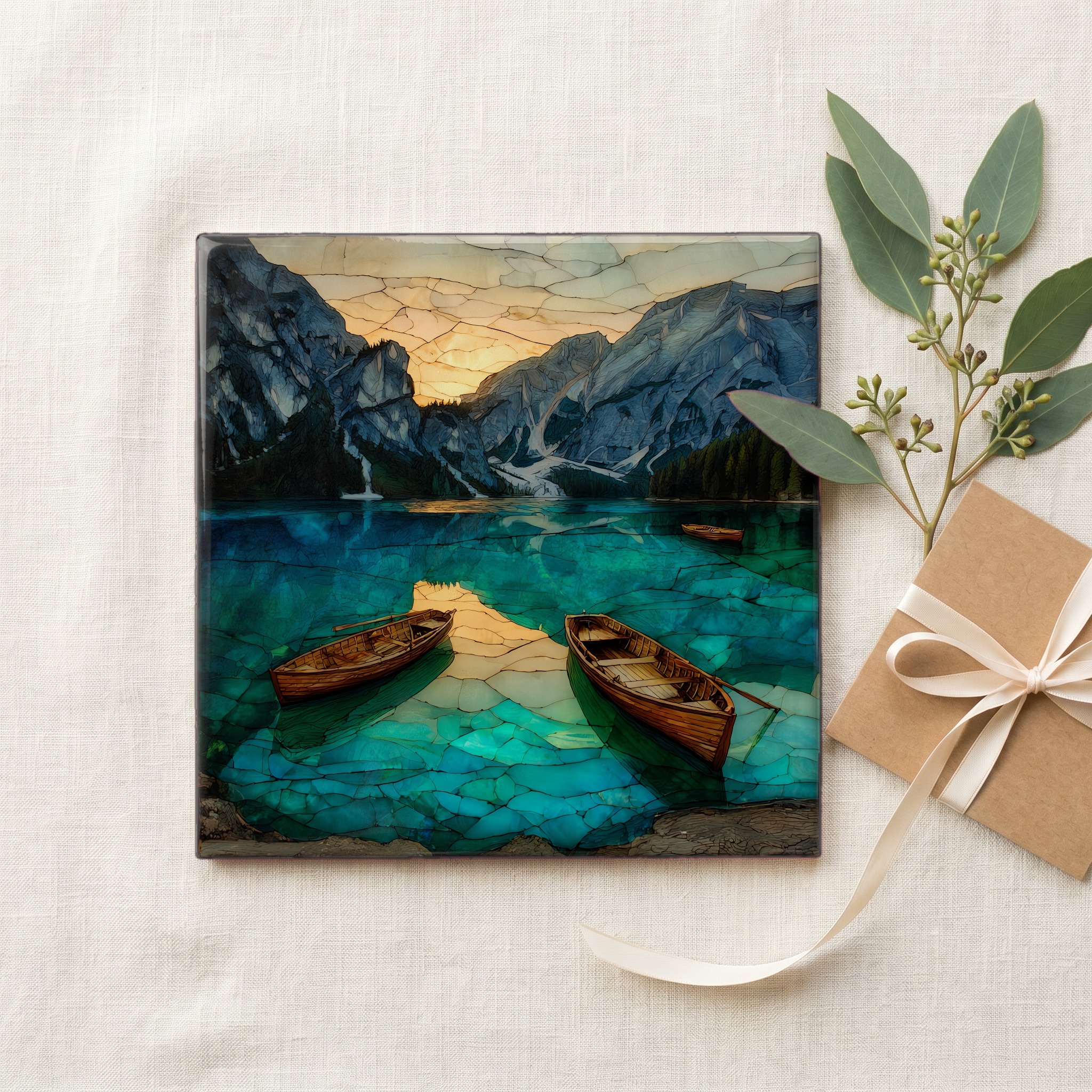
Each tile ships in a kraft box, tied with cream ribbon, with a handwritten note from the studio if you'd like to add one.
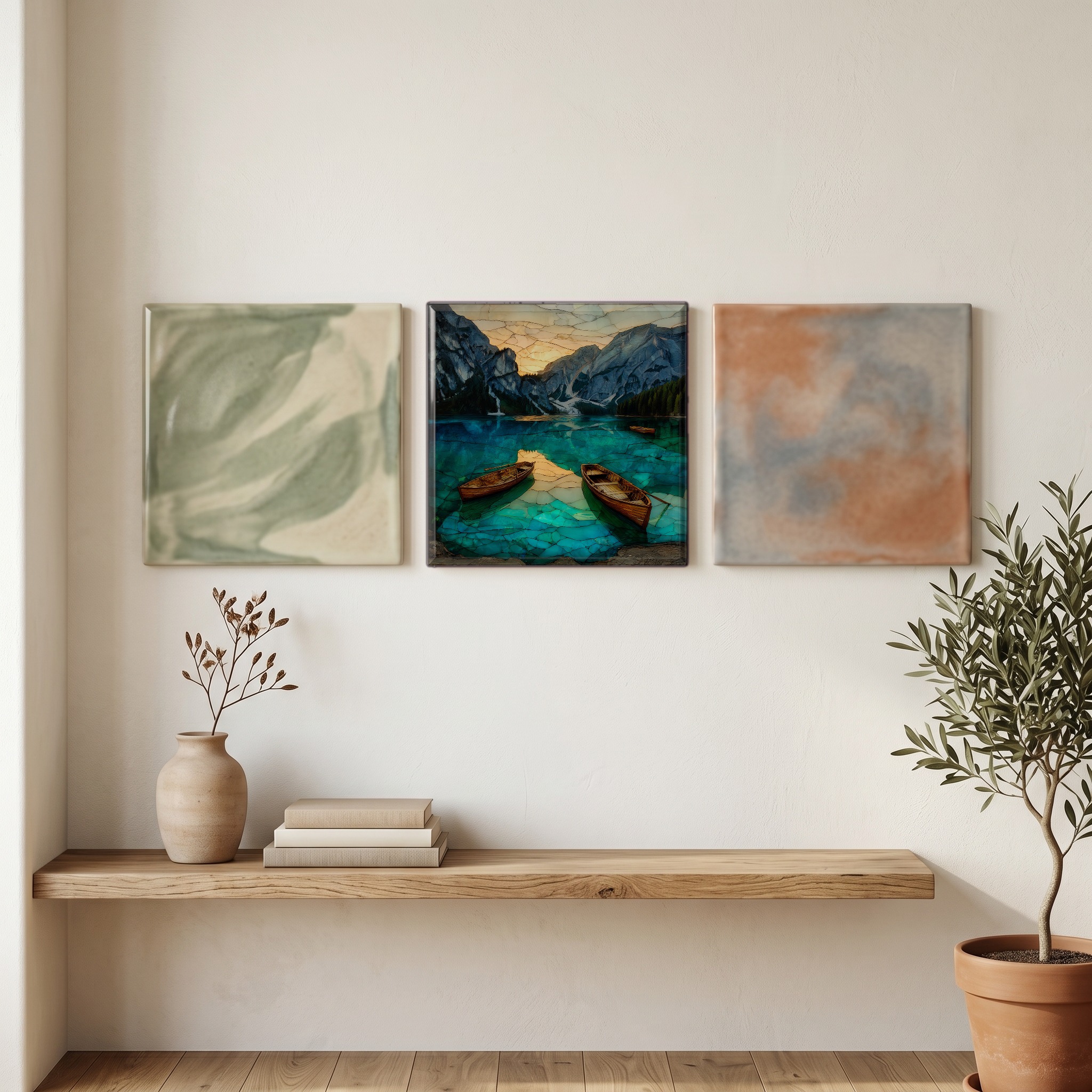
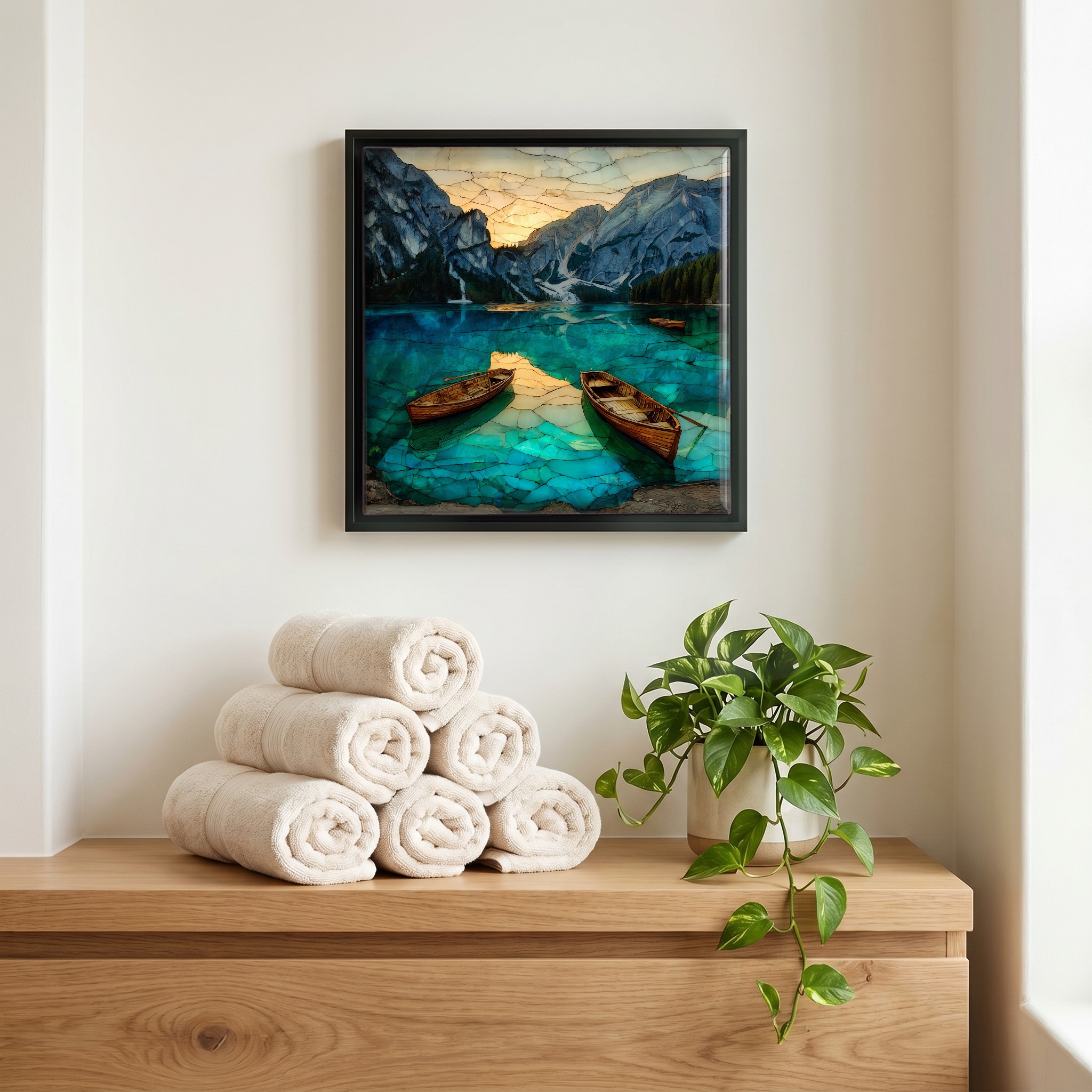
Three or five different vistas, hung together — a chapter of places you've been, or want to go.
The place, in three passes.
Lago di Braies, the Pragser Wildsee, sits at 1,496 metres at the head of the Val di Braies, in the province of Bolzano in South Tyrol, the German-speaking far north of the Dolomites near the Austrian border. It is a barrage lake, formed when a landslide off the Herrstein dammed the Braies stream, and at about 31 hectares it is one of the largest natural lakes in the Dolomites. The pale wall of Croda del Becco, the Seekofel, rises to 2,810 metres straight off the south shore. The lake lies inside the Fanes-Sennes-Prags Nature Park, part of the Dolomites named a UNESCO World Heritage Site in 2009. The classic Alta Via 1, the first of the long Dolomite high routes, begins at the water's edge.
The water reads emerald green, deepest and clearest in early summer when the snowmelt is highest and the silt has settled. The lake is fed by cold underground springs and meltwater rather than a glacier, so the colour comes less from suspended rock flour than from depth and the clarity of the cold water over a pale bed; it shifts toward a darker teal as the season turns. On a still morning the surface goes to glass, and the whole grey wall of Croda del Becco stands upside down in it, the wooden boathouse and its line of rowboats with it. The maximum depth is 36 metres, enough that the centre holds a colder, deeper colour than the shallows.
The Grand Hotel Pragser Wildsee, built in 1899 and still run by the same family, stands at the north end, and the wooden boathouse below it rents rowboats through the summer. Getting here takes planning. From roughly July to mid-September the valley road closes to private cars during the day, about nine in the morning to four in the afternoon, and the lake is reached by the 442 bus from Dobbiaco and Villabassa, by booked parking, by bike, or on foot; the early hour before the buses is the quiet one. In winter the lake freezes hard enough to walk on, and curling matches have been held on the ice since 2012. The Alta Via 1 climbs out from the south shore toward Croda del Becco.