Wender·Vista
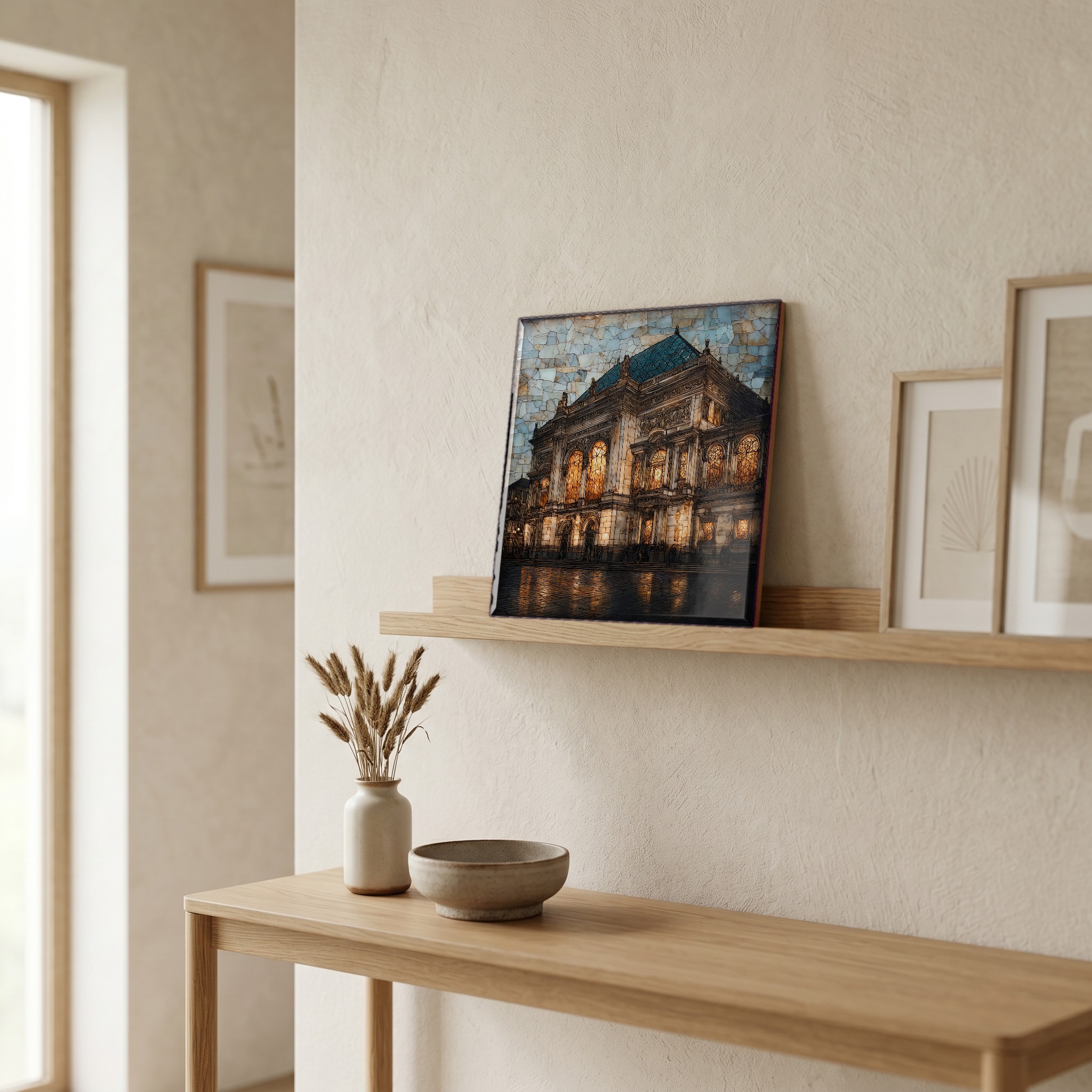
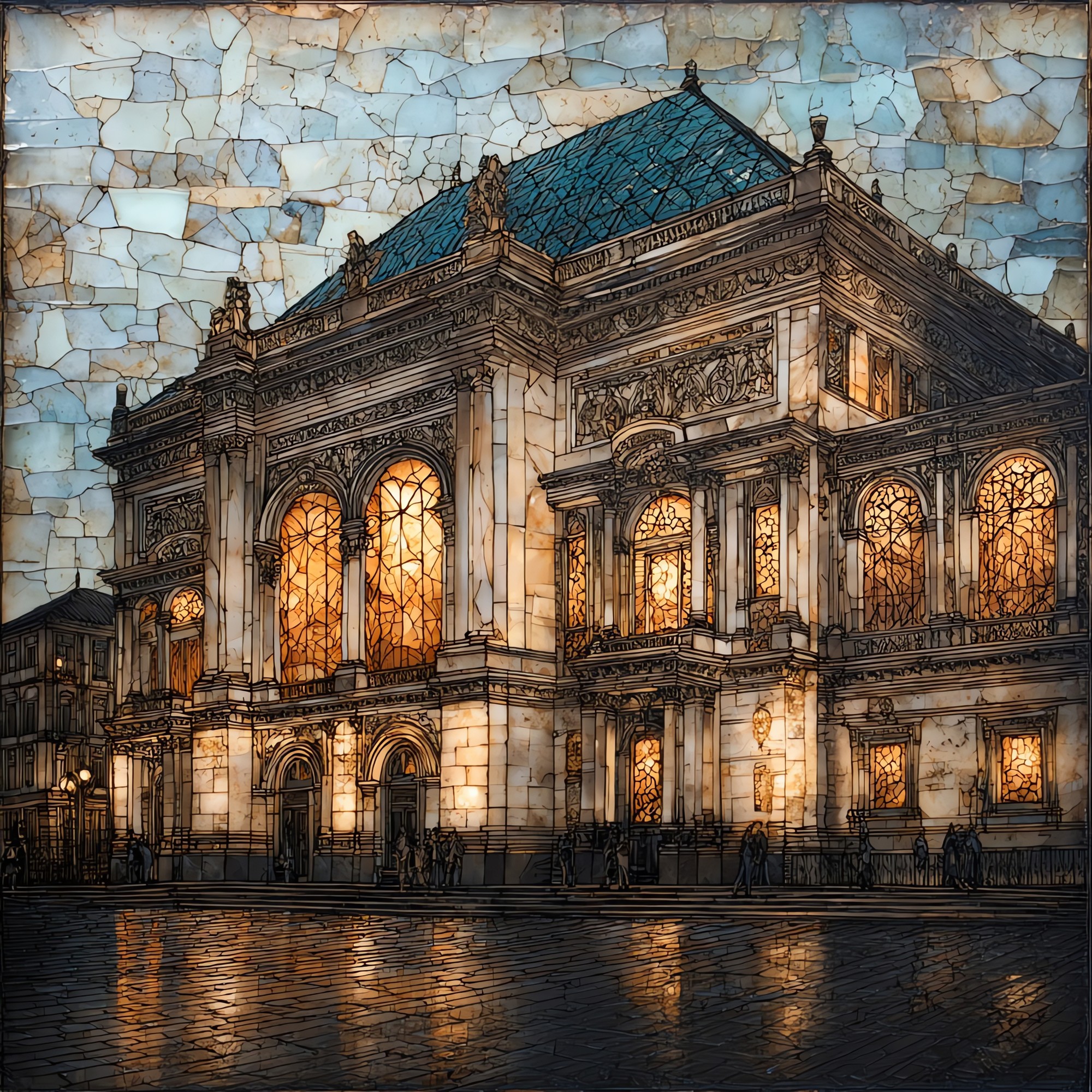
La Scala
shown on ceramic, 12-inch tileItaly
in Milan, a block from the Duomo

La Scala

six tiers of gold, holding their breath.

Where it lives

Not only on a wall.

A small tile on the nightstand catching the morning. A larger one above the fire. Yours, wherever you spend the slow hours.
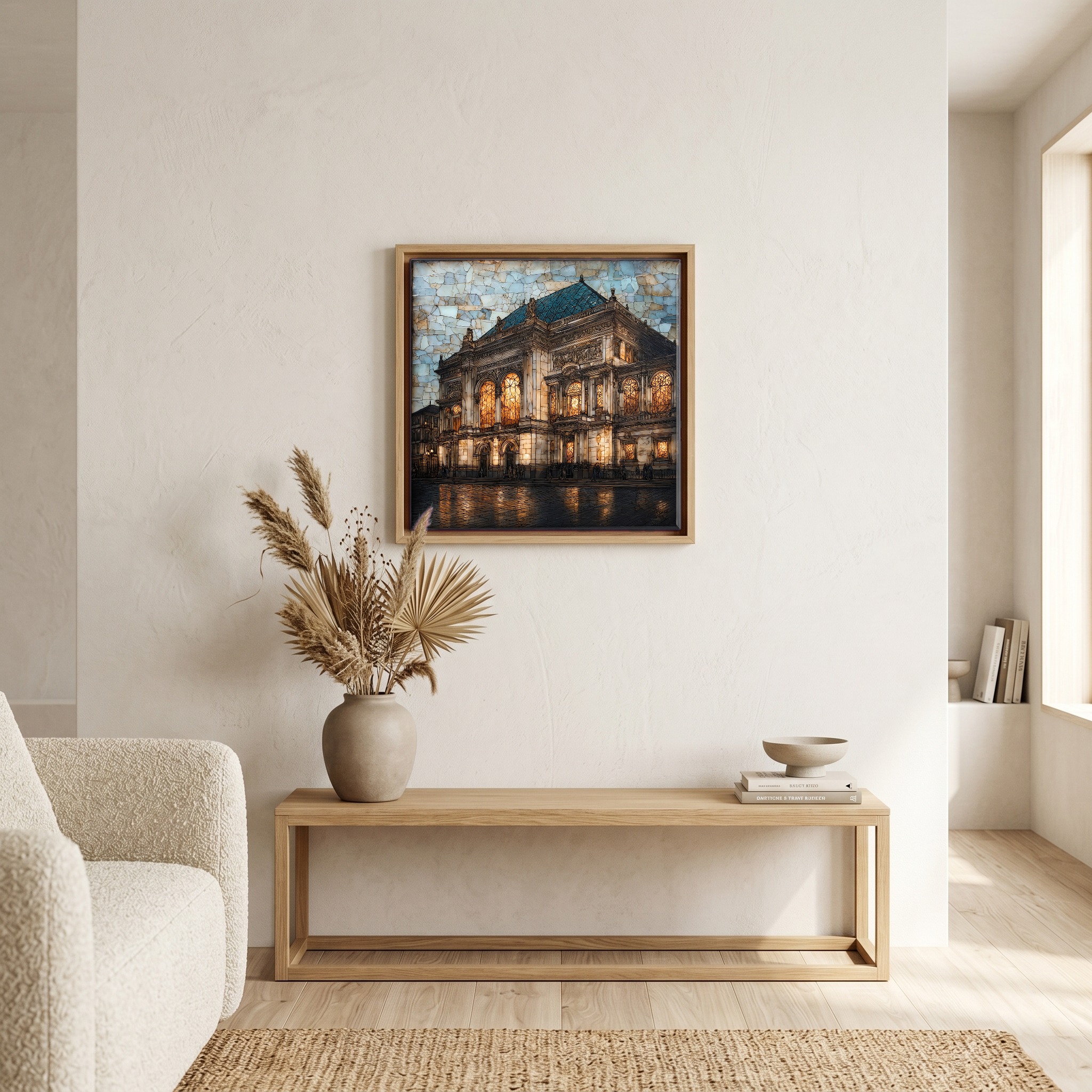
Above the bench, in a warm oak surround.
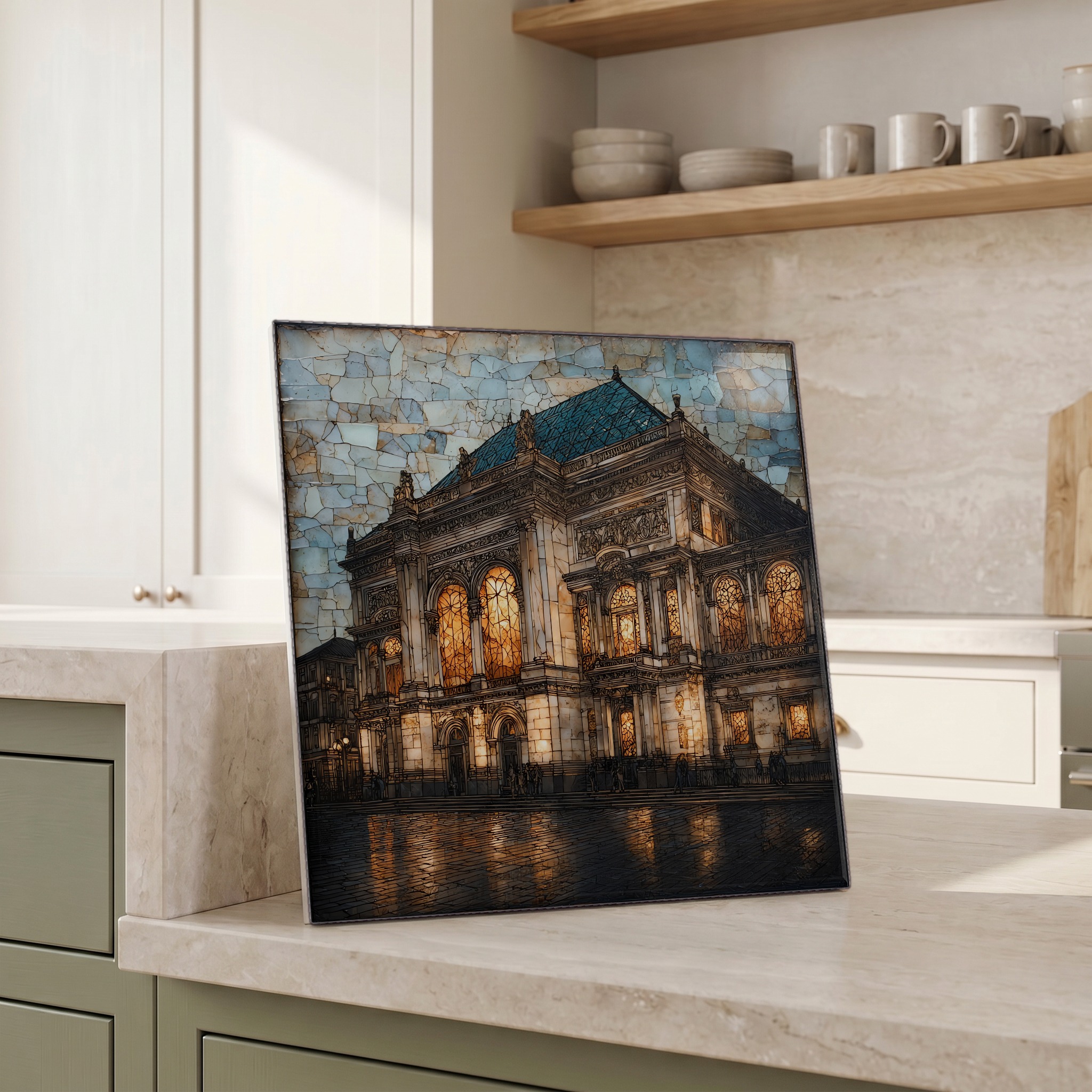
Beside the kettle, propped on the counter.
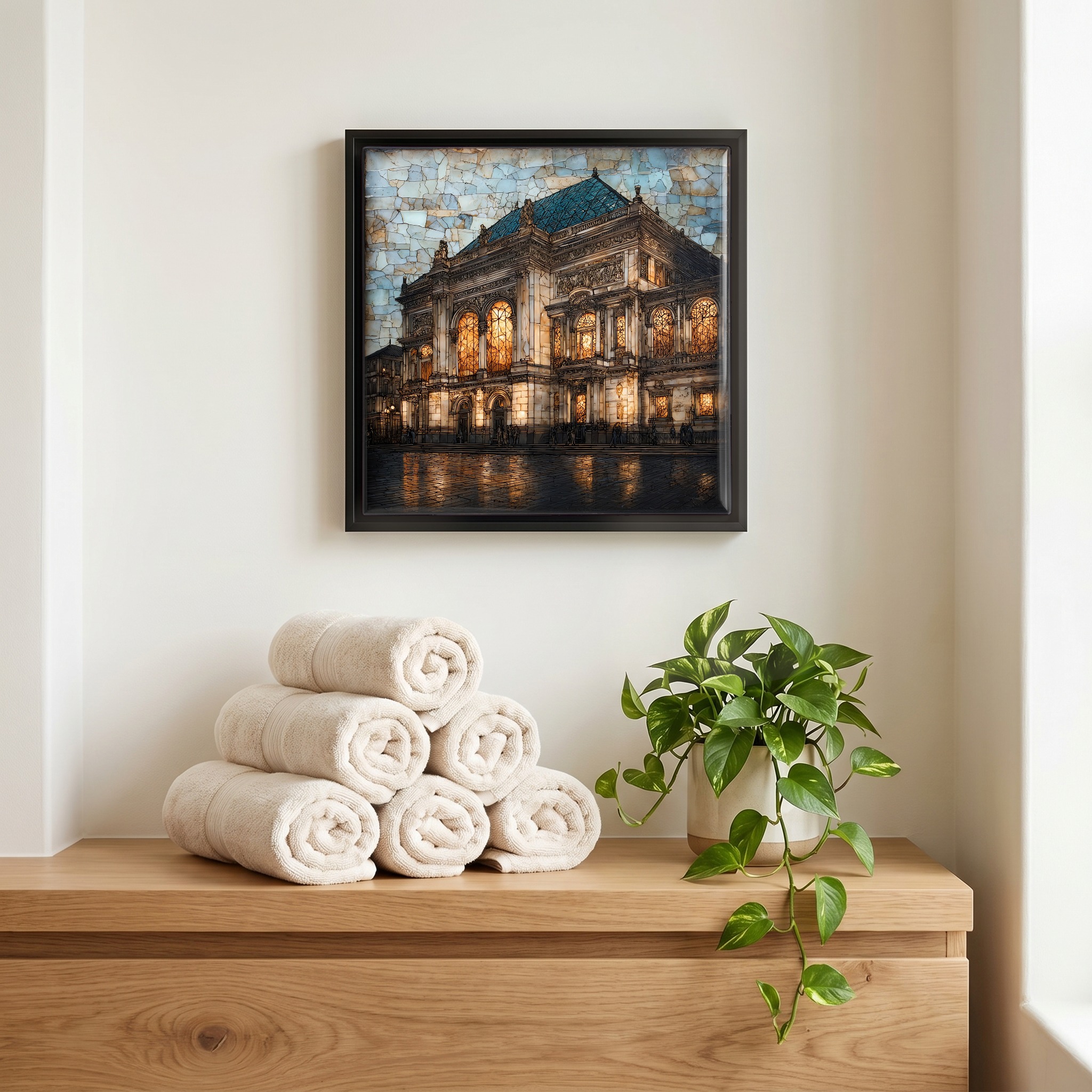
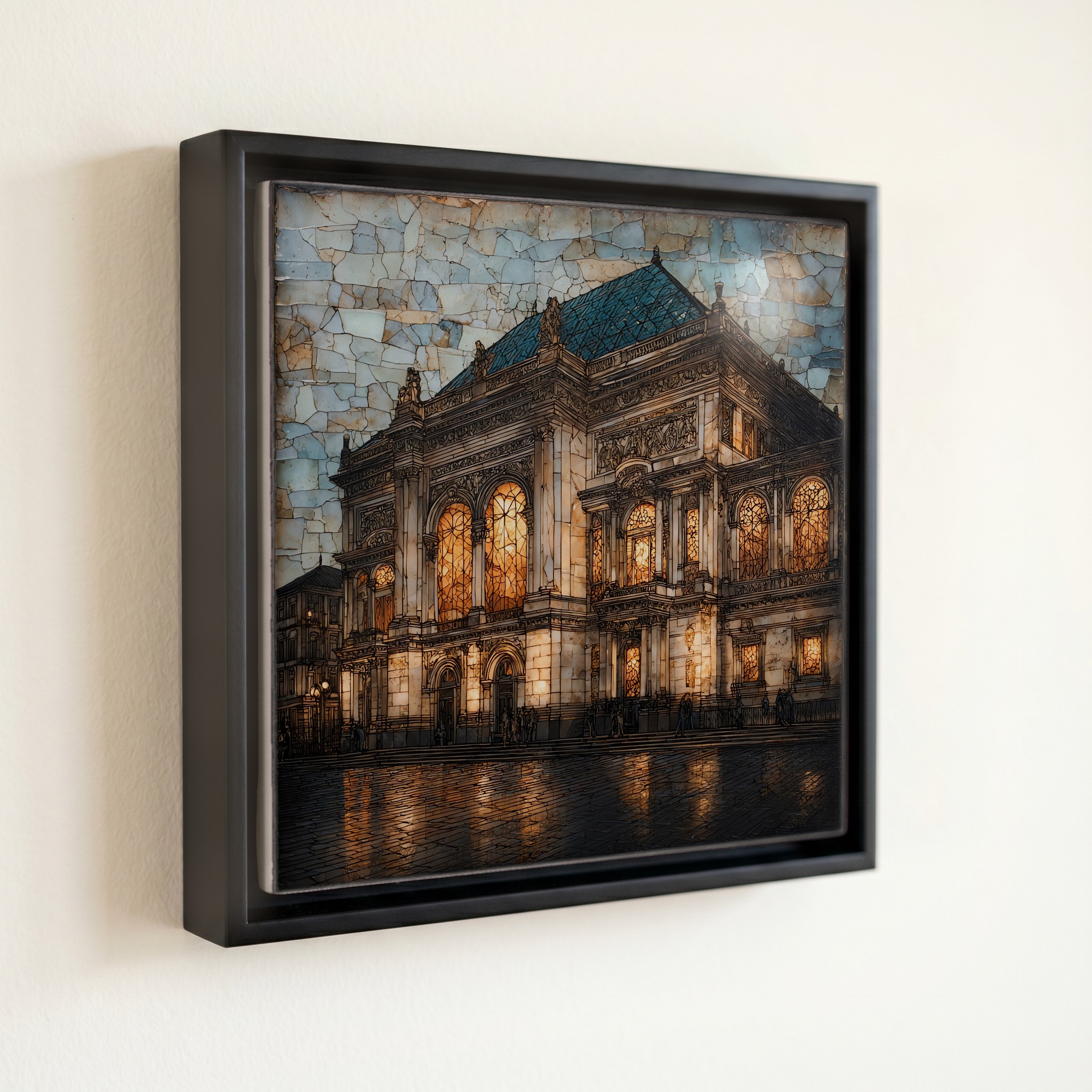
Above the linens, in a slim black surround.
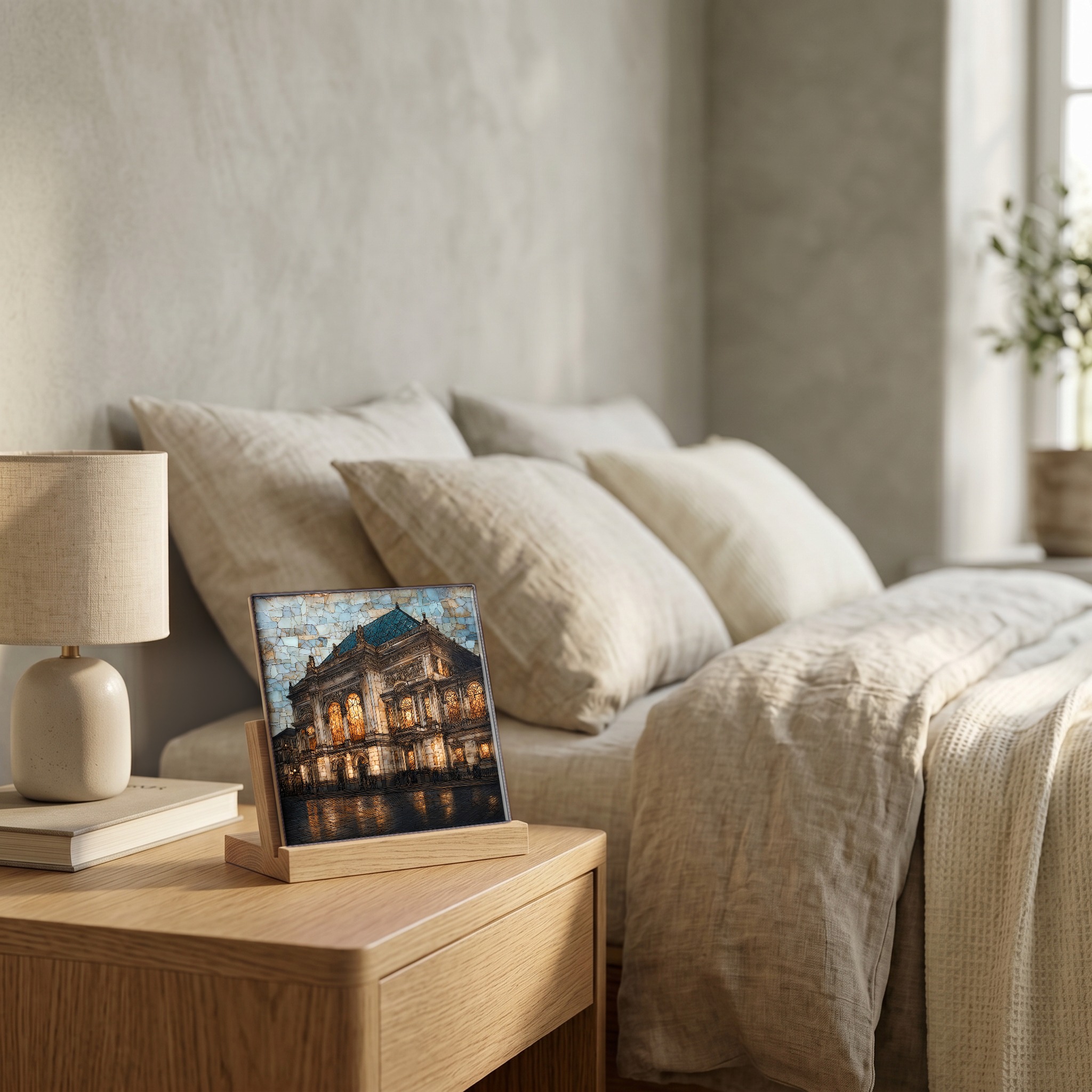
On the nightstand, on a light oak stand.
On a picture ledge, where the light comes in.
a note from the studio

An opera house in Milan, opened on the third of August, 1778, and named for the church that stood here before it. The season opens every year on the seventh of December, the feast of Sant'Ambrogio, with the city in evening clothes and a televised broadcast running on national television. From the loggione, the gallery under the roof, the rest of Europe's opera knew it was being judged. Allied bombs took the auditorium in 1943; Toscanini conducted the night it reopened, three years on. The gold and the velvet are still the gold and the velvet.
from the studio
shown in a slim black floating frame · 6 × 6 in
— bring it home

La Scala, on ceramic.

Each tile is finished by hand in our Knoxville studio. Artwork is slowly infused into the ceramic surface under high heat and pressure, and rests beneath a thin glossy finish. The colour lives in the surface, not on top of it.

What kind of piece?
One tile — square or rectangle.
How big?
the popular one — counter, shelf, nightstand
6 × 6 in · 15 cm · 1.6 lb
Surface finish
A clear glossy finish — the artwork reads as if under resin. Ideal for show-pieces and framed wall art.
How it sits
A hidden cleat — sits ¼″ proud of the wall.
$58
Hand-finished and shipped from our studio at the foot of the Smokies. On your wall in about ten days.
size
6 × 6 in
15 cm
weighs
1.6 lb
solid in the hand
surface
ceramic, hand-finished
art rests beneath a thin glossy finish
from
Knoxville, TN
our family studio, at the foot of the Smokies
— start a Coaster Set

Pick any four 4-inch tiles — National Parks you've been to, a Smokies set, the four seasons of one place. $ for a set of , cork-backed, ready to live on the table.
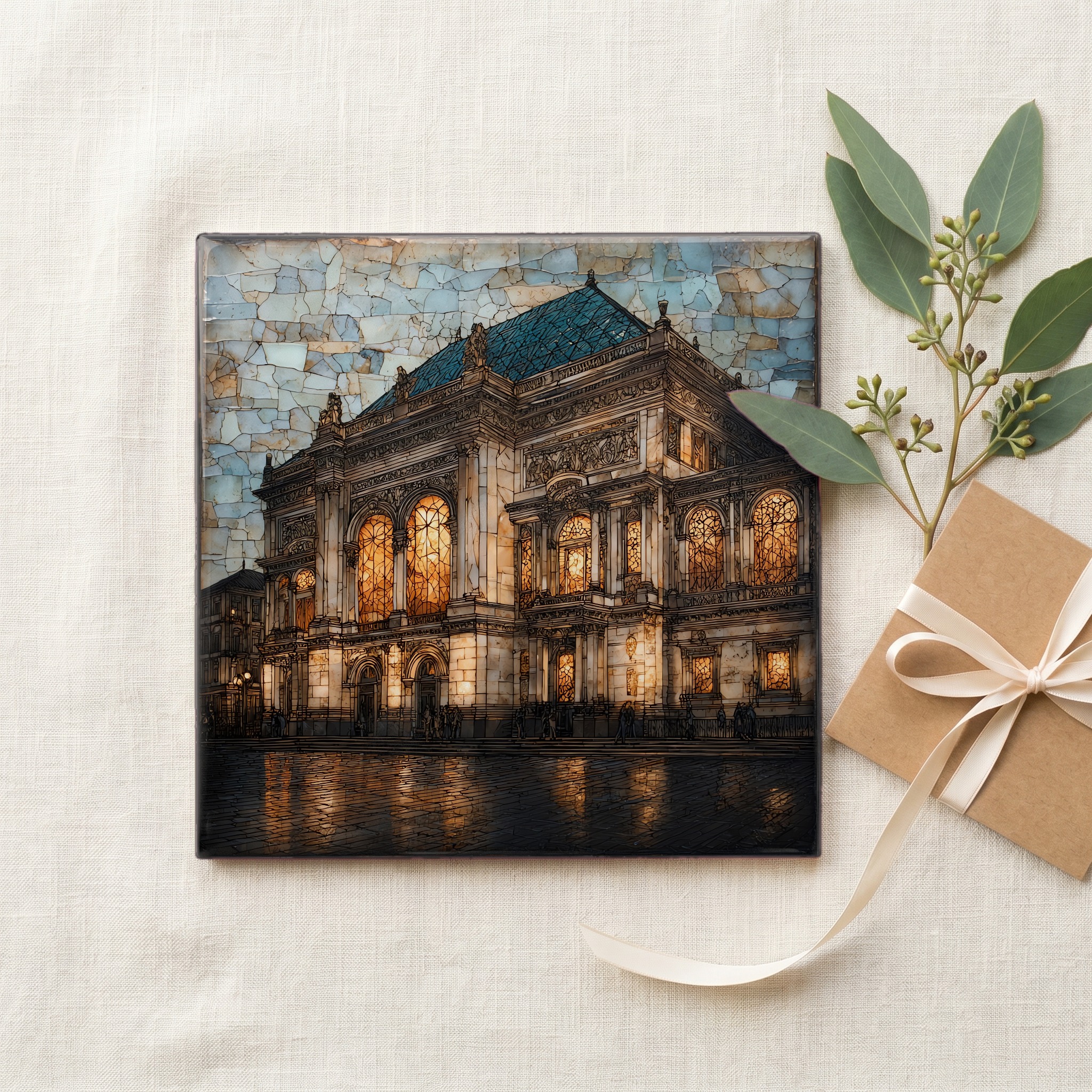
comes gift-ready
comes gift-ready

Each tile ships in a kraft box, tied with cream ribbon, with a handwritten note from the studio if you'd like to add one.
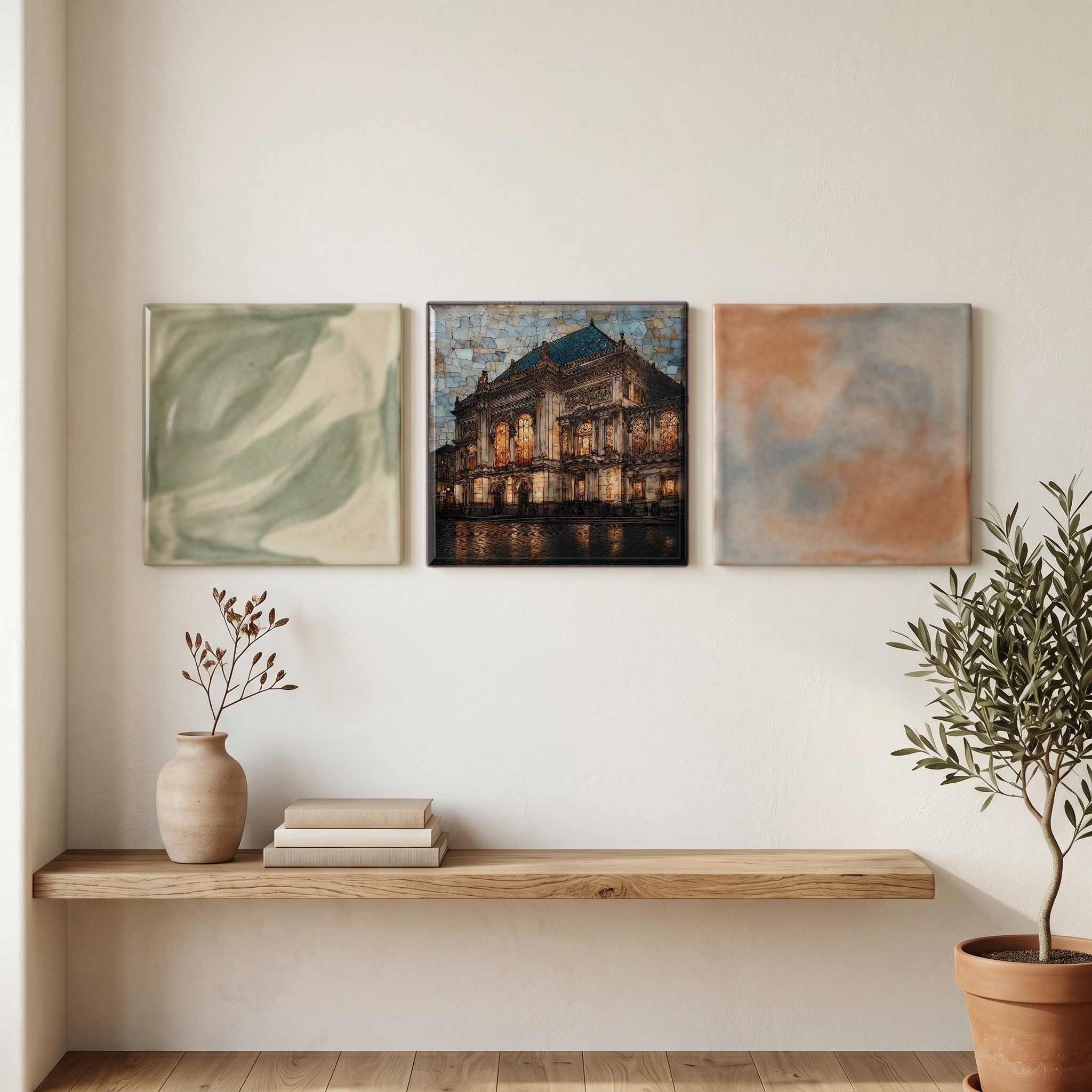
or build a grouping
or build a grouping

Three or five different vistas, hung together — a chapter of places you've been, or want to go.

about La Scala

The place, in three passes.

A little of what's known, in case you fall down the rabbit hole — or want to go see it yourself.
the place

Teatro alla Scala stands on Piazza della Scala in central Milan, the opera house that has carried the city's musical reputation since the eighteenth century. It opened on the third of August, 1778, replacing the Teatro Regio Ducale, the previous court theatre, which had burned down in February 1776. The neoclassical architect Giuseppe Piermarini built it on the site of the demolished fourteenth-century church of Santa Maria alla Scala, and the church's name passed to the theatre. The horseshoe auditorium holds about two thousand and thirty seats across stalls, four tiers of boxes, and the loggione under the roof. Allied bombing on the night of 15-16 August 1943 destroyed much of the building; the auditorium reopened on 11 May 1946 with a concert conducted by Arturo Toscanini, newly returned from exile.

the year

The season opens every year on the seventh of December, the feast of Sant'Ambrogio, patron saint of Milan. The prima della Scala is the city's largest civic occasion: the President of the Republic, the mayor, the prefect, and a national broadcast on Rai. Inside, the loggione sets the night's verdict. The upper gallery has cheered Verdi's Nabucco at its 1842 premiere and has booed singers off in the second act of works that had survived everywhere else in Europe. The repertoire across the season runs to roughly forty productions of opera, ballet, and concerts, anchored by the resident La Scala orchestra and chorus, with the calendar carrying through to November of the following year.

the visit

The theatre stands at Via Filodrammatici 2, a one-block walk from the Galleria Vittorio Emanuele II and the Piazza del Duomo. The adjoining Museo Teatrale alla Scala, opened in 1913, holds costumes, instruments, Verdi's death-mask, and a window onto the auditorium when no rehearsal is in progress; admission runs around ten euros. Performance tickets range from about a dozen euros for a loggione standing place to several hundred for a parterre stall. Evening performances begin at twenty-hundred, and the seventh-of-December prima carries a white-tie dress code; most other evenings expect a jacket. The nearest Metro stops are Duomo on lines M1 and M3 and Montenapoleone on line M3.

where
Italy · Milan, Lombardy
position
45.4673° N · 9.1895° E
the neighborhood

What's nearby.

A handful of named places within an hour's walk or short drive. Some we've already painted; some we will.
at the lake
Galleria Vittorio Emanuele II
iron-and-glass arcade
at the lake
Duomo di Milano
Gothic cathedral
at the lake
Palazzo Marino
Renaissance city hall
1 km N
Pinacoteca di Brera
art museum
1 km NW
Castello Sforzesco
Renaissance castle
2 km W
Santa Maria delle Grazie
Dominican church and Last Supper refectory
N
La Scala
Galleria Vittorio Emanuele II
Duomo di Milano
Palazzo Marino
Pinacoteca di Brera
Castello Sforzesco
Santa Maria delle Grazie
common questions

What people ask.

A few questions we get about La Scala — and about bringing the piece home.
about the place

La Scala stands on Piazza della Scala in central Milan, in the Lombardy region of northern Italy. It is one block north of the Galleria Vittorio Emanuele II and the Piazza del Duomo. The nearest Metro stops are Duomo on lines M1 and M3 and Montenapoleone on line M3.

The theatre took its name from the fourteenth-century church of Santa Maria alla Scala, which stood on the site and was demolished in 1776 to clear the ground. The church had been endowed by Regina della Scala, wife of the Milanese ruler Bernabò Visconti.

Teatro alla Scala opened on the third of August, 1778, with the premiere of Antonio Salieri's Europa riconosciuta. The neoclassical architect Giuseppe Piermarini designed the building. It replaced the Teatro Regio Ducale, Milan's previous court theatre, which had burned down in February 1776.

The loggione is the upper gallery of La Scala, six levels above the parterre, where the cheapest standing-room tickets are sold. The loggionisti who occupy it are among the most demanding opera audiences in Italy. Their judgement at curtain call has both crowned and broken singing careers.

The seventh of December is the feast of Sant'Ambrogio, patron saint of Milan, and the night the opera season opens. The prima della Scala is broadcast on national television and draws the President of the Republic, the mayor, the prefect, and foreign dignitaries. The dress code is white tie.

Allied bombing on the night of 15-16 August 1943 destroyed much of the theatre, including the roof and most of the auditorium. Reconstruction was completed by the spring of 1946. The reopening concert on 11 May 1946 was conducted by Arturo Toscanini, who had returned from exile for the occasion.

The Swiss architect Mario Botta led the renovation that closed the theatre between 2002 and 2004. The work added a new backstage tower and modernised the stage machinery while restoring Piermarini's auditorium to a colour palette documented from the 1830s. The hall now seats about two thousand and thirty.

about the piece in your home

It has been a gift our customers reach for to mark a city, a season, or one specific night. Anyone who has stood in Piazza della Scala or watched the seventh-of-December broadcast tends to read the gold and velvet at a glance. A Medium on a mantle, or a Coaster Set for the bar cart, both carry the room well.

Our treatment of La Scala leans on gold leaf, deep box-red, and the lacquered black of the loggione rail. It sits with Jewel-tone Maximalist rooms, traditional libraries and studies, and old-world European interiors where gilt frames and warm brass already live. The piece reads as evening light more than ornament.

Operatic and grand-hotel iconography have returned to interiors alongside the supper-club and listening-room revival. The piece reads as cultural shorthand rather than nostalgia and works well in a music room, a home theatre, a piano room, or above a velvet banquette in a dining alcove.

Above a standard sofa or a long console, the single Large carries the wall as a focal piece. For a featured wall or a stair landing, a four-tile Mural reads at room scale, and a nine-tile Mural becomes the centrepiece. A pair of Mediums flanking a doorway is another way to handle long horizontal walls.

Yes, on the Dura Satin or Matte finish rather than the Glossy. The colour is slowly infused into the ceramic surface under high heat and pressure beneath a thin, non-glaring surface that resists steam and humidity. The reds and gold read well above a powder-room console or in a warm-walled Italian kitchen.

A soft microfibre cloth and warm water are enough for routine cleaning. For stubborn marks, add a drop of mild dish soap. Avoid abrasive sponges, bleach, and ammonia-based cleaners, which can dull the finish over time. The colour lives within the ceramic surface and will not lift.

Yes. Reid Wender is the curator and the eye behind every WenderVista piece. The La Scala tile is original to our family studio in Knoxville, Tennessee, with no licensing or third-party stock involved. Each piece is hand-finished in our studio before it ships.

if this one stayed with you

A few you might also love.

Hand-picked by the eye that found Sorapis. Same air, same kind of quiet.
— a collection

The Italian Dolomites,
painted slow.

The valleys between Cortina and Val Gardena, the tarns you walk an hour to see, the towers that turn the colour of a banked fire just before dark. Wander the collection by valley, by season, or follow the path Reid walked.

Tre Cime
Braies
Misurina
Sorapis
Cinque Torri
Sassolungo
Marmolada