Wender·Vista
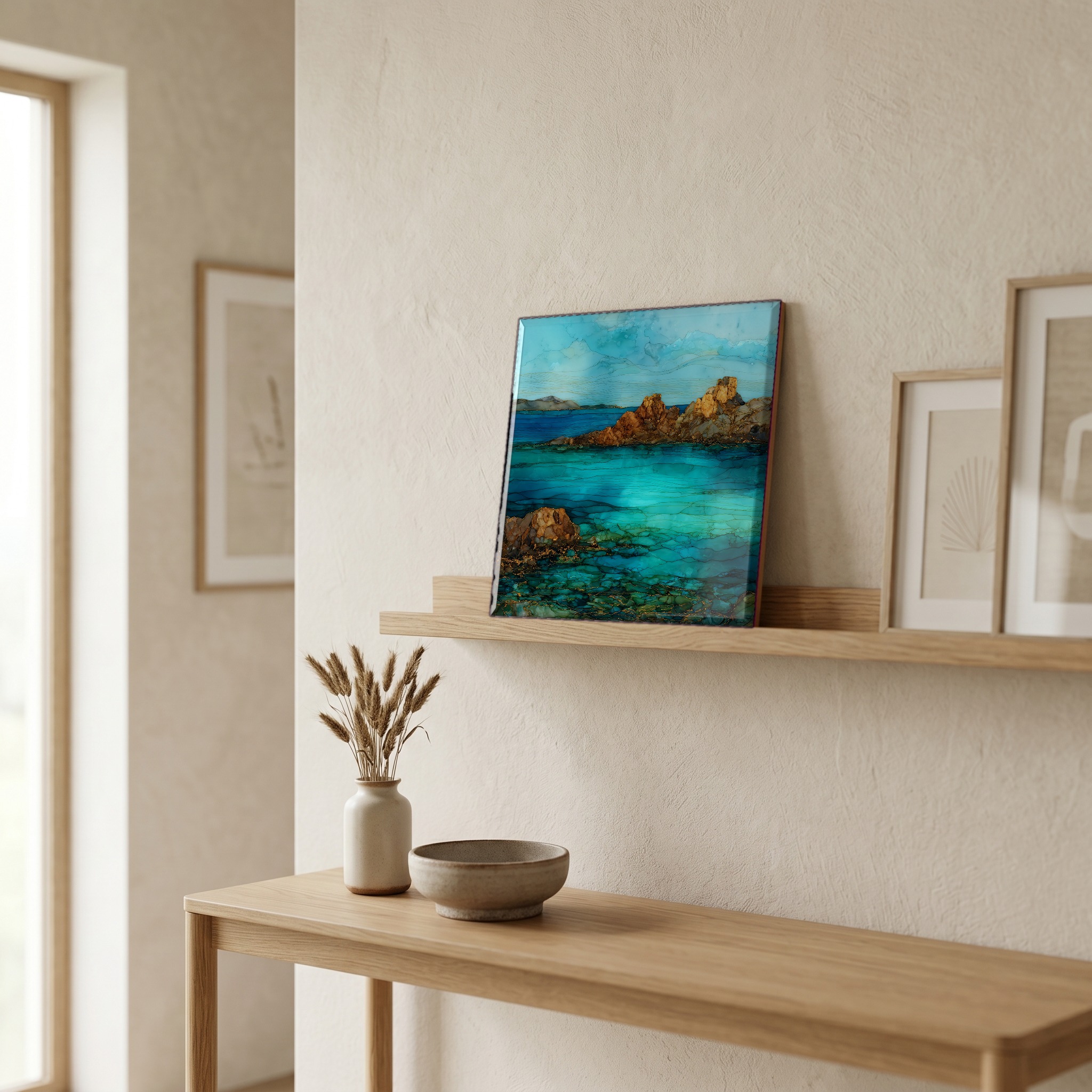
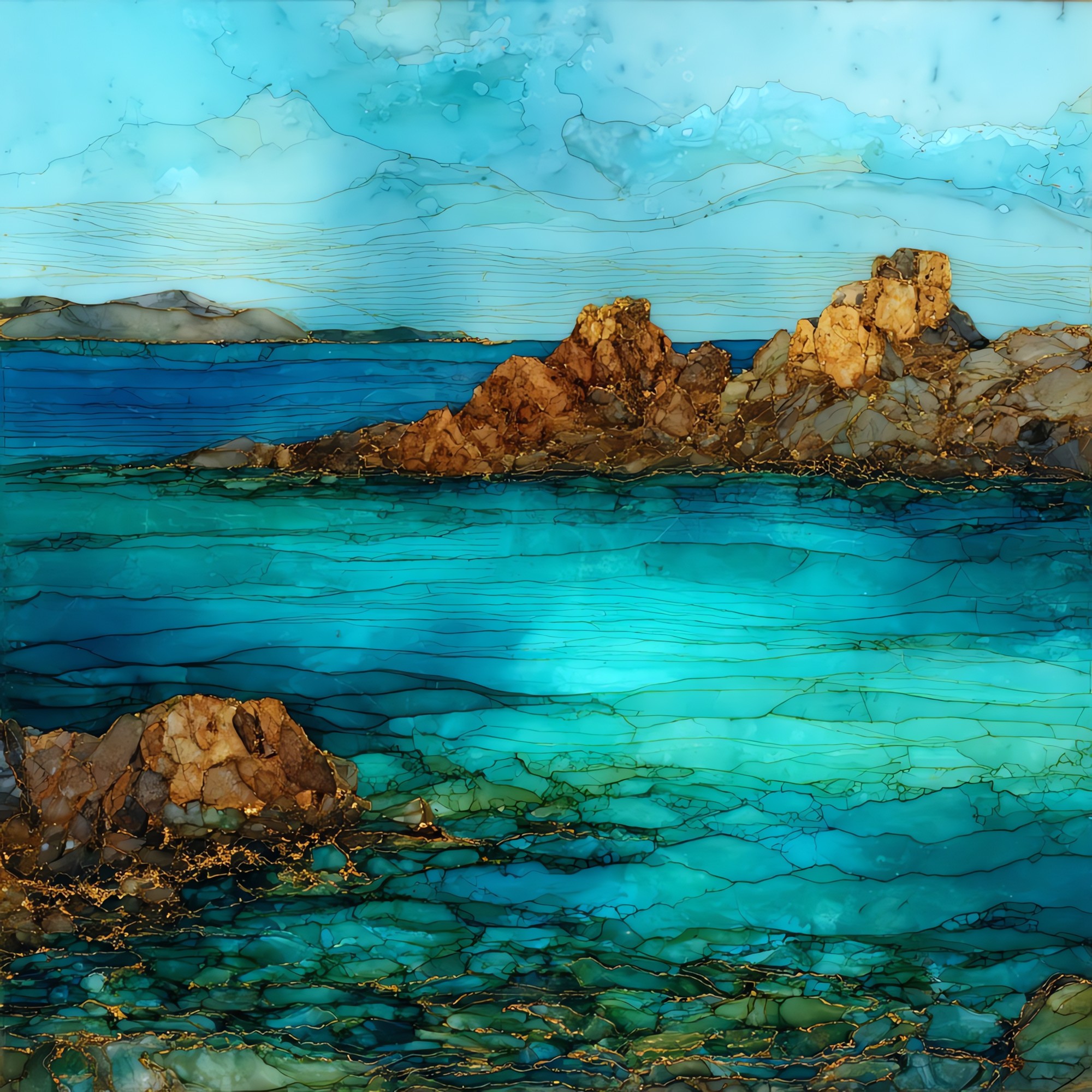
La Maddalena Archipelago
shown on ceramic, 12-inch tileItaly
in the strait between Sardinia and Corsica

La Maddalena Archipelago

wind-worked granite, and the sea holding every blue at once.

Where it lives

Not only on a wall.

A small tile on the nightstand catching the morning. A larger one above the fire. Yours, wherever you spend the slow hours.
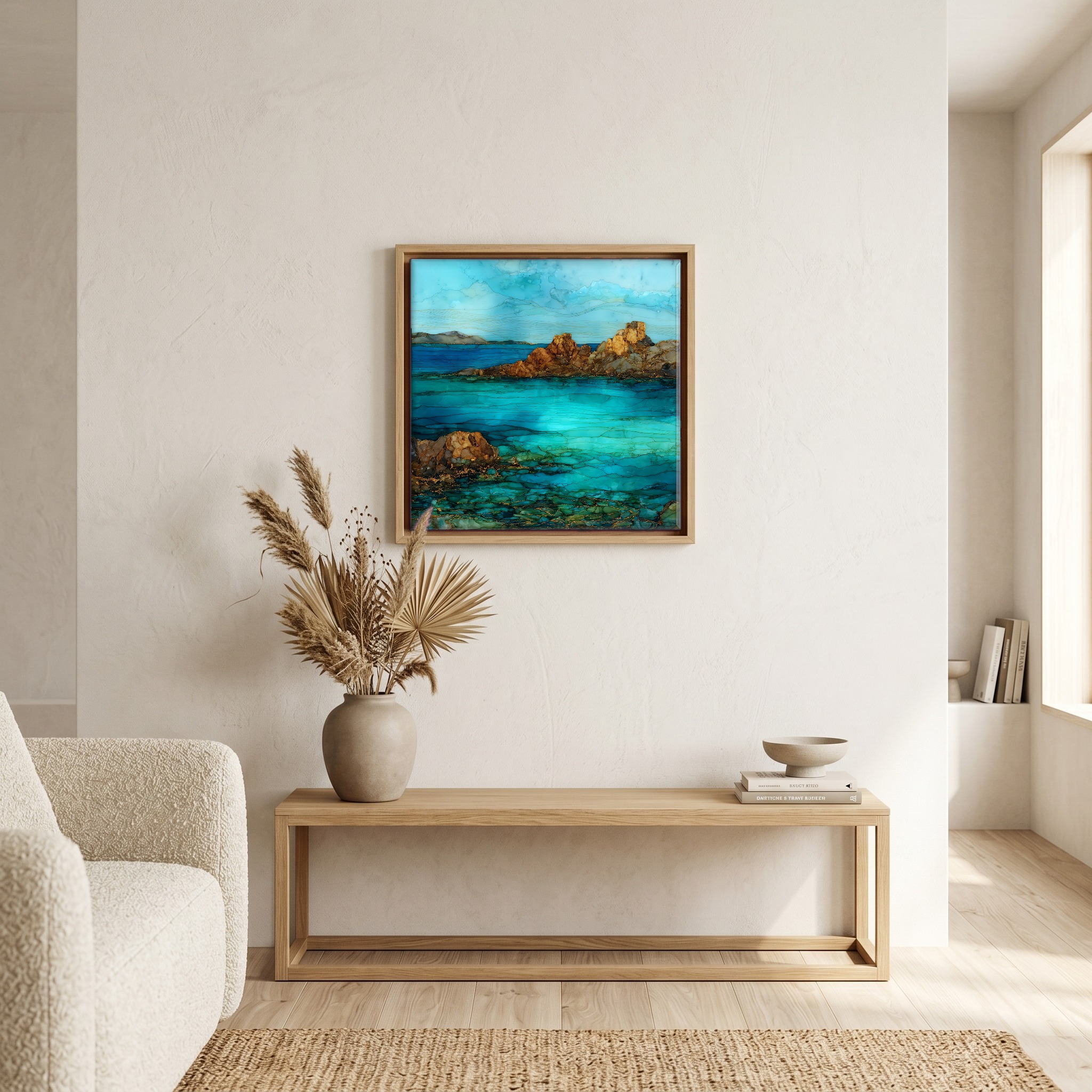
Above the bench, in a warm oak surround.
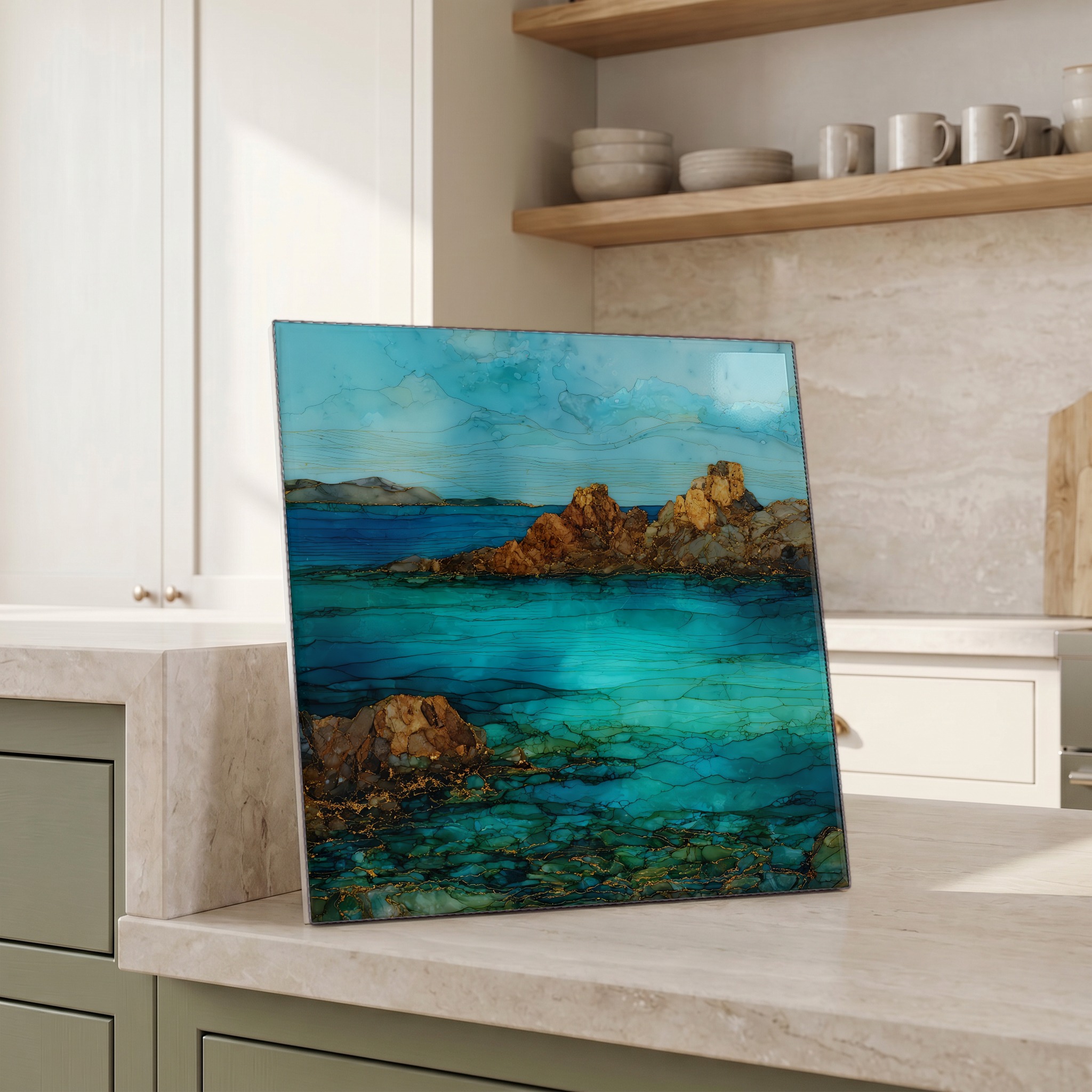
Beside the kettle, propped on the counter.
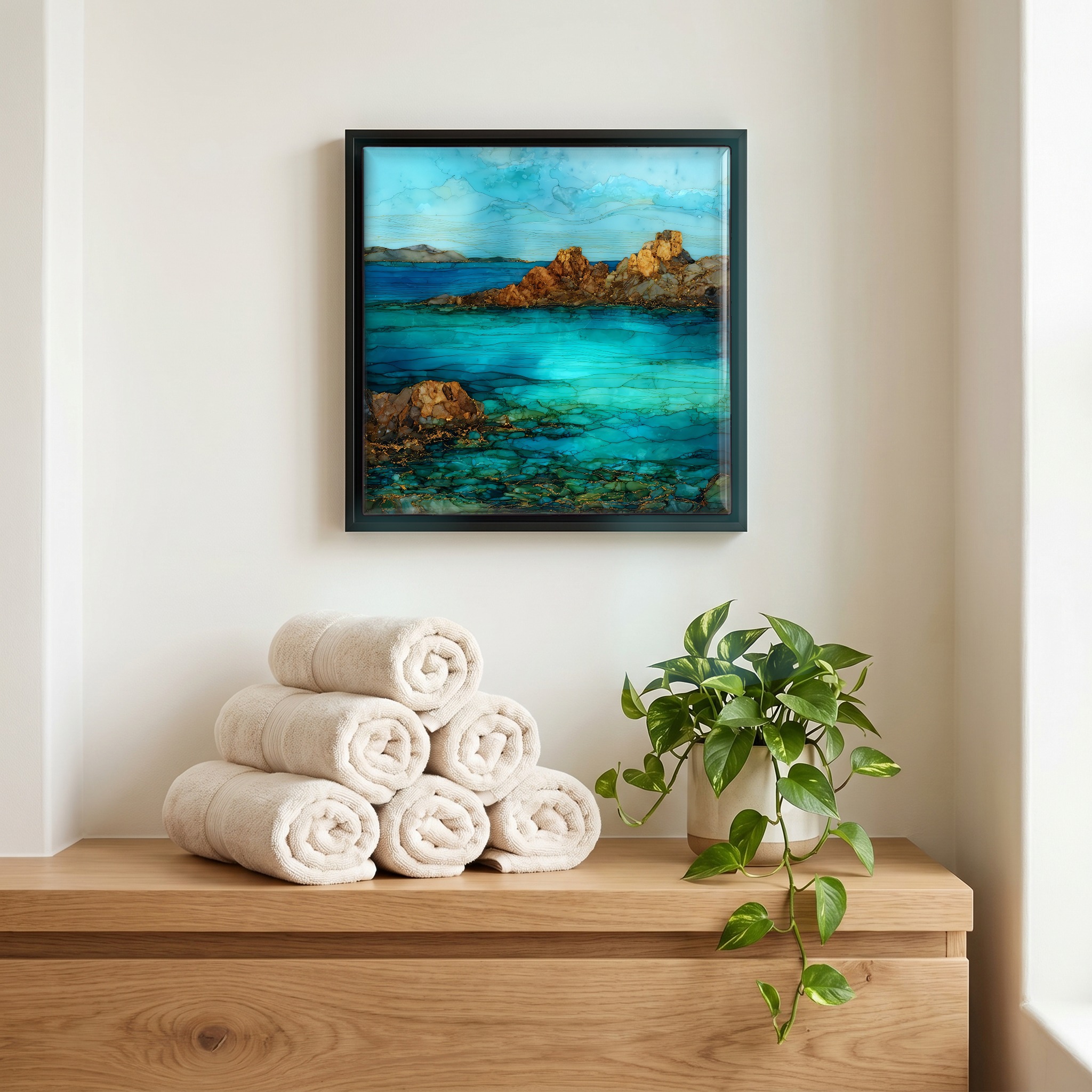
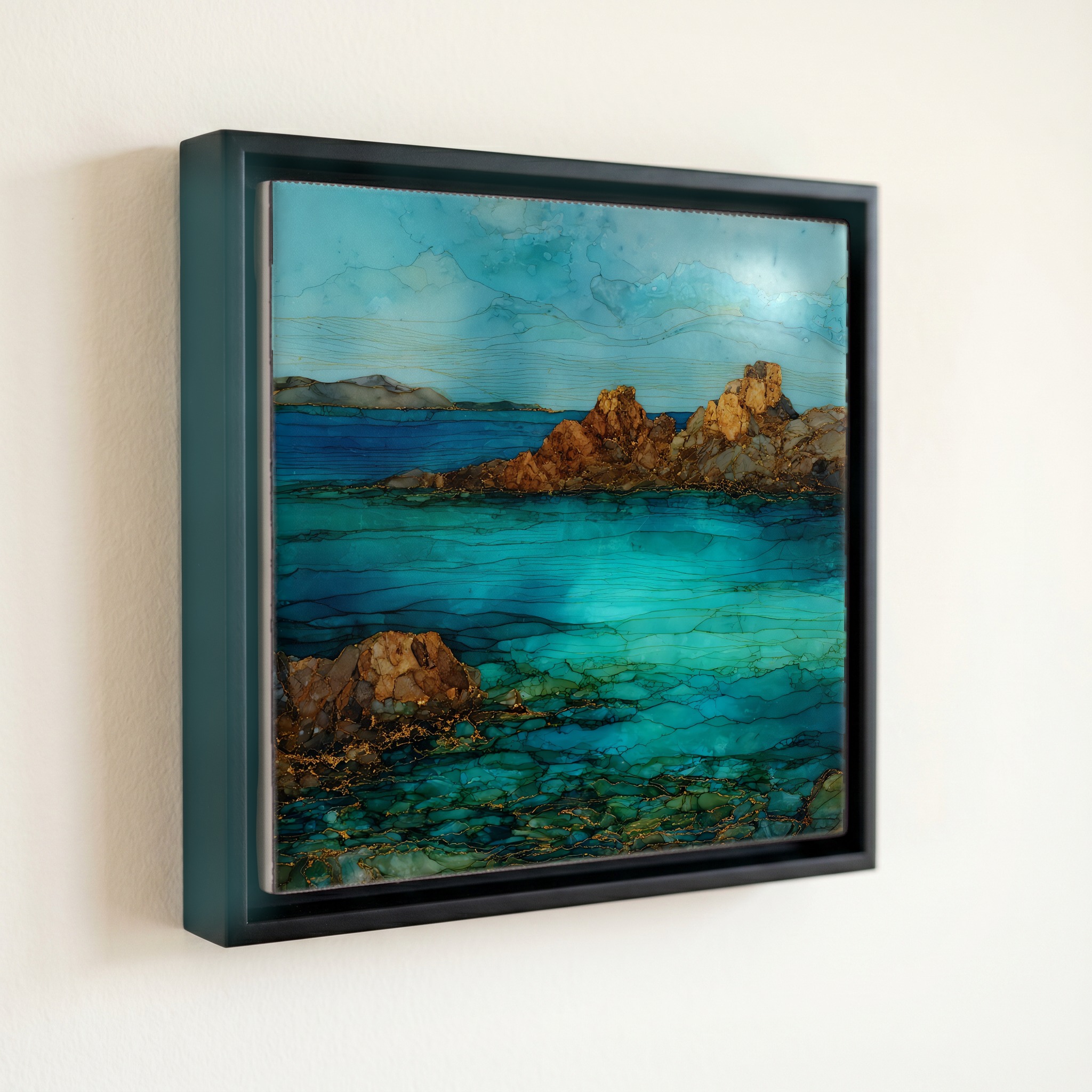
Above the linens, in a slim black surround.
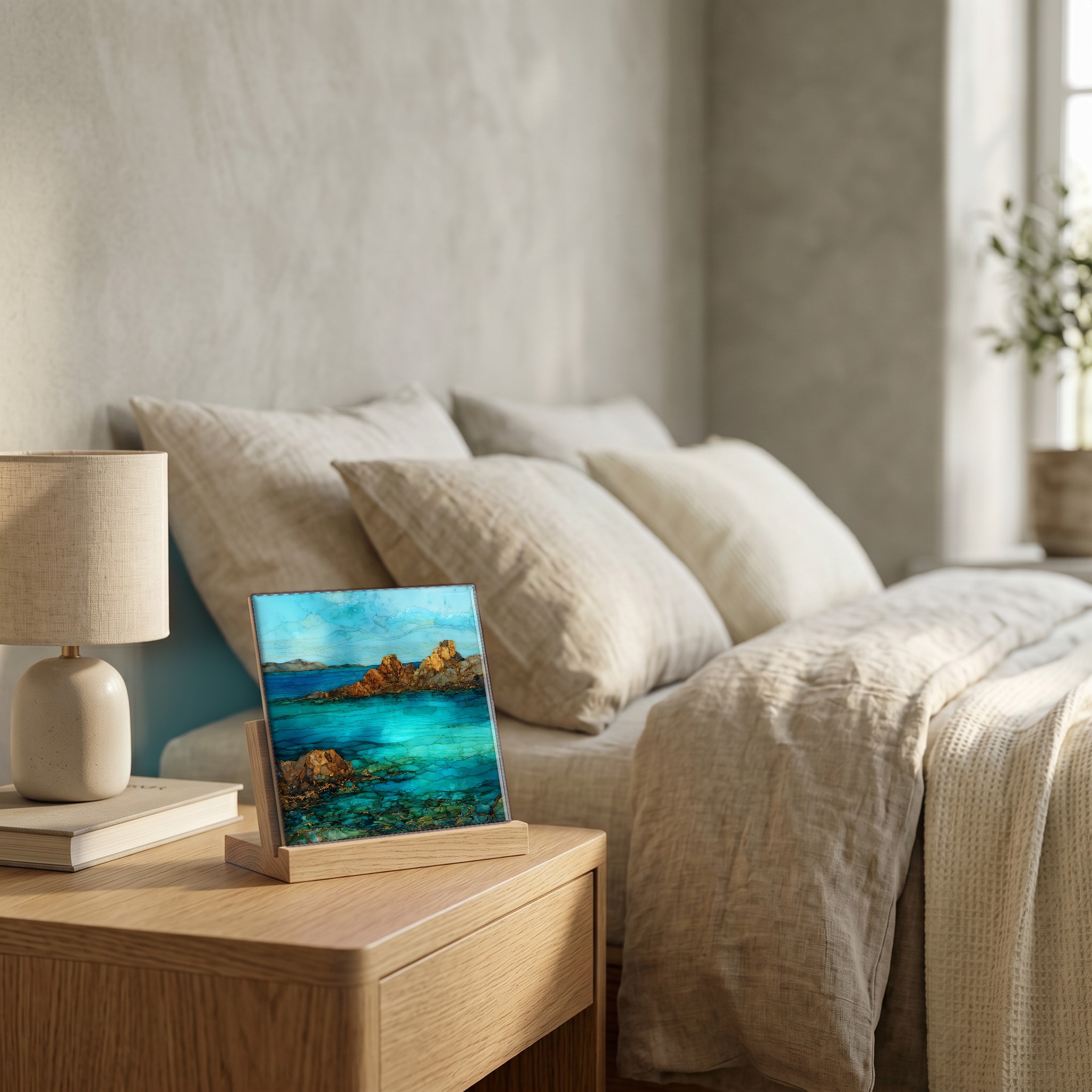
On the nightstand, on a light oak stand.
On a picture ledge, where the light comes in.
a note from the studio

Sixty-odd islands of pink granite, scattered across the strait between Sardinia and Corsica, worn smooth by a wind that never quite stops. The boats leave Palau every few minutes and thread between them: Caprera, where Garibaldi spent his last years; Spargi; Budelli, whose one pink beach has been closed to landings since the nineties so the sand can be left alone. The water reads a different blue over every depth. People drop anchor in a cove, swim, and mostly keep their voices down.
from the studio
shown in a slim black floating frame · 6 × 6 in
— bring it home

La Maddalena Archipelago, on ceramic.

Each tile is finished by hand in our Knoxville studio. Artwork is slowly infused into the ceramic surface under high heat and pressure, and rests beneath a thin glossy finish. The colour lives in the surface, not on top of it.

What kind of piece?
One tile — square or rectangle.
How big?
the popular one — counter, shelf, nightstand
6 × 6 in · 15 cm · 1.6 lb
Surface finish
A clear glossy finish — the artwork reads as if under resin. Ideal for show-pieces and framed wall art.
How it sits
A hidden cleat — sits ¼″ proud of the wall.
$58
Hand-finished and shipped from our studio at the foot of the Smokies. On your wall in about ten days.
size
6 × 6 in
15 cm
weighs
1.6 lb
solid in the hand
surface
ceramic, hand-finished
art rests beneath a thin glossy finish
from
Knoxville, TN
our family studio, at the foot of the Smokies
— start a Coaster Set

Pick any four 4-inch tiles — National Parks you've been to, a Smokies set, the four seasons of one place. $ for a set of , cork-backed, ready to live on the table.
comes gift-ready
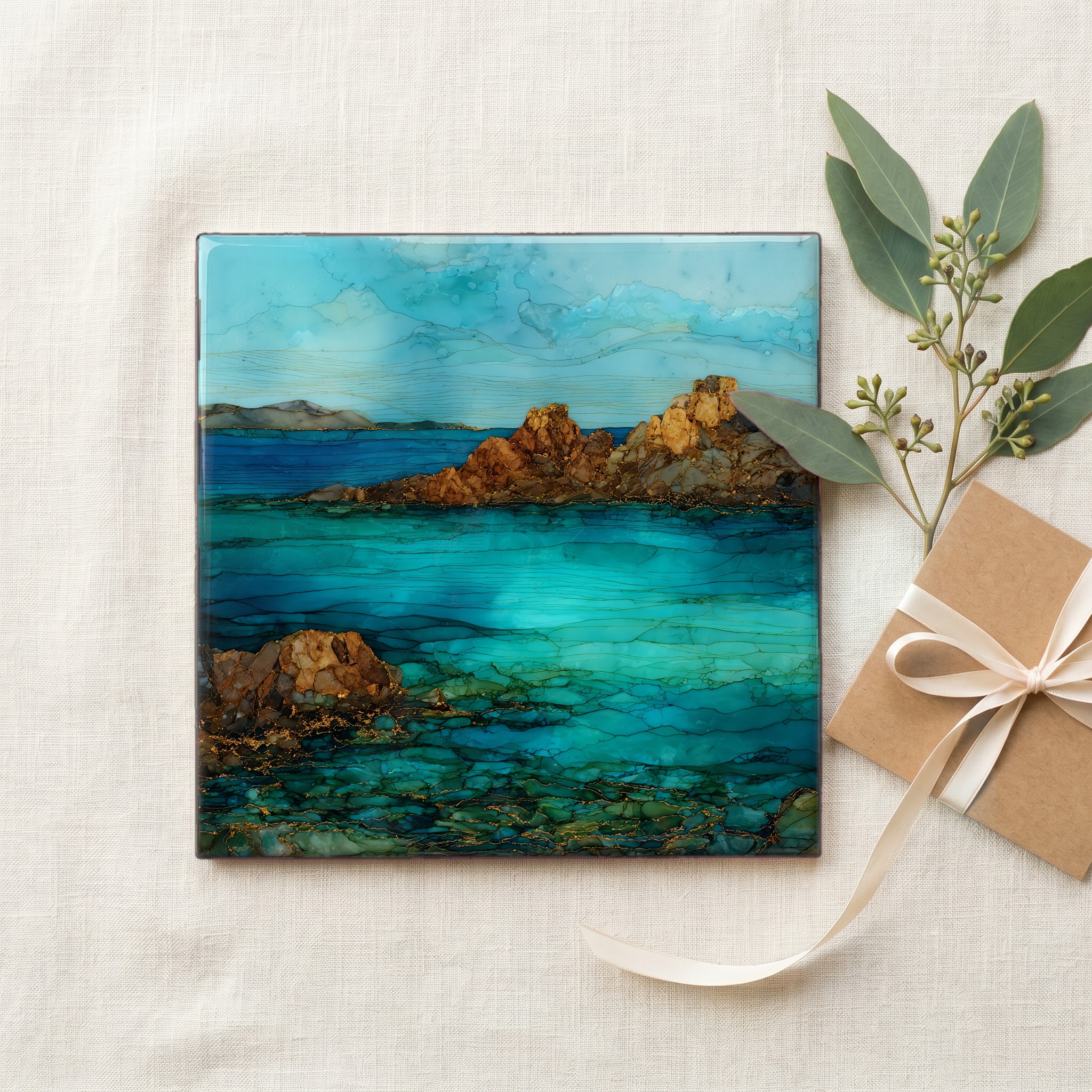
comes gift-ready

Each tile ships in a kraft box, tied with cream ribbon, with a handwritten note from the studio if you'd like to add one.
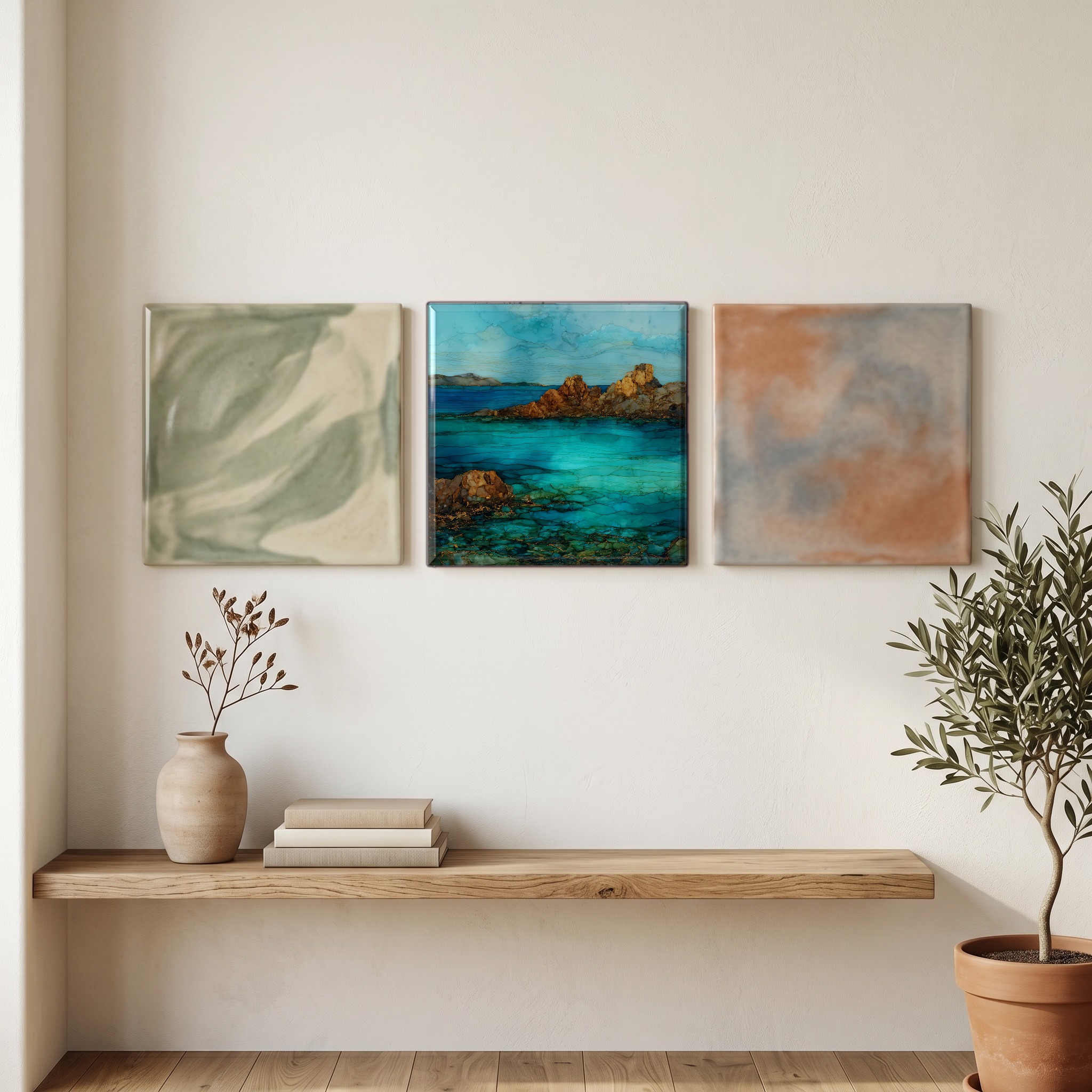
or build a grouping
or build a grouping

Three or five different vistas, hung together — a chapter of places you've been, or want to go.

about La Maddalena Archipelago

The place, in three passes.

A little of what's known, in case you fall down the rabbit hole — or want to go see it yourself.
the place

The Maddalena Archipelago sits in the Strait of Bonifacio, the band of sea that separates the northeast tip of Sardinia from Corsica. It is roughly sixty islands and islets of granite and schist, seven of them large enough to name, wrapped in about 180 kilometres of coast. Only La Maddalena, Caprera, and Santo Stefano are inhabited; the rest belong to the wind and the boats. Car ferries cross from Palau, on the Sardinian mainland, in about fifteen minutes, running through most of the day. Since 1994 the whole archipelago has been a national park, the first in Sardinia, covering more than 20,000 hectares of land and sea.

— informed by Wikipedia, Sardegna Turismo
the stone

The islands are granite, lifted and then worked for ages by the wind that funnels through the strait. The same weather that roughens the crossing rounds the rock into low domes and hollows and scoops shallow caves into the cliffs. Cala Coticcio on Caprera and Cala Corsara on Spargi sit in coves where the granite runs almost white down to the waterline. Mediterranean maquis and myrtle hold the thin soil between the outcrops; the park counts more than 700 plant species across the archipelago, around fifty of them endemic, roughly a quarter of all the endemic flora of Sardinia. Caprera is reached not by boat but by a causeway from La Maddalena.

— informed by Sardegna Turismo, Wikipedia
the colour

The archipelago's most particular colour is the pink of Spiaggia Rosa, a small beach in Cala di Roto on the island of Budelli. The rose tint comes from Miniacina miniacea, a single-celled organism that lives among the roots of the Posidonia seagrass meadows offshore; when it dies, the waves grind its pink calcareous shells into the white sand. The colour made the beach famous enough to harm it, so since the 1990s landing, swimming, and anchoring within roughly seventy metres have all been banned to let the sand recover. Elsewhere the open water reads turquoise over sand and deep blue over the granite floor, kept clear by the same seagrass beds. Boats can still anchor off Budelli to look, just not approach.

where
Italy · La Maddalena, Province of Sassari, Sardinia
within
Arcipelago di La Maddalena National Park
position
41.2203° N · 9.3894° E
the neighborhood

What's nearby.

A handful of named places within an hour's walk or short drive. Some we've already painted; some we will.
3 km E
Caprera
island
3 km S
Santo Stefano
island
6 km W
Spargi
island
8 km NW
Budelli
island
9 km N
Santa Maria
island
10 km NW
Razzoli
island
5 km S
Palau
harbour town
N
La Maddalena Archipelago
Caprera
Santo Stefano
Spargi
Budelli
Santa Maria
Razzoli
Palau
common questions

What people ask.

A few questions we get about La Maddalena Archipelago — and about bringing the piece home.
about the place

It lies in the Strait of Bonifacio, the channel between the northeast coast of Sardinia and Corsica. The main island, La Maddalena, is about a fifteen-minute car-ferry crossing from Palau on the Sardinian mainland.

About sixty islands and islets of granite and schist, of which seven are large: La Maddalena, Caprera, Spargi, Santo Stefano, Santa Maria, Budelli, and Razzoli. Only La Maddalena, Caprera, and Santo Stefano are inhabited.

The pink comes from Miniacina miniacea, a single-celled organism that lives in the offshore Posidonia seagrass meadows. When it dies, waves grind its pink shells into the white sand. The beach is Spiaggia Rosa, at Cala di Roto on Budelli.

You can look but not land. Since the 1990s, landing, swimming, and anchoring close to Spiaggia Rosa have been banned within the national park to let the sand recover. Boats may anchor offshore to view it.

In 1994, the first national park in Sardinia. The Parco Nazionale dell'Arcipelago di La Maddalena protects more than 20,000 hectares of land and sea and about 180 kilometres of coast.

Giuseppe Garibaldi spent the last 26 years of his life on Caprera, from 1856 until his death in 1882. His home, the Casa Bianca, is now the Compendio Garibaldino museum. Caprera is joined to La Maddalena by a causeway.

Between June and September, when the sea is warm enough to swim and the boat tours run regularly. The water tends to be calmest and clearest in early summer, and August is the busiest month.

about the piece in your home

It has carried well for people with ties to the Gallura coast and the Costa Smeralda. The archipelago is one of the places sailors and summer regulars in northern Sardinia remember most. A Small or Medium with a note from the studio travels well.

The palette of turquoise, deep blue, and warm pink-grey granite sits naturally with coastal-modern and Mediterranean interiors, and holds its own as a jewel-tone accent in a more maximalist room. It works as a single piece or paired.

Yes. The blues and pale granite tones read coastal-modern without the literal shells-and-rope look, and the saturated colour suits the current move toward richer, painterly art over muted prints. The Large anchors a coastal-modern wall on its own.

Above a sofa, a single Large reads from across the room; for more presence, a four-tile Mural fills the wall. Over a narrower console, a Medium or a pair of Smalls sits in proportion without crowding.

Yes. For a bathroom, shower, or kitchen backsplash, choose the Dura Satin or Matte finish; both are scratch-resistant and made for damp, vertical installation. The colour lives in the surface, so steam and splashes do not affect it.

A soft microfibre cloth and water. The colour is slowly infused into the ceramic surface under high heat and pressure and sits beneath a thin glossy finish, so it will not fade or rub off. Avoid abrasive pads and harsh solvents.

Yes. Every WenderVista piece is made in one studio in Knoxville, Tennessee, with no licensed or stock imagery. The La Maddalena Archipelago artwork is Reid Wender's, hand-finished in-house.

if this one stayed with you

A few you might also love.

Hand-picked by the eye that found Sorapis. Same air, same kind of quiet.
— a collection

The Italian Dolomites,
painted slow.

The valleys between Cortina and Val Gardena, the tarns you walk an hour to see, the towers that turn the colour of a banked fire just before dark. Wander the collection by valley, by season, or follow the path Reid walked.

Tre Cime
Braies
Misurina
Sorapis
Cinque Torri
Sassolungo
Marmolada