Wender·Vista
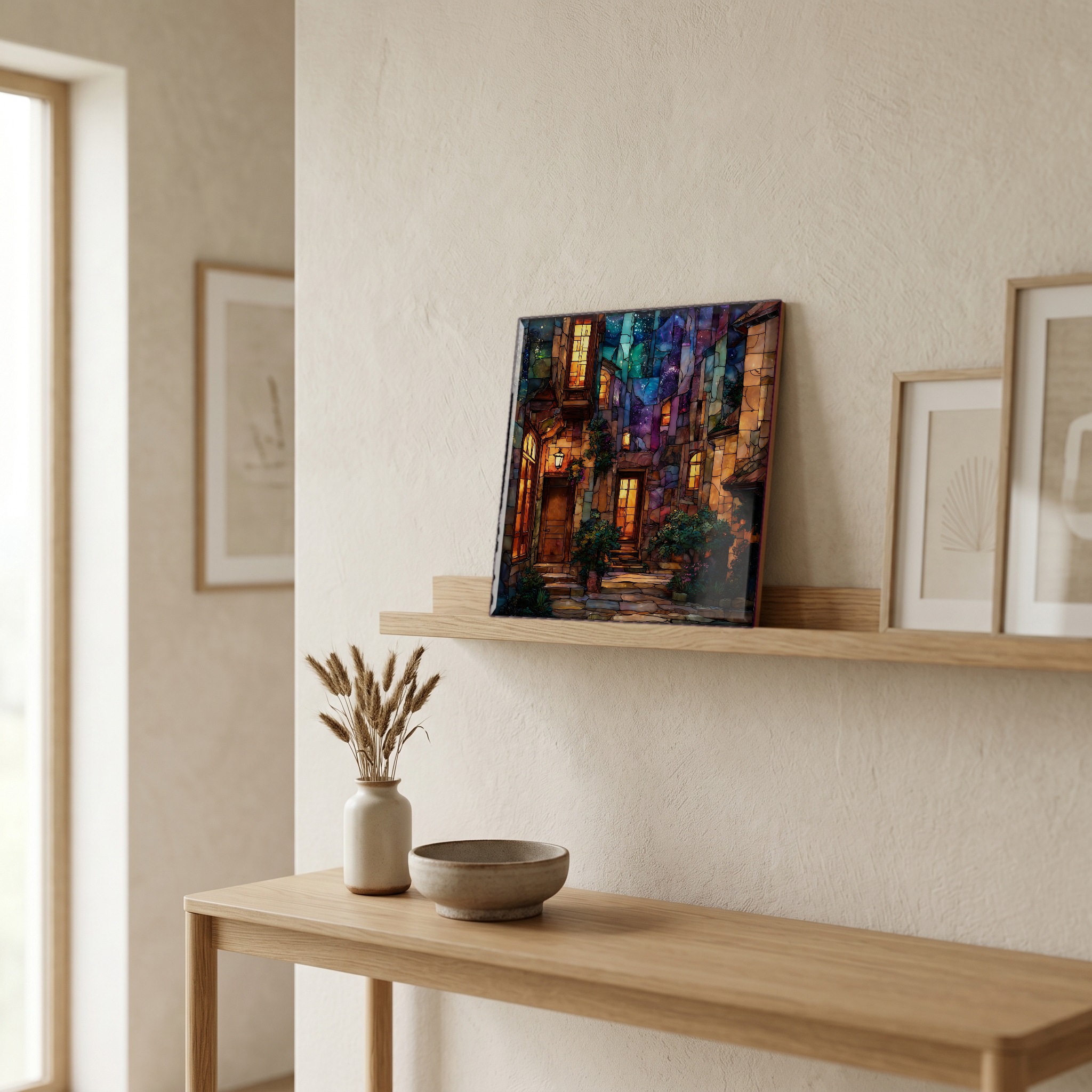
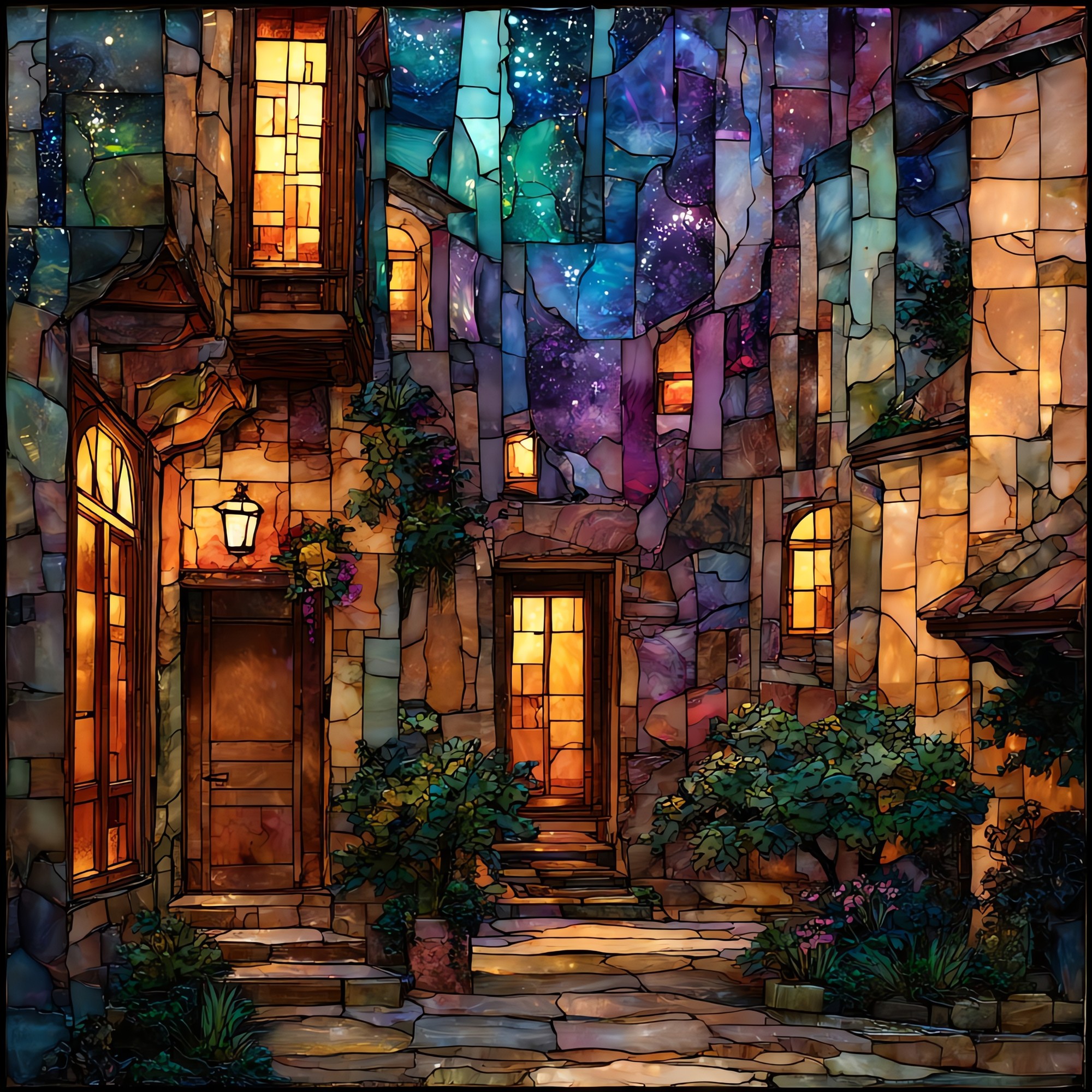
Juliet's Balcony
shown on ceramic, 12-inch tileItaly
in old Verona, off Piazza delle Erbe

Juliet's Balcony

the balcony the letters keep finding.

Where it lives

Not only on a wall.

A small tile on the nightstand catching the morning. A larger one above the fire. Yours, wherever you spend the slow hours.
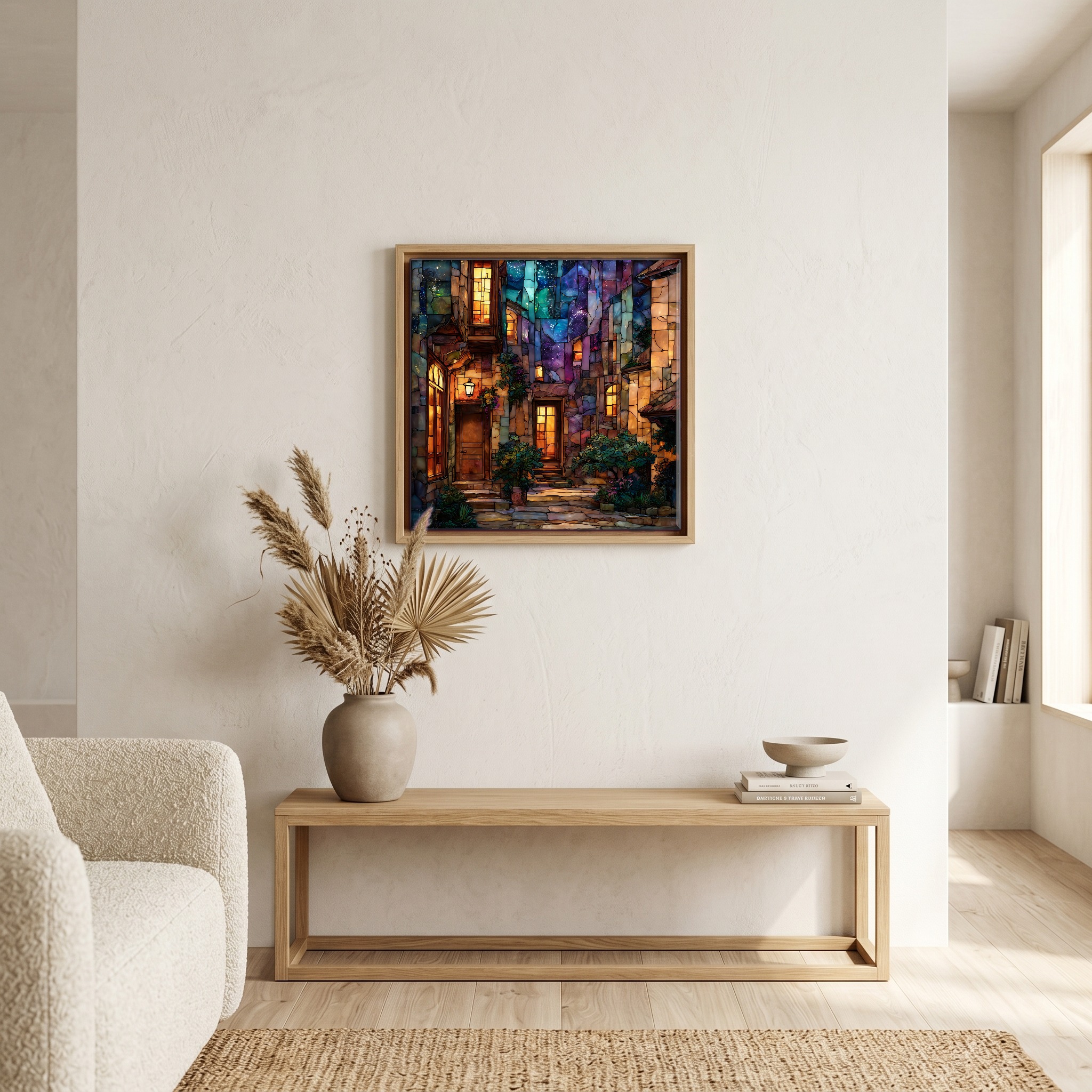
Above the bench, in a warm oak surround.
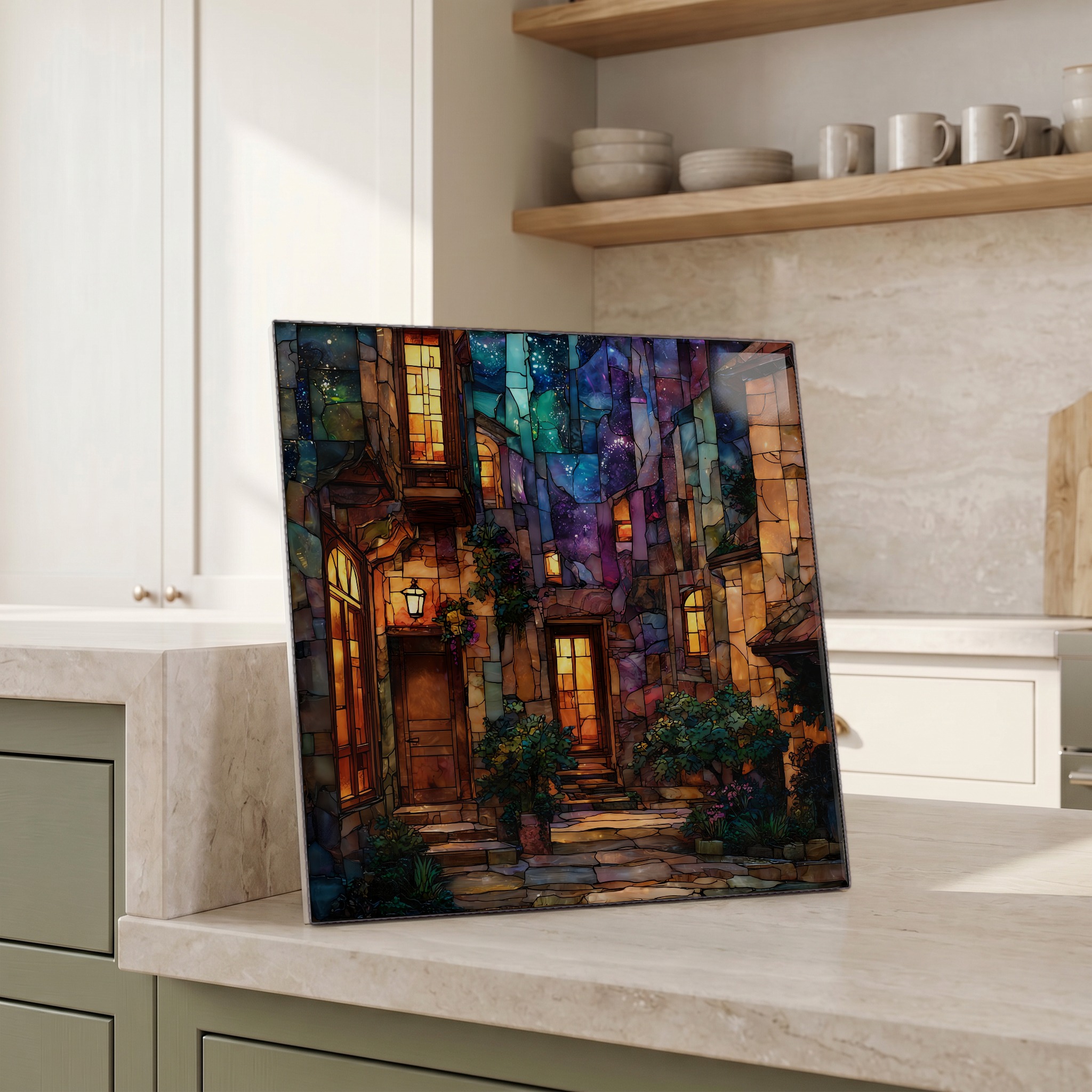
Beside the kettle, propped on the counter.
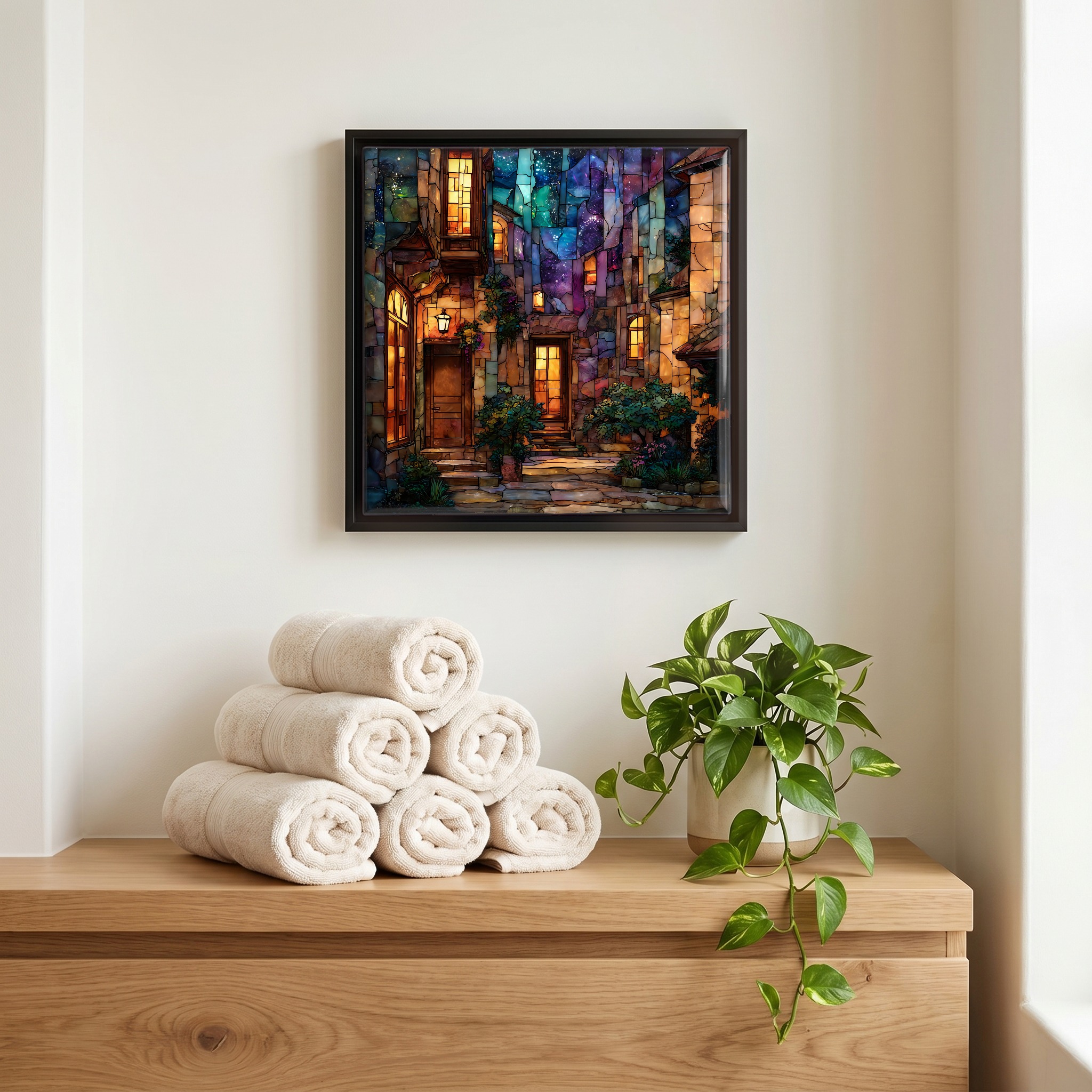
Above the linens, in a slim black surround.
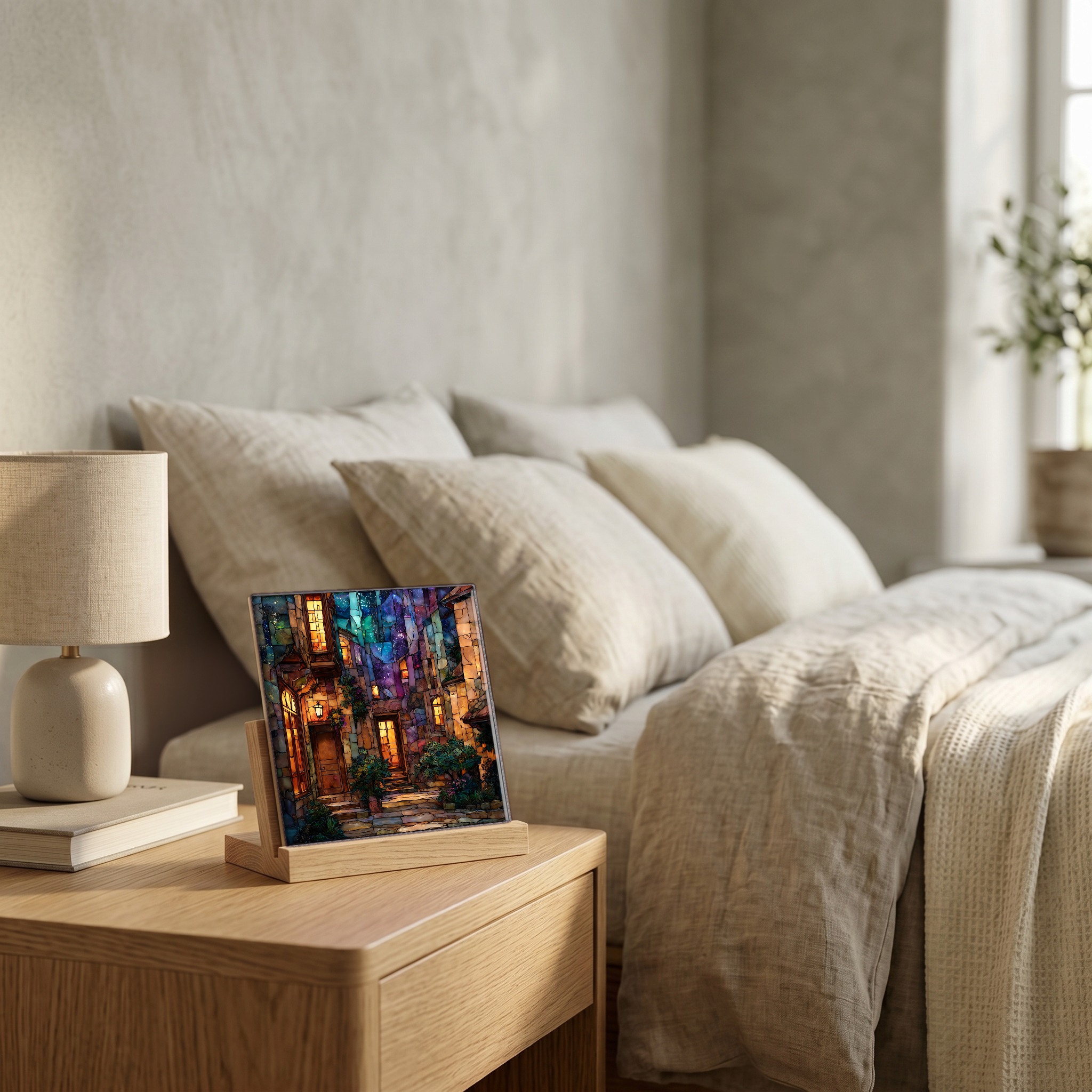
On the nightstand, on a light oak stand.
On a picture ledge, where the light comes in.
a note from the studio

A small stone balcony above a narrow courtyard off Via Cappello, in the part of old Verona that once belonged to the Cappello family, the name Shakespeare adapted to Capulet. The balcony itself is a twentieth-century addition, set into a thirteenth-century wall. A bronze Juliet stands below. The walls of the entry passage carry letters and notes, fixed and unfixed. The Club di Giulietta still answers the letters that arrive addressed to her. People come for the story; the story keeps gathering around the stone.
from the studio
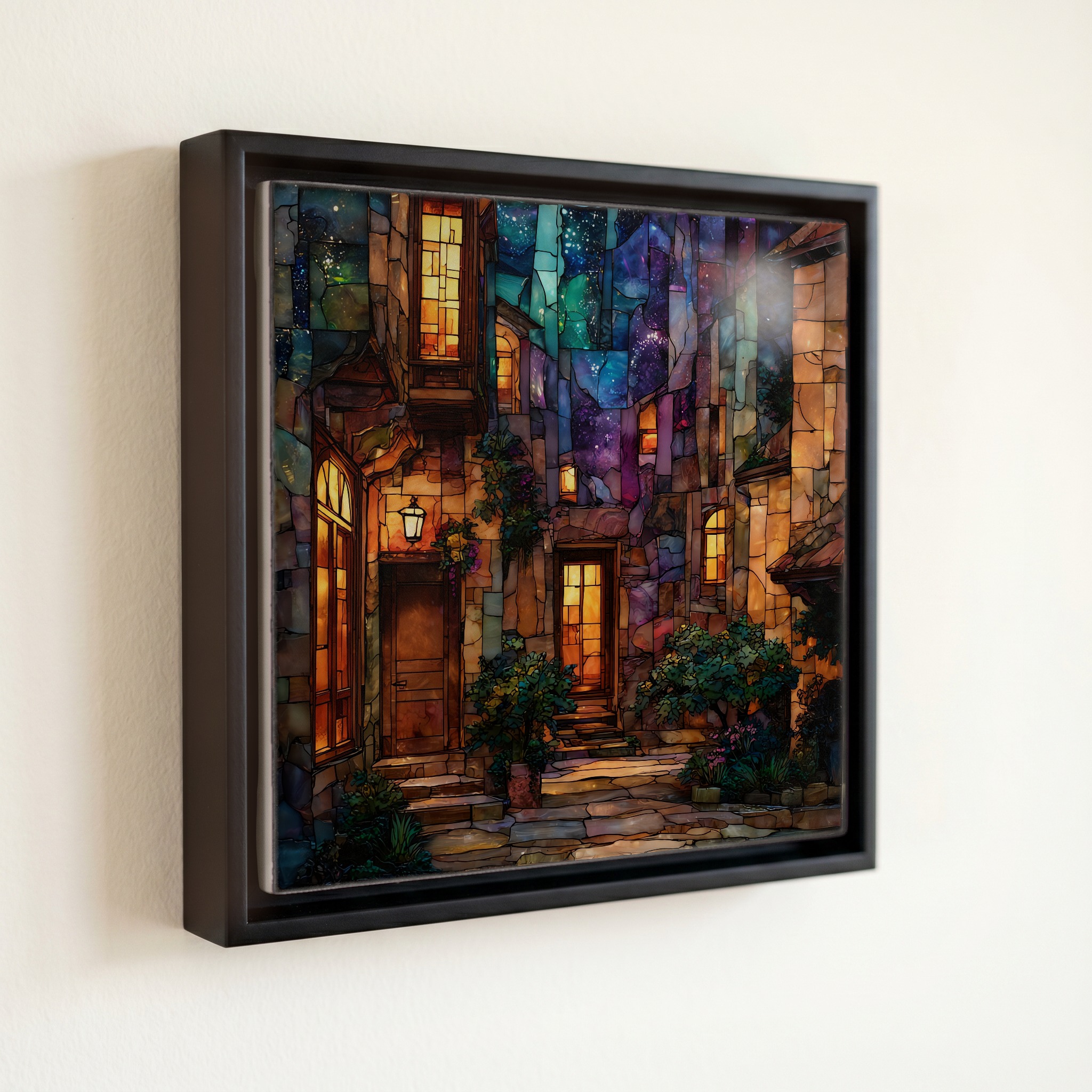
shown in a slim black floating frame · 6 × 6 in
— bring it home

Juliet's Balcony, on ceramic.

Each tile is finished by hand in our Knoxville studio. Artwork is slowly infused into the ceramic surface under high heat and pressure, and rests beneath a thin glossy finish. The colour lives in the surface, not on top of it.

What kind of piece?
One tile — square or rectangle.
How big?
the popular one — counter, shelf, nightstand
6 × 6 in · 15 cm · 1.6 lb
Surface finish
A clear glossy finish — the artwork reads as if under resin. Ideal for show-pieces and framed wall art.
How it sits
A hidden cleat — sits ¼″ proud of the wall.
$58
Hand-finished and shipped from our studio at the foot of the Smokies. On your wall in about ten days.
size
6 × 6 in
15 cm
weighs
1.6 lb
solid in the hand
surface
ceramic, hand-finished
art rests beneath a thin glossy finish
from
Knoxville, TN
our family studio, at the foot of the Smokies
— start a Coaster Set

Pick any four 4-inch tiles — National Parks you've been to, a Smokies set, the four seasons of one place. $ for a set of , cork-backed, ready to live on the table.
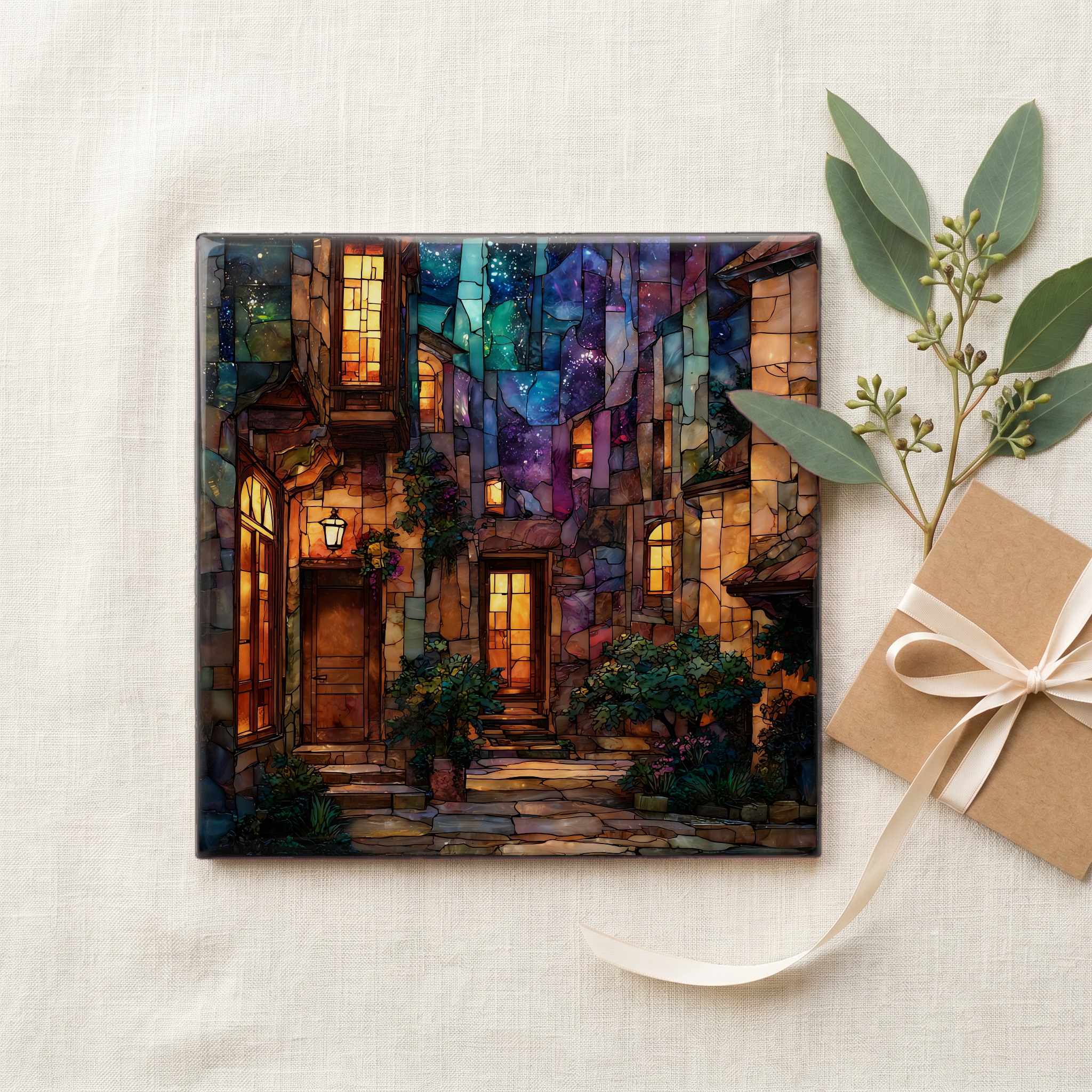
comes gift-ready
comes gift-ready

Each tile ships in a kraft box, tied with cream ribbon, with a handwritten note from the studio if you'd like to add one.
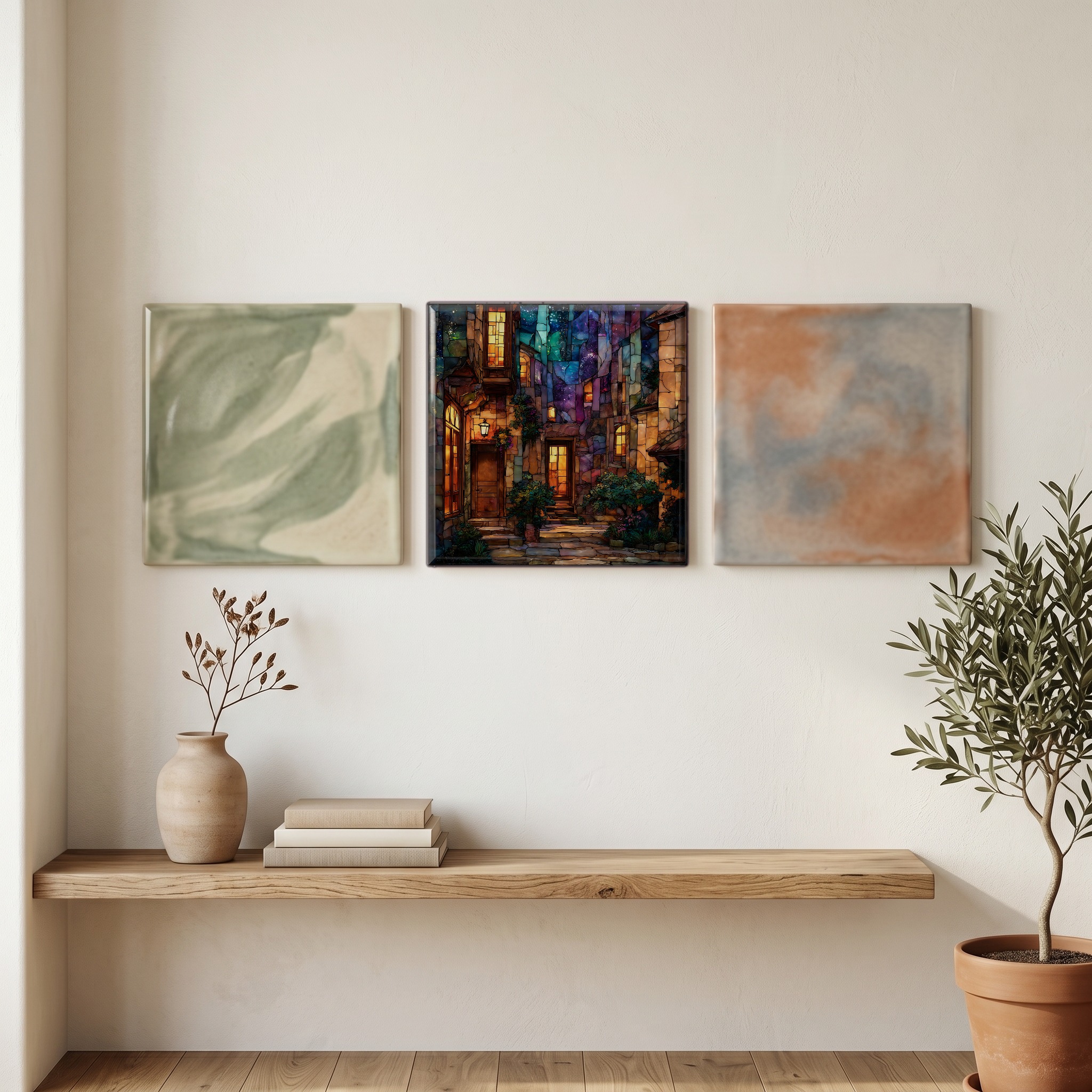
or build a grouping
or build a grouping

Three or five different vistas, hung together — a chapter of places you've been, or want to go.

about Juliet's Balcony

The place, in three passes.

A little of what's known, in case you fall down the rabbit hole — or want to go see it yourself.
the place

Casa di Giulietta sits at Via Cappello 23 in the historic centre of Verona, an old city on the Adige river in the Veneto region of northern Italy, roughly 120 kilometres west of Venice and 160 kilometres east of Milan. The thirteenth-century house belonged to the Dal Cappello family for centuries; the surname's similarity to Shakespeare's Capulets is what fixed the building to the play. Verona's historic centre was inscribed on the UNESCO World Heritage List in 2000 for its preserved Roman, medieval, and Renaissance layers, including the Arena di Verona a few minutes' walk to the west. The balcony is two minutes from Piazza delle Erbe and the river.

— informed by Wikipedia, UNESCO
the stone

The balcony itself is a twentieth-century invention. The house is medieval, with most sources placing it in the thirteenth century, but the small marble balcony projecting into the courtyard was assembled in 1936 by the Verona civic museum from an old sarcophagus, set into a wall that already existed. The architect was Antonio Avena. The work belongs to a programme of romantic restoration the city undertook in the 1930s, when it began promoting Verona as the city of Romeo and Juliet. The bronze statue of Juliet in the courtyard, by Nereo Costantini, was placed in 1972 and replaced with a copy in 2014 after decades of visitors rubbing the right breast for luck wore the original through.

the visit

The courtyard is open to the street and free to enter; only the museum interior, the rooms of the house set with period furniture and pieces from the 1968 Zeffirelli film, requires a ticket, with an adult fare around 6 euros. Standard hours are 09:00 to 19:00, Tuesday through Sunday, with the courtyard accessible most other hours. The site is heavily visited, and the courtyard is small; the wait to stand directly under the balcony can be long in summer. Letters left for Juliet are collected and answered by the Club di Giulietta, a volunteer group founded in 1972 that has replied to correspondence from more than a hundred countries.

where
Italy · Verona, Veneto
position
45.4423° N · 10.9979° E
the neighborhood

What's nearby.

A handful of named places within an hour's walk or short drive. Some we've already painted; some we will.
1 km N
Piazza delle Erbe
medieval market square
1 km N
Piazza dei Signori
civic square
1 km SW
Arena di Verona
Roman amphitheatre
1 km NE
Ponte Pietra
Roman bridge
1 km W
Castelvecchio
medieval castle
N
Juliet's Balcony
Piazza delle Erbe
Piazza dei Signori
Arena di Verona
Ponte Pietra
Castelvecchio
common questions

What people ask.

A few questions we get about Juliet's Balcony — and about bringing the piece home.
about the place

Juliet's Balcony is at Casa di Giulietta, Via Cappello 23, in the historic centre of Verona, in the Veneto region of northern Italy. The site is a short walk from Piazza delle Erbe, near the Adige river, and about 120 kilometres west of Venice.

No. Juliet is a fictional character from Shakespeare's Romeo and Juliet. The house at Via Cappello 23 belonged to the Dal Cappello family, whose surname resembled Shakespeare's Capulets, which is why the building became associated with her in the early twentieth century.

The balcony was added in 1936 by the Verona civic museum, assembled from a Roman-era marble sarcophagus and attached to the existing thirteenth-century wall. The architect Antonio Avena oversaw the work as part of a wider effort to develop Verona's identity as the city of Romeo and Juliet.

The tradition of writing to Juliet for counsel in love goes back more than a hundred years. Letters arrive from around the world, often addressed simply to Juliet, Verona, and are answered by the Club di Giulietta, a volunteer group founded in 1972.

Yes, with a museum ticket. The balcony is reached from inside Casa di Giulietta, which charges an adult admission of about 6 euros. The courtyard below, with the bronze Juliet statue and the letter-covered passage, is open to the street and free to enter.

Visitors rub the right breast of the bronze Juliet for luck in love, a habit that wore through the original 1972 statue by Nereo Costantini. The figure now standing in the courtyard is a 2014 replica; the original is preserved indoors.

Yes. Verona was inscribed on the UNESCO World Heritage List in 2000 for the layered preservation of its Roman, medieval, and Renaissance fabric, including the Arena di Verona and the streets around Casa di Giulietta.

about the piece in your home

It has carried well as a gift for both. The artwork shows the courtyard's layered romance rather than a postcard view, which suits people who already know Verona or who tie the play to a particular evening. A Keepsake or Small with a handwritten studio note reads well for an anniversary; a Medium sits comfortably above a bedroom dresser.

The piece sits comfortably in old-world European, library-warm, and jewel-tone maximalist rooms, where the deep reds and warm golds of the stained-glass palette have something to play against. It also works in a quieter Italian-modern interior as the single emotional anchor on an otherwise calm wall.

Yes. The shift back toward rooms that tell a story, books, candles, a single strongly associated piece, suits the work well. It belongs with the same instinct that has brought back wood-panelled libraries and the colour-rich rooms photographed for House and Garden over the last two years.

Above a console or a narrow sofa, a single Large holds the wall on its own. Above a full sofa, most rooms want more presence: a 4-tile Mural for a balanced block, or a 9-tile Mural where the wall is wide and you want the place to carry the room.

Yes. For a bathroom, shower, or kitchen backsplash, choose the Dura Satin or Matte finish; both are scratch-resistant and built for damp, vertical installation. The Glossy finish is the show-piece option and best kept to drier walls and framed display.

A soft microfibre cloth with plain water is all it needs. The colour lives in the ceramic surface beneath a thin glossy finish, so it will not fade or rub off with normal cleaning. Skip abrasive pads and harsh solvents.

Yes. Every WenderVista piece is created in-house by Reid Wender and hand-finished in our Knoxville studio. The art is not licensed or reprinted from another source; each place is painted in our own visual language and made to order.

if this one stayed with you

A few you might also love.

Hand-picked by the eye that found Sorapis. Same air, same kind of quiet.
— a collection

The Italian Dolomites,
painted slow.

The valleys between Cortina and Val Gardena, the tarns you walk an hour to see, the towers that turn the colour of a banked fire just before dark. Wander the collection by valley, by season, or follow the path Reid walked.

Tre Cime
Braies
Misurina
Sorapis
Cinque Torri
Sassolungo
Marmolada