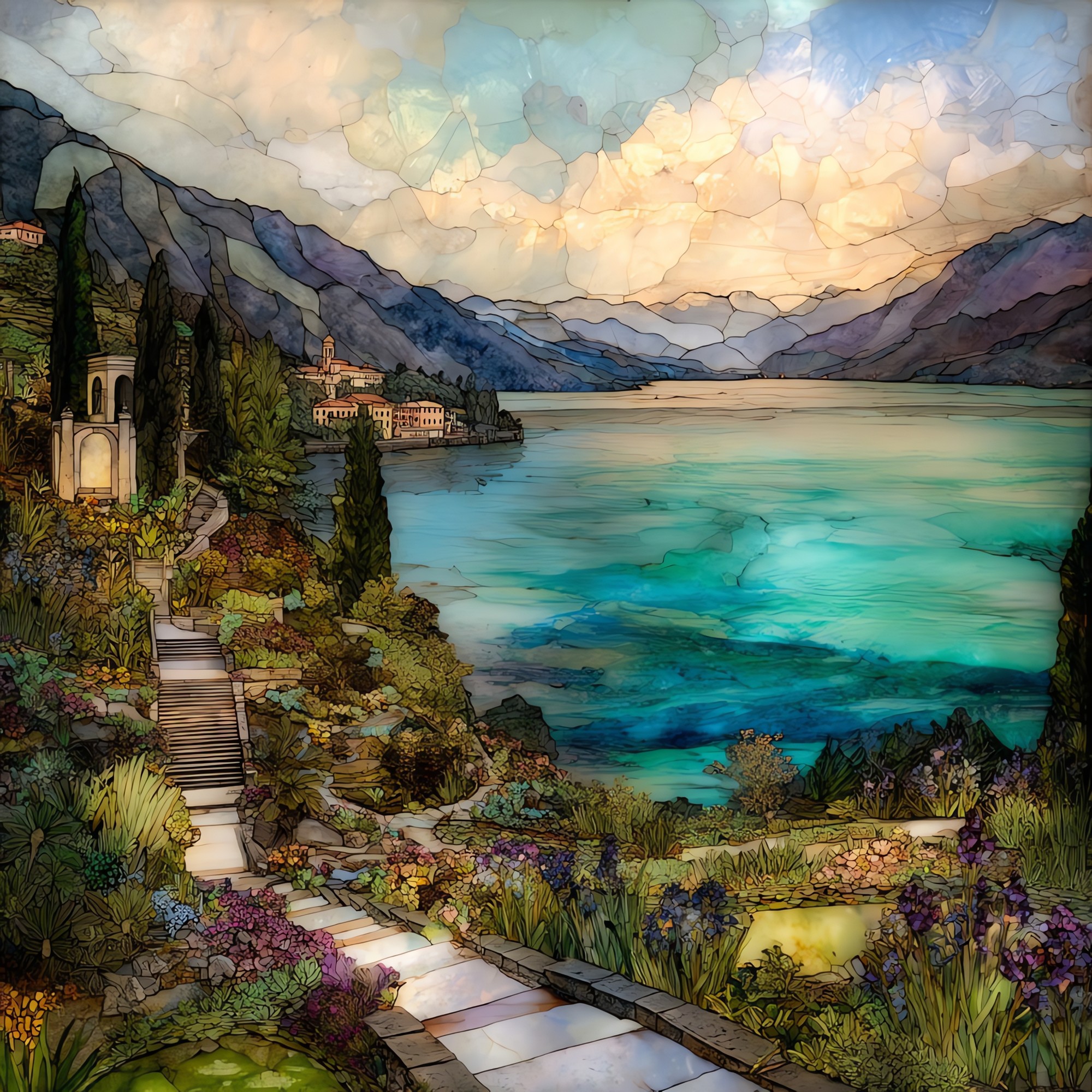
Isola Bella Lake Maggiore
— where bare rock was taught to bloom.
Not only on a wall.
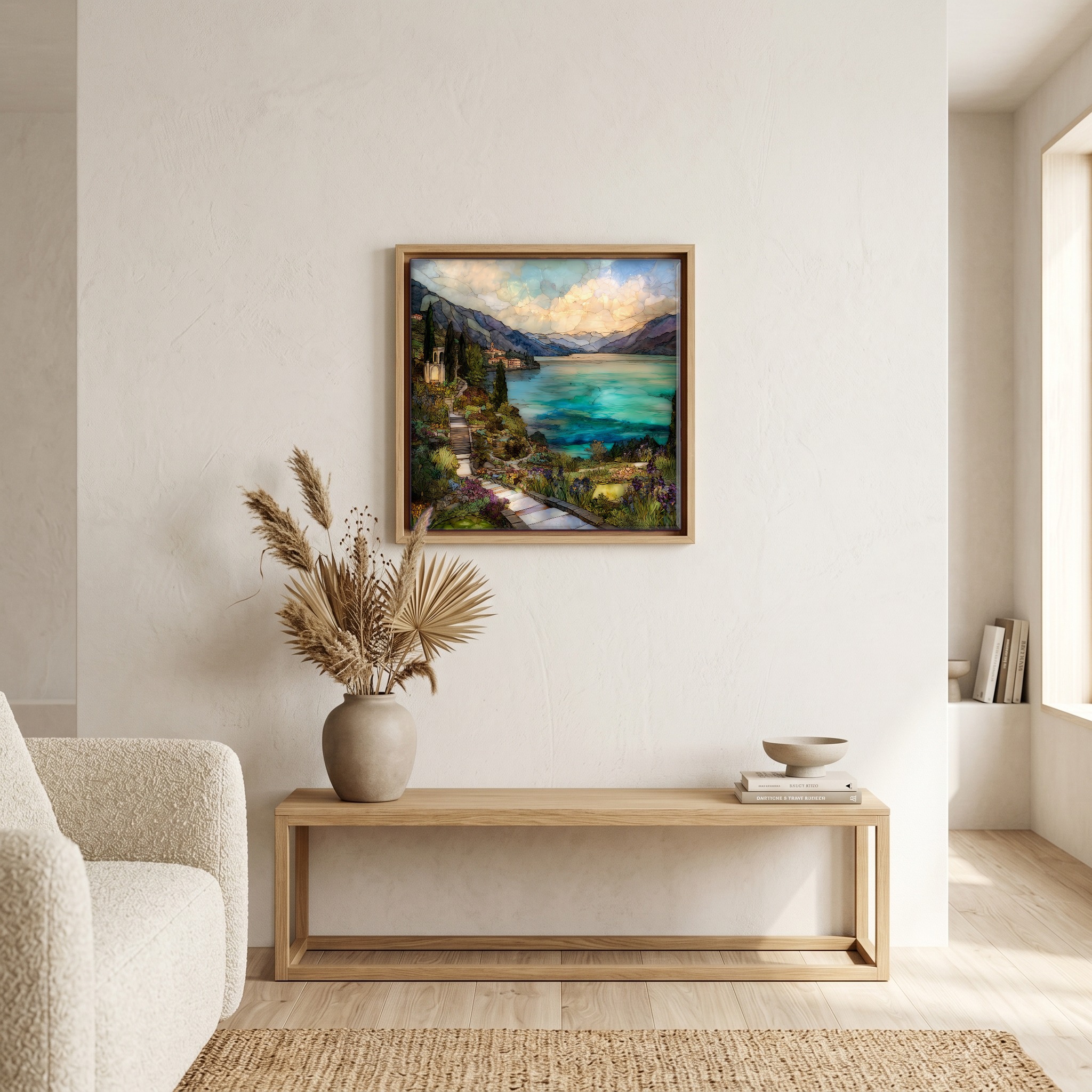
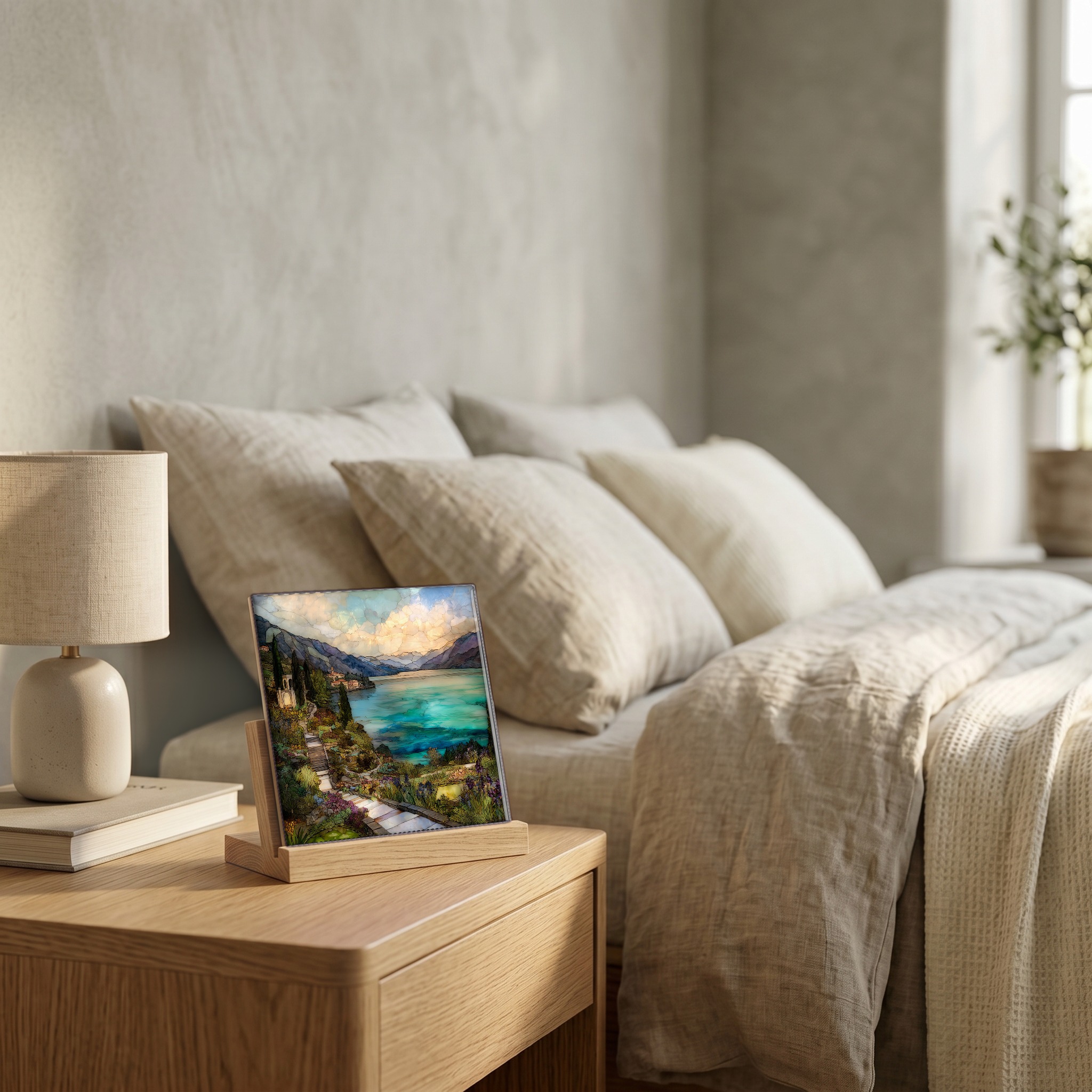
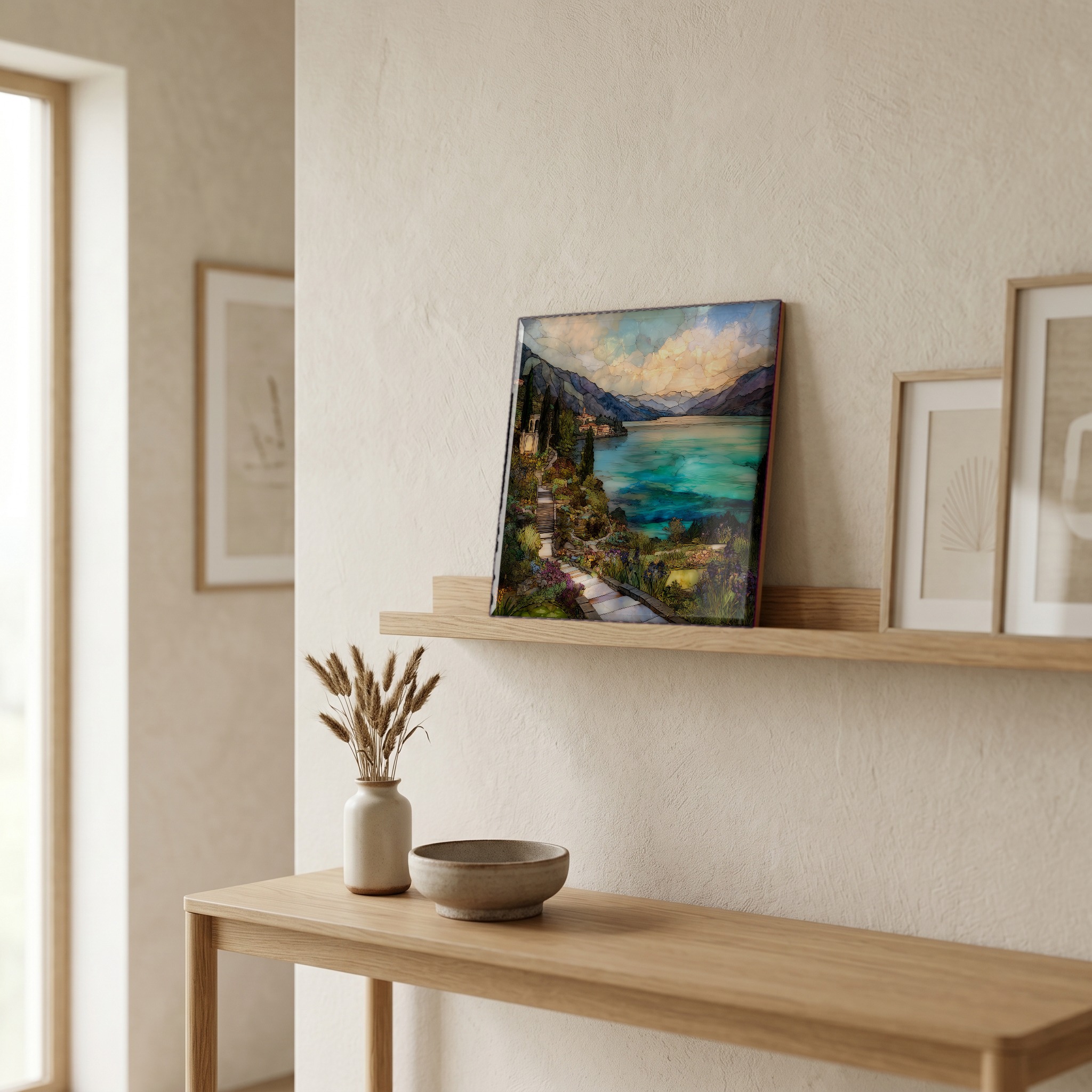
“A baroque palace and a pyramid of garden terraces, built on what was a bare fishermen's rock until 1632. The Borromeo family raised ten levels out of the water and crowned the top with a unicorn, their family emblem. White peacocks still cross the parterres. From Stresa it is a few minutes by boat across the Borromean Gulf, and on a still morning the lake holds the whole green staircase upside down.
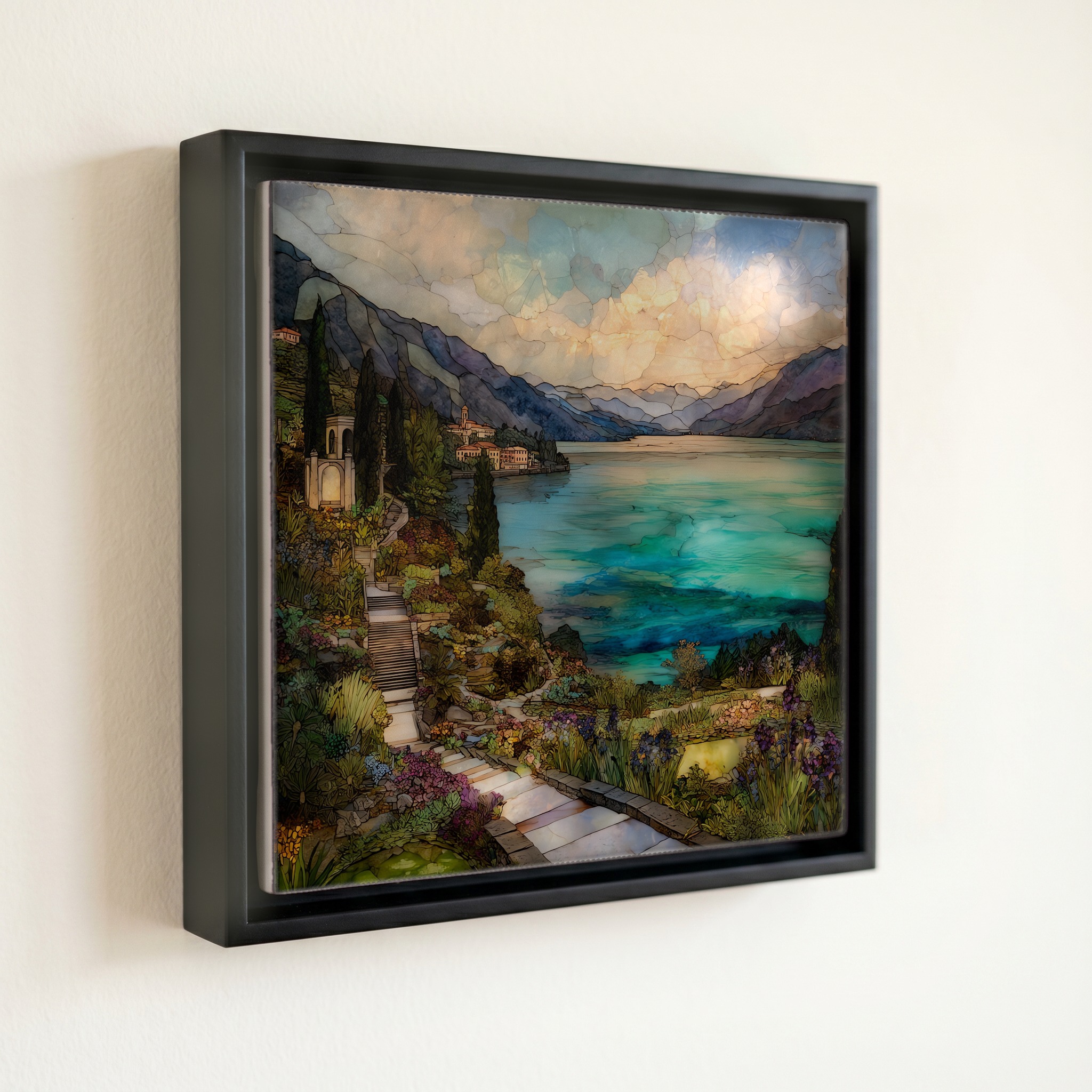
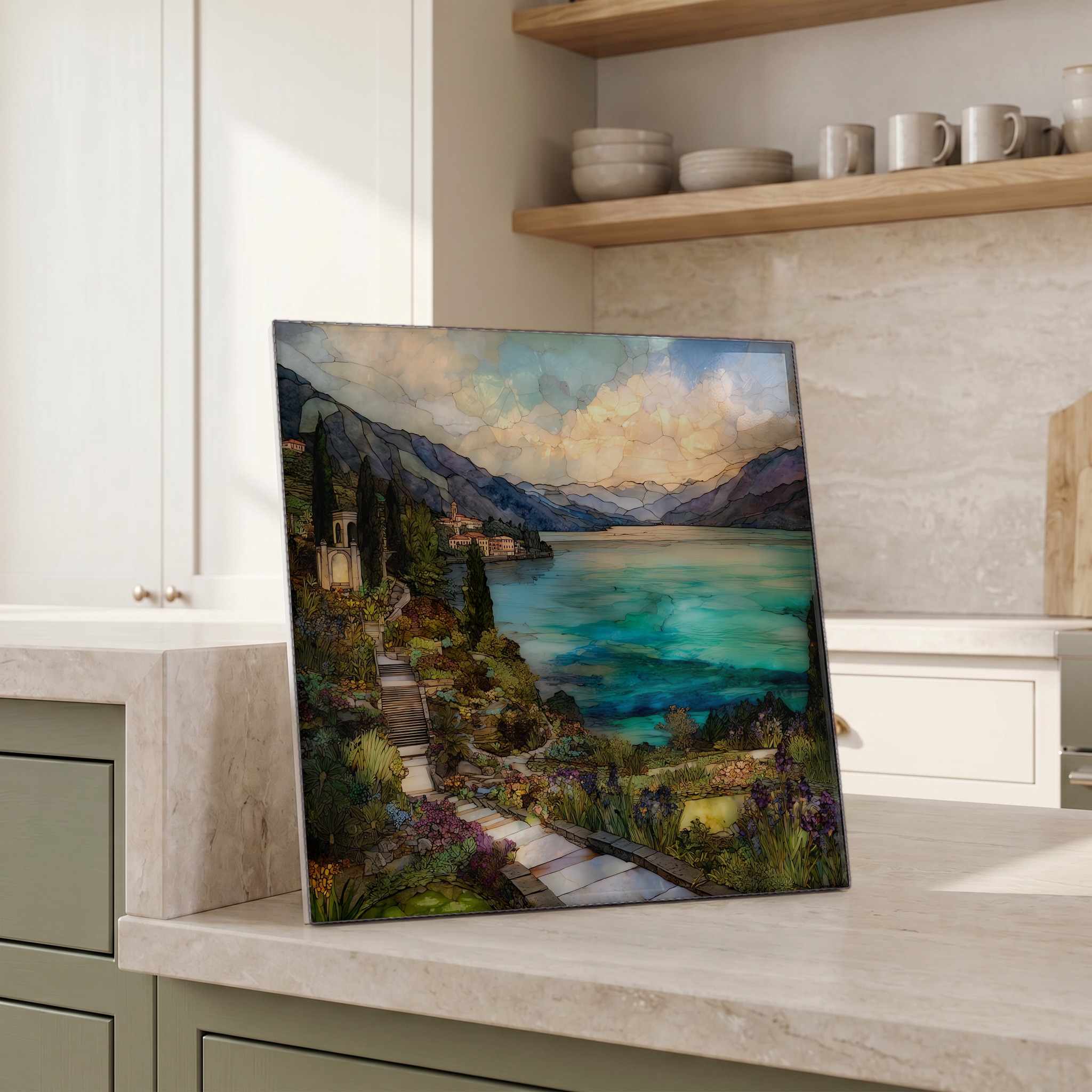
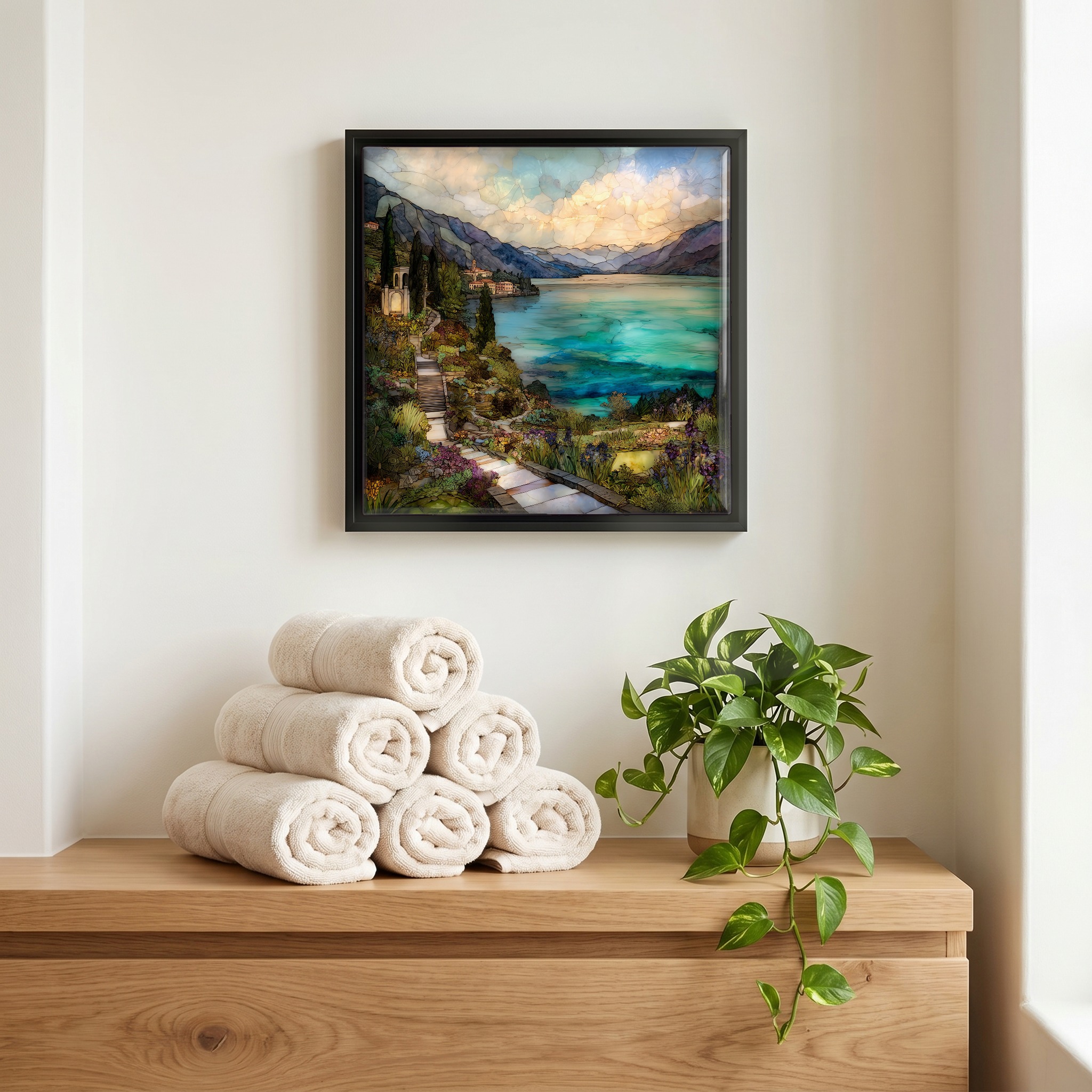
Isola Bella Lake Maggiore, on ceramic.
Each tile is finished by hand in our Knoxville studio. Artwork is slowly infused into the ceramic surface under high heat and pressure, and rests beneath a thin glossy finish. The colour lives in the surface, not on top of it.
Pick any four 4-inch tiles — National Parks you've been to, a Smokies set, the four seasons of one place. $ for a set of , cork-backed, ready to live on the table.
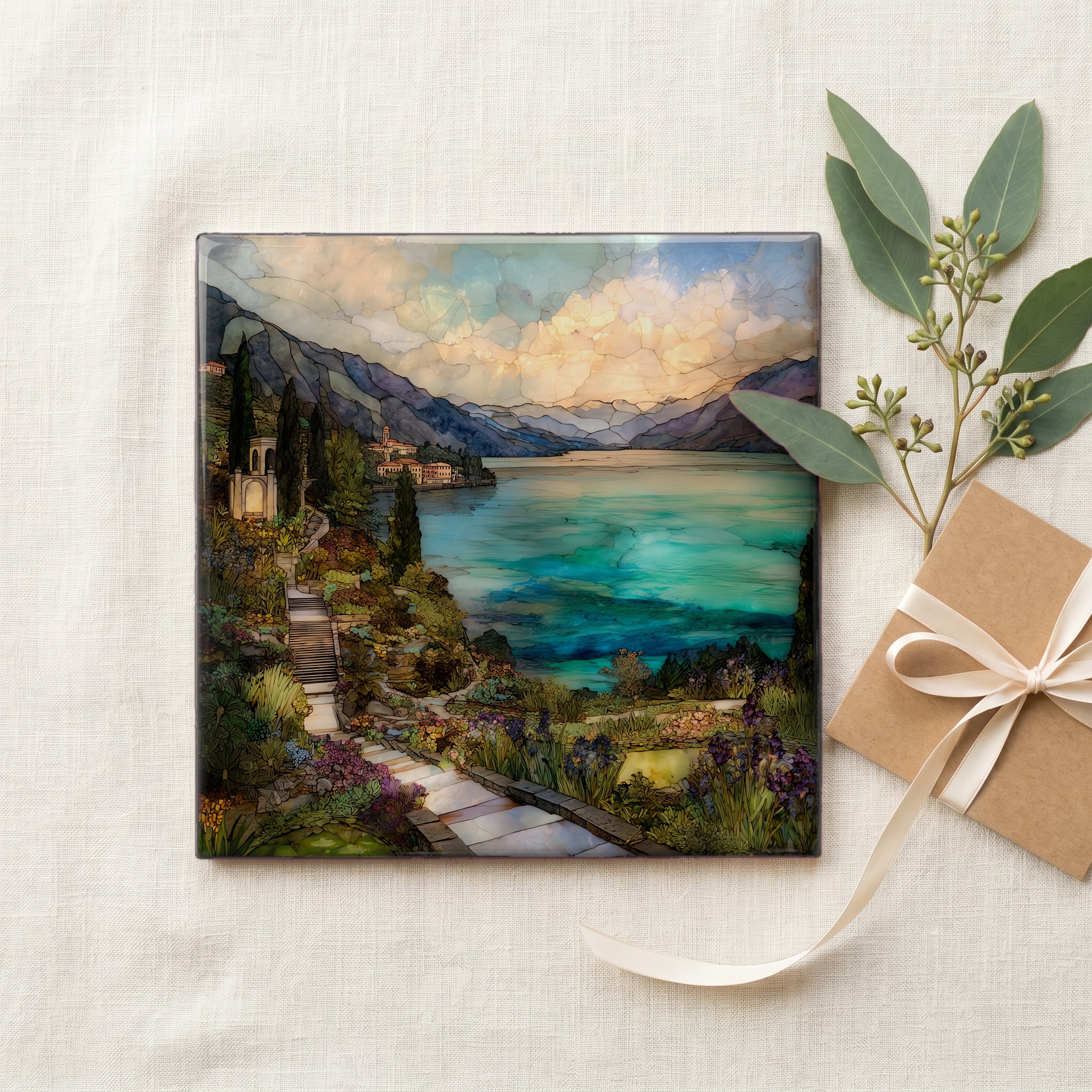
Each tile ships in a kraft box, tied with cream ribbon, with a handwritten note from the studio if you'd like to add one.
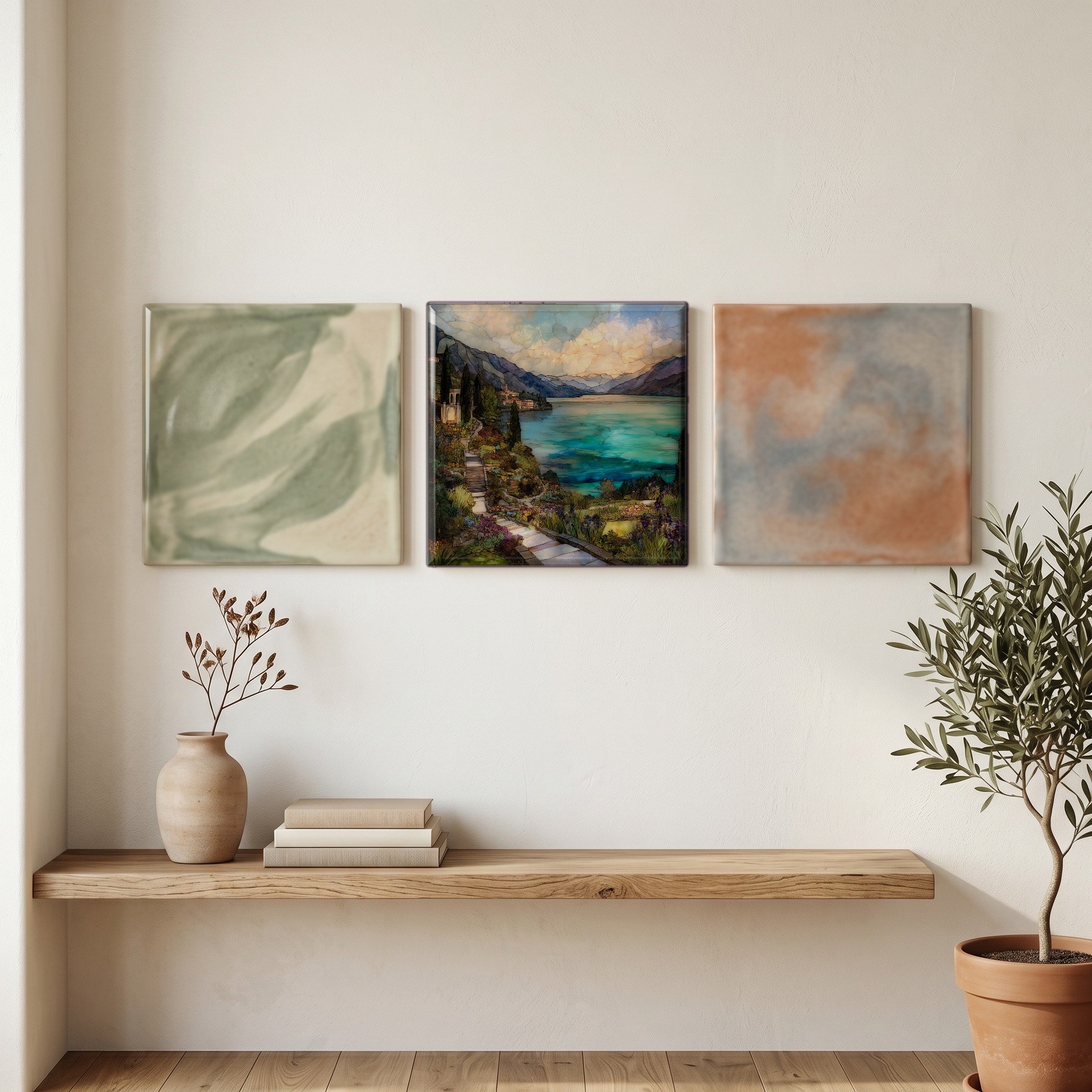
Three or five different vistas, hung together — a chapter of places you've been, or want to go.
The place, in three passes.
Isola Bella is one of the three Borromean Islands in Lake Maggiore, lying in the Borromean Gulf about 400 metres off the town of Stresa, in the Piedmont province of Verbano-Cusio-Ossola. The island is small, roughly 320 metres long by 400 metres wide, and sits on a lake whose surface rests near 193 metres above sea level, shared by Piedmont, Lombardy and the Swiss canton of Ticino to the north. Regular ferries cross from the Stresa lakefront in a few minutes, with services also from Baveno and Verbania. Almost the entire island is taken up by the Palazzo Borromeo and its gardens; a small fishing village of narrow lanes holds the northern end.
Until 1632 the island was a bare rock with a fishing hamlet and two small churches. That year Carlo III of the House of Borromeo began a palazzo for his wife, Isabella d'Adda, whose name the island carries. Work stopped during the mid-century plague and resumed under his sons; the gardens were inaugurated in 1671 under Carlo IV. The baroque garden climbs in ten superimposed terraces, a truncated pyramid rising about 37 metres above the water, built up with soil ferried over by boat. At its summit stands the Borromeo unicorn, flanked by figures of Nature and Art, while white peacocks cross the parterres below.
The Palazzo Borromeo and its gardens open to visitors from roughly mid-March to late October, the same months the ferries run most often. The palace interior holds the Borromeo art collection, a suite of shell-and-pebble grottoes built to stay cool in summer, and the room where Napoleon and Joséphine stayed in 1797. The Borromeo family has held the island since the seventeenth century and still owns it. Stresa, the gateway town on the mainland, sits on the Simplon railway line between Milan and the Alps, which is how most visitors arrive before crossing the gulf. The island is busiest around midday and quietest near opening and in late afternoon.