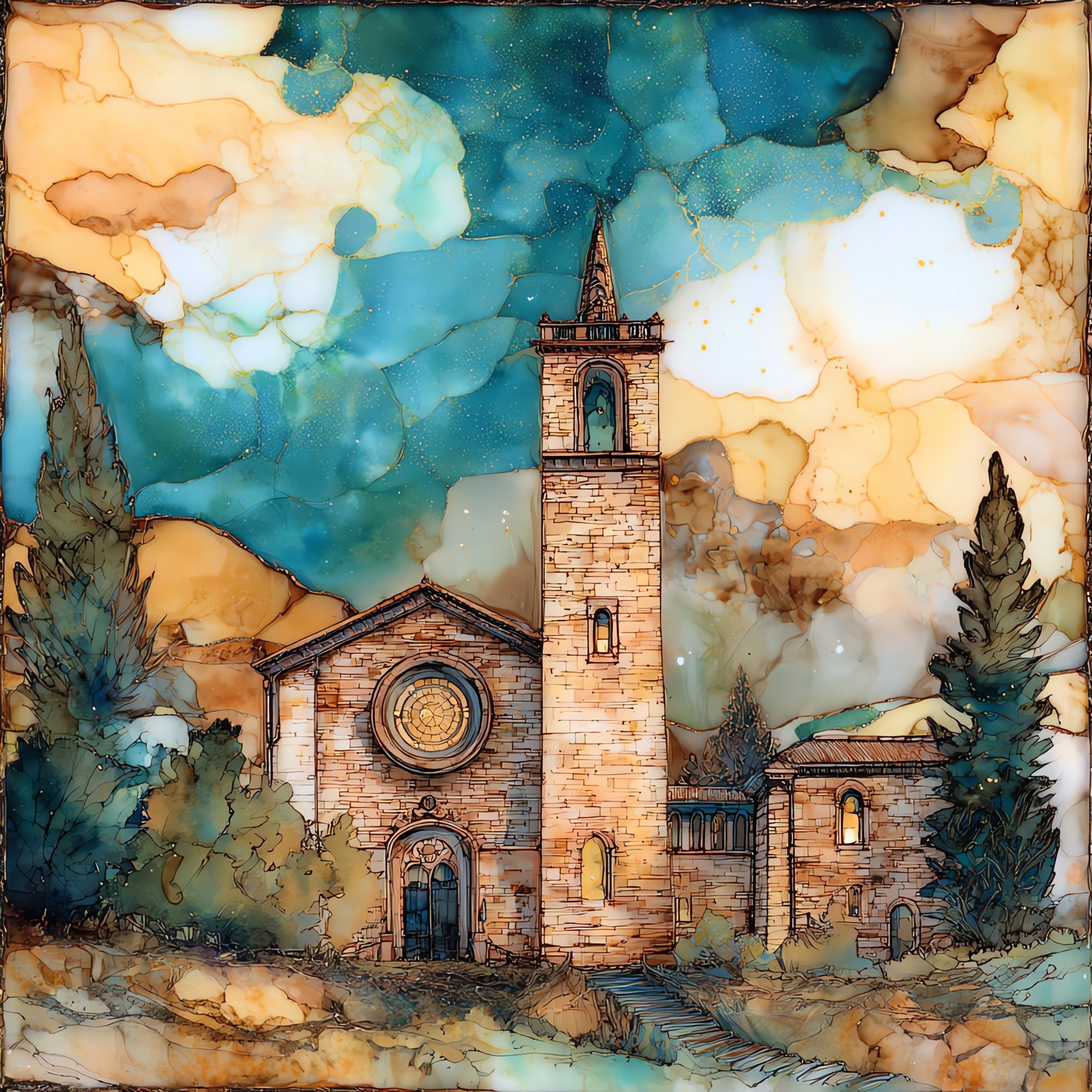
Holy House of Loreto
— — a small house under a great dome.
Not only on a wall.
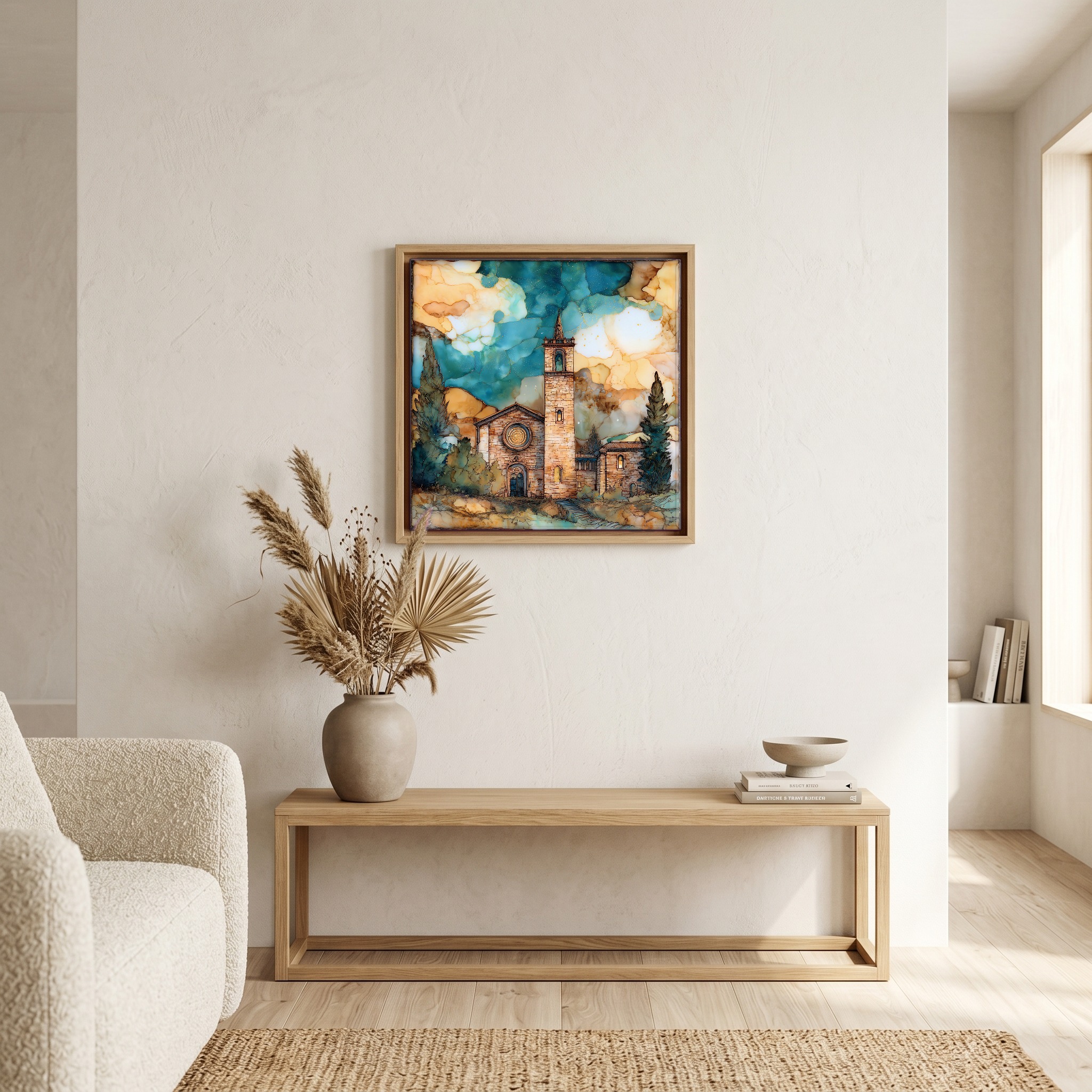
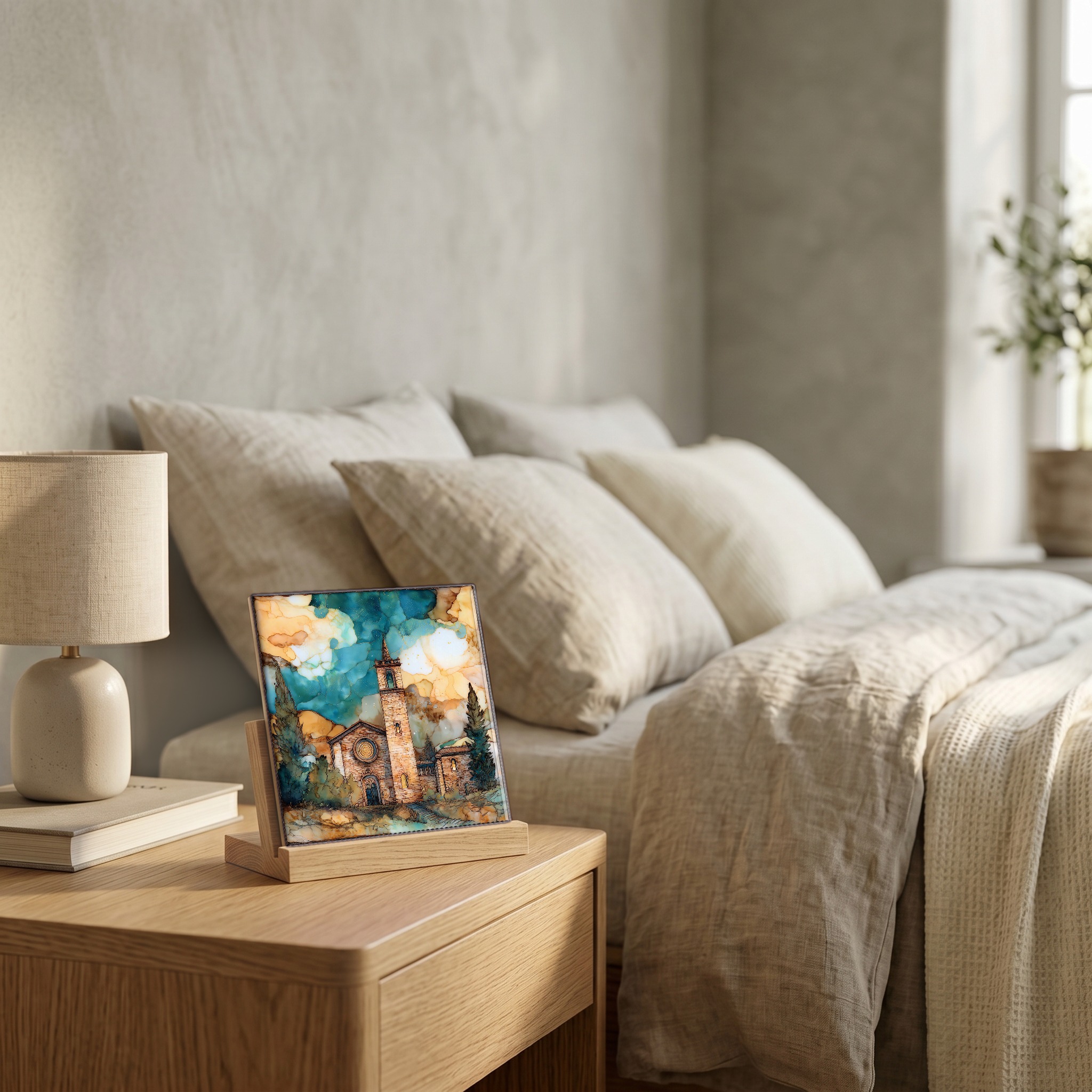
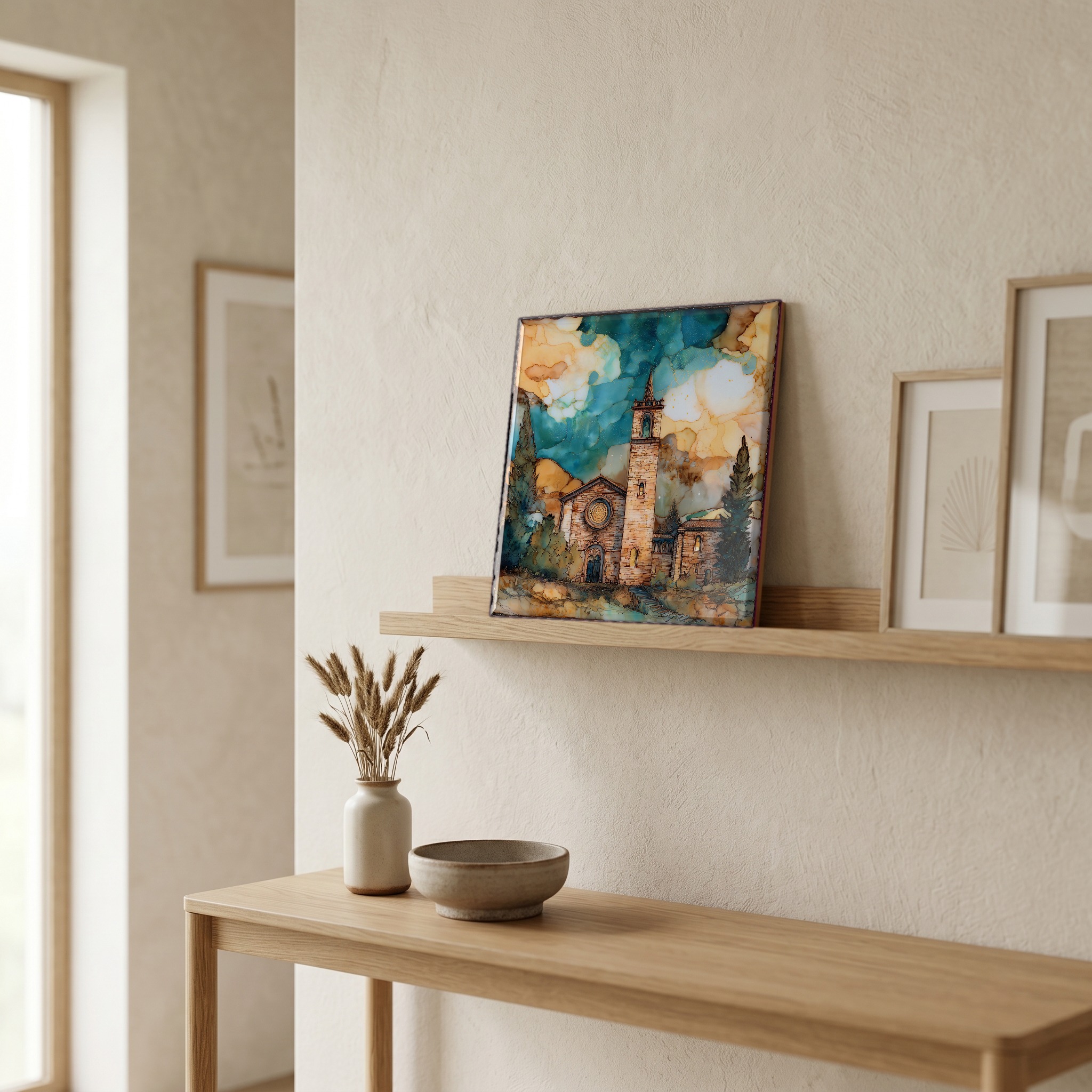
“A small stone room, four walls and a low door, kept inside a Renaissance basilica that grew up around it across two centuries. The marble screen wrapping the house was designed by Bramante in 1509; the sculptors who followed him were Sansovino, Antonio da Sangallo the Younger, and Raffaello da Montelupo. Pilgrims have been walking up the hill for seven hundred years. The town itself sits five kilometres inland from the Adriatic, on a ridge that sees weather coming from both directions. The Marche light is famously soft. From the surrounding hills, the dome of the basilica is visible before the town itself comes into view. — from the studio
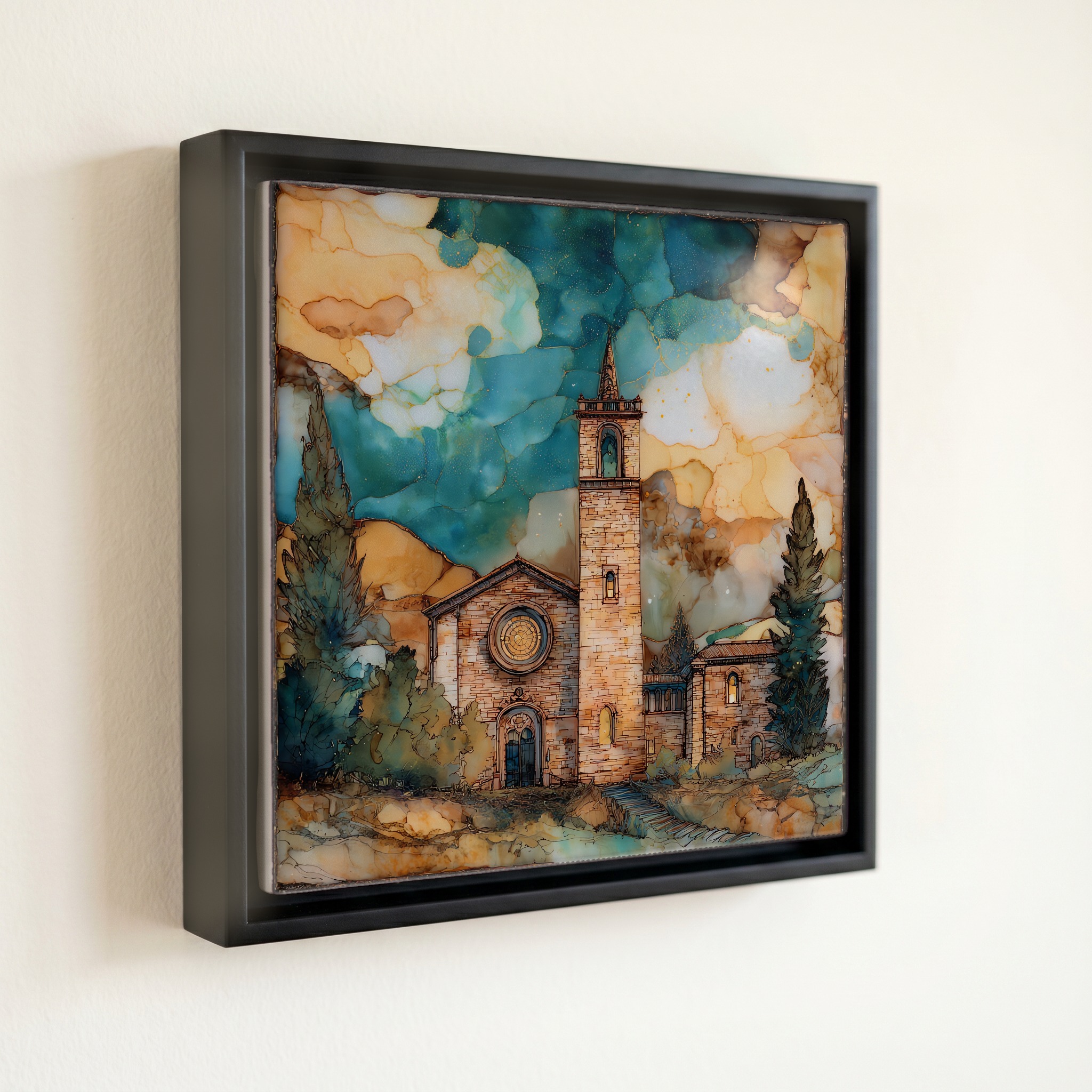
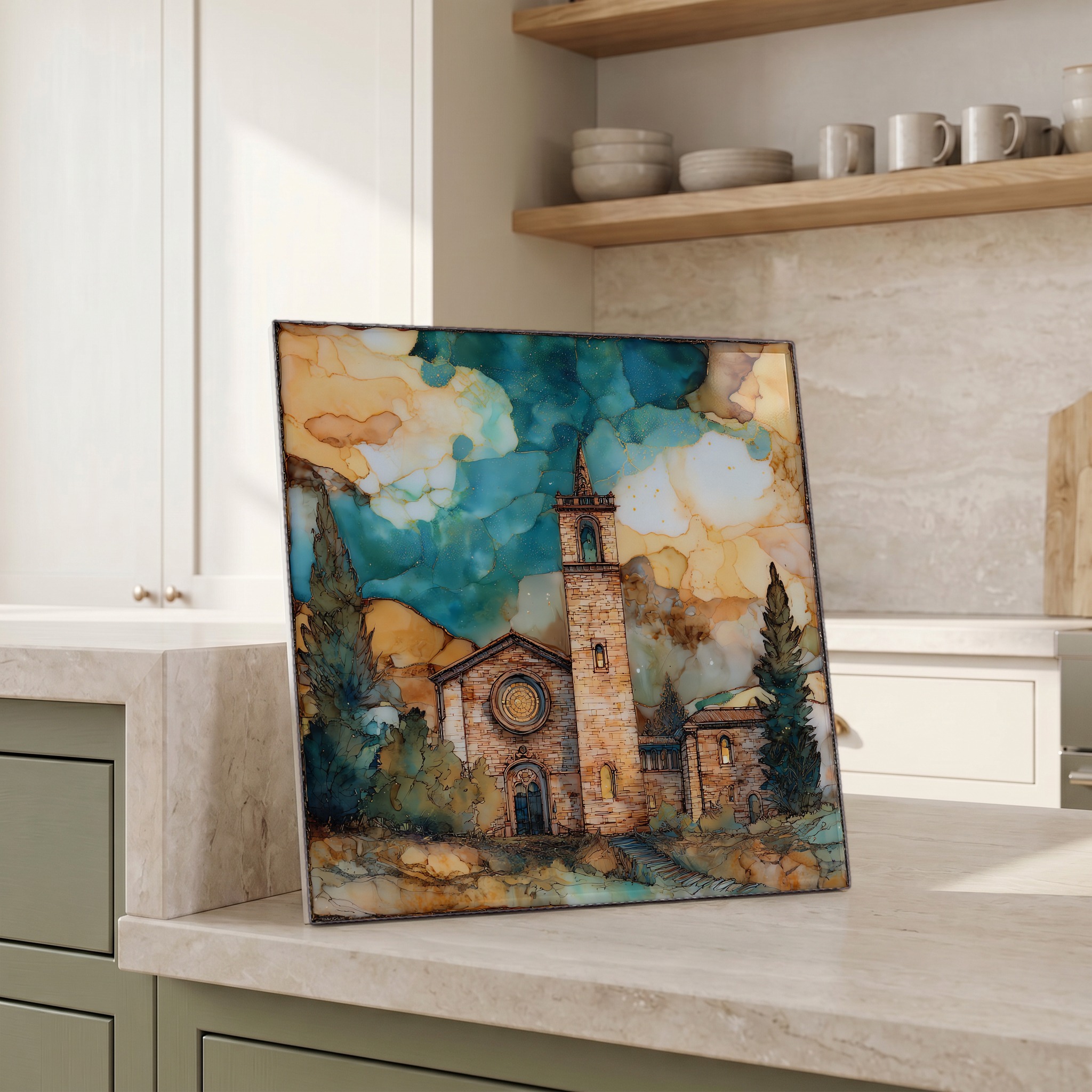
Holy House of Loreto, on ceramic.
Each tile is finished by hand in our Knoxville studio. Artwork is slowly infused into the ceramic surface under high heat and pressure, and rests beneath a thin glossy finish. The colour lives in the surface, not on top of it.
Pick any four 4-inch tiles — National Parks you've been to, a Smokies set, the four seasons of one place. $ for a set of , cork-backed, ready to live on the table.
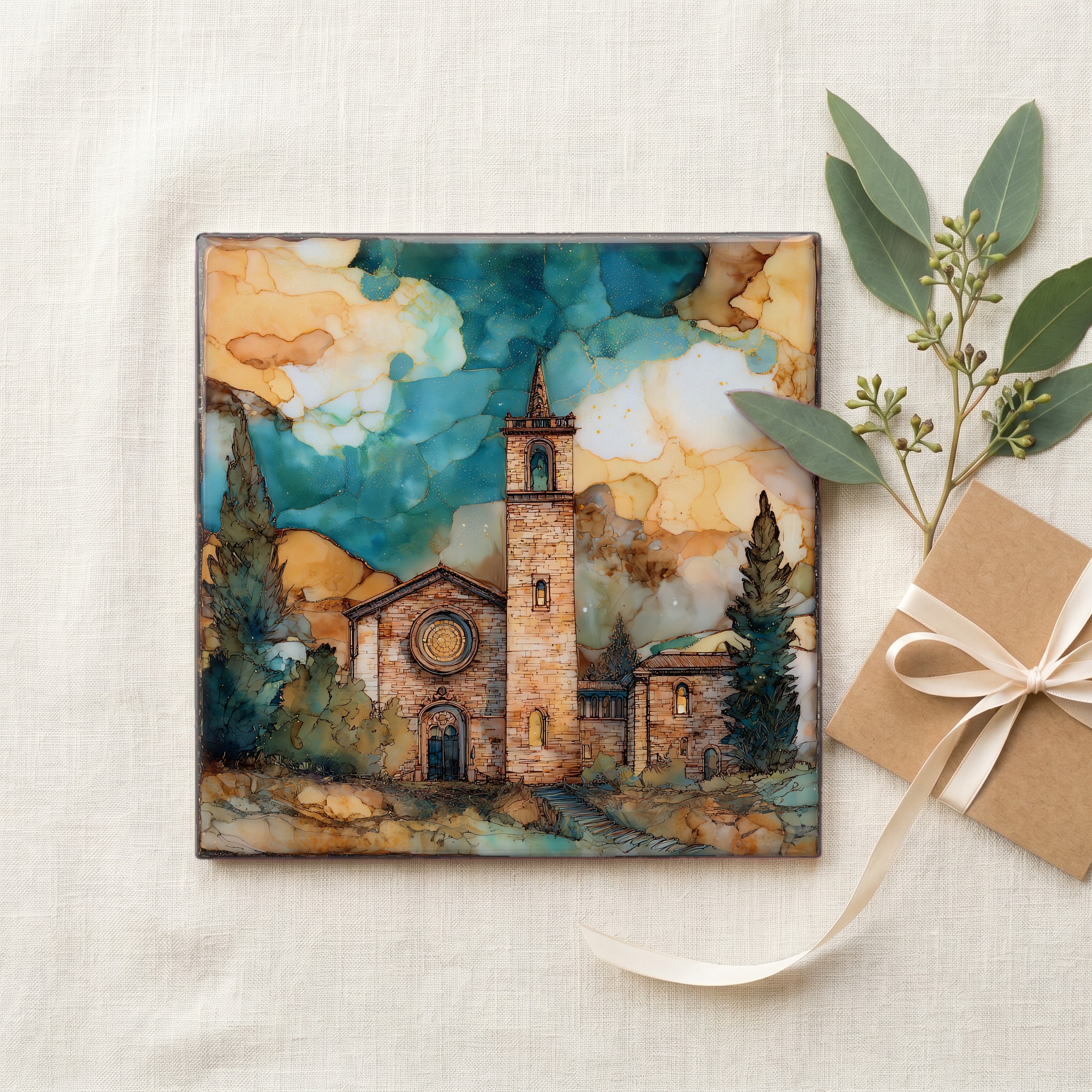
Each tile ships in a kraft box, tied with cream ribbon, with a handwritten note from the studio if you'd like to add one.
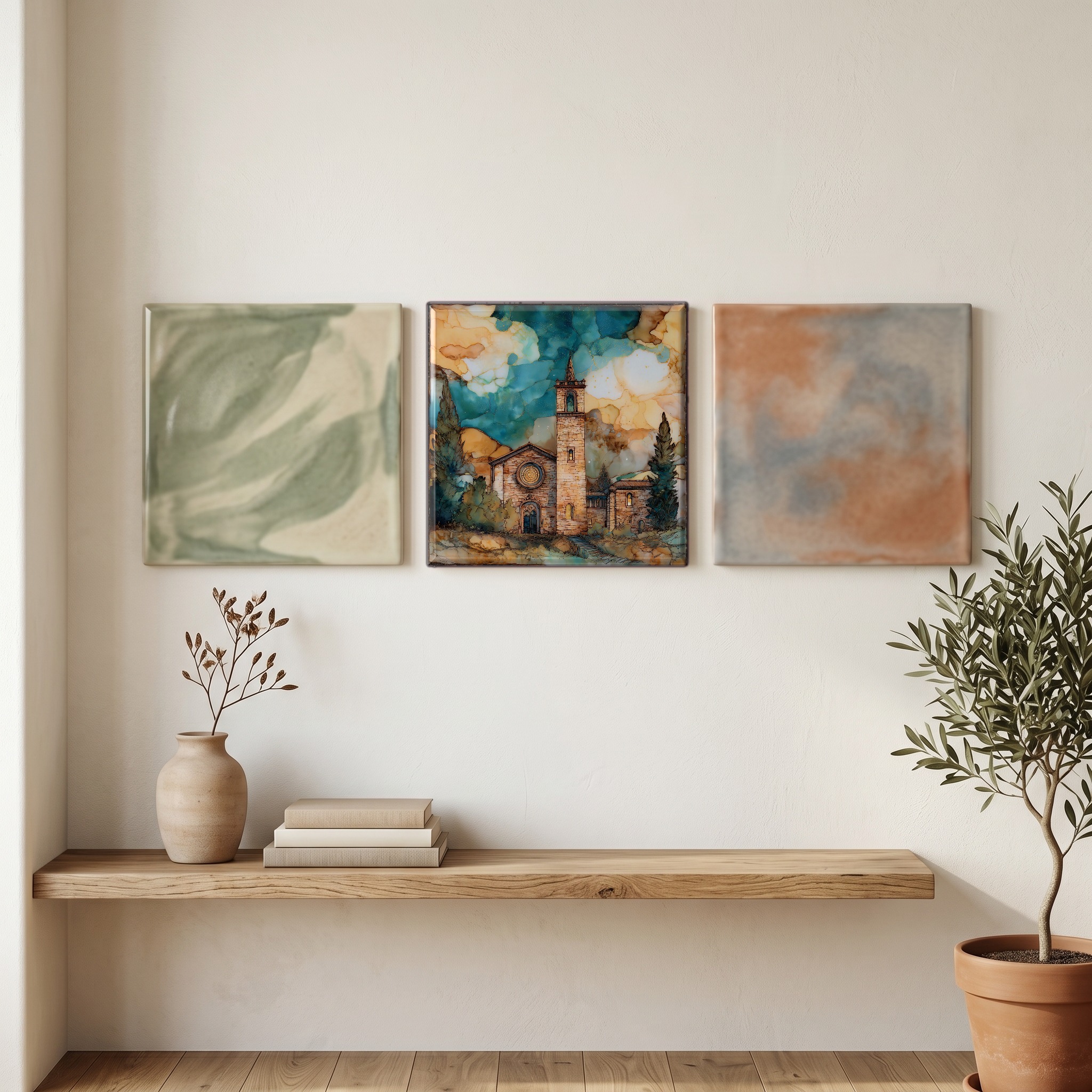
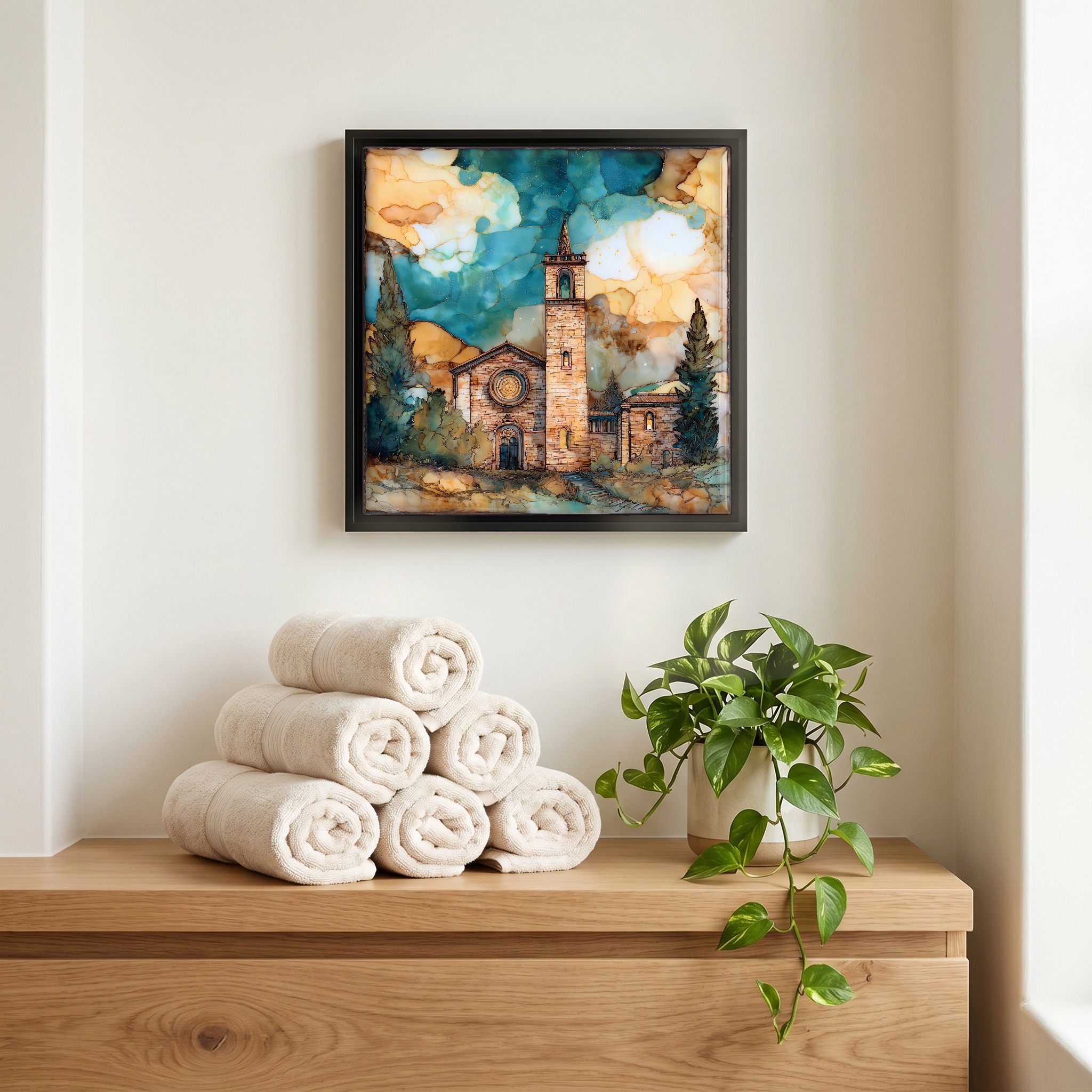
Three or five different vistas, hung together — a chapter of places you've been, or want to go.
The place, in three passes.
The Holy House sits inside the Basilica della Santa Casa, on a hilltop in the town of Loreto, in Italy's Marche region. The town is five kilometres inland from the Adriatic and about thirty kilometres south of Ancona, the regional capital. The basilica was begun in 1468 in the late Gothic style and completed over the following century, with a great dome designed by Giuliano da Sangallo and a façade finished in 1587. The Holy House itself is a small stone room, roughly nine metres by four, wrapped in a sculpted marble screen at the centre of the church. The Via Lauretana, the historic pilgrim road, climbs to the town from the Roman south.
The marble screen around the Holy House was designed by Donato Bramante and begun in 1509, under Pope Julius II. Its reliefs were carved over the next four decades by Andrea Sansovino and the sculptors who followed him, including Antonio da Sangallo the Younger, Francesco da Sangallo, Niccolò Tribolo, and Raffaello da Montelupo. Inside the screen, the walls of the small house are unfinished stone, soot-darkened by centuries of pilgrim candles. A black wooden statue of the Madonna and Child stands at one end; the present figure was carved in 1922 after the original was lost to fire the year before.
The basilica is open daily from early morning through midday and again in the afternoon, with hours that vary by season; admission is free. Pilgrims enter the Holy House by walking around its outside and through its small door, and most pass through silently. The feast of Our Lady of Loreto falls on December 10, the date Catholic tradition marks as the arrival of the house in 1294. Pope Benedict XV named Our Lady of Loreto the patroness of aviators in 1920, and pilots still leave wings and squadron badges in a small alcove. Loreto is on the Italian rail line between Ancona and Pescara; the station sits below the hill, with a fifteen-minute walk up to the piazza.