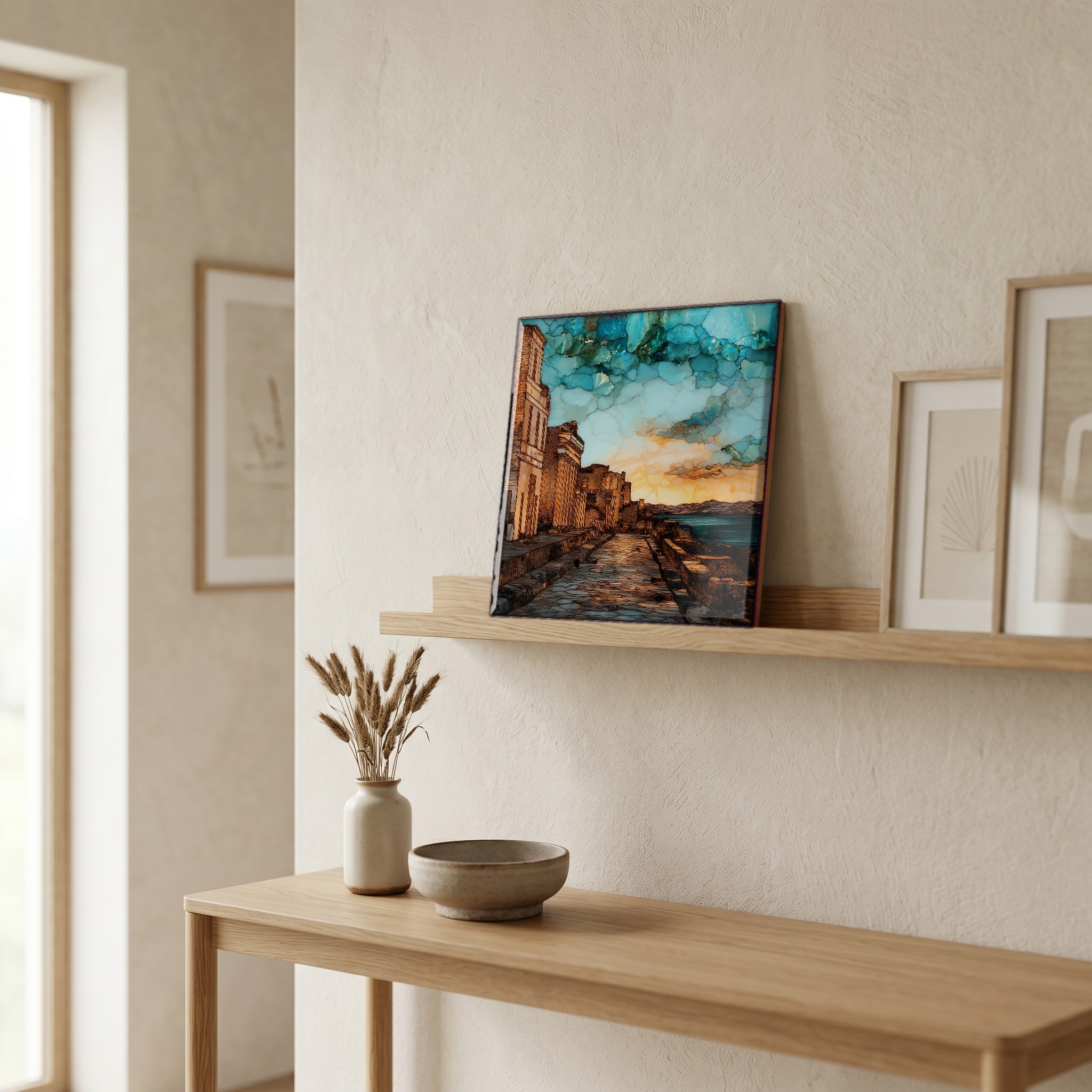
Wender·Vista
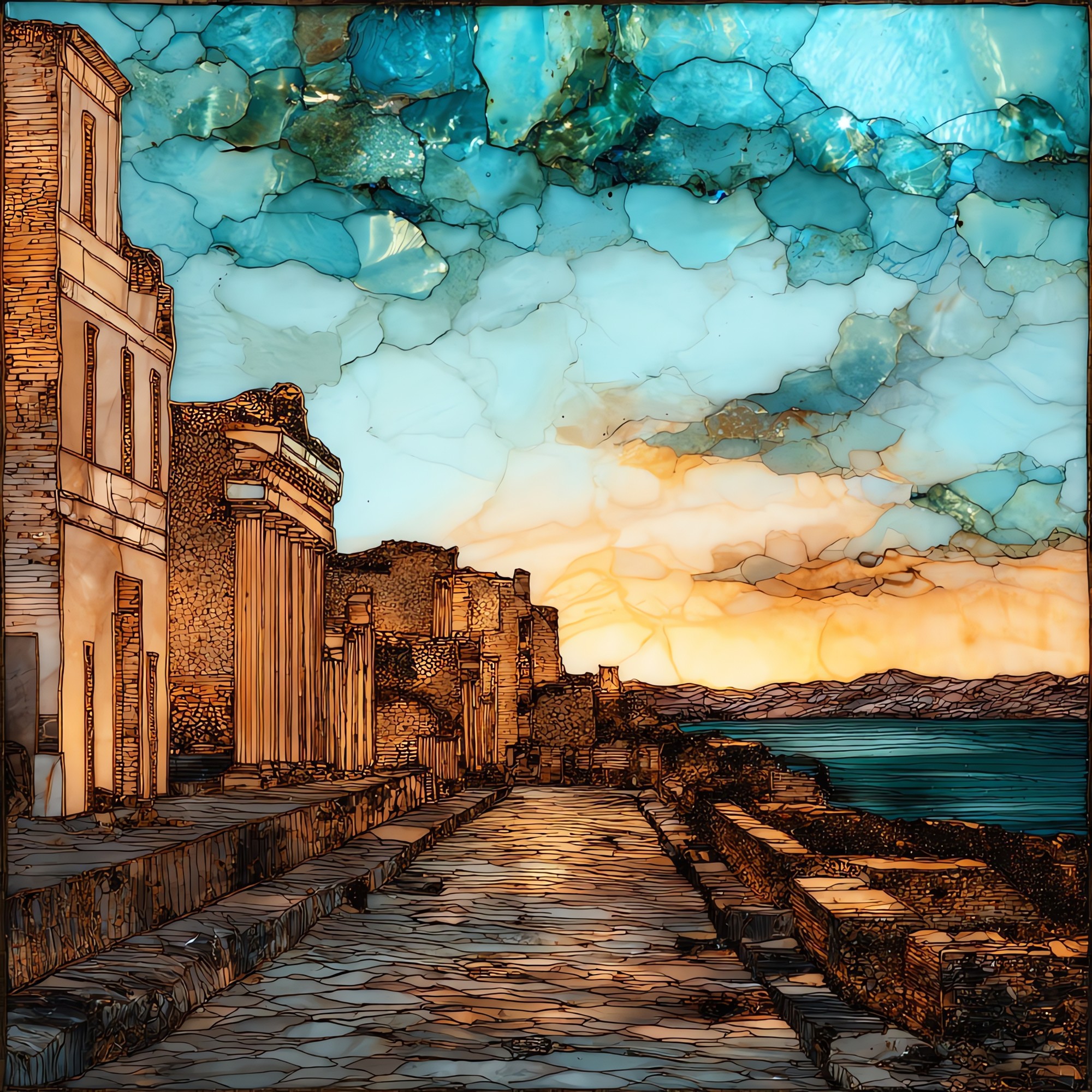
Herculaneum
shown on ceramic, 12-inch tileItaly
below Vesuvius, on the Bay of Naples

Herculaneum

where the wood should be ash, and isn't.

Where it lives

Not only on a wall.

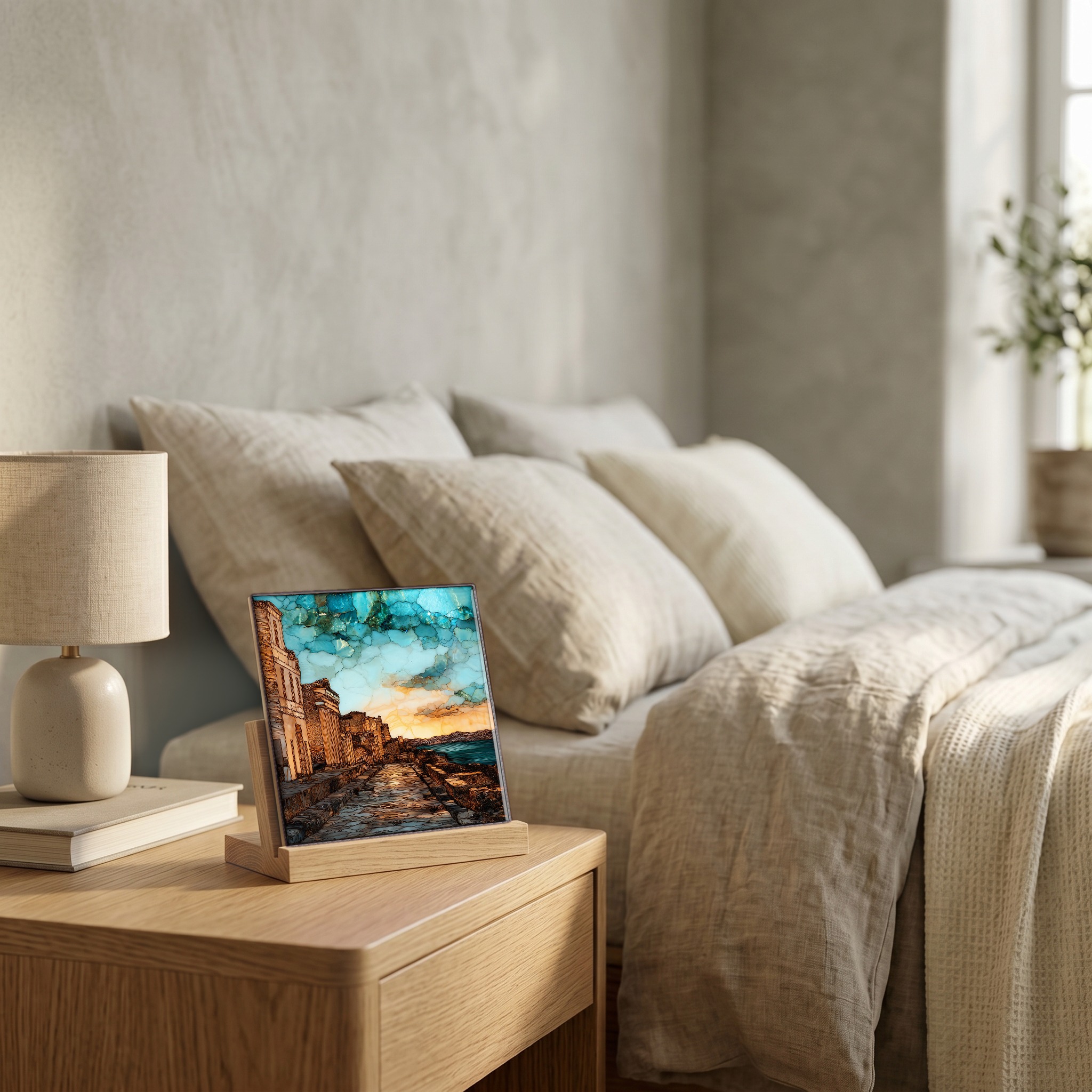
A small tile on the nightstand catching the morning. A larger one above the fire. Yours, wherever you spend the slow hours.
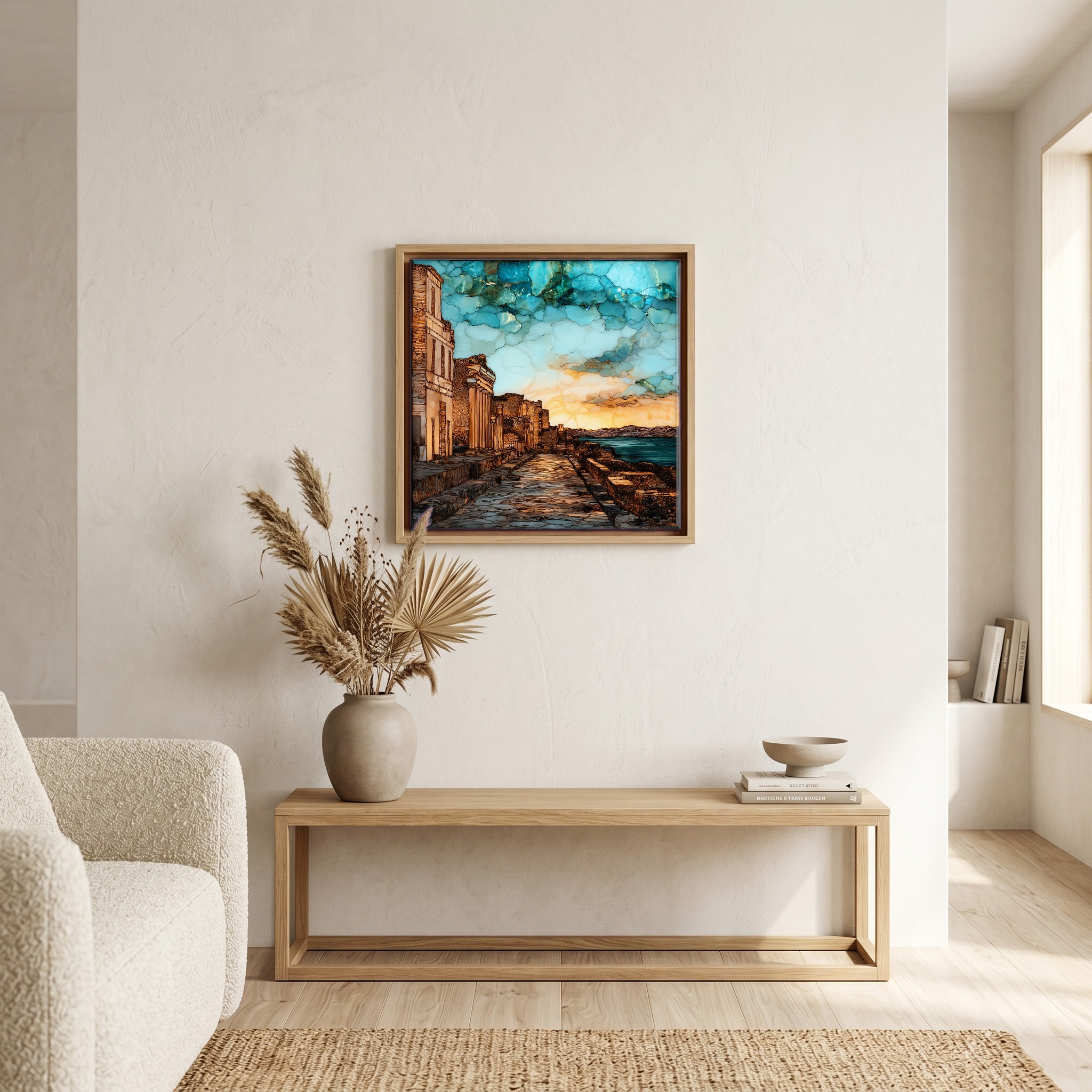
Above the bench, in a warm oak surround.
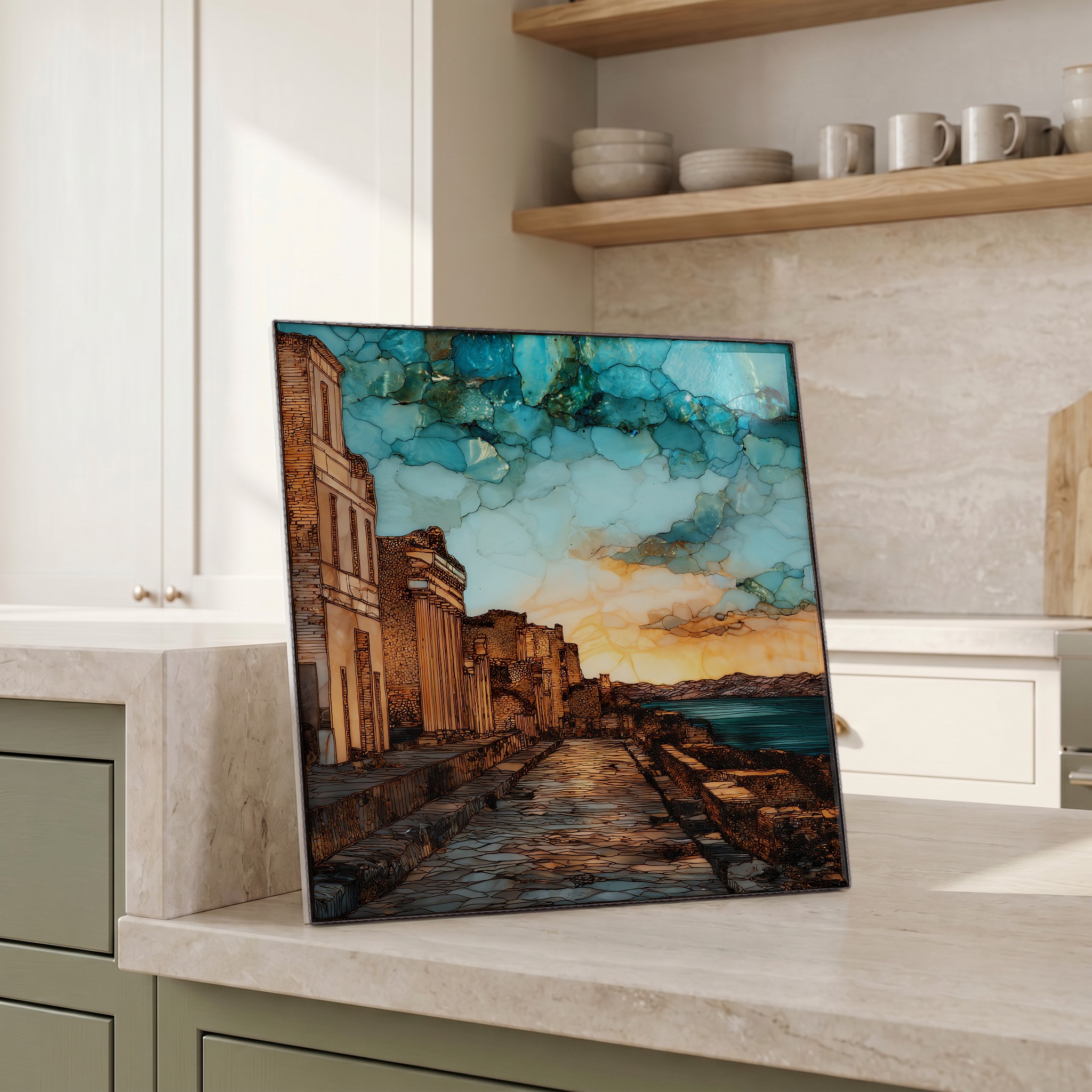
Beside the kettle, propped on the counter.
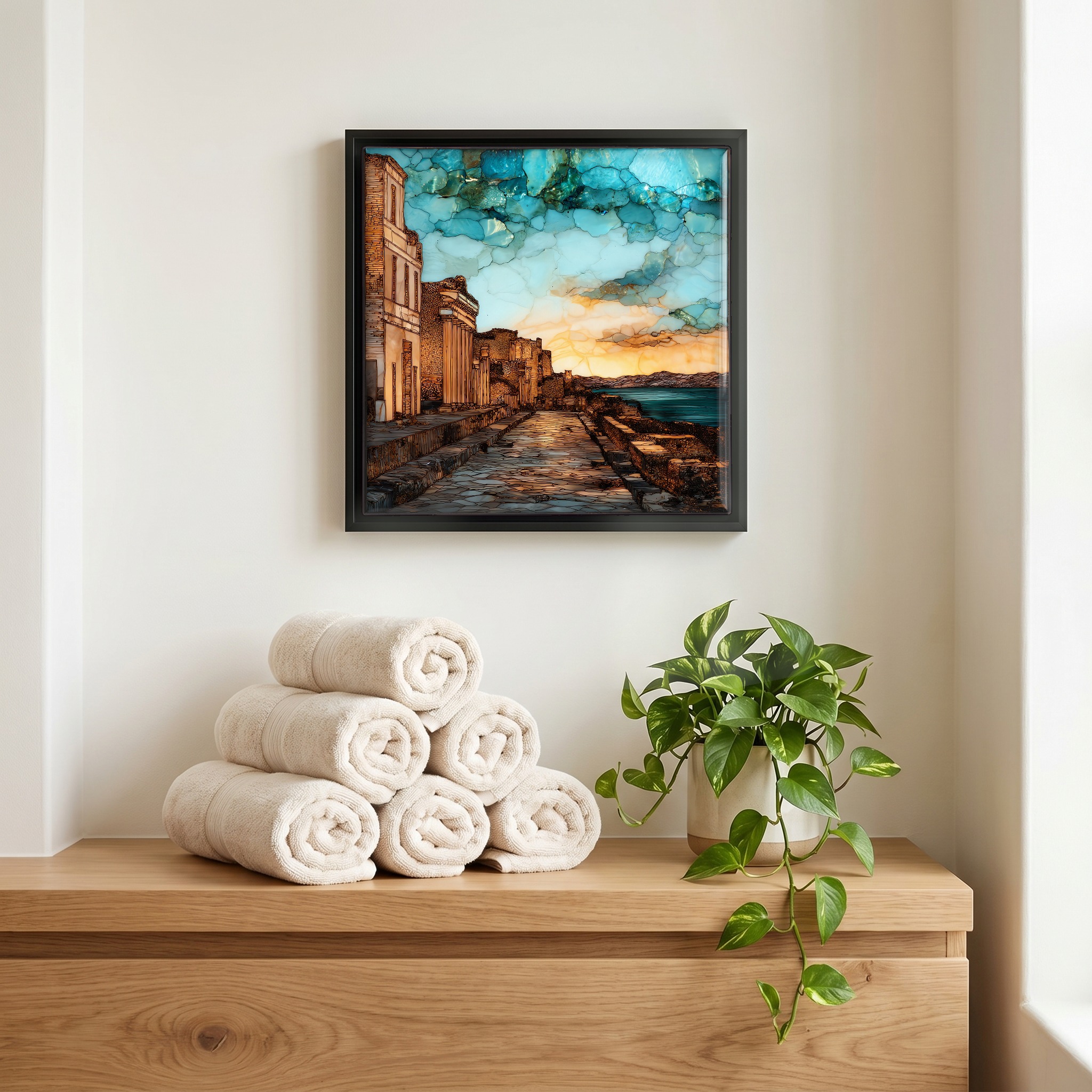
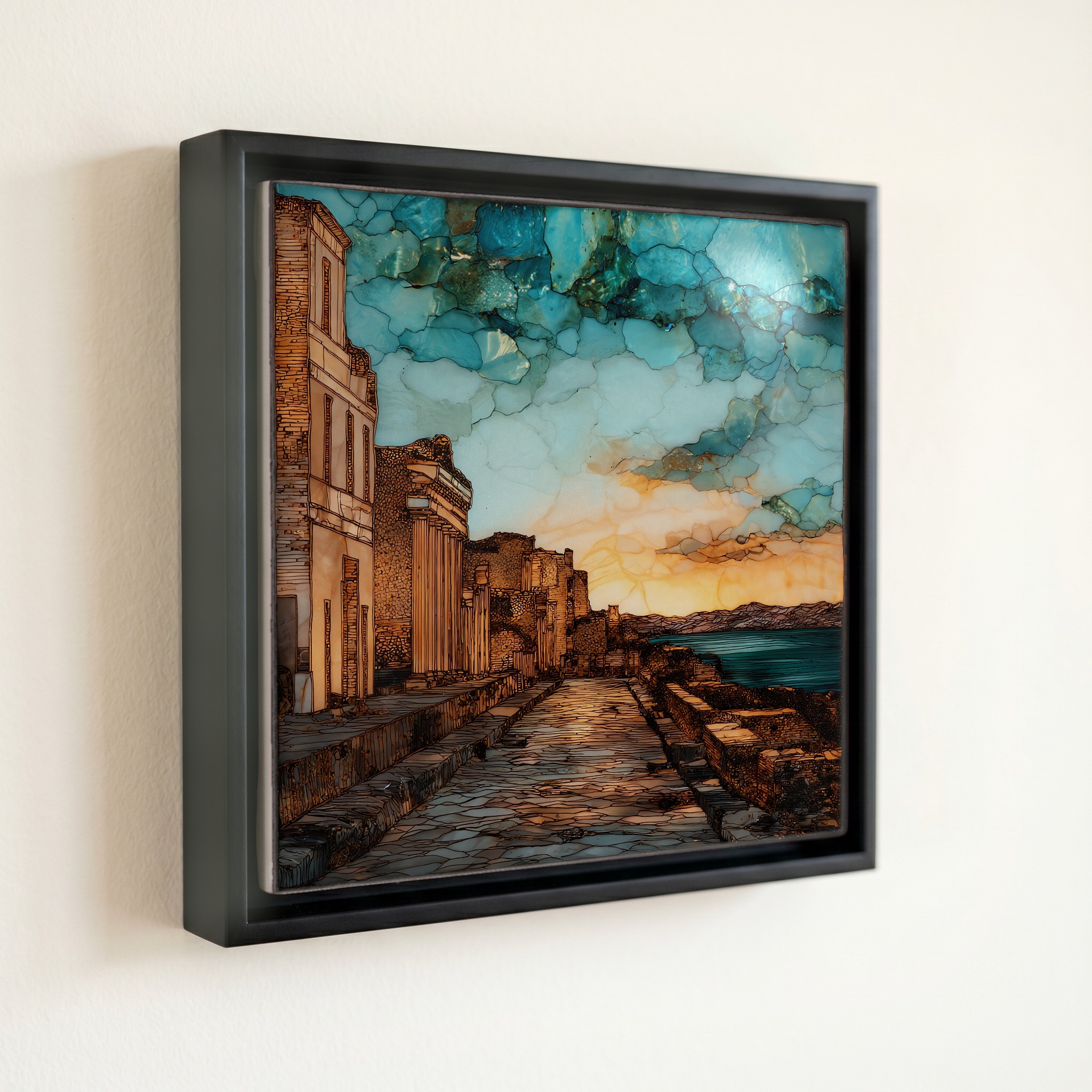
Above the linens, in a slim black surround.
On the nightstand, on a light oak stand.
On a picture ledge, where the light comes in.
a note from the studio

The seaside town that Vesuvius did not burn so much as bury. Pompeii fell under falling ash; Herculaneum went under a wall of hot mud that set to rock and sealed everything it touched. So the wood is still here, carbonised black but standing: balconies, doors, a child's bed, the beams that roofed the streets. Smaller than Pompeii, and richer, a resort for Romans who wanted the bay without the crowds. For two centuries everyone assumed the people had got away. Then they opened the boathouses down by the old shore.
from the studio
shown in a slim black floating frame · 6 × 6 in
— bring it home

Herculaneum, on ceramic.

Each tile is finished by hand in our Knoxville studio. Artwork is slowly infused into the ceramic surface under high heat and pressure, and rests beneath a thin glossy finish. The colour lives in the surface, not on top of it.

What kind of piece?
One tile — square or rectangle.
How big?
the popular one — counter, shelf, nightstand
6 × 6 in · 15 cm · 1.6 lb
Surface finish
A clear glossy finish — the artwork reads as if under resin. Ideal for show-pieces and framed wall art.
How it sits
A hidden cleat — sits ¼″ proud of the wall.
$58
Hand-finished and shipped from our studio at the foot of the Smokies. On your wall in about ten days.
size
6 × 6 in
15 cm
weighs
1.6 lb
solid in the hand
surface
ceramic, hand-finished
art rests beneath a thin glossy finish
from
Knoxville, TN
our family studio, at the foot of the Smokies
— start a Coaster Set

Pick any four 4-inch tiles — National Parks you've been to, a Smokies set, the four seasons of one place. $ for a set of , cork-backed, ready to live on the table.
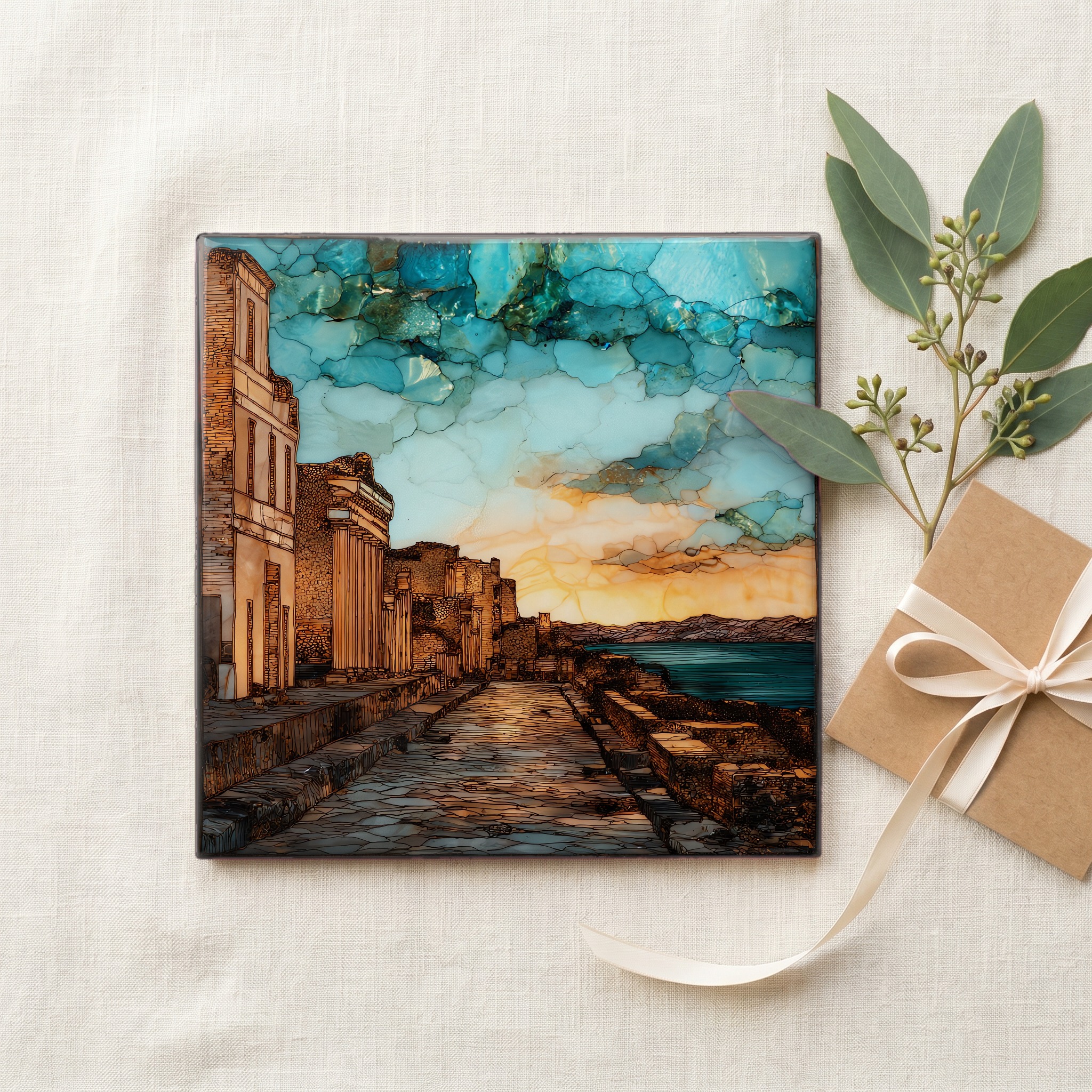
comes gift-ready
comes gift-ready

Each tile ships in a kraft box, tied with cream ribbon, with a handwritten note from the studio if you'd like to add one.
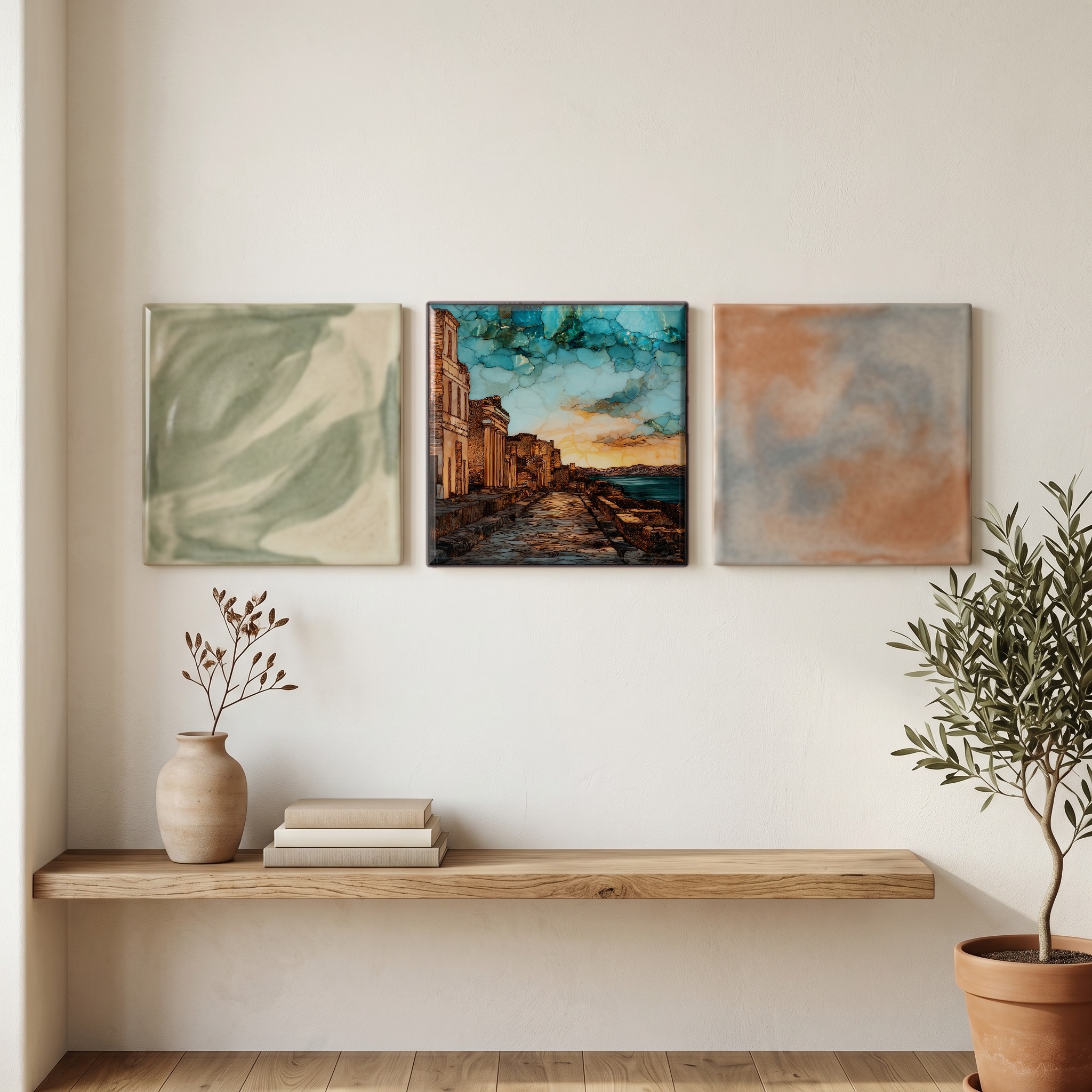
or build a grouping
or build a grouping

Three or five different vistas, hung together — a chapter of places you've been, or want to go.

about Herculaneum

The place, in three passes.

A little of what's known, in case you fall down the rabbit hole — or want to go see it yourself.
the place

Herculaneum sits on the Bay of Naples about eight kilometres southeast of the city, at the western foot of Mount Vesuvius, in the comune that now carries its name, Ercolano. The Romans called it Herculaneum, after Hercules, the hero its founding was credited to. It was a small, wealthy seaside town, perhaps four to five thousand people, when the eruption of AD 79 destroyed it along with Pompeii and Oplontis. The three sites, with Torre Annunziata, were inscribed together on the UNESCO World Heritage list in 1997. Only part of the ancient town has been dug out; the rest lies under the modern streets of Ercolano, which is why the excavation reads as a deep open pit with the living town pressed against its rim.

— informed by Wikipedia, UNESCO
the stone

What sets Herculaneum apart is how it was buried. Pompeii was smothered in falling ash and pumice; Herculaneum was overrun by pyroclastic surges, fast walls of gas and ash that left between roughly sixteen and twenty metres of material over the town, hardening into a tuff-like rock. The heat carbonised organic matter instead of burning it away, so wood survived: roof beams, doors, partition screens, a wooden bed, even loaves of bread and a boat. Upper storeys still stand, which almost never happens at a Roman site. In the Villa of the Papyri, a seaside house thought to have belonged to Julius Caesar's father-in-law, about 1,800 papyrus scrolls were found carbonised in 1752, the only library to come down intact from the ancient world.

the visit

The town was found by accident in 1709, when well-diggers struck the back wall of its theatre; systematic excavation began in 1738 under the Bourbon king Charles, a decade before digging started at Pompeii. For two centuries it was assumed the residents had fled to safety, until excavations of the old shoreline in the 1980s and 1990s uncovered more than three hundred skeletons crowded into the stone boathouses, killed by the heat of the first surge. The archaeological park is a short walk downhill from the Ercolano Scavi station on the Circumvesuviana line from Naples. It is far smaller than Pompeii and can be walked in a couple of hours; early in the day the deep streets hold shade and the crowds are thinnest.

where
Italy · Ercolano, Campania
within
Herculaneum Archaeological Park
position
40.8058° N · 14.3475° E
the neighborhood

What's nearby.

A handful of named places within an hour's walk or short drive. Some we've already painted; some we will.
7 km NE
Mount Vesuvius
stratovolcano
1 km W
Bay of Naples
gulf
8 km NW
Naples
city
7 km SE
Oplontis
Roman villa
12 km SE
Pompeii
Roman archaeological site
9 km NW
Castel dell'Ovo
seafront castle
28 km SW
Capri
island
N
Herculaneum
Mount Vesuvius
Bay of Naples
Naples
Oplontis
Pompeii
Castel dell'Ovo
Capri
common questions

What people ask.

A few questions we get about Herculaneum — and about bringing the piece home.
about the place

Herculaneum lies on the Bay of Naples in the Campania region of Italy, about eight kilometres southeast of Naples at the western foot of Mount Vesuvius. The ruins sit beneath the modern town of Ercolano, reached from Naples on the Circumvesuviana railway.

Pompeii was buried by falling ash and pumice; Herculaneum was sealed by pyroclastic surges of hot gas and ash, under roughly sixteen to twenty metres of material. The heat carbonised wood instead of destroying it, so beams, doors, furniture, and even upper storeys survive that did not at Pompeii.

The eruption of Mount Vesuvius in AD 79 destroyed Herculaneum along with Pompeii and Oplontis. Pyroclastic surges reached the town and killed those who stayed. The date was long placed on 24 August, though later evidence points to the autumn of that year.

Herculaneum was found by chance in 1709, when workers digging a well struck the buried theatre. Systematic excavation began in 1738 under the Bourbon king Charles, a decade before digging started at Pompeii. It was the first of the Vesuvian cities to be uncovered.

The Herculaneum papyri are about 1,800 carbonised scrolls found in 1752 in the Villa of the Papyri, a seaside house thought to have belonged to Julius Caesar's father-in-law. Charred solid by the eruption's heat, they form the only library to survive intact from the ancient world.

For two centuries it was believed the residents had escaped. Then excavations of the ancient shoreline in the 1980s and 1990s uncovered more than three hundred skeletons crowded into the stone boathouses, killed almost instantly by the heat of the first pyroclastic surge as they waited for rescue by sea.

The archaeological park is a short walk downhill from the Ercolano Scavi station on the Circumvesuviana line, about twenty minutes from Naples. It is far smaller than Pompeii and can be seen in roughly two hours; mornings are the quietest, and the deep excavated streets hold shade.

about the piece in your home

It has been a meaningful gift for travellers who have walked the site and for anyone drawn to the ancient world. Herculaneum is the best-preserved Roman town there is, quieter and less crowded than Pompeii. A Small or Medium with a handwritten note from the studio carries well.

The deep jewel tones and warm carbonised browns of the artwork settle into Old-World and grand-tour rooms, dark-academia studies, and jewel-tone maximalist walls. The colour lives in the ceramic surface, so it holds its depth against pale plaster, deep green, or a charcoal wall.

Yes. Dark-academia and grand-tour interiors lean on classical ruins, aged stone, and rich colour, and a luminous Roman town in this palette reads as collected rather than decorated. A single Large works as the room's one historical object, paired with antique wood and brass.

Above a sofa, a single Large holds the wall, or a four-tile Mural fills a wider span; for a focal wall, a nine-tile Mural reads as one continuous painting. Above a console or in a hallway, a Medium or Small sits comfortably at eye level.

Yes. For a bathroom, shower, or kitchen backsplash, choose the Dura Satin or Matte finish, both scratch-resistant and made for damp, vertical installation. The standard Glossy finish is best kept to framed wall art and show-pieces in drier rooms.

Wipe it with a soft microfibre cloth and a little water. The colour is slowly infused into the ceramic surface under high heat and pressure, beneath a thin glossy finish, so it will not fade or lift with cleaning. Avoid abrasive pads and harsh solvents.

Yes. Every WenderVista piece is created in-house by Reid Wender, the studio's curator, in our own stained-glass and ink visual language, and hand-finished in Knoxville, Tennessee. There is no licensing and no stock imagery; the Herculaneum painting exists only as a Wender Studios work.

if this one stayed with you

A few you might also love.

Hand-picked by the eye that found Sorapis. Same air, same kind of quiet.
— a collection

The Italian Dolomites,
painted slow.

The valleys between Cortina and Val Gardena, the tarns you walk an hour to see, the towers that turn the colour of a banked fire just before dark. Wander the collection by valley, by season, or follow the path Reid walked.

Tre Cime
Braies
Misurina
Sorapis
Cinque Torri
Sassolungo
Marmolada