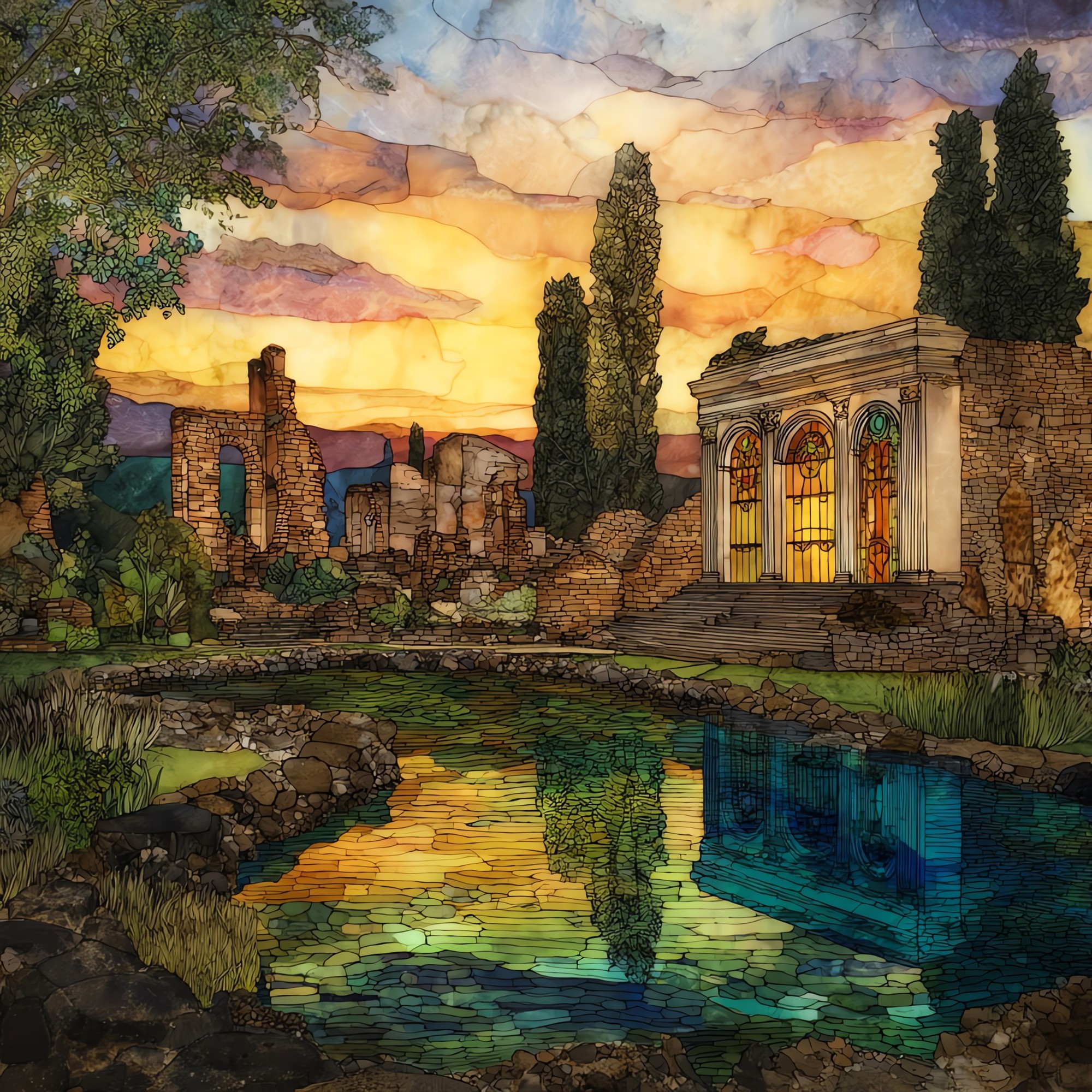
Hadrian's Villa
— — what an emperor built after he had seen the world.
Not only on a wall.
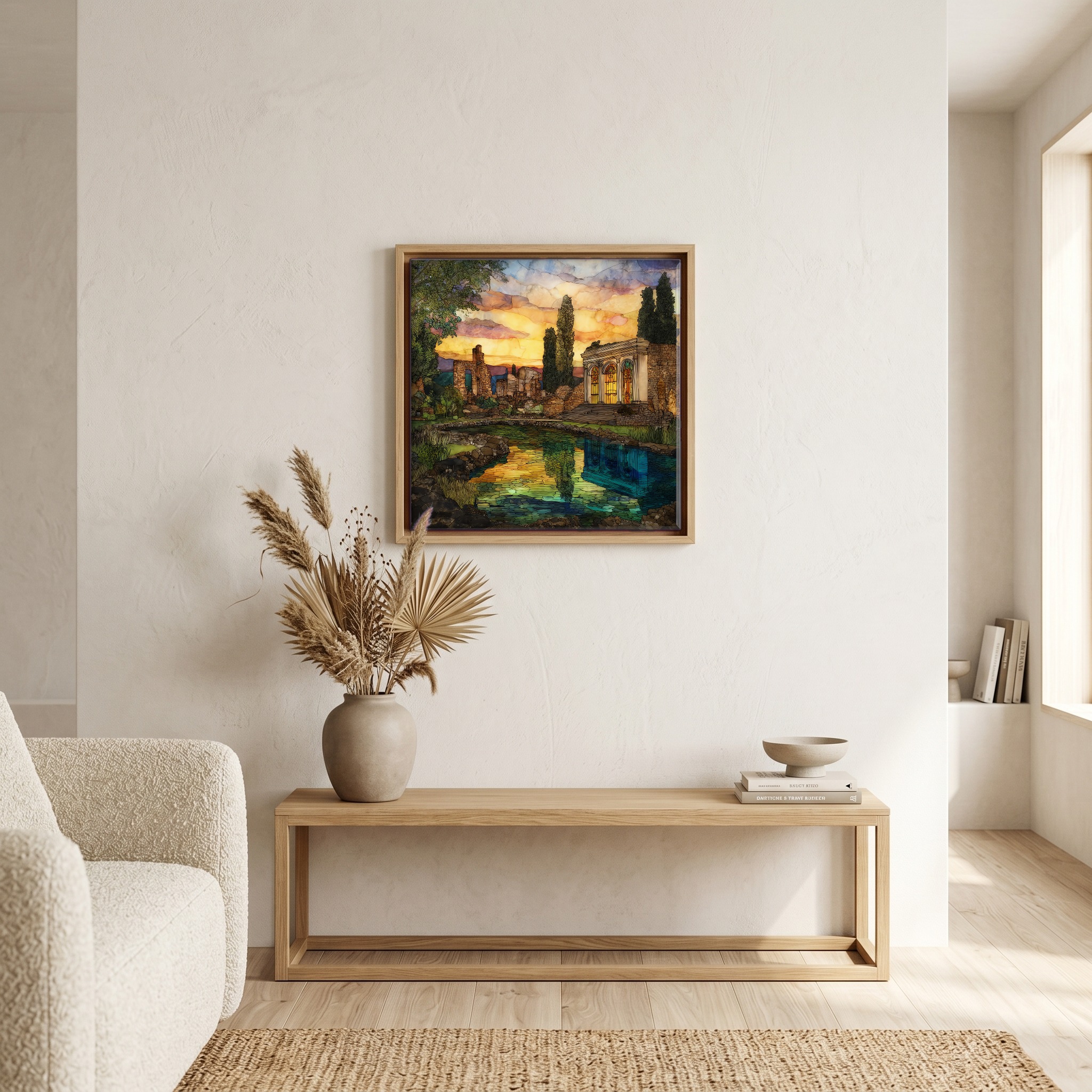
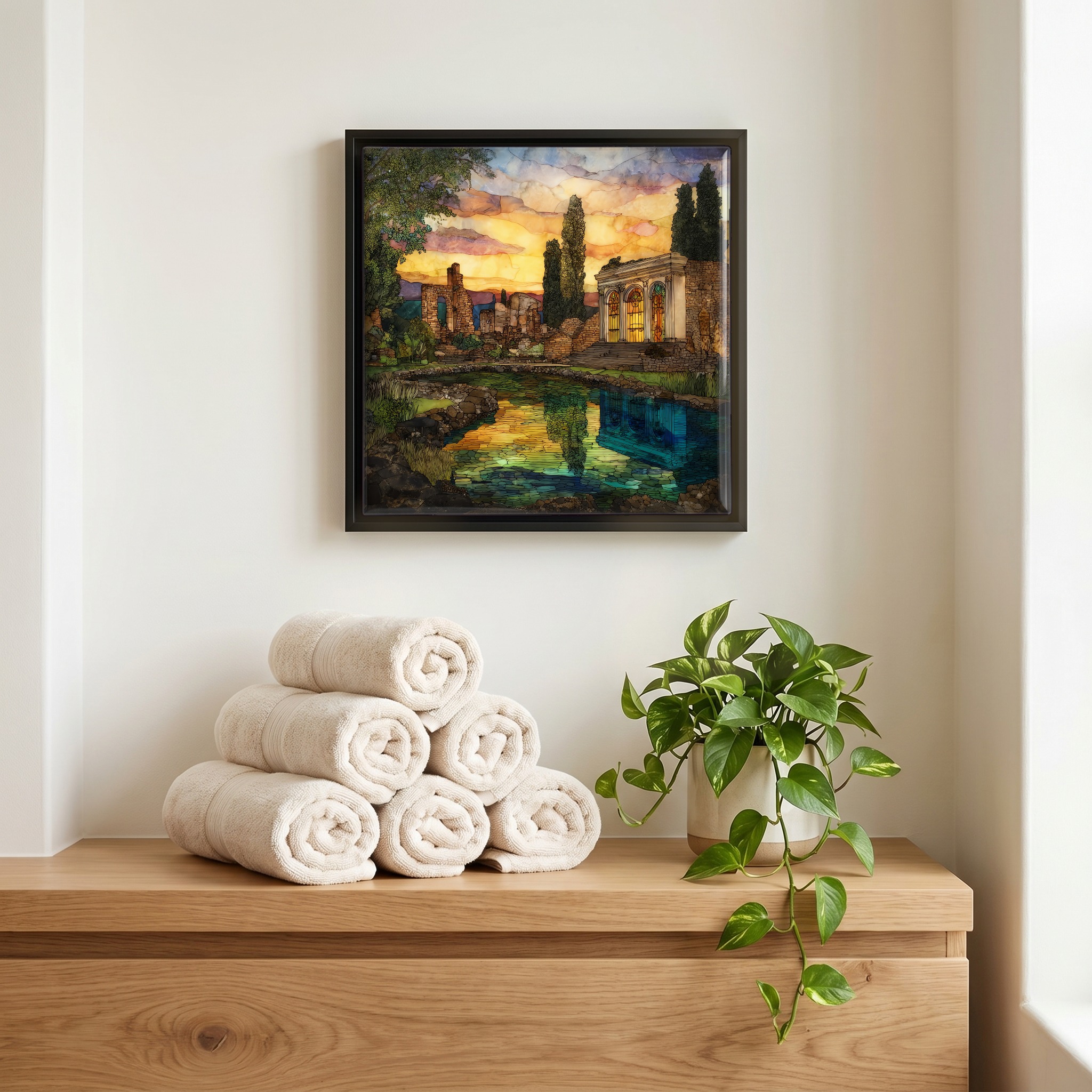
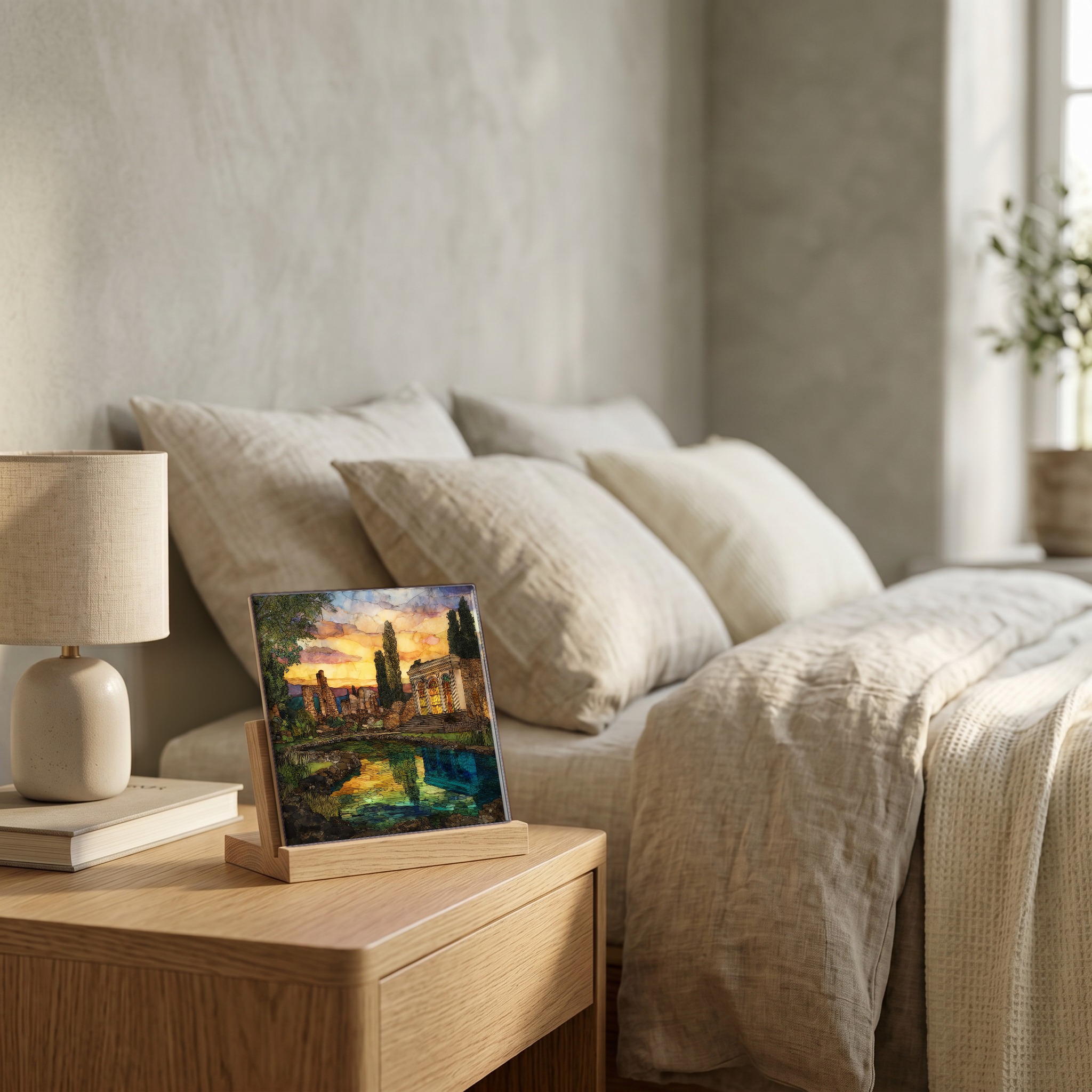
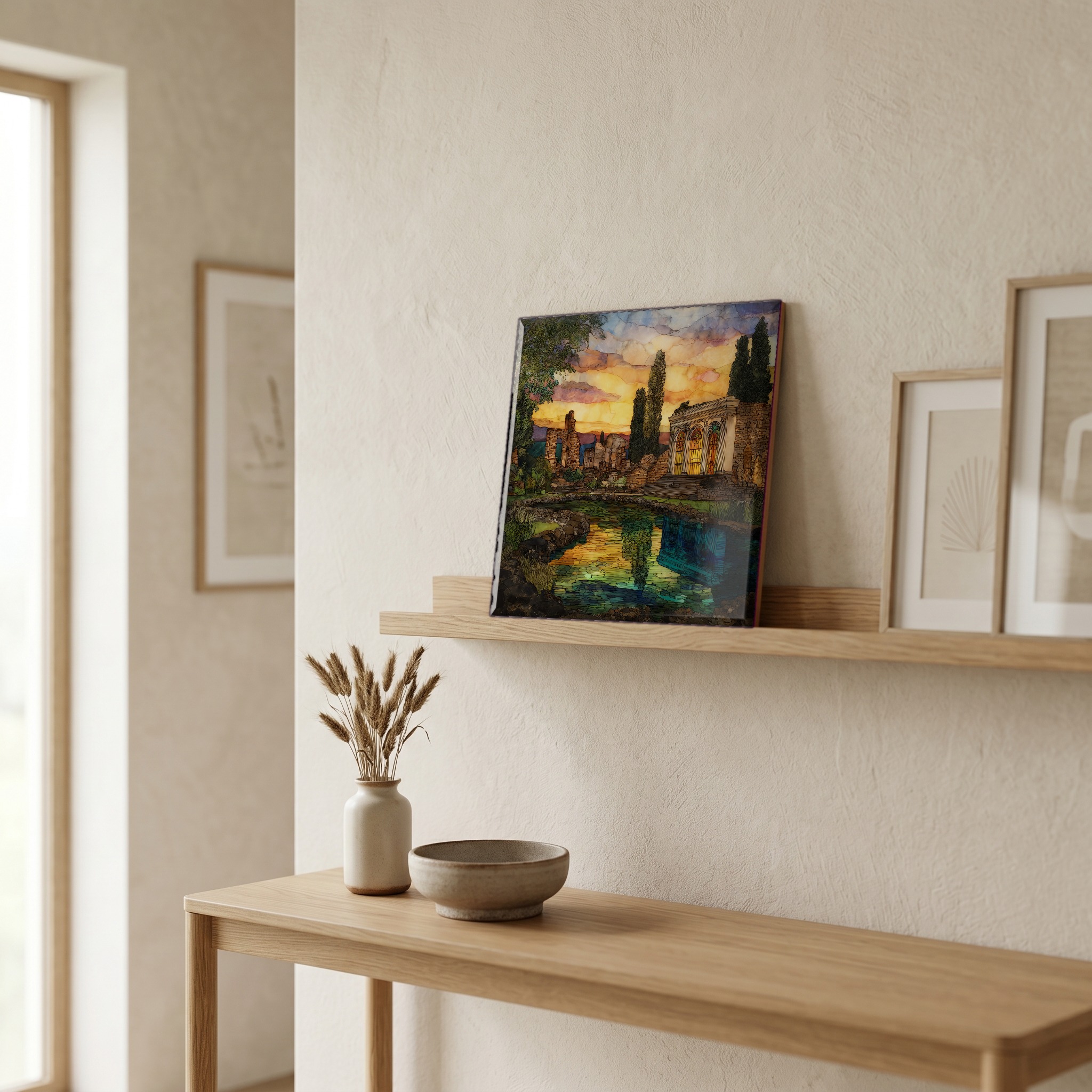
“A second-century country villa east of Rome, where the Emperor Hadrian gathered the architecture of the empire under one roof. The long reflecting pool of the Canopus, the island of the Maritime Theatre, a colonnade copied from Athens. About a hundred and twenty hectares of ruin spread across the olive country below Tivoli. Most of the marble and the statues were taken to Roman museums centuries ago. What stays is the geometry, and the slow water, and a few of the original columns standing where Hadrian put them. April and October are the kinder months.
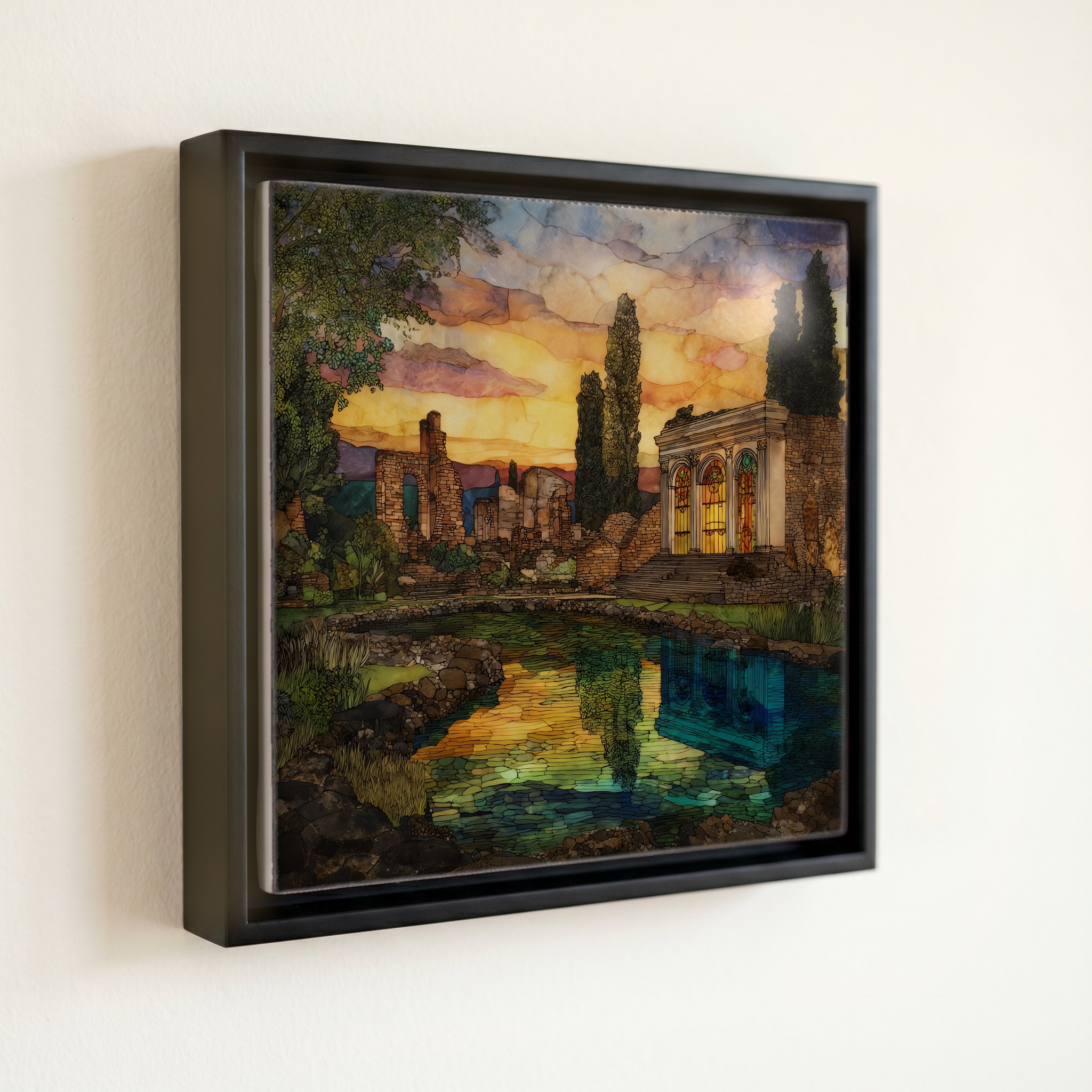
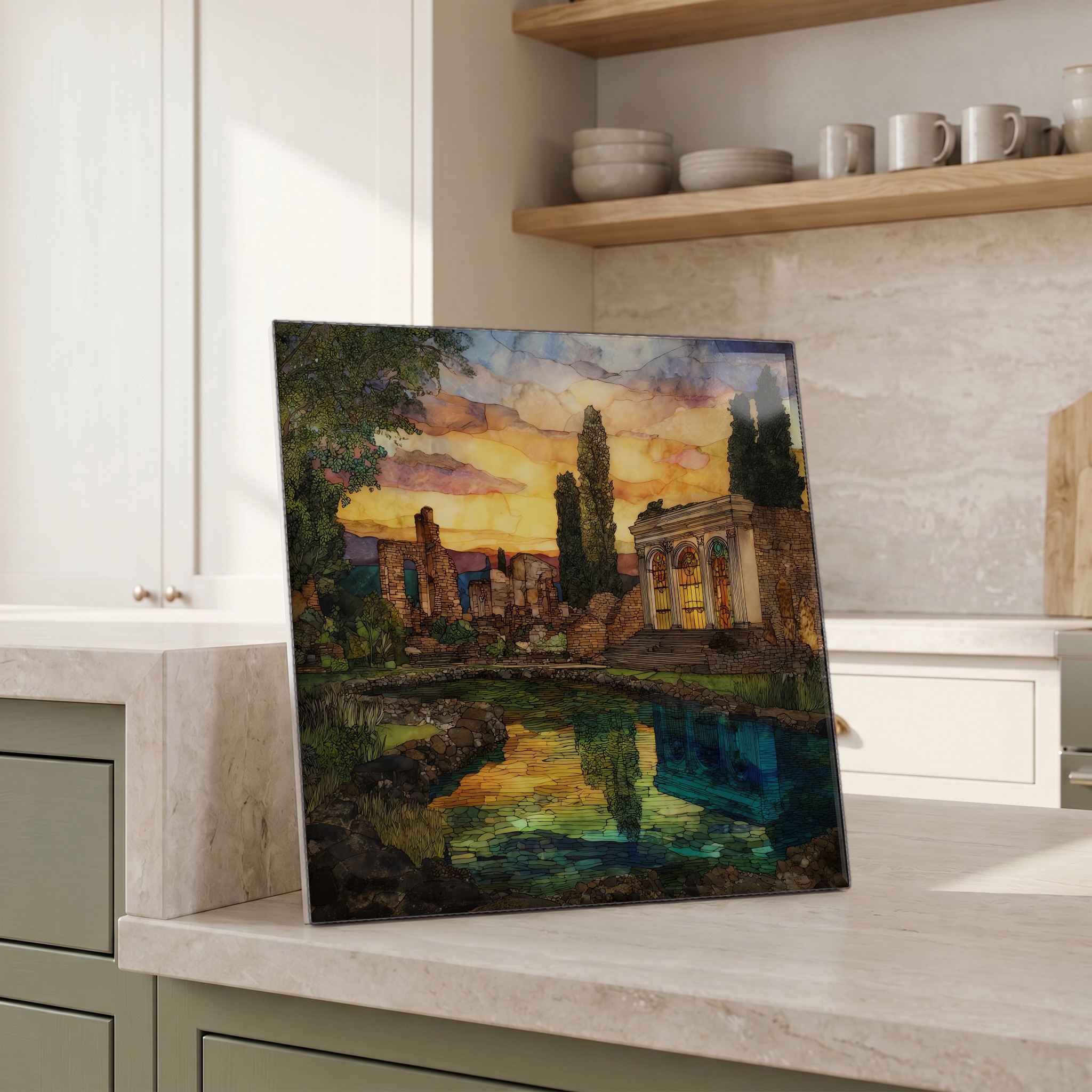
Hadrian's Villa, on ceramic.
Each tile is finished by hand in our Knoxville studio. Artwork is slowly infused into the ceramic surface under high heat and pressure, and rests beneath a thin glossy finish. The colour lives in the surface, not on top of it.
Pick any four 4-inch tiles — National Parks you've been to, a Smokies set, the four seasons of one place. $ for a set of , cork-backed, ready to live on the table.
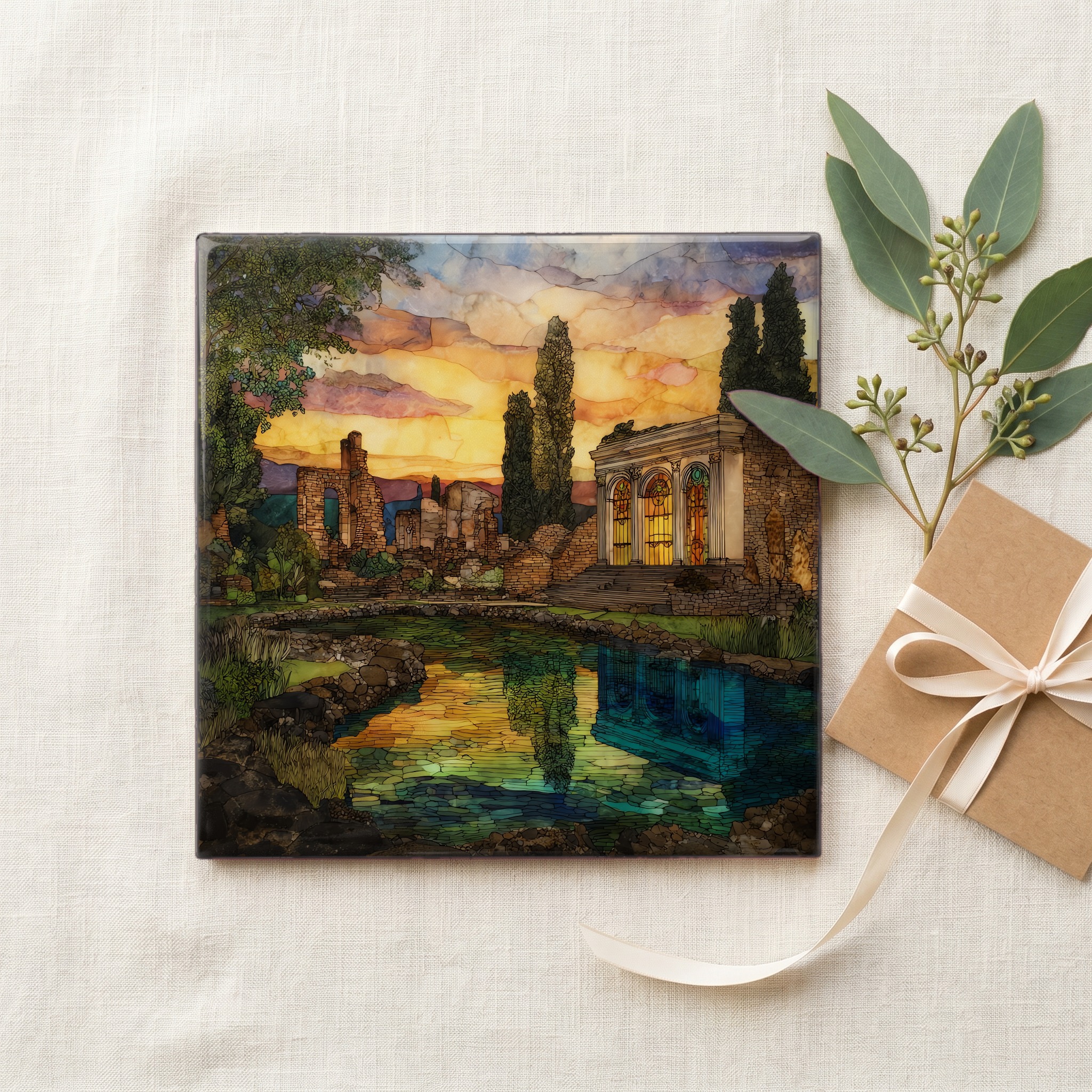
Each tile ships in a kraft box, tied with cream ribbon, with a handwritten note from the studio if you'd like to add one.
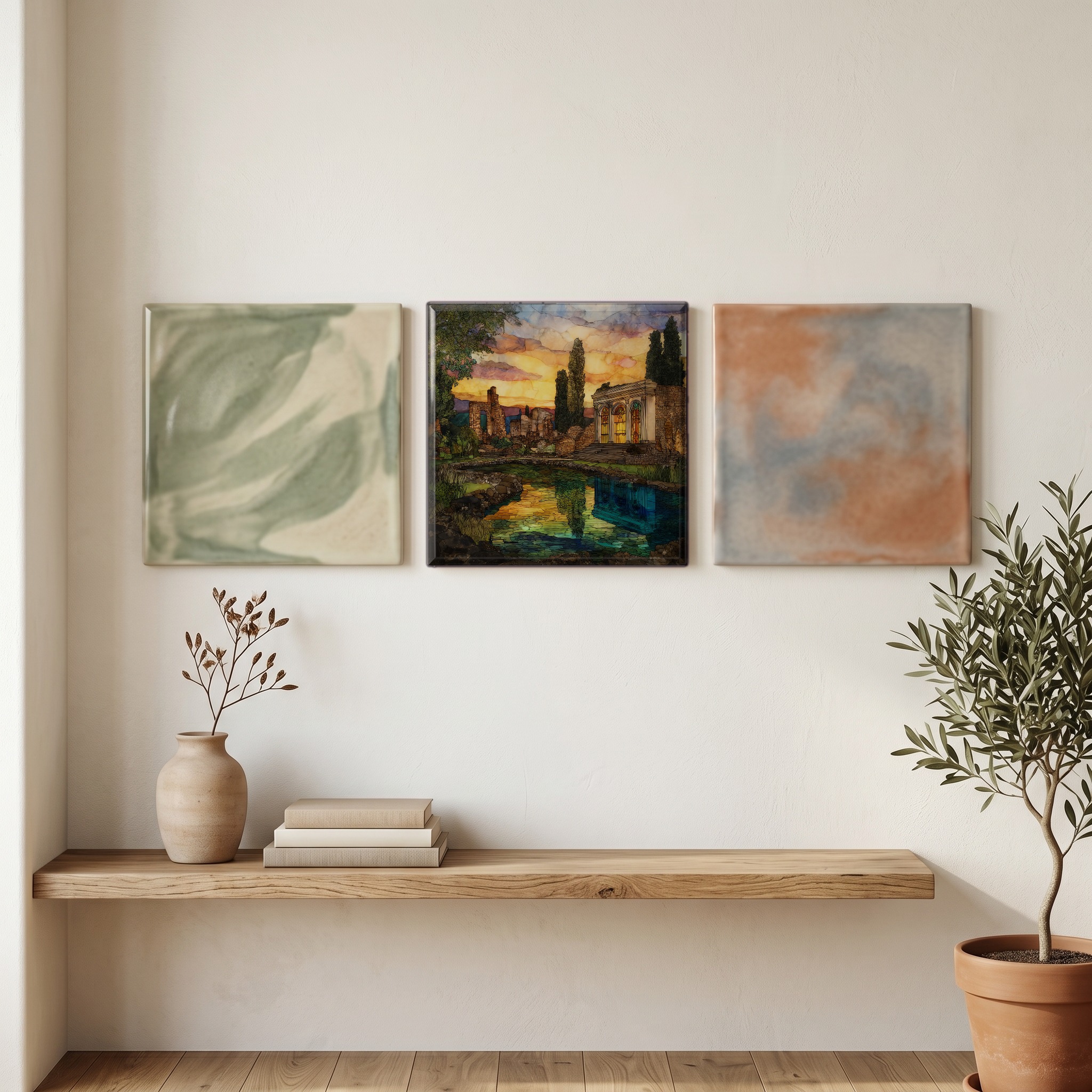
Three or five different vistas, hung together — a chapter of places you've been, or want to go.
The place, in three passes.
Hadrian's Villa, known in Italian as Villa Adriana, sits on the lower slopes of the Tiburtini hills below Tivoli, about 28 kilometres east of Rome in the region of Lazio. The Emperor Hadrian began construction around 117 CE and worked on the site through most of his reign, which ended at his death in 138 CE. At roughly 120 hectares, it is one of the largest country villas surviving from the Roman world, and one of the most architecturally inventive. UNESCO inscribed the villa on the World Heritage List in 1999. From Rome the site is reached by regional train to Tivoli and a short bus or taxi from the town centre.
What survives is mostly brick-faced concrete: the cylinder of the Maritime Theatre with its tiny island, the curved arcade of the Canopus pool, the broken pediments of the Serapeum, the long walls of the Pecile that imitated a colonnade Hadrian had seen in Athens. The marble facing and most of the statues left the site centuries ago. Many sculptures from the villa are now in the Vatican Museums and the Capitoline; others moved further, including pieces in the British Museum and the Louvre. The work of mapping and excavating Hadrian's Villa has continued for more than five hundred years, since the Renaissance antiquarian Pirro Ligorio first surveyed the ruins in the 1550s.
The site is managed by Italy's Ministry of Culture as part of the Istituto Villa Adriana e Villa d'Este, and is open daily except a small set of holidays, with hours shifting by season. There is a paid entry fee, with combined tickets available for nearby Villa d'Este. Walking the villa takes about three hours and covers uneven ground over a wide area, so flat shoes and water are sensible. Roman summers are hot and largely shadeless across the ruins; April, May, and October are the kinder months. Tivoli itself is reached from Rome by the Roma to Pescara regional train, about an hour from Roma Tiburtina station.