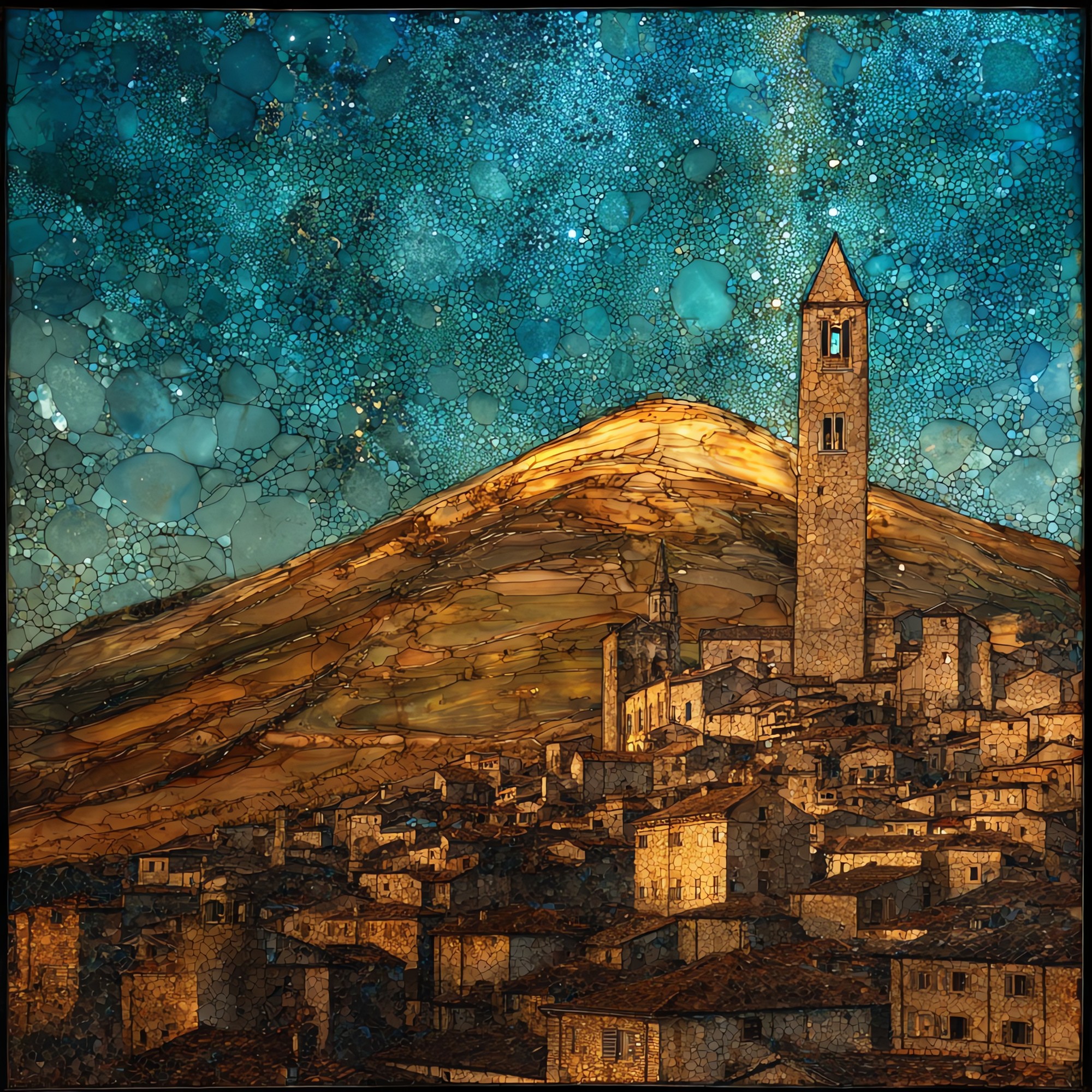
Gubbio
— — the winter the whole mountain turns to light.
Not only on a wall.
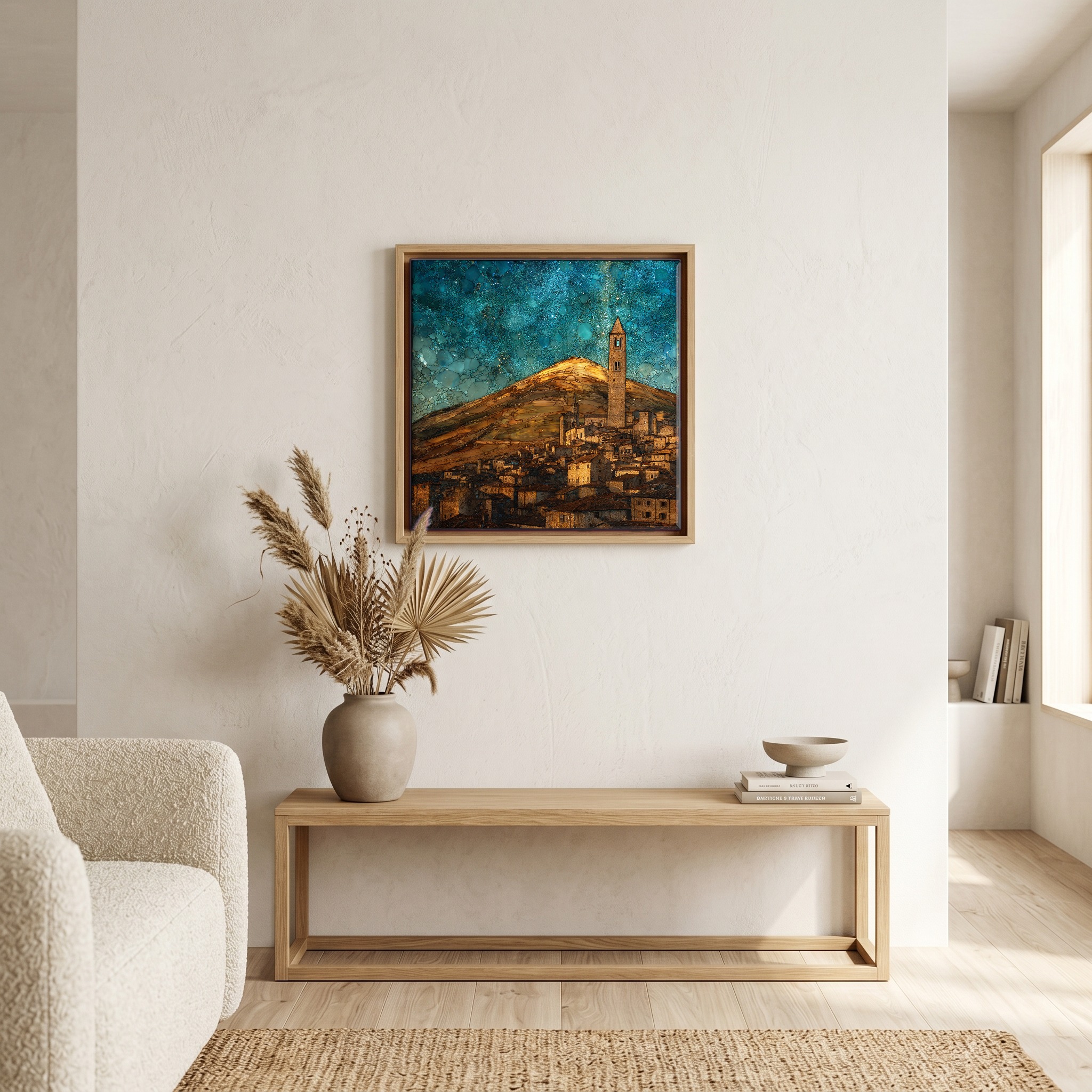
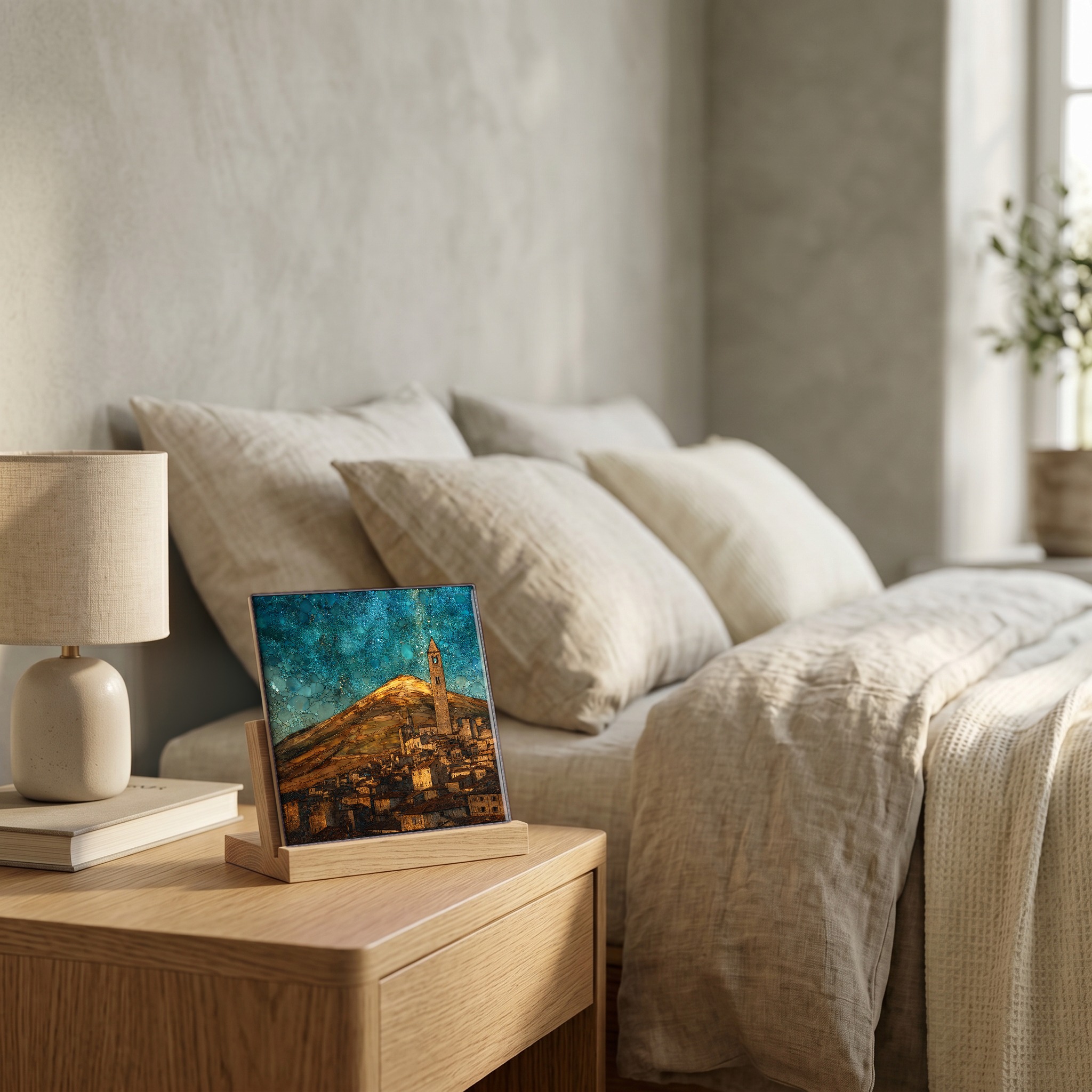
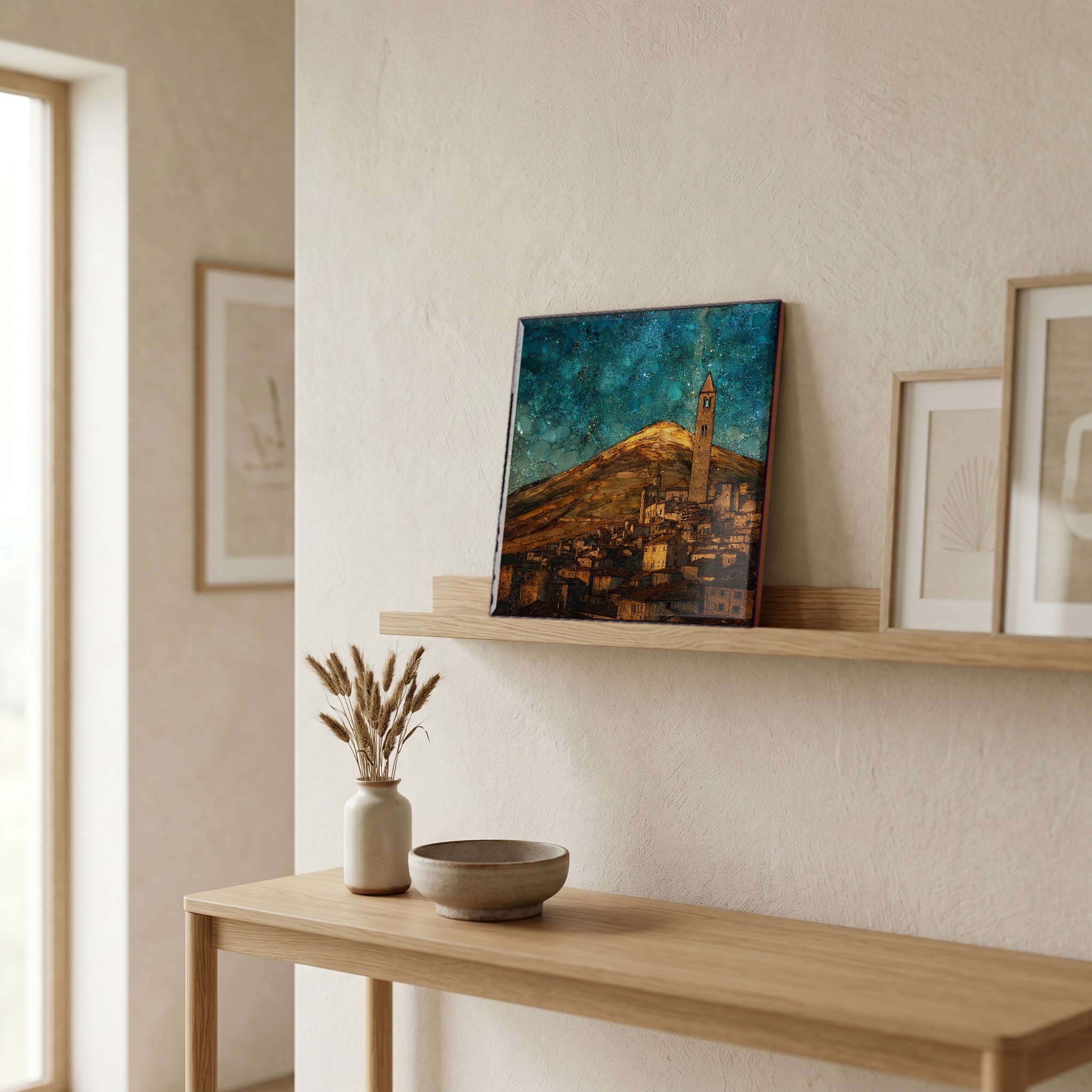
“A grey stone town climbing the side of Monte Ingino, steep enough that the streets turn into stairs. D'Annunzio counted it among the cities of silence, and most days it keeps that name. Then one afternoon in May the whole place runs the Ceri up the mountain, and in December the slope above the rooftops becomes a tree of light, visible from the next valley over. The same grey stone, holding still and holding a flame. The cable car up to the basilica is an open basket, two at a time, with nothing but the town below.
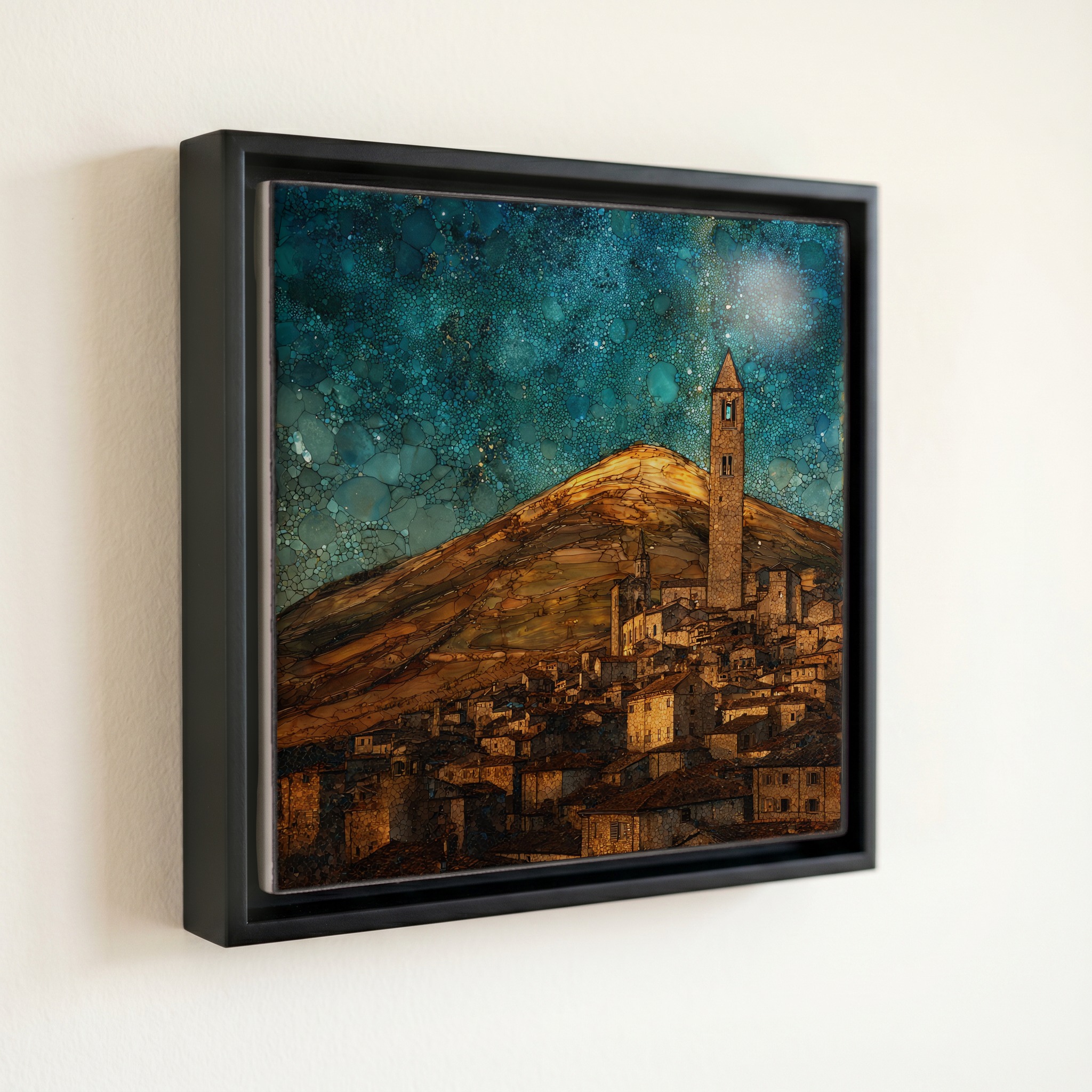
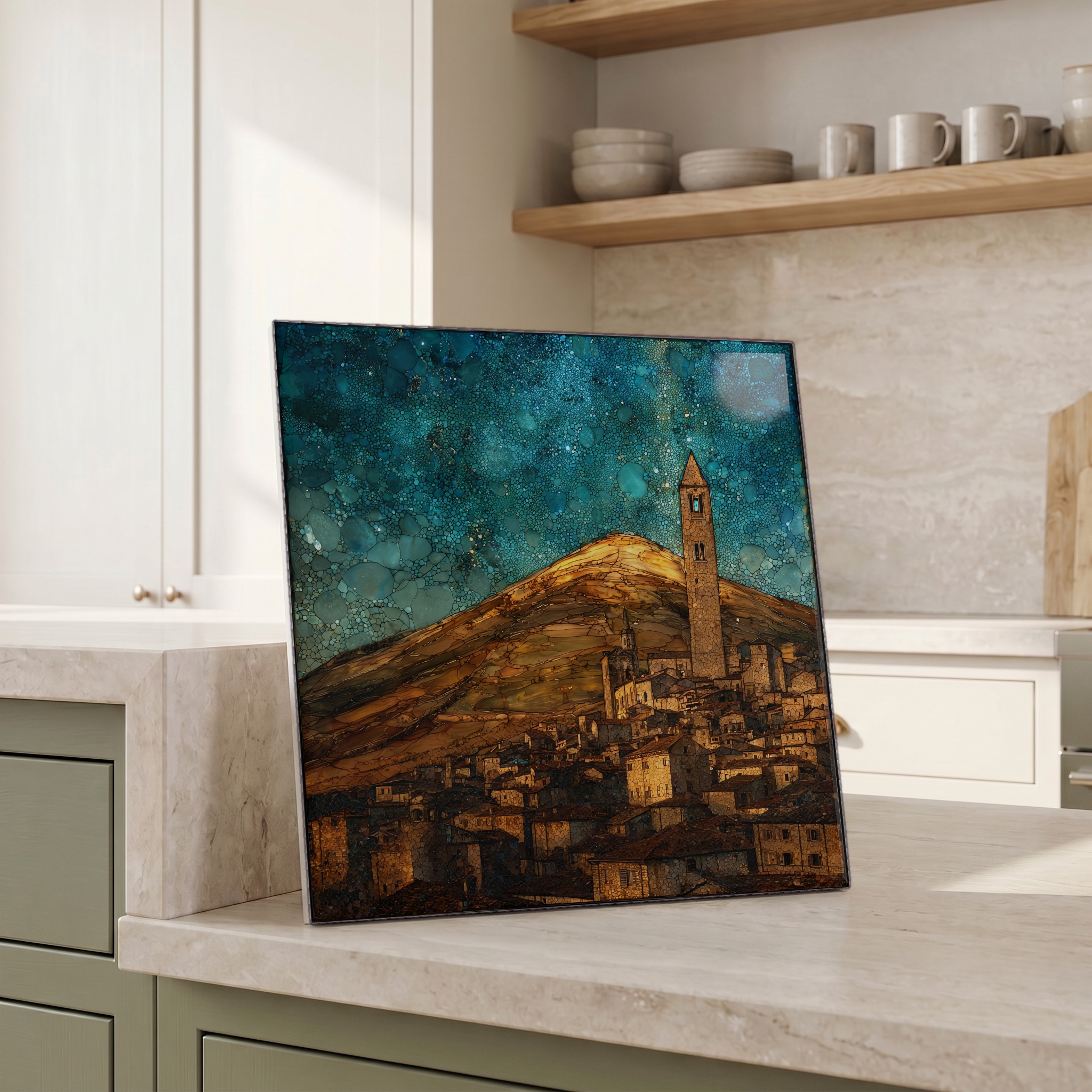
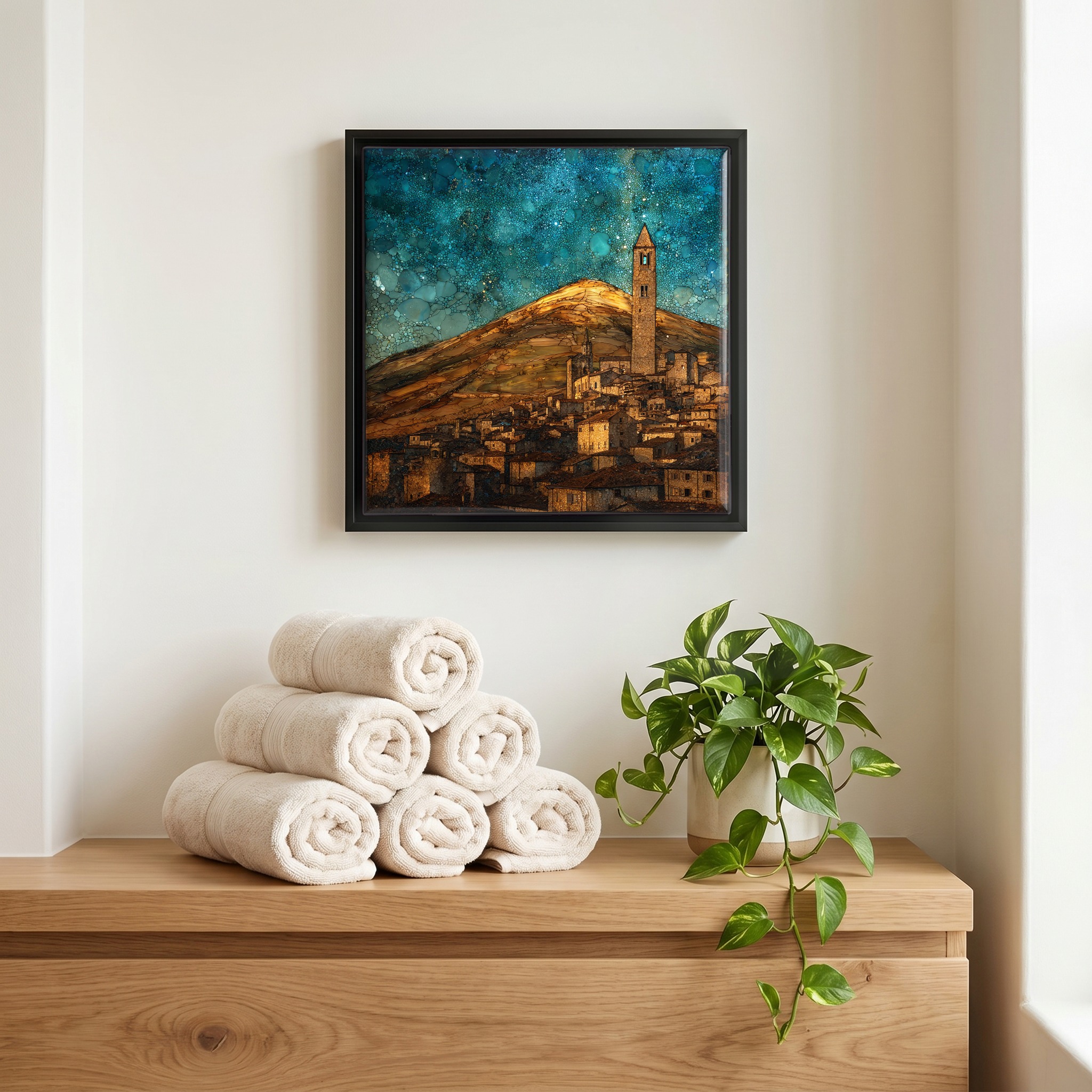
Gubbio, on ceramic.
Each tile is finished by hand in our Knoxville studio. Artwork is slowly infused into the ceramic surface under high heat and pressure, and rests beneath a thin glossy finish. The colour lives in the surface, not on top of it.
Pick any four 4-inch tiles — National Parks you've been to, a Smokies set, the four seasons of one place. $ for a set of , cork-backed, ready to live on the table.
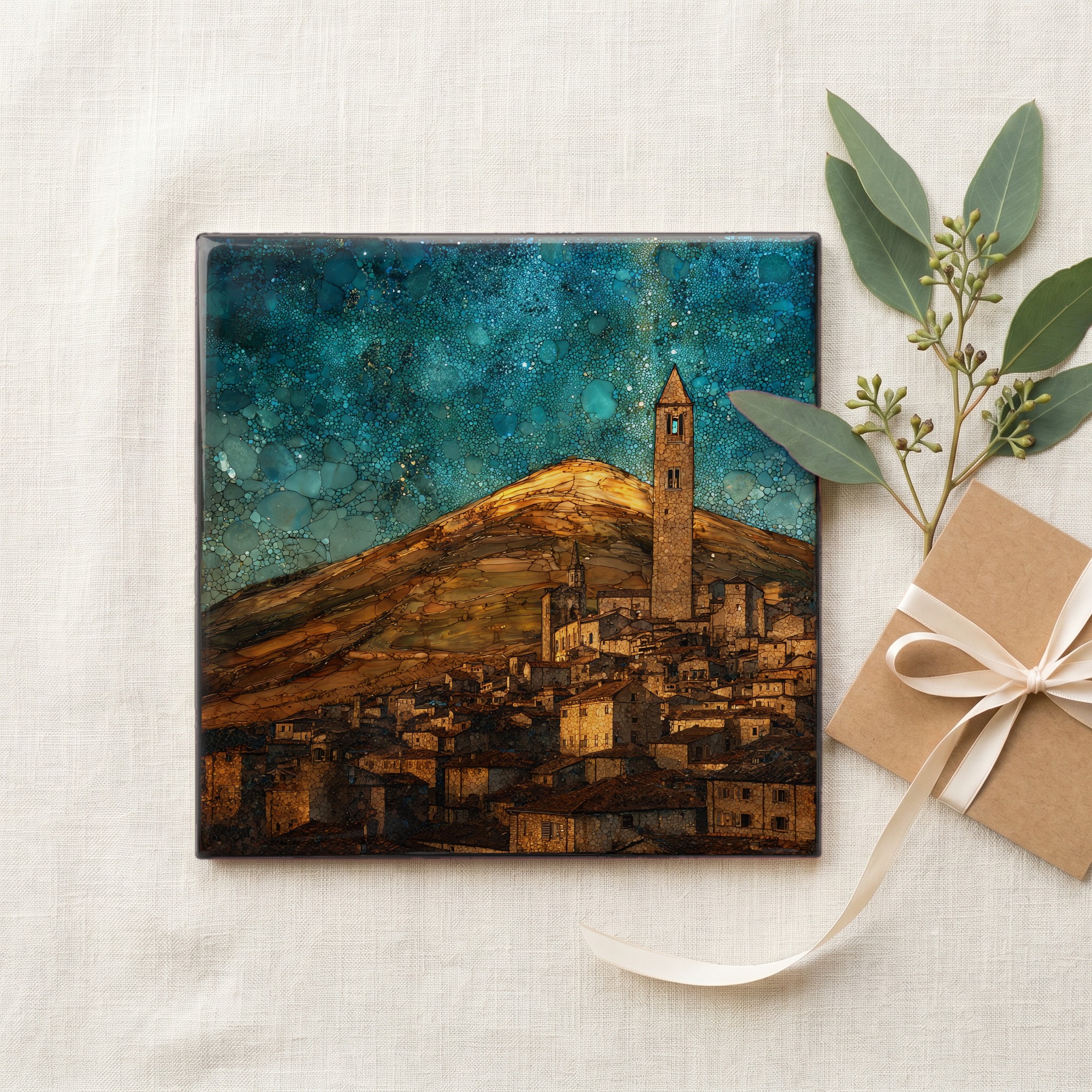
Each tile ships in a kraft box, tied with cream ribbon, with a handwritten note from the studio if you'd like to add one.
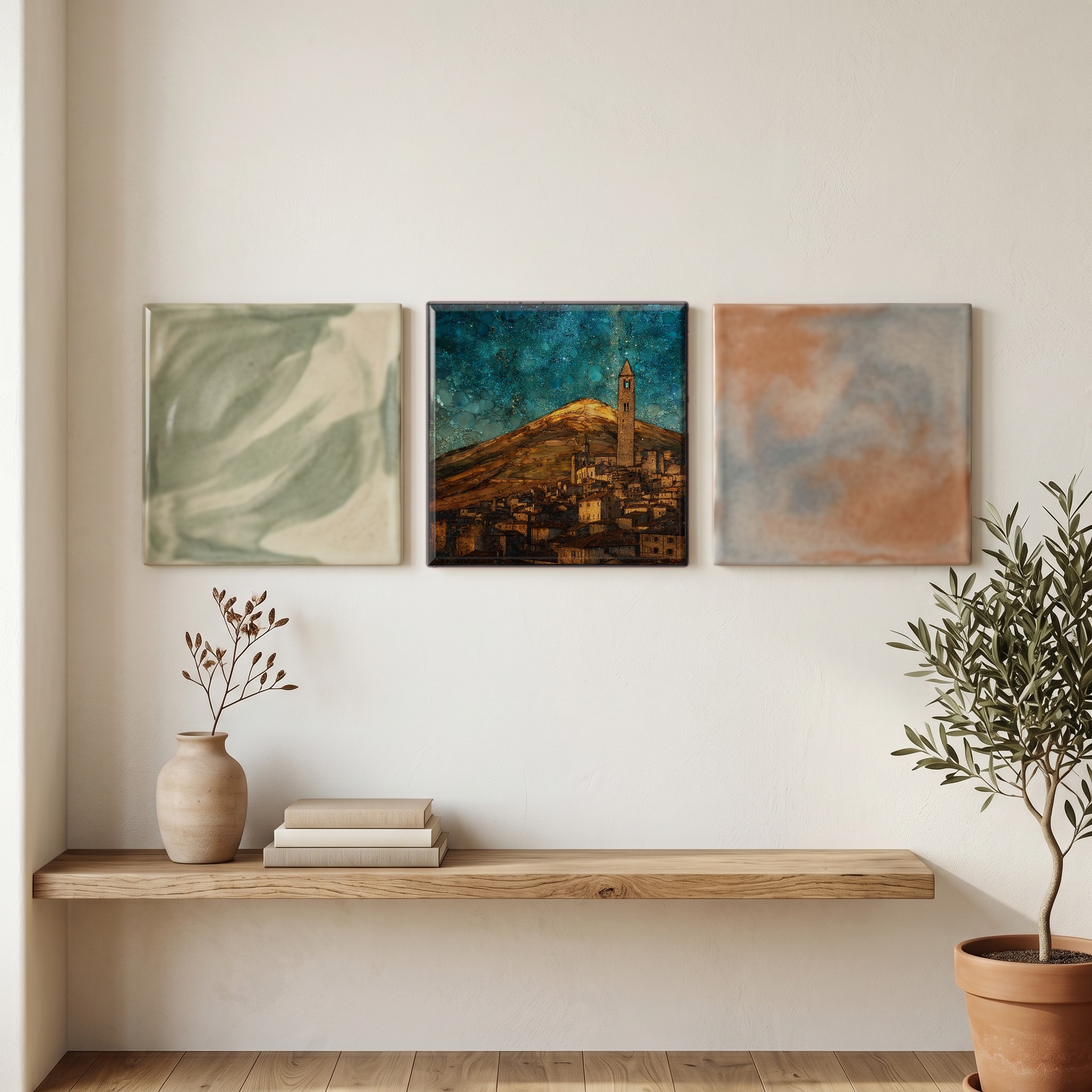
Three or five different vistas, hung together — a chapter of places you've been, or want to go.
The place, in three passes.
Gubbio sits at about 522 metres on the lower slopes of Monte Ingino, in the province of Perugia in eastern Umbria, central Italy. It is one of the oldest towns in the region; in Roman times it was Iguvium, and a 1st-century-BC theatre still stands on the plain below the walls. The medieval town is built almost entirely of pale grey local limestone, stacked up the hillside so steeply that many streets run as ramps and stairways. Above the rooftops, an open-basket cable car, the Funivia Colle Eletto, climbs to the Basilica of Sant'Ubaldo near the summit. Its roughly 30,000 residents make it the sixth-largest town in Umbria.
The building that anchors the town is the Palazzo dei Consoli, a Gothic civic palace begun in 1332 and finished around 1349 to a design attributed to Angelo da Orvieto. It rises straight off the Piazza Grande on a massive arcaded base, its crenellated tower visible from the valley floor. Inside, the Museo Civico holds the Eugubine Tablets, seven bronze plates inscribed between the 3rd and 1st centuries BC with the most extensive surviving text in the ancient Umbrian language. The rest of Gubbio is built of the same grey limestone, the colour barely shifting from the thirteenth-century houses to the cathedral. It is part of why Gabriele D'Annunzio counted the town among his cities of silence.
Every year on May 15th, the eve of the feast of Saint Ubaldo, Gubbio runs the Festa dei Ceri. Three teams in yellow, blue and black carry the Ceri, wooden pillars nearly five metres tall topped with statues of Sant'Ubaldo, San Giorgio and Sant'Antonio, on a run of more than four kilometres from the town up to the Basilica of Sant'Ubaldo on Monte Ingino. Each Cero weighs around 300 kilograms and is never set down. The race has been held since the saint's death in 1160 and joined UNESCO's Intangible Cultural Heritage list in 2013. The same mountain carries the other tradition: since 1981, a Christmas tree outlined in lights down its slope, named by Guinness World Records the largest in the world.