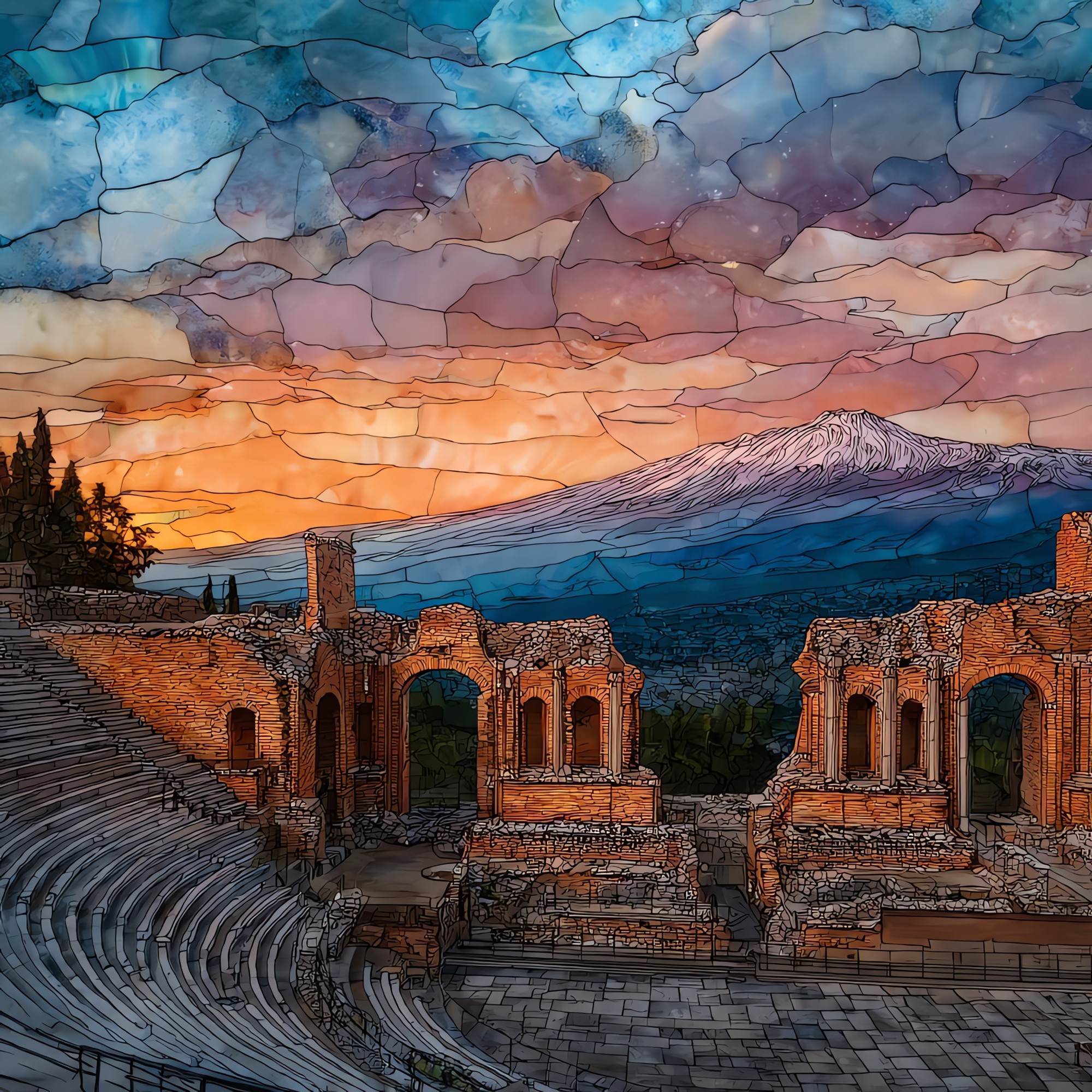
Taormina Greek Theatre
— — the stage opens onto a volcano.
Not only on a wall.
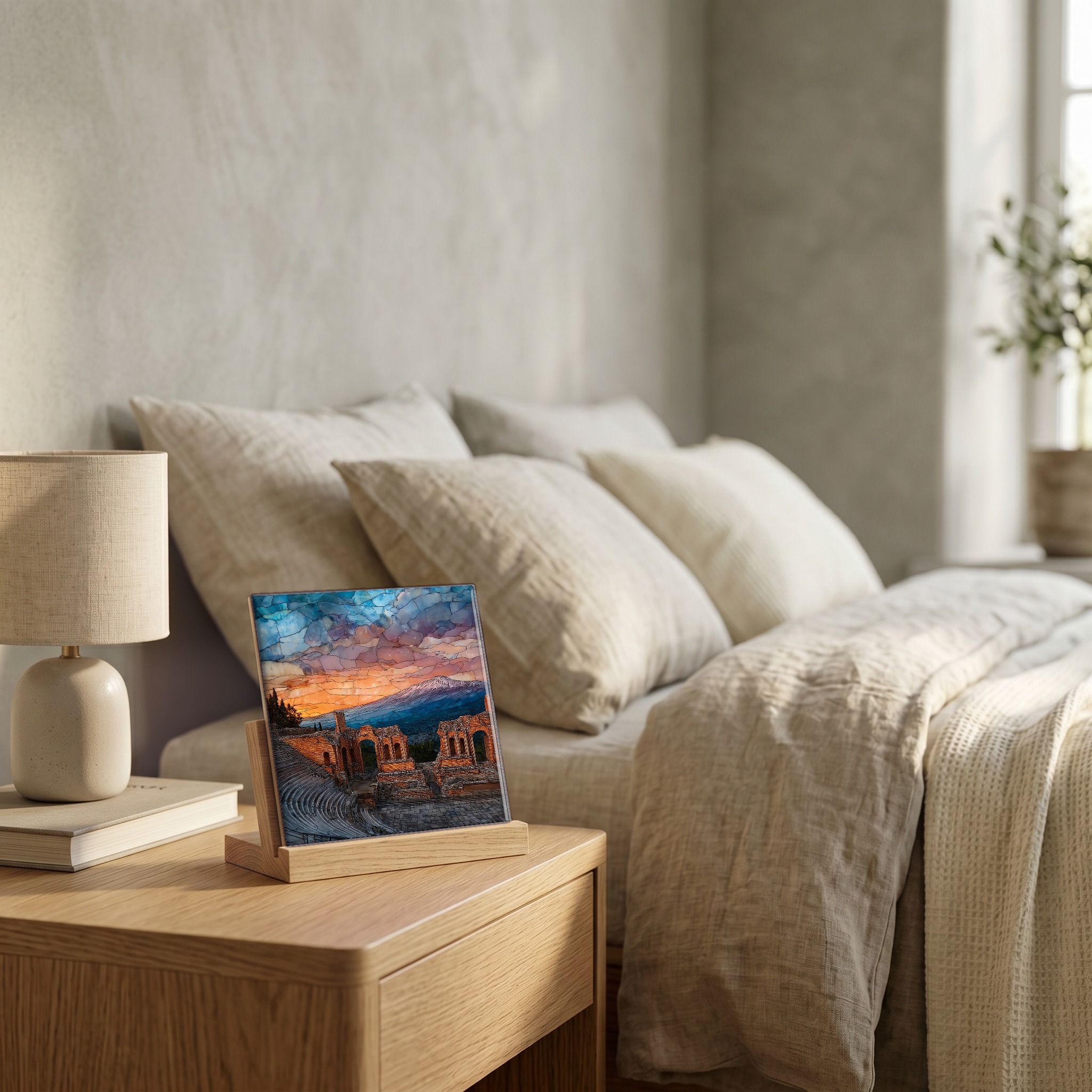
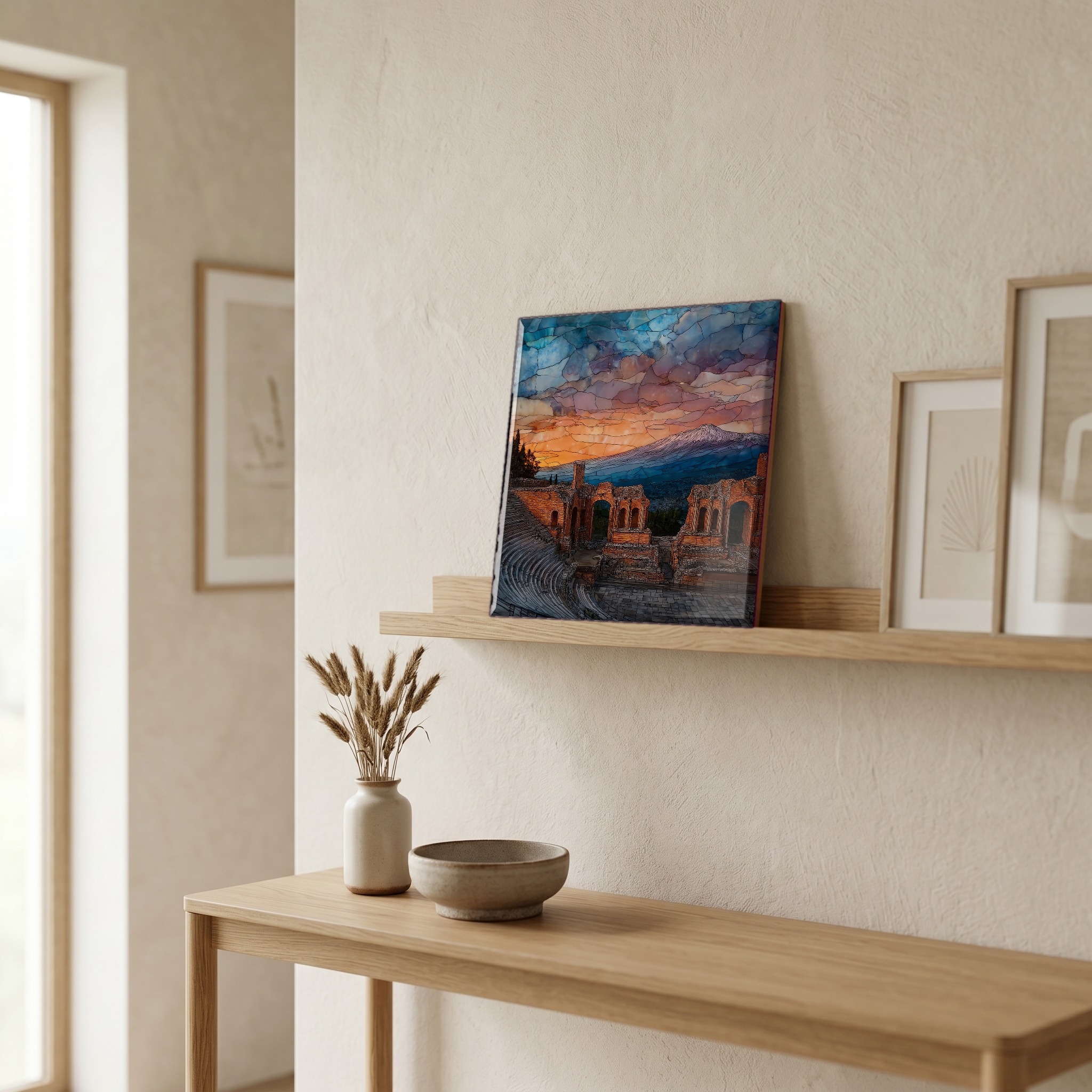
“A theatre cut into the side of Monte Tauro, with the stone seats facing east toward Mount Etna and the Ionian Sea below. The Greeks shaped the first cavea here in the third century BC; the Romans rebuilt it in brick a few hundred years later. Either way, the view was the point. On a clear morning the volcano sits exactly where the back wall used to be. Music still fills the place in summer for concerts, opera, and the Taormina Film Festival. The same stone still does its work.
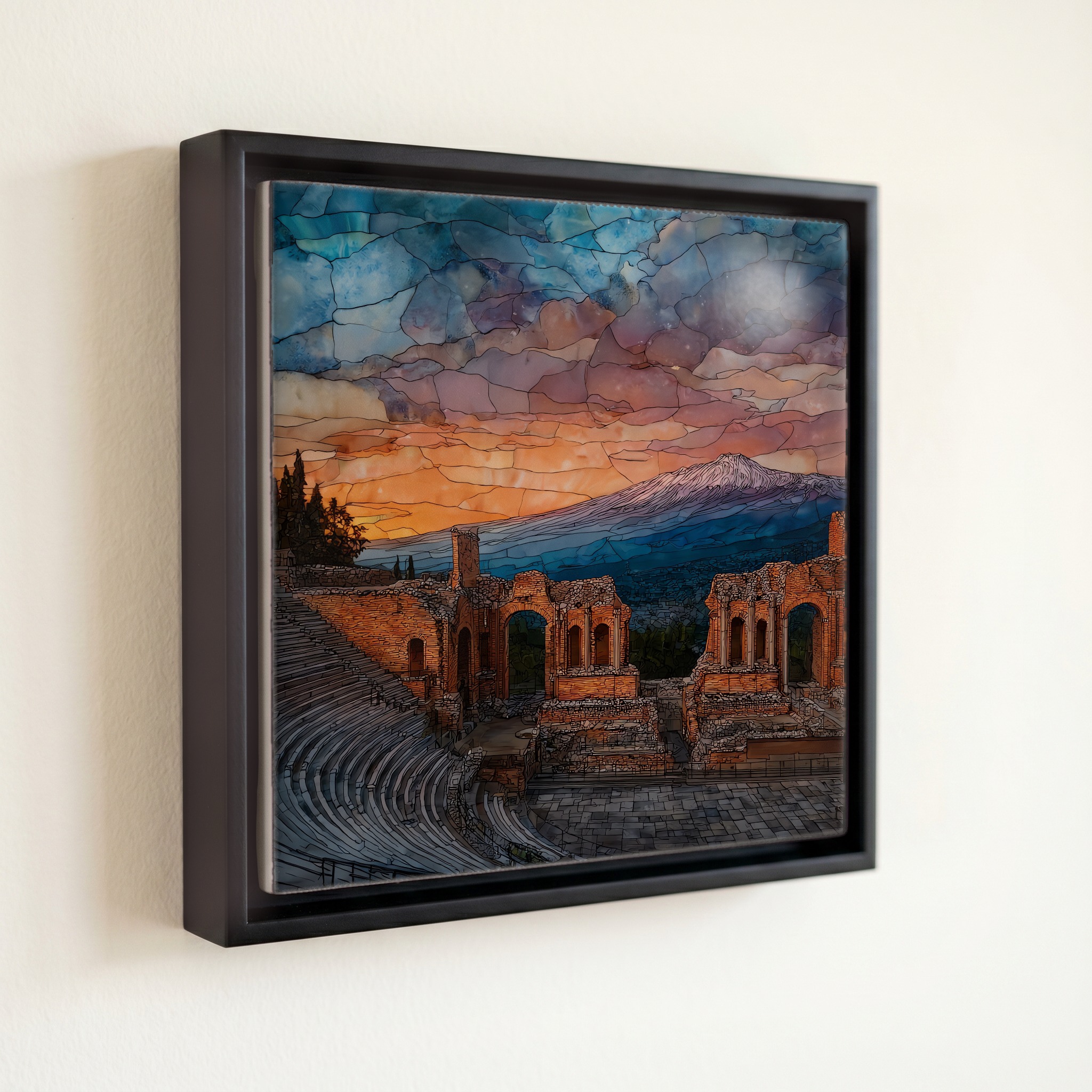
Taormina Greek Theatre, on ceramic.
Each tile is finished by hand in our Knoxville studio. Artwork is slowly infused into the ceramic surface under high heat and pressure, and rests beneath a thin glossy finish. The colour lives in the surface, not on top of it.
Pick any four 4-inch tiles — National Parks you've been to, a Smokies set, the four seasons of one place. $ for a set of , cork-backed, ready to live on the table.
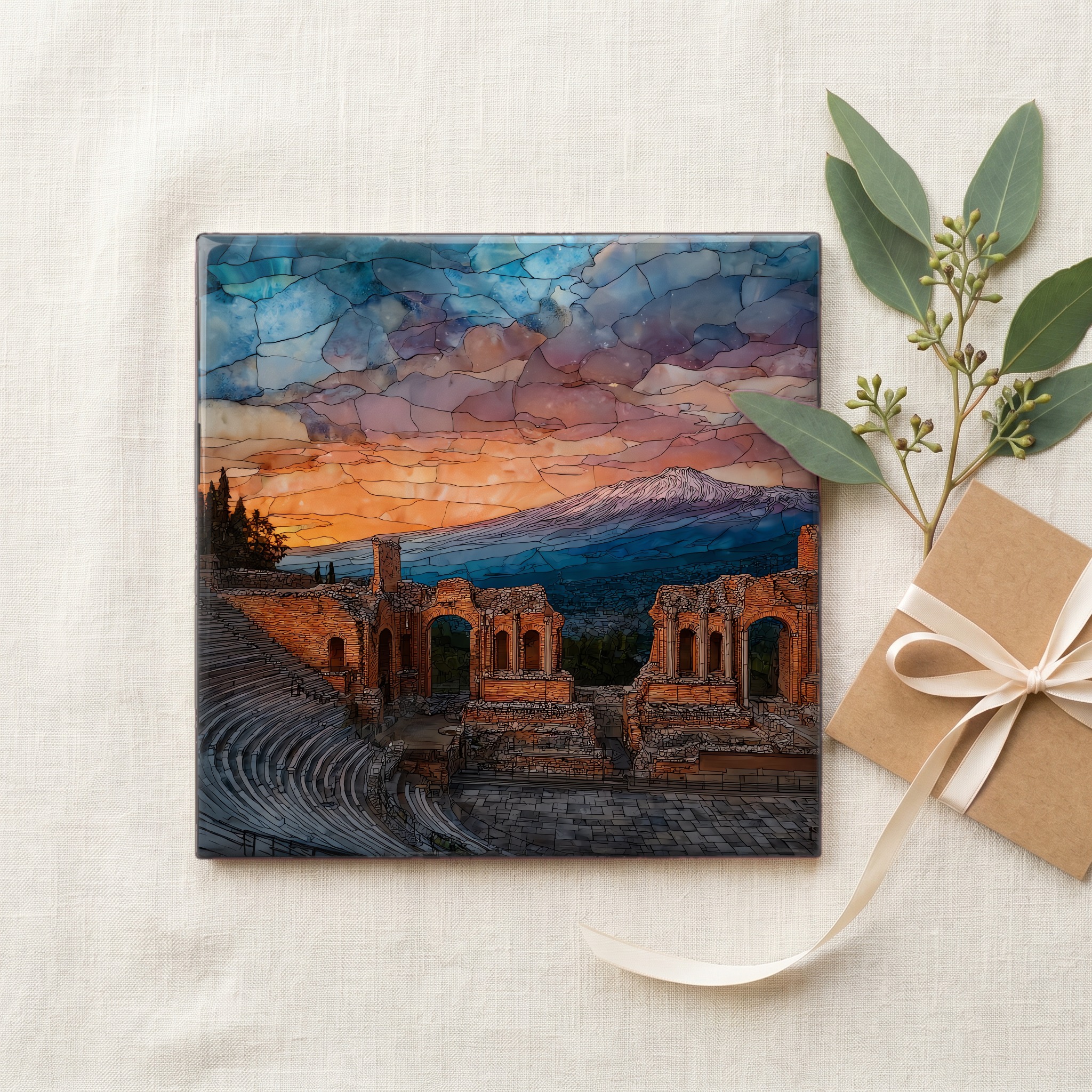
Each tile ships in a kraft box, tied with cream ribbon, with a handwritten note from the studio if you'd like to add one.

Three or five different vistas, hung together — a chapter of places you've been, or want to go.
The place, in three passes.
The Greek Theatre of Taormina sits on Monte Tauro, about 250 meters above the Ionian Sea, on the east coast of Sicily within the Metropolitan City of Messina. The town of Taormina itself is roughly 50 kilometers north of Catania and Mount Etna, the active volcano that fills the southern horizon from the upper seats. The theatre is reached on foot from the town's main pedestrian street, Corso Umberto, in about ten minutes. Despite the name in common use, the surviving structure is largely Roman: the original Greek theatre, built in the third century BC, was substantially rebuilt by Roman engineers in brick during the second century AD. Today the site is part of the Parco Archeologico Naxos Taormina.
The cavea, the semicircle of stepped seating, was cut directly into the rock of Monte Tauro by Greek builders in the third century BC, oriented so that the audience faced southeast across the Ionian Sea toward Mount Etna. Roman engineers expanded it in the second century AD, building up the upper rows, adding a vaulted ambulatory beneath, and constructing a scaenae frons in red brick at the back of the stage. The ruined arches and columns of that brick wall still flank the view today. The diameter measures roughly 109 meters, which makes it the second-largest ancient theatre in Sicily after the one at Syracuse. The brick the Romans used has weathered to the rust color the photographs are famous for.
The archaeological site is open daily, with hours that shift by season; in summer the gates close one hour before sunset. Admission is around 10 euros for adults, with concessions and free days set by the Sicilian Region. Allow about an hour to walk the cavea, the orchestra, and the upper terrace where the panorama opens fully toward Etna and the bay of Giardini Naxos. The theatre is reached from the center of Taormina by a short signed walk uphill from Corso Umberto; arriving by car, the nearest lots are at Lumbi and Porta Catania, with a shuttle into the historic center. In summer, much of the site is in use for the Taormina Arte program and the Taormina Film Festival, which has run here since 1955.