Wender·Vista
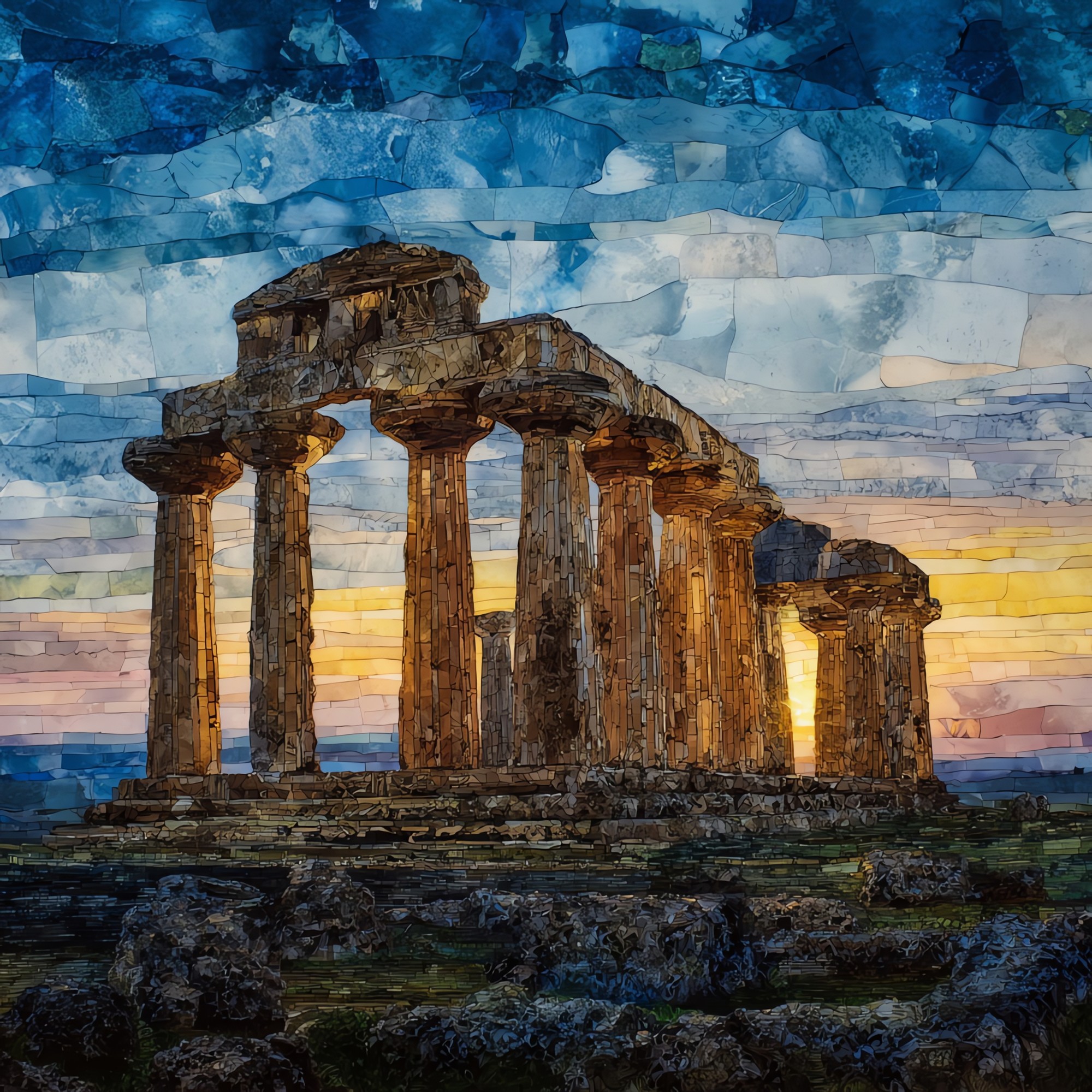
Greek Temples of Paestum
shown on ceramic, 12-inch tileItaly
on the coastal plain south of Salerno

Greek Temples of Paestum

the gold a Greek temple keeps for evening.

Where it lives

Not only on a wall.

A small tile on the nightstand catching the morning. A larger one above the fire. Yours, wherever you spend the slow hours.
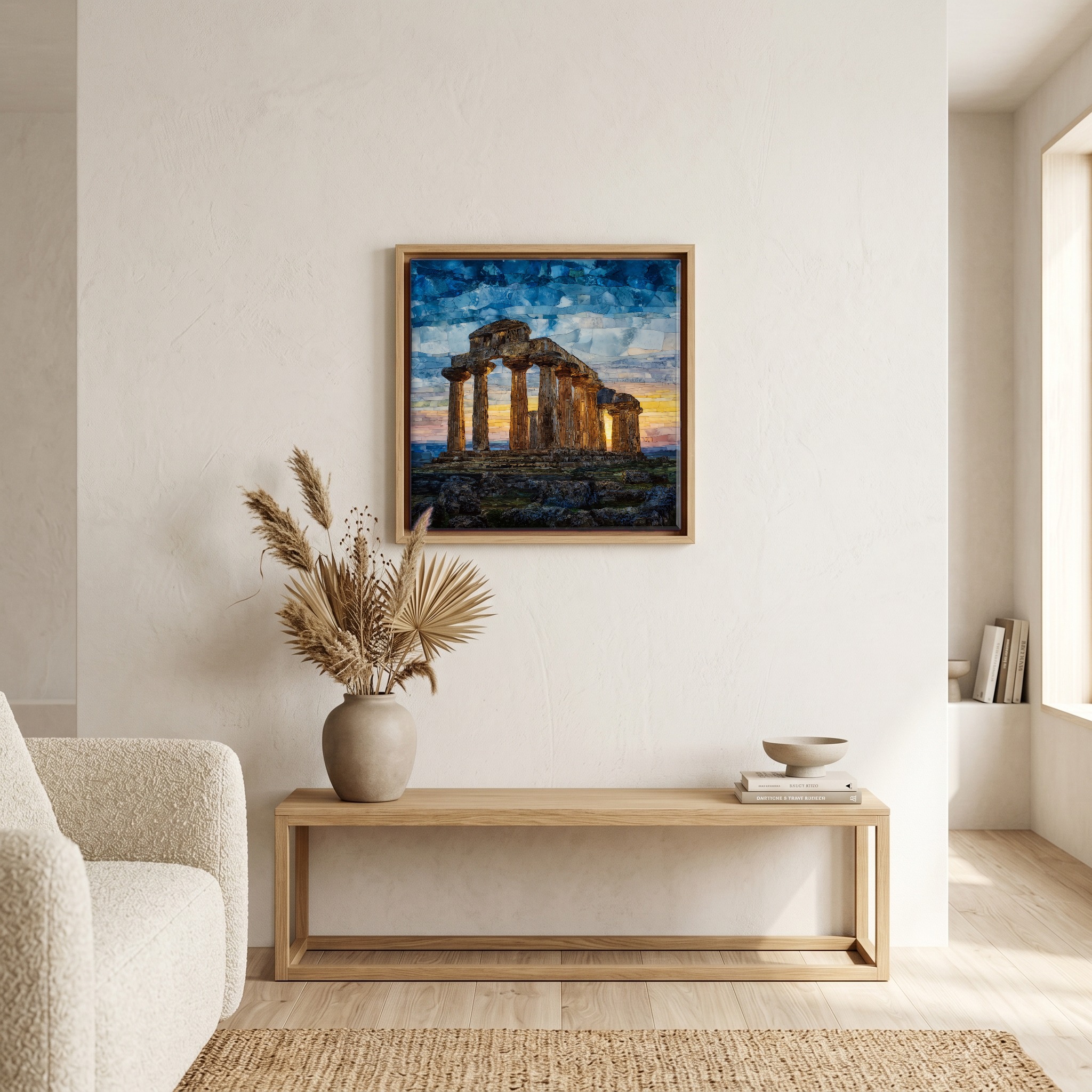
Above the bench, in a warm oak surround.
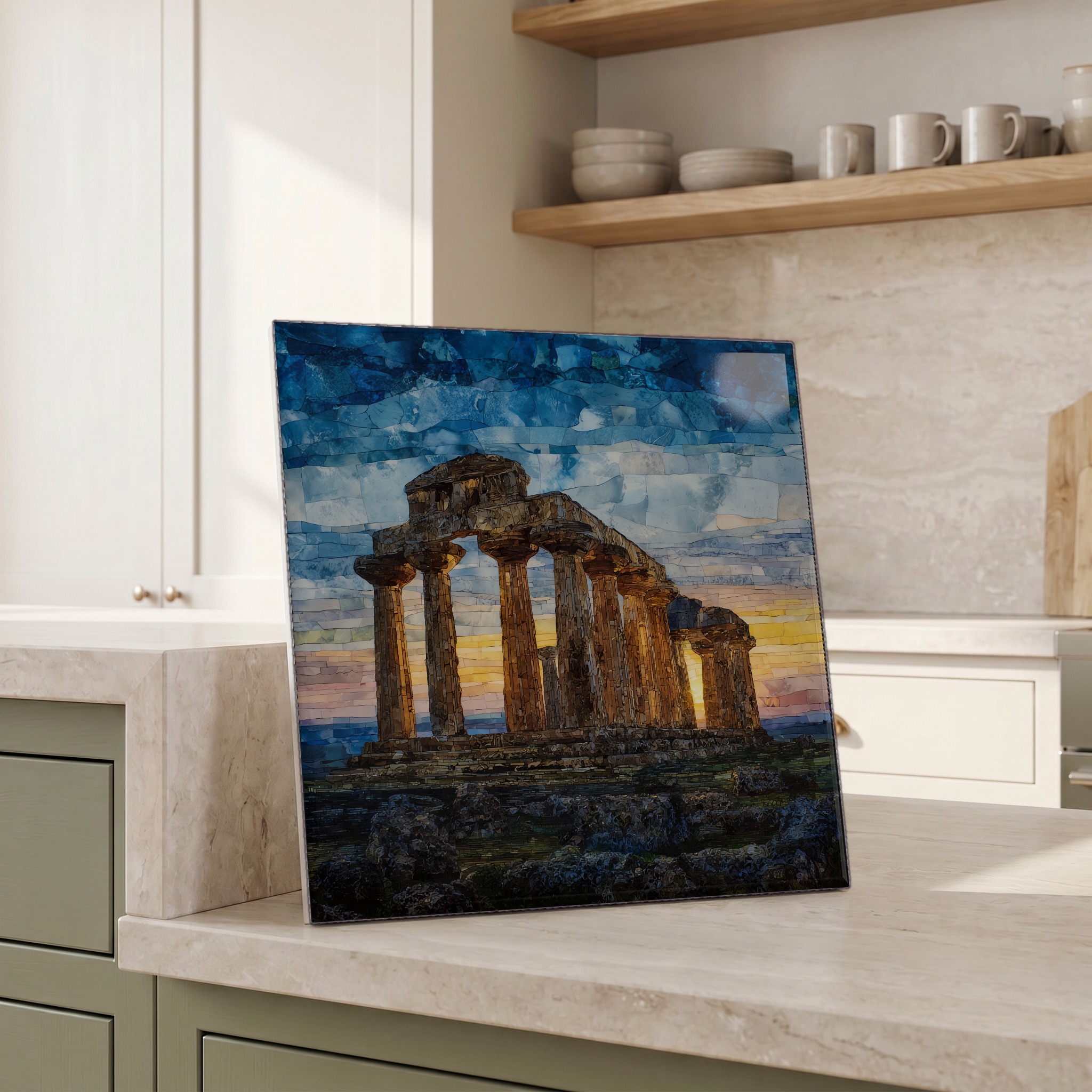
Beside the kettle, propped on the counter.
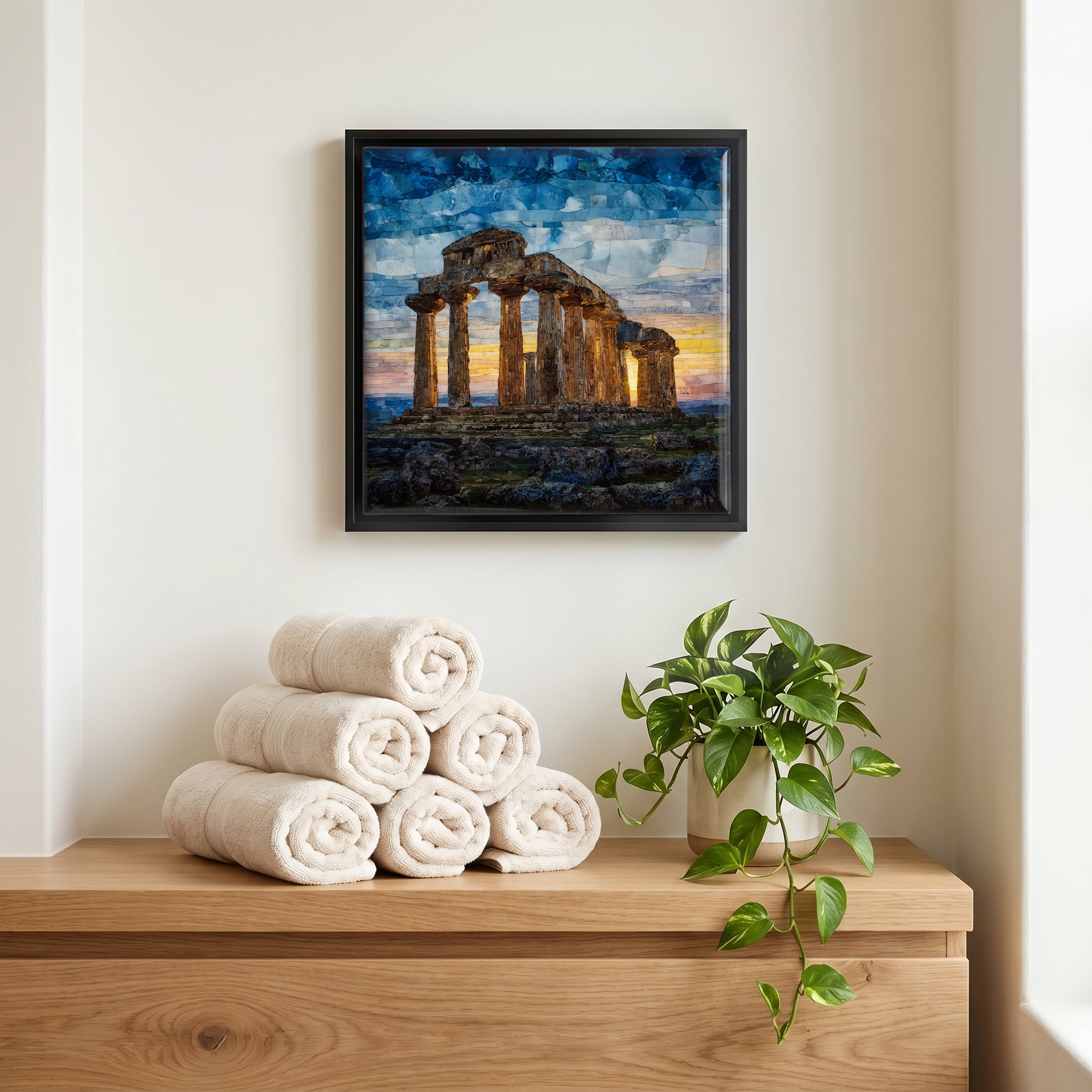
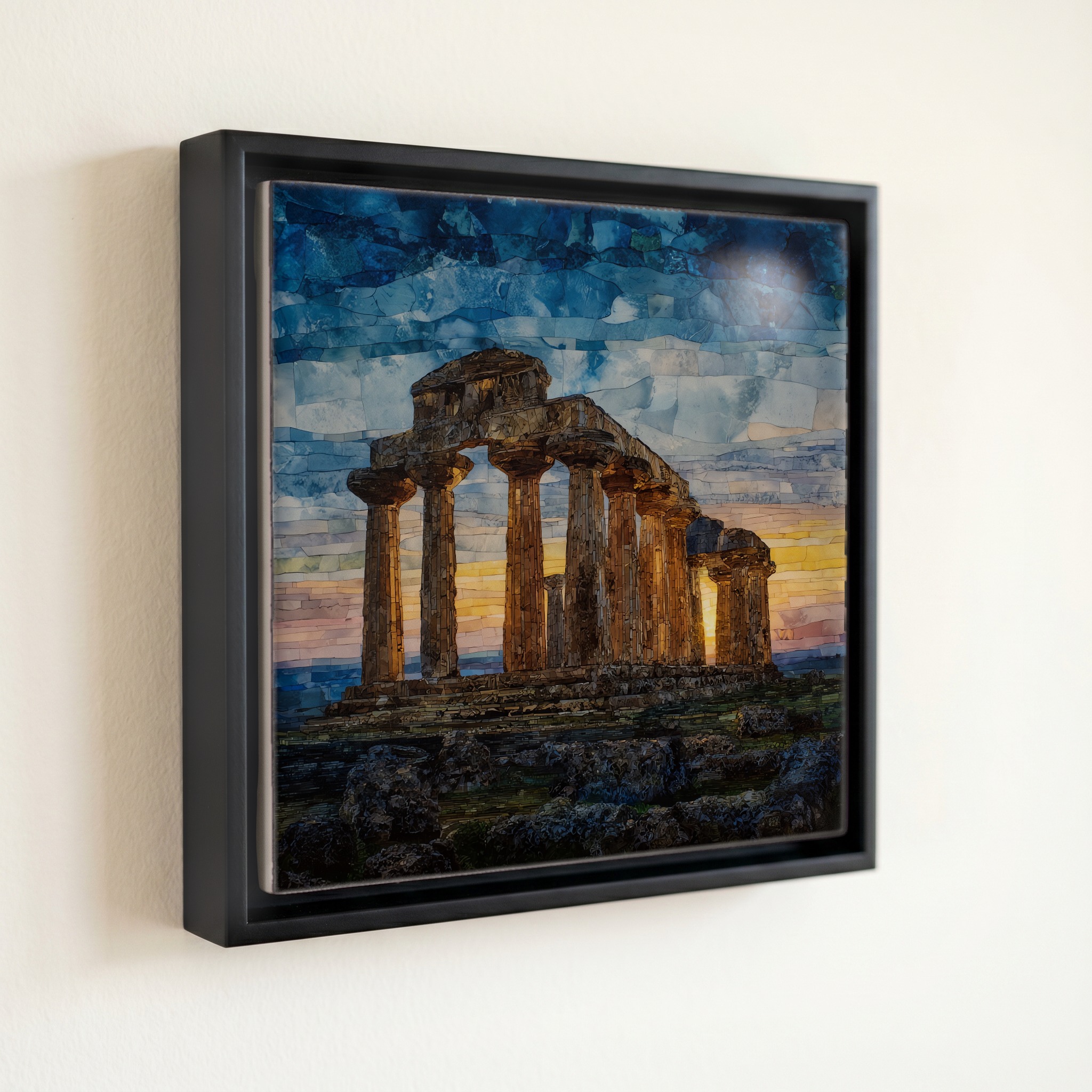
Above the linens, in a slim black surround.
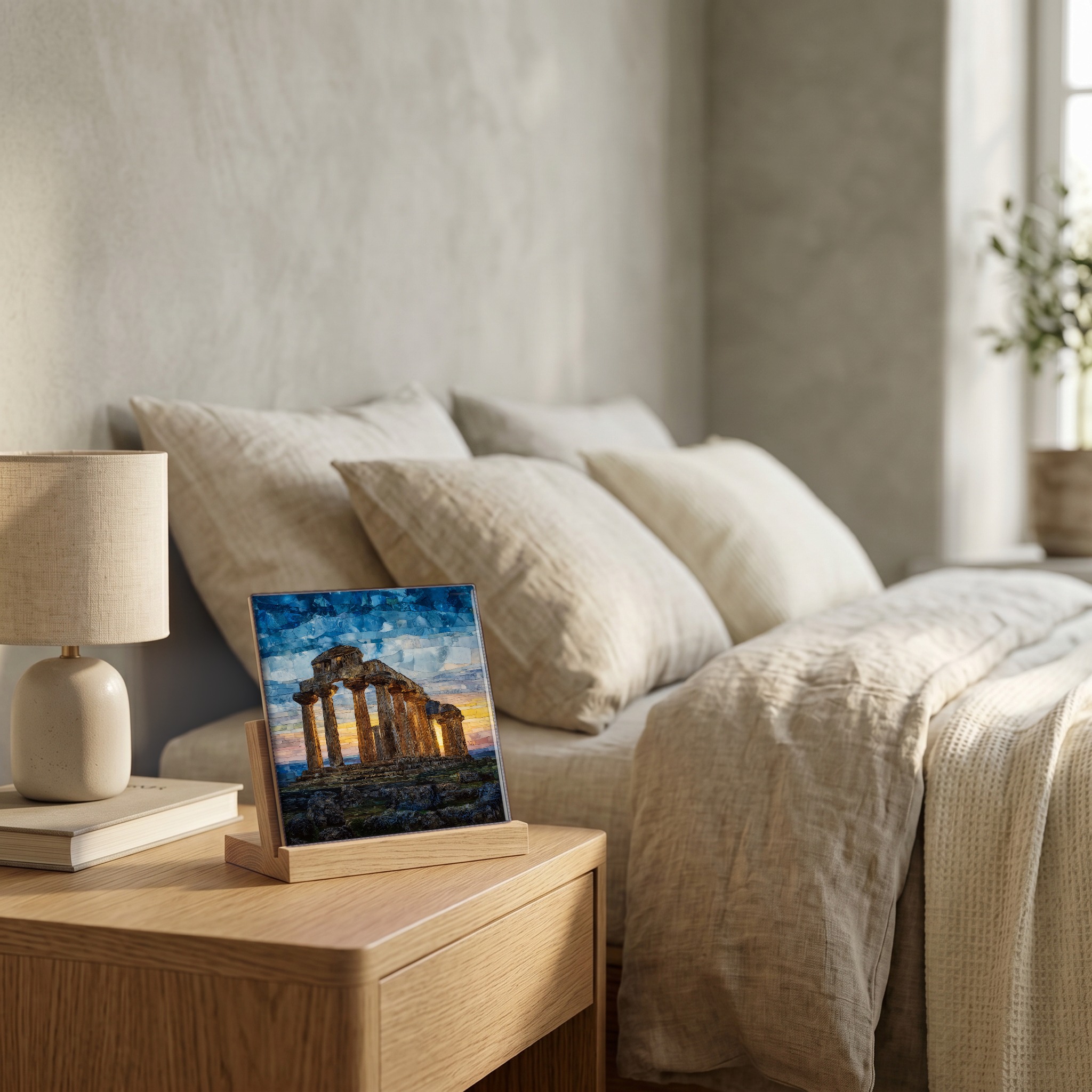
On the nightstand, on a light oak stand.
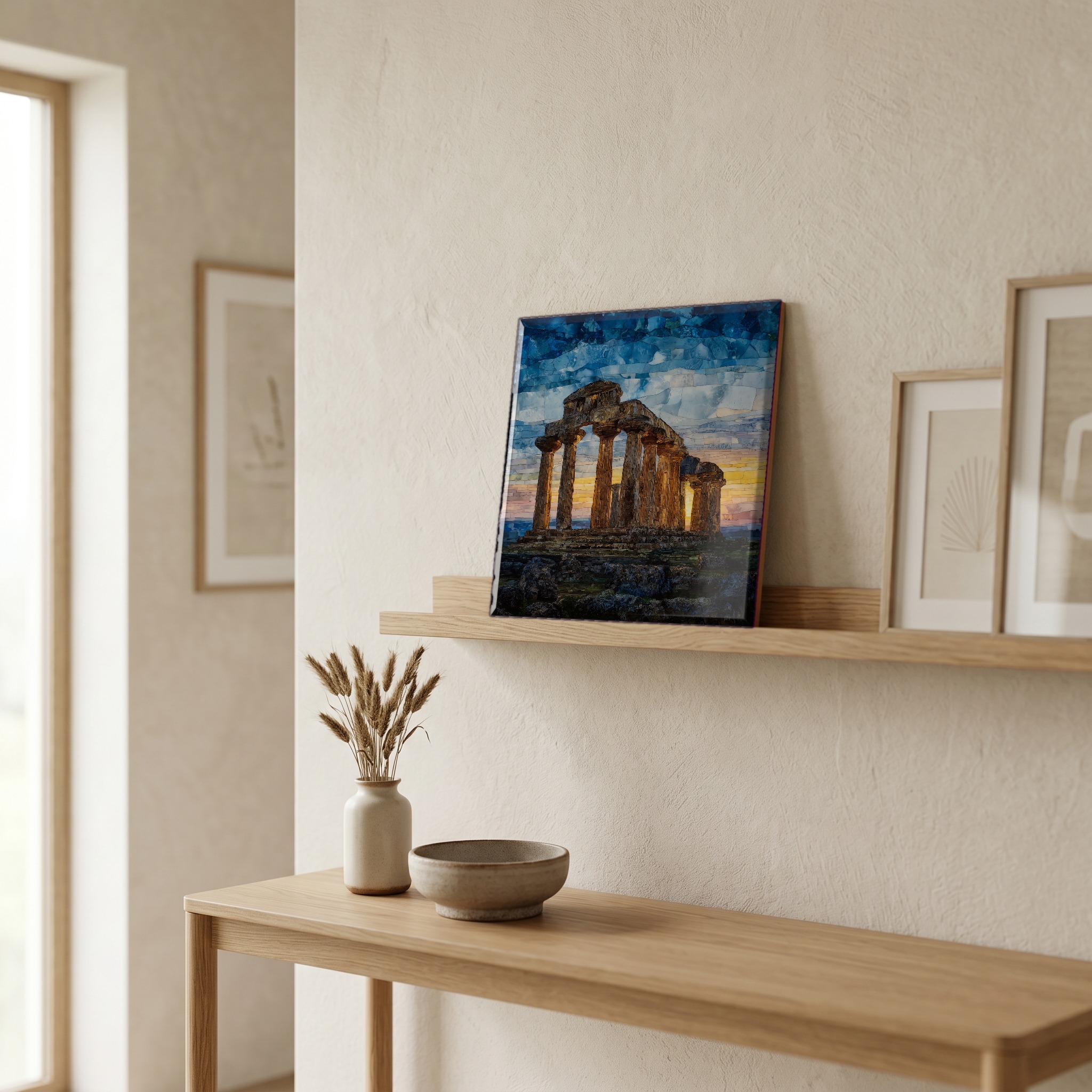
On a picture ledge, where the light comes in.
a note from the studio

Three Doric temples on a flat coastal plain south of Salerno, standing since the Greeks called this city Poseidonia. The middle one, the so-called Temple of Neptune, is among the best preserved anywhere, six columns across the front, the limestone warmed to honey where the afternoon reaches it. Built before the Romans renamed the place, before Goethe stopped to write about them. Wild fennel and poppies grow up through the old streets between them. Most coaches stop at Pompeii and never come this far down. The ones who do tend to stay until the light goes.
from the studio
shown in a slim black floating frame · 6 × 6 in
— bring it home

Greek Temples of Paestum, on ceramic.

Each tile is finished by hand in our Knoxville studio. Artwork is slowly infused into the ceramic surface under high heat and pressure, and rests beneath a thin glossy finish. The colour lives in the surface, not on top of it.

What kind of piece?
One tile — square or rectangle.
How big?
the popular one — counter, shelf, nightstand
6 × 6 in · 15 cm · 1.6 lb
Surface finish
A clear glossy finish — the artwork reads as if under resin. Ideal for show-pieces and framed wall art.
How it sits
A hidden cleat — sits ¼″ proud of the wall.
$58
Hand-finished and shipped from our studio at the foot of the Smokies. On your wall in about ten days.
size
6 × 6 in
15 cm
weighs
1.6 lb
solid in the hand
surface
ceramic, hand-finished
art rests beneath a thin glossy finish
from
Knoxville, TN
our family studio, at the foot of the Smokies
— start a Coaster Set

Pick any four 4-inch tiles — National Parks you've been to, a Smokies set, the four seasons of one place. $ for a set of , cork-backed, ready to live on the table.
comes gift-ready
comes gift-ready

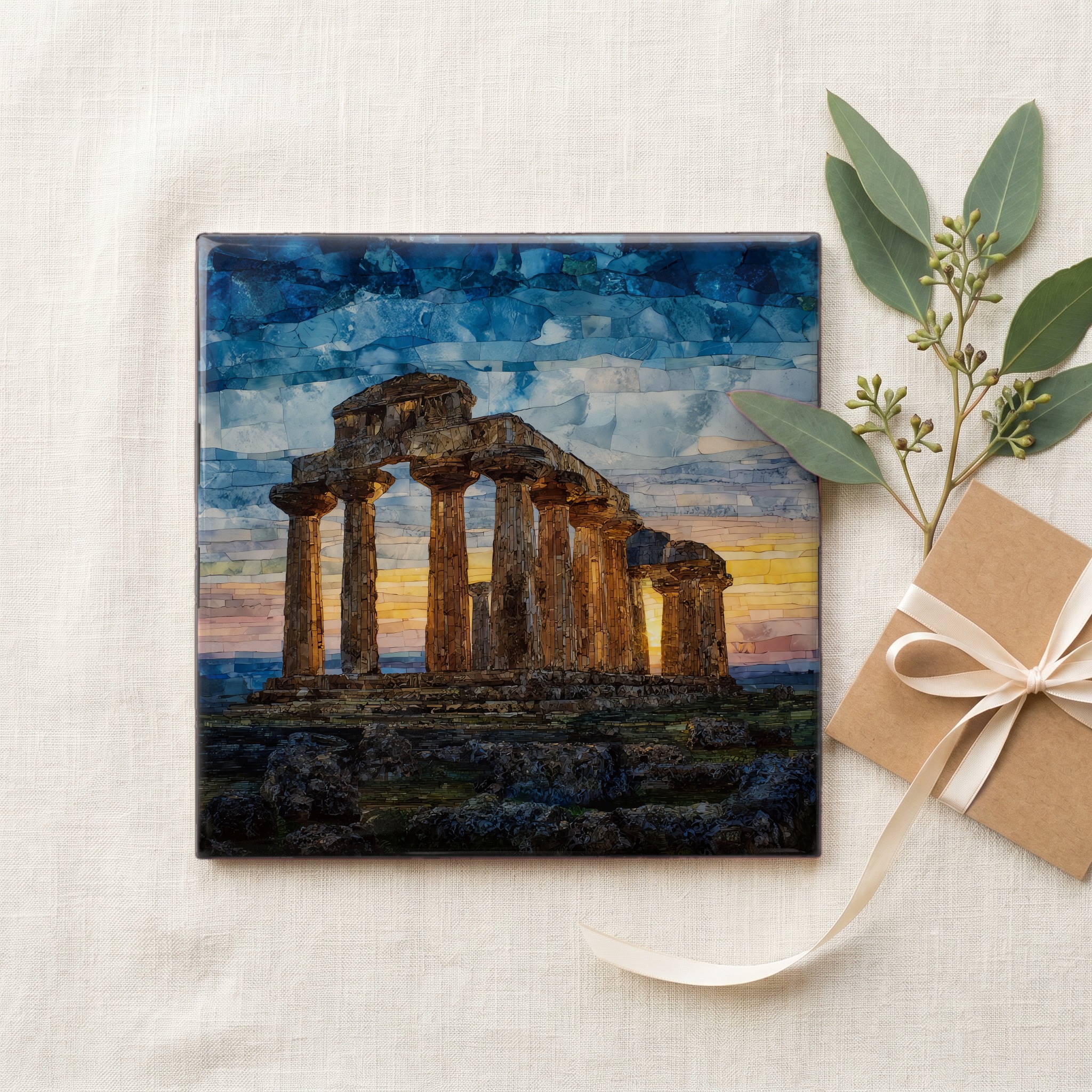
Each tile ships in a kraft box, tied with cream ribbon, with a handwritten note from the studio if you'd like to add one.
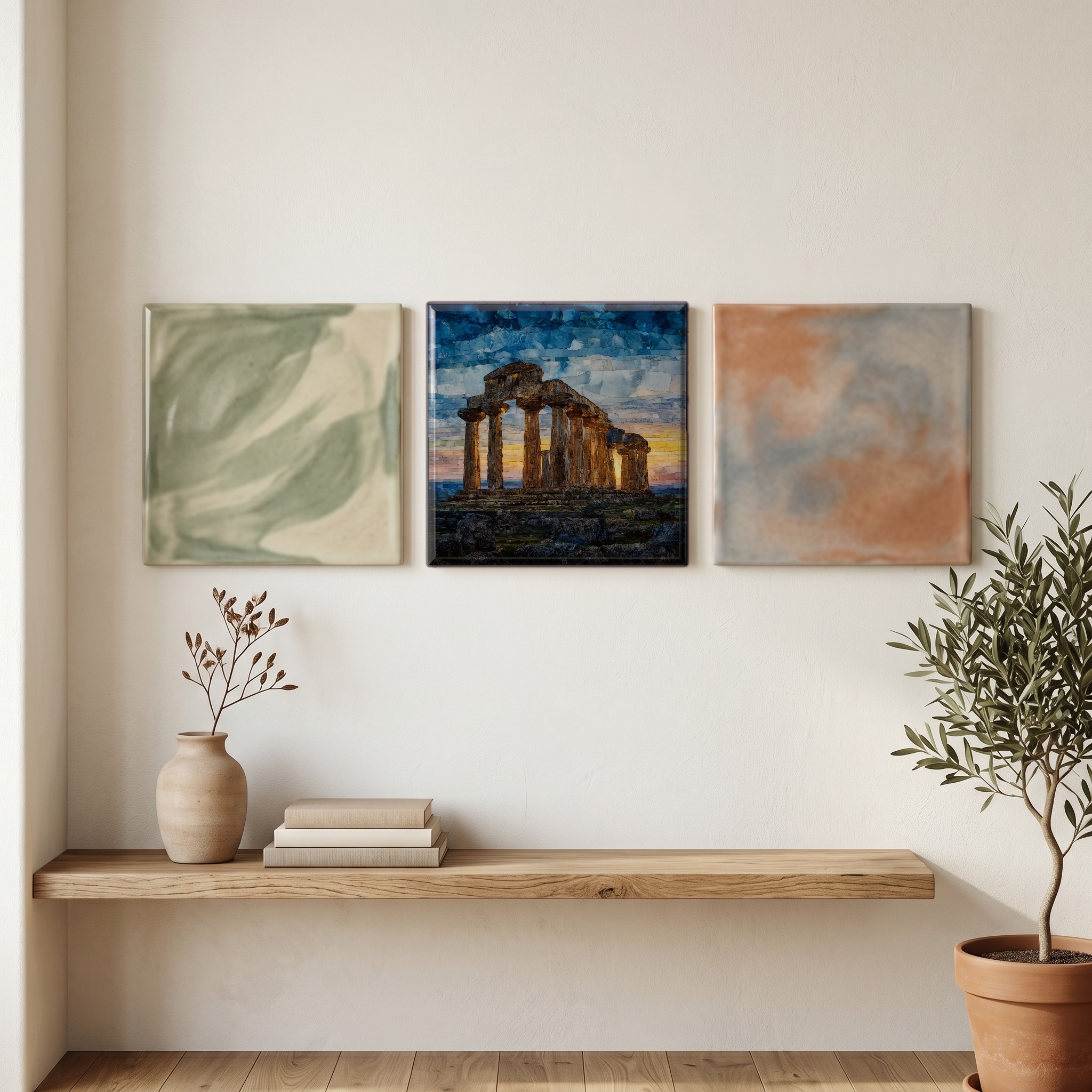
or build a grouping
or build a grouping

Three or five different vistas, hung together — a chapter of places you've been, or want to go.

about Greek Temples of Paestum

The place, in three passes.

A little of what's known, in case you fall down the rabbit hole — or want to go see it yourself.
the place

Paestum sits on the coastal plain of the Sele River, in the frazione of the same name within the comune of Capaccio Paestum, about 40 kilometres south of Salerno in Campania. Greek colonists from Sybaris founded it as Poseidonia around 600 BC, naming the city for Poseidon. The Lucanians took it in the late fifth century BC, and Rome absorbed it in 273 BC, giving it the name Paestum. Three Doric temples, a forum, an amphitheatre, and long stretches of the old city walls survive on the site. In 1998 UNESCO inscribed it alongside Velia, the Certosa di Padula, and the Cilento and Vallo di Diano National Park.

— informed by Wikipedia, Britannica
the stone

Three temples stand in a row, built of the honey-coloured travertine quarried nearby. The oldest, the Temple of Hera I, went up around 550 BC; for centuries locals called it the Basilica, with nine columns across its short ends and eighteen down each side. Beside it, the Temple of Hera II, mislabelled the Temple of Neptune in the 18th century, dates to about 460 BC and measures roughly 25 by 60 metres, its columns just under nine metres tall. The archaeologist A. W. Lawrence called it the best preserved of all Greek temples. The third, the Temple of Athena from around 500 BC, mixes Doric columns outside with Ionic ones within.

the light

The travertine carries iron and other minerals that warm as the sun drops, so the columns read pale at midday and deepen to gold and amber toward evening. That colour is part of why the ruins drew Grand Tour travellers after a road built in the mid-1700s brought them back into view. Goethe came in 1787 and described the temples in his Italian Journey, at first unsettled by their heavy Doric mass, then won over. Piranesi etched them near the end of his life. The warm stone against the flat green plain, with the Tyrrhenian close by, is what most photographers wait for in the last hour before the site closes.

— informed by Wikipedia, Britannica
where
Italy · Capaccio Paestum, Province of Salerno, Campania
within
Archaeological Park of Paestum
position
40.4201° N · 15.0053° E
the neighborhood

What's nearby.

A handful of named places within an hour's walk or short drive. Some we've already painted; some we will.
1 km E
National Archaeological Museum of Paestum
museum
9 km N
Sanctuary of Hera Argiva at Foce Sele
Greek sanctuary
11 km S
Agropoli
coastal town
9 km NE
Capaccio
town
2 km W
Gulf of Salerno
coast
N
Greek Temples of Paestum
National Archaeological Museum of Paestum
Sanctuary of Hera Argiva at Foce Sele
Agropoli
Capaccio
Gulf of Salerno
common questions

What people ask.

A few questions we get about Greek Temples of Paestum — and about bringing the piece home.
about the place

Paestum lies on the coastal plain of the Sele River in Campania, southern Italy, within the comune of Capaccio Paestum and about 40 kilometres south of Salerno. The archaeological park sits a short way inland from the Tyrrhenian coast.

The three Doric temples date to the sixth and fifth centuries BC. The Temple of Hera I rose around 550 BC, the Temple of Athena around 500 BC, and the Temple of Hera II, the so-called Temple of Neptune, around 460 BC.

The name is an 18th-century misattribution. Most scholars now think the temple honoured Hera, the city's chief goddess, though Poseidon may have shared it. It is widely regarded as one of the best preserved Greek temples anywhere.

Greek colonists from Sybaris founded the city around 600 BC and named it Poseidonia, for the sea god Poseidon. The Lucanians took it later, and Rome annexed it in 273 BC, renaming it Paestum.

Yes. In 1998 UNESCO inscribed Paestum together with the nearby Greek site of Velia, the Certosa di Padula, and the Cilento and Vallo di Diano National Park, recognising the area's archaeological and natural value.

It is a painted tomb from about 480 BC, found near Paestum in 1968. Its ceiling slab shows a young man diving into water, a rare survival of Greek painting from this period. It is displayed in the on-site archaeological museum.

Late afternoon, when the travertine warms to gold and the crowds thin. Spring brings wildflowers across the site; summer middays are hot and exposed. The park is open through every season, with shorter hours in winter.

about the piece in your home

It suits travellers who have stood in the temple row, students of classical antiquity, and anyone drawn to Magna Graecia. The warm Doric columns read as history without clutter. A Small or Medium with a handwritten note from the studio carries well.

The honey-gold stone and stained-glass colour sit well in warm minimalist, Mediterranean-modern, and old-world traditional rooms. It holds the eye on a neutral plaster or deep terracotta wall, and pairs with wood, linen, and aged brass.

It fits the current pull toward warm minimalism and earthy, travel-collected interiors, where a few meaningful pieces replace a crowded gallery wall. The classical subject keeps it from reading as a trend that dates quickly.

Above a console or nightstand, a single Large holds the wall. Over a sofa or bed, a four-tile Mural fills the span, and a nine-tile Mural suits a wide feature wall. For a desk or shelf, the Small or a Keepsake works.

Yes. For a backsplash, shower, or other damp or vertical spot, choose the Dura Satin or Matte finish, which resists scratches and holds up to steam. The Glossy finish is best kept to dry walls and framed pieces.

Wipe it with a soft microfibre cloth and water. The colour is infused into the ceramic surface beneath a thin glossy finish, so it will not fade or lift with normal cleaning. Skip abrasive pads and harsh solvents.

Yes. Every WenderVista piece is the studio's own painting of the place, in our stained-glass and alcohol-ink style, hand-finished in Knoxville, Tennessee. There is no licensing and no stock imagery.

if this one stayed with you

A few you might also love.

Hand-picked by the eye that found Sorapis. Same air, same kind of quiet.
— a collection

The Italian Dolomites,
painted slow.

The valleys between Cortina and Val Gardena, the tarns you walk an hour to see, the towers that turn the colour of a banked fire just before dark. Wander the collection by valley, by season, or follow the path Reid walked.

Tre Cime
Braies
Misurina
Sorapis
Cinque Torri
Sassolungo
Marmolada