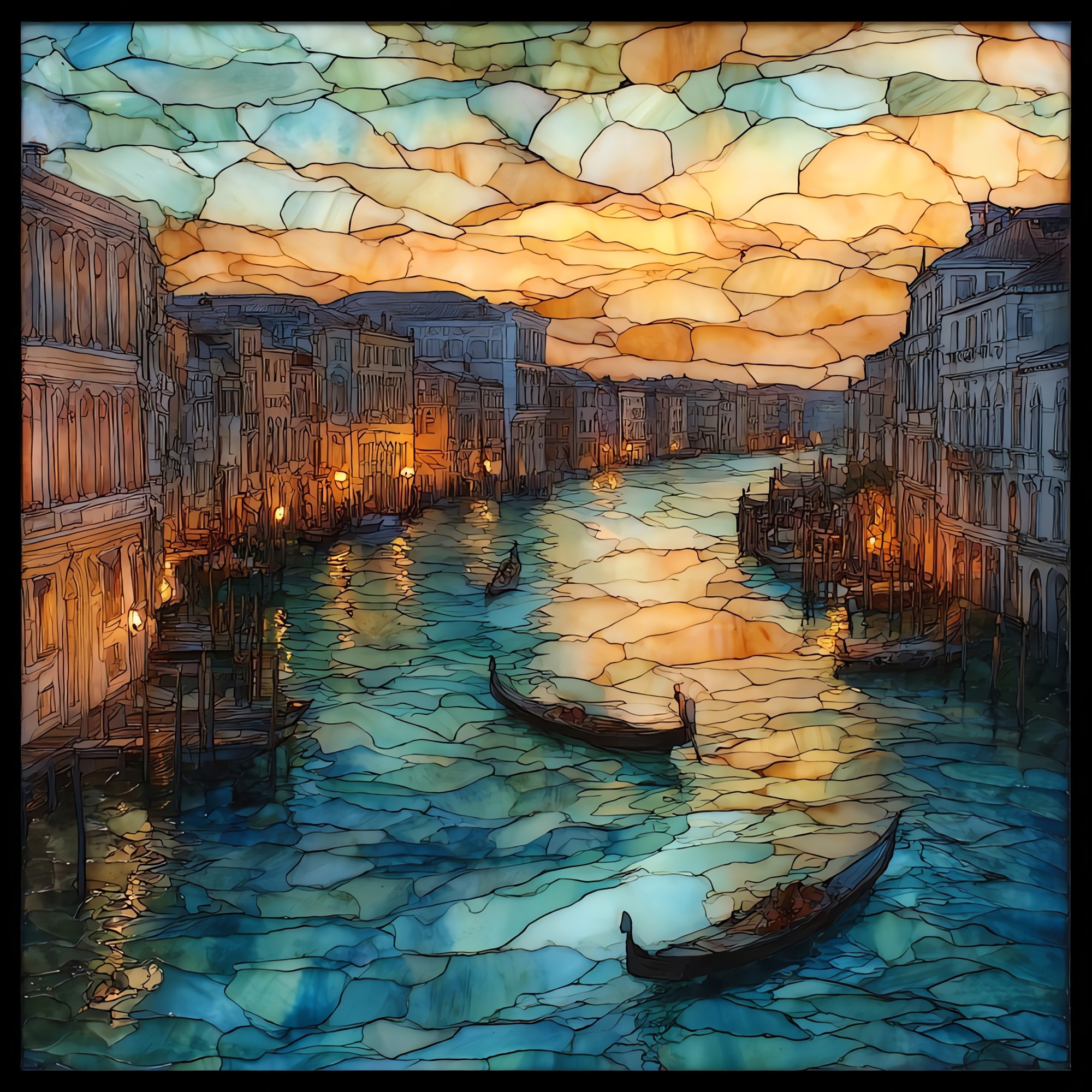
Grand Canal
— — a street the water made.
Not only on a wall.
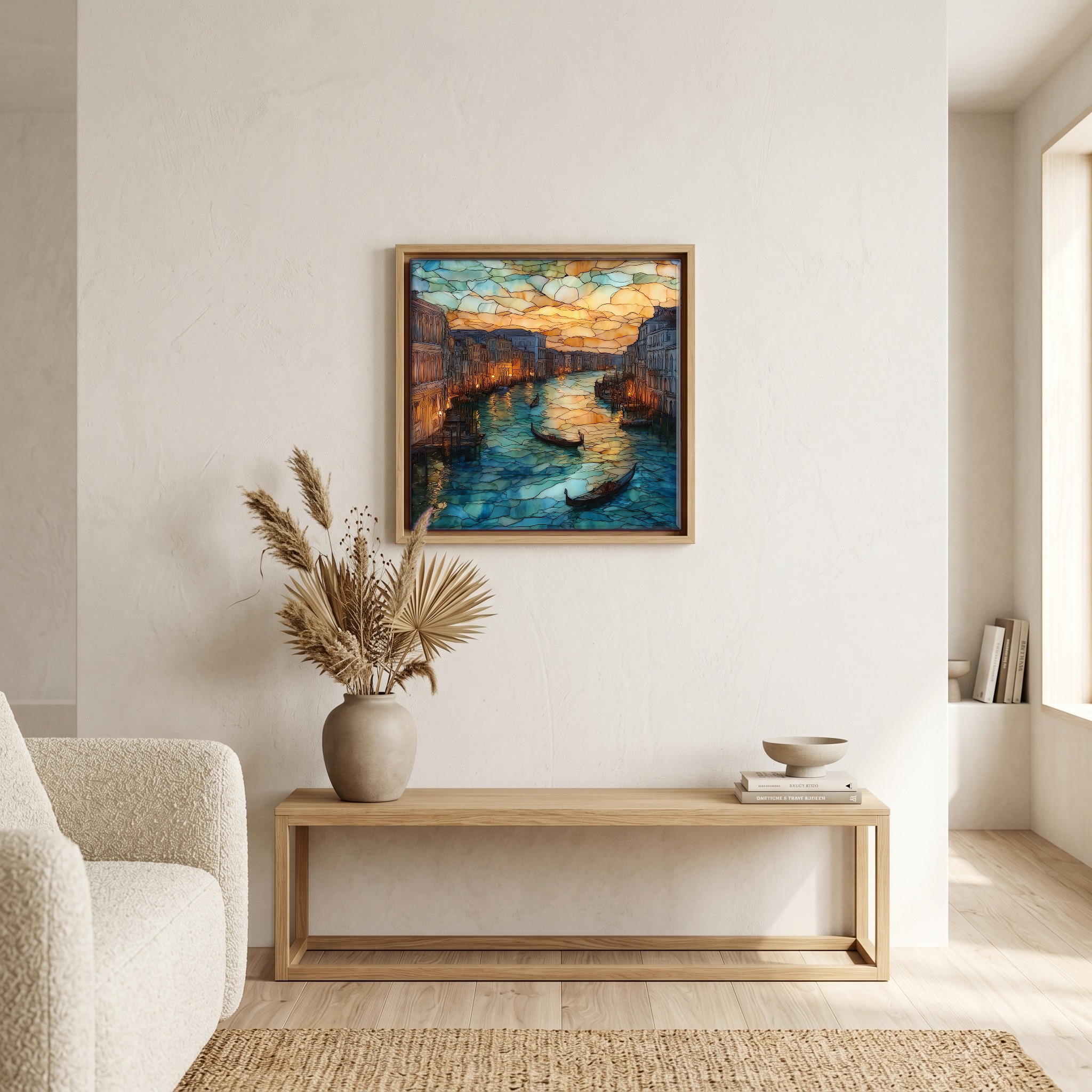
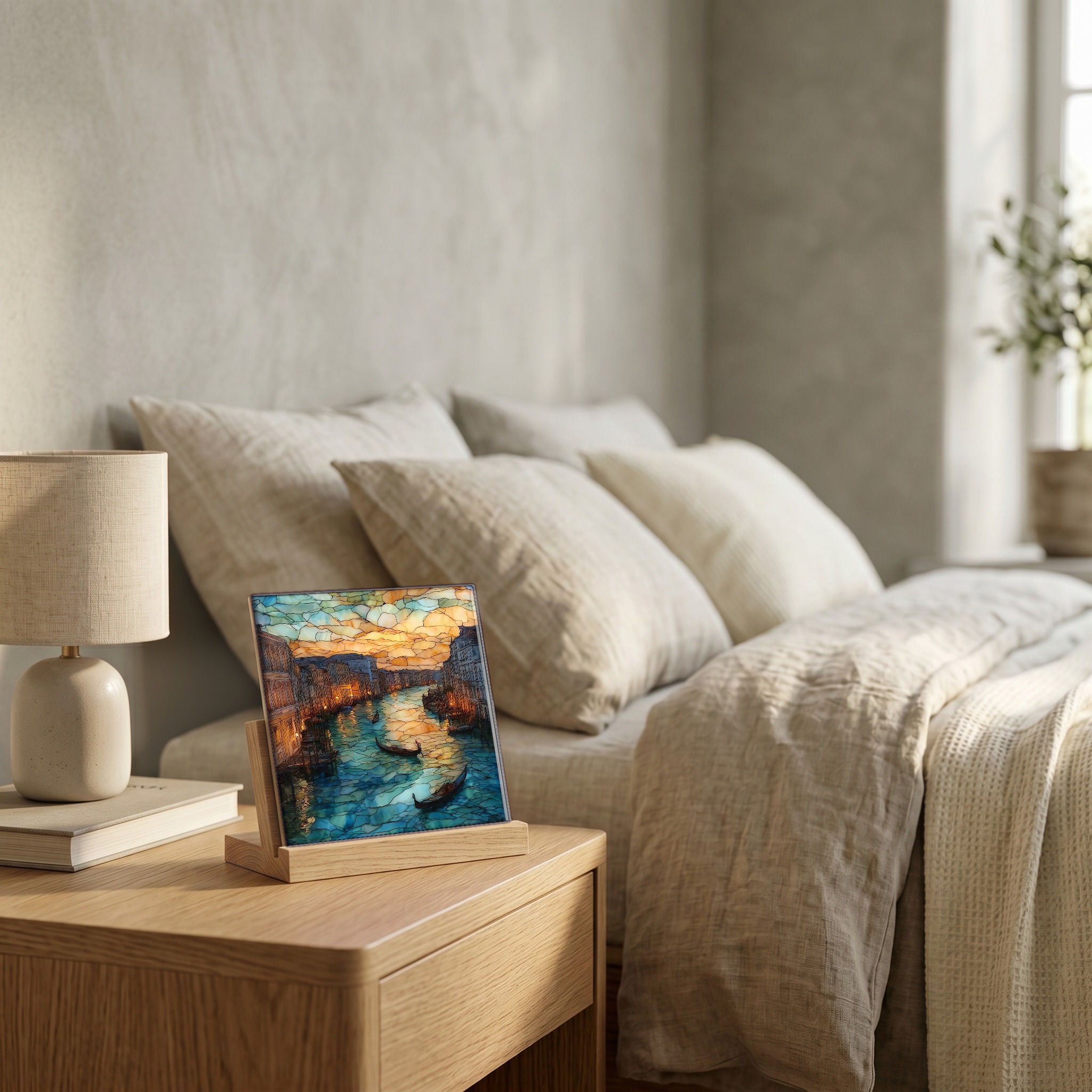
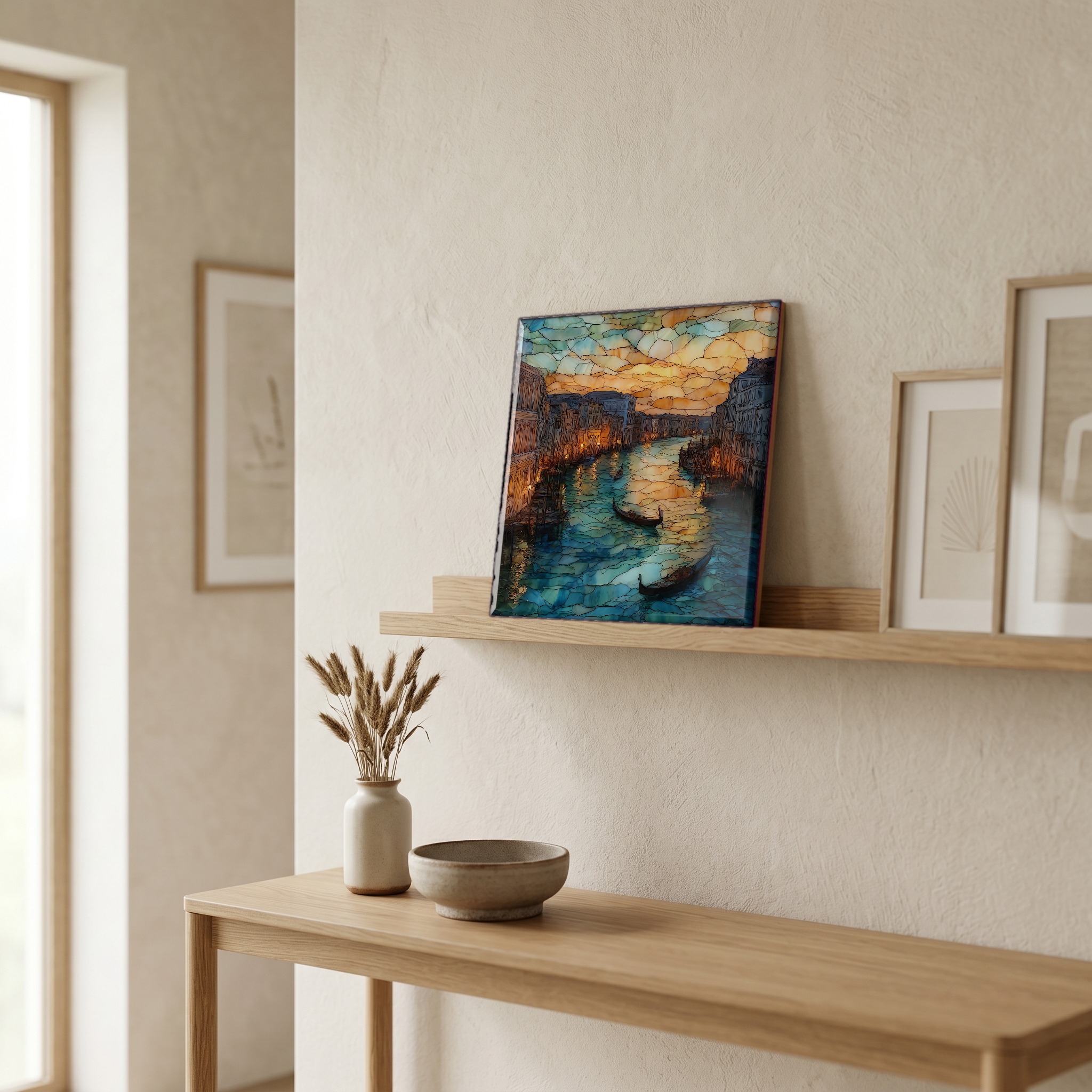
“The Grand Canal isn't really a canal in the way the others in Venice are. It is the city's main thoroughfare, carved by a sluggish river the lagoon swallowed centuries ago. Vaporetto Line 1 traces the whole S-curve from Piazzale Roma to St Mark's. Palazzi line both banks: Ca' d'Oro with its Gothic loggia, Ca' Pesaro, the white dome of Santa Maria della Salute at the southern mouth. The light catches the water differently each hour. Most travellers see it from the deck of a vaporetto; locals see it from a kitchen window above it.
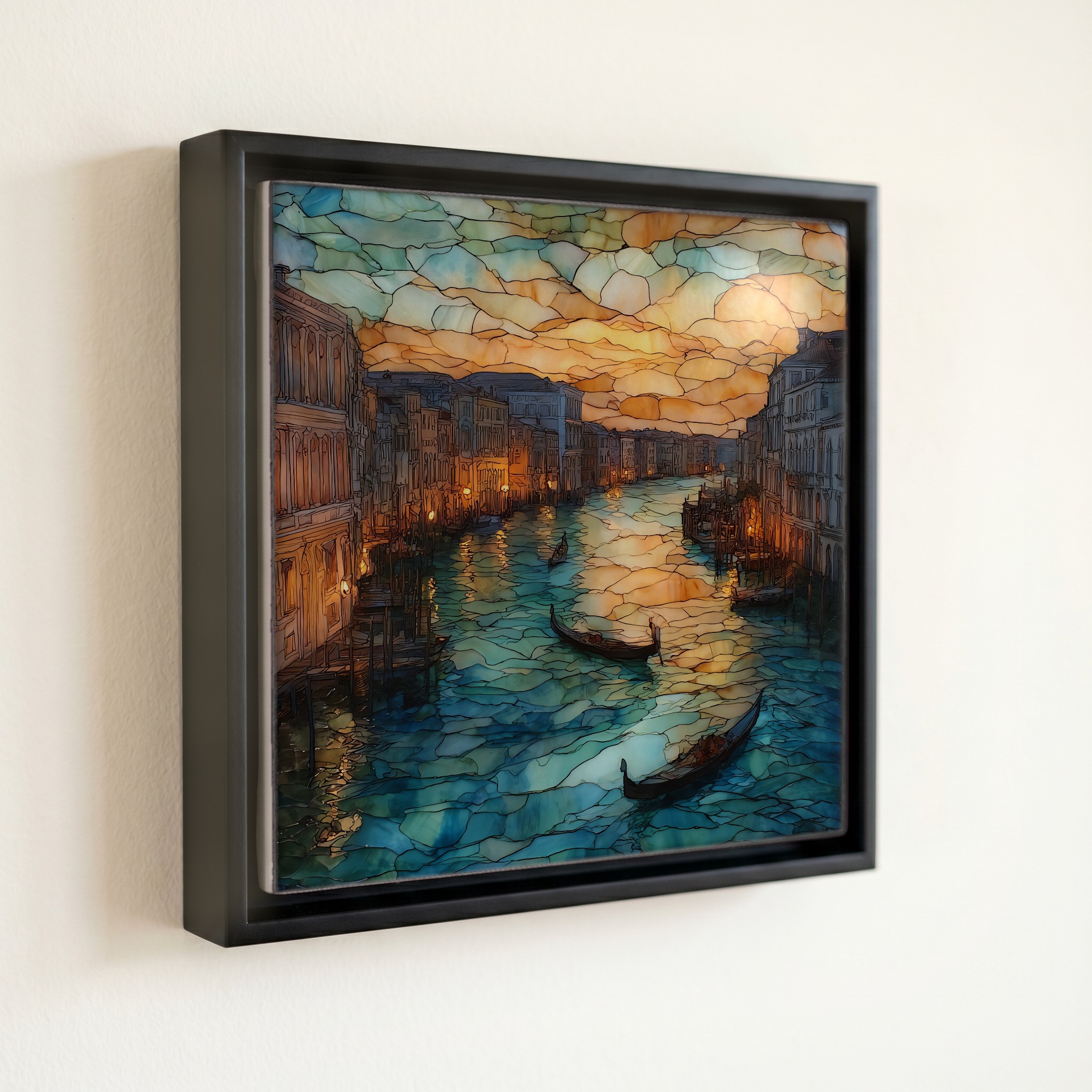
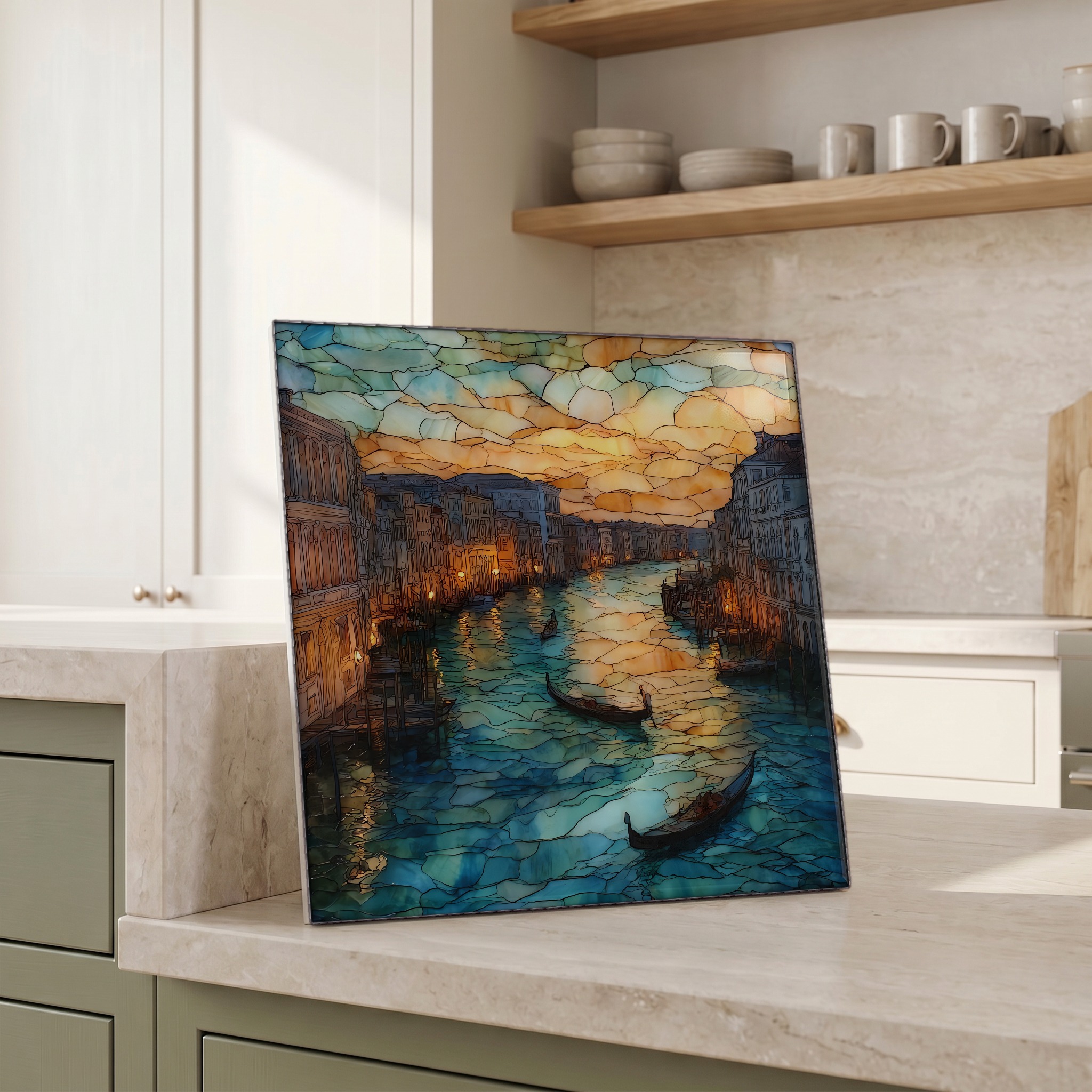
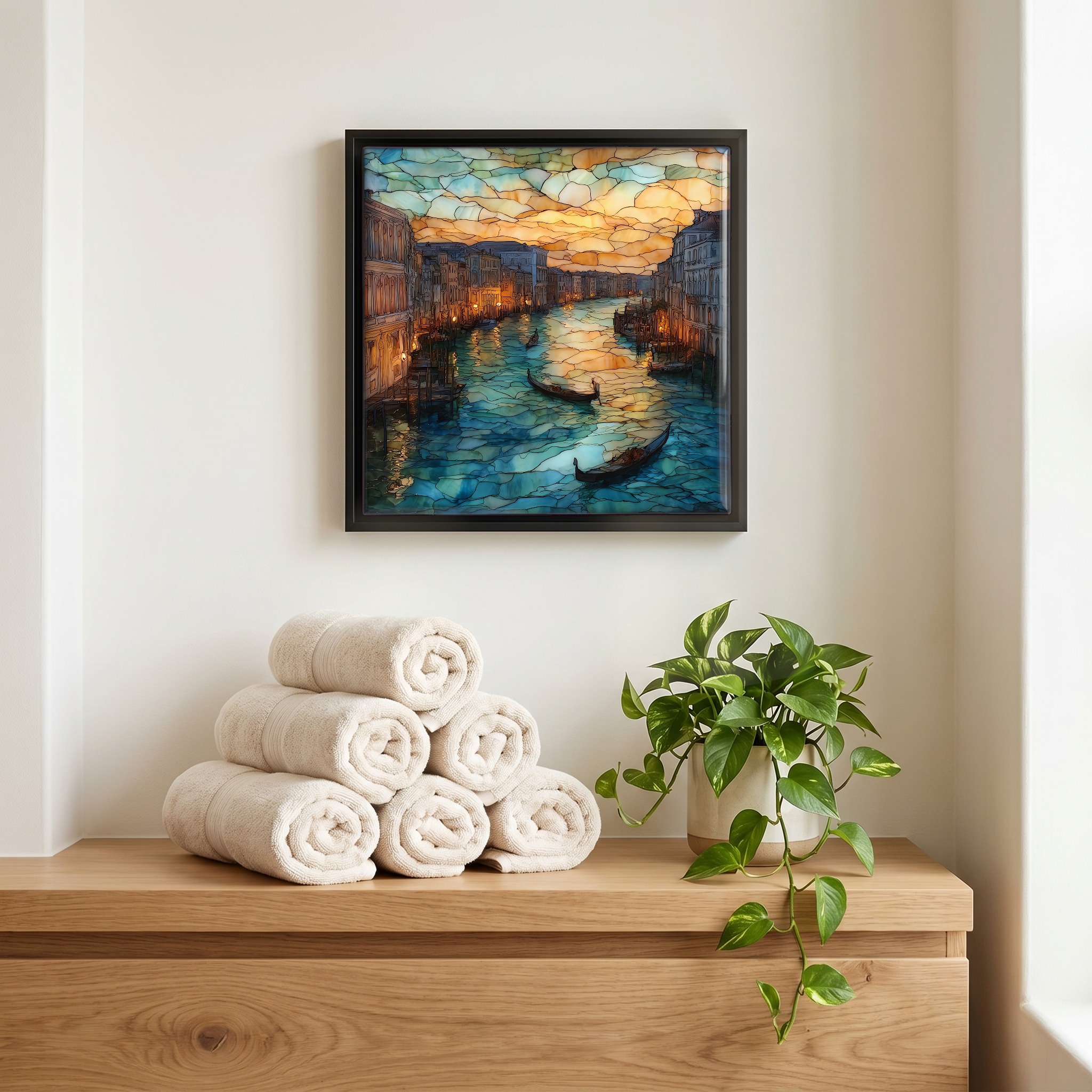
Grand Canal, on ceramic.
Each tile is finished by hand in our Knoxville studio. Artwork is slowly infused into the ceramic surface under high heat and pressure, and rests beneath a thin glossy finish. The colour lives in the surface, not on top of it.
Pick any four 4-inch tiles — National Parks you've been to, a Smokies set, the four seasons of one place. $ for a set of , cork-backed, ready to live on the table.
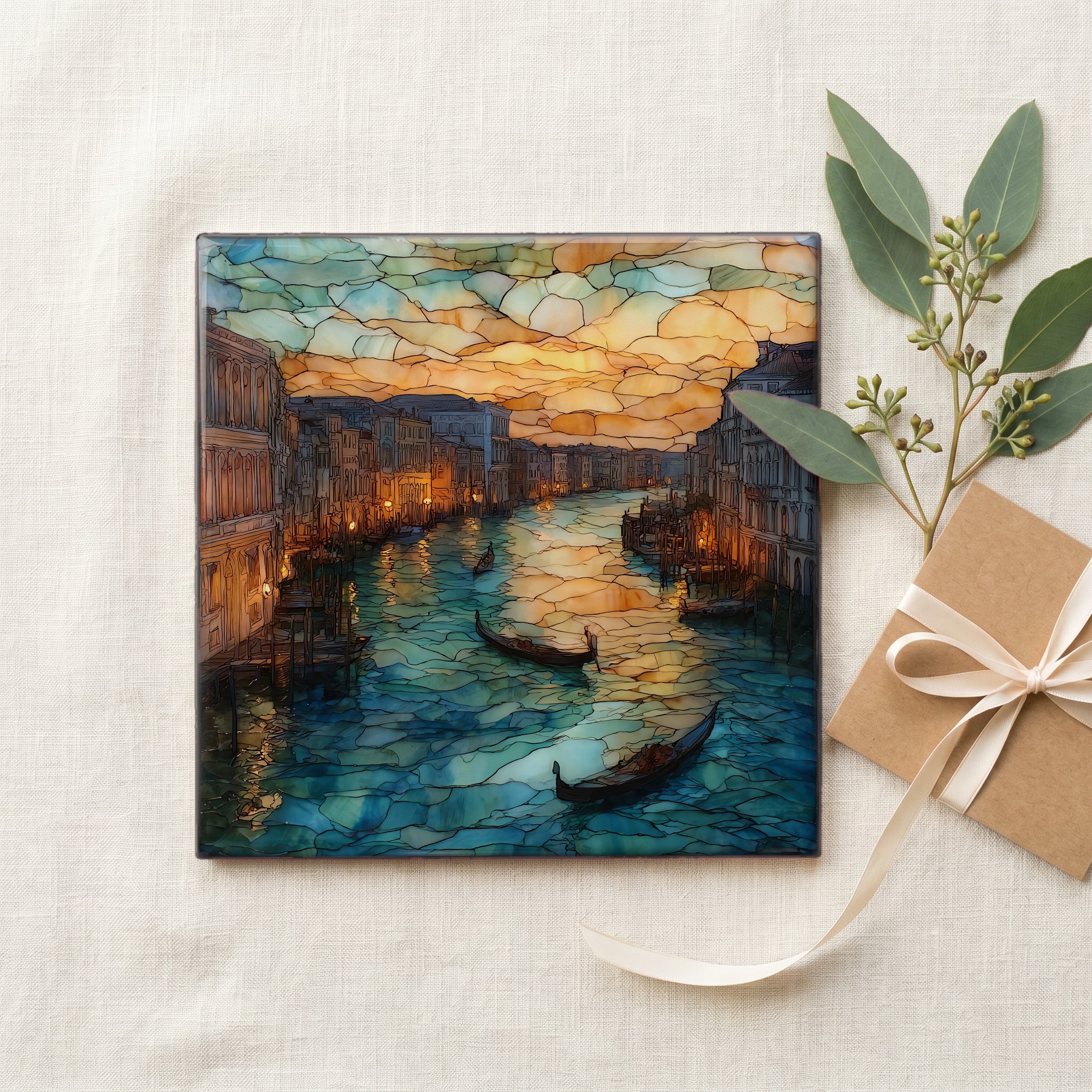
Each tile ships in a kraft box, tied with cream ribbon, with a handwritten note from the studio if you'd like to add one.
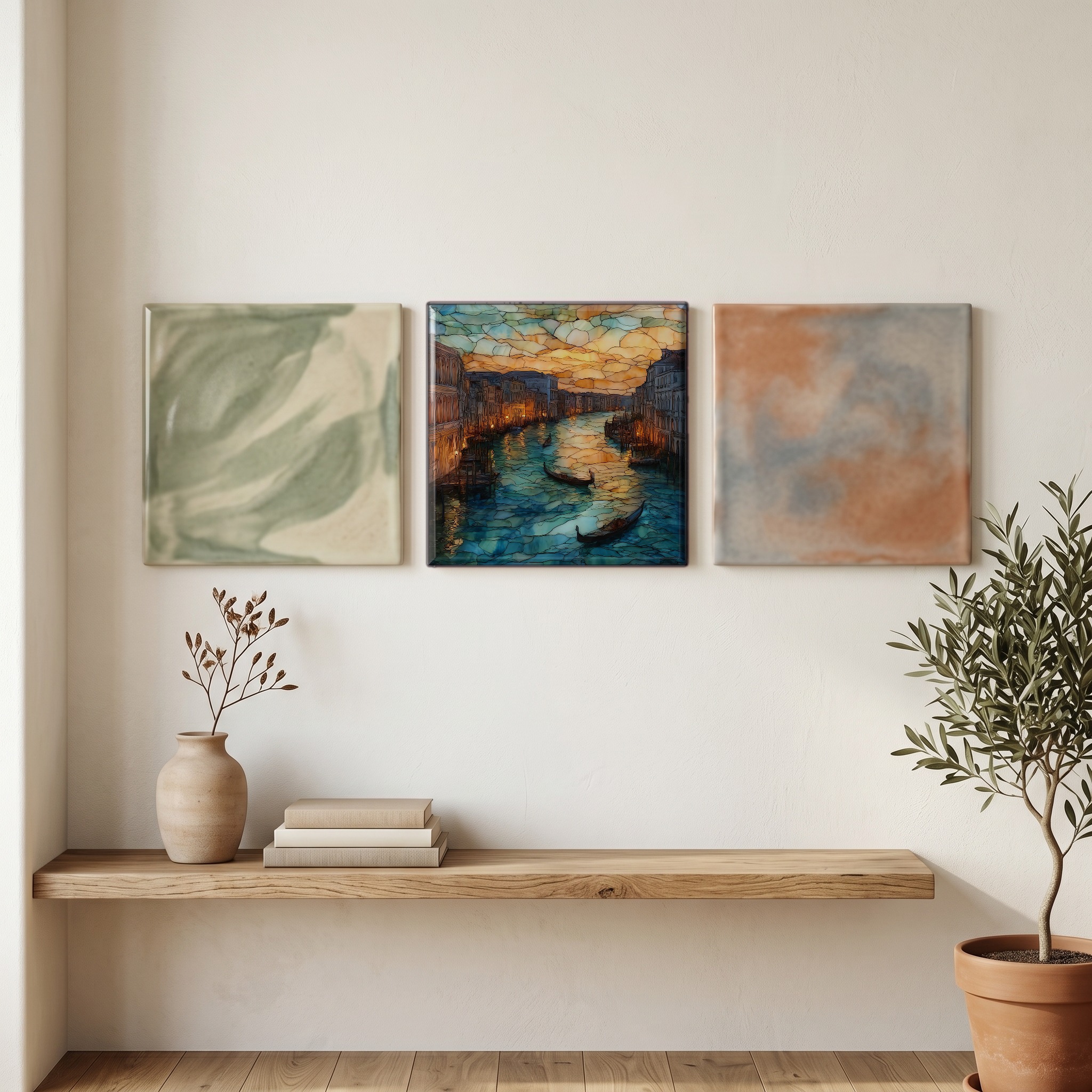
Three or five different vistas, hung together — a chapter of places you've been, or want to go.
The place, in three passes.
The Grand Canal, in Venetian Canałasso, is the largest waterway in Venice and the city's principal thoroughfare. It traces a reverse-S for about 3.8 kilometres from the Santa Lucia railway station in Cannaregio to the Bacino di San Marco at the mouth of the lagoon. The canal averages around 30 to 90 metres wide and roughly 5 metres deep. Four bridges cross it: the Ponte di Rialto (1591, by Antonio da Ponte), the Ponte degli Scalzi, the Ponte dell'Accademia, and the Ponte della Costituzione (2008, designed by Santiago Calatrava). Venice and its lagoon were inscribed as a UNESCO World Heritage Site in 1987.
More than 170 palazzi line the canal's banks, most built between the 13th and 18th centuries by the patrician families who governed the Republic of Venice. The architecture moves through Veneto-Byzantine, Venetian Gothic, Renaissance, and Baroque in roughly chronological order along the water. The Ca' d'Oro, completed in the late 1430s for Marino Contarini, is the surviving high point of the Venetian Gothic. At the southern mouth stands Santa Maria della Salute, a domed votive church begun in 1631 by Baldassare Longhena after the plague of 1630. Most façades were built deliberately to face the canal because the canal, not the calle behind, was the noble street.
The colour of the canal is the colour of the lagoon: a brackish mix of Adriatic seawater and freshwater from the Brenta and Sile rivers, shifting twice a day with the tide. The water exchange keeps the canal moving despite no current of its own. Most of the canal sits between 4 and 5 metres deep. In autumn and winter, sirocco winds and high tides can push acqua alta through the city, with major floods in 1966 and again on 12 November 2019, when water levels reached 187 centimetres above ordinary. The lagoon's silt softens every reflection on the surface.