Wender·Vista
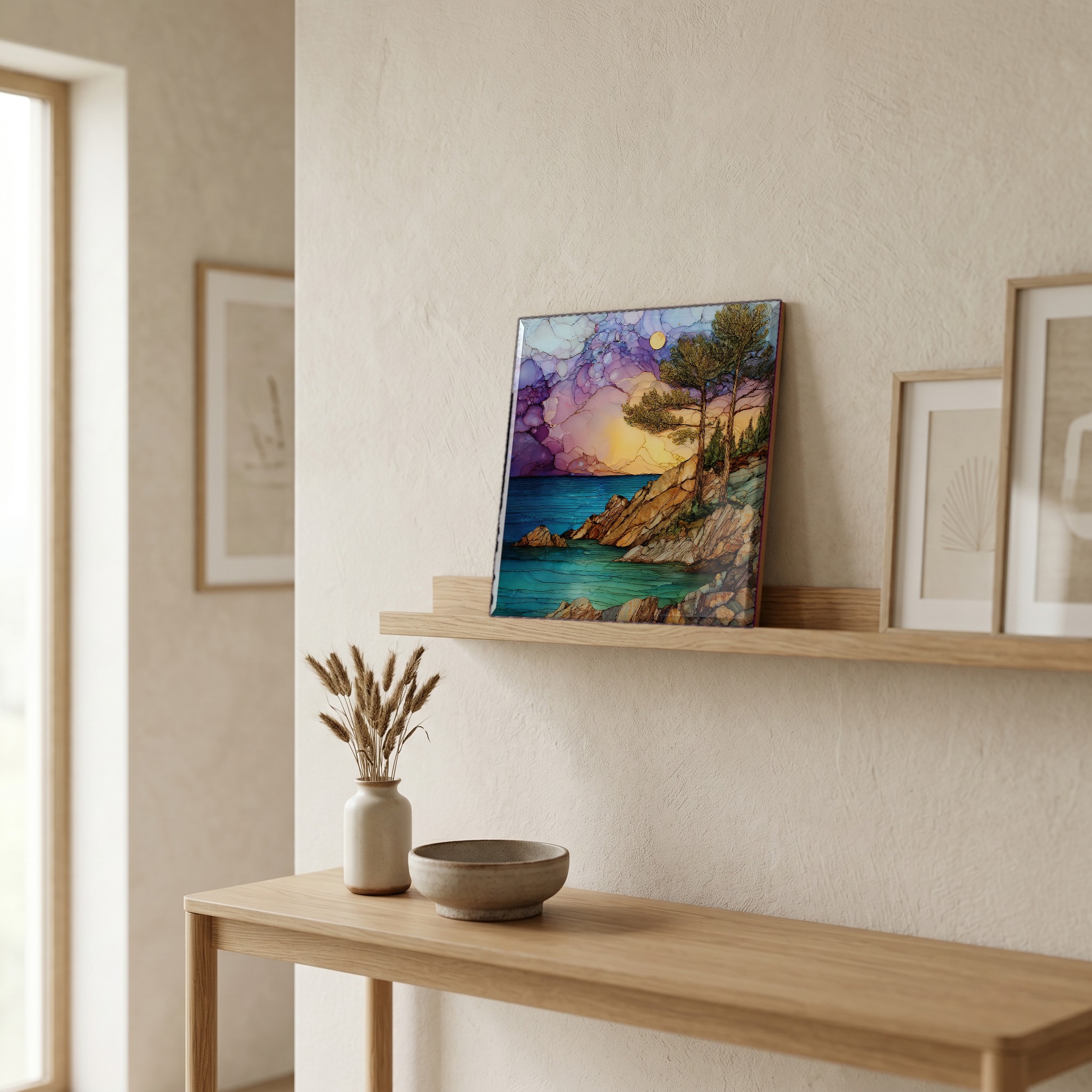
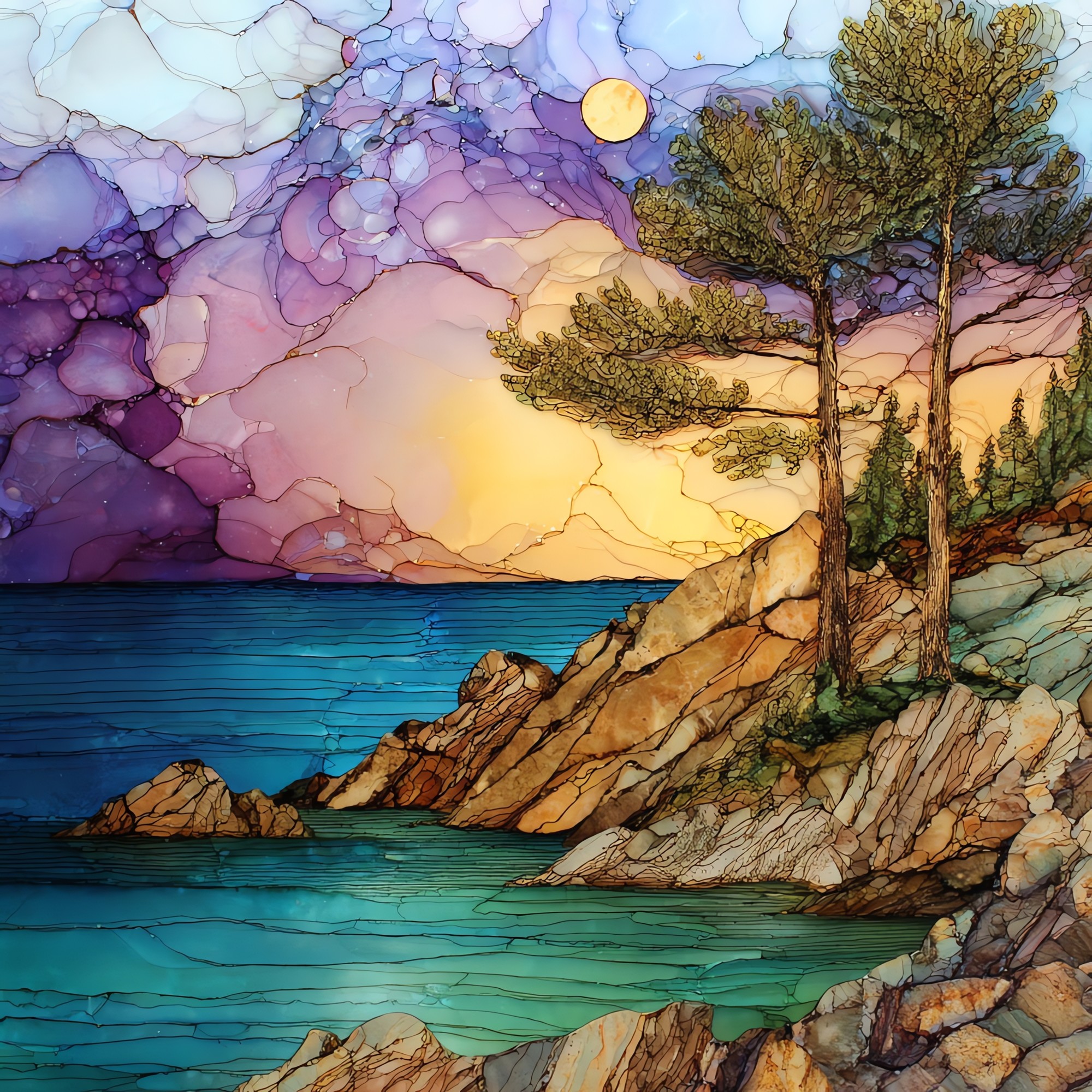
Gargano Coast
shown on ceramic, 12-inch tileItaly
the spur of the Italian boot, on the Adriatic

Gargano Coast

white stone, and the blue it falls into.

Where it lives

Not only on a wall.

A small tile on the nightstand catching the morning. A larger one above the fire. Yours, wherever you spend the slow hours.
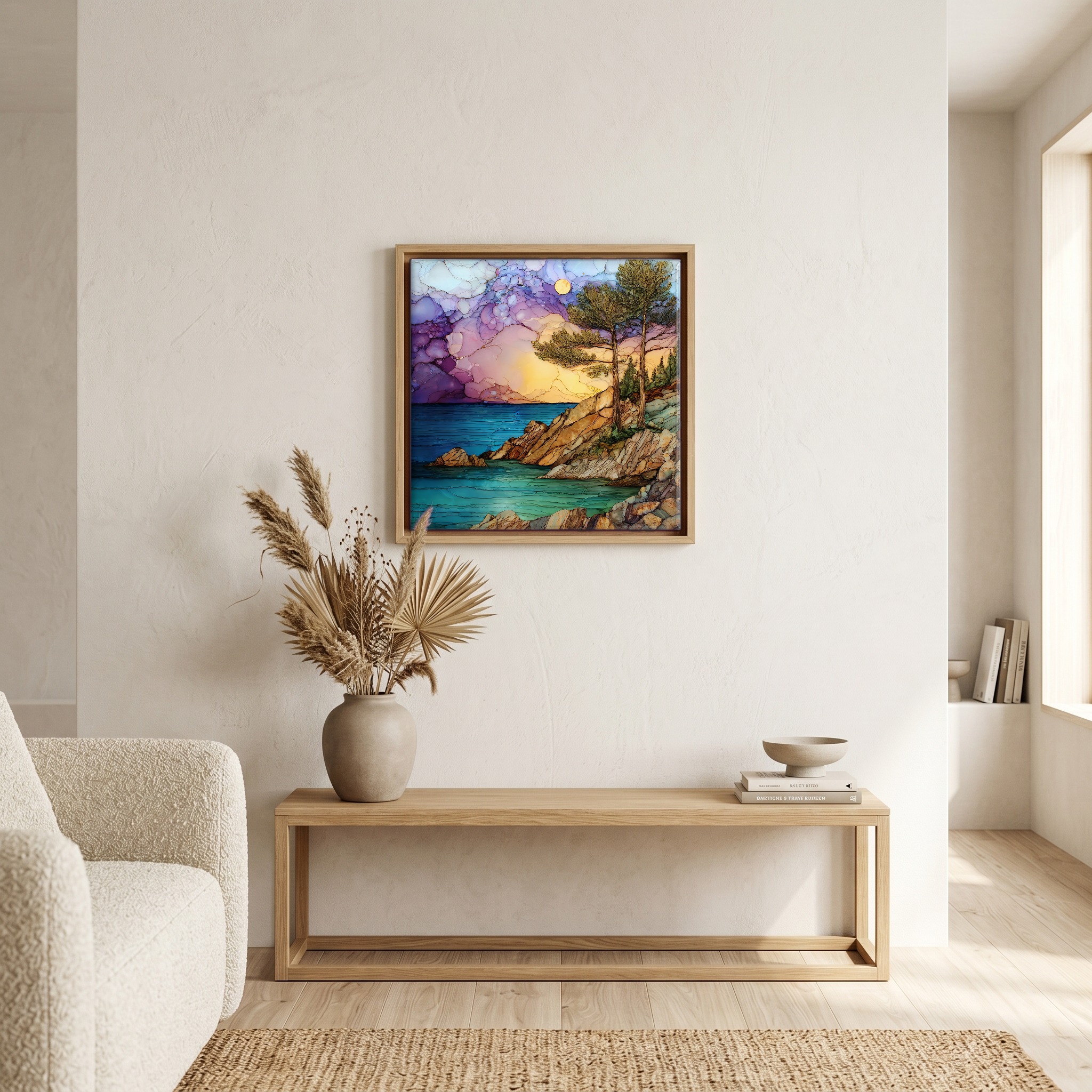
Above the bench, in a warm oak surround.
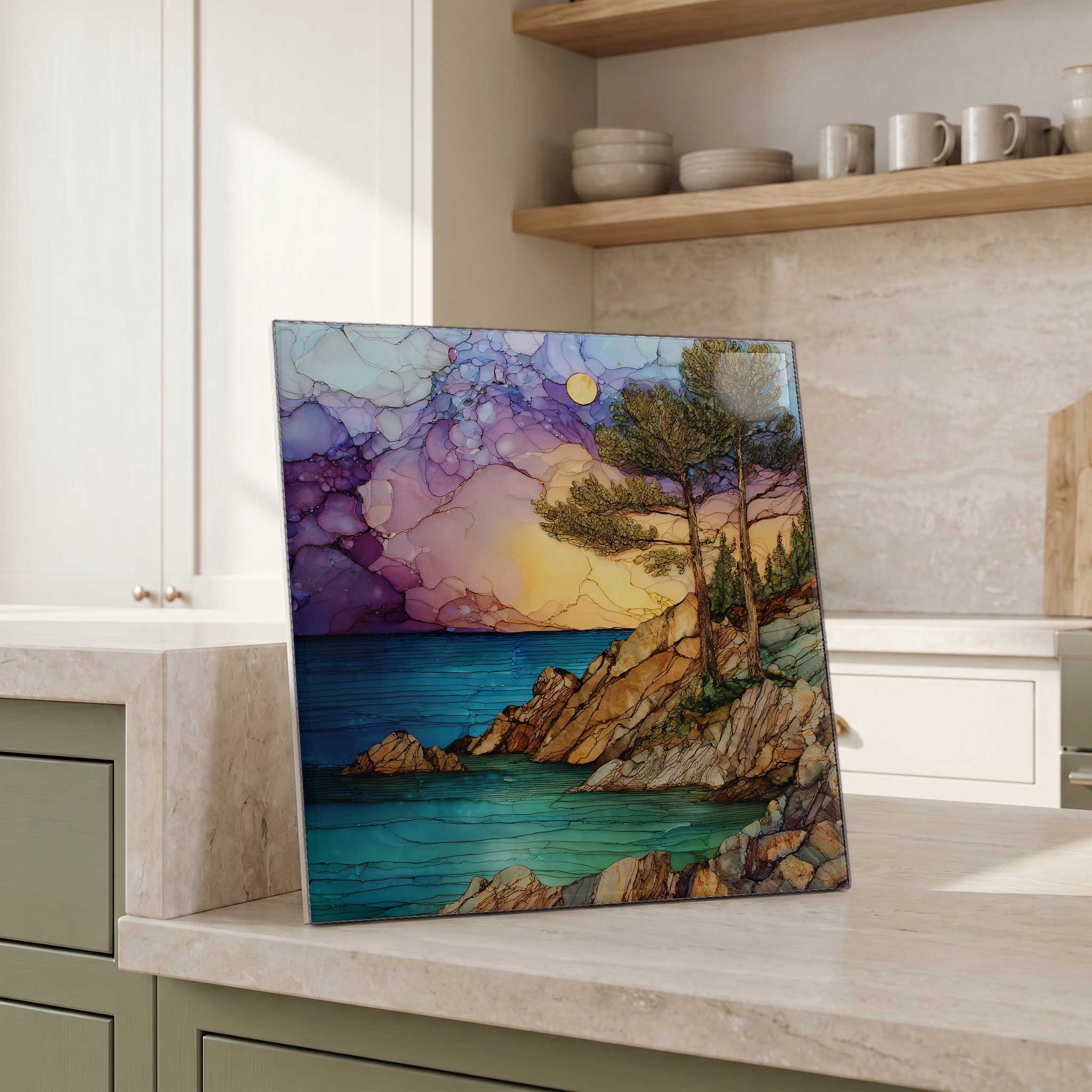
Beside the kettle, propped on the counter.
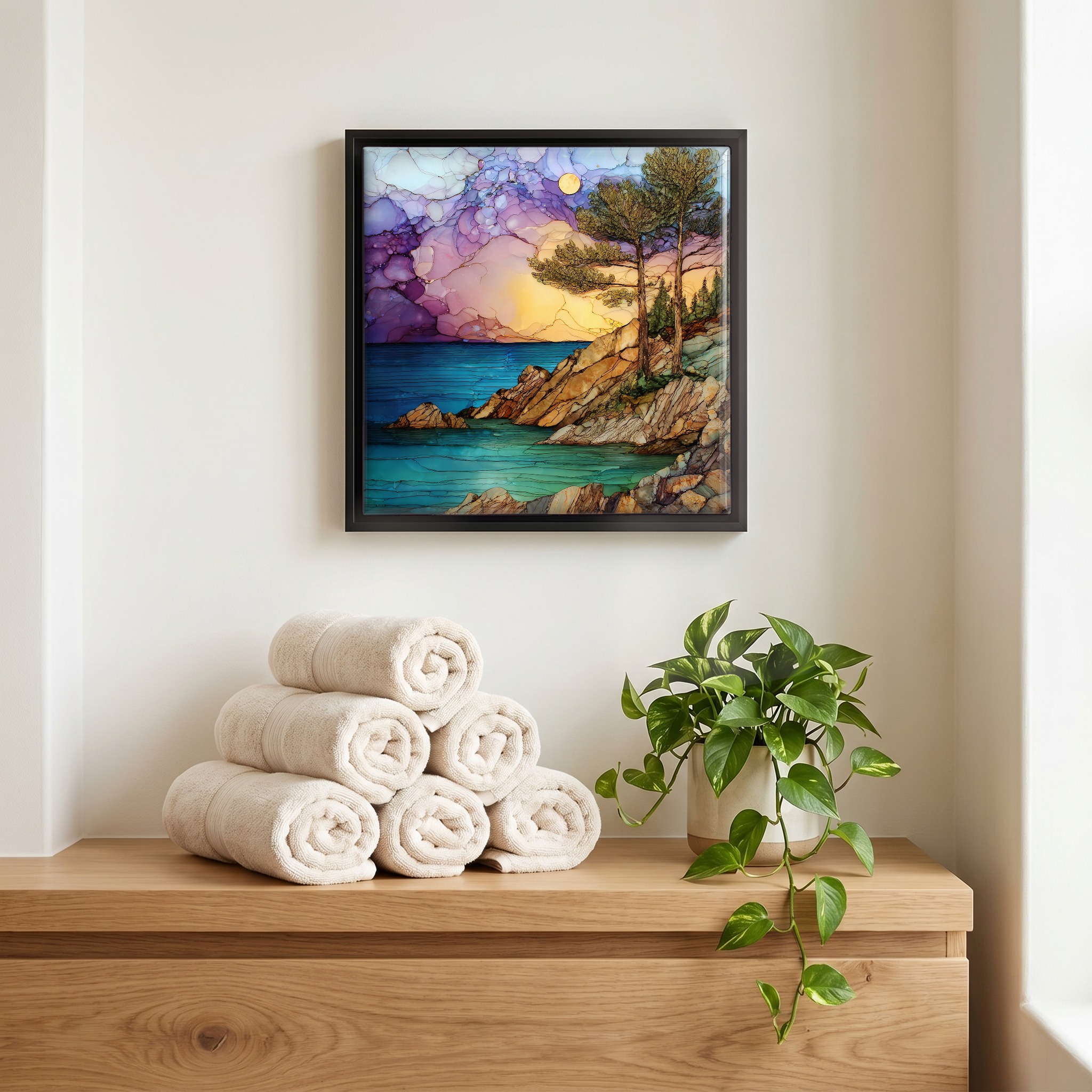
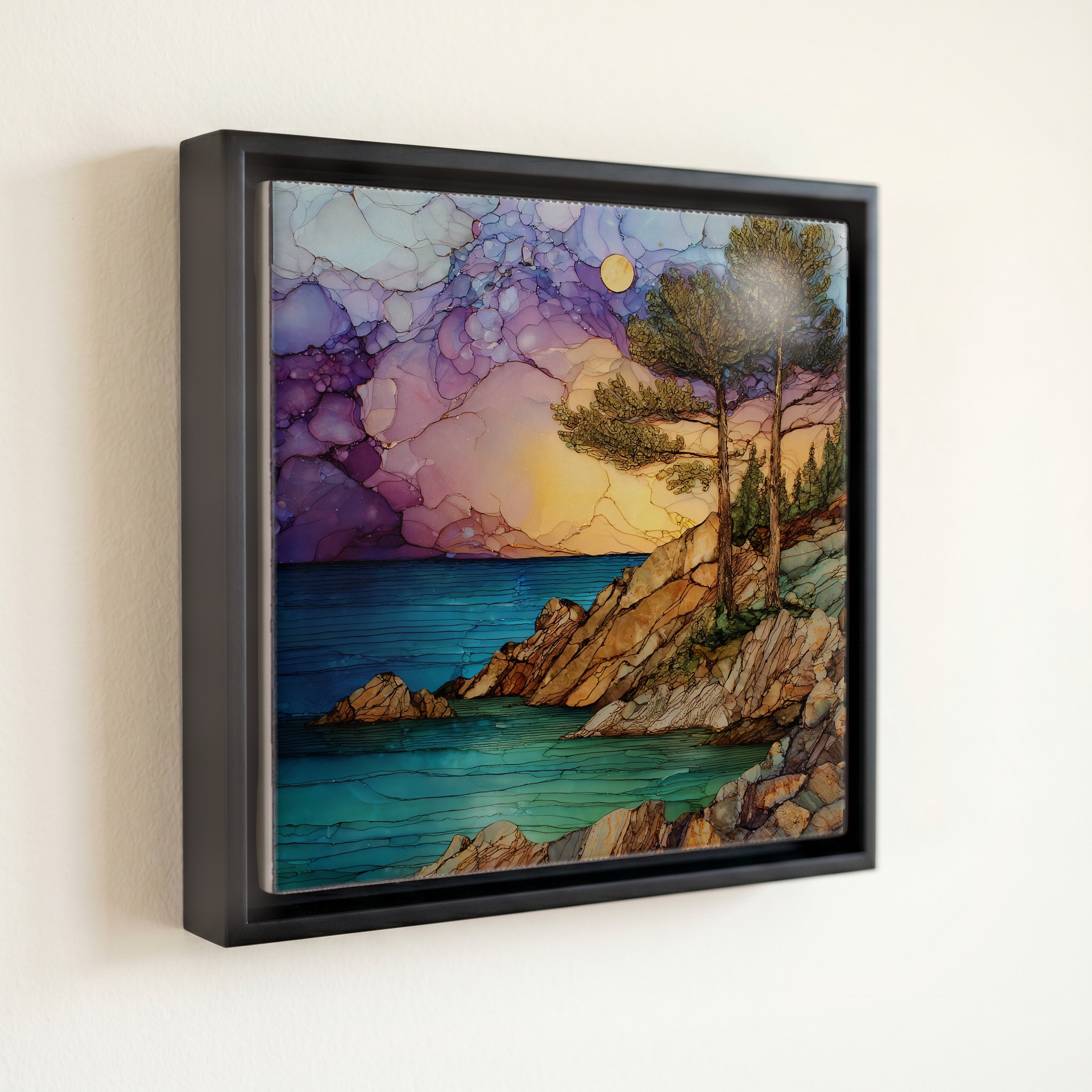
Above the linens, in a slim black surround.
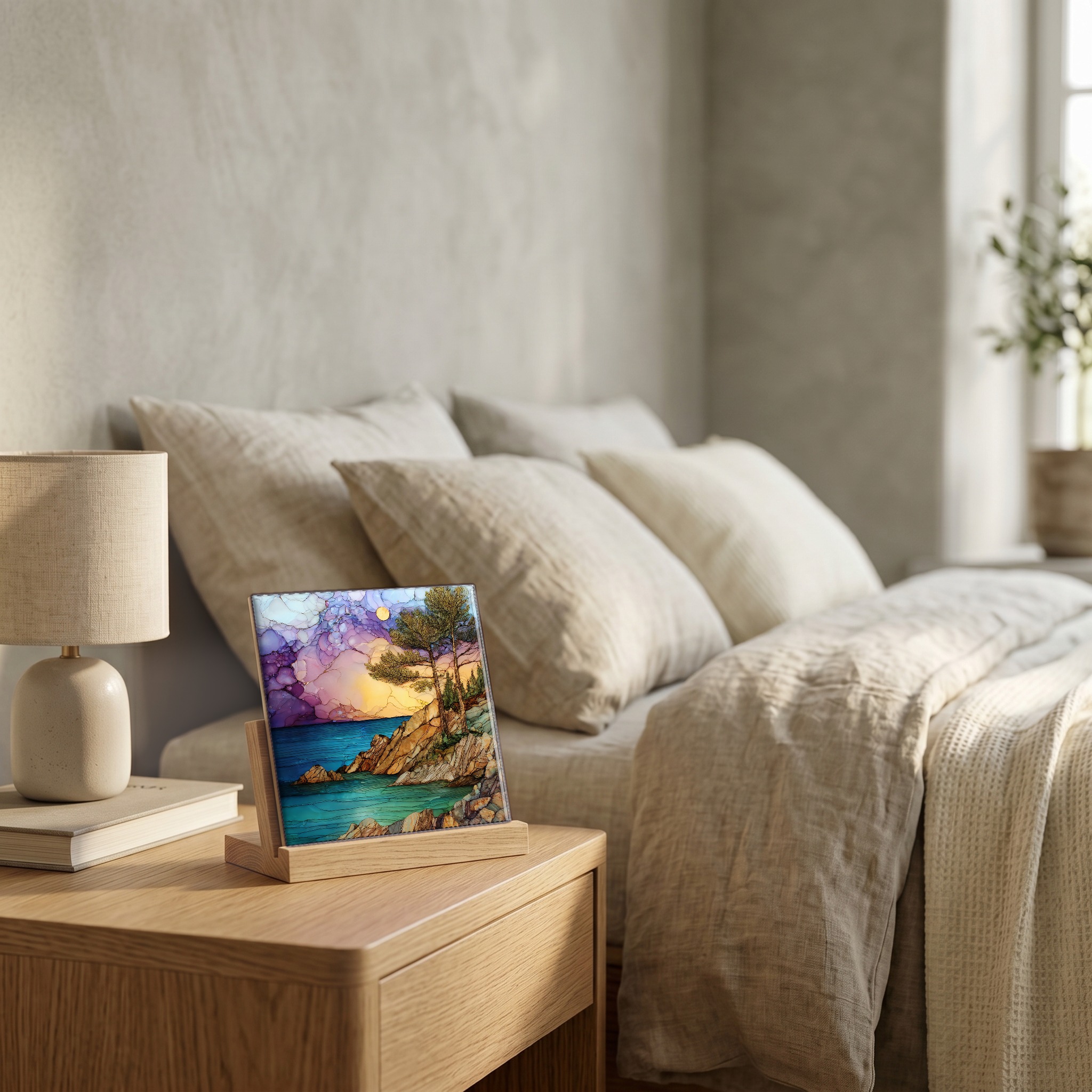
On the nightstand, on a light oak stand.
On a picture ledge, where the light comes in.
a note from the studio

The spur of Italy, where white limestone cliffs drop into the Adriatic and the sea works its way into caves you reach only by boat. Vieste sits on the chalk above, the Pizzomunno standing offshore, a single white stack the fishermen have a story about. Behind the coast the land climbs into the Foresta Umbra, beech trees three centuries old, cool and dark after the glare off the water. Two kinds of light here: the white of the rock, and the blue underneath. The boats go quiet when they slide into the grottoes.
from the studio
shown in a slim black floating frame · 6 × 6 in
— bring it home

Gargano Coast, on ceramic.

Each tile is finished by hand in our Knoxville studio. Artwork is slowly infused into the ceramic surface under high heat and pressure, and rests beneath a thin glossy finish. The colour lives in the surface, not on top of it.

What kind of piece?
One tile — square or rectangle.
How big?
the popular one — counter, shelf, nightstand
6 × 6 in · 15 cm · 1.6 lb
Surface finish
A clear glossy finish — the artwork reads as if under resin. Ideal for show-pieces and framed wall art.
How it sits
A hidden cleat — sits ¼″ proud of the wall.
$58
Hand-finished and shipped from our studio at the foot of the Smokies. On your wall in about ten days.
size
6 × 6 in
15 cm
weighs
1.6 lb
solid in the hand
surface
ceramic, hand-finished
art rests beneath a thin glossy finish
from
Knoxville, TN
our family studio, at the foot of the Smokies
— start a Coaster Set

Pick any four 4-inch tiles — National Parks you've been to, a Smokies set, the four seasons of one place. $ for a set of , cork-backed, ready to live on the table.
comes gift-ready
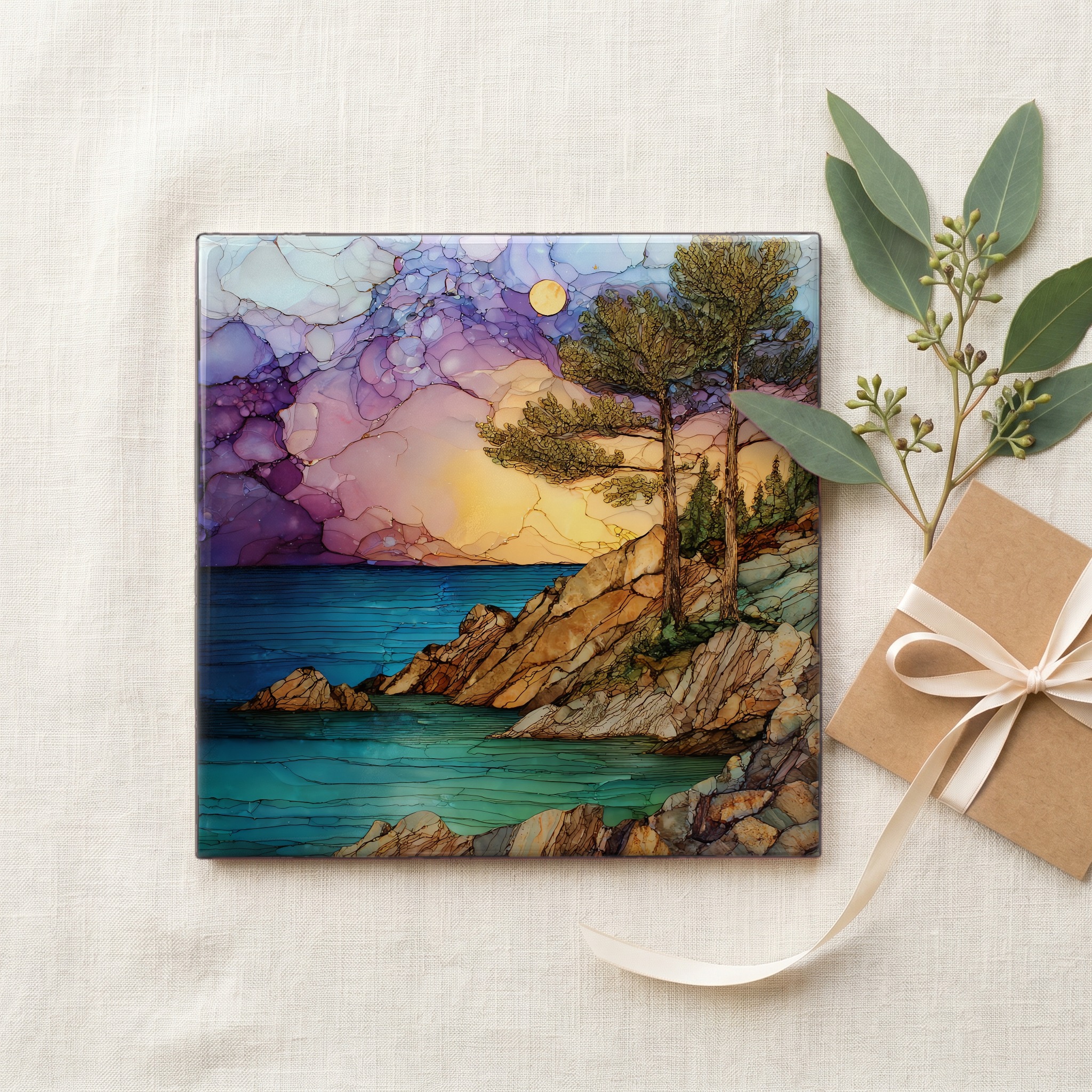
comes gift-ready

Each tile ships in a kraft box, tied with cream ribbon, with a handwritten note from the studio if you'd like to add one.
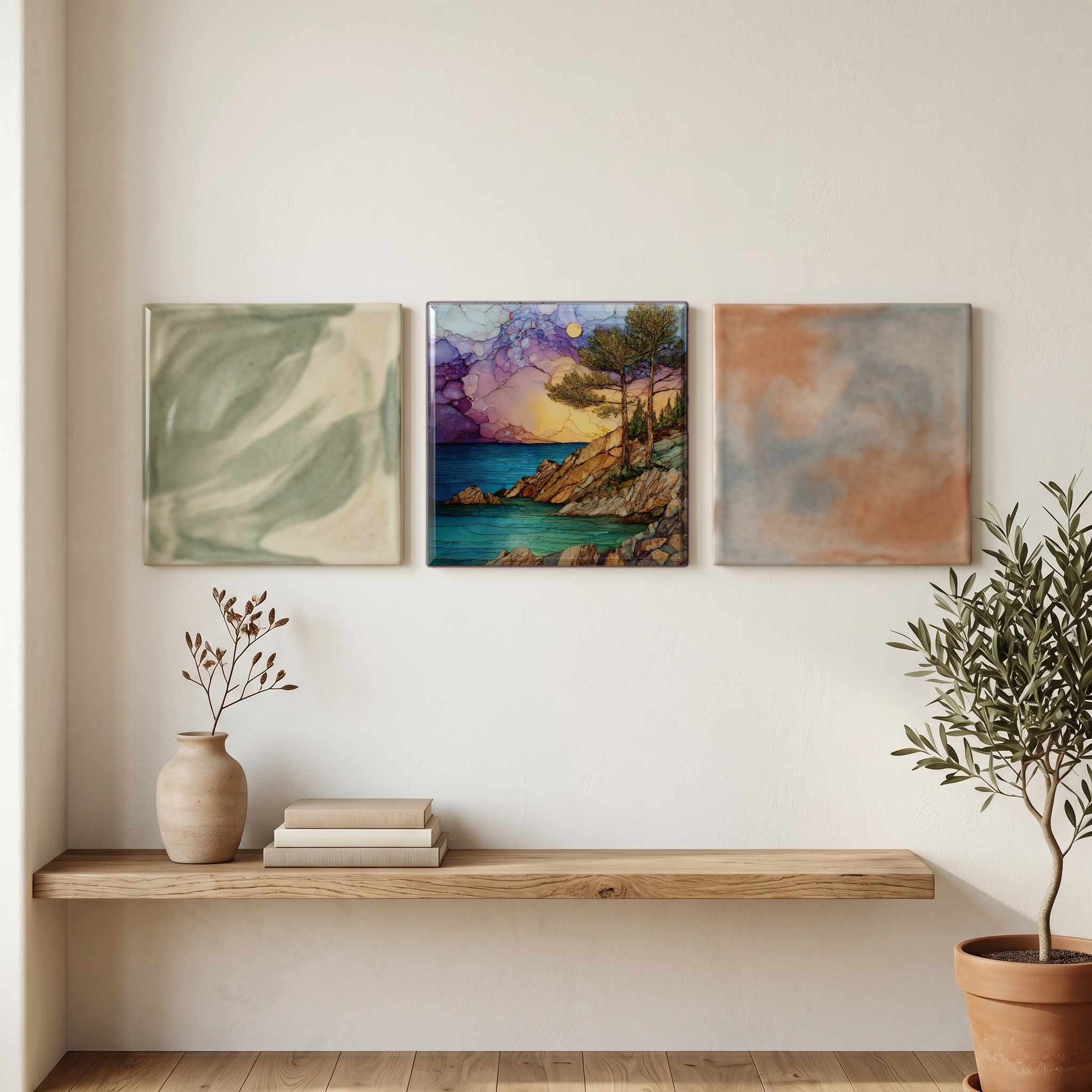
or build a grouping
or build a grouping

Three or five different vistas, hung together — a chapter of places you've been, or want to go.

about Gargano Coast

The place, in three passes.

A little of what's known, in case you fall down the rabbit hole — or want to go see it yourself.
the place

The Gargano is the mountainous promontory that forms the spur of the Italian boot, in the province of Foggia in Apulia, jutting into the Adriatic on three sides. It runs about 65 kilometres long and rises inland to Monte Calvo at 1,065 metres. Most of the upland, roughly 1,200 square kilometres across 18 municipalities, falls inside Gargano National Park, founded in 1991. The coast is the part most people come for: white limestone cliffs, sea caves, and beach towns such as Vieste, Peschici, and Mattinata strung along the water. Inland the land climbs quickly into the Foresta Umbra, an old beech and oak woodland, so a single morning can move from open sea to deep forest in half an hour's drive.

— informed by Wikipedia, Britannica
the stone

The whole promontory is a single block of Mesozoic limestone, laid down as seabed in the Jurassic and Cretaceous and lifted into a karst massif geologically twinned with the Dalmatian coast across the Adriatic. That white rock is what gives the coast its look: pale cliffs that hold the light, riddled with caves and grottoes the sea has hollowed out over thousands of years. At Vieste the most famous piece of it stands just offshore, the Pizzomunno, a limestone sea stack about 25 metres high that has become the town's emblem, carried in a local legend of a young fisherman turned to stone. Up close the rock is full of fossils, the old seabed still legible in the cliff face.

— informed by Wikipedia, Visit Vieste
the water

The water along the Gargano runs clear and pale over white sand and limestone, which is why much of this coast carries Blue Flag status for bathing quality, with Vieste among the towns awarded it more than once. The most striking stretches cannot be reached on foot: a line of sea caves and grottoes between Vieste and Mattinata that boats slip into, where light comes up through the water and turns the cave walls green and blue. Offshore, about 20 kilometres to the north, the Tremiti Islands sit in their own marine reserve. The Adriatic here is shallow and warm by late summer, and calm enough most mornings that the small tour boats run on time.

— informed by Visit Vieste, Wikipedia
where
Italy · Province of Foggia, Apulia
within
Gargano National Park
elevation
0 m · 0 ft
position
41.7330° N · 15.7500° E
the neighborhood

What's nearby.

A handful of named places within an hour's walk or short drive. Some we've already painted; some we will.
1 km S
Pizzomunno
sea stack
18 km NW
Peschici
clifftop town
20 km W
Foresta Umbra
beech forest
22 km SW
Mattinata
beach town
22 km N
Tremiti Islands
island archipelago
24 km W
Vico del Gargano
hill town
25 km SW
Monte Sant'Angelo
pilgrimage town
N
Gargano Coast
Pizzomunno
Peschici
Foresta Umbra
Mattinata
Tremiti Islands
Vico del Gargano
Monte Sant'Angelo
common questions

What people ask.

A few questions we get about Gargano Coast — and about bringing the piece home.
about the place

It is the coastline of the Gargano promontory, the spur of the Italian boot, in the province of Foggia in Apulia, southeastern Italy. White limestone cliffs and beach towns such as Vieste and Peschici line about 65 kilometres of the Adriatic.

The Gargano is a single massif of Mesozoic limestone, laid down as seabed in the Jurassic and Cretaceous. The pale rock is the same karst formation as the Dalmatian coast across the Adriatic, and the sea has carved caves and grottoes throughout it.

The Pizzomunno is a limestone sea stack about 25 metres high standing just off the beach at Vieste, where it serves as the town's emblem. A local legend tells of a young fisherman, Pizzomunno, turned to stone by jealous sirens.

The grottoes between Vieste and Mattinata can be reached only by water. Small tour boats and rented dinghies run from Vieste harbour in season, slipping into caves where light rises through the sea and colours the walls green and blue.

Late spring through early autumn, roughly May to September, brings warm and calmer seas and reliable boat trips into the caves. July and August are hottest and busiest, while June and September stay quieter with the water still warm.

The Foresta Umbra is an ancient beech and oak forest inland on the Gargano, with some trees over three centuries old. Since 2017 it has been a UNESCO World Heritage site within the Ancient and Primeval Beech Forests listing.

Yes. Gargano National Park, founded in 1991, covers about 1,200 square kilometres across 18 municipalities, taking in the coast, the Foresta Umbra, and the Tremiti Islands offshore. Vieste, Peschici, and Monte Sant'Angelo all lie within it.

about the piece in your home

It has been a meaningful gift for people connected to Puglia and for travellers who return to this coast each summer. The shore around Vieste and Peschici is one of the places they hold onto. A Small or Medium with a note from the studio carries it well.

The white-stone-and-deep-blue palette settles into coastal-modern and Mediterranean rooms, while the stained-glass colour holds its own in a jewel-tone or maximalist space. It works against both white walls and warm plaster tones.

Yes. Coastal-modern and Mediterranean-revival looks lean on exactly this pairing of pale limestone and Adriatic blue, without the literal seashell motifs. The piece reads as art first and place second, so it holds up year to year rather than as a seasonal accent.

Above a sofa, a single Large holds the wall on its own, while a four-tile Mural fills a wider span. Over a console or in an entryway, a Medium or a nine-tile Mural sets the scale without crowding it.

Yes. For a bathroom, shower, or kitchen backsplash, choose the Dura Satin or Matte finish, which resist scratches and handle moisture. The Glossy finish is better kept to framed wall pieces in drier rooms.

A soft microfibre cloth with a little water is enough. The colour lives in the ceramic surface beneath a thin finish, so it will not lift or fade with normal cleaning. Skip abrasive pads and harsh solvents.

Yes. Every WenderVista piece is made in one studio, with no licensing or stock imagery. The Gargano Coast is painted in the studio's own stained-glass and alcohol-ink visual language and slowly infused into the ceramic surface under high heat and pressure.

if this one stayed with you

A few you might also love.

Hand-picked by the eye that found Sorapis. Same air, same kind of quiet.
— a collection

The Italian Dolomites,
painted slow.

The valleys between Cortina and Val Gardena, the tarns you walk an hour to see, the towers that turn the colour of a banked fire just before dark. Wander the collection by valley, by season, or follow the path Reid walked.

Tre Cime
Braies
Misurina
Sorapis
Cinque Torri
Sassolungo
Marmolada