Wender·Vista
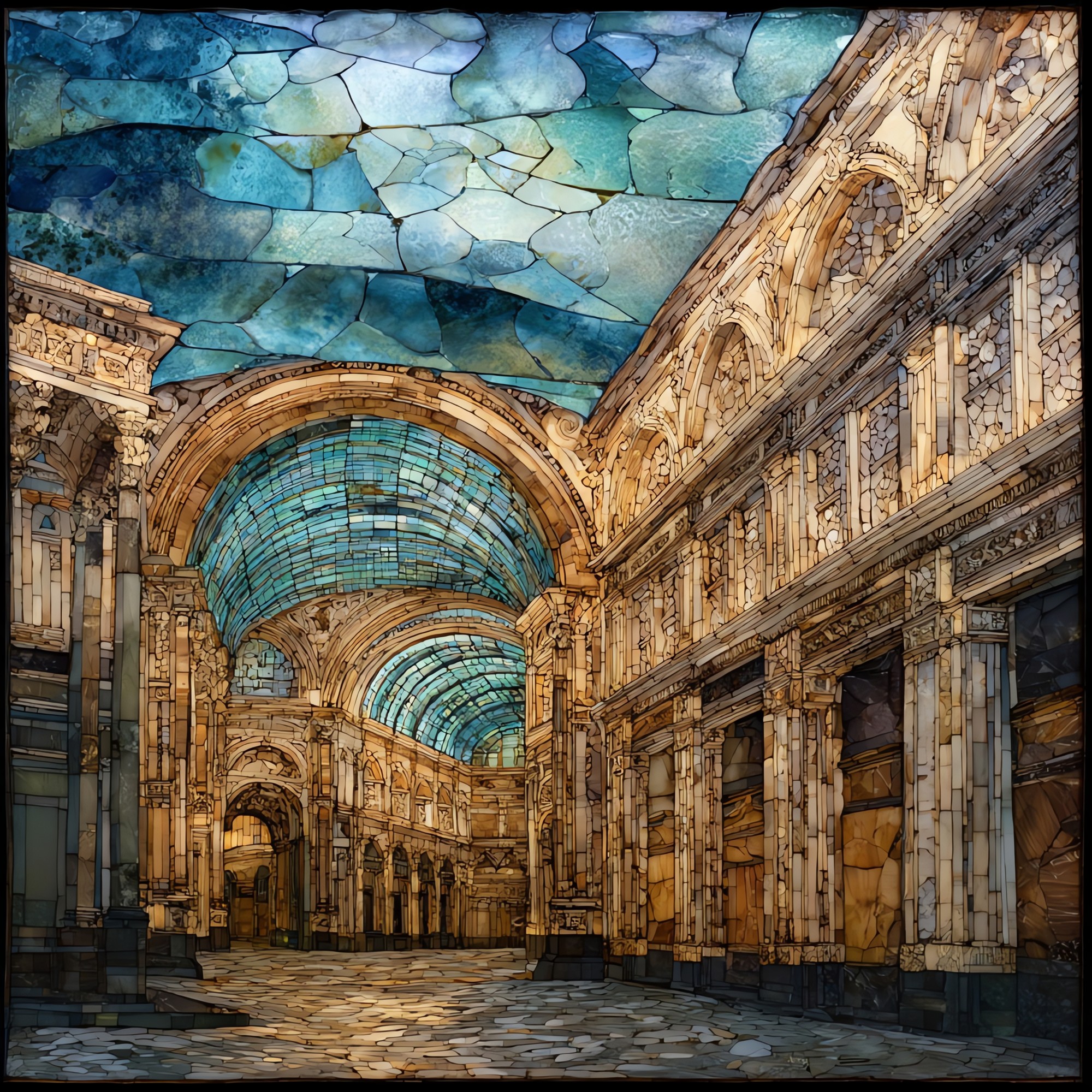
Galleria Umberto I
shown on ceramic, 12-inch tileItaly
in Naples, across from the San Carlo opera house

Galleria Umberto I

where the afternoon comes down through the glass.

Where it lives

Not only on a wall.

A small tile on the nightstand catching the morning. A larger one above the fire. Yours, wherever you spend the slow hours.
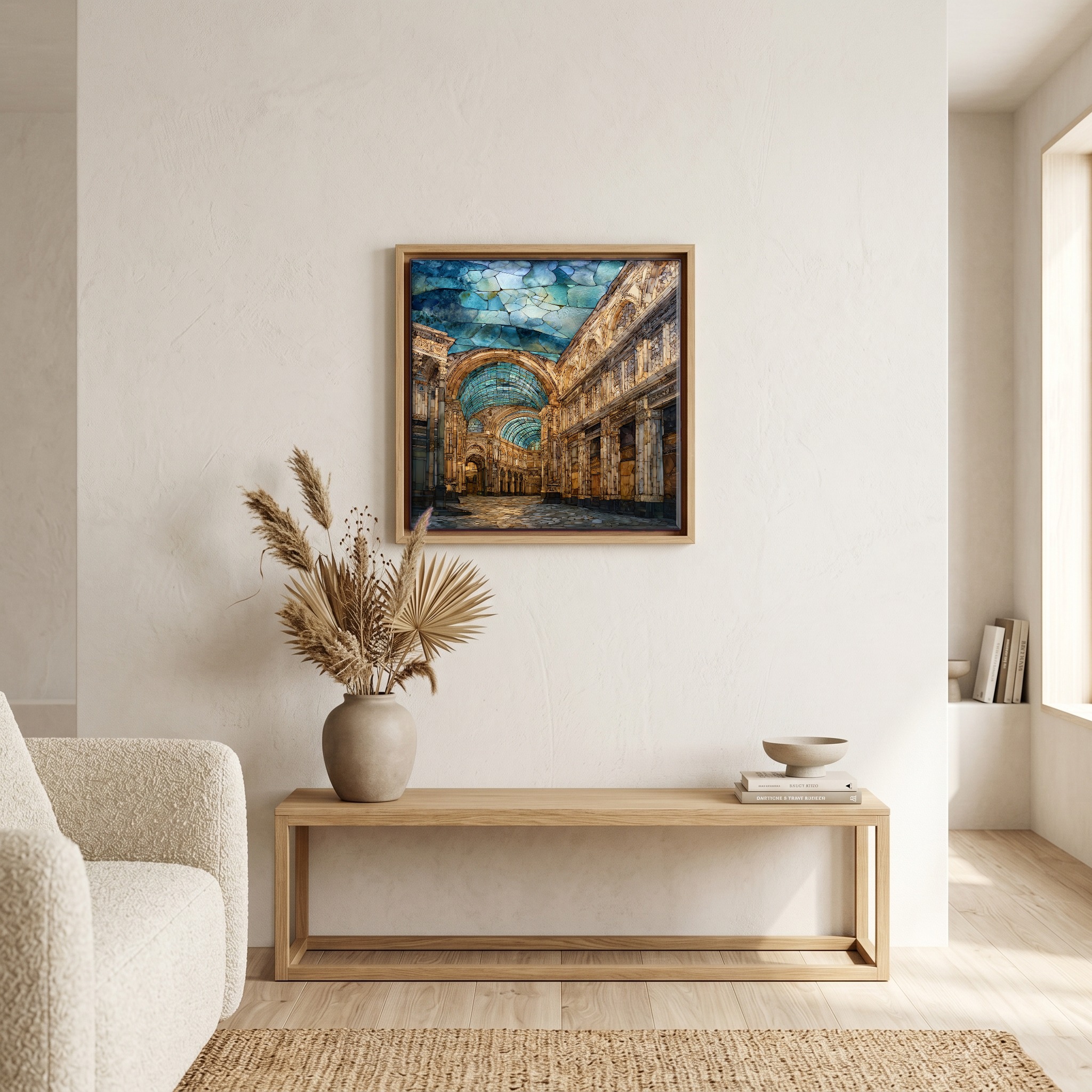
Above the bench, in a warm oak surround.
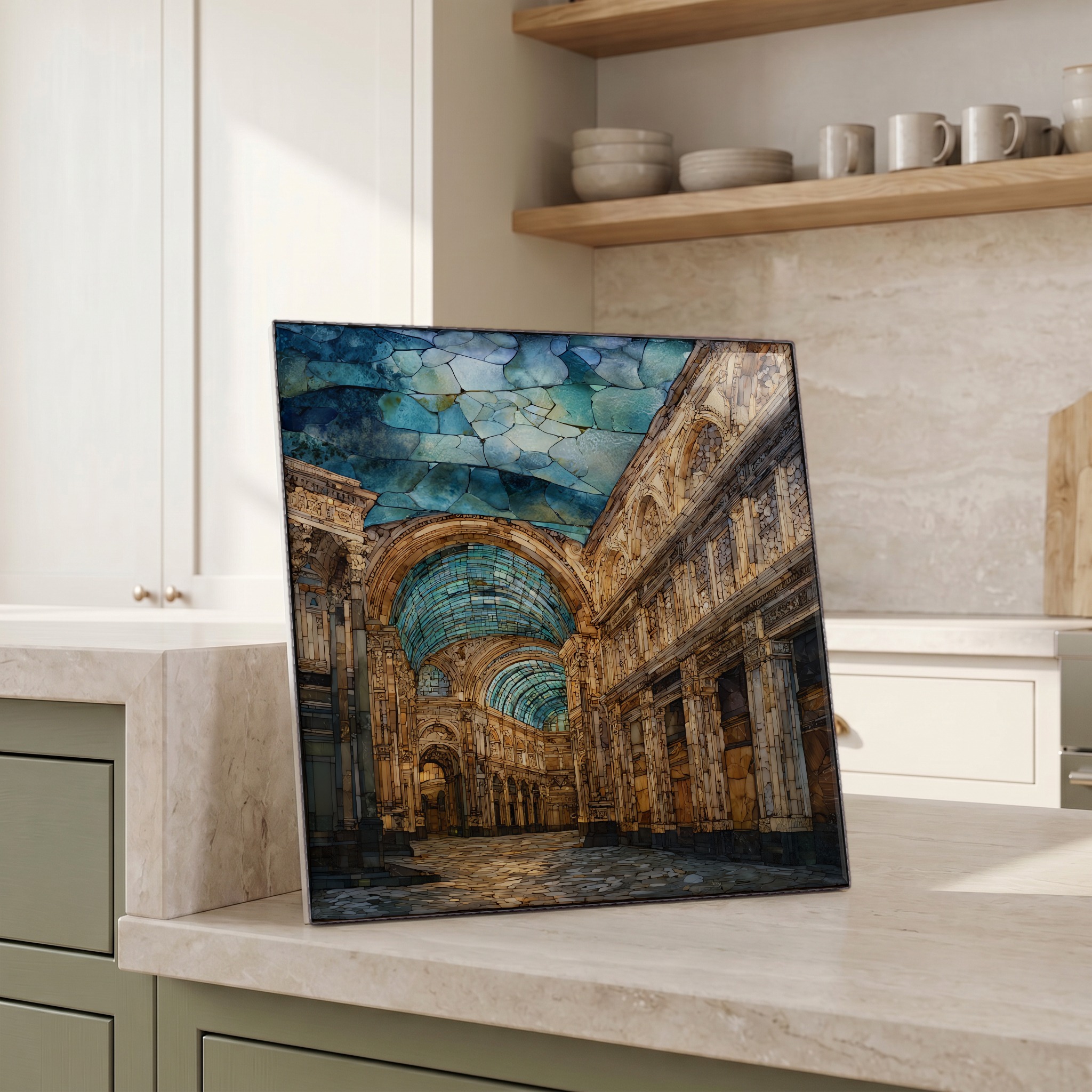
Beside the kettle, propped on the counter.
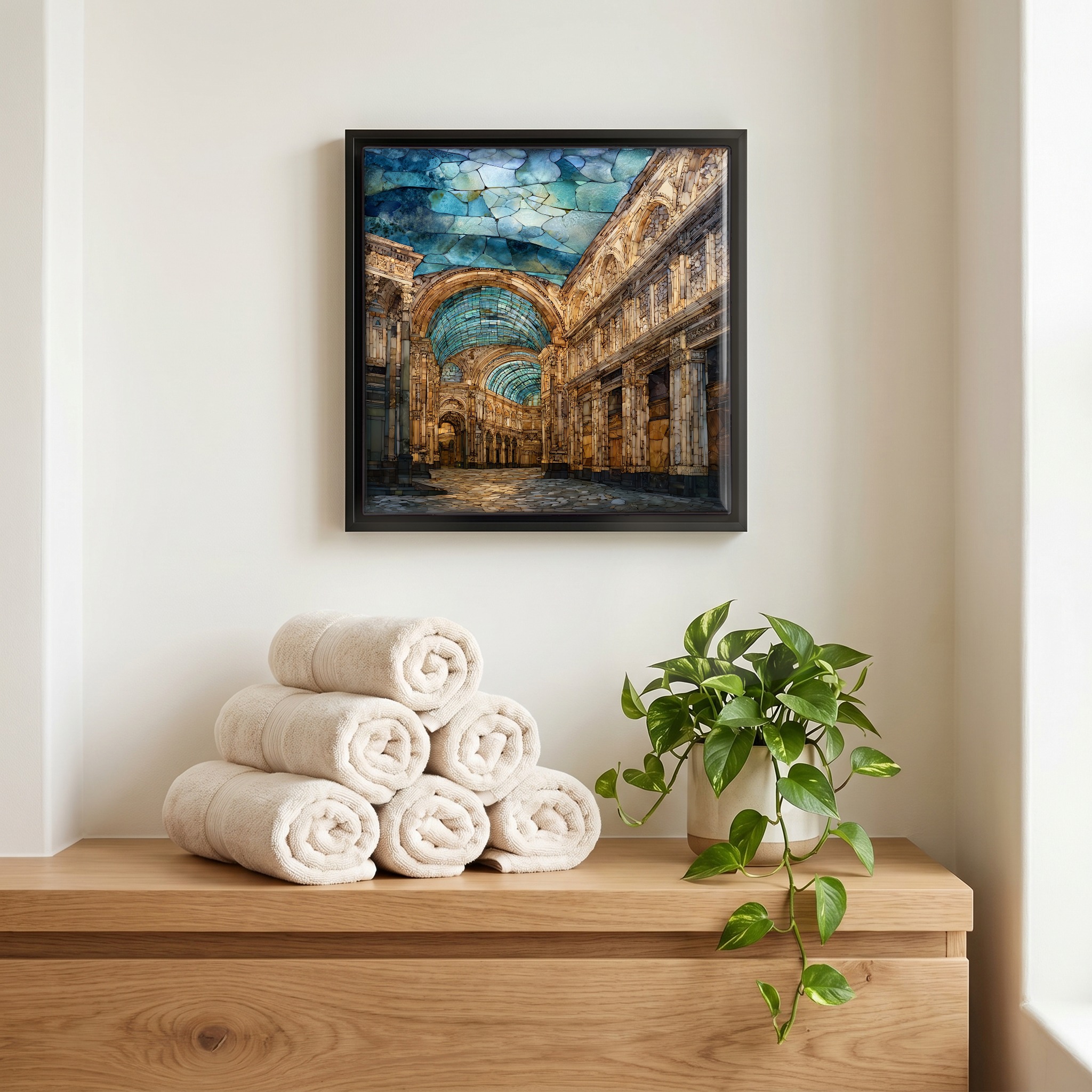
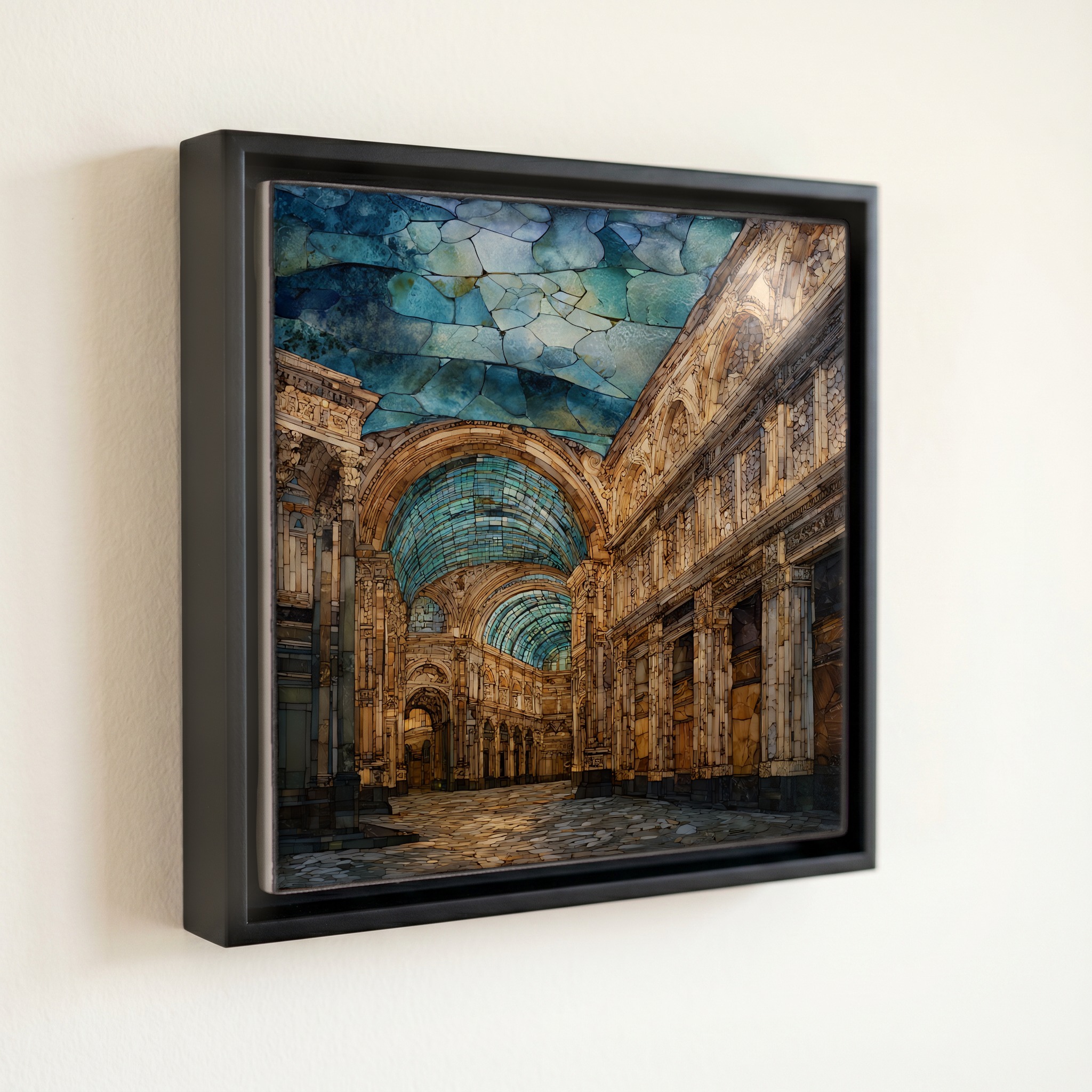
Above the linens, in a slim black surround.
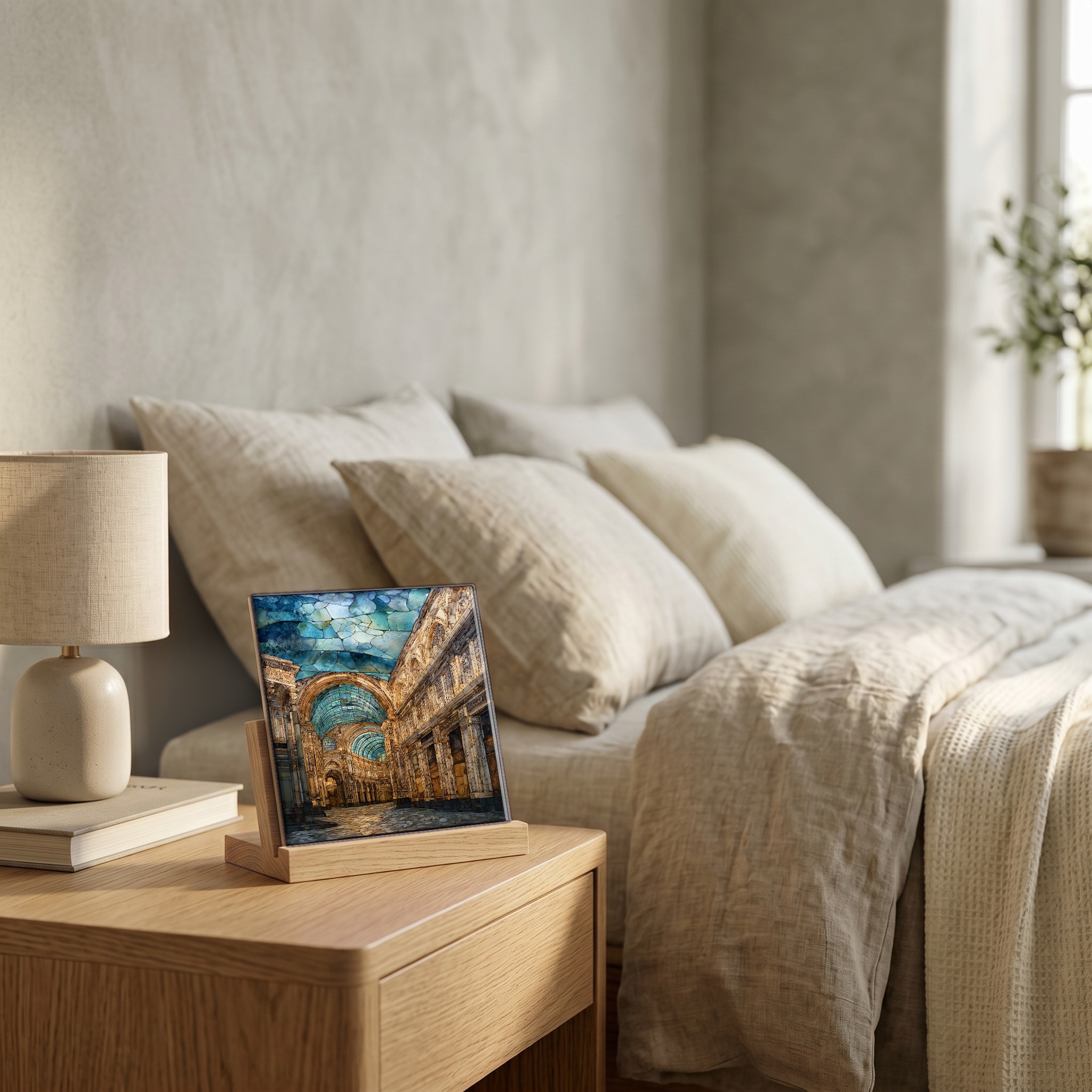
On the nightstand, on a light oak stand.
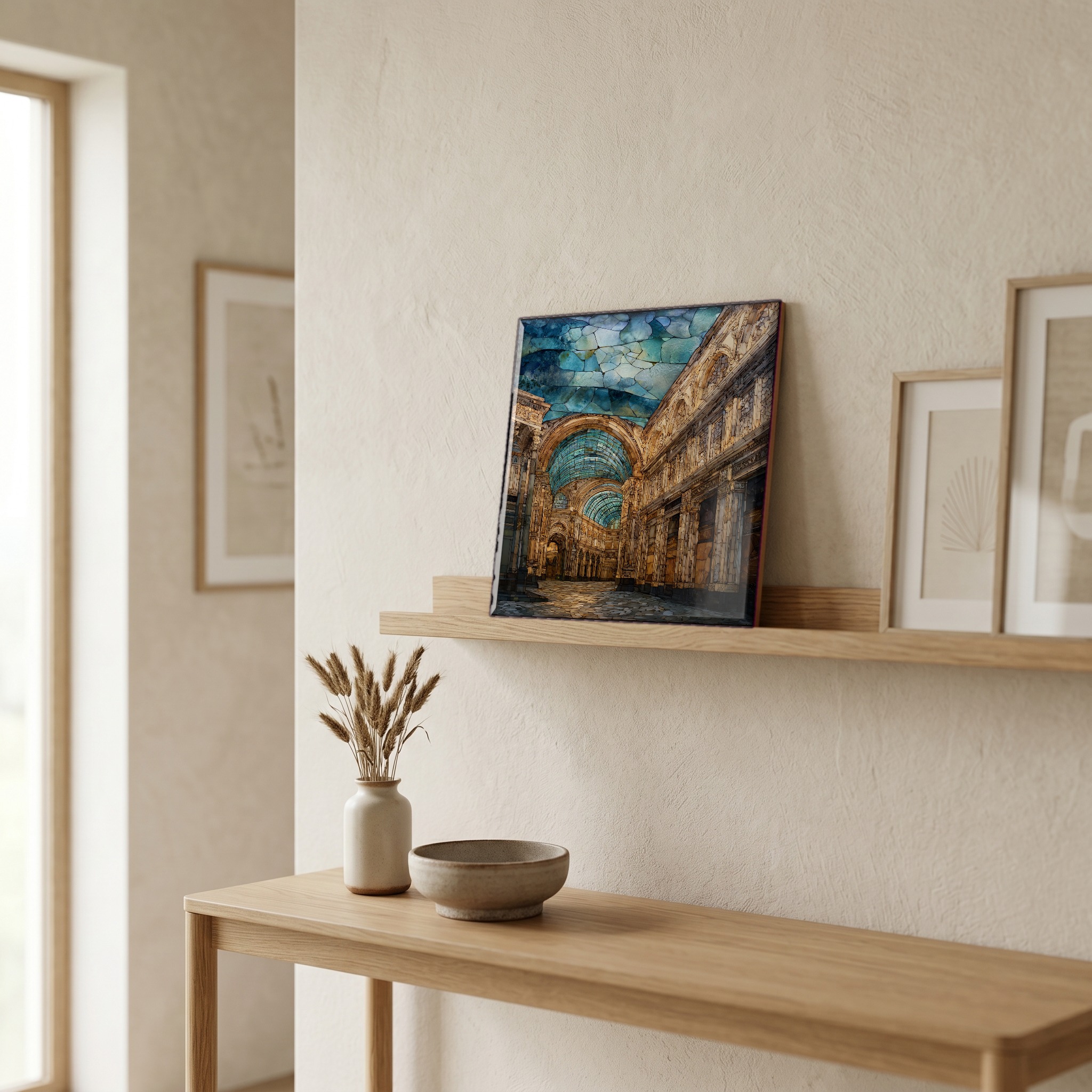
On a picture ledge, where the light comes in.
a note from the studio

A glass-domed arcade in the middle of Naples, opened in 1890, in the years the city was tearing through its oldest and most crowded quarter to let in light and air. Four marble halls meet under a dome of iron and glass, and by mid-morning the whole floor goes bright. At the centre, a compass rose and the twelve signs of the zodiac are set into the marble; people still stop to find their own sign and stand on it. The San Carlo opera house sits directly across the street. Most days the Galleria is a shortcut and a meeting place at once, all footsteps and coffee under the light.
from the studio
shown in a slim black floating frame · 6 × 6 in
— bring it home

Galleria Umberto I, on ceramic.

Each tile is finished by hand in our Knoxville studio. Artwork is slowly infused into the ceramic surface under high heat and pressure, and rests beneath a thin glossy finish. The colour lives in the surface, not on top of it.

What kind of piece?
One tile — square or rectangle.
How big?
the popular one — counter, shelf, nightstand
6 × 6 in · 15 cm · 1.6 lb
Surface finish
A clear glossy finish — the artwork reads as if under resin. Ideal for show-pieces and framed wall art.
How it sits
A hidden cleat — sits ¼″ proud of the wall.
$58
Hand-finished and shipped from our studio at the foot of the Smokies. On your wall in about ten days.
size
6 × 6 in
15 cm
weighs
1.6 lb
solid in the hand
surface
ceramic, hand-finished
art rests beneath a thin glossy finish
from
Knoxville, TN
our family studio, at the foot of the Smokies
— start a Coaster Set

Pick any four 4-inch tiles — National Parks you've been to, a Smokies set, the four seasons of one place. $ for a set of , cork-backed, ready to live on the table.
comes gift-ready
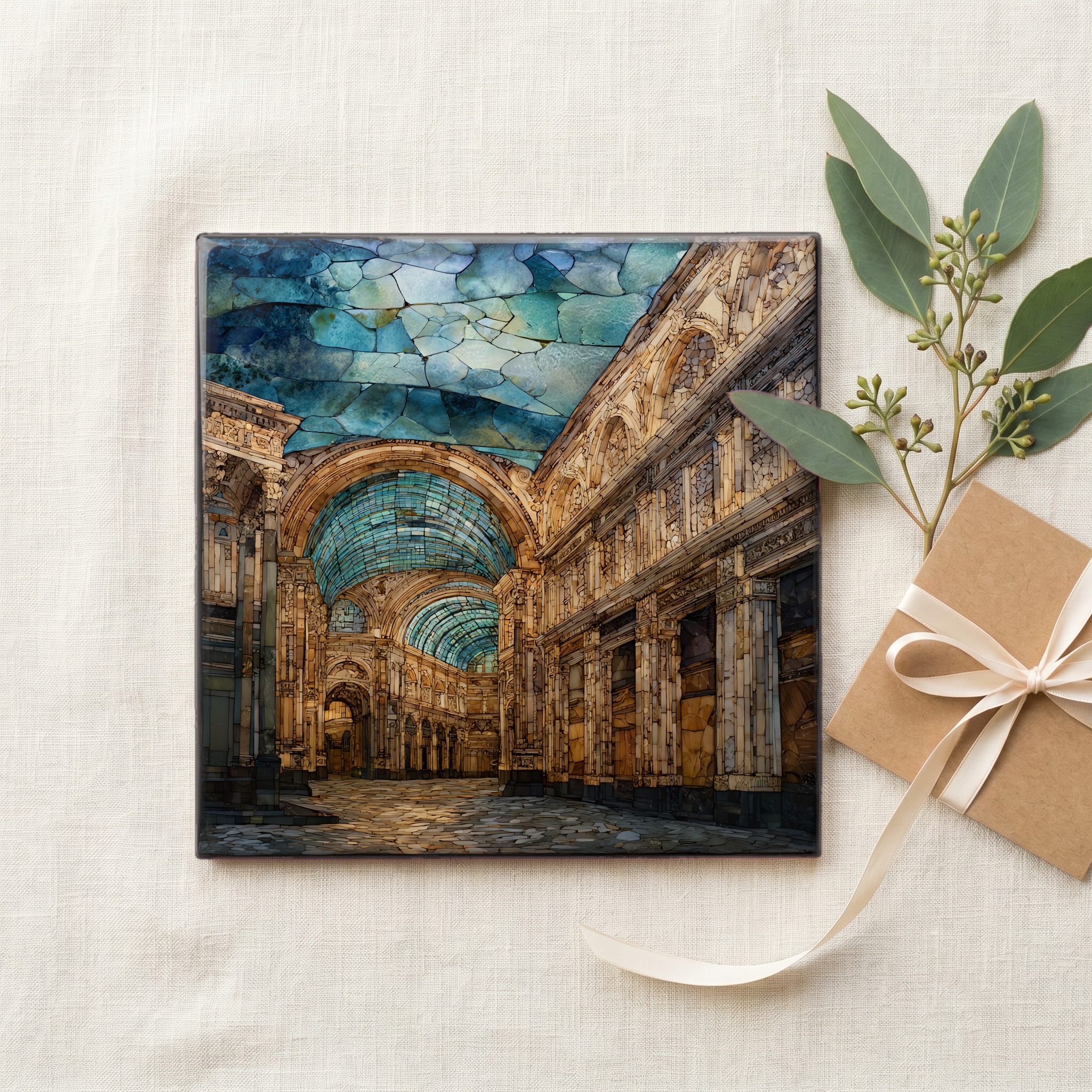
comes gift-ready

Each tile ships in a kraft box, tied with cream ribbon, with a handwritten note from the studio if you'd like to add one.
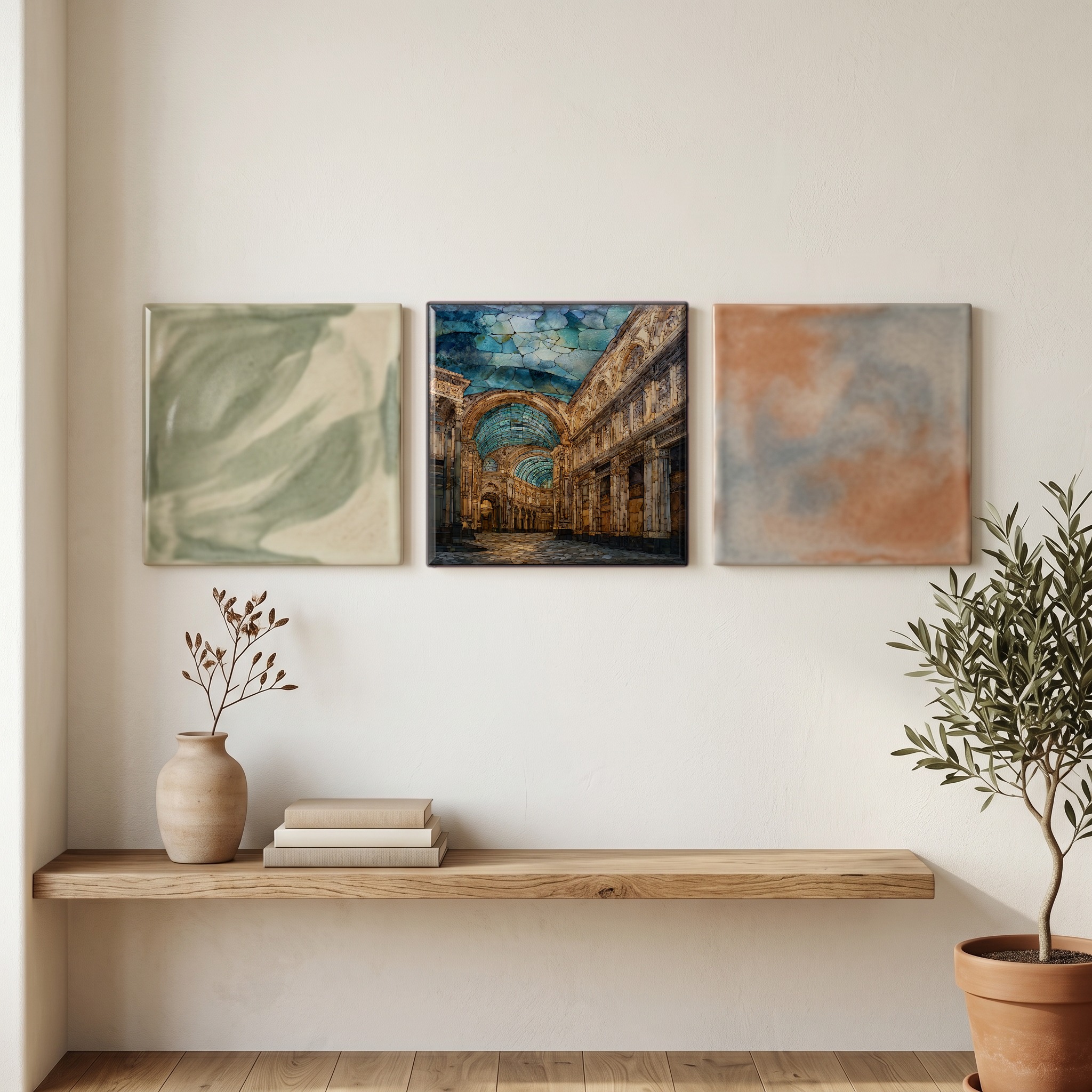
or build a grouping
or build a grouping

Three or five different vistas, hung together — a chapter of places you've been, or want to go.

about Galleria Umberto I

The place, in three passes.

A little of what's known, in case you fall down the rabbit hole — or want to go see it yourself.
the place

The Galleria Umberto I sits on Via Toledo in central Naples, directly opposite the Teatro San Carlo opera house and a short walk from the Royal Palace and Piazza del Plebiscito. It was built between 1887 and 1890 as part of the risanamento, the public-health rebuilding of Naples that followed the cholera epidemic of 1884 and cleared the dense lower city to bring in light, air, and clean water. Emanuele Rocco designed it in the Stile Umbertino and named it for Umberto I, then King of Italy. The plan is a cross of four arcaded halls that meet beneath a central glass dome, a form openly modelled on the Galleria Vittorio Emanuele II in Milan.

— informed by Wikipedia
the light

The roof is the reason to look up. A glass dome braced by sixteen curved iron ribs rises about 57 metres at the tip of its spire, and through it the Neapolitan sun falls the length of all four halls. The structure belongs to the same family of nineteenth-century iron-and-glass arcades as the covered passages of Paris and the Milan galleria, an architecture built to roof a street in daylight while keeping out the weather. The engineering of the dome is usually credited to Paolo Boubee. Late morning is when the halls are brightest; by then the light has crossed the upper galleries and reaches the marble at the centre of the floor.

— informed by Wikipedia, Italy.news
the stone

At the crossing of the four halls, set into the marble floor, is a polychrome compass rose marked OVEST, NORD, EST, SUD for the four exits, ringed by the twelve signs of the zodiac arranged like the petals of a flower. The current mosaic is younger than the building: it was laid in 1952 by the Venetian firm Padoan, replacing original flooring damaged during the Second World War. A local habit has grown up around it, that finding your own sign and standing on it will grant a wish, so there is almost always someone pausing mid-stride at the centre of the floor. Above it all hangs the same iron and glass.

where
Italy · Naples, Campania
position
40.8386° N · 14.2496° E
the neighborhood

What's nearby.

A handful of named places within an hour's walk or short drive. Some we've already painted; some we will.
at the lake
Teatro San Carlo
opera house
at the lake
Royal Palace of Naples
royal palace
at the lake
Piazza del Plebiscito
public square
at the lake
Castel Nuovo
medieval castle
1 km SW
Castel dell'Ovo
seaside castle
12 km E
Mount Vesuvius
volcano
N
Galleria Umberto I
Teatro San Carlo
Royal Palace of Naples
Piazza del Plebiscito
Castel Nuovo
Castel dell'Ovo
Mount Vesuvius
common questions

What people ask.

A few questions we get about Galleria Umberto I — and about bringing the piece home.
about the place

It stands on Via Toledo in central Naples, directly across from the Teatro San Carlo opera house and a few steps from the Royal Palace and Piazza del Plebiscito. The arcade is a public, covered street, free to walk through.

It was built between 1887 and 1890 as part of the risanamento, the rebuilding of Naples after the cholera epidemic of 1884. The program cleared the crowded lower city to bring in light, clean water, and air.

The glass-and-iron dome rises about 57 metres at the tip of its spire and is braced by sixteen curved iron ribs. Emanuele Rocco designed the arcade in the Stile Umbertino, echoing the Galleria Vittorio Emanuele II in Milan.

At the crossing of the four halls is a marble compass rose marked for the four exits, ringed by the twelve signs of the zodiac. The current mosaic was laid in 1952 by the Venetian firm Padoan, replacing flooring damaged in the Second World War.

Yes. It is a public, covered street open to walk through without a ticket. It holds shops and cafes and stands directly opposite the San Carlo opera house, so many people pass through on the way somewhere else.

Late morning, once the sun has climbed high enough to fall through the glass dome and reach the marble at the crossing. The four halls run roughly to the compass points, so the brightness shifts across the day.

It was openly modelled on Milan's Galleria Vittorio Emanuele II, part of the same wave of nineteenth-century iron-and-glass shopping arcades that included the covered passages of Paris. The Naples arcade is named for Umberto I, King of Italy during its construction.

about the piece in your home

It has carried well for people who grew up in Naples or spent time there. The Galleria is an everyday landmark, a place locals cross daily rather than a postcard sight. A Small or Medium with a handwritten note from the studio travels well.

The deep stained-glass colour and gold light suit a few rooms in particular: jewel-tone maximalist interiors, warm traditional studies and libraries, and Mediterranean or Italianate spaces. It reads as art first, so it holds its own on a painted or papered wall.

It fits two current directions: the return to warm, collected, old-world European interiors sometimes called grandmillennial, and jewel-tone maximalism, where saturated colour is welcome. One strong piece like this anchors a wall without needing a gallery arrangement around it.

Above a console or a reading chair, a single Large holds the space on its own. Above a sofa or a bed, a four-tile Mural fills the wall better, and a nine-tile Mural makes the Galleria a room-defining centrepiece. A Keepsake or Small suits a shelf or desk.

Yes. For a backsplash, a shower, or any damp or high-traffic wall, order the Dura Satin or Matte finish, which is scratch-resistant and cuts glare. The glossy finish is meant for framed wall pieces and dry rooms.

A dry or barely damp microfibre cloth is all it needs. The colour is slowly infused into the ceramic surface under high heat and pressure and lives in the surface itself, so it will not lift or fade with ordinary wiping. Skip abrasive pads and harsh sprays.

Yes. Every WenderVista piece is made in one studio in Knoxville, Tennessee, from the studio's own painting of the place. Nothing is licensed in from stock or other artists, and each tile is hand-finished before it ships.

if this one stayed with you

A few you might also love.

Hand-picked by the eye that found Sorapis. Same air, same kind of quiet.
— a collection

The Italian Dolomites,
painted slow.

The valleys between Cortina and Val Gardena, the tarns you walk an hour to see, the towers that turn the colour of a banked fire just before dark. Wander the collection by valley, by season, or follow the path Reid walked.

Tre Cime
Braies
Misurina
Sorapis
Cinque Torri
Sassolungo
Marmolada