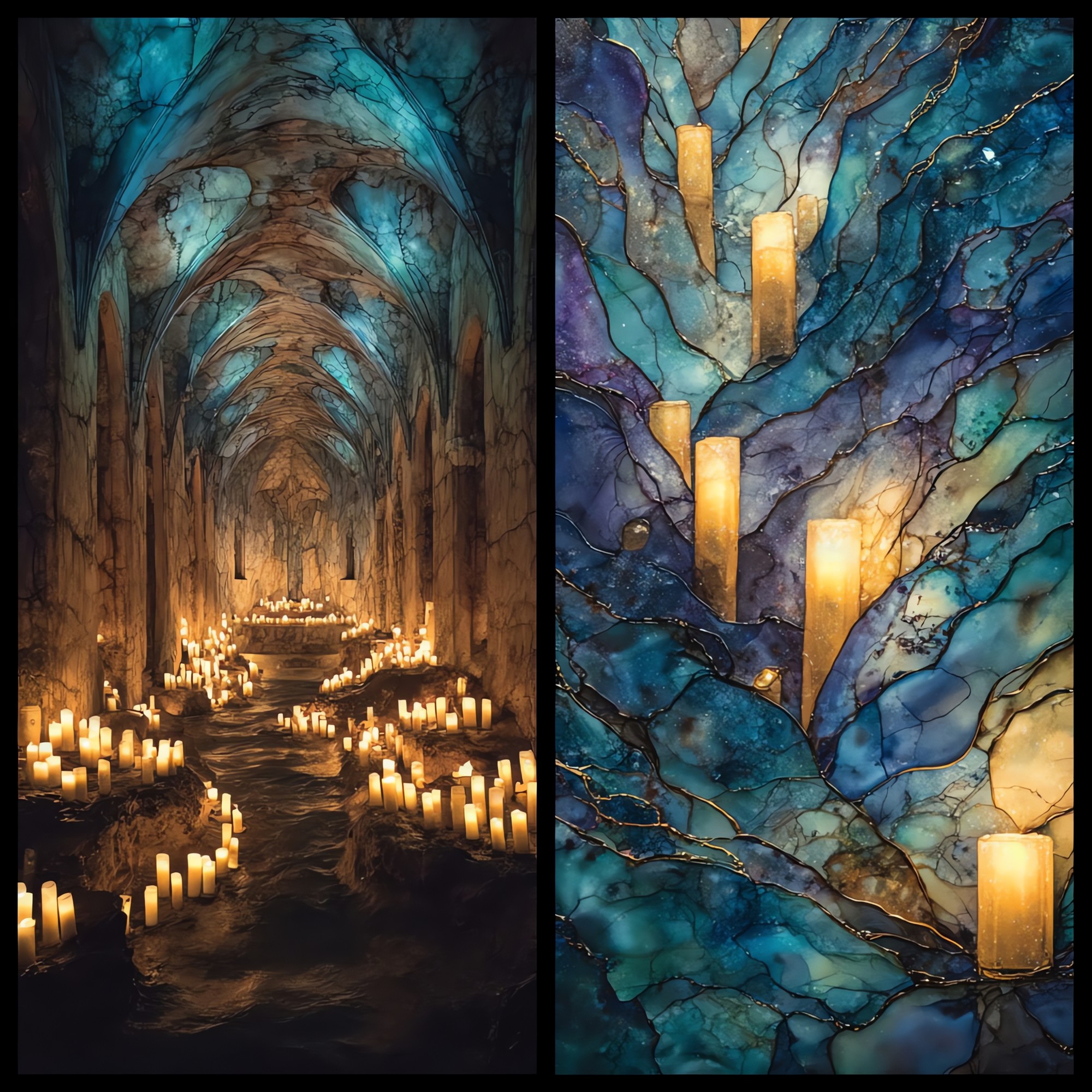
Frasassi Caves
— the cathedral the water left behind.
Not only on a wall.


“The hall called Abisso Ancona was opened on a September morning in 1971, when a small group of speleologists from Ancona broke through into a room two hundred metres across and tall enough to fit the Duomo of Milan with the towers clear. The public path now runs about a mile through the lower chambers, paved and lit, past stalagmites and curtains of dripstone. The air stays at fourteen degrees in every season, heavy with mineral water. Outside, the Sentino river runs through a limestone gorge, and the road climbs to a small neoclassical chapel built into another cave above.
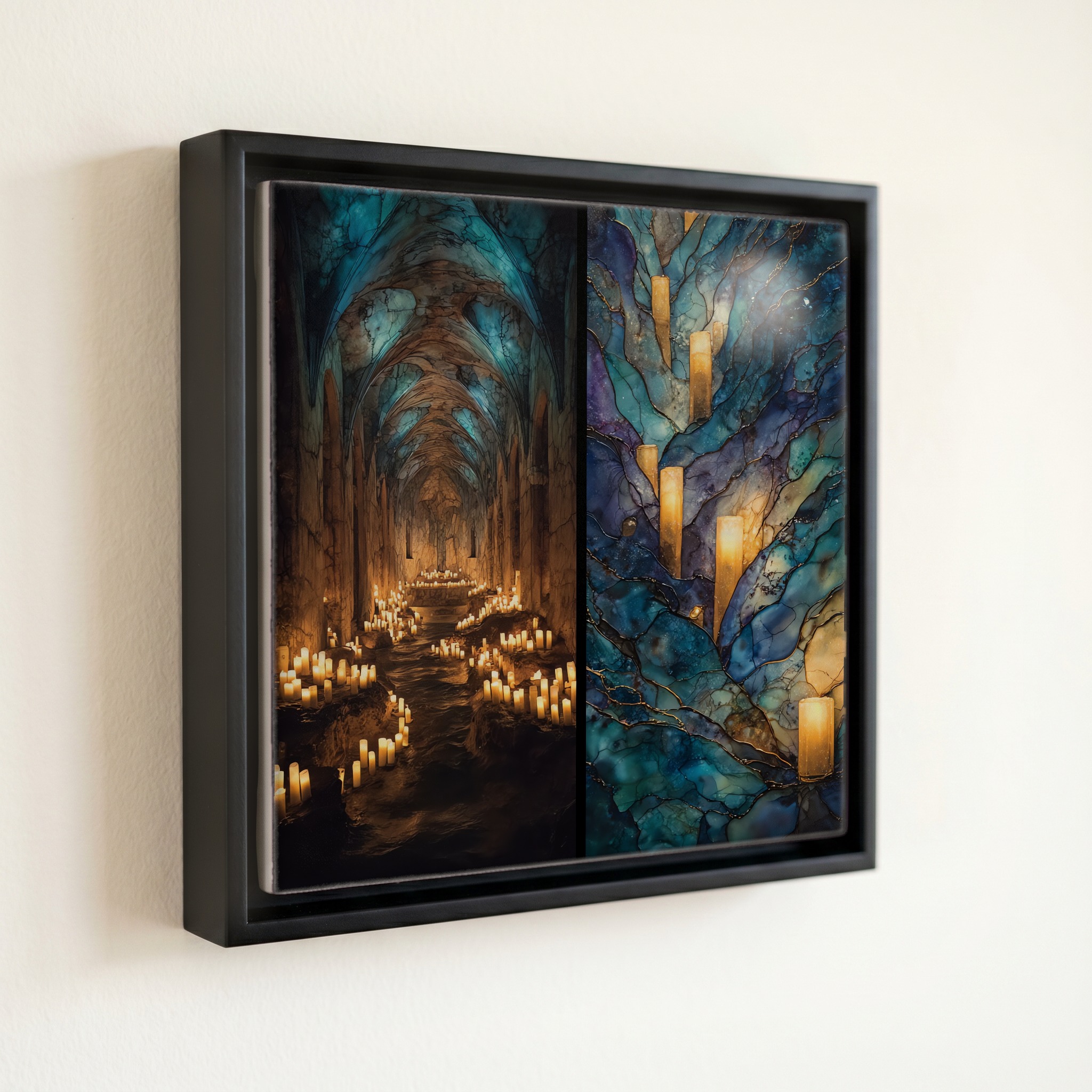
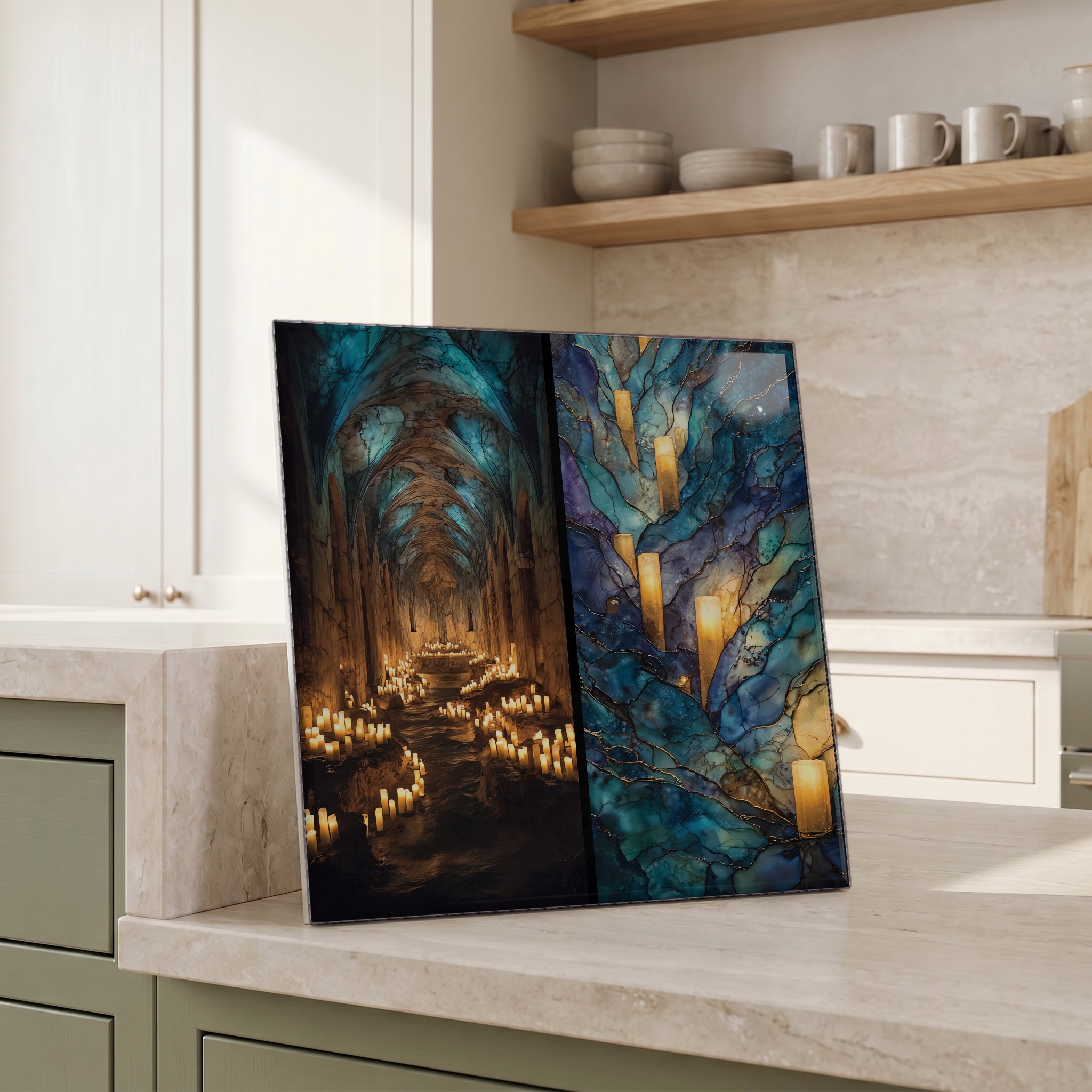
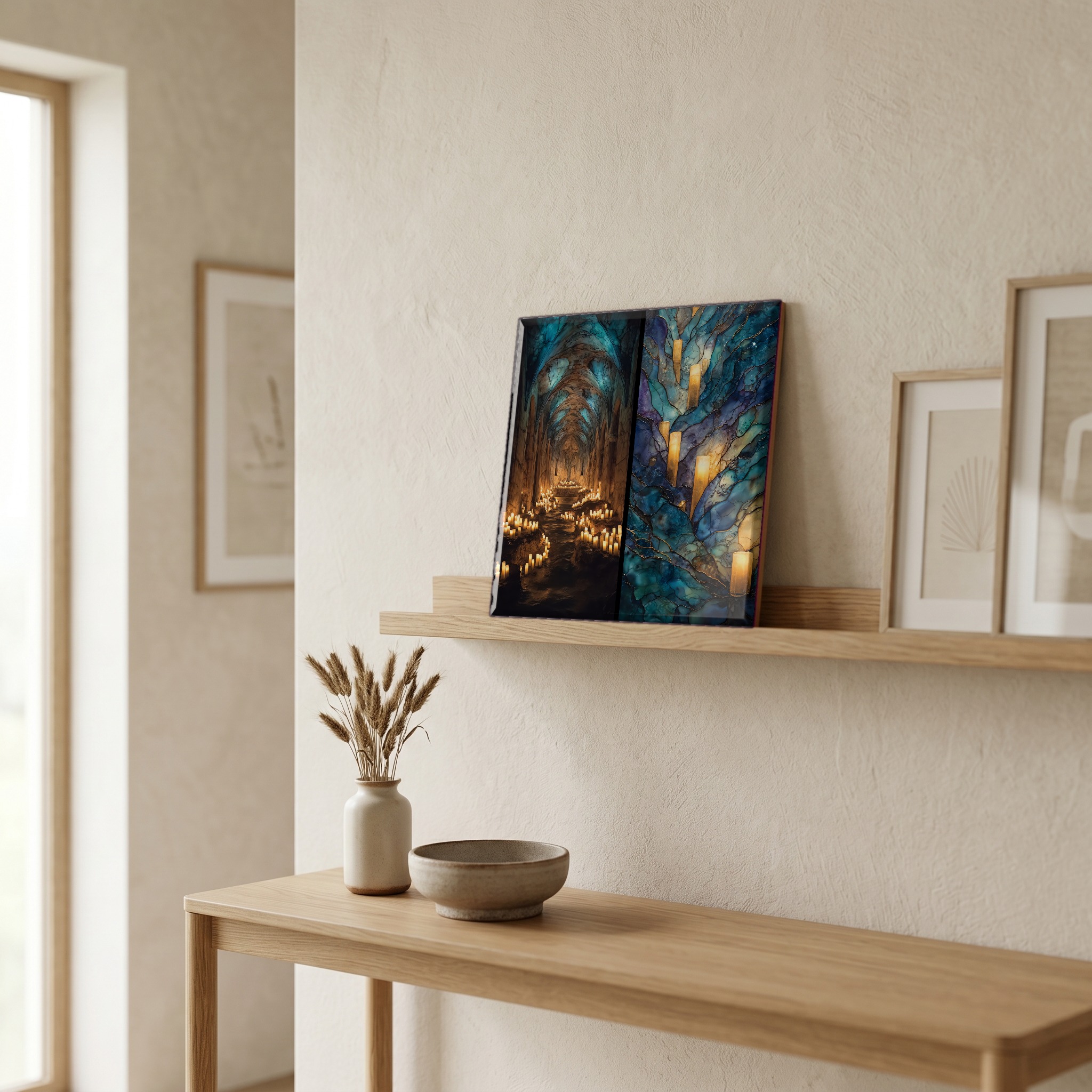
Frasassi Caves, on ceramic.
Each tile is finished by hand in our Knoxville studio. Artwork is slowly infused into the ceramic surface under high heat and pressure, and rests beneath a thin glossy finish. The colour lives in the surface, not on top of it.
Pick any four 4-inch tiles — National Parks you've been to, a Smokies set, the four seasons of one place. $ for a set of , cork-backed, ready to live on the table.

Each tile ships in a kraft box, tied with cream ribbon, with a handwritten note from the studio if you'd like to add one.

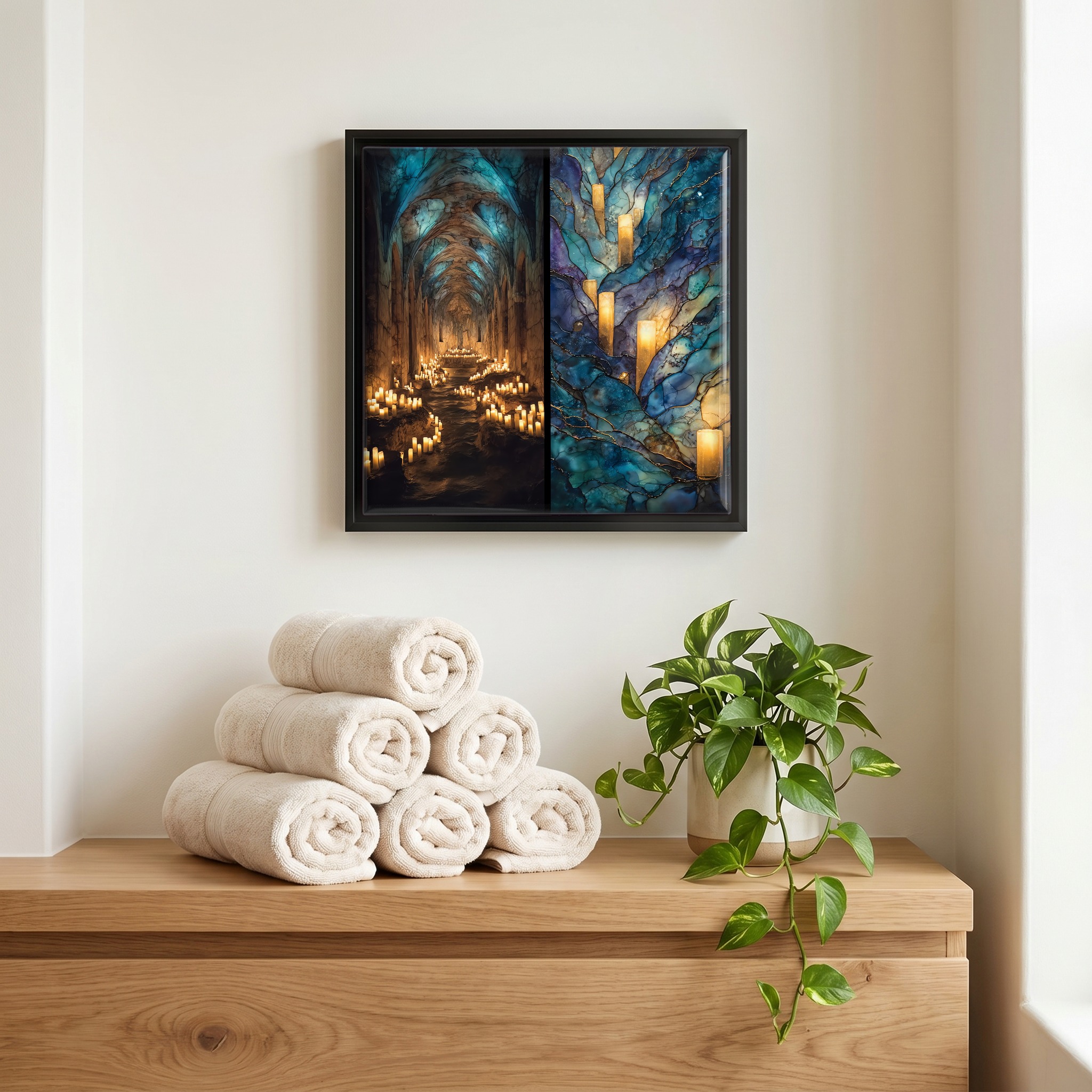
Three or five different vistas, hung together — a chapter of places you've been, or want to go.
The place, in three passes.
The Frasassi Caves sit beneath a limestone gorge cut by the Sentino river in central Italy, in the province of Ancona, Marche region. The visitor entrance is at San Vittore di Genga, about 20 km west of Fabriano. The system was opened on 25 September 1971, when speleologists from the Gruppo Speleologico Marchigiano CAI broke through into what is now called the Abisso Ancona, the central chamber of an underground network that extends for roughly 30 km. The caves lie within the Gola della Rossa e di Frasassi Regional Park, the largest protected area in the Marche. The nearest train stop is Genga–San Vittore Terme on the Rome–Ancona line.
The geology is karst: soluble limestone left from a shallow Mesozoic sea, dissolved over more than a million years by acidic groundwater seeping along the joint lines. The chamber the 1971 expedition broke into, the Abisso Ancona, runs roughly 180 metres long, 120 metres wide, and 200 metres tall. The Duomo of Milan would fit inside it with the towers clear. Stalactites and stalagmites form slowly along the same dripline year after year, and the largest in the system reach nearly 20 metres. Smaller features along the public route are named for what they resemble: the Niagara, the Sword of Damocles, the Cammello.
The public tour covers about 1.5 km of the lower system and lasts roughly 75 minutes. The walking route is level, paved, and lit, with no climbing involved; the temperature inside holds steady at around 14 degrees Celsius regardless of the surface season. Tickets are sold from the visitor centre at La Cuna, a short shuttle ride from the cave entrance, and tours leave in timed groups. Booking ahead is sensible in summer and at Easter, when buses arrive from the Adriatic coast. Adventurous routes (the Speleo-Avventura programs) run by appointment with helmets, lamps, and a guide, into chambers off the public path.